Bermuda’s track and field athletes have continued to impress at the Junior Pan American Games in Paraguay, with a fantastic day of competition that saw the nation’s medal count rise.
Sprinter Caitlyn Bobb was the star of the show on Day 10, delivering a stunning performance in the Women’s 400m final.
Bobb secured the silver medal with a superb time of 52.14 seconds, her effort a new personal best. She finished just behind Canada’s Dianna Proctor, who clocked a blistering 51.97 to set a new Junior Pan Am Games record. The medal is Bermuda’s third of the competition, a testament to the talent on display.
On the men’s side, Nirobi Smith Mills took to the track in the Men’s 800m semi-finals. He put in a strong run, finishing 5th in his heat with a time of 1:51.82. The result was good enough to earn him a place in the final, qualifying as the eighth fastest athlete.
With the Games heading into their final stages, Bermuda’s athletes continue to make their mark on the international stage.
U.S. buyers of French Champagne, Irish whiskey and Italian Prosecco could face significant price rises
International News via Reuters:
The European Commission will keep pressing for a preferential tariff for wine and spirits exports to the U.S. that would spare the sector the 15% rate applied on most items under the EU-U.S. trade deal, the EU’s trade commissioner said on Thursday.
“This one we didn’t get in. But I can tell you that there is clear commitment from the European Commission to put it on the table,” Maros Sefcovic said when asked if a preferential rate for the sector had been secured.
Sefcovic spoke after the European Union and the U.S. detailed commitments made in the deal reached last month, which includes a 15% U.S. tariff on most imports from the bloc, including autos, pharmaceuticals, semiconductors and lumber.
The same rate also applies to EU wine and spirits exports, despite industry efforts to get a lower, or even zero rate.
That means U.S. buyers of French Champagne, Irish whiskey and Italian Prosecco could face significant price rises, with the tariffs impacting some $10 billion worth of alcoholic beverage imports each year, analysts say.
Brands affected include Diageo’s Guinness beer and Pernod Ricard’s Jameson Irish whiskey.
The Distilled Spirits Council of the United States, an industry group representing spirits producers and marketers, has called for permanent zero tariffs by both sides and expressed disappointment that no preferential rate had been agreed.
“Without a permanent return to zero-for-zero tariffs on spirits, American distillers do not have the certainty to plan for future export and job growth without the fear of retaliatory tariffs returning,” it said.
It added that it was “determined to continue engaging with the Trump administration to urge for additional negotiations”.
That message was echoed by Herve Dumesny, director general of European industry group spiritsEUROPE.
“We urge both sides to remain at the negotiating table and deliver a swift, full return to zero-for-zero,” Dumesny said.
“This means reaffirming the support for our sector across the Atlantic by removing U.S. tariffs on EU spirits and lifting any suspended EU retaliatory measures on U.S. products.”
The EU announced a six-month suspension of retaliatory tariffs on U.S. imports, including distilled spirits and wine, on August 5, according to the U.S. spirits council.
Reporting by Sudip Kar-Gupta, Charlotte Van Campenhout;Editing by Benoit Van Overstraeten, Emelia Sithole-Matarise and Helen Popper
Both Barrett and Epstein will be based in Houston, and are joining the bank as managing directors
International News via Reuters:
JPMorgan Chase has hired two bankers to boost its investment banking capabilities for energy companies, including one which will help the bank focus on coverage of middle-market clients in the sector, per a memo seen by Reuters.
The bank is creating a new vertical within its mid-cap investment banking unit to cover natural resources, with Max Barrett joining to support and build relationships with companies providing services and equipment in the energy space, the memo said.
Brad Epstein is being hired within JPMorgan’s natural resources investment banking coverage team, with a focus on serving companies in the midstream and downstream sectors.
A spokesperson for JPMorgan confirmed the contents of the memo, which was sent out by Global Co-Heads of Natural Resources Group Investment Banking Jonathan Cox, Jen Dooly and James Janoskey, and John Richert, the head of mid-cap investment banking at the bank.
Both Barrett and Epstein will be based in Houston, and are joining the bank as managing directors.
Barrett previously worked at TPH, the energy-focused investment banking arm of boutique adviser Perella Weinberg Partners, and also spent part of his career at private equity firm White Deer Energy.
Prior to joining JPMorgan, Epstein spent 13 years within Citigroup’s energy investment bank, working with companies in midstream, downstream and refining, and renewable fuels. He has also worked at UBS and Citadel, the memo added.
Reporting by David French in New York, Editing by Franklin Paul
AG urges anyone who experiences intimidation or harassment to go directly to police
Kim Wilkerson, Attorney General: “If members of the public feel harassed, threatened, or unsafe, they must immediately contact the police.” File photo
Government press statement: The Government is aware of reports circulating on social media of encounters with an individual who is a known sex offender.
The Government understands the concerns and distress that these posts have caused in the community, particularly for women who have described feelings of intimidation and harassment.
The Attorney General and Minister of Justice, the Hon. Kim Wilkerson, JP, stated: “The safety of our community is of the utmost importance. I want to assure the public that these matters are taken very seriously.
“However, it is vital that such encounters are reported directly to the Bermuda Police Service rather than being shared only on social media.
“Posting online does not create an official complaint or trigger an investigation. If members of the public feel harassed, threatened, or unsafe, they must immediately contact the police. This ensures that the proper legal processes can be engaged and that action is taken swiftly to protect the public.”
The Acting Minister of National Security, the Hon. Jache Adams, JP, MP, added: “We recognise that social media is often used to share information, but it cannot replace the official channels required to keep our community safe.
“The Bermuda Police Service can only act on reports that are made to them directly. If you have an encounter that causes concern, please call the police immediately.
“By making that report, you enable law enforcement officers to investigate, respond appropriately, and take the necessary steps to safeguard the public.”
The public is reminded that in any instance where they feel threatened or harassed, they should call 911 in an emergency or contact the Bermuda Police Service at 295-0011.
Oil futures advanced, bolstered by signs of strong U.S. demand and uncertainty over efforts to end the war in Ukraine
International News via Reuters:
Global equities were lower and gold prices eased on Thursday, as traders avoided making big moves and waited for the Federal Reserve’s three-day annual Jackson Hole symposium.
The symposium starts on Thursday and the focus will be on Fed Chair Jerome Powell’s speech on Friday as traders look for hints about the likelihood of a September U.S. rate cut. U.S. Treasury yields inched higher as the meeting kicked off. [US/]
Oil futures advanced, bolstered by signs of strong U.S. demand and uncertainty over efforts to end the war in Ukraine.
The U.S. dollar also gained, adding 0.35% against a basket of other currencies.
Stocks stayed near recent highs during Asian trading, and Australia’s benchmark hit a new record. But European and U.S. markets were under pressure, and the MSCI World Equity Index retreated 0.21%.
“People are sitting on their hands. You have a couple of big known unknowns coming, with Jackson Hole tomorrow and the Fed in September,” said Tim Graf, head of macro strategy for EMEA at State Street Markets.
“This is the time to send the message, if you’re going to ease, that it’s coming,” he said. “But I can also see them saying, we don’t know the full effect of tariffs and inflation pressure is still not quite out of the economy, and being a bit more balanced.”
On Wall Street, the S&P 500 was down 0.17%, the Dow Jones Industrial Average fell 0.24% and the Nasdaq Composite eased 0.07%.
Traders had ramped up bets for a September cut following a surprisingly weak payrolls report at the start of this month, and were further encouraged after consumer price data showed limited upward pressure from tariffs.
But they lowered their expectations slightly following the release of minutes from the Fed’s July meeting. By Thursday, markets were pricing in a 79.6% chance of a September rate cut, compared to 83% on Wednesday, according to LSEG data.
The pan-European STOXX 600 lost 0.04%.
Analysts attributed a pullback in tech stocks this week to concerns that AI investments were not delivering returns.
Euro zone business activity accelerated in August, PMI data showed, with Germany registering its fastest growth since March and France’s downturn easing.
Euro zone bond yields were mostly higher, with the benchmark 10-year German Bund up 2.5 basis points at 2.751%.
The 10-year U.S. Treasury yield rose 3.7 basis points to 4.334%.
The euro was down 0.32% at $1.1614.
U.S. President Donald Trump intensified his effort to influence the Fed on Wednesday, calling on Governor Lisa Cook to resign on the basis of allegations made by one of his political allies about mortgages she holds in Michigan and Georgia. Cook said she had “no intention of being bullied to step down” from her position at the central bank.
Deutsche Bank analysts in a research note attributed a rise in gold overnight to renewed concerns about the Fed’s independence.
“The news was a reminder of the lingering concerns over future Fed independence and risks of fiscal dominance, though the extent of the market reaction was fairly modest,” Deutsche Bank said.
State Street Markets’ Tim Graf said that although central bank independence was considered “sacrosanct” by markets, it was not yet problematic.
“Markets quite rightly look through this, price maybe a little bit of risk premium for sure, but it’s not something that I think really upsets the apple cart too much,” he said.
Spot gold prices edged lower, down 0.09% at $3,343.69 per ounce, while gold futures added 0.01%.
Elsewhere in commodities, Brent oil futures rose 0.49% to $67.17 per barrel and U.S. crude gained 0.48% to $63.01.
Reporting by Chris Prentice in New York and Elizabeth Howcroft in Paris. Editing by Sharon Singleton and Mark Potter
Hurricane Erin will be at its closest point at 9pm this evening. The airport, Causeway and government departments will remain open today
The surf was building at John Smith’s Bay this morning. Images: Bermuda Broadcasting
UPDATE, 12.10pm: Erin’s closest point of approach will be 337 nautical miles to the northwest, at 6pm this evening.
As Hurricane Erin approaches, it looks as though Bermuda will be on the periphery of tropical storm force winds.
Erin’s nearest point to the island will be 326 nautical miles to the north west, at 9pm tonight. Tropical storm force winds extend outwards up to 320 miles from the eye of the hurricane.
Erin is packing sustained winds near 105 mph, with higher gusts.
Hurricane force winds extend outwards up to 105 miles from the centre.
Government stated yesterday that it will be business as usual today, with the airport, Causeway and government offices open, and buses running. The Orange ferry route is suspended.
Sterling jumped by a fifth of a cent against the U.S. dollar as investors saw the unexpectedly strong reading as lessening the case for another BoE interest rate cut during 2025
International News via Reuters:
British businesses are having their strongest month in a year thanks to a rebound in the dominant services sector, according to a survey that suggests Britain’s economy is continuing to outperform those of other European countries.
The preliminary S&P Global UK Composite Purchasing Managers’ Index for August – published on Thursday – is welcome news for finance minister Rachel Reeves who has struggled to meet her promise to voters to speed up the economy.
But its suggestion of stronger inflation pressure might worry the Bank of England.
Sterling jumped by a fifth of a cent against the U.S. dollar as investors saw the unexpectedly strong reading as lessening the case for another BoE interest rate cut during 2025.
The PMI, covering manufacturing as well as services, picked up to 53.0 – its highest since August last year – from a final reading of 51.5 in July.
A Reuters poll had forecast only a small increase to 51.6.
By comparison, Germany’s PMI grew more slowly while in France activity remained below the growth threshold.
Britain’s economy posted the strongest economic growth within the Group of Seven large, rich nations in the first half of 2025, albeit at a pace which was slow by historic standards.
Chris Williamson, chief business economist at S&P Global Market Intelligence, said the survey suggested economic growth had accelerated over the summer after a sluggish spring.
“It’s evident from survey measures of order books, however, that the demand environment remains both uneven and fragile,” Williamson said.
“Companies report concerns over the impact of recent government policy changes, as well as unease emanating from broader geopolitical uncertainty,” he added.
Matt Swannell, chief economic advisor to forecasters EY ITEM Club, said the pickup should be treated with caution as the PMI had been a poor predictor for the economy so far in 2025.
“Economic conditions still point to sluggish growth,” Swannell said. “Inflation is rising as pay growth slows, fiscal policy is tightening, some households still must re-fix their mortgages to higher interest rates and uncertainty lingers.”
The PMI for the services sector rose to 53.6 from July’s 51.8.
But the manufacturing PMI weakened to 47.3 from 48.0, further below the 50.0 growth threshold and its lowest in three months as factories took a hit from the global trade war led by U.S. President Donald Trump.
A separate survey published by the Confederation of British Industry showed manufacturers suffered a fresh setback with orders falling heavily and further weakness expected ahead.
The PMI found companies shed jobs across the board, albeit less quickly than in July. Firms reported higher labour costs after Reeves raised payroll taxes for employers in April when a sharp increase in the minimum wage also took place.
Complicating the picture for the BoE, services firms increased prices at the fastest pace in three months.
Business activity expectations for the year ahead were the highest since October 2024.
Writing by William Schomberg; Editing by Toby Chopra
The company’s results show it has continued to benefit from growing price sensitivity among Americans
International News via Reuters:
Walmart on Thursday raised its fiscal year sales and profit forecast, driven by strong demand from shoppers across all income levels, who have turned to the world’s largest retailer as they worry about rising costs.
The company’s results show it has continued to benefit from growing price sensitivity among Americans, with revenue of $177.4 billion in the second quarter. Analysts on average were expecting $176.16 billion, according to data compiled by LSEG.
Consumer sentiment has weakened due to fears of higher inflation, hitting the bottom lines of some retail chains, but Walmart’s sales have remained resilient.
The retailer expects annual sales to grow in the range of 3.75% to 4.75%, compared to its prior forecast of a 3% to 4% increase. Adjusted earnings per share is expected in the range of $2.52 to $2.62, compared to its previous range of $2.50 to $2.60.
The Bentonville, Arkansas-based chain got a boost from a sharper online strategy as more customers relied on home deliveries. Its global e-commerce sales jumped 25% during the quarter, and it touted that one-third of deliveries from stores took three hours or less.
Walmart’s total U.S. comparable sales rose 4.6%, fueled by solid demand in grocery, health and wellness, and online sales, beating analysts’ estimates of a 3.8% increase, according to data compiled by LSEG.
Average spending at the till rose 3.1% from 0.6% last year. It logged 40% growth in marketplace sales, including electronics, automotive, toys, and media and gaming.
The retailer had warned it would increase prices this summer to offset tariff-related costs on certain goods imported to the U.S., a move that drew criticism from President Donald Trump. Several other apparel, footwear, and packaged goods retailers have issued similar warnings in response to import tariffs.
A day earlier, Target warned of tariff-induced cost pressures, even as it reiterated that price increases would be considered only as a last resort.
Two-thirds of Walmart’s U.S. sales were from domestically-sourced products, executives had said last quarter, which gave it some insulation from tariffs compared to competitors.
Walmart’s projection of third-quarter sales at $168 billion was below Wall Street estimates for sales of $176.33 billion.
Reporting by Savyata Mishra in Bengaluru and Siddharth Cavale in New York Editing by Rod Nickel
Starmer’s government is facing increasing pressure over housing asylum seekers in hotels after a council won a temporary court injunction earlier this week
FILE PHOTO: Asylum seekers react as they look out the window at the Cresta Court hotel, as people take part in an anti-immigration demonstration outside the hotel, in Altrincham, Britain, August 8, 2025. REUTERS/Phil Noble/File Photo
International News via Reuters:
More than 32,000 asylum seekers were housed in hotels in Britain at the end of June 2025 with asylum claims hitting a record, official data showed on Thursday, as the housing issue becomes a major headache for Prime Minister Keir Starmer.
Starmer’s government is facing increasing pressure over housing asylum seekers in hotels after a council won a temporary court injunction earlier this week meaning all the migrants living in one hotel had to be removed.
Figures released by the government showed there had been an 8% increase in the number of migrants being housed in hotels in the year ending June 30.
However, the total figure of just over 32,000 was 43% lower than the peak of 56,042 recorded in September 2023, and slightly down compared to the previous quarterly figures in March.
Starmer has vowed to end the use of hotels to house thousands of asylum seekers before the next election in 2029. A regular tracker of voters’ concerns showed immigration has overtaken the economy as the biggest issue.
Thursday’s data also showed 111,000 people claimed asylum in the year to June 2025, up 14% from the previous year and surpassing the previous peak of 103,000 recorded in 2002.
Starmer has pledged to stop thousands of migrants arriving in Britain via small boats. More than 27,000 have arrived by that means so far this year.
Reporting by Sam Tabahriti and Catarina Demony;Editing by Helen Popper
The bill would have cut the distance required between planned installations and residential locations
International News via Reuters:
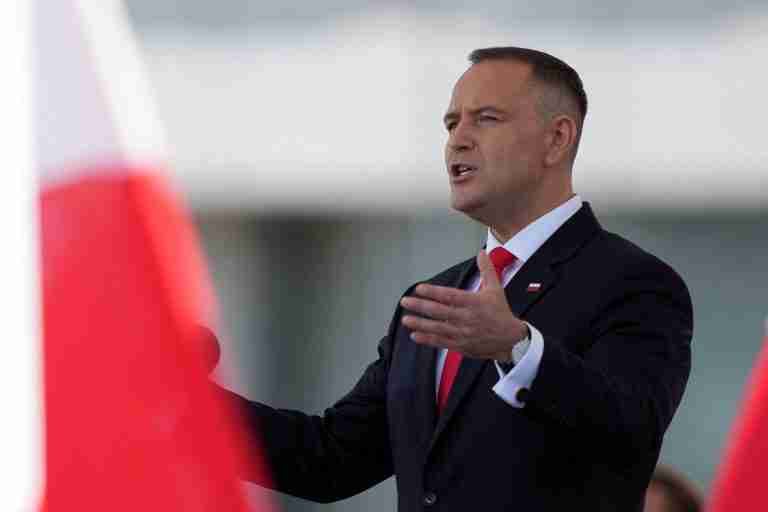
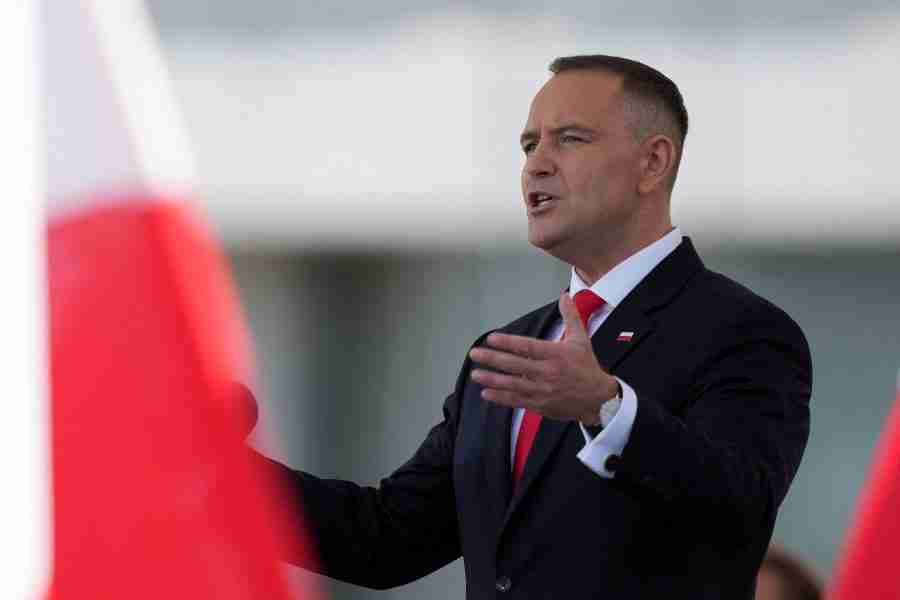
Polish President Karol Nawrocki vetoed a bill meant to ease rules for building onshore wind farms on Thursday, saying that a government decision to bundle it together with a freeze on energy prices amounted to “blackmail”.
The accusation is the latest salvo in a battle with the centrist government of Prime Minister Donald Tusk, an arch rival of the president’s allies in the nationalist Law and Justice (PiS) party.
The bill would have cut the distance required between planned installations and residential locations, while keeping permitting more restrictive for projects close to protected natural areas. It included incentives for municipalities and homeowners in areas located close to new wind farms.
It also included a clause that would have frozen energy prices for households until the end of the year.
Nawrocki, who opposes easing the wind farm regulations but is in favour of an energy price freeze, objected to the two elements being combined in one bill.
“There is one bill that I have … unequivocally decided to veto,” Nawrocki told a news conference.
“The wind farm bill … is a form of blackmail by the parliamentary majority and the government, not only against the President of the Republic of Poland, but also against society,” he said.
Nawrocki said he would propose a new bill that would copy the price freeze section of the vetoed legislation while dropping the wind farm elements.
Energy Minister Milosz Motyka responded to the veto, writing on X that Poland needed to unlock “the potential offered by cheap energy sources.”
“President Nawrocki’s veto of the law guaranteeing low energy prices is a blow to Polish families, industry, energy security, and the entire economy,” he wrote.
Reporting by Alan Charlish, Anna Koper, and Karol Badohal; Editing by Joe Bavier
To provide the best experiences, we use technologies like cookies to store and/or access device information. Consenting to these technologies will allow us to process data such as browsing behavior or unique IDs on this site. Not consenting or withdrawing consent, may adversely affect certain features and functions.
Functional
Always active
The technical storage or access is strictly necessary for the legitimate purpose of enabling the use of a specific service explicitly requested by the subscriber or user, or for the sole purpose of carrying out the transmission of a communication over an electronic communications network.
Preferences
The technical storage or access is necessary for the legitimate purpose of storing preferences that are not requested by the subscriber or user.
Statistics
The technical storage or access that is used exclusively for statistical purposes.The technical storage or access that is used exclusively for anonymous statistical purposes. Without a subpoena, voluntary compliance on the part of your Internet Service Provider, or additional records from a third party, information stored or retrieved for this purpose alone cannot usually be used to identify you.
Marketing
The technical storage or access is required to create user profiles to send advertising, or to track the user on a website or across several websites for similar marketing purposes.