Friday, October 30, 2026
Home Blog Page 802

London stocks retreat; investors await Jackson Hole symposium

The three-day gathering of central bankers is set to begin later in the day, with investors particularly focused on Fed Chair Jerome Powell’s Friday speech
Signage is seen outside the LSEG (London Stock Exchange Group) headquarters in Paternoster Square, London, Britain, April 25, 2025. REUTERS/Toby Melville/File Photo

International News via Reuters:

Britain’s main stock indexes declined on Thursday, dragged by losses in consumer-related shares, while global investors turned their attention to the U.S. Federal Reserve’s annual symposium in Jackson Hole.

As of 1016 GMT, the blue-chip FTSE 100 <.FTSE 100> was down 0.2%, and the midcap index FTSE 250 declined 0.5%.

The three-day gathering of central bankers is set to begin later in the day, with investors particularly focused on Fed Chair Jerome Powell’s Friday speech for signals about a potential interest rate cut in September.

In the UK markets, consumer shares fell 0.3%, weighing on the stock indexes.

Healthcare shares also declined 0.4%.

Travel retailer WH Smith slumped 41.7% and was on track for its worst single-day decline on record, after it lowered annual profit outlook.

Stocks including InterContinental Hotels Group, Schroders, Entain and Mondi fell as they traded ex-dividend.

The pullback comes a day after the FTSE 100 hit a record close, benefiting from a market rotation away from technology stocks that had triggered a selloff on Wall Street earlier this week.

“While the FTSE’s lack of tech stocks meant it has underperformed in recent years, the recent rotation into value has put the wind in the FTSE’s sails,” said Fiona Cincotta, senior market analyst at City Index.

Supporting the gains on Thursday, aerospace and defence companies rose 1.1%.

Energy sector added 0.5% as oil prices gained, bolstered by signs of strong demand in the U.S. and uncertainty over efforts to end the war in Ukraine. [O/R]

On the economic data front, PMI figures for August revealed the British businesses are having their strongest month in a year thanks to a rebound in the dominant services sector.

Additionally, Britain’s public borrowing in the financial year so far has matched forecasts underpinning the government’s tax and spending plans.

Reporting by Ragini Mathur in Bengaluru, additional reporting by Joel Jose; Editing by Sahal Muhammed
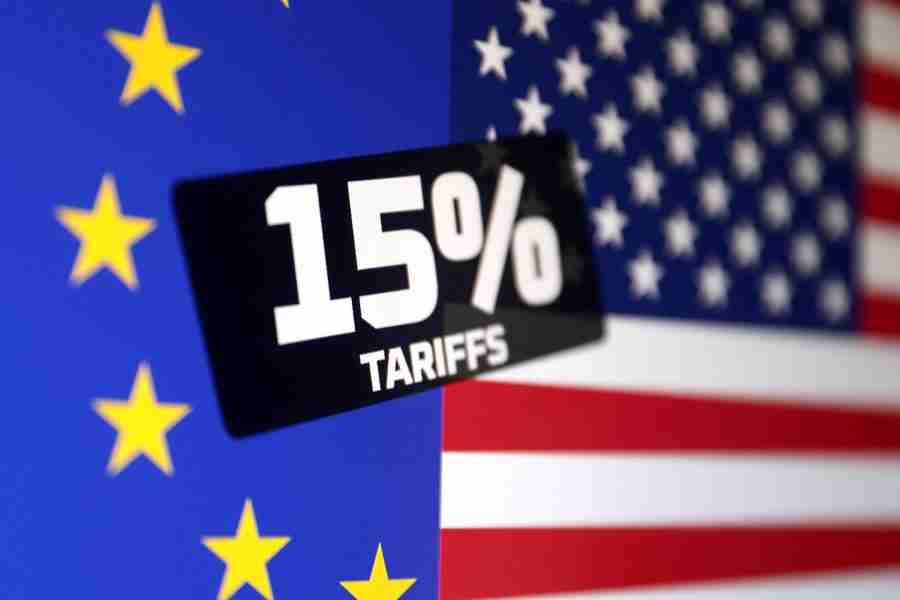
US, EU lock in trade deal; US official sees auto tariff relief in weeks

In a 3-1/2-page joint statement, the two sides listed the commitments made

International News via Reuters:

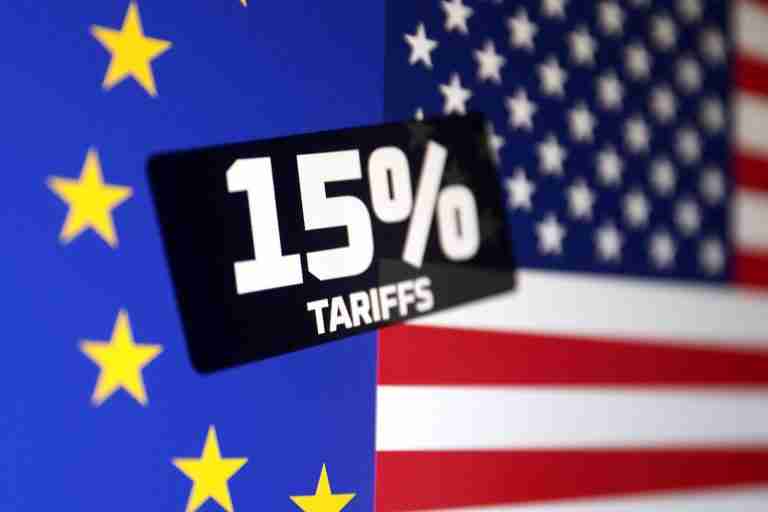
The United States and the European Union on Thursday locked in a framework trade deal reached last month that includes a 15% U.S. tariff on most EU imports, including autos, pharmaceuticals, semiconductors and lumber.

In a 3-1/2-page joint statement, the two sides listed the commitments made, including the EU’s pledge to eliminate tariffs on all U.S. industrial goods and to provide preferential market access for a wide range of U.S. seafood and agricultural goods.

Washington will take steps to reduce the current 27.5% U.S. tariffs on cars and car parts, a huge burden for European carmakers, once Brussels introduces the legislation needed to enact promised tariff cuts on U.S. goods, it said.

U.S. President Donald Trump and European Commission President Ursula von der Leyen announced the deal on July 27 at Trump’s luxury golf course in Turnberry, Scotland after an hour-long meeting that followed months of negotiations.

The two leaders met again this week as part of negotiations aimed at ending Russia’s war in Ukraine, with both lauding their trade framework deal as an historic accomplishment. The joint statement said the deal could be expanded over time to cover additional areas and further improve market access.

A senior administration official, speaking on condition of anonymity because they were not authorized to speak publicly, said European carmakers could see relief from the current U.S. tariffs within “hopefully weeks.”

“As soon as they’re able to introduce that legislation — and I don’t mean pass it and fully implement it, but really introduce it — then we will be in a position to provide that relief. And I will say that both sides are very interested in moving quickly,” they said.

The joint statement was “a play to hold each other accountable” and ensure that both sides carried out the pledges announced last month, the official said.

“We are trying to sequence with the European Union to make sure that … they feel sufficient pressure to obtain the mandate they need to begin the legislative process for reducing their tariffs, as they’ve promised,” the official said.

“We’re confident that they’ll do that. It’s just good for all parties to make sure that everyone’s on the same page and taking actions around the same time.”

The statement said U.S. tariff relief on autos and auto parts would kick in on the first day of the month in which the EU introduced the legislation, offering the prospect of retroactive relief for carmakers. It was not immediately clear when Brussels would start the legislative process.

The joint statement noted that the U.S. agreed to apply only Most Favored Nation tariffs from September 1 on EU aircraft and parts, generic pharmaceuticals and ingredients, chemical precursors and unavailable natural resources, including cork.

It reiterated the EU’s intention to procure $750 billion in U.S. liquefied natural gas (LNG), oil and nuclear energy products, plus an additional $40 billion of U.S.-made artificial intelligence chips.

It also repeated the intention for EU companies to invest an additional $600 billion across U.S. strategic sectors through 2028.

Both sides committed to address “unjustified digital trade barriers,” the statement said, and the EU agreed not to adopt network usage fees.

They also agreed to negotiate rules of origin to ensure that the agreement’s benefits accrued predominantly to both trading partners.

In addition, they said they would consider cooperation to ring-fence their respective steel and aluminum markets from overcapacity, while ensuring secure supply chains between each other, including through tariff quotas.

Reporting by Andrea Shalal and David Lawder; Editing by Kate Mayberry

Sterling firms against dollar after strong business activity data

The services data trails a hot inflation print from Wednesday, which had spurred only fleeting gains for sterling

International News via Reuters:

Sterling gained against the dollar on Thursday after a survey showed that British businesses are having their best month in a year due to a rebound in the services sector, while investors also kept their focus on the Fed’s Jackson Hole symposium.

Sterling rose 0.2% against the dollar to $1.3483 and was marginally higher on the euro at 86.57 pence to the common currency.

The services data trails a hot inflation print from Wednesday, which had spurred only fleeting gains for sterling.

The currency’s rise didn’t prove sticky, as analysts pinned the upside surprise on services inflation largely due to higher airfares as opposed to indications of broad-based price pressures.

The inflation numbers are unlikely to have a major impact on the Bank of England’s policy trajectory as “the composition of the data was less bad than the headline number,” said Samy Chaar, chief economist at Lombard Odier.

Money markets are currently pricing in a less than 50% chance of rate cut by the BoE before the end of 2025 while a cut is only priced in by March 2026. The benchmark two-year gilt yield, meanwhile, rose 6 basis points to 3.97% on Thursday, reversing a drop the previous day.

Sterling stands out as a leading carry trade candidate among the currencies of the Group of 10, comparable to the high-yielding U.S. dollar, analysts at UBS said in a note.

Carry trades involve borrowing in currencies with low interest rates and then using those funds to buy currencies with better yields.

“We expected a temporary consolidation of the strong GBP/USD rally. This has now played out, and we see more upside from here with a year-end target of 1.39,” the UBS note said.

Sterling is up nearly 8% against the dollar over 2025.

The focus now turns to the Federal Reserve’s Jackson Hole symposium where Fed Chair Jerome Powell is slated to speak on Friday.

The event takes place in the shadow of renewed investor concerns over U.S. President Donald Trump’s attempts to gain influence over the central bank.

Trump called on Federal Reserve Governor Lisa Cook to resign on Wednesday on the basis of allegations made by one of his political allies concerning mortgages she holds in Michigan and Georgia.

Against a basket of peers, the dollar was little changed at 98.2.

Reporting by Jaspreet Kalra; Editing by Joe Bavier

Pickleball World Cup: Bermuda Team Announced

The Open Elite Team has been named for the 2025 Pickleball World Cup in the USA

The 2025 Pickleball World Cup is heading to the United States. And with the newly announced national team, Bermuda is gearing up to make a statement. Though one of the smallest nations in the field, the reigning Caribbean champions are confident they’ll be in the mix when the 64-nation tournament gets underway on October 27th. Details below

Wednesday Sports Round-Up

Bermuda’s athletes in action both locally and overseas

Bobb claims silver at Junior Pan Am Games

400m sprinter Caitlin Bobb took silver with a time of 52.14

Bobb was leading into the final stretch when she was edged out for gold by Deanna Proctor of Canada in the last 10 meters of the race.

Google unveils modest upgrades to Pixel smartphones, other gadgets

The products were launched at the annual ‘Made by Google’ event held in New York

International News via Reuters:

Alphabet’s Google introduced on Wednesday a new lineup of Pixel smartphones and gadgets, intensifying its efforts to embed artificial intelligence across a wide ecosystem of products.

The products were launched at the annual ‘Made by Google’ event held in New York, which marked a return to more modest upgrades of its smartphones, smartwatch, and wireless earbuds compared to last year’s event that industry analysts said was bigger and bolder than usual.

New AI features rolling out with the Pixel 10 lineup include a “coach” in the camera app to help users take better pictures and an assistant that displays relevant information without a user’s explicit request, such as showing a flight confirmation email when they call an airline.

The exteriors of the phones remain largely the same, though Google added a telephoto lens on the base model to bring it in line with the cameras on its pricier units.

Prices, starting at $799 for the base unit and $1,799 for the foldable model, remained flat despite concerns earlier this year that some smartphones could experience drastic price hikes due to U.S. tariffs.

The Pixel 10, as well as the souped-up Pixel 10 Pro and Pixel 10 Pro XL, will be available later this month, while the Pixel 10 Pro Fold is slated to ship in October.

All the Pixel phones are equipped with Google’s latest mobile processor, Tensor G5, and for the first time, feature a magnetic charging technology called Pixelsnap that is reminiscent of the MagSafe functionality on rival Apple’s iPhones. Google unveiled a series of Pixelsnap chargers, cases and phone stands to accompany the launch.

MARKET SHARE WOES

Google’s annual hardware event has traditionally served as a way for the company to show off to device makers and software developers the potential of Android, a key strategic component to battling competition from Apple, which has its own operating system for its iPhones.

Though Google develops the Android operating system underlying more than 80% of smartphones worldwide, its Pixel line generates a fraction of the sales of other firms selling Android-powered phones, such as Samsung and Xiaomi.

Google has so far limited its focus to the high-end market. Nearly three-quarters of Pixel shipments occurred in the United States, Japan and UK, according to research firm IDC.

Amid the generative AI boom, the company shifted the timing of its hardware event for the first time last year from its traditional autumn schedule to the summer, giving it a chance to preempt Apple in promoting AI integrations on smartphones.

That has not yet translated to a material improvement in market share: for the second quarter, Google held 1.1% of the worldwide smartphone market, up from 0.9% one year ago, according to IDC.

In the United States, Pixel’s biggest market in terms of shipments, the share slid to 4.3% from 4.5% in that same time period, according to IDC.

Google announced new versions of its smartwatch, the Pixel Watch 4, and its cheaper Pixel Buds 2a wireless earbuds, though it left the Pixel Buds Pro 2 pat besides announcing a new color and an upcoming software update with device-specific upgrades.

Reporting by Kenrick Cai; Editing by Muralikumar Anantharaman

Economy ‘resilient and robust,’ says Minister

Household spending, investment and higher incomes drive growth, but affordability remains a risk

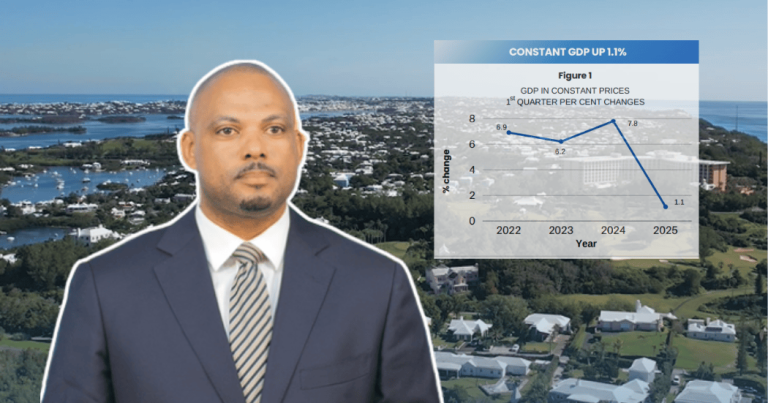
Bermuda’s economy continues to perform well, yet, the affordability of living and doing business remains an associated risk.

That’s the assessment of Jason Hayward, Minister of Economy and Labour after he broke down the figures for the first quarter of 2025 today.

Alisa Bernardo has more in the above report.

UK faces more protests and legal action after asylum seekers hotel injunction

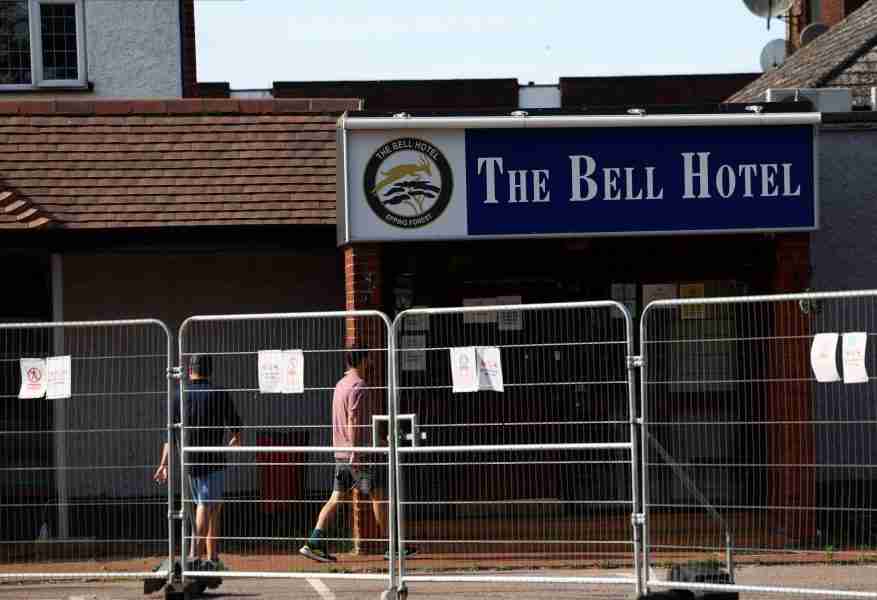
On Tuesday, the High Court in London granted a temporary injunction to stop asylum seekers from being housed in the Bell Hotel in Epping

International News via Reuters:

The British government policy of housing thousands of asylum seekers in hotels was facing severe pressure on Wednesday, as opponents leapt on a court ruling to call for protests and legal action to have them all evicted.

According to a regular tracker of voters’ concerns, immigration has overtaken the economy as the biggest issue amid anger over record numbers of asylum seekers arriving in small boats across the Channel, including more than 27,000 this year.

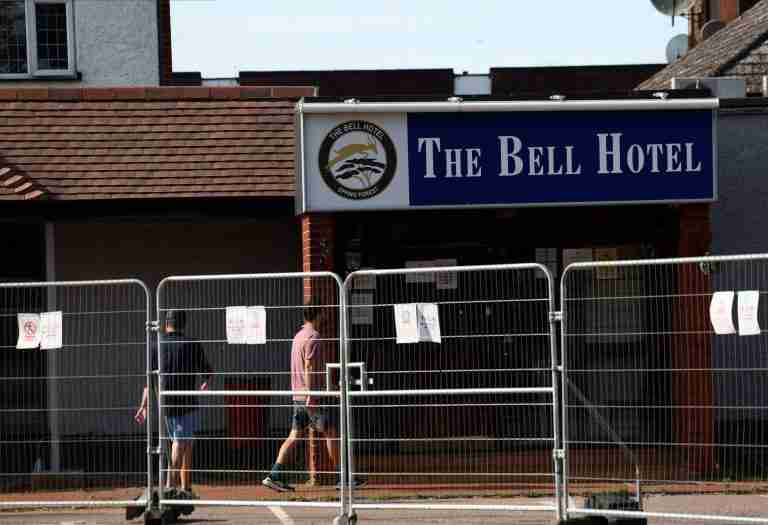
On Tuesday, the High Court in London granted a temporary injunction to stop asylum seekers from being housed in the Bell Hotel in Epping, about 20 miles (32 km) northeast of London in the county of Essex.

The hotel had become a focal point for regular protests after a resident was charged with sexual assault, a crime he denies, with large numbers of police separating anti-immigration protesters and pro-immigration groups.

The injunction in the Epping case centred around a specific planning issue and could be reversed when the case is heard in full later this year.

But other councils said they would also urgently seek legal advice on evicting asylum seekers from hotels in their areas.

Nigel Farage, the leader of the populist Reform Party which is leading in opinion polls, said all the 12 local authorities his party controlled would do everything in their power to do so.

“Let’s hold peaceful protests outside the migrant hotels, and put pressure on local councils to go to court to try and get the illegal immigrants out; we now know that together we can win,” Farage wrote in the Daily Telegraph newspaper.

“No doubt we will be attacked as ‘far Right’ provocateurs for daring to suggest that people follow the lead of Epping’s parents and residents by protesting peacefully.”

ASYLUM HOTELS

Britain currently houses about 30,000 asylum seekers who are awaiting decisions on their claims in more than 200 hotels across the country and, although the government has said it intended to close all of these by 2029, it now faces a major headache if others are able to follow Epping’s lead.

In the court hearing, the Home Office (interior ministry) said the injunction would have a “substantial impact” on the government’s ability to comply with its legal duty to provide accommodation, and security minister Dan Jarvis said they would look closely at the decision and whether to appeal it.

“The big challenge remains, which is, we need to process asylum claims much more speedily and much more effectively than was the case previously,” Jarvis told BBC TV.

Critics say that housing asylum seekers in hotels, often young men who are not allowed to work, puts the local community at risk, and point to recent incidents such as in Epping and other locations where some migrants have been accused of serious crimes including the rape and sexual assault of young girls.

They also contrast the facilities provided to migrants in hotels with the difficulties many in Britain are facing with rising living costs and shortages of affordable housing.

However, pro-migrant groups say far-right groups and opportunistic politicians are deliberately seeking to exploit and enflame tensions for their own ends.

Across Europe governments have struggled with how to house asylum seekers, with far-right and anti-migrant groups in France also leading protests against dedicated centres in recent years.

During riots in Britain last year, hotels containing migrants were attacked when unrest involving some far-right supporters erupted after misinformation that the murderer of three girls in Southport was a radical Islamist migrant.

Reporting by Michael Holden and Sachin Ravikumar; Editing by Alex Richardson

Finance industry bodies call for changes to crypto rules for banks

While the crypto market remains a small part of the overall financial system, it has grown rapidly in recent years, with cryptocurrency prices reaching record highs

International News via Reuters:

A group of finance industry bodies is calling for a rethink on looming regulatory standards that they say will make it difficult for banks to participate in crypto markets.

The Basel Committee on Banking Supervision, which comprises regulators and central banks from the world’s main financial centres, agreed a set of standards in 2022 for how banks should manage and disclose risks around their exposure to crypto assets.

In an open letter to the committee, various finance industry groups said that the crypto market has changed since 2022, making the proposed standards too conservative.

While the crypto market remains a small part of the overall financial system, it has grown rapidly in recent years, with cryptocurrency prices reaching record highs. It has also become increasingly connected to mainstream financial markets.

Banks are trying to tap into a shift in the regulatory environment in the U.S., where President Donald Trump has taken a pro-crypto approach. U.S. regulators this year made it easier for banks to engage in crypto-related activities.

“The Cryptoasset Standard’s restrictive qualification standards, combined with otherwise punitive market and credit risk capital treatments, effectively make it uneconomical for banks to meaningfully participate in the cryptoasset market,” the letter said.

The letter called for the committee to “temporarily pause” implementation of the new standards, seek new information and consider making changes.

Signatories included the Global Financial Markets Association, the Institute of International Finance and the International Swaps and Derivatives Association – which lobby for the mainstream financial sector – as well as crypto industry groups.

The Basel Committee has no enforcement powers, but its members agree to apply its standards to international banks in their jurisdictions. The standards around crypto are due to come into effect in January 2026.

The Bank for International Settlements, where the Basel Committee is based, did not immediately respond to a request for comment.

A series of collapses at major crypto companies in 2022 left millions of investors out of pocket and revealed widespread misconduct in the industry, prompting calls for regulation.

Reporting by Elizabeth HowcroftEditing by David Goodman

Hurricane Erin threatens North Carolina’s Outer Banks with storm surge

The National Hurricane Center warned that roads in the low-lying barrier islands may become impassable

International News via Reuters:

Hurricane Erin, churning north in the Atlantic hundreds of miles offshore, is expected to trigger a dangerous storm surge and tropical storm conditions on Wednesday along North Carolina’s Outer Banks and other stretches of the U.S. East Coast. 

The National Hurricane Center warned that roads in the low-lying barrier islands may become impassable, with waves as high as 20 feet crashing ashore. The heavy surf is likely to result in significant beach erosion, it said in its 8 a.m. EDT update.

North Carolina Governor Josh Stein declared a state of emergency on Tuesday, freeing up state money and manpower to help during the storm and its aftermath.

Tropical storm and storm-surge warnings are in place for other parts of the North Carolina coastline.

Earlier in the week, the coastal counties of Dare and Hyde – which encompass most of the Outer Banks – ordered residents and tourists to evacuate the vulnerable Ocracoke and Hatteras islands, whose populations swell during the summer months. 

Local media reported that ferries took more than 2,220 people off Ocracoke, with the final sailing scheduled for 11 a.m. on Wednesday. Ferries to Hatteras will keep operating as long as conditions allow, ABC News affiliate WCTI reported.

But Chris Styron, manager of the Pony Island Inn on Ocracoke, is ignoring the evacuation orders and staying to watch over the 50-room hotel.

“We’re used to storms like this,” Styron said. “I’m born and raised here. We’re not really worried – it’s so far offshore.”

The eye of Erin, rated as a Category 2 storm with sustained winds of 100 mph (155 km/h), was expected to move midway between the U.S. East Coast and Bermuda on Wednesday and Thursday as it traveled northward, the NHC said. That trajectory will keep the worst of its winds offshore.

Tropical-storm-force winds extend up to 265 miles (426 km) from the storm’s center, with hurricane-force winds extending for 90 miles.

Even so, the NHC warned beachgoers along most of the East Coast to stay out of the water because of “life-threatening surf and rip currents.”

Along the New Jersey shore, swimming and other water activities were prohibited on beaches from Cape May north to Sandy Hook, with high surf and rip current warnings in effect into Friday, the NWS said. Coastal flooding is expected to peak during high tide on Thursday.

New York City Mayor Eric Adams ordered all city public beaches – including Coney Island and Brighton Beach – to close Wednesday and Thursday.

Fortunately, temperatures in New York were expected to be seasonably cool on Wednesday and Thursday, with highs only reaching 70 F, well below the average of 82 F.

Erin, the fifth named storm of the 2025 Atlantic season and the first to attain hurricane status, had strengthened to a Category 5 storm. The last Atlantic storm to reach that intensity was Hurricane Milton in October 2024.

Reporting by Rich McKay in Atlanta; Editing by Frank McGurty and Mark Porter