Sunday, November 8, 2026
Home Blog Page 823

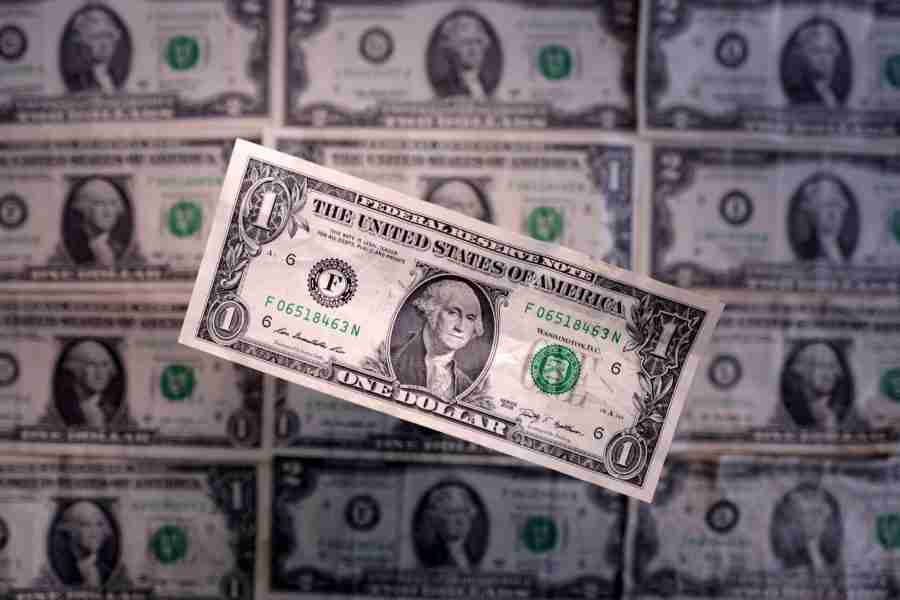
Dollar steady before Jackson Hole, kiwi drops on dovish RBNZ

The dollar index, which measures the U.S. currency against six others, was flat at 98.319, after earlier touching a more than one week high of 98.441
International News via Reuters:

The U.S. dollar was little changed on Wednesday as traders awaited a speech from Federal Reserve Chair Jerome Powell at the annual Jackson Hole symposium later this week for clues on the monetary policy path.

The New Zealand dollar tumbled after the central bank reduced its cash rate by a quarter point to 3.0% as expected, and said its board had also considered a half-point cut.

The dollar index, which measures the U.S. currency against six others, was flat at 98.319, after earlier touching a more than one week high of 98.441.

Friday’s speech by Powell is the market’s main focus, as traders watch for any pushback against market pricing of a rate reduction at the Fed’s September 16-17 meeting.

Traders now place odds of about 85% on a quarter-point cut next month and expect about 54 basis points of reductions by year-end.

“Powell will try to be fairly balanced, but there is a risk we see a hawkish Powell on Friday,” said Kirstine Kundby-Nielsen, FX analyst at Danske Bank.

“Some of the developments we’ve seen in inflation dynamics will keep the Fed more cautious.”

Traders, who ramped up bets for Fed cuts after a surprisingly weak U.S. payrolls report at the start of this month, were further encouraged after consumer price data showed limited upward pressure from tariffs.

However, a hotter-than-expected producer price reading last week complicated the policy picture.

Powell has said he is reluctant to cut rates because of expected tariff-driven price pressures this summer.

Later on Wednesday, the Fed will issue the minutes of its meeting on July 29 and 30, when it held rates steady, although they may offer limited insight as the meeting came before the weak jobs numbers.

The kiwi slumped as much as 1.3% to $0.5815, its weakest since April 11, with policymakers lowering their projected floor for the cash rate to 2.55%, from 2.85% forecast in May.

“The market did not expect the bank to send a strong dovish signal that it intends to deliver further cuts,” Prashant Newnaha, a rates strategist at TD Securities, wrote in a client note. He has increased his forecast for additional easing, now projecting a cash rate of 2.5% by November.

The Swedish crown was steady after its central bank maintained its policy rate at 2%, in line with expectations.

The euro eased 0.1% to $1.1636. The greenback advanced 0.1% to 0.8078 Swiss franc, though it edged down 0.1% to 147.61 yen.

The pound rose slightly against the euro and dollar after hotter-than-forecast inflation, leaving Britain with the biggest price growth problem amongst the world’s big rich economies.

But much of the rise in services inflation was driven by volatile airfares, which some economists said was due to the timing of the school holidays.

“The BoE (Bank of England) is more concerned about food inflation, which hasn’t changed much in today’s release,” ING’s head of research Chris Turner said.

“We doubt today’s CPI release will alter much of the BoE’s current thinking.”

In cryptocurrencies, bitcoin hovered at around $113,897 after earlier dipping to the lowest since August 3 at $112,578.38, pressured by a strengthening dollar.

Ether was up 1.8% at $4,234.

Reporting by Samuel Indyk and Kevin Buckland. Editing by Sam Holmes and Mark Potter

Oil firms as investors await next steps in Ukraine peace talks

Crude fell more than 1% on Tuesday on optimism that an agreement to end the war seemed closer

International News via Reuters:

Oil rose on Wednesday as the American Petroleum Institute reported a drop in U.S. crude inventories and investors awaited the next steps in talks to end the Ukraine war, with sanctions on Russian crude remaining in place for now.

Crude fell more than 1% on Tuesday on optimism that an agreement to end the war seemed closer. However, U.S. President Donald Trump conceded that Russian President Vladimir Putin might not want to make a deal.

Brent crude futures rose 55 cents, or 0.8%, to $66.34 a barrel by 0812 GMT. U.S. West Texas Intermediate crude futures for September delivery, set to expire on Wednesday, gained 65 cents, or 1%, to $63.

“(It) seems oil prices are thrown down one day, followed by a rebound the next day. The API report was on the positive side, so I assume some price support is coming from that,” said Giovanni Staunovo, an analyst at UBS.

Crude stocks fell by 2.42 million barrels, market sources said on Tuesday, citing American Petroleum Institute figures, ahead of official data at 1430 GMT.

“Not so sure about the peace deal – will have to see if something moves forward over the coming days,” Staunovo added.

Trump said on Monday he was arranging a meeting between Putin and Ukrainian President Volodymyr Zelenskiy to be followed by a trilateral summit among the three presidents.

Russia has not confirmed it will take part in talks with Zelenskiy.

“The likelihood of a quick resolution to the conflict with Russia now seems unlikely,” said Daniel Hynes, senior commodity strategist at ANZ, in a note on Wednesday.

Oil also found support from flooding at a large U.S. refinery.

BP said on Tuesday operations at its 440,000-barrel-per-day refinery in Whiting, Indiana, were affected by flooding after a severe thunderstorm, potentially weighing on crude demand at the facility – a key fuel producer for the Midwest market.

Additional reporting by Colleen Howe in Beijing and Jeslyn Lerh in Singapore; Editing by Helen Popper

Pakistan’s Karachi hit by torrential rain and floods

The monsoon has brought havoc across Pakistan in recent days with the death toll from flash floods that struck the mountainous northwest on Friday rising to 377

International News via Reuters:

Pakistan declared a public holiday in Karachi on Wednesday as the financial capital braced for more rain, after the arrival of the annual monsoon season left at least 7 people dead and caused widespread flooding, officials said.

The monsoon has brought havoc across Pakistan in recent days with the death toll from flash floods that struck the mountainous northwest on Friday rising to 377.

In Karachi, at least seven people have died since the rains began in the southern port city on Tuesday, said Abdul Wahid Halepoto, a provincial government spokesperson. Rainfall reached levels not seen in years in some parts of the city, Pakistan’s largest, with a population of more than 20 million.

Authorities ordered educational institutions and offices to shut.

“We are expecting more intense rains,” said Anjum Nazir, a spokesperson for the provincial meteorological department.

Tuesday’s rain was recorded between 80 mm (3.15 inches) and 178 mm (7.01 inches) in different parts of the city, he said.

Nazir said the area around the airport received 163.5 mm of rain, the highest recorded there since 1979. Some 178mm of rain was recorded in the northeast of the city, the highest since the weather station there was set up five years ago.

The rain also disrupted power, mobile phone services and flights, officials said. Local television footage showed cars and other vehicles floating down streets, with houses submerged in water.

Rescue workers, police, volunteers and government civic agencies were helping relief efforts, the city’s Mayor Murtaza Wahab told local Geo News television.

“We have all our resources at work,” he said.

Wahab said the rain had overwhelmed the city’s infrastructure.

There have also been heavy monsoon rains in Mumbai, India’s financial capital, with some parts of the city drenched with as much as 875.1 mm of rain in the five days leading up to August 20, the local weather department said.

Many schools in the city were closed for a second straight day on Wednesday, while train services were disrupted.

    Authorities requested residents avoid venturing out as more rain was predicted. 

Reporting by Ariba Shahid and Asif Shahzad in Islamabad and Shilpa Jamkhandikar in Mumbai; Writing by Asif Shahzad; Editing by Kate Mayberry

US-EU trade deal not far from ECB’s baseline forecast, Lagarde says

The EU accepted 15% tariffs on most items in the deal agreed last month

International News via Reuters:

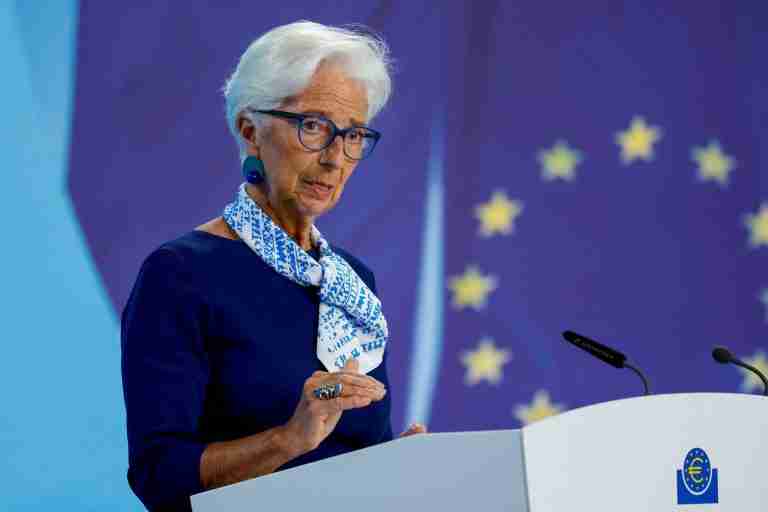
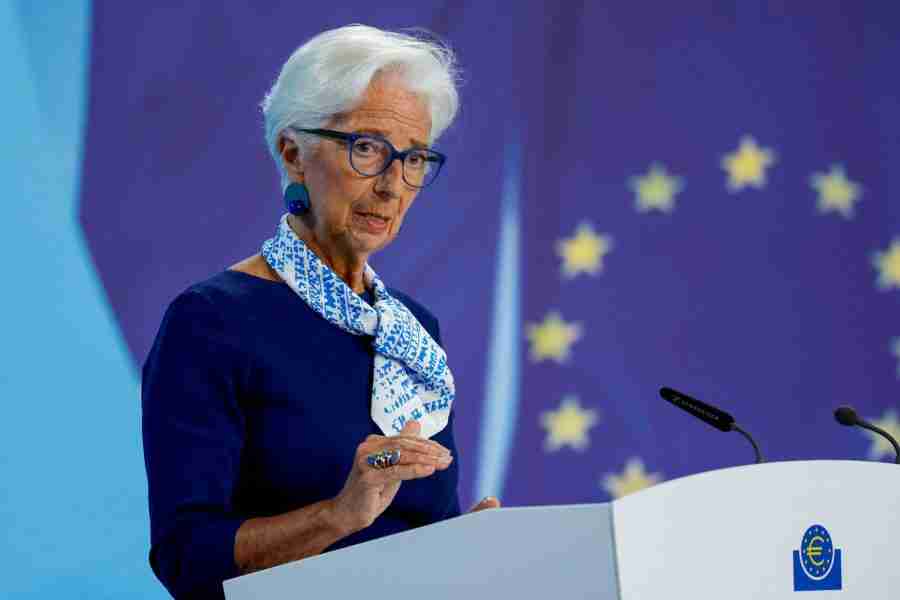
The trade deal between the U.S. and the EU is close to the baseline assumed by the European Central Bank, but uncertainty persists in key sectors like pharmaceuticals and semiconductors, ECB President Christine Lagarde said on Wednesday.

The EU accepted 15% tariffs on most items in the deal agreed last month, averting an all-out trade war and providing businesses greater clarity, even if the new barriers slow economic growth.

“The trade deal establishes an effective average tariff estimated to lie between 12% and 16% for U.S. imports of euro area goods,” Lagarde said in Geneva.

“This effective average tariff is somewhat higher than – but still close to – the assumptions used in our baseline projections last June,” she said. “The outcome of the trade deal is well below the severe scenario for U.S. tariffs of over 20%.”

The ECB’s baseline projection assumes economic growth of 1.1% next year while the “severe” outcome would have lowered this to 0.7%, the ECB’s June projections show.

The U.S.-EU trade deal is still likely to weigh on economic growth, Lagarde added, saying a long-predicted slowdown was already evident in second-quarter economic data.

The EU, which has always relied on extensive foreign trade for growth, should now diversify its trade with other nations to maintain growth and offset the negative impact of tariffs, Lagarde said.

“While the United States is – and will remain – an important trading partner, Europe should also aim to deepen its trade ties with other jurisdictions, leveraging the strengths of its export-oriented economy,” she said.

Reporting by Balazs Koranyi;Editing by Alison Williams and Helen Popper

UK house prices rise 3.7% year-on-year in June

House price inflation reached its highest in more than two years at 5.5% in March

International News via Reuters:

British house prices in June were 3.7% higher than a year earlier, up from an annual increase of 2.7% in May, the Office for National Statistics said on Wednesday.

House price inflation reached its highest in more than two years at 5.5% in March ahead of the expiry of a tax break on many property purchases.

Private-sector rents were 5.9% higher than a year earlier in July, down from 6.7% in June and the smallest annual increase since January 2023.

Reporting by David Milliken; Editing by Sachin Ravikumar

Pope Leo calls for day of fasting, prayers for peace in Ukraine on Friday

Leo suggested the faithful could ask God to “grant us peace and justice and to wipe away the tears of those who suffer because of the ongoing armed conflicts.”

International News via Reuters:

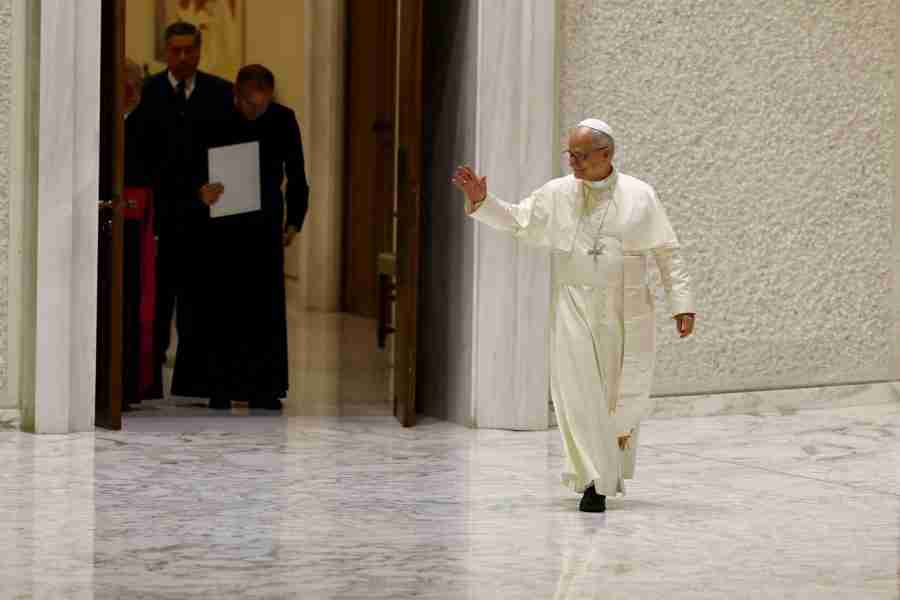
Pope Leo has asked Catholics and other religious faithful to observe a day of fasting and prayers for peace in Ukraine and other war-torn countries on Friday, August 22.

“As our Earth continues to be wounded by wars in the Holy Land, in Ukraine, and in many other regions … I invite all the faithful to live the day of August 22 in fasting and prayer,” the pontiff said during his weekly audience at the Vatican on Wednesday.

Leo suggested the faithful could ask God to “grant us peace and justice and to wipe away the tears of those who suffer because of the ongoing armed conflicts.”

Reporting by Joshua McElwee, editing by Gavin Jones

Member of Irish rap group Kneecap appears at UK court on terrorism charge

Liam Óg Ó hAnnaidh whose stage name is Mo Chara, is alleged to have waved the flag of the banned militant group Hezbollah during a Kneecap gig

International News via Reuters:

A member of Irish rap group Kneecap was welcomed by hundreds of supporters as he arrived at a London court on Wednesday, charged with a terrorism offence for allegedly displaying a flag in support of Iran-backed Lebanese militia Hezbollah.

Liam Óg Ó hAnnaidh, who was initially charged under the Anglicised name Liam O’Hanna and whose stage name is Mo Chara, is alleged to have waved the flag of the banned militant group Hezbollah during a Kneecap gig in London in November 2024.

The 27-year-old was charged in May under the Terrorism Act, under which it is a criminal offence to display an article in a way which arouses reasonable suspicion that someone is a supporter of a proscribed organisation.

Wednesday’s hearing at Westminster Magistrates’ Court is expected to deal with Óg Ó hAnnaidh’s argument that the charge was brought too late and should be thrown out, failing which he is likely to formally enter a plea.

Belfast-based Kneecap, who rap in Irish and English and regularly display pro-Palestinian messages during their gigs, previously said the flag had been thrown on stage and described the charge as an attempt to silence them.

The group – who rap about Irish identity and support the republican cause of uniting Northern Ireland with the Republic of Ireland – have been increasingly vocal about the war in Gaza since Óg Ó hAnnaidh was charged.

Kneecap led a 30,000-strong crowd at Glastonbury Festival in June in chants against Prime Minister Keir Starmer and accused Israel of committing war crimes in Gaza, which Israel denies.

Reporting by Sam Tobin; Editing by Kate Holton

European equities retreat from 5-month high as tech, defence shares drag

Britain’s blue-chip FTSE 100 dipped 0.2%, after data showed UK inflation rose to 3.8% in July, its highest since early 2024

International News via Reuters:

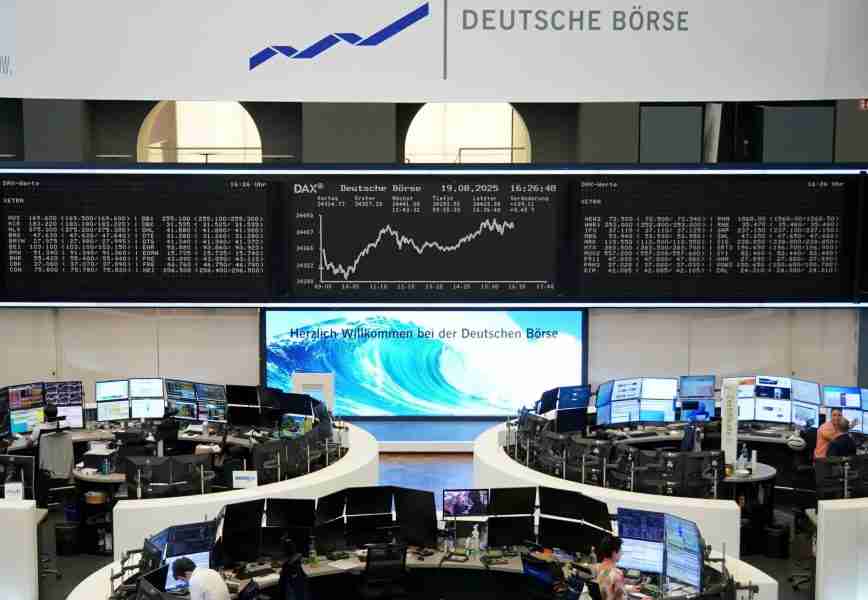
European equities slipped on Wednesday, retreating from a five-month closing high, after tech stocks tracked dour performances of their Wall Street peers and the defence sector faced pressure for a second day.

The pan-European STOXX 600 index was down 0.2%, as of 0830 GMT, with most major bourses trading in losses.

Britain’s blue-chip FTSE 100 dipped 0.2%, after data showed UK inflation rose to 3.8% in July, its highest since early 2024 and in line with the Bank of England’s expectations.

Shares of European defence-linked companies dropped 0.6%, after suffering their worst day in more than a month in the previous session on expectations of a Ukraine peace deal.

U.S. President Donald Trump said Washington might provide air support to Ukraine as part of a peace deal, but ruled out putting troops on the ground.

European leaders weighed additional sanctions to ramp up pressure on Russia in a bid to end the war in Ukraine, the British government said.

Tech stocks fell 0.4% a day after U.S. counterparts tumbled on concerns over an AI stock bubble and uncertainty around the interest rate outlook, particularly with Federal Reserve Chair Jerome Powell and other major central bank heads set to speak at the Jackson Hole summit later this week.

“We had a very strong rally for a good three or four months. Stocks are very close to all-time highs and it’s natural we have some kind of risk reduction and potential profit-taking,” said Marija Veitmane, head of equity Research at State Street.

“Tech stocks had a very strong run and we’re getting close to the Jackson Hole meeting … so investors are kind of positioning for that.”

Meanwhile, European Central Bank President Christine Lagarde said the trade deal between the EU and U.S. despite being somewhat higher is not far from the baseline assumed by the ECB.

The Swedish central bank kept interest rates steady as expected, while saying it expects some probability of a rate cut later this year.

The outlook for European corporate health has slightly worsened, the latest earnings forecast showed on Tuesday, with companies expected to report 4.6% growth in the second quarter on average, below last week’s expectations of a 4.8% rise, according to LSEG I/B/E/S data.

Mining stocks were the top laggards, with Anglo American, Rio Tinto and Antofagasta falling between 1% and 2%.

Alcon slumped 9.4%, after the Swiss-American eye-care group cut its 2025 net sales forecast on expected impact of U.S. tariffs.

British medical equipment maker Convatec announced a $300 million share buyback program, sending its shares up 7.2% to the top of the STOXX index.

Reporting by Twesha Dikshit and Sruthi Shankar in Bengaluru; Editing by Sherry Jacob-Phillips and Shilpi Majumdar

Taste of Bermuda 2025 lineup revealed

The City of Hamilton today unveiled the lineup for Taste of Bermuda 2025, set to take place October 9th–12th. 

At a press conference, Dwayne Caines, Chief Executive Officer of the City of Hamilton, shared highlights of this year’s event, which promises new experiences for attendees.

Taste of Bermuda 2025 is introducing new collaborations with a select group of hotels on the island, designed to enhance the festival experience.

These partnerships aim to showcase the best of Bermuda hospitality while providing convenient access to all the culinary, entertainment, and cultural highlights of Taste of Bermuda. 

Clarence Hofheins, President of the Bermuda Hotel Association, shares more about the new partnership. 

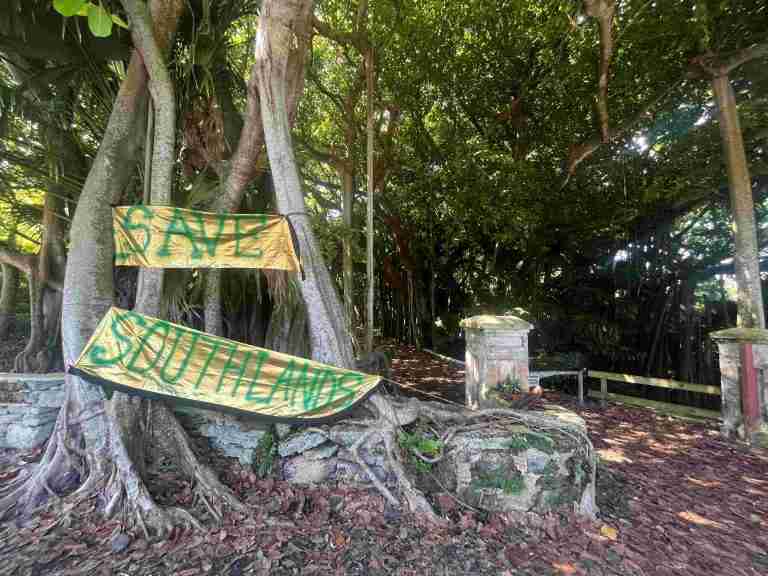
More than 1,000 speak out on fate of Southlands

Public submissions and petitions mount against Government’s draft plan for the National Park

Hands off Southlands.

That’s the overwhelming message from residents responding to the Southlands Park Draft Management Plan 2025.

Today marked the final day for public feedback on the plan that will shape the future of the greenspace – but critics say the deadline won’t stop their fight to protect it.

WATCH the report above.


Petition · Stop the Development of Southlands National Park – Bermuda · Change.org

Finance industry bodies call for changes to crypto rules for banks

Banks are trying to tap into a shift in the regulatory environment in the U.S., where President Donald Trump has taken a pro-crypto approach

International News via Reuters:

A group of finance industry bodies is calling for a rethink on looming regulatory standards that they say will make it difficult for banks to participate in crypto markets.

The Basel Committee on Banking Supervision, which comprises regulators and central banks from the world’s main financial centres, agreed a set of standards in 2022 for how banks should manage and disclose risks around their exposure to crypto assets.

In an open letter to the committee, various finance industry groups said that the crypto market has changed since 2022, making the proposed standards too conservative.

While the crypto market remains a small part of the overall financial system, it has grown rapidly in recent years, with cryptocurrency prices reaching record highs. It has also become increasingly connected to mainstream financial markets.

Banks are trying to tap into a shift in the regulatory environment in the U.S., where President Donald Trump has taken a pro-crypto approach. U.S. regulators this year made it easier for banks to engage in crypto-related activities.

“The Cryptoasset Standard’s restrictive qualification standards, combined with otherwise punitive market and credit risk capital treatments, effectively make it uneconomical for banks to meaningfully participate in the cryptoasset market,” the letter said.

The letter called for the committee to “temporarily pause” implementation of the new standards, seek new information and consider making changes.

Signatories included the Global Financial Markets Association, the Institute of International Finance and the International Swaps and Derivatives Association – which lobby for the mainstream financial sector – as well as crypto industry groups.

The Basel Committee has no enforcement powers, but its members agree to apply its standards to international banks in their jurisdictions. The standards around crypto are due to come into effect in January 2026.

The Bank for International Settlements, where the Basel Committee is based, did not immediately respond to a request for comment.

A series of collapses at major crypto companies in 2022 left millions of investors out of pocket and revealed widespread misconduct in the industry, prompting calls for regulation.

Reporting by Elizabeth HowcroftEditing by David Goodman