Sunday, November 8, 2026
Home Blog Page 834

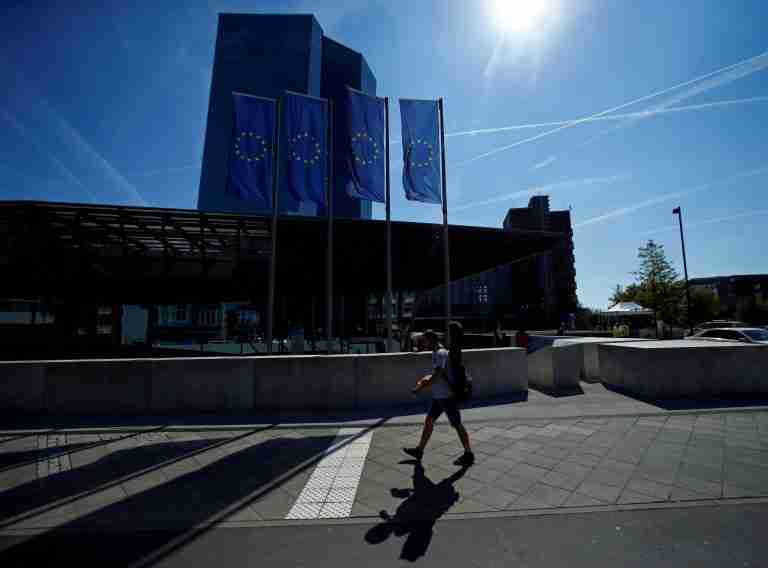
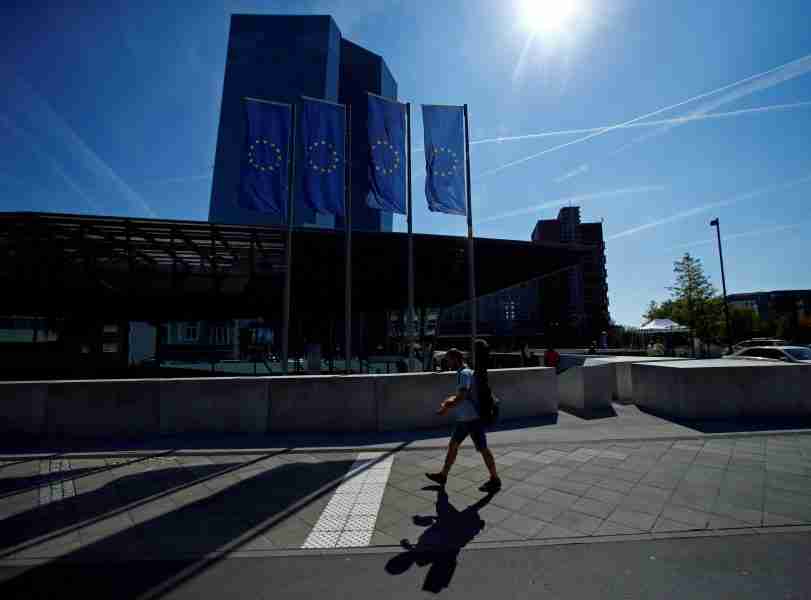
ECB to hold rates until at least December on stable economic outlook- Reuters poll

Inflation will average around 2% at least until 2027, according to poll medians, an outlook stable since June
International News via Reuters:

The European Central Bank will hold interest rates at 2.00% in September according to a majority of economists polled by Reuters, with the euro zone’s economic outlook broadly unchanged after the EU agreed a trade deal with the United States.

Expectations have shifted from the previous poll in July when the majority of economists had forecast another rate cut next month. Now policymakers are seen waiting until December if they opt to cut rates one more time, but there is no longer a majority consensus for where the deposit rate will be by end-year.

While most respondents said the 15% U.S. tariff on EU goods could weigh on growth and dampen price pressures, upcoming fiscal support, particularly from Germany, and reduced uncertainty are seen keeping the bloc on a steady growth path.

Inflation is already at the ECB’s target of 2%, providing additional assurance for policymakers. The central bank held rates last month, after a cumulative 200 basis point reduction since June 2024.

The steady economic outlook is in contrast to the United States, where the jobs market is weakening, inflation is ticking higher and the Federal Reserve, which has held rates steady all year, faces growing doubts over its future independence from political interference.

A majority of economists, 46 of 72, in the August 11-14 poll expect the ECB’s Governing Council to leave interest rates unchanged next month.

“Many of the GC members, whether they be hawks or doves, have been saying they don’t need to do anything right now,” said George Buckley, chief European economist at Nomura.

“We’ve got a combination of rates that are neutral, growth at trend and inflation moving to the target or staying roughly around it.”

The 2% deposit rate is the midpoint of the ECB’s estimated neutral rate range of 1.75% to 2.25% which neither stimulates nor restricts economic growth.

Last month, nearly 60% of economists said there would be one more rate cut by year-end. Now just 47%, 34 of 72, expect one more cut, likely in December, while 31 forecast no further reduction and seven saw two additional 25 basis point cuts.

“We are in a world in which tariffs are pretty much disinflationary. Certainly, this contributes to further risks the ECB could cut rates, but it’s not necessarily bad enough for them to do it,” said Fabio Balboni, senior European economist at HSBC.

“We won’t have enough new information by (September)…if I have to give a time for a possible further rate cut, maybe more likely December or even the start of next year.”

Inflation will average around 2% at least until 2027, according to poll medians, an outlook stable since June.

The euro zone economy is forecast to grow 1.1% this year, 1.2% in 2026 and 1.4% in 2027, also broadly unchanged since June.

“The (trade) deal was pretty much close to our base case,” said Chris Scicluna, head of economic research at Daiwa Capital Markets. “Businesses have a little bit more certainty in terms of planning investments going forward.”

(Other stories from the Reuters global economic poll)

Reporting by Indradip Ghosh; Polling by Jaiganesh Mahesh and Reshma Ann Samuel; Editing by Ross Finley, Kirsten Donovan


Daniel Augustus begins Mannings Heath Masters

Golfer Daniel Augustus has begun his campaign at The Mannings Heath Masters, a prestigious event on the Clutch Pro Tour, with an opening round of one-over par 73.

Augustus, competing on the Mannings Heath Estate course, started his round on the front nine and faced a challenging start, making the turn at two-over par. However, he showed great resilience on the back nine, fighting back to finish the day with a solid score.

His round consisted of four birdies and nine pars, which were offset by five bogeys. The performance sets up a crucial second round for Augustus as he aims to make the cut and advance in the most anticipated golf event in Horsham and West Sussex.

UK economy slows less than expected giving some help to Reeves

Official figures published on Thursday showed that after an unusually strong 0.7% expansion in the first three months of 2025, gross domestic product grew 0.3% in the second quarter

International News via Reuters:

Britain’s economy slowed less than expected between April and June after a strong start to the year, despite the shock of U.S. trade tariffs and a weaker jobs market, offering help to finance minister Rachel Reeves in meeting her budget goals.

Official figures published on Thursday showed that after an unusually strong 0.7% expansion in the first three months of 2025, gross domestic product grew 0.3% in the second quarter.

That was above the 0.1% forecast by the Bank of England and a Reuters poll of economists.

Sterling rose slightly against the dollar after the data.

The Office for National Statistics said British GDP fell 0.1% in April – a smaller decline than first thought – and dropped again in May before rising 0.4% in June with growth across services, industry and construction.

Economists said much of the growth reflected higher public spending and businesses at home and abroad building up stocks of goods ahead of higher U.S. tariffs.

Business investment fell by 4% from the first quarter and household spending growth was weak.

“The continued reluctance of consumers to open their wallets is concerning,” said Thomas Pugh, economist at accountants RSM UK. “We don’t expect growth to pick up much from here as continued consumer caution, weaker global demand and tax increases all continue to drag.”

Most economists think Reeves will have to raise taxes in her annual budget in October or November – potentially by tens of billions of pounds – as a subdued growth outlook and high borrowing costs have made her budget goals harder to reach.

The Royal Institution of Chartered Surveyors said earlier on Monday that higher taxes were one factor weighing on the housing market and the Confederation of British Industry urged Reeves not to make businesses bear the brunt of further tax rises.

“The UK is walking a narrow path between resilience and stagnation. Policy uncertainty in the run-up to the Autumn Budget risks tipping the balance,” said CBI lead economist Ben Jones.

Last week, the BoE forecast Britain’s economy would grow 0.3% in the third quarter and 1.25% in 2025 as a whole.

The strong growth in the first quarter reflected increased production to avoid U.S. tariffs and more property sales due to the imminent end of a tax break.

SECOND-FASTEST IN G7

Reeves has highlighted how British economic growth in the first quarter of the year was the fastest in the Group of Seven large advanced economies. Thursday’s data showed Britain joint-second with France in the second quarter.

Output in the second quarter overall was up 1.2% from the same period last year compared to a median forecast from economists for 1.0% growth. On a per head basis, GDP was 0.7% higher than a year earlier.

After the data, Reeves said there was “more to do to deliver an economy that works for working people” and the government would press on with plans for infrastructure investment, reduced restrictions on construction and a higher minimum wage.

The opposition Conservative Party said further tax rises would lower living standards.

Business groups have said firms have scaled back hiring – particularly for lower-paid, part-time roles – due to a rise in employers’ social security payments and an increased minimum wage that took effect in April.

Data on Tuesday showed payrolled employment fell for a sixth month although growth in basic pay remained fast at 5%.

Last month the International Monetary Fund forecast Britain’s economy would grow 1.2% this year and 1.4% in 2026 – a little faster than the euro zone and Japan but slower than the United States and Canada.

Reporting by David Milliken; Editing by William Schomberg and Kate Mayberry

Video sampler: BBQ at the Princess Beach Club at Sinky Bay

Kendal Trott experiences barbeque night at The Princess Beach Club at Sinky Bay.
There are Mediterranean feasts on Fridays and Southern cookouts on Saturdays – along with live entertainment.
Here’s a brief glimpse …

Dage Minors competes in Trafford Grand Prix

Bermudian middle-distance runner Dage Minors has secured a top-ten finish at the World Athletics Challenger British Milers Club (BMC) Trafford Grand Prix, placing sixth in the Men’s 1500m B Final.

Representing Bristol & West/Bermuda, Minors crossed the line with a time of 3:47.35. His performance at the competitive Manchester track meet adds to his season on the UK circuit, where he continues to gain valuable experience against a strong field of international and domestic athletes.

Countries race for late breakthrough in deadlocked plastic pollution talks

Oil-producing nations are against curbs on the production of virgin plastics derived from petroleum, coal, and gas

International News via Reuters:

Talks to create the world’s first legally binding treaty to tackle plastic pollution are at risk of ending without a deal as countries race to find a potential compromise on the final day of negotiations in Geneva.

Talks headed into their final hours on Thursday after countries who want an ambitious plastics treaty threw out the text proposed on Wednesday.

States pushing for a comprehensive treaty, including Panama, Kenya, France and Britain, shared frustration that key articles on the full life cycle of plastic pollution from the production of polymers to the disposal of waste, as well as the harm to health, had been removed entirely from the text.

Oil-producing nations are against curbs on the production of virgin plastics derived from petroleum, coal, and gas, while others want it to be limited and to have stricter controls over plastic products and hazardous chemicals.

“It’s proving unlikely all countries will be able to bridge their differences,” said Zaynab Sadan of the World Wildlife Fund (WWF), adding that agreement was as far away as it had ever been in nearly three years of talks.

Panama described the new draft text as “repulsive” and called for a complete rewrite.

Saudi Arabia, which is resisting major curbs, said nothing could be agreed until the treaty’s scope is clearly defined.

More than 1,000 delegates have gathered in Geneva for the sixth round of talks, after a meeting of the Intergovernmental Negotiating Committee (INC-5) in South Korea late last year ended without a deal.

The OECD warns that without intervention, plastic production will triple by 2060, further choking oceans, harming health, and exacerbating climate change.

“It will be very important to spend every single hour of the last day of negotiation finding a good text that can deliver on the promise to end plastic pollution,” said Giulia Carlini, a Senior Attorney for the Environmental Health Program of the Center for International Environmental Law (CIEL).

COMPROMISE

Norwegian Minister of Climate and Environment Andreas Bjelland Eriksen, co-chair of the High Ambition Countries group, told Reuters that all parties need to compromise.

“We are willing to discuss all articles, three, six, for example, to be able to create the package that can be good enough for everyone,” he said, pointing to potential openness to re-discussing restrictions on chemicals and production.

“We’re optimistic … We think this can be really good for our industry, society, and for the environment,” Ross Eisenberg, president of America’s Plastic Makers, which is part of the American Chemistry Council, told Reuters.

The Council, which supports a deal without limits on plastic production, warned that the U.S. might not ratify a treaty containing provisions to ban chemicals or restrict plastic production.

However, Colombian lawmaker Juan Carlos Loazada urged that no deal would be better than a watered down deal.

Some 300 businesses, including Unilever, have pressed for an ambitious treaty that harmonizes rules globally.

“If we don’t get that degree of harmonization, we risk further fragmentation … and higher costs,” Ed Shepherd, Senior Global Sustainability Manager at Unilever, told Reuters.

Reporting by Olivia Le Poidevin and Emma Farge in Geneva; additional reporting by Alexander Marrow in London; editing by Giles Elgood

UK goods exports to US fell to 3-year low in June before trade deal

Sales of British goods to the United States fell to 3.9 billion pounds ($5.3 billion) during the month

International News via Reuters:

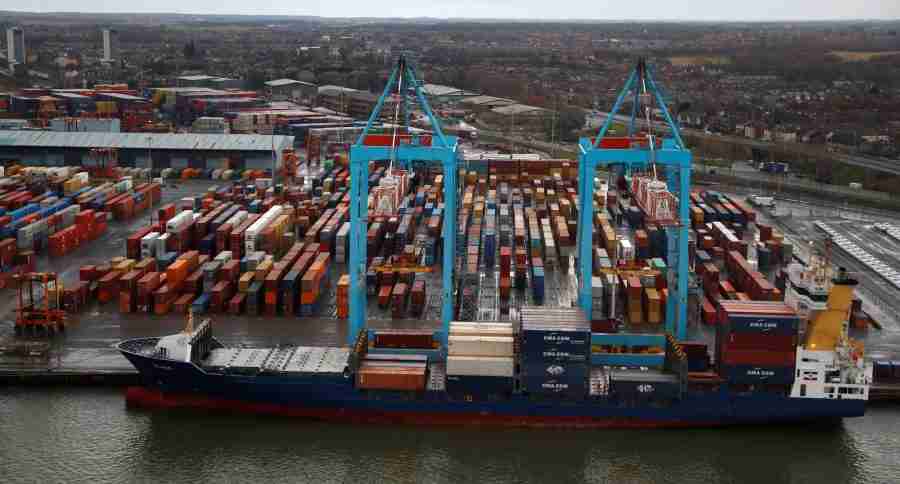
British goods exports to the United States fell to their lowest level in more than three years in June, according to official data published on Thursday that showed the hit from U.S. President Donald Trump’s initial import tariff blitz.

Sales of British goods to the United States fell to 3.9 billion pounds ($5.3 billion) during the month, down by 0.7 billion pounds from May and about 20% lower than a monthly average of 4.9 billion pounds in 2024.

The last time Britain exported fewer goods to the United States – including sales of precious metals which can be volatile – was in February 2022, the Office for National Statistics said.

British Prime Minister Keir Starmer and Trump agreed a trade deal which came into force on June 30 to cut high tariffs on cars and aerospace parts but leaves a 10% tariff on most exports with steel not yet covered.

The ONS reported decreases in exports of all commodities to the United States in June with machinery and transport equipment – including cars which were hit by higher initial U.S. duties – down by 0.2 billion pounds.

The ONS last week said a third of exporting businesses with 10 or more employees reported an impact from the U.S. tariffs.

British imports of U.S. goods increased by 0.2 billion pounds in June, driven by higher aircraft sales, Thursday’s data showed.

In the April-to-June period, British exports to the United States fell by more than a quarter, reflecting how many manufacturers rushed to send their products across the Atlantic before Trump’s first tariffs blitz in April.

($1 = 0.7364 pounds)

Writing by William Schomberg; Editing by Andrew Cawthorne

Zelenskiy in London as Ukraine braces for Trump-Putin meet

Friday’s Alaska summit comes at one of the toughest moments for Ukraine in a war

International News via Reuters:

With just one day to go until a U.S.-Russian summit on ending the war in Ukraine, its president, Volodymyr Zelenskiy, visited London on Thursday to shore up European support for efforts to prevent any agreement that would carve up Ukrainian land.

Friday’s Alaska summit comes at one of the toughest moments for Ukraine in a war, the largest in Europe since World War Two, that has killed tens of thousands and displaced millions since Russia’s full-scale invasion in February 2022.

On the backfoot on the battlefield against Russian forces, Zelenskiy and his allies are keen to avoid any deal between U.S. President Donald Trump and Russian President Vladimir Putin that leaves Ukraine more vulnerable to Russian attacks.

Zelenskiy met British Prime Minister Keir Starmer to build on momentum from virtual talks on Wednesday with European leaders and Trump to try to set red lines for the talks between Trump and Putin in Anchorage, Alaska. Zelenskiy and Starmer embraced before heading in to their meeting in Downing Street.

On Wednesday, Trump threatened “severe consequences” if Putin does not agree to peace in Ukraine and while he did not specify what the consequences could be, he has warned of economic sanctions if his meeting on Friday proves fruitless.

“Yesterday was a pivotal moment for reinforcing European and transatlantic unity,” Ukraine’s Foreign Minister Andrii Sybiha said on X. “We need peace through strength as a foundation for the future of global security and stability.”

Zelenskiy said he warned Trump that Putin was “bluffing” about his desire to end the war.

The Ukrainian leader also said Trump had supported the idea of security guarantees in a post-war settlement. Politico cited people familiar with the situation as saying that Trump had said the U.S. could provide guarantees with some conditions.

A source familiar with the matter told Reuters security guarantees were discussed on the call.

“We have no details of his (Trump’s) view on this but now he is more open for some kind of U.S. support for the guarantees,” the source said, adding that Trump understood that a U.S. backstop was needed for guarantees to be workable.

“So he mentioned it (on the call) and maybe everyone will work on it,” the source said.

RUSSIAN MILITARY ADVANCES

Zelenskiy confirmed this week that Russian forces had advanced by about 9-10 km (6 miles) near the town of Dobropillia in the Donetsk region. Ukraine, suffering manpower challenges, was forced to move in reserves to stabilise the situation.

Trump’s comments and the outcome of the virtual conference on Wednesday could provide encouragement for Kyiv.

Trump described the aim of his talks with Putin in Alaska as “setting the table” for a quick follow-up that would include Zelenskiy.

However, Russia is likely to resist Ukraine and Europe’s demands strongly and previously has said its stance had not changed since it was first detailed by Putin in June 2024.

Trump has said a deal could include what he called a land swap. Russia controls around a fifth of Ukraine and a land swap within Ukraine could cement Moscow’s gains.

Zelenskiy and the Europeans worry that would reward Putin for nearly 11 years of efforts to seize Ukrainian land and embolden him to expand further west in Europe.

A source familiar with the matter said Russian Special Envoy Kirill Dmitriev will participate in Friday’s summit.

Dmitriev, who heads up Russia’s RDIF sovereign wealth fund, has previously held talks with Steve Witkoff, Trump’s special envoy, and has spoken of possible business cooperation between Moscow and Washington.

Trump’s agreement last week to the summit was an abrupt shift after weeks of voicing frustration with Putin for resisting the U.S. peace initiative.  

A Gallup poll released last week found that 69% of Ukrainians favour a negotiated end to the war as soon as possible. But polls also indicate Ukrainians do not want peace at any cost if that means significant concessions. 

As conditions for a ceasefire and the start of talks, Putin has demanded Ukraine withdraw its forces from four regions that Russia has claimed as its own but does not fully control, and formally renounce plans to join NATO.

Kyiv swiftly rejected the conditions as tantamount to surrender.

Reporting by Catarina Demony, Olena Harmash, Andrew Osborn; Writing by Matthias Williams; Editing by Philippa Fletcher

Stocks take a breather, Fed rate-cut drumbeat weighs on dollar

MSCI’s global share index flatlined, after hitting all-time peaks for the two previous sessions

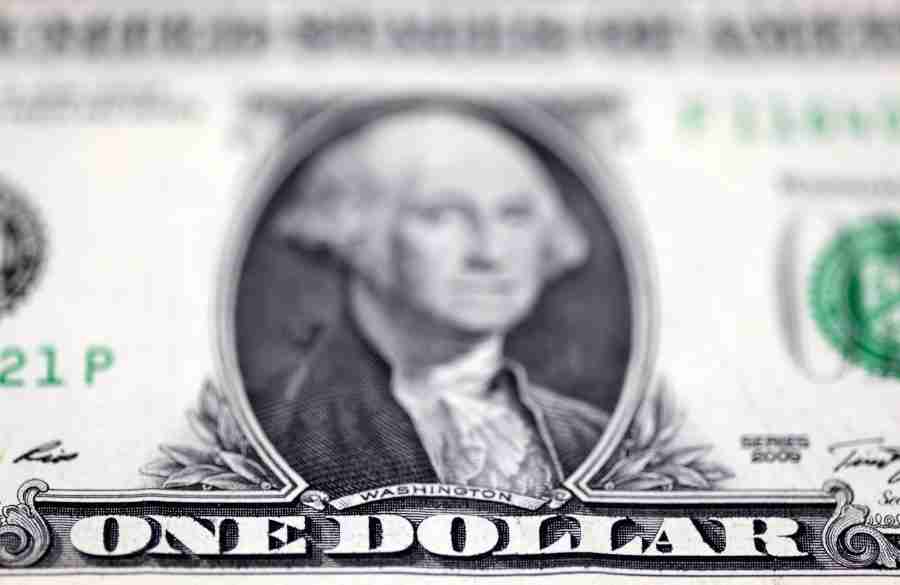
FILE PHOTO: U.S. Dollar banknote is seen in this illustration taken July 17, 2022. REUTERS/Dado Ruvic/Illustration/File Photo

International News via Reuters:

Traders ramped up Fed rate cut bets on Thursday, pinning the dollar near multi-week lows, while a global stock rally paused as investors awaited data on U.S. producer prices later in the day that may show how tariffs are impacting inflation trends.

MSCI’s global share index flatlined, after hitting all-time peaks for the two previous sessions, while an equivalent gauge of Asian equities outside Japan lingered near its loftiest level since September 2021.

Futures markets signaled Wall Street stocks were set for a muted start, having led global shares higher all week and hit records on Tuesday and Wednesday.

This blistering global rally has been fueled by strong U.S. tech earnings and speculation that Federal Reserve rate cuts will help protect businesses and households from the impact of White House tariffs.

Traders now see a September cut as almost certain, per CME’s FedWatch tool, and the U.S. administration is continuing to pressure the Fed to ease more quickly. Treasury Secretary Scott Bessent said on Wednesday that the Fed funds rate, which has been in a range of 4.25%-4.5% since December, should be as much as 175 bps lower.

Monthly U.S. jobs data came in surprisingly weak on Aug. 1, but a U.S. producer prices report later on Thursday could shift the market’s focus towards the risks of tariffs taking inflation too high for the Fed to cut rates, investors said.

About 70% of global investors expect U.S. stagflation to become the dominant market narrative within three months, a Bank of America survey found this week.

“Inflation is starting to come through. It’s not massive yet but that could certainly continue in coming months and amplify that part of the story,” Russell Investments global chief investment strategist Paul Eitelman said.

U.S. Treasury markets show investors are growing queasy about the damage higher-for-longer inflation could wreak on longer-dated debt, by eroding the real value of bonds’ fixed-interest coupons over time.

Two-year Treasury yields, which track monetary policy bets, traded at 3.67% on Thursday, down from about 3.95% at the beginning of August.

But yields on 30-year Treasuries, which are the most sensitive to inflation expectations, are now 112 bps higher than the two-year notes, with the yield differential having risen from about 95bps on Aug. 1.

SOGGY DOLLAR

The U.S. dollar was struggling to make headway from a two-week low against a basket of major currencies on Thursday and Japan’s yen made broad based gains, hitting its strongest in three weeks at 146.38 per dollar.

This came after Bessent said the Bank of Japan would raise interest rates because it was behind the curve in dealing inflation risks.

The BOJ has so far justified keeping borrowing costs ultra-low because its underlying inflation measure that focuses on domestic demand and wages is below its target and it wants more clarity on how U.S. tariffs will impact exporters.

The euro stood at $1,16722, nudging off the previous day’s two-week high while European government debt largely tracked moves in Treasuries. Germany’s 10 year yield was down 2 bps at 2.66%.

EYES ON UKRAINE

Commodities markets were subdued ahead of Friday’s summit between U.S. President Donald Trump and his Russian counterpart Vladimir Putin.

Trump on Wednesday threatened “severe consequences” if Putin did not agree to peace in Ukraine and has also floated the idea of a second summit that would include Ukrainian President Volodymyr Zelenskiy.

Brent crude, the global oil marker, traded at around $65.86 a barrel on Thursday, just off a two-month low and down from almost $70 in early August. [O/R]

Spot gold prices, which tend to rise when investors focus on geopolitical risks, fell about 0.5% to $3,3925 per troy ounce.

Goldman Sachs analysts wrote in a note to clients that lack of progress towards a Ukraine ceasefire could lead to renewed White House sanctions on Russian oil but this would only cause a “limited risk” of supply disruptions.

J.P. Morgan strategists said a peace deal could lift the euro against the dollar but warned that the bar for achieving a ceasefire was high.

Reporting by Naomi Rovnick in London and Jaspreet Kalra in Singapore; Editing by Muralikumar Anantharaman, Kim Coghill and Christina Fincher

At least 26 die in migrant shipwreck off Italy’s Lampedusa island

The disaster is the latest to befall migrants making the perilous Mediterranean crossing from Africa to Europe

International News via Reuters:

At least 26 people died in a migrant shipwreck on Wednesday off the southern Italian island of Lampedusa and 60 survivors were brought ashore, the coastguard said, warning more bodies could be missing as search operations continue.

The disaster, in this case involving people travelling from Libya, is the latest to befall migrants making the perilous Mediterranean crossing from Africa to Europe.

An Italian law enforcement aircraft spotted a capsized boat with bodies in the water about 14 miles (23 km) off Lampedusa on Wednesday morning, triggering a rescue operation, the coastguard said in a statement.

Based on initial accounts from the rescued migrants, they departed from the Tripoli area in Libya in the early morning aboard two boats. One of the vessels began taking on water and they transferred to the other one, which later capsized in choppy seas, a source close to the matter said.

Initial tallies from the U.N. refugee agency UNHCR indicated that the group of migrants comprised some 92 to 97 people.

Since the start of this year, 675 people have died in the central Mediterranean while trying to make the crossing from Africa, said Filippo Ungaro, a UNHCR spokesperson in Italy.

“The survivors brought into the hotspot arrived in reasonable health; naturally, there was exhaustion, and psychologically they were quite shaken,” said Imad Dalil, who heads the Italian Red Cross migrant hub on Lampedusa.

Earlier, the Red Cross said a total 56 men and four women had been brought ashore following the accident.

Prime Minister Giorgia Meloni’s right-wing government has vowed to block migrant sea journeys from Africa and has passed measures against people smugglers, including tougher jail terms, urging allies to do the same.

In a statement, Meloni expressed her sadness over the tragedy and said it showed the need for stronger action to stop illegal arrivals.

“We therefore renew our commitment to combat these unscrupulous traffickers in the only way possible: by preventing irregular departures and managing migration flows,” she said.

Reporting by Angelo AmanteEditing by Gareth Jones and Gavin Jones

Ryanair says summer bookings remain strong, fares holding up

He repeated a forecast from July that average fares were likely to recover almost all of a 7% decline seen in the July-September quarter last year

International News via Reuters:

Ryanair is seeing strong demand across Europe with bookings ahead of last year, and is “reasonably optimistic” about hitting its summer targets, Chief Executive Michael O’Leary said in an interview on Thursday.

He also praised Boeing for agreeing to deliver some jets earlier than scheduled, ending a run of delays that have curbed Ryanair’s growth rate.

“We’re seeing strong bookings through the peak summer months … The fares are holding up,” O’Leary said, adding that bookings were about 1% ahead of the same point last year.

He repeated a forecast from July that average fares were likely to recover almost all of a 7% decline seen in the July-September quarter last year, when Ryanair was hit by consumer caution and a dispute with some online travel agents.

Hitting the summer target will depend on close-in bookings for the remainder of the airline’s key second quarter, which ends on September 30, he said.

There has been no sign of consumers changing their plans due to heatwaves this summer, O’Leary added. But he warned that U.S. tariffs would ultimately act as a drag on global growth.

“I think everybody is cautious at the moment, and we’re right to be cautious,” he said.

Boeing, which is due to deliver the final 29 aircraft of Ryanair’s current order of 737 MAX jets this winter, has agreed to deliver seven jets in August and seven in September, ahead of an earlier-agreed schedule.

“Boeing are doing a terrific job,” O’Leary said.

He was speaking in Tirana, where he announced a doubling of capacity to four million passengers per year with the basing of three aircraft at the airport from next April. He described Albania as a hidden jewel of the Adriatic.

SWEDISH GROWTH

Ryanair, Europe’s largest airline by passengers, also announced plans to increase capacity serving Sweden by 25% for this winter, adding eight new routes, after the country scrapped its aviation tax at the beginning of last month.

That will add to pressure on local rivals such as SAS and Norwegian Air.

Ryanair Chief Marketing Officer Dara Brady called on Sweden also to freeze airport charges and potentially offer additional incentives for growth, saying this could allow Ryanair to double its Swedish traffic by 2030.

“The market is well capable of growing significantly here over the next number of years,” Brady told a news conference.

Additional reporting by Niklas Pollard in Stockholm. Writing by Conor Humphries. Editing by Tomasz Janowski and Mark Potter

Bitcoin hits fresh record as Fed easing bets add to tailwinds

The world’s largest crypto-asset by market capitalisation climbed as much as 0.9% to $124,002.49 in early Asia trading

International News via Reuters:

Bitcoin hit a record high on Thursday as increasing expectations for easier monetary policy from the Federal Reserve added to tailwinds from recently announced financial reforms.

The world’s largest crypto-asset by market capitalisation climbed as much as 0.9% to $124,002.49 in early Asia trading, surpassing its previous peak hit in July. On the day, the second largest crypto-token ether hit $4,780.04, the highest level since late 2021.   

Bitcoin’s rally is being powered by increasing certainty of Fed rate cuts, sustained institutional buying and moves by the Trump administration to ease investment in crypto assets, said IG market analyst Tony Sycamore.

“Technically a sustained break above $125k could propel BTC to $150,000,” he wrote in a note.

Bitcoin has risen nearly 32% so far in 2025 on the back of long-sought regulatory wins for the sector following President Donald Trump’s return to the White House. Trump has called himself the “crypto president” and his family has made a series of forays into the sector over the past year.

An executive order last week paved the way to allow crypto assets in 401(k) retirement accounts, highlighting an increasingly favorable regulatory environment in the United States.

Crypto has scored multiple regulatory wins in the U.S. over 2025, including the passage of stablecoin regulations and the U.S. securities regulator’s move to overhaul regulations in order to accommodate the asset class.

Bitcoin’s surge has also sparked a broader rally in the asset class over the past few months, shrugging off the tremors of Trump’s wide-ranging tariff policies.

According to data from CoinMarketCap, the crypto sector’s overall market capitalisation has ballooned to over $4.18 trillion, up from about $2.5 trillion in November 2024, when Trump won the U.S. presidential election. 

The latest push for crypto adoption in the United States came via an executive order on Thursday last week, which would ease access to the asset class in 401(k) retirement accounts. 

The executive order could also be a boost for asset managers such as BlackRock and Fidelity, which operate crypto exchange-traded funds (ETFs).

Crypto’s push into retirement savings can also be peppered with risks, as the asset class tends to experience much more volatility than stocks and bonds, which asset managers had typically relied on for such accounts.

Reporting by Jaspreet Kalra and Rocky Swift; Editing by Sam Holmes