Tuesday 29 July 2025: Bermuda Hospitals Board (BHB) today advises that the Lamb Foggo Urgent Care Centre will open over the public holidays.
The hours of operation will be from noon to 8pm on Emancipation Day (Thursday 31 July) and Mary Prince Day (Friday 1 August). This will be in addition to its regular weekend hours of 9am to 9pm (Saturday and Sunday).
Chief of Emergency and Hyperbaric Services, Dr Chikezie Okereke, comments: “We urge everyone to prioritise their health and safety over the entire Cup Match holiday weekend. It’s a great holiday to be with friends and family, but please plan in advance to ensure you have your medications and supplies. Don’t drink and drive, and be prepared for hot and sunny weather if you are out on a boat, at the beach or at the game – drink plenty of water, wear sunscreen, a hat and shirt.
“Our UCC service will be there for minor illnesses and accidents, and our Emergency Department as usual will be there for more serious conditions,” he adds, “but look out for yourself, your friends and family. You don’t want a medical emergency interrupting your Cup Match holiday weekend activities and fun.”
While the significant pressure experienced at the beginning of the month at KEMH has eased, CEO & President, Scott Pearman reminds people to take people ready for discharge home before and during the holiday period.
“Along with being responsible for your own health, please don’t forget family members who may be ready for discharge around the holiday period, and don’t bring someone in just for a safe place to stay,” he says.
“The hospital is not somewhere your loved ones should be for the holiday weekend unless they need to be here. This will cause problems for people with real emergency and acute care needs. Be safe yourself and do the right thing for your loved ones.”
The Fed is expected to keep interest rates steady pending more clarity on the impact of tariffs on inflation
International News via Reuters:
Wall Street indexes fell modestly while European equities advanced as U.S. investors awaited earnings reports from megacap companies and the Federal Reserve’s next policy decision, due on Wednesday.
The dollar advanced against major currencies including the euro, which hit a one-month low and eyed its fourth straight day of declines as investors sobered up to the fact that the new U.S.-EU trade deal favoured the United States and did little for the 27-nation bloc’s economic outlook.
Meanwhile, investors were looking to results in the days ahead from large companies such as Microsoft, Meta Platforms, Apple and Amazon. [.N]
And they were also waiting for the Fed’s policy statement and commentary, due on Wednesday afternoon following the U.S. central bank’s two-day meeting.
The Fed is expected to keep interest rates steady pending more clarity on the impact of tariffs on inflation, even with constant demands from U.S. President Donald Trump for rate cuts.
“We’re waiting on the technology earnings and the Fed and what the White House might say about what the Fed does or likely does not do,” said Tim Ghriskey, senior portfolio strategist at Ingalls & Snyder in New York.
While traders have been betting that the Fed will make its next rate cut in September, they will be watching for confirmation from a slew of data this week including inflation and payroll reports. Canada’s central bank also convenes on Wednesday and is widely expected to also hold rates steady.
On Wall Street, the S&P 500 and the Nasdaq turned slightly lower after touching fresh record highs earlier in the day. At 10:53 a.m. local time, the Dow Jones Industrial Average was down 141.93 points, or 0.32%, to 44,695.08, the S&P 500 slid 2.27 points, or 0.03%, to 6,387.65 and the Nasdaq Composite fell 0.97 points, or 0.01%, to 21,177.39.
MSCI’s gauge of stocks around the world fell 1.97 points, or 0.21%, to 937.40.
European shares recovered after Monday’s sell-off, with the pan-European STOXX 600 index rising 0.3% in line with the gain for Europe’s broad FTSEurofirst 300 index.
TARIFF ECHOES
The U.S.-EU trade deal, announced on Sunday, included 15% tariffs on EU imports to the U.S. and bolstered expectations that more such agreements will follow ahead of Trump’s August 1 deadline for trade deals.
Trump also flagged a “world tariff” rate of 15%-20% on all trading partners that were not negotiating a deal – among the highest rates since the Great Depression of the 1930s.
“While the worst-case scenario was averted, the implied EU tariff increase from 1% in January is a significant tax increase on EU exports,” economists from JPMorgan wrote in a note.
“This is a very big shock that unwinds a century of U.S. leadership in global free trade. While we no longer see a U.S. recession as our baseline from this shock, the risk is still elevated at 40%.”
In currencies, the dollar index, which measures the greenback against a basket of currencies including the yen and the euro, rose 0.47% to 99.08.
The euro was down 0.54% at $1.1526 while sterling weakened 0.28% to $1.3318.
Against the Japanese yen, the dollar strengthened 0.03% to 148.57 while the Canadian dollar weakened 0.27% versus the greenback to C$1.38 per dollar.
In Treasuries, the yield on benchmark U.S. 10-year notes fell 6.2 basis points to 4.358% from 4.42% late on Monday, while the 30-year bond yield fell 7.2 basis points to 4.8928%.
The 2-year note yield, which typically moves in step with interest rate expectations for the Federal Reserve, fell 2.4 basis points to 3.898% from 3.922%.
A further risk to world growth came from a sudden spike in oil prices after Trump threatened a new deadline of 10 or 12 days for Russia to make progress toward ending the war in Ukraine or face tougher sanctions on oil exports. [O/R]
U.S. crude rose 1.15% to $67.48 a barrel and Brent rose to $70.83 per barrel, up 1.13% on the day.
In precious metals, gold prices held nearly steady on Tuesday as markets turned their focus to upcoming U.S.-China talks and the Federal Reserve’s policy decision.
Spot gold rose 0.41% to $3,327.56 an ounce.
Reporting by Sinéad Carew in New York, Nell Mackenzie in New York, Editing by Sam Holmes, Bernadette Baum and Mark Heinrich
Trump has repeatedly threatened tariffs as he also pushes drugmakers to reduce prices to what other countries pay
International News via Reuters:
AstraZeneca has proposed price cuts to its drugs in the United States, its CEO said on Tuesday, days after unveiling a $50 billion investment to expand there, as President Donald Trump pressures pharmaceuticals companies to lower costs.
Speaking to journalists after second-quarter revenue and profit beat expectations, CEO Pascal Soriot said Trump’s administration was reviewing the company’s proposals. He did not specify which drugs were included.
Trump has repeatedly threatened tariffs as he also pushes drugmakers to reduce prices to what other countries pay. However, he signalled earlier this month that companies would be given a year to 18 months to “get their act together” before any sector-specific levies take effect.
“We definitely support the idea of rebalancing with some reduction of pricing levels in the U.S., and some increase, we’re not talking about massive increases, in Europe,” AstraZeneca’s Soriot said.
He added he expects all medicines for U.S. patients to be produced locally within a few months, and is also considering selling some medicines to customers directly.
AstraZeneca shares rose as much as 3% after its results, but pared some gains to trade up 1.6% by 1214 GMT.
“The big uncertainty, unsurprisingly, remains U.S. tariffs and Most Favoured Nation pricing in the pharmaceutical sector. AstraZeneca has looked to get ahead of this uncertainty,” said Sheena Berry, a healthcare analyst at Quilter Cheviot.
The U.S. accounted for more than 40% of AstraZeneca’s revenue in 2024. The UK’s largest-listed company by market value had prioritised the U.S. market – the world’s largest, worth $635 billion – even before Trump’s return to office.
US BOOST
AstraZeneca’s efforts are paying off as strong U.S. demand, and robust sales of newer cancer, heart and kidney disease medicines drove total revenue for the second quarter 11% higher to $14.46 billion, on a constant currency basis.
It logged double-digit growth in the U.S. despite headwinds from changes in U.S. Medicare price negotiations, while sales of cancer drugs including Tagrisso, Lynparza, Calquence, Truqap and Imfinzi beat expectations.
Core earnings stood at $2.17 per share. Analysts were expecting $2.16, from $14.15 billion in sales, according to a company-provided consensus.
AstraZeneca is betting on a wave of expected launches of 20 new medicines and its U.S. expansion to reach $80 billion in annual revenue by 2030 and offset generic competition. On Tuesday, it maintained its 2025 outlook and increased its interim dividend by 3%.
The drugmaker in April forecast only a limited impact from potential U.S. tariffs, adding it would be able to meet its annual outlook if the levies on European imports were similar to those in other industries.
A European Union-U.S. trade deal over the weekend will result in a 15% tariff on most goods, including pharmaceuticals, from the region.
Reporting by Pushkala Aripaka in Bengaluru and Maggie Fick in London, with additional reporting by Unnamalai L; Editing by Subhranshu Sahu and Sharon Singleton
Starmer launched a coalition in September last year aimed at tackling youth knife crime
International News via Reuters:
A year after one of Britain’s most harrowing knife attacks, the government is urging young people to drop off bladed weapons at “amnesty” bins or mobile vans in a month-long campaign – part of efforts to control knife-related violence, particularly when it involves youths.
On July 29, 2024, teenager Axel Rudakubana, who was obsessed with violence and genocide, attacked a Taylor Swift-themed children’s dance event in the northern English town of Southport, killing three girls and stabbing 10 other people.
Since then, Prime Minister Keir Starmer’s Labour government has pledged tougher age checks for knife buyers, warned social media firms they could face fines for failing to curb sales and promotion of weapons, and banned zombie-style knives and ninja swords.
Starmer launched a coalition in September last year aimed at tackling youth knife crime. Actor and anti-knife campaigner Idris Elba joined the conversation at a meeting this month, alongside King Charles.
Charities and experts interviewed by Reuters call the government’s efforts a step forward but say they largely fail to address the root causes. Some charities involved in classes and workshops aimed at young people are urging the government to make such education part of the national curriculum.
Overall, knife crime in England and Wales has risen 87% over the past decade, with 54,587 offences last year alone, a 2% rise from 2023 and among the highest rates in Europe, figures from Britain’s interior ministry show.
It did not provide a breakdown of knife crime offences by age group. But data from the justice ministry showed that in the year to March 2024 there were just over 3,200 knife or offensive weapon offences committed by children (aged 10-17) resulting in a caution or sentence.
Of the 262 people killed with a knife or sharp object in the 12 months to March 2024, 57 were under 25. Kitchen knives were the most commonly used weapons.
A public inquiry into the Southport murders that opened this month will begin by looking into the specifics of Rudakubana’s case before a second phase examines the wider issue of children being drawn into violence, an increasing concern for British authorities.
Amanda Marlow, from the youth charity Safety Centre, which runs knife crime awareness workshops in schools, says young people carry knives for a range of reasons. These include seeing it as a “quick fix” to make money when growing up in poverty, trying to gain status among peers, or being drawn into the wrong crowd, such as gangs, where they are often exploited.
Some police forces have launched dedicated knife crime units. In the West Midlands, one of the country’s worst-hit areas, the Guardian Taskforce focuses on reducing knife crime among under-25s.
In June alone, officers patrolled for over 3,000 hours, carried out 366 stop-and-searches, and seized 57 knives or offensive weapons. “Every knife seized is a life saved,” Inspector Kate Jeffries of the taskforce said in a statement.
After surviving the Southport stabbings, Leanne Lucas launched the “Let’s Be Blunt” campaign, calling for safer, rounded-tip kitchen knives instead of pointed ones.
POVERTY AND MENTAL HEALTH
Jade Levell, a researcher at the University of Bristol who studies masculinity, vulnerability and violence, said anti-knife crime efforts should focus on early intervention, such as mental health care, rather than short-term fixes like amnesty bins.
“Some boys see their only option is to be afraid or to make others afraid of them,” Levell said, referring to those growing up with violence, poverty or discrimination.
Some 4.5 million children are growing up in poverty in the UK, according to charities. In 2023, about 1 in 5 children and young people aged 8 to 25 years had a probable mental disorder, according to the National Health Service.
The government announced funding this month for hubs offering mental health and career support for young people at risk of gang involvement, violence or knife crime. The scheme, focused on high-risk areas, is starting with eight such centres and aims to have 50 open in the next four years.
EDUCATING YOUNG PEOPLE
The violent death of his son two years ago prompted Martin Cosser to found a charity dedicated to educating young people about knife crime, one of several such initiatives around the country.
Charlie’s Promise, named after 17-year-old Charlie who was stabbed multiple times in the chest by another teenager at a packed end-of-term party, has spoken to 41,000 young people in schools and elsewhere.
“Nothing brings my little boy home,” said Cosser, adding that far more must be done to stop the knife crime crisis spiralling out of control. “We need to understand the emotional drivers behind why people pick up knives.”
Charity Safety Centre delivers workshops in schools, specifically designed for children aged 9 to 12. At a recent session in a school in the southern English town of Milton Keynes, staff from the charity explained what knife crime is and the dangers it poses, encouraging active participation through questions and games.
Safety Centre and Charlie’s Promise are among several groups calling for such education to become a mandatory part of the national school curriculum.
Amani Simpson, who survived being stabbed in 2011 and now shares his story as a youth coach, believes societal pressures and some forms of entertainment such as violent video games also play a role in spawning knife crime.
“Young people feel displaced and disengaged … those things need to be uprooted,” Simpson said after a talk at TCES North West London, a special education school, emphasising the importance of helping them believe in their own potential so they make better choices.
“Hope for me is the missing piece,” he said.
Reporting by Catarina Demony and Ben Makori; Editing by William James, Andrew Heavens and Frances Kerry
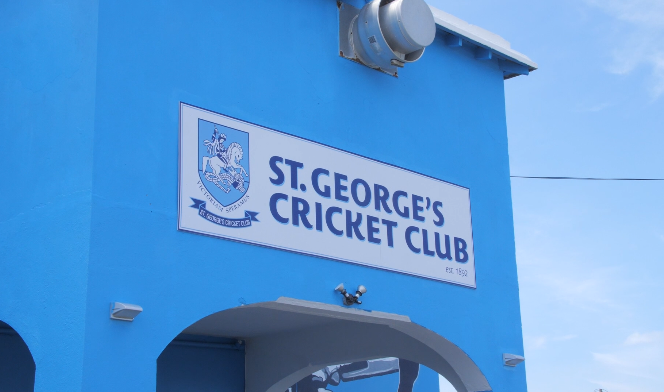
Photo supplied Following a time-honoured tradition, the Premier last night welcomed the 2025 Somerset and St. George’s Cup Match teams & coaches to the annual Cup Match reception at Camden House. Somerset Cricket Club President Richard Scott, St. George’s Cricket Club President Mishael Paynter, and their clubs’ respective teams were in attendance. Team captains Terryn Fray and Sinclair Smith addressed the attendees, who included local dignitaries, club officials, Cup Match legends, family, and friends. The Premier, joined by his family, extended congratulations and best wishes to both teams, emphasising the importance of unity, sportsmanship, and the enduring legacy of Cup Match in Bermudian culture.
The battle lines are drawn for the 2025 Classic and Everton FC win the Bermuda Triangle Cup
The Cup Match teams have been named and excitement surrounding the 2025 edition of the Classic has been building at both ends of the island. Below watch the latest on this as well as Bermuda’s athletes in action both locally and overseas.
The wider probe will examine whether the tech giant set pricing schedules at its App Store, abusing its dominant position
International News via Reuters:
Spain’s antitrust regulator said on Tuesday it was expanding its investigation into possible anti-competitive behaviour by Apple for allegedly imposing unequal commercial conditions on developers of mobile applications sold at its app marketplace.
The wider probe will examine whether the tech giant set pricing schedules at its App Store, abusing its dominant position, the CNMC said in a statement.
Apple has denied the allegations since the CNMC launched its investigation a year ago.
(Reporting by David Latona; Editing by Andrei Khalip)
The ECB regularly lends to banks on both shorter and longer durations against appropriate collateral
International News via Reuters:
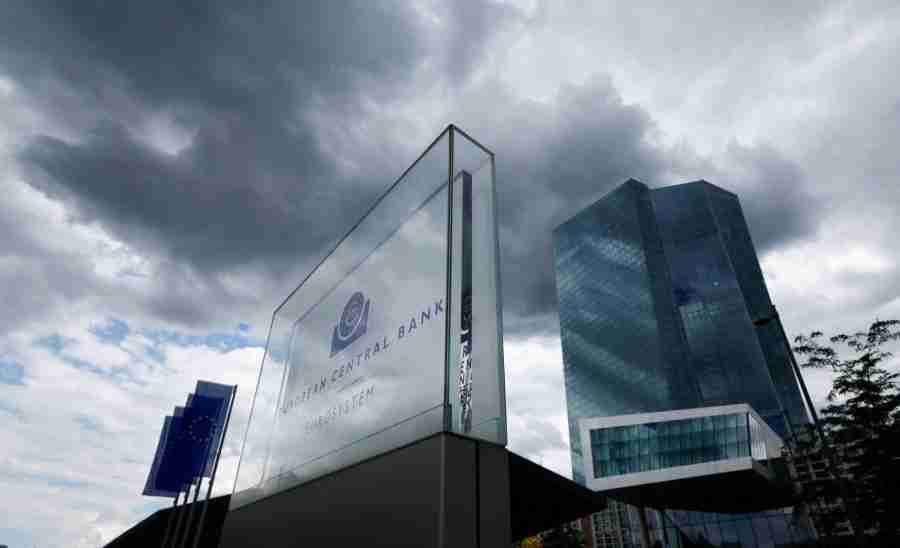
The European Central Bank will add climate change considerations to its lending operations from late 2026, it said on Tuesday, raising pressure on banks to channel financing towards greener sectors as the euro zone seeks to reduce its carbon footprint.
The ECB regularly lends to banks on both shorter and longer durations against appropriate collateral, and while such lending has been muted in recent years, an uptick is expected as the bank slowly reduces excess liquidity in the financial system.
“The Governing Council has decided to introduce a ‘climate factor’ which could reduce the value assigned to eligible assets pledged as collateral, depending on the extent to which an asset can be impacted by these uncertainties,” the ECB said in a statement.
The new policy, set to come into effect in the second half of 2026, is expected to act as a buffer against the possible financial impact of uncertainties related to climate change, it said.
While the U.S. Federal Reserve earlier this year left a global initiative looking at ways to police climate risk in the financial system, the ECB doubled down on its own commitment to take climate risk into account.
The bank has already been pushing commercial lenders to disclose more and more of their climate-related risk and has often complained that they have been too slow to respond. It has threatened to fine banks if they do not comply.
The ECB’s new “climate factor” will focus on marketable assets issued by non-financial corporations and adverse events specifically associated with the green transition, the bank said.
Reporting by Balazs Koranyi;Editing by Andrew Heavens and Helen Popper
The company’s shares, which have risen around 57% so far this year, fell nearly 9% in premarket trading
International News via Reuters:
Spotify forecast third-quarter profit below Street estimates on Tuesday as higher taxes related to employee salaries outweigh upbeat demand for its premium music-streaming plans.
The company’s shares, which have risen around 57% so far this year, fell nearly 9% in premarket trading.
Investors are closely monitoring the Swedish company’s profitability after price hikes, cost cuts and subscriber gains in recent years helped it achieve its first annual profit in 2024.
Spotify said it expects operating income of 485 million euros ($561.05 million) in the current quarter, below an estimate of 562 million euros, according to data compiled by LSEG.
Its third-quarter monthly active users (MAU) forecast of 710 million was in line with estimates, while its prediction for a 5 million increase in premium subscribers to 281 million was above a Visible Alpha estimate of 279 million.
Its board has approved a $1 billion increase to its share repurchase program, raising the total authorization to $2 billion, with $1.9 billion available for buybacks through April 2026.
Tough competition in music streaming and podcasts from rivals from Apple and Amazon has also prompted Spotify to increase marketing, which contributed to an 8% increase in operating expenses in the April-to-June quarter.
Premium subscribers rose 12% to 276 million in the second quarter, compared with a Visible Alpha estimate of 273 million. Its MAU net additions of 18 million brought the total to 696 million, exceeding expectations.
Second-quarter revenue rose 10% to 4.19 billion euros ($4.85 billion), but fell short of an estimate of 4.26 billion euros. Spotify said unfavorable currency movements reduced year-over-year total revenue growth by about 440 basis points in the reported quarter.
It forecast third-quarter revenue of 4.2 billion euros, below the estimate of 4.48 billion euros.
($1 = 0.8645 euros)
Reporting by Jaspreet Singh in Bengaluru; Editing by Pooja Desai
Healthcare stocks led the sectoral gains, up 1.8%, with AstraZeneca rising 2.8% after the drugmaker beat second-quarter revenue and profit expectations
International News via Reuters:
London’s main stock indexes were mixed on Tuesday as investors assessed a spate of mixed corporate updates as well as the fallout from the newly signed U.S.-EU trade deal.
The benchmark FTSE 100 rose 0.4% as of 0934 GMT, while the domestically focused midcap FTSE 250 index was down 0.3%.
Healthcare stocks led the sectoral gains, up 1.8%, with AstraZeneca rising 2.8% after the drugmaker beat second-quarter revenue and profit expectations.
Chemical stocks lost 2.5%, dragged down by Croda International, which fell 5.1% after the chemical company reported first-half sales below estimates.
Industrial miners lost 1%, tracking lower copper prices. Glencore and Anglo American fell 2.4% and 1.2% respectively.
Among other corporate updates, Games Workshop surged 6.3%, to top the FTSE 100 index, after the miniature wargames maker reported a nearly 30% jump in annual pre-tax profit.
Entain rose 1.4% after the company’s U.S. sports-betting joint venture with MGM Resorts called BetMGM raised its full-year 2025 revenue and core earnings forecast.
Inchcape lost 9.6%, top loser on the FTSE 250 midcap index, after the car distributor reported a 4% drop in first-half adjusted pre-tax profit at constant currency.
Greggs fell 4.9% after reporting a 14% fall in first-half profit.
A survey showed British shop prices rose by the most in more than a year in the 12 months to July and food prices grew more strongly.
The Bank of England is expected to cut borrowing costs on August 7 for the fifth time since August last year.
Meanwhile, investors weighed the impact of a new 15% levy on most European Union goods, which is significantly higher than pre-2025 levels.
Ahead of the August 1 tariff deadline, U.S. President Donald Trump said a blanket 15% to 20% “world tariff” rate would be extended toward trading partners who do not negotiate separate trade deals with the U.S.
Top U.S. and Chinese economic officials resumed their trade talks for a second day in Stockholm to resolve economic disputes, while seeking to extend the previous tariff truce by three months.
Reporting by Sukriti Gupta in Bengaluru; Editing by Shreya Biswas
The euro slid 1.3% in the previous session, its sharpest one-day percentage fall in more than two months
International News via Reuters:
The euro hit a one-month low against the dollar on Tuesday as investors sobered up to the fact that terms of the trade deal between the U.S. and the European Union favoured the former and did little for the bloc’s economic outlook.
The common currency fell as much as 0.5% to its lowest level since June 23, adding to Monday’s steep decline. It last traded 0.17% lower at $1.1565.
France’s prime minister on Monday called the framework trade agreement a “dark day” for Europe, saying the bloc had caved in to U.S. President Donald Trump with an unbalanced deal that slapped a headline 15% tariff on EU goods.
German Chancellor Friedrich Merz said his economy would suffer “significant” damage due to the agreed tariffs.
The euro slid 1.3% in the previous session, its sharpest one-day percentage fall in more than two months, on worries about growth and as euro-area government bond yields fell.
“It hasn’t taken long for markets to conclude that this relatively good news is still, in absolute terms, bad news as far as the near-term implications for euro zone growth are concerned,” said Ray Attrill, head of FX research at National Australia Bank.
“The deal has been roundly condemned by France while others – including German Chancellor Merz – are playing up the negative consequences for exporters, and with that, economic growth.”
The slide in the euro in turn boosted the dollar, which jumped 1% against a basket of currencies overnight.
The dollar held on to its gains on Tuesday and knocked sterling to a two-month low of $1.3338. The yen edged 0.1% higher to 148.405 per dollar.
The dollar index firmed 0.2% to 98.811.
“While the U.S. dollar’s strength … may reflect the perception that the new U.S.-EU deal is lopsided in favour of the U.S., the U.S. dollar’s strength may also reflect a feeling that the U.S. is re-engaging with the EU and with its major allies,” said Thierry Wizman, global FX and rates strategist at Macquarie Group.
Trump said on Monday that most trading partners that do not negotiate separate trade deals would soon face tariffs of 15% to 20% on their exports to the United States, well above the broad 10% tariff he announced in April.
Elsewhere, the Australian dollar fell 0.18% to $0.65095, while the New Zealand dollar was off 0.24% at $0.59570.
The onshore yuan touched a one-week low of 7.1794 per dollar, with investors awaiting the outcome of trade talks between Washington and Beijing.
Top U.S. and Chinese economic officials met in Stockholm on Monday for more than five hours in a bid to resolve long-standing economic disputes at the centre of a trade war between the world’s top two economies, seeking to extend a truce by three months.
Apart from trade negotiations, investors’ focus this week is also on interest rate decisions from the Federal Reserve and the Bank of Japan (BOJ).
“Tomorrow’s Fed meeting should demonstrate that political pressure from the US government is gradually having an effect, with several interest rate cuts likely to follow starting in September. By then, the US dollar should also have started to weaken again”, wrote Commerzbank FX analysts in a note.
Both central banks are expected to stand pat on rates, but traders will watch subsequent comments to gauge the timing of their next moves.
Elsewhere, data on Tuesday showed Sweden’s gross domestic product grew by just 0.1% in the second quarter, undershooting most forecasts. The Swedish crown was down 0.33% against the dollar.
Reporting by Rae Wee in Singapore and Lucy Raitano in London; Editing by Muralikumar Anantharaman, Kim Coghill and Hugh Lawson
To provide the best experiences, we use technologies like cookies to store and/or access device information. Consenting to these technologies will allow us to process data such as browsing behavior or unique IDs on this site. Not consenting or withdrawing consent, may adversely affect certain features and functions.
Functional
Always active
The technical storage or access is strictly necessary for the legitimate purpose of enabling the use of a specific service explicitly requested by the subscriber or user, or for the sole purpose of carrying out the transmission of a communication over an electronic communications network.
Preferences
The technical storage or access is necessary for the legitimate purpose of storing preferences that are not requested by the subscriber or user.
Statistics
The technical storage or access that is used exclusively for statistical purposes.The technical storage or access that is used exclusively for anonymous statistical purposes. Without a subpoena, voluntary compliance on the part of your Internet Service Provider, or additional records from a third party, information stored or retrieved for this purpose alone cannot usually be used to identify you.
Marketing
The technical storage or access is required to create user profiles to send advertising, or to track the user on a website or across several websites for similar marketing purposes.