Wednesday, October 28, 2026
Home Blog Page 875

Cayman’s Golf Phenom to Compete in Bermuda’s PGA Championship

Justin Hastings Receives Sponsor Exemption into 2025 Butterfield Bermuda Championship

In a press release the Butterfield Bermuda Championships announced that the 22-year-old Caymanian would be competing in this year’s event in November:

Full statement:

HAMILTON, Bermuda (July 11, 2025) — The Butterfield Bermuda Championship is proud to announce that Justin Hastings, one of the world’s leading amateur golfers, has received a sponsor exemption into the 2025 tournament, taking place November 13 – 16 at Port Royal Golf Course in Southampton, Bermuda.

At just 22 years old, Hastings has already made history on multiple fronts. He became the youngest player ever to win the Cayman Islands Men’s National Championship at age 14 and has since represented the Cayman Islands in major international competitions, including the Latin America Amateur Championship and the World Amateur Team Championships. 

More recently Hastings was crowned Low Amateur at the 2025 U.S. Open Championship at Oakmont, making him the first Caymanian golfer to both compete and make the cut in a U.S. Open. 

“We are thrilled to welcome Justin Hastings to the 2025 Butterfield Bermuda Championship,” said Danielle Carrera, Tournament Director. “Justin has shown incredible poise and talent in his young career, and we are excited to give him this opportunity to compete on one of golf’s biggest stages. He’s not only a great representative of the future of the game, but also a proud ambassador for Caribbean golf.”

“We are delighted to offer our sponsor exemption to such a talented young golfer from the Cayman Islands. It is always exciting to support emerging athletes with lots of potential, but especially so when they are from one of the communities Butterfield calls home. We all look forward to welcoming Justin to the tournament and to watching him compete in Bermuda,” said Mike McWatt, Managing Director of Butterfield in the Cayman Islands. Having just finished competing at the collegiate level for San Diego State University, Hastings has made headlines with his consistent performances, maturity beyond his years. His inclusion in this year’s field continues the Championship’s commitment to supporting emerging players from across the Caribbean and Atlantic region and marks another step in his journey toward professional success.

I am extremely grateful to receive an exemption into The Butterfield Bermuda Championship,” said Justin Hastings. “It’s another great opportunity to showcase my game at golf’s highest level. I’d like to thank The Butterfield Group for thinking of me, as I know these exemptions are hard to come by. This tournament means a little bit more to me, being from a small island in the Caribbean. I am familiar with (and love) the style of golf and have paid close attention to this tournament ever since its inception in 2019!

The Butterfield Bermuda Championship, now in its 7th year, is one of the premier sporting events in Bermuda and a proud stop on the PGA TOUR. With sweeping ocean views, challenging play, and a strong focus on community engagement, the tournament continues to draw international attention and support. 

For more information about the Butterfield Bermuda Championship, including ticket sales, volunteer opportunities, and hospitality packages, please visit www.butterfieldbdachampionship.com.

US safety regulator opens recall query into over 27,000 Polestar 2 vehicles

A recall query is an investigation opened by safety regulators when a remedy to solve an issue appears inadequate

International News via Reuters:

The U.S. National Highway Traffic Safety Administration said on Friday it had opened a recall query covering 27,816 of Sweden-based EV maker Polestar’s Polestar 2 vehicles over a loss of rear-view camera image.

A recall query is an investigation opened by safety regulators when a remedy to solve an issue appears inadequate.

The NHTSA said Polestar had in June last year recalled certain 2021 to 2024 Polestar 2 vehicles over issues with the rear-view camera relating to limited visualization, becoming inoperable, or incorrect functioning in reverse gear.

Polestar had proposed to remedy this condition via a software update, minimizing a graphical rendering limitation by shortening the retry times of the camera streams, as well as removing the rendering of the map in the driver display during reversing.

However, the NHTSA has received 109 complaints for earlier rear-view camera failures persisting even after the recall remedy was completed.

In July, the Office of Defects Investigation (ODI) discussed the complaints with Polestar, which confirmed that its software update did not correct the original issue.

The ODI has opened the recall query to evaluate whether Polestar’s earlier remedy was adequate.

Polestar did not immediately respond to a Reuters request for comment.

Demand for Polestar’s EVs has been weighed down in several markets by high interest rates, inflation and availability of more affordable hybrid or gas-powered options.

However, demand for the company’s EVs has remained resilient in Europe due to offers and discounts.

Reporting by Arsheeya Bajwa in Bengaluru; Editing by Tasim Zahid and Maju Samuel

UK economy shrinks again in May, raising new worries over outlook

Gross domestic product shrank by 0.1% after a 0.3% drop in April, the Office for National Statistics said.

International News via Reuters:

Britain’s economy contracted unexpectedly for a second month running in May, official data showed on Friday, compounding worries at home for finance minister Rachel Reeves as the nation navigates growing global turbulence. 

Gross domestic product shrank by 0.1% after a 0.3% drop in April, the Office for National Statistics said.

Economists polled by Reuters had mostly forecast that gross domestic product would rise by 0.1% from April’s level. And while the services sector eked out a sliver of growth, declines in industrial output and construction dragged down overall output.

Following a growth surge early in the year, Britain’s economy could now be facing flat or weaker growth than previously expected for the April-to-June period, economists said.

Friday’s data now adds to expectations the Bank of England will cut interest rates next month.

“The lack of momentum in the UK economy indicated by these sluggish figures means that an August interest rate cut currently looks inevitable, despite the recent spike in inflation,” said Suren Thiru, economics director at accountancy body ICAEW.

Prime Minister Keir Starmer’s Labour government has struggled to improve growth meaningfully in its first year, with a tax hike on employers and U.S. President Donald Trump’s trade wars weighing on the economy.

Britain’s goods exports to the United States – its single-largest export destination – surged earlier this year as U.S. importers rushed to beat the imposition of Trump’s tariffs.

But they fell sharply in April. And trade data published on Friday showed only a slight recovery to around 4.4 billion pounds ($6.0 billion) in May, bringing export levels back down to where they were roughly three years ago.

Economists say it looks increasingly likely Reeves will need to raise taxes again in her next budget – something she had hoped to avoid.

“While today’s figures are disappointing, I am determined to kickstart economic growth,” Reeves said of Friday’s data.

Britain’s economy expanded rapidly in the first quarter of 2025, outstripping growth in other countries in the Group of Seven advanced economies. In May the Bank of England revised up its full-year growth forecast to 1%.

However, much of the growth in early 2025 was likely linked to the expiry of a tax break for some home purchases in April, which boosted the sector before the deadline, as well as a rush by manufacturers to beat higher U.S. import tariffs.

The BoE has said it thinks the economy grew by about 0.25% in the second quarter of 2025.

After Friday’s May figures, June’s monthly data will need to show at least a flat reading, assuming no revisions to earlier months, in order to achieve any growth for the quarter, the ONS said.

A month-on-month contraction of 0.4% or worse for June would herald a quarterly contraction.

“The second straight decline in monthly real GDP in May will increase concerns that the government’s growth plan has been derailed by external and domestic shocks,” said Raj Badiani, economics director, Europe, at S&P Global Market Intelligence.

Yael Selfin, chief economist at KPMG UK, said she expected the economy to have remained flat in the second quarter, but spending by households might now be picking up now.

“With wage growth remaining ahead of inflation and borrowing costs set to ease further, a modest pick-up in consumer spending could be on the cards in the second half of the year,” she said.

($1 = 0.7386 pounds)

Graphic by Andy BruceEditing by William Schomberg, William James, Sharon Singleton and Joe Bavier

European securities regulator warns about crypto firms misleading customers

ESMA said that crypto companies should not use their regulatory status as a “promotional tool”

FILE PHOTO: Representations of cryptocurrency Bitcoin are seen in this illustration taken November 25, 2024. REUTERS/Dado Ruvic/Illustration/File Photo

International News via Reuters:

Europe’s securities regulator warned crypto companies on Friday not to mislead customers about the extent to which their products are regulated – the latest sign of European authorities trying to limit crypto-related risks.

The European Union’s crypto regulation, MiCA, includes various measures to protect investors, such as rules around how client assets are safeguarded and requirements for handling complaints, the European Securities and Markets Authority (ESMA) said in a statement.

But the practice of crypto asset service providers (CASPs) offering both regulated and unregulated products through the same platform “gives rise to investor protection risks”, ESMA said, because customers might not be aware which products do not come with MiCA’s protections.

“Some CASPs may even use their regulated status under MiCA as a marketing argument and encourage confusion between regulated and unregulated products and services,” ESMA said.

ESMA said that crypto companies should not use their regulatory status as a “promotional tool” or imply that crypto products and services are regulated if they actually fall outside the scope of the EU’s rules.

Regulators around the world have long been concerned about the risks faced by crypto investors. The collapse of various crypto platforms, including FTX, in 2022, left millions of investors out of pocket.

Under the EU’s new crypto rules, companies offering crypto services must obtain a CASP licence from a national regulator, which can then be used as a passport to operate across the bloc.

ESMA also on Friday issued guidelines about the level of knowledge and competence staff need to have in order to assess crypto companies.

ESMA’s statements come a day after it published a peer review into Malta’s licence-granting process, which found that Malta’s Financial Services Authority was not thorough enough in assessing the risk of one particular unnamed crypto company.

The review found that while the Maltese regulator had enough expertise and resources to authorise and supervise crypto companies, its authorisation process only “partially” met expectations.

The Maltese regulator said in a statement on Thursday that it was proud of its role as an “early adopter” of digital asset regulation and did not directly address ESMA’s criticisms.

Some regulators had raised concerns in closed-door meetings about the speed with which crypto licences were being granted by some EU member states, Reuters has previously reported.

Reporting by Elizabeth Howcroft; editing by Amanda Cooper and Mark Heinrich

Shell gets permission to drill off South Africa’s west coast

Oil companies, including TotalEnergies, are aiming to drill off South Africa’s west coast

International News via Reuters:

Shell has been granted environmental authorisation to drill up to five deep-water wells off South Africa’s west coast, the company said on Friday.

The oil major applied for authorisation last year and plans to drill exploration or appraisal wells in the Northern Cape Ultra Deep Block in the Orange Basin, at water depths ranging between 2,500 metres (8,200 ft) and 3,200 metres (10,500 ft).

Oil companies, including TotalEnergies, are aiming to drill off South Africa’s west coast, where the prolific Orange Basin extends southwards into the country’s waters, with hopes of replicating significant discoveries made in neighbouring Namibia.

“Should viable resources  be found offshore, this could significantly contribute to  South Africa’s energy security and the government’s economic development programmes,” Shell said in a statement without providing any timelines.

Shell’s previous exploration programme along South Africa’s east coast has been disrupted by court litigation over concerns about lack of public consultation and that seismic surveys may harm the marine environment.

The long-running case is expected to be heard in South Africa’s highest court later this year and could either help usher in a new exploration boom or dampen expectations.

Mounting environmental pressures, including a bevy of court actions to halt drilling, and cumbersome bureaucracy have stifled South Africa’s ambitions to develop its oil and gas potential.

Africa’s most industrialised economy has lost around half of its refinery capacity over the last few years and depends even more now on imports of refined petroleum products to meet rising demand.

Reporting by Wendell Roelf. Editing by Sfundo Parakozov and Mark Potter

Stocks fall, gold gains after Trump sets tariff sights on Canada

The dollar rose 0.3% against the Canadian dollar to C$1.3695

International News via Reuters:

Global stocks fell on Friday after U.S. President Donald Trump ramped up his tariff war against Canada, leaving Europe squarely in the firing line, sparking a modest investor push into safe havens like gold, while bitcoin hit a new record high.

The Canadian dollar fell after Trump issued a letter late on Thursday that stated a 35% tariff rate on all imports from Canada would apply from August 1, adding the European Union would receive a letter by Friday.

The U.S. president, whose global wave of tariffs has upended businesses and policymaking, floated a blanket 15% or 20% tariff rate on other countries, a step up from the current 10% baseline rate. This week he surprised Brazil, which has a trade surplus with the United States, with duties of 50%, and hit copper, pharmaceuticals and semiconductor chips.

Aside from pockets of volatility in target currencies, stocks or commodities, markets have offered little in the way of reaction to the onslaught, leaving the VIX volatility index at its lowest since late February.

In Europe, the STOXX 600, which has risen 2.2% this week, fell 0.7%. Futures on the S&P 500 and the Nasdaq fell 0.6%, pointing to a retreat from this week’s record highs at the open later.

“The market is becoming a bit numb to these (tariff) announcements, and perhaps it’s not until we see hard data showing an impact that we (will) start to see the market reacting,” City Index strategist Fiona Cincotta said.

“Obviously, we’re getting more information through that does bring with it an element of clarity. Because there is so much uncertainty, there is still this idea that Trump could be open to negotiation, nothing feels ‘final’ still,” she said.

The dollar rose 0.3% against the Canadian dollar to C$1.3695. The euro, which has lost nearly 1% in value since the start of July, was down 0.2% at $1.1683.

Earlier in the week, Trump pushed back his tariff deadline of July 9 to August 1 for many trading partners to allow more time for negotiations, but broadened his trade war, setting new rates for a number of countries, including allies Japan and South Korea, along with a 50% tariff on copper.

Joseph Capurso, head of international economics at the Commonwealth Bank of Australia, said the tariff rate of 35% on Canada was not as bad as feared because most of the imports are still subject to exemptions under the United States-Mexico-Canada Agreement (USMCA).

“Now the tariff rate on imports from the EU … That’s what we don’t know as yet,” Capurso said. “If you get something similar to (the U.S.-China trade war in April), that’s going to be very destabilising.”

Wall Street indexes posted record closing highs on Thursday as AI chip maker Nvidia made history, bagging a market valuation above $4 trillion.

Gold rose for a third day in a row, up 0.6% to $3,342 an ounce, bringing gains for July so far to 1.2%. Treasuries got less of a safe-haven boost, as investor concern about the fragility of long-term U.S. government finances prompted a selloff that pushed yields up.

Benchmark 10-year yields rose 3 basis points to 4.38%, adding to Thursday’s rise on the back of data that showed jobless claims unexpectedly fell last week.

The yen, which also typically behaves like a safe-haven, has been steadily weakening as the prospects dim for a U.S.-Japan trade deal. The dollar was up 0.4% on Friday at 146.76 yen, set for a weekly gain of 1.6%, the biggest this year.

Bitcoin jumped 3.8% to $117,880, the highest on record.

Investors will be watching second-quarter corporate earnings next week to gauge the impact of Trump’s tariffs from April 2. JPMorgan Chase is due to release results on Tuesday, essentially kicking off the reporting period.

Oil prices fell, extending the previous day’s losses to leave Brent crude down nearly 2% at $68.88 a barrel.

Reporting by Stella Qiu in Sydney. Editing by Saad Sayeed and Mark Potter

Mosel river in Germany reopened to shipping, damaged lock working

The lock is examined after each vessel transit and has been functioning well

International News via Reuters:

Inland waterways freight shipping on the river Mosel in western Germany is back to normal with ships able to use a damaged lock for sailings in both directions on the river, navigation authorities said on Friday.

Shipping was stopped on the river, an important transit route for grains and rapeseed between Germany and France, after an accident involving a passenger vessel last week damaged a lock at Sankt Aldegund between Koblenz and Trier.

But the damaged lock is functioning, although more slowly than usual, and hopes are it can remain in use until a new lock is delivered, said a spokesperson for navigation authority WSA.

The lock is examined after each vessel transit and has been functioning well. In addition, a diver will examine the lock below water at least once a week.

A similar lock accident in December on the river, called the Moselle in France, that halted shipping led futures exchange operator Euronext to suspend physical delivery to river ports in eastern France for its rapeseed futures.

Reporting by Michael Hogan. Editing by Mark Potter

France, Britain unveil nuclear weapons cooperation to counter threat to Europe

Europe’s primary nuclear deterrence comes from the United States

International News via Reuters:

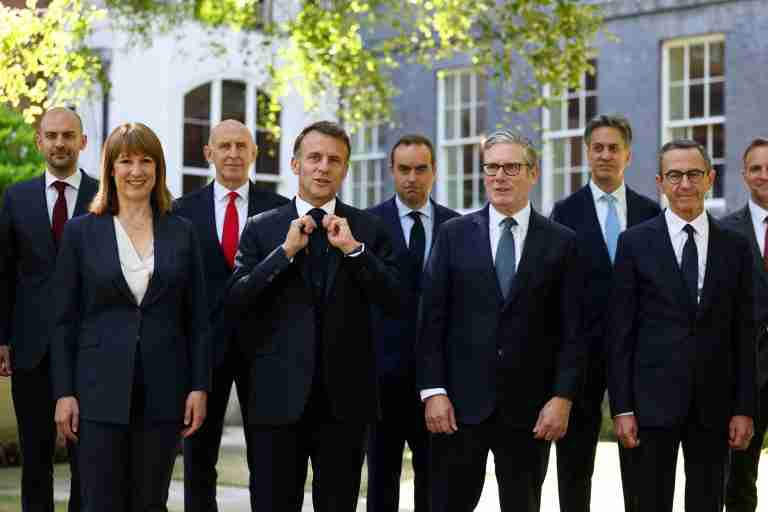
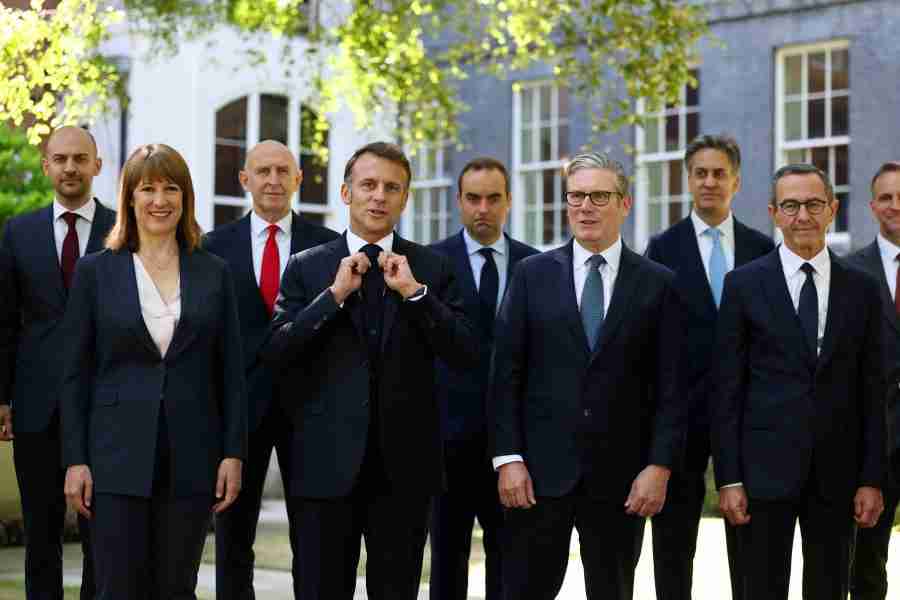
France and Britain on Thursday agreed to reinforce cooperation over their respective nuclear arsenals as the two European powerhouses seek to respond to growing threats to the continent and uncertainty over their U.S. ally.

The announcement came after French President Emmanuel Macron concluded a three-day state visit to Britain, where the two allies sought to turn the page of years’ of turbulence following Britain’s decision to withdraw from the European Union.

“This morning, we signed the Northwood declaration, confirming for the first time that we are coordinating our independent nuclear deterrence,” British Prime Minister Keir Starmer told a news conference alongside Macron.

“From today, our adversaries will know that any extreme threat to this continent would prompt a response from our two nations. There is no greater demonstration of the importance of this relationship.”

U.S. President Donald Trump’s questioning of burden-sharing in NATO and his overtures to Russia have led to existential questions in Europe about the trans-Atlantic relationship and Washington’s commitment to helping defend its European allies.

Europe’s primary nuclear deterrence comes from the United States and is a decades-old symbol of trans-Atlantic solidarity.

Macron said the two countries had created an oversight committee to coordinate their cooperation, a task he said was vital.

“The decision is that we don’t exclude the coordination of our respective deterrents. It’s a message that our partners and adversaries must hear,” Macron said.

The closer cooperation had nothing to do with their efforts to create a coalition of the willing to support Ukraine in the event of a ceasefire with Russia, he added.

While both sides will keep their own decision-making processes and strategic ambiguity, the move does suggest further protection for the continent at a time when the United States’ commitment to Europe is under scrutiny.

Macron has previously said he will launch a strategic dialogue on extending the protection offered by France’s nuclear arsenal to its European partners.

The U.S. has nuclear arms in Europe and tens of thousands of troops deployed in bases across the continent with military capabilities that Europe cannot match.

France spends about 5.6 billion euros ($6.04 billion) annually on maintaining its stockpile of 290 submarine- and air-launched nuclear weapons, the world’s fourth largest.

Britain describes its nuclear programme as “operationally independent”, but sources missile technology from the U.S. and depends on the U.S. for acquisition and maintenance support.

“On the nuclear agreement that we’ve reached today … it is truly historic,” Starmer said.

Additional reporting by Sam Tabahriti; Writing by John Irish; Editing by Aidan Lewis

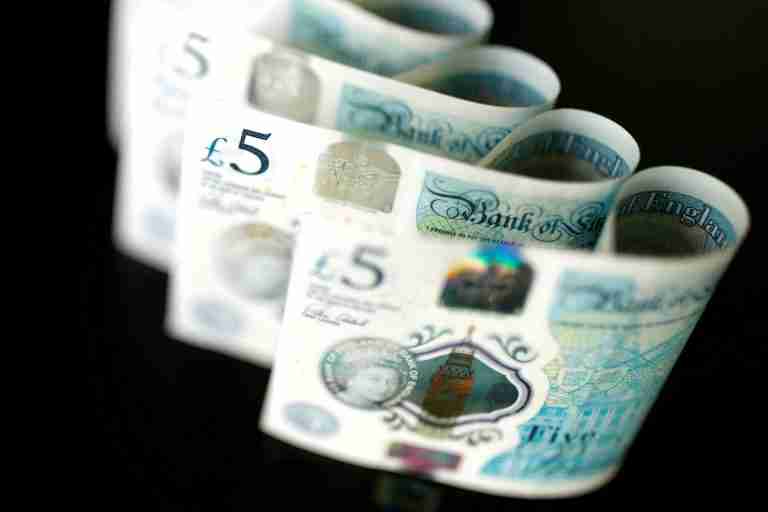
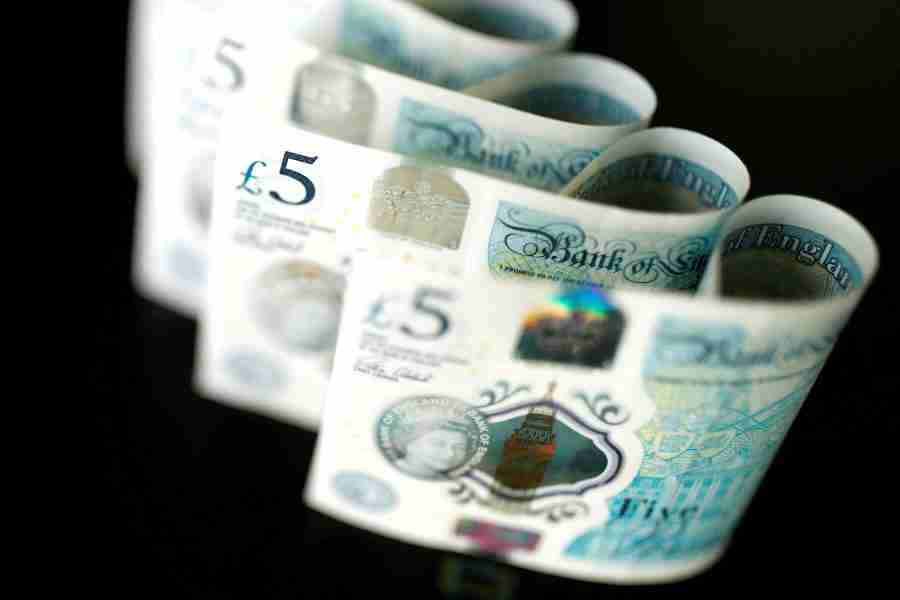
Sterling slips as weak growth data fuels rate cut expectations

The pound weakened 0.26% to $1.354, while against the euro it slipped 0.2% to 86.35 pence

International News via Reuters:

Sterling slipped on Friday and was trading close to a more than two-week low after data showed the UK economy contracted for the second month, boosting expectations that the Bank of England could lower borrowing costs next month.

Gross domestic product shrank by 0.1% after a 0.3% drop in April, the Office for National Statistics said, primarily dragged by weakness in industrial and construction output.

“Though it would be wrong to conclude from the GDP data alone that the economy is coming under greater pressure, there are genuine questions emanating from the jobs market and whether it is beginning to fall apart more quickly,” said James Smith, an economist at ING.

“For the (BoE), it would likely force a rethink on the pace of rate cuts. Until now, officials have appeared highly reluctant to move beyond their recent, gradual once-per-quarter cutting pace.”

The pound weakened 0.26% to $1.354, while against the euro it slipped 0.2% to 86.35 pence.

Yields on short-term gilts, often a reflection of interest rate expectations, were steady after easing about two basis points earlier in the day.

Traders are now pricing in a 78.3% chance the BoE could deliver a 25-basis-point interest rate cut in August, versus the 64% probability they were pricing in two weeks ago, data compiled by LSEG showed.

Friday’s data adds to worries for finance minister Rachel Reeves, with economists saying it looks likely she will need to raise taxes again in the upcoming Autumn budget as the government strives to balance its public accounts.

UK markets took a beating last week after the Labour government was forced to pass a highly contested welfare bill that did little to make good on the spending cuts initially hoped for and heightened the uncertainty regarding the sustainability of government finances.

Globally, investors were rattled by U.S. President Donald Trump’s latest tariff escalation as he said he would impose a 35% rate on Canadian imports next month, while other trading partners are likely to face blanket levies of 15% or 20%.

The pound firmed 0.5% against the Canadian dollar and last fetched C$1.855.

Analysts have said that Britain’s deal with the U.S. has made it less exposed to uncertainty on the trade front, which was also reflected in the pound’s 8% rise against the U.S. dollar so far this year.

Reporting by Johann M Cherian; Editing by Emelia Sithole-Matarise

Video: New club for Nahki Wells

The speculation is finally over — and it’s a new chapter for one of Bermuda’s football greats

Nahki Wells has officially signed with Luton Town, ending his five-and-a-half-year stint at Bristol City, where he made 237 appearances and scored 48 goals across all competitions.

Bermuda Tonight – 10 July 2025

In tonight’s TV news starting at 7pm…

  • Bermuda’s first drug bust involving ‘pink cocaine’
  • Police investigate firearms incident in Warwick
  • Overcrowding puts hospital on alert
  • Bermuda footballer Nahki Wells transferred to Luton Town

Effigies of refugees on bonfire condemned in Northern Ireland

A member of the regional assembly for Irish nationalists, called the display “deplorable” and a “clear incitement to hatred”

International News via Reuters:

A model of refugees in a boat, placed on a bonfire in a pro-British town near Belfast, prompted condemnations by politicians across Northern Ireland’s political divides on Thursday, weeks after migrants’ homes were attacked nearby.

Bonfires are lit across the British region in mainly Protestant “loyalist” neighbourhoods on the eve of the July 12 commemorations of William of Orange’s victory over the Roman Catholic King James at the Battle of the Boyne in 1690.

Pictures and effigies of Catholic Irish politicians and anti-Catholic slogans are often placed on some of the bonfires, which are built from wooden pallets in the weeks ahead of July 12.

Effigies of eight immigrants in life jackets were placed in a model boat alongside an Irish flag on top of the bonfire that is due to be lit on Thursday evening in the town of Moygashel, 65 km (40 miles) west of Belfast. Banners below the boat read “Stop the Boats” and “Veterans before Refugees.”

A member of the regional assembly for Irish nationalists Sinn Féin, Colm Gildernew, called the display “deplorable” and a “clear incitement to hatred” that must be removed immediately.

Ulster Unionist Party leader Mike Nesbitt called for the effigies to be removed and said he condemned them “without reservation”.

“This image is sickening, deplorable and entirely out of step with what is supposed to be a cultural celebration,” Nesbitt, who is the region’s health minister, wrote on X.

A statement from the pro-British Democratic Unionist Party to the BBC said the effigy placement “should not take place”.

Bonfires and parades to mark July 12 have often prompted violence – by both supporters and opponents – even after a 1998 peace deal largely ended three decades of conflict between Catholic nationalists aspiring to unification with Ireland, the British state and Protestant unionists seeking to retain the status quo.

Supporters, who have recently moved to rebrand July 12 celebrations as Orangefest, say the marches and bonfires represent centuries-old traditions.

In June, masked rioters attacked police and set homes and cars on fire in Ballymena, 65 km northeast of Moygashel.

Writing by Amanda Ferguson and Clodagh Kiloyne; Editing by Conor Humphries and Andrew Heavens