Wednesday, October 28, 2026
Home Blog Page 890

New fire threatens homes in Greece’s Athens, blaze in Crete displaces over 1,000, as Europe bakes in heatwave

The blaze encroached upon houses and hotels that were earlier evacuated
International News via Reuters:

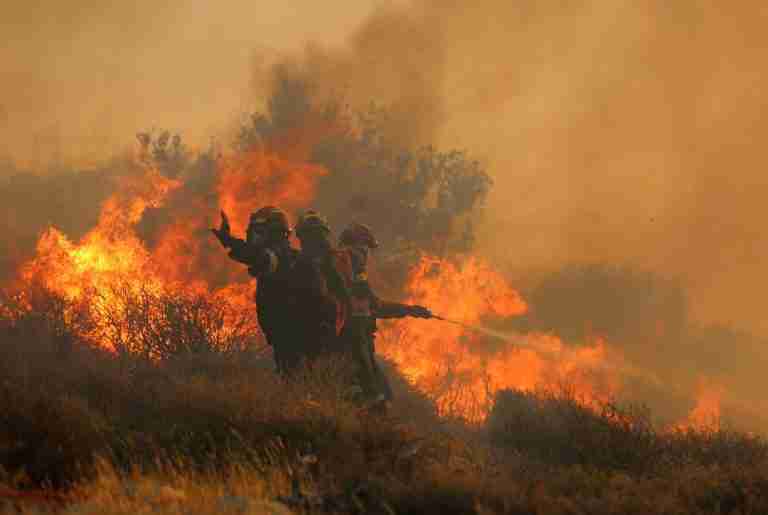
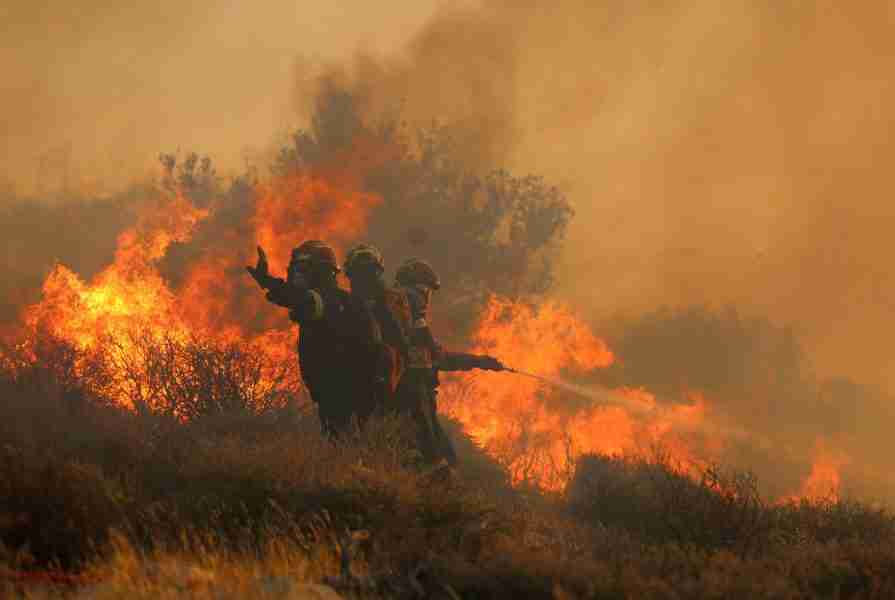
Firefighters battled a blaze Thursday on the island of Crete that scorched forests and olive groves and forced over 1,000 to evacuate, while a fresh conflagration near Athens threatened homes, highlighting Greece’s vulnerability to wildfire risks.

Gale-force winds and aridity made for tinderbox conditions, hampering Greek authorities’ efforts’ to tame the fires, as much of Europe baked in an early summer heatwave linked to the death of at least eight people across the region.

A new fire broke out in the Athens suburb of Pikermi on Thursday afternoon, threatening many homes and prompting the evacuation of three settlements as more than 100 firefighters battled to extinguish it.

Thick grey smoke billowed over the area, close to the Athens international airport and Rafina, home to the capital’s second largest port. The main avenue linking the suburb to Athens was closed to traffic.

Authorities said there was a high risk of fires also on Friday.

In Crete, around 230 firefighters, along with 46 engines and 10 helicopters, were deployed to contain the conflagration on Crete, which broke out a day earlier near Ierapetra town on the southeastern coast of Greece’s largest island.

Authorities declared a state of emergency in the wider municipal area of Ierapetra on Thursday, state broadcaster ERT said.

The blaze encroached upon houses and hotels that were earlier evacuated, stoked by intense winds that “rekindled and hindered firefighting efforts,” fire brigade spokesman Vassilis Vathrakogiannis said.

More than 1,000 residents and tourists were evacuated from at least four settlements. Most took shelter at an indoor stadium in Ierapetra, while others transferred to hotels in the north or left Crete by boat, authorities said.

“It was very scary,” said 26-year old Danish tourist Mikkel Sallin, who was evacuated to another hotel. “We are just glad to stay here right now and feel safe.”

Local media reported damage to some homes, and some people were hospitalised with respiratory issues, an official said.

Southeastern Crete saw a massive exodus of about 5,000 holidaymakers, George Tzarakis, head of hoteliers in the area, told Reuters, expressing concern over the impact on future bookings. Tourism is a key income earner for the popular tourist island.

‘WILDFIRE HOTSPOT’

Greece and other countries in the Mediterranean are in an area scientists dub “a wildfire hotspot” – with blazes common during hot and dry summers. These have become more destructive in recent years due to a fast-changing climate.

Scientists say heatwaves have arrived earlier this year, spiking temperatures by up to 10 C (50 F) in some regions as warming seas encouraged the formation of a heat dome over much of Europe, trapping hot air masses.

July is usually the most difficult month of the fire season due to high temperatures and strong winds, the fire brigade’s Vathrakogiannis said.

Meanwhile, in Turkey, thousands fled as authorities battled wildfires in Cesme and Odemis districts for a second day on the western coastal province of Izmir.

Winds hindered their efforts as the flames approached a main highway to Cesme, local TV footage showed, and thick smoke billowed over mountainous areas.

Italy’s health ministry issued red alerts for 18 cities as temperatures poised to soar as high as 38 degrees Celsius (100.4 degrees Fahrenheit) in major cities.

Temporary blackouts were possible with power consumption surging from the use of air conditioners, Italian Energy Minister Gilberto Pichetto Fratin warned.

Swiss utility Axpo has shut its two reactor units at the Beznau nuclear power plant due to high river water temperatures.

Reporting by Alexandros Avramidis in Ierapetra, Renee Maltezou, Angeliki Koutantou and Karolina Tagaris in Athens, Ezgi Erkoyun in Ankara, Alvise Armellini in Rome and Miranda Murray in Berlin; Editing by Bernadette Baum


AG: “Cannabis use in public places has not been legalised in Bermuda”

Attorney General Senator Kim Wilkerson sent an urgent call for residents to be mindful of cannabis use near young people

Attorney General Senator Kim Wilkerson, Ministry of Justice. Photo: Bermuda Parliament

Attorney General and Senator Kim Wilkerson today urging residents to refrain from cannabis use around young people who may be at risk of developing psychosis due to second hand smoke.


Senator Wilkerson reminded the public that de-criminalization of cannabis possession up to 7 grams remains in place but stressed that it remains illegal to use cannabis in public.


She said government remains committed to a path for safe adult recreational use of cannabis but with responsible use that protects young people from any exposure to harm.

As of the 2023 National School Survey, 28.5 % percent of senior four students have used marijuana. Most males start cannabis use at age 12 or younger and females start at 15, on average.


Senator Wilkerson cited an increase in the number of young people experiencing psychosis as a result of cannabis use.

France fines Shein 40 million euros for deceptive business practices

France’s antitrust agency said the Shein brand had misled customers about discounts

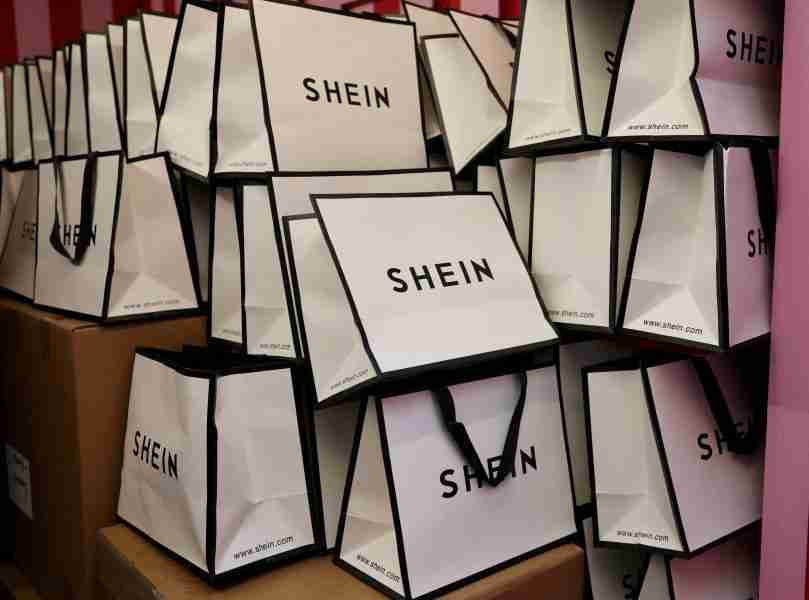
FILE PHOTO: A company logo for fashion brand Shein is seen on a pile of gift bags on its Christmas bus as part of a nationwide promotional tour in Liverpool, Britain, December 14, 2024. REUTERS/Phil Noble/File Photo

International News via Reuters:

France’s antitrust agency said on Thursday it had fined fast-fashion retailer Shein 40 million euros ($47.17 million) for alleged deceptive business practices including misleading discounts and vague claims about environmental impact, following a nearly year-long probe.

The agency said Infinite Style E-Commerce Co Ltd, which handles sales for the Shein brand, had misled customers about discounts, and that the company had accepted the fine.

In a statement, China-founded Shein said the antitrust agency had informed Infinite Style Ecommerce Co Ltd (ISEL) of issues related to discounts and environmental claims in March last year, and had taken corrective action within the following two months.

“All of the points raised have therefore been resolved more than a year ago,” Shein said in a statement. “ISEL takes very seriously its legal and regulatory obligations in France.”

($1 = 0.8480 euros)

Reporting by Makini Brice and Helen Reid; Editing by Charlotte Van Campenhout and Susan Fenton

Six months after LA wildfires, some adjust to new life in RVs

L.A. city and county officials say rebuilding progress has exceeded initial expectations

International News via Reuters:

Terry Kilgore lives alone in his Altadena neighborhood in California, sleeping in a recreational vehicle and surrounded by empty lots that were once the site of family homes.

In January, those homes were burned to the ground.

Six months after the wildfires that devastated the eastern and western flanks of Los Angeles, Kilgore’s RV solution is one way victims are coping as the arduous rebuilding effort goes on.

“You would never know it but it was pretty here. It’s never going to be pretty like it was,” said Kilgore, 70, a rock ‘n’ roll guitarist and lifelong Altadena resident. “The place I grew up in is gone forever. It’s a memory.”

The fires broke out on January 7, when dry desert winds whipped over mountain passes with hurricane force, following eight months without rain. The Eaton Fire, in Los Angeles County just east of the city, devastated the community of Altadena, while the Palisades Fire leveled much of the coastal Pacific Palisades district.

The fires killed 22 people, destroyed nearly 12,000 homes and caused as much as $53.8 billion in property damage, according to a report by the Los Angeles County Economic Development Corporation.

While many homeowners complain about delays, L.A. city and county officials say rebuilding progress has exceeded initial expectations. About 75% of the 4,398 residential lots destroyed or severely damaged in the city of Los Angeles have been cleared of debris and are certified for rebuilding, according to a spokesperson for Mayor Karen Bass.

In Altadena, in the foothills of the San Gabriel Mountains, there are still a few burnt-out and boarded-up businesses. Some are strewn with rubble. But most of the residential lots are cleared and free of char.

One source of Altadena’s charm – its proximity to nature – also made it vulnerable to wildfire. Black and Latino families have lived in Altadena for generations and the suburb is also popular with younger artists and engineers working at the nearby NASA rocket lab who were attracted by the small-town vibe and spectacular mountain views.

Now the town is dotted with signs of “Altadena is not for sale,” reflecting concerns that speculators and developers may turn what had been rows of neat bungalows into gaudy cash cows.

Kilgore’s RV is parked within a sea of razed lots and the occasional home that is still standing but vacant due to smoke damage. Many homeowners are crashing with friends and family, or renting during the rebuild, but others, like Kilgore, have chosen to live on their properties in RVs.

Jose Luis Martinez, 71, a retired electrician born in El Salvador, had been in his home 38 years when it burned down. Uninsured like Kilgore, and living on Social Security, he has no long-term plan but decided to hold onto the property and camp in an RV.

Others received insurance payments. Retired pastor Edwin Isaacs, 64, paid off his mortgage and is happy to live on his property condition-free in an RV, while Marialyce Pedersen has parked a trailer on her property while she rebuilds.

“I was 61 years old and ready to retire and enjoy my pool and my life. I love that my land is still here,” she said. “Here it feels familiar, like the right place for my body to be.”

Kilgore, who once played with former Van Halen frontman David Lee Roth, says he lost some of his best guitars in the fire, including a 1953 Fender Telecaster and a 1904 Parlor, along with an estimated $120,000 in equipment from his home studio. He said he saved five guitars that he grabbed on his way out the door to evacuate.

He once lived in a comfortable home with a high ceiling and tree-filled yard. Now he sweats inside a Bounder RV and washes and shaves with cold hose water in an outdoor basin. His main goal, he said, is to re-record all his original music that was lost in the fire.

“That’s probably what’s left for me to do,” Kilgore said. “I could die after that, for all I care. I’ve seen enough of this monkey show, I’m telling you.”

Reporting by Daniel Cole, Daniel Trotta and Jorge Garcia; Editing by Paul Thomasch and Rosalba O’Brien

Sterling steadies after selloff, fiscal worries prevail

Sterling edged up 0.1% to $1.365 after sinking 0.8% in the previous session

FILE PHOTO: British Pound Sterling banknotes are seen at the Money Service Austria company’s headquarters in Vienna, Austria, November 16, 2017. REUTERS/Leonhard Foeger/File Photo

International News via Reuters:

Sterling edged higher on Thursday, stabilising after fiscal concerns and uncertainty about Rachel Reeves’ future as Britain’s finance minister sparked a selloff across UK assets in the previous session.

Markets had been monitoring developments around a welfare bill in parliament where divisions within the Labour party forced Prime Minister Keir Starmer to back down on large spending cuts, leaving a hole in public finances.

The selloff gathered steam on fears that Reeves would be replaced, but was contained as Starmer gave the finance minister his full backing.

The government has been trying to stick to its self-imposed fiscal rules to try to build investor confidence. However, analysts warn that politically-difficult tax hikes might be needed to balance public accounts and avoid extra borrowing.

“The immediate issue is that the government left a very narrow margin in March against their fiscal rules they set themselves,” said a group of analysts led by Jim Reid at Deutsche Bank.

“So unless we got a big burst of growth before the budget, then the government would need to announce further tax rises or spending cuts if they still want to meet the fiscal rules.”

Sterling edged up 0.1% to $1.365 after sinking 0.8% in the previous session – its biggest daily drop in more than two weeks. The currency also firmed 0.3% against the euro, which last fetched 86.3 pence.

The relief was also visible in bond markets, where the yield on the 10-year gilt dropped 9 basis points. Yields had spiked on Wednesday, with those on the benchmark note at one point registering their largest one-day jump since October 2022.

Higher yields would generally support the domestic currency, so Wednesday’s reaction highlighted investors’ pessimism.

Global investors have been grappling with ballooning public debt in developed markets and have also been demanding greater premiums to hold them. Yields on British bonds are among the highest in the developed world.

Wednesday’s plunge in British assets immediately drew comparisons with Liz Truss’ short-lived premiership in 2022, which was derailed by a bond market selloff.

Traders expect the Bank of England to cut interest rates by 25 basis points again in September, according to data compiled by LSEG.

All eyes will now be on a pivotal U.S. jobs report later in the day that could help gauge the Federal Reserve’s monetary policy trajectory.

Reporting by Johann M CherianEditing by Mark Potter

Explainer-Will the EU delay enforcing its AI Act?

For AI companies, the enforcement of the act means additional costs for compliance

International News via Reuters:

With less than a month to go before parts of the European Union’s AI Act come into force, companies are calling for a pause in the provisions and getting support from some politicians.

Groups representing big U.S. tech companies such as Google owner Alphabet and Facebook owner Meta, and European companies such as Mistral and ASML have urged the European Commission to delay the AI Act by years.

WHAT IS THE AUGUST 2 DEADLINE?

Under the landmark act that was passed a year earlier after intense debate between EU countries, its provisions would come into effect in a staggered manner over several years.

Some important provisions, including rules for general purpose AI (GPAI) models, are due to apply on August 2.

GPAI, which includes foundation models like those made by Google, Mistral and OpenAI, will be subject to transparency requirements such as drawing up technical documentation, complying with EU copyright law and providing detailed summaries about the content used for algorithm training.

The companies will also need to test for bias, toxicity, and robustness before launching.

AI models classed as posing a systemic risk and high-impact GPAI will have to conduct model evaluations, assess and mitigate risks, conduct adversarial testing, report to the European Commission on serious incidents and provide information on their energy efficiency.

WHY DO COMPANIES WANT A PAUSE?

For AI companies, the enforcement of the act means additional costs for compliance. And for ones that make AI models, the requirements are tougher.

But companies are also unsure how to comply with the rules as there are no guidelines yet. The AI Code of Practice, a guidance document to help AI developers to comply with the act, missed its publication date of May 2.

“To address the uncertainty this situation is creating, we urge the Commission to propose a two-year ‘clock-stop’ on the AI Act before key obligations enter into force,” said an open letter published on Thursday by a group of 45 European companies.

It also called for simplification of the new rules. 

Another concern is that the act may stifle innovation, particularly in Europe where companies have smaller compliance teams than their U.S. counterparts.

WILL IT BE POSTPONED?

The European Commission has not yet commented on whether it will postpone the enforcement of the new rules in August.

However, EU tech chief Henna Virkkunen promised on Wednesday to publish the AI Code of Practice before next month.

Some political leaders, such as Swedish Prime Minister Ulf Kristersson, have also called the AI rules “confusing” and asked the EU to pause the act.

“A bold ‘stop-the-clock’ intervention is urgently needed to give AI developers and deployers legal certainty, as long as necessary standards remain unavailable or delayed,” tech lobbying group CCIA Europe said.

The European Commission did not respond immediatelyt to requests for comment.

Reporting by Supantha Mukherjee in Stockholm and Foo Yun Chee in Brussels. Editing by Mark Potter

Taking a break, Pope Leo revives centuries-old tradition

Dozens of popes have spent the summer months at Castel Gandolfo, where it is cooler than in Rome

International News via Reuters:

Pope Leo will revive a centuries-old tradition on Sunday by taking a holiday at Castel Gandolfo, where residents of the lakeside town hope for a tourism boost after the late Pope Francis shunned taking a summer break.

Leo, elected pope on May 8 after the death of Francis, will spend July 6-20 an hour’s drive south of Rome in the sleepy hill town of about 8,900 residents on the shores of Lake Albano.

The town’s mayor and business owners hope his stay – the first by a pope in 12 years – will attract tourists hoping to see the new leader of the Roman Catholic Church.

The Vatican has owned a papal palace in the town, including vast Renaissance-style gardens, since 1596, but Francis, who shunned much of the pomp and privilege of the papacy, chose not to take vacations, spending the summer in his Vatican residence.

“Pope Leo has given us a wonderful gift,” Stefano Carosi, the owner of a coffee shop on the town’s main square, said. “The pope has always been important here … because he attracts people.”

Mayor Alberto De Angelis said residents were excited about the visit. “The presence of the popes in Castel Gandolfo has always meant a lot of activity, a lot of economic growth,” he said.

While Leo is expected to spend most of his vacation out of the public eye, staying in a Vatican-owned building behind a gated wall, residents and tourists will have the opportunity to see him at religious celebrations on July 13 and 20.

Dozens of popes have spent the summer months at Castel Gandolfo, where it is cooler than in Rome, which has been sweltering in an early summer heatwave with temperatures reaching more than 37 degrees Celsius (99 degrees Fahrenheit).

FRANCIS LEFT ‘LONG-LASTING’ MUSEUM LEGACY

Francis had Castel Gandolfo’s papal palace turned into a museum and opened the gardens to visitors.

Leo will not stay at the palace and the museum will remain open to the public, instead staying at another Vatican property.

Although Francis never spent the night in Castel Gandolfo, residents said his decision to open the museum has had long-lasting benefits.

Marina Rossi, owner of a mosaic studio in the town, said tourists used to come only in the summer to see the pope at one of his audiences, but now they came more frequently.

“It was more of a hit-and-run tourism, because there was the audience and then they would leave,” she said. “Now there is a steady flow of tourism throughout the whole year.”

Now, with Leo coming back, said Rossi, it gave the town the chance to attract even more tourists. “It’s an important moment,” she said. “I won’t hide my happiness.”

As for what Leo might do during his vacation, Maurizio Carosi, brother of Stefano, had a suggestion, saying he’d tell the pope: “If you want a good glass of wine, come visit with me!”

Reporting by Joshua McElwee and Claudia Chieppa; Editing by Janet Lawrence

UK services sector grows at fastest pace since August, PMI shows

Prices charged by services firms increased at the weakest rate since February 2021

International News via Reuters:

British services sector activity expanded at the fastest rate in nearly a year in June, and the prices they charged rose at the slowest pace in almost four years, according to a survey on Thursday that is likely to be welcomed by the Bank of England.

The S&P Global UK Services Purchasing Managers Index rose to 52.8 last month from 50.9 in May.

June’s PMI was slightly stronger than a preliminary estimate of 51.3 for the month and it marked the fastest pace of growth since August 2024.

Prices charged by services firms increased at the weakest rate since February 2021.

The BoE is watching service sector prices carefully as it gauges inflation pressure in the economy. Investors largely expect the BoE to follow up on its May interest rate cut with another reduction in August, after it paused in June.

“A combination of easing price pressures and lower employment leaves the door open for the Bank of England to resume its run of interest rate cuts at the next policy meeting in August,” Tim Moore, economics director at S&P Global Market Intelligence, said.

The PMI survey showed the biggest upturn in new business since November, mainly from domestic clients.

Still, business expectations for the year ahead weakened slightly as many firms were worried about political and economic uncertainty, in part due to the impact of U.S. President Donald Trump’s tariffs.

But the survey also showed continued pressure on companies from labour costs, reflecting an increase in employers’ social security contributions and a nearly 7% rise in the minimum wage.

Firm cut staff numbers in each of the past nine months, largely by not replacing workers who left.

New export orders fell for the third consecutive month and at the faster rate than in May, mainly due to weaker demand in Europe and the U.S.

The composite PMI, which combines the services data with Tuesday’s manufacturing survey, edged up to 52.0 from May’s 50.3.

The manufacturing PMI showed factories turned more optimistic last month, with some signs of the sector turning a corner in its long slump.

Reporting by Suban Abdulla, editing by Andy Bruce and Hugh Lawson

Oil retreats on US tariff uncertainty and OPEC+ supplies

A preliminary trade deal between the U.S. and Vietnam also boosted prices

International News via Reuters:

Oil prices slipped on Thursday as the possibility of U.S. tariffs being reinstated raised demand concerns ahead of an expected supply boost by major producers. 

Brent crude futures fell 58 cents, or 0.8%, to $68.53 a barrel by 0942 GMT. U.S. West Texas Intermediate crude declined 57 cents, or 0.9%, to $66.88. 

Both contracts had hit one-week highs on Wednesday as Iran suspended cooperation with the U.N. nuclear watchdog, raising concerns the lingering dispute over its nuclear programme could again devolve into armed conflict. 

A preliminary trade deal between the U.S. and Vietnam also boosted prices.

Tariff uncertainty looms large, however. The 90-day pause on the implementation of higher U.S. tariffs ends on July 9, with several large trading partners yet to wrap up trade deals, including the European Union and Japan. 

The OPEC+ group of oil producers, meanwhile, is expected to agree to raise output by 411,000 barrels per day (bpd) at its policy meeting this weekend.       

Adding to negative sentiment, a private-sector survey showed that service activity in China – the world’s biggest oil importer – expanded at its slowest pace in nine months in June as demand weakened and new export orders declined.

A surprise build in U.S. crude inventories also highlighted demand concerns in the world’s biggest crude consumer.

The U.S. Energy Information Administration said on Wednesday that domestic crude inventories rose by 3.8 million barrels to 419 million barrels last week. Analysts in a Reuters poll had expected a drawdown of 1.8 million barrels.

The market will be watching for the U.S. monthly employment report on Thursday, which is likely to shape expectations over the depth and timing of interest rate cuts by the Federal Reserve in the second half of the year, analysts said.

Lower interest rates could spur economic activity that would boost oil demand.

Reporting by Ahmad GhaddarAdditional reporting by Siyi Liu in SingaporeEditing by David Goodman

French air traffic controllers’ walkout disrupts early summer season travel

The strike coincided with the start of the European summer holidays

International News via Reuters:

French air traffic controllers began a two-day strike on Thursday to protest over staff shortages and ageing equipment, leading to hundreds of flight cancellations just as the summer season gets under way.

France’s civil aviation agency DGAC told airlines to revise their schedules, including at Paris’ Roissy Charles de Gaulle airport – one of Europe’s busiest hubs – forcing the carriers to cancel flights. 

Air France, France’s largest airline, said it had adapted its flight schedule, without giving details, but that it was maintaining its full long-haul flight schedule. IAG-owned British Airways was using larger aircraft to mitigate disruption.

Ryanair said it had been forced to cancel 170 flights affecting over 30,000 passengers on Thursday and Friday.

“Once again European families are held to ransom by French Air Traffic Controllers going on strike,” Ryanair CEO Michael O’Leary said. “It makes no sense and is abundantly unfair on EU passengers and families going on holidays.”

Easyjet said it would be cancelling 274 flights over Thursday and Friday.

The strike coincided with the start of the European summer holidays, one of the busiest travel periods of the year.

France’s second-largest air traffic controllers’ union, UNSA-ICNA, said its members were striking over persistent understaffing, outdated equipment and a toxic management culture. Another union, USAC-CGT, said the DGAC had failed to comprehend the frustration felt by controllers.

“The DGAC is failing to modernise the tools that are essential to air traffic controllers, even though it continues to promise that all necessary resources are being made available,” UNSA-ICNA said in a statement. 

“The systems are on their last legs, and the (air traffic control) agency is constantly asking more of its staff to compensate for its difficulties,” it added.

The DGAC did not immediately respond to a request for comment on the trade unions’ concerns.

Their complaints echo grievances expressed by air traffic controllers in the United States over outdated infrastructure, dramatic staffing shortfalls and failing technology.

French Transport minister Philippe Tabarot called the unions’ demands unacceptable.

The DGAC asked airlines to cut one in four flights in and out of Paris airports and almost half of flights out of the capital on Friday. Elsewhere, airlines were asked to reduce flights by 30%-50%, with the south particularly hard hit.

“Despite these preventative measures, disturbances and significant delays are to be expected at all French airports,” the agency said, urging passengers to change their flights if they were able to.

Luxair Luxembourg Airlines warned that “additional delays and schedule changes are possible across other destinations, as air traffic rerouting and capacity constraints may cause knock-on effects throughout the network.”

Ryanair’s O’Leary urged the European Commission, the European Union’s executive arm, to reform EU air traffic control services to ensure adequate staffing at peak periods and to protect overflights – those that pass over a country or region without landing there – during national strikes.

Reporting by Makini Brice, Richard Lough and Sudip Kar-Gupta in Paris, Sarah Young in London; Editing by Mark Potter