Dillas, Burgess, and Fernandez come out on top at Port Royal
Men’s Championship winner, Jarryd Dillas
Three days of challenging golf at the Port Royal Golf Course culminated with Jarryd Dillas, Tracy Burgess, and Baldonick Fernandez being crowned the 2025 Bermuda Amateur Stroke Play Champions in their respective divisions. In the Men’s Championship Division, Jarryd Dillas produced a strong final round of 74 (+3) to claim the title, finishing atop the leaderboard with a three-round total of nine-over-par 222. Eric West, the leader after two rounds, finished a close second. The Ladies Championship Division saw Tracy Burgess claim the coveted title. Fresh from her international experience at Pinehurst, Burgess carded a final round of 84 (+13), giving her a three-round total of 31-over-par 244. Vanessa Chychrun finished second, and overnight leader Darina Betschart took third. In the Senior Men’s Championship Division, Baldonick Fernandez led from start to finish, maintaining his composure to secure the title with a three-round total of 21-over-par 234. Mark Ray finished second, with Hav Trott and Arthur Jones tied for third.
NAB Third Sector Spotlight: National Museum of Bermuda
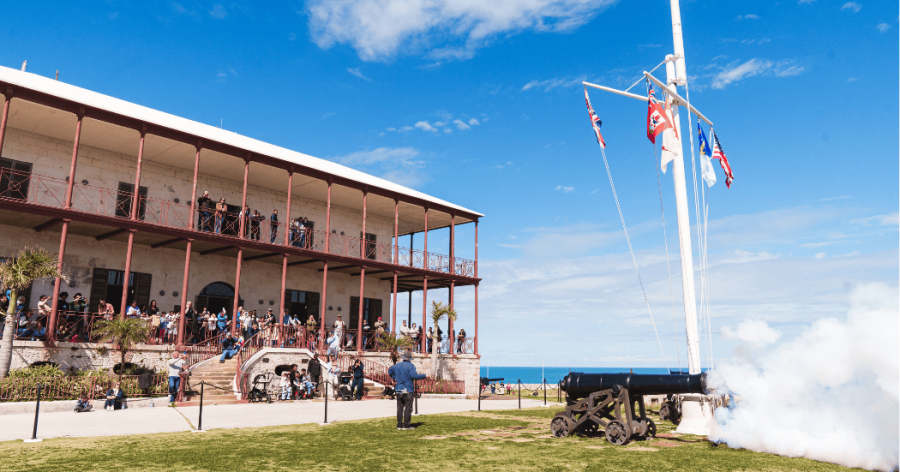
Images courtesy of the National Museum of Bermuda
By Elena Strong, Executive Director, National Museum of Bermuda
Museums do more than preserve artefacts. They are powerful centres for learning, keepers of memory, and knowledge generators and sharers. They are also critical in shaping identity, strengthening communities and are places that spark the imagination.
In times of uncertainty, people turn to stories, spaces, and shared histories to feel grounded. That’s why museums have never been more relevant or more essential. In a world that feels increasingly fast-moving and unpredictable, places like the National Museum of Bermuda (NMB) offer something essential: perspective, connection and a deeper understanding of who we are.
Located in Bermuda’s largest fort at the Royal Naval Dockyard, NMB is a custodian of over a 16- acre property with 11 historic buildings. For 50 years, NMB has conducted and facilitated archaeological investigations and historical research and built a collection of over 80,000 objects reflecting 500 years of Bermuda history and culture. In 2024, we welcomed over 72,000 visitors – including more than 15,000 young people – offering experiences that make Bermuda’s diverse history accessible, inclusive, and meaningful. Through our exhibitions, educational programs and community initiatives, we are cultivating culturally literate, critically thinking individuals.
NMB also serves as a dynamic educational resource, offering free programmes to students, teachers and life-long learners. Through our Early Years Programme we use play and inquiry-based learning to introduce Bermuda’s youngest learners to the Island’s maritime heritage. Through our hands-on Learning Labs, middle school students engage with Bermuda’s past using primary sources and, object-based learning to develop historical thinking skills. Moving the Needle, our Teacher Professional Development initiative, has trained nearly 200 educators in teaching methods that encourage empathy, critical thinking, and connection. One teacher described it as “Awesome! …An invaluable learning experience that raises the bar for teaching history.”
NMB’s internship programme – our longest-running educational initiative – has provided hands-on experience in museum work and heritage management for hundreds students. Many of our interns have gone on to work in cultural institutions both locally and internationally, shaping the next generation of heritage stewards.
Our outreach efforts go beyond the classroom. Community-centred initiatives like Portuguese Voices, The Bermuda Family Scrapbook, and The Objects That Make Us use storytelling to reflect Bermuda’s diversity and ensure all residents see themselves in our shared history. Participants share stories about their family photographs and personal artefacts that challenge the traditional historical record, making space for underrepresented voices and experiences. As one participant in The Objects That Make Us shared: “Thank you for the opportunity… Sharing this story was emotional and meaningful – I’d never expressed it in words before.”
NMB also supports personal and collective discovery through programmes like Tracing Our Roots/Routes, which helps Bermudians explore family histories through workshops and online presentations. Our use of digital platforms has helped broaden accessibility and participation, ensuring that our work reaches people where they are.
Every February, we open our doors to thousands of residents for free and host our annual Community Day filled with cultural activities, art, music and cannon fire – ensuring cost is not a barrier to engaging with Bermuda’s past.
At NMB, we are not only preserving the past – we are cultivating a living legacy that invites participation, encourages dialogue, and strengthens our community. To better connect with Bermuda’s heritage, we invite you to visit us, participate in our programmes, become a member, or volunteer. Together, we can ensure that Bermuda’s history remains vibrant, inclusive and alive for generations to come.
NMB is open every day 10am–5pm (last admission 4pm). Visit www.nmb.bm/visit for more information. NMB is a non-government, not-for-profit Bermuda Registered Charity No. 136.
This op-ed is part of the Third Sector Spotlight Series, a collective media campaign coordinated by the Nonprofit Alliance of Bermuda. This campaign aims to raise awareness of the value, impact and contributions of Bermuda’s nonprofit sector.
Nicholas Pilgrim and Maddie Durkin were crowned the Male and Female Liberty Mutual National Sprint Triathlon Champions after a challenging day of racing through the streets of Hamilton. Nicholas Pilgrim put in a dominant performance in the Open Male category, clocking a winning time of 58 minutes flat. His victory was emphatic, finishing more than three minutes clear of his nearest rival, Jackson Langley (1:01:08), with Alex Pilgrim rounding out the podium (1:04:32). In the Open Female division, Maddie Durkin claimed the national title, finishing an impressive sixth overall with a time of 1:07:30. Lynsey Palmer secured second among the women (1:11:41), and Meghan Diel took third (1:14:49). The Junior Triathlon categories also saw strong competition. Jens Drea claimed the Junior Male title with a time of 37:36, while Isla Cooze emerged victorious in the Junior Female event, crossing the line in 43:09. The event, held in the heart of Hamilton on Sunday, showcased the strength and depth of Bermuda’s triathlon talent across all age groups.
Gains on Tuesday were led by precious metal stocks that rose 2.1%
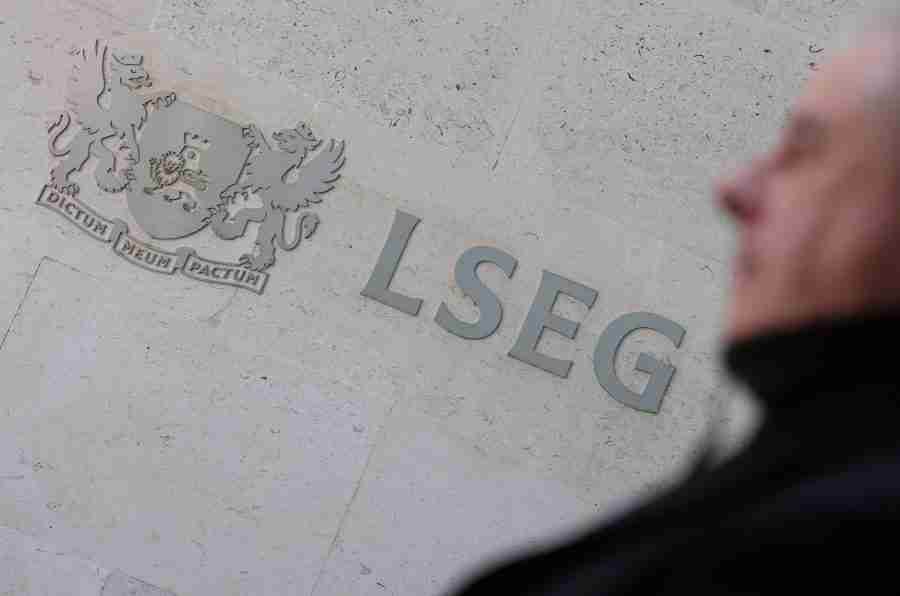
Signage is seen outside the LSEG (London Stock Exchange Group) headquarters in Paternoster Square, London, Britain, April 25, 2025. REUTERS/Toby Melville/File Photo
International News via Reuters:
London’s main stock indexes edged lower on Tuesday, with last week’s relief rally driven by the Israel-Iran truce coming to an end, as investors assessed a mixed bag of company news.
The internationally oriented FTSE 100 fell 0.2% by 1025 GMT, while the domestically focussed midcap index slipped 0.1%. Midcap stocks ended June by logging their best quarter in over four years while the blue-chip index logged monthly losses.
Gains on Tuesday were led by precious metal stocks that rose 2.1% with safe-haven gold edging up on a weaker dollar and U.S. tariff uncertainty.
Endeavour Mining and Fresnillo were among the top gainers on the blue-chip, adding 1.8% and 2.2%, respectively. Hochschild Mining gained 3.2% on the midcap index.
Meanwhile, losses were led by the household goods and home construction index, which was down 1.6%.
Barratt Redrow, Taylor Wimpey and Bellway all slipped over 2%.
Bank of England Governor Andrew Bailey stressed on Britain’s softening labour market and pointed to rising uncertainity in global economy hurting economic growth and investment intentions.
Traders are currently pricing in a 76% chance of a rate cut from the BoE in August.
Meanwhile, S&P’s manufacturing PMI data showed that the sector improved for the third month in a row, but remained below the growth threshold as businesses increased prices to offset higher labour costs.
In individual stocks, food retailer Sainsbury’s shares slid 1.3% despite reporting a higher-than-expected rise in quarterly sales.
Standard Chartered Bank shares fell 2.7% after liquidators for Malaysia’s sovereign wealth fund 1MDB sued the bank in Singapore alleging fraud that led to more than $2.7 billion in losses more than 10 years ago.
Packaging automation firm Mpac Group shares slumped 25% after the company warned of lower-than-expected annual results due to U.S. tariffs weighing on orders.
In company news, Britain’s competition watchdog cleared Aviva’s 3.7-billion-pound ($5.08 billion) takeover of smaller rival Direct Line that will create the UK’s largest home and motor insurer.
Shares of Direct Line were marginally up.
Reporting by Twesha Dikshit; Editing by Shailesh Kuber
The ECB has cut rates eight times in the space of a year as inflation eased to its 2% target
International News via Reuters:
Two European Central Bank policymakers warned on Tuesday about the hit from a further appreciation of the euro on a weak euro zone economy that is bracing for painful U.S. tariffs.
The euro has risen some 9% against the dollar since April as investors, spooked by U.S. President Donald Trump’s unpredictable economic policy, warmed up to the European Union’s newfound military and industrial ambitions.
But a strong currency is a mixed blessing for the central bank because it makes exports more expensive and imports cheaper, pushing down both growth and inflation.
“If there is a 10% tariff plus a 10%-plus appreciation of the exchange rate, this is large enough to affect export dynamics,” Latvian central bank governor Martins Kazaks told Reuters at the ECB’s annual Forum on Central Banking in Sintra, Portugal.
EU officials have resigned themselves to a 10% tariff on goods exported to the United States as their baseline as they continue difficult negotiations with Trump’s administration ahead of a July 9 deadline.
The euro was trading at $1.18 on Tuesday, up 14% since the start of the year but still roughly in the middle of the range in which it has been for the past decade or so.
ECB vice-president Luis de Guindos said the central bank could ignore the euro’s rise against the dollar up to $1.20 but not higher.
“Beyond that, it will be much more complicated,” de Guindos told Bloomberg TV.
Euro zone manufacturing is only starting to recover from its 2022-24 – partly energy-related – slump, with new orders arresting a three-year slide last month.
Both Kazaks and de Guindos said the economy was weak but seemed to play down the prospect of more support from the ECB via interest rate cuts.
“The majority of the rate adjustment has been done,” Kazaks said. “If there are further cuts, they will be small and have signalling value, provided that we remain in the baseline.”
De Guindos said an additional cut was “not going to help the economy”, which instead needed certainty on trade and other policies.
The ECB has cut rates eight times in the space of a year as inflation eased to its 2% target, where it expects it to stay for the foreseeable future except for a short-lived dip in 2026.
It has signalled it will pause its rate-cutting streak in July and Lithuanian governor Gediminas Simkus said the central bank may keep rates on hold for longer.
“I don’t know if we’ll have all the information we need by September, but I remain open to every possibility,” Simkus said in an interview in Sintra on Monday.
“I believe a move, if any, is more likely towards the end of the year.”
Euro zone inflation came in at 2% in June, a flash reading showed on Tuesday, and consumers – who were stung by a cost of living crisis in 2022-23 – are also paring back their expectations for future price growth, according to an ECB survey.
Reporting by Francesco Canepa, Editing by Louise Heavens and Ros Russell
Europe is the world’s fastest-warming continent, heating up at twice the global average
International News via Reuters:
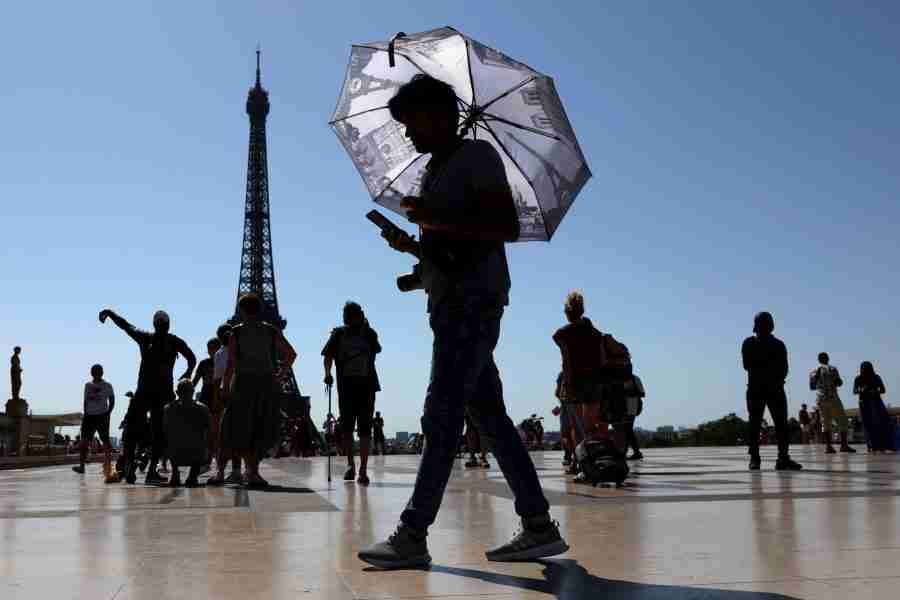
More than a thousand schools were closed in France on Tuesday and the top floor of the Eiffel Tower was shut to tourists as a severe heatwave continued to grip Europe, triggering health alerts across the region.
The Mediterranean Sea was up to 6 degrees Celsius warmer than usual for the time of year, hitting a record of as much as 30 C (86 F) in Spain’s Balearic Sea as a heat dome trapped hot air above Europe, the country’s Aemet weather forecaster said.
Europe is the world’s fastest-warming continent, heating up at twice the global average, according to the EU’s Copernicus Climate Change Service, making extreme heatwaves occur earlier in the year, and persist into later months.
In France, the heat was set to peak on Tuesday, reaching 40-41 C in some areas and 36-39 C in most others, weather forecaster Meteo France said. Sixteen departments will be on the highest level of alert from noon, with 68 on the second highest.
Some 1,350 schools will be fully or partially closed due to the heat, up significantly from around 200 on Monday, the Education Ministry said. The top floor of the Eiffel Tower will be closed on Tuesday and Wednesday, with visitors advised to drink plenty of water.
The extreme heat also raised the risk of field fires as farmers in France, the European Union’s biggest grain producer, start harvesting this year’s crop.
Some farmers were working through the night to avoid harvesting during peak temperatures in the afternoon. In the Indre region of central France, which has seen a spate of field fires since late June, authorities banned field work between 2 p.m. and 6 p.m.
HEALTH ALERTS
The intense heat could harm biodiversity, some experts said.
“In the past we have seen impacts like mass mortalities of invertebrate species, die-offs of seagrass beds and disease outbreaks in mussel farms. It’s likely that we’ll see similar impacts from this event,” said scientist Kathryn Smith of the Marine Biological Association of the United Kingdom.
Health alerts have been issued across Europe, with residents and tourists alike seeking ways to keep cool.
Extreme heat kills up to 480,000 people annually around the world, according to Swiss Re, which notes this exceeds the combined toll from floods, earthquakes and hurricanes.
In a retirement home in Grimbergen, Belgium, residents passed a ball to each other in a paddling pool.
“To me it’s a great activity,” said Marie-Jeanne Olbrechts, one of the residents.
The DGG association for geriatric care in Germany said most regions of the country were not adequately prepared for a heatwave.
“If they were, they could prevent tens of thousands of deaths in the future,” said Clemens Becker, author of a study conducted on behalf of the DGG.
Scientists say greenhouse gas emissions from burning fossil fuels are a key cause of climate change, with deforestation and industrial practices being other contributing factors. Last year was the planet’s hottest on record.
Additional reporting by Kate Abnett, Gus Trompiz, Rachel More; Editing by Bernadette Baum
Shares in Sainsbury’s were flat at 290 pence in mid-morning trading
International News via Reuters:
Sainsbury’s reported a higher-than-expected rise in quarterly sales on Tuesday, as Britain’s second-largest food retailer benefited from warm weather and a disruption at rival Marks & Spencer, which suffered a major cyber attack.
Still, Sainsbury’s, which trails market leader Tesco, did not lift its forecast for annual profit, despite its robust sales performance and a rise in its share of Britain’s grocery market to a nine-year high exceeding 15%.
Chief Executive Simon Roberts, explaining why the outlook was maintained, said it was too early in the financial year.
“Let’s see how the rest of the summer plays out. Let’s hope that we continue to see good momentum,” he told reporters on a call.
The cyber attack on M&S in April hit sales for about six weeks as online shopping was suspended, and as food availability in stores was hampered.
Roberts said Sainsbury’s, whose strategy for winning market share has been to match discounter Aldi’s prices on hundreds of key items, had seen “a little bit of benefit” from the M&S issues.
“It stands to reason if you know, if a particular store is lower on stock in the moment, a customer will go somewhere nearby,” he said.
Shares in Sainsbury’s, which have surged 21% in the last three months matching a similar rise in Tesco’s stock, were flat at 290 pence in mid-morning trading.
For the 16 weeks to June 21, Sainsbury’s UK like-for-like sales, excluding fuel, rose 4.7%, against a rise of 3.7% in the previous quarter, as good weather drove spending across its food, clothing and Argos general merchandise brand, beating a consensus forecast of 3.4%.
Last month, Tesco reported a better-than-expected 5.1% rise in UK underlying sales for its first quarter which ran to May 24.
Sainsbury’s kept its guidance for retail underlying operating profit, its preferred measure, of around 1 billion pounds for the full year to March 2026, versus 1.04 billion pounds made in 2024/25, reflecting its pledge to sustain a competitive edge on prices.
Part of Sainsbury’s caution over forecasts is likely to be linked to fears of a price war, after Asda, Britain’s third largest grocer, said in March it planned a sustained campaign of price cuts and would take a profit hit to reset its business.
Reporting by Sarah Young; Editing by Sachin Ravikumar and Bernadette Baum
The EU wants tariff relief to start as soon as an initial agreement is reached
FILE PHOTO: European Union flags fly outside the European Commission in Brussels, Belgium November 8, 2023. REUTERS/Yves Herman/File Photo
International News via Reuters:
The European Union wants immediate relief from tariffs in key sectors as part of any trade deal with the United States due by a July 9 deadline, but the bloc expects even a best-case deal to include a degree of asymmetry, EU diplomats told Reuters.
The European Commission, which coordinates EU trade policy, is pushing three key points in Washington this week even as it accepts the U.S. baseline tariff of 10% as unavoidable.
Both sides are working towards an agreement in principle, with the final details to be ironed out later. In a short negotiation document Washington sent last week, the Trump administration only presented what it expects from Brussels without any concessions of its own, EU diplomats briefed on the matter said.
For any deal, Brussels wants in return a reduction of baseline tariffs to pre-Trump levels or a zero-for-zero tariff in cases when it existed.
That means specifically lower tariffs for alcoholic beverages and medical technology, on which the U.S. applies its 10% tariff.
The EU also wants a deal to cover commercial aircraft and parts, pharmaceuticals and semiconductors, sectors the U.S. is investigating, but has not yet imposed extra duties on. Trump said in June the pharma duties would be announced “very soon”.
Secondly, the EU wants a concession from U.S. President Donald Trump on the 25% tariff on cars and car parts, the diplomats said, and an immediate lowering of U.S. steel and aluminium import tariffs, which Trump hiked to 50% in June.
One diplomat said cars were a “red line” for the bloc. However, Brussels and Washington have conflicting goals as Trump wants to revive U.S. auto production while Brussels wants open markets for its sector, which is struggling with high energy costs and competition from China.
Thirdly, the EU wants tariff relief to start as soon as an initial agreement is reached, rather than waiting weeks or months for a final accord. A number of EU members said a deal without this would be unacceptable, the sources said.
EU trade chief Maros Sefcovic and the European Commission president’s head of cabinet Bjoern Seibert head to Washington later this week hoping to reach a deal.
Trump has suspended higher tariffs until July 9 in order to strike deals with global trade partners. He has said countries without deals will see 10% U.S. baseline tariffs on goods jack up to rates of as much as 50%. For the EU, that rate is 20%, although Trump has also threatened a 50% duty on all EU imports.
A week before the deadline, the Commission told its 27 member states all outcomes were still possible, from a successful framework agreement to higher U.S. tariffs covering additional sectors, the diplomats said.
If its goal of upfront tariff relief fails to materialise, Brussels will have to choose between accepting significant imbalances or responding with countermeasures.
Another scenario could be a deadline extension. U.S. Treasury Secretary Scott Bessent said on Monday any extension would be Trump’s decision, with deals to be wrapped up by September 1.
Reporting by Julia Payne and Philip Blenkinsop. Editing by Mark Potter
The delegate’s remarks follow months of trade tension between the two economies
International News via Reuters:
China is ready to have discussions about trade policies, including tariffs and subsidies, that Washington has identified as obstacles to reforming the World Trade Organization, a senior delegate at China’s mission to the WTO said.
China had heard “every word” the U.S. had said at the WTO about its trade practices and is open to discussing tariffs, industrial policy and some benefits it gains from its developing country status, as part of broader conversations on reform ahead of a 2026 ministerial meeting in Cameroon, the delegate said.
The official declined to be identified. China’s mission does not publicly identify delegates below ambassador rank. China recalled its WTO ambassador in April to become a trade negotiator and the vacant position has yet to be filled.
The delegate’s remarks follow months of trade tension between the world’s two largest economies over sweeping tariffs imposed by the U.S. and retaliatory measures by China.
Washington argues there can be no meaningful WTO reform until China and other major economies relinquish privileges known as Special and Differential Treatment (SDT) granted to developing countries, which the U.S. says give them an unfair advantage.
Some major economies, including China and Saudi Arabia, self-identify as developing countries, granting them access to SDT benefits such as setting higher tariffs and using subsidies.
The delegate said China’s developing country status was non-negotiable, but it might forgo SDT in upcoming negotiations, as it did recently on fisheries and domestic regulations.
“I see that in the coming negotiations, generally speaking, I don’t think China will ask for the SDT,” the delegate told Reuters.
However, former WTO spokesperson Keith M. Rockwell, a senior research fellow at the Hinrich Foundation, was sceptical that China would fully relinquish SDT in areas like agriculture.
The U.S. opposes countries picking and choosing SDT benefits, and wants China to completely renounce them.
The delegate said China was open to discussing subsidies to ensure a fairer playing field provided it was met with goodwill in return. But it would not accept any attempts to try to change its economic system, they added.
Following positive trade talks in Geneva and London, China indicated openness towards discussing tariffs within the WTO.
“We welcome the U.S. to come back to the WTO,” the delegate said. “We are ready to renegotiate on Article 28 if the U.S. raises their requests here at the WTO.”
Article 28 of the WTO Agreement allows members to modify tariff commitments under certain conditions, providing a potential pathway for adjustments.
Reporting by Olivia Le PoidevinEditing by Dave Graham and Ros Russell
Companies passed on part of the higher costs to consumers
International News via Reuters:
Britain’s manufacturing sector showed some signs of turning a corner in its long slump and businesses pushed up their prices in June to offset higher labour costs, according to a survey published on Tuesday.
The S&P Global/CIPS manufacturing Purchasing Managers’ Index improved for a third month in a row to 47.7 in June from 46.4 in May although it remained below the 50.0 growth threshold for a ninth month in a row.
The reading was unchanged from a preliminary estimate.
The severity of the downturn eased in output, hiring and new orders, the PMI showed.
“That said, any hoped for stabilisation remains fragile and subject to potential headwinds that could severely impact demand, supply chain reliability and future growth prospects,” Rob Dobson, director at S&P Global Market Intelligence said.
The Bank of England, which kept interest rates at 4.25% last month, has said it is focusing on the conflicting inflation risks from a weaker labour market and from higher energy prices due to conflict in the Middle East.
Input costs rose for an 18th month with firms citing higher wages and suppliers raising prices due to finance minister Rachel Reeves’ employer payroll tax increase as well as geopolitics and concerns over future government policy.
Companies passed on part of the higher costs to consumers, S&P said.
Hiring shrank for the eighth month in a row and exports contracted at their fastest pace since November, reflecting uncertainty around U.S. President Donald Trump’s import tariffs, weaker demand from the United States, Europe and China.
But the share of manufacturers expecting higher output in a year’s time rose to 46% as sentiment reached a four-month high.
On Monday, a survey published by Lloyds showed business confidence rose to its highest in nine years.
Reporting by Suban Abdulla; Editing by Hugh Lawson
The euro was perched at a near four-year high of $1.1781
An employee holds U.S. dollar bank notes at a money changer in Jakarta, Indonesia, April 9, 2025. REUTERS/Willy Kurniawan/File Photo
International News via Reuters:
The U.S. dollar weakened on Tuesday, falling the most against the Japanese yen and the Swiss franc, as President Donald Trump’s massive tax-cut and spending bill stoked fiscal worries and uncertainty around trade deals weighed on sentiment.
Investors have also started wagering on a quicker pace of monetary policy easing by the Federal Reserve this year ahead of a slew of U.S. economic data this week, headlined by Thursday’s nonfarm payrolls report.
That spurred dollar-selling, which slipped 0.33% to a new 10-year low and fetched 0.790 Swiss francs, while the greenback dropped 0.64% to 143.08 Japanese yen. The yen capped the first half of the year with a 9% gain – its strongest performance since 2016.
The euro was perched at a near four-year high of $1.1781. The single currency surged 13.8% in the January-June period, its strongest-ever first half performance, LSEG data showed.
Sterling inched up 0.2% to $1.3757, not far from the three-and-a-half-year high it touched last week, while the dollar index, which measures the U.S. currency against six others, slipped to 96.698, its lowest since February 2022.
“There are many reasons not to like the USD. Some are structural, like the erratic trade policies and fiscal risks,” said Moh Siong Sim, a currency strategist at Bank of Singapore.
“They have earlier caused the USD to weaken despite its relative yield advantage. But the risk of a more dovish Federal Reserve eroding USD’s yield advantage is the latest source of USD weakness.”
Goldman Sachs now expects Fed to deliver three quarter-point interest rate cuts this year compared with its earlier forecast of a single reduction in December, citing muted tariff effects and labour market weakness.
Investors are also grappling with uncertainty over the U.S. Senate’s efforts to pass Trump’s budget bill, which faces internal party divisions over its projected $3.3 trillion addition to the national debt. The fiscal concerns have dampened sentiment and prompted some investors to diversify.
The world’s reserve currency is down more than 10% this year, its biggest first-half dive since the era of free-floating currencies began in the early 1970s.
TRUMP VERSUS FED
Meanwhile, Trump has continued hammering the Fed to ease monetary policy, sending Fed Chair Jerome Powell a list of central bank interest rates around the world adorned with handwritten commentary saying the U.S. rate should be between Japan’s 0.5% and Denmark’s 1.75%.
Trump’s constant tirade against the Fed and Powell has fuelled investor worries about the central bank’s independence and its credibility. Trump cannot fire Powell over a policy dispute, but last week urged him to resign.
Investor focus will be on comments from Powell, who joins several other central bank chiefs at the European Central Bank forum in Sintra, Portugal, on Tuesday. Traders are now pricing in 67 basis points of easing from the Fed this year.
A survey on manufacturing activity along with a report on job openings is due later in the day in the U.S., ahead of Thursday’s pivotal nonfarm payrolls figures.
Analysts say that any signs of labour market weakness could bolster bets for more interest rate cuts by the Fed and spark a new wave of dollar weakness.
With the July 9 deadline for Trump’s tariffs fast approaching, investors are also keeping an eye on trade deals between the U.S. and its partners although there have not been many agreements so far.
Reporting by Ankur Banerjee in Singapore and Johann M Cherian; Editing by Jacqueline Wong and Alex Richardson
To provide the best experiences, we use technologies like cookies to store and/or access device information. Consenting to these technologies will allow us to process data such as browsing behavior or unique IDs on this site. Not consenting or withdrawing consent, may adversely affect certain features and functions.
Functional
Always active
The technical storage or access is strictly necessary for the legitimate purpose of enabling the use of a specific service explicitly requested by the subscriber or user, or for the sole purpose of carrying out the transmission of a communication over an electronic communications network.
Preferences
The technical storage or access is necessary for the legitimate purpose of storing preferences that are not requested by the subscriber or user.
Statistics
The technical storage or access that is used exclusively for statistical purposes.The technical storage or access that is used exclusively for anonymous statistical purposes. Without a subpoena, voluntary compliance on the part of your Internet Service Provider, or additional records from a third party, information stored or retrieved for this purpose alone cannot usually be used to identify you.
Marketing
The technical storage or access is required to create user profiles to send advertising, or to track the user on a website or across several websites for similar marketing purposes.