Japan and China have repeatedly faced off over uninhabited Japanese-administered islands
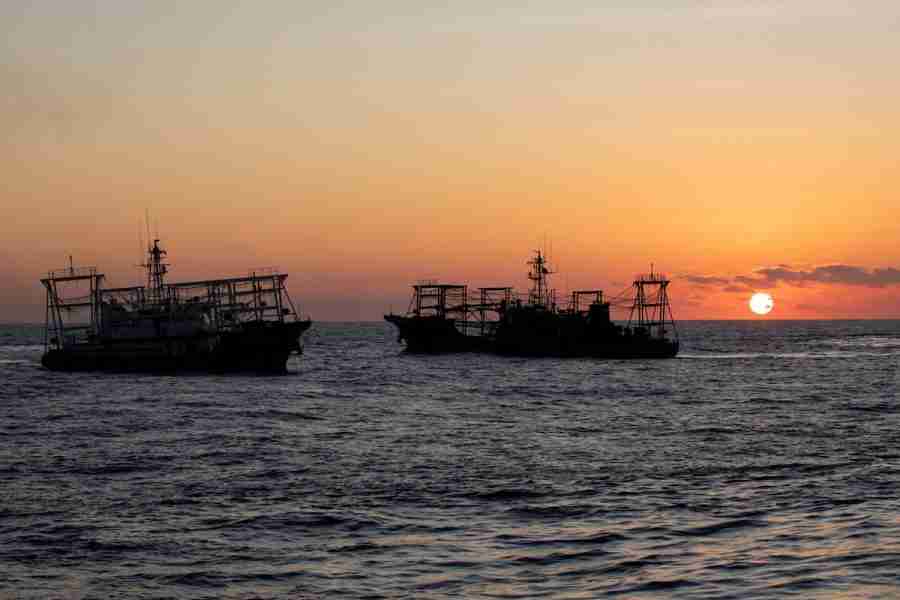
Chinese Maritime Militia vessels are pictured near the Second Thomas Shoal in the South China Sea, March 5, 2024. REUTERS/Adrian Portugal/ File Photo
International news via Reuters:
Military leaders are working to enforce a “one-theatre” concept in both the East and South China seas, the Philippines’ defence minister said on Monday, adding that the Southeast Asian country faces threats in disputed waters that are similar to Japan’s.
Japanese newspaper Asahi reported in April that Japanese defence minister Gen Nakatani made a proposal to U.S. Pentagon Secretary Pete Hegseth to consider the East China Sea, the South China Sea, the Korean Peninsula and surrounding areas as a single “theatre”, referring to a military area of operation.
Gilberto Teodoro, the Philippines’ Secretary of National Defense, said it was “reasonable” to treat both the East and South China seas as a single area of operation, saying both are maritime areas with no land borders involved. However, he said the area should exclude the Korean Peninsula.
“That will involve synergy in operations, synergy in domain awareness, in intelligence exchange, and in mutually reinforcing our strengths to work doubly real-time,” he said at a briefing during the visit of his Lithuanian counterpart Dovile Sakaliene.
Japan and China have repeatedly faced off over uninhabited Japanese-administered islands in the East China Sea that Tokyo calls the Senkaku and Beijing calls the Diaoyu.
The Philippines and China, meanwhile, have clashed frequently in the South China Sea around disputed shoals and atolls that fall inside Manila’s exclusive economic zone.
China’s embassy in Manila did not immediately respond to a request for comment.
Japan’s Joint Operations Command is operationalising the single-theatre concept, and the “Squad” grouping that includes the defense ministers of Australia, Japan, the Philippines and the United States will establish a coordinating centre in December to enforce it, Teodoro said.
“So it is already an operating concept. It does not need any other agreement,” Teodoro said.
Japan and the Philippines last year signed a military agreement that could allow their soldiers on each other’s soil.
Under President Ferdinand Marcos Jr., the Philippines has extended its arc of alliances beyond the United States, its traditional ally, signing defence deals with Japan and New Zealand, and negotiating for similar agreements with Canada and France.
On Monday, the Philippines and Lithuania signed a memorandum of understanding to deepen defence cooperation in areas like cyber security, maritime security and munitions production.
“The interesting thing is that we’re facing absolutely similar threats and our hostile neighbours are using absolutely similar approach,” Lithuanian defence minister Dovile Sakaliene said in the joint briefing with Teodoro.
Reporting by Mikhail Flores; Editing by David Stanway
Mass killings grown from sectarian bitterness stemming from years of civil war
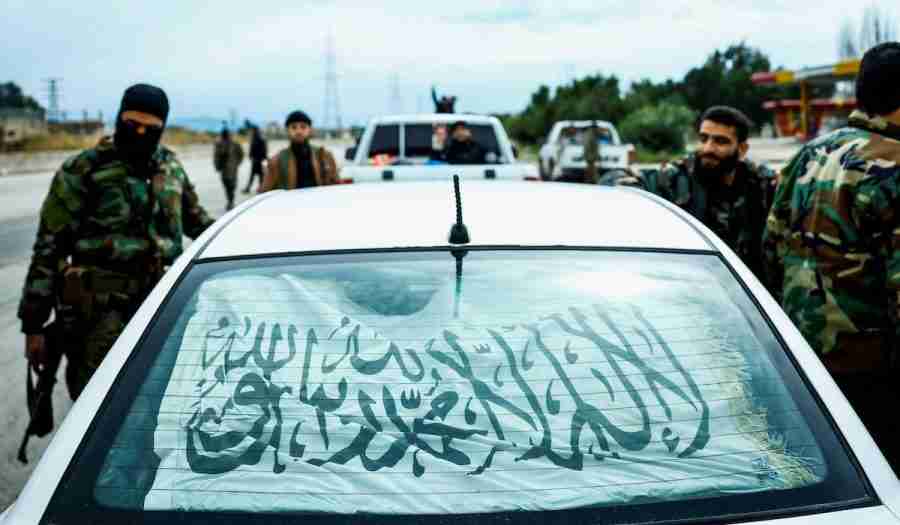
Syrian security forces stand alongside a vehicle on on the Latakia-Jablah highway in western Syria on March 21, 2025. The flag in the vehicle reads “There is No God but Allah. Muhammad is God’s Messenger”. A Reuters investigation found that thousands of forces carried out a wave of deadly attacks on Alawite villages in the region, leaving nearly 1,500 dead from March 7-9, 2025. REUTERS/Stringer
International news via Reuters:
On January 29, Ahmed al-Sharaa and more than 12 other commanders from armed factions that joined forces to overthrow Bashar al-Assad gathered in the presidential palace in Damascus in a show of unity among men who had fought each other almost as much as they’d fought Assad.
Al-Sharaa was named president and abolished the constitution, along with disbanding the Assad government’s army and security apparatus.
“The sun of a new Syria is rising,” he said.
Each commander received an army division and a rank, and they pledged to integrate their factions into the new Syrian army. In theory, al-Sharaa dissolved his militia, formerly known as Hayat Tahrir al-Sham, or HTS, which was previously al-Qaeda’s Syria branch, known as the Nusra Front.
A pro-Assad uprising in early March in Syria’s coastal regions was the first test of the tenuous unity.
A few hours into the insurgency, the new government called for reinforcements to defeat the uprising of remnants of the Assad government, known in Arabic as “fuloul.” Tens of thousands of vehicles, fighters and weapons flooded the coast.
The defense ministry divided the coast into sectors, placing them under the command of a top official to coordinate movements and positions, according to three security sources, including Mohammed al-Jassim, commander of the Sultan Suleiman Shah Brigade, also known as Amshat.
A Reuters investigation found 1,479 Syrian Alawites were killed and dozens were missing from 40 distinct sites of revenge killings, rampages and looting. Five major groups were involved in the mass killings that followed in Alawite towns and neighborhoods, many of which were struck by multiple groups over three days:
HTS UNITS
These include Unit 400, the Othman Brigade, and its main law enforcement body, known as the General Security Service. Reuters found their involvement in at least 10 sites, where nearly 900 people were killed.
Before Assad fell, the GSS was the main HTS law enforcement arm in the province of Idlib under its control. It is now part of Syria’s Interior Ministry.
In 2020, the U.N. described “deeply troubling” reports of executions and abuses at the hands of HTS law enforcement authorities. Human Rights Watch documented how HTS, then known as the Nusra Front, killed 149 Alawites in summary executions in Latakia in 2013.
Unit 400 is mentioned in a handful of online posts, none of them from official Syrian government accounts. Several of them posted in early December, using identical language, say Unit 400 fighters were being deployed to western Syria. The posts describe Unit 400 as “among the strongest units” in Hayat Tahrir al-Sham, having received “high levels of training and equipped with the most modern weaponry.”
Unit 400 was moved to the coastal regions after Assad’s falll, according to multiple witnesses and a member of the unit. A foreign intelligence source said the unit set up its headquarters in the former Syrian naval academy and answers only to the top levels of the Defense Ministry.
TURKISH-BACKED MILITIAS
Over the past decade, Turkey launched military incursions in Syria and backed rebels there to oppose both Assad and Kurdish forces it deems a threat.
These factions were part of the Turkish-backed Syrian National Army, Syria’s second largest opposition coalition. SNA factions have a track record of abductions, sexual violence and widespread looting, according to Human Rights Watch and other rights groups.
Among those Turkey backed during the civil war were the Sultan Suleiman Shah Brigade and the Hamza division.
In the Alawite killings, Reuters found the involvement of those two groups in at least eight different sites where nearly 700 people were killed.
On his Facebook page, a militiaman affiliated with the Sultan Suleiman Shah division posted: “Turn off cameras. Kill every male. Their blood is as dirty as pigs.”
SUNNI FACTIONS
These include the anti-Assad rebel forces of Jayish al-Islam, Jayish al-Ahrar and Jayish al-Izza. Reuters found they were present in at least four sites where nearly 350 people were killed.
In 2013, Jayish al-Islam captured a number of Alawite women and men and put them in large metal cages to use as human shields from Syrian and Russian airstrikes in Damascus. The group is also blamed by rights groups for the disappearance of prominent activists during the revolution.
FOREIGN FIGHTERS
These include the Turkistan Islamic Party, or TIP, Uzbeks, Chechens, and some Arab fighters in six sites where Reuters found nearly 500 people were killed.
ARMED SUNNI CIVILIANS
Sectarian bitterness stemming from years of civil war and Assad’s abuses led people to attack neighboring villages and neighborhoods of Alawites, a minority linked to the Assad family. Reuters found the two main sites of these revenge killings were the village of Arza and in the city of Baniyas, where a total of 300 people were killed.
Reporting by Maggie Michael. Edited by Lori Hinnant.
Five people were arrested as a result of the operation on the Canary Islands and in Madrid
FILE PHOTO: Representations of cryptocurrency Bitcoin are seen in this illustration taken November 25, 2024. REUTERS/Dado Ruvic/Illustration/File Photo
International news via Reuters:
A cryptocurrency investment fraud ring that investigators said laundered 460 million euros ($540 million) using a worldwide network of accomplices has been dismantled in Spain, European police body Europol said on Monday.
Europol said Spanish police led the operation against the criminal network, and that law enforcement agencies from France, Estonia and the United States were also involved.
Five people were arrested as a result of the operation, with three arrested on the Canary Islands and two in Madrid.
Europol, headquartered in The Hague, said the network allegedly used associates around the world to raise funds through cash withdrawals, bank transfers and crypto-transfers.
Investigators suspect the organisation of establishing a corporate and banking network based in Hong Kong, using payment gateways and user accounts in the names of different people and in different exchanges to receive, store and transfer criminal funds.
The investigation continues, added Europol.
($1 = 0.8527 euros)
Reporting by Sudip Kar-Gupta, Editing by William Maclean
Iranian officials have long beet at odds with the IAEA over regional conflics
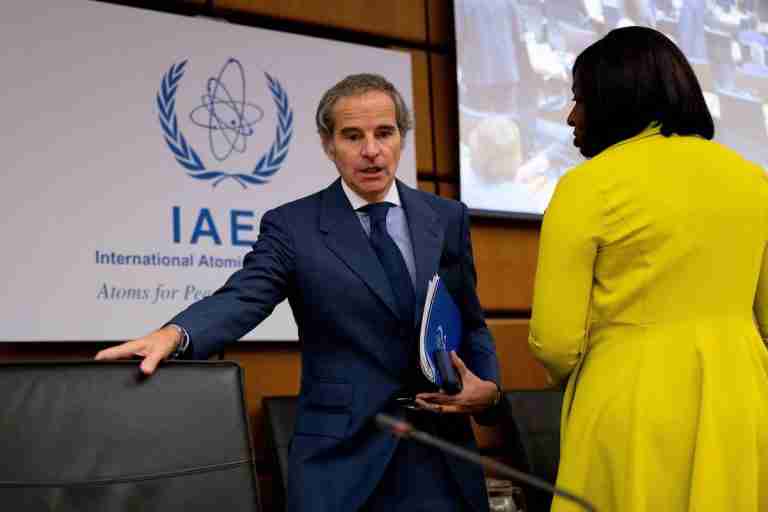
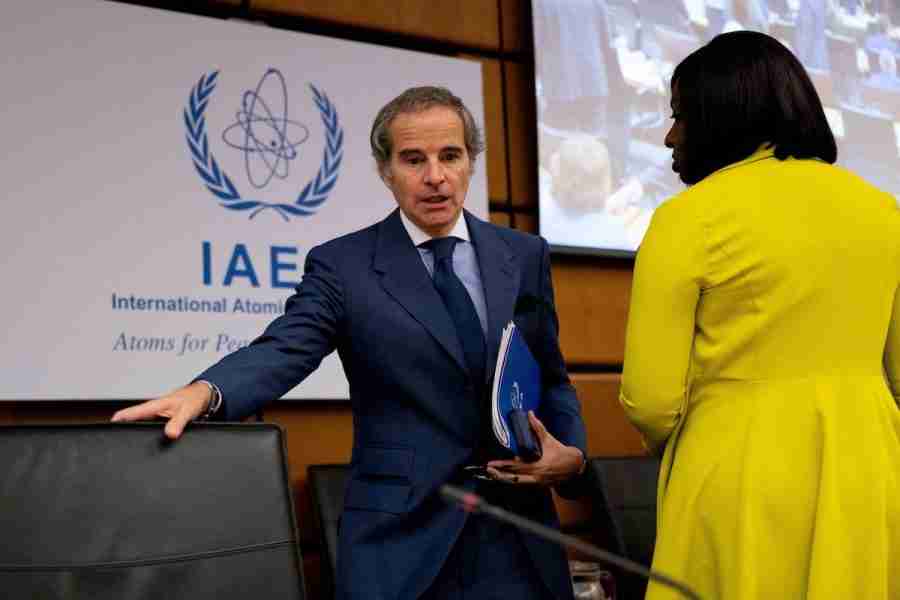
International Atomic Energy Agency (IAEA) Director General Rafael Grossi arrives for an exceptional meeting of the agency’s Board of Governors to discuss Israel’s strike on Iran that have hit nuclear targets including the Natanz nuclear complex, at the IAEA headquarters in Vienna, Austria, June 16, 2025. REUTERS/Elisabeth Mandl
International news via Reuters:
Britain, France and Germany condemned on Monday what they described as threats against the head of the U.N. nuclear watchdog, after a hardline Iranian newspaper said IAEA boss Rafael Grossi should be tried and executed as an Israeli agent.
“France, Germany and the United Kingdom condemn threats against the Director General of the IAEA Rafael Grossi and reiterate our full support to the Agency and the DG in carrying out their mandate,” said a joint statement issued by the foreign affairs ministries of those three countries.
“We call on Iranian authorities to refrain from any steps to cease cooperation with the IAEA. We urge Iran to immediately resume full cooperation in line with its legally binding obligations, and to take all necessary steps to ensure the safety and security of IAEA personnel,” they added.
The three European countries are parties to a 2015 nuclear agreement with Iran.
Their joint statement did not specify what threats had been made against Grossi, but it follows an article in Iran’s Kayhan newspaper, known for hardline views and closely associated with Supreme Leader Ayatollah Ali Khamenei, which accused Grossi of having ties to Israel’s Mossad intelligence agency.
The newspaper said that, should Grossi enter Iran, he should be tried and sentenced to death.
Iranian officials have not publicly endorsed the newspaper article. Iran’s ambassador to the United Nations, Amir Saeid Iravani, said there was no threat against Grossi.
Foreign Minister Abbas Araqchi said Grossi was not currently welcome in Iran, accusing him of having carried out “malign action” and playing a “regrettable role” that had led to Iran’s parliament voting to suspend cooperation with the IAEA.
Iranian officials have long blamed the IAEA for providing justification used by Israel for its 12-day campaign of airstrikes against Iran, which began on June 13, a day after the IAEA’s board declared Iran in violation of treaty obligations.
“Misleading narratives have dire consequences, Mr Grossi, and demand accountability,” Iran’s Foreign Ministry spokesperson Esmaeil Baghaei said on June 19.
On Monday, Iran said it could not be expected to guarantee the safety of IAEA inspectors so swiftly after its nuclear sites were hit by Israeli and U.S. strikes in war, which ended with a ceasefire last week.
“How can they expect us to ensure the safety and security of the agency’s inspectors when Iran’s peaceful nuclear facilities were attacked a few days ago?” Baghaei told a news conference.
Baghaei said the parliamentary bill calling for the government to withdraw cooperation with the IAEA had been approved by the Guardian Council, a security body controlled by appointees of the supreme leader, and carrying it out was now mandatory.
“Iran shouldn’t be expected to accept its obligations under the nuclear Non-Proliferation Treaty (NPT) when the UN nuclear watchdog has stopped short of condemning the attacks on Iran’s nuclear sites,” Baghaei said.
Reporting by Dubai Newsroom and Sudip Kar-Gupta;Editing by Alison Williams and Peter Graff
The Digital Markets Act (DMA) seeks to rein in the power of major tech firms
FILE PHOTO: European Union flags fly outside the European Commission in Brussels, Belgium November 8, 2023. REUTERS/Yves Herman/File Photo
International news via Reuters:
The European Union on Monday pushed back against U.S. criticism of its landmark tech rules that many feared could be included in ongoing trade negotiations with the United States and subsequently watered down.
Adopted recently, the Digital Markets Act (DMA) seeks to rein in the power of Alphabet, Amazon, Apple, Meta Platforms, Microsoft, China’s ByteDance and Booking.com.
The Digital Services Act (DSA) requires big online platforms to do more to tackle illegal and harmful content. Both legislations have come under fire from the U.S. administration which says it unfairly targets U.S. tech companies.
“The legislations will not be changed. The DMA and the DSA are not on the table in the trade negotiations with the U.S.,” spokesperson Thomas Regnier told a daily news conference.
He said the EU would not brook any interference from foreign governments on how it enforces its landmark rules which come with hefty fines for violations.
“We are not going to adjust the implementation of our legislation based on the actions of third countries. If we started to do that, then we would have to do it with numerous third countries,” Regnier said.
The EU handed out its first fines to Apple and Meta earlier this year, with both risking further daily fines if regulators find that they have yet to comply with the rules in the coming months.
Reporting by Foo Yun Chee and Bart Meijer;Editing by Sudip Kar-Gupta and Louise Heavens
Trump has scored a series of victories at the Supreme Court since returning to office in January
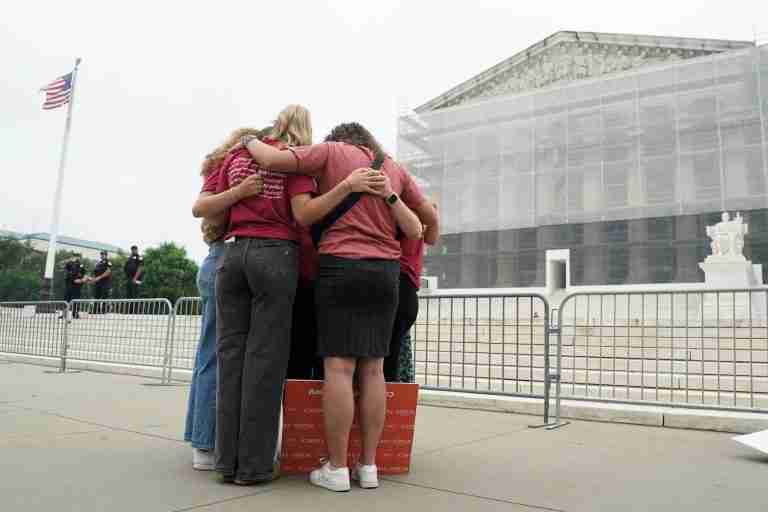
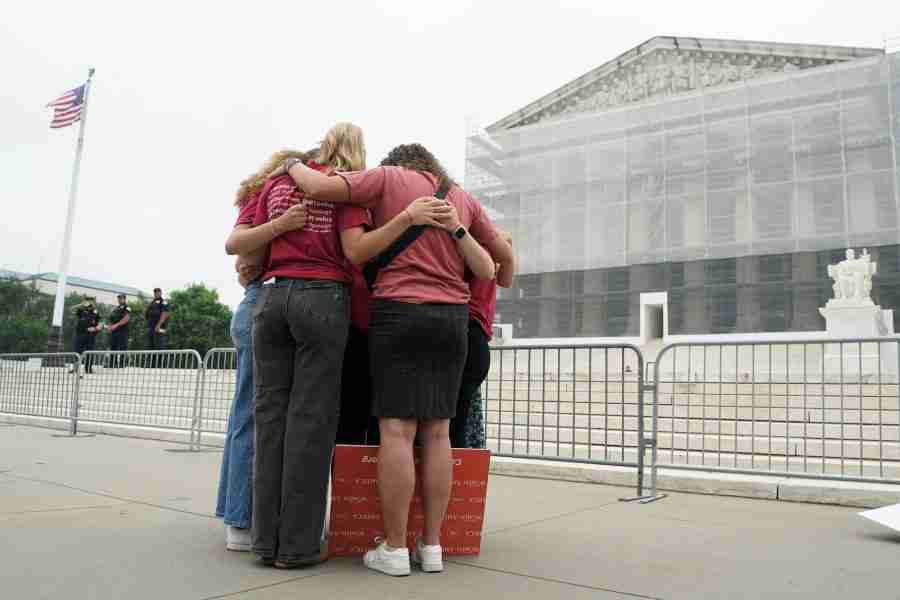
Concerned Women for America (CWA) activists pray, outside the U.S. Supreme Court, as justices issue rulings in pending cases in Washington, D.C., U.S., June 27, 2025. REUTERS/Nathan Howard
International news via Reuters:
The U.S. Supreme Court on the last day of rulings for its current term gave Donald Trump his latest in a series of victories at the nation’s top judicial body, one that may make it easier for him to implement contentious elements of his sweeping agenda as he tests the limits of presidential power.
With its six conservative members in the majority and its three liberals dissenting, the court on Friday curbed the ability of judges to impede his policies nationwide, resetting the power balance between the federal judiciary and presidents.
The ruling came after the Republican president’s administration asked the Supreme Court to narrow the scope of so-called “universal” injunctions issued by three federal judges that halted nationally the enforcement of his January executive order limiting birthright citizenship.
The court’s decision has “systematically weakened judicial oversight and strengthened executive discretion,” said Paul Rosenzweig, an attorney who served in Republican President George W. Bush’s administration.
Friday’s ruling said that judges generally can grant relief only to the individuals or groups who brought a particular lawsuit.
The decision did not, however, permit immediate implementation of Trump’s directive, instead instructing lower courts to reconsider the scope of the injunctions. The ruling was authored by Justice Amy Coney Barrett, one of three conservative justices who Trump appointed during his first term in office from 2017-2021.
Trump has scored a series of victories at the Supreme Court since returning to office in January. These have included clearing the way for his administration to resume deporting migrants to countries other than their own without offering them a chance to show the harms they could face and ending temporary legal status held by hundreds of thousands of migrants on humanitarian grounds.
The court also permitted implementation of Trump’s ban on transgender people in the military, let his administration withhold payment to foreign aid groups for work already performed for the government, allowed his firing of two Democratic members of federal labor boards to stand for now, and backed his Department of Government Efficiency in two disputes.
‘A BULLY PULPIT’
“President Trump secured the relief he sought in most of his administration’s cases,” George Mason University law school professor Robert Luther III said.
“Justice Barrett’s opinion is a win for the presidency,” Luther said of the decision on nationwide injunctions. “It recognizes that the executive branch is a bully pulpit with a wide range of authorities to implement the promises of a campaign platform.”
Once again, as with many of the term’s major decisions, the three liberal justices found themselves in dissent, a familiar position as the court under the guidance of Chief Justice John Roberts continues to shift American law rightward.
The rulings in favor of Trump illustrate that “the court’s three most liberal justices are proving less relevant now than at any earlier point in the Roberts Court with respect to their impact on its jurisprudence,” Luther said.
The cases involving Trump administration policies this year came to the court as emergency filings rather than through the normal process, with oral arguments held only in the birthright litigation. And those arguments did not focus on the legality of Trump’s action but rather on the actions of the judges who found that it was likely unconstitutional.
“One theme is the court’s struggle to keep pace with a faster-moving legal world, especially as the Trump administration tests the outer boundaries of its powers,” Boston College Law School professor Daniel Lyons said.
In other cases during the nine-month term, the court sided with a Republican-backed ban in Tennessee on gender-affirming medical care for transgender minors, endorsed South Carolina’s plan to cut off public funding to reproductive healthcare and abortion provider Planned Parenthood, and made it easier to pursue claims alleging workplace “reverse” discrimination.
The court also spared two American gun companies from the Mexican government’s lawsuit accusing them of aiding illegal firearms trafficking to drug cartels, and allowed parents to opt elementary school children out of classes when storybooks with LGBT characters are read.
‘NOT THE COURT’S ROLE’
In several cases involving federal statutes, the message from the justices is that people unhappy with the outcome need to take that up with Congress, according to Loyola Law School professor Jessica Levinson.
“The court is implicitly saying, ‘That’s Congress’ problem to fix, and it’s not the court’s role to solve those issues,'” Levinson said.
This is the second straight year that the court ended its term with a decision handing Trump a major victory. On July 1, 2024, it ruled in favor of Trump in deciding that presidents cannot be prosecuted for official actions taken in office. It marked the first time that the court recognized any form of presidential immunity from prosecution.
The Supreme Court’s next term begins in October but Trump’s administration still has some emergency requests pending that the justices could act upon at any time. It has asked the court to halt a judicial order blocking mass federal job cuts and the restructuring of agencies. It also has asked the justices to rein in the judge handling a case involving deportations to so-called “third countries.”
Recent rulings “have really shown the court for what it is, which is a deeply conservative court,” Georgia State University law professor Anthony Michael Kreis said.
The court’s jurisprudence reflects a larger shift in the national discourse, with Republicans feeling they have the political capital to achieve long-sought aims, Kreis said.
The court’s conservative majority, Kreis said, “is probably feeling more emboldened to act.”
Reporting by Jan Wolfe and Will Dunham, Editing by Rosalba O’Brien
Representative Hortman became the first woman to lie in state in the St. Paul Capitol Rotunda
Former U.S. President Joe Biden speaks with mourners as senior Democratic state assembly woman Melissa Hortman and her husband Mark lie in State at the Minnesota Capitol after they were killed in a shooting, in St. Paul, Minnesota, U.S., June 27, 2025. REUTERS/Tim Evans
International news via Reuters:
Thousands of mourners, including former U.S. President Joe Biden, filed through Minnesota’s state Capitol Rotunda on Friday to pay final respects to slain lawmaker Melissa Hortman and her husband, Mark, who were gunned down by an assassin earlier this month.
The couple lay in state in St. Paul on the eve of a private funeral set for Saturday morning, two weeks after a man impersonating a police officer shot them to death at their home in what authorities are treating as a politically motivated murder.
For several hours, members of the public lined up in a column of mourners stretching across the front plaza of the state Capitol building and along an adjacent boulevard.
After entering the building, people walked single-file past the Hortmans’ flower-bedecked caskets. A portrait of each stood next to their respective coffins.
Perched between them was an urn bearing the remains of their golden retriever, Gilbert, along with a photograph of the pet. The dog, too, was shot in the attack and later euthanized.
Biden arrived at the statehouse late in the afternoon. After the public was cleared from the rotunda for security purposes, the Democratic former president was ushered in alone. He paused for a moment in front of the caskets, then exited the building.
Following his departure, the rotunda was reopened to the public, and the procession of mourners resumed. Still more people joined the line outside, hoping for a chance to pay their respects. The viewing was scheduled to end at 5 p.m. local time.
Representative Hortman, the top-ranking Democrat in the Minnesota House, became the first woman to lie in state in the St. Paul Capitol Rotunda, according to the Minnesota Star Tribune. Her husband was believed to be the first person other than a military figure or public official to be so honored.
The suspect in their June 14 killings, Vance Boelter, 57, is also accused of shooting and wounding a second Democratic legislator, state Senator John Hoffman, and his wife, Yvette, in their home a few miles away.’
The accused gunman was arrested on the night of June 16 following a massive two-day manhunt that was the largest in state history.
Boelter faces state and federal murder charges. According to prosecutors, investigators recovered notebooks from his car and residence that included the names of dozens of Democratic legislators, along with abortion-rights advocates.
The shootings unfolded against a backdrop of increasing political violence in the U.S. in an era of extreme social and partisan polarization.
Reporting by Tim Evans in St. Paul; Writing by Steve Gorman; Editing by David Gregorio
Defenders of gay rights are concerned anti-gay movements will sprout elsewhere
FILE PHOTO: A person attends the annual Pride parade in Dublin, Ireland, June 24, 2023. REUTERS/Clodagh Kilcoyne/File Photo
International news via Reuters:
The foreign ministries of Canada, Australia, Brazil and a host of European countries issued a statement on Saturday celebrating LGBT rights to coincide with Pride Day.
The United States, which has moved rapidly to dismantle civil rights protections since the election of President Donald Trump, was not among its signatories.
The statement, whose backers also include Spain, Belgium, Colombia, Ireland and other nations, said the countries “are speaking and acting as one to champion the rights of LGBTQI people,” using the abbreviation for lesbian, gay, bisexual, transgender, queer and intersex people.
“At a time when hate speech and hate crimes are on the rise, and in view of efforts to strip LGBTQI people of their rights, we reject all forms of violence, criminalization, stigmatization or discrimination, which constitute human rights violations,” the statement said.
It was not immediately clear why the United States was absent. Canadian, Australian, Brazilian, Irish and U.S. officials did not immediately return messages seeking comment on the Pride Day statement and Washington’s absence from it.
The U.S., once a champion of gay rights abroad, has reversed course under Trump, whose administration has rapidly dismantled longstanding civil rights protections for LGBT people and expelled transgender servicemembers from the military.
Defenders of gay rights are concerned that the backsliding will embolden anti-gay movements elsewhere, especially in Africa, where it could worsen an already difficult situation for LGBT people.
Trump’s right-wing allies have tapped in to anti-LGBT sentiment to shore up their political support.
In Hungary on Saturday, tens of thousands of protesters flouted a law passed in March by Prime Minister Viktor Orban’s government that allows for the ban of Pride marches. The demonstrators swarmed Budapest with rainbow-colored flags in one of the biggest shows of opposition to the Hungarian leader.
Reporting by Raphael Satter and Ryan Jones; Editing by Humeyra Pamuk and William Mallard
The visa will allow Tuvalu residents to live, work and study in Australia
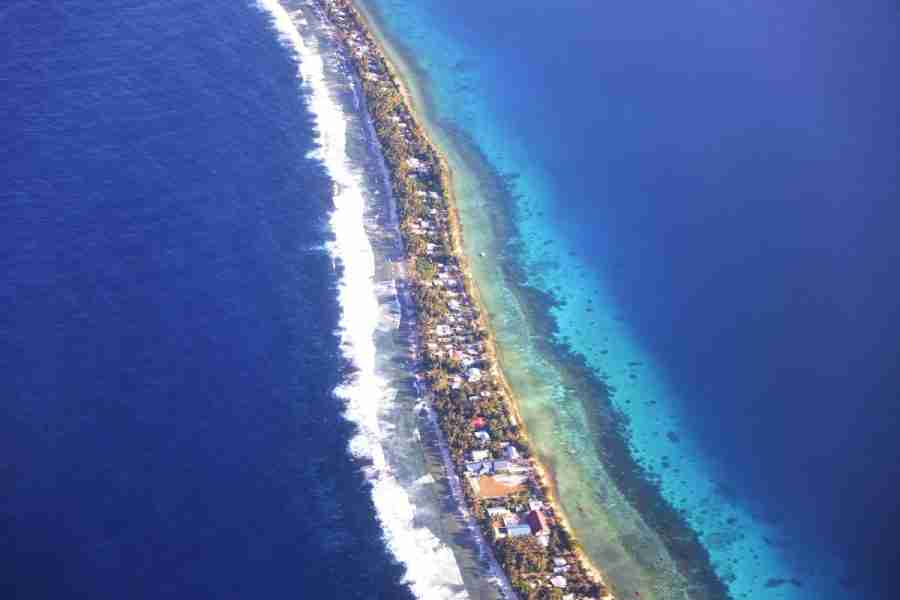
FILE PHOTO: Aerial view of Funafuti, Tuvalu’s most populous island, September 6, 2024. Picture taken through plane window. REUTERS/Kirsty Needham/File Photo
International news via Reuters:
More than one-third of the people in the tiny Pacific nation of Tuvalu, which scientists predict will be submerged by rising seas, have applied for a landmark climate visa to migrate to Australia, according to official figures.
Tuvalu’s ambassador to the United Nations, Tapugao Falefou, told Reuters on Sunday he was “startled by the huge number of people vying for this opportunity”, and the small community was interested to learn who the first lot of climate migrants would be.
Tuvalu, one of the countries at greatest risk from climate change, which experts say is boosting sea levels, has a population of 11,000 on its nine atolls scattered across the Pacific between Australia and Hawaii.
Since applications for Australia’s visa lottery opened this month, 1,124 people have registered, with family members bringing the total seeking the visa to 4,052 under the bilateral climate and security treaty.
Applications close on July 18, with an annual cap of 280 visas designed to ensure migration to Australia does not cause brain drain from Tuvalu, officials said when the treaty was announced in 2023.
The visa will allow Tuvalu residents to live, work and study in Australia, accessing health benefits and education on the same basis as Australian citizens.
“Moving to Australia under the Falepili Union treaty will in some way provide additional remittance to families staying back,” Falefou said.
By 2050, NASA scientists project daily tides will submerge half the main atoll of Funafuti, home to 60% of Tuvalu’s residents, where villagers cling to a strip of land as narrow as 20 metres (65 feet). That forecast assumes a 1-metre rise in sea levels, while the worst case, double that, would put 90% of Funafuti under water.
Tuvalu, whose mean elevation is just 2 metres (6 feet 7 inches), has experienced a sea-level rise of 15 cm (6 inches) over the past three decades, one and a half times the global average. It has built 7 hectares (17 acres) of artificial land, and is planning more, which it hopes will stay above the tides until 2100.
Reporting by Kirsty Needham in Sydney; Editing by William Mallard
Orban’s opponents see the move as part of a wider crackdown on democratic freedoms
People attend The Budapest Pride March in Budapest, Hungary, June 28, 2025. REUTERS/Lisa Leutner TPX IMAGES OF THE DAY
International news via Reuters:
Tens of thousands of protesters marched through Hungary’s capital on Saturday as a banned LGBTQ+ rights rally swelled into a mass anti-government demonstration, in one of the biggest shows of opposition to Prime Minister Viktor Orban.
Crowds filled a square near Budapest’s city hall in sweltering heat before setting off across one of the main bridges over the Danube, waving rainbow flags, some draped in capes and some carrying signs mocking Orban.
“This is about much more, not just about homosexuality … This is the last moment to stand up for our rights,” Eszter Rein Bodi, one of the marchers, said.
“None of us are free until everyone is free,” one sign read.
Orban’s government has gradually curtailed the rights of the LGBTQ+ community in the past decade, and lawmakers passed a law in March that allows for the ban of Pride marches, citing the need to protect children.
Orban’s opponents see the move as part of a wider crackdown on democratic freedoms ahead of a national election next year when the veteran prime minister – whose party has dominated Hungary’s political scene for 15 years – will face a strong opposition challenger.
Small groups of far-right counter-protesters attempted to disrupt the peaceful march, but police separated them and diverted the route of the march to avoid any clashes.
Orban and his government, who promote a Christian-conservative agenda and have championed family values, have defended the restrictions saying that the need to protect children supersedes all other rights.
Orban posted a photo with his grandchildren on the morning of the march, with the caption: “This is what I am proud of.” Several of his supporters followed suit.
Marchers included students, families and people from the countryside who said they had never attended a rally before. The Erzsebet bridge, built to carry six lanes of traffic, was engulfed with people.
Local media sites including 444.hu and Magyar Hang estimated the crowd at 100,000, though Reuters could not confirm that figure.
“The message is clear, they have no power over us,” Budapest mayor Gergely Karacsony told the rally. He thanked police for securing the march.
March organisers said participants had arrived from 30 different countries, including 70 members of the European Parliament.
More than 30 embassies have expressed support for the march and European Commission President Ursula von der Leyen called on Hungarian authorities to let the parade go ahead.
‘LEGAL CONSEQUENCES’
Budapest’s mayor had tried to circumvent the law by organising Pride as a municipal event, which he said does not need a permit. Police however banned the event, arguing that it fell under the scope of the child protection law.
Orban provided some clues on Friday about what participants can expect when he warned of “legal consequences” for organising and attending the march.
Earlier this week Justice Minister Bence Tuzson warned in a letter sent to some foreign embassies in Budapest that organising a prohibited event is punishable by one year in jail, while attending counts as a misdemeanour.
The law that allows for the ban of Pride lets police impose fines and use facial recognition cameras to identify people who attend.
Orban’s attacks on Pride initially increased his support, political analyst Gabor Torok wrote on Facebook on Saturday. But opinion shifted after the police ban and the legal debates surrounding the march, he said.
Orban’s dominance and ability to set the political agenda had faced increasing challenges from centre-right opposition leader Peter Magyar’s Tisza party, which had a 15-point lead over Orban’s Fidesz in a poll this month.
Tisza, which has been avoiding taking a strong position on gay rights issues, did not specify in response to Reuters questions whether it believed the Pride march was lawful, but said those attending deserved the state’s protection.
Reporting by Anita Komuves; Additional reporting by Krisztina Fenyo and Krisztina Than; Editing by Peter Graff and Andrew Heavens
Russian Culture Minister Olga Lyubimova arrived in North Korea on Saturday
FILE PHOTO: Russian Minister of Culture Olga Lyubimova attends a ceremony of awarding India’s Prime Minister Narendra Modi with the Order of St. Andrew the Apostle the First-Called at the Kremlin in Moscow, Russia July 9, 2024. REUTERS/Evgenia Novozhenina/File Photo
International news via Reuters:
Russian Culture Minister Olga Lyubimova arrived in North Korea on Saturday with a 125-strong delegation of performers and praised cultural cooperation between Moscow and Pyongyang for achieving “unprecedented heights”.
Lyubimova, writing on the Telegram messaging app, said a series of concerts and lectures would take place in the North Korean capital in the coming days. Among those in the delegation were performers from the Pyatnitsky Choir and the Gzhel dance troupe.
Lyubimova said that thanks to agreements clinched between Russian President Vladimir Putin and North Korea leader Kim Jong Un “cooperation in the cultural sphere between our countries has reached unprecedented heights”.
Since Russia’s February 2022 invasion of Ukraine, Moscow and Pyongyang have drawn closer together, with the two leaders signing a treaty, including a mutual defence pact.
After months of silence, North Korea and Russia have disclosed the deployment of North Korean troops and the role they played in Moscow’s offensive to evict Ukrainian troops from the Kursk region.
To provide the best experiences, we use technologies like cookies to store and/or access device information. Consenting to these technologies will allow us to process data such as browsing behavior or unique IDs on this site. Not consenting or withdrawing consent, may adversely affect certain features and functions.
Functional
Always active
The technical storage or access is strictly necessary for the legitimate purpose of enabling the use of a specific service explicitly requested by the subscriber or user, or for the sole purpose of carrying out the transmission of a communication over an electronic communications network.
Preferences
The technical storage or access is necessary for the legitimate purpose of storing preferences that are not requested by the subscriber or user.
Statistics
The technical storage or access that is used exclusively for statistical purposes.The technical storage or access that is used exclusively for anonymous statistical purposes. Without a subpoena, voluntary compliance on the part of your Internet Service Provider, or additional records from a third party, information stored or retrieved for this purpose alone cannot usually be used to identify you.
Marketing
The technical storage or access is required to create user profiles to send advertising, or to track the user on a website or across several websites for similar marketing purposes.