The Wednesday Night Sailing Series continued last night, delivering another evening of exciting competition on the waters, with Fat Tuesday emerging as the victors on corrected time after a closely contested race.
Crossfire was the first boat to physically cross the finish line, recording an elapsed time of 52 minutes and 25 seconds. However, after handicaps were applied, their corrected time of 57 minutes and 49 seconds placed them sixth on the night.
Airforce was the second boat to complete the course, clocking an elapsed time of 59 minutes and 50 seconds. Their corrected time of 56 minutes and 37 seconds secured them a commendable second-place finish.
But it was Fat Tuesday who ultimately claimed the top spot on corrected time, recording an impressive 55 minutes and 53 seconds to take the win.
The battle for the podium and top five was incredibly tight. Scatteraction finished third with a corrected time of 57 minutes and 8 seconds. Encore was hot on their heels, claiming fourth just a second later at 57 minutes and 9 seconds. Menace rounded out the top five, clocking a corrected time of 57 minutes and 39 seconds.
Countries remain divided over the timeline for new pledges
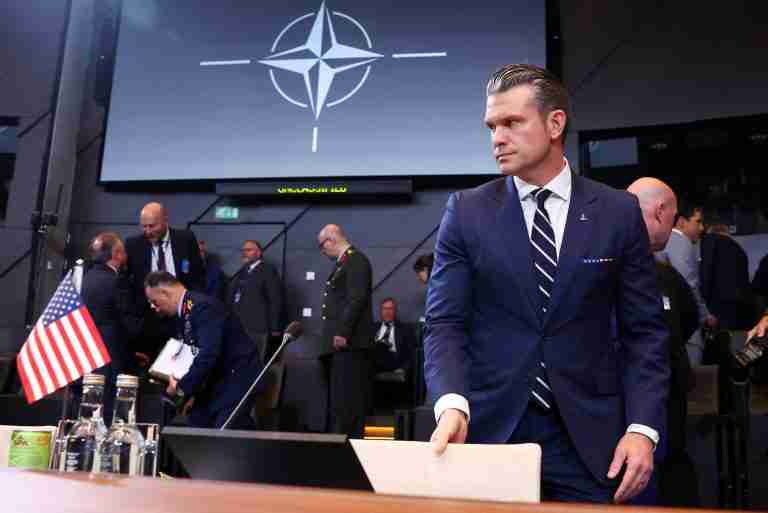
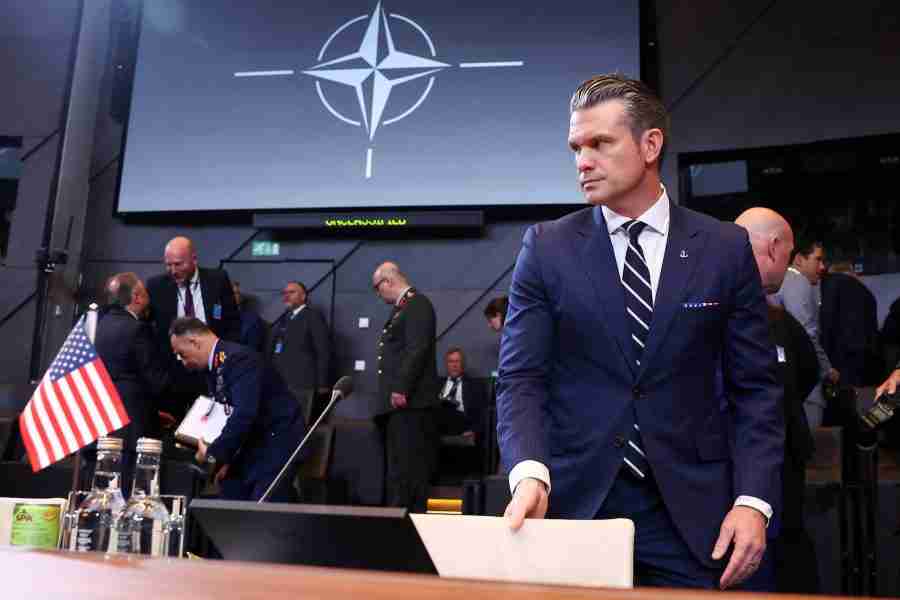
U.S. Defense Secretary Pete Hegseth attends a meeting of NATO Defence Ministers at the Alliance headquarters in Brussels, Belgium June 5, 2025. REUTERS/Yves Herman
International news via Reuters:
U.S. Defense Secretary Pete Hegseth said on Thursday he was confident that members of the NATO alliance would sign up to Donald Trump’s demand for a major boost in defence spending, adding that it had to happen by a summit later in June.
The U.S. president has said NATO allies should boost investment in defence to 5% of gross domestic product, up from the current target of 2%.
“I’m very encouraged by what we heard in there,” Hegseth said after a morning meeting of NATO defence ministers on Thursday in Brussels. “Countries in there are well exceeding 2% and we think very close, almost near consensus, on a 5% commitment to NATO.”
As he arrived at the NATO gathering earlier in the day, Hegseth said such a commitment by all NATO members to spend 5% of GDP on defence had to happen by the June 24-25 summit of NATO leaders.
“We think everybody’s gonna get there,” he said later, while adding that a few countries – which he did not name – were not quite there yet.
Diplomats have said European allies understand that hiking defence expenditure is the price of ensuring a continued U.S. commitment to the continent’s security and that keeping the U.S. on board means allowing Trump to be able to declare a win on his 5% demand during the Hague summit.
“That will be a considerable extra investment,” NATO Secretary-General Mark Rutte told reporters, predicting that in the Hague summit “we will decide on a much higher spending target for all the nations in NATO.”
In a bid to meet Trump’s 5% goal, Rutte has proposed alliance members boost defence spending to 3.5% of GDP and commit a further 1.5% to broader security-related spending, Reuters has reported.
Hegseth backed that proposal on Thursday.
“You have got to spend to have hard power,” he said. “This alliance, in a matter of weeks, will be committing to 5%: 3.5% in hard military and 1.5% in infrastructure and defence-related activities, that combination constitutes a real commitment.”
CAPABILITY TARGETS
Details of the new investment plan will likely continue to be negotiated until the eve of the NATO summit.
In the meantime, Rutte said he expects allies to agree on Thursday on what he called “historic” new capability targets.
The targets, which define how many troops and weapons and how much ammunition a country needs to provide to NATO, would aim to better balance defence contributions between Europe, Canada, and the United States and “make NATO a stronger, fairer and a more lethal alliance”, he said in opening remarks to the meeting.
Germany will need around 50,000 to 60,000 additional active troops under the new NATO targets, German Defence Minister Boris Pistorius said as he arrived at the NATO meeting.
Countries remain divided over the timeline for new pledges.
Rutte has proposed reaching the 5% defence target by 2032 – a date that some Eastern European states consider too distant but which some others see as too early, given current spending and industrial production levels.
Estonian Defence Minister Hanno Pevkur said that to meet the capability targets, “we need to agree on the 5% in five years. We don’t have time for 10 years, we don’t have time even for seven years.”
Sweden would also like to see NATO reaching 5% defence spending in 2030, Defence Minister Pal Jonson told reporters.
There is an ongoing debate over how to define “defence-related” spending, which might include spending on cybersecurity and certain types of infrastructure.
“The aim is to find a definition that is precise enough to cover only real security-related investments, and at the same time broad enough to allow for national specifics,” said one NATO diplomat.
Additional reporting by Andrew Gray, Charlotte Van Campenhout, Ingrid Melander, Benoit Van Overstraeten; Writing by Ingrid Melander and Lili Bayer; Editing by Gareth Jones, Aidan Lewis and Sharon Singleton
Trump’s trade war has cost companies more than $34 billion in lost sales and higher costs
FILE PHOTO: The logo for Procter & Gamble Co. is displayed on a screen on the floor of the New York Stock Exchange (NYSE) in New York, U.S., June 27, 2018. REUTERS/Brendan McDermid/ File Photo
International news via Reuters:
Procter & Gamble said on Thursday it would cut 7,000 jobs, or about 6%, of its total workforce over the next two years, as part of a new restructuring plan to counter uneven consumer demand and higher costs due to tariff uncertainty.
The world’s largest consumer goods company also plans to exit some product categories and brands in certain markets, executives said at a Deutsche Bank Consumer Conference in Paris, adding the program could likely include some divestitures without giving detail.
The Pampers maker’s two-year restructuring plan comes when consumer spending is expected to remain pressured this year, and global consumer goods makers including P&G and Unilever brace for a further hit to demand from even higher prices.
“This is not a new approach, rather an intentional acceleration of the current strategy…to win in the increasingly challenging environment in which we compete,” executives said.
President Donald Trump’s sweeping tariffs on trading partners have roiled global markets and led to fears of a recession in the U.S., the biggest market for P&G. The company imports raw ingredients, packaging materials and some finished products into the U.S. from China.
Trump’s trade war has cost companies more than $34 billion in lost sales and higher costs, a Reuters analysis showed, a toll that is expected to rise.
In April, the Tide detergent maker said it would raise prices on some products and that it was prepared to pull every lever in its arsenal to mitigate the impact of tariffs.
Pricing and cost cuts were the main levers, CFO Andre Schulten had said then.
On Thursday, Schulten and P&G’s operations head Shailesh Jejurikar acknowledged that the geopolitical environment was “unpredictable” and that consumers were facing “greater uncertainty.”
The company had about 108,000 employees as of June 30, 2024, and said the job cuts would account for roughly 15% of its non-manufacturing workforce.
P&G added that the restructuring plan would help simplify the organizational structure by “making roles broader” and “teams smaller”.
The plans to divest certain brands will also help adjust its supply chain in order to reduce costs, P&G said.
Reporting by Rishabh Jaiswal and Aishwarya Venugopal in Bengaluru; Editing by Janane Venkatraman, Rashmi Aich and Sriraj Kalluvila
The company also plans to scale back discounting in its key markets including the U.S.
FILE PHOTO: A pair of Dr. Martens boots seen through the window of a Dr Martens shop in London, Britain, September 17, 2020. REUTERS/Simon Newman/ File Photo
International news via Reuters:
British bootmaker Dr Martens forecast a return to profit growth in the current financial year on Thursday, backed by its new CEO’s plan to put more emphasis on shoes, sandals, and bags, as well as the boots it is best-known for.
Shares in Dr Martens jumped 17% as the market welcomed profit for its full financial year ended March 30 that beat expectations, and CEO Ije Nwokorie’s strategy shift.
The company also plans to scale back discounting in its key markets including the U.S.
“We’re shifting our strategy now to broaden our focus and give people more reasons to buy Dr Martens,” Nwokorie told Reuters.
“The strategy that the business had… broke growth in boots, built awareness around the world – but the market shifted away from boots,” he added.
Online sales of shoes, mules, and sandals grew and at Dr Martens’ stores in the 2025 financial year, while sales of boots, which sell for $110 and up, declined.
The company makes most of its lace-up chunky boots in Vietnam but said despite U.S. tariffs it would not hike prices of its spring/summer collection in the United States as the products were already in the country.
Dr Martens has shifted its supply chain away from China, where it used to make 50% of its products, and now expects to produce 62% of its autumn/winter collection in Vietnam and 31% in Laos.
Ahead of the possible return of a 46% U.S. tariff on Vietnam, Dr Martens said most of its autumn/winter collection will be in transit or in the U.S. by the start of July.
“We’ve looked at different scenarios, but we’re dealing with the reality in front of us and we feel confident about our ability to ride these waves,” said Nwokorie.
Since its initial public offering in January 2021, Dr Martens shares have lost more than 80% of their value. As part of his turnaround push, Nwokorie announced a new Americas president and new chief brand officer last week.
The company said adjusted pre-tax profit for its 2026 financial year would be within the range of analysts’ expectations, between 54 million pounds and 74 million pounds.
For its year ended March 30, Dr Martens reported adjusted pre-tax profit of 34.1 million pounds ($46 million), above analysts’ consensus forecast of 30.6 million pounds. Revenue from the Americas fell 11% during the year.
Reporting by Raechel Thankam Job and Yadarisa Shabong in Bengaluru; Editing by Sonia Cheema, Elaine Hardcastle and Emelia Sithole-Matarise
Trump’s proclamation cited national security concerns for barring international students
FILE PHOTO: People walk to attend the 374th Commencement exercises at Harvard University in Cambridge, Massachusetts, U.S., May 29, 2025. REUTERS/Brian Snyder/File Photo
International news via Reuters:
U.S. President Donald Trump on Wednesday suspended for an initial six months the entry into the United States of foreign nationals seeking to study or participate in exchange programs at Harvard University, amid an escalating dispute with the Ivy League school.
Trump’s proclamation cited national security concerns as a justification for barring international students from entering the United States to pursue studies at the Cambridge, Massachusetts-based university.
Harvard in a statement called Trump’s proclamation “yet another illegal retaliatory step taken by the Administration in violation of Harvard’s First Amendment rights.”
“Harvard will continue to protect its international students,” it added.
The suspension can be extended beyond six months. Trump’s proclamation also directs the U.S. State Department to consider revoking academic or exchange visas of any current Harvard students who meet his proclamation’s criteria.
The directive on Wednesday came a week after a federal judge in Boston announced she would issue a broad injunction blocking the administration from revoking Harvard’s ability to enroll international students, who make up about a quarter of its student body.
The administration has launched a multifront attack on the nation’s oldest and wealthiest university, freezing billions of dollars in grants and other funding and proposing to end its tax-exempt status, prompting a series of legal challenges.
Harvard argues the administration is retaliating against it for refusing to accede to its demands to control the school’s governance, curriculum and the ideology of its faculty and students.
Harvard sued after Homeland Security Secretary Kristi Noem on May 22 announced her department was immediately revoking Harvard’s Student and Exchange Visitor Program certification, which allows it to enroll foreign students.
Her action was almost immediately temporarily blocked by U.S. District Judge Allison Burroughs. On the eve of a hearing before her last week, the department changed course and said it would instead challenge Harvard’s certification through a lengthier administrative process.
Nonetheless, Burroughs said she planned to issue a longer-term preliminary injunction at Harvard’s urging, saying one was necessary to give some protection to Harvard’s international students.
In an internal cable seen by Reuters that was issued a day after that court hearing, the State Department ordered all its consular missions overseas to begin additional vetting of visa applicants looking to travel to Harvard for any purpose.
Wednesday’s two-page directive said Harvard had “demonstrated a history of concerning foreign ties and radicalism,” and had “extensive entanglements with foreign adversaries,” including China.
The FBI had “long warned that foreign adversaries take advantage of easy access to American higher education to steal information, exploit research and development and spread false information,” the proclamation said.
It said Harvard had seen a “drastic rise in crime in recent years while failing to discipline at least some categories of conduct violations on campus,” and had failed to provide sufficient information to the Homeland Security Department about foreign students’ “known illegal or dangerous activities.”
Reporting by Nate Raymond, Steve Gorman and Costas Pitas; Editing by Caitlin Webber and Stephen Coates
The company said it would not provide guidance for 2026 at this stage of the year
FILE PHOTO: Jozsef Varadi, Chief Executive Officer of Wizz Air, speaks during an interview with Reuters in Budapest, Hungary, February 11, 2025. REUTERS/Bernadett Szabo/File Photo
International news via Reuters:
Budget carrier Wizz Air’s grounded planes that are awaiting engine repairs took their toll on annual profits on Thursday, sending the shares down 23%.
Wizz Air had 37 aircraft grounded as of May 9. By the end of the first half of its 2026 financial year, it expects 34 aircraft to remain grounded, with a repair shop visit expected at around 300 days.
The planes have been affected by problems with RTX-owned Pratt and Whitney engines, limiting the airline’s ability to increase capacity. It has issued two profit warnings in the past year.
“You look at the performance of the supply chain, of the industry, and there are cracks all over the place,” Chief Executive Jozsef Varadi told Reuters in an interview.
Varadi previously said he expected the airline to be impacted by the engine repair issues for another two to three years.
“We have the benefit of more than a year of experience operating under these unique circumstances – conditions airlines would never experience when demand exceeds supply,” he said in the statement on Thursday.
Operating profit for the financial year ended March 31 fell 61.7% from a year ago to 167.5 million euros ($191 million), missing the 246 million euros projected by analysts polled by LSEG.
The London-listed shares fell 26% to 1,227p at 0910 GMT, having dropped 48% year-on-year to continue the carrier’s streak as the worst stock performer among European airlines. Wizz Air has subsidiaries in Hungary, Britain, Abu Dhabi and Malta.
That appeared to weigh on other airlines, with Lufthansa, easyjet and British Airways-owner IAG down 1.5-2.7%.
European airlines have warned of longstanding delivery delays and uncertainty around maintaining a boom in post-COVID demand amid economic turmoil tied to U.S. President Donald Trump’s tariff threats.
The sector has, however, benefited from lower fuel prices. Wizz said ticket prices were slightly lower than last year.
Analysts have pointed to other potential rising costs. In particular, costs due to the retiring of Wizz’s A320ceo fleet projected for next year.
The company said it would not provide guidance for 2026 at this stage of the year, citing limited visibility.
However, it noted that its delivery schedule from Airbus had also been pushed back.
“Given lease returns, the fleet is now forecast to grow from 231 aircraft as at the end of March 2025 to 305 aircraft as at end March 2028; this compares to the previous forecast of 380 aircraft at that end date,” it said in the statement.
($1 = 0.8767 euros)
Reporting by Joanna Plucinska in London and Chandini Monnappa in Bangalore; Editing by Mrigank Dhaniwala, Aidan Lewis, Emelia Sithole-Matarise and Elaine Hardcastle
Ziyavudin Magomedov once controlled an empire ranging from port logistics to oil and gas
FILE PHOTO: Ziyavudin Magomedov attends a hearing on his detention at the Tverskoy District Court in Moscow, Russia March 31, 2018. REUTERS/Tatyana Makeyeva/File Photo
International news via Reuters:
The English Court of Appeal has refused jailed Russian tycoon Ziyavudin Magomedov permission to appeal against a decision that threw out his $14 billion lawsuit against Russian oil pipeline monopoly Transneft and other firms, the company said.
Magomedov sued the company and several others at London’s High Court, alleging his 2018 arrest on embezzlement charges prompted a Russian state-supported scheme to strip him of his holdings in valuable port operators.
In January, Transneft, as well as U.S. private equity firm TPG and other companies, won their bid to block Magomedov’s London lawsuit.
Transneft said late on Wednesday that the English Court of Appeal denied Magomedov permission to appeal the ruling.
“It is clear from the English process that there are massive losses which Mr Magomedov has suffered as a result of wrongdoing against him. He will continue to seek justice and a fair outcome wherever he can,” a spokesperson for Magomedov said.
Magomedov once controlled an empire ranging from port logistics to oil and gas through his Summa Group conglomerate, which he founded with his brother Magomed.
But the brothers were arrested on embezzlement and organised crime charges in one of the most high-profile prosecutions of its kind in years.
Magomedov was sentenced to 19 years in jail in 2022. He says the charges against him are unfounded and unsuccessfully appealed against his conviction.
Reporting by Vladimir SoldatkinEditing by Mark Potter
Those injured were a woman who sustained a head injury and her two-year-old toddler
FILE PHOTO: General view of the Ryanair logo at their headquarters in Dublin, Ireland, September 16, 2021. REUTERS/Clodagh Kilcoyne/File Photo
International news via Reuters:
A Milan-bound Ryanair flight was forced to make an emergency landing in southern Germany late on Wednesday due to heavy turbulence from a thunderstorm, with nine passengers injured, police said.
The flight from Berlin landed safely in Memmingen, about 115 km (70 miles) west of Munich, after bad weather prompted the pilot to initiate the emergency landing, Bavaria police said in a statement.
Among the injured were a woman who sustained a head injury, her two-year-old toddler who suffered bruises and a 59-year-old woman complaining of back pain, police said. All three were treated in hospital, while other injuries were treated at the scene.
Ryanair said in a statement on Thursday that the flight’s captain had requested medical assistance ahead of landing.
The airline, which apologised to those affected, said it provided a bus service from Memmingen to Milan late on Wednesday as well as a replacement flight early on Thursday.
Reporting by Ludwig Burger; Editing by Kim Coghill and Louise Heavens
China’s foreign ministry did not respond to a Reuters request for comment on OpenAI’s findings
FILE PHOTO: A response in Chinese by ChatGPT, an AI chatbot developed by OpenAI, is seen on its website in this illustration picture taken February 9, 2023. REUTERS/Florence Lo/Illustration/File Photo
International news via Reuters:
OpenAI is seeing an increasing number of Chinese groups using its artificial intelligence technology for covert operations, which the ChatGPT maker described in a report released Thursday.
While the scope and tactics employed by these groups have expanded, the operations detected were generally small in scale and targeted limited audiences, the San Francisco-based startup said.
Since ChatGPT burst onto the scene in late 2022, there have been concerns about the potential consequences of generative AI technology, which can quickly and easily produce human-like text, imagery and audio.
OpenAI regularly releases reports on malicious activity it detects on its platform, such as creating and debugging malware, or generating fake content for websites and social media platforms.
In one example, OpenAI banned ChatGPT accounts that generated social media posts on political and geopolitical topics relevant to China, including criticism of a Taiwan-centric video game, false accusations against a Pakistani activist, and content related to the closure of USAID.
Some content also criticized U.S. President Donald Trump’s sweeping tariffs, generating X posts, such as “Tariffs make imported goods outrageously expensive, yet the government splurges on overseas aid. Who’s supposed to keep eating?”.
In another example, China-linked threat actors used AI to support various phases of their cyber operations, including open-source research, script modification, troubleshooting system configurations, and development of tools for password brute forcing and social media automation.
A third example OpenAI found was a China-origin influence operation that generated polarized social media content supporting both sides of divisive topics within U.S. political discourse, including text and AI-generated profile images.
China’s foreign ministry did not immediately respond to a Reuters request for comment on OpenAI’s findings.
OpenAI has cemented its position as one of the world’s most valuable private companies after announcing a $40 billion funding round valuing the company at $300 billion.
Reporting by Anna Tong in San Francisco, Editing by Louise Heavens
To provide the best experiences, we use technologies like cookies to store and/or access device information. Consenting to these technologies will allow us to process data such as browsing behavior or unique IDs on this site. Not consenting or withdrawing consent, may adversely affect certain features and functions.
Functional
Always active
The technical storage or access is strictly necessary for the legitimate purpose of enabling the use of a specific service explicitly requested by the subscriber or user, or for the sole purpose of carrying out the transmission of a communication over an electronic communications network.
Preferences
The technical storage or access is necessary for the legitimate purpose of storing preferences that are not requested by the subscriber or user.
Statistics
The technical storage or access that is used exclusively for statistical purposes.The technical storage or access that is used exclusively for anonymous statistical purposes. Without a subpoena, voluntary compliance on the part of your Internet Service Provider, or additional records from a third party, information stored or retrieved for this purpose alone cannot usually be used to identify you.
Marketing
The technical storage or access is required to create user profiles to send advertising, or to track the user on a website or across several websites for similar marketing purposes.