Monday, October 26, 2026
Home Blog Page 946

US court blocks most Trump tariffs, says president exceeded his authority

Trump has promised Americans the tariffs would draw manufacturing jobs back to U.S. shores
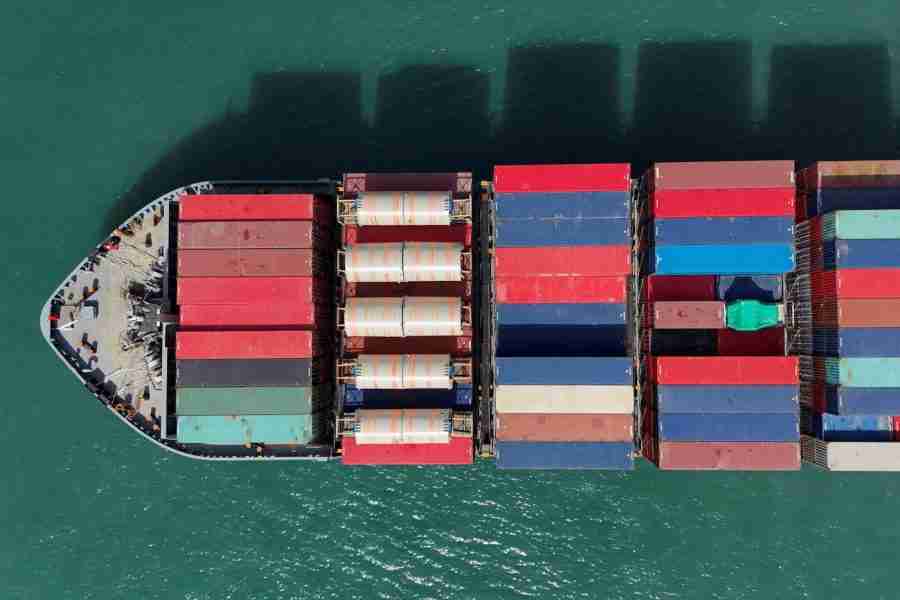
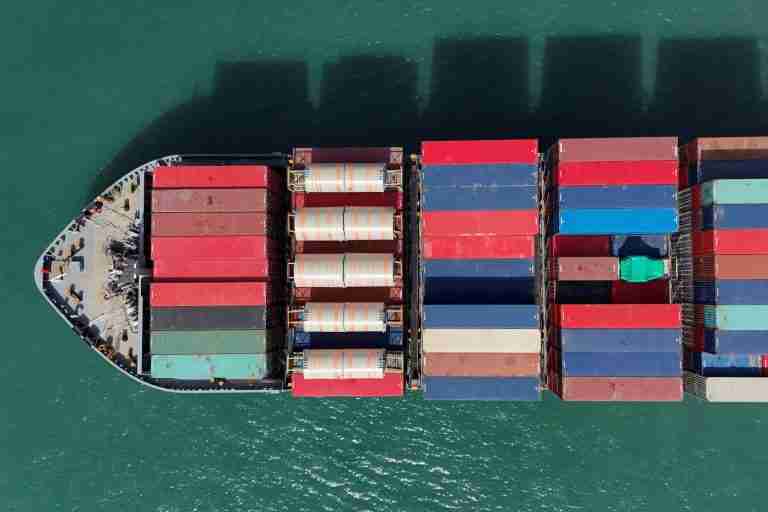
A drone view shows a cargo ship at Kwai Tsing Container Terminals in Hong Kong, China, April 16, 2025. REUTERS/Tyrone Siu/File Photo

International news via Reuters:

A U.S. trade court blocked most of President Donald Trump’s tariffs in a sweeping ruling on Wednesday that found the president overstepped his authority by imposing across-the-board duties on imports from U.S. trading partners.

The Court of International Trade said the U.S. Constitution gives Congress exclusive authority to regulate commerce with other countries that is not overridden by the president’s emergency powers to safeguard the U.S. economy. 

“The court does not pass upon the wisdom or likely effectiveness of the President’s use of tariffs as leverage,” a three-judge panel said in the decision to issue a permanent injunction on the blanket tariff orders issued by Trump since January. “That use is impermissible not because it is unwise or ineffective, but because [federal law] does not allow it.”

Financial markets cheered the ruling. The U.S. dollar rallied following the court’s order, surging against currencies such as the euro, yen and the Swiss franc in particular. Wall Street futures rose and equities across Asia also jumped.

The judges also ordered the Trump administration to issue new orders reflecting the permanent injunction within 10 days. The Trump administration minutes later filed a notice of appeal and questioned the authority of the court.

The court invalidated with immediate effect all of Trump’s orders on tariffs since January that were rooted in the International Emergency Economic Powers Act (IEEPA), a law meant to address “unusual and extraordinary” threats during a national emergency. 

The court was not asked to address some industry-specific tariffs Trump has issued on automobiles, steel and aluminum, using a different statute. 

The decisions of the Manhattan-based Court of International Trade, which hears disputes involving international trade and customs laws, can be appealed to the U.S. Court of Appeals for the Federal Circuit in Washington, D.C., and ultimately the U.S. Supreme Court.

TRADE TURMOIL

Trump has made charging U.S. importers tariffs on goods from foreign countries the central policy of his ongoing trade wars, which have severely disrupted global trade flows and roiled financial markets. 

Companies of all sizes have been whipsawed by Trump’s swift imposition of tariffs and sudden reversals as they seek to manage supply chains, production, staffing and prices.

A White House spokesperson on Wednesday said U.S. trade deficits with other countries constituted “a national emergency that has decimated American communities, left our workers behind, and weakened our defense industrial base – facts that the court did not dispute.”

“It is not for unelected judges to decide how to properly address a national emergency,” Kush Desai, the spokesperson, said in a statement. 

The ruling, if it stands, blows a giant hole through Trump’s strategy to use steep tariffs to wring concessions from trading partners. It creates deep uncertainty around multiple simultaneous negotiations with the European Union, China and many other countries. 

However, analysts at Goldman Sachs noted the order does not block sector-specific levies and there were other legal avenues for Trump to impose across-the-board and country-specific tariffs.

“This ruling represents a setback for the administration’s tariff plans and increases uncertainty but might not change the final outcome for most major U.S. trading partners,” analyst Alec Phillips wrote in a note.

Trump has promised Americans the tariffs would draw manufacturing jobs back to U.S. shores and shrink a $1.2 trillion U.S. goods trade deficit, which were among his central campaign promises.

Without the instant leverage provided by tariffs, the Trump administration would have to find new forms of leverage or take a slower approach to negotiations with trading partners.

Initial reaction among Asian policymakers was muted, with Japan’s economy minister saying he would examine the details of the ruling, while the Bank of Korea said it saw the effective tariff rate on South Korean exports under the ruling falling to 9.7% from 13.3%. 

Hong Kong’s financial secretary said the court decision would “at least bring President Trump to reason”.

BUSINESSES HURTING

The ruling came in a pair of lawsuits, one filed by the nonpartisan Liberty Justice Center on behalf of five small U.S. businesses that import goods from countries targeted by the duties and the other by 12 U.S. states.

The companies, which range from a New York wine and spirits importer to a Virginia-based maker of educational kits and musical instruments, have said the tariffs will hurt their ability to do business.

“There is no question here of narrowly tailored relief; if the challenged Tariff Orders are unlawful as to Plaintiffs they are unlawful as to all,” the judges wrote in their decision.

At least five other legal challenges to the tariffs are pending.

Oregon Attorney General Dan Rayfield, a Democrat whose office is leading the states’ lawsuit, called Trump’s tariffs unlawful, reckless and economically devastating. 

“This ruling reaffirms that our laws matter, and that trade decisions can’t be made on the president’s whim,” Rayfield said in a statement.

Trump has claimed broad authority to set tariffs under IEEPA. The law has historically been used to impose sanctions on enemies of the U.S. or freeze their assets. Trump is the first U.S. president to use it to impose tariffs.

The Justice Department has said the lawsuits should be dismissed because the plaintiffs have not been harmed by tariffs that they have not yet paid, and because only Congress, not private businesses, can challenge a national emergency declared by the president under IEEPA. 

In imposing the tariffs in early April, Trump called the trade deficit a national emergency that justified his 10% across-the-board tariff on all imports, with higher rates for countries with which the United States has the largest trade deficits, particularly China.

The country-specific tariff rates were paused for 90 days a week later though the baseline 10% duty was put in place for most nations. The Trump administration on May 12 said it was also temporarily reducing the steepest tariffs on China while working on a longer-term trade deal. Both countries agreed to cut tariffs on each other for at least 90 days.

Reporting by Dietrich Knauth and Daniel Wiessner; Additional reporting by Alexia Garamfalvi, David Lawder, Jasper Ward, Dan Burns and Jonathan Allen; Writing by Jonathan Allen; Editing by Leslie Adler, Jamie Freed and Lincoln Feast


Welsh Harvard student, caught up in Trump visa fight, fears he may never return

Teaser Paragraph here…,

Harvard student Alfred Williamson, who comes from Wales, stands in a street in Copenhagen, Denmark, May 28, 2025. REUTERS/ Tom Little

International news via Reuters:

When Alfred Williamson packed his bags to travel to Denmark for summer break after a whirlwind first year at Harvard University, he could not wait to return. 

Now, the Welsh student fears he may never go back – one of thousands of international students caught in U.S. President Donald Trump’s battle with the Ivy League institution, which has centred on preventing Harvard from enrolling or retaining international students.

Many students have told Reuters they are worried about complaining, for fear of being targeted by the U.S. authorities, and while Williamson said he shared those fears, he felt he had an obligation to speak out. 

“When people start to self-silence, we are no longer living in a democracy,” he told Reuters in Copenhagen where he was staying with family. “For me, it’s absolutely critical that I voice my opinion so that we preserve these values that America was founded on. In fact, the ideals of freedom and rights.”

Since taking office in January, the Trump administration has repeatedly attacked Ivy League schools, accusing Harvard of fostering violence, antisemitism and coordinating with the Chinese Communist Party, without providing evidence.

Last week, his administration revoked Harvard’s ability to enrol international students and said it would force current foreign students to transfer to other schools or they would lose their legal status, in a dramatic escalation of the dispute. 

UTTER SHOCK 

“When the news hit, I was in complete and utter shock,” said Williamson, an undergraduate who is working towards a double major in physics and government and who described his first year as the best year of his life.

“I didn’t know how to respond; I didn’t know what to feel; I didn’t know what to think; I didn’t know if I’d be an illegal immigrant suddenly, or as they describe people like us, aliens. It was very devastating news.”

Harvard, where international students make up more than a quarter of enrolment, filed a lawsuit last week challenging the order. A federal judge has issued a temporary two-week injunction, but the uncertainty persists.

Williamson said he hadn’t heard anything about his visa, but knew that some classmates had struggled to get renewals. 

He said he appreciated Harvard’s response, and the support it had shown to international students at the university in Cambridge, Massachusetts, which has emerged as one of Trump’s most prominent institutional targets.

“That’s the only way you can deal with someone like Trump,” he said. “He will make demand after demand. One demand will turn into three, and three will turn into five.” 

Williamson said he was not willing to contemplate the prospect of transferring to a different university, and despite the fears he has over the administration, he is desperate to stay at Harvard, arguing that the international community contributes a lot to the U.S.

But he said the current situation is deeply uncomfortable: “We’re being used like pawns in the game that we have no control of, and we’re being caught in this crossfire between the White House and Harvard, and it feels incredibly dehumanising.” 

Writing and reporting by Sam Tabahriti in London; Editing by Kate Holton and Aurora Ellis

Hanoi bans The Economist’s printed issue with Vietnam’s top leader on cover, say distributor sources

Vietnam’s ministry of foreign affairs said it had no information about the matter

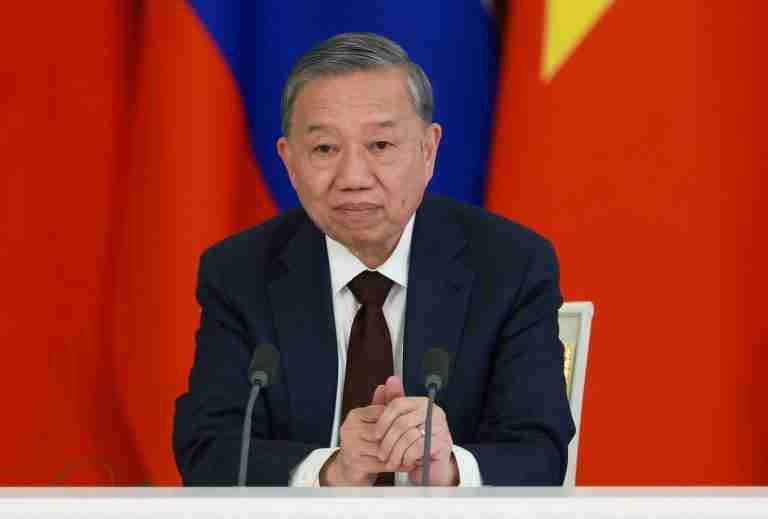
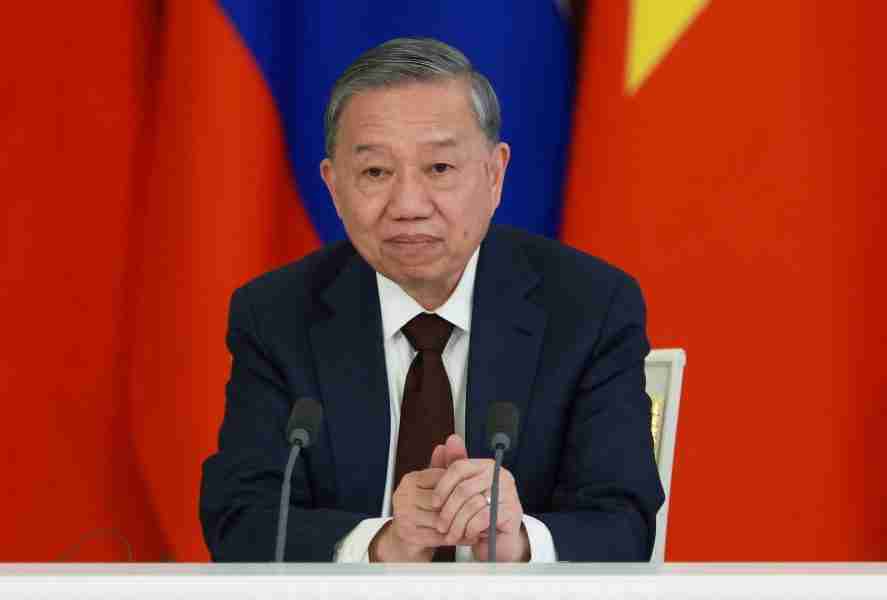
FILE PHOTO: Vietnam’s Communist Party General Secretary To Lam attends a signing ceremony with Russia’s President Vladimir Putin following their meeting in Moscow, Russia May 10, 2025. REUTERS/Anton Vaganov/File Photo

International news via Reuters:

The Economist’s latest printed edition for Asia featuring Vietnam’s top leader To Lam on its cover has been banned in Vietnam, sources at two local media distributors told Reuters, in a new instance of censorship in the Communist-run country.

The May 24 issue, which is still available in the country in its electronic version, portrays Lam with two stars on his eyes on a red backdrop, in a reference to the country’s national flag, with the title: “The man with a plan for Vietnam”.

The subheading on its main Vietnam story said: “A Communist Party hard man has to rescue Asia’s great success story”.

Vietnam’s ministry of foreign affairs said it had no information about the matter.

The ministry in charge of public information did not reply to requests for comment on the reported banning.

The Economist did not immediately reply to a request for comment outside UK business hours.

Vietnam routinely prohibits books, movies and other cultural works and multiple media outlets are also banned.

“We were given orders to tear off the cover and the article about him (Lam), making the magazine no longer sellable. Later, we were ordered not to sell it at all,” said an executive at distributor Ngay Moi, declining to be named because she was not allowed to speak to media.

An employee at a second distributor, Global Book Corporation, said Vietnam’s ministry in charge of public information banned the distribution of that particular issue, without elaborating on the motivations.

A third source at distributor Xunhasaba said it did not have that issue because it had not received enough orders.

Vietnam, a Southeast Asian industrial hub, faces a pivotal moment as it seeks to consolidate a prolonged economic boom amid U.S. tariff trade tensions that may undermine its export-oriented growth. 

The Economist’s article described Lam as an ambitious leader who emerged “from the security state” and who “must turn himself into a reformer” to adjust the country’s economic model and make it richer. 

Lam, 67, rose from the powerful ministry of public security, which he had led for years, to reach the top of Vietnam’s political hierarchy last year after a months-long power struggle, first becoming president and then head of the communist party, the country’s top job. 

The Economist’s cover and articles were reposted thousands of times on social media by users in Vietnam with mixed reactions. 

“Vietnam is stepping confidently into a new era of growth —and the world is taking notice,” Yumi Thao Nguyen, a sales manager, said on LinkedIn with a link to The Economist.

Le Thi Kim Ngoc, a self-described “Citizen of the Socialist Republic of Vietnam”, said on Facebook The Economist’s characterisation of Lam as a hard man “undermine the serious political and social developments currently taking place in Vietnam”.

The country is ranked 173th out of 180 surveyed nations in the latest press freedom index published by Reporters Without Borders, a non-profit organisation.

Authorities in the one-party nation often detain people for “anti-state” online comments and maintain a strict control on the press and social media. 

Last week Vietnam’s technology ministry ordered the ban of messaging app Telegram over alleged crimes committed by its users, noting in an internal document the platform hosted groups created by “opposition and reactionary subjects”.

Multiple users of the app in the country cannot access it this week. Telegram did not reply to a request for comment about the enforcement of the ban. It had earlier said it was “surprised” by the measure, noting it was responding to newly introduced requirements. 

Reporting by Reuters staff; Editing by Michael Perry

US ruling that Trump tariffs are unlawful stirs relief and uncertainty

Another pause in Trump’s stop-start trade policy could be helpful to opponents of his tariffs

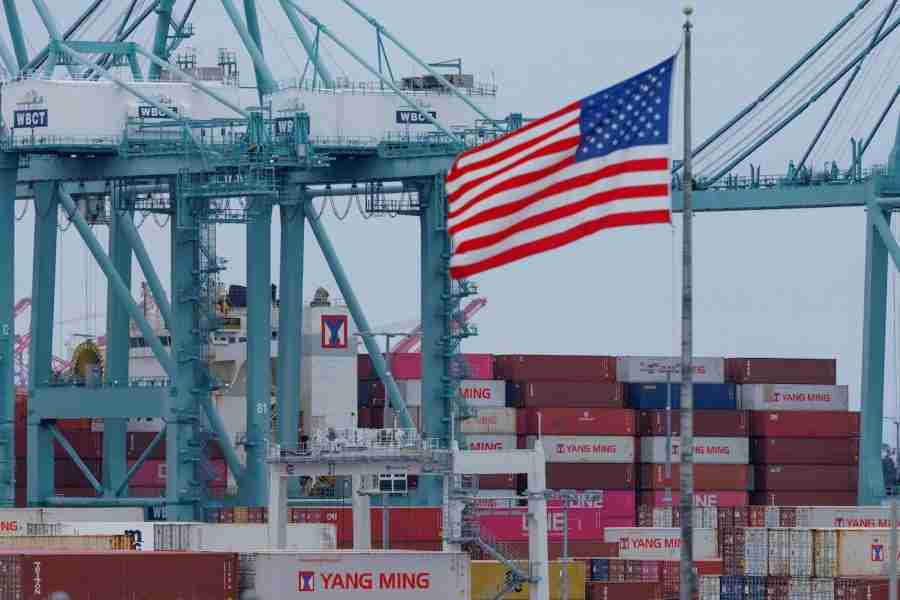
FILE PHOTO: A U.S. flag flutters near shipping containers as a ship is unloaded at the Port of Los Angeles, in San Pedro, California, U.S., May 1, 2025. REUTERS/Mike Blake/File Photo

International news via Reuters:

A U.S. trade court ruling that blocked most of President Donald Trump’s tariffs and found he had overstepped his authority triggered some relief on financial markets on Thursday, while adding to the uncertainties weighing on the global economy.

Among the United States’ big trading partners, in the throes of negotiation with the Trump administration, Germany said it could not comment, as did the European Commission.

“We ask for your understanding that we cannot comment on the legal proceedings in the U.S., as they are still ongoing,” a spokesperson for Germany’s economy ministry said.

“We continue to hope that a mutually beneficial solution can be reached in the negotiations between the EU Commission and the U.S. government.”

Winners on financial markets included chip makers, banks, luxury stocks and auto industry, all hit hard by tariff-led disruptions. 

The U.S. dollar rallied 0.2% against the yen and 0.3% against the Swiss franc as currencies and assets that have benefited from the tariff-induced market turmoil fell.

Wall Street stock index futures rose by more than 1.5% 

The trade court ruling on Wednesday dealt a blow to Trump’s central policy of using tariffs to wring concessions from trading partners.

His administration immediately said it will appeal and analysts said investors will remain cautious as the White House explores its legal avenues.

Following a market revolt after Trump’s major tariff announcement on April 2, the U.S. president paused most import duties for 90 days and said he would hammer out bilateral deals with trade partners. 

But apart from a pact with Britain this month, agreements remain elusive and the court’s stay on the tariffs may dissuade countries like Japan from rushing into deals, analysts said.

Another pause in Trump’s stop-start trade policy could be helpful to opponents of his tariffs and to traders who relish volatility.

“Assuming that an appeal does not succeed in the next few days, the main win is time to prepare, and also a cap on the breadth of tariffs – which can’t exceed 15% for the time being,” George Lagarias, chief economist at Forvis Mazars international advisers, said.

TURMOIL

Trump’s trade war has shaken makers of everything from luxury handbags and trainers to household appliances and cars as the price of raw materials has risen, supply chains have been disrupted and company strategies redrafted.

Drinks company Diageo, automakers General Motors and Ford are among those who have abandoned forecasts for the year ahead.

Non-U.S. companies including Honda, Campari and pharmaceutical companies Roche and Novartis have said they are considering moving operations or expanding their U.S. presence to mitigate the impact of tariffs.

As markets assessed the latest twist in the trade upheaval, European export-sensitive sectors, such as autos and luxury stocks, were among leading gainers on Thursday. 

The pan-continental STOXX 600 was up 0.4%, while France’s CAC 40, which has a heavy weighting of luxury and bank stocks, rose 0.8%. Overall sentiment was also lifted by strong results late on Wednesday from AI bellwether Nvidia.

Spot gold declined for a fourth straight day, while U.S. Treasury yields rose. Bond yields move inversely with prices. 

But the gains in shares may be short-lived, analysts said, with those who relish risk making the most of them.

“I think we are in a period of higher volatility – we will get some more spikes on the way, I think. But volatility is the friend of the active investors,” Kevin Barker, global head of active equities, UBS Asset Management, told a media briefing.

Reporting by Summer Zhen, Samuel Indyk and Sarah Marsh; Writing by Barbara Lewis; Editing by Catherine Evans

Some UK pension funds told to merge into ‘megafunds’ by 2030

Penalties applied to pension funds that don’t meet the 25 billion pounds assets threshold by 2030

FILE PHOTO: Britain’s Chancellor of the Exchequer Rachel Reeves meets with defence suppliers at RAF Northolt on March 6, 2025 in Ruislip, Britain. Dan Kitwood/Pool via REUTERS/File Photo

International news via Reuters:

The UK government will tell some British pension schemes to merge to become ‘megafunds’ with at least 25 billion pounds ($34 billion) of assets by 2030, it said on Thursday, part of its wider drive to channel more investment into the economy.

The government also confirmed it would create a ‘backstop’ power to potentially force investment firms to meet set investment allocation targets if they fell short. 

The controversial new power – which the government has previously indicated it may not need to use – has been criticised by some investment firms who say it risks worse outcomes for pension savers. 

Planned reforms will require certain smaller pension schemes to merge, in a bid to emulate Australia and Canada’s pension systems that feature fewer, larger funds that are better able to invest at scale.

“We’re making pensions work for Britain. These reforms mean better returns for workers and billions more invested in clean energy and high-growth businesses,” finance minister Rachel Reeves said in a statement.

The UK government has been pursuing a range of policies to try to boost domestic investment, including signing up 17 investment firms to a pledge to pump 50 billion pounds of additional cash into UK businesses and infrastructure. 

Those targets could be made mandatory if the government exercises its planned new powers.

The latest changes to create ‘megafunds’, to be laid out in a forthcoming pensions scheme bill, will apply to multi-employer defined contribution schemes and local government pension schemes, the government added.

Penalties will be applied to pension funds that don’t meet the 25 billion pounds assets threshold by 2030, such as losing access to auto-enrollment contributions that would be diverted into larger schemes, a government official told Reuters.

Schemes worth over 10 billion pounds that are unable to reach the minimum size by that time will be allowed to continue, as long as they demonstrate a clear plan to reach it by 2035, the government added.

The government’s push to create ‘megafunds’ has been welcomed by some investment firms, but has caused consternation with others who worry it could lessen competition.

“Supporting UK growth is a worthwhile goal, but fiduciary duty must remain at the heart of any reform. Bigger isn’t always better – it’s outcomes that matter most,” said Martin Willis, partner at consultancy, Barnett Waddingham. 

Local government pension schemes will also be given investment targets, which the government said would help put 27.5 billion pounds into local projects. These schemes will also be told to combine assets split across more than 86 authorities into just six pools.

($1 = 0.7426 pounds)

Reporting by Iain Withers; Editing by Mark Potter and Emelia Sithole-Matarise

Philippines says China has no right to object or interfere with its ‘lawful’ activities in the South China Sea

This after a confrontation between the two countries’ vessels in contested waters

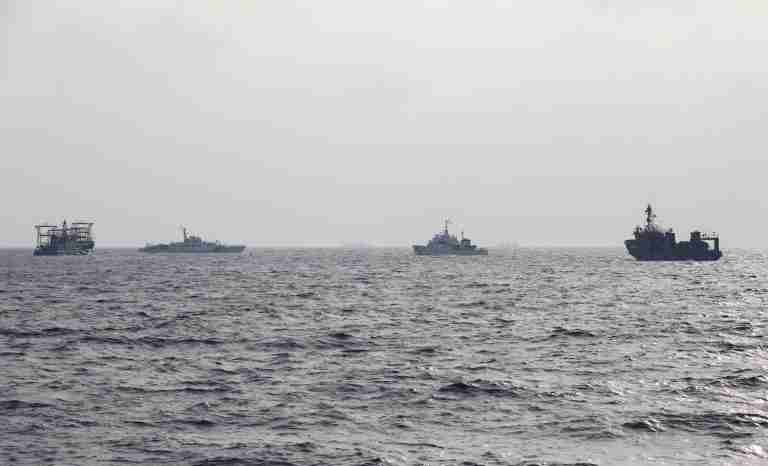
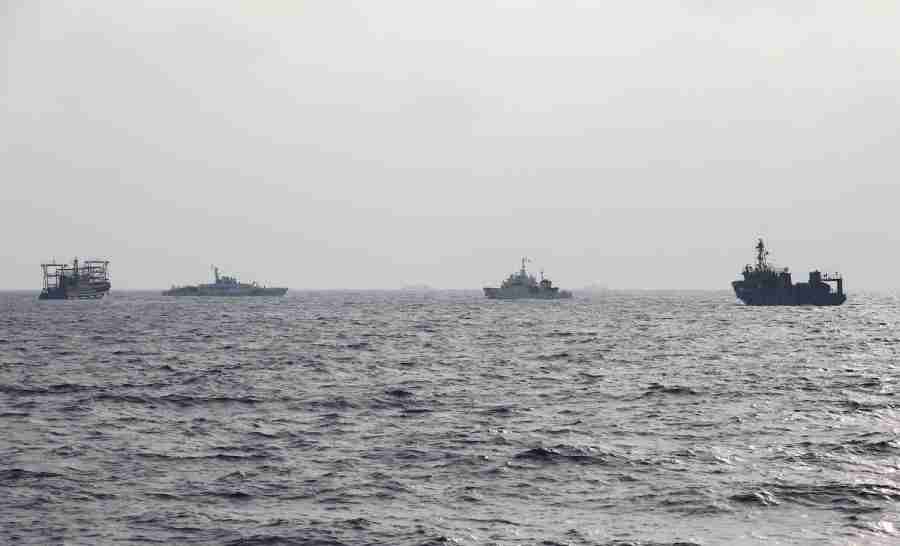
A Philippine Coast Guard ship is seen surrounded by Chinese maritime militia vessels and a Chinese Coast Guard ship during a resupply mission for Filipino troops stationed at a grounded warship in the South China Sea, October 4, 2023. REUTERS/Adrian Portugal

International news via Reuters:

The Philippine foreign ministry said on Thursday that China has no right to object to or interfere with its lawful and routine activities in the South China Sea.

The ministry said it also “rejects and refutes” recent statements of the Chinese embassy in Manila that Beijing has indisputable sovereignty over the Spratly islands. 

The Philippines, Malaysia, Vietnam, Taiwan and China between them have claims and a presence on dozens of features in the Spratly archipelago, ranging from reefs and rocks to islands, natural and artificial. China’s manmade islands there include runways, radar towers, ports and missile systems. 

“We urge China to respect the Philippines’ sovereignty and jurisdiction, even as we continue to pursue peaceful and legal means to manage differences and the situation at sea,” foreign ministry spokesperson Teresita Daza said in a statement.  

China and the Philippines traded accusations last week following a confrontation between two of their vessels in contested waters of the South China Sea, the latest incident in a long-running row in the strategic waterway.

The Philippines’ fisheries bureau said the lives of a civilian crew were put at risk when the Chinese coast guard fired water cannons and sideswiped a vessel as it conducted marine research around a disputed reef.

The Chinese coast guard said two Philippine vessels had illegally entered waters near Subi Reef, a Chinese-built artificial island, and organised personnel to land on the unoccupied sandbars of Sandy Cay. 

“The Philippines is clearly within its rights to conduct routine maritime operations and scientific research in and around these features, and will continue to do so,” Daza said. “China has no right to object much less interfere with these lawful and routine activities.”

China claims sovereignty over nearly all the South China Sea, including parts of the exclusive economic zones of Brunei, Indonesia, Malaysia, the Philippines and Vietnam. An international arbitral tribunal in 2016 said Beijing’s expansive claim has no basis under international law.

The Chinese embassy in its statement sent to media on Monday said the Philippines had since January made 27 “unauthorised landings” on features, despite a 2002 agreement among Southeast Asian countries and China to refrain from doing so. 

Reporting by Karen Lema; Editing by Martin Petty

Australia’s defence minister Marles to meet US, Japan counterparts

Australia has rebutted criticism from China that AUKUS undermines nuclear non-proliferation

FILE PHOTO: Australia’s Deputy Prime Minister and Defence Minister Richard Marles attends the Lest We Forget sunset tribute on the eve of ANZAC Day at Sydney Opera House in Sydney, Australia, April 24, 2025. REUTERS/Hollie Adams/File Photo

International news via Reuters:

Australia’s Defence Minister Richard Marles will meet with his U.S. and Japanese counterparts at an Asian security forum in Singapore, the first trilateral talks since elections in Australia and the Trump Administration took office.

Marles will attend the Shangri-La Dialogue, Asia’s premier security forum, from May 30-June 1, making his first foreign visit since the centre-left Labor government won an increased majority in national elections this month.

Marles will meet Japanese Defence Minister Gen Nakatani and U.S. Secretary of Defense Pete Hegseth, his office said on Thursday.

The annual trilateral meeting was last held in November in Darwin, Australia, where the three countries agreed to increase joint military exercises, intelligence and surveillance cooperation.

Marles met Hegseth in February in Washington to discuss the AUKUS nuclear submarine partnership, under which Australia will make a $2 billion payment to the U.S. submarine industrial base this year.

U.S. President Donald Trump’s Pentagon officials have urged Australia to lift defence spending to 3% of gross domestic product, although Prime Minister Anthony Albanese said on Thursday his government would lift to 2.4% and invest in capability and relationships in the region.

Defence ministers, senior military and security officials and diplomats from around the world are expected to attend the summit. 

Marles will speak on Saturday about proliferating risks in the region, his office said.

“The Government is committed to strengthening our global defence relationships, while deepening our diplomatic and defence partnerships in the Indo-Pacific,” Marles said in a statement.

Australian Strategic Policy Institute senior analyst for defence, Euan Graham, said the primary challenge for Marles is “to convince Australia’s security partners gathered in Singapore that the Australian Defence Force has enough capability to be credible in the near term, in case a regional crisis happens before AUKUS and other long-term investments can make a difference”.

Under the AUKUS timeline, an Australian and British-built nuclear-powered submarine will not arrive until 2040, while the purchase of Virginia-class submarines from the United States in 2032 is under a cloud because of production delays.

Graham, previously based in Singapore for the summit’s organiser, said Australia also needs to “do more to actively support extended nuclear deterrence by the United States”.

Australia has rebutted criticism from China that AUKUS undermines nuclear non-proliferation, by emphasising the submarines will be conventionally armed.

“Conventional deterrence has to join up with nuclear deterrence to be credible,” Graham said.

Reporting by Kirsty Needham in Sydney; Editing by Saad Sayeed

Bermuda Tonight – 28 May 2025

In tonight’s news…

  • Corrections officers injured during altercation with inmate at Westgate
  • Major armed police operation on Court Street
  • New road paving equipment arrives
  • BUEI highlights youth-driven environmental advocacy initiative

Bermuda Day float winners

Vasco De Gama, Anchor Boys and Harrington Sound school among awardees

Natural Heritage Float winner Vasco De Gama. Photo from social media

Government of Bermuda Press Release

The Department of Culture is pleased to share the results of this year’s Bermuda Day float competition. This year’s Bermuda Day Parade saw more than 60 entries take to the streets of Hamilton, marking continued participation and enthusiasm for one of the island’s most treasured traditions.

This year’s awards are as follows:

Natural Heritage Float:

  1. Vasco da Gama Club
  2. Department of Sport and Recreation

Upcycled Float:

  1. Anchor Boys
  2. CedarBridge Academy cars
  3. The Association of Filipinos in Bermuda

Art Float:

  1. Department of Culture
  2. CedarBridge Academy Float and Blimp
  3. The Sammy Wilson Central Zone Community Center (TOYA)

Primary School Box Carts 

  1. Harrington Sound Primary School 

SPECIAL AWARDS (OPEN TO ALL JUDGED CATEGORIES)

Premier’s Awards for Best Float- Department of Culture

Reggie Ming Award for Most Beautiful Float- Vasco da Gama Club

Minister’s Award for Most Original Float- Anchor Boys

Ruth Thomas Award for Best Heritage Float- Vasco da Gama Club

Dr Kenneth E. Robinson Award for Best Primary School Float- Harrington Sound Primary School 

Box Cart: Mr. George Leon Burt Award for Best Box Chart Entry- Harrington Sound Primary School 

Dr Marjorie Bean Award for Best High School Float- CedarBridge Academy Float, Blimp & Cars

Best Individual Float- Wave of Change

Lowdru Robinson Award for Best Government Department Float- The Office of Youth Affairs collaborative entries (Central, Eastern, Western community centres)

Bermudian Excellence Award- United Dance Productions

Best Historical Float- Bermuda Industrial Union

Most Community Spirit Float- Alpha Kappa Alpha Sorority Inc

The Resilience Award- Padma X

Best Tribute Award- Department of Sport and Recreation

Most Faithful Award- One Body in Christ Movement – For God’s Purpose

Members of the public can rewatch the 2025 Bermuda Day Parade in its entirety here: https://m.youtube.com/@citvbermuda/streams

Pink Party premieres in Bermuda, blending glamour and culture

https://vimeo.com/1088560368/64b12cf9fd?share=copy

This weekend, Bermuda was lit up by the Pink Party.


Presented by award-winning international event curator Manny Swarv and sponsored by the Bermuda Tourism Authority and Bacardi, the event blended luxury, culture, and elegance.

Swarv’s Pink Party was making its debut in Bermuda, with Manny responsible for curating the full experience.


Our Kendal Trott was on the scene to take in the atmosphere and capture the highlights.

New road paving equipment arrives

Minister of Public Works says “this is a big moment”

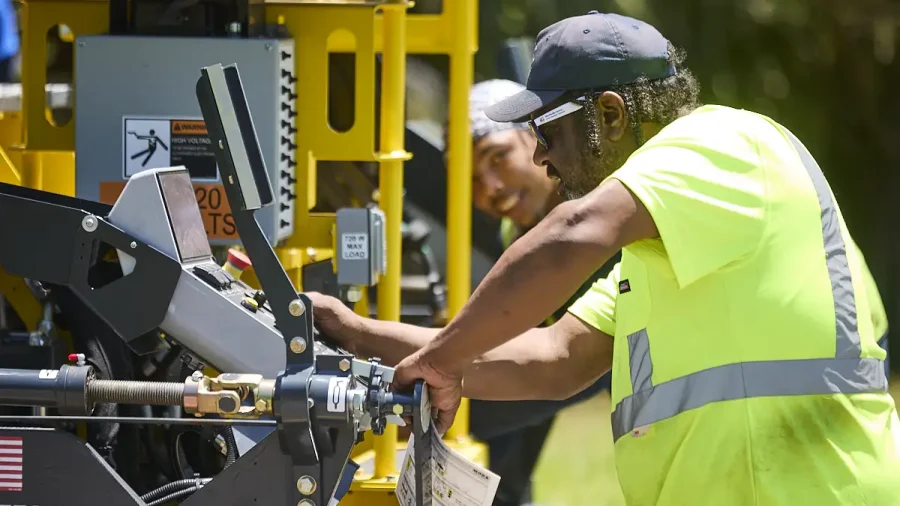
Photo supplied

New road paving equipment arrived last week – part of ongoing efforts to improve the island’s infrastructure.

Jache Adams, Minister of Public Works and Environment, said it’s a big moment, because the condition of Bermuda’s roads has been a consistent concern.

Among the new additions… a compact milling machine to efficiently remove worn asphalt, even in trenches and tight curves… a Shuttle Buggy for on-site storage and material remixing, and to improve pavement quality… and a new asphalt paver to deliver uniform asphalt coverage.

A Government press release also states that Construction of a new asphalt plant is scheduled to start in September, pending final planning approvals. The Ministry expects the new plant’s components to arrive on the Island in late July.

Minister Adams added, “the old plant has run its course. We had to limit operations and work around equipment failures. But now, the focus is on building something fit for purpose. This new gear is not just impressive—it is essential.”

Full press release below…

Photo Supplied
Photo Supplied
Photo Supplied

Government of Bermuda Press Release

The Ministry of Public Works and Environment welcomes the arrival of a new suite of road paving equipment delivered to Bermuda last week.

This equipment is part of the Government’s significant investment in overhauling the Island’s ageing asphalt infrastructure.

The arrival marks the beginning of Phase I of a modernisation effort designed to enhance the quality and efficiency of road paving across the country.

The equipment, unloaded at the Hamilton Docks and transported to the Government Quarry in Bailey’s Bay, included a state-of-the-art milling machine, a Shuttle Buggy, and a new asphalt paver.

Each machine plays a specific role in Bermuda’s road resurfacing process and will significantly increase operational capacity and performance.

The compact milling machine efficiently removes worn asphalt, even in space-restricted areas such as trenches and tight curves.

The Shuttle Buggy offers on-site storage and material remixing, and improves pavement quality. Meanwhile, the paver delivers uniform asphalt coverage with operator-friendly features, including ergonomic controls and enhanced visibility.

Minister of Public Works and Environment, the Hon. Jache Adams, JP, MP, toured the new equipment at the Quarry and underscored its importance.

“This is a big moment. The condition of Bermuda’s roads has been a consistent concern across the Island,” Minister Adams said.

“This equipment gives the team a stronger foundation to tackle those concerns. It allows them to work more efficiently, deliver higher-quality results, and make steady, visible progress. This is about moving forward with real solutions.”

Technical experts are currently in Bermuda to finalise design specifications for the new asphalt batching plant. Construction on the plant, which will begin later this summer through local contractors, is scheduled to start in September pending final planning approvals. The Ministry expects the new plant’s components to arrive on the Island in late July.

Minister Adams added, “The old plant has run its course. We had to limit operations and work around equipment failures. But now, the focus is on building something fit for purpose. This new gear is not just impressive—it is essential.

“It gives our crews the tools to deliver lasting repairs, not just patchwork.” The delivery also initiates a focused training period for operations staff, combining classroom instruction with field training to ensure safe and skilled use of the equipment. 

This training will support upcoming resurfacing works scheduled through the end of 2025. The investment forms part of a broader plan to improve Bermuda’s roads through better coordination with utility companies, long-term infrastructure planning, and increased public responsiveness.

Recent efforts have already seen major roadwork completed in Southampton, Warwick, Smith’s, and along key East End corridors