Late applications and appeals to continue working may be refused, says Minister
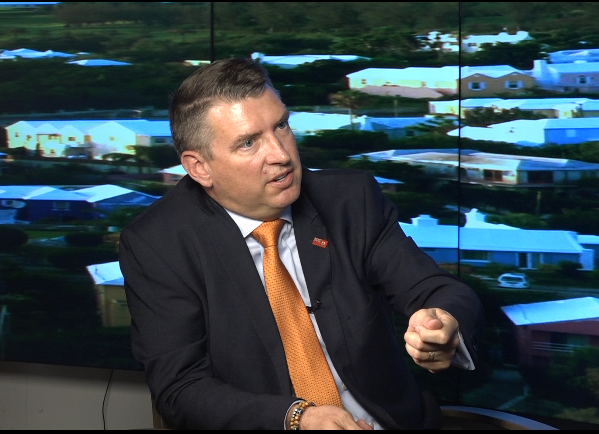
Government is going to have zero tolerance for late work permit applications from now on – this today from Jason Hayward, Minister of Labour and Economy.
Flanked by Department of Immigration staff, Minister Hayward said they have seen an increasing number of late applications for work permits, specifically for individuals already residing in Bermuda. (scroll to bottom for full press conference, or watch the clips below)
Minister Hayward was accompanied at today’s press conference by the Department of Immigration’s Kelly Perinchief-Burgess – Compliance Manager, Nekia Scraders – Acting Immigration Manager, and Marita Grimes – Assistant Chief Immigration Officer.
The Minister reiterated the laws around work permit applications, and said violators will incur fines:
If a work permit application has been submitted on time, the applicant can appeal to the Minister to keep working if the current permit expires while waiting for a new permit.
Minister Hayward, however, told media that late work permit applications are becoming too common – although he did not give actual statistics:
Minister Hayward urged the public to report immigration violations by calling the anonymous tip line on 296-5202.
The Earth Day movement is meant to raise environmental awareness and inspire action
Francis Patton Grub Day. Photo: Keep Bermuda Beautiful
15 schools across the island today are celebrating Earth Day with a special grub day fundraiser organised by Keep Bermuda Beautiful.
The movement is meant to raise environmental awareness and inspire action. Donations will support KBBs education and youth engagement programs.
This year’s participating schools include: BHS, Dalton E. Tucker Primary, East End Primary, Francis Patton Primary, Harrington Sound Primary, Paget Primary, Sandys Middle School, St. George’s Preparatory, Victor Scott Primary, Warwick Academy, West End Primary, West Pembroke Primary, and Whitney Institute Middle School.
According to a release, special praise was given to Francis Patton Primary students and Principal Todd Fox for organising a Green Future Initiative Week held in March.
Spearheaded by year 8 head student leaders, the school encouraged students to wear green for a donation, sold green lemonade with reusable cups, observed a lights out day to reduce energy use and a full campus clean up.
A “Walk to School Day” from Shelly Bay Field was also held.
Today, students from several schools will be wearing earth coloured tones in honour of Earth Day 2025.
A spokesperson for KBB said, “KBB extends sincere thanks to Mr. Fox, his staff, and all the students of Francis Patton Primary for their dedication and innovation.
“We also thank all participating schools for joining us in making Earth Day 2025 a meaningful and impactful occasion.”
The Shadow Housing and Municipalities Minister said he was ‘stunned’ to learn it was to be developed for a new retail and office space
Michael Fahy, the Shadow Housing Minister of Housing and Municipalities is urging the government to reconsider plans to repurpose the Bishop Spencer building into a retail, office space and dormitories.
In a new release, Mr. Fahy said he was “stunned” to learn the building is not being repurposed for supporting either a transitional living facility, emergency housing or a seniors’ home.
He explained, “The building and property is owned by the Bermuda Government and given the overwhelming need for any one of three aforementioned, it is beyond strange that the building is being leased to a private business. It is unlikely that the dormitories will be used for Bermudian workers, although I could be wrong.”
It is his view that the building is suitable for social programs and ought to have been repurposed to help address the homelessness issue.
He further expressed frustration on the matter when the question on the future of the derelict property was raised in a written piece back in 2008 though the project did not move forward for various reasons.
The proposals by On-site Engineering Services said the site will house retail and office space as well as a workshop, a warehouse and dormitories for up to 12 staff on Glebe Road in Pembroke.
Authorities urge anyone with information about drug-related activity to come forward
Credit: Bermuda Police Service
Five individuals have been arrested and more than one million dollars worth of drugs seized following a major joint operation by the Police Drug Unit and Support Unit, and the Customs Department last week.
Among those arrested was one foreign national.
A police media release stated, “On Tuesday, April 15th, 2025, the Police Drug Unit and Support Unit, in collaboration with the Customs Department, executed an operation based on the seizure of a quantity of a controlled drug with an estimated street value of over one million dollars.”
Acting Detective Inspector Mark Raposo, the officer in charge of the Drug Unit said, “This is a significant seizure that will have a positive impact on our community.”
He added, “Police and HM Customs are committed to working together to tackle drug trafficking and other forms of organized crime. The success of this operation demonstrates the effectiveness of our joint efforts and our determination to keep our community safe. We will continue to work tirelessly to identify and disrupt the sales, distribution, and trafficking of illicit drugs.”
The police urged anyone with information about drug-related activity to report it to the authorities.
Germany was the only G7 economy that failed to grow for the last two years
People enjoy the view of the skyline with its financial district ion early evening in Frankfurt, Germany, October 5, 2018. REUTERS/Kai Pfaffenbach
International news via Reuters:
The German government cut its economic forecast for this year and now foresees stagnation instead of 0.3% growth, a source told Reuters on Tuesday, confirming a report by the Handelsblatt newspaper.
For 2026, the government now expects growth of 1%, down slightly from its January forecast of 1.1%, according to the source.
The economy ministry declined to comment when asked about the forecasts and instead referred to a news conference on the new projections planned for Thursday.
Germany was the only G7 economy that failed to grow for the last two years, and the tariffs announced by U.S. President Donald Trump could put it on track for a third year without growth for the first time in history.
Uncertainty about how Europe’s largest economy will develop in light of the tariffs served as the groundwork for the new forecast, Handelsblatt cited the sources as saying.
Exports are expected to fall by 2.2% this year, following a 1.1% decline in 2024. Next year, exports are expected to rise by 1.3%, according to the source.
Earlier this month, German economic institutes cut their growth forecast for this year to 0.1% from the 0.8% expected in September, taking into consideration initial U.S. tariffs on steel, aluminium and cars.
The German government foresees inflation falling to 2% this year and then to 1.9% next year, the source told Reuters, down from 2.2% last year.
Economic weakness will take its toll on the labour market, with the unemployment rate expected to go up to 6.3% this year from 6.0% last year, before falling to 6.2% in 2026.
Reporting by Holger Hansen and Christian Kraemer, writing by Miranda Murray and Maria Martinez, editing by Rachel More, Kirsti Knolle and Bernadette Baum
Vance said he and India’s Modi made good progress on trade talks
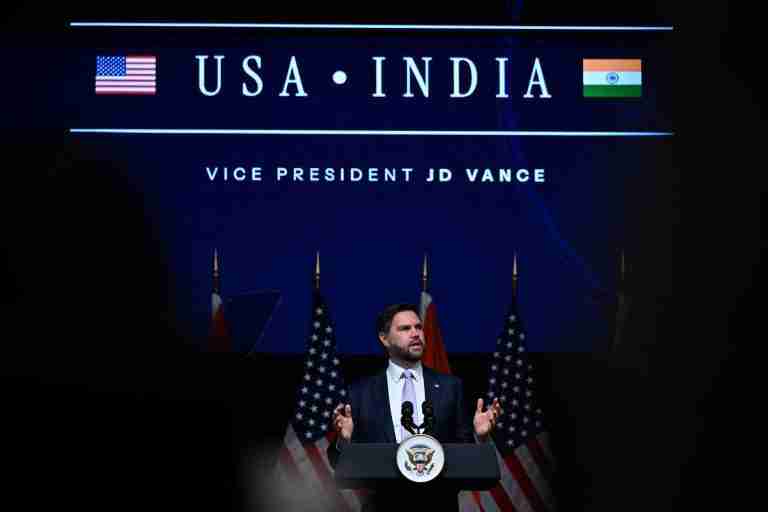
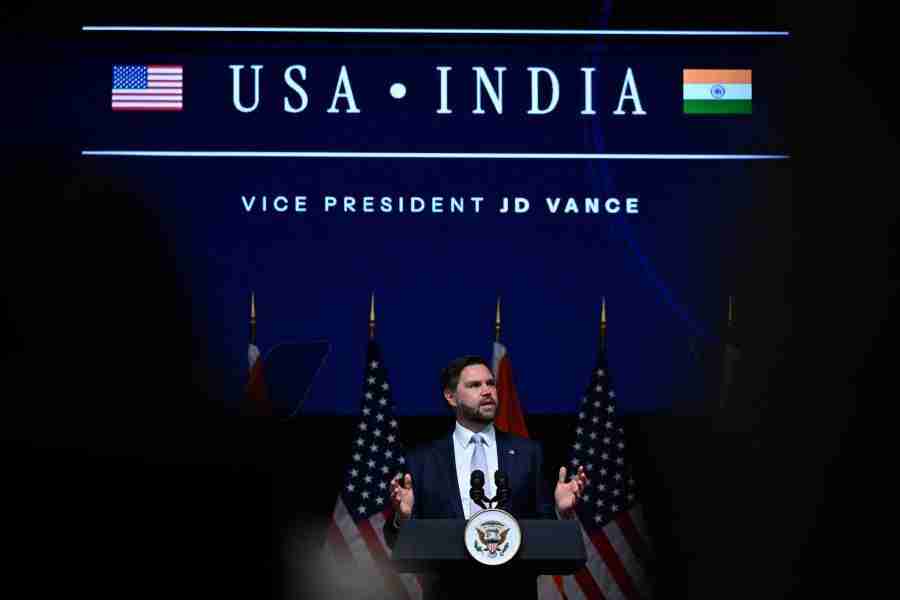
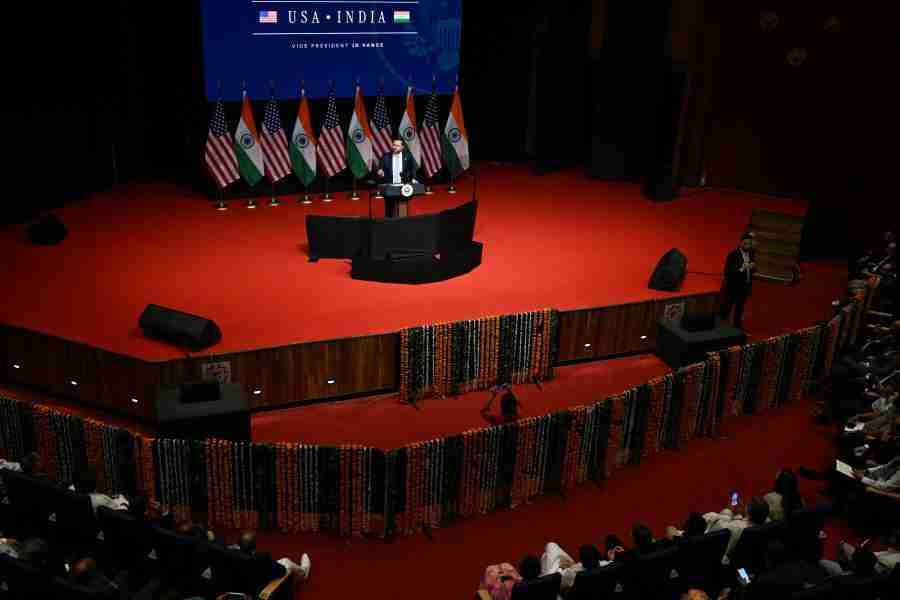
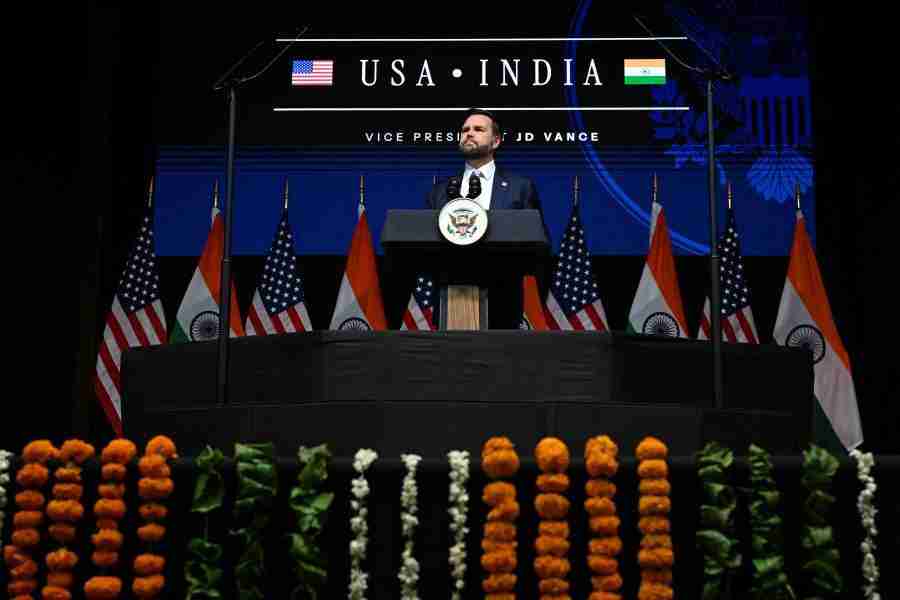
U.S. Vice President JD Vance delivers remarks at the Rajasthan International Centre in Jaipur, India, on Tuesday, April 22, 2025. Kenny Holston/Pool via REUTERS
International news via Reuters:
The United States is looking to sell more energy and defence equipment to India, Vice President JD Vance said on Tuesday on a visit to the country, adding that ties between the two countries will shape the century.
“If India and the United States work together successfully, we’re going to see a 21st century that is prosperous and peaceful,” he said in a speech in the northwestern Indian city of Jaipur.
“But I also believe that if we fail to work together successfully, the 21st century could be a very dark time for all of humanity.”
He also repeatedly praised Indian Prime Minister Narendra Modi following their dinner on Monday. Vance is on a mostly personal, four-day visit to India along with his wife, who is the daughter of Indian immigrants, and their three children.
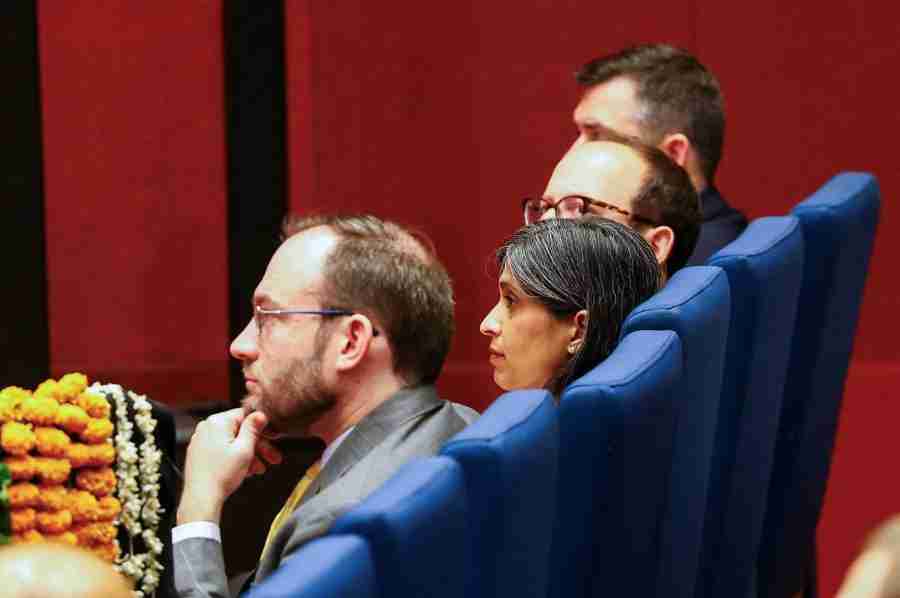
U.S. second lady Usha Vance sits, as Vice President JD Vance (not pictured) delivers a speech, at the Rajasthan International Center, in Jaipur, India, April 22, 2025. REUTERS/Anushree FadnavisU.S. Vice President JD Vance delivers remarks at the Rajasthan International Centre in Jaipur, India, on Tuesday, April 22, 2025. Kenny Holston/Pool via REUTERSU.S. Vice President JD Vance delivers remarks at the Rajasthan International Centre in Jaipur, India, on Tuesday, April 22, 2025. Kenny Holston/Pool via REUTERS
The trip comes at a time when India is rushing to clinch an early trade deal with the U.S. – its largest trading partner – before the end of the 90-day pause on the steep tariffs announced by President Donald Trump’s administration.
“Prime Minister Modi is a tough negotiator. He drives a hard bargain,” Vance said to a big laughter from the audience.
India hopes to “positively conclude” the first part of a trade pact by autumn, Indian Finance Minister Nirmala Sitharaman said in San Francisco on Monday.
Vance said he and Modi made good progress on trade talks, and confirmed that the two sides had finalised the terms of reference for the trade negotiation.
“It sets a roadmap toward a final deal between our nations,” he said.
Reporting by Rupam Jain; Writing by Sakshi Dayal; Editing by YP Rajesh and Kim Coghill
Roche aims to will more medicines from the United States than it imports into the U.S.
FILE PHOTO: The logo of Swiss drugmaker Roche is seen at its headquarters in Basel, Switzerland January 30, 2020. REUTERS/Arnd Wiegmann/File Photo
International news via Reuters:
Roche said on Tuesday it would invest $50 billion in the United States over the next five years, creating more than 12,000 new jobs, in the latest massive investment by companies reacting to President Donald Trump’s tariffs policy.
The Swiss pharma giant said the new positions would include nearly 6,500 in construction and 1,000 at new and expanded facilities.
The announcement comes as drugmakers unveil investments to deal with tariffs from the Trump administration, which is seeking to boost domestic manufacturing.
Fellow Swiss drugmaker Novartis earlier this month said it would spend $23 billion in the United States, while Eli Lilly and Johnson & Johnson also announced sizeable investments recently.
Chief Executive Thomas Schinecker said the investment underscored Roche’s commitment to the United States, where it employs 25,000 people across 24 sites.
Once the new and expanded manufacturing capacity comes online, Roche will export more medicines from the United States than it imports, the Basel company said.
Among the investments, Roche will expand its manufacturing and distribution centres in Kentucky, Indiana, New Jersey and California.
A new gene therapy factory will be built in Pennsylvania, along with a new plant for continuous glucose monitoring in Indiana.
A new factory to make weight loss medicines will be built, with the location yet to be announced, along with a research centre for cardiovascular, renal and metabolism studies in Massachusetts.
“Our investments of $50 billion over the next five years will lay the foundation for our next era of innovation and growth, benefiting patients in the U.S. and around the world,” Schinecker said in a statement.
The executive did not mention the threat of looming tariffs, with Switzerland facing a 31% charge on its exports to the United States.
Last week, the Trump administration launched a probe into pharmaceuticals imports, as part of a bid to impose tariffs on the sector.
The timing and extent of the levies remain uncertain, but the impact could be big, with close to $213 billion in pharmaceutical products imported to the U.S. last year, nearly triple 2014’s $73 billion, according to the United Nations trade database.
Reporting by John Revill, Editing by Miranda Murray and Bernadette Baum
Funeral will be held in St. Peter’s Square, in the shadow of the Basilica
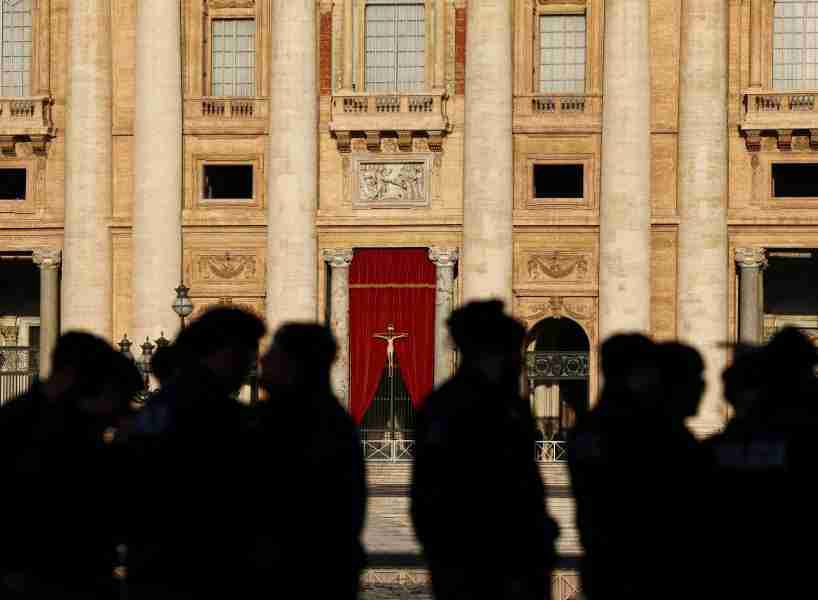
Police officers gather outside St. Peter’s Basilica, following the death of Pope Francis, at the Vatican, April 22, 2025. REUTERS/Kai Pfaffenbach
International news via Reuters:
Pope Francis’ funeral will be held on Saturday in St. Peter’s Square, Roman Catholic cardinals decided on Tuesday, setting the stage for a solemn ceremony that will draw leaders from around the world.
Francis, 88, died on Monday after suffering a stroke and cardiac arrest, ending an often turbulent reign in which he repeatedly clashed with traditionalists and championed the poor and marginalised.
The pontiff spent five weeks in hospital earlier this year suffering from double pneumonia and had appeared to be slowly recovering, but the Vatican on Tuesday recounted his last moments, saying death came quickly and he had not suffered.
He started to feel unwell at around 5:30 a.m. (0330 GMT) on Monday and was promptly attended to by his team. More than an hour later he made a gesture of farewell to his ever-present nurse, Massimiliano Strappetti, and slipped into a coma, the Vatican’s official media channel said.
His time of death was given as 7:35 a.m.
The Vatican released photographs of Francis dressed in his vestments and laid in a wooden coffin in the chapel of the Santa Marta residence, where he lived during his 12-year papacy. Swiss Guards stand on either side of the casket.
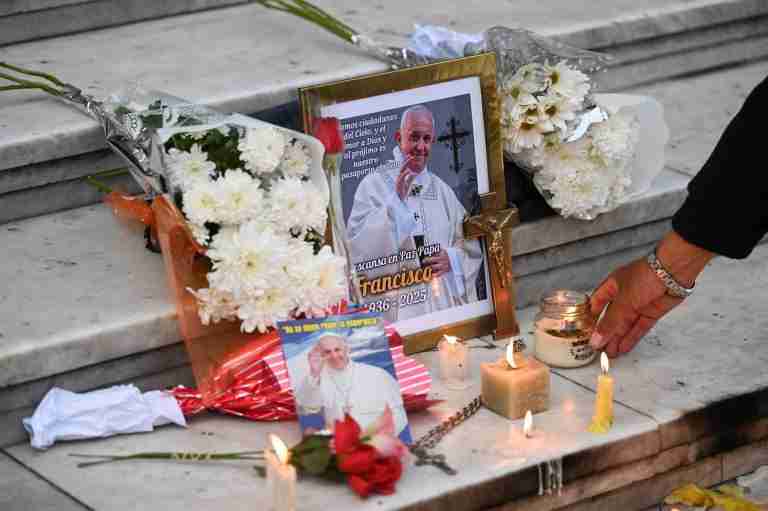
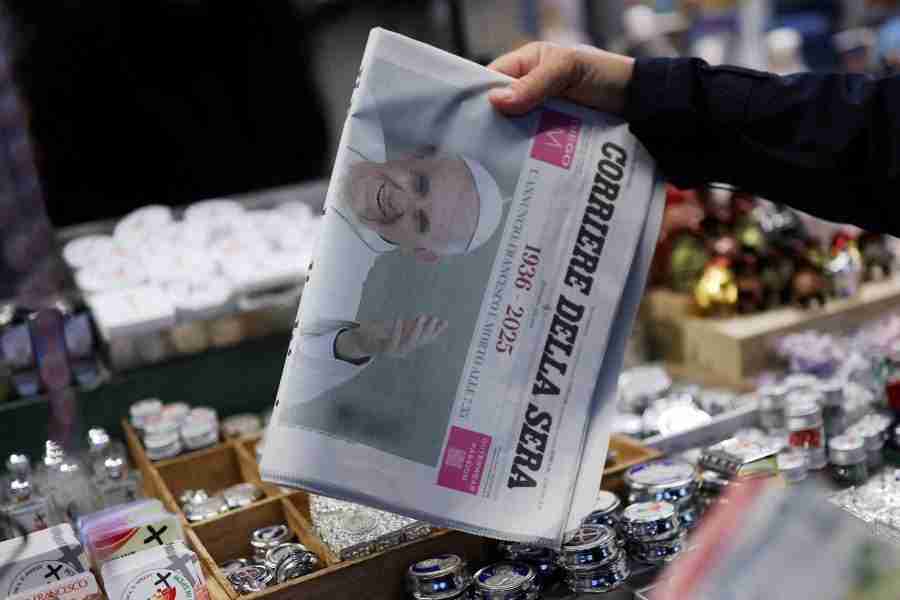
The body of Pope Francis is placed in an open casket during the rite of the declaration of death in Santa Marta residence at the Vatican, April 21, 2025. Vatican Media/Handout via REUTERSA rosary is seen as the body of Pope Francis is placed in an open casket during the rite of the declaration of death in Santa Marta residence at the Vatican, April 21, 2025. Vatican Media/Handout via REUTERSA person holds a newspaper with a picture of Pope Francis, following his death, in Rome, Italy, April 22, 2025. REUTERS/Hannah McKay
His body will be taken into the adjacent St. Peter’s Basilica on Wednesday morning at 9:00 a.m. (0700 GMT), in a procession led by cardinals, allowing the faithful to pay their last respects to the first Latin American pope.
His funeral service will be held in St. Peter’s Square, in the shadow of the Basilica, on Saturday at 10:00 a.m. and will be presided over by Cardinal Giovanni Battista Re, the 91-year-old dean of the College of Cardinals.
U.S. President Donald Trump, who clashed repeatedly with the pope about immigration, said he and his wife would fly to Rome for the service.
Among other heads of state set to attend were Javier Milei, president of Francis’ native Argentina, Brazilian President Luiz Inacio Lula da Silva and Ukrainian President Volodymyr Zelenskiy, according to a source in his office.
ANCIENT RITUALS
In a break from tradition, Francis confirmed in his final testament released on Monday that he wished to be buried in Rome’s Basilica of Saint Mary Major and not St. Peter’s, where many of his predecessors were laid to rest.
Francis’ death has set in motion ancient rituals, as the 1.4-billion-member Church started the transition from one pope to another, including the breaking of the pope’s “Fisherman’s Ring” and lead seal, used in his lifetime to seal documents, so they cannot be used by anyone else.
As Catholics worldwide mourned Francis, all cardinals in Rome were summoned to a meeting on Tuesday to decide on the sequencing of events in the coming days and review the day-to-day running of the Church in the period before a new pope is elected.
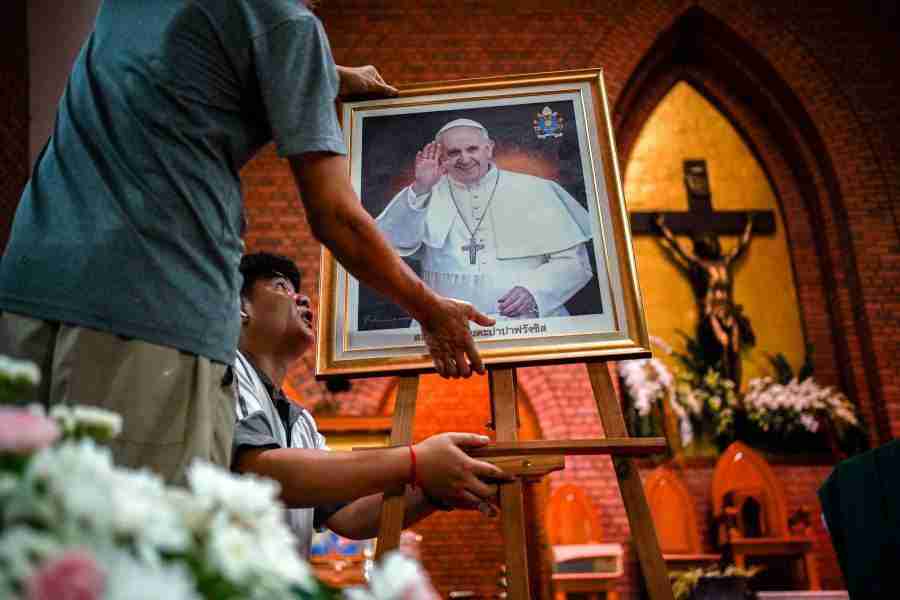
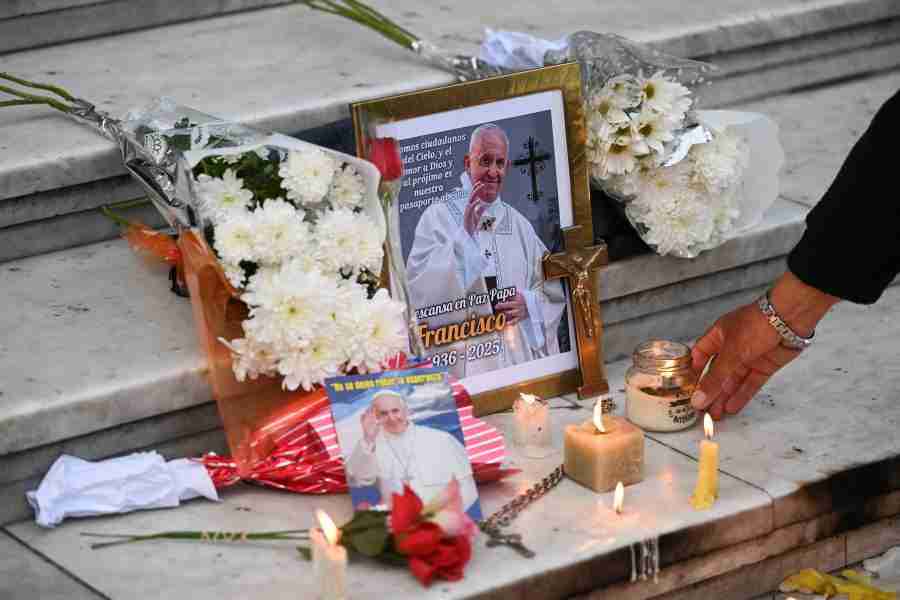
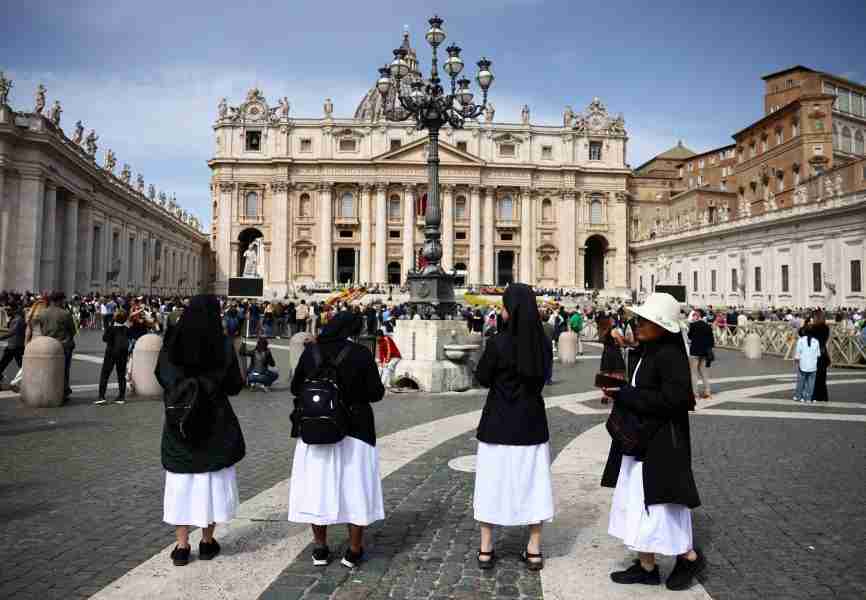
Workers hold up a picture of Pope Francis before a Mass, after his death was announced by the Vatican, at Saint Louis Catholic Church in Bangkok, Thailand, April 21, 2025. REUTERS/Athit PerawongmethaA person leaves a candle in front of a picture of Pope Francis outside the Buenos Aires’ Metropolitan Cathedral, following the death of the pontiff, in Buenos Aires, Argentina, April 21, 2025. REUTERS/Martin CossariniNuns stand in St. Peter’s Square, after the death of Pope Francis was announced by the Vatican in a video statement, at the Vatican, April 21, 2025. REUTERS/Yara Nardi
A conclave to choose a new pope normally takes place 15 to 20 days after the death of a pontiff, meaning it should not start before May 6. The exact date will be decided by cardinals after Francis’ funeral.
Some 135 cardinals are eligible to participate in the secretive ballot, which can stretch over days before white smoke pouring from the chimney of the Sistine Chapel tells the world that a new pope has been picked.
At present there is no clear frontrunner to succeed Francis.
PROGRESSIVE
Pope Francis inherited a Church in disarray and worked hard to overhaul the Vatican’s central administration, root out corruption and, after a slow start, confront the scourge of child abuse within the ranks of the priesthood.
He often clashed with conservatives, nostalgic for a traditional past, who saw the pope as overly liberal and too accommodating to minority groups, such as the LGBTQ community.
Francis appointed nearly 80% of the cardinal electors who will choose the next pope, increasing, but not guaranteeing, the possibility that his successor will continue his progressive policies.
One of the hallmarks of Francis’ reign was his decision to appoint cardinals to far-flung regions – places where Roman Catholics make up a tiny minority or where the Church is growing faster than in the mostly stagnant West.
While Europe still has the largest share of cardinal electors, with about 39%, it is down from 52% in 2013, when Francis became pope. The second largest group of electors is from Asia and Oceania, with about 20%.
Many of the cardinals are little known outside their own countries and they will have a chance to get to know one another at meetings known as General Congregations that take place in the days before a conclave starts and where a profile of the qualities needed for the next pope will take shape.
Additional reporting by Alvise Armellini and Giulia Segreti; Writing by Crispian Balmer; Editing by Cynthia Osterman and Alex Richardson
Reports of a Russian cyber operation against critical infrastructure in the Netherlands
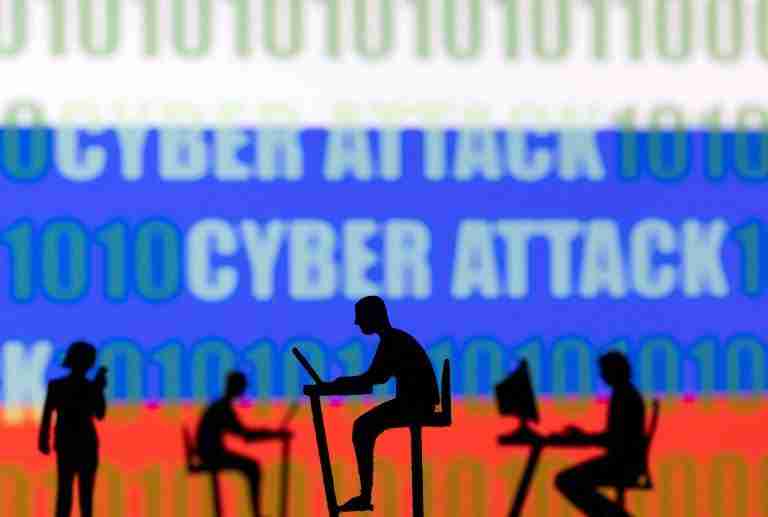
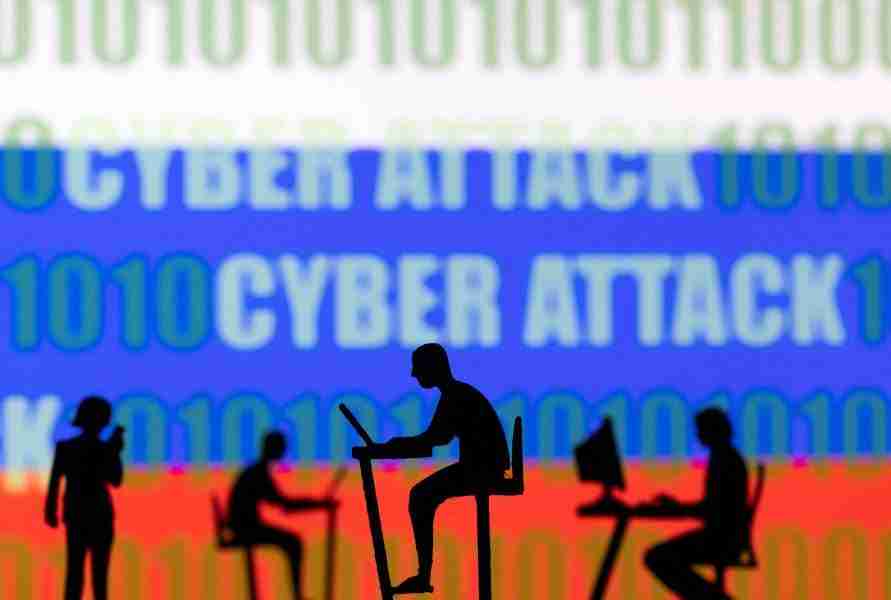
FILE PHOTO: Figurines with computers and smartphones are seen in front of the words “Cyber Attack”, binary codes and the Russian flag, in this illustration taken February 15, 2022. REUTERS/Dado Ruvic/Illustration/File Photo
International news via Reuters:
Russia is increasing its hybrid attacks aimed at undermining society in the Netherlands and its European allies, and Russian hackers have already targeted the Dutch public service, Dutch military intelligence agency MIVD said on Tuesday.
“We see the Russian threat against Europe is increasing, including after a possible end to the war against Ukraine,” MIVD director Peter Reesink said in the agency’s annual report.
“In the Netherlands, we saw the first (Russian) cyber sabotage act against a public service, with the aim of gaining control of the system. It was thwarted, but it was the first time.”
The MIVD did not specify what public service had been targeted.
The agency also found a Russian cyber operation against critical infrastructure in the Netherlands, possibly as preparation for sabotage, the report said.
Western countries have in recent years said hybrid threats by Russia and China were becoming increasingly more aggressive.
Such threats could include everything from physical sabotage of critical infrastructure to disinformation campaigns, espionage and cyber attacks in a bid to influence or undermine society, the agency said.
It repeated its warnings of Russian entities mapping infrastructure in the North Sea for espionage, and acts of sabotage aimed at internet cables, water and energy supplies.
Britain’s foreign spy chief accused Russia in November of a “staggeringly reckless campaign” of sabotage in Europe, ranging from repeated cyber attacks to arson.
Moscow has denied responsibility for all such incidents. Beijing routinely denies allegations of cyber espionage.
CHINA THREAT
China also still poses a serious threat to Europe through its support for Russia’s war efforts and aggressive stance towards Taiwan, the report said. It was continuing its efforts to gain Western knowledge through investments and espionage, especially in the Dutch semiconductor industry, it added.
The MIVD said last year Chinese cyber espionage was more extensive than initially thought, targeting Western governments and defence companies.
Reesink reinforced the message shared by European allies that the military needed to be scaled up.
“If you look at the speed at which Russia is increasing its military complex, its equipment, its artillery, it’s by far much faster than we do in Europe, even in the U.S. So that creates a sort of window of vulnerability for us,” he said.
He emphasized the “need to speed up and make sure that we have the same pace as they have to at least be deterrent enough.”
Reporting by Anthony Deutsch and Bart Meijer; Editing by Aidan Lewis and Bernadette Baum
Proposed law follows a landmark ruling by Britain’s highest court last Wednesday
FILE PHOTO: A pedestrian walks past the New Zealand Parliament Buildings in Wellington, New Zealand, June 14, 2022. REUTERS/Lucy Craymer
International news via Reuters:
Minority coalition partner New Zealand First introduced a bill to parliament on Tuesday that if enacted would define women and men by their biology, preventing trans women and men being recognised by law.
The populist New Zealand First member’s bill is a longshot to become law as it has to be selected at random from a ballot and then garner majority support in parliament.
New Zealand First leader Winston Peters said in a statement that laws should reflect biological reality and provide legal certainty.
“The need for legislation like this shows how far the deluded left has taken us as a society. But we are fighting back,” said Peters, who is also New Zealand’s deputy prime minister.
New Zealand opposition leader Chris Hipkins told Stuff news that the gender bill was “typical populist politics” and that at a time when New Zealanders are struggling with the cost of living, job losses and a health system in crisis, this was not a priority.
The legislation the bill intends to amend sets out how terms and words commonly used in other legislation should be interpreted, such as “de facto partner”.
The proposed law follows a ruling by Britain’s highest court last Wednesday that only biological and not trans women meet the definition of a woman under equality laws. It was a landmark decision greeted with concern by trans supporters but welcomed by the government as bringing clarity.
The British ruling centred on whether a trans woman with a gender recognition certificate (GRC), a formal document giving legal recognition of someone’s new gender, is protected from discrimination as a woman under Britain’s Equality Act.
Transgender rights have become a highly political issue in many countries, with some critics saying the conservative right has weaponised identity politics to attack minority groups, while others argue that liberal support for transgender people has infringed on the rights of biological women.
In the United States, legal challenges are underway after President Donald Trump issued executive orders that include barring transgender people from military service.
Reporting by Lucy Craymer; Editing by Michael Perry
Since the April 7 slump, Chinese ETFs have received more than 230 billion yuan of flows
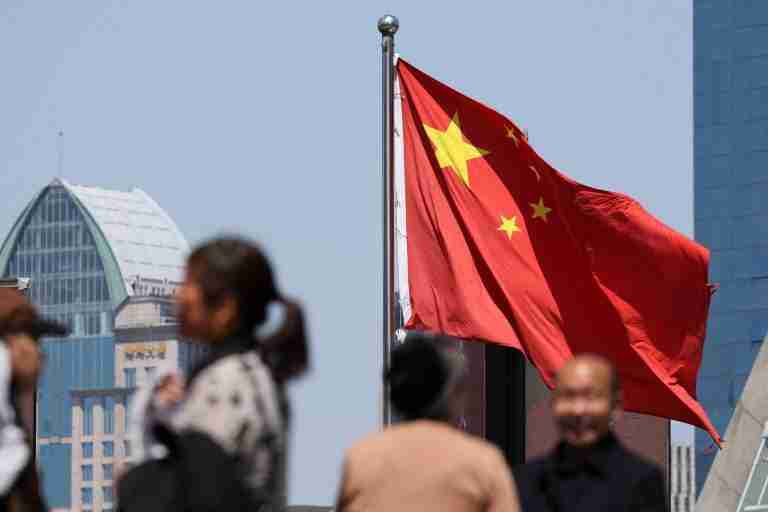
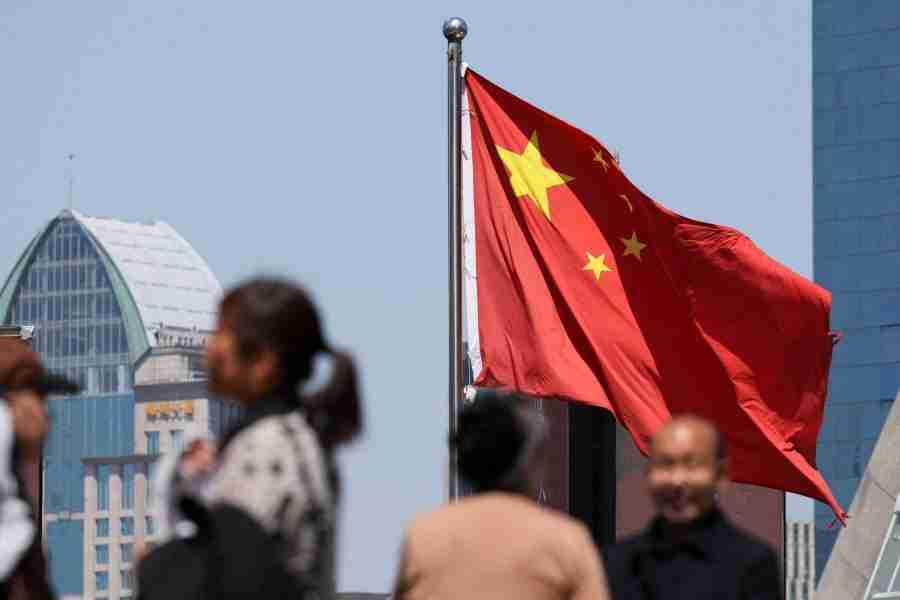
FILE PHOTO: A Chinese national flag flies as people walk on a pedestrian bridge at the Lujiazui financial district in Shanghai, China April 15, 2025. REUTERS/Go Nakamura/File Photo
International news via Reuters:
Cao Mingjie had never traded stocks before Donald Trump’s “Liberation Day”.
The home designer from China’s southern Guangdong province changed his mind after April 2, when the U.S. president announced “reciprocal tariffs”, intensifying a trade war with his country.
Keen to show solidarity with Beijing, Cao decided he would invest 2,000 yuan ($274) in the local stock market every month.
“The goal isn’t to make money. It’s about contributing to my country,” said Cao. He said he opened trading accounts after the higher tariffs hit Chinese stocks. In this trade war, “every individual should stand by the country until the end”.
Like Cao, many retail investors are joining the state-backed “national team” to defend the stock market – another battlefield in the broadening Sino-U.S. conflict, traders and brokers say. Buying has been focused on sectors set to benefit from China’s national agenda, such as defence, consumer and semiconductors.
The patriotic fervour is unusual in small investors, notorious for their casino mentality, and a welcome change for authorities seeking to counter the panic caused by the trade war and stabilise capital markets.
Since the rout on April 4, China’s share markets have received 45 billion yuan in net retail inflows, data from financial information provider Datayes shows. That compares with six straight sessions of outflows totalling 91.8 billion yuan ahead of Trump’s “Liberation Day”.
Previously, private and state investors clashed during the 2015 market crash and in the aftermath of Beijing’s crackdown of technology companies, undermining market rescue efforts.
But now, their interests appear aligned as Trump threatens eye-popping import tariffs that China has described as “bullying”, even if some retail investors are merely opportunistic and riding on Beijing’s swift and resolute intervention.
As China stocks plunged 7% on April 7, state-backed institutional investors publicly vowed to buy more shares, top Chinese brokerages pledged to steady prices, and a slew of listed companies unveiled share buyback plans.
Last week, Chinese Premier Li Qiang urged government officials to strengthen efforts to steady the stock market.
China’s stock market has bounced 8% from seven-month lows hit early April, and is down just 1.3% so far this month. That compares with a slump of more than 8% for U.S. stocks.
“We think China’s A-share market is of greater strategic importance,” said Meng Lei, China equity strategist at UBS Securities. Patriotic bets have “meaningfully improved investor sentiment”, Meng said.
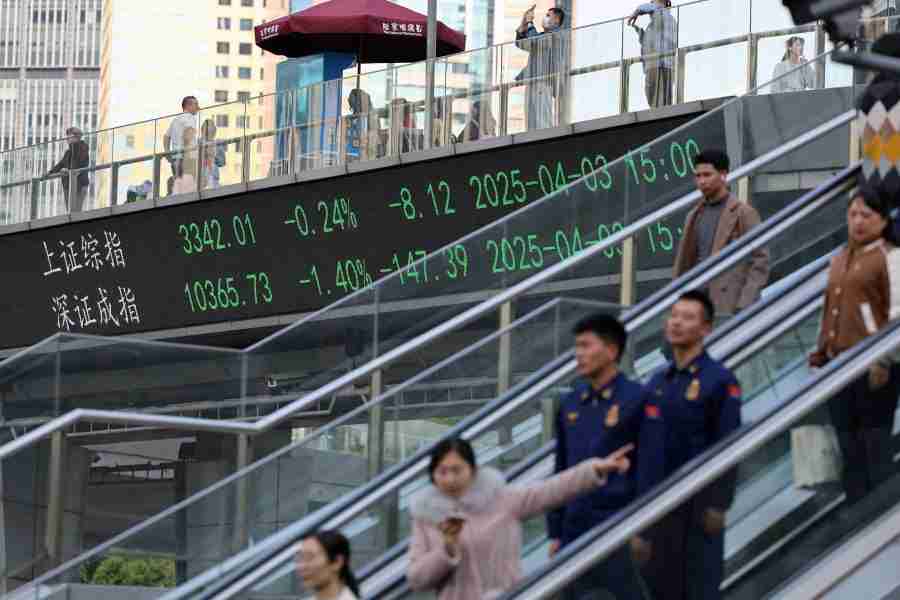
FILE PHOTO: FILE PHOTO: An electronic board shows Shanghai and Shenzhen stock indices as people walk on a pedestrian bridge at the Lujiazui financial district in Shanghai, China April 3, 2025. REUTERS/Go Nakamura/File Photo/File Photo
‘BEING PATRIOTIC MEANS HOLDING ON’
Zhou Lifeng, from China’s northwestern Ningxia region, has vowed to pour more cash into stocks even if he incurs losses.
“Being patriotic means holding on to your stocks,” said Zhou, a mountain climber. Zhou said he owns mostly consumer and defence stocks worth 3 million yuan and has 7 million yuan cash in his war chest.
Restaurant operator Shu Hao said he had also invested several million yuan in Chinese shares and that he was inspired by efforts made by domestic retail giants to help exporters bruised by the trade war.
JD.com, Alibaba-owned Freshippo, and supermarket operators CR Vanguard and Yonghui Superstores have announced measures to help exporters pivot to the local market.
“People are expressing patriotism in various ways,” said Shu. He said he had bought technology and consumer shares.
The stocks and sectors people are buying into reflects nationalistic pride. They are mostly areas in which Beijing has self-sufficiency targets or have local champions that are being shut out of global markets due to the tariffs.
Reflecting this, consumer and chipmaking shares have risen since Trump’s “Liberation Day” despite weaker broader markets, while tourism and agriculture-related shares have recovered quickly.
Exchange-traded funds, an increasingly popular investment conduit in China, have received piles of money.
Since the April 7 slump, Chinese ETFs have received more than 230 billion yuan of flows, pushing the total size of the segment past 4 trillion yuan for the first time, state media has reported. The data does not show how much of those inflows were from retail investors, versus the “national team”.
‘WAR … WITHOUT GUN SMOKE’
Patriotism is also reshaping the portfolio of some professional investors.
Hedge fund manager Yang Tingwu said he ploughed all the cash left in his portfolio into stocks.
“This is war, only without gun smoke,” Yang, portfolio manager at Tongheng Investment said, referring to the spiralling trade conflict between China and the U.S. that has seen tit-for-tat levies surging past 100%.
“You’re placing bets not just on your portfolio, but also on the fate of your country,” said Yang, who has wagered on farming, energy, finance and defence stocks.
Founder of Shanghai-based Minority Asset Management, Liam Zhou, said he had invested his $1 billion portfolio entirely in China stocks.
The trade war has even turned some Chinese investors nationalistic.
“My portfolio is bleeding, but I don’t care. I’ll stand firm with the government in the fight against U.S. bullying,” said Nancy Lu, a teacher in eastern Jiangsu province. She vowed to never go to Starbucks or wear Nike again, in a boycott of American brands.
“I won’t sell a single stock. I’ll help defend the market for our country. I have never felt so proud as a retail investor,” she added.
($1 = 7.2917 yuan)
(This story has been corrected to say that restaurant operator Shu Hao invested several million yuan in Chinese shares, not several hundred million, in paragraph 16)
Reporting by Samuel Shen in Shanghai and Tom Westbrook in Singapore; Editing by Vidya Ranganathan and Himani Sarkar
He is one of at least 10 Americans behind bars in Russia following RU-US prisoner swap
U.S. citizen Robert Woodland, arrested on suspicion of drug trafficking, sits behind a glass wall of an enclosure for defendants before a court hearing in Moscow, Russia May 30, 2024. REUTERS/Maxim Shemetov/File Photo
International news via Reuters:
A Russian court on Tuesday ordered that the jail sentence of a U.S. citizen convicted of drug trafficking be reduced to 9-1/2 years from 12-1/2, the man’s lawyer told Reuters.
Robert Woodland was found guilty in July 2024 of attempting to sell drugs after he was arrested while transporting about 50 grams of mephedrone, a stimulant drug in the same class as amphetamine, to a safe cache in Moscow, prosecutors said.
His lawyer, Stanislav Kshevitsky, previously told Reuters that Woodland had partially admitted guilt.
It was not immediately clear why his sentence was lowered.
Born in Russia in 1991 and adopted as a toddler by American parents, Woodland returned to his birth country as an adult to meet his biological mother, he told a Russian newspaper in 2020.
Woodland is one of at least 10 Americans remaining behind bars in Russia following a prisoner swap between Moscow and Washington earlier this month.
That exchange saw the freeing of Ksenia Karelina, a dual Russian-U.S. citizen and Los Angeles spa worker serving a treason sentence, for Arthur Petrov, a German-Russian citizen accused by Washington of exporting sensitive microelectronics from the U.S. to Russia.
Earlier this month, a different Russian court slightly reduced the sentence of U.S. soldier Gordon Black, who was jailed last year for stealing $113 from his girlfriend and threatening to kill her.
Reporting by Reuters; Writing by Lucy Papachristou; Editing by Bernadette Baum
To provide the best experiences, we use technologies like cookies to store and/or access device information. Consenting to these technologies will allow us to process data such as browsing behavior or unique IDs on this site. Not consenting or withdrawing consent, may adversely affect certain features and functions.
Functional
Always active
The technical storage or access is strictly necessary for the legitimate purpose of enabling the use of a specific service explicitly requested by the subscriber or user, or for the sole purpose of carrying out the transmission of a communication over an electronic communications network.
Preferences
The technical storage or access is necessary for the legitimate purpose of storing preferences that are not requested by the subscriber or user.
Statistics
The technical storage or access that is used exclusively for statistical purposes.The technical storage or access that is used exclusively for anonymous statistical purposes. Without a subpoena, voluntary compliance on the part of your Internet Service Provider, or additional records from a third party, information stored or retrieved for this purpose alone cannot usually be used to identify you.
Marketing
The technical storage or access is required to create user profiles to send advertising, or to track the user on a website or across several websites for similar marketing purposes.