The aircraft was flying to the Loisaba Conservancy when it crashed, according to a preliminary report from Archers Post police station seen by Reuters
International News via Reuters:
Seven people, a pilot and six tourists, were killed on Wednesday when the helicopter they were flying in crashed in Kenya’s Samburu county, a police report showed.
The aircraft was flying to the Loisaba Conservancy when it crashed, according to a preliminary report from Archers Post police station seen by Reuters.
The police report did not give the nationalities of the tourists.
Luxury tour agency &Beyond confirmed that a helicopter carrying its guests had crashed near Mount Ololokwe. The company said in a statement that local authorities were investigating and that the cause of the crash was yet to be determined.
Reporting by Humphrey Malalo and Vincent Mumo Nzilani in Nairobi, Elias Biryabarema in Kampala and Nilutpal Timsina in Johannesburg;Editing by Alexander Winning and Alex Richardson
Europe’s seas have not escaped the extreme heat that many countries have endured this summer
International News via Reuters:
Human-caused climate change was the main driver of recent record-breaking sea temperatures around Europe, scientists said on Wednesday, warning of severe consequences for marine ecosystems and coastal communities.
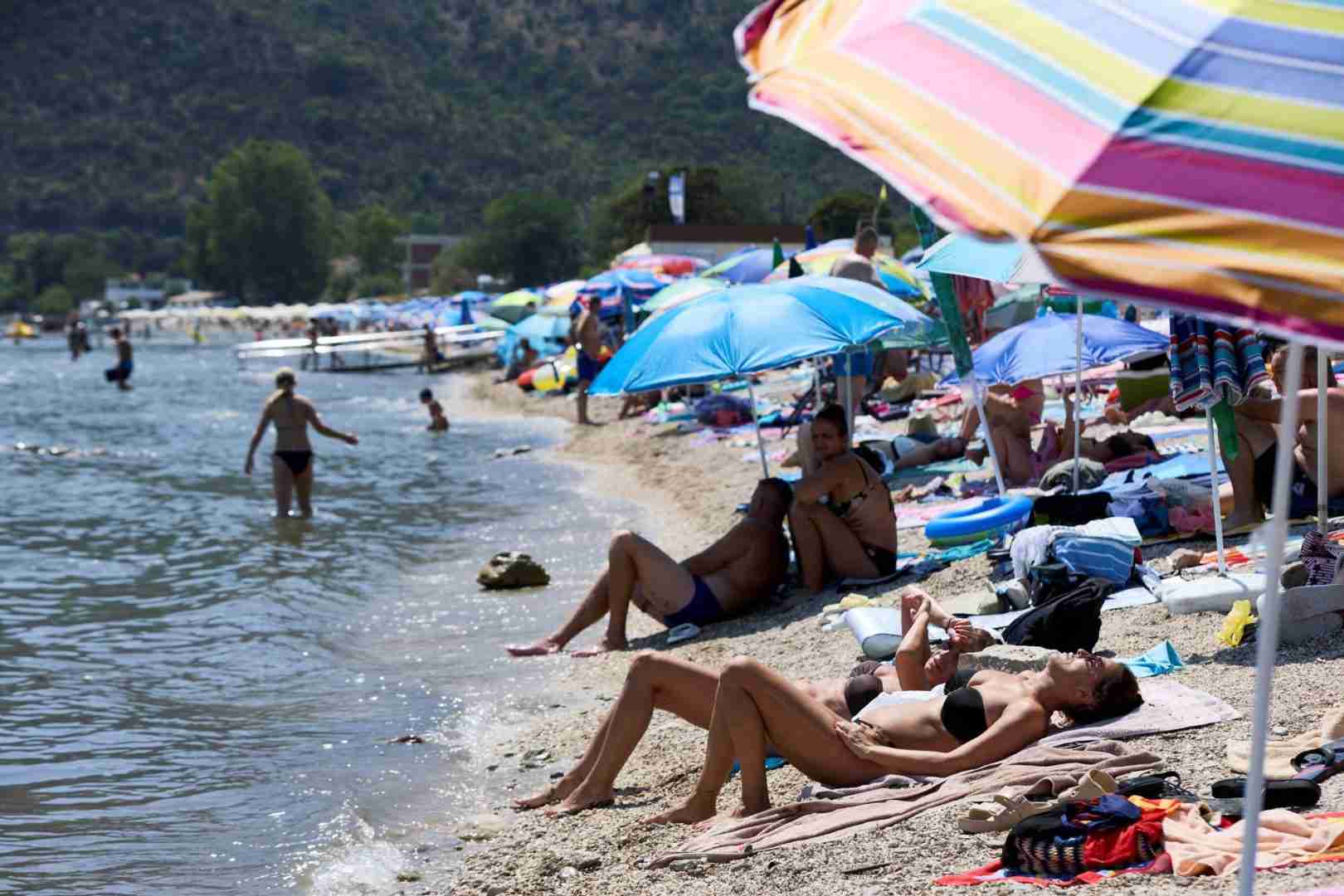
Europe’s seas have not escaped the extreme heat that many countries have endured this summer. Last month, the average temperature in the Mediterranean was 27 degrees Celsius (81 degrees Fahrenheit), the highest for any July on record, while an offshore buoy near Mallorca recorded 33 C in early August.
Human-caused climate change has added about 2 C of warming to the Mediterranean and around 1.4 C to Western European seas, according to an analysis by the World Weather Attribution (WWA) group, which uses peer-reviewed methods to assess global warming’s role in extreme weather events.
“This has the potential to completely reshape ecosystems that coastal communities rely on for food and income, and drive damaging extreme weather on land too,” said Claire Bergin, a climate scientist at Ireland’s Maynooth University and a co-author of the study.
The analysis found that peak sea temperatures recorded this year in the eastern and western Mediterranean and along the Bay of Biscay and Iberian coast would have been “virtually impossible” without human-caused climate change.
In the Celtic Sea, off Britain and Ireland, the most extreme temperatures recorded would have been expected only about once a century in a world without human-caused climate change, it found.
Hotter seas increase humidity and overnight temperatures in coastal areas and can help fuel intense storms later in the year.
Greenhouse gas emissions, mainly from burning fossil fuels, have raised the planet’s average temperature to around 1.4 C above pre-industrial levels, according to the World Meteorological Organization. This hotter baseline means the high-pressure atmospheric systems that cause heatwaves can reach higher temperatures.
Sea temperature spikes can cause mass die-offs of species such as corals and disrupt food supplies for birds and mammals, with knock-on effects through food chains.
John Bruno, a marine ecologist at the University of North Carolina, said some species were moving north to seek cooler waters, but not all could adapt.
“We are rapidly approaching the absolute biological limits of adaptation for many species,” he said.
According to the WWA analysis, about 90% of the Bay of Biscay and 80% of the western Mediterranean have experienced marine heatwave conditions this year. Without global warming, that figure would have been closer to 40%.
The U.S. Treasury Department said it would double the size of liquidity support buyback operations for longer-dated nominal coupon securities to at least $4 billion per operation from $2 billion
International News via Reuters:
Global bond yields retreated from multi-decade highs, the dollar tumbled and gold jumped on Wednesday after the U.S. Treasury Department said it would boost liquidity support for longer-dated securities, following a broad selloff fueled by fears over swelling sovereign debt.
The U.S. Treasury Department said it would double the size of liquidity support buyback operations for longer-dated nominal coupon securities to at least $4 billion per operation from $2 billion.
U.S. long-dated government yields fell by as much as 10 basis points, dragging European government bond yields down too. U.S. long bonds had hit their highest in nearly 20 years on Tuesday, at nearly 5.34%, reflecting growing concerns about inflation and high debt.
The drop in yields boosted stocks. The Nasdaq Composite gained 0.39%, the S&P 500 was up 0.58% and the Dow Jones Industrial Average rose 0.58%. MSCI’s gauge of stocks across the globe increased 0.18%.
The dollar index, which measures the greenback against a basket of currencies, including the yen and the euro, fell 0.71% to 98.93, with the euro up 0.74% at $1.166. Spot gold spiked 3.42% to $4,481.85 an ounce.
“I think it goes to show a pretty strong acknowledgement from the administration that there’s an inconsistent amount of demand, especially in off-the-run securities in the very back end of the Treasury curve,” said Michael Lorizio, head of U.S. rates and mortgage trading at Manulife Investment Management in Boston.
The Treasury launched the buyback program in May 2024 to help improve liquidity in the $32 trillion Treasury market, with so-called off-the-run securities—older issues that trade less frequently—seeing the weakest demand.
Yields rise when bond prices fall. Because long-end sovereign yields act as a benchmark for the pricing of nearly every other asset class, including mortgage rates, sharp increases in yields pose a broader risk to the economy.
HOPES FOR PEACE IN IRAN RECEDE
Oil prices gained as the prospect receded of a deal to end the conflict in the Middle East. [O/R]
U.S. crude rose 1.55% to $86.26 a barrel and Brent rose to $92.07 per barrel, up 1.15% on the day.
Long-term borrowing costs from the U.S. to Germany and Japan have soared as investors grow increasingly anxious about ballooning government debt and elevated inflation, pressures compounded by the Iran conflict’s impact on oil prices.
German and French long-dated bond yields, which had earlier risen to their highest in 15 and 18 years respectively, traded lower on the day.
“What we’ve seen in the course of recent days is that the long end of the bond market has obviously been selling off and potentially becoming somewhat problematic for the play through to other asset classes,” Jeremy Stretch, head of G10 FX strategy at CIBC, said.
“Clearly, the Treasury Secretary has to be mindful of those risks and has made adjustments. That’s why we are (now) seeing U.S. 30-year Treasury yields down sharply and the dollar cheapening.”
A rise in Japan’s benchmark 10-year bond yield toward 3%, a three-decade high, is also a warning sign for global debt markets that for years have depended on low Japanese rates driving a constant flow of Japanese investment abroad.
Later on Wednesday, the U.S. Federal Reserve releases minutes from the July meeting. The central bank left rates on hold, but Chairman Kevin Warsh unsettled markets by offering few clues on how policymakers might respond to persistent inflation.
UNITREE SOARS ON DEBUT
In China, shares in the world’s biggest humanoid-robot maker, Unitree, soared 460% on its debut, a listing that was more than 8,000 times oversubscribed by retail investors.
Earlier, stocks across Asia fell on concerns about the outlook for semiconductor companies. South Korean shares closed nearly 6% lower, posting their biggest one-day drop in three weeks.
Reporting by Iain Withers and Dhara Ranasinghe, Additional reporting by Tom Westbrook; Editing by Shri Navaratnam, Sam Holmes, Elaine Hardcastle, Barbara Lewis and Aurora Ellis
Under the terms of the deal, Pinewood shareholders will receive £4.48 per share in cash, representing a 43% premium to the company’s closing share price on July 23, the day before the proposal was tabled
International News via Reuters:
Pinewood Technologies has agreed to U.S. private equity firm Ridgeview’s £545 million ($738.86 million) takeover offer, the British company said on Wednesday, adding to a string of take-private deals for UK-listed firms.
Here are some details:
• Under the terms of the deal, Pinewood shareholders will receive £4.48 per share in cash, representing a 43% premium to the company’s closing share price on July 23, the day before the proposal was tabled.
• U.S. private equity firms continue to target UK-listed companies, attracted by lower valuations and opportunities to fund long-term growth away from the scrutiny of public markets.
• San Francisco-based Ridgeview said private ownership would give Pinewood greater flexibility to invest in data and AI-driven innovation, while supporting its expansion in North America and other markets.
• Shares of the UK company, which have gained about 22% so far this year, were trading up 3.6% at 442.5 pence as of 0828 GMT.
• In January, Pinewood said it was set to agree to a £575.5 million deal with Apax Partners if a firm offer was tabled, before the private equity firm withdrew its bid citing challenging market conditions.
($1 = 0.7376 pounds)
Reporting by Atharva Singh in Bengaluru; Editing by Mrigank Dhaniwala and Harikrishnan Nair
The forecast comes after data on Wednesday showed a previous increase in energy bills pushed British inflation to a four-month high in July
International News via Reuters:
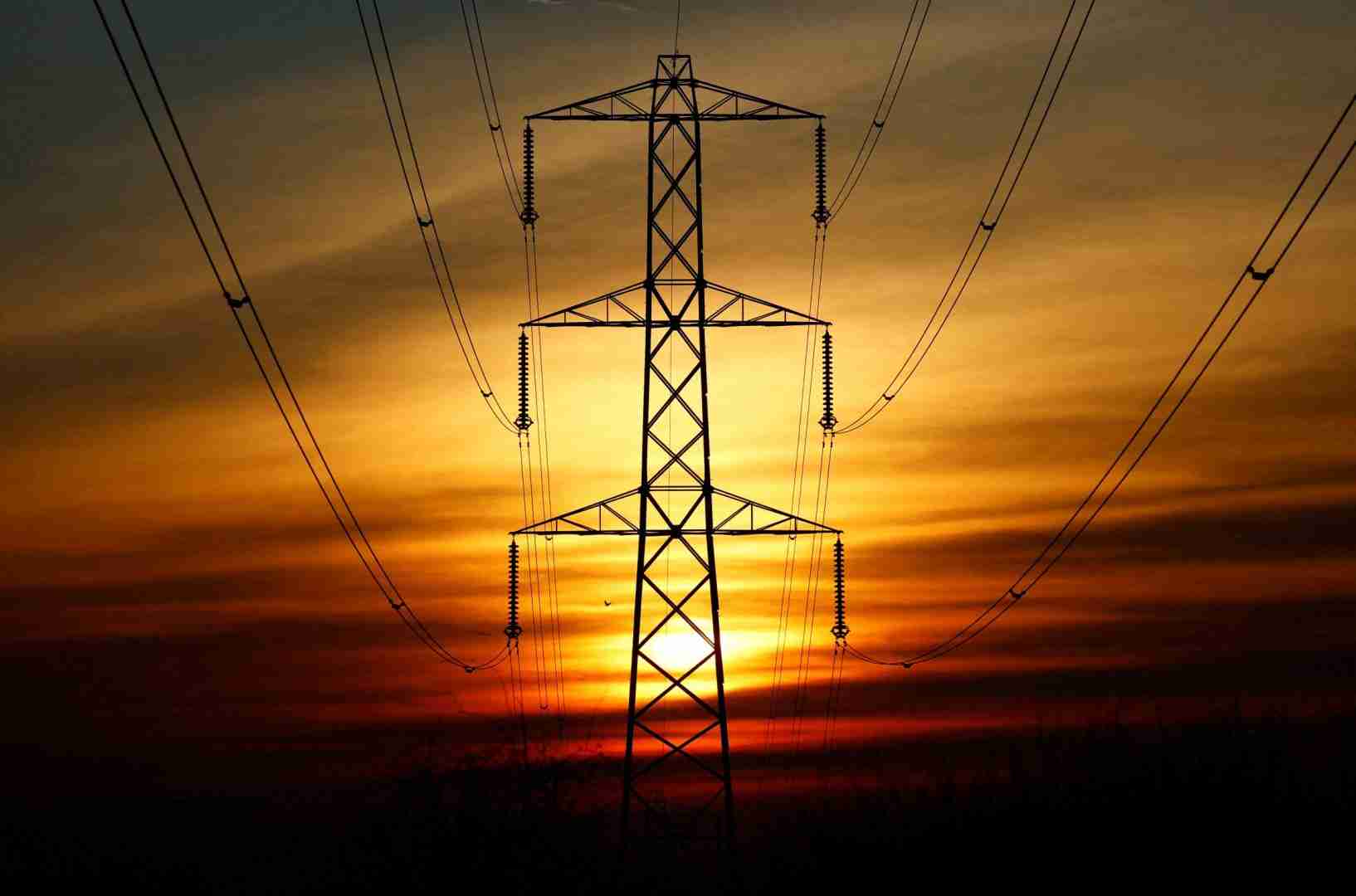
Britain’s domestic energy price cap is forecast to rise about 4% in October to a three-year high, analysts at Cornwall Insight said on Wednesday, with higher wholesale costs due to the Iran war expected to wipe out the government’s tax cut on electricity bills.
• The forecast comes after data on Wednesday showed a previous increase in energy bills pushed British inflation to a four-month high in July.
• New British Prime Minister Andy Burnham said a 5% tax on electricity bills would be removed from October 1 as part of efforts to ease cost-of-living pressures, but this does not apply to gas costs which are also included in the price cap.
• “This increase is being driven by ongoing uncertainty over the U.S.-Iran conflict, with wholesale prices for the coming winter having risen to their highest level in almost four years,” Cornwall Insight said.
• Disruptions to shipping in the Middle East and liquefied natural gas exports from Qatar, one of the world’s largest gas exporters, combined with increased demand for power across Europe due to heatwaves, have led to a surge in international gas prices.
• Cornwall Insight forecasts energy regulator Ofgem’s price cap will rise in October to £1,729 ($2,344) a year for typical use, up £66 from £1,663 in July.
• A government spokesperson said tackling the cost of living remains a priority for the government which, in addition to the tax cut from October, shifted some levies to cut around £150 from an average bill in April and last year extended the scope of a scheme to support the most vulnerable households called the warm homes discount.
• Wholesale energy prices are the largest single factor contributing to British energy regulator Ofgem’s domestic price cap, which is set on a quarterly basis using a formula that also reflects suppliers’ network costs and environmental and social levies.
• Ofgem is expected to publish the next price cap level by August 26.
($1 = 0.7376 pounds)
Reporting by Susanna Twidale. Editing by Mark Potter
Iceland won the series of confrontations known as the Cod Wars, and control of those waters became the foundation of the volcanic island’s economy
International News via Reuters:
Gylfi Geirsson and Sigurbjorn Svavarsson cut British fishing trawl wires and dodged Royal Navy frigates on board small Icelandic coastguard vessels 50 years ago, using guerrilla-like tactics to keep foreign fleets out of their waters.
Iceland won the series of confrontations known as the Cod Wars, and control of those waters became the foundation of the volcanic island’s economy.
Half a century later, the fear of losing control is at the heart of an August 29 referendum on whether to reopen membership talks with the European Union.
For many, the vote boils down to a trade-off: whether lower interest rates and a seat at Europe’s table are worth ceding some control over the fisheries and self-determination that defined Iceland’s independence since it broke away from Denmark eight decades ago.
CONCERNS OVER TRUMP AND COST OF LIVING
Public debate ahead of the vote is deeply rooted in fishing rights but now also focusing on the cost of living and President Donald Trump’s threats to acquire neighbouring Greenland, which has raised questions over Iceland’s own defences.
“The situation as I find it today is that it’s the fear that we might lose control of what we fought for,” said Svavarsson, who served as a first mate on the coastguard vessel Aegir in 1976 at the height of the Cod Wars and will likely vote against restarting talks.
Iceland had applied to join the EU in 2009, in the wake of a banking collapse the previous year, and spent four years negotiating before a new eurosceptic government shelved the process in 2013.
POLLING EVENLY SPLIT
“I will definitely say yes,” said Geirsson, a radio operator during the confrontations with Britain who went on to spend 42 years in the coastguard, later representing Iceland in international fisheries negotiations.
“We cannot be like an isolated island out in the middle of nowhere. We have to have cooperation with neighbouring countries,” he said, adding he would at least like to see what deal could be reached before deciding.
But if Iceland were to lose control of its fishing grounds after negotiating a deal with the EU, he would vote against joining.
“I would feel that what I did as a young man was for nothing,” he said.
The ballot is not a vote on membership and any accession treaty would require a second referendum.
A Gallup poll this month found voters split on restarting talks: 46% said they would vote yes and 46% no, with 8% undecided. Polls show a majority against actually joining the bloc.
FISHING AS IDENTITY
Fisheries remain central to Iceland’s economy and identity alike, alongside aluminium and tourism. Much of the cod eaten in British fish and chip shops today comes from Icelandic waters, a legacy of the very dispute that Geirsson and Svavarsson fought.
“The fishery becomes a symbol of Iceland’s sovereignty, as it is the foundation to Iceland’s economic independence,” said Eirikur Bergmann, professor of politics at Bifrost University.
Heidrun Marteinsdottir, head of industry association Fisheries Iceland, said the sector processed its catch entirely in Iceland rather than exporting it raw — a system she warned joining the EU’s Common Fisheries Policy could unravel. “We have 100% of the profit in Iceland and we want to keep it that way,” she said.
No foreign minister, Bergmann said, could ever sign a treaty ceding control: “That person would be expelled from the country.”
For others, the stakes have little to do with fish at all. “We used to be a colony for Denmark,” said Floki, a 27-year-old designer in Reykjavik, who declined to give his last name. “I think it revolves around mostly keeping control of our own choices and decisions as a country.”
SECURITY AND RUSSIA
Iceland sits on a geopolitical bottleneck, straddling the so-called GIUK gap between Greenland, Iceland and Britain that NATO has long treated as a crucial doorway for watching Russian naval movements toward the open ocean.
The country has no army of its own, and its defence rests on NATO membership and a bilateral agreement with Washington signed in 1951.
Experts say, however, that Trump’s presidency, including his tariffs and threats to acquire Greenland, has forced Icelanders to reassess assumptions once taken for granted — although the decision to hold the referendum predates Trump’s second term.
“The whole Greenland thing has made Icelanders pause and re-examine the relationship with the U.S. and asking the question whether the U.S. is a reliable partner … that has never been a concern in Iceland until now,” Bergmann said.
Foreign Minister Thorgerdur Gunnarsdottir told Reuters NATO and the U.S. defence pact would remain the foundation of Iceland’s security regardless of the vote’s outcome, but that membership could still be “a valuable addition”, particularly for economic security.
On Trump’s threats to Greenland, she said: “We are disappointed with the pressure campaign waged against both Greenlanders and Denmark.”
But the bigger worry, she said, lay elsewhere. “Our main concern is focused on Russia’s activities, in Ukraine primarily but also their maritime activities in our waters and nearby, in the North Atlantic.”
Reporting by Stine Jacobsen and Tom Little; Additional reporting by Louise Rasmussen; Editing by Alison Williams
Shares in Trainline, the only listed company of the three firms, were down nearly 17% to 202.4 pence at 1108 GMT, underperforming the wider market
International News via Reuters:
Britain’s competition regulator is investigating whether Virgin Atlantic, Trainline and RED Driving School were transparent in disclosing total pricing when customers made bookings, it said on Wednesday.
Shares in Trainline, the only listed company of the three firms, were down nearly 17% to 202.4 pence at 1108 GMT, underperforming the wider market.
The UK Competition and Markets Authority said it launched the investigation after it received letters raising concerns that customers had not been shown the total price upfront when buying train and coach tickets, holidays or driving lessons.
The regulator said its investigations were at an early stage and had yet to reach any conclusion on whether the firms had broken the law.
Rail and coach ticketing operator Trainline said it has proactively engaged with the CMA over several months and is taking steps on how it presents certain fees, adding it will continue to work to ensure transparency.
British carrier Virgin Atlantic said it was reviewing the concerns and will cooperate with the regulator.
RED said it was disappointed to be named in the investigation, but added it would continue to engage with the CMA through the probe.
The watchdog said that if it finds that the businesses had broken the law, it could order them to pay compensation to affected customers, as well as fine them up to 10% of their global turnover.
“Clear pricing helps people compare offers confidently and choose the option that works best for them. Unexpected mandatory charges make this much harder,” said Emma Cochrane, executive director for consumer protection at the CMA.
“At a time when many households are watching every pound they spend, it is important that people are not surprised by extra fees.”
Reporting by Prerna Bedi in Bengaluru; additional reporting by Anushka Chourasia; Editing by Mrigank Dhaniwala and Barbara Lewis
Around 21,000 of the 330,000 Haitians in the United States under TPS worked as caregivers and nursing assistants as of last year, serving around 77,000 patients, according to an analysis of U.S. census data by Philip Connor, a research fellow at Princeton University
International News via Reuters:
Richie Rosen, 43, was born with a rare genetic condition called Williams syndrome. His hands are weak and unreliable. He longs for human connection but gets anxious in social situations and is easily upset.
For four years, a Haitian caregiver named Tassy helped him navigate day-to-day life at a group home for developmentally disabled men in upstate New York – cooking for him, driving him around and making difficult chores more manageable.
But on July 27, Jawonio, the nonprofit that runs the facility, terminated Tassy’s contract after the Trump administration ended Temporary Protected Status for Haitians and the work authorization that came with it.
“I miss him a lot,” Rosen told Reuters last week, sitting in his room at the home in Rockland County, a leafy suburb north of New York City. “I miss him just saying hi to me all the time.”
Around 21,000 of the 330,000 Haitians in the United States under TPS worked as caregivers and nursing assistants as of last year, serving around 77,000 patients, according to an analysis of U.S. census data by Philip Connor, a research fellow at Princeton University.
Their abrupt removal from the healthcare industry has placed additional strain on a system already struggling to meet the needs of the fast-aging U.S. population. It also came as a shock to families that relied on them.
Richie’s mother, Sharon Rosen, said Tassy was “like family” to her son, who never got the chance to say goodbye to his longtime aide.
“My heart is breaking for him and for my son,” she said.
Reuters was unable to reach Tassy for this story and is using only his first name due to his vulnerable legal status.
Jawonio was forced to lay off nearly two dozen Haitians last month, totaling 7% of its staff. Most of those affected provided round-the-clock care for disabled patients for around $20 per hour, just a few dollars above New York’s minimum wage.
“These are among the most difficult positions to fill,” Jawonio’s CEO, Randi Rios-Castro, told Reuters in response to emailed questions.
“This has never been just an immigration issue,” she wrote of the decision to end TPS. “It is a healthcare workforce issue for us and our country.”
‘PATIENT CARE SUFFERS’
The United States granted humanitarian protection to Haitians following a devastating earthquake in 2010.
The Trump administration cited improving conditions in Haiti as a reason for ending the program, though the country remains among the most unstable in the Western Hemisphere.
Haiti has not held elections since 2016; its last president was assassinated in 2021. Gang violence has convulsed the capital. 1.4 million people are displaced from their homes, the U.N. said last year, and about 6 in 10 live in poverty.
No longer able to legally work in the United States, former TPS holders can now return to Haiti voluntarily — or try to stay in the U.S. and risk arrest and deportation.
New York state had the second-largest number of Haitian TPS holders after Florida, one of the country’s most popular retirement destinations.
Weeks before TPS was set to expire, Emmett Reed, CEO of the Florida Health Care Association, sent a letter to Department of Homeland Security Secretary Markwayne Mullin urging him to consider an exemption for long-term caregivers.
“Florida is home to one of the nation’s largest and fastest-growing older adult populations, and demand for long-term care services continues to increase each year,” Reed wrote in the letter.
The loss of Haitian workers risked “causing a ripple effect that could overwhelm our local hospitals and the entire healthcare system,” he continued.
Nancy Hagans, president of the New York State Nurses Association, moved to the U.S. from Haiti as a child and works at a hospital in Brooklyn. At an August 5 vigil held outside Maimonides Medical Center to protest staffing shortages, she compared the impact of ending TPS to the workforce deficit during the COVID-19 pandemic.
“When healthcare workers live in fear of going to work, patient care suffers,” Hagans told the crowd.
Responding to questions from Reuters, the Department of Homeland Security said it was “grossly false and lazy” to assert the healthcare industry relied on immigrants, adding that “for too long, TPS has been allowed to function as a de facto amnesty program.”
Jawonio has appealed for help to Republican Congressman Mark Lawler, who represents Rockland County in New York’s lower Hudson Valley, home to an estimated 11,000 Haitians.
Lawler, facing a competitive race in November’s midterm elections, has opposed stripping Haitians of protections despite being a backer of Trump and his hardline immigration agenda.
His office said he is working with Jawonio and other local groups to find alternative legal statuses for Haitian TPS holders.
“Losing these experienced workers creates real staffing challenges for providers who were already facing shortages and risks disrupting care for vulnerable residents,” Lawler’s spokeswoman Caroline Hunt wrote in an email to Reuters.
FAMILY FILLS IN
At the group home in Rockland County, staffers are picking up extra shifts after the departures of Tassy and Marc, another former Haitian caregiver.
For the Rosens, the loss feels personal.
Sharon, 77, said she told her son that Tassy might have to leave because of new immigration policies. But she didn’t expect it to happen overnight.
Now, she and her 81-year-old husband are trying to help fill the gaps, including driving him to his job at a nearby grocery store.
Rosen, asked to recall the moment he learned his aide was gone, didn’t want to discuss it.
“I hope one day I can see him again,” he said.
Reporting by Maria Tsvetkova; Editing by Jesse Mesner-Hage and Aurora Ellis
The trend can mean investment in underprivileged areas where governments are trying to stimulate jobs and growth, but the developers also risk opposition from residents concerned about dwindling natural habitats and competition for power and water
International News via Reuters:
Europe’s developers of data centres for artificial intelligence are seeking out less traditional locations away from major cities, where they can benefit from cheaper energy and land and quicker connection times, data analysis seen by Reuters shows.
The trend can mean investment in underprivileged areas where governments are trying to stimulate jobs and growth, but the developers also risk opposition from residents concerned about dwindling natural habitats and competition for power and water.
JLL, one of the world’s largest commercial real estate and property services companies, shared data on plans for hyperscale data centres that are due to come online rapidly over the next two years.
The centres, which do not need to be as close to end-users, will be more than three times further away from major cities than those built in the prior three years.
JLL did not disclose the names of the companies developing the centres, although the world’s largest companies, such as Meta, Google and Microsoft, are investing globally.
SITES IN CITIES BECOME SCARCE
Between 2026 and 2028 the average distance of the sites from a major hub will be 175 kilometres (109 miles) compared with 46 kilometres for projects delivered between 2022 and 2025 as power and land in cities such as London and Frankfurt become scarce.
Greenfield projects account for 39% of Europe’s future pipeline, compared with only 8% of delivered projects, the data showed. At the same time, the share of pipeline projects in inner-city locations is expected to fall to 5% from 13%, with the rest in industrial or edge-of-city locations.
The shift is driven largely by AI training campuses, which require vast amounts of electricity, as well as needing water for cooling.
“The determining factor is increasingly where sufficient power can be secured, rather than simply where demand exists,” said Assad Noori, JLL’s head of data centres in Europe, the Middle East and Africa. “Data centres are being brought to where the power is, not the other way around.”
JLL estimates the world’s four largest hyperscale cloud providers will spend $725 billion in 2026, up 77% from $410 billion in 2025, mostly on AI computing and data-centre infrastructure.
By 2030, AI workloads could account for around half of global data-centre capacity, it added.
Other sources of data-centre analysis supported the trend shown by JLL.
Of nine proposed gigawatt-plus capacity data centres across Europe, just one is planned for near a major city – Paris – with the rest strewn across areas from rural Spain to northern Sweden, according to DC Byte data tracking early stage projects.
While the core markets of Frankfurt, London, Amsterdam, Paris and Dublin remain the largest, and continue to be in demand, they increasingly face land shortages, planning restrictions and lengthy waits for connections to the grid.
“Europe’s core markets will remain critical because enterprise demand isn’t going anywhere,” said Martin Jensen, president of JLL’s EMEA data centres division.
“Hyperscale AI infrastructure requires a completely different scale of power and land,” he added.
According to JLL, powered land costs an average €2.36 million per megawatt of IT load in the core markets, €978,000 in cities regarded as secondary, including Copenhagen, Warsaw and Milan, and €512,000 in tertiary areas such as Bordeaux, where costs can be as low as €200,000.
Amsterdam remains the most expensive market at roughly €2.7 million per megawatt, followed by London at €2.6 million and Frankfurt at €2.5 million.
“London has already seen significant digital infrastructure development driven by cloud and has other asset classes competing for space leading to high land prices. Power is now constrained in the key cloud locations across the market,” said Rupert Duckworth, associate director, EMEA data-centre advisory at real estate firm Savills.
Reporting by Simon Jessop; editing by Barbara Lewis
Annual consumer price inflation rose to 2.9% in July from a 15-month low of 2.6% in June, the Office for National Statistics said on Wednesday, reflecting a 13% rise last month in the maximum tariff British regulators allow energy firms to charge households
International News via Reuters:
A jump in household energy bills pushed British inflation to a four-month high in July, matching forecasts, and it looks set to rise further as the war in Iran grinds on with no end in sight.
Annual consumer price inflation rose to 2.9% in July from a 15-month low of 2.6% in June, the Office for National Statistics said on Wednesday, reflecting a 13% rise last month in the maximum tariff British regulators allow energy firms to charge households.
Economists polled by Reuters had widely expected to see a rise in inflation to 2.9%, although the Bank of England predicted a smaller rise to 2.8% in forecasts published at the end of last month and sees inflation peaking at 3.2% later this year.
The data help explain new Prime Minister Andy Burnham’s continuation of his predecessor’s focus on reducing cost-of-living pressures on British households, although stretched public finances before the government’s annual budget in October offer little room for broad assistance.
DATA MAY REASSURE BANK OF ENGLAND
The Bank of England is likely to be reassured by the absence of nasty surprises in Wednesday’s data, and figures a day earlier showed a slightly cooler labour market, which may limit the lasting impact of inflation caused by the Iran war.
The central bank was burnt by the scale of price rises in 2022 after Russia’s full-scale invasion of Ukraine, which, combined with a tight post-COVID job market, drove British inflation above 11%.
U.S. President Donald Trump said on Tuesday that no talks were taking place with Iran and insisted the Strait of Hormuz was open, contradicting Iran’s assertion that the critical waterway remained shut to shipping.
Sterling and British government bond futures showed little immediate reaction to the inflation figures.
“July marks the start of a gradual rise in inflation but is unlikely to spur the Bank of England into action,” said Yael Selfin, Chief Economist at KPMG, who expects inflation to reach 3.5%.
“Unlike in 2022, when higher energy prices fed into wider cost increases across the economy, softer labour market conditions are helping to limit the scale of a similar pass-through this time around.”
A survey published earlier on Wednesday by human resources data company Brightmine showed the median pay increase awarded by British employers was the smallest since September at 3.2%.
OTHER PRICE MEASURES STEADY OR SOFTEN
Core inflation, which excludes the impact of energy and food prices, came in a little higher than expected at 2.6%, unchanged from June, rather than the 2.5% median Reuters poll prediction.
Services inflation, closely watched by the BoE as a gauge of domestically-generated price pressures, eased as the central bank and economists had expected, to 3.4% in July from 3.6%.
Food and non-alcoholic drink price inflation, which economists had expected to surge after the start of the Iran war, cooled to 1.3% — an almost two-year low and adding to signs that fierce supermarket competition has helped to absorb the shock.
“Iran war inflation continues to impact prices here at home, but Britain’s economy is resilient,” finance minister John Healey said after the data.
Separate official data showed factory gate inflation slowed to an annual 3.1% in July from 3.5% in June.
Input cost growth for manufacturers eased to 4.9% from 7.4% after the ONS’s measure of crude oil prices paid by companies dropped sharply for the second month in a row — although the relief looks set to be temporary, with Brent crude futures up 11% in the last two weeks.
Graphic by Pasit Kongkunakornkul; Editing by Muvija M and Toby Chopra
The blue-chip FTSE 100 index fell 0.1% to 10,711.52 points by 0926 GMT, while the midcap FTSE 250 slipped 0.3% to 24,483.70 points
International News via Reuters:
London shares edged lower on Wednesday as investors assessed an in-line inflation report, while Smith+Nephew fell after announcing the departure of its finance chief.
The blue-chip FTSE 100 index fell 0.1% to 10,711.52 points by 0926 GMT, while the midcap FTSE 250 slipped 0.3% to 24,483.70 points.
• British inflation rose to 2.9% in July, its highest level since March from a 15-month low of 2.6% in June, according to the Office for National Statistics, reflecting a jump in regulator Ofgem’s household energy price cap.
• The data, coming a day after a softer labour market report, raised market bets that the Bank of England will keep rates on hold in September to 82%, from about 75% a day earlier.
• Smith+Nephew fell 3.38% after it said its finance chief John Rogers would step down at the end of September to take up an external position in the U.S., ending his roughly two-and-a-half-year tenure with the medical products company — a departure that comes just weeks after it cut annual revenue growth forecast.
• Oil prices climbed for a fourth straight day as investors weighed conflicting messages from Tehran and Washington on whether the Strait of Hormuz is open to ships. Oil majors Shell and BP rose 0.7% and 1.1%, respectively. [O/R]
• Global bond yields hovered near their highest for decades, as fears over swelling sovereign debt pushed borrowing costs higher and rattled stock markets worldwide on Tuesday.
• Britain’s competition regulator is investigating whether Trainline, Virgin Atlantic and RED Driving School were transparent in disclosing total pricing when customers made bookings. Trainline shares fell 15.4%.
• Among mid-cap stocks, oil and gas producer Ithaca Energy gained 15.8% after raising 2026 dividend forecast.
• IG Group dropped 2.7% after brokerage UBS cut target price to 1,700 pence from 2,200 pence.
Reporting by Anand Gopal and Medha Singh in Bengaluru; Editing by Shilpi Majumdar
To provide the best experiences, we use technologies like cookies to store and/or access device information. Consenting to these technologies will allow us to process data such as browsing behavior or unique IDs on this site. Not consenting or withdrawing consent, may adversely affect certain features and functions.
Functional
Always active
The technical storage or access is strictly necessary for the legitimate purpose of enabling the use of a specific service explicitly requested by the subscriber or user, or for the sole purpose of carrying out the transmission of a communication over an electronic communications network.
Preferences
The technical storage or access is necessary for the legitimate purpose of storing preferences that are not requested by the subscriber or user.
Statistics
The technical storage or access that is used exclusively for statistical purposes.The technical storage or access that is used exclusively for anonymous statistical purposes. Without a subpoena, voluntary compliance on the part of your Internet Service Provider, or additional records from a third party, information stored or retrieved for this purpose alone cannot usually be used to identify you.
Marketing
The technical storage or access is required to create user profiles to send advertising, or to track the user on a website or across several websites for similar marketing purposes.