Google says that this was “yet another speculative and opportunistic case”
FILE PHOTO: The Google logo is pictured at the entrance to the Google offices in London, Britain January 18, 2019. REUTERS/Hannah McKay/File photo
International news via Reuters:
Alphabet’s Google is being sued in Britain for potential damages of up to 5 billion pounds ($6.6 billion) in a class action alleging the company abused its dominant market position in the online search industry.
The class action, filed at the Competition Appeal Tribunal on Tuesday, argues that Google’s actions enabled it to charge higher prices for the advertisements that appear in search inquiries than it otherwise could in a competitive market.
It said the U.S. tech giant contracted phone makers to pre-install Google Search and the Chrome browser on Android devices and paid Apple to make it the default search engine on iPhones, with the intention of shutting out competition.
The claim, filed by competition law expert Or Brook on behalf of thousands of businesses, alleges Google ensured its search engine had better functionality and more features for Google’s own advertising offering than that of its competitors.
Google said this was “yet another speculative and opportunistic case”.
“We will argue against it vigorously,” a spokesperson said. “Consumers and advertisers use Google because it is helpful, not because there are no alternatives.”
Brook said businesses had almost no choice but to use Google ads to advertise their products and services.
“Regulators around the world have described Google as a
monopoly and securing a spot on Google’s top pages is essential for visibility,” she said in a statement.
“Google has been leveraging its dominance in the general search and search advertising market to overcharge advertisers.”
Britain’s antitrust regulator launched an investigation into Google’s search services, including their impact on advertising markets, in January.
The Competition and Markets Authority said at the time that millions of people and businesses relied on Google’s services, which accounted for 90% of searches and were used by more than 200,000 UK businesses to advertise.
($1 = 0.7526 pounds)
Reporting by Akash Sriram in Bengaluru and Paul Sandle in London; Editing by Varun H K, Catarina Demony and Emelia Sithole-Matarise
Trade uncertainties have rocked financial markets this month following U.S. tariffs
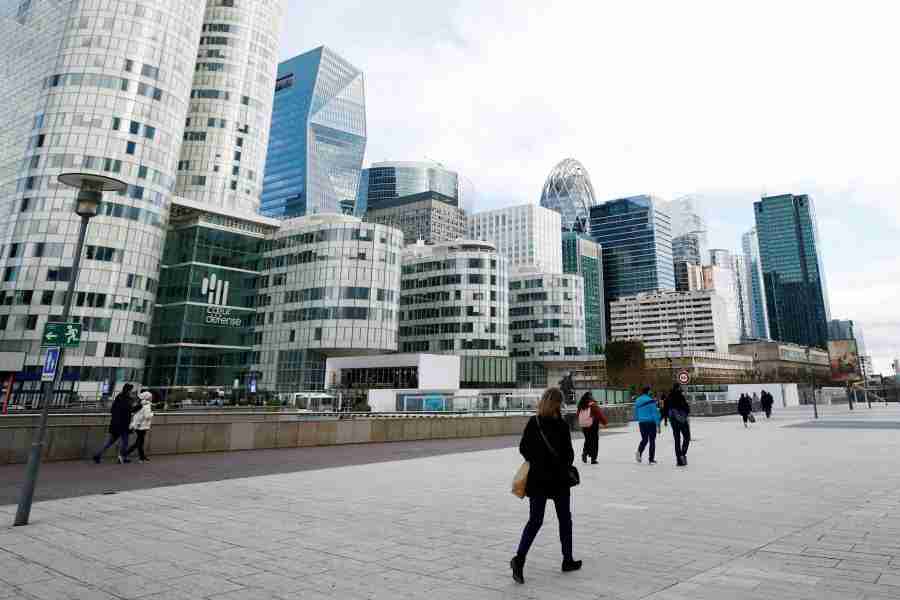
FILE PHOTO: People walk on the esplanade of La Defense in the financial and business district of La Defense, near Paris, France, January 27, 2025. REUTERS/Sarah Meyssonnier/File Photo
International news via Reuters:
Global economic growth could slow to 2.3% as trade tensions and uncertainty drive a recessionary trend, the UN Trade and Development (UNCTAD) agency said on Wednesday.
“Global growth is projected to slow to 2.3% in 2025, placing the world economy on a recessionary path,” UNCTAD said, citing a report it published on the trade and development outlook for this year.
The global economy grew 2.8% in 2024, it said.
“This is a significant deceleration compared to the average annual growth rates registered in the pre-pandemic period, which itself was a period of subdued growth globally,” the report said.
Trade uncertainties have rocked financial markets this month after U.S. President Donald Trump announced sweeping tariffs on many countries on April 2.
Trump unexpectedly paused the higher duties on a dozen economies days later, but slapped even stiffer levies of 145% on China.
UNCTAD said fears of recession in the U.S. were growing as tariff concerns added to investor anxiety.
“The implementation of successive rounds of restrictive trade measures and geo-economic confrontation carry the risks of severe disruptions to border-crossing production lines and international trade flows, in turn pulling down economic activity globally,” the report stated.
The global outlook for 2025 is marked by the highest level of policy uncertainty seen this century, causing companies to suffer losses and delay investment and hiring, the report added.
The U.N agency had urged Trump’s administration on Monday to exclude the poorest and smallest economies from reciprocal tariffs because it “would have minimal impact on United States trade policy objectives.”
Reporting by Olivia Le Poidevin, Editing by Rachel More and Bernadette Baum
Is one of 20 Croatian citizens who have been ordered to leave Serbia in the past three months
Arien Stojanovic, a Croatian doctor who has been living in Serbia for 12 years and whose 4-year daughter and husband Darko Ivkovic both have Serbian citizenship was recently identified as security threat by Serbian authorities and given 7 days to leave the country, attends an interview with Reuters, in Belgrade, Serbia, April 14, 2025. REUTERS/Zorana Jevtic
International news via Reuters:
Arien Stojanovic Ivkovic, 31, a Croatian doctor who lives in Belgrade with her Serbian husband and a three-year-old daughter, was given one week’s notice to leave the country last week and told she was a security threat.
She said a police officer called and said there was a problem with her residence.
Arien Stojanovic, a Croatian doctor who has been living in Serbia for 12 years and whose 4-year daughter and husband Darko Ivkovic both have Serbian citizenship was recently identified as security threat by Serbian authorities and given 7 days to leave the country, walks in Belgrade, Serbia, April 14, 2025. REUTERS/Zorana JevticArien Stojanovic, a Croatian doctor who has been living in Serbia for 12 years and whose 4-year daughter and husband Darko Ivkovic both have Serbian citizenship was recently identified as security threat by Serbian authorities and given 7 days to leave the country, walks in Belgrade, Serbia, April 14, 2025. REUTERS/Zorana Jevtic
“When I went to the police station I was given a piece of paper that said I was an unacceptable threat to the security of Serbia and its citizens. I was given one week to leave,” she said.
“How can you pack up a life in a week?”
Stojanovic Ivkovic is one of about 20 Croatian citizens who have been ordered to leave Serbia in the past three months, according to Croatian embassy data. Dozens of others have been refused entry at the border.
Relations between Croatia and Serbia, which fought a bitter war in the 1990s, have been strained in recent months after a wave of anti-corruption protests, which Serbian pro-government media have accused Croatia’s security service of backing.
Arien Stojanovic, a Croatian doctor who has been living in Serbia for 12 years and whose 4-year daughter and husband both have Serbian citizenship was recently identified as security threat by Serbian authorities and given 7 days to leave the country, attends an interview with Reuters, in Belgrade, Serbia, April 14, 2025. REUTERS/Zorana Jevtic
Stojanovic Ivkovic said the only thing she can think of that may account for her being identified as a security threat after 12 years of living in Serbia was her support for the student-led protests, which included attending several rallies.
“However, we do not know if this is the real reason,” she said. “We as a family we do not deserve this.”
She has filed a complaint and hopes she will be allowed to stay with her family.
Serbia’s Interior Ministry did not respond to a Reuters request for comment.
“We are extremely worried that in three days last week we had five cases of expulsion (of Croatian citizens),” Hidajet Biscevic, the Croatian ambassador to Serbia, said. (This story has been corrected to rectify the spelling of the doctor’s first name to ‘Arien’ in paragraph 1)
Reporting by Ivana Sekularac; Additional reporting Aleksandar Vasovic; Editing by Sharon Singleton
Reported pre-tax profit of 45 million pounds ($59.72 million) for the first-half of the fiscal year
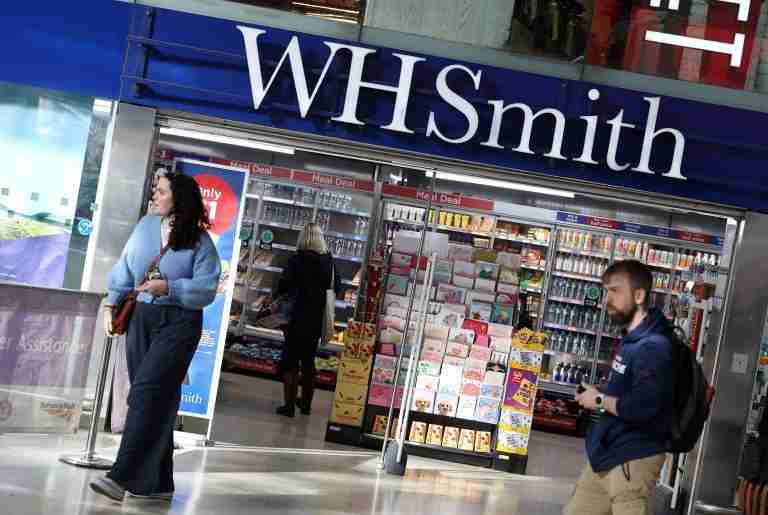
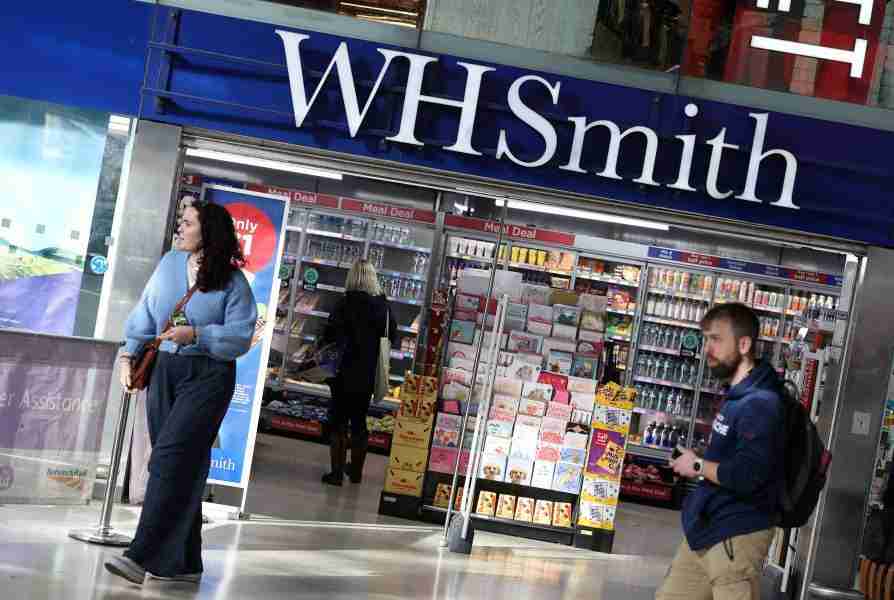
FILE PHOTO: A branch of WH Smith is seen at a railway station in London, Britain, March 28, 2025. REUTERS/Toby Melville/File photo
International news via Reuters:
Retailer WH Smith expects to meet full year market expectations despite reporting a slight dip in first-half profit on Wednesday as weakness in its recently sold British high street stores offset growth at travel outlets.
The company, with about 1,200 stores in airports and train stations across 32 countries, is banking on a strong summer season to drive foot traffic in transit areas. It said the second half of its financial year had started well.
WH Smith reported pre-tax profit of 45 million pounds ($59.72 million) for the first-half of the fiscal year, compared with 46 million pounds a year ago.
“We are mindful of the increased level of geopolitical and economic uncertainty, however given the resilient nature of our business, we are well-positioned to benefit from the growth opportunities in global travel retail,” it said in a statement.
The shares slipped 1.6% at 935.5 pence by 0821 GMT while the FTSE midcap index was down 0.45%.
Analysts on average are expecting the company to post full year pre-tax profit of 182.6 million pounds ($242.7 million), in forecasts compiled by LSEG.
Revenue from the travel business rose 6% to 712 million pounds in the first half for the period ending 28 February compared to a 13% rise to 670 million pounds in the same period last year. Sales at the retailer’s recently sold UK high street business fell 7% to 239 million pounds in a subdued consumer market.
“We believe WH Smith’s forensic approach to retailing should mean it is well-placed to expand successfully in the global travel essential retail segment,” said Richard Chamberlain, analyst at RBC Capital Markets.
($1 = 0.7525 pounds)
Reporting by Anandita Mehrotra in Bengaluru; Editing by Mrigank Dhaniwala and Elaine Hardcastle
President Donald Trump began a 12-month process of withdrawing from the WHO
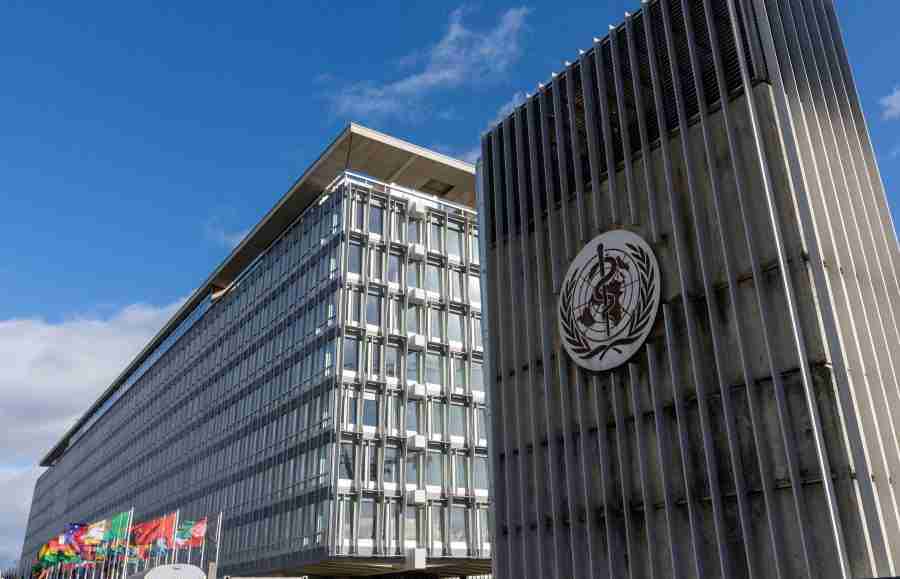
The World Health Organization (WHO) headquarters is seen in Geneva, Switzerland, January 28, 2025. REUTERS/Denis Balibouse
International news via Reuters:
Members of the World Health Organization reached a landmark agreement on Wednesday on how to learn from COVID-19, which killed millions of people in 2020-22, and prepare the world for future pandemics.
Sticking points on the road to the deal included how to share drugs and vaccines fairly between wealthy countries and poorer ones.
The legally binding pact is widely seen as a victory for the global health agency at a time when multilateral organisations like the WHO have been battered by sharp cuts in U.S. foreign funding.
“After more than three years of intensive negotiations, WHO member states took a major step forward in efforts to make the world safer from pandemics,” the health body said in a statement.
U.S. negotiators left the discussions after President Donald Trump began a 12-month process of withdrawing the U.S. – by far the WHO’s largest financial backer – from the agency when he took office in January. Given this, the U.S. would not be bound by the pact.
“This is a historic moment and a show, that with or without the U.S., countries are committed to working together and to the power of multilateralism,” Nina Schwalbe, the founder of global health think tank Spark Street Advisors, told Reuters.
This is only the second time in the WHO’s 75-year history that member countries have reached a binding agreement – the last being a tobacco control accord in 2003.
The agreement, still subject to adoption by the World Health Assembly in May and ratification by members, addresses structural inequities about how drugs or vaccines and health tools are developed.
Its article nine requires governments to establish national policies setting access conditions in research and development agreements and to ensure that pandemic-related drugs, therapeutics and vaccines are globally accessible — for the first time in an international health agreement.
“The deal essentially gives WHO members more teeth in terms of their preparedness, response and prevention of future pandemics,” Ricardo Matute, Policy Engagement Advisor with the Governing Pandemics Team at the Global Health Centre, Geneva Graduate Institute, told Reuters.
Measures include allowing the WHO to have an overview of global supply chains of medical materials such as masks and vaccines. It will also enable more local production of vaccines and other treatments during a pandemic.
SHARING HEALTH KNOWLEDGE
Major impasses had held up an agreement.
Hours were spent debating article 11 on technology transfer — the sharing of knowledge, skills, and manufacturing capabilities — to help especially lower income countries produce pandemic-related vaccines, therapeutics, and diagnostics locally.
The accord requires participating manufacturers to allocate a target of 20% of their real-time production of vaccines, therapeutics, and diagnostics to the WHO during a pandemic. A minimum 10% are donations and the rest is reserved at affordable prices.
The deal will be taken to the WHO Assembly in May, when the text of the agreement may be adopted. That is not guaranteed because an annex to the accord on Pathogen Access and Benefit Sharing is yet to be agreed, and will require further negotiations, health sources said.
Once approved by the assembly, member states that joined the discussions must ratify the deal.
Health experts hope the accord will drive greater government investment in pandemic preparedness amid funding cuts to global health.
“Leaders should be investing now in pandemic preparedness and emergency response … We can’t afford another pandemic, but we can afford to prevent one,” Helen Clark, co-chair of The Independent Panel for Pandemic Preparedness, said in a statement.
Reporting by Bipasha Dey in Bengaluru and Olivia Le Poidevin in GenevaEditing by Tom Hogue, Saad Sayeed, Kate Mayberry and Frances Kerry
Landmark case is the latest example of a wider debate around trans rights going before the courts
People hold signs at Parliament Square in London, Britain, April 16, 2025. REUTERS/Maja Smiejkowska
International news via Reuters:
The United Kingdom’s highest court ruled on Wednesday that the definition of a woman under equality legislation referred to “biological sex”, but it said trans people would not be disadvantaged by its landmark decision.
The Supreme Court’s judgment related to whether a trans woman with a gender recognition certificate, a formal document that gives legal recognition of someone’s new gender, is protected from discrimination as a woman under Britain’s Equality Act.
The landmark case is the latest example of the wider debate around transgender rights ending up before the courts.
Campaign group For Women Scotland had argued rights under the Equality Act should only apply based on a person’s biological sex.
Marion Calder and Sindi Mules look on, as the Supreme Court rules on an appeal by For Women Scotland about whether a person with a full gender recognition certificate which recognises that their gender is female is a woman under British equality laws, outside the Supreme Court in London, Britain, April 16, 2025. REUTERS/Maja Smiejkowska
It had challenged guidance issued by the devolved Scottish government that accompanied a 2018 law designed to increase the proportion of women on public sector boards.
Scottish ministers’ guidance said a trans woman with a gender recognition certificate was legally a woman.
After For Women Scotland had lost in the Scottish courts, the Supreme Court ruled in the campaign group’s favour after an appeal last November, a decision greeted by cheering outside the building.
“The unanimous decision of this court is that the terms ‘women’ and ‘sex’ in the Equality Act 2010 refer to a biological woman and biological sex,” Deputy President of the Supreme Court Patrick Hodge said.
“But we counsel against reading this judgment as a triumph for one or more groups in our society at the expense of another – it is not,” he added.
Susan Smith and Marion Calder toast, as the Supreme Court rules on an appeal by For Women Scotland about whether a person with a full gender recognition certificate which recognises that their gender is female is a woman under British equality laws, outside the Supreme Court in London, Britain, April 16, 2025. REUTERS/Maja Smiejkowska
Critics of the Scottish law had said its definition could impact single-sex services for women such as refuges, hospital wards and sports.
But transgender campaigners had said if the court ruled in favour of For Women Scotland, it could lead to discrimination against those with gender recognition certificates, especially over employment issues.
“The correct interpretation of the EA (Equality Act) as referring to biological sex does not cause disadvantage to trans people, whether or not they possess a gender recognition certificate,” Hodge said.
A woman holds a sign at Parliament Square in London, Britain, April 16, 2025. REUTERS/Maja Smiejkowska
“Trans people have the rights which attach to the protected characteristic of gender reassignment.”
In the United States, legal challenges are underway after President Donald Trump issued executive orders that include barring transgender people from military service.
Reporting by Sam Tobin and Michael Holden; editing by Giles Elgood, Kate Holton and Barbara Lewis
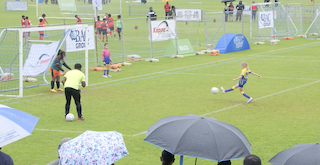
Organizers praise participants and address challenges of the 2025 edition of the popular youth football event
Full Statement from the Kappa Classic Committee
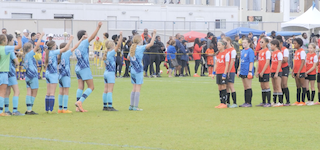
The Men of Kappa Alpha Psi Fraternity Inc., Bermuda Alumni Chapter, the organisers of the Kappa Classic, have spent the past the last 9 months planning what turned out to be the largest and most ambitious Kappa Classic to date. This 24th edition welcomed 125 teams and nearly 1,800 boys and girls across the U7 to U15 divisions — a true testament to the event’s growth and importance in our community.
The Kappa Classic is our signature event, and we take great pride in providing a space where young people can express themselves — on the field through skill, competition, and sportsmanship, and off the field through grace, camaraderie, and compassion. This year we were also able to provide space for all participants and their parents to communicate directly to a number of UK schools who were present to discuss potential education opportunities overseas.
Executing an event of this scale would not be possible without the dedication and support of our fraternity members, as well as countless volunteers, vendors, sponsors and community partners. To each of them, we extend our deepest thanks — their commitment is the backbone of what has become Bermuda’s largest youth sporting event.
Naturally, an event of this size comes with challenges. This year was no exception, bringing several “firsts” for us. We made the difficult decision to disqualify a team due to unacceptable conduct toward a referee. We banned a player who was participating in anti- social behaviour during the tournament. We also faced unprecedented weather conditions that forced the postponement of our Saturday matches — a call we did not take lightly.
Faced with having to reschedule 176 games into Sunday and limited venue availability, we made the decision to conclude the tournament on Sunday in accordance with Section 16 of the Kappa Classic rules, though never previously used, is the rule of resolving postponed matches due to weather interruptions, by penalty shootouts. This was done to ensure all age groups could participate meaningfully and fairly within the time constraints. Please note that these rules were shared with all participating clubs electronically and discussed with all coaches who attended the coaches mandatory meeting prior to the event.
We understand that this approach made it difficult for everyone to persevere. Following our announcement, one of the tournament’s larger clubs, which had entered 13 teams, chose to withdraw. Their concerns centred around player wellbeing, early match times, and the
handling of a U7 match incident. For the sake of their players, we regretted their decision but remained focused on completing the tournament.
To the 112 teams that continued — your resilience, spirit, and commitment to the event’s core values did not go unnoticed. Thank you for helping us bring this year’s Kappa Classic to life, even under tough circumstances and we look forward to seeing all of you next year.
The Men of Kappa Alpha Psi Fraternity Inc., Bermuda Alumni Chapter remain committed to creating opportunities for positive experiences, strong community connections, and lasting memories through the Kappa Classic. We promise our unwavering dedication to the young people of Bermuda and aim to make thoughtful decisions that create the greatest value for all participants and stakeholders.
Finally, we ask that the media and all individuals sharing video footage of the incident during the U7 match take down the images, as it is not in the best interest of safeguarding the two young people involved.
With gratitude,
Kappa Classic Committee
The Men of Kappa Alpha Psi Fraternity Inc., Bermuda Alumni Chapter
Price pressures will likely rise in the months ahead as U.S. tariffs filters through to consumers
FILE PHOTO: British Pound Sterling banknotes are seen at the Money Service Austria company’s headquarters in Vienna, Austria, November 16, 2017. REUTERS/Leonhard Foeger/File Photo
International news via Reuters:
Sterling edged up against the dollar on Wednesday, as heightened uncertainty over the outlook for U.S. trade policy kept the U.S. currency under pressure across the board, while a batch of softer UK inflation data dented the pound against the euro.
British inflation slowed to an annual rate of 2.6% in March from 2.8% in February below analysts expectations of 2.7%, according to the office for National Statistics. This was below forecasts for a reading of 2.7% and the slowest pace in three months.
A measure of services inflation, something the Bank of England is monitoring closely, also eased to an annual rate of 4.7% in March, from February’s 5% reading, below forecasts for 4.8%.
The pound was last up 0.3% on the day at $1.3267, close it its highest in six months against the dollar.
It was softer on the euro, which was up 0.5% on the pound at 85.66 pence.
Price pressures will likely rise in the months ahead, as the impact from U.S. President Donald Trump’s tariffs filters through to consumers.
Economists at Deutsche Bank believe this effect will not be enough to push the rate of inflation above the BoE’s current forecast for a peak at 3.7% in the third quarter this year – and therefore, should give the Monetary Policy Committee (MPC) room to cut interest rates as the economy slows.
“Inflation will take a big step up in April, pushing above 3.25% year on year, as energy and water bills lead inflation higher. The good news? We still see inflation running below the MPC’s forecast through Q2-25 – giving the MPC enough runway to cut rates through the year,” Deutsche Bank chief UK economist Sanjay Raya said.
Markets show traders expect the BoE to deliver three quarter-point cuts this year, leaving rates at 3.60% by December, their lowest since January 2023.
Trump’s tariff policies have sown confusion among investors this month and sparked concern that the hit to global growth will be enough to trigger a recession. The dollar has been a major casualty of the demand from investors for non-U.S. assets, falling by more than 4% against a basket of currencies since April 2, when Trump initially unveiled his proposed suite of tariffs.
Reporting by Alun John and Amanda Cooper; Editing by Toby Chopra
One team was disqualified, one Club withdrew its 13 teams
The 24th edition of the popular youth tournament was not without controversy. One team was disqualified – a first for the Kappa Classic and one of the larger clubs withdrew its 13 teams from the event, following an on-field incident and concerns over weather-driven changes to the format and schedule.
Australia faces deadline to pay the U.S. $2 billion to help with improving its submarine shipyards
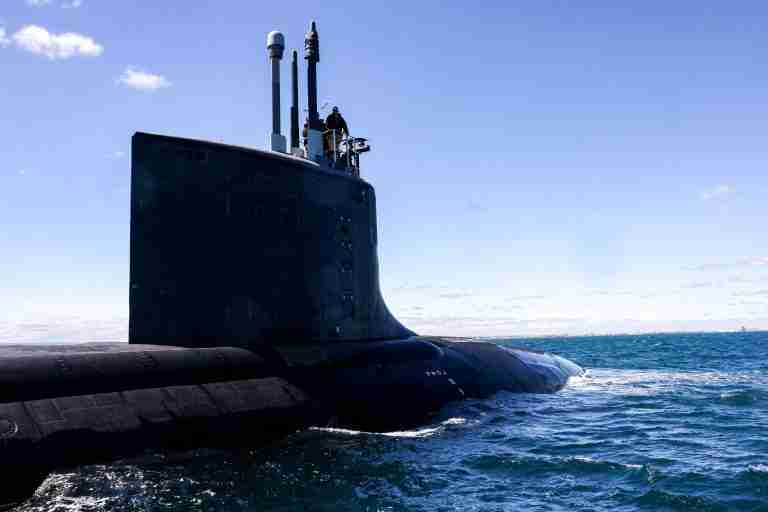
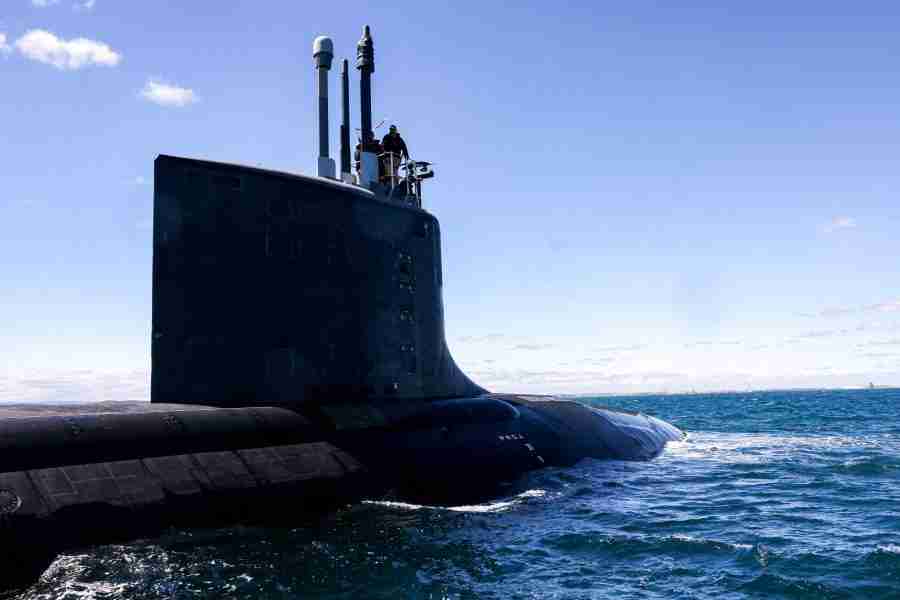
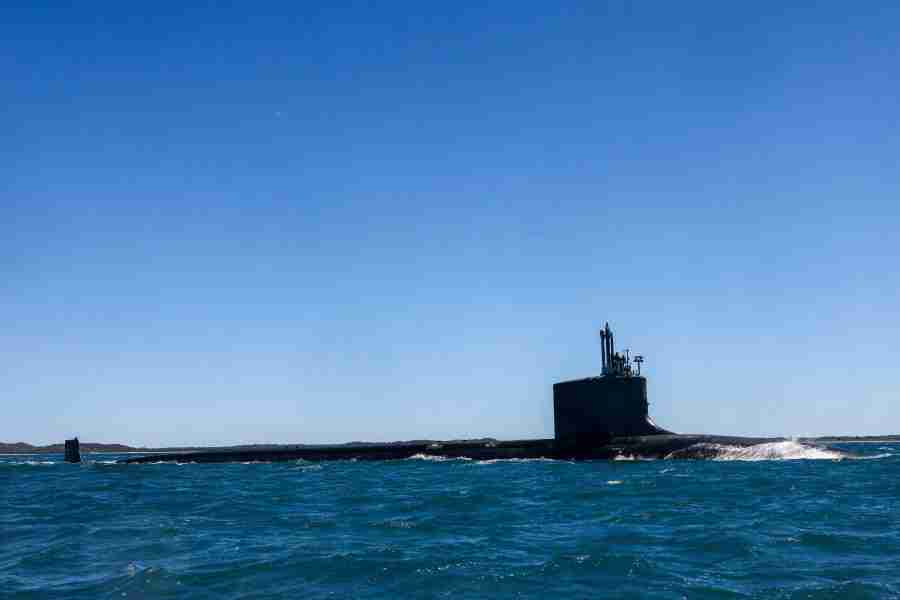
FILE PHOTO: Virginia-class fast attack submarine USS Minnesota (SSN-783) is seen off the coast of Western Australia, Australia March 16, 2025. COLIN MURTY/Pool via REUTERS/File Photo
International news via Reuters:
The sale of nuclear-powered submarines to Australia under the AUKUS treaty faces new doubts as U.S. President Donald Trump’s tariffs take hold, and amid concern in Washington that providing the subs to Canberra may reduce deterrence to China.
Whether the United States can boost submarine production to meet U.S. Navy targets is key to whether Australia can buy three Virginia-class submarines starting in 2032, Defence Minister Richard Marles said last month, after talks with his U.S. counterpart, Pete Hegseth.
Australia faces a previously unreported 2025 deadline to pay the United States $2 billion to assist with improving its submarine shipyards. The Trump administration has asked for more funding, Marles said in March.
Consternation is growing in Washington that Australia’s reluctance to even discuss using the attack submarines against China means that transferring them out of the U.S. fleet to Australia would hurt deterrence efforts in the Indo Pacific, according to experts and documents.
“If you want to deter conflict, in peacetime you need to talk about using it in wartime and we haven’t seen a willingness yet on the part of the Australians, government or officials, to make that kind of threat,” said former U.S. Navy strategist Bryan Clark, director of the Center for Defense Concepts and Technology at the Hudson Institute. Clark has been studying Australia’s defence needs in cooperation with U.S. and Australian defence officials.
In a previously unreported recent multilateral war game simulating a response by U.S. allies to a Chinese blockade of Taiwan, Australian Defence Force commanders did not use nuclear-powered submarines in the South China Sea to attack Chinese targets, instead focusing on protecting Australia’s northern approaches with airpower, drones and missiles, said Clark, who ran the exercise.
The distance from China made an airpower and surface fleet approach less risky, and the submarines were instead placed in areas near Australia where enemy ships might transit, Clark said in an online briefing.
These concerns were echoed in a U.S. Congressional Budget Office report in February and testimony on Navy shipbuilding delays in March, in which officials said selling Virginia-class subs out of the fleet to Australia without replacements was risky because Canberra had not made it clear whether its military would join the U.S. in a conflict over Taiwan.
The question has taken on added urgency, as the U.S. Navy in September set a deadline of 2027 for its forces to be prepared for a conflict with China.
China’s foreign ministry did not immediately respond to a Reuters request for comment.
FILE PHOTO: Virginia-class fast attack submarine USS Minnesota (SSN-783) is seen off the coast of Western Australia, Australia March 16, 2025. COLIN MURTY/Pool via REUTERS /File Photo
Peter Dean, director of foreign policy and defence at the University of Sydney’s United States Studies Centre, said he would expect Australia and the United States to operate submarines in different areas in a regional conflict.
“If it’s a Taiwan contingency, the U.S. will be concentrating its forces in the east and South China Sea around Taiwan. Australia may not be directly involved,” said Dean, co-author of Australia’s Defence Strategic Review, which led the Albanese government to refocus its military in 2023 and prioritise long-range strike missiles.
Australia’s priority is to protect its mainland as a forward operating base for U.S. forces, he said.
Clark told Reuters that nuclear workforce shortages and budget constraints in Australia would most likely delay the submarine sale.
“U.S. and UK submarines operating out of Perth with dual crews, and the Australian-operated maintenance facility, would provide a deterrent to aggression and keep Australia’s preparations for its own nuclear submarines on track,” he said. He has also advised Canberra to focus on uncrewed systems.
The Australian Submarine Agency said acquiring nuclear submarines was a key part of Australia’s defence strategy of denial, and “will be equipped for intelligence, surveillance, undersea warfare and strike missions”.
A Pentagon spokesperson said the Defense Department was committed to “our phased plan for Australia to acquire conventionally-armed, nuclear-powered submarines at the earliest possible date”, including the sale of Virginia submarines. A U.S. National Security Council spokesman said “The U.S. continues to work closely with Australia and the UK to implement AUKUS”.
Domestic politics could also weigh on AUKUS, despite strong support from the major Australian parties, as disappointment that defence ties didn’t win Australia exemptions from Trump’s tariffs has put the programme under unprecedented public scrutiny.
A national election on May 3 could result in a hung parliament that gives independent lawmakers – who are sceptical of Trump and have called for a review of the submarine deal – more power.
AUKUS is projected to span three decades: A rotating force of four U.S.-commanded Virginia submarines and one British submarine hosted at Western Australia’s HMAS Stirling starting in 2027, with mixed U.S. and Australian maintenance and crew; the sale of Virginia submarines to Australian command from 2032; and an AUKUS submarine built by Australia and Britain ready in 2040.
Australia needs to buy the Virginias because relying on a U.S.-commanded fleet until 2040 would be “outsourcing our defence to another country to a level that is not acceptable,” Dean said.
Former Prime Minister Scott Morrison, who clinched the AUKUS treaty in 2021, said in an interview that the threat posed by China and the deterrent of Australia operating nuclear-powered submarines in the South China Sea and Indian Ocean drove the agreement.
“China is the threat – of course they are – and that is what needs to be deterred,” Morrison said.
“The idea of more U.S. and more British boats being in and around Australia, and on station in Australia, in the theatre, we always knew that would bring the earlier deterrent,” he added.
Australia’s plan to purchase Virginia submarines was added to AUKUS by Labor in 2023.
Labor Prime Minister Anthony Albanese, elected in 2022, has been less willing to publicly criticise China, even as Australia’s air force and navy continue freedom of navigation patrols in the South China Sea. This has become a point of political attack in the election campaign for Liberal Party leader Peter Dutton, who was defence minister in Morrison’s government.
“The Chinese made a big effort for us not to proceed with AUKUS precisely because they saw the deterrence effect,” said Arthur Sinodonis, Australia’s ambassador in Washington as AUKUS was negotiated. “There is a deterrent, whether the stuff is in the U.S. column or the Australian column.”
Reporting by Kirsty Needham in Perth; additional reporting by David Brunnstrom and Idrees Ali in Washington. Editing by Gerry Doyle
WFA claimed 4 crowns in the 24th edition of the popular youth football tournament
Warwick Football Academy emerged as the standout club at the 24th edition of the annual Kappa Classic. The Club claiming titles in four divisions, solidifying its place as the overall winner. WFA captured three of the five girls’ division crowns—U7, U11, and U13 – adding to their tally by securing the U15 title
To provide the best experiences, we use technologies like cookies to store and/or access device information. Consenting to these technologies will allow us to process data such as browsing behavior or unique IDs on this site. Not consenting or withdrawing consent, may adversely affect certain features and functions.
Functional
Always active
The technical storage or access is strictly necessary for the legitimate purpose of enabling the use of a specific service explicitly requested by the subscriber or user, or for the sole purpose of carrying out the transmission of a communication over an electronic communications network.
Preferences
The technical storage or access is necessary for the legitimate purpose of storing preferences that are not requested by the subscriber or user.
Statistics
The technical storage or access that is used exclusively for statistical purposes.The technical storage or access that is used exclusively for anonymous statistical purposes. Without a subpoena, voluntary compliance on the part of your Internet Service Provider, or additional records from a third party, information stored or retrieved for this purpose alone cannot usually be used to identify you.
Marketing
The technical storage or access is required to create user profiles to send advertising, or to track the user on a website or across several websites for similar marketing purposes.