
Landmark case is the latest example of a wider debate around trans rights going before the courts
International news via Reuters:
The United Kingdom’s highest court ruled on Wednesday that the definition of a woman under equality legislation referred to “biological sex”, but it said trans people would not be disadvantaged by its landmark decision.
The Supreme Court’s judgment related to whether a trans woman with a gender recognition certificate, a formal document that gives legal recognition of someone’s new gender, is protected from discrimination as a woman under Britain’s Equality Act.
The landmark case is the latest example of the wider debate around transgender rights ending up before the courts.
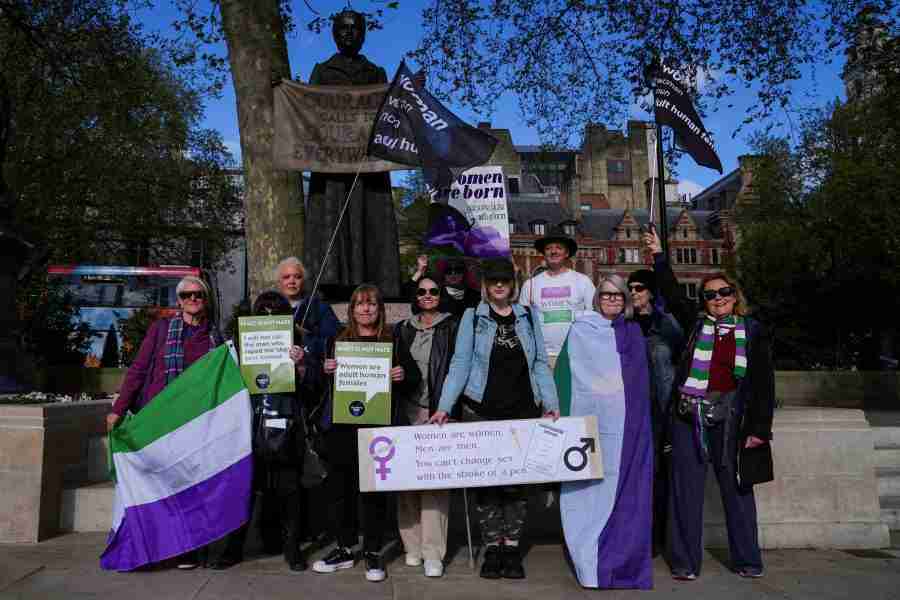
Campaign group For Women Scotland had argued rights under the Equality Act should only apply based on a person’s biological sex.
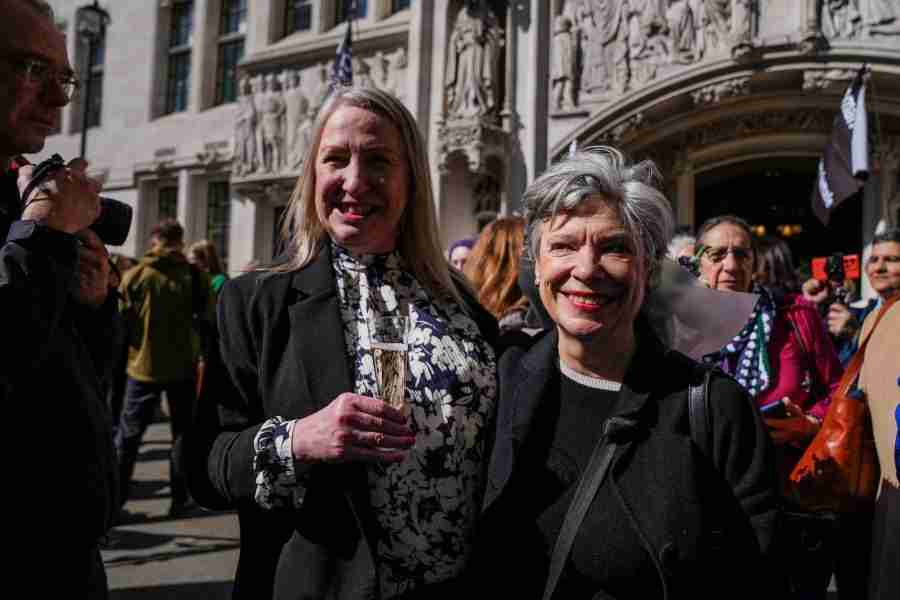
It had challenged guidance issued by the devolved Scottish government that accompanied a 2018 law designed to increase the proportion of women on public sector boards.
Scottish ministers’ guidance said a trans woman with a gender recognition certificate was legally a woman.
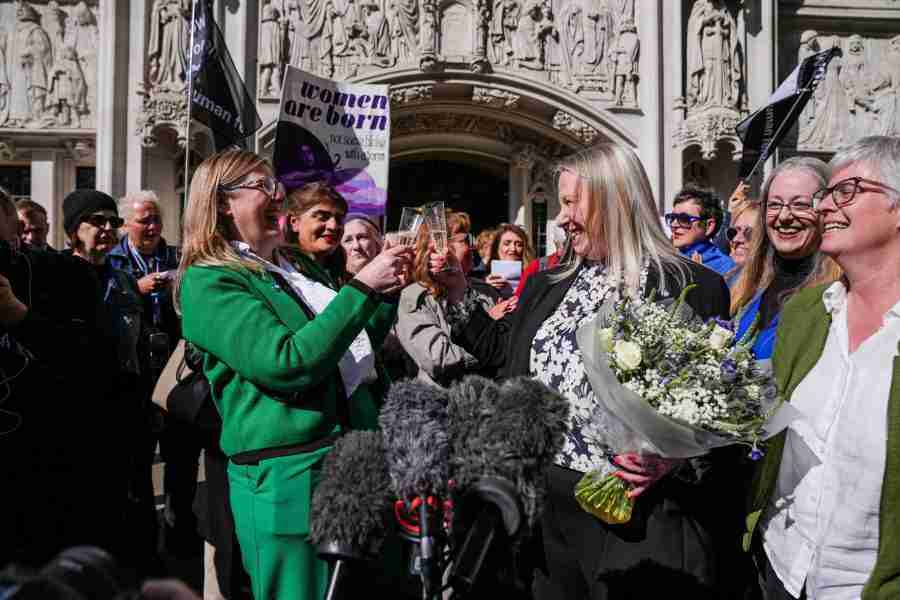
After For Women Scotland had lost in the Scottish courts, the Supreme Court ruled in the campaign group’s favour after an appeal last November, a decision greeted by cheering outside the building.
“The unanimous decision of this court is that the terms ‘women’ and ‘sex’ in the Equality Act 2010 refer to a biological woman and biological sex,” Deputy President of the Supreme Court Patrick Hodge said.
“But we counsel against reading this judgment as a triumph for one or more groups in our society at the expense of another – it is not,” he added.
Critics of the Scottish law had said its definition could impact single-sex services for women such as refuges, hospital wards and sports.
But transgender campaigners had said if the court ruled in favour of For Women Scotland, it could lead to discrimination against those with gender recognition certificates, especially over employment issues.
“The correct interpretation of the EA (Equality Act) as referring to biological sex does not cause disadvantage to trans people, whether or not they possess a gender recognition certificate,” Hodge said.
“Trans people have the rights which attach to the protected characteristic of gender reassignment.”
In the United States, legal challenges are underway after President Donald Trump issued executive orders that include barring transgender people from military service.
Reporting by Sam Tobin and Michael Holden; editing by Giles Elgood, Kate Holton and Barbara Lewis