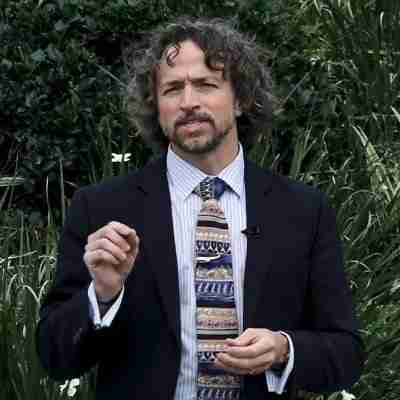
Premier believes country should appreciate the work done to “fix the problem once and for all”
Major changes to public sector pensions are in the works, to prevent to funds running out and the burden falling on taxpayers.
Following a review of pensions that started in 2019, amendments tabled in the House of Assembly today could see all public sector retirement ages progressively raised by 5 years over the next decade.
Contributions will increase by 2% over the next three years, and the formula for calculating public sector pensions is to be adjusted.
The changes will impact public school teachers, police officers, nurses, prison officers and other public officers.
Mandatory retirement age – the oldest age at which a public officer can continue to work – will increase to 70 for most public sector workers, and 60 for uniformed officers.
The lump sum conversion factor will no longer be static but assessed at each calculation, and the board that governs the public service pension fund will have a more formal role in advising on future reforms.
Detailing these measures today, Premier and Finance Minister David Burt said they will prevent the pension fund running out by 2045. Instead, it could achieve fully-funded status by the year 2060.
He also says that Bermuda is following a global trend of increasing retirement ages to match increasing life expectancy.
Speaking to our Gary Foster Skelton, Premier Burt addressed the time it has taken to bring forward these reforms. (WATCH the interview above, SCROLL DOWN for the Premier’s full statement)
Ministerial Statement by Premier & Finance Minister David Burt:
Ministerial Statement
To the House of Assembly
By
The Hon. E. David Burt, JP, MP
Premier and Minister of Finance
Public Service Superannuation (PSSF Stabilisation) Amendment Act 2025
Date: 12th September, 2025
Madam Acting Speaker,
In the Government’s 2024/25 Budget Statement, and again in my statement to this Honourable House in
May of this year, I committed that the Government would bring forward reforms to ensure the
sustainability of the Public Service Superannuation Fund (Fund). Later today, I will table the Public
Service Superannuation (PSSF Stability) Amendment Act 2025, in this Honourable House.
This has been a long journey. In 2019, the review process began in earnest, and since then there have
been years of consultation, study, and discussion. The Fiscal Responsibility Panel has urged action. The
Opposition has urged action. And the public, including public officers themselves, have asked when
Government will act.
Madam Acting Speaker, that time is now.
This Government has demonstrated that when we make commitments, we deliver. Since returning to
office, the Progressive Labour Party has taken on the tough issues of Bermuda’s public finances. We
reversed years of unsustainable deficits, made our tax system more fair, and successfully balanced
Bermuda’s budget delivering the first budget surplus in 23 years. We have restored fiscal credibility,
reduced gross debt, and ensured that Bermuda’s finances are on a stable footing. Public sector pension
reform is the next step in that journey: securing the future not just for public servants, but of Bermuda’s
fiscal house as a whole.
The Challenge
Madam Acting Speaker, the Public Service Superannuation Fund, which pays the pensions of our
teachers, police officers, nurses, prison officers, firefighters, and the many other public officers who serve
this country, is not on a sustainable footing.
The most recent actuarial valuation, as of March 2023, shows an actuarial deficit of just over $1 billion.
The Fund is only 37 percent funded. Without reform, the Fund is projected to deplete its assets by 2045.
That is within the working lifetime of many Bermudians now in the public service.
The numbers matter, but let me explain what they mean in plain terms. A funding ratio of 37 percent
means that for every dollar owed in pensions, the Fund has only 37 cents in assets. A deficit of $1 billion
means that unless changes are made, taxpayers will be required to cover the shortfall, leading to
increased taxes for residents and businesses. And depletion in 2045 means that a Bermudian in the
public service today could reach retirement only to find the Fund exhausted.
Madam Acting Speaker, that is a risk that no responsible government can accept. The math is clear. The
contributions going into the Fund are not enough to cover the benefits being paid out. As people live
longer, the number of retirees grows, and the pressure on the Fund increases. Unless changes are made,
taxpayers will face an ever-increasing liability that could jeopardise both pensions and Bermuda’s wider
economy putting credit ratings under pressure and leading to increase interest rates for all.
The current path is unsustainable, and to do nothing would be irresponsible.
Global Context
Madam Acting Speaker, Bermuda is not alone in facing this challenge. Across the world, governments
have been compelled to act.
The United Kingdom has legislated gradual increases in retirement age, moving toward 68. Canada has
raised contribution rates for its public sector pensions. In the United States, many states have reformed
their systems, raising both contributions and retirement ages to preserve solvency.
Elsewhere, the Netherlands has linked its retirement age to life expectancy, automatically adjusting as
people live longer. Ireland has extended retirement ages and restructured public sector benefits.
Australia has raised both contribution rates and retirement ages in recognition of demographic change.
The OECD has reported that nearly every major public pension system has undergone reform in the past
decade. The global trend is clear: as life expectancy increases and pension promises become more
expensive, governments have had to make adjustments.
Madam Acting Speaker, Bermuda is part of that global reality, and this PLP government is taking the
necessary and responsible steps now to ensure long-term sustainability of public sector pensions.
The Reforms
Madam Acting Speaker, the reforms the Government is introducing today are the product of careful
analysis, actuarial advice, legal advice, and extensive consultation. They are phased, they are fair, and
they are designed to make public sector pensions secure for the future.
First: Earliest Unreduced Pension Age.
Madam Acting Speaker, this is the most important change. At present, non-special group members can
receive an unreduced pension at age 60, and special group members at 50. Under these reforms, those
thresholds will rise gradually to 65 and 55 respectively, phased between 2027 and 2035.
This is effectively the retirement age for most public officers, because it is the point at which they can
retire without penalty. The change from 60 to 65 for most public officers is significant. However, even at
65, Bermuda’s effective retirement age remains well below the benchmarks in most developed countries,
where retirement ages are 67 or higher. This change is about aligning with demographic realities while
still providing our public officers with one of the more generous public pension systems globally.
Second: Contributions.
Madam Acting Speaker, at present, non-special group members, the majority of public officers, contribute
8 percent of their salary. This will increase gradually to 10 percent over three years. For our uniformed
services, contributions will increase from 9.5 percent to 11.5 percent over the same period.
Importantly, these increases will be offset by negotiated salary uplifts, meaning that public officers will
not see their take-home pay reduced. This approach balances the need to strengthen the Fund with
fairness to workers.
Third: Pension Formula.
Madam Acting Speaker, today, pensions are calculated based on the final year’s salary. This is generous,
but it is also unsustainable and creates inequities. Under the reforms, pensions will be calculated based
on the average of the final ten years of salary phased in over a 10-year period. This change prevents
anomalies, ensures fairness, and aligns Bermuda with global best practice.
Fourth: Mandatory Retirement Age.
Madam Acting Speaker, the maximum age at which a public officer must retire is 65 for teachers, 68 for
other non-special group members and 55 for uniformed services. These will gradually increase to 70 and
60 respectively by 2035.
It is important for Honourable Members and public officers to note, this is not the earliest age at which
someone can retire, but the latest age at which they must retire. These changes reflect longer life
expectancy and modern working realities.
Fifth: Lump Sum Conversion Factor
Madam Acting Speaker, currently a retiring member can commute part of their pension into a lump sum,
calculated by a fixed factor of 11.5 which is static in legislation. This provision has proven costly to the
Fund. Going forward, this conversion factor will be actuarially assessed at each valuation, ensuring that
lump sums are properly funded and do not weaken the Fund’s long-term sustainability.
Sixth: Governance
Finally, Madam Acting Speaker, governance of the Fund will be strengthened. The Public Service
Superannuation Board will have a more formal role in reviewing actuarial valuations and advising on
future reforms. Decisions about pensions will be based on evidence and actuarial advice. It is only right
that the representatives of those who depend on public sector pensions play a more active role in
determining the future sustainability of the Fund.
Madam Acting Speaker, taken together, these reforms will transform the trajectory of the Fund. Actuarial
modelling indicates that instead of depleting by 2045, the Fund can achieve fully funded status by 2060.
In practical terms, that means that pensions will be secure not only for today’s retirees but for
generations to come.
Consultation and Balance
Madam Acting Speaker, these reforms did not come easily. They are the product of years of consultation.
The Government has engaged with unions, staff associations, and stakeholders across the public service.
Multiple meetings were held. Proposals were revised. Adjustments were made to ensure that what is
brought to this House is both fair and workable.
We recognise, and I want to emphasise this point, that any change to pensions is deeply personal. People
plan their lives around their retirement expectations. For many, the pension they earn through years of
public service is their most important financial asset.
That is why these reforms have been carefully phased in. That is why we have sought to protect take-
home pay. That is why we have chosen reforms that, while necessary, are fair and sustainable.
We listened to stakeholders. Unions stressed the importance of gradual implementation, and we agreed.
Workers expressed concern about protecting the value of their pensions, and we responded by ensuring
that reforms secure the Fund for the future. Stakeholders asked for fairness, and we delivered reforms
that share responsibility across contributors, current and future beneficiaries, and the Government.
Madam Acting Speaker, I acknowledge that some may feel that benefits are being diminished. To them I
say: these reforms are about protection, not reduction. With this bill, the pace of accrual of benefits, and
the level benefits that you will be paid are not changing. These reforms will ensure that your pension, and
the pensions of those who come after you, will be able to be paid when you retire.
Current Retirees
Madam Acting Speaker, I also want to speak directly to our current retirees. One of the most difficult
consequences of the Fund’s financial challenges has been the freeze on pension increases since 2014. This
has placed increasing pressure on many of our retirees as the cost of living has risen. The reforms we are
bringing forward today are not only about securing pensions for those still in service, they are also about
creating the financial capacity to advance benefit increases for those already retired – and for those who
will retire in the future.
With these reforms, and subject to actuarial advice, we will be in a position to consider benefit increases.
While this Bill does not enact those increases, during this Legislative session, after consultation with the
actuaries and the Public Service Superannuation Board, the Government will bring forward legislation to
increase pension benefits for current public sector retirees.
Madam Acting Speaker, that is an important commitment, and it is only possible because we are taking
the steps today to place the Fund on a secure footing.
Closing
In closing Madam Acting Speaker, this has been a long journey. Multiple rounds of consultation, years of
study, and careful consideration have led to the reforms the Government is bringing forward today.
These changes are not easy, but no one in Bermuda should doubt that they are necessary.
This bill will reduce our unfunded liabilities, protect pensions for current and future public officers and
secure the financial future of the Public Service Superannuation Fund.
These reforms are about responsibility. They are about fairness. And above all, they are about ensuring
that the men and women who dedicate their lives to serving Bermuda and its people, can retire with
dignity and security.
This Government has shown before that it will not shy away from difficult problems. We delivered a
budget surplus after years of deficits. We made our tax system more fair, reducing taxes on workers in
Bermuda. We restored fiscal stability to Bermuda’s public finances and are now positioned to reduce our
national debt. And today, we take another step in that tradition: securing pensions for the future.
Madam Acting Speaker, these reforms are the right thing to do. They are fair, they are responsible, and
they will ensure that Bermuda’s public officers, today and tomorrow, can depend on the pensions they
have worked so hard to earn.
Thank you, Madam Acting Speaker.