Thursday, October 22, 2026
Home Blog Page 1002

China urges US to immediately lift tariffs, vows retaliation

Chinese exporters will face a 10% baseline tariff
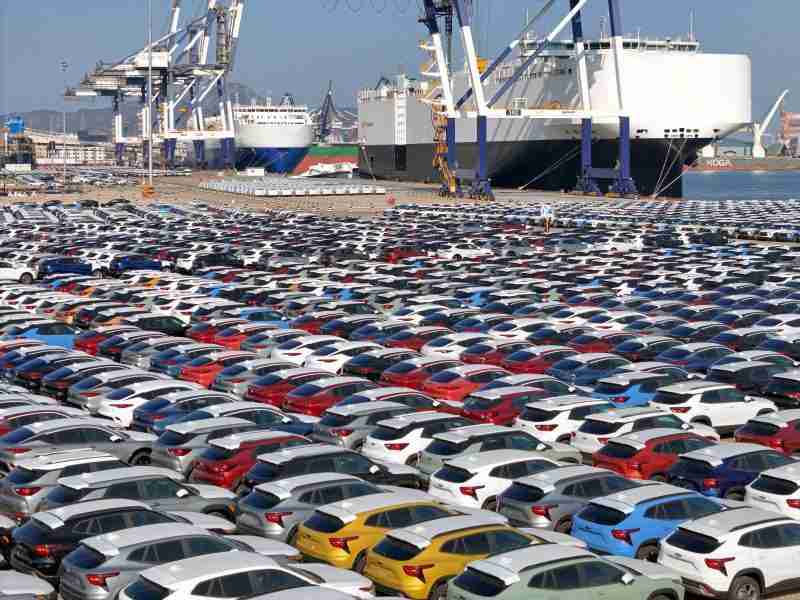
FILE PHOTO: Cars to be exported sit at a terminal in the port of Yantai, Shandong province, China January 10, 2024. China Daily via REUTERS/File Photo

International news via Reuters:

China on Thursday urged the United States to immediately cancel its latest tariffs and vowed countermeasures to safeguard its own interests, after President Donald Trump declared sweeping levies on U.S. trading partners around the world.

The U.S. move disregards the balance of interests reached in multilateral trade negotiations over the years and the fact that it has long benefited greatly from international trade, China’s Commerce Ministry said in a statement.

“China firmly opposes this and will take countermeasures to safeguard its own rights and interests,” the ministry said, as the world’s largest economies look set to spiral deeper into a trade war that stands to upend global supply chains.

Trump on Wednesday announced China would be hit with a 34% tariff, on top of the 20% he previously imposed earlier this year, bringing the total new levies to 54% and close to the 60% figure he had threatened while on the campaign trail.

Chinese exporters, like those from other economies around the world, will face a 10% baseline tariff, as part of the new 34% levy, on almost all goods shipped to the world’s largest consumer economy from Saturday before the remaining, higher “reciprocal tariffs” take effect from April 9.

The average U.S. tariff on Chinese goods will be 76%, according to Chad Brown, senior fellow at the Peterson Institute for International Economics and chief economist at the State Department for the last year of the Biden administration.

Trump also signed an executive order closing a trade loophole known as “de minimis” that has allowed low-value packages from China and Hong Kong to enter the U.S. duty free.

Trump had ordered the U.S. Trade Representative to determine whether China was living up to its commitments under the 2020 “Phase 1” U.S.-China trade agreement by April 1.

The deal required China to increase purchases of U.S. exports by $200 billion over a two-year period, but Beijing failed to meet its targets when the COVID-19 pandemic struck.

China bought $154 billion in U.S. goods in 2017, before the trade war began, Chinese customs data shows, and that figure rose to $164 billion last year.

WORLDWIDE TARIFFS

“Arguably, President Trump’s tariffs elsewhere will cause the most headaches,” said Ruby Osman, a China expert at the Tony Blair Institute for Global Change.

“Chinese firms have been rerouting trade through places like Vietnam and Mexico to avoid U.S. sanctions, but these markets are now being hit with significant tariffs of their own.”

“China+1” strategies caught on among Chinese exporters and multinational companies that had made the production powerhouse central to their supply chains during Trump’s first term.

But with India, Mexico, Vietnam and Malaysia – the countries that benefited most from this shift – facing tariffs of between 24% and 46%, the cost advantage of relocating manufacturing out of China is significantly diminished.

European Union Chamber of Commerce in China president Jens Eskelund said many companies had adjusted their supply chains specifically to limit their exposure to U.S.-China trade tensions and that “any subsequent restructuring of supply chains will not be possible overnight.”

The extra levies could encourage China to step up its trade with alternative markets, but no other country comes even close to U.S. consumption power, where Chinese producers sell more than $400 billion worth of goods annually.

“Trump’s tariffs certainly won’t help Chinese firms and will cause some real pain in some sectors, but they don’t make any definitive mark on the Chinese economy,” said William Hurst, Chong Hua Professor of Chinese Development at the University of Cambridge.

“U.S. exports are of declining importance to China. The American tariffs will spur more Chinese trade with other places, from Europe to Southeast Asia and Africa,” he added.

But Chinese producers have described shifting to alternative markets as a “rat race”, resulting in price wars among exporters that risk fanning deflationary forces in the world’s second-largest economy as firms continue to squeeze shrinking margins.

China has kept its economic target for this year unchanged at “around 5%” despite Trump’s tariff salvos which could halt a largely export-led recovery underway since the end of the COVID-19 pandemic.

The government has pledged more fiscal stimulus, increased debt issuance, further monetary easing and put an even greater emphasis on boosting domestic demand to cushion the impact of the trade war.

“China knew this day was coming well in advance, the relatively restrained stimulus announcements at March’s Two Sessions were a calculation, not an oversight,” Osman said, referring to China’s annual parliamentary meetings.

“Beijing has purposefully kept more in reserve, both in terms of domestic stimulus and retaliatory measures, in case it needs to respond more forcefully,” she added.

China’s President Xi Jinping might also enter the fray, following reports the two leaders could meet in June in the United States.

“Trump and Xi are locked in a paradox of pressure and pride,” said Craig Singleton, senior fellow at Washington-based research institute Foundation for Defense of Democracies.

“Trump’s strategy mixes maximum pressure with sudden diplomatic overtures — he sees leverage and engagement as complementary. Xi, by contrast, is methodical and risk-averse, relying on delay and discipline. But here’s the dilemma: if he refuses to engage, the pressure escalates; if he engages too soon, he risks looking weak,” he added.

“Neither wants to be seen as folding first, but delay could deepen the standoff.”

Reporting by Liz Lee, Ella Cao, Jing Wang, Joe Cash, Shi Bu, Yukun Zhang, Qiaoyi Li, Ethan Wang and Xiuhao Chen; Writing by Joe Cash; Editing by Kim Coghill, Michael Perry, Lincoln Feast, Philippa Fletcher


European shares sink as Trump’s aggressive tariffs threaten economic growth

Wall Street futures tumbled 3.1% as investors shed riskier assets

FILE PHOTO: The Euronext stock exchange is pictured at the La Defense business district in Paris, France, September 30, 2022. REUTERS/Benoit Tessier/File Photo

International news via Reuters:

European shares slumped to a two-month low on Thursday after a fresh round of aggressive U.S. tariffs, with bank stocks bearing the brunt of fears that the escalating trade war would slam the brakes on economic growth.

The pan-European STOXX 600 has sunk 1.5% by 0753 GMT. The rout was led by a 1.8% slide in equities in Germany, whose biggest trading partner last year was the U.S., according to the statistics office.

Wall Street futures tumbled 3.1% as investors shed riskier assets in favour of safe-haven bonds and gold.

U.S. President Donald Trump’s move to slap a 10% tariff on most U.S. imports effectively raised the rate of levies on the European Union to 20% and on China to 54%, with both trading partners vowing countermeasures.

Austria to shut border crossings to Hungary, Slovakia over foot and mouth

Hungary on Wednesday deployed soldiers to contain it in an area bordering Slovakia and Austria

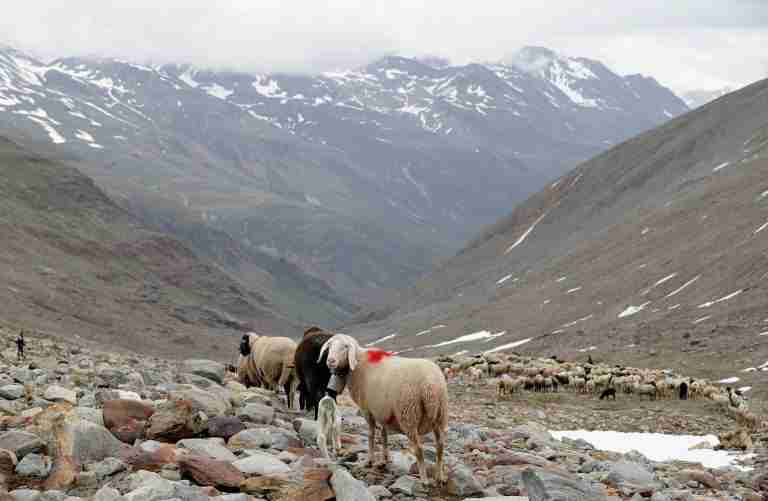
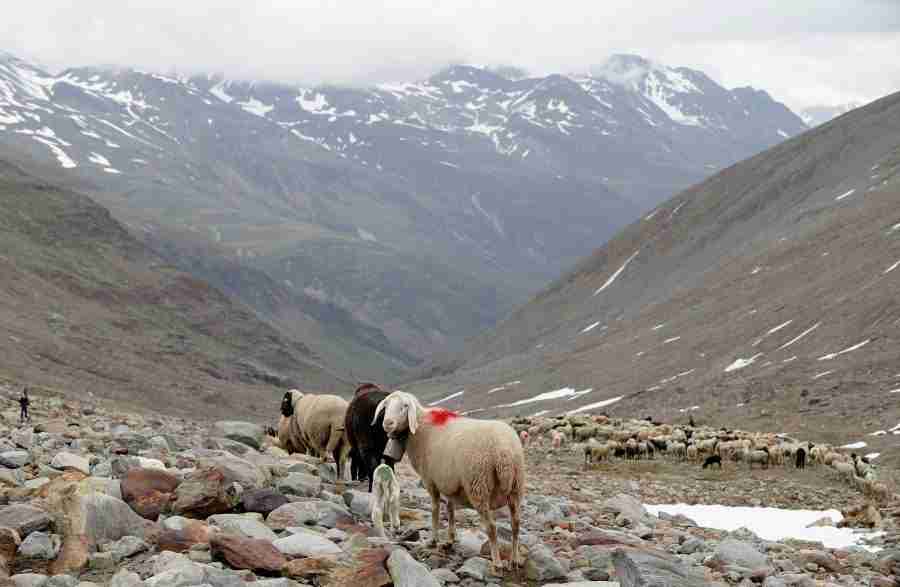
FILE PHOTO: Sheep make their way down to “Rofenberg” pasture in the region of Tyrol, Austria, June 9, 2018. Picture taken June 9, 2018. REUTERS/Lisi Niesner/File Photo

International news via Reuters:

Austria will close two smaller crossings at its border with Slovakia and 21 at its border with Hungary from Saturday, in a bid to prevent foot-and-mouth disease from entering the country, the Interior Ministry said on Thursday.

The first outbreak of the highly infectious disease in 50 years in Hungary led the country on Wednesday to deploy soldiers and launch disinfection measures to contain it in an area bordering Slovakia and Austria.

The disease, which poses no danger to humans, mostly affects cattle and other cloven-hoofed animals like swine, sheep and goats, causing fever and mouth blisters.

Outbreaks often lead to trade restrictions and culls of some livestock.

Slovakia declared an emergency situation on Tuesday after the disease was found on three farms.

To strengthen efforts aimed at preventing the disease from reaching Austria, the country will focus its police resources at those borders on its main crossings, the ministry said in a statement.

“So as not to undermine these police checks, we ask you to understand that we cannot provide further details, particularly the times, staffing levels, form of checks etc at the various locations,” the ministry said.

Reporting by Francois MurphyEditing by Bernadette Baum

Police arrest driver of car that caught fire in Amsterdam following explosion

Police sealed off the square while explosives experts investigated the vehicle

International news via Reuters:

Dutch police said they had arrested the driver of a car that caught fire on Amsterdam’s central Dam Square on Thursday following an explosion in the vehicle.

The driver, a 50-year-old Dutchman, is suspected of having caused the fire and having possibly done so on purpose, police said. Nobody was hurt in the incident except the man arrested.

Police said camera footage had shown the fire was caused by an explosion, which happened among a crowd of people on the busy square.

Images on social media show a man with burning clothes close to a small red car with flames billowing from its windows on Dam Square.

Police are seen extinguishing the flames on the man before taking him into custody.

Police sealed off the square while explosives experts investigated the vehicle.

Last week, a man injured five people near Dam Square in a stabbing rampage.

Police identified the suspect in that incident as a 30-year-old Ukrainian national from the eastern Donetsk region, who prosecutors said had acted with terrorist intent.

Reporting by Bart Meijer, Charlotte Van Campenhout, Editing by Ros Russell and Gareth Jones

Spain unveils $15.7 billion plan to dull blow from US tariffs

Spain sells important quantities of auto parts, steel and chemicals to the United States

Spain’s Prime Minister Pedro Sanchez speaks on the day he announces a plan to support companies, unions and farmers affected by U.S. tariffs, at Moncloa Palace in Madrid, Spain, April 3, 2025. REUTERS/Juan Medina

International news via Reuters:

The Spanish government will provide 14.1 billion euros ($15.66 billion) worth of measures to help its economy weather the impact of the new U.S. tariffs, Prime Minister Pedro Sanchez said on Thursday.   

The new tariffs announced by U.S. President Donald Trump on Wednesday have rattled markets and drew condemnation from world leaders facing an abrupt end of an era of trade liberalisation that has shaped the global order for decades.

Spain, which like other European Union members was hit by U.S. tariffs imposed on imports from the bloc, is the world’s top exporter of olive oil and also sells important quantities of auto parts, steel and chemicals to the United States.

Sanchez described Trump’s actions as “terrible news for the world”, “unintelligent” and “a return to 19th-century protectionism”.   

“This tariff attack by the U.S. administration makes no distinction between friends and enemies, it doesn’t discriminate based on ideology or trade balance; it’s against everyone and everything,” he said.   

Sanchez also stressed Europe’s need to find new trading partners elsewhere. He is set to visit Vietnam and China next month, attempting to forge closer economic ties with the Asian countries.    

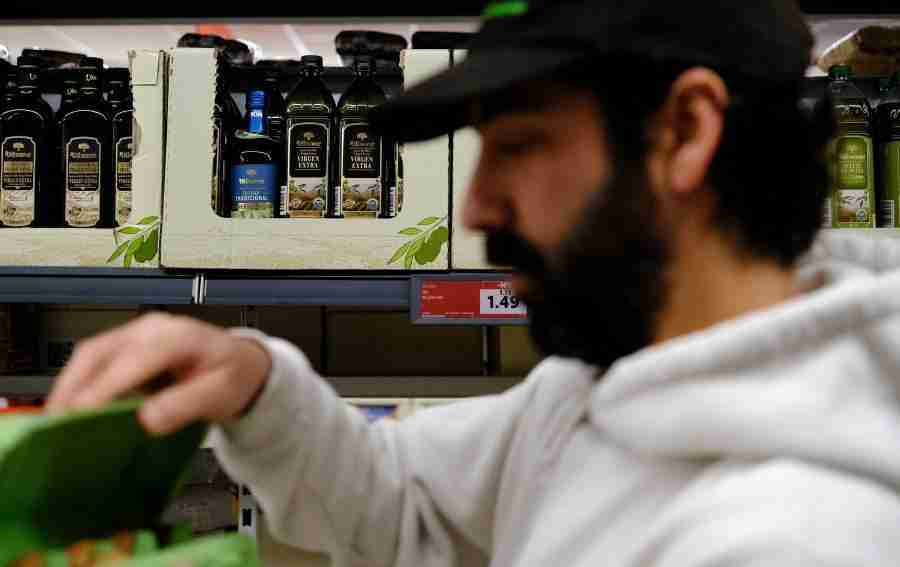
A man stands near bottled olive oil for sale as he looks at a pack of eggs at a supermarket in Barcelona, Spain April 3, 2025. REUTERS/Nacho Doce

DIRECT AID AND SOFT LOANS    

Spain’s aid package – which still needs to be approved by a fragmented parliament – will include 7.4 billion euros in new financing, and the rest will come from existing instruments such as soft loans, Sanchez said.   

He said that 5 billion euros of EU recovery funds would be repurposed to help industries hurt by the tariff shock – such as auto suppliers – reorient their productive capabilities towards other high-demand sectors.   

The government will also contribute with 2 billion euros worth of credit insurance and export risk coverage.    Sanchez urged the European Commission to set up a fund financed by revenues from tariffs on imports from the U.S. that are set to be hiked this month in response to Washington’s move that he said was unfriendly and unjustified.   

FILE PHOTO: A view shows olive trees and almond trees in Arbeca, in the Catalonian province of Lleida, Spain February 23, 2025. REUTERS/Nacho Doce/File Photo

Spain has sought EU authorisation to allow more flexibility for large-scale domestic aid for the affected sectors.     Sanchez said he would use a labour law provision similar to a furlough scheme implemented during the COVID-19 pandemic to allow the hardest-hit companies to maintain their workforce until they recover.

“We’ll take advantage of this trade war to give our industry a new impulse for its modernisation and internationalisation,” Sanchez said.     

($1 = 0.9006 euros)

Additional reporting by Inti Landauro, Jesus Aguado and Emma Pinedo, editing by Andrei Khalip and Tomasz Janowski

UK lists thousands of US goods which could face any retaliatory tariffs

List includes petrol, diesel, electric passenger vehicles and food products including meat and fish

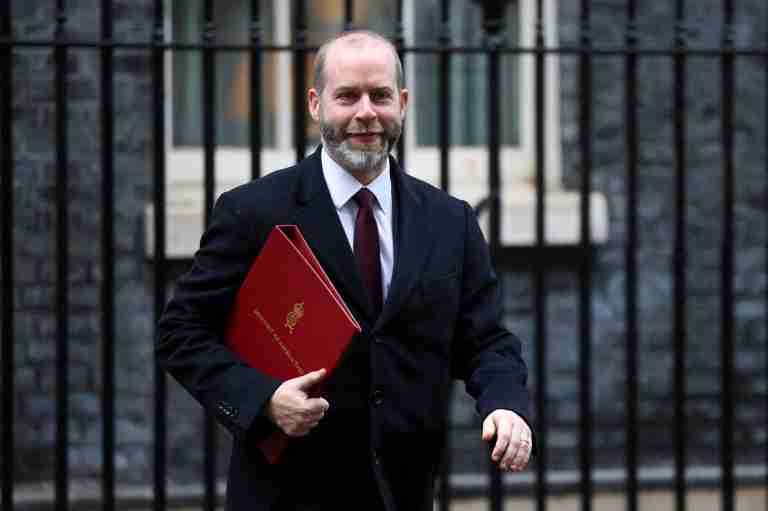
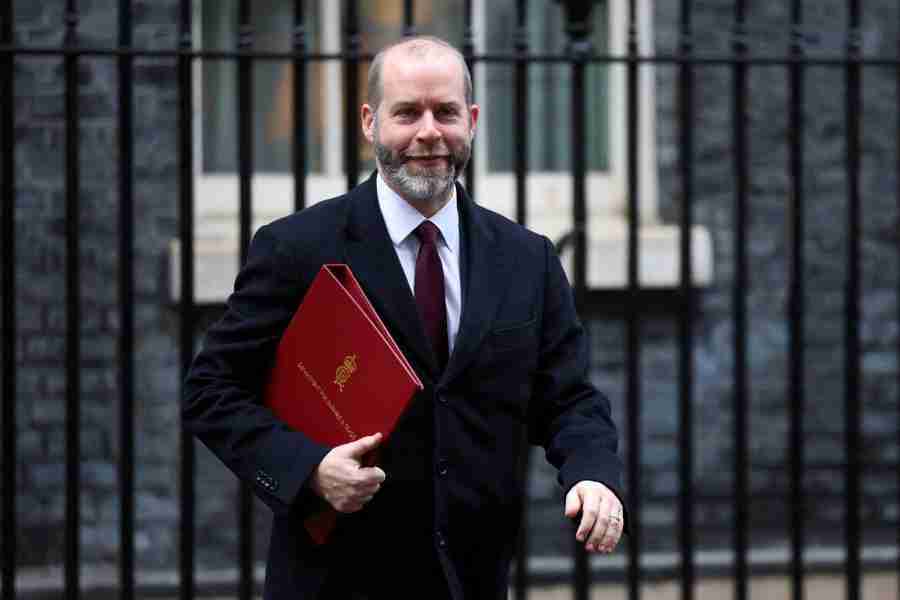
FILE PHOTO: Britain’s Secretary of State for Business and Trade Jonathan Reynolds walks at Downing Street, on the day of a Cabinet meeting in London, Britain, January 7, 2025. REUTERS/Hollie Adams/File Photo

International news via Reuters:

Britain on Wednesday published a 400-page list of U.S. goods it could include in any possible retaliatory tariff response to President Donald Trump’s levies on British imports, even as it pressed ahead with talks to reach an economic deal with Washington.

The “indicative long list” of products included everything from binoculars and bourbon whiskey to automotive parts and cheese.

The list also includes petrol, diesel and electric passenger vehicles and food products including meat and fish.

The government stressed that not all goods on the list would be subject to any future tariffs.

Britain says it has adopted a “cool-headed” approach to Trump’s 10% tariffs, the lowest among the sweeping levies on dozens of other nations, rather than follow the European Union and other economies in immediately threatening to retaliate with its own measures.

The list of 8,000 product categories published by the government on which any future retaliatory tariffs could be imposed covered around 27% of British imports of U.S.-origin products.

The list is now subject to a four-week consultation with businesses.

Business Secretary Jonathan Reynolds said his priority was to reach a deal with the U.S. but that the consultation was a formal step necessary so the government could keep all options on the table.

“(The) talks with the US will continue to reflect our mandate to deliver economic stability, as we press the case for a trading relationship that supports businesses on both sides of the Atlantic,” Reynolds said in a statement.

He said the consultation, which will run until May 1, would be paused and any measures would be reversed were the two countries to agree a deal.

Reporting by Catarina Demony, writing by Sachin Ravikumar; Editing by Kate Holton and Toby Chopra

South Africa’s white Afrikaner separatists want Trump’s help to become state

Community leaders visited the United States seeking recognition as an autonomous entity

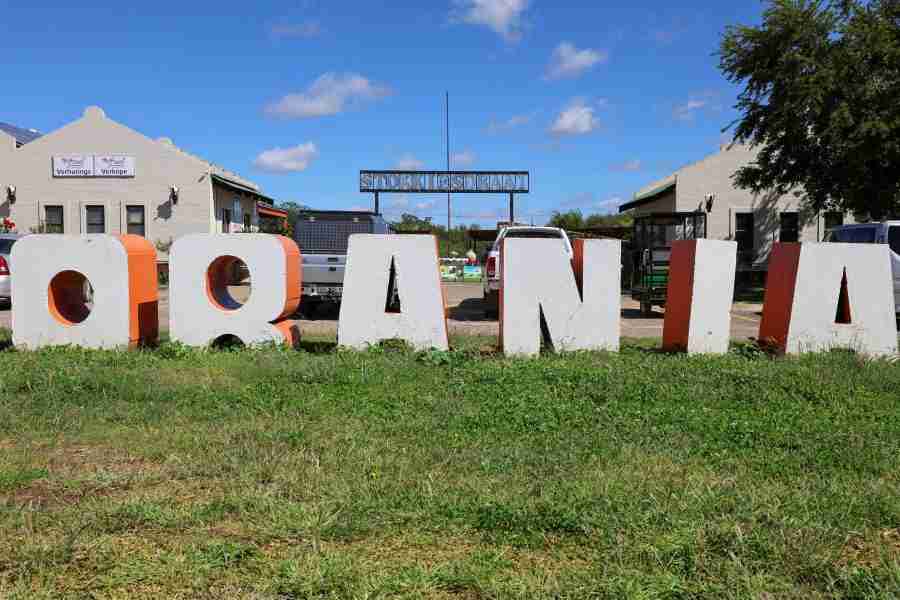
Orania town sign in front of local shopping centre is pictured in whites-only town of Orania, South Africa, April 1, 2025. REUTERS/Sisipho Skweyiya

International news via Reuters:

A group of white Afrikaners was so opposed to majority Black rule when apartheid ended some three decades ago that they carved out a separatist enclave, the only town in South Africa where all residents, including menial workers, are white.

Now, the residents of Orania – population, 3,000 – in the semi-arid Karoo region want U.S. President Donald Trump to help them become a state.

Last week, community leaders from Orania visited the United States seeking recognition as an autonomous entity. South African authorities acknowledge it as a town that can raise local taxes and deliver services.

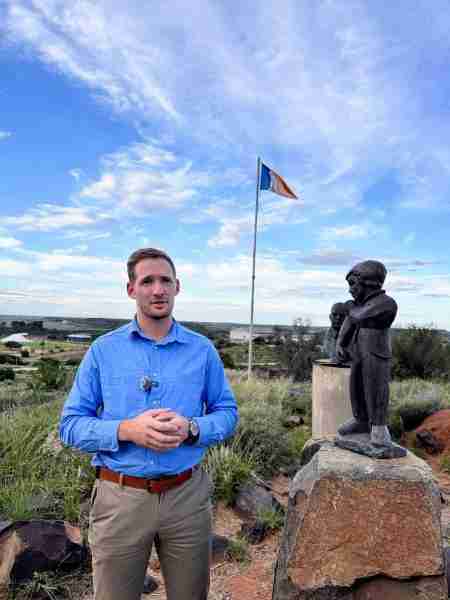
“We wanted to… gain recognition, with the American focus on South Africa now,” Orania Movement leader Joost Strydom told Reuters, on a hill strewn with bronzes of past Afrikaner leaders, including from the era of racist white minority rule that was ended by internal resistance and international outrage.

The 8,000-hectare settlement is riding an unprecedented wave of support from right-wing Americans for Afrikaner nationalists, who irrevocably lost power when apartheid ended in 1994 and Nelson Mandela became South Africa’s first Black president.

In New York and Washington the Orania leaders met influencers, think-tanks and low-ranking Republican politicians.

“We told them South Africa is such a … diverse country that it’s not a good idea to try and manage it centrally,” said Strydom.

Three senior Orania officials interviewed by Reuters were vague about the help they sought in the U.S. They said they were not seeking handouts but wanted investment to build houses to keep up with its 15% population growth, infrastructure and energy independence that it has almost half-achieved with solar.

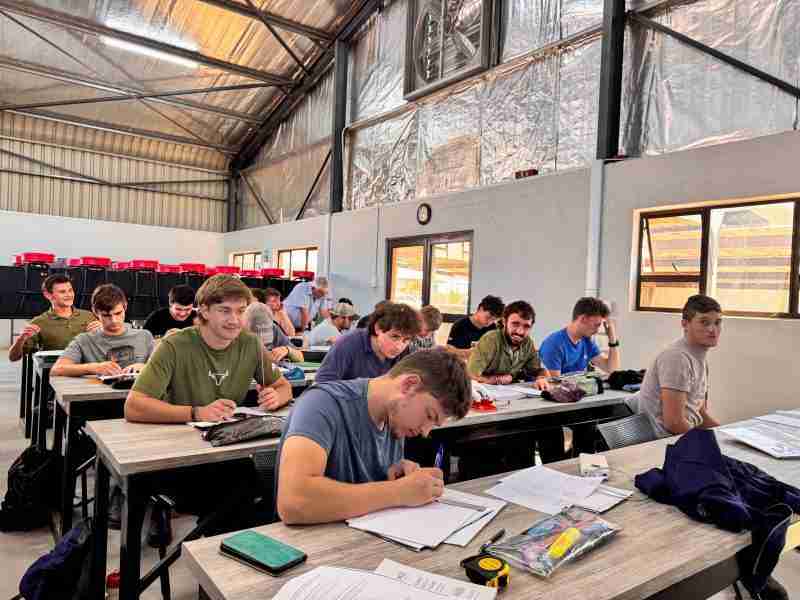
Students of Orania town’s Bo Karoo Opleiding (BKO) school, sit in their classroom in whites-only town of Orania, South Africa, March 31, 2025. REUTERS/Sisipho Skweyiya

Strydom declined to say whether his delegation had contact with the Trump administration. The U.S. State Department did not immediately respond to a request for comment.

South African foreign ministry spokesperson Chrispin Phiri told Reuters: “(Orania’s) not… a country. They are subject to the laws of South Africa and … our constitution.”

Other Afrikaner nationalist groups have also visited the U.S. to build alliances with overwhelmingly white, Republican audiences, prompting accusations back home that such trips stoke racial tensions.

The leftist Economic Freedom Fighters (EFF) last week accused Orania’s leaders of “destroying the unity of this country”, a charge they reject.

‘START OF SOMETHING’

Afrikaners are descendants of Dutch settlers who began arriving in the 1600s. They resisted the British Empire in South Africa, but once in charge of the country, they hardened racial segregation using discriminatory laws.

“There were 17,000 laws on land alone,” foreign ministry spokesperson Phiri said. “We had… to reconstruct South Africa into a country that represents all those who live in it.”

In 1991, as the end of apartheid neared, a group of about 300 Afrikaners acquired Orania, previously an abandoned water project on the muddy Orange River, to create a homeland exclusively for white Afrikaners.

“It’s the start of something,” former Orania Movement leader Carel Boshoff, said of his community, comparing its desire for independence – Orania even uses its own informal currency – to that of Israel, established after World War Two despite stiff resistance from Arabs living in that territory.

Boshoff, whose father founded the town and whose grandfather, Hendrick Verwoerd, is widely viewed as the architect of apartheid, dreams of a territory stretching to the west coast nearly 1,000 miles away.

Orania’s activities are funded through local taxes and donations from supporters and residents.

Its leaders were dismayed to find the only solution that anyone in the United States was interested in discussing was U.S. residency, after Trump offered in February to resettle white South African farmers and their families as refugees.

“We can’t be exporting our people,” Boshoff told Reuters beside a framed photo of his late grandfather. “We told them … ‘help us here’,” he said.

Some U.S. right-wingers have sought to make common cause with Afrikaners in their opposition to diversity policies that aim to empower historically unjustly-treated non-white groups. South Africa’s Black empowerment laws have been ridiculed by Trump’s South African-born adviser, Elon Musk.

Those laws were the reason Hanlie Pieters moved to Orania eight months ago, after 25 years of living in Johannesburg, to become head of marketing for the town’s technical college.

“Our children … what opportunities will they have?” Pieters said, bemoaning quotas for Black workers, while trainee plumbers and electricians honed their skills in a shed nearby.

A third of all South Africans are out of work, most of them poor Blacks.

One such unemployed man, 49-year-old Bongani Zitha, said he thought “people in Orania… are doing very well” compared to many South Africans. “So many people looking for opportunities. It’s a struggle,” he sighed.

Zitha, who has lived in a corrugated shanty town in Soweto with no piped water or sewage since 1995, said at least the people of Orania have “rights to health, education, everything”.

And unlike himself under white minority rule, he added, Orania residents are free to live wherever they want.

Reporting by Tim Cocks; Editing by Gareth Jones

More than 200 motorcycles stolen this year

The Bermuda Police Service encouraging cycle owners to be vigilant

Bermuda Police Service update via press release:

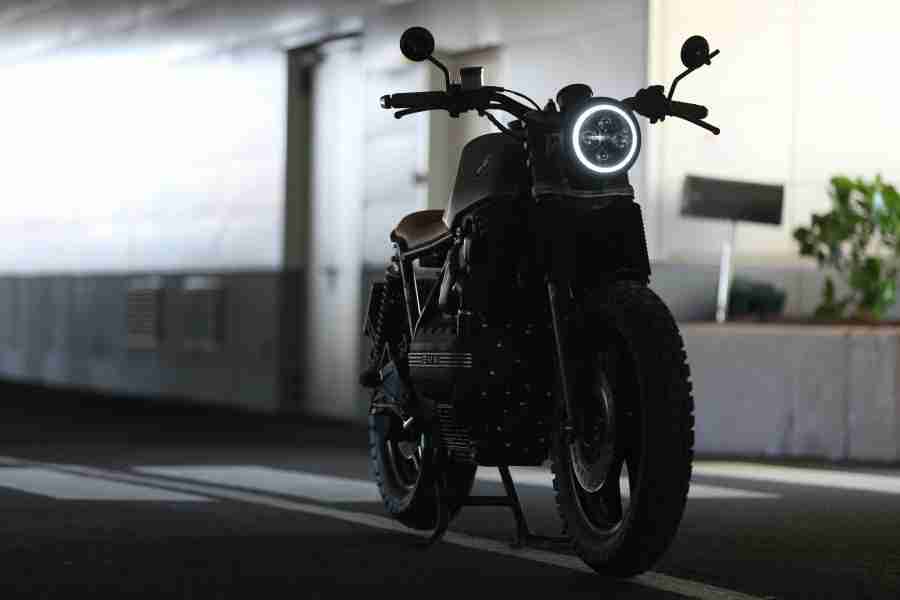
For the period January 1, 2025, to March 31, 2025, the Bermuda Police Service (BPS) received an alarming 208 motorcycle theft reports. 99 of those motorcycles have been recovered by the BPS.

Chief Inspector, Robert Cardwell stated, “The Tactical Division has carried out a detailed analysis of the reported thefts. That analysis has identified a number of potential suspects. We are now conducting further inquiries to ascertain the evidential leads of those suspects. A team is being assembled to follow up on those leads. It is the intent to hold all suspects accountable for their actions and place them before the courts so that justice can prevail.”

Mr. Cardwell also highlighted an issue which impacts suspects being brought before the courts for this offence.

“Often hindering prosecution, is that once a motorcycle is recovered, the complainant does not want to proceed with a prosecution after they’ve received financial settlement from their insurance company for the stolen

bike. Without a complainant, we are unable to proceed. We are now in discussion with motor vehicle insurers to see how best this situation might be addressed with their assistance.”

All of the complaints of motorcycle theft during the first three months of this year, report that the vehicle was secured with only the handlebar lock.

The BPS once again encourages all motorcycle users to also use a secondary lock, preferably attached to a stationary object that cannot be moved.

At night, park bikes in well-lit areas and in all cases be sure not to leave keys in the ignition or spare keys with your bike.

Thieves rely on speed and ease of removal when they steal a vehicle.

The delay created by having to remove a secondary lock, could mean the difference between your bike being taken or not.

Any person with any information on motorcycle theft is asked to reach out to Chief Inspector Cardwell on 247-1076.

You may also call the main police number 295-0011, or 211

If you’d prefer, please share the information with a police officer you know or by using the community reporting portal at https://portal.police.bm

Proposed US Port Fees could ‘triple costs & terminate operations’

Local shipper warns against “catastrophic” $1.5M fee on Chinese-built vessels

John Wight, Chairman of Bermuda Container Line, told US officials they would be forced to terminate business operations if proposed million-dollar port fees are implemented as written.

The fees would almost triple shipping costs, he said.

In February, the Trump Administration proposed an up-to $1.5-million entry fee for any Chinese-built vessel entering a US Port.

This follows a United States Trade Representative (USTR) investigation that determined China had unreasonably targeted the maritime, logistics and shipbuilding sectors.

China now holds more than 50% of global shipbuilding tonnage, and controls 95% of the production of shipping containers.

Bermuda Container Line’s vessel, the Oleander, was built in China and launched in 2018.

At a public hearing in the US last week, BCL Chair John Wight told a USTR panel that the proposed port fees would be “catastrophic” for both BCL and Bermuda.

He said, “for a company with $30 million in annual revenues, with a net income of roughly $1 million, the additional financial cost to our company would amount to $76 million.

“BCL would be forced to terminate its business operations.

“It would be impossible to absorb the new fees and impossible to pass on the costs of the fees to our customers – almost tripling their current shipping costs.

“BCL recognizes and respects the United States’ right to take action against unfair trade practices. However, we urge the USTR to consider creating exemptions for small island countries, such as Bermuda”.

When asked for an example of such an exemption, Mr Wight proposed a per-container charge rather than an overall fee per vessel, which he said could potentially be absorbed by the company and/or customers.

Meanwhile, the USTR Section 301 proposal would also mandate the increased use of US operated-and-flagged vessels for the export of US products.

Howard Pitcher, representing North Florida Shipping which serves the Somers Isle, told the USTR panel that the vessel was built in China but completed in Europe. If the proposed fees hit them, he said, it would put them out of business and 900 working people would lose their jobs.

He also suggests that trying to drive more shippers to use or order US-flagged vessels is unrealistic at this time.

He told the panel that the proposal “doesn’t provide a sustainable solution to the lack of US-built ships. It will take years, if not decades, to create enough US flag vessels to meet the demand.”

Current shipbuilders are generally building vessels much larger than Bermuda’s carriers require. John Wight said the largest container ships globally are roughly 50-times the size of the Oleander. 

Mr Pitcher told the USTR panel that a small Gulf Stream feeder vessel they designed in 2010 was going to cost 8-to-$10 million to build in China, 12-to-$15 million to build in the Netherlands, or 45-to-$50 million to build in the US.

He continued, “my preference would be to see a US-built flag vessel on our route to Bermuda, but the reality is that such a vessel would be five times more expensive, making it financially unfeasible at this point in time.”

“…while the intended intention behind 301 is to strengthen national security, the consequences could be catastrophic for small ports, American workers or international trade.”

We understand the USTR must issue its final proposal on or before April 17th.

Shipping companies respond to US proposals

Bermuda Container Line published a release which states that they are taking the USTR proposals very seriously, and communicating with the USTR and local Government to monitor the situation and explore contingency plans.

While the outcome is unclear at this stage, the statement reads, “any adoption of the proposed rules is likely to provide disruption to Bermuda’s economy, as approximately 90% of all goods received in Bermuda arrive on the island’s three container ships, with BCL’s M.V. Oleander the largest of the three ships.”

Meanwhile, the Bermuda Islander is Dutch built and flagged, and its transshipment partners are also European built and flagged, so the port fee proposals won’t impact them.

However, the mandate to increase US exporting on US vessels could be a larger issue for Bermuda and the Caribbean. This, according to Greg Henry of Voight Maritime, Bermuda International Shipping’s US Agent partner.

He says, “these vessels don’t exist at this time and would take many years to build at exorbitant prices.

“We are now standing by with the rest of the shipping industry waiting for the USTR’s ruling.”


Bermuda Container Line Press Statement:
”Bermuda Container Line (“BCL”) is aware of the SHIPS Act (the Shipbuilding and Harbor Infrastructure for Prosperity and Security for America Act), which is designed to create a U.S. national maritime strategy. The legislation is currently in the commentary phase with the United States Trade Representative’s office (“USTR”), and BCL was able to participate in last week’s public hearing in Washington D.C.
“BCL is taking the proposed application of port fees on Chinese built, and non-U.S. built vessels very seriously, and is communicating with all relevant agencies, including the USTR and local Government officials to monitor the situation, while exploring all possible contingency plans to maintain service continuity.
“While the outcome of the SHIPS Act is unclear at this stage, any adoption of the proposed rules is likely to provide disruption to Bermuda’s economy as approximately 90% of all goods received in Bermuda arrive on the islands three container ships, with BCL’s M.V. Oleander the largest of the three ships.”

‘Bed blocking’ could incur financial penalties, says Health Minister

The Health Ministry is looking into several policy changes to prevent patients overstaying at the hospital

Families who leave their relatives in hospital even when they’re fit to return home could face financial penalties.

Overcrowding at the hospital reached crisis levels recently and now, the Government is exploring options to potentially impose penalties for those responsible for so-called ‘bed blocking.’


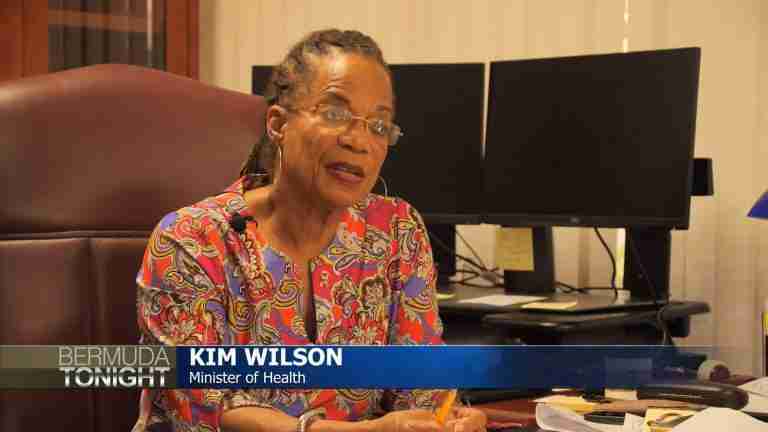
Kim Wilson, the Health Minister, says ‘bed blocking’ is a huge challenge for the hospital and Government is prepared to make legislative changes to force families to act.


In an interview today, Ms. Wilson made a clear distinction between negligent families who fail to take home patients who are medically fit for discharge and those who, due to circumstances at home or shortages of community care, are not equipped to look after loved ones.

Minister Wilson added that bed blocking has been exacerbated in recent weeks due to higher demand from those needing treatment in the hospital.

Haiti Beat Bermuda 4-1 (Updated)

Football: A 10-player Haiti dominate U17 Team Bermuda

Bermuda’s hopes of qualifying for the under 17 women World Cup in the fall suffered another blow in their match against Haiti this afternoon. An action-packed first half saw the Haitians pull out to a 3 nil lead – a scoring spree kicked off by a penalty conceded by the Lady Gombey Warriors in the 14th minute. The Haitian goal keeper was booked in the 27th minute, but even with their opponents down to 10 players, Bermuda couldn’t capitalize on its numerical advantage. A second penalty conceded in the second half gave the Haitians a 4 nil lead. A last minute goal for Team Bermuda gave the Lady Gombey Warriors their first goal of the tournament. The final score in the match was Haiti 4 Bermuda one.