CariGenetics launches regional genomic sequencing programme in quest for answers relating to prostate cancer and other ailments
Dr. Carika Weldon: “For too long, the Caribbean has been absent from the global genomics conversation.” Photo supplied
Press release: CariGenetics, in collaboration with Oxford Nanopore Technologies, has launched its Caribbean Genome Programme, the first large-scale genomic sequencing initiative in the region. This pioneering effort is set to address unmet need in advancing regional genetic research in the Caribbean, providing real-time, high throughput sequencing to address critical health disparities, starting with men’s health. The Caribbean has been historically underrepresented in genomic studies, with many global databases omitting them entirely. The Caribbean Genome Programme will start address this by sequencing 1,000 men with and without disease across 10 islands in its initial phase—scaling to 100,000 individuals by the end of 2027—to improve understanding of genetic factors influencing prostate cancer and other health conditions. For the first time, large-scale genome sequencing is being conducted within the region rather than samples being sent overseas for analysis. Powered by Oxford Nanopore’s real-time, accessible sequencing technology, CariGenetics is building local capacity for genetic research, ensuring faster insights and regional data ownership. Dr. Carika Weldon, founder and CEO of CariGenetics, said: “For too long, the Caribbean has been absent from the global genomics conversation. This programme will not only generate the first large-scale dataset for our communities but will also empower regional researchers with cutting-edge sequencing technology. Oxford Nanopore’s approach aligns perfectly with our mission to enable in-country sequencing and real-time genomic insights. We have been able to perform testing that usually take months to within hours.” A new model for inclusive genomic research CariGenetics is taking an innovation-led, private-sector approach to genomic research—moving beyond traditional academic models. This initiative is designed to attract mission-aligned investors, philanthropic donors, and family offices, ensuring long-term, impact-driven support for genomic health equity. Dr. Gordon Sanghera, CEO of Oxford Nanopore Technologies, commented: “We are delighted to collaborate with CariGenetics in this groundbreaking initiative. Oxford Nanopore’s technology is designed to enable rapid, information-rich DNA and RNA analysis anywhere in the world—including underserved regions like the Caribbean. Dr. Weldon’s leadership is inspiring, and we are excited to see the impact this programme will have both on genomic research and healthcare in the Caribbean region, as well as the global Caribbean diaspora.” CariGenetics is actively seeking strategic partnerships to expand its rapid, local genomic research capabilities, supporting the growth of its sequencing initiatives across the Caribbean. For more information, please contact media@nanoporetech.com or jodi@CariGenetics.com. About CariGenetics CariGenetics is pioneering accessible, high-impact genomic research in the Caribbean, bringing real-time sequencing capabilities to the region for the first time. Founded by Dr. Carika Weldon, CariGenetics is committed to closing the gap in global genetics and ensuring Caribbean populations are represented in biomedical research. About Oxford Nanopore Technologies Oxford Nanopore Technologies’ goal is to bring the widest benefits to society through enabling the analysis of anything, by anyone, anywhere. The company has developed a new generation of nanopore-based sensing technology for real-time, high-performance, accessible, and scalable analysis of DNA and RNA. The technology is used in more than 125 countries to understand the biology of humans and diseases such as cancer, plants, animals, bacteria, viruses, and whole environments. Oxford Nanopore Technologies products are intended for molecular biology applications and are not intended for diagnostic purposes. www.oxfordnanopore.com
Must have a parent or grandparent born in Italy to automatically qualify for citizenship by descent
Italian Foreign Minister Antonio Tajani speaks to the media on the day of the G7 Foreign Ministers meeting in La Malbaie, Charlevoix, Quebec, Canada March 14, 2025. REUTERS/Mathieu Belanger/File Photo
International news via Reuters:
Italy’s government tightened its citizenship laws on Friday, preventing people from delving deep back into their family history to try to claim a much sought-after Italian passport.
Under existing rules, anyone who can prove they had an Italian ancestor who was alive after March 17, 1861, when the Kingdom of Italy was created, can seek citizenship.
However, Foreign Minister Antonio Tajani said the system was being abused, with would-be Italians swamping consulates abroad for requests for passports, which provide visa-free entry to more countries than almost any other nationality.
As a result, in future only individuals with at least one parent or grandparent born in Italy, a European Union member state, will automatically qualify for citizenship by descent.
“Being an Italian citizen is a serious thing. It’s not a game to get a passport that allows you to go shopping in Miami,” Tajani told a press conference.
The foreign ministry said there had been a surge in people abroad being granted citizenship, particularly in South America, where millions of Italians emigrated in the 19th and 20th centuries, often to escape grinding poverty back home.
Between 2014 and 2024, the number of Italians living abroad rose by 40%, from 4.6 million to 6.4 million, many registering thanks to their newfound nationality. In Argentina alone, citizenship recognitions jumped to 30,000 in 2024 from 20,000 in 2023, while Brazil saw a rise to 20,000 from 14,000.
Tajani said companies were making a fortune by helping people track down their long-forgotten ancestors and seek birth certificates needed for applications – clogging up municipal offices with their demands for documentation.
“We are striking down very hard against those who want to make money from the opportunity of becoming an Italian citizen,” Tajani said, adding that in future, nationality requests would be handled directly in Rome to free up overburdened consulates.
Italy has a population of around 59 million, which has been shrinking for the past decade. The foreign ministry has estimated that under the old rules, 60 to 80 million people worldwide were eligible for citizenship.
Prime Minister Giorgia Meloni has previously suggested that Italy could overcome its demographic decline by seeking Christians of Italian ancestry from nations like Venezuela.
Critics of ancestry-based citizenship say it is grossly unfair, offering nationality to people who had no meaningful connection with Italy.
By contrast, the children of migrants born and raised in Italy who speak Italian fluently, have to wait until they are 18 before being able to apply for a passport.
Reporting by Alvise Armellini and Crispian Balmer; editing by Mark Heinrich
American Airlines and Aer Lingus did not immediately respond to requests for comments
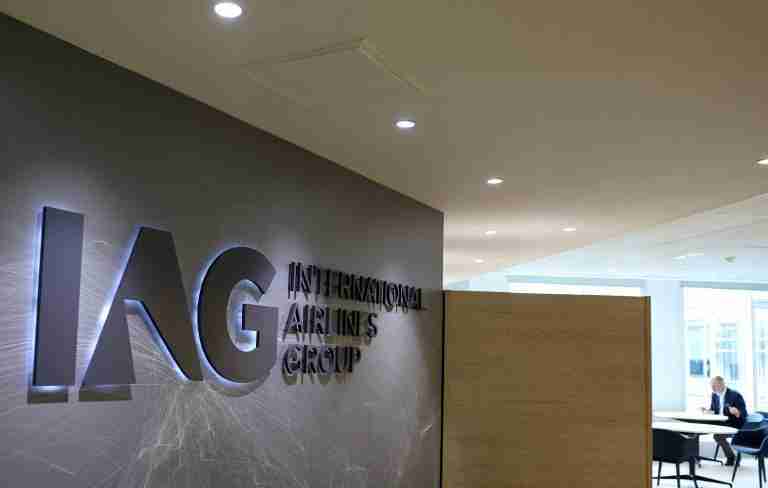
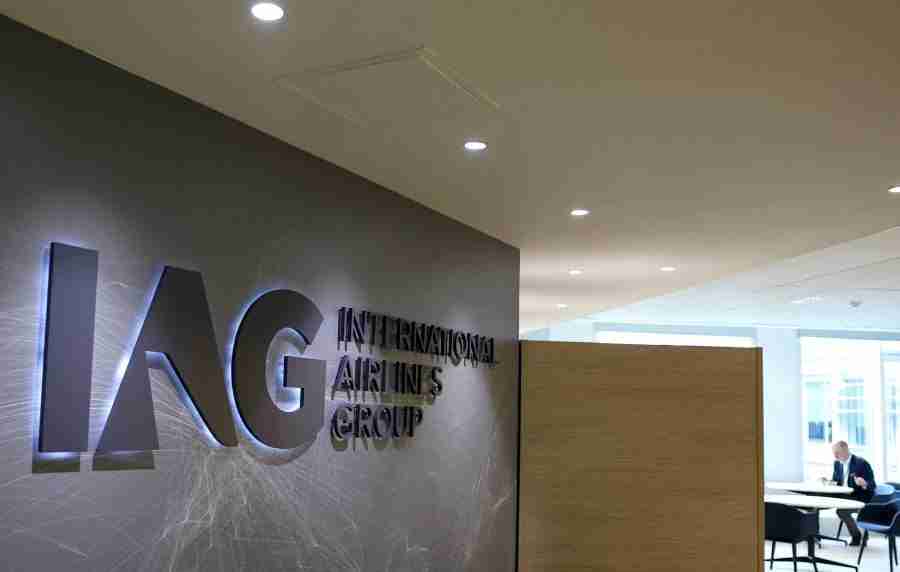
Signage for IAG (International Airlines Group) is seen at the British Airways headquarters and IAG head office in Harmondsworth, London, Britain, March 13, 2025. REUTERS/Toby Melville/File Photo
International news via Reuters:
Britain’s competition regulator said on Friday five airlines, including British Airways and American Airlines, have offered commitments to resolve concerns over their agreement to cooperate on passenger routes between the UK and the U.S.
The group of airlines, including Iberia, Aer Lingus, and Finnair, agreed to give their competitors slots for take-off and landing at London airports on routes to and from Boston, Miami, and Chicago, the Competition and Markets Authority (CMA) said. The five carriers together form the Atlantic Joint Business Agreement, which allows them to coordinate their transatlantic flights and make business decisions on prices and schedules.
American Airlines and Aer Lingus did not immediately respond to Reuters’ requests for comments, while the other three airlines did not immediately respond.
The new prime minister said the U.S. visit signaled a “lack of respect”
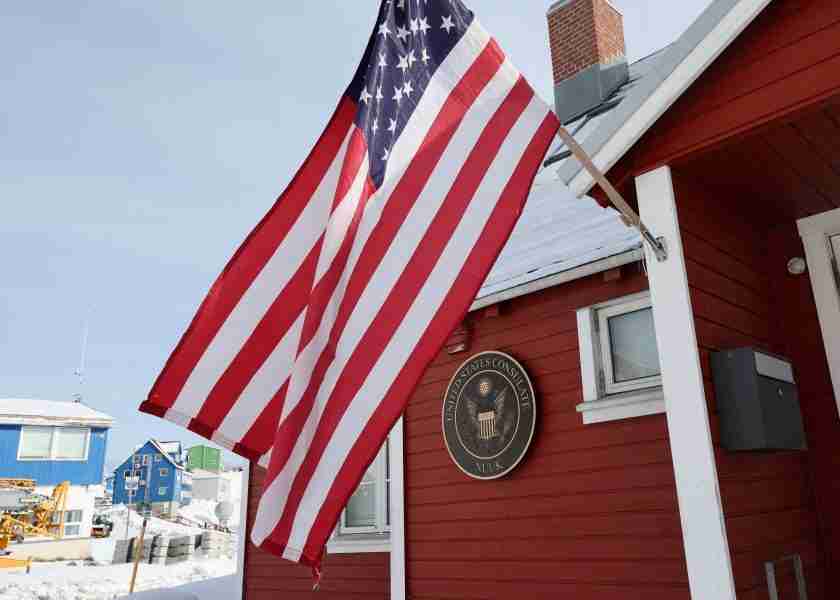
The U.S. flag flies outside the consulate in Nuuk, Greenland, March 27, 2025. REUTERS/Leonhard Foeger
International news via Reuters:
U.S. Vice President JD Vance was set to land in Greenland on Friday at a time when President Donald Trump is renewing his insistence that Washington should take control of the semi-autonomous Danish territory.
The visit to the U.S. military base at Pituffik in the north of the Arctic island comes just hours after a new broad government coalition, which aims to keep ties with Denmark for now, was presented in the capital Nuuk.
The new prime minister said the U.S. visit signalled a “lack of respect” and called for unity in the face of “pressure from outside”.
The U.S. delegation, which will also include Vance’s wife Usha, national security adviser Mike Waltz and Energy Secretary Chris Wright, was scheduled to land at around 1530 GMT.
The initial plan for the trip had been for Vance’s wife to visit a dog-sled race on the island together with Waltz, even though they were not invited by authorities in either Greenland or Denmark.
Public protests and outrage from authorities in both Greenland and Denmark prompted the U.S. delegation to only fly to the military base and not meet the public.
Under the terms of a 1951 agreement, the U.S. is entitled to visit its base whenever it wants, as long as it notifies Greenland and Copenhagen. Pituffik is located along the shortest route from Europe to North America and is vital for the U.S. ballistic missile warning system.
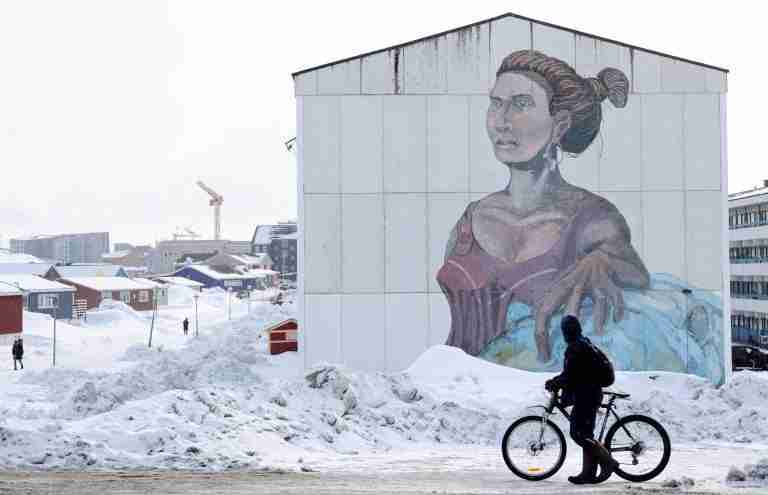
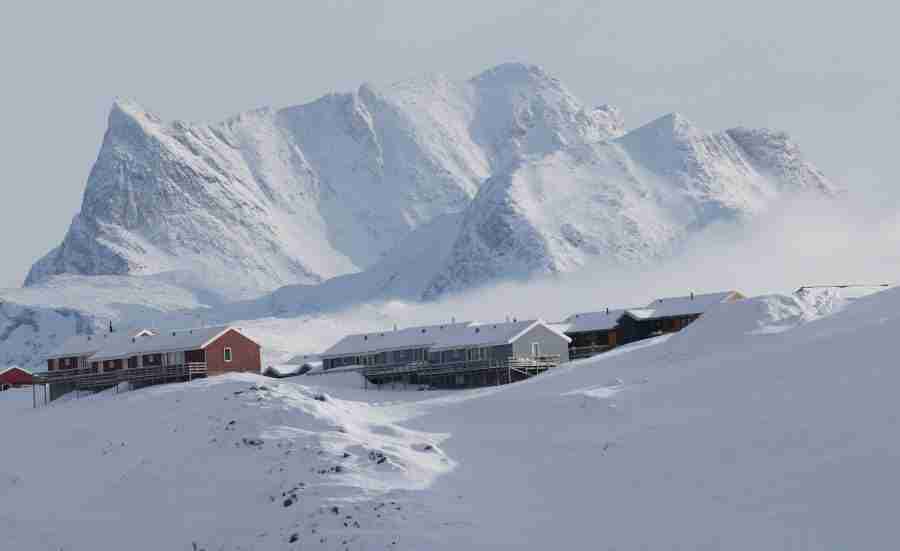
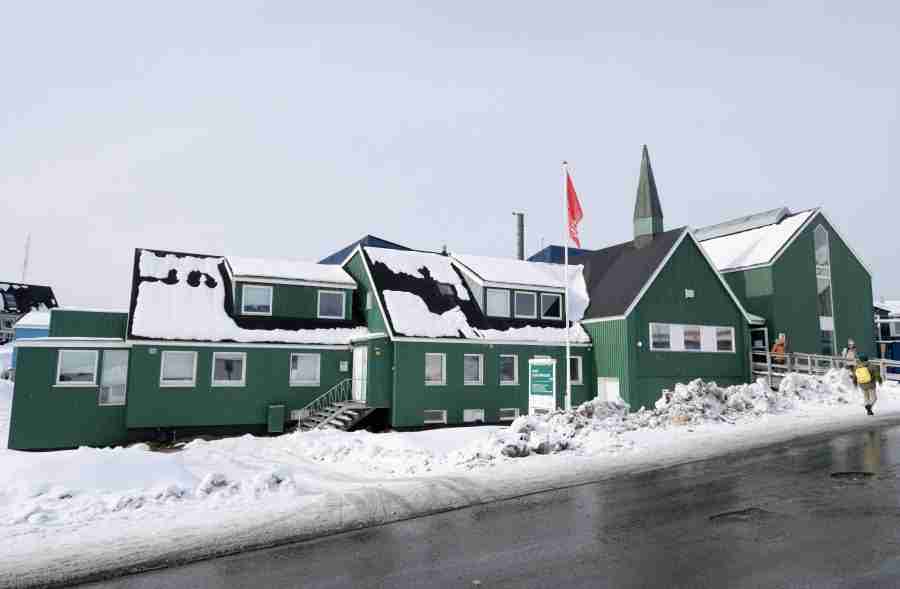
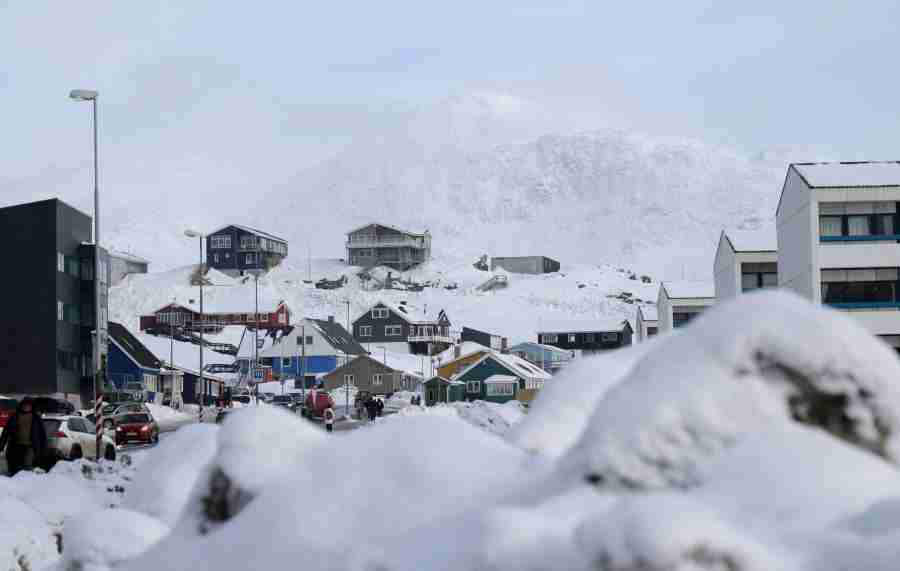
A view of houses in Nuuk, Greenland, March 27, 2025. REUTERS/Leonhard FoegerA man passes a building with social housings with an Inuit mural in Nuuk, Greenland, March 27, 2025. REUTERS/Leonhard FoegerA view of the Nuuk Art Museum in Nuuk, Greenland, March 27, 2025. REUTERS/Leonhard FoegerA view of houses in Nuuk, Greenland, March 27, 2025. REUTERS/Leonhard Foeger
Trump reiterated his desire to take over Greenland as recently as Wednesday, saying the U.S. needs the strategically located island for national and international security.
“So, I think we’ll go as far as we have to go. We need Greenland and the world needs us to have Greenland, including Denmark,” he said.
The island, whose capital Nuuk is closer to New York than the Danish capital Copenhagen, boasts mineral, oil and natural gas wealth, but development has been slow and the mining sector has seen very limited U.S. investment. Mining companies operating in Greenland are mostly Australian, Canadian or British.
A White House official has said Greenland has an ample supply of rare earth minerals that would power the next generation of the U.S. economy.
NEW GOVERNMENT
Greenland’s new Prime Minister Jens-Frederik Nielsen on Friday urged political unity.
“At a time when we as a people are under pressure, we must stand together,” Nielsen said at a press conference.
His pro-business party, the Democrats, which favours a gradual independence from Denmark, emerged as the biggest party in a March 11 election.
Danish Prime Minister Mette Frederiksen, who had called the initial plans for the U.S. visit “unacceptable”, congratulated Greenland on its new government in a post on Instagram: “I look forward to close cooperation in an unnecessarily conflict-ridden time.”
The question now is how far Trump is willing to push his idea of taking over the island, said Andreas Oesthagen, a senior researcher on Arctic politics and security at the Oslo-based Fridtjof Nansen Institute.
“It is still unlikely that the United States will use military means,” he told Reuters.
“But it is unfortunately likely that President Trump and Vice President Vance will continue to use other means of pressure, such as ambiguous statements, semi-official visits to Greenland, and economic instruments,” he added.
‘NOT FOR SALE’
By revising the trip, the Trump administration is seeking to refocus the discussion on the topics it is interested in: the U.S. presence on Greenland, military capabilities available, and the wider security of the Arctic, said Catherine Sendak, head of the Transatlantic Defense and Security programme at the Center for European Policy Analysis, a Washington-based think tank.
“A change of course was needed,” Sendak told Reuters.
However, some residents in Nuuk remained angry at the Trump administration ahead of Vance’s visit.
“I am a human. Humans are not for sale. We are not for sale,” Tungutaq Larsen, a film-maker, told Reuters.
Polls have shown that nearly all Greenlanders oppose becoming part of the United States. Anti-American protesters, some wearing “Make America Go Away” caps and holding “Yankees Go Home” banners, have staged some of the largest demonstrations ever seen in Greenland.
On Thursday, residents in Nuuk planted Greenlandic flags in the snow and a cardboard sign in English that said “Our Land. Our Future”.
Reporting by Tom Little and Leonhard Foeger in Nuuk, Gwladys Fouche and Terje Solsvik in Oslo, Jacob Gronholt-Pedersen, Louise Breusch Rasmussen and Stine Jacobsen in Copenhagen; Writing by Gwladys Fouche; Editing by Frances Kerry and Alison Williams
50 people onboard: 45 tourists of different nationalities and five Egyptian crew members
Tourists stand in a pleasure boat, after a tourist submarine sank off the Egyptian Red Sea resort city of Hurghada, Egypt, March 28, 2025. REUTERS/Mohamed Abd El Ghany
International news via Reuters:
Six Russians died on Thursday and 39 foreign tourists were rescued when a viewing submarine sank off the Egyptian Red Sea resort of Hurghada, the local governor’s office said on Facebook, adding that no passengers or crew were still missing.
The Red Sea Governorate said the submarine, named “Sindbad”, had 50 people onboard: 45 tourists of different nationalities from Russia, India, Norway, and Sweden, and five Egyptian crew members.
“Most of those on board were rescued and taken to their hotels and hospitals in Hurghada,” the Russian consulate in Hurghada said.
The submarine was equipped with large portholes to let passengers see the Red Sea’s spectacular corals and marine life, and was able to descend to a depth of 25 metres, according to the company’s website.
The pleasure craft was a far cry from the extreme adventure submersible that imploded thousands of metres below the Atlantic near the sunken Titanic in June 2023.
The Red Sea is a major hub for Egypt’s crucial tourism industry, a pillar of the economy, in which Russian tourists play an increasing part. Egypt also attracts tourists with its great pyramids of Giza and cruises on the Nile in Luxor and Aswan.
Successive Egyptian governments have waged successful crackdowns on Islamist militant groups who hurt the tourism industry with attacks on foreigners in the past.
Egyptian authorities are conducting investigations with crew members to determine the causes of the submarine sinking, the local governorate cited Red Sea Province Governor Amr Hanafy as saying.
The submarine, which is owned by an Egyptian, was licensed and so was the crew captain, he said.
There have been several recent incidents of tourist boats capsizing. Last June, a boat sank after suffering severe damage from high waves, though no casualties were reported.
And in November, a tourist boat capsized while carrying 31 tourists and 13 crew on a multi-day diving trip. Local media reported that at least 11 people had died in the incident, which was also blamed on high waves.
At the time, the governor of the Red Sea province said the boat, the Sea Story, had passed a safety inspection eight months earlier.
Last month, a tourist boat capsized while en route to Hurghada after undergoing maintenance.
The Tourism Ministry and the Chamber of Diving did not respond to Reuters requests for comment.
A United Nations report ranked Egypt first in Africa for tourism revenues in 2024 at $14.1 billion, more than twice its earnings in Suez Canal revenues, highlighting tourism’s vital role in sustaining the hard-pressed economy.
Reporting by Mohamed Yosry and Mohamed Ezz in Cairo, and Ahmed Elimam in Dubai; Additional reporting by Menna Alaa El-Din; Writing by Jana Choukeir, Nayera Abdallah and Michael Georgy; Editing by Aidan Lewis, Kevin Liffey and Ros Russell
Social media posts showed collapsed buildings and debris strewn across streets in the city
An injured person is stretchered out by emergency personnel near the site of a collapsed building after a strong earthquake struck central Myanmar on Friday, earthquake monitoring services said, which affected Bangkok as well with hundreds of people pouring out of buildings in the Thai capital in panic after the tremors, in Bangkok, Thailand, March 28, 2025. REUTERS/Ann Wang
International news via Reuters:
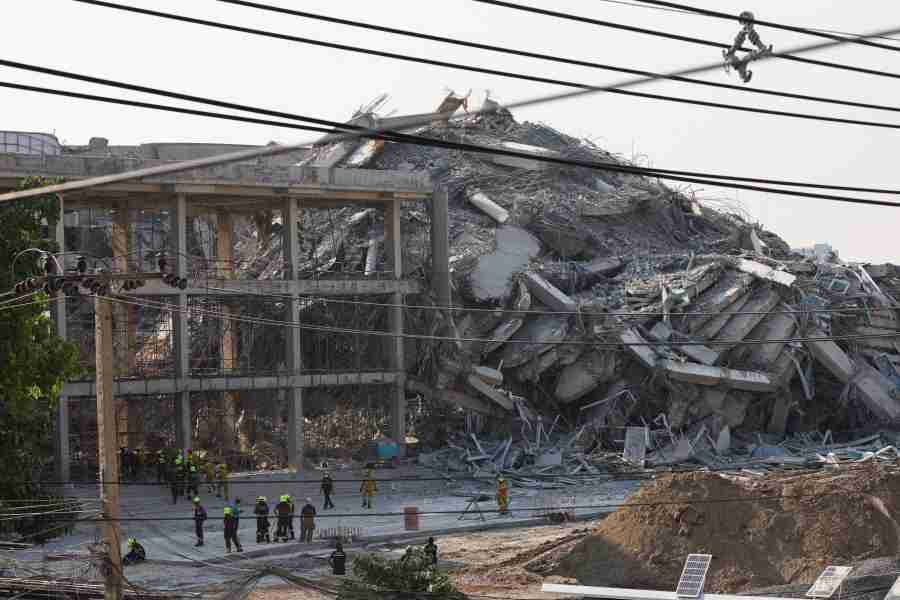
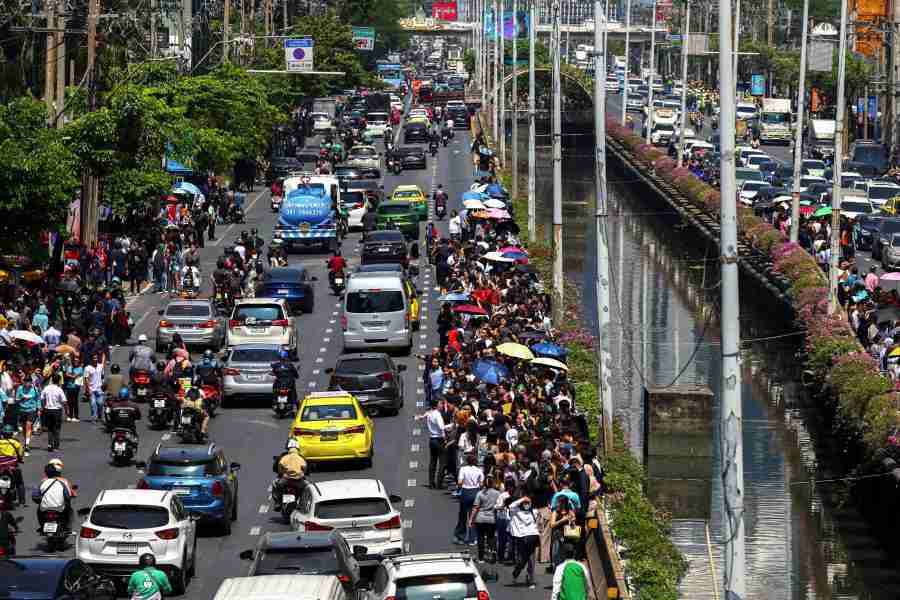
A powerful earthquake centred in Myanmar rocked Southeast Asia on Friday, killing several people and causing extensive damage, with rescuers in Bangkok searching for 81 people in the rubble of a collapsed building.
At least three people were killed in the town of Taungoo in Myanmar when a mosque partially collapsed, witnesses said, while local media reported that at least two people died and 20 were injured after a hotel collapsed in Aung Ban.
In Thailand, the defence minister said rescuers were searching for 81 people trapped in the rubble of a skyscraper that was under construction and collapsed into a pile of rubble.
Bangkok Governor Chadchart Sittipunt said there had been three deaths at the building site. He warned of possible aftershocks but urged people to be calm and said the situation was largely under control.
The United States Geological Survey (USGS) said the quake, which struck at lunchtime, was of 7.7 magnitude and at a depth of 10 km (6.2 miles). The epicentre was about 17 km from the Myanmar city of Mandalay, which has a population of about 1.5 million.
The quake was followed by a powerful aftershock and several more moderate ones.
“We all ran out of the house as everything started shaking,” a resident of Mandalay told Reuters. “I witnessed a five-storey building collapse in front of my eyes. Everyone in my town is out on the road and no one dares to go back inside buildings.”
The quake caused the collapse of buildings in five cities and towns, as well as a railway bridge and a road bridge on the Yangon-Mandalay Expressway, Myanmar state media said.
Images showed the destroyed Ava Bridge over the Irrawaddy River, its arches leaning into the water.
The quake will further stretch Myanmar’s ruling military, which is fighting a civil war against an armed uprising. The junta declared a state of emergency in multiple regions but provided no specifics of damage or injuries.
“The state will make inquiries on the situation quickly and conduct rescue operations along with providing humanitarian aid,” it said on the Telegram messaging app.
The Red Cross said roads, bridges and buildings had been damaged in Myanmar, and there were concerns for the state of large dams.
Mandalay is Myanmar’s ancient royal capital and at the centre of the country’s Buddhist heartland.
Social media posts showed collapsed buildings and debris strewn across streets in the city. Reuters could not immediately verify the posts.
Local media outlet Myanmar Now posted images showing a clock tower had collapsed and part of the wall by Mandalay Palace was in ruins.A witness in the city, Htet Naing Oo, told Reuters that a tea shop had collapsed with several people trapped inside. “We couldn’t go in,” she said. “The situation is very bad.”
At least three people died after a mosque in Taungoo partially collapsed, two eyewitnesses told Reuters.
Rescue personnel stand near a building that collapsed after a strong earthquake struck central Myanmar on Friday, earthquake monitoring services said, which affected Bangkok as well with people pouring out of buildings in the Thai capital in panic after the tremors, in Bangkok, Thailand, March 28, 2025. REUTERS/Athit PerawongmethaPeople sit on the pavement after a strong earthquake struck central Myanmar on Friday, earthquake monitoring services said, which affected Bangkok as well with hundreds of people pouring out of buildings in the Thai capital in panic after the tremors, in Bangkok, Thailand, March 28, 2025. REUTERS/Chalinee ThirasupaRescue personnel stand near a building that collapsed after a strong earthquake struck central Myanmar on Friday, earthquake monitoring services said, which affected Bangkok as well with people pouring out of buildings in the Thai capital in panic after the tremors, in Bangkok, Thailand, March 28, 2025. REUTERS/Athit PerawongmethaRescue personnel stand near a building that collapsed after a strong earthquake struck central Myanmar on Friday, earthquake monitoring services said, which affected Bangkok as well with people pouring out of buildings in the Thai capital in panic after the tremors, in Bangkok, Thailand, March 28, 2025. REUTERS/Athit Perawongmetha
“We were saying prayers when the shaking started… Three died on the spot,” said one of two people who spoke to Reuters.
Local media reported a hotel in Aung Ban, in Shan state, crumbled into rubble, with one outlet, the Democratic Voice of Burma, reporting two people had died and 20 were trapped.
The army-run MRTV reported that the quake toppled buildings, crushed cars and left massive fissures on roads across the capital, Naypyitaw.
Amnesty International’s Myanmar researcher, Joe Freeman, said the earthquake could not have come at a worse time for Myanmar, given the number of displaced people, the existing need for relief aid and cuts by the Trump administration to U.S. aid that have affected humanitarian aid.
Freeman said restricted media access meant there might not be a clear picture of the extent of damage and loss for some time.
Since overthrowing the elected civilian government of Nobel laureate Aung San Suu Kyi in 2021, the military has struggled to run the country, leaving the economy and basic services like healthcare in tatters.
An armed opposition, comprising established ethnic armies and new resistance groups formed since the coup, has seized swathes of territory and driven the junta out of border areas, increasingly hemming it into the central lowlands.
The fighting has displaced more than three million people in Myanmar, with widespread food insecurity and over a third of the population in need of humanitarian assistance, according to the United Nations.
The country has also been hit by a number of natural disasters in recent years, including Typhoon Yagi last year and Cyclone Mocha in 2023, and the internationally isolated junta has struggled to respond adequately.
People stand on the road as cars drive through the traffic after a strong earthquake struck central Myanmar on Friday, earthquake monitoring services said, which affected Bangkok as well with hundreds of people pouring out of buildings in the Thai capital in panic after the tremors, in Bangkok, Thailand, March 28, 2025. REUTERS/Athit PerawongmethaWomen and a child react after a strong earthquake struck central Myanmar on Friday, earthquake monitoring services said, which affected Bangkok as well with people pouring out of buildings following the tremors in the Thai capital, in Bangkok, Thailand, March 28, 2025. REUTERS/Ann WangView of a collapsed building after a strong earthquake struck central Myanmar on Friday, earthquake monitoring services said, which affected Bangkok as well with people pouring out of buildings following the tremors in the Thai capital, in Bangkok, Thailand, March 28, 2025. REUTERS/Ann WangWorkers assist an injured man after a strong earthquake struck central Myanmar on Friday, earthquake monitoring services said, which affected Bangkok as well with people pouring out of buildings following the tremors in the Thai capital, in Bangkok, Thailand, March 28, 2025. REUTERS/Ann Wang
OFFICE TOWER SHAKES IN BANGKOK
In the Thai capital, people ran out onto the streets in panic, many of them hotel guests in bathrobes and swimming costumes, as water cascaded down from an elevated pool at a luxury hotel, witnesses said.
The Stock Exchange of Thailand suspended all trading activities for the Friday afternoon session.
One office tower in downtown Bangkok swayed from side to side for at least two minutes, with doors and windows creaking loudly, witnesses said.
“At first, I didn’t realise (it was an earthquake),” office worker on Varunyou Armarttayakul told Reuters.”But then I saw the table shaking, and the chair and computer started swaying, too. I only knew for sure when I heard the noise of the cracking walls and cracking glass. Part of the ceiling even collapsed — that’s when I had to run out.”China’s Xinhua news agency said strong tremors were felt in southwestern Yunnan province, which borders Myanmar, but there were no reports of casualties.
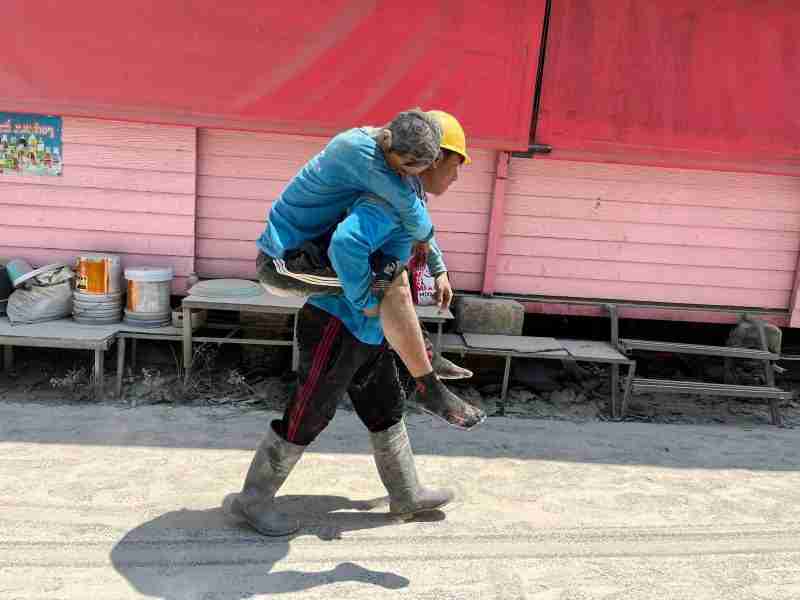
A worker carries a casualty on his back after a strong earthquake struck central Myanmar on Friday, earthquake monitoring services said, which affected Bangkok as well with people pouring out of buildings following the tremors in the Thai capital, in Bangkok, Thailand, March 28, 2025. REUTERS/Ann WangPeople gather on the streets after a strong earthquake struck central Myanmar on Friday, earthquake monitoring services said, which affected Bangkok as well with hundreds of people pouring out of buildings in the Thai capital in panic after the tremors, in Bangkok, Thailand, March 28, 2025. REUTERS/Chalinee ThirasupaPeople stand near the site of a collapsed building after a strong earthquake struck central Myanmar on Friday, earthquake monitoring services said, which affected Bangkok as well with hundreds of people pouring out of buildings in the Thai capital in panic after the tremors, in Bangkok, Thailand, March 28, 2025. REUTERS/Ann WangMotorists ride past a damaged building after a strong earthquake struck central Myanmar, in Mandalay, Myanmar, March 28, 2025. REUTERS/Stringer
Reporting by Bangkok Bureau, Shoon NaingWriting by Raju Gopalakrishnan and John MairEditing by Christian Schmollinger, Shri Navaratnam and Frances Kerry
U.S.-imposed fees could hike cost of shipping containers by $10,000 each
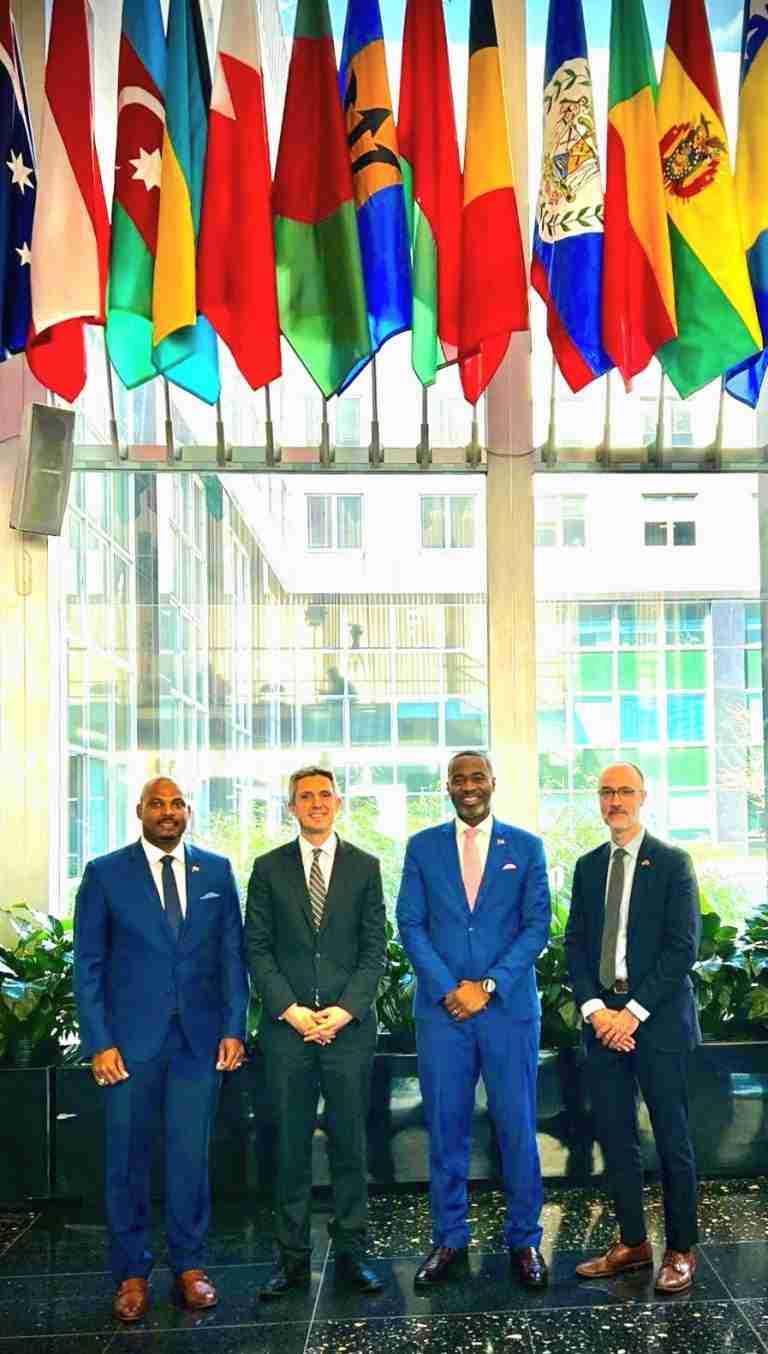
Premier David Burt and Minister Jason Hayward met with Director Mark Fleming, from the Office of Northern European, Baltic, and Arctic Security Affairs (EUR/NBA) and Chris DeVito and the UK and Bermuda Desk Officer, from the Office of Northern European, Baltic, and Arctic Security Affairs (EUR/NBA). Photo courtesy of DCI
Government press release: During the Bermuda Delegations visit to Washington, DC, this week, the Premier, the Hon. David Burt, JP, MP, and Minister of Economy and Labour, the Hon. Jason Hayward, JP, MP, met with senior US State Department Officials to discuss ongoing concerns regarding potential port fees to be introduced by the US Government that would have a severely negative impact on Bermuda. In a critical meeting with Mark Fleming, Director of the Office of Nordic, Baltic, and Arctic Security Affairs in the Bureau of European and Eurasian Affairs, the Premier raised the potential impact of the U.S. Trade Representative’s (USTR) proposed action, which could affect shipping vessels built in China, including the MV Oleander Bermuda’s primary supply vessel. Premier Burt expressed Bermuda’s support for the broader goals of fairer maritime practices but cautioned that, without exemptions or carve-outs, the proposed action would have severe consequences for the island. The Premier said, “This is not a theoretical concern. It would significantly impact shipping costs, increasing the cost of all goods imported into Bermuda.” As Bermuda currently sources the vast majority of its goods from the US, the Premier and Minister shared that if the Oleander were impacted, the cost per container could rise by as much as $10,000, which would have a devastating effect on consumers and businesses. Premier Burt stressed that the issue would impact not only Bermudians but also US citizens living in Bermuda and American suppliers doing business with the island. He reiterated Bermuda’s commitment to its longstanding and valued partnership with the United States and requested that the island be granted special consideration under any final policy. It should be stressed that Director Fleming acknowledged Bermuda’s concerns and confirmed that discussions with relevant USTR officials are ongoing. He encouraged continued engagement and collaboration with other impacted jurisdictions to raise the issue collectively. Following the meeting, Premier Burt said, “This was a productive and necessary conversation in the interest of all Bermudians. Direct engagement with U.S. officials allows us to raise Bermuda’s concerns at the highest level and ensure decision-makers understand the real-world impact of proposed policy changes. This matter was discussed in an emergency CARICOM Heads of Government meeting convened virtually last Friday, March 21st, and I know that regional leaders have raised this issue with US Secretary of State Marco Rubio in meetings this week.” The Premier concluded, “The Government looks forward to continued dialogue on this issue and will continue to advocate for Bermuda and work with U.S. officials to avoid sudden and unaffordable increases in food prices and the overall cost of living. While we engage in this dialogue, we are also exploring contingencies should the proposed fee be approved to take effect.” The Premier Burt and Minister Hayward returned to Bermuda last night.
Critics say the law effectively restricts the freedom of assembly
FILE PHOTO: The rainbow Pride flag hangs on the Budapest’s mayor’s office as the city celebrates the Pride month with a series of events in Budapest, Hungary, August 17, 2020. REUTERS/Bernadett Szabo/File Photo
International news via Reuters:
A group of embassies in Budapest, including European powers but not the United States, have expressed their concern in a joint statement over a law passed by Hungary’s ruling party that bans the Pride march by the LGBTQ+ community.
Hungary’s parliament passed a law proposed by ruling Fidesz party lawmakers last week to ban the Pride march on the grounds that it could be harmful to children. Critics say the law effectively restricts the freedom of assembly. The legislation has triggered protests.
The statement issued by 22 embassies including France, Germany and the United Kingdom, said: “We, the undersigned Embassies, are deeply concerned about the legislation…that results in restrictions on the right of peaceful assembly and the freedom of expression.”
The embassies cited the European Convention on Human Rights and said they were “committed to respecting, protecting and fulfilling the human rights and fundamental freedoms of all people, regardless of sexual orientation, gender indentity and sex characteristics.”
The United States was not listed among the signatories.
Hungarian Foreign Minister Peter Szijjarto dismissed the embassies’ statement when asked about it at a briefing.
“We are a sovereign state. We have never accepted, and will not accept in the future either, that anyone from outside should try to tell us how we should live here,” he said.
“The Hungarian parliament…will decide which laws it adopts and which it does not,” Szijjarto said.
Prime Minister Viktor Orban, an ally of U.S. President Donald Trump and who faces an unprecedented challenge from a new surging opposition party ahead of 2026 elections, has criticised the LGBTQ+ community and pledged to crack down on foreign funding of independent media and NGOs in Hungary in recent weeks as part of his campaign.
The law says police can use face recognition cameras to identify people who attend the event, and impose fines on participants.
Michael O’Flaherty, Council of Europe Commissioner for Human Rights, an independent institution promoting human rights in Europe, has said he was “very concerned” about the new law.
Organisers said they planned to go ahead with this year’s Pride march – scheduled for June 28 – despite the ban.
Reporting by Krisztina Than and Anita Komuves; Editing by Angus MacSwan
European Union officials are trying to ease tensions with the U.S. and prevent a trade war
FILE PHOTO: The PayPal logo is seen on a smartphone in front of the same logo displayed in this illustration taken September 8, 2021. REUTERS/Dado Ruvic/Illustration/File Photo
International news via Reuters:
A German government spokesperson said on Friday that “nothing is off the table” with regards to punitive measures in response to the threat of U.S. tariffs, after an EU lawmaker suggested they target U.S. tech giants.
Asked whether this approach would be possible, the spokesperson said that “at the moment, nothing is off the table… everything is being looked at”.
“Decisions must be made jointly and in consideration of the costs and benefits within the European Union and under the leadership of the European Commission – this process is underway,” he added.
U.S. President Donald Trump on Wednesday announced a 25% tariff on vehicles imported into the U.S., a move with far-reaching implications for Germany’s car industry, especially Volkswagen, which has a large supply base in Mexico.
European Union officials are trying to ease tensions with the U.S. and prevent a trade war, and the German government spokesperson said “we are still hoping, we are still counting on reaching agreements” with Washington.
Earlier on Friday, a senior European lawmaker said the EU could charge fees on PayPal and Google if negotiations with the U.S. were to fail.
“In the case of digital service providers, there is also a huge economic interest on the part of U.S. companies,” said Bernd Lange, the head of the European Parliament’s international trade committee. “In this respect, you can also look at charging fees on PayPal or Google.”
“Ultimately, service providers are not excluded from possible countermeasures, depending on what the U.S. does and how far and where the spiral leads,” he told journalists in Berlin.
Reporting by Christian Kraemer and Andreas Rinke; Writing by Friederike Heine; Editing by Ludwig Burger and Jan Harvey
The number of unemployed people in Germany has not been above 3 million in a decade
The Employment Office “Amt fuer Arbeit” designed by Bauhaus architect Walter Gropius, one of UNESCO world heritage sites of the eastern German city of Dessau, is pictured in Dessau, Germany, March 5, 2022. REUTERS/Wolfgang Rattay/File Photo
International news via Reuters:
The number of people out of work in Germany rose in March at the fastest rate since October of 2024, data showed on Friday, as an economic malaise puts pressure on the job market even against a backdrop of long-term labour shortages.
The office said the number of unemployed increased by 26,000 in seasonally adjusted terms to 2.92 million. Analysts polled by Reuters had expected that figure to rise by 10,000.
The seasonally adjusted jobless rate rose to 6.3% from 6.2% the previous month, slightly higher than a forecast of analysts polled by Reuters.
“March marks the start of the so-called spring recovery on the labour market. This year, however, the economic slump is noticeably slowing it down,” said Andrea Nahles, the head of the labour office.
Smarting from two consecutive years of decline in 2023 and 2024, Europe’s largest economy is still battling persistent weakness and structural headwinds in industry.
The number of unemployed people in Germany has not been above 3 million over the last 10 years.
Economic weakness and structural challenges were also reflected in the fact that the number of open positions was decreasing, said the director of the German Chamber of Commerce, DIHK, Achim Dercks.
FEWER JOB OPENINGS
There were 643,000 job openings in March, 64,000 fewer than a year ago, showing a slowdown in labour demand, the federal labour office said.
“We need a turnaround in growth and investments so that employment picks up again,” Dercks said, noting that employment had fallen significantly, particularly in industry.
The dire economic situation is reflected in the country’s storied auto industry, with Volkswagen and others cutting jobs on weak demand.
Adding to automakers’ burdens, U.S. President Donald Trump announced on Wednesday a 25% tariff on imported vehicles to the U.S.
Germany was in the immediate firing line, said Gaurav Ganguly, director of economic research at Moody’s Analytics.
“If the policy remains in place, the consequences for consumer confidence and employment in the auto sector and beyond are severe,” Ganguly said.
The gradual weakening of the labour market looks set to continue as recruitment plans in both industry and services keep coming down, said Carsten Brzeski, global head of macro at ING.
Furthermore, the number of bankruptcies has been increasing by low double-digit percentages since the summer of 2023, which will also push up unemployment.
“Today’s bankruptcy is tomorrow’s unemployment,” Brzeski said.
Reporting by Friederike Heine, Maria Martinez and Holger Hansen; Editing by Ludwig Burger and Alex Richardson
Extra pay in politicians’ pockets at, we estimate, a total cost topping one million dollars (WATCH the report above for a visual breakdown).
Bumping MPs’ salaries is set to be one of the first acts of the newly-re-elected PLP Government.
The proposed raises are Government’s update to those recommended by the Salaries Review Board last November.
The Board is chaired by former UBP Cabinet Minister turned PLP member Maxwell Burgess and its members include ex-OBA leader Cole Simons, along with business people and unionist Ed Ball Jnr.
We understand the board was unanimous in its recommendations.
Up until now, it has not been clearly laid out just how much more money legislators could be taking home. We’re looking to fix that today.
Our projections show that if proposed salary increases are passed, all MPs could see their current pay packets fatten by 31%.
The Premier himself will take home an extra 50-thousand dollars a year, the Speaker an extra 90-thousand-plus… and the overall cost of the Legislature will balloon by more than a million dollars.
Our story last week was originally headlined ‘Near 10% pay hike for MPs’ – when actually it’s the Ministerial and some other roles that get the 9.6% pay raise.
This would be ON TOP of the raise they would get as MPs… and that 9.6% bump is based on what Cabinet members WOULD have been earning if their pay hadn’t been cut 12 years ago. So, it’s arguably a misleading figure.
Cabinet on 10% reduction since 2013
In March 2013, the governing One Bermuda Alliance implemented a 10% pay cut for Cabinet Ministers.
This means that from then until now, through the transition from OBA to PLP administrations, every Cabinet Minister has earned LESS than the 2009 figure cited in the table of adjustments released by Government (scroll down to view).
This is affirmed by the House of Assembly remuneration reported at parliament.bm (as of March 27, 2025).
We have attempted to work out what the proposed wage hike could mean in dollar terms, comparing what the legislators are earning TODAY, to what they would earn if the pay hikes are approved.
Here’s our estimates, based on Cabinet members working full-time…
What they could be making…
The proposed salary increase would add more than $50,000 dollars a year ($50,422) to Premier David Burt’s pay packet – more than a 24% increase.
It should be noted that this is more than $12,000 below the Board-recommended increase, which the Premier previously stated he did not support.
The Premier is also Finance Minister, so that position won’t immediately cost any more.
However, every other Cabinet member gets a better deal than the Board would have given them…
Deputy Premier and Minister of Housing, Zane De Silva, would get a $42,000 boost to the current gross salary ($42,089), or a 25% increase.
Attorney General, Senator Kim Wilkerson, is not an MP. Her combined Senate and Ministerial Salary will go up by more than $37.5K ($37,677), or 21%.
All other Cabinet Ministers will get a 25% increase, or an extra $39K-plus ($39,459).
The only exception is Education Minister Crystal Ceasar, a Senator rather than an MP, whose gross salary increases by 21%, or $27.6K (27,636).
Opposition Leader Jarion Richardson is looking at a 24% wage hike – another 20-thousand, 4-hundred dollars a year.
Government Whip Neville Tyrell could see a 35% boost – an extra $22K+, whereas Opposition Whip Craig Cannonier would get a 29% raise, or $18K+.
A similar 28% pay hike goes to Junior Ministers and MPs Wayne Furbert and Dennis Lister III, who both get $18.6K above the current salaries for their roles.
The remaining PLP and OBA MPs who don’t also serve in ministerial or other roles, would see an additional $17,532 every year, or a 31% raise.
PLP Senators serving as Junior Ministers would get nearly $7,000 more each, or 16%; Senate President Joan Dillas-Wright could see just over $7,000 more, that’s 16%, while an extra $6,000, or 18%, would go to Senate Vice President John Wight.
Other OBA and Independent Senators would receive an extra $5.7K a year – a 19% raise.
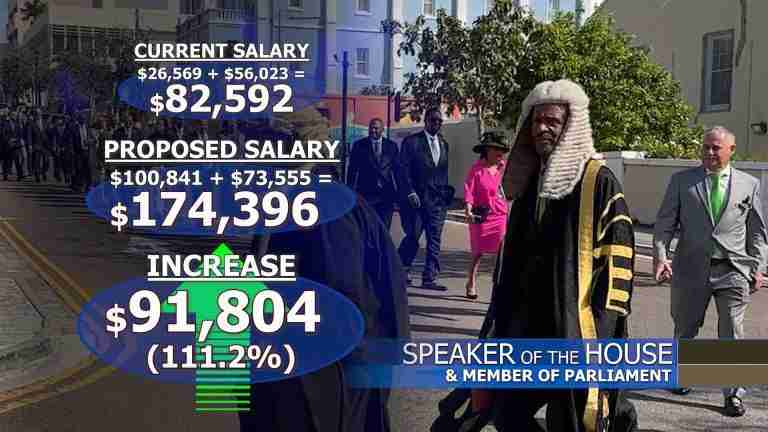
While Deputy Speaker Lovitta Foggo would see a slightly bigger increase than most other MPs – 27% or $18.8K – it’s the Speaker of the House whose earnings would skyrocket from his current take-home pay.
Dennis Lister’s wage could more-than-double from $82.5K, to more than $174,000 a year – almost an eye-watering $92K boost, or a 111% raise.
The Report of the Salaries Review Board justified this by stating that the role should be considered just as significant as that of a Cabinet Minister: “The Board believes that the duties and responsibilities of the Speaker [of the House] are undervalued and should be viewed as adding a more pivotal role to the House of Assembly and our democracy.”
On the wider salary increases, the Report of the Board cites that the cost of goods has increased by at least 18.8% since 2004, and lost buying power should be restored to the, quote “very demanding jobs” within the legislature.
David Burt, Premier & Finance Minister, told the House last Firday, “there has been no salary adjustment for Members of the Legislature in over 15 years… Ministers’ salaries were reduced by 10% in 2013, and those reductions have remained in place… it is essential that we collectively acknowledge that serving in public office is not easy… Fair compensation helps to attract and retain individuals with the expertise, dedication, and commitment required to govern efficiently and effectively.”
Some will see it as perfectly valid that the figures released by Government compare all the proposed increases to the 2009 salaries.
It could be argued that since the 2013 cuts, Cabinet Ministers have been under-paid and therefore the comparison to 2009 – the last time they got a raise – is more relevant.
However, it is also an indisputable fact that no Cabinet member has earned at 2009 levels since their wages were cut 12 years ago.
So if the salary increases are approved, we estimate the cost to the taxpayer will increase by 28%, or an additional 1 million and 72-thousand dollars every year.
*Note that Bermuda Broadcasting sent our estimates to Government on Wednesday afternoon, March 26. We had received no comment – nor any challenge to our numbers – by newstime the next day.
To provide the best experiences, we use technologies like cookies to store and/or access device information. Consenting to these technologies will allow us to process data such as browsing behavior or unique IDs on this site. Not consenting or withdrawing consent, may adversely affect certain features and functions.
Functional
Always active
The technical storage or access is strictly necessary for the legitimate purpose of enabling the use of a specific service explicitly requested by the subscriber or user, or for the sole purpose of carrying out the transmission of a communication over an electronic communications network.
Preferences
The technical storage or access is necessary for the legitimate purpose of storing preferences that are not requested by the subscriber or user.
Statistics
The technical storage or access that is used exclusively for statistical purposes.The technical storage or access that is used exclusively for anonymous statistical purposes. Without a subpoena, voluntary compliance on the part of your Internet Service Provider, or additional records from a third party, information stored or retrieved for this purpose alone cannot usually be used to identify you.
Marketing
The technical storage or access is required to create user profiles to send advertising, or to track the user on a website or across several websites for similar marketing purposes.