Thursday, October 22, 2026
Home Blog Page 1006

Chinese brain chip project speeds up human trials after first success

A wireless version of Beinao No.2 resembling Neuralink’s product is being developed

Chinese Institute for Brain Research, Beijing and NeuCyber Neurotech (Beijing) Co. Ltd host a booth displaying their brain chips at the Zhongguancun Forum in Haidian district, Beijing, China March 31, 2025.

International news via Reuters:

A tie-up between a Chinese research institute and tech company said on Monday that it aims to implant its brain chip into 13 people by the end of this year, in a move that could see it overtake Elon Musk’s Neuralink in collecting patient data.

The Beijing-based Chinese Institute for Brain Research (CIBR) and NeuCyber NeuroTech has inserted Beinao No.1, a semi-invasive wireless brain chip, into three patients in the past month and has 10 more lined up for this year, said Luo Minmin, who is director of CIBR and NeuCyber’s chief scientist.

State-owned NeuCyber has ambitions for an even larger trial.

“Next year after getting regulatory approval we will do formal clinical trials that will include around 50 patients,” Luo told reporters on the sidelines of the tech-focussed Zhongguancun Forum in Beijing. He did not elaborate on funding or the length of the trials.

The acceleration of human trials by CIBR and NeuCyber could make Beinao No.1 the brain chip with the highest number of patients in the world, underlining China’s determination to catch up with leading foreign BCI developers.

U.S. BCI company Synchron, whose investors include billionaires Jeff Bezos and Bill Gates, is currently the global leader in terms of human trials with 10 patients, six in the United States and four in Australia. Musk’s Neuralink currently has three people with its implant.

Neuralink is working on wireless brain chips that are inserted inside the brain to maximise signal quality, while its rivals are working on semi-invasive chips, or brain-computer interface (BCI) systems, which are placed on the brain’s surface. While this sacrifices signal quality there is less risk of brain tissue damage and other post-surgery complications.

Videos published by state media this month showed patients suffering from some kind of paralysis using the Beinao No. 1 brain chip to control a robotic arm to pour a cup of water, even transmitting their thoughts onto a computer screen.

“Since news of Beinao No. 1’s successful human trials came out, we have received countless pleas for help,” Luo added.

Last year, CIBR and NeuCyber had not even begun human trials, announcing instead that an invasive chip it had developed, Beinao No. 2, had been tested successfully on a monkey, which was then able to control a robotic arm.

Luo said that a wireless version of Beinao No.2 resembling Neuralink’s product was being developed and he expected it to be tested on its first human within the next 12 to 18 months.

Synchron recently announced a partnership with Nvidia to integrate the chipmaker’s AI platform onto the company’s BCI systems. Luo said that while CIBR and NeuCyber were actively in talks with investors and eager to raise funds, companies looking to partner on Beinao would need to be “forward-looking” and not focused on making a quick profit.

“In the short-term when it comes to BCI, the stuff that can be sold is very limited,” said Luo, adding that Beinao had no ties to the Chinese military and was focused on helping patients suffering from different kinds of paralysis.

NeuCyber is owned by the Zhongguancun Development Corporation, which generated more than 9 billion yuan ($1.24 billion) in revenue in 2023, according to Chinese corporate records.

($1 = 7.2515 Chinese yuan renminbi)

Reporting by Eduardo Baptista; Editing by Kate Mayberry

Myanmar quake death toll hits 1,700 as aid scramble intensifies

3,400 injured and over 300 missing as of Sunday according to official sources

Rescuers carry the body of a victim, in the aftermath of a strong earthquake, in Mandalay, Myanmar, March 30, 2025. REUTERS/Stringer

International news via Reuters:

The toll from Myanmar’s earthquake continued to rise on Sunday, as foreign rescue teams and aid rushed into the impoverished country, where hospitals were overwhelmed and some communities scrambled to mount rescue efforts with limited resources.

The 7.7-magnitude quake, one of Myanmar’s strongest in a century, jolted the war-torn Southeast Asian nation on Friday, leaving around 1,700 people dead, 3,400 injured and over 300 missing as of Sunday, the military government said.

The junta chief, Senior General Min Aung Hlaing, warned that the number of fatalities could go up and his administration faced a challenging situation, state media reported, three days after he made a rare call for international assistance. 

India, China and Thailand are among Myanmar’s neighbours that have sent relief materials and teams, along with aid and personnel from Malaysia, Singapore and Russia. 

“The destruction has been extensive, and humanitarian needs are growing by the hour,” the International Federation of Red Cross and Red Crescent Societies said in a statement.

“With temperatures rising and the monsoon season approaching in just weeks, there is an urgent need to stabilise affected communities before secondary crises emerge.”

The United States pledged $2 million in aid “through Myanmar-based humanitarian assistance organizations” and said in a statement that an emergency response team from USAID, which is undergoing massive cuts under the Trump administration, is deploying to Myanmar.

The devastation has piled more misery on Myanmar, already in chaos from a civil war that grew out of a nationwide uprising after a 2021 military coup ousted the elected government of Nobel Peace Prize laureate Aung San Suu Kyi. 

Critical infrastructure – including bridges, highways, airports and railways – across the country of 55 million lie damaged, slowing humanitarian efforts while the conflict that has battered the economy, displaced over 3.5 million people and debilitated the health system rages on.

In some areas near the epicentre, residents told Reuters that government assistance was scarce, leaving people to fend for themselves.

“It is necessary to restore the transportation routes as soon as possible,” Min Aung Hlaing told officials on Saturday, according to state media. “It is necessary to fix the railways and also reopen the airports so that rescue operations would be more effective.”

The U.S. Geological Service’s predictive modelling estimated Myanmar’s death toll could eventually top 10,000 and losses could exceed the country’s annual economic output.

‘NO AID, NO RESCUE WORKERS’ 

Hospitals in parts of central and northwestern Myanmar, including the second-biggest city, Mandalay, and the capital Naypyitaw, were struggling to cope with an influx of injured people, the U.N. Office for the Coordination of Humanitarian Affairs said late on Saturday. 

The quake also shook parts of neighbouring Thailand, bringing down an under-construction skyscraper and killing 18 people across the capital, according to Thai authorities. 

At least 76 people remained trapped under the debris of the collapsed Bangkok building, where rescue operations continued for a third day, using drones and sniffer dogs to hunt for survivors.

Myanmar’s opposition National Unity Government, which includes remnants of the previous administration, said anti-junta militias under its command would pause all offensive military actions for two weeks from Sunday.

The devastation in some areas of upper Myanmar, such as the town of Sagaing near the quake’s epicentre, was extensive, said resident Han Zin. 

“What we are seeing here is widespread destruction – many buildings have collapsed into the ground,” he said by phone, adding that much of the town had been without electricity since the disaster hit and drinking water was running out.

“We have received no aid, and there are no rescue workers in sight.”

Sections of a major bridge connecting Sagaing to nearby Mandalay collapsed, satellite imagery showed, with spans of the colonial-era structure submerged in the Irrawaddy river.

“With bridges destroyed, even aid from Mandalay is struggling to get through,” Sagaing Federal Unit Hluttaw, a political association linked to the NUG, said on Facebook.

“Food and medicine are unavailable, and the rising number of casualties is overwhelming the small local hospital, which lacks the capacity to treat all the patients.”

‘CAN YOU HEAR ME CALLING OUT?’

In Mandalay, scores of people were feared trapped under collapsed buildings and most could not be reached or pulled out without heavy machinery, two humanitarian workers and two residents said.

“My teams in Mandalay are using work gloves, ropes and basic kits to dig and retrieve people,” said one of the humanitarian workers. Reuters is not naming them because of security concerns.

“There are countless trapped and still missing. The death toll is impossible to count at the moment due to the number trapped and unidentified, if alive.”

A video filmed by a Mandalay resident on Saturday and shared with Reuters showed patients in beds, some attached to drips, on the grounds outside a 500-bed orthopaedic hospital in the city.

Public and private health care facilities in Mandalay, including the Mandalay General Hospital and parts of Mandalay Medical University, were damaged by the quake, according to the World Health Organization.

Russian and Indian rescue workers were heading to Mandalay, and multiple teams of Chinese, Thai and Singapore rescue personnel have also arrived in the country.

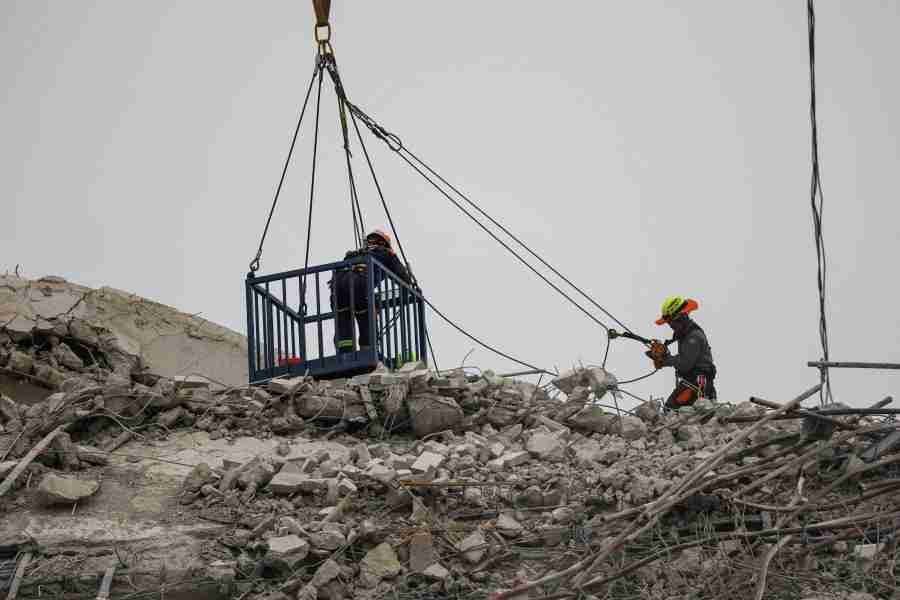
In Bangkok, at the site of the collapsed 33-storey building, rescuers surrounded by shattered concrete piles and twisted metal continued their efforts to rescue dozens of workers trapped under the rubble.

Teerasak Thongmo, a Thai police commander, said his team of policemen and rescue dogs were racing against time to locate survivors, struggling to move around metal debris and sharp edges on an unstable structure.

“Right now, our team is trying to find anyone that might still be alive. Within the first 72 hours, we have to try and save those still alive,” he said.

Near the rescue operations, relatives and friends of the missing and trapped construction workers waited for news. Some broke down.

“Ploy, Ploy, Ploy, my daughter, I’m here for you now!” one woman wailed, as she was hugged by two others. “Ploy, can you hear me calling out for you?”

Reporting by Bangkok bureau, Shoon Naing and Wa Lone; Writing by Devjyot Ghoshal; Editing by William Mallard, Alexandra Hudson

German startup’s space rocket explodes seconds after takeoff from Norway

Mission was intended to collect data on the company’s in-house developed launch vehicle

International news via Reuters:

A test rocket aimed at kickstarting satellite launches from Europe fell to the ground and exploded 40 seconds after takeoff from a Norwegian space port on Sunday, in what German startup Isar Aerospace had described as an initial test.

The uncrewed Spectrum rocket was billed as the first attempt at an orbital flight to originate from Europe, where several nations, including Sweden and Britain, have said they want a share of a growing market for commercial space missions.

Isar Aerospace, which had warned that the initial launch could end prematurely, said the test produced extensive data that its team can learn from.

Blasting off from Norway’s Arctic Andoeya Spaceport, the Spectrum is designed for small and medium-sized satellites weighing up to one metric tonne, although it did not carry a payload on its maiden voyage.

Global players in the satellite launch market include Elon Musk’s SpaceX, which launches from the United States, and French ArianeGroup, a joint venture between Airbus and Safran that uses a spaceport in South America’s French Guiana.

SpaceX also operates the Starlink satellite service, a communications network spanning much of the globe.

Germany’s BDLI aerospace industries association said Isar’s first flight would lead to further progress.

“Europe urgently needs to ensure its sovereignty in space. Elon Musk’s Starlink is not without alternatives – nor should it be,” BDLI Managing Director Marie-Christine von Hahn said in a statement.

Sunday’s mission was intended to collect data on the company’s in-house developed launch vehicle, in a first integrated test of all its systems, Bavaria’s Isar Aerospace said last week.

Sweden, with its Esrange launch site and Britain with its SaxaVord Spaceport in the Scottish Shetland Islands, are the nearest rivals to the Norwegian site, all of which aim to give Europe greater autonomy in space flights.

SaxaVord, which suffered a setback when a rocket engine exploded during a test last year, plans its first satellite launch in the third quarter of 2025, and Esrange also aims to stage its inaugural launch this year.

Reporting by Terje Solsvik in Oslo, additional reporting by Madeline Chambers in Berlin; editing by Giles Elgood

Greenland’s prime minister says the US will not get the island

Vice President JD Vance accused Denmark of not doing a good job of keeping the island safe

FILE PHOTO: Leader of the party IA Mute B. Egede, and the leader of the political party Demokraatit, Jens-Frederik Nielsen, are seen among the protesters at a demonstration march ending in front of the U.S. consulate, under the slogan, “Greenland belongs to the Greenlandic people”, in Nuuk, Greenland, March 15, 2025 Christian Klindt Soelbeck/Ritzau Scanpix/via REUTERS/File Photo

International news via Reuters:

The United States will not get Greenland, Prime Minister Jens-Frederik Nielsen said on Sunday in a post on Facebook in response to Donald Trump’s statements he wants to take control of the vast Arctic country.

“President Trump says that the United States is getting Greenland. Let me be clear: The United States won’t get that. We do not belong to anyone else. We determine our own future,” Nielsen said in the social media post.

Trump on Saturday told NBC News he “absolutely” had real conversations about annexing the semi-autonomous Danish territory.

“We’ll get Greenland. Yeah, 100%,” Trump said, according to NBC.

During a visit to a U.S. military base in the north of Greenland on Friday, U.S. Vice President JD Vance accused Denmark of not doing a good job of keeping the island safe and suggested the United States would better protect the strategically located island.

Reporting by Stine Jacobsen; Editing by Sharon Singleton

Martinique’s water woes drive anger at French rule

Martinique’s water supply is intertwined with historic questions of class and race

Protesters gather during the trial of activist Rodrigue Petitot who led the movement against high living costs on the French Caribbean island of Martinique, in front of the courthouse in Fort-de-France, Martinique, January 22, 2025. REUTERS/Layli Foroudi

International news via Reuters:

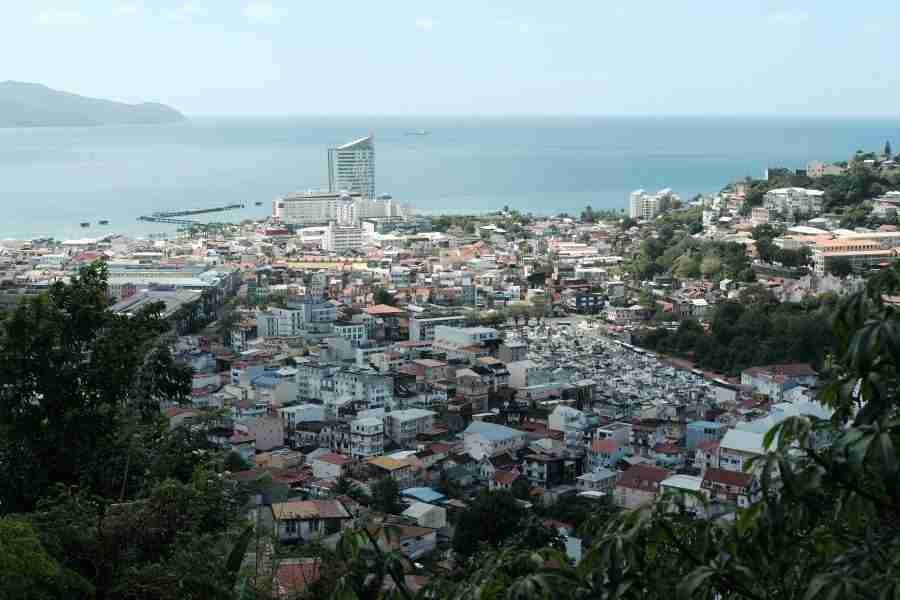
In Martinique, a French territory in the Caribbean, tourists flock to crystalline waterfalls nestling in the tropical rainforests. But the water that comes out of Christelle Marie-Sainte’s tap at home runs yellow.

“I don’t drink the tap water,” she said, outside a supermarket where she was buying locally-bottled Lafort water. A relatively low-cost brand, Lafort is double the price of an equivalent product in parts of Paris.

Anger at Martinique’s prices and poor services erupted in months of protests and unrest late last year that saw dozens of businesses targeted and burned. The protests have largely given way to a movement that has won concessions from Paris, including a promise last week of government-backed legislation to tackle grocery prices, which official data shows are on average 40% higher than on the mainland. 

Like many contentious issues in Martinique, water is intertwined with questions of class and race, including the prominence of a handful of families descended from white owners of enslaved people. 

Known locally as Békés, the white creole families make up about 1% of the population but control swaths of the economy on the island of 350,000 people, the majority of whom are Afro-Caribbean, or descendants of Indian and Chinese indentured labourers.

The government has promised to open up the economy, but activists remain sceptical.     

On a visit to Martinique on March 17, Overseas Minister Manuel Valls met with local politicians and business leaders, including Stephane Hayot, son of Martinique’s most successful businessman Bernard Hayot, whose supermarket-to-car dealerships company Groupe Bernard Hayot (GBH) has been a target of protesters’ ire.

Valls called on the businessmen to be more transparent about profits, saying “unfair” supply chains and opacity stifled the economy. He said the government would soon pass a law to fight anti-competitive practices, building on two bills already in parliament.

Activists, some of whom call for independence, say more must be done. They are planning new protests around a trial next week against three protesters. 

Valls’ words “need to be followed by concrete, efficient and sustainable action,” said Gwladys Roger, a leader of the movement, Gathering for the Protection of Afro-Caribbean People and Resources (RPPRAC), which has led the protests, where placards with images of water bottles and prices have featured. 

GBH recently published consolidated annual accounts for the first time after a lawsuit by activists. In reply to questions from Reuters, Nicolas Assier de Pompignan, a GBH director, said the company published accounts because “times had changed” and there was pressure for transparency. He said there was “healthy competition” in Martinique and that GBH was surprised by Valls’ comments.

The regional government led by Serge Letchimy is drawing up a wide-ranging bill to reduce reliance on imports by giving small farmers access to more land. It also seeks to centralise water management to lower prices and encourage investment, Letchimy’s office said.

“We need significant tax reforms, property reforms,” Letchimy told Reuters.

More than 80% of the food on Martinique is imported, mostly from France. 

Farmer Jerrick Venitus rears animals and grows fruit and vegetables for local markets. He called the current system a “colonial pact.” 

Almost half the farmland is planted with sugar for rum or bananas for export, a situation encouraged by European subsidies.

The banana, sugarcane and rum industries in 2023 received 161.5 million euros in support, a Reuters tally of French government accounts shows, representing 80% of all agricultural subsidy programs for Martinique. Venitus has yet to receive a 145,000 euro subsidy he applied for three years ago.

“We need to redistribute the cards and prioritise those producing for the local market,” Venitus said, in his banana fields.

Discontent in French overseas territories is not unique to Martinique.

In the Pacific Ocean archipelago New Caledonia, an attempt to reduce the voting weight of indigenous Kanak people brought deadly unrest in May. In December, a cyclone devastated the Indian Ocean archipelago of Mayotte, near East Africa, killing 39 and highlighting poor living conditions.

In response to a request for comment, the French overseas ministry referred Reuters to Valls’ speeches. The Elysee did not respond to a request for comment. 

WATER POOR 

Martinique, which France colonised in 1635, became a department of the Republic in 1946. Its social indicators still trail the mainland. 

More than a quarter of people are poor, a higher rate than in many Caribbean islands and twice that of mainland France. 

Around half the households are “water poor” under U.N. guidelines, spending more than 3% of income on water bills, according to a 2017 report by France’s sustainable development body. Tap water costs on average 28% more per cubic metre than in mainland France, government data shows.

“They make us pay for tap water as if it is drinkable, when it is not,” said Roger, one of the activists on trial for entering the governor’s residence in November at the height of the protests.

Drinking water in most towns in Martinique is within bacterial and chemical norms, but does not always meet quality standards, with high chlorine levels and a bad smell and taste noted in some towns, a health ministry database shows. 

Benoit Vittecoq, director for the French geological survey in Martinique, blamed discoloured water on old piping and a lack of maintenance. Leaks also contribute to regular outages, he said.

Water cuts, sometimes lasting for days, further increase costs for people by pushing them to buy bottled water. 

The distrust of mains water is compounded by fears related to 1980s and 1990s pesticide pollution from plantations that grew bananas for export. 

French health authorities found a “strong presumption of a link” between exposure to the pesticide and the risk of developing prostate cancer. Nearby Guadeloupe and Martinique had the world’s first and third highest rates of prostate cancer in 2022, according to the World Cancer Research Fund.

HIGH PRICES

Some are satisfied with the status quo. Nicolas Etile, a restaurateur in Martinique’s capital Fort-de-France, said prices were naturally high because of the distance from France, while benefits and subsidies helped living standards. 

Not all price differences can be explained by transport costs, however. 

Marie-Sainte’s packs of Lafort were bottled a few miles from the supermarket.

Each pack of six 1.5 litre bottles cost 3.85 euros. An equivalent in the Paris region costs 1.50 euros at the same E.Leclerc supermarket, E.Leclerc’s website shows. A pack of imported Evian cost 11.99 euros at Carrefour, compared to 3.66 euros on the mainland. 

Groupe Parfait, which has the local E.Leclerc franchise, did not respond to requests for comment. GBH, which has the Carrefour franchise, said local bottlers’ small scale raised costs, along with the cost of imported plastic bottles, machinery and taxes. Evian was expensive because of transport costs, GBH said. 

The company that bottles Lafort, along with another water brand Chanflor, is run by Bertrand Clerc, whose family has a long history on the island.

Clerc is descended from 19th-century enslaver Honore Marie Clerc, according to a review of birth registries, obituaries, French genealogy website Geneanet and France’s publicly funded REPAIRS database.

Like many Béké families, the Clercs were compensated for the abolition of slavery. Members of the family were awarded around 75,000 francs in 1849, a Reuters tally of archives on the REPAIRS database shows.

Clerc declined an interview request and did not respond to questions.

Many in Martinique link such payments to white creole families’s success. Some are calling for reparations. 

Adelaide Marine-Gougeon, a researcher of white creoles in Martinique at Paris’ Sorbonne University, said compensation was among a range of economic advantages that gave settlers a head start over former enslaved people after abolition, along with their connections to Europe and the Americas and marriage alliances. 

Marcellin Nadeau, a national legislator, said there needed to be discussion about slavery reparations, possibly in the form of student bursaries or job opportunities. 

If not, “tensions in society will get worse,” he told Reuters. 

Emmanuel de Reynal, whose association “Tous Creoles” seeks to build bridges between Martinique’s communities, estimated only 50 of roughly 3,000 white creoles were “very rich.” 

“They are business people. It is not wealth from the heritage of slavery,” said de Reynal, who is of Béké descent. GBH’s Assier de Pompignan said Hayot was planning a monument to the crime of slavery and any reparations should be symbolic. He said the company’s success was not related to “this history.”

BANANA TRAGEDY

Bernard Hayot’s late brother Yves Hayot imported the toxic pesticide chlordecone, widely used to fight weevils on banana plantations in Martinique and Guadeloupe. France banned the chemical on the mainland in 1990 but allowed it on the islands until 1993, according to parliamentary documents. The United States banned it in the 1970s. 

The French government’s human health research organisation concluded in 2017 that almost the entire population of Martinique and Guadeloupe had been contaminated by exposure to the pesticide through its presence in the soil and food.

Yves Hayot died in 2017. GBH’s Assier de Pompignan declined to comment.

Hayot, who also used chlordecone on his own plantations, had been unaware of the dangers, one of his former executives told a parliamentary inquiry in 2019. The executive said the French government was at fault for allowing the chemical.  

In 2023, a French court outraged activists by throwing out a case seeking compensation for victims, after investigative judges said too much time had passed. 

Lawyer Christophe Leguevaques told Reuters he was preparing an appeal. A separate administrative court ruling in March ordered the state to compensate 11 individuals who developed prostate cancer or had multiple miscarriages after exposure to chlordecone.

The low level of the compensation, set at between 5,000 and 10,000 euros, angered some. 

“It mocks the people of Martinique and Guadeloupe,” said Guilaine Sabine, an activist with the collective Zero Chlordecone, Zero Poison.    

Two of 35 water sources in Martinique present traces of chlordecone, the local health authority says. Soil, river water, the marine environment, and spring water are contaminated in areas where the pesticide was used, according to the French health and safety agency.

Census agent Marie-Sainte, like many on the island, feels helpless about chlordecone pollution. Buying her bottled water, she said she preferred to put it out of her mind. 

“I don’t want to know,” she said.

(This story has been corrected to fix a typo in paragraph 10)

Reporting by Layli Foroudi in Martinique; Additional reporting by Lucien Libert in Paris; Editing by Kat Stafford and Frank Jack Daniel


UPDATED: Bermudian experienced 7.7 Southeast Asian earthquake

Singapore-based Shakeem Albouy was visiting Bangkok when disaster struck

Shakeem Albouy, AXA XL Singapore

Bermudian Shakeem Albouy, currently living abroad in Singapore and working for AXA XL Singapore, experienced firsthand the 7.7 magnitude earthquake that struck Thailand on Thursday, March 28th.

Shakeem was in Bangkok for a short trip, sourcing vintage clothing, when the earthquake hit.

He was shopping at Bang Sue Junction Shopping Center, just a block away from the collapsed high-rise construction site, making the experience even more surreal.

Having never encountered an earthquake before, Shakeem described the moment as both shocking and eye-opening, a stark reminder of how quickly life can change.

He safely flew back to Singapore on Saturday morning but extends his deepest condolences to the families who lost loved ones and all those affected by this tragedy.

You can hear his full recounting of the event, below:

Premier & De Couto back & forth over Budget delay

Delay is unprecedented, says De Couto; it’s lawful, wise and prudent, says Premier

Government can continue to pay its bills even though the Budget has been delayed.

The House authorized up to a quarter of the expenditure of last year’s budget for a maximum four-month period from April 1st, with the Budget scheduled for May 2nd.

The law allows for such an action, although Shadow Finance Minister Dr Douglas De Couto says such a delay is unprecedented in Bermuda…

When Dr De Couto brought up his concerns in the House, Premier and Finance Minister David Burt countered that Ministers had actually prepared budgets before the election, but Government is using the legally permitted time to allow new Ministers to ensure budgets are prepared in line with the platform on which the PLP was re-elected…

Dr De Couto once more brought up that the PLP did not win more than half of the popular vote in the election – although they won more than any other party or candidate.

The Premier once more accused the Shadow Finance Minister of sour grapes…

Government to launch Cost-of-Living Summit

Alexa Lightbourne, the Home Affairs Minister said the government has not underestimated the complexity of the matter

No timeline in sight on when cost of living burdens might start to ease, according to Home Affairs Minister today.

Minister Alexa Lightbourne today conceded there is no easy solution.

The Newly constituted Home Affairs Ministry will undertake a comprehensive review of the matter, through the first Cost-of-living summit.  

Minister Alexa Lightbourne said it aims to collaborate Government, industry, labour, and the community input to examine the systemic drivers of Bermuda’s high costs. 

A report will look for gaps in existing policies. Minister Lightbourne suggests the findings could including amendments to the Regulatory Authority Act to extend oversight powers across both regulated and unregulated markets. 

Pressed on when the island’s vulnerable families and seniors can expect a reprieve from rising costs of groceries, utilities and other expenses – Minister Lightbourne insists that a solution must be sustainable and therefore, thorough.  

Ms. Lightbourne said in her statement to the House today that the government has not underestimated the complexity of this task.

Meanwhile, Opposition Minister Michael Fahy replied to the statement today criticised the government of being unable to solidify a timeline for the cost of living consultation process.

“Today in the House of Assembly, the Minister of Home Affairs was unable to give definitive answers to questions I posed in relation to timelines on consultation on cost of living eventually saying that at the end of the year a cost of living report may be ready. That is nine months from now.

That is a considerable about of time and shows that other than more talk there is no real plan. Meanwhile, price controls on unregulated entities like grocery stores may still be the end result which has been shown to fail around the world. We continue to recommend scrapping the sugar tax which remains one of the single biggest failures of government policy. 

The World Health Organization laid out seven items that needed to be in place for a sugar tax to be successful, namely 

1. Retail prices on sugar drinks would need to be raised by 20 per cent or more.

2. Subsidies for fresh fruit and vegetables would need to be between 10 per cent and

30 per cent.

3. Taxing “other foods and beverages high in sugar, salt and fat” up to 50 per cent

would help to reduce obesity.

4. Earmarking revenues raised from the sugar tax for healthcare.

5. Proper monitoring and evaluation to measure the effect of the sugar tax.

6. Requiring warning labels on taxed products as an education strategy.

7. Drafting a multidisciplinary policy and implementation plan that includes advocacy

for political buy-in, monitoring and evaluation is critical.

None of this has happened and many food costs remain high. The fact is the Government can do something immediately to lower costs and chooses not to.

Three firearms incidents in 48 hours

Police appealing for witnesses in the Spanish Point, Pembroke area

The Bermuda Police Service’s Detective Inspector Jason Smith speaking on multiple firearms incidents taking place earlier this week.

Smith addressing the media at a press conference this afternoon, appealing to the public for help with identifying two suspects involved in the shootings. “And in all of these incidents, there were two suspects that were involved and each or them were wearing dark clothing and visors.”

Grassroots push to restore playing field

Western Stars has a $100,000 target … here’s how you can help

The fund-raising campaign, highlighted at a recent press conference, is a joint initiative between LiveNet Bermuda and Western Stars Sports Club.     Photo supplied

Press release:
Western Stars Sports Club, in partnership with LiveNet Bermuda, has officially launched a community-driven fundraising campaign to restore the club’s playing field. The initiative, which aims to raise $100,000, will see 200 club members participating in the Bermuda Half Derby on 24 May 2025 to secure pledges and donations towards the club’s redevelopment efforts.
Under the campaign theme “Western Stars Legacy: A Race Back to Greatness”, the club seeks to make history by entering the largest-ever sports club team in the Bermuda Day Marathon and they have hopes of at least one member of their team breaks the fastest race record of 1:07:16, set by Christopher Estwanik.
A Community Effort to Restore a Legacy
Speaking on the launch of the initiative, Damon Smith said:
“Western Stars Sports Club has been an integral part of Bermuda’s sporting history, and this campaign is about more than just raising funds—it’s about restoring a legacy. We are grateful to LiveNet Bermuda for their support in ensuring this initiative reaches as many people as possible. With the help of our community, we believe we can achieve our fundraising goal and create a lasting impact.”
LiveNet Bermuda’s Troy Symmonds also shared enthusiasm for the campaign:
“LiveNet is proud to support Western Stars Sports Club in this exciting and meaningful initiative. We believe in the power of community and sports to bring people together, and we are committed to playing our part in making this campaign a success. This is an opportunity for all of Bermuda to rally behind a club that has contributed so much to our sporting heritage.”
How to Get Involved
Community members can support the fundraising efforts in the following ways:

● Make a donation via the official pledge form, accessible through participating club members or online. Official pledge form: livenet.bm/donation

● Pledge support to a Western Stars runner and contribute towards their fundraising goal.

● Attend the post-marathon celebration on 31 May 2025, where the final fundraising total will be revealed.

Donations can be made via:

● Cash contributions (collected by Western Stars representatives).

● Bank transfer (details will be provided in participant fundraising kits).

Post-Marathon Celebration
Following the Bermuda Half Marathon Derby, a post-event celebration will take place on 31 May 2025 at Western Stars Sports Club, where the total amount raised will be announced. If no runner breaks the existing record, club leadership will participate in fun challenges, including a five-minute ice bath penalty or a $500 donation challenge. The event will feature live entertainment, giveaways, and community engagement activities, with LiveNet Bermuda providing AV and sound support for the occasion.
A Call to Action
Western Stars Sports Club and LiveNet Bermuda invite the Bermuda community to join this historic effort by donating, spreading the word, and supporting the runners as they take on the Bermuda Day Marathon challenge.
About Western Stars Sports Club Western Stars Sports Club is a historic sports organisation dedicated to fostering talent, developing young athletes, and serving the Bermuda community through sports and recreation.
About LiveNet Bermuda LiveNet Bermuda is a leading telecommunications provider committed to delivering reliable mobile, internet, and business solutions while supporting community-driven initiatives that strengthen Bermuda’s local organisations. 

Pay hikes for MPs – what do people think?

Kendal Trott asked Bermudians for their thoughts on proposed salary increases for legislators

As Bermuda Broadcasting reported HERE, hefty increases in pay are on the cards for MPs.

The issue will be debated in the House today.

So what’s the view of the man – or woman – on the street?

Kendal Trott went into the city to find out.