Qualifying actuary applications will continue to be processed within 10 working days until July 31, 2027
Media Release:
The Department of Immigration advises the public that the Actuary Work Permit Policy has been extended until July 31, 2027, ensuring the continued timely processing of work permit applications for qualified actuarial professionals who support Bermuda’s internationally recognised insurance, reinsurance and pension sectors.
The policy remains an important component of Bermuda’s immigration framework by helping employers recruit highly skilled actuarial professionals while maintaining appropriate oversight and compliance with Bermuda’s immigration laws. Actuaries play a critical role in assessing risk, supporting financial stability and helping regulated entities meet their legal and regulatory obligations.
The Minister of Economy and Labour, the Hon. Jason Hayward, JP, MP, said, “Bermuda’s insurance and reinsurance industry is a cornerstone of our economy and depends on access to highly specialised actuarial expertise. Extending the Actuary Work Permit Policy provides employers with continued certainty and efficient processing while maintaining the integrity of Bermuda’s immigration system. This balanced approach supports economic growth and reinforces Bermuda’s position as a leading international financial centre.”
Under the policy, qualifying Actuary work permit applications will continue to be processed within 10 working days, provided that:
the position requires the applicant to be a qualified Actuary or hold a recognised professional actuarial designation;
the applicant demonstrates at least three years’ relevant professional experience;
the position has been advertised in accordance with policy requirements;
the application is complete upon submission;
no statutory body referral is required; and
evidence of professional qualifications or actuarial designation accompanies the application.
Employers seeking expedited processing must notify the Department of Immigration by email immediately after submitting a qualifying application. The policy applies to new work permits, including Standard, Intra‑Company Transfer, Periodic, and New Business work permit applications, but does not apply to promotions or changes in job title.
The Department encourages employers to review the Actuary Work Permit Policy and ensure that all application requirements are met to facilitate timely processing.
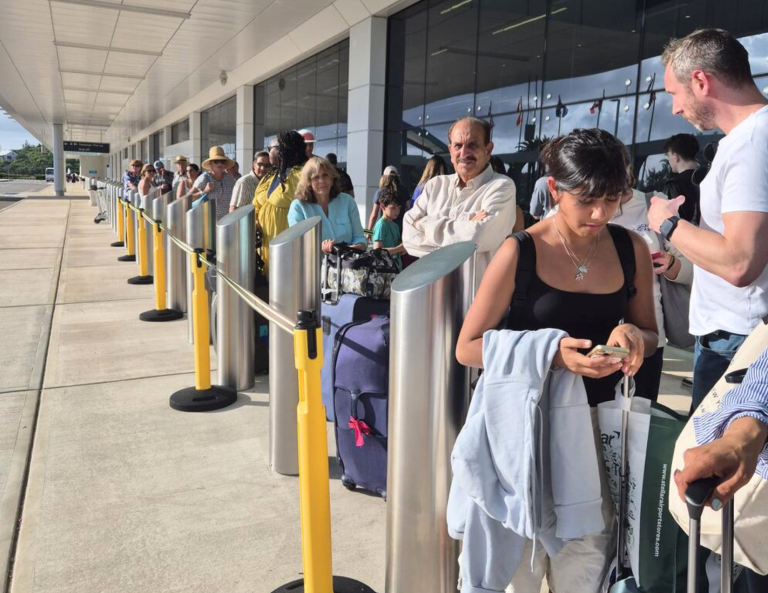
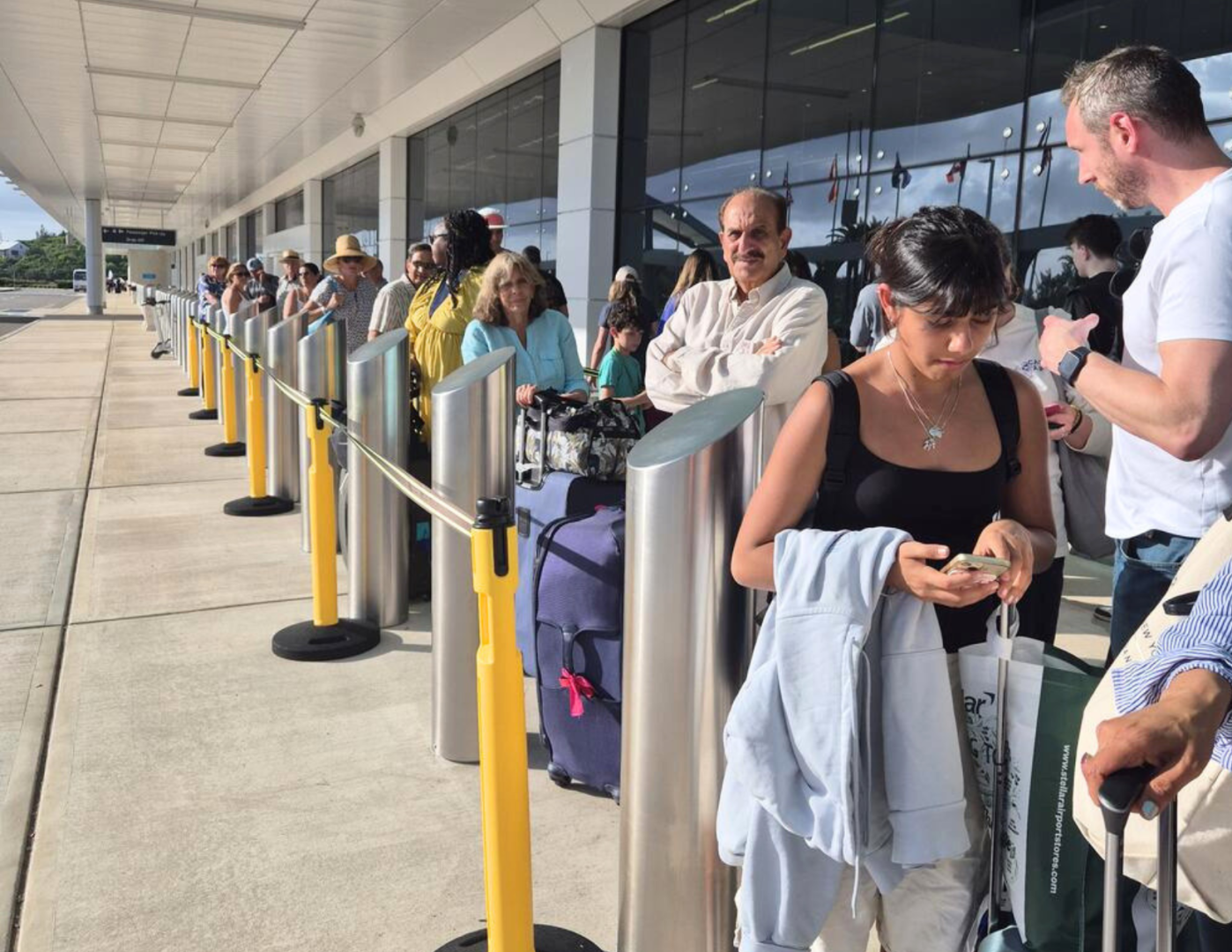
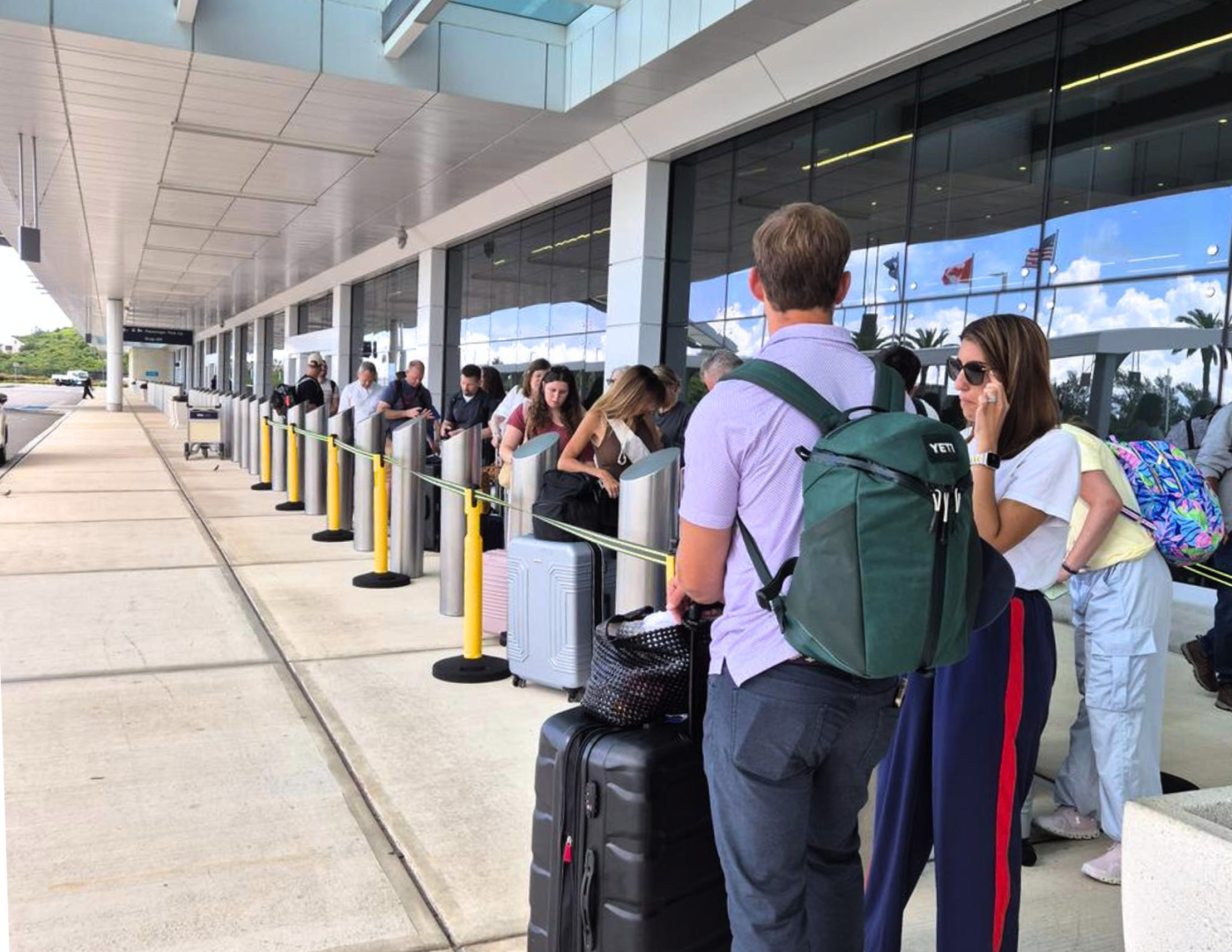
L.F. Wade International Airport is encouraging taxi drivers and ridesharing operators to take advantage of a growing business opportunity during the mid afternoons and evenings. Passenger demand remains active during these periods; however, there is often insufficient ground transportation available to meet passenger needs. This creates a window where additional operators can help support demand and benefit from increased trip availability.
While taxis and ridesharing services remain a vital part of Bermuda’s transportation network, Skyport has observed a frequent shortage of operators mid afternoons and nights. Operators who position themselves at the airport during these times can find added value in the number of arriving passengers in need of ground transportation, and can effectively help fill a temporary void in ground transportation availability.
“We appreciate the ongoing partnership of our taxi and ridesharing community,” said a Skyport spokesperson. “Our aim is to highlight a period where operators will likely find additional business by being present at the airport and in doing so, will help to ensure that the demands and expectations of our arriving passengers are adequately met.”
With American Airlines, BermudAir, Delta, and JetBlue, arriving from gateways such as Charlotte, Boston, Newark and New York JFK respectively, during the mid afternoon and early evening periods, passenger volumes can be significant. During peak days, up to 600 passengers can arrive between 2:00 p.m. and 2:30 p.m., while high-volume nights can see nearly 200 passengers scheduled to arrive between 9:00 p.m. and 10:00 p.m., with a varying number requiring ground transportation.
Skyport will continue to monitor passenger flow and collaborate with ground transport partners to support a seamless arrival experience. Operators interested in this opportunity are encouraged to frequent the airport throughout the periods where there are voids, to meet the transport needs of arriving passengers.
About Skyport
Bermuda Skyport Corporation Limited (Skyport) is a special-purpose firm, majority owned by Aecon Concessions, tasked with the operation, maintenance, and management of commercial functions of the L.F. Wade International Airport. Its redevelopment was concluded in 2020 under a concession agreement between the Bermuda Airport Authority and Skyport. With a steadfast commitment to safety and service excellence, Skyport oversees the airport’s operations, striving to provide a seamless travel experience for passengers and a secure working environment for airport staff.
One teen suffered suspected head injuries while his pillion passenger had minor bruises
Media Release:
Shortly before 1:00 a.m. on Sunday, August 2, 2026, police received a report of a serious single vehicle road traffic collision involving a livery cycle, near the junction of St. Anne’s Road and St. Anne’s Drive, Southampton.
Upon arrival, it was ascertained by officers that the livery cycle was traveling west along St. Ann’s Road, when the 16-year old male cycle rider lost control of the cycle and fell onto the roadway.
He sustained suspected head injuries and was reportedly in and out of consciousness. His male pillion passenger, also a 16-year-old male, sustained minor bruises about the body.
It was confirmed that both males who are visitors to the island, were not wearing helmets at the time of the collision.
They were attended to at the scene by Emergency Medical Services personnel and were subsequently transported by ambulance, to King Edward VII Memorial Hospital, for further treatment of their injuries.
The roadway was closed to vehicular traffic for approximately two hours, while the collision scene was forensically processed.
An investigation into this incident has now commenced and anyone with information is asked to call 211.
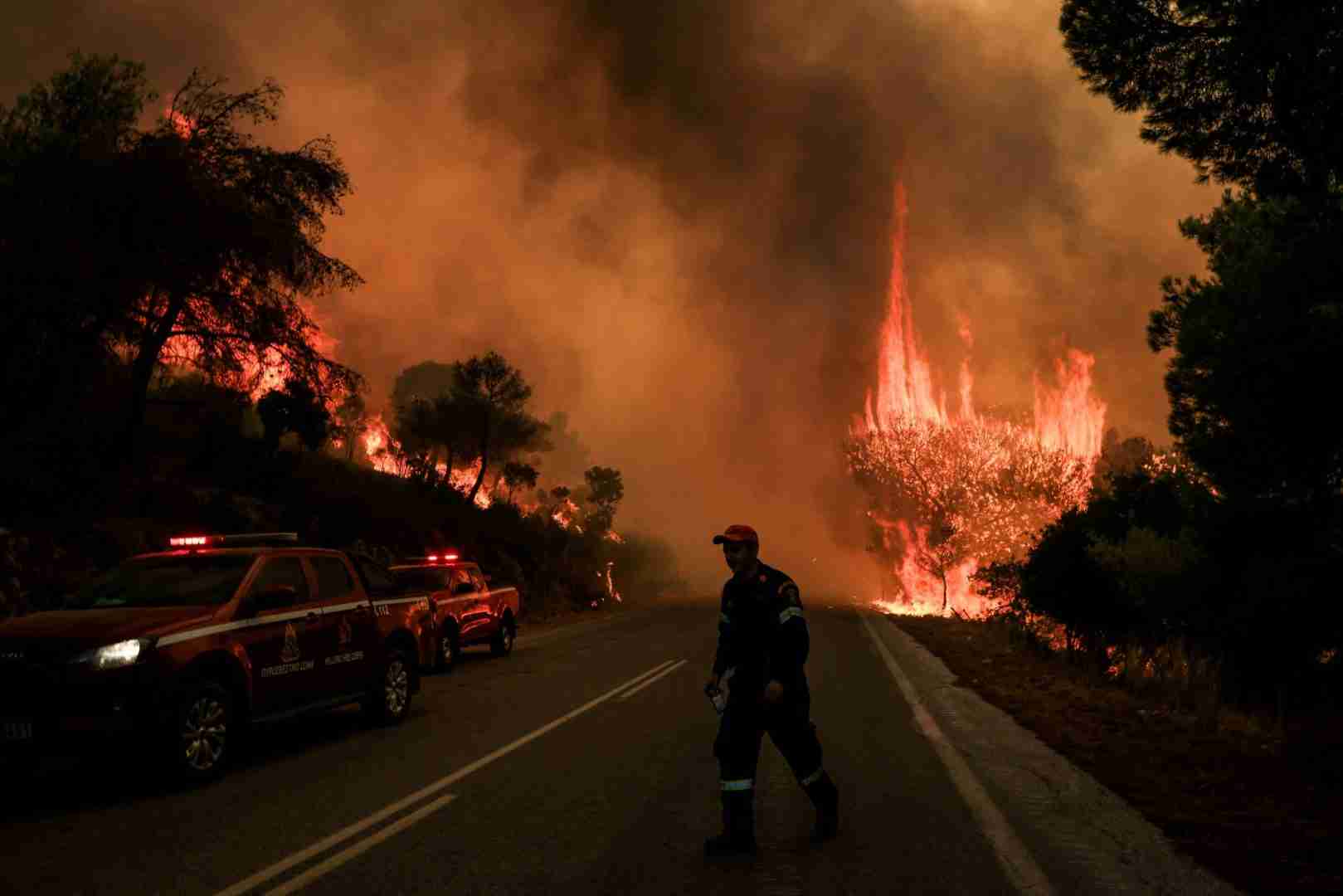
Europe has been ravaged by wildfires this summer after a period of successive record-breaking heatwaves and little rain
International News via Reuters:
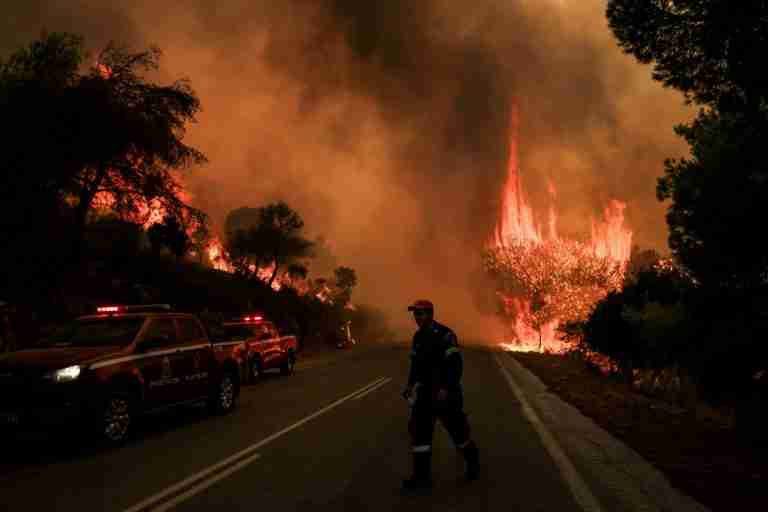
Wildfires fanned by heavy winds burned across multiple areas of Greece on Saturday, including near Athens, with large-scale firefighting operations and emergency evacuations underway, while conditions worsened again in parts of Spain and France.
Europe has been ravaged by wildfires this summer after a period of successive record-breaking heatwaves and little rain. Villages in France and Spain have been destroyed, and hundreds of thousands of people have been forced to flee their homes and holiday accommodation.
Blazes fed by gale-force winds flared up across Greece, which until recent days had experienced fewer heatwaves and a relatively quiet fire season.
A Reuters live video feed showed firefighters, police and ambulances slowly withdrawing before a wall of fire and smoke that engulfed forests and shrub in the mountainous terrain of Agia Paraskevi, near Porto Germeno, about 60 kilometres (40 miles) northwest of the capital Athens.
Authorities said strong winds were hampering firefighting efforts, making them impossible in places.
FIRE FLARES AGAIN IN SOUTHEASTERN FRANCE
In France, a fire in the mountainous southeastern Var department, which had been brought under control three days ago, flared up again on Friday, sweeping across more than 1,000 hectares in six hours.
French interior minister Laurent Nunez told reporters the situation in the Var was “very serious” and that fires have affected 119,000 hectares in France so far this year.
“It’s not at all under control,” said Eric Grohin, director of the Var department’s fire and rescue service, adding that the situation remained “very complicated”, with temperatures at 40 degrees Celsius (104 degrees Fahrenheit) and winds set to pick up.
Local prefect Simon Babre also said several flare-ups had been dealt with on Saturday by firefighting aircraft and more than 1,500 personnel on the ground.
Nearly 2,500 people were evacuated overnight, with firefighters bringing in reinforcements on Saturday when winds were expected to strengthen and complicate efforts to control the blaze.
In southwestern France, the South Gironde animal sanctuary was treating deer that had escaped a massive fire near Bordeaux that burned for more than a week but suffered burns or accidents due to panic, such as collisions with cars or fences, said manager Patrick Meng.
“There are hundreds of thousands of (animal) deaths; it’s a catastrophe,” he said.
SPANISH CONDITIONS MIXED
Spain continued battling several wildfire hot spots on Saturday, two days after the government declared the end of a national emergency caused by huge fires in the country’s central provinces.
Conditions worsened in the northern province of Leon, where a new blaze broke out overnight, another remained active, and a third was evolving favourably, according to authorities. In neighbouring Zamora province, a fire that ravaged about 11,000 hectares improved enough for 14 evacuated towns to reopen and restrictions to be lifted.
In the eastern province of Castellon, the Vall d’Uixo fire was stabilised on its seventh day after burning nearly 10,000 hectares, allowing all evacuated residents to return. Police said they suspected arson after finding two separate ignition points.
Major fires in the central regions of Madrid and Avila, which burned more than 70,000 hectares, were stabilised. A new outbreak near the San Juan reservoir, west of the capital, was extinguished on Friday.
EMERGENCY ALERTS
Greek authorities issued emergency alerts for several areas for Saturday and warned of extreme wildfire risk in the regions of Attica and Evia.
More than 300 firefighters, 92 firefighting trucks, heavy machinery and aircraft have continued to battle a conflagration in the region of Boeotia, where more than 200 people from the town of Agios Vasileios, about 80 km northwest of Athens, had to be evacuated by sea.
Another 12 people, fleeing the same blaze, were evacuated from the beach in Porto Germeno by Greek Coast Guard patrol boats and a Fire Service vessel.
The fire in Porto Germeno split into three fronts and many houses caught fire in the area, the Protothema newspaper reported. Authorities told people from the nearby towns of Agia Paraskevi, Kryo Pigadi and Agios Nektarios to evacuate.
EU countries are having an above-average season for wildfires, already overtaking 2025’s record-breaking year.
Across parts of western and southern Europe, a relatively wet winter fed forests and scrubland before successive heatwaves baked new growth into tinder, leaving abundant fuel for fires.
HEAT-RELATED DEATHS
And the toll of extreme weather has extended well beyond the widespread devastation caused by fires.
In Austria, the country’s Agency for Health and Food Safety reported a record 395 heat-related deaths for the month of June.
Earlier this week, Britain said an estimated 2,877 people had died from heat-related causes so far this year, while France reported 5,764 excess deaths in the country between June 17 and July 2, and Germany’s RKI health body estimated 9,800 people had died so far this year linked to the high temperatures.
Reporting by Aleksandar Vasovic in Belgrade, Dominique Patton in Paris, Edward McAllister in Athens, John Revill in Zurich and David Latona in Madrid; Editing by Kirsten Donovan and Alex Richardson
Scores of boats festooned with rainbow flags and balloons cruised through the city while huge crowds in colourful outfits cheered from the bank
International News via Reuters:
Hundreds of thousands of revellers lined Amsterdam’s canals on Saturday for the flagship event of WorldPride, resulting in a boisterous LGBT celebration and protest that organisers and participants said was particularly urgent after last week’s deadly attack on Berlin’s Pride.
Scores of boats festooned with rainbow flags and balloons cruised through the city while huge crowds in colourful outfits cheered from the bank.
The canal parade is the annual highlight of Amsterdam Pride. The city was chosen by Pride organisers from around the world to host this year’s WorldPride as it marks 25 years since it hosted the world’s first legally recognised same-sex marriage. The slogan for the two weeks of events across the Netherlands is “UNITY”.
VISIBLE AND COVERT SECURITY MEASURES
Dutch Prime Minister Rob Jetten, the country’s first openly gay prime minister, also attended, while police officers patrolled on bicycles, in boats and in cars, helping ensure the event passed off safely.
Following the Berlin Pride attack last weekend, mayor Femke Halsema said Amsterdam would take unspecified extra measures.
One person was killed and more than 30 injured in Berlin when a van was driven into a crowd by a suspect later shot dead by German police.
“(The extra police) doesn’t bother me at all, it is just a shame that this is necessary”, 55-year-old Tim Cox said, adding that everybody should be accepted as they are.
A spokesperson for Amsterdam Pride said extra security would not change the focus, which was still on inclusivity.
“The aim of terrorism is to spread fear, and we must not give in to that,” spokesperson Martijn Albers said.
BERLIN ATTACK SHOWS IMPORTANCE OF PRIDE
The events in Berlin increased Tré Shawn Griffin’s motivation to attend the Canal Parade.
“People try to intimidate you, want you to run away and hide. You want me to hide? I’m going to come out even louder,” the 32-year-old American, who has lived in the Netherlands for several years, said.
Julianne van der Heide, 25, who was out on a boat, said the Berlin attack only proved “how important and necessary Pride still is to this day”.
Thousands of people attended a ceremony for the victims of the Berlin attack on Tuesday, laying flowers at Amsterdam’s “Homomonument”, a canalside memorial to victims of anti-gay oppression, formed of pink granite triangles.
The Berlin attack will be at the back of everyone’s mind, said Caspar Pisters of the Dutch HIV Association. “As long as there are people, there will be LGBTQ+ people, and no amount of violence, not even a million bombs, can change that,” he said.
Reporting by Charlotte Van Campenhout, Milan Berckmans,Editing by Peter Graff, Kirsten Donovan
The quake, recorded at 7:46 p.m. (1746 GMT), had its epicentre in the Campi Flegrei area to the west of Naples at a depth of about 3 km (2 miles)
International News via Reuters:
A magnitude 4.7 earthquake struck the Campi Flegrei area near the southern Italian city of Naples on Friday, causing power outages, disrupting train and metro services and damaging some buildings, authorities said.
The quake, recorded at 7:46 p.m. (1746 GMT), had its epicentre in the Campi Flegrei area to the west of Naples at a depth of about 3 km (2 miles), Italy’s National Institute of Geophysics and Volcanology said.
The Italian fire service said there were reports of minor damage to buildings in and around Naples, but added that their crews had not received any immediate requests to help or rescue residents.
Local rail and metro services were suspended as a precaution, local officials said.
Italian media said it was one of the strongest earthquakes ever recorded in the area, with people in some neighbourhoods rushing into the street as the tremors hit.
Campi Flegrei, a densely populated volcanic caldera encompassing a large part of western Naples, has experienced increasingly frequent seismic activity in recent years, prompting the government to step up monitoring.
Although small earthquakes are common in the area, stronger tremors have heightened fears of a repeat of the seismic crisis that struck Campi Flegrei in the early 1980s, causing widespread disruption and forcing thousands of people to leave their homes.
Earthquakes are relatively frequent in Italy.
A series of powerful quakes struck central Italy in 2016, devastating parts of Lazio, Umbria and the Marche regions, killing around 300 people.
The deadliest in recent decades was a magnitude 6.9 quake that struck the Irpinia area of southern Italy in November 1980, killing about 2,700 people and devastating hundreds of towns.
Reporting by Crispian Balmer; Editing by Aurora Ellis
The Spanish government’s representative in Ceuta said 57 bodies had been recovered on the Spanish side of the border and that there could be additional casualties on the Moroccan side
International News via Reuters:
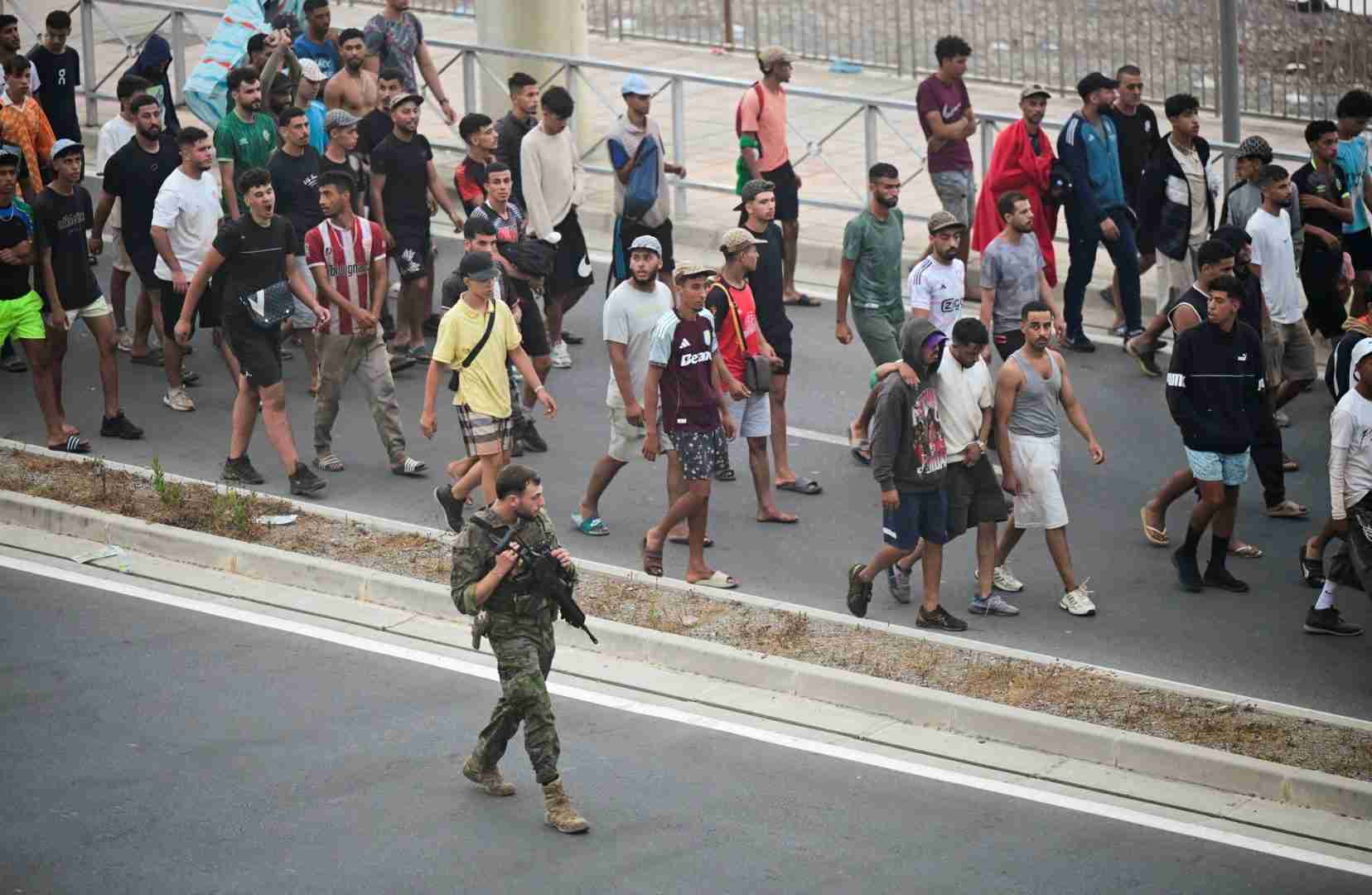
Spain said on Friday it had reversed a huge rush of migrants into a Spanish enclave in North Africa, with most of the more than 50,000 people who had crossed the border by land and sea already heading back voluntarily.
The Spanish government’s representative in Ceuta said 57 bodies had been recovered on the Spanish side of the border and that there could be additional casualties on the Moroccan side. It said some drowned and some were crushed while trying to climb the breakwater that holds the border fence.
Spain’s Interior Ministry said around 50,000 people had crossed the border since Thursday morning, and estimated that 48,300 had returned by 6 p.m. (1600 GMT) on Friday. Juan Jesus Vivas, head of Ceuta’s local government, said as many as 60,000 people had pushed across over the past couple of days.
Moroccan forces beat back crowds with batons and tear gas at the gates to Ceuta, trying to prevent more from entering the tiny Spanish territory that juts on a spit of sandy land into the Mediterranean from Morocco.
The rush on the border caused division in Europe, where leaders of fellow EU states called for Spain to ensure that the incident was contained.
Italy said it was suspending the European Union’s border-free Schengen arrangements with Spain, a measure set to affect people travelling by plane or boat between the two countries. Madrid said the move violated EU treaties.
‘I’M GOING BACK’
Reuters at the enclave’s border saw Moroccan police in riot gear using tear gas to disperse some of the people amassed near the fences. Water cannon trucks were deployed and the charred remains of a bus and seven cars could be seen from clashes with the crowds.
On the other side, Spanish military vehicles lined up along sections of the border as dozens of migrants watched from a hilltop in Morocco, unable to cross.
Several hundred people could be seen returning to Morocco through border posts and holes in the fence, with some saying they could not find food or shelter in Ceuta.
“Honestly, I don’t even know why I came, and now I’m going back,” a young Moroccan man, who said he was from Tangier, told Reuters. “I haven’t eaten since lunch yesterday, even though I brought some money with me … What we’re doing is neither good nor enjoyable.”
Ayman, a 20-year-old hairdresser from the port city of Larache who only gave one name, told Reuters he had crossed on Wednesday after a five-hour swim.
“There was no food inside Ceuta and we were kicked out badly by the (Spanish) army,” he said.
UNPRECEDENTED SCALE OF CROSSINGS
Spanish Prime Minister Pedro Sanchez travelled to Ceuta on Friday, where he was greeted with insults from protesters. He called the mass crossing “a violation of Spain’s territorial sovereignty” and said authorities were speeding up the repatriation of those who had entered illegally, with full cooperation from Morocco.
Ceuta and Melilla, Spanish autonomous cities in northern Morocco, have the European Union’s only land borders with Africa. Both periodically experience surges in attempted crossings by migrants seeking to reach Europe, but the scale of Thursday’s rush appeared unprecedented.
Right-wing parties around the continent blamed the incident on Spain’s comparatively lax migration policies, including an amnesty granted to hundreds of thousands of unauthorised migrants this year.
Spain summoned the Italian ambassador to protest earlier comments by Italian Foreign Minister Antonio Tajani, who claimed Spain’s amnesty policy had “encouraged human trafficking”.
U.S. President Donald Trump, a long-time critic of Spain’s Socialist-led government, told a cabinet meeting the Ceuta crossings “look like an invasion”, adding: “That same thing’s going to happen to us if the Republicans don’t get elected, except worse,” referring to upcoming midterm elections.
The State Department on X pointed the blame squarely at the Spanish government, saying the incident was a direct result of its migration policies. “We are considering actions to defend Americans at home and abroad from this threat and stand ready to assist other European allies considering similar option,” it said.
“This unacceptable incident is the direct result of the Spanish Government’s deliberate efforts to enable and facilitate mass illegal migration into Europe.
Meanwhile, French Interior Minister Laurent Nunez said police presence on the Spanish border would be quintupled by Saturday, while reinforcing aerial surveillance and patrols on trains.
EU countries are normally barred from conducting checks at internal frontiers of the bloc’s Schengen zone, though checks can be reimposed temporarily under exceptional circumstances.
In a post on X, Spain’s Guardia Civil police association AUGC said there had been too few police in place to monitor the fence during the surge on Thursday, making them unable to stop the rush.
Territorial Policy Minister Angel Victor Torres said that among factors contributing to the surge may have been a ruling by Spain’s Supreme Court earlier this month that migrants intercepted at sea while attempting to reach Ceuta or Melilla cannot be summarily rejected at the border. Experts say that still does not prevent their expulsion.
On the Moroccan side of the border, thousands of migrants streamed into the town of Fnideq overnight despite a reinforced deployment of security that foiled most attempts to cross. Some began leaving again later on Friday.
Although the crossing appeared blocked, groups moved along the coast seeking routes around the fence.
“I was late,” said Brahim, 32, who gave only one name. He said he had arrived from Tangier hoping to cross through the gate but found it effectively shut.
Reporting by Michael Gore, Ahmed Eljechtimi, Emma Pinedo, Joan Faus, Victoria Waldersee, David Latona and Javi West Larrañaga; Additional reporting by Inti Laudaro, Francesca Piscioneri, Alvise Armellini, Brice Makini, Angelo Amante and Bhargav Acharya; Writing by Andrei Khalip; Editing by Peter Graff, Philippa Fletcher and Nick Zieminski
Statement by Michael Fahy, Shadow Minister of Economy, Labour and Housing
Every government says the same thing about work permits, namely “Bermudians first.” That is the right principle, but principles without competence are just slogans. Right now Bermuda’s work permit policy is failing on three counts. It is too slow, too opaque, and it is not delivering the jobs for Bermudians it promises. The result? Businesses can’t hire, essential services are stretched, and public trust in the system is eroding. We need reform, not just more press releases.
Ask any hotel, restaurant, or construction firm and they’ll tell you the same story of long and business-killing delays. Last year, Stephen Todd, then Chairman of the Bermuda Hotel Association, said his members “strictly adhere” to timely submissions, but “delays still occurred after submission.” He pointed to a “high reliance on employers having to provide hard-copy documents” and delays even after a permit is approved in “the printing and availability of the work permit document itself”.
The Minister himself admits there’s a problem. In March 2026, Minister Hayward said the Government is “dissatisfied with the processing time of some work permit applications” and is “embarking on a full digitised strategy”. That’s welcome, but it is 2026, and we are still talking about printing paper permits and hard-copy documents. In the meantime, projects are delayed and staff cannot start work.
The “new” Work Permit Policy 2025 even made things worse in some areas. Business visitor stays were reduced from 21 days to 14 days, and foreign nationals were not allowed to remain in Bermuda while their initial permits were processed. That means longer onboarding times and more bureaucracy for companies trying to bring in talent for short projects. When the government sets a target of 6 weeks to process standard applications, but industry still reports inconsistency, the target is not being met.
Further, in June 2026, I asked the Minister of Economy and Labour for a breakdown of CARICOM nationals with work permits by nationality, length of stay, and job category. The response? It would take “months to even try and collate the information” from 17,500 documents. You cannot manage what you do not measure, and right now, the Government is not measuring. That is very concerning.
How can we have a debate about CARICOM, about labour shortages, about whether policy is working, if the Ministry does not have the basic data at hand? How can employers plan, and how can Bermudians trust that “Bermudians first” is real, if we don’t even know who holds the permits?
The Chamber of Commerce noted that 94% of job growth in 2024 went to non-Bermudians, with Bermudian job growth at just 0.1% or 18 new jobs. If that is accurate, the public deserves to know why, and what categories those jobs were in. Without data, we are just guessing. The policy intends to protect Bermudian jobs. The effect is often the opposite.
Take the English testing requirements. The Department now only accepts IELTS 4.0, TOEFL 42, etc. Alex DeCouto of the Chamber’s construction division said the changes are “a step in the right direction”, but “the core challenge remains.” Many skilled tradespeople “have not had the opportunity or need to undertake structured academic testing, despite being highly competent in their trades”. The result is “increased recruitment difficulty, delays in project delivery, and ultimately higher construction costs”. With 30% of construction labour imported and Bermudian numbers falling, we are making it harder to build the very homes we need.
In addition, there are the new job mobility restrictions. Permit holders must complete two years with their initial employer, and job changes will not be approved in the first year. The goal is to stop poaching and protect employer investment. The effect is to trap workers and reduce flexibility in a small labour market. The Minister announced a “zero-tolerance policy” because “appeals were becoming the norm” and late applications were rising. That is not a sign of a system working, but it is a sign of a system employers cannot comply with.
However, the biggest failing is that the policy assumes we can fill every job with a Bermudian tomorrow. We cannot. The Chamber President put it plainly: “Bermuda has warning signs and they should not be ignored.” Restaurants are closing during the week from lack of staff. Nurses and police are on back-to-back overtime.
The Chamber commended the reforms for increasing employer accountability and “strengthening recruitment transparency, but while these are solid improvements, they don’t yet address the real challenge, which is simply that Bermuda needs more persons in the workforce. Without more people, “essential services will break down” and “productivity gains will stall”.
Work permits are not the enemy of Bermudian jobs. A shrinking workforce is. If we do not have enough people to staff hotels, clinics, and job sites, we don’t grow, and if we don’t grow, there are fewer opportunities for Bermudians. We don’t need to throw out “Bermudians first.” We need to make the system work.
So you ask what should be done?
(i) digitize now, not later. End hard-copy requirements and paper permits. The Minister has committed to this. Deliver it in 2026.
(ii) Publish the data. Quarterly reports on permits by sector, nationality, and duration. If it takes months to collate 17,500 files, the database is broken.
(iii) Fix the skills bottleneck. For trades, accept practical assessments, not just academic English tests. Perhaps tie permits to apprenticeships so every imported worker trains a Bermudian if available.
(iv) Link permits to housing. If we import workers, employers must show where they will live. Otherwise we just drive up rent for everyone.
(v) Be honest about workforce needs. Admit that some sectors need more people now. then set targets to replace those roles with Bermudians over time through training.
The current policy is stuck between two failures. It os too rigid to meet business needs, and too weak to deliver for Bermudian workers.
We heard from the Minister there were 137 responses during consultation because “the impact of immigration decisions are keenly felt across the community”. People feel it in closed restaurants, in hospital wait times, in project delays. “Bermudians first” must mean Bermudians employed, trained, and housed. It cannot mean a slow, paper-based system that pleases no one, especially when Bermudian-owned businesses are being affected.
It’s time to fix the process, publish the facts, and grow the workforce. Otherwise, we’re not protecting jobs, we are simply protecting decline. Michael is the Shadow Minister of Economy, Labour and Housing and the MP for Constituency 20. He can be reached on mfahy@oba.bm or opedfahy@gmail.com.
The Hon. Alexa Lightbourne, JP, MP, Minister of Home Affairs, recently celebrated the opening of the National Museum of Bermuda’s newest exhibition, Your Pictures, Your Objects, Your Stories, Our History, at the Commissioner’s House, National Museum of Bermuda, Royal Naval Dockyard.
Minister Lightbourne attended the event and shared remarks on behalf of the Minister of Tourism, Transport, Culture and Sport, Owen Darrell, JP, MP.
Featuring community-contributed photographs, treasured objects, and personal narratives, the museum’s exhibition highlights the stories of ordinary Bermudians and demonstrates how individual lives and experiences have shaped the Island’s shared history.
And the Minister noted that the exhibition reflects the spirit of the Government’s The Story of US campaign, reminding Bermudians that every family, every memory, and every story contributes to our national identity.
In her remarks, Minister Lightbourne reflected on the importance of preserving Bermuda’s collective memory, saying, “Some of the most powerful stories are the ones quietly preserved in family photographs, treasured keepsakes, and memories passed from one generation to the next. This exhibition reminds us that history is not only shaped by major events, but also by the everyday lives of ordinary people whose experiences collectively tell the story of Bermuda.”
Minister Lightbourne congratulated the National Museum of Bermuda, its Board, staff, volunteers, and community contributors for creating an exhibition that preserves Bermuda’s heritage while inspiring future generations to share their own stories.
Members of the public are encouraged to visit the exhibition and listen to the remarkable stories behind the photographs and objects on display.
Somerset Cricket Club retained the Cup Match trophy in commanding fashion, defeating St. George’s Cricket Club by an innings and 90 runs after a dominant second-day display.
Resuming on 277 for 6, Somerset powered on to 391, inspired by a blistering unbeaten 79 from just 50 balls by Malachi Jones. In his final Cup Match appearance, Jones struck nine fours and five sixes, providing the perfect farewell alongside retiring teammate Dion Stovell.
St. George’s never recovered from the daunting target. After reaching 75 for 2, they collapsed to 113 all out, losing their final eight wickets for just 38 runs. Jonte Smith top-scored with 41, while Derrick Brangman and Stovell shared the spoils with four wickets apiece.
Forced to follow on, the challengers showed greater resistance in their second innings, with Isaiah O’Brien making an entertaining 64, but were eventually dismissed for 188.
Brangman once again starred with the ball, claiming 4 for 50 to finish with eight wickets in the match as Somerset wrapped up an emphatic victory.
The triumph sealed another memorable Cup Match success for Somerset and provided a fitting send-off for club stalwarts Stovell and Jones, who ended their Cup Match careers as champions after playing pivotal roles in a comprehensive victory.
The Ministry of Public Works advises the public of traffic interruptions on Dutton Avenue associated with the Bacchanal Run event on Saturday, August 1, 2026, with road closures and traffic controls in place from 9pm Saturday, August first until 12am Sunday, August 2. The affected route will include sections of North Shore Road used by race participants.
The road closures are required to facilitate the safe staging of the Bacchanal Run Road Race and to provide a secure route for participants and event officials.
Motorists are advised to expect delays, follow directions from police officers and event marshals, and use alternative routes where possible while the event is underway
Please refer to the attached Road Traffic Notice for the full route and additional details.
To provide the best experiences, we use technologies like cookies to store and/or access device information. Consenting to these technologies will allow us to process data such as browsing behavior or unique IDs on this site. Not consenting or withdrawing consent, may adversely affect certain features and functions.
Functional
Always active
The technical storage or access is strictly necessary for the legitimate purpose of enabling the use of a specific service explicitly requested by the subscriber or user, or for the sole purpose of carrying out the transmission of a communication over an electronic communications network.
Preferences
The technical storage or access is necessary for the legitimate purpose of storing preferences that are not requested by the subscriber or user.
Statistics
The technical storage or access that is used exclusively for statistical purposes.The technical storage or access that is used exclusively for anonymous statistical purposes. Without a subpoena, voluntary compliance on the part of your Internet Service Provider, or additional records from a third party, information stored or retrieved for this purpose alone cannot usually be used to identify you.
Marketing
The technical storage or access is required to create user profiles to send advertising, or to track the user on a website or across several websites for similar marketing purposes.