The Bermuda Police Service (BPS) is continuing to advise residents, as well as business staff, to remain vigilant for sophisticated online and telephone-based fraud, targeting local bank accounts.
Ongoing awareness efforts, by the BPS and local banks, highlight the importance of avoiding fraudulent communications that appear authentic.
Once again, if you receive a suspicious call, text or e-mail claiming to be from your bank, do not act on any instructions received.
Proactive steps to take instead:
Verify all communications. Don’t take any call, text message, or e-mail, requesting complete banking and/or personal information, at face value. Confirm independently, by contacting your respective bank, using the number on your bank card.
Don’t share sensitive information. Your bank will never ask you for passwords or PIN numbers.
Avoid suspicious links & messages. Any urgent sounding text messages or e-mails with links should be bypassed entirely. Don’t respond to the message, don’t click on any links and don’t download any attachments.
Activate account security. Additional security measures, like two-factor authentication and real time transaction alerts, can help thwart unauthorised account activity.
Advise senior citizens appropriately. Older residents should ignore persuasive callers, as well as compelling e-mails and text messages.
Report suspected fraud promptly. If you have already disclosed personal information, installed any remote access software or transferred funds, contact your bank immediately and report the matter to the Bermuda Police Service.
Emerging from a meeting with government officials, the students said the proposals included capping the size of some classes, loans for renovating schools and the replacement of a university admissions system they saw as unfair
French President Emmanuel Macron meets with the police force in Marseille, France, October 26, 2026. Aurelien Morissard/Pool via REUTERS
International News via Reuters:
French student leaders said the government had offered a package of education proposals on Monday in response to weeks of street protests, but vowed to keep demonstrating as the measures had fallen short of their demands.
Emerging from a meeting with government officials, the students said the proposals included capping the size of some classes, loans for renovating schools and the replacement of a university admissions system they saw as unfair.
“Not all our demands were met. We’ll go on for as long as it takes,” Louis Letoublon, one of the representatives of high school students, said.
There was no immediate confirmation of the education proposals from the government. A press conference to announce the details was delayed.
There were no immediate details on how much funding any such education package would require. The hands of President Emmanuel Macron’s minority government are tied by national debt approaching 120% of GDP and high new borrowing needs already making it difficult to agree a budget for next year.
The protests, initially triggered by student discontent, have shown little sign of easing after violence nine days ago engulfed dozens of cities, leading to fears the state had lost control of the streets.
The movement has since expanded, drawing in trade unions and “yellow vest” activists, known for their high-visibility jackets and mass demonstrations against economic pressures including high fuel costs.
Earlier, Macron acknowledged it was likely there would be more unrest this weekend ahead of a bigger nationwide day of protests set for November 5.
On a tour to survey the damage in Marseille and to thank emergency services after Saturday’s protests, he said he would keep security measures in place and work to move protests outside city centres.
The unrest and the sense among many French that authorities are struggling to keep the peace have further boosted the poll ratings of far-right candidate Marine Le Pen, already the frontrunner in next year’s presidential election.
An opinion poll published Sunday put her on 32%-33.5%, well ahead of her nearest rival, hard-left leader Jean-Luc Melenchon on 17%. Surveys suggest she would easily defeat Melenchon in a run-off ballot, expected to be held in early May.
FAR-RIGHT GANGS CONFRONT FAR-LEFT ACTIVISTS
Interior Minister Laurent Nunez earlier said 1,435 people were arrested nationwide during demonstrations on Saturday and that police had also recorded a new phenomenon, with organised far-right gangs confronting far-left activists in several cities.
“We knew there had been calls from numerous identity-based and nationalist movements to come out, officially, to defend businesses,” he said. “In a number of cities, such as Nice and Montpellier, these groups arrived in organised formations, mainly to target the ultra-left movement.”
A selloff in French government bonds paused on Monday after the country’s sovereign debt was spared a ratings downgrade on Friday by rating agency Moody’s.
But business leaders said the unrest was continuing to inflict heavy economic damage despite a calmer weekend.
Alain Di Crescenzo, head of the CCI France network of chambers of commerce and industry, said many retailers had remained closed as a precaution after the violence of October 17, adding that sales had fallen by about 80%.
“We have shopkeepers who are tired and demoralised, and we are killing local commerce,” he told Radio Classique.
Reporting by Sudip Kar-Gupta, Makini Brice and Inti Landauro; Writing by Mark John; Editing by Toby Chopra and Andrew Heavens
Approximately 10:00p.m. 18th October 2016, 19-year-old Isaiah Furbert was fatally shot inside of his residence, on Upland Street, Devonshire.
Detectives are renewing an appeal for witnesses and anyone with information relative to his murder is encouraged to contact the Serious Crime Unit of the Bermuda Police Service (BPS) on 247-1739, or the independent and confidential Crime Stoppers Bermuda hotline, 800-8477.
Alternatively, you may also use the BPS community reporting portal at https://portal.police.bm, or speak to a police officer you are familiar with.
All information will be treated in the strictest of confidence.
The two countries instead said on Sunday that they would develop a framework for cooperation between their respective defence-funding initiatives
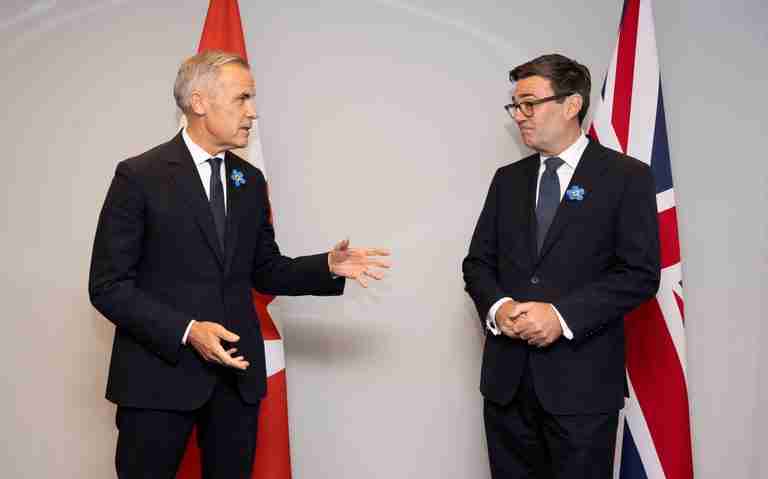
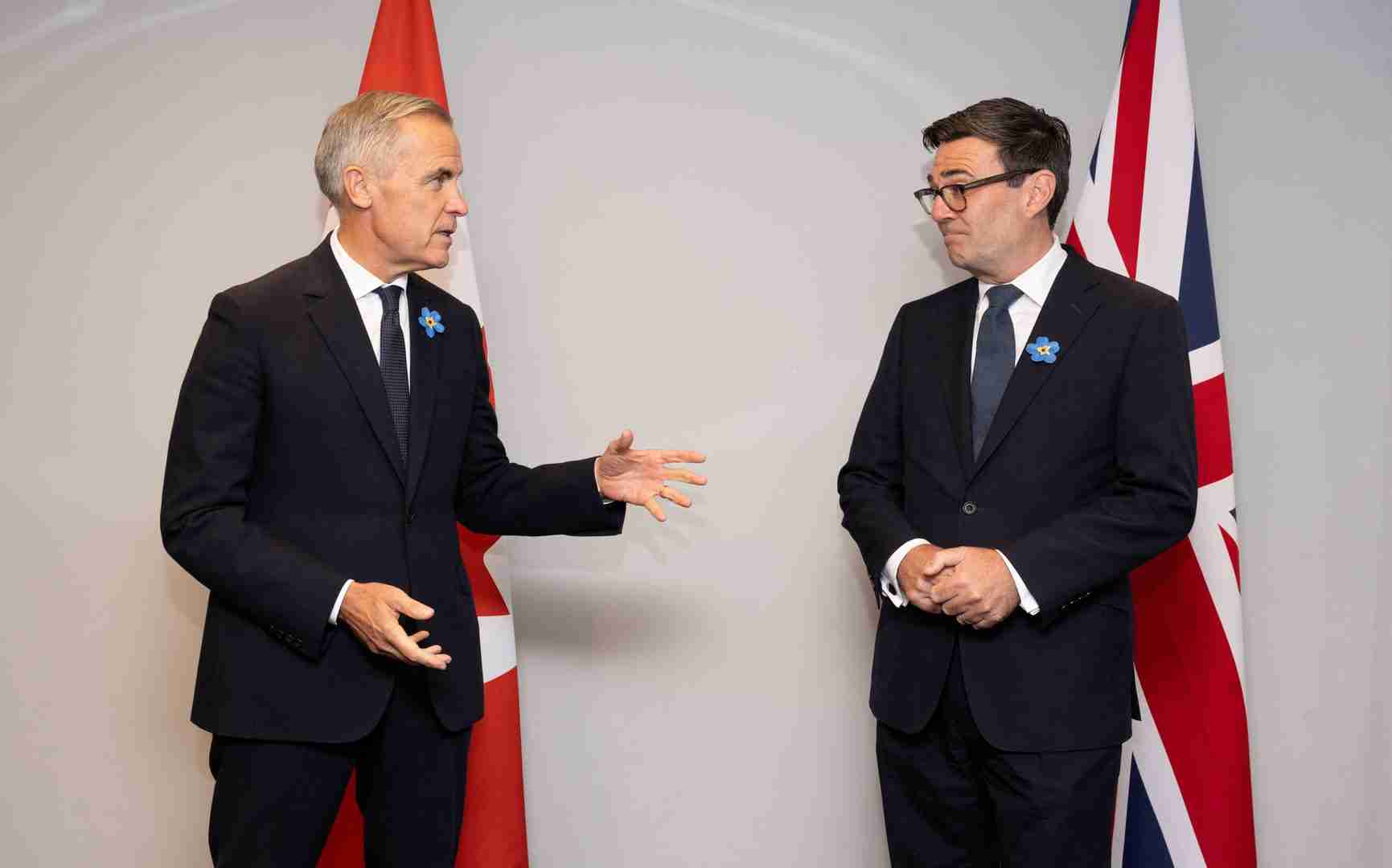
Canadian Prime Minister Mark Carney and British Prime Minister Andy Burnham speak as they attend a bilateral meeting, in Everton, Merseyside, Britain, September 16. 2026. PAUL COOPER/Pool via REUTERS
International News via Reuters:
Britain will not join the Canada-led Defence, Security and Resilience Bank, in a setback to efforts to create the world’s first global defence bank, according to a person familiar with the matter.
The two countries instead said on Sunday that they would develop a framework for cooperation between their respective defence-funding initiatives, establishing two distinct but complementary institutions to support each other on investment opportunities and strategic challenges.
“We have been working closely to consider how the Multilateral Defence Mechanism (MDM) and Defence, Security and Resilience Bank (DSRB) can best advance our shared objectives,” the statement said.
The two governments were unable to agree on key issues including the location of the headquarters of a joint institution, the level of joint procurement, lending to members, and the rules around new members, a second person said.
The MDM will focus on accelerating defence investment, joint procurement through financing, and bringing together demand across NATO allies to reduce procurement costs, while the DSRB will complement it by supporting investment in defence industries and supply chains, focusing more on single sovereign lending, the person added.
The DSRB has faced challenges securing support from larger European nations. Reuters was first to report in September lasht year that Britain had declined to join the project.
There were hopes Britain would reconsider its position under new Prime Minister Andy Burnham and his team. Germany had also declined to join.
Britain and Canada said the MDM and DSRB will be designed to work in close partnership, so they can support each other on emerging industrial priorities, investment opportunities and strategic financing challenges.
AIMING TO RAISE BILLIONS
The DSRB has been aiming to raise around €100 billion ($112 billion) and use the money to lend at low cost to governments and contractors for defence projects. It will also offer guarantees for lenders financing smaller firms seen as riskier borrowers.
So far, besides Canada, where the DSRB will be based, Albania, Belgium, Greece, Latvia, Luxembourg, Romania, Turkey and Ukraine have pledged their support.
Canadian Finance Minister Francois-Philippe Champagne said the group would meet in Luxembourg on November 30 to sign articles of agreement establishing the bank.
“Membership (is) open to other allies and close partners who share the Bank’s objective,” he said in a statement.
Reuters previously reported that potential members had not joined because of concerns including whether the DSRB can offer cheaper financing than highly rated national governments as well as the amount of capital countries would need to commit, the bank’s governance, and overlaps with existing initiatives.
Britain’s Defence Secretary Wes Streeting had recently described the DSRB as a “really interesting and innovative mechanism” and said that he did not see the proposed defence bank and MDM as being in competition.
Britain previously declined to join, citing concerns over value for money. Reuters previously reported that Burnham discussed the DSRB alongside the MDM initiative with Canadian Prime Minister Mark Carney in July and with Luxembourg Prime Minister Luc Frieden during an August visit to Kyiv.
($1 = 0.8925 euros)
Reporting by Anusha Shah in Bengaluru, David Ljunggren in Ottawa, Nivedita Balu in Toronto, William Schomberg and Elizabeth Piper in London; Writing by Anousha Sakoui. Editing by Andrew Heavens, Chris Reese and Keith Weir
The euro was pressured last week as a selloff in French government bonds drove the country’s debt risk premium to its highest level since the 2011 sovereign debt crisis, reigniting concerns about renewed financial stress across the euro zone
U.S. dollar, Euro, Yen, Pound, Turkish Lira, Yuan banknotes are seen in this illustration taken March 24, 2026. REUTERS/Dado Ruvic/Illustration
International News via Reuters:
The euro fell against the dollar on Monday ahead of a busy week of central bank meetings and with crude oil prices remaining elevated, while the Brazilian real tumbled following a surprise election victory by President Luiz Inacio Lula da Silva.
The euro was pressured last week as a selloff in French government bonds drove the country’s debt risk premium to its highest level since the 2011 sovereign debt crisis, reigniting concerns about renewed financial stress across the euro zone.
However, French government bond (OAT) prices rose on Monday after Moody’s spared France a credit rating downgrade last week, easing pressure on a government struggling to shore up strained finances.
The euro was down 0.23% against the dollar at $1.1201 but up 0.39% at 176.18 versus the yen.
“The fundamental issue with the euro hasn’t changed and spreads have tightened,” said Kit Juckes, chief global FX strategist at Societe Generale. “Euro is still vulnerable at this point because the growth outlook isn’t good and energy prices are still elevated.”
Brent crude futures eased but still held near six-month highs. Elevated oil prices weigh on import-dependent economies such as the euro zone. Brent fell 0.52% to $116.14 per barrel.
The dollar has been supported by resilient US economic indicators, notwithstanding headwinds including rising inflation. The US currency came under selling pressure during a tech-led market selloff last week.
Five major central banks will announce policy decisions later in the week. The US Federal Reserve, the European Central Bank and the Bank of Japan are all expected to hold rates steady despite inflation pressures.
New Zealand’s and Canada’s central banks are expected to raise rates this week.
The Japanese yen fell 0.48% to 157.56 per dollar.
The dollar index, which measures the US currency against a basket of peers, was up 0.34% at 102.02.
“The dollar is doing less well than expected and has some headwinds but US economic data has been pretty resilient,” Juckes said.
REAL TUMBLES
The Brazilian real fell sharply against the US dollar after Lula won a historic fourth term on Sunday against Senator Flavio Bolsonaro, who is also the eldest son of former President Jair Bolsonaro.
Bolsonaro led the election’s first round but lost in the runoff by over 4 million votes, rattling Brazilian financial markets, which had bet on his victory. He has refused to concede defeat and promised to ask for the result to be annulled.
The real was down 9% at 5.4255 per dollar.
Reporting by Chibuike Oguh in New York Stefano Rebaudo; Editing by Nia Williams
The Facebook parent has launched public offerings worth about $35 billion in common and preferred stock, and said it also plans to launch a separate at-the-market share sale program worth up to $60 billion
A 3D-printed Meta logo and word “AI” are seen in this illustration taken July 20, 2026. REUTERS/Dado Ruvic/Illustration
International News via Reuters:
Meta Platforms said on Monday it plans to raise up to $95 billion in its largest-ever equity fundraising, as the social media giant spends aggressively on its AI infrastructure expansion.
The Facebook parent has launched public offerings worth about $35 billion in common and preferred stock, and said it also plans to launch a separate at-the-market share sale program worth up to $60 billion.
The company will launch the larger share sale program after its new non-voting Class C shares begin trading, which is expected in the first quarter of 2027, but said it has not yet finalized its timing and terms of the sale.
Meta’s fundraising plan, among the biggest by an AI company, has also drawn interest of up to $5 billion in total from Nvidia, Advanced Micro Devices and Broadcom for Class A shares.
Their funding interest adds to concerns about an increasingly circular flow of capital in the AI industry, as chip suppliers help finance the expansion of one of their biggest customers. Meta has been pouring money into chips and data centers to compete better with OpenAI and Anthropic.
“We expect investors to continue to question the financing and potential for future capital raises,” William Blair analysts said in a note.
“Overall, we believe the financing reinforces both Meta’s confidence in the long-term returns from AI investment and the increasingly capital-intensive nature of pursuing that opportunity.”
The company’s shares fell about 1.4% in morning trading.
The latest fundraising further underscores a shift among big technology companies increasingly tapping debt markets and raising equity to bolster their AI infrastructure, having previously relied on cash to fund their investments.
Earlier this year, Alphabet increased the size of its equity offerings to $84.75 billion.
Separately on Monday, SpaceX said an affiliate of Apollo Global Management will buy AI chips and server hardware and lease them to the rockets-to-AI firm, in a deal with total principal payments of about $40 billion.
META’S AI SPENDING IS BURNING CASH
Meta has committed to spend about $825 billion in the future, primarily driven by its growing investments in data centers, AI-related infrastructure and cloud computing power.
But the aggressive expansion has eroded its historically strong free cash flow.
The company reported a $2.12 billion cash burn in the third quarter, its first negative free cash flow in over a decade, compared with a positive cash flow of $10.63 billion a year ago.
Still, the early popularity of its consumer-focused AI agent Muse and release of a competitive new series of AI models have helped partly justify Meta’s aggressive investments.
“We believe that Meta will ultimately produce a profitable AI business and its returns longer-term should help the company diversify, although the path may not be linear,” William Blair analysts said.
The company had cash, cash equivalents and marketable securities of $82.45 billion and long-term debt of $80.92 billion as of September 30, according to its latest quarterly filing.
Last week, Meta raised the lower end of its annual capital expenditure forecast to a range of $135 billion to $145 billion.
The company has said it would issue Class C common stock in January 2027, effectively resulting in a two-for-one split, to fund acquisitions and retain top talent while maintaining CEO Mark Zuckerberg’s control.
Meta agreed to grant Zuckerberg Class C shares that he can sell to help pay a potential California billionaire wealth tax, in exchange for a commitment to keep him in California.
Reporting by Jaspreet Singh in Bengaluru; Editing by Leroy Leo
The 71-year-old pontiff is recovering from an October 13 surgery in which doctors removed the lower lobe of his right lung and diagnosed him with lung adenocarcinoma, the most common form of lung cancer
Pope Leo waves as he leads the Angelus prayer from a window of the Apostolic Palace, during which he called for an end to hostilities in Yemen and expressed concern over the humanitarian crisis in Taiz, at the Vatican, October 25, 2026. REUTERS/Vincenzo Livieri
International News via Reuters:
Pope Leo’s trip to Uruguay, Argentina and Peru will go ahead, the Vatican said on Monday, indicating that Leo’s recovery from lung cancer surgery was on track and that he was fit enough to make the November 6-17 journey.
The 71-year-old pontiff is recovering from an October 13 surgery in which doctors removed the lower lobe of his right lung and diagnosed him with lung adenocarcinoma, the most common form of lung cancer.
“The Holy Father’s recovery after the surgery continues, and the latest medical examinations attest to his good health and favorable clinical condition,” the Vatican said in a statement, citing Leo’s personal physician Luigi Carbone.
“Based on his current clinical status, as well as the instrumental and laboratory tests performed, there are no contraindications that would prevent him from undertaking his upcoming apostolic journey,” the statement said.
POPE RETURNING TO FAMILIAR REGION
Leo’s South America tour is set to be one of the most intense foreign trips taken by a Catholic leader in decades. The pope is scheduled to travel some 31,000 km (19,300 miles) over the 10-city tour and give 36 speeches.
The Vatican said the trip would proceed with no changes to the previously published agenda.
Leo had spent decades as a missionary in Peru before his predecessor Francis called him back to Rome in 2023 and promoted him to Vatican positions, so the trip will mark a homecoming of sorts for the first US pontiff.
“I am looking forward to returning to the continent where I’ve experienced so many moments of my life,” he said in the Vatican message.
“May this journey be an occasion for us to open our hearts to one another, strengthen our communion as brothers and sisters, and renew our commitment to proclaiming the Gospel with joy,” Leo said.
In its statement, the Vatican said Leo was “adjusting his daily schedule in consultation with his doctors to prioritize his recovery while continuing to fulfil the responsibilities of his ministry.”
On Sunday, the pope addressed the faithful in St Peter’s Square, but on doctors’ advice he cancelled a day visit to the central Italian town of Assisi, which had been scheduled for Tuesday.
Reporting by Alvise Armellini, editing by Gavin Jones and Tomasz Janowski
The plan focuses on five measures to remedy the breach, and Temu now has four months to conduct an interim risk assessment, the Commission, which acts as EU regulator, said in a statement
Temu logo is seen in this illustration taken November 4, 2024. REUTERS/Dado Ruvic/Illustration
International News via Reuters:
The European Commission said on Monday it had accepted Chinese online retail platform Temu’s action plan to remedy a breach of the EU’s Digital Services Act, following a fine imposed on the company in May.
The plan focuses on five measures to remedy the breach, and Temu now has four months to conduct an interim risk assessment, the Commission, which acts as EU regulator, said in a statement.
The Commission had imposed a €200 million ($224.08 million) fine on Temu in May for not doing enough to stop the sale of illegal products.
A spokesperson for Temu, which is owned by PDD Holdings, said it welcomed the Commission’s approval of its plan under which the company will have to assess possible shortcomings of its content moderation system, among other steps.
Temu, along with Shein and other ecommerce platforms, has been hit by the EU imposing €3 fees on low-value ecommerce packages since the start of July. Parcels worth less than €150 previously entered the bloc duty-free.
($1 = 0.8925 euros)
Reporting by Inti Landauro; Additional reporting by Foo Yun Chee and Helen Reid;Editing by Sudip Kar-Gupta and Susan Fenton
CyberTips, the Ministry of Education’s online safety and digital literacy programme, relaunched in Bermuda’s schools on 9 October 2026, with workshops delivered at East End Primary School and Paget Primary School.
Minister of Education, the Hon. Diallo Rabain, said, “There could be no more fitting time for CyberTips to return, as October is Cybersecurity Awareness Month. As children go online at younger ages than ever before, and as scams, social media pressures and artificial intelligence reshape the digital world they are growing up in, Bermuda chose this month to bring back the programme that taught a generation to think before they click.”
Minister Rabain added, “CyberTips has supported Bermuda’s community with internet safety education for nearly 20 years. The refreshed programme offers free, 45-minute interactive sessions for students from P1 through S4, along with whole-school assemblies, covering cyberbullying, privacy, social media, scams, digital footprints, artificial intelligence and healthy technology use.”
The new website, www.cybertips.bm, is the programme’s central hub. It offers downloadable tip sheets for students at every level, parents, educators and seniors, as well as an Anonymous Reporting Tool that gives young people and adults a safe way to report online safety concerns without giving their name.
The site also features a Digital Hygiene Calculator, the ThreatSphere interactive cyber-risk map and guidance on reporting cybercrime. The free CyberTips mobile app adds a password-strength tool, a screen-break timer, and a game-rating checker.
Teachers can register their classes for in-class workshops at https://cybertips.bm/school-workshops. Sessions are scheduled on a first-come, first-served basis, so schools are encouraged to book early. Schools will also receive programme information directly from the Department of Education. Parent and PTA sessions and educator workshops are also available. Cyber Cyd, the CyberTips mascot, has returned and is available to attend sessions.
Cybersecurity Awareness Month lasts only 31 days, but the habits it calls for last a lifetime, and CyberTips’ work does not end when October does. Those habits are best built early: in classrooms, at kitchen tables, and in honest conversations between young people and the adults they trust. Families are encouraged to start those conversations today, using the free resources at www.cybertips.bm.
The CyberTips team can be reached via the website or by calling 777-0875.
CyberTips is back! Helping Bermuda think before we click, make safer choices and build brighter digital futures.
The Bermuda Sea Cadet Corps marked a significant milestone in its history on Wednesday evening, with a traditional Trafalgar Night Dinner hosted at Government House to celebrate 60 years of service to Bermuda’s young people. The event also launched the Corps’ $2 million capital campaign to upgrade and enhance its Unit building and secure the future of the Corps for generations to come.
Unit Chairperson, Training Officer & Fundraising Chair: Susan Outerbridge (Unit Chairperson), Chief Petty Officer (SCC) Ani Douglas (Training Officer), Naomi Buckley (Fundraising Chair)
Held under the patronage of His Excellency the Governor of Bermuda, Mr Andrew Murdoch, CMG CVO, the evening honoured the enduring traditions of the Royal Navy and the legacy of Admiral Lord Nelson at the Battle of Trafalgar in 1805. It also celebrated the important role the Corps continues to play in developing leadership, discipline, teamwork and confidence among young people across our island.
The evening provided an opportunity to reflect on six decades of dedication from the volunteers, supporters and families who have helped shape the Corps since its establishment in 1966. For 60 years, the Bermuda Sea Cadet Corps has equipped thousands of young people with practical skills, a sense of responsibility and the confidence to serve their community with pride.
A central moment of the evening was the announcement of the Corps’ $2 million capital campaign, which will fund the upgrades to its existing unit building, transforming it into a modern, accessible, fit-for-purpose facility to support the next chapter of its history.
The building is central to the Corps’ activities, providing a home for training, development and the relationships that underpin its work. Its renovation represents an investment not only in infrastructure, but in the future of Bermuda’s young people. It will ensure the continued development of the Corps’ mission of inspiring young people to achieve their potential through challenge and nautical adventure, guided by the customs and traditions of today’s Royal Navy.
Speaking about the legacy of leadership honoured with the traditional Trafalgar commemorations, and the Bermuda Sea Cadets’ role in the local community, the Governor noted:
“I learned a great deal during my own time as a Sea Cadet, and thanks to incredible adult volunteers, young people in Bermuda are able to acquire and develop new skills and abilities that will help them thrive as adults. I’m therefore incredibly honoured as patron of the Bermuda Sea Cadet Corps to support them by hosting a Trafalgar Night dinner.
Trafalgar Night dinners include some wonderful and somewhat unusual naval traditions. Hosting one in Government House brought back great memories of my time in the Royal Navy. At its heart the evening is about bringing people together with a shared interest, and sense of community. To be able to use this annual naval event to celebrate an impressive 60 year anniversary and to launch a critical campaign to help the organisation grow, was something I was delighted to support.
Current BSSC Volunteers, Front (L-R): Chief Petty Officer (SCC) Cornell Young (Unit Coxswain), Lieutenant (SCC) Jason Simons RNR (First Lieutenant), Lieutenant Commander (SCC) Michael Frith RNR (Commander, Bermuda Sea Cadet Corps), His Excellency Andrew Murdoch CMG CVO, (Patron, Bermuda Sea Cadet Corps), Peter Donnellan (Chairperson, Bermuda Sea Cadet Association), Sub-Lieutenant (SCC) Sam Bennett RNR (Development Officer), Chief Petty Officer (SCC) Ani Douglas (Training Officer). Rear (L-R): Petty Officer (SCC) Kevin Sunga (Drill Instructor), Allana Simons (Executive Member Bermuda Sea Cadet Association), Joanna Pitt (Executive Member Bermuda Sea Cadet Association), Susan Outerbridge (Unit Chairperson), Naomi Buckley (Fundraising Chair), Oca-Ray Brown (Civilian Instructor), Petty Officer (SCC) Tevin Daniels (Instructor)
The Bermuda Sea Cadet Corp welcomes the support of individuals, businesses, community organisations and philanthropic partners who share a belief in the value of youth development and the importance of investing in the next generation.
As the Bermuda Sea Cadet Corps celebrates its 60th anniversary, the capital campaign offers an opportunity to honour the achievements of those who came before while building a stronger foundation for those who will follow. In his vote of thanks at the end of the evening, Lieutenant Commander (SCC) Michael Frith, RNR, Commander of the Corps noted:
First Lieutenant & Development Officer with partners, L-R: Lieutenant (SCC) Jason Simons RNR (First Lieutenant), Andrea Simons, Lottie File, Sub-Lieutenant (SCC) Sam Bennett RNR (Development Officer)
“We are very proud of our Cadets and what they continue to achieve, and of the role that the Bermuda Sea Cadet Corps plays in providing a safe, challenging and fun environment in which they can thrive. We want to domoreof that and provide evenmoreopportunities for the Cadets. That is why we need to overhaul our Unit in St George’s, to make it more accessible and safe, to enhance our versatile training space to provide more, and more diverse, opportunities for our Cadets, and to create a community resource that they – and everyone – can be proud of.”
Past Chairpersons & Commanders with current volunteers, L-R: Sub-Lieutenant (SCC) Sam Bennett RNR (Development Officer), Lieutenant (SCC) Jason Simons RNR (First Lieutenant), Lieutenant Commander (SCC) Michael Frith RNR (Commander, Bermuda Sea Cadet Corps), Anthoni Lightbourne (Former Commander, BSCC), Naomi Buckley (Former Chairperson, BSCA & current Fundraising Chair), Dwayne Trott (Former Commander, BSCC), Keith Battersbee (Former Chairperson, BSCA), Peter Donnellan (Chairperson, BSCA), Capt Alan Brooks RN (Former Chairperson BSCA), Chief Petty Officer (SCC) Cornell Young (Unit Coxswain), Dr Mark Guishard (Former Chairperson BSCA), Oca-Ray Brown (Civilian Instructor), Chief Petty Officer (SCC) Ani Douglas (Training Officer), Petty Officer (SCC) Tevin Daniels (Instructor), Petty Officer (SCC) Kevin Sunga (Drill Instructor)
For more information about the Bermuda Sea Cadet Corps and its $2 million capital campaign, or to find out how to support the renovation project, please email bermudaseacadets@gmail.com. Donations and pledges may also be made by direct transfer to BNTB 060-166017-0014– Bermuda Sea Cadet Association (noting “Sea Cadet 60” in the payee reference) or by contacting your favourite Cadet and offering to support their efforts.
Together, we can ensure that Bermuda’s next generation continues to learn, lead and serve with pride.
Statement by Lisa D. M. James, Founder & Chairlady, Bermuda Caregivers Alliance, Charity #1066:
“Am I a caregiver?” It sounds like a simple question, however I am increasingly convinced that it is one Bermuda urgently needs to ask.
You may be a nurse, teacher, civil servant, accountant, executive, hospitality worker, retail employee, construction worker or someone just beginning your career. You may work in a hospital, an international business, a government department, a small business or from home. But before work, after work, during your lunch break, throughout the night or on the weekend, are you also helping an ageing parent get dressed, preparing meals, organising medication, taking someone to medical appointments, assisting with mobility, helping with bathing, managing finances, checking that someone has eaten or getting up several times during the night because they cannot safely be left alone? If so, you may also be a caregiver — even if you have never called yourself one.
That is the elephant in the room. Since the launch of Bermuda Caregivers Alliance, the inquiries we have received, conversations we have had and our first survey responses have reinforced something that deserves far greater public attention: people are providing significant levels of care while continuing to manage employment, families, bills and their own health.
Some employees can work remotely, but working from home is still working. If someone is trying to meet a deadline, participate in meetings or answer emails while simultaneously caring for an elderly parent, spouse, adult child or other relative, where is the protected time for the person actually receiving care? We must stop assuming that because a family member is physically present in a home, adequate care is automatically being provided. That is not criticism of families. It is recognition of reality.
People can love their relatives deeply and still be exhausted. They can be completely committed to the person they care for and still need respite. They can desperately want to care for someone at home and still have no idea how to manage Parkinson’s disease, kidney disease and dialysis, cancer, stroke, diabetes, heart disease, dementia, mental-health conditions, substance-use disorders and addiction, lifelong disabilities, mobility deterioration, continence, nutrition, complex medication routines or palliative and end-of-life needs. Different conditions create very different caregiving demands, and many families are learning as they go. Love does not automatically provide training.
Bermuda Caregivers Alliance recently completed its first preliminary Caregiver Assessment & Wellbeing Survey analysis. The sample was deliberately small — 14 completed surveys — and BCA is not presenting these figures as representative of every caregiver in Bermuda. But they are an important early warning. Of those 14 respondents, 64 per cent fell within either the High or Critical overall concern categories. Seventy-one per cent reported feeling emotionally drained because of caregiving, 57 per cent reported significant caregiving-related stress, worry or anxiety, and half reported exhaustion or overload. Half also reported difficulty maintaining their own health and self-care while caregiving, while 57 per cent said they needed more training, support networks and advocacy.
Written responses raised another issue that cannot be ignored: isolation. Respondents described having little or no support, needing practical help and relief, and in some cases only recognising that they needed help after the caregiving burden had already developed. Fourteen people cannot tell us the whole story, but fourteen people can tell us that there is a story worth investigating. The question should not be, “Is 14 enough?” The question should be: what will we find when 100 caregivers answer? What about 500? What about 1,000?
Bermuda itself acknowledges that we do not yet know enough. The Bermuda Health Council’s 2025 Caregiver Data Report states that there is no centralised reference for understanding the actual demand for caregivers or whether supply is adequate to meet it, and calls for stronger data collection around caregiver demand, use, expenditure and financing. That matters because we cannot properly plan what we do not properly measure.
Who is providing unpaid care in Bermuda? How many have reduced their working hours? How many have left employment completely? How many are spending significant portions of their own income caring for parents, spouses, children or relatives? How many are experiencing burnout? How many are providing complex care for someone living with Parkinson’s, kidney disease, cancer, dementia, stroke, mental-health needs, addiction or another chronic condition without sufficient education or support? How many employers know that members of their workforce are also caregivers? How many people do not even realise that what they are doing has a name? We need answers.
Then there is our hospital. Bermuda has been discussing pressure on hospital beds, delayed discharges and long-term-care capacity for years. As of June 1, 2026, Bermuda Hospitals Board reported that 41 patients who were medically fit for discharge were still occupying acute-care beds. These patients were predominantly older adults, and the main reason identified for the delays was the need for skilled-nursing or long-term-care placement.
Families should not be blamed for hospital overcrowding, nor can we assume that every person awaiting placement could instead be cared for safely at home. But surely we should be asking what role stronger caregiver education, home-care support, respite, discharge preparation and community services could play in helping appropriate patients return home safely.
If a family wants to care for someone at home following a stroke, during cancer treatment, through progressive neurological illness, while managing dialysis, after major surgery, with a chronic mental-health condition or during end-of-life care, who teaches them what to do? Who checks whether they understand? Who prepares them before discharge? Who do they contact when something starts to go wrong? Who supports the caregiver before the situation becomes a crisis and the person ends up back in Emergency? These questions deserve serious answers.
The workplace cannot be excluded from this conversation either. Caregiving does not disappear when someone clocks in. International evidence shows what can happen when societies fail to recognise working caregivers. Carers UK reported in September 2026 that one in five UK workers had caring responsibilities and estimated that 1.1 million people had left employment to provide care during the previous two years. That is UK data, not Bermuda data, but that distinction strengthens the argument for our own research. What is Bermuda’s number? We do not know, and we should.
Caregiver recognition therefore belongs not only in health and social-care discussions, but also in conversations about employment, productivity, workforce retention, flexible working, pensions, financial security and the cost of living. Imagine losing an experienced employee not because they wanted to leave their profession, but because there was no realistic way to combine work with caring for a parent, spouse, child or relative with significant health needs. That affects the caregiver, the person receiving care, the employer and ultimately Bermuda.
There is another uncomfortable truth we must be prepared to discuss. A severely exhausted caregiver may struggle to provide the same level of care as a rested, informed and supported caregiver. That does not make them uncaring. It makes them human. Burnout can mean missed appointments, poor nutrition, medication mistakes, frustration, declining mental health, physical injury, relationship breakdown and eventually an inability to continue providing care.
International research shows how serious isolation can become. Carers UK’s 2025 State of Caring research found 43 per cent of surveyed carers felt lonely, while 59 per cent said caring had caused them to lose touch with family and friends. Again, those are UK figures. Bermuda needs its own. Supporting caregivers is not separate from supporting patients. Supporting caregivers is part of supporting patients.
Caregivers also need somewhere to turn. Where does a caregiver go when they believe something is wrong? Who explains their rights and responsibilities? Where do family caregivers seek impartial guidance? Where can professional caregivers raise concerns without fearing that speaking up will cost them their employment? What happens when a caregiver believes a vulnerable person is being neglected, financially exploited or placed at risk? What happens when the caregiver themselves is being mistreated?
Caregivers require clear pathways for information, escalation, safeguarding, education and advocacy. No one organisation can or should attempt to replace government, healthcare professionals, regulators, employers or existing community services. But somebody must continually ask: who is looking after the person who is doing the looking after?
Bermuda is ageing, but ageing is only one part of the caregiving picture. People also provide long-term care to children and adults with disabilities, individuals living with chronic illness, people undergoing cancer treatment, those with neurological conditions, people receiving dialysis, individuals living with mental-health or substance-use challenges, and family members whose needs may continue for years or decades. The need for caregiving is therefore not confined to seniors, and it is not going away.
We need to start treating caregivers as an essential part of Bermuda’s wider health and social-care infrastructure. That means recognising both unpaid/family and professional caregivers. It means better data, education before crisis, caregiver-aware discharge planning, respite and wellbeing support, clear safeguarding and escalation pathways, and employers recognising that some of their most valuable employees are performing another essential role when they leave work.
It also means including caregivers themselves when decisions affecting caregiving are being made. Bermuda Caregivers Alliance was established because too many of these conversations were not taking place loudly enough. Our first survey has not given us every answer. It has given us a reason to ask more questions.
So, are you a caregiver? Perhaps you care for a parent, spouse, child, relative, friend or client. Perhaps you are supporting someone through cancer, kidney disease, Parkinson’s, dementia, disability, addiction, mental illness or another long-term condition. Perhaps you are paid. Perhaps you are unpaid. Perhaps you work full-time while providing care. Perhaps you have reduced your hours. Perhaps you have left work altogether. Perhaps you have been caring for someone for years and have never once described yourself as a caregiver.
We want to hear from you. Please scan the QR code accompanying this article and complete the Bermuda Caregivers Alliance Caregiver Assessment & Wellbeing Survey. The more caregivers who participate, the clearer Bermuda’s picture will become.
Caregivers cannot continue to remain invisible while carrying responsibilities that help hold families — and parts of our health and social-care system — together. Caregivers must be recognised, heard, included and supported.
The elephant is already in the room. It is time Bermuda talked about it.
Please note: Bermuda Caregivers Alliance #1066 website is under construction and our email address has changed. All inquiries and community engagement should be sent to bermudacaregiversalliance@outlook.com until the website launches.
To provide the best experiences, we use technologies like cookies to store and/or access device information. Consenting to these technologies will allow us to process data such as browsing behavior or unique IDs on this site. Not consenting or withdrawing consent, may adversely affect certain features and functions.
Functional
Always active
The technical storage or access is strictly necessary for the legitimate purpose of enabling the use of a specific service explicitly requested by the subscriber or user, or for the sole purpose of carrying out the transmission of a communication over an electronic communications network.
Preferences
The technical storage or access is necessary for the legitimate purpose of storing preferences that are not requested by the subscriber or user.
Statistics
The technical storage or access that is used exclusively for statistical purposes.The technical storage or access that is used exclusively for anonymous statistical purposes. Without a subpoena, voluntary compliance on the part of your Internet Service Provider, or additional records from a third party, information stored or retrieved for this purpose alone cannot usually be used to identify you.
Marketing
The technical storage or access is required to create user profiles to send advertising, or to track the user on a website or across several websites for similar marketing purposes.