The SailGP fleet in action on Race Day 1 of the Apex Group Bermuda Sail Grand Prix in Bermuda. Saturday 9 May 2026. Rolex SailGP Championship Event 5 2026 Season. Photo: Simon Bruty for SailGP. Handout image supplied by SailGP
The Apex Group Bermuda Sail Grand Prix is returning to Morgan’s Point from May 1-2, 2027, and tickets will open to the general public on Tuesday beginning at 10 a.m. ADT at SailGP.com/Bermuda.
SailGP’s high-speed global racing championship follows a successful 2026 Apex Group Bermuda Sail Grand Prix, which welcomed nearly 6,000 official ticketed spectators, bringing Bermuda into the international spotlight as national teams battled it out on the Great Sound in SailGP’s high-performance F50 catamarans.
For 2027, fans will be able to choose from four ways to experience the racing:
Waterfront Viewing: The elevated seated area will be perfectly positioned in the Race Stadium with prime views, live commentary and food, beverage and official SailGP merchandise available for purchase.
Presale price: BD $76/single day, BD $125/weekend
Standard price: BD $83/single day, BD $135/weekend
VELA Beach Club: With unrivaled views, gourmet dining and drinks, and live commentary and entertainment, fans can enjoy a chic waterfront hospitality experience that blends world-class racing with a vibrant atmosphere.
Presale price: BD $399/single day, BD $640weekend
Standard price: BD $425/single day, BD $705/weekend
VELA Privé: New for 2027, this is SailGP’s most elevated hospitality experience. The private, all-inclusive waterfront lounge offers premium dining and a refined setting built for hosting, celebrating and experiencing race weekend at the highest level.
Presale price: BD $800 (Groups of 10+ only, single-day tickets)
Standard price: BD $800 (Groups of 10+ only, single-day tickets)
Bring Your Own Boat (BYOB): Watch the action from the water within the designated Exclusion Zone aboard your own boat, with race-day support and an official SailGP flag. For personal use only; commercial use is not permitted. This offering will become available in spring 2027.
With SailGP’s F50s capable of speeds exceeding 100 km/h, Bermuda offers fans a unique close-to-shore vantage point on the Great Sound to experience the most exciting racing on water, while showcasing the island’s spectacular natural beauty, rich maritime heritage, and vibrant sailing culture.
However, his opponent Senator Flavio Bolsonaro, refused to accept defeat and said he would ask for the result to be annulled due to a Sunday ruling from a Supreme Court justice that extended voting for two hours
International News via Reuters:
Brazilian President Luiz Inacio Lula da Silva won a historic fourth term on Sunday, the country’s electoral court said, in a shock result that defied polls, precedent and global anti-incumbent sentiment to put the brakes on a wave of right-wing election victories across Latin America.
However, his opponent Senator Flavio Bolsonaro, the eldest son of former President Jair Bolsonaro, refused to accept defeat and said he would ask for the result to be annulled due to a Sunday ruling from a Supreme Court justice that extended voting for two hours.
Bolsonaro led the election’s first round but lost in the runoff by over 4 million votes, rattling Brazilian financial markets which had bet on his victory. His refusal to concede defeat has echoes of his father’s reaction after losing to Lula in 2022. Jair Bolsonaro never accepted his loss and was later sentenced by the Supreme Court to 27-years in prison for plotting a coup to remain in power.
The scale of Flavio Bolsonaro’s loss to Lula — by more than twice his father’s losing margin — and the fact his campaign also asked for an extension due to rains in the conservative-leaning south make any annulment unlikely, analysts said.
Mario Braga, a Latin America analyst at the risk consultancy RANE, said there could be right-wing protests in coming days, but “it’s very improbable that it will lead to the reversal of the result.”
COMEBACK KING
Investors expect recent bets on a change of government to unwind in a volatile week ahead on financial markets. A Tokyo-listed exchange-traded fund tracking Brazil’s Bovespa index dived nearly 15% in Asia trade on news of Lula’s victory, while the Brazilian real was set to fall sharply against the US dollar.
The victory marks another comeback in a career full of them for Lula, an icon of the global left and the most dominant force in Brazilian politics this century. The 80-year-old was jailed from 2018 to 2019 on corruption charges that were later overturned, paving the way for him to beat Jair Bolsonaro in the 2022 election.
“He is a statesman, a giant,” leftist federal lawmaker Erika Hilton, who was with Lula in Sao Paulo during the vote count, told Reuters.
At times, Lula’s reelection looked like a long shot, as voters soured on him and his Workers’ Party after years of corruption scandals and rising prices, while sweeping social changes left the former metalworker and union leader looking out of touch with an increasingly app-based economy and its growing ranks of informal workers.
Pollsters said better-than-expected turnout had powered Lula to victory. Leonardo Barreto, the co-founder of consultancy Think Policy, said voters had chosen Lula’s familiar embrace over Bolsonaro’s novelty.
“People today are choosing between change, with some apprehension, and a known path, which guarantees certain rights,” he said.
During the campaign, Lula pointed to a track record of falling poverty and inequality, while unemployment, illiteracy and deforestation hit record lows during his third term.
He warned Bolsonaro would cut welfare spending, backslide on social advances and hand over Brazil’s sovereignty to US President Donald Trump, whose State Department led a campaign to get the Bolsonaros back to power.
Lula’s win deprives Trump of a major addition to what has been a growing bloc of friendly right-wing Latin American governments that have embraced Washington’s agenda on security and migration.
There was no immediate comment from Trump or the US State Department, while Canadian Prime Minister Mark Carney and Latin American leaders were quick to offer their congratulations.
Celso Amorim, a former Lula foreign minister, told Reuters the leftist “would be very important for establishing a point of balance in Latin America. Lula is that balance.”
LATE-CAMPAIGN BOOST
Lula becomes the first candidate since Brazil’s return to democracy in the 1980s to be elected after finishing second in the first round.
His campaign this year mixed the kind of pragmatism and populism that has shaped his career in national politics for half a century, rolling out a slew of reforms aimed at improving the lives of workers and poor Brazilians.
These gained steam with late-campaign pledges that ranged from free nationwide weekend public transport, which has to be formally submitted to Congress, to a 15% increase in his trademark welfare program that is already being implemented.
Lula also championed a constitutional amendment that became Brazil’s biggest labor reform in decades, which passed with wide support in Congress.
CHALLENGES AHEAD
Still, Lula’s fourth term could be his most difficult yet, after Brazil elected its most conservative Congress since returning to democracy in the 1980s.
Combined, Bolsonaro’s Liberal Party and allied parties could control over 280 seats in the lower house and up to 50 seats in the Senate, enough for comfortable opposition majorities in both chambers.
That may deepen recent trends of presidents ceding power to Congress on the budget, major legislation and key nominations.
Lula faces an economy that his government forecasts will grow just 2.3% next year, adding to fiscal concerns tied to high interest rates and public debt that has risen past 82% of GDP, the highest since the pandemic.
Goldman Sachs said it expects Lula to make modest progress at most to contain spending in a fourth term, as he stays committed to a state-led growth model.
Surging household debt also concerns economists. Trying to address the issue, Lula rolled out a provisional ban on online betting and unveiled a new debt relief program during the campaign.
The incoming right-wing Congress will try to pass structural reforms that favor businesses, experts say, prompting spending cuts that could trigger popular backlash.
Reporting by Oliver Griffin, Luciana Magalhaes and Lisandra Paraguassu in Sao Paulo; Ricardo Brito, Bernardo Caram and Brendan O’Boyle in Brasilia; Marta Nogueira in Rio de Janeiro, Trevor Hunnicutt in Washington; Writing by Brendan O’Boyle and Oliver Griffin; Editing by Brad Haynes, Gabriel Stargardter, Alistair Bell, Christina Fincher, Andrew Heavens, Nick Zieminski, Aurora Ellis and Lincoln Feast.
American wins sudden-death playoff against Seamus Power on Port Royal’s iconic 16th hole
Photo: Christian Adair
Austin Smotherman has clinched the Butterfield Bermuda Championship.
The American won a sudden-death playoff on the 16th hole at Port Royal against Seamus Power.
The playoff format was used because high winds prohibited play yesterday.
Smotherman and Power were locked level as they returned to Port Royal’s perilous, ocean-facing par-three 16th.
Through two tense trips to the hole in gusting Atlantic winds, neither man blinked — trading matching pars to keep the contest alive.
The breakthrough finally arrived on the third visit. Power found trouble off the tee to slip to a costly bogey, leaving Smotherman to calmly two-putt for par and seal the biggest victory of his career.
Title winner Austin Smotherman is congratulated by Owen Darrell, Minister of Tourism Transport, Culture and Sport. Photo: Christian Adair
Local officials still have high hopes for the rebuilding of Purfleet-on-Thames, a popular riverside destination for day-trippers in the Victorian age and a hub of industry in the 20th century before most of the factories closed
International News via Reuters:
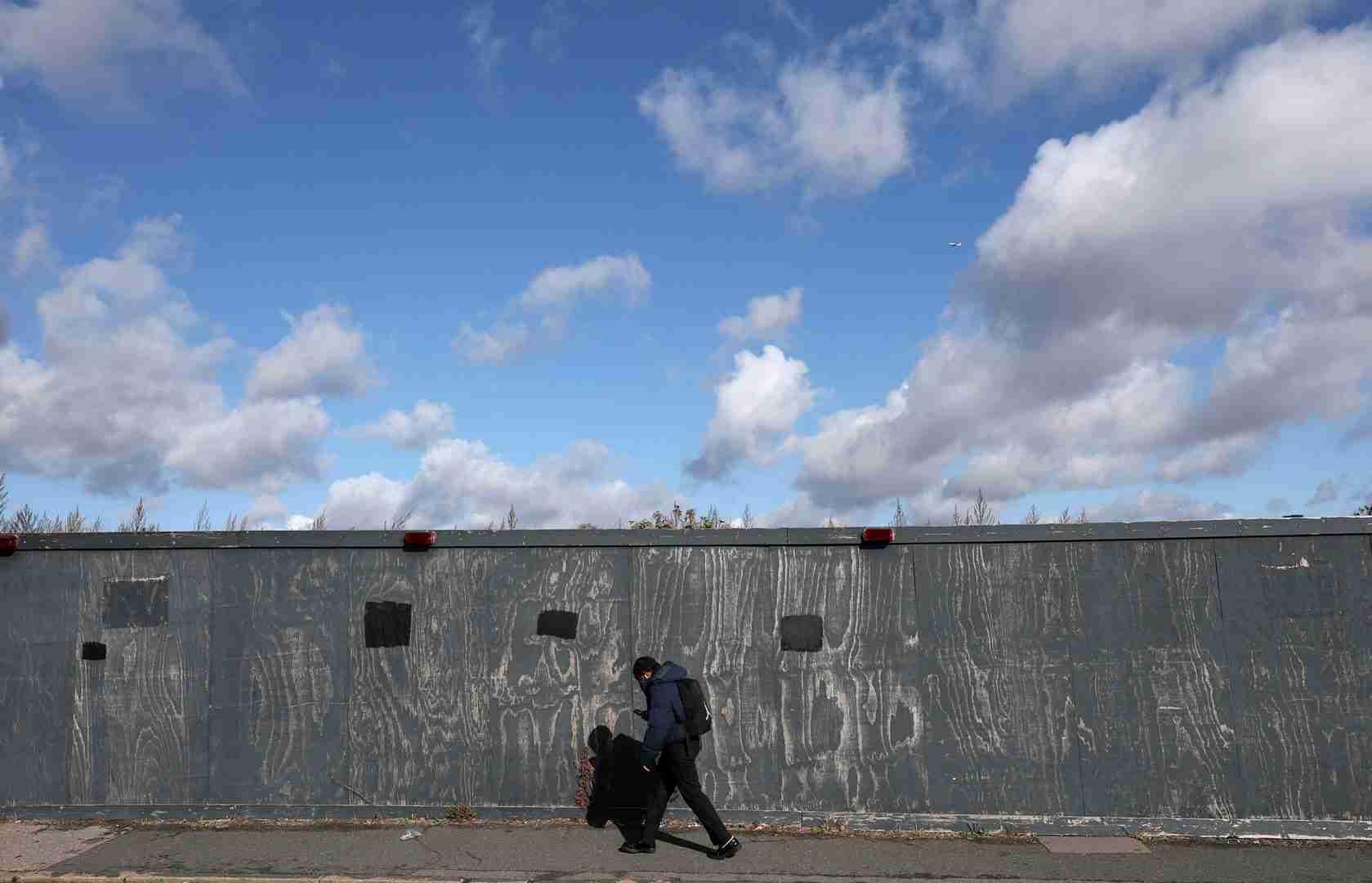
Near the marshes east of London, a £1 billion regeneration plan remains in limbo 17 years after it was first announced, an example of how rising UK building costs are adding to finance minister John Healey’s growth challenge in this week’s budget.
Local officials still have high hopes for the rebuilding of Purfleet-on-Thames, a popular riverside destination for day-trippers in the Victorian age and a hub of industry in the 20th century before most of the factories closed.
But of about 3,000 planned new homes only 34 have been built after the original developers failed to persuade investors that the financial numbers made sense.
For now, the area earmarked as a future town centre is still mostly a dusty industrial park with an overnight parking lot for truckers.
Despite some progress in streamlining Britain’s complex planning system, hopes for a quick pickup in housebuilding and infrastructure – which could accelerate the broader economy – are being thwarted in part by the rising costs of construction.
Interviews with more than 15 planning and policy experts, investors, business leaders and economists show how the accumulation of new policy demands is pushing up those costs.
Combined with sluggish demand as interest rates climb, investors are wary, risking a further slowdown in housebuilding and leaving the government further from its targets.
The new rules range from building safety – following the Grenfell Tower fire in 2017 which killed 72 people – to requirements to improve biodiversity and water quality and reduce carbon emissions.
Gavin Barwell, a former housing minister, said governments had routinely failed to see how multiple policy demands, including worthy ones, can lead to “very significant” cumulative costs, on top of higher taxes, labour costs and inflation.
“The problem could get worse, not better, if you don’t address this,” he told Reuters, of the need to build.
Many property investors have reduced or halted their projects. Activity in the housebuilding sector has been shrinking for almost all of the last two years, according to a survey by S&P Global, a data firm.
The Home Builders Federation (HBF) estimates 370,000 homes need planning permission every year to meet the government’s target of delivering 1.5 million homes between 2024 and 2029, but approvals are currently running at just 58% of that level.
Taylor Wimpey, a major homebuilder, has said rising costs – including from regulation – and affordability concerns mean it will not start new projects in London.
The HBF said £76,000 had been added to the cost of building a home since 2020. Prosper UK, a pro-growth advocacy group headed by Barwell, says half of that is due to government decisions on regulation, policy and tax.
SUPPORTERS ARGUE PURFLEET HAS HUGE POTENTIAL
In Purfleet-on-Thames, officials are conducting due diligence before reviving the regeneration project with a new developer.
The town is well located for commuters to London, only 30 minutes away by train, and for workers at international shipping ports nearby.
But Thurrock Council documents show the project’s previous developer struggled to raise debt and equity to meet high upfront costs for land adaptation and building infrastructure.
A review by KPMG found the viability of a new, initial stage remains “highly constrained”. It would require a lower-than-normal provision of affordable housing and £118 million of public funding, KPMG said, at a time when Healey’s budget is under strain.
Community representatives expect the regeneration to go ahead but say they have stopped updating local residents.
“People have had their fill of broken promises,” Trevor Batchelor, vice chair of the Purfleet-on-Thames Community Forum, said.
UK ALSO STRUGGLES TO BUILD MAJOR INFRASTRUCTURE
The problem is not limited to housebuilding. Around 10 miles further down the river from Purfleet, digging has finally begun on the £10 billion Lower Thames Crossing road tunnel first considered when Margaret Thatcher was prime minister in the 1980s.
It is designed to unblock a choke point on Britain’s haulage spine but has been held up by political wavering and a regulatory process slow even by UK standards. The planning application runs to more than 359,000 pages.
Iain McNab, head of policy at the local Chambers of Commerce, said the uncertainty had hindered the area’s businesses and given potential investors reasons to think twice.
According to the Boston Consulting Group, the UK was the slowest among several countries it studied for infrastructure pre-construction work, of which planning is a big part.
Chris Stratford, a consultant who worked on the Lower Thames Crossing, said failure by developers to work with local officials and environmental groups can cause delays. He said securing planning consent on a major infrastructure project could cost between £500 million and £1 billion.
That is time and money that Britain can ill afford.
The economy is on course to grow by 1.3% this year, according to the International Monetary Fund, among the fastest in the Group of Seven nations but less than half its average pace in the 15 years before the 2007-09 global financial crisis.
The IMF expects UK growth to slow to 1.2% in 2027, leaving Healey caught between demands for more public spending in areas such as health, education and defence and a bond market that has pushed up the costs of borrowing worldwide.
He is expected to announce few changes to tax and spending in his budget on Wednesday but has signalled plans to cut regulation and the cost of doing business.
MORE HOUSEBUILDING COULD BOOST WIDER ECONOMY
Industry experts say recent reforms should speed up the planning process as they make it harder for opponents to turn to the courts, remove some consultation requirements and give ministers more powers over decisions.
Britain’s budget forecasters say the changes could boost productivity and housing services, adding 0.2% to the economy’s potential output by 2029, rising to 0.4% in the mid-2030s.
But that growth will struggle to materialise if the industry cannot get building costs down.
For Paul Johnson, chief economist at the 2030 Prosperity Alliance, which seeks to boost growth, housebuilding is the “one single change” that could make a meaningful difference to living standards.
The lack of new housing pushes up prices which discourages people from moving for better jobs, encourages banks and investors to focus lending on property rather than businesses and infrastructure and eats into incomes.
It also exacerbates homelessness which adds to financial pressures on local authorities.
In Purfleet-on-Thames, Batchelor, the community representative, said he remained hopeful the regeneration would attract business to the area.
“We’ve got plenty of people,” he said. “We’re just waiting for a town now.”
Writing by William Schomberg and Kate Holton; Editing by Toby Chopra
Vucic had ruled as prime minister or president since 2014, but he faced growing opposition from student-led protests after the collapse of a railway station awning killed 16 people in November 2024
International News via Reuters:
Trams and traffic halted by crowds. Tens of thousands of people choking the city’s main boulevards; the air thick with smoke; a man on a car waving a flare.
Familiar-sounding scenes after a month of sometimes violent protests across European cities as students take to the streets calling for better education standards and better prospects.
Except, on Sunday night in Serbia’s capital Belgrade, students were not protesting but celebrating an election victory after long-time ruler Aleksandar Vucic conceded defeat to a student-backed list of candidates in parliamentary elections.
It was the culmination of a two-year, peaceful protest movement that called for Vucic to step down and an end to what they said is rampant corruption in the Balkan country – a charge Vucic denies.
The students’ win marks a profound political shift in the country of some 6 million people and shows what power younger generation have when they are able to harness widespread discontent.
“That is the best thing that happened in my life. We will now breathe freely,” said Milica, a law student.
Vucic had ruled as prime minister or president since 2014, and oversaw a period of strong economic growth, but he faced growing opposition from student-led protests after the collapse of a railway station awning killed 16 people in November 2024.
Tomorrow, the disparate group of 250 student-backed candidates will have to turn towards ruling, but Sunday evening was a time to party.
At their headquarters, the unknown candidates, many of them lawyers, professors, actors or farmers, hugged and cheered in near disbelief at what they had achieved.
“The people have won! The people defeated a dictator! The people will lead Serbia!” said Nebojsa Cosic while waving a flag on the street.
Writing by Edward McAllister; Editing by Kirsten Donovan
The new Western Sydney International Airport in Badgerys Creek, about 60 km (37.3 miles) west of central Sydney, will operate 24 hours a day
International News via Reuters:
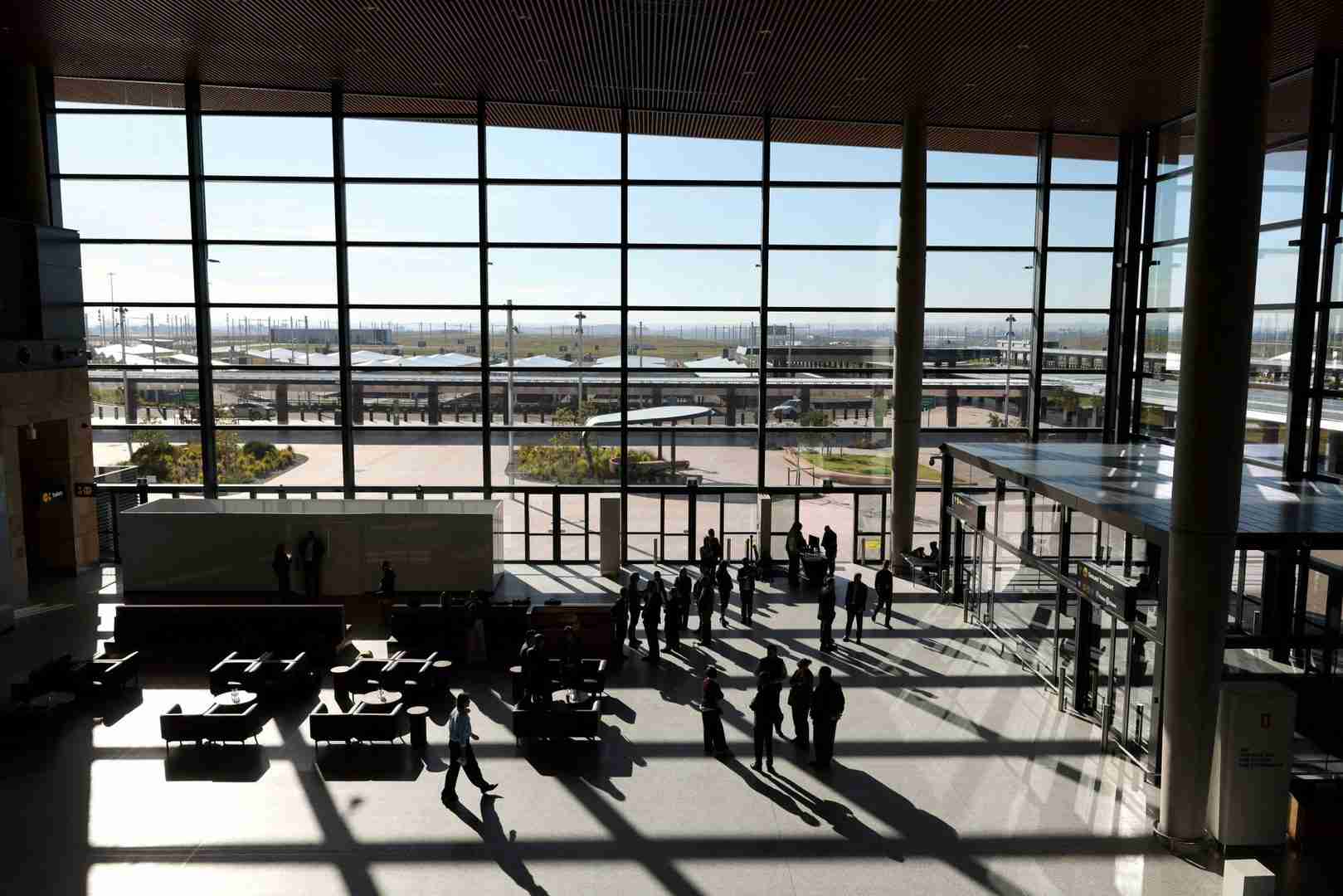
Sydney’s new A$5.6 billion ($3.94 billion) airport opened to passengers on Sunday after more than a decade of planning, in what Prime Minister Anthony Albanese said was a milestone for the country’s most populous city.
The new Western Sydney International Airport in Badgerys Creek, about 60 km (37.3 miles) west of central Sydney, will operate 24 hours a day, giving airlines access to a fast-growing and ethnically diverse population centre.
The current airport, located closer to Sydney’s central business district, can host takeoffs and landings only until 11 p.m. and after 6 a.m., limiting airline scheduling options relative to other major Australian cities like Melbourne.
“For the first time in more than 50 years, Australia is opening a major new airport. It’s a milestone that has been decades in the making,” Albanese said in a statement.
“I’m very proud to officially open it,” he said.
Qantas’ budget arm Jetstar was due to operate the first outbound flight to the Gold Coast on Sunday, the airport said in a statement. The airport has capacity for more than 80 million passenger movements annually, it said.
The start of passenger services comes after cargo flights commenced at the facility in July.
Located on a 1,780-hectare (4,398-acre) site purchased by the federal government in the 1980s, the airport was completed in July 2025 after a seven-year build and 15 years of planning.
($1 = 1.4219 Australian dollars)
Reporting by Samuel McKeith; Editing by Nia Williams
More than 100 competitors tackle undulating course as Trott and Tirfe seal victory
Sean Trott and Mae Tirfe produced commanding displays to clinch the male and female titles at the Bermuda National Gallery Run for the Arts 5K.
More than 100 competitors braved challenging conditions at the Parsons Road Park Basketball Courts, tackling an undulating route through North East Hamilton, Happy Valley, and Palmetto Road before finishing at the Community Playground.
Long-distance stalwart Sean Trott ran his own race from the gun, surging clear of the field early to break the tape in an imperious 17 minutes 10.56 seconds.
Trott established an emphatic buffer of almost two minutes over runner-up Will Green (18:59.56), while Adam Cenzer locked down the final podium spot in 19:22.56.
The women’s competition yielded a gripping head-to-head duel, with Mae Tirfe crossing eighth overall in 20:05.21 to secure the title.
Tirfe was shadowed throughout by Helena Hines, who mounted a relentless pursuit to finish just nine seconds adrift in ninth overall (20:14.99). Marta Komarkova completed the women’s podium, finishing 24th overall in 23:19.83.
Robinson hits 19-minute hat-trick as young Gombey Warriors bounce back in Baku
Bermuda’s Under-15s showcased resilience and ruthless attacking flair in Baku, bouncing back from a heartbreaking 10-man defeat by Georgia to dismantle São Tomé and Príncipe 5-1.
In a whirlwind day of tournament football at the Hövsan Competition Complex, the young Gombey Warriors’ character was tested early against European opposition before their forward line ran riot.
Bermuda’s opening fixture hinged on a pivotal 20th-minute straight red card. Reduced to 10 men, the islanders mounted a disciplined rearguard action against a well-drilled Georgia side, holding out until the 39th minute when the decisive goal was finally conceded.
Any lingering frustration was emphatically swept aside in the second match, inspired by a 19-minute hat-trick from Legend Robinson and two goals from Darien Lambert.
6 mins: Lambert opens the scoring with a sharp finish.
10 mins: Vinicios Santo levels for São Tomé against the run of play.
17 mins: Robinson calmly converts from the penalty spot to restore the lead.
22 mins: Lambert pounces for his second of the match to make it 3-1.
24 mins: Robinson strikes again to put the contest out of reach.
36 mins: Robinson completes a memorable treble into the bottom corner.
The five-goal display cements a statement recovery for Bermuda on the world stage, leaving them firmly in contention ahead of their remaining festival ties.
Roberts and Fraser brave sweltering Guyana heat to sweep regional titles
Bermudian archers Jaydon Roberts and Braeden Fraser held their nerve in sweltering conditions to capture a sensational double gold at the Caribbean Championships in Guyana.
Backing up their record-breaking displays in Friday’s qualification rounds, both competitors returned to the target line to cap off a flawless campaign by sweeping the titles in their respective divisions.
Roberts secured top honours in the senior Caribbean Archery Championship, navigating a demanding elimination bracket at 70 metres. Despite punishing heat and gusty stadium winds, the Bermudian maintained total composure through the head-to-head match-ups to take the title.
Moments later, Fraser completed the golden double by dominating the Caribbean Development Championship. The rising talent matched his compatriot’s precision under pressure, overcoming testing crosswinds at 40 metres to seal the crown.
The twin triumphs mark a historic clean sweep for Bermuda at the regional showpiece, converting record-setting qualifying scores into championship silverware on the international stage.
Olympian overcomes difficult swim with fastest cycling display in South Korea
Bermuda’s Erica Hawley delivered a blistering cycling display to fight back from a difficult swim and secure a 13th-place finish at the 2026 World Triathlon Cup in Tongyeong, South Korea.
The Bermudian Olympian crossed the line in 57 minutes 31 seconds, finishing just 49 seconds adrift of race winner Xinyu Lin of China (56:42).
Hawley faced an early uphill battle after the opening 750-metre swim leg, exiting the water down in 34th place with a split of 9:11.
Undeterred, she launched an immediate charge on two wheels.
Hawley ripped through the field over the 19.8-kilometre bike course to post the fastest split of the entire field in 29:47, clawing her way back into contention with the main chase group.
She held firm over the final discipline, clocking 17:21 across the 5km run to seal a determined top-15 finish among elite company.
Brent oil slipped 1.9% to $114.48 following reports that Qatari mediators were in Tehran on Sunday as part of an effort to de-escalate regional tensions in coordination with the US
International News via Reuters:
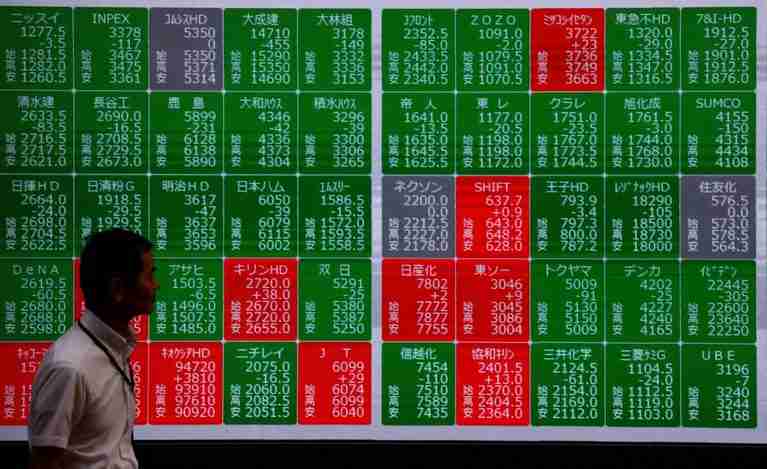
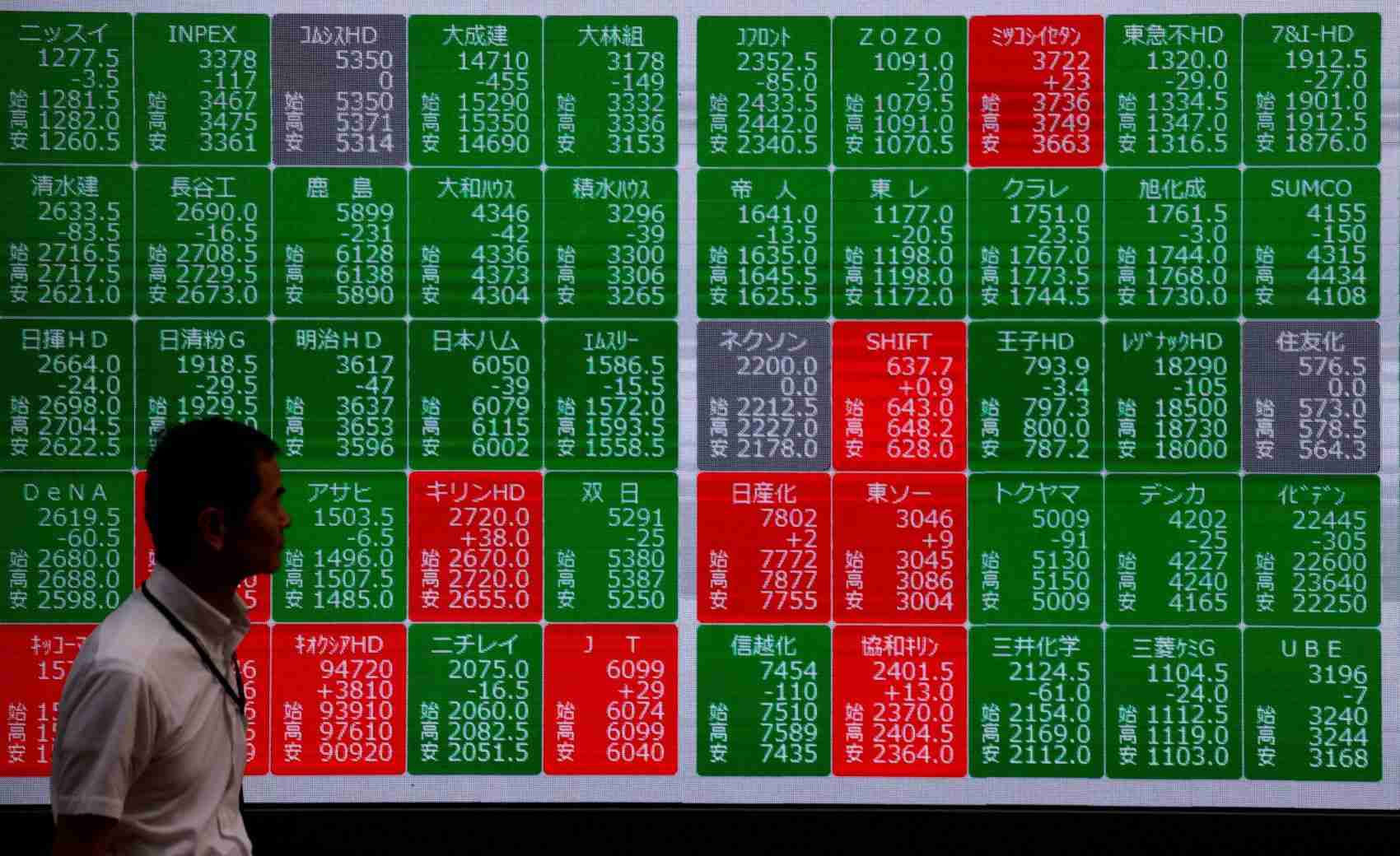
Stock markets traded cautiously on Monday as oil eased from six-month highs ahead of a week packed with central bank meetings and corporate earnings that will further test investor confidence in the AI boom.
Brent oil slipped 1.9% to $114.48 following reports that Qatari mediators were in Tehran on Sunday as part of an effort to de-escalate regional tensions in coordination with the US.
Brent futures jumped 6.2% last week to their highest weekly close since mid-2022 as Houthi attacks in Saudi Arabia stoked concerns about energy supplies. US crude futures fell 2.2% to $101.01 a barrel. [O/R]
The Houthi group in Yemen said on Monday it had attacked Saudi Arabia’s East-West crude oil pumping stations and Riyadh airport, but there was no immediate confirmation from Riyadh.
Japan’s Nikkei dipped 0.2% after losing 4.0% last week, while South Korea’s main index fell 0.5%, having shed almost 20% so far this month. MSCI’s broadest index of Asia-Pacific shares excluding Japan was flat.
Chinese blue chips lost 0.5%, as China’s ruling Communist Party began its fifth plenum in Beijing. The market has now fallen for 11 weeks straight amid concerns about domestic demand – even as exports remain strong.
The inflationary pulse from oil is likely to alarm all the central banks that are meeting this week, with hikes seen as just a matter of time even if some hold for now.
“The main message from global central banks grappling with this year’s macroeconomic surprises is that a relatively shallow rate-hike cycle is underway,” said Bruce Kasman, global head of economics at JPMorgan.
“G3 central banks are likely to remain on hold, but Canada should start its tightening cycle and first moves are expected from the UK and Sweden next month.”
New Zealand’s central bank is widely expected to raise rates on Wednesday. Markets assume the US Federal Reserve will stand pat, but they imply an 80% chance that it will pull the trigger in December. Much the same is priced in for the Bank of Japan and the European Central Bank.
A key reading on US core inflation should show cost pressures remained elevated at 3.1% in September, while the economy is forecast to have grown at a brisk 3.2% annualised pace thanks in part to furious spending on data centres.
“The Fed is set to skip raising rates at its October meeting but is likely to deliver a second hike in December,” analysts at Goldman Sachs said in a note.
“The most important risk is that oil futures are above our forecasts, largely reflecting concerns about potential further conflict with Iran,” they added. “The more extreme and long-lasting the energy shock becomes, the more Fed participants will worry that inflationary pressures could broaden.”
HYPERSCALERS TO TEST AI HYPE
On Wall Street, S&P 500 futures edged up 0.2%, while Nasdaq futures added 0.1%. In Europe, EUROSTOXX 50 futures firmed 0.3%, DAX futures gained 0.3% and FTSE futures gained 0.4%.
Earnings highlights will include the hyperscalers Alphabet, Microsoft and Amazon, among one-third of S&P 500 companies reporting. Results from Intel and Sandisk also could influence the AI trade.
The analyst consensus on Microsoft is for $90.6 billion in revenue and an adjusted EPS of $4.73, with Amazon at $202 billion in revenue and EPS around $1.97. Alphabet revenue is seen at $128 billion with EPS of $3.00.
In Asia, SK Hynix and Samsung Electronics both report this week. SK Hynix also said it will unveil shareholder return measures on Wednesday, responding to a report that it is considering a special dividend of about 16 trillion won ($12 billion).
Equity valuations have been tested by higher bond yields, though Treasuries did manage a rally last week before running into renewed selling on Friday.
Yields on 10-year Treasuries were at 4.97%, well off a peak of 5.36% hit early in the month.
In currency markets, the Japanese yen retained its safe-haven appeal at 156.90 per dollar, having gained around 0.8% last week.
The euro added 0.1% to $1.1220 after France dodged a credit downgrade last week.
Sterling held at $1.3346 with Britain’s new finance minister, John Healey, set to deliver his first budget on Wednesday against a backdrop of rising global borrowing costs and high energy prices due to the US-Israeli war on Iran.
The Brazilian real had yet to trade in Asia as Brazilian President Luiz Inacio Lula da Silva won an unprecedented fourth term on Sunday, according to the country’s electoral court.
Brazilian Senator Flavio Bolsonaro refused to concede and said he would seek the annulment of the runoff election.
An ETF of Brazilian stocks traded in Tokyo shed 15%, reversing gains made when Bolsonaro led in the first round of voting.
In commodity markets, non-interest-bearing gold was 0.4% firmer at $4,012 an ounce, having fallen more than 4% last week. [GOL/]
Reporting by Wayne Cole; Editing by Chris Reese and Thomas Derpinghaus
The Interior Ministry said 410,000 people took part in Saturday’s marches as authorities deployed 70,000 police
International News via Reuters:
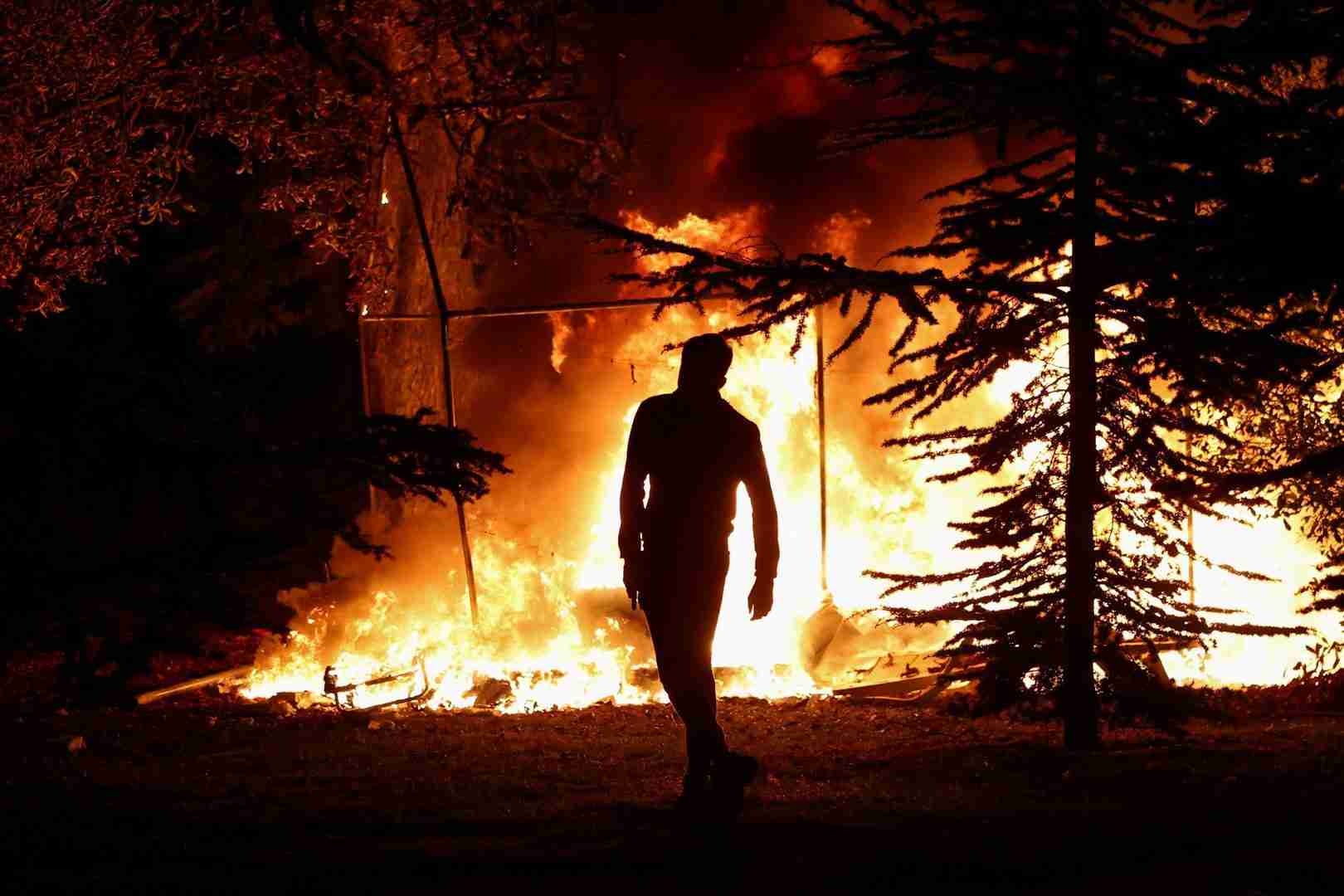
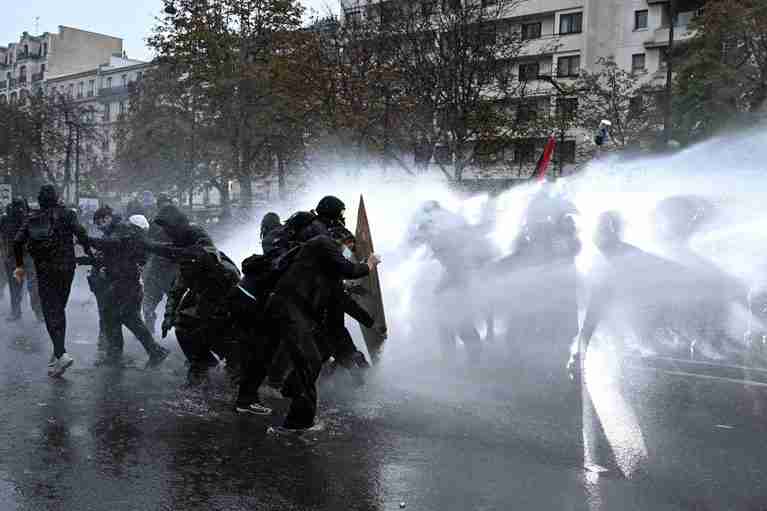
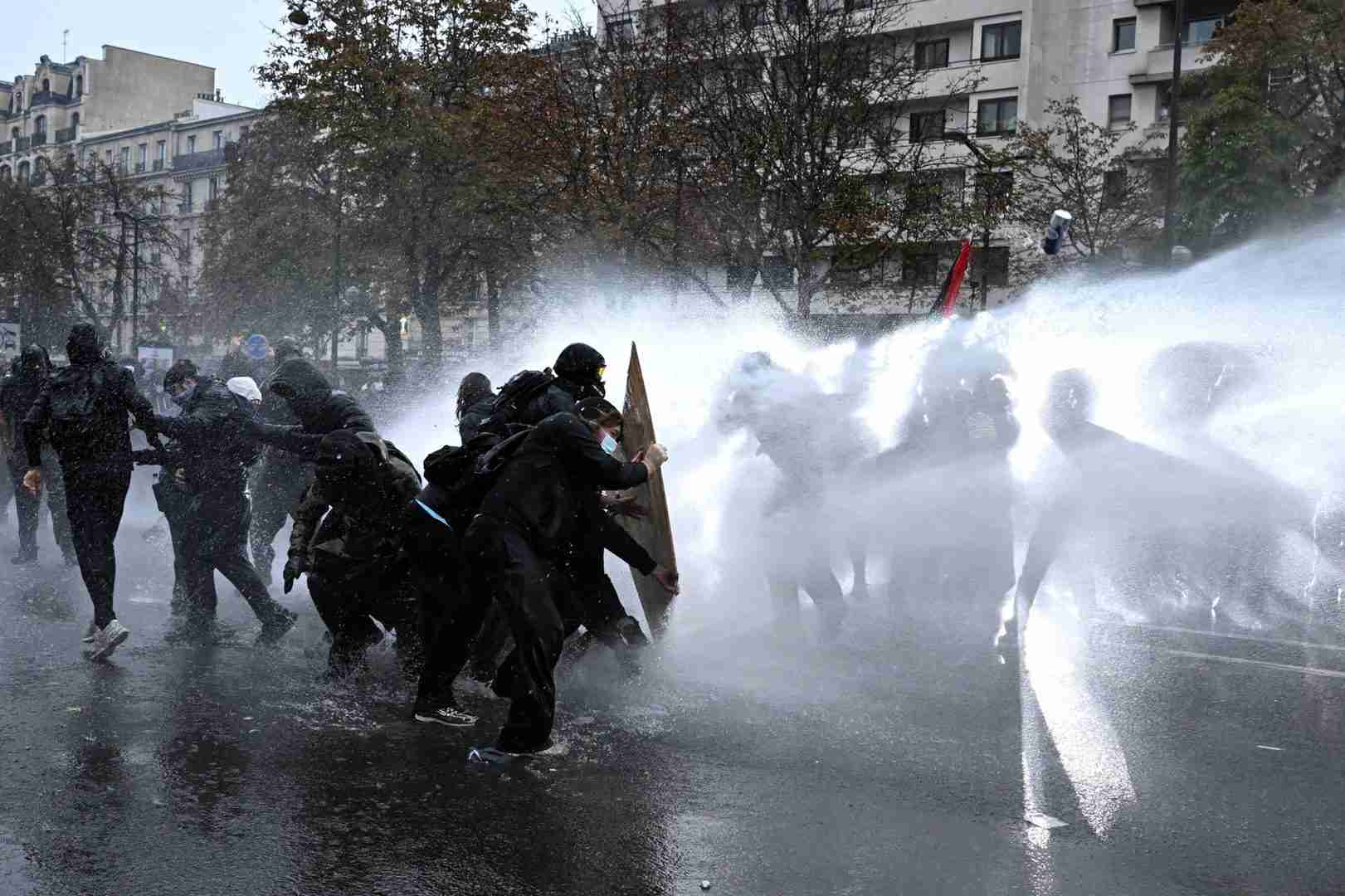
French protest groups and unions called on Sunday for further demonstrations as they sought to maintain pressure on the government after a huge security operation helped to contain unrest during nationwide rallies on Saturday.
The Interior Ministry said 410,000 people took part in Saturday’s marches as authorities deployed 70,000 police, helping to avert a repeat of the looting and vandalism that swept many cities on October 17.
Labour leaders urged further protests next Saturday and a nationwide strike on November 5, saying frustration over wages, living costs and public services was spreading far beyond the student movement that first mobilised last month.
“We see an aggregation of anger,” Murielle Guilbert, co-leader of the left-wing Solidaires trade union federation, told BFM TV. She said grievances from students, workers, firefighters and other groups were converging.
“We call on people to take to the streets next Saturday.”
The SUD Education teaching union said it would join the October 31 demonstration while the large CGT union said it would decide during the week.
MACRON’S SCOPE TO RESPOND IS MINIMAL
The Yellow Vests, a grassroots movement that emerged in 2018 as a revolt against fuel taxes, also called for mass rallies next Saturday, including sit-ins outside town halls and the National Assembly.
“There is anger in this country. It’s growing in schools and universities, on roundabouts, in neighbourhoods, on farms and in workplaces,” activist Azelma Sigaux told reporters.
In 2019, President Emmanuel Macron was able to find the resources to reduce fuel costs in response to the Yellow Vests.
Seven years on, strained public finances leave him with little room to meet protesters’ demands. His mandate also expires next April and his centrist party no longer has the majority needed to pass major legislation.
The government has begun talks with unions and student representatives to try to defuse the crisis, but protest leaders say the measures it has proposed so far are inadequate.
“We have received no response at all from this government,” said Guilbert.
Police unions said on Sunday they did not have enough staff to maintain for any length of time the high level of deployment that on Saturday helped to limit disorder to sporadic clashes in a number of cities, including Paris and Marseille.
Some 1,314 people were arrested on Saturday, half of last week’s numbers, the interior ministry said on Sunday, and about 50 police were injured, compared with more than 1,000 last week.
The protests have resonated beyond France’s borders.
On Saturday Belgian police used tear gas and pepper spray as they clashed in Brussels with anti-government demonstrators. In Albania, peaceful protests that began at the end of May this month turned into violent unrest and skirmishes have taken place in several Italian cities for a second week running.
Reporting by Crispian Balmer and Juliette Jabkhiro; editing by Barbara Lewis
To provide the best experiences, we use technologies like cookies to store and/or access device information. Consenting to these technologies will allow us to process data such as browsing behavior or unique IDs on this site. Not consenting or withdrawing consent, may adversely affect certain features and functions.
Functional
Always active
The technical storage or access is strictly necessary for the legitimate purpose of enabling the use of a specific service explicitly requested by the subscriber or user, or for the sole purpose of carrying out the transmission of a communication over an electronic communications network.
Preferences
The technical storage or access is necessary for the legitimate purpose of storing preferences that are not requested by the subscriber or user.
Statistics
The technical storage or access that is used exclusively for statistical purposes.The technical storage or access that is used exclusively for anonymous statistical purposes. Without a subpoena, voluntary compliance on the part of your Internet Service Provider, or additional records from a third party, information stored or retrieved for this purpose alone cannot usually be used to identify you.
Marketing
The technical storage or access is required to create user profiles to send advertising, or to track the user on a website or across several websites for similar marketing purposes.