“Our Armed Forces are ready to keep the United Kingdom safe from any kind of attacks, whether it’s on our soil or from abroad. The UK stands ready 24/7 to defend itself,” a government spokesperson said
International News via Reuters:
Britain said on Thursday its armed forces were ready to protect the country from any attack after Iran’s Revolutionary Guards issued a warning over allowing U.S. bombers to fly from UK bases.
“Our Armed Forces are ready to keep the United Kingdom safe from any kind of attacks, whether it’s on our soil or from abroad. The UK stands ready 24/7 to defend itself,” a government spokesperson said.
“This includes through operating a layered approach to air and missile defence, provided by Royal Navy, British Army and Royal Air Force assets equipped with a range of advanced capabilities, working closely with our NATO allies,” they added.
Iran’s warning came after new British Prime Minister Andy Burnham was notified last week of Britain re-committing to an existing agreement allowing the United States to use British bases in what it described as the collective self-defence of the region.
The government said on Wednesday that the arrangement covered U.S. defensive operations to degrade missile sites and capabilities used in attacks on ships in the Strait of Hormuz.
In response to Iran’s warning, the spokesperson said Britain’s approach remained unchanged and that it was committed to defending its people, interests and allies in accordance with international law while avoiding being drawn into a wider conflict.
Reporting by Sam Tabahriti, Editing by Aidan Lewis, Kirsten Donovan
Around 3:45pm Thursday, 23rd July 2026, a reported two-vehicle collision occurred near the junction of Wilkinson Avenue and Trinity Church Road in Hamilton parish.
Details are limited at this time. However, it appears that a car driven east and a rental scooter ridden in the opposite direction collided head on.
The rider, understood to be a female visitor, has been taken to King Edward VII Memorial Hospital via ambulance for treatment of suspected head injuries, as well as injuries to her face, arms and legs. The car driver is not believed to be injured.
Traffic diversions are currently in place, while the scene is processed.
The package, however, granted a one-year exemption with automatic renewal allowing EU companies to transfer Russian liquefied natural gas to third countries, after demands from Greece
International News via Reuters:
The European Union approved its 21st sanctions package against Russia over its war in Ukraine, imposing curbs on the country’s banking sector and crypto currency networks, the Council of the EU said on Thursday.
The package, however, granted a one-year exemption with automatic renewal allowing EU companies to transfer Russian liquefied natural gas to third countries, after demands from Greece. Sanctions require unanimity to be adopted.
“Member states showed solidarity with Greece and it’s expected that Greece will do the same with others in the future,” one EU diplomat said.
Athens said a planned ban on transfer services for Russian LNG would simply shift market share outside Europe and would not impact Russian revenues. The measure was due to come into effect on January 1. EU imports of Russian LNG will still be banned from that date.
Greece dominates Europe’s LNG carrier market and is among the biggest players globally, competing with Japan, China and the United States.
EU TARGETS BANKS, CRYPTO
The package includes 218 designations – 170 entities and 48 individuals, the Council of the EU said in its statement. These entities and individuals will come under the full weight of sanctions including asset freezes, travel and transaction bans.
The restrictions target the banking sector in an effort to squeeze Russia’s financial system at what the EU sees as a vulnerable time for its economy. Russian companies have succeeded in maintaining trade and financial flows via small or regional lenders as well as crypto currency networks.
“Our 21st package includes the highest number of listings in four years,” the EU’s chief diplomat Kaja Kallas said in the statement.
“We’re hitting over a hundred banks and crypto operators, 40+ vessels in Russia’s shadow fleet, and several oil refineries in Russia and Belarus. More than 50 military-industrial entities are included, key actors involved in the production of Russia’s long-range drones.”
A diplomatic source specified the package designates 94 Russian financial institutions – mainly banks – alongside Moscow’s stock exchange. The listings take the total number of sanctioned banks to over 100, or more than half of Russia’s 213 internationally connected lenders.
The package includes separate transaction bans on 33 of these banks, which means they will be disconnected from SWIFT, a global financial payment instructions system. Russia’s biggest banks were disconnected soon after Russia’s invasion of Ukraine in 2022.
OIL PRICE CAP
The package includes a 12-month freeze on the Russian oil price cap at $44.10 a barrel. The cap aims to reduce Russia’s sources of revenue without creating an oil price shock.
A scheduled review would have increased the cap after a jump in crude prices due to the Iran war, providing substantially higher earnings to Moscow on its sales using Western shipping services. Without the delay, the review would have raised the price to about $58.5 a barrel, a senior EU official said.
However, the majority of Russian oil trades above the cap. Urals, Russia’s main export grade, has been trading well above the limit since February and was valued at around $67.50 a barrel this week excluding shipping and insurance costs.
“We’re… freezing the oil price cap adjustment for a year, so that the Russian war machine does not benefit from market shocks,” European Commission President Ursula von der Leyen wrote on X.
Reporting by Philip Blenkinsop, Andrew Gray and Julia Payne; Additional reporting by Charlotte Van Campenhout; Editing by Makini Brice, Toby Chopra and Susan Fenton
Sources told Reuters last month that the ECB was considering doubling the proportion of cash that lenders must keep in an unremunerated account as a buffer in case of a liquidity crunch
International News via Reuters:
The European Central Bank will discuss raising banks’ minimum reserve requirements, ECB President Christine Lagarde said on Thursday, opening the door to a move that would cut the ECB’s own tax bill and mitigate losses at some national central banks.
Sources told Reuters last month that the ECB was considering doubling the proportion of cash that lenders must keep in an unremunerated account as a buffer in case of a liquidity crunch. Such a change would lower the amount of interest they receive from their national central banks.
Lagarde said the topic was not discussed at Thursday’s ECB meeting, at which policymakers kept interest rates on hold, but would be in the future.
“On the minimum reserve requirement, it was not discussed on the occasion of this Governing Council, which doesn’t mean to say that it will not be discussed,” Lagarde told her regular news conference. “It will, as it has been.”
The sources said last month that a decision was likely to come in the autumn.
Commercial banks must currently keep 1% of their deposits and some other forms of short-term liabilities in reserve at their respective central banks. Doubling that to 2% would save the ECB and the 21 national central banks of the Eurosystem nearly €4 billion per year, according to calculations by Reuters.
CENTRAL BANK LOSSES
The measure would address the politically sensitive topic of losses at central banks in some euro zone countries, such as Germany and the Netherlands.
These are a side effect of the ECB’s massive crisis-fighting liquidity injections of 2015 to 2022, undertaken when interest rates were negative and inflation low.
The Eurosystem does not remunerate minimum reserves at present while banks receive the ECB’s deposit rate — currently 2.25% — on every additional euro they deposit.
That leaves the Eurosystem paying interest of nearly €50 billion per year on just over €2 trillion worth of liquidity.
The large pile of cash was injected into the banking system by the ECB itself, when the euro zone central bank was trying to stimulate economic activity and avert the threat of deflation via massive bond purchases.
Some of the debt bought by national central banks in high-rated countries had low or negative yields. These central banks were then left nursing heavy losses when the ECB raised its deposit rate to combat high inflation in 2022-23.
Reporting by Francesco Canepa; Editing by Catherine Evans
The Google parent burned $5.9 billion in the second quarter, even as the cloud unit that rents out AI computing power notched a record 82% growth
International News via Reuters:
Alphabet’s first cash burn on record has jolted investors awaiting more Big Tech results next week as soaring AI spending strains one of the world’s most profitable companies, and the pain is only expected to increase.
The Google parent burned $5.9 billion in the second quarter, even as the cloud unit that rents out AI computing power notched a record 82% growth. With Alphabet now expected to spend $15 billion more in 2026 and predicting another increase next year, the outlays behind the cash burn will only rise.
The cash hit is one of the clearest signs of how AI is reshaping Big Tech. Once prized for fat margins and cash gushers that could easily fund new bets, the group is now leaning on debt and share sales to bankroll spending, which is set to top $700 billion this year as their cash flows fall short.
That will sharpen scrutiny when Microsoft, Meta Platforms and Amazon report results next week. Alphabet shares fell about 6% in early trading on Thursday, while Meta and Amazon dropped around 3.5%. Microsoft was flat.
The drop reflects investor concerns that the other tech giants will likely follow Alphabet by raising spending forecasts despite payoffs lagging the pace of outlays.
“The risk is tilted towards further increases, particularly while Microsoft and others remain capacity-constrained,” Charu Chanana, chief investment strategist at Saxo Markets, said.
“But investors will increasingly focus on how much of that cash must be reinvested simply to remain competitive — and whether AI revenue can grow faster than capital expenditure, depreciation and operating costs.”
Analysts expect Alphabet and Amazon to burn cash in 2026, while Meta’s cash flow is likely to shrink 95.7% to just $1.85 billion.
Microsoft, whose current fiscal year will end next June, is expected to garner $25.39 billion in cash, less than half of the estimated $58.74 billion in the previous financial year.
Their capex-to-revenue ratio, a gauge of how much of every sales dollar is being plowed back into spending, is set to nearly double this fiscal year. Meta is expected to hit 54.9% from 35.9%, Alphabet 41% from 23%, Microsoft 45% from 31% and Amazon 25% from 18%.
GOOGLE CLOUD GROWTH TO PRESSURE RIVALS
Adding pressure to Amazon and Microsoft is also the strong performance of Google Cloud, which has been growing much faster than its bigger rivals in recent quarters in a sign that it could be taking market share.
Demand has been so strong that Alphabet executives said they plan to rent out more data-center capacity from other companies to serve their clients, even though it will hurt margins.
At least 20 brokerages raised their price targets on Alphabet after Wednesday’s results, lifting the median to $430, nearly 26% above the last close. Citizens was the most bullish at $515, while TD Cowen was the most bearish at $240.
“Google Cloud was an absolute blow out,” said Richard Clode, Portfolio Manager of Janus Henderson Investors’ Global Technology Leaders. “Alphabet has competitive advantage running all the way through the stack from their own custom AI chips through to distribution to billions of users.”
Growth at Amazon Web Services – the largest cloud provider in the U.S. – is expected to hit 31.04% in the quarter, faster than the 28.4% increase seen in the previous three months.
Microsoft, meanwhile, is expected to post growth of 39.98%, on par with the 40% increase seen in January-March quarter.
That could weigh on the Windows maker’s shares, which have declined by nearly a fifth this year and are the worst performers in the “Magnificent Seven” group of stocks.
Competition is also set to deepen as Meta engages in talks to rent out computing power to Anthropic, adding to an industry that already includes AI cloud firms like CoreWeave.
“As compute becomes more available and models become cheaper, cloud capacity may look increasingly interchangeable. That could force providers to spend more while accepting lower returns,” said Lale Akoner, global market strategist at eToro.
Reporting by Aditya Soni and Deborah Sophia in Bengaluru; Editing by Arun Koyyur
Mass plantation of highly flammable pine and eucalyptus trees for industrial uses drove away native breeds like the “Cachena”, the Iberian peninsula’s smallest breed of cow, with much of the terrain left untended and overgrown as rural populations migrated to cities
International News via Reuters:
A goat-like cow is making a comeback in Spain’s northwestern Galicia region, as communities reintroduce native livestock to rebalance ecosystems and reduce wildfires in an area that was at the epicentre of the country’s worst year for fires in 2025.
Mass plantation of highly flammable pine and eucalyptus trees for industrial uses drove away native breeds like the “Cachena”, the Iberian peninsula’s smallest breed of cow, with much of the terrain left untended and overgrown as rural populations migrated to cities.
The Cachena are known locally as “goat-cows” as they eat almost anything and are able to negotiate mountainous terrain that larger cows can’t.
A fire in 2017 that tore through the parish of Vincios prompted community associations who collectively manage the land to opt for a centuries-old wildfire prevention technique — breeding native livestock including goats, sheep, and the nimble long-horned Cachena cows, which help clear flammable undergrowth by grazing on the land.
Their efforts, together with those of other associations across Galicia, have boosted the population of native livestock from just over 1,800 in the late 1990s to more than 30,000 by early 2026, according to regional association BOAGA — including roughly 8,000 Cachena cows, up from 400.
The regional government granted incentives to farmers to keep young female cows rather than selling them, and a local zoological centre provided bulls at low cost to facilitate breeding.
“The native livestock keeps scrubland at an appropriate height so it does not become dangerous,” said Jose Taboada, coordinator of the Vincios land collective.
He gestured towards a portion of land scrubbed clean of flammable shrubs like brambles, gorse and broom, which contain oils that burn intensely and can carry fires from the ground into the tree canopy.
ROAMING FREE WITH GPS COLLARS
The cows keep the vegetation under control without eradicating it altogether, Taboada explained, adding that the animals wore GPS collars, eliminating the need for fences and allowing them to roam freely.
“They are perfectly adapted to terrain like ours,” Taboada said.
Vincios is one of roughly 3,000 communities in Galicia that, as collectives, manage around 700,000 hectares, a quarter of the region’s land, in a practice dating back to medieval times and formally legalised in 1989.
The region is one of the most affected in Spain by wildfires, with nearly 119,000 hectares (294,000 acres) of land burned last year, an area roughly double the size of Madrid.
Scientists link increasingly severe wildfire seasons across southern Europe to climate change. Spain, the third-most forested country in Europe, has registered average temperatures 5.6 degrees Celsius (10 degrees Fahrenheit) above 1961-1990 levels in July so far, according to the Reuters Climate Monitor.
Landowners and collectives in other Spanish regions like Andalusia, Catalonia, and Castile-La Mancha have also opted for breeding livestock to prevent fires.
The technique is backed by scientific studies, but should be used in conjunction with other strategies like mechanical thinning and pruning of biomass and controlled burning of land carried out by specialised personnel, said forestry engineer and professor Jose Vicente Oliver.
“Livestock farmers need to earn a living by producing meat, or milk. But our common-land communities care about land stewardship,” Taboada said. “This area has always burned… the livestock allow us to keep the woodland open, managed, and under control.”
Reporting by Miguel Vidal, Victoria WalderseeWriting by Victoria WalderseeEditing by Charlie Devereux and Sharon Singleton
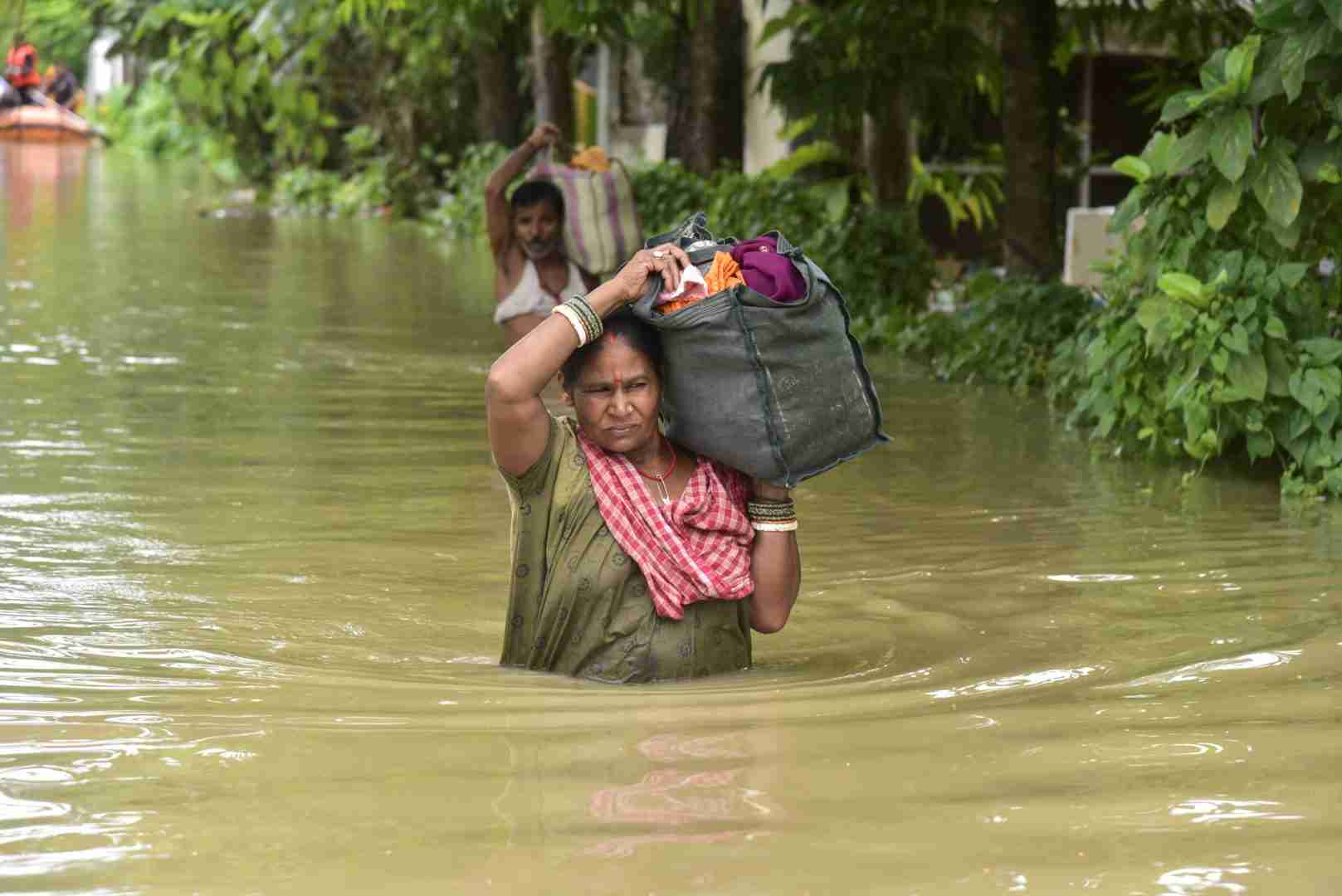
At least 10 people have died in floods in India’s northeastern state of Assam over the last 24 hours, in what authorities said was “unprecedented devastation”, taking the total death toll during the week to 36
International News via Reuters:
At least 82 people have died after heavy rains across northeastern India, Pakistan and Afghanistan this week, authorities said, as flooding caused widespread damage to farmland, infrastructure and public facilities.
• At least 10 people have died in floods in India’s northeastern state of Assam over the last 24 hours, in what authorities said was “unprecedented devastation”, taking the total death toll during the week to 36.
• More than 650,000 people have been affected by heavy rainfall across 11 districts of Assam, the state’s disaster management authority said in a bulletin on Wednesday.
• The floods in Assam were primarily caused by very heavy rainfall in its neighbouring state of Nagaland between July 18 and 20, resulting in unusually high river flows, a state government report said.
• Assam, home to the Brahmaputra, one of the world’s largest rivers, sees damage from the increased flow of water nearly every year during monsoons.
• At least 46 people have been killed and at least 100 injured in floods across Afghanistan’s northeastern province of Nuristan and Pakistan’s Khyber Pakhtunkhwa province over the last 72 hours, disaster management authorities in both countries said.
• “The floods swept away houses and hotels. Everything is gone. It is complete devastation. Machinery is being used to rescue those who are still trapped,” Mujib ur Rahman, a resident of Nuristan’s provincial capital, told Reuters.
• Despite contributing little to global emissions, Afghanistan and Pakistan are among the countries most vulnerable to climate change, with intensifying floods, droughts, glacier melt and water shortages putting millions at risk, experts say.
Reporting by Tora Agarwala in Guwahati, Saud Mehsud in Dera Ismail Khan and Mohammad Yunus Yawar in Kabul; Writing by Shanima Aniyeri; Editing by Christian Schmollinger
Bermuda Chef-de-Mission Donna Raynor has been forced into an urgent, last-minute reshuffle of the nation’s Opening Ceremony duties following travel disruption.
High jumper Sakari Famous was originally selected to play a prominent role in the parade of nations, but cancelled flights ruled her out just hours before the curtain-raiser.
To add to the logistical headache, Bermuda’s swimming squad will also miss the ceremony due to early-morning competition schedules.
Raynor confirmed the updated line-up for the opening spectacle:
“We have a baton carrier and flag bearer and they were selected previously, however due to Sakari Famous’ flight being cancelled I had to change who was carrying what,” Raynor explained.
“Also the swimmers compete the next morning so they are not available for the Opening Ceremony. Tiara Derosa will carry the Flag and Caitlyn Bobb will carry the baton.”
Alongside the roster changes, Team Bermuda will break from tradition when marching into the stadium.
The island’s world-famous Bermuda shorts are being temporarily swapped for vibrant, cultural attire honoring legendary calypso icons, The Talbot Brothers.
“We won’t be marching in the normal Bermuda Shorts, but our outfits are a dedication to the Talbot Brothers’ old Bermuda culture,” Raynor added. “Calypso-type shirts, pants, and the boat hat.”
Bermuda’s top sporting talent has received a major financial boost after the Government awarded $175,000 in funding to 43 elite athletes across 15 sports at the National Sports Centre Pavilion.
The grants, presented by Minister of Tourism, Culture & Sport Owen Darrell, form part of the Elite Athlete Sponsorship Programme aimed at aiding training and international competition costs.
Aligned with Goal 2.1 of the National Sports Policy—which targets a 30% increase in government funding for high-performance athletes—the initiative ensures the island’s top performers can compete on the global stage.
“Our elite athletes continue to make Bermuda proud through their dedication, perseverance and outstanding achievements,” Minister Darrell said. “This programme reflects the Government’s ongoing commitment to investing in their success.”
Key Funding Recipients
Erica Hawley (Triathlon) – Awarded the top individual grant of $10,000.
Swimming: Emma Harvey, Jack Harvey, Elijah Daley
Track & Field: Caitlyn Bobb, Miles Outerbridge
Boccia: Yushae DeSilva-Andrade
Bowling: Lamar Richardson
The initiative aims to strengthen Bermuda’s global sporting footprint while inspiring the next generation of island athletes.
The Bermuda Triangle Cup continued its frantic pace at the Flora Duffy South Field Stadium with another double-header, yielding four goals and seeing the Bermuda Under-17 National Academy lock up their place in the semi-finals.
In the evening’s opening clash, Portuguese outfit Sao Miguel ground out a hard-fought 1–0 victory over the Bermuda Brazilian Football Select.
The tight, tactical encounter was decided by a moment of sharp anticipation inside the penalty area:
Santiago Garcia reacted quickest to a loose ball, applying a clinical close-range finish to secure all three points for the Azorean side.
The nightcap proved to be a far more one-sided affair as the Bermuda Under-17 National Academy delivered a dominant display to sweep past the Somerset Trojans 3–0.
The Academy was ruthless in front of goal, controlling the tempo throughout and punching their ticket to the knockout rounds in emphatic style:
Caden Waldren-Bartley opened the scoring with a precise strike.
Deacon Wade doubled the advantage to put the National Academy firmly in the driver’s seat.
Chaz Edmead put the result beyond doubt, capping off a polished team performance.
The Attorney-General and Minister of Justice, Senator the Hon. Kim Wilkerson, JP, today issued AML-ATF Advisory 2/2026 about the risks in a number of jurisdictions arising from inadequate systems and controls to combat money laundering and terrorist financing.
The Proceeds of Crime (Anti-Money Laundering and Anti-Terrorist Financing) Regulations 2008 (POCA Regulations) require the Bermuda regulated sector and relevant persons to apply enhanced customer due diligence to high-risk countries.
Regulation 11 (1)(aa) of the Proceeds of Crime (Anti-Money Laundering and Anti Terrorist Financing) Regulations 2008, requires that a relevant person must apply on a risk sensitive basis enhanced customer due diligence measures to business relationships with customers in instances where a person or a transaction is from or in a country that has been identified as having a higher risk by the Financial Action Task Force or the Caribbean Financial Action Task Force; and
Regulation 11 (1)(ab) requires a relevant person to apply, on a risk-sensitive basis, enhanced customer due diligence in instances where a person or transaction is from or in a country which represents a higher risk of money laundering, corruption, terrorist financing or being subject to international sanctions.
Please see the attached document for the full Ministerial Advisory.
To provide the best experiences, we use technologies like cookies to store and/or access device information. Consenting to these technologies will allow us to process data such as browsing behavior or unique IDs on this site. Not consenting or withdrawing consent, may adversely affect certain features and functions.
Functional
Always active
The technical storage or access is strictly necessary for the legitimate purpose of enabling the use of a specific service explicitly requested by the subscriber or user, or for the sole purpose of carrying out the transmission of a communication over an electronic communications network.
Preferences
The technical storage or access is necessary for the legitimate purpose of storing preferences that are not requested by the subscriber or user.
Statistics
The technical storage or access that is used exclusively for statistical purposes.The technical storage or access that is used exclusively for anonymous statistical purposes. Without a subpoena, voluntary compliance on the part of your Internet Service Provider, or additional records from a third party, information stored or retrieved for this purpose alone cannot usually be used to identify you.
Marketing
The technical storage or access is required to create user profiles to send advertising, or to track the user on a website or across several websites for similar marketing purposes.