Sterling was trading flat at $1.3373, after depreciating for the last four sessions
International News via Reuters:
The pound held steady against the dollar on Wednesday as a softer-than-anticipated inflation reading did little to alter market expectations for interest rate hikes later this year, while oil prices jumped as geopolitical uncertainty persisted.
Sterling was trading flat at $1.3373, after depreciating for the last four sessions. It weakened 0.2% against the euro, but remained on pace for around a 1% rise for the month.
British inflation cooled by more than expected last month as a brief de-escalation in the Iran war reduced fuel prices, but the slowdown is likely to offer only temporary relief to new Prime Minister Andy Burnham as he seeks to ease living costs.
“It has broadly met market expectations. Yes, inflation is tracking a little lower than what the Bank of England was projecting but most people had expected that and there’s very little to be priced into sterling in response to today’s data,” said Nick Rees, head of macro research at Monex Europe.
Interest rate expectations were largely unchanged. Money markets show investors believe the central bank will likely keep its lending rate steady when it meets next week. Traders are fully pricing in one quarter-point rate hike by December and a roughly 56% chance of a second such increase..
John Healey, Britain’s new finance minister, welcomed Wednesday’s data, but said the government needed to do more to help households. Burnham’s government earlier this week had announced a cut in tax on energy bills and a lower cap for bus fares.
Meanwhile, crude oil prices jumped more than 4% to near six-week highs on mounting concerns about disruptions to key Middle Eastern supply routes because of escalating hostilities between the U.S. and Iran and threats to shipping by the Iran-backed Houthi militia in Yemen.
The pound is one of the better-performing G10 currencies so far this year, despite the UK’s status as a net energy importer. Sterling has lost 0.8% in value against the dollar so far in 2026, but is some way ahead of laggard currencies like the Japanese yen, which has lost 4%, or the Swedish crown, which is down 5%.
“GBP risk premium is moving higher and, in an environment where the geopolitical backdrop remains fragile, we think GBP/USD is vulnerable to a move towards $1.32,” BofA Global Research analysts said in a note.
Reporting by Shashwat Chauhan in Bengaluru; Editing by Amanda Cooper and Mrigank Dhaniwala
Shadow Home Affairs Minister says the OBA is a party for all, not just some, as he answers questions on the demographic representation at their Town Hall on Monday
The talks, which exclude Canada, are set to run for three days and are the first formal discussions on changes to the U.S.-Mexico-Canada Agreement since the Trump administration declined to extend the six-year-old regional trade pact on July 1
International News via Reuters:
U.S. and Mexican trade negotiators will meet for a third round of bilateral talks on Tuesday to try to push forward with revising the North American trade agreement, just as President Donald Trump slaps Canada with a new set of punitive duties.
The talks, which exclude Canada, are set to run for three days and are the first formal discussions on changes to the U.S.-Mexico-Canada Agreement since the Trump administration declined to extend the six-year-old regional trade pact on July 1.
The move started a clock to wind down USMCA within 10 years unless the three countries can agree on improvements. Industry groups have urged Trump to keep intact the trilateral structure and largely tariff-free access that underpins nearly $1.6 trillion in annual trade.
U.S. Trade Representative Jamieson Greer, who is due to join the talks on Wednesday, said that Trump’s “number one goal” for USMCA was to see lower U.S. trade deficits with Canada and Mexico and more manufacturing reshored to the U.S.
The U.S. goods trade deficit with Mexico grew last year by $28 billion, or 17%, to $197 billion, according to data from the U.S. Census Bureau, which comes under the Commerce Department. The U.S. trade gap with Canada fell by $12.9 billion or 21% last year to $48.3 billion.
“We want the outcomes to make sense. We want to have more auto manufacturing here, and we’re seeing it,” Greer told CNBC on Tuesday, citing some moves by automakers to open new assembly capacity in the U.S., including Toyota’s expansion of a Texas plant to build trucks now assembled in Mexico.
“So that’s the outcome that he wants,” Greer added. “I think also if we can have an arrangement with Mexico, with Canada, that we are trying to emphasize Canadian, Mexican, U.S. content in goods traded in North America, that’s a good outcome because that helps get supply chains back here in North America.”
During bilateral USMCA talks with Mexico in May, USTR proposed requiring that 50% of the value of North American-built vehicles originate in the United States, a significant departure from current rules and a difficult adjustment for automakers with highly integrated regional supply chains.
YEAR-END GOAL
Mexico’s new ambassador to the U.S., Roberto Lazzeri, said on Friday that Mexico was expecting to reach a new deal by the end of the year, and that he believes the U.S. and Canada are aiming for the same goal.
“Every moment that we’re losing, I think we are losing competitiveness, market share and investment, so it’s in the best interest of all three of us to get to a position of resolution soon,” said Lazzeri, a former investment banker and finance ministry official.
He added that Mexico shares the Trump administration’s goal of bringing more manufacturing to North America, including to the U.S. Another key goal for Mexico is to win some relief from Trump’s 25% national security tariffs on Mexican autos and 50% on its steel and aluminum products, duties also applied to Canada.
TARIFF SETBACK FOR CANADA
The talks come a day after the Trump administration announced new tariffs on nearly $20 billion worth of Canadian goods over Ottawa’s retaliatory tariffs on U.S. autos, steel, aluminum and liquor and its high dairy tariffs.
That move deepens a rift that has kept Canada largely sidelined in the USMCA negotiations, as Greer has decried little movement towards concessions.
Canadian Prime Minister Mark Carney said in a statement that his government had made comprehensive proposals to resolve trade disputes with Washington, adding that Trump’s past tariffs violated the North American trade pact.
Greer has meanwhile lauded Mexico for its lack of retaliation to U.S. tariffs and “pragmatic” approach to negotiations that include work to align Mexico’s export controls with those of the U.S., steps to protect intellectual property rights and moving to curb the export of avocados grown on illegally deforested land.
AUTOS AND ECONOMIC SECURITY
The talks in Mexico City will dig into technical details of U.S.-Mexico trade in autos, steel, aluminum, agriculture and labor, according to Greer’s office.
The discussions will also focus on “economic security,” USTR’s term for raising regional trade protections to keep China and other Asian countries from using Mexico and Canada to access the lucrative U.S. market on preferential terms.
China’s growing footprint in Mexico’s car market represents a potential irritant in the talks. Reuters on Monday reported that new distribution figures showed Chinese car sales rose 30% in the first half of 2026, despite 50% tariffs imposed in January, with Chinese brands raising their market share to 17% from 14% a year earlier.
People familiar with the talks have said that the U.S. wants its North American partners to erect similar trade barriers to non-regional goods, including vehicles, auto parts, steel, aluminum and other components.
Additional reporting by Emily Green in Mexico City; Editing by Hugh Lawson and Jon Boyle
The new tariffs, set to take effect in 30 days, would also apply to dairy products, swimming pools, furniture, fishing rods, seeds, clothing and wigs, among other items
International News via Reuters:
President Donald Trump unveiled 50% tariffs on a wide range of imports from Canada on Monday in response to what the U.S. administration called its discriminatory treatment of American-made cars, alcohol and dairy goods, threatening a new front in a global trade war.
In slapping import taxes on goods ranging from wine to cement and ice hockey gear, Trump invoked Section 338 of the Tariff Act of 1930, which permits a president to impose punitive tariffs of up to 50% against trading partners deemed to have discriminated against U.S. goods. That marked the law’s first known usage in nearly a century of existence.
The new tariffs, set to take effect in 30 days, would also apply to dairy products, swimming pools, furniture, fishing rods, seeds, clothing and wigs, among other items.
The U.S. Trade Representative’s office said that the tariffs would apply to nearly $20 billion of imports from Canada. That’s about 5.2% of the $382 billion worth of goods that the U.S. imported from Canada in 2025, according to U.S. Census Bureau data.
“While the Administration continues to secure fair and reciprocal trade deals with our trading partners, Canada, unlike other partners and allies, continues to retaliate against the United States for its efforts to rebalance trade and protect U.S. industry in national-security sensitive sectors,” U.S. Trade Representative Jamieson Greer said in a statement.
Canadian Prime Minister Mark Carney said in a statement that his government has made comprehensive proposals to resolve trade disputes with Washington, asserting that Trump’s past tariffs violated the North American trade pact.
“This trade dispute has raised costs for families, particularly in the U.S.,” he said. “Canada stands ready to engage intensively to address outstanding issues with the U.S. to the mutual benefit of our citizens.”
The Trump administration has long complained that Canada and China implemented retaliatory measures in response to the barrage of tariffs Trump has tried to impose since returning to the White House last year.
Greer has pointedly left Canada out of negotiations under way with Mexico on changes the U.S. wants in the U.S.-Mexico-Canada Agreement on trade. He holds bilateral talks on USMCA in Mexico City this week.
When Trump and Carney met at the FIFA World Cup Final in New Jersey on Sunday, Trump demanded that Carney take action to contain wildfires that have sent smoke billowing across swaths of the U.S. The U.S. president last week threatened to add the “incalculable cost” of dealing with the pollution to existing tariffs on Canadian goods.
FIRST USAGE
The Tariff Act of 1930 and its Section 338 are better known for massive U.S. tariff increases and subsequent retaliation that economic historians say worsened the Great Depression of the 1930s.
Section 338 was intended to ensure countries apply tariffs equally and don’t give preferential rates to some countries at the expense of U.S. exports, said John Veroneau, a U.S. trade official in President George W. Bush’s administration who has extensively researched the statute.
He said that some presidents, including Franklin D. Roosevelt, considered imposing tariffs under Section 338, but no record could be found of any president taking such action until Trump’s proclamations on Monday.
“It is ironic, to say the least, to use this authority to impose tariffs to retaliate against tariffs that were imposed in response to actions taken by the U.S.,” said Veroneau, senior counsel with the Covington and Burling law firm.
“These tariffs may be lawful under Section 338, but they at a minimum violate the spirit of Section 338, which was to create a world where countries apply the same tariffs on the same goods to all countries,” he said, adding Trump has moved away from this principle “in a maximalist way.”
After World War Two, major countries created the “most-favored-nation” tariff system through the General Agreement on Tariffs and Trade to try to prevent a return to the pre-war “beggar-thy-neighbor” economic policies marked by competitive trade restrictions and currency devaluations.
Trump’s new levies are set to take effect on August 19 and apply regardless of whether goods qualify for tariff exemptions under USMCA, although Trump exempted a range of key goods including energy, potash, fish, critical minerals and products already covered by Section 232 tariffs.
Among grounds for the tariffs, the White House cited Canada’s “protectionist” dairy supply management system as well as tariffs and quotas on cars imported to Canada from the U.S. but not from other countries. Carney said that Canada “as is its right, merely matched” U.S. tariffs on the auto sector that were in violation of the USMCA.
Washington also highlighted that most Canadian provinces have halted the sale of U.S. alcohol, which they did in response to prior U.S. tariffs.
The White House said Canadian imports of U.S. motor vehicles dropped by 22% and of U.S. alcoholic beverages by 81% over the past year.
Diamond Isinger, a former senior adviser to ex-Prime Minister Justin Trudeau on U.S.-Canada relations, said Carney would have limited ability to compel provinces to start selling American alcohol again.
“Unless there are some sort of extraordinary measures invoked here, the premiers of those provinces are the ones who decide whether to restock alcohol,” Isinger said.
Reporting by Ryan Patrick Jones in Toronto and David Lawder in Mexico City; Additional reporting by Maria Cheng in Ottawa; Writing by Dan Burns; Editing by Michelle Nichols and Cynthia Osterman
On his second day in his new job, Burnham said his government would remove the value-added tax from domestic electricity bills from October 1
International News via Reuters:
British Prime Minister Andy Burnham said on Tuesday he would cut taxes on electricity bills, the first of several early moves to signal his intent to ease cost-of-living pressures and quell anger over successive governments’ failure to bring change.
On his second day in his new job, Burnham said his government would remove the value-added tax from domestic electricity bills from October 1, cutting around £45 from the average annual bill of around £1,862 ($2,490) that households pay.
With bond investors watching closely for how any fiscal support would be paid for, he said the move would be funded by savings from the cancellation of a £1.8 billion digital ID programme, announced on Sunday.
“We’re taking immediate action to cut taxes on energy bills, put more money in people’s pockets and bring back hope,” he said in a statement, having pledged to give people more “breathing space” in their lives.
BURNHAM TRIES TO MOVE QUICKLY TO OFFER SUPPORT
Burnham, a 56-year-old former Greater Manchester mayor, wants to move quickly to show people he is “serious about helping them out”.
He said on Monday his early policies might not “take all of the pressure off” people struggling with rising prices and that a longer-term plan would be set out later in the year.
But his calls for the governing Labour Party to get behind his agenda might have fallen on deaf ears. An ally of former prime minister Keir Starmer, Darren Jones, said the digital ID scheme was unfunded, questioning whether the new leader had the money to cover his policy move on energy bills.
“The government will have to set out how it will pay for its new policies at the budget,” Jones said on X.
Markets are listening keenly to how Burnham and his unexpected pick for finance minister, the former defence secretary John Healey, plan to finance the support, after borrowing costs rose on Monday.
FIRST CABINET MEETING
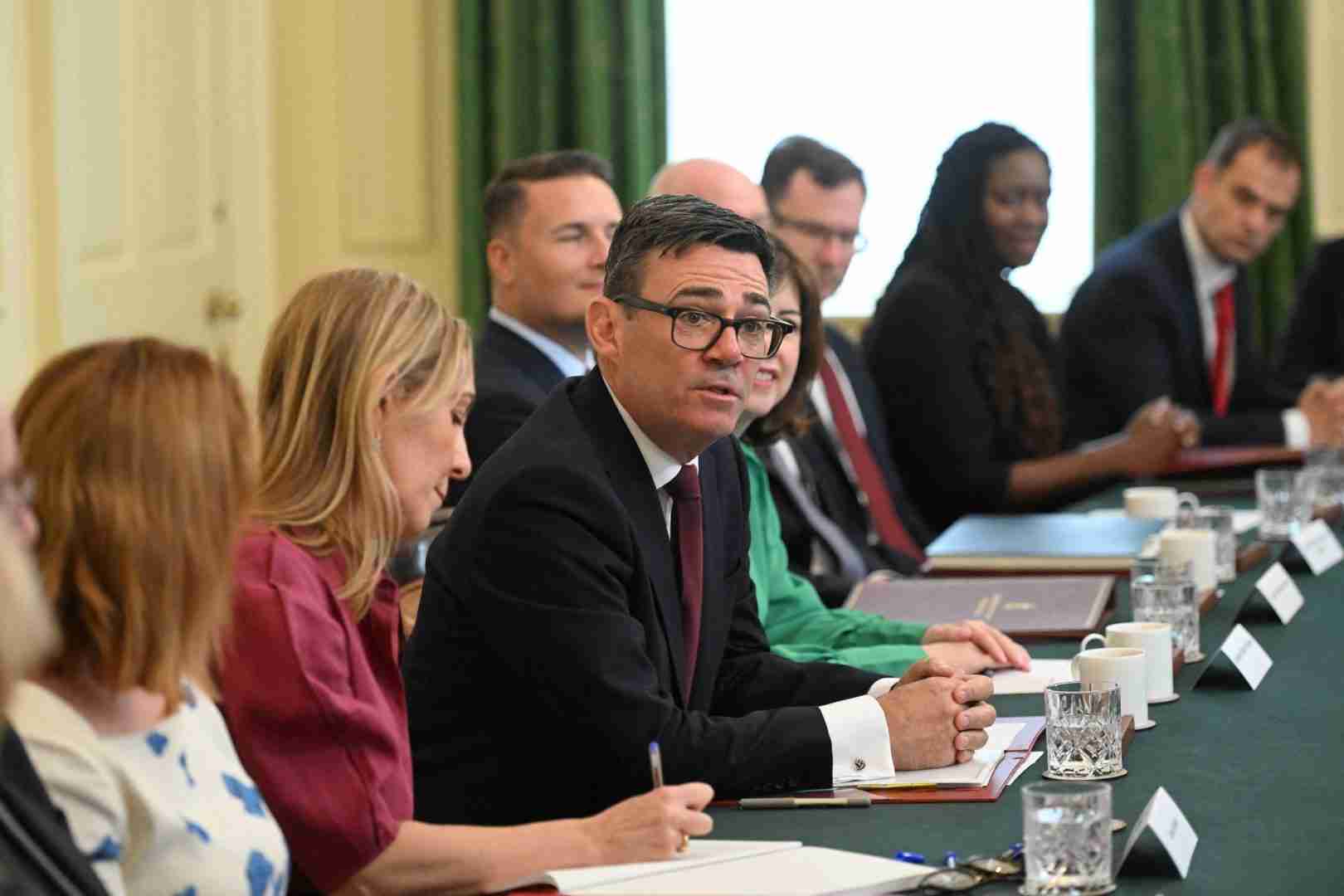
At his first cabinet meeting of top ministers, Burnham again stressed that fiscal discipline was the touchstone for his new government as was a push to make life more affordable.
“(It’s) a second chance at a first impression,” he told his ministers, according to his spokesperson.
Healey, who quit as defence minister under Starmer in protest at the lack of funding for the sector, reinforced the message about fiscal discipline and warned his cabinet colleagues they would have to look hard at their budgets.
Both Burnham and Healey acknowledged the move on electricity bills might not remove cost-of-living pressures, but the finance minister said it “does indicate that we’re offering a bit of help”.
That went some way to answer the criticism from energy experts, who questioned whether the change would have a deep impact on households, especially when gas prices have risen due to the conflict in the Middle East, making it likely that the price cap on energy bills will rise in October.
Energy bills have been one of the main drivers of Britain’s cost-of-living crunch after the wholesale gas price, which heavily influences British electricity prices, surged after Russia’s full-scale invasion of Ukraine in 2022.
The Conservative government at the time spent billions of pounds to shield households through the energy price guarantee. But while prices eased from mid-2023, they remain up to 60% higher than before the energy crisis.
Ruth Curtice, chief executive of the Resolution Foundation, said the move could benefit higher income families because the cuts were not targeted. “With bills still set to rise over £150 this October, this money would have been better spent on more targeted support,” she said in a statement.
REVOLVING DOOR OF LEADERS
Burnham has said he will unveil more early policies, telling reporters on Monday he wanted his new government “to do some things that people will feel and feel quite quickly”, especially those on the lowest incomes.
It is a strategy he hopes can win back voters to Labour and fight a challenge from the populist Reform UK, led by Brexit campaigner Nigel Farage.
There is a lot at stake.
Dubbed the “King of the North” for his dogged defence of Greater Manchester, Burnham is the most popular leader of Britain’s main political parties, for now.
But Britain’s revolving door of prime ministers over the past decade has underlined how quickly parties can move against leaders who are not seen as delivering for voters.
In his first speech as prime minister on Monday, Burnham said his ambition was to end rough sleeping in Britain.
To ease pressures on families, he is also expected to look at possible caps to bus fares — something he did in Manchester — and other measures, to back up his assertion that “I will put the care of people at the heart of everything I do”.
($1 = 0.7478 pounds)
Reporting by Elizabeth Piper; Additional reporting by Alistair Smout, Muvija M, David Milliken and Paul Sandle; Editing by Kate Holton, Alexandra Hudson and Alison Williams
Widdecombe, 78, a prominent figure in Nigel Farage’s populist Reform UK party, was found dead at her home in rural southwest England on July 9 after being attacked the day before
International News via Reuters:
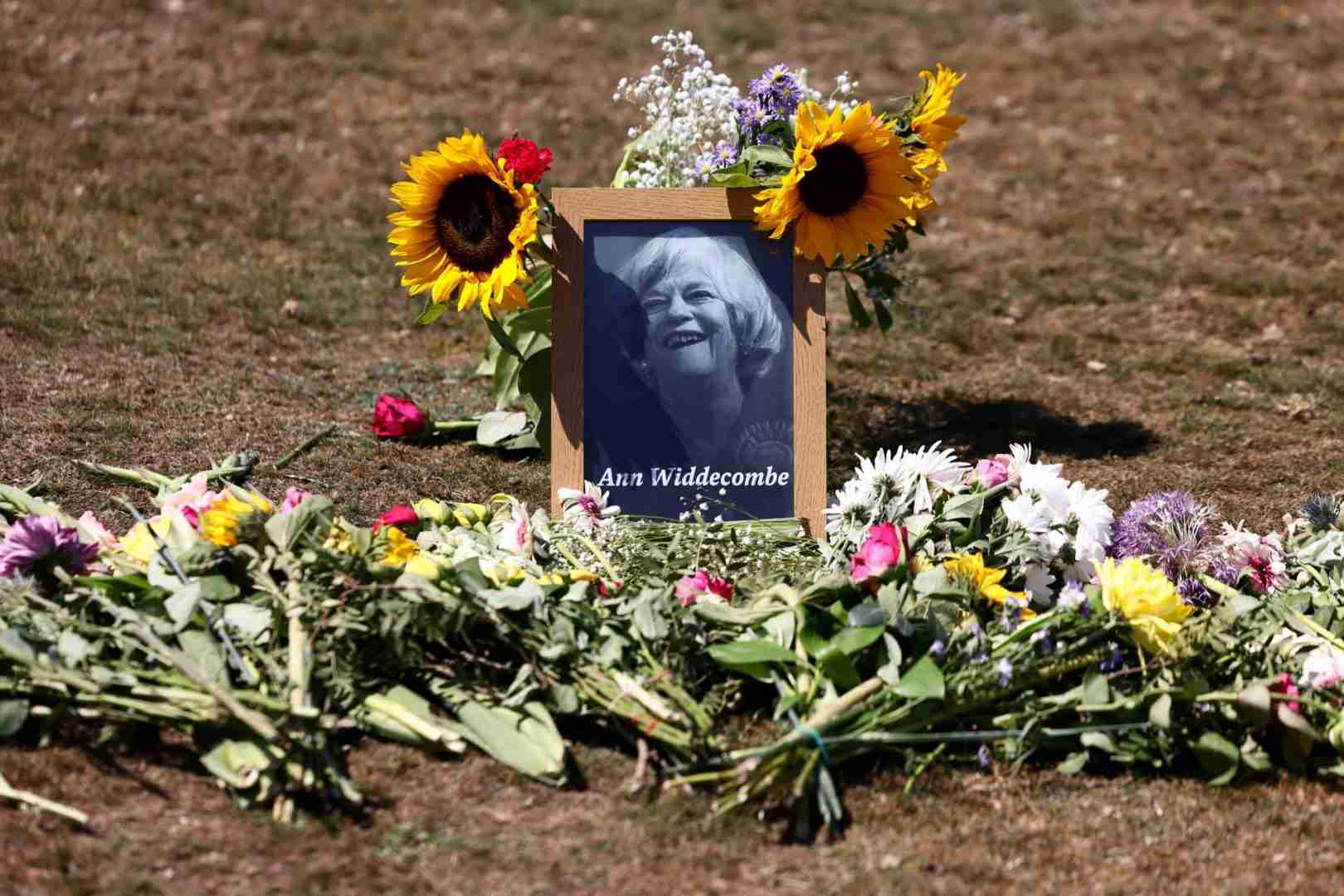
Former British government minister Ann Widdecombe was killed by a man who struck her on the head 21 times with a hammer while she was eating lunch at home earlier this month, prosecutors told a London court on Tuesday.
Widdecombe, 78, a prominent figure in Nigel Farage’s populist Reform UK party, was found dead at her home in rural southwest England on July 9 after being attacked the day before.
The killing shocked British politics, raising further concerns about politicians’ security, with two serving British members of parliament having been killed since 2016.
Joshua Kerry, a white British national from Rotherham in northern England, more than 250 miles (402 km) from Widdecombe’s home, appeared in court on Tuesday charged with her murder.
The bearded 28-year-old, who appeared in the dock at London’s Westminster Magistrates’ Court wearing a grey tracksuit, was not asked to enter a plea.
At a later hearing at the Old Bailey court, Kerry was remanded in custody until his next appearance in October.
Police have said they believe Widdecombe was targeted, although the motive remains under investigation. Prosecutors said an investigation into possible terrorism offences was ongoing.
CAMERA IN HOME CAPTURED INCIDENT
Prosecutor Kashif Malik earlier said a camera inside Widdecombe’s home had captured the attack.
Widdecombe had been due to be interviewed live on television on July 8 from her home but did not appear, Malik explained. The following day, her personal assistant asked her gardener to check on Widdecombe, and he found her on the kitchen floor.
Malik told the court that the recovered footage showed Kerry entering Widdecombe’s home while she was eating lunch and asking: “Don’t suppose you have bank cards and ID?”
Kerry, who was wearing black gloves and holding a hammer to his side so it was hidden from Widdecombe’s view, then struck her 21 times, Malik said.
He added that Kerry had tipped Widdecombe out of her chair onto the floor before taking her wallet and leaving, having been in the property for approximately two minutes.
Widdecombe was known for her socially conservative views, first as a junior minister in Conservative Prime Minister John Major’s 1992-1997 government and later as an immigration and justice spokesperson for Reform UK.
After stepping down from parliament in 2010, she appeared in a number of reality TV shows, including “Strictly Come Dancing”.
Reporting by Sam Tobin and Michael Holden, editing by Sam Tabahriti, Gareth Jones and Andrei Khalip
Netball Bermuda has announced its newly elected leadership group following the organization’s recent Annual General Meeting.
The sports governing body—formerly known as the Bermuda Netball Association—confirmed a series of key appointments to its Executive and Council as it shapes its administrative direction for the year ahead.
Under the leadership of President Kimale Evans, the incoming 2026 executive team features a blend of returning experience and fresh appointments. Antione Williams takes up the role of First Vice-President, alongside Second Vice-President Kiante Lightbourne.
Charlotte Evans assumes duties as Treasurer, with Khianda Stephens (formerly Pearman-Watson) appointed as Secretary. Tanika White completes the executive setup after being elected to a one-year term as Assistant Secretary/Treasurer.
Four additional members have been confirmed to serve on the Netball Bermuda Council: Apryl Jackson, Jenilla Hatherley, Rakeem Deshields, and Terita Bean will support governance and development operations across the island.
Young triathlete Kelise Wade laid down a dominant marker ahead of the 2026 International Youth Championships by storming to victory at the Stampone O’Brien Dilsheimer Holloway Women’s Philadelphia Super Sprint Triathlon.
Wade delivered a masterclass in multi-discipline execution across Pennsylvania, stopping the clock in a winning overall time of 31 minutes and 30 seconds.
The young athlete set a ferocious pace right out of the blocks, launching her campaign with a blistering 47-second effort in the swim leg before surging through a rapid transition.
She maintained complete control through the cycling phase, navigating the course in 12:44 on the bike, before closing out the win with a measured 15:09 run to secure the top step of the podium.
The clinical performance provides ideal momentum for Wade as she puts the final touches on her preparations. She now heads to Maryland to compete against top international talent at the Youth Championships.
Young athletics sensation Raelyn Robinson delivered a sensational multi-event display at the AAU National Championship Jackie Joyner-Kersee Showcase in St. Louis, Missouri.
Competing in the eight and under division, Robinson collected four medals across track and field to finish third overall in the 8U girls’ standings — earning prestigious AAU All-American honours in the process.
Robinson’s crowning achievement came in the long jump, where she produced a stunning gold-medal leap of 3.56 metres (11ft 8in) to comfortably top the field.
Her form was equally sharp on the track:
200m: Sliced over a second off her preliminary time (33.36s) to clock 32.26s in the final for bronze.
100m: Duplicated her podium finish with a 15.40s clocking in the final after running 15.82s in the heats.
By virtue of her top-three finishes in St. Louis, Robinson has officially qualified in all three events—the 100m, 200m, and Long Jump—for the AAU Junior Olympics in Des Moines, Iowa, this August.
The 2026 Bermuda Triangle Cup got off to a thrilling start at the Flora Duffy South Field Stadium, featuring a four-goal draw and a decisive match-winning double.
UK outfit FuturePro and the Bermuda Under-17 National Academy kicked off the tournament with an entertaining 2–2 draw, before Dandy Town Hornets edged Sao Miguel 2–1 in the nightcap.
The opening fixture produced an instant showcase for young talent as Bermudian forward Stephen Astwood marked his international debut for the Under-17 Academy with a brilliant double.
However, a resilient FuturePro side fought back to claim a share of the points, with Xion Smith and Sakari Lewis both finding the net to cap an end-to-end opener.
In the evening’s second match, Dandy Town Hornets claimed maximum points thanks to a clinical display from Tokia Bean.
Bean struck twice to put the Hornets in control, holding off a determined Sao Miguel side to secure a 2–1 victory and wrap up an action-packed opening day.
To provide the best experiences, we use technologies like cookies to store and/or access device information. Consenting to these technologies will allow us to process data such as browsing behavior or unique IDs on this site. Not consenting or withdrawing consent, may adversely affect certain features and functions.
Functional
Always active
The technical storage or access is strictly necessary for the legitimate purpose of enabling the use of a specific service explicitly requested by the subscriber or user, or for the sole purpose of carrying out the transmission of a communication over an electronic communications network.
Preferences
The technical storage or access is necessary for the legitimate purpose of storing preferences that are not requested by the subscriber or user.
Statistics
The technical storage or access that is used exclusively for statistical purposes.The technical storage or access that is used exclusively for anonymous statistical purposes. Without a subpoena, voluntary compliance on the part of your Internet Service Provider, or additional records from a third party, information stored or retrieved for this purpose alone cannot usually be used to identify you.
Marketing
The technical storage or access is required to create user profiles to send advertising, or to track the user on a website or across several websites for similar marketing purposes.