Friends of Sandys is a community organization founded in 2022 by residents committed to preserving and sharing the rich history of the western parish.
The group is once again hosting its Emancipation Cup Match Walkabout, offering the public a guided walk through Somerset while exploring the origins of the holiday and the area’s cultural and historical significance.
Kendal Trott spoke with Nicky Gurret, a member of Friends of Sandys, and Rashida Godwin, who are encouraging the community to come out this Saturday and take part in the walk.
Earlier this year, the foundation opened an external review into its engagement with the late financier and convicted sex offender Jeffrey Epstein
International News via Reuters:
An external review conducted by the Gates Foundation has found no evidence of payments made or participation in criminal activities linked to late financier and convicted sex offender Jeffrey Epstein, the philanthropic group said on Tuesday.
Earlier this year, the foundation opened an external review into its engagement with the late financier and convicted sex offender Jeffrey Epstein.
Europe is the world’s fastest-warming continent and many scientists say human-driven climate change is increasing the intensity of heatwaves, droughts and wildfires, while also creating conditions for sudden, destructive storms
International News via Reuters:
Firefighters struggled to control Spain’s biggest wildfire of the year on Tuesday and two firefighters were killed in a blaze in southwestern France as extreme heat persisted in Europe, with increasingly volatile conditions bringing drought and forecasts of severe hailstorms.
The fatalities occurred near an airport in the Gironde region, which was on high alert for wildfires, Interior Minister Laurent Nunez said, two weeks after the death of another firefighter in the Savoie region in the French Alps.
In Spain’s central Guadalajara province, a forest blaze raged out of control for the sixth day, forcing the evacuation of more than 1,200 people.
Emergency crews worked to contain the flames as temperatures above 40 degrees Celsius (104 degrees Fahrenheit) pushed fire danger to extreme levels, less than two weeks after Spain’s deadliest wildfire in decades killed 13 people near Bedar, in the southern Almeria province.
Europe is the world’s fastest-warming continent and many scientists say human-driven climate change is increasing the intensity of heatwaves, droughts and wildfires, while also creating conditions for sudden, destructive storms.
The continent has endured three stifling almost back-to back heatwaves so far this year. Intense heat has also been blamed for thousands of excess deaths in the May to June period.
PARTS OF ENGLAND PARCHED, HAIL IN BALKANS
In Britain, Thames Water said it would introduce usage restrictions for the 10 million customers it provides with drinking water in and around London, banning the use of outdoor hoses, sprinklers and pressure washers to conserve supplies.
England had received only 3% of its long-term average July rainfall, with the south and east of the country receiving nothing at all so far – the longest spell without rain since the mid-1990s, the British government’s National Drought Group said.
In Europe’s southeast, Greek authorities advised residents to stay indoors as the country endured its first major heatwave of the peak summer season with temperatures set to hit 40 C.
In central Athens, residents and tourists on the Acropolis Hill shielded from the heat with hats and umbrellas, while restaurants and cafes deployed fans blowing water mist to keep their customers cool.
The Reuters Climate Monitor, an interactive tool giving real-time data, showed the average high temperature across Western Europe at 26.3 C, 2.7 degrees higher than the seasonal average high for July 21 recorded between 1961 and 1990.
Greece’s temperatures were 5.8 degrees above normal. Spain’s average high of 33.2 C, was 5.3 degrees above what was typical in the past decades.
In Albania, residents and tourists alike sought the cool of street water fountains.
“I swear to God, the temperature is very high today. Today it is 42 degrees. You can’t fight that without cold water,” said Tirana resident Ferid Salihu.
In Serbia, the water level of the Danube fell to its lowest since 1946, forcing barges and ships to take on smaller loads to navigate Serbian stretches of the Danube and Sava rivers, river port authorities said.
Authorities across the Western Balkans have warned of a shift from heatwaves to hailstorms.
Several people were slightly injured in a hailstorm in Croatia’s northern Adriatic resort of Rovinj, Croatian media reported. The storms will continue to spread to Slovenia in the north, across Bosnia and Herzegovina and southern Serbia to North Macedonia, according to local weather forecasts.
Reporting by Elena Rodriguez in Eljuve, Spain, Deborah Kyvrikosaios and Lefteris Papadimas in Athens, William James in London, Aleksandar Vasovic in Belgrade, Fatos Bytyci in Tirana and Daria Sito-Sucic in Sarajevo; Writing by Renee Maltezou and Michele Kambas
President Emmanuel Macron, who in April urged young people to switch off their phones and read in order to become better citizens, wants the law in place in time for the start of the next academic year
International News via Reuters:
French Senators approved on Tuesday a ban on social media access for children under the age of 15, as concerns grow around the world over the impact social media have on the health and safety of minors.
If the lower house of parliament, as expected, also adopts the draft legislation later on Tuesday, France would follow Australia, where the world’s first ban for under-16s on platforms including Facebook, Snapchat, TikTok and YouTube came into force in December.
“France opens the way by being the first country in Europe to adopt a digital majority,” Anne Le Hénanff, junior minister for AI, told senators.
President Emmanuel Macron, who in April urged young people to switch off their phones and read in order to become better citizens, wants the law in place in time for the start of the next academic year.
With the new legislation, children younger than 15 would not be allowed to open a social media account from September 1. Social media platforms would have another four months to close accounts already open. The platforms would also need to use age verification approved by the French privacy regulator.
Social media platforms generally oppose blanket bans and stress they already have measures to protect younger users, including age restrictions. But they have also pledged to comply where governments enact bans.
The European Commission is working on its own regulations to rein in social media across Europe to protect young people, and it will have a say on whether France’s bill respects existing European legislation.
“We left you in this jungle and it robbed you of your attention,” Macron told teenagers at an event in April, speaking of the lack of rules on social media. “We need to slow down and help you become adults, and above all citizens.”
“That’s why what we want to do is say that before 15 years old, no more social media,” he said.
Writing by Ingrid Melander;Editing by Alison Williams and Hugh Lawson
The pound trimmed early gains against the dollar and was last trading down 0.37% at $1.3370. It fell 0.33% against the euro, which traded at around 85.27 pence
International News via Reuters:
Sterling dipped while UK gilt yields reached fresh two-month highs on Tuesday as investors weighed the prospect of higher government spending and how new finance minister John Healey will finance it.
The pound trimmed early gains against the dollar and was last trading down 0.37% at $1.3370. It fell 0.33% against the euro, which traded at around 85.27 pence.
The appointment of Healey, a former defence secretary, was announced after the close of UK markets on Monday. He had not been seen as a leading candidate for the key role in new Prime Minister Andy Burnham’s cabinet, but his appointment was generally seen as positive.
However, he will have to find more money to invest in key areas while reducing the welfare bill, all while fulfilling Burnham’s pledge to stick within the fiscal rules.
“Out of the choices he (Burnham) had, he (Healey) has some experience in Treasury, so I think that’s a big positive,” David Zahn, head of European fixed income at Franklin Templeton, said, adding Healey is not a far-left leaning member of the Labour Party.
“But I still think that the vision is Burnham’s, and so he will have to figure out how to deliver the cash, which I don’t think will be easy because they do want to spend a lot,” he added.
British government bonds, known as gilts, were up with the 10-year bond yield a whisker higher at 5.0586%, its highest since May 20, up 2 basis points.
Gilts outperformed German Bunds after underperforming them on Monday as Burnham replaced Keir Starmer as prime minister. His early remarks that he would use any flexibility within the government’s fiscal rules, reignited concerns about a possible loosening of fiscal policy.
Yields on 30-year bonds reached a fresh 2-month high at 5.7744%, up 2.5 bps.
DEFENCE STOCKS RISE
One area of spending in particular focus is defence. Healey resigned in June from Starmer’s government, saying the finance ministry had been “unwilling” to find the money to keep the country safe.
London-listed defence stocks rose as much as 2% on Tuesday on expectations that Healey could boost defence spending, before paring gains to trade up 0.25%.
“The ambition to lift UK growth towards 2.5% is understandable, but there is no obvious quick fix,” Anthony Willis, economist at Columbia Threadneedle Investments, said.
“That task is complicated by competing demands from defence and welfare spending,” he added.
Investors were also digesting the latest UK economic data, which analysts said was positive for the new finance minister as it suggested the Bank of England may have room to ease interest rates over the next year.
British annual wage growth held at 3.4% in the three months to May, matching economists’ forecasts, while UK public borrowing declined to £16 billion ($21.5 billion) in June.
Also on Tuesday, the government announced it would cut taxes on electricity bills, as Burnham attempts to deliver on his promises to ease a cost-of-living crisis, which was seen by analysts as a modest giveaway.
Reporting by Stefano Rebaudo and Yoruk Bahceli; editing by Dhara Ranasinghe, Jan Harvey, Timothy Heritage and Susan Fenton
Housing Minister Zane DeSilva said the ministry is completing the final approvals before relocating the homes to Boaz Island, Sandy’s
Full media statement from the Ministry of Housing and Municipalities:
The Minister of Housing and Municipalities, the Hon. Zane DeSilva, JP, MP, was joined by the Minister of Public Works and Environment, the Hon. Jache Adams, JP, MP, the Minister of Youth, Social Development and Seniors, the Hon.
Tinee Furbert, JP, MP, Minister of the Cabinet Office, Senator, the Hon. Emily-Gail Dill, JP, and the Attorney-General and Minister of Justice, Senator, the Hon. Kim Wilkerson, JP, on 9 July for a visit to view the Ministry’s modular homes and receive an update on the Government’s affordable housing programme. The modular homes have been procured as emergency housing and to provide quality accommodation for those in urgent need.
Minister DeSilva said: “It was important for my Cabinet colleagues to see these modular homes first-hand and understand the role they will play in strengthening Bermuda’s emergency housing capacity. While we are completing the remaining approvals required for their installation at Boaz Island, our focus remains firmly on delivering long-term housing solutions that will make a meaningful difference for Bermudian families.”
The Minister noted that, while work continues to finalise the Boaz Island project, the Ministry is actively progressing its major housing developments, including the construction of 194 precast homes and more than 40 residential units at Channel House.
Construction on both developments is expected to commence this year, with the homes scheduled to be ready for occupancy in 2027.
The Ministry of Housing and Municipalities remains committed to increasing Bermuda’s supply of quality, affordable housing through a combination of emergency accommodation and larger residential developments.
Together, these projects form part of the Government’s ongoing commitment to addressing the island’s housing needs and providing more opportunities for Bermudians to access safe and secure homes.
Chantelle ‘Storm Leigh’ Wilson Bean has published a book, Shattered: A Mother’s Voice, describing the aftermath of the loss of her son to violence in Bermuda
A mother has penned a book detailing the events around the death of her son in a move to inspire others to remember loved ones lost to violence in Bermuda. Chantelle Wilson Bean, who goes by the pen name Storm Leigh, has published ‘Shattered: A Mother’s Voice’, exploring the themes of resilience, love and community healing.
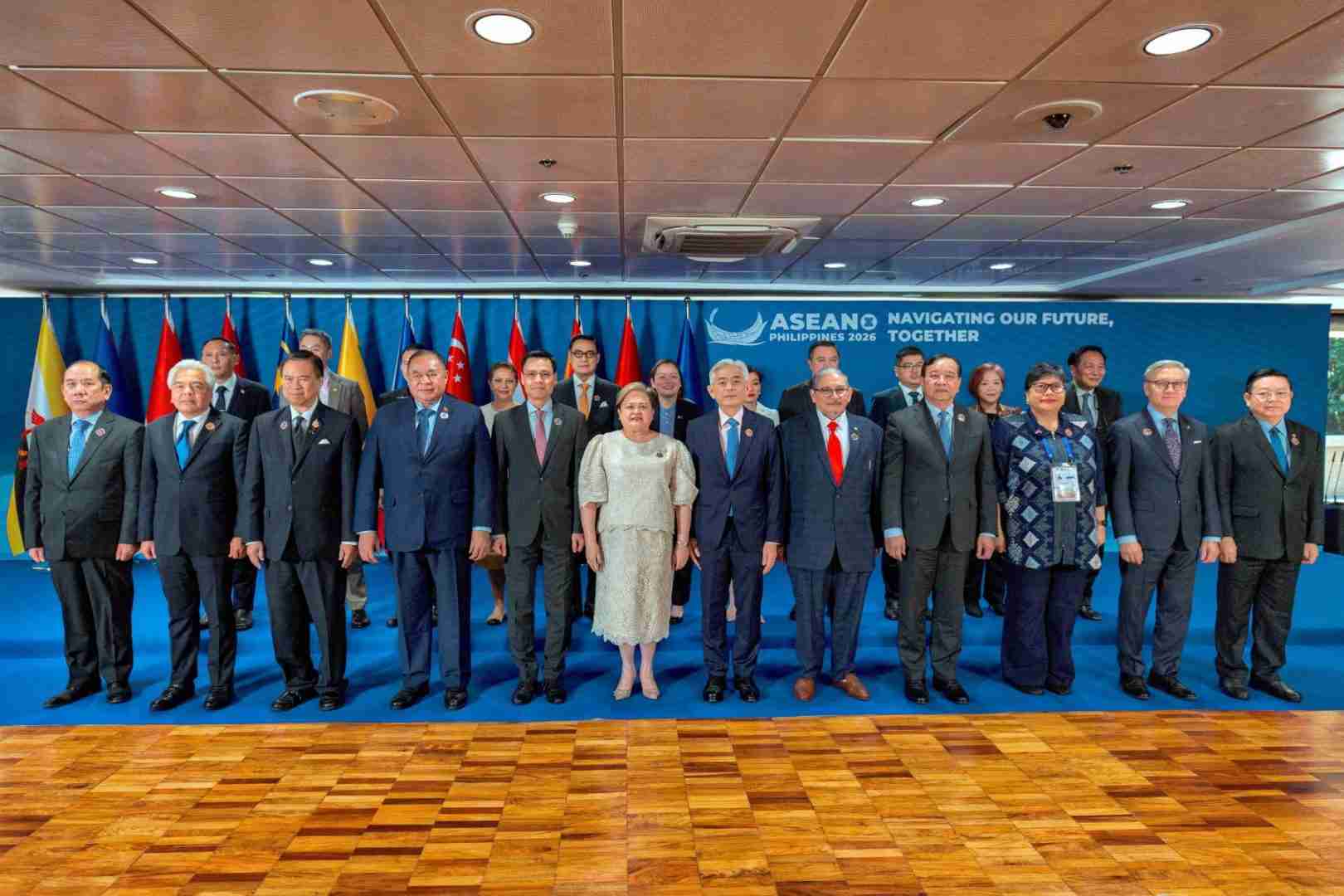
Foreign ministers from the 11-member Association of Southeast Asian Nations and major partners have meetings in Manila this week against a backdrop of instability since the U.S. and Iran resumed open conflict
International News via Reuters:
The Middle East crisis cast a shadow over a diplomatic gathering in Southeast Asia on Tuesday, where foreign ministers voiced serious concern over renewed hostilities that add to uncertainty in a region grappling to manage tensions and conflicts of its own.
Foreign ministers from the 11-member Association of Southeast Asian Nations and major partners have meetings in Manila this week against a backdrop of instability since the U.S. and Iran resumed open conflict, raising fears about energy supplies through the Strait of Hormuz, as well as inflation and global growth.
Risks have increased in recent days, with Yemen’s Iran-aligned Houthis announcing a naval blockade on Saudi Arabia, opening a potential new front in the conflict and raising the threat to global energy supplies and trade beyond the Gulf.
“We are deeply concerned that these developments severely undermine the ongoing efforts of key mediators and diminish the prospects for a peaceful resolution through dialogue and diplomacy,” the ministers said in a statement after a closed-door meeting.
Southeast Asia, a major oil importer with a combined gross domestic product of $3.8 trillion, is highly exposed to the supply crunch and has sought to fast-track an ASEAN oil-sharing mechanism to mitigate the impact.
ASEAN has no shortage of challenges closer to home and will on Tuesday hold a consultation on the conflict in Myanmar, as the bloc’s peace initiative falters, five years after a military coup that plunged the country into a civil war that has killed an estimated 100,000 people.
RUBIO TAKES AIM AT BEIJING
Officials are also likely to discuss tensions in the South China Sea, with ASEAN and China still trying to conclude a code of conduct to prevent disputes from escalating after nearly 10 years.
Tensions between Manila and Beijing have intensified ahead of an expected meeting between Philippine Foreign Affairs Secretary Maria Theresa Lazaro and Chinese Foreign Minister Wang Yi on the sidelines of Wednesday’s ASEAN meetings.
A fresh war of words erupted after the Philippine military accused China’s Coast Guard personnel of aggressively striking one of its navy personnel on the head with a baton near the disputed Second Thomas Shoal in the South China Sea on Monday, prompting accusations of provocation and dangerous manoeuvres from both governments.
Philippine President Ferdinand Marcos Jr will summon China’s ambassador in Manila, his office said on Tuesday, hours after Manila’s envoy in Beijing was similarly summoned.
As the diplomatic standoff deepened, the Chinese foreign ministry told a media briefing on Tuesday ASEAN was not a forum for discussing bilateral maritime disputes.
“The Philippines should earnestly fulfil its duties as ASEAN’s rotating chair, promote dialogue and cooperation, rather than placing its own political interests above regional peace and stability,” it said.
The U.S. State Department condemned what it described as China’s “dangerous and aggressive” actions, in what it called “China’s troubling pattern of provocation against lawful Philippine maritime operations”.
U.S. Secretary of State Marco Rubio and Wang will join the ASEAN-led meeting in the coming days and could meet on the sidelines. Also attending will be India, Japan, Australia, South Korea, Russia, Britain and the European Union, among others.
Without naming China, Rubio took a swipe at Beijing in an opinion piece published in Philippine newspapers on his arrival in Manila on Tuesday, reaffirming U.S. commitment to freedom of navigation, but warning such freedom was “by no means guaranteed”.
“If those waters fall under the control of a power willing to use commerce as a geopolitical weapon, both the United States and the ASEAN states would face dire new threats to their sovereignty, security and economic futures,” Rubio said in the piece.
Rubio reiterated a 2016 arbitral ruling that invalidated China’s sweeping sovereignty claims in the South China Sea was final and binding and said the U.S. would honour its obligations to the Philippines and other allies “as they confront new and coercive threats to our shared interests.”
China does not recognise the arbitration ruling, which went in favour of the Philippines.
Reporting by Karen Lema, Nestor Corrales and Mikhail Flores; Editing by Thomas Derpinghaus, Martin Petty and Kate Mayberry
The FT said the most immediate new duties are expected to be on a par with the 10% tariffs currently in place, but the administration was also working on other investigations that could grant it the legal authority to propose higher duties
International News via Reuters:
U.S. President Donald Trump is poised to unleash fresh tariffs on dozens of countries as soon as this week, the Financial Times reported on Tuesday, with his temporary 10% global tariff scheduled to expire on Friday.
The FT said the most immediate new duties are expected to be on a par with the 10% tariffs currently in place, but the administration was also working on other investigations that could grant it the legal authority to propose higher duties.
Reuters could not immediately verify the report.
Reporting by Shubham Kalia in Bengaluru; Editing by Andrew Heavens
Around 645 million people, or 7.8% of the world’s population, experienced hunger last year, down from 8.1% in 2024 and 8.6% in 2022
International News via Reuters:
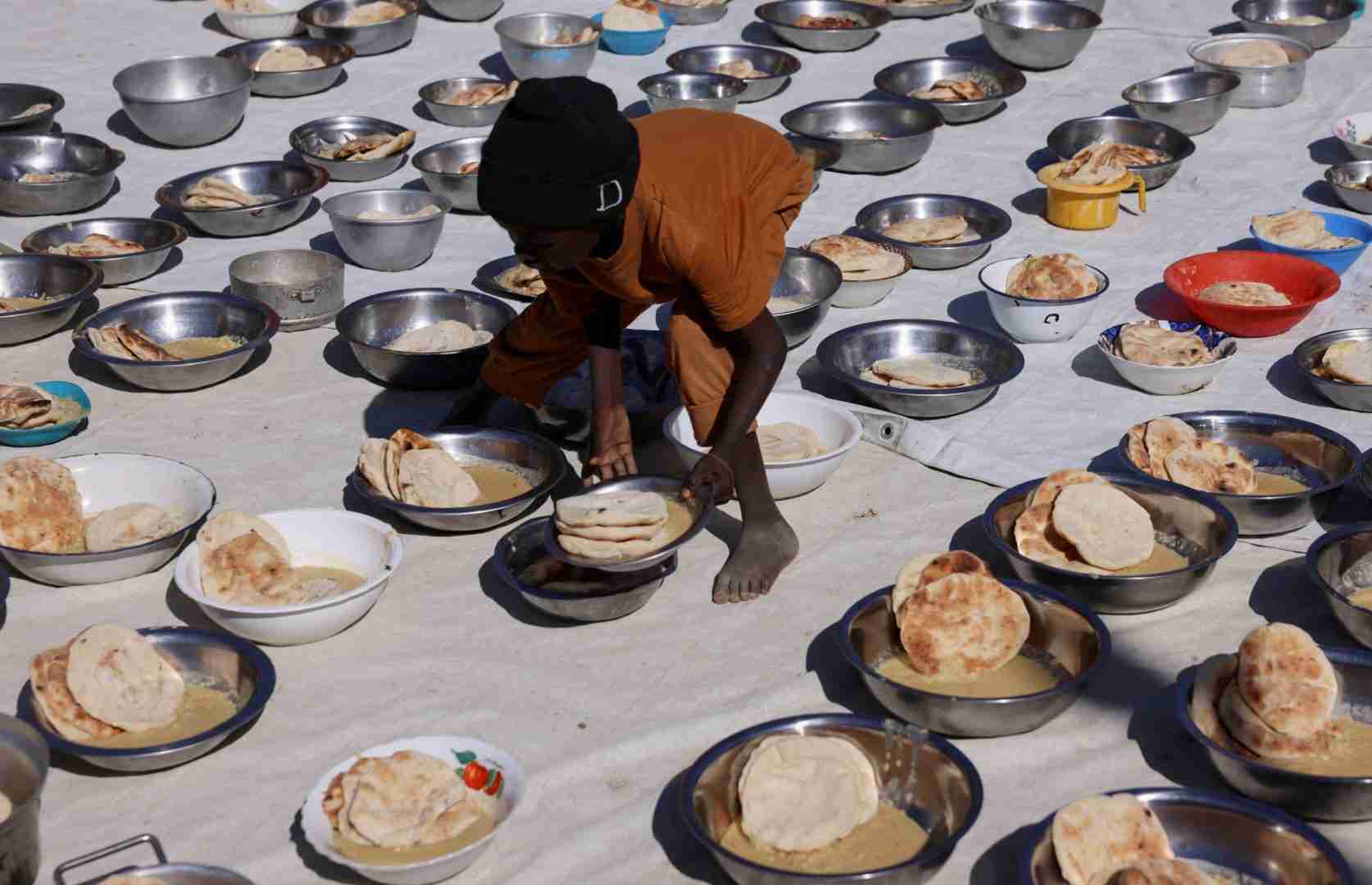
Global hunger declined for a third consecutive year in 2025, with improvements recorded across every continent, although mounting risks from climate shocks and trade disruption could threaten further progress, a United Nations report said.
Around 645 million people, or 7.8% of the world’s population, experienced hunger last year, down from 8.1% in 2024 and 8.6% in 2022, according to the State of Food Security and Nutrition in the World report, jointly prepared by five U.N. agencies.
Progress was driven largely by gains in Asia, particularly India, as well as Latin America and the Caribbean. Some African countries also began to reverse years of deterioration, though the continent had the world’s largest undernourished population in 2025, with 309 million people affected, one in five Africans.
Global hunger is projected to keep falling by 2030, according to the U.N. experts.
“The big difference to previous years is that this year the rate of hunger has declined in all continents, including Africa, although very, very slightly,” Máximo Torero, chief economist at the U.N. Food and Agriculture Organization (FAO), told Reuters in an interview.
Torero said the trend offered grounds for optimism but warned that geopolitical tensions and weather disruptions posed significant threats to global food systems.
Among the most immediate concerns are issues with shipping through the Strait of Hormuz, a key route for energy and agricultural inputs. The interruption is driving up prices for fuel, fertilizers and transportation, increasing food production costs worldwide.
A potentially strong El Nino weather pattern could add further pressure by disrupting agricultural production in vulnerable regions.
“We hope the trend won’t change, but there are several risks affecting us right now,” Torero said.
INDIA DRIVES ASIA’S IMPROVEMENT
Much of the improvement in Asia has been concentrated in India, home to nearly one-fifth of the world’s population, where hunger has fallen below 10%, helped by a combination of targeted welfare programmes and rising agricultural productivity.
Elsewhere, several African countries including Ethiopia, Tanzania, Zimbabwe, Senegal and Zambia have also shown signs of progress, while the Dominican Republic is no longer classified on the global hunger map.
Torero said the war in Gaza had not materially altered the global hunger figures because the report tracks chronic, long-term undernourishment rather than acute food insecurity caused by conflicts or disasters.
Food deliveries into Gaza have increased recently, helping to stabilise conditions, but rebuilding the territory’s devastated agricultural sector will take years, he added.
“Our job is to help re-establish agricultural production because a significant part of the infrastructure for agriculture was destroyed,” Torero said.
HEALTHY DIETS STILL OUT OF REACH
Despite progress against hunger, child malnutrition remains stubbornly high and anaemia among women is worsening, the report said, highlighting that adult obesity has also risen steadily.
Access to nutritious food remains a major challenge.
The report estimates that 2.69 billion people cannot afford a healthy diet, which it calculated would cost an average of $4.28 a day in purchasing-power-parity terms.
The affordability gap was particularly stark in Africa, where 66.1% of people could not afford a healthy diet, more than double the levels recorded in Asia and Latin America.
Torero said Africa faces particular challenges because weak infrastructure, limited cold-storage facilities and poor transport networks raise the cost of highly perishable foods such as fruit, vegetables, milk and meat.
The continent is also hindered by fragmented regulations and non-tariff barriers that restrict food trade between neighbouring countries, he added.
Reporting by Giselda Vagnoni and Oriana BoselliEditing by Keith Weir
If it is adopted, France would follow Australia, where the world’s first ban for under-16s on platforms including Facebook, Snapchat, TikTok and YouTube came into force in December
International News via Reuters:
French lawmakers vote on Tuesday on a law that aims to ban social media access for children under the age of 15, joining countries around the world in considering a move unpopular with many teenagers but supported by some parents and teachers.
If it is adopted, France would follow Australia, where the world’s first ban for under-16s on platforms including Facebook, Snapchat, TikTok and YouTube came into force in December, as concerns grow over the impact social media has on the health and safety of minors.
President Emmanuel Macron, who in April urged young people to switch off their phones and read in order to become better citizens, wants the law in place in time for the start of the next academic year.
France’s draft legislation, which senators and deputies agreed on at committee level late on Monday, requires social media platforms to set up systems of age verification approved by the French privacy regulator.
The vote in parliament is due in the mid- to late afternoon.
With the proposed legislation, children younger than 15 would not be allowed to open a social media account from September 1. Social media platforms would have another four months to close accounts already open.
Online encyclopaedias and educational websites would remain available to children and teenagers.
Social media platforms generally oppose blanket bans and stress they already have measures to protect younger users, including age restrictions. But they have also pledged to comply where governments enact bans.
Countries across Europe and beyond are considering ways to restrict social media after becoming increasingly aware of the risks to children.
The European Commission is working on its own regulations to rein in social media’s business models to protect young people, and it will have a say on whether France’s bill respects existing European legislation.
“We left you in this jungle and it robbed you of your attention,” Macron told teenagers at a high school in April, speaking of the lack of rules on social media. “We need to slow down and help you become adults, and above all citizens.”
“That’s why what we want to do is say that before 15 years old, no more social media,” he said.
Writing by Ingrid Melander;Editing by Alison Williams
To provide the best experiences, we use technologies like cookies to store and/or access device information. Consenting to these technologies will allow us to process data such as browsing behavior or unique IDs on this site. Not consenting or withdrawing consent, may adversely affect certain features and functions.
Functional
Always active
The technical storage or access is strictly necessary for the legitimate purpose of enabling the use of a specific service explicitly requested by the subscriber or user, or for the sole purpose of carrying out the transmission of a communication over an electronic communications network.
Preferences
The technical storage or access is necessary for the legitimate purpose of storing preferences that are not requested by the subscriber or user.
Statistics
The technical storage or access that is used exclusively for statistical purposes.The technical storage or access that is used exclusively for anonymous statistical purposes. Without a subpoena, voluntary compliance on the part of your Internet Service Provider, or additional records from a third party, information stored or retrieved for this purpose alone cannot usually be used to identify you.
Marketing
The technical storage or access is required to create user profiles to send advertising, or to track the user on a website or across several websites for similar marketing purposes.