Tuesday, October 27, 2026
Home Blog Page 148

Hamas names Khalil Al-Hayya as new overall leader

Hayya replaces Yahya Sinwar, who was killed in combat with Israeli forces in October 2024 as Hamas fought a full-scale, two-year war with Israel in the Gaza Strip

International News via Reuters:

Hamas has named Khalil Al-Hayya as its overall leader, according to a statement from the Palestinian militant group on Monday, in a move an analyst says could signal a tougher stance by the group towards disarmament calls.

Hayya replaces Yahya Sinwar, who was killed in combat with Israeli forces in October 2024 as Hamas fought a full-scale, two-year war with Israel in the Gaza Strip. 

Hayya, the group’s exiled Gaza chief and top negotiator, has become an increasingly central figure in the leadership of Hamas since the deaths of Sinwar and Ismail Haniyeh, who was killed in Iran in July 2024.

He is seen as more hardline than Khaled Meshaal, the head of the group’s office in exile and the other frontrunner for the leadership.  

Hayya was among top Hamas officials targeted in 2025 in an Israeli attack in Doha, where he is based, Israeli officials told Reuters.

CONDITIONS IN GAZA 

The militant Islamist group faces some of the toughest challenges since it was founded in 1987, battered by two years of war ignited by its October 7, 2023, attack on Israel and facing international demands to disarm.

While fighting has abated in Gaza since the U.S.-brokered ceasefire in October, Israel still holds more than 60% of the coastal enclave, attacks continue, and conditions for Gaza’s 2 million people remain dire.

Israel says it targets Hamas and other Gaza militants who pose an imminent threat. The office of Israeli Prime Minister Benjamin Netanyahu did not immediately comment on Hayya’s selection.

On Monday, an Israeli strike killed at least three Palestinians driving in a vehicle in Khan Younis in southern Gaza, medics said. The Israeli military told Reuters it struck a militant in the area, without providing details.

The deaths add to a toll of more than 1,150 Palestinians, mostly civilians, killed by Israeli attacks since the October ceasefire, according to Gaza health officials. Four Israeli soldiers were killed by militants in Gaza over the same period. 

Hamas does not usually disclose its losses.

SELECTION SEEN AS MESSAGE OF DEFIANCE

Since Sinwar was killed, Hamas has resorted to a five-member higher council that included Hayya and Meshaal, in addition to three other officials. 

The election of a Hamas chief is a lengthy process that began in January and was interrupted by the wars in Iran and Lebanon and continuing Israeli military operations in Gaza.

The selection is made by a 50-member council made up of Hamas members in Gaza, the occupied West Bank — including Israeli prisons — and those in exile.

Palestinian political analyst Reham Owda said Hayya’s victory is a message that Hamas remains committed to armed struggle, rejects disarmament under any conditions, and intends to rebuild its military strength while preserving its alliance with Iran and the so-called “Axis of Resistance.”

“This indicates that negotiations related to disarmament are likely to face significant difficulties and obstacles,” Owda told Reuters.

U.S. President Donald Trump’s ceasefire plan for Gaza demands Hamas’ disarmament and Israeli military withdrawals. It foresees the enclave being run by a technocratic Palestinian administration overseen by Trump’s Board of Peace.

But talks between Hamas, mediators, Egypt, Qatar, Turkey and Trump’s Board of Peace envoys have so far failed to reach a broad agreement to end the conflict.

Hamas has drawn criticism within Gaza because of the heavy toll inflicted by the war, with much of the enclave reduced to ruins and more than 73,000 people killed, according to Gaza health authorities.

Hamas-led militants killed some 1,200 people and abducted 251 others in their October 7, 2023, attack.

Additional reporting by Eman Abouhassira in Dubai; Editing by Aidan Lewis and Toby Chopra

Airline executives caution planemakers not to rush release of next generation of aircraft

The comments come as airlines warn that with current backlogs in order books and instability around the supply chain, integrating next-generation aircraft that haven’t yet reached maturity, or have established maintenance pathways could cause more disruption

International News via Reuters:

Airline executives on Monday cautioned planemakers Boeing and Airbus not to rush out a new generation of commercial jets without ensuring their technology is mature enough.

“I’m not keen to see a new narrow body in a 2030 time frame,” Paul Kent, chief commercial officer at BOC Aviation, told the Airline Leaders Summit, held at the Farnborough Airshow. 

“When you launch aircraft and they are not mature at inception, and you build that maturity through the introduction of the program, it means that you need that program to run for a considerable number of years in order for it to achieve overall economic viability,” Kent added.

The comments come as airlines warn that with current backlogs in order books and instability around the supply chain, integrating next-generation aircraft that haven’t yet reached maturity, or have established maintenance pathways could cause more disruption. 

On Sunday, Boeing Commercial Airplanes CEO Stephanie Pope said the planemaker was working on some new technology, but was working on certification for aircraft and ramping up production primarily. 

Kent’s comments echoed Ryanair CEO Michael O’Leary, who warned against overfocusing on new technology during the budget carrier’s first-quarter earnings call. 

“Until somebody gets Star Trek travel, and you start beaming people around the world…instead of flying them. I think we’re dealing with 737 Maxes and  Airbus Neos for the next 10 or 15 years,” O’Leary said.

Still, British Airways Chief Executive Sean Doyle said that they’d be keen to see whatever Airbus develops. 

“We’d be very interested in whatever they’re working on,” Doyle said. 

And Kent added that they would consider newer models soon if there was “meaningful technological change” on offer. 

Reporting by Joanna Plucinska; Editing by Kirsten Donovan and Sharon Singleton

UK deputy PM Lammy leaves government

Business minister Peter Kyle also left government

International News via Reuters:

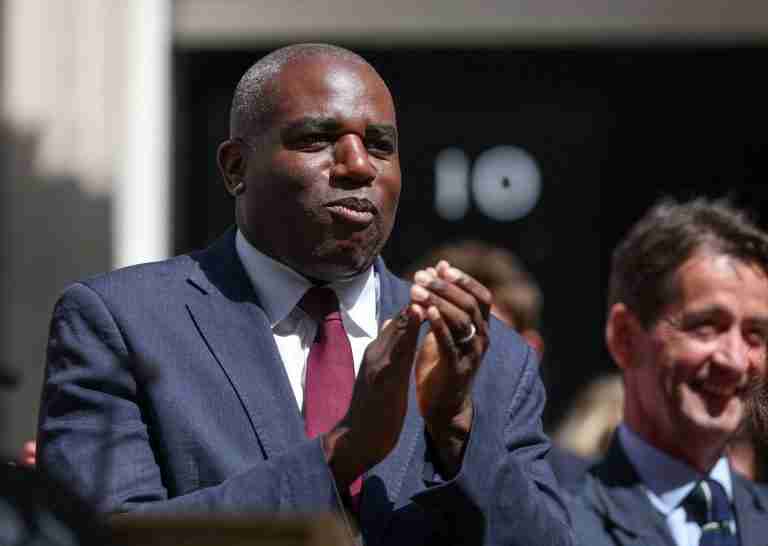
UK Deputy Prime Minister David Lammy left government on Monday after Andy Burnham took over as prime minister.

Lammy, who posted a statement on X, was also justice minister.

Business minister Peter Kyle also left government, Sky News reported.

Reporting by Muvija M, writing by William James

Google plans new chip to run Gemini models more efficiently, the Information reports

The Alphabet-owned company expects the new chip, informally dubbed “Frozen v2,” to help address an AI computing capacity crunch that has fueled internal tensions and prompted Google Cloud to decline deals with outside customers

International News via Reuters:

Google is developing a new server chip that would incorporate elements of its Gemini model directly into the hardware, in a bid to serve its AI models more efficiently to users, the Information reported on Monday, citing people familiar with the matter.

The Alphabet-owned company expects the new chip, informally dubbed “Frozen v2,” to help address an AI computing capacity crunch that has fueled internal tensions and prompted Google Cloud to decline deals with outside customers, the report said.

Shares of Alphabet were up 3.3% in early trading. 

Here are some details:

• Google plans to deploy the chip as soon as 2028, though engineers are still finalizing its design and the amount of model information that will be hardwired, the report said.

• The chip could be six to 10 times more efficient than Google’s latest custom AI chips based on the number of AI tokens served per unit of power, according to the report.

• “Our teams are constantly researching and experimenting with new innovations… By co-designing our hardware and software from the ground up, we ensure our systems are integrated and highly optimized,” a Google Cloud spokesperson said.

• The ‘Frozen’ project is aimed at creating a new set of homegrown chips apart from Google’s tensor processing units (TPUs), rather than replacing them, the report said.

• Bloomberg News reported last week that Google delayed the launch of its latest Gemini AI model after it fell short of internal goals, with the company working to improve its capabilities, particularly in ‌coding.

Reporting by Rashika Singh in Bengaluru; Editing by Leroy Leo

White finishes 26th at high-tempo Dawlish Grand Prix

Cyclist Conor White put in a solid performance on the UK elite circuit, finishing 26th at the 2026 Dawlish Grand Prix in Devon.

Representing Jakroo Handsling Racing, the 26-year-old contested the National A one-day criterium over a flat, fast 38.9km course along the Dawlish seafront.

In a high-tempo feature that ultimately culminated in a fierce bunch sprint, White navigated the rapid pace expertly to stop the clock in 49:19.

He crossed the line just 11 seconds behind race winner Frank Longstaff (49:08), securing another productive result as he continues his European summer campaign.

Divine builds momentum with another top-10 finish at Brands Hatch

Bermudian motorcycle racer Aeziah Divine secured ninth place in Round 4 of the R&G Moto4 British Cup at Brands Hatch to complete a progressive weekend on track.

Competing alongside the 2026 ZYN British Superbike Championship, the youngster set the tone early in Sunday’s warm-up session with a 1:37.107 lap to finish 10th quickest.

Starting from P10 for Race 2—a 14-lap, 34-mile feature—Divine launched aggressively off the line to slice through the field on the opening laps. While the leading pack eventually pulled away, he managed his pace expertly to cross the line in ninth, stopping the clock at 22:43.241.

“Another top 10 to wrap up a strong weekend,” Divine said. “Had a great launch off the line, passing several riders.

“I fought hard to be aggressive early on and push with the front group, but we dropped back a bit too much. Still, I made strong progress over the weekend and have good momentum going into the second half of the season.”

National record for discus thrower DeRosa-Williams

Bermudian discus thrower Tiara DeRosa-Williams has set a new national record after claiming a third-place finish at the Throw Town Ramona meeting.

Competing in Oklahoma as part of the prestigious Oklahoma Throws Series, DeRosa-Williams produced a stunning lifetime best performance in the circle.

Her top effort of 51.10m (167ft 8in) secured a podium spot and comfortably rewrote the national record books.

The landmark throw eclipses her previous national benchmark of 50.07m, laying down a serious marker as she continues her preparations for the international stage later this year.

Sutton seal sensational comeback … Fishel off the mark in NWSL

Sutton United Women produced the comeback of the weekend, overturning a two-goal half-time deficit to claim a thrilling 4-3 victory over Reading FC Women.

K’Shaela Burch-Waldron and her team looked down and out at the break after a dominant opening 45 minutes from the Royals, but a spectacular second-half resurgence saw United tear through the visitors’ defense to secure a memorable pre-season win.

It was a reverse in fortunes for Eva Frazzoni’s AFC Sudbury Women, who collapsed from a commanding 3-0 lead to fall 5-3 away against Cambridge United despite a blistering first-half performance.

Over in Iceland, Hafnarfjordur cruised to an emphatic 6-1 victory over Grindavik/Njardvik in the Premier Division, with Nia Christopher making a lightning-fast impact off the bench—taking less than 60 seconds to score after entering the fray in the second half.

Across the Atlantic in the NWSL, Reign FC suffered a heartbreaking 3-2 defeat to league leaders Gotham FC following a two-and-a-half-hour weather delay.

Despite the loss, Mia Fishel celebrated a personal milestone, winning a 12th-minute penalty before stepping up to slot the ball into the lower right corner and open her official NWSL goalscoring account.

Opinion: ‘Government tried to kill the road-safety Bill before it saw the light of day. It survived.’

Shadow Minister of National Security, Governance and AI, Jarion Richardson provides commentary on the pausing of the Road Traffic and Motor Car (Road Safety and Penalties) Amendment Bill

Full statement from Opposition MP Jarion Richardson, OBA:

The public was told that the Road Traffic and Motor Car (Road Safety and Penalties) Amendment Bill would be debated in the House of Assembly on Friday 17 June.

That debate did not take place because, instead of answering the Bill on its merits, proposing amendments or presenting replacement legislation, the Government sought a procedural ruling that would have stopped it before Second Reading.

In plain language, the Government tried to kill the road-safety Bill before it saw the light of day.

The House did not vote against the Bill. Members did not reject unannounced sobriety checkpoints, stronger consequences for dangerous road conduct or more effective treatment of accumulated demerit points. Those issues were never debated. Government did not seek to improve the proposals in Committee or offer a better legislative response of its own. It sought to prevent Parliament from considering them at all.

The Bill survived because the Speaker acted fairly. The Government was required to share the case it had placed before him, and the Opposition was afforded the opportunity to respond. The Opposition Leader, Deputy Leader and Whip argued that a sudden and potentially irreversible ruling should not be made without the Member responsible for the Bill having a proper opportunity to examine the Government’s material, answer its claims and address the wider parliamentary and public interest.

The Bill was therefore carried over. It was not defeated, withdrawn or removed from Parliament. It remains alive.

This matters because, after years of warnings, worsening statistics and repeated announcements, Government has not delivered the action Bermuda’s road crisis requires. Families continue to suffer death, serious injury and permanent disability. Police officers, emergency crews and hospital staff continue to manage the consequences, while responsible drivers and riders bear the human and financial costs created by a reckless minority.

The public has heard about strategies, reviews, cameras, enforcement initiatives and future plans. Yet announcements are not results. Meetings are not safer roads. Promises of future action do not protect the person travelling home tonight.

When the Opposition brought forward concrete legislation, Government had several legitimate choices. It could have supported the Bill, opposed it openly in debate, proposed amendments in Committee or introduced a stronger Bill of its own. It chose none of them. It tried to kill the legislation before the public could hear the arguments and before Parliament could perform the work it was elected to do.

The Government has raised a technical claim concerning the House’s financial procedures. That claim will be answered in the proper parliamentary forum, not through a running newspaper debate over Standing Orders and preliminary departmental calculations.

Over the summer, the Opposition will examine the Government’s position, test the figures and review the parliamentary authorities upon which it relies. We will distinguish costs genuinely required by the Bill from speculative assumptions, existing departmental responsibilities and implementation choices that Government has elected to attribute to the legislation. We will prepare a complete response for the Speaker and return in September ready to defend the Bill’s right to be debated.

The Bill is firm because the problem is severe. It provides for unannounced, senior-authorised sobriety checkpoints, stronger consequences for unlawful road conduct, effective accumulated-point procedures and statutory safeguards governing the exercise of police power. Government may disagree with particular penalties or procedures. That is precisely why Parliament has a Committee stage, where provisions can be examined, evidence considered and amendments made.

The proper response to an amendable Bill is to amend it. Government’s response was to try to kill it.

The Opposition remains committed to a practical and accountable approach to road safety. Police officers need usable powers, those powers must be exercised under clear legal safeguards, and dangerous conduct must carry meaningful consequences. Legislation must also operate alongside visible enforcement, education, safer roads, modern ticketing, reliable data and an effective court system.

The Bill is one part of that wider response, but it is a part Bermuda can no longer afford to avoid.

The Bill survived Friday, but survival is not success. Success will mean a proper Second Reading debate, detailed Committee scrutiny and effective legislation capable of reducing the harm on Bermuda’s roads.

We will use the summer to do the work. We will return in September prepared to defend the Bill and move it forward.

The Bill is alive. The road crisis remains. Bermuda will have its road-safety debate.

Bermuda College to launch Ashay Programme in September

Initiative will deliver culturally relevant education for learners of all ages

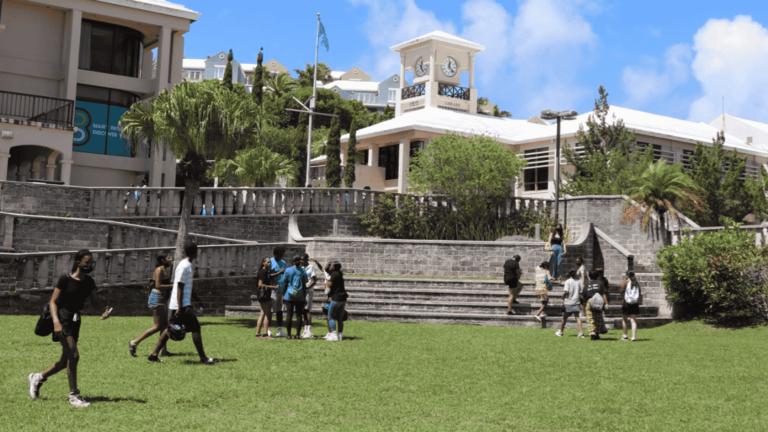
Bermuda College will introduce the Ashay Programme this September, offering culturally relevant classes for young people, parents and adults through a new partnership with Ashay Programmes International.

The initiative will provide classes for children aged five to 16, alongside sessions for parents and adults seeking knowledge and perspectives not included in traditional education. An Ashay Club will also be available to extend learning opportunities for participating students.

The partnership was sparked by an opinion piece written by Bermuda College President Dr David Sam, who encouraged the wider community to play a greater role in preparing young people for leadership and success.

Founded by veteran educator Mwalimu Melodye Mĩcere Van Putten, the Ashay Programme has been operating for 40 years and teaches history from an African-centred perspective with a Pan-African focus. The programme has previously been offered in Bermuda’s middle schools and currently has Ashay Clubs in Bermuda, Philadelphia and Kumasi, Ghana.

Research has linked culturally relevant education to improved academic outcomes. A study published in the American Educational Research Journal found students enrolled in ethnic studies courses achieved higher grade point averages and were less likely to fail classes.

Registration information is available by contacting Mwalimu Van Putten at melodyevanputten@aol.com.

Man’s death during police arrest in Italy leads to street protests

Abderrahim Fakir, a Moroccan-born entrepreneur who ran a small removals and cleaning business, died on Sunday after police were called to deal with a man behaving aggressively and damaging a vehicle

International News via Reuters:

A man in the northern Italian city of Bologna died while being held to the ground by police trying to arrest him, in an incident captured on video that has sparked street protests and which prosecutors are investigating.

Abderrahim Fakir, a Moroccan-born entrepreneur who ran a small removals and cleaning business, died on Sunday after police were called to deal with a man behaving aggressively and damaging a vehicle, Italian media said.

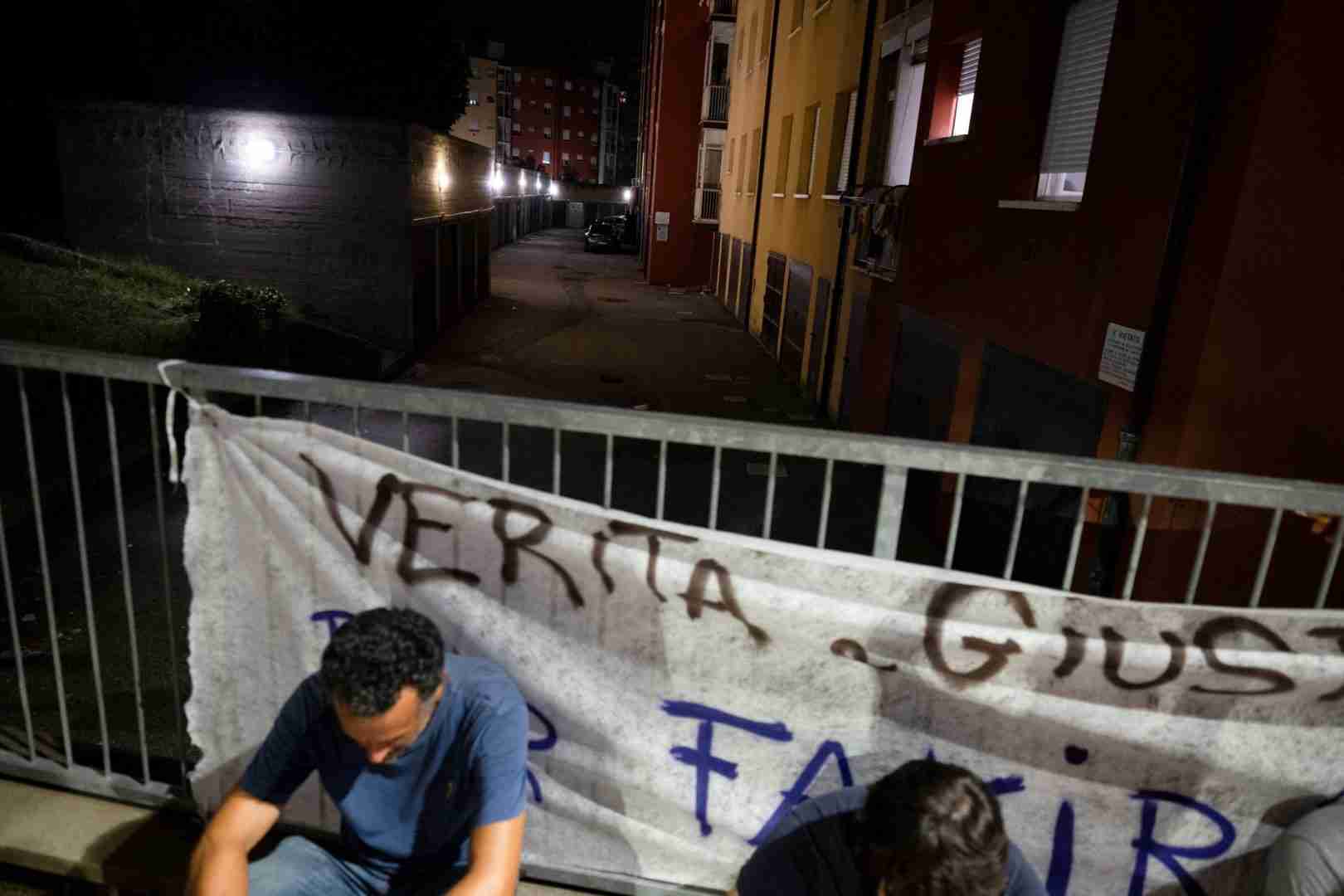
Footage of the incident filmed by a resident and widely shared online prompted hundreds of people to protest and drew responses from across the political spectrum, with opposition politicians demanding accountability and the governing coalition defending the officers involved.

According to the local daily Il Resto del Carlino, demonstrators chanted anti-police slogans and knelt with raised fists, adopting a gesture associated with the Black Lives Matter movement that emerged in the United States following the 2020 death of George Floyd in Minneapolis.

The footage showed Fakir lying face down on the ground while two officers restrain him. He can be heard repeatedly calling for help and struggling for breath before his movements gradually stop.

Bologna prosecutors and Italy’s Interior Ministry did not immediately respond to requests for comment. Bologna police said they would give bodycam footage from the officers who intervened to the investigators.

According to media reports, officers called emergency services after arriving in the northeastern neighbourhood of Pilastro shortly after noon, when temperatures exceeded 35 degrees Celsius (95 degrees Fahrenheit). Police tried to calm Fakir before using pepper spray and holding him down while trying to handcuff him after he reacted aggressively, according to media reports.

“They killed my brother in cold blood, I want justice,” Fakir’s sister Khadija told reporters as hundreds of people in Pilastro took to the streets on Sunday, with some demonstrators chanting slogans against the police.

Another protest was due to take place in central Bologna on Monday, backed by centre-left Mayor Matteo Lepore, the Cgil trade union and other left-leaning organisations.

The right-wing League, part of Prime Minister Giorgia Meloni’s government, called for rigorous investigations but said police officers were “doing their duty” as they intervened “at the request of exasperated citizens”.

Reporting by Giselda Vagnoni; Editing by Alvise Armellini and Hugh Lawson

Portugal’s migrant curbs hit construction firms working to solve housing crisis

Portugal’s hardening immigration stance — part of the government’s attempt to fend off an ascendant far right — is choking the labour supply for construction firms even as they work to alleviate one of Europe’s worst housing crises

International News via Reuters:

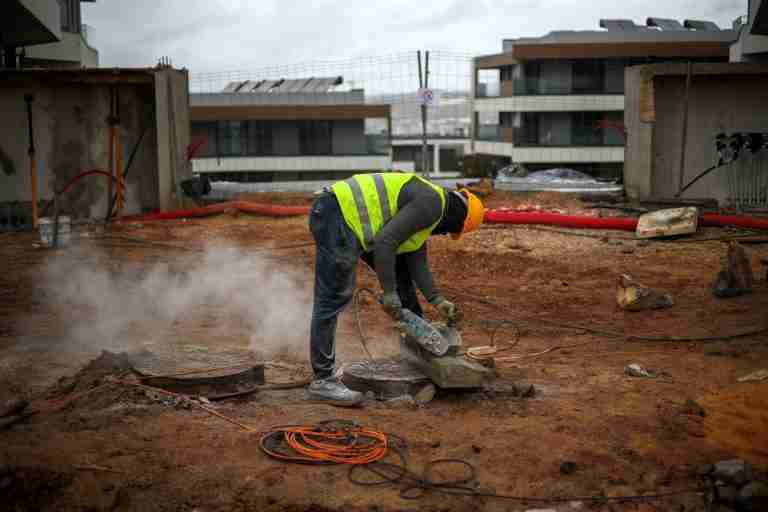
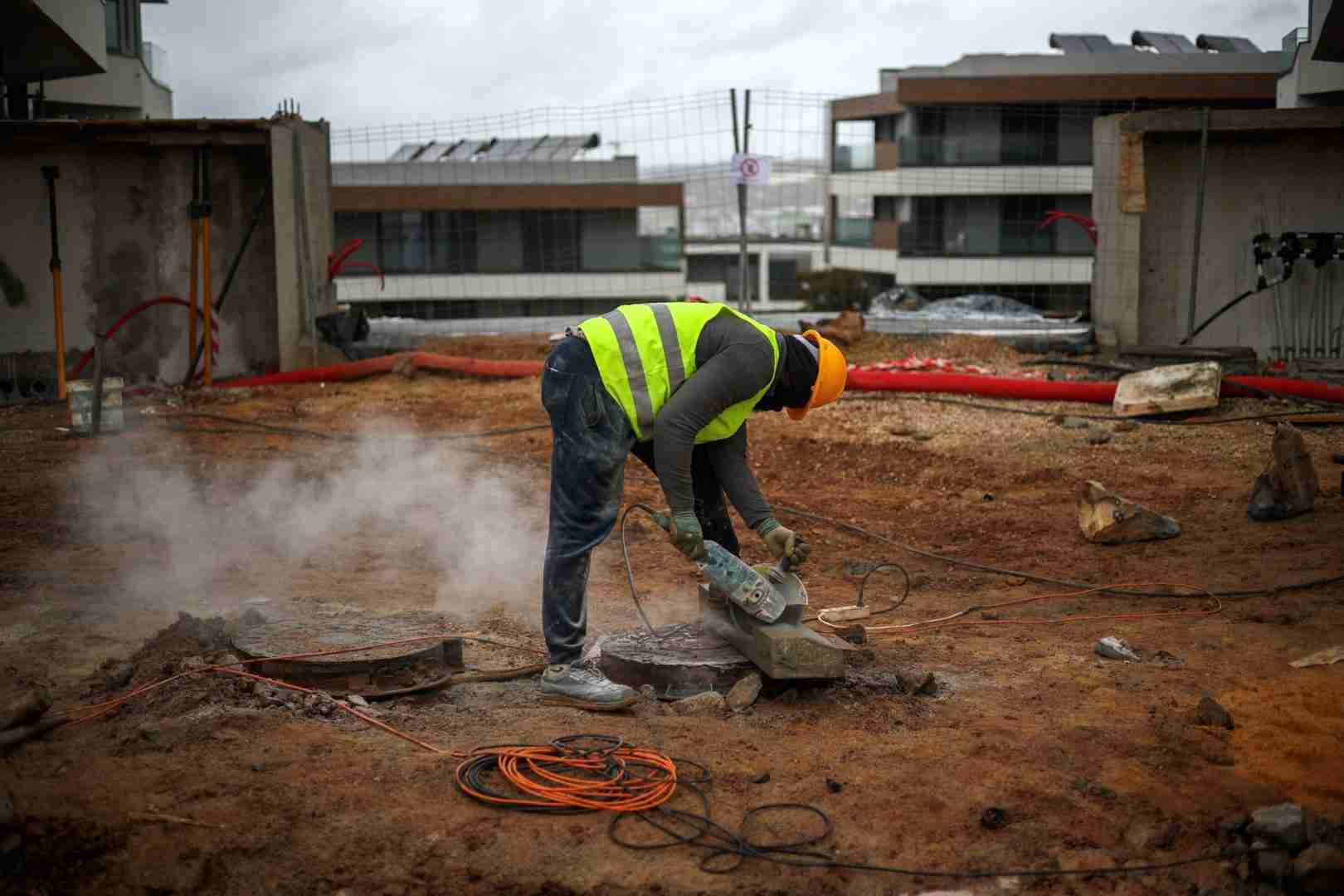
Jose Simao arrived in Portugal from Angola in 2022 to work as a bricklayer, part of a wave of immigration providing a welcome boost to the country’s deeply understaffed construction sector. 

Today, he doesn’t know if he will be allowed to stay.

“I did everything the authorities asked of me, and I’m here legally. But the government changed the rules. I’m afraid they’ll send me back,” he told Reuters. 

Portugal’s hardening immigration stance — part of the government’s attempt to fend off an ascendant far right — is choking the labour supply for construction firms even as they work to alleviate one of Europe’s worst housing crises.

The centre-right coalition government argues it wants to restrict “uncontrolled inflows” of migrants and ensure dignified conditions for those already living in Portugal. 

But construction company executives and industry groups told Reuters the measures have worsened an acute shortage of workers, undermining efforts to meet demand for affordable housing and endangering a sector that makes up nearly 8% of the economy.

“The government has restricted immigration too much and too quickly given the country’s needs,” said Oscar Afonso, an economics professor at the University of Porto. “It was a political choice, but immigrants are essential to the economy.”

SHIFTING TO THE RIGHT, PORTUGAL CURBS IMMIGRATION

Hundreds of thousands of foreign workers came to Portugal after 2017 when the previous centre-left government allowed them to enter without work visas and then apply for residency after a year in a job with proof of social security contributions.

Between 2021 and 2025, the number of foreign residents more than doubled to a record 1.6 million, or 14% of Portugal’s population. 

They provided relief for builders, who have seen many of their Portuguese workers leave to earn more money in wealthier EU countries. Foreigners now account for some 30% of the sector’s workforce.

However, their growing numbers also offered ample campaign fodder for the anti-immigrant Chega party, whose growing popular support traditional Portuguese political forces are struggling to counter.

In 2024, Portugal, like many European nations, tightened its immigration rules following a shift to a centre-right government, with one cabinet minister at the time declaring that “the time for an irresponsible policy is over.”

BUILDERS TACKLING HOUSING SHORTAGE FACE LABOUR CRUNCH

A Bank of Portugal study showed the curbs had already halved net immigration to about 6,200 a month in 2025 from a year earlier. Experts predict further declines.    

For builders, the timing could hardly be worse.

Portugal faces an acute housing shortage, with new-lease rental costs almost doubling since 2017. The central bank estimates a shortfall of 300,000 homes nationwide, equivalent to the capital Lisbon’s entire housing stock.

Portugal plans to build 150,000 affordable homes by 2030 under a €9 billion ($10.3 billion) EU-backed programme. 

Even with a 34% surge in jobs between 2020 and 2025, however, the construction sector is lacking manpower.

Portugal’s largest construction association, AICCOPN, estimates the sector still needs 80,000 additional workers just to keep current projects on track. 

And Albano Ribeiro, head of the Construction Workers’ Union, said the sector risks a 120,000-job shortfall as major projects ramp up, with Lisbon’s new airport alone requiring 10,000 workers.

The government launched a fast-track visa scheme last year to help firms recruit overseas. But it requires them to offer contracts and provide adequate accommodation up front. So far, the government has granted just 5,000 construction visas.

“The sector needs workers to build homes … yet builders must now secure housing for incoming immigrants,” Joao Sousa, chief executive of JPS, one of Portugal’s largest developers, told Reuters.

“If there are no homes for those already here, how can we provide housing for people coming to Portugal?” 

About 90% of JPS’s roughly 700 to 800 workers are foreigners.

Smaller firms have even less capacity to provide dormitory accommodation near often remote construction sites, builders and unions say.

The tightened immigration regulations also risk affecting the status of many, like Simao, already living and working in Portugal. 

While he has an employment contract, Simao’s two-year residence permit expires in August. To renew it under the revised regulations, he must now provide a rental contract.

He rents his room in Lisbon for €380 a month under an informal agreement, however, and his landlady will not provide rental payment receipts.

“I came here to improve my life and hoped to one day bring my mother to Portugal,” Simao said. 

Despite the growing focus on immigration, other European governments facing labour shortages, like Spain and Italy, are now working to regularise undocumented migrants or grant more work visas.

JPS’s Sousa said he wants more training programmes and higher wages to attract more Portuguese workers, but foreign labour is essential.

“Many projects could be delayed or cancelled unless the government adopts exceptional measures, as other countries have, to attract and retain migrants,” he said.

($1 = 0.8773 euros)

Reporting by Sergio Goncalves; Editing by Andrei Khalip and Joe Bavier