Whether against Egypt in the round of 16 or England in the semi-finals, the Argentines had developed a way of finding their way back into a game, usually thanks to late Lionel Messi goals or assists
International News via Reuters:
Argentina staged several dramatic comebacks to reach Sunday’s World Cup final but they were powerless against Spain, who beat them 1-0 after extra time and gave the defending champions no chance of producing another miracle.
Whether against Egypt in the round of 16 or England in the semi-finals, the Argentines had developed a way of finding their way back into a game, usually thanks to late Lionel Messi goals or assists.
But it was not to be on Sunday with Spain having done their homework and keeping the South Americans well away from the danger zone for almost the entire game.
Messi, who had scored eight goals in the tournament and delivered four assists, was very quiet. He had scored or assisted in goals in every knockout match in the last two World Cups.
The result was that Argentina, who became the first team to fail to have a single shot in 90 minutes in a World Cup final, did not have an effort on or off target until the 116th minute.
By then they were 1-0 down and playing with 10 men following the sending-off of midfielder Enzo Fernandez.
It became clear that Argentina had relied too much on 39-year-old Messi to carry them into the showcase match for a second consecutive World Cup, and when he was unable to escape the Spanish shackles on a sunny afternoon at the New York New Jersey stadium, they had no other options.
Spain did have strength on the bench with matchwinner Ferran Torres and fellow substitute Nico Williams injecting speed and attacking impetus to the European champions’ game.
“I think the match should have been decided much earlier. (Argentina keeper Emiliano Martinez) saves prevented us from winning sooner,” Spain coach Luis de la Fuente said.
“But this is a World Cup final and you have to dig deep even against 10 men, and we were prepared for anything.”
Reporting by Karolos Grohmann, editing by Ed Osmond
Burnham has repeatedly said that public ownership is the best solution for Thames Water, which has been fighting for survival for years after successive owners failed to invest adequately in its ageing infrastructure
International News via Reuters:
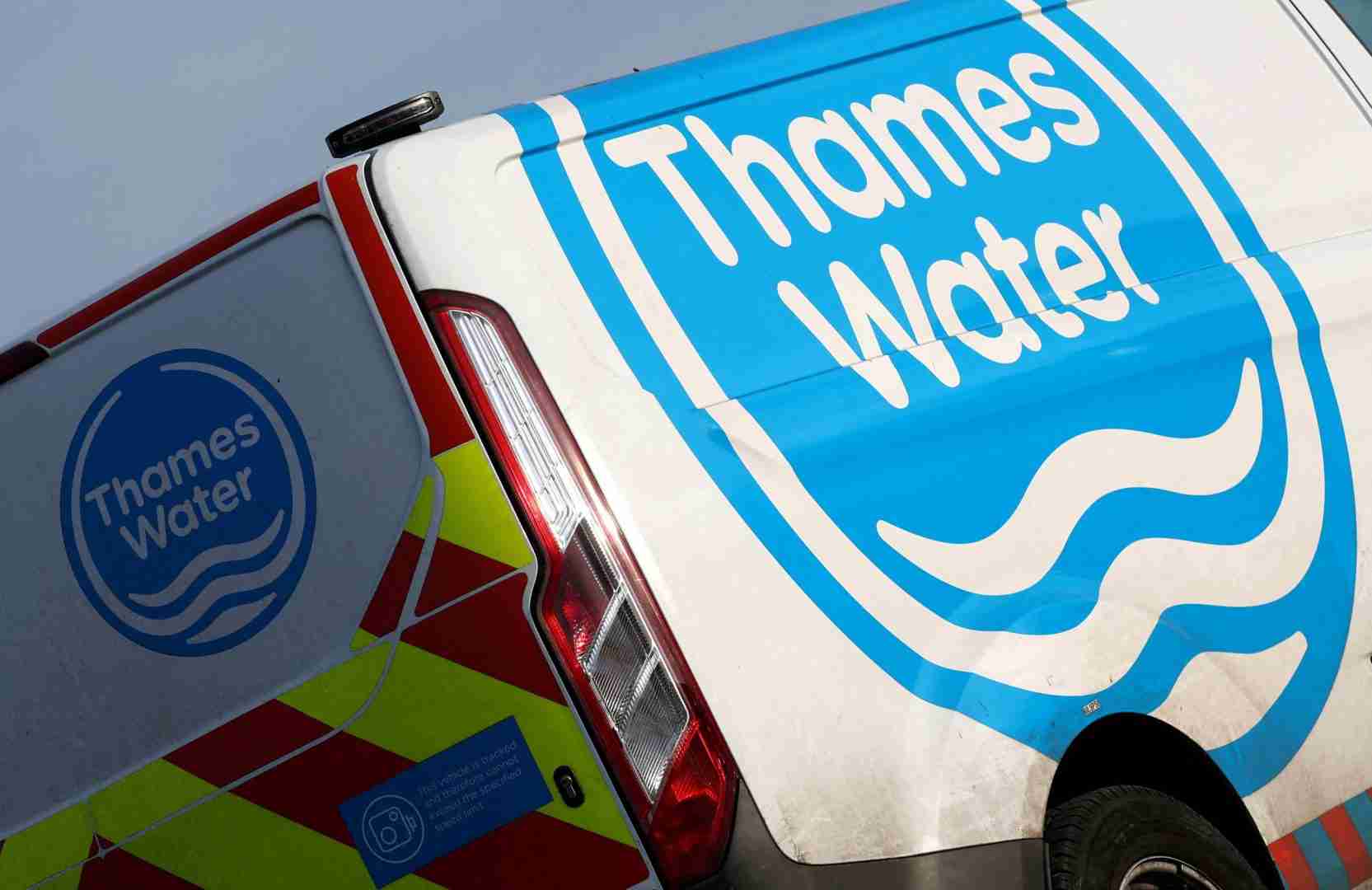
A group of Thames Water creditors is prepared to threaten legal action if Britain’s new prime minister, Andy Burnham, moves to nationalise the debt-laden utility, a source said on Monday.
Burnham has repeatedly said that public ownership is the best solution for Thames Water, which has been fighting for survival for years after successive owners failed to invest adequately in its ageing infrastructure.
The neglect has left the company at the centre of public anger over sewage discharges into rivers and seas.
The utility’s future is also being closely watched by international investors as an early indication of how the new government, due to take office on Monday, will approach financially distressed infrastructure assets.
Thames Water, which has about £20 billion ($27 billion) of debt, has said it will run out of money by November, making it one of Burnham’s first major challenges in office.
In a warning against nationalisation, the source close to the creditor group, which is called London & Valley Water, said it would seek to recover the company’s debt through the courts if the government takes control, potentially leaving Burnham’s administration facing a multibillion-pound bill.
Mike McTighe, who is working with the creditor group to build a new board for Thames Water, said that the group’s preference was to work with Burnham to find a solution, and this could include expanding public oversight of the company.
“We are keen to meet new ministers as soon as possible to discuss how we can work together in the best interests of customers, including by enhancing public control of the company’s operations,” he said in a statement.
Thames Water, Britain’s largest water company with 16 million customers across London and southern England, has for years been held up as the clearest symbol of the failure of Britain’s privatised water industry.
The creditor group, which includes Invesco, Elliott Management and Silver Point Capital, have spent months trying to convince the government to back its rescue deal, which involves writing off about half of Thames Water’s debt and investing £3.35 billion of new equity.
In return the creditors want to be given leniency over any environmental fines – a politically difficult concession for any government to make.
The government has so far rejected that deal and the creditor group has been working on improving its offer in recent weeks.
The Department for Environment, Food & Rural Affairs was “prepared for any eventuality”, a spokesperson said on Monday.
“Thames Water customers have been let down for far too long, with 15 years of underperformance, increasing serious pollution, and customers left to pick up the bill,” the spokesperson said.
“The Secretary of State has written to (the regulator) Ofwat to outline her early views that she is not convinced London & Valley Water’s proposal is good enough for consumers or the environment.
Should the government take Thames Water into its Special Administration Regime, a form of temporary public ownership, taxpayers would need to pump in about £2 billion to keep the utility going for the next 18 months, Thames Water’s management has said.
($1 = 0.7421 pounds)
Reporting by Sarah Young and Paul SandleEditing by Ros Russell
Brent crude climbed above $90 a barrel for the first time in more than a month as the U.S. military started a ninth straight day of attacks against Iran, which in turn struck targets across the region
International News via Reuters:
The escalating conflict in the Gulf lifted oil and gas prices on Monday, fanning fears of inflation, sending bonds lower and leaving stocks on edge as a packed week of major tech earnings is set to further test the artificial intelligence trade.
Brent crude climbed above $90 a barrel for the first time in more than a month as the U.S. military started a ninth straight day of attacks against Iran, which in turn struck targets across the region. Just a handful of ships transited the Strait of Hormuz on Sunday and Tehran claimed to have hit two. [O/R]
In Europe, the focus was also on gas prices, where the benchmark hit €60.00 ($68.63) per megawatt hour for the first time since mid-March. [EU/NG]
“The longer the strait remains closed and the war escalates, the greater the risk that oil prices will have to rise to around $150/barrel to bring demand down to match the hit to supply,” said Shane Oliver, head of investment strategy at fund manager AMP. “This is not our base case but it’s a high risk again.”
The jump in fuel costs has revived worries about inflation even after U.S. consumer price data surprised on the downside last week, leading futures markets to price in at least one Federal Reserve rate hike by year-end.
That sent U.S. yields higher, with the benchmark 10-year Treasury yield at 4.55%, while yields on 30-year Treasuries are back above the psychological 5.0% barrier.
This is a level that tends to attract funds away from equities and toward fixed income, while lifting the valuation bar for future corporate earnings.
The shift has come just as investors question sky-high valuations for chip and AI stocks, which saw the Philadelphia Semiconductor Index shed 10% last week to leave it 20% down from June’s record high.
Money markets see more tightening from the European Central Bank, which they see as likely to raise rates again in September and are pricing an 80% chance of a further move by year-end.
That sent the policy-sensitive German 2-year yield as high as 2.817% on Monday, its highest in two years. [GVD/EUR]
SKY HIGH EARNINGS EXPECTATIONS
Those higher energy prices and yields kept equity markets in check on Monday, with Europe’s broad index flat, as a 1% gain in energy stocks balanced losses elsewhere.
U.S. futures were a whisker higher though MSCI’s broadest index of Asia-Pacific shares outside Japan dipped 0.3%, as South Korea’s chip-heavy market lost a further 4.1%.
It dived almost 9% last week in wild trade as retail investors were squeezed out of leveraged positions.
Chip investors are also still digesting Friday’s news from Chinese AI firm Moonshot, which said it had a new open-weight model, Kimi K3, that delivers performance approaching U.S. giant Anthropic’s frontier Fable model.
All of which raises the stakes for this week’s rush of quarterly results, which include Alphabet, Intel and Tesla.
BofA analyst Savita Subramanian remains upbeat on the earnings outlook, tipping a 5% beat versus consensus, or 28% growth. Tech is expected to drive over half of growth, with semiconductors expected to rise around 130% year-on-year.
The excitement in currency markets was with sterling, as Andy Burnham is set to become Britain’s seventh prime minister in a decade.
The pound rose 0.17% on the dollar to $1.3475 and was also firmer on the euro at 84.91 pence to the common currency, continuing its recent gains, as the swift and relatively drama-free leadership transition causes traders to unwind some short positions.
British gilts were slightly underperforming European peers.
Other currencies were muted with the euro steady at $1.1442 and the Japanese yen also flat at 162.36 per dollar. <FRX/]
Precious metal markets were also muted, with spot gold flat at $4,019 an ounce. [GOL/]
($1 = 0.8743 euros)
Reporting by Wayne Cole in Sydney and Alun John in London; Editing by Jacqueline Wong, Thomas Derpinghaus and Sharon Singleton
Burnham, who will be Britain’s seventh prime minister in a decade, will face an array of challenges in his new role — from a sluggish economy to worries about fiscal discipline and the fallout from the war in the Middle East
International News via Reuters:
Benchmark British borrowing costs edged higher on Monday, though sterling gained slightly, as investors awaited Andy Burnham’s first decisions as prime minister including who he will choose as his finance minister.
Burnham, who will be Britain’s seventh prime minister in a decade, will face an array of challenges in his new role — from a sluggish economy to worries about fiscal discipline and the fallout from the war in the Middle East.
Yields on British government bonds, or gilts, are the highest in the G7 group of advanced economies, and British 10-year borrowing costs hit an 18-year high in May as the Iran war drove up energy costs.
That underscored fears about inflation around the world, and particularly in Britain where it has long been above target.
High public debt, and the scars of the Liz Truss mini-budget crisis in 2022, have also been weighing on bond prices and keeping yields elevated.
The 10-year yield was last at 4.98%, below its May highs, but up nearly 3 basis points on the day.
And investors remain nervous.
“I can’t believe we’ve gone from this relatively long period of stable leadership to this rapid change of prime minister that gives no one that certainty for the longer term,” said Oliver Blackbourn, multi-asset manager at Janus Henderson.
Blackbourn said he had favoured gilts before Burnham won a seat in parliament last month, propelling the then Greater Manchester mayor towards becoming prime minister, but he had cut his position since in case the new top team’s policies increased government borrowing.
FINANCE MINISTER CHOICE IN FOCUS
Investors could get some clues about Burnham’s policy platform on Monday from his choice of finance minister, known in Britain as the chancellor.
British assets were supported last week by reports that he would likely pick Shabana Mahmood, regarded as a centrist, as his finance minister rather than a more left-leaning candidate, as markets took this as a signal that Burnham does not plan to ramp up spending as some investors had feared.
Though for some investors the choice is somewhat symbolic as Burnham has already said he will stick to his predecessor, Keir Starmer’s commitments on taxation and public spending.
“A lot is made about the candidates for chancellorship, but the fundamental point is the government’s going to still have to have some commitment to the underlying fiscal rules,” said Ranjiv Mann, lead portfolio manager at Allianz Global Investors.
“There (are) certain policy options the government may go for from different candidates, maybe pushing the fiscal rules towards more borrowing to invest on some of these big infrastructure projects.”
However, he added, “It’s going to be very difficult for (Burnham) to move from that straitjacket because, as we’ve seen multiple times now over the last few years, bond investors in the UK will certainly punish the UK government if they don’t stick to those rules.”
THE POUND HAS BEEN STRENGTHENING
Unlike gilts, Britain’s pound has been performing strongly in recent weeks. It has strengthened on the euro for the past four weeks, and on the dollar for the past three, partly helped by the higher yields, and also as the relatively painless political transition caused traders to remove some bets on pound weakness.
It continued to edge firmer on Monday. It was last up 0.13% on the dollar at $1.3469 and, was also stronger on the euro which dropped 0.16% to 84.88 pence.
“I think there’s actually quite a lot of good news priced into UK asset prices at the moment,” said Andrew Wishart, senior UK economist at Berenberg.
“It’s all suggesting that there’s belief among investors that the Bank of England is going to hit its inflation target and the government is going to make the public finances sustainable. The big question we’ve got now with Andy Burnham coming in is are these things going to remain true,” he said.
Reporting by Sophie Kiderlin, Yoruk Bahceli and Naomi Rovnick; Editing by Alun John and Susan Fenton
The blue-chip FTSE 100 index fell 0.5% to 10,543.91 points by 1052 GMT, while the midcap FTSE 250 slipped 0.1%
International News via Reuters:
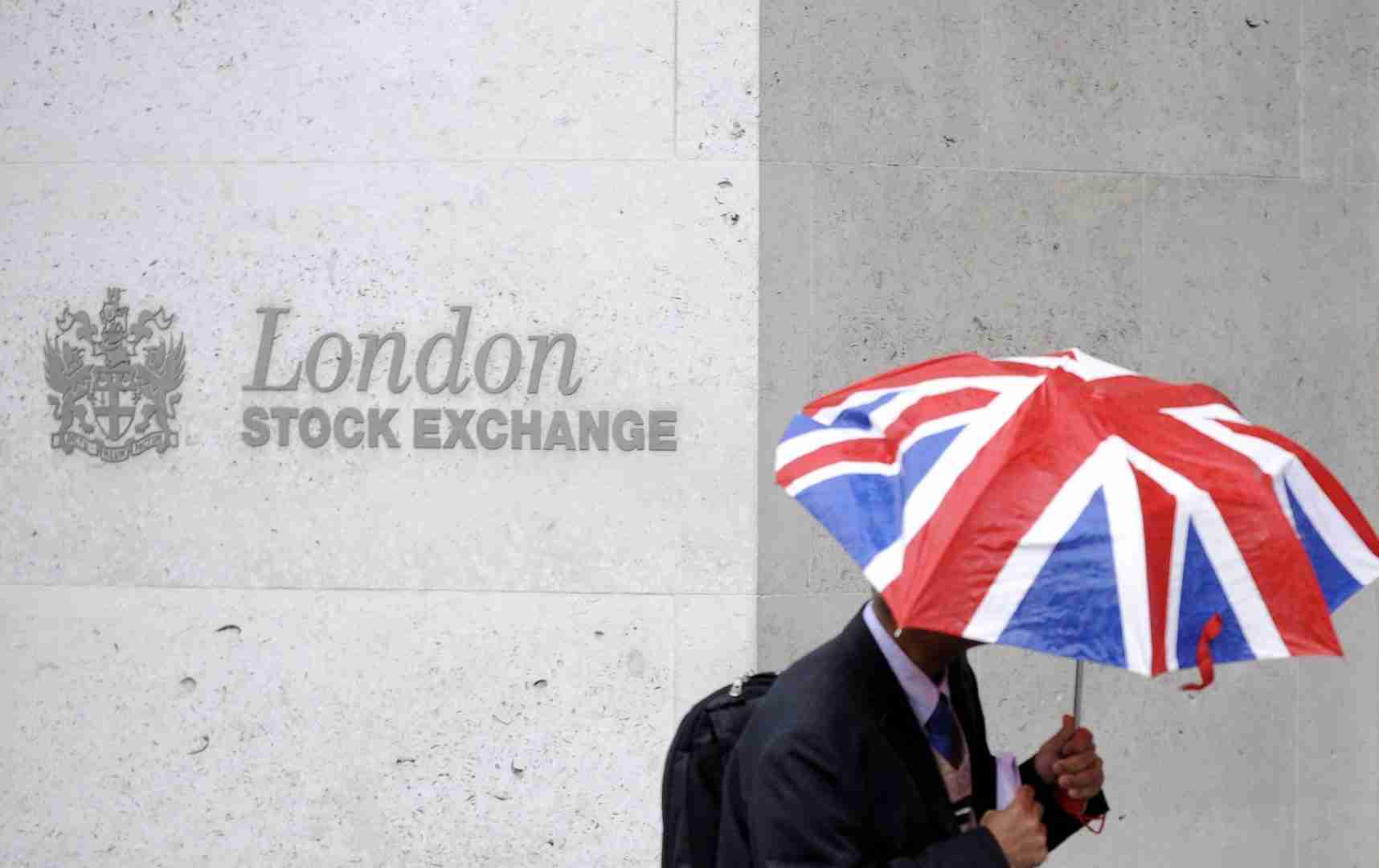
London’s FTSE 100 edged lower on Monday as U.S.-Iran tensions fuelled concerns over shipping through the Strait of Hormuz, while investors looked ahead to policy signals from new British Prime Minister Andy Burnham.
The blue-chip FTSE 100 index fell 0.5% to 10,543.91 points by 1052 GMT, while the midcap FTSE 250 slipped 0.1%.
• U.S. strikes on Iran entered a ninth straight day, and risks to shipping through the Strait of Hormuz mounted after reports of tankers being immobilised. Brent crude prices climbed above $90 a barrel for the first time in a month. [O/R]
• Energy-price-sensitive sectors such as automobiles and travel and leisure fell 1% and 0.7%, respectively, as rising oil prices heightened concerns over costs and consumer demand.
• Investors also monitored the political transition in Britain, where Andy Burnham was set to become the country’s seventh prime minister in a decade, succeeding Keir Starmer with promises to tackle living costs and struggling public services.
• “Political change is a lot for investors to digest, but they’ve got more on their plate. The Iran war has escalated and driven oil prices back above $90 a barrel. That means inflation fears are back on the table, which has major implications for interest-rate expectations,” said Russ Mould, investment director at AJ Bell.
• British government bond yields edged higher, as investors assessed the implications of a new Labour government for fiscal policy and public spending priorities.
• Meanwhile, technology stocks rose 0.5% to lead sectoral gains ahead of earnings from U.S. Big Tech companies, which could provide a fresh test of the AI-driven rally.
• Ryanair tumbled 7.2% after the budget airline reported a one-third drop in first-quarter profit and warned summer ticket prices could come under pressure amid uncertainty over the Iran conflict and the broader economy.
• Shares of Big Yellow dropped 2% after the self-storage firm reported a decline in first-quarter occupancy rates.
Reporting by Tharuniyaa Lakshmi in Bengaluru; Editing by Maju Samuel
Starmer, who was ousted by his Labour lawmakers about a month ago, said his work as prime minister was “the privilege of my life” and that, as he passed the baton to Burnham, “I wish him every success”
International News via Reuters:
Andy Burnham becomes Britain’s seventh prime minister in a decade on Monday, promising to “rewire” the nation to focus more clearly on issues people care about, such as a cost-of-living crisis and poorly performing services.
His Labour Party colleague, outgoing premier Keir Starmer, made his farewell speech outside 10 Downing Street, telling supporters that “my work is done” and that he was leaving with “good grace” and a “smile”.
After he formally tenders his resignation to King Charles, the monarch will receive Burnham to ask him to be prime minister.
Then the hard work begins for the 56-year-old who, as mayor of Greater Manchester, earned the nickname ‘King of the North’.
Once he has unveiled his cabinet — already the subject of much debate in the governing Labour Party — he will have to tackle a long list of problems ranging from anaemic economic growth to a cost-of-living crisis and underperforming utility firms.
BURNHAM TO LAY OUT NEW GOVERNMENT PATH
Starmer, who was ousted by his Labour lawmakers about a month ago, said his work as prime minister was “the privilege of my life” and that, as he passed the baton to Burnham, “I wish him every success”.
“He has my full support,” Starmer said.
Within an hour or so, Burnham was set to take his place in front of Number 10 with a speech setting out a path for “a more stable and responsible politics”, his office said in a statement.
Presenting his appointment as a moment of “reflection”, he planned to say it was time to be honest about Britain’s challenges, and that only political stability could deliver improvements.
On Friday, Burnham described his election to become Labour leader as “the most significant change moment in our politics for 40 years”.
He promised to radically change the political system to quickly raise living standards and help a country hungry for change become one where “life is more affordable and all people and places are lifted from where they are now”.
He directed that message at Labour lawmakers, who see him as one of the few politicians capable of tackling the threat from veteran Brexit campaigner Nigel Farage’s populist Reform UK – something they doubted the unpopular Starmer could do.
Burnham’s first challenge will be the appointment of his cabinet team and especially his finance minister. Friction in this crucial partnership at the heart of government has led to the downfall of previous administrations.
An early frontrunner for the position, energy security and net zero minister Ed Miliband, has been the object of some hostile briefing and interior minister Shabana Mahmood now appears to be favourite for the job.
Burnham urged his party on Friday to ignore “speculation” and said he had not yet decided on his team.
His early policy decisions will also face scrutiny.
On Sunday, plans were scrapped for all employees to be required to hold a digital identity document, a scheme designed to tackle illegal migration but deemed a “fiasco” by a cross-party committee of lawmakers.
More attention will be paid to decisions on taxation and spending, oil and gas, and underperforming utility companies, for which Burnham wants stronger public control.
Thames Water, Britain’s largest water company, is weighed down by debt and under fire for frequent sewage leaks.
On Sunday, Deputy Labour Leader Lucy Powell, Burnham’s ally, suggested Thames Water could be brought under “special measures”, meaning it would operate under government control.
“He wants to refocus and reprioritise the government’s resources, the government’s attention onto his priorities of tackling the cost of living, really rewiring the way the country, the economy works,” she told Sky News.
Reporting by Elizabeth Piper, Alistair Smout and Andrew MacAskill; Editing by Kevin Liffey
Jahcari Francis was killed in the Upland Street, Devonshire area nine years ago
Full media release from the Bermuda Police Service:
Today marks the 9th year anniversary of the murder of Jahcari Francis.
Mr. Francis was fatally shot whilst inside a residence on Upland Street, Devonshire, shortly after 11pm on Wednesday, July 19th, 2017.
Detectives investigating the murder of Mr. Francis, are renewing their appeal for relevant information in relation to this matter.
We are particularly keen to hear from residents who may have seen any suspicious individuals, or vehicles in the area of Upland Street, Devonshire, prior to, or after this crime was committed.
Community involvement is crucial to bringing the perpetrators of this crime to justice. All information received will be treated in the strictest confidence.
Anyone who can assist, is encouraged to contact the Serious Crime Unit on 247-1739.
Alternatively, anonymous tips can be provided through the independent and confidential Crime Stoppers Bermuda hotline 800-8477, as well as their website, crimestoppers.bm.
You may also use the BPS reporting portal at portal.bps.bm. or share the information with a police officer you know.
Minister Hayward Engages Entrepreneurs on National Entrepreneurship Blueprint
The Minister of Economy and Labour, the Hon. Jason Hayward, JP, MP, continued the Government’s engagement with Bermuda’s entrepreneurial community by participating in the Bermuda Economic Development Corporation’s latest Chat and Chew last week.
The session focused on the National Entrepreneurship Blueprint and formed part of an ongoing series of discussions following its release. It provided entrepreneurs, small business owners, and aspiring business leaders with an opportunity to share their experiences, identify barriers to growth, and help shape the Blueprint’s implementation.
Participants shared constructive feedback on a range of topics, including access to financing, mentorship, business support services, workforce development, market access, and reducing barriers to starting and growing a business in Bermuda.
Minister Hayward, reaffirming the importance of meaningful engagement with Bermuda’s business community being vital to successfully implementing the Blueprint, stated, “The National Entrepreneurship Blueprint is not intended to be a static document. It is a living strategy that will continue to evolve through collaboration with Bermuda’s entrepreneurs,”
“Each Chat and Chew session provides valuable insight into the realities of starting and growing a business in Bermuda. These conversations allow us to better understand where additional support is needed and ensure that our policies and programmes respond to the needs of our entrepreneurial community.”
The feedback gathered through the Chat and Chew series continues to inform implementation of the Blueprint. Since its release, the Ministry has worked alongside BEDC and other key stakeholders to build an entrepreneurial ecosystem that supports innovation, encourages business creation, and helps local enterprises scale and succeed.
Minister Hayward thanked BEDC for its continued partnership in creating spaces for open dialogue and encouraged entrepreneurs to remain actively engaged as the Blueprint moves from strategy to implementation.
“Strong economies are built by people who are willing to innovate, invest, and create opportunities for others. Our role as Government is to create an environment where entrepreneurs can thrive. By continuing these conversations, we are ensuring that the future of entrepreneurship in Bermuda is shaped by those who know it best.”
The Ministry of Economy and Labour remains committed to implementing the National Entrepreneurship Blueprint in partnership with Bermuda’s entrepreneurial community to foster innovation, support business growth, and expand economic opportunities for Bermudians.
Public invited to OBA Town Hall to discuss CARICOM
The One Bermuda Alliance is inviting members of the public to a town hall meeting to discuss CARICOM on Monday 20 July at Vasco Da Gama Club.
The town hall begins at 6pm.
Led by MP Dwayne Robinson, the town hall will give Bermudians an opportunity to express their thoughts on Bermuda attaining full CARICOM membership.
“Recently, there has been a lot of discussion from the Government as to why Bermuda should obtain full membership, but little opportunity for Bermudians to express how they really feel, negatively or positively. The town hall will give every attendee the opportunity for their voice to be heard. We welcome members of the public and look forward to your presence,” says Mr Robinson.
‘Mereo’s arrival reflects the continued confidence that global investors and industry leaders have in Bermuda as the premier jurisdiction for insurance and reinsurance innovation’
John Huff & Mark Cloutier – 6
David Croom Johnson
Mark Cloutier
John Huff & Mark Cloutier – 7
Brian Duperreault
Mereo Insurance Limited joins ABIR as Newest Member
Hamilton, Bermuda (July 15, 2026) — The Association of Bermuda Insurers and Reinsurers (ABIR) is pleased to welcome Mereo Insurance Limited as its newest full member, further strengthening Bermuda’s position as the world’s leading risk transfer and reinsurance marketplace.
Launched in February 2025, Mereo is a Bermuda-based reinsurance platform led by industry veterans Brian Duperreault, Executive Chairman, and David Croom-Johnson, Chief Executive Officer. The company entered the market with more than $500 million in initial capital, full approval from the Bermuda Monetary Authority, and an A- (Excellent) financial strength rating from AM Best. It is now authorized to write both direct and reinsurance business in Bermuda. Mereo combines traditional reinsurance underwriting with capital markets solutions and was established to address growing global demand for property, casualty, specialty, and alternative risk transfer capacity. The company has outlined ambitious plans for growth across global reinsurance markets while leveraging Bermuda’s deep talent pool, regulatory framework, and capital ecosystem.
Mark Cloutier, Chair of ABIR, said: “Mereo’s arrival reflects the continued confidence that global investors and industry leaders have in Bermuda as the premier jurisdiction for insurance and reinsurance innovation. Under the leadership of Brian Duperreault, David Croom-Johnson, and their experienced team, Mereo has quickly established itself as an important new participant in the global risk transfer marketplace. We are delighted to welcome Mereo to ABIR membership and look forward to working together to advance Bermuda’s leadership position.”
David Croom-Johnson, Chief Executive Officer of Mereo Insurance Limited, said: “We are pleased to join ABIR and become part of Bermuda’s leading insurance and reinsurance industry association. Bermuda offers a unique combination of talent, regulatory excellence, and access to global capital, which aligns perfectly with Mereo’s long-term vision. We look forward to working alongside fellow ABIR members to support the continued growth and success of Bermuda’s risk transfer market while delivering innovative solutions to our clients around the world.”
John Huff, CEO of ABIR, said: “ABIR welcomes Mereo as an innovative new entrant to Bermuda’s insurance and reinsurance market. ABIR’s primary mission is advocacy, and we are proud to represent the public policy interests of Bermuda’s leading international insurers and reinsurers both locally and globally. We look forward to working closely with David, Brian, and the entire Mereo team as they build their business and contribute to Bermuda’s continued success as the world’s leading risk transfer marketplace.”
ABIR member companies continue to demonstrate the strength and importance of Bermuda’s insurance and reinsurance market. According to ABIR’s latest Global Underwriting Report, member companies recorded a 10% year-over-year increase in gross written premium in 2024, reaching more than $188 billion, while total equity increased by 8.5% to $178 billion. These results reflect the financial strength and resilience of Bermuda’s leading insurers and reinsurers, which provide critical risk transfer solutions to businesses, governments, and communities in more than 150 countries worldwide.
ABIR members are also among Bermuda’s most significant economic contributors, supporting thousands of jobs, investing in local talent development, engaging extensively with Bermuda charities and community organizations, and represent many of the island’s largest contributors under Bermuda’s Corporate Income Tax regime.
Founded in 1993, ABIR represents Bermuda’s leading commercial insurers and reinsurers. For more than three decades, Bermuda’s risk-bearing capacity has helped make insurance more accessible and affordable around the world while providing protection against catastrophe, climate, cyber, casualty, mortgage, and specialty risks.
Additional information about ABIR and its members can be found at: http://www.abir.bm.
Why Do So Many Qualified Bermudians Hit a Ceiling in Government?
A government that believes in Bermudians must do more than employ them, it must prepare them to lead.
As I continue to engage with Bermudians throughout our community, one concern continues to surface in conversations.
It is a concern that deserves attention, It is not about salaries, benefits, or job security. It is about opportunity.
Many Bermudians working within the civil service expressed frustration that, despite their qualifications, experience, commitment, and willingness to take on greater responsibility, they do not always see a clear pathway for advancement.
These are not individuals asking for promotions simply because they have spent years in Government. They are people who have invested in themselves, gained qualifications, developed expertise, and dedicated their careers to serving Bermuda.
They are asking a reasonable question:
Does the civil service provide a genuine pathway for qualified Bermudians to advance and become future leaders?
The concern is whether the systems, policies, and culture within the civil service are truly designed to identify, develop, and advance Bermudian talent.
A Government that believes in Bermudians should not simply employ Bermudians.
It should deliberately prepare Bermudians to lead.
The Career Ceiling
Many employees describe reaching a point in their careers where progression appears to slow or stop. They continue to gain experience, pursue education, and demonstrate their ability, yet opportunities to move into more senior roles often seem limited.
No one is suggesting that promotions should be automatic. Advancement must always be based on merit, capability, and readiness.
However, merit requires opportunity.
Employees cannot gain leadership experience if they are never given the opportunity to lead. They cannot develop the skills required for senior positions if they are not provided with exposure, mentorship, training, and responsibility.
A person cannot be expected to climb a ladder that they are never allowed to reach.
This raises important questions.
Are qualified Bermudians being given the tools and opportunities necessary to prepare for advancement?
Are we developing future leaders, or are we simply filling positions?
The Importance of Mentorship and Knowledge Transfer
One of the most concerning themes emerging from conversations with employees is the importance of mentorship.
Strong organisations understand that knowledge must be shared. Employees must be coached, challenged, and given opportunities to grow.
Government should consider whether leaders are being encouraged and expected to develop the next generation of Bermudian professionals.
Are managers evaluated only on the performance of their departments, or also on their ability to develop people?
Are there structured mentoring programmes, work-shadowing opportunities, secondments, and leadership development plans?
If these systems exist, are employees aware of them and able to access them fairly?
If they do not exist, why not?
Recruitment and the Development of Bermudian Talent
Another important question concerns recruitment.
When senior or specialized positions become available within Government, Bermudians want confidence that qualified internal candidates are genuinely considered.
There may be times when international recruitment is necessary. Bermuda benefits from expertise and experience from around the world, and there are circumstances where specialized skills may not be available locally.
However, international recruitment should complement the development of Bermudian talent, not replace it.
The question is not whether the Government should ever recruit internationally.
The question is whether the Government has first done everything possible to identify, support, and prepare qualified Bermudians.
A transparent process would demonstrate that internal candidates are considered, local talent is developed, and overseas recruitment occurs only when necessary.
Planning for the Future
The increase in retirement age also requires serious workforce planning.
If experienced employees remain in senior positions longer, what is the strategy for those who are waiting for opportunities to advance?
Has the Government developed clear succession plans for critical positions?
How is institutional knowledge being documented and transferred?
How are emerging leaders being prepared?
No organization should depend on one person holding specialized knowledge indefinitely. A strong institution prepares for continuity and develops the people who will carry it forward.
A Conversation Bermuda Needs to Have
The issue is not whether Bermudians are capable.
Bermudians have proven themselves in every field, locally and internationally.
The question is whether our systems are designed to recognize, develop, and advance that capability within the Government.
Many Bermudians are not asking for special treatment. They are asking for fairness, transparency, and the opportunity to compete.
They want to know that their qualifications matter. They want to know that their dedication is valued. They want to know that there is a future for them within the very institution that serves their country.
If the Government truly believes in Bermudians, then the public should be able to see the strategy. Show us the career pathways. Show us the succession plans. Show us how Bermudian talent is being developed. Because the future leadership of the Government should not be left to chance. It should be intentionally built.
To provide the best experiences, we use technologies like cookies to store and/or access device information. Consenting to these technologies will allow us to process data such as browsing behavior or unique IDs on this site. Not consenting or withdrawing consent, may adversely affect certain features and functions.
Functional
Always active
The technical storage or access is strictly necessary for the legitimate purpose of enabling the use of a specific service explicitly requested by the subscriber or user, or for the sole purpose of carrying out the transmission of a communication over an electronic communications network.
Preferences
The technical storage or access is necessary for the legitimate purpose of storing preferences that are not requested by the subscriber or user.
Statistics
The technical storage or access that is used exclusively for statistical purposes.The technical storage or access that is used exclusively for anonymous statistical purposes. Without a subpoena, voluntary compliance on the part of your Internet Service Provider, or additional records from a third party, information stored or retrieved for this purpose alone cannot usually be used to identify you.
Marketing
The technical storage or access is required to create user profiles to send advertising, or to track the user on a website or across several websites for similar marketing purposes.