Tuesday, October 20, 2026
Home Blog Page 14

Inside the deadlock at the world’s top climate science body

On Monday, representatives from the IPCC’s 195 member states will convene in Addis Ababa, Ethiopia’s capital, for a plenary meeting many see as the last chance to agree publication dates falling before UN climate talks in November 2028
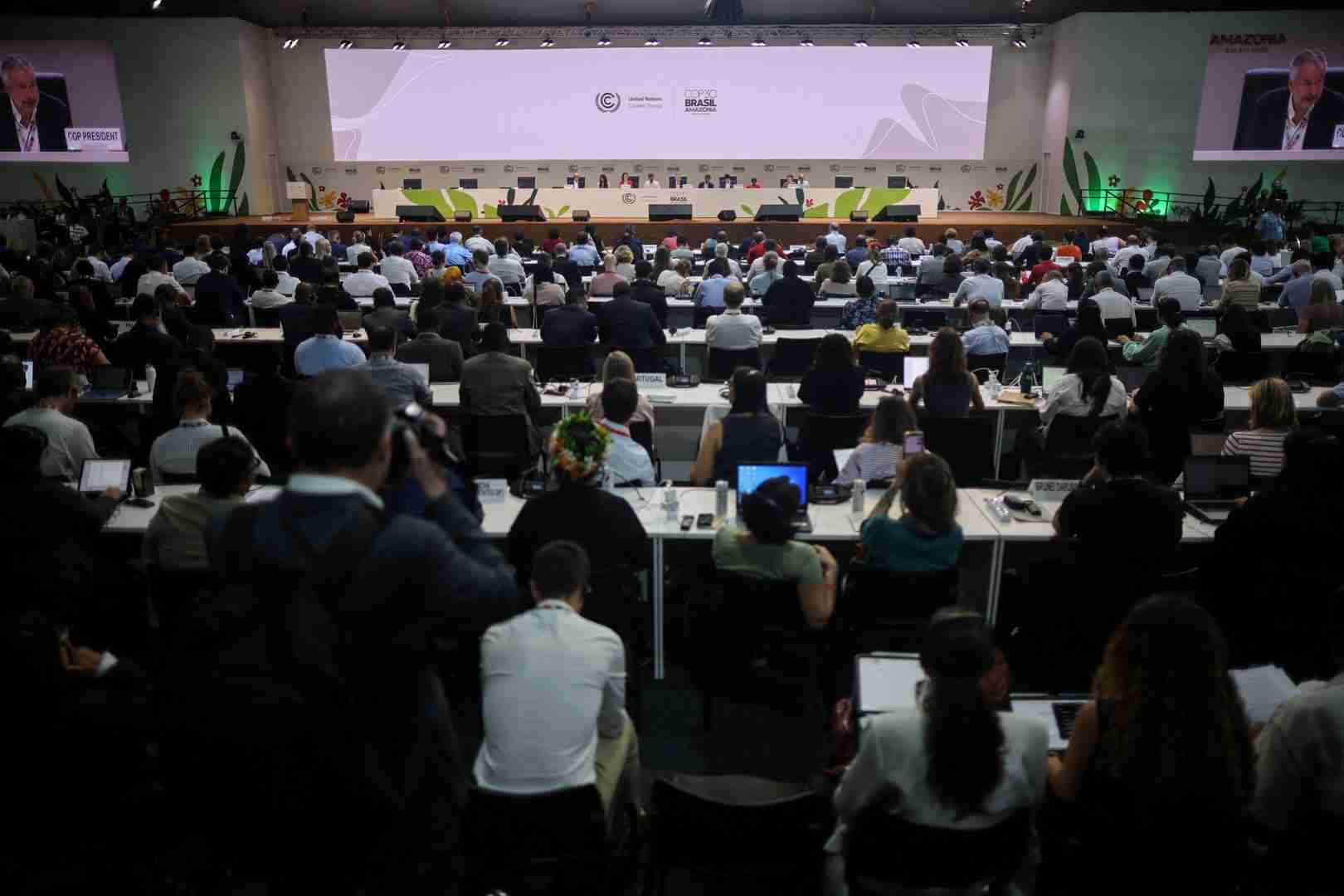
Negotiators attend a plenary session during the UN Climate Change Conference (COP30), in Belem, Brazil, November 21, 2025. REUTERS/Adriano Machado

International News via Reuters:

The decision was expected to take minutes. But after nearly three years of debate, members of the world’s leading authority on climate change still can’t agree on a timeline to publish its next review of the latest science on the warming planet.

Such assessments from the Intergovernmental Panel on Climate Change (IPCC) have informed every major United Nations climate agreement for three decades. But the impasse over publication dates could leave countries to decide the next phase of action without consensus on critical issues – including the extent to which some global warming might be reversible – according to interviews with more than a dozen current and former IPCC scientists, government negotiators and meeting observers.

The dispute reflects deep rifts between wealthy industrialized nations, major emerging economies and poorer nations over how to respond to rapidly warming temperatures and how much of that burden should be shouldered by different countries. 

On Monday, representatives from the IPCC’s 195 member states will convene in Addis Ababa, Ethiopia’s capital, for a plenary meeting many see as the last chance to agree publication dates falling before UN climate talks in November 2028. That’s when governments are due to assess progress toward goals set out in the landmark agreement reached in Paris in 2015.  

The UN Environment Programme has said repeatedly that global efforts to limit warming are falling short and that faster emissions cuts are needed to avoid more extreme weather and climate-related disasters. Scientists have said climate change fueled wildfires that surged across Europe this summer and likely played a role in landslides and flash floods that killed hundreds in Nepal ​and China’s Tibet.

The possibility the IPCC’s reports might not be ready in time for the 2028 climate talks has alarmed a coalition of countries pushing for more robust action. Those discussions are intended to guide decisions on climate financing and national targets to bring down greenhouse gas emissions.

“Access to the latest and best available science … enables a just, equitable, evidence-based approach to addressing the greatest challenge of our time, rather than one driven by those whose entrenched interests are at odds with reducing greenhouse gases,” the High Ambition Coalition said in a statement due to be published on Friday. 

The statement, seen by Reuters, is signed by more than 30 countries, including European, Latin American and small-island states. 

The IPCC does not conduct original research. But its reviews of the world’s existing knowledge on climate change – published every five to seven years – carry weight with governments because they are written by hundreds of international experts and approved by every member state. IPCC findings contributed to a commitment in the Paris Agreement to try to limit global warming to 1.5 degrees Celsius above pre-industrial levels. Its reports are also used by governments to plan their responses to climate change and have been cited in international court rulings.

Countries including India, Kenya, Saudi Arabia, Russia and China are pressing for more time to prepare the IPCC’s next reports to ensure scientists from less-resourced countries can make meaningful contributions. Some struggle to publish new research in time to be included or to take time off from their regular jobs for unpaid IPCC work, they say.

“If you have a process that goes very quickly … it wouldn’t be inclusive,” said Joyce Kimutai, a climate scientist who represents Kenya at the IPCC.

‘THE ELEPHANT IN THE ROOM’

The deadlock – unprecedented in the IPCC’s history – comes as the organization faces increasing pressure from governments critical of climate policies they say hurt industrial competitiveness or restrict the ability of emerging economies to use cheaper, more polluting fuels to meet development needs. The United States, the IPCC’s biggest funder, quit the organization in January. 

The IPCC will publish three key reports: one on the extent and causes of climate change, another on vulnerabilities and how countries can adapt, and a third on options to avoid warming getting worse. Scientists chairing groups preparing the reports have proposed a work plan that would see all three approved by September 2028.

Robert Vautard, a French co-chair, said the proposal was based on the anticipated workload rather than the timing of the 2028 UN summit. Report timelines are typically approved in “a matter of minutes,” he added. 

Opponents of the chairs’ proposal want the second and third reports pushed into 2029, saying the timeline is too short to analyze thousands of studies, agree wording and complete expert and government reviews.

The dispute is sowing discord and distrust in an organization intended to help countries bridge divides by providing a scientific basis for climate negotiations. Observers at five previous IPCC meetings described days of contentious debate.

Participants have traded accusations of politicizing the IPCC’s work. 

Some pushing to publish before the 2028 summit note that major oil-producing nations are among the most vocal advocates for more time, accusing them of trying to avoid pressure to reduce carbon dioxide emissions more quickly. 

“The elephant in the room is the politics,” said Lisa Schipper, an IPCC editor from Sweden. 

Some countries, she said, are using the debate as a “stalling tactic.” 

Russia’s economy ministry said framing the debate as a confrontation with oil producers was a “deliberate misrepresentation.” 

Attempts to synchronize the assessment cycle with UN negotiations “raise serious questions about preserving the IPCC’s independent nature,” the ministry said. “In such circumstances, there is a risk that scientific assessments could be used to advance a predetermined climate policy agenda.”

Thiagarajan Jayaraman, a scientist who represents India at the IPCC, said it was “short-sighted” to suggest the value of the body’s work rests solely on contributing to the 2028 UN talks. Representatives from Saudi Arabia and China have made similar arguments at previous meetings.

China’s foreign ministry said its representatives would participate in next week’s talks with a constructive attitude.

“We will continue to vigorously promote green low-carbon development, making greater contributions to the global response to climate change and improving climate governance while achieving our own development goals,” it said.

The Saudi government’s media office did not respond to questions for this article.

EQUITY AND INCLUSIVITY

Developing countries have long argued their perspectives are not sufficiently reflected in IPCC reports because they do not have enough experts involved and because their researchers have fewer resources to publish peer-reviewed studies.

The result, Thiagarajan said, is that issues of “equity and inclusivity” are in some instances “simply ducked.” 

He takes issue, for example, with what he says is a lack of consideration of wealthy countries’ historical contributions to global warming and poorer nations’ development needs in models the IPCC uses to evaluate how much temperatures might rise under different emissions scenarios. 

India argues countries that got rich through centuries of fossil fuel use should make the biggest emissions cuts. Some industrialized nations want major emerging economies such as India and China, now among the world’s biggest emitters, to also make ambitious cuts.

The IPCC says it is taking steps to make assessments more inclusive. Just over half the lead authors and editors selected for the next review are from developing economies or ones in transition.

The next reports will for the first time include chapters on climate finance and addressing irreversible harm inflicted on some countries, IPCC Chair Jim Skea said in June, issues important to many developing nations.

Jozef Pecho, a climatologist at GoSpace Labs in Slovakia who uses IPCC reports in his work, said he feared “the room for cherry picking and distorting science would grow” if governments don’t have an updated assessment for the 2028 UN talks.

Countries pushing for that timeline at the IPCC say negotiators would otherwise have to rely on reports published in 2021-22. Much has changed since then.

In 2024, global temperatures averaged more than 1.5 C above pre-industrial levels for the first time. The next reports will attempt to fill knowledge gaps about the overshoot, including the potential consequences of interventions to remove carbon dioxide from the atmosphere.

Joeri Rogelj, an IPCC author from Belgium, said there was no use in writing such assessments if they aren’t available when policy makers can use them.

“The importance of the IPCC … is that these authoritative assessments of science are being used,” he said.

Reporting by Kate Abnett in Brussels and Sudarshan Varadhan in Singapore; Editing by Alexandra Zavis

UK’s Prince Harry says he fell into depression as he weighed royal future

He also recalled the stressful period in 2019 when tension with the rest of the royal family was mounting, and he and his wife Meghan went to Canada for a six-week break to consider their future

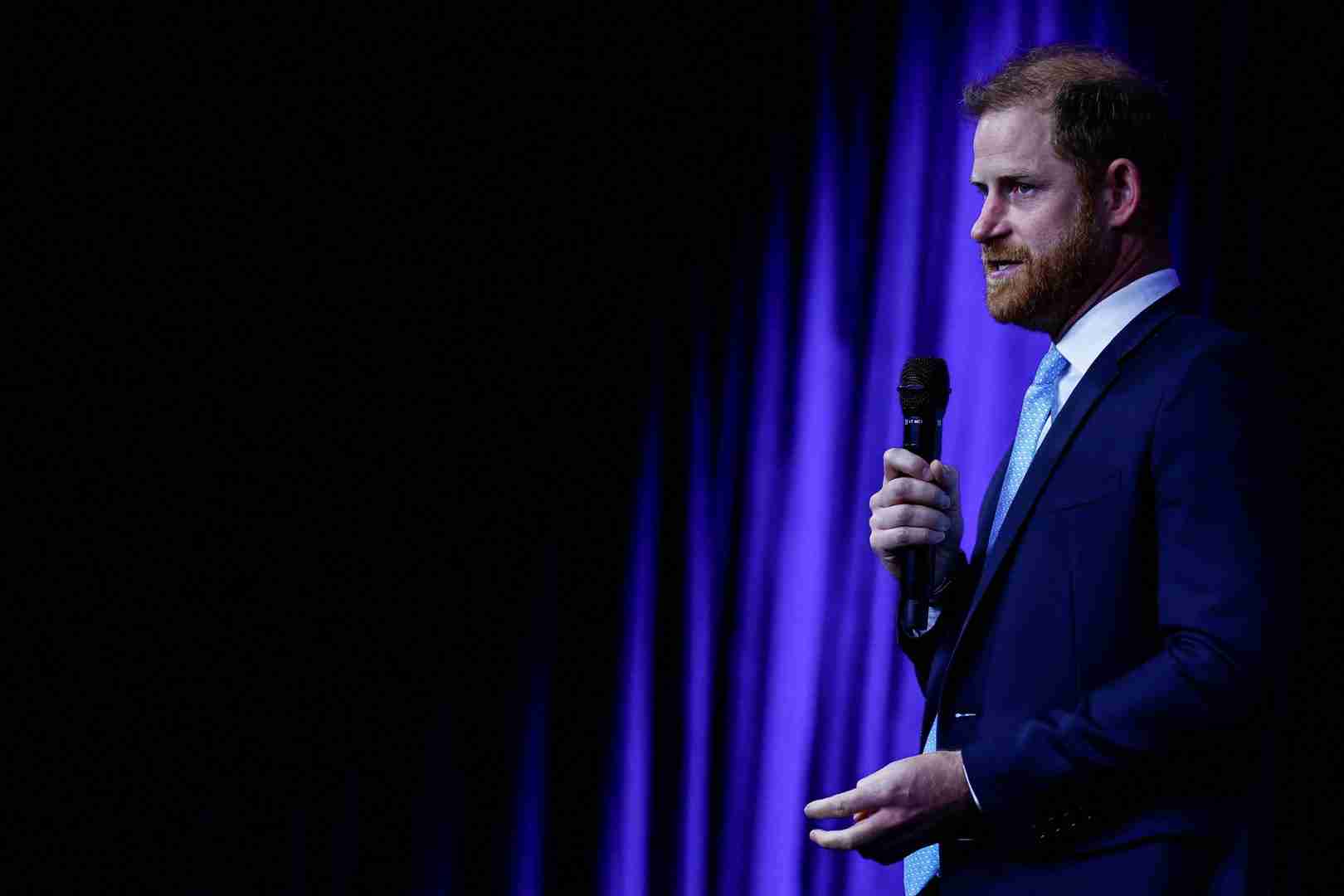
Britain’s Prince Harry, Duke of Sussex, speaks during the Clinton Global Initiative 2026 Annual Meeting in New York City, US., September 23, 2026. REUTERS/Jeenah Moon

International News via Reuters:

Britain’s Prince Harry fell into depression when he took a break from royal duties in 2019 before he formally stepped down, he told a videocast about grief, where he also discussed feeling “emotionally numb” after his mother died.

Harry, the younger son of King Charles, has been open about his mental health struggles and how the sudden death of his mother Princess Diana in a car crash when he was 12 has affected his life.

“I’d spent so long emotionally numb to a large extent because nobody told me joy was still allowed,” he said on a Masterclass videocast called “Redefining Grief: Building Resilience Through Loss”.

He also recalled the stressful period in 2019 when tension with the rest of the royal family was mounting, and he and his wife Meghan went to Canada for a six-week break to consider their future.

“Being in Canada, away from the stressful environment where presumably my body was just pumped full of adrenaline, within two or three days, I experienced this adrenaline crash, something that I’d never experienced before,” he said, according to media reports.

“It was as if I needed stress in order to get the adrenaline to make my brain function because I became useless around the house.

“I actually slipped into depression for about two weeks and I felt like I couldn’t function without adrenaline.”

Weeks after their break in Canada, Harry and Meghan returned to Britain where it was announced that they would stop being working members of the royal family.

Two months ago, the couple moved back to Britain with their son Prince Archie, 7, and daughter Princess Lilibet, 5, after six years living in California.

Campaigning to raise awareness of mental health issues is one thing Harry still shares with his brother, heir-to-the-throne Prince William. The pair are barely on speaking terms since Harry repeatedly publicly criticised his family in interviews and his memoir.

Reporting by Sarah Young; Editing by Kate Holton

South Africa blames disinformation as anti-migrant protests turn violent

Government spokesperson William Baloyi said the violence was triggered by people spreading deliberately false information about a constitutional court ruling in July

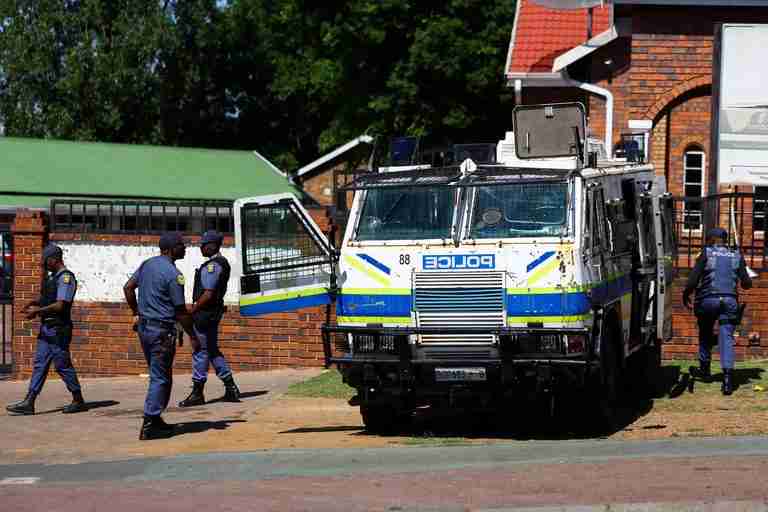
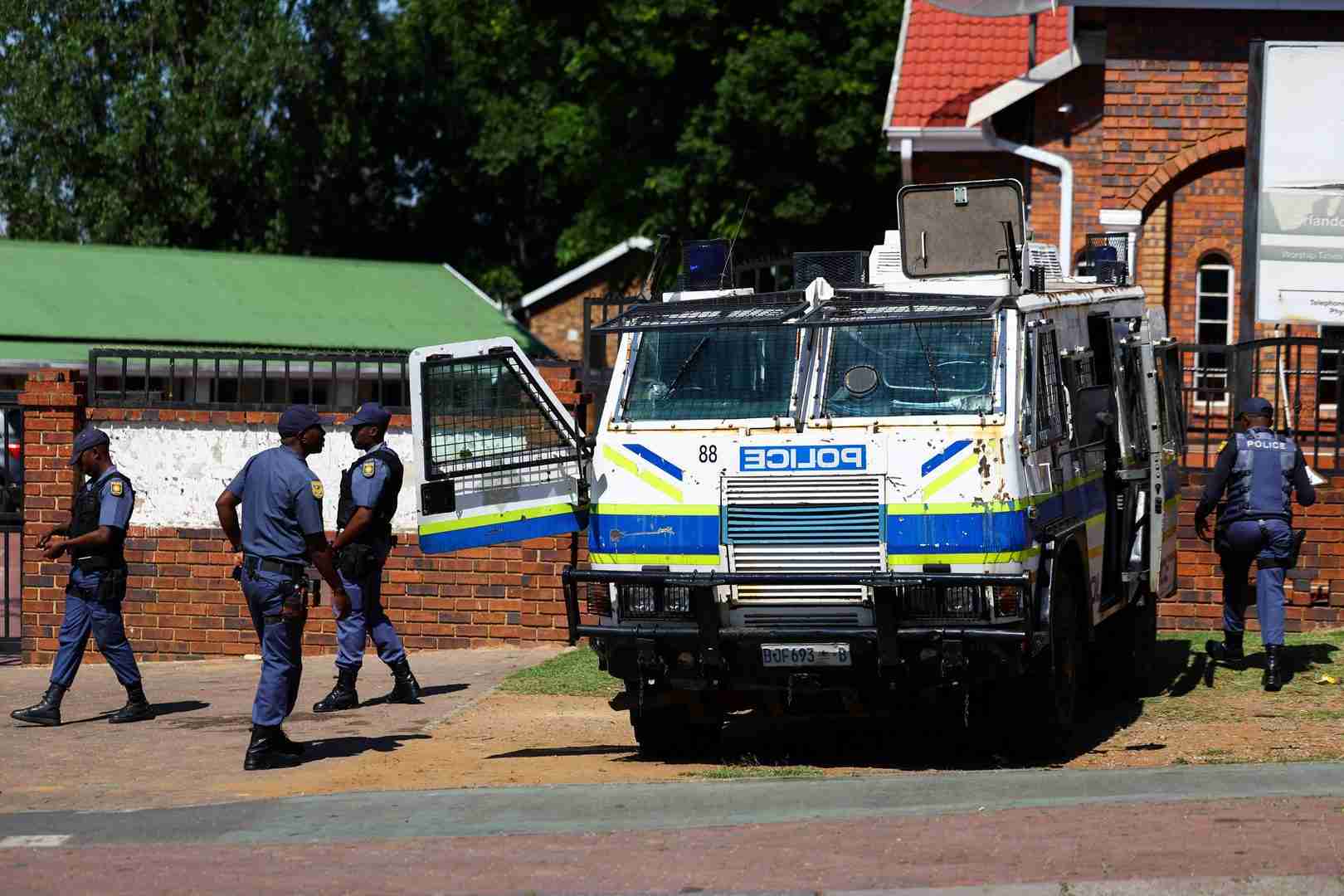
Police stand next to a vehicle as they maintain a presence after rioters torched vehicles during unrest in Johannesburg’s Soweto township on Thursday, and foreign-owned shops were looted following anti-migrant protests, in Soweto, South Africa, October 9, 2026. REUTERS/Siphiwe Sibeko

International News via Reuters:

Anti-migrant protests in two South African cities including Johannesburg’s Soweto township turned violent on Thursday, with the government blaming disinformation over a court ruling on asylum seekers.

In coastal Durban, the second city hit by protests, a Reuters reporter saw five torched cars in the urban centre, where foreign-owned shops were also looted.

The unrest followed a protest by a group demanding that a refugee centre stop processing asylum applications.

In Soweto, a Reuters reporter saw residents carrying groceries out of a shop that they said was owned by a person from Somalia, whom they chased away. The looters fled after police arrived and made them disperse.

Government spokesperson William Baloyi said the violence was triggered by people spreading deliberately false information about a constitutional court ruling in July.

The country’s highest court ruled that asylum seekers cannot be denied access to South Africa’s asylum system solely for procedural reasons such as having entered the country illegally.

Baloyi said the ruling had been widely misrepresented and did not automatically grant refugee status, permanent residence or other legal rights to undocumented migrants. “We are deeply concerned by what is going on now,” he added.

Police said in a statement that they had mobilised more officers in Durban, where they said at least 14 vehicles had been set alight while a guest house and warehouse were partially burned.

A top police official, Lieutenant General Puleng Dimpane, told a press conference in Soweto: “Those responsible for acts of violence and destruction will be identified, investigated and where sufficient evidence exists, arrested and brought to book.”

Dimpane said 10 vehicles had been burned in Soweto but the situation was now under control.

South Africa has seen months of anti-migrant marches this year that have drawn international criticism.

Some of the marches have descended into violence and looting, and thousands of African foreign nationals have fled the country.

Migrants are often blamed for taking jobs, fuelling crime and straining public services, claims that social scientists say are not supported by evidence.

Three decades since apartheid ended, South Africa remains deeply unequal and about a third of people are out of work. Despite this, it remains Africa’s largest economy and continues to draw migrants.

Reporting by Rogan Ward in Durban, and Siyabonga Sishi and Sfundo Parakozov in Johannesburg;Writing by Sfundo Parakozov; Editing by Alexander Winning, Bill Berkrot and Cynthia Osterman

Euro perks up as oil retreats, but set for fifth straight weekly drop

The euro zone’s currency hit a 17-month low of $1.1161 on Monday as investors worried about France’s record high debt and the difficult political path to budget cuts, in contrast with a robust-looking US economy and currency

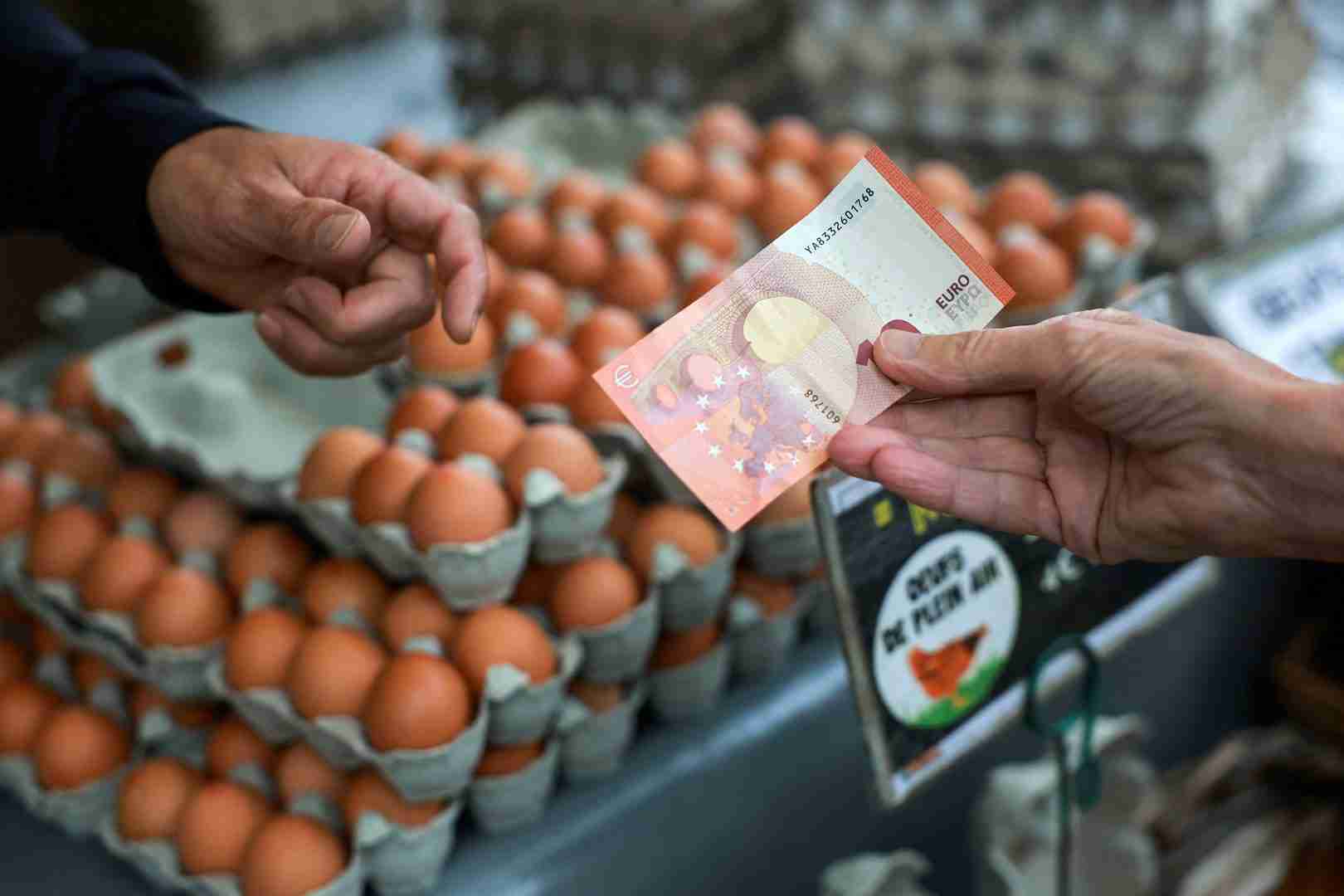
A shopper pays for eggs with a ten-euro banknote at a local market in Paris, France, September 10, 2026. REUTERS/Stephanie Lecocq

International News via Reuters:

The euro was headed for a fifth straight weekly drop on Friday, though the selling streak lost momentum as France’s beleaguered bond market stabilised and a fall in energy prices and US yields took the steam out of the dollar’s rally.

The euro zone’s currency hit a 17-month low of $1.1161 on Monday as investors worried about France’s record high debt and the difficult political path to budget cuts, in contrast with a robust-looking US economy and currency.

The euro has recovered some of the loss and rose 0.2% on Friday to trade at $1.123, for a fall so far this week of 0.2% and a five-week drop of more than 3% on the dollar.

The euro stabilised against its neighbouring currencies but was set for a 0.3% weekly fall against the pound after a 1.1% drop the previous week when the selling in French bond markets was at its heaviest.

Global bond markets steadied on Friday as oil prices fell after US President Donald Trump said the country will not attack Iran before US elections next month and said there had been productive talks with Tehran over the war.

Brent crude was down 1% to $103.30 a barrel, causing traders to trim their bets on central bank rate hikes, wagers which have helped drive up bond yields in recent months.

“The euro looks to be stabilising after falling sharply … on the back of rising global yields and the increased concerns over the fiscal position in France,” said Derek Halpenny, head of research at MUFG.

“We continue to see evidence of economic resilience in Europe that could help stabilise the euro at these lower levels,” he said, pointing to a sharp upgrade in German growth forecasts on Thursday, which confirmed an earlier Reuters report.

DOLLAR DIPS AS US YIELDS COOL

The US dollar dipped, putting the brakes on recent gains, as US yields headed for their biggest weekly drop in about three months.

The dollar index was last down 0.1% at 102.06, after hitting its highest since April last year on Monday at 102.53.

Sterling rose 0.1% to $1.324, while the Australian dollar rose 0.3% to $0.698.

The yen headed for a fourth straight weekly drop, though moves in the last three of those weeks have been very small as it has steadied around 158 yen to the dollar.

The dollar was last up 0.3% against the Japanese currency at 158.32 yen.

Vishnu Varathan, head of Asia-Pacific macro strategy at Mizuho Securities in Singapore, said the dollar sat in a “precarious pole position, flattered by a dismal euro and yen”.

Bond and currency traders will watch the French budget process closely in the coming months as the government attempts to reduce the deficit from around 5.4% of GDP, as well as announcements from leading presidential candidates such as the far-right Marine Le Pen ahead of an election next year.

French students blockaded schools and marched through cities on Thursday as a wave of protests about education conditions continued, highlighting the tricky balance for leaders between demand for social spending and leery markets.

Reporting by Tom Westbrook in Singapore and Harry Robertson in London; Editing by Jamie Freed, Kim Coghill, Elaine Hardcastle

Sterling ticks higher as dollar dips on lower oil prices

Currency markets have been roiled over the last two weeks by sharp rises in bond yields around the world, driven by rising energy prices

International News via Reuters:

The pound rose on Friday as the dollar dipped on the back of falling oil prices, with Britain’s currency set to end the week little changed against the US currency but higher versus the euro.

Currency markets have been roiled over the last two weeks by sharp rises in bond yields around the world, driven by rising energy prices.

The euro has particularly suffered as French bond yields have surged, exacerbated by concerns about the country’s budget deficit, while the search for safe havens has boosted the dollar.

Yet a fall in oil prices helped pull global bond yields away from multi-decade highs and relieved the pressure on currencies, with the dollar dipping.

Sterling was last up 0.1% at $1.324. It fell to $1.3184 on Thursday as the dollar strengthened, around its lowest since late June.

The pound was little changed against the euro, with the single currency fetching 84.74 pence.

Sterling was set for its second weekly gain against the euro, however, after rallying sharply last week and hitting its highest since June 2025 on Wednesday at 84.49 pence per euro.

Brent crude oil was down 1% to $103.30 a barrel after US President Donald Trump said the country will not attack Iran before the US elections next month and said there had been productive talks with Tehran over the war.

Investment bank ING said the dollar could remain strong as energy prices support the case for further Federal Reserve interest rate hikes, keeping other currencies under pressure.

“We don’t see signs of a broader US dollar correction brewing,” said Francesco Pesole, currency strategist at ING.

“The oil market is reluctant to price out the geopolitical premium that has kept prices above $100 a barrel despite improved Gulf supply.”

Reporting by Harry Robertson;Editing by Elaine Hardcastle

Pedestrian becomes 14th road fatality for 2026

A woman has died after being struck by a car on Cedar Avenue on Sunday evening.

Full police statement:

Sadly, Bermuda has now recorded its fourteenth road fatality for 2026, following the death of a woman struck by a motorcar on Cedar Avenue, shortly after 7:00 p.m. on Sunday, October 4, 2026.

She was transported via ambulance to King Edward VII Memorial Hospital, where she succumbed while receiving treatment for her injuries.

No further information will be provided at this time.

The Bermuda Police Service wishes to thank those members of the public who have so far come forward to assist with the investigation into this matter.

We are renewing our appeal for witnesses or anyone who may have information relating to this incident but are yet to speak with police to please contact Sergeant, Jordan Basden, on 515-2498, or e-mail jordan.basden@bps.bm, as soon as possible.

Trump says US will not attack Iran before midterm elections in November

The war, which began in February when the US and Israel launched strikes on Iran, has helped drive Trump’s domestic approval ratings downward and is weighing heavily on his fellow Republicans as they seek to preserve their narrow legislative majorities in November’s election

US President Donald Trump points during a campaign rally for Republican US Senate candidate Ken Paxton at Freeman Coliseum in San Antonio, Texas, US, October 7, 2026. REUTERS/Evan Vucci

International News via Reuters:

President Donald Trump said on Thursday that the US will not launch an attack on Iran before November’s US midterm congressional elections, asserting that the two countries are having “productive” talks about ending the six-month-old war.

“We are having productive discussions with the Islamic Republic of Iran,” Trump wrote in a post on Truth Social. “We will not be attacking Iran at any time prior to the midterm elections to be held in the United States on November 3rd.”

The war, which began in February when the US and Israel launched strikes on Iran, has helped drive Trump’s domestic approval ratings downward and is weighing heavily on his fellow Republicans as they seek to preserve their narrow legislative majorities in November’s election.

Some 60% of Americans — including one in four Republicans — disapprove of how Trump is handling the situation in Iran, according to a recent Reuters/Ipsos poll. The conflict has pushed gasoline prices sharply higher at a time when voters say their top concern is the cost of living.

Trump has repeatedly said he expects oil prices to drop after the elections, but he has not offered a detailed plan for exiting the war. 

Iran and the US have exchanged proposals in recent weeks aimed at ending the war and reopening the Strait of Hormuz, a vital global energy shipping route. Trump rejected Tehran’s latest offer.

Iran’s state media reported on Thursday that Tehran would not abandon uranium enrichment or hand over its uranium stockpile, citing the head of the country’s Atomic Energy Organization, days after US Vice President JD Vance told Reuters that Iran must make “meaningful” reductions in its enrichment capacity. 

The US, Israel and Western allies have long accused Iran of seeking nuclear weapons, an accusation Iran has denied.

Reporting by Ismail Shakil in Ottawa, Doina Chiacu in Washington and Joseph Ax in Princeton, New Jersey; Editing by Michelle Nichols and Matthew Lewis

EU exec rejects Greek, Italian requests for more fiscal rules flexibility

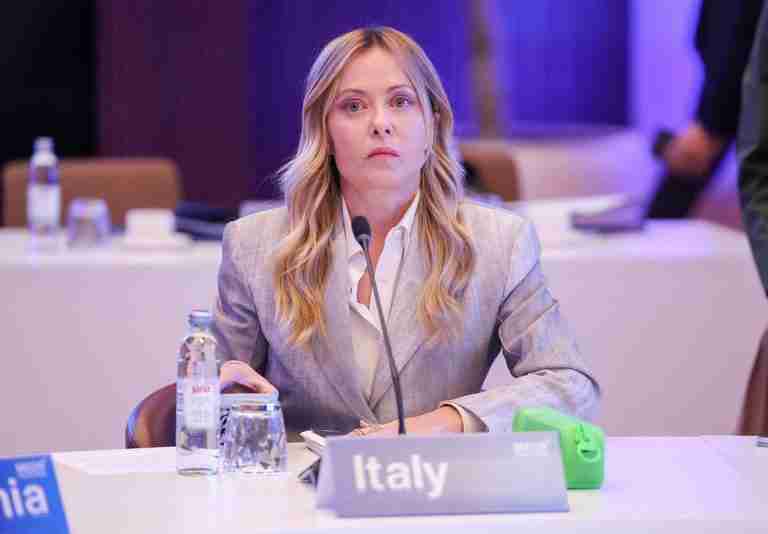
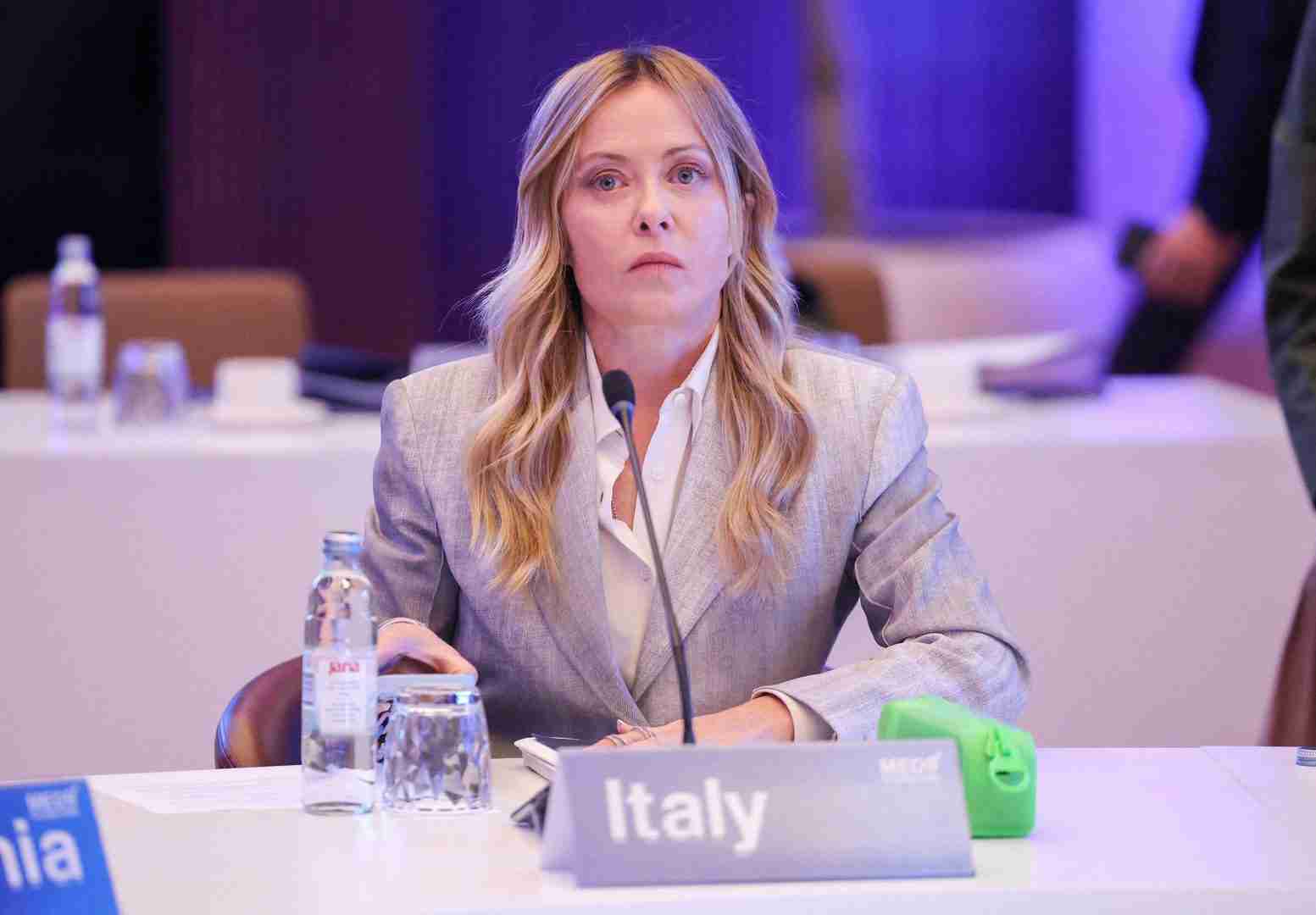
Italian Prime Minister Giorgia Meloni asked the European Commission to factor higher-than-expected inflation into calculations for permitted budget deficits and when evaluating spending deviations

Italian Prime Minister Giorgia Meloni during the MED9 Summit, in Split, Croatia, October 7, 2026. REUTERS/Antonio Bronic/File Photo

International News via Reuters:

The European Commission pushed back on Thursday against Italian and Greek requests to grant euro zone governments more fiscal leeway related to higher inflation caused by energy prices and support measures to cushion them, saying rules could not be changed all the time.

Italian Prime Minister Giorgia Meloni asked the European Commission to factor higher-than-expected inflation into calculations for permitted budget deficits and when evaluating spending deviations.

Rome argued that the EU should let member states utilize extra tax revenues generated by inflation to help counter soaring energy costs.

Greek Prime Minister Kyriakos Mitsotakis urged the Commission to exempt temporary national support measures for households and businesses from the EU’s maximum net expenditure limit.

“Upward inflation pressures are already considered as part of an overall assessment of relevant factors when assessing Member States’ compliance with fiscal rules. We cannot come with new fiscal flexibilities all the time,” European Economic Commissioner Valdis Dombrovskis told a news conference.

“In fact, this could cast doubt on our collective resolve to uphold the rules-based fiscal framework at a time when the credibility of our commitment to fiscal sustainability is a vital asset,” he said.

The Commission has already granted EU countries leeway in their agreed fiscal consolidation paths to account for higher defence spending and measures to become less reliant on fossil fuels.

Reporting by Jan Strupczewski; Editing by Daniel Wallis

French students keep up protest pressure with some demonstrations hit by violence

The Interior Ministry said 71,500 people participated in the day’s demonstrations, of which 24,500 took part in the main Paris protest centred around the Bastille square

International News via Reuters:

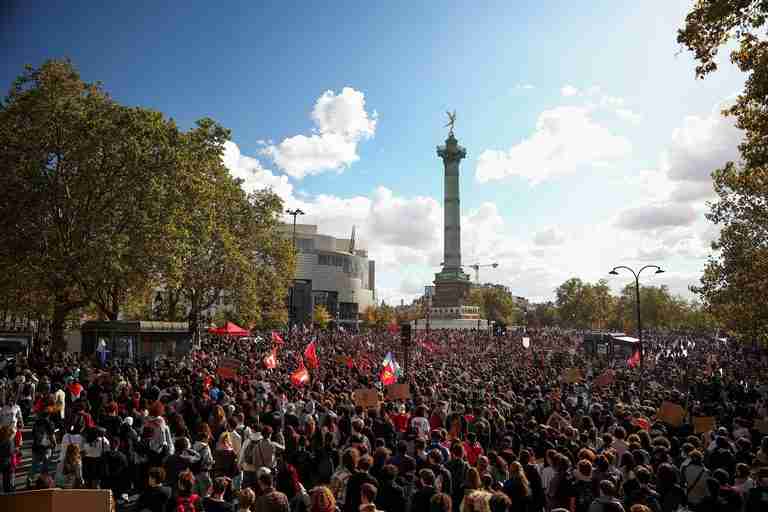
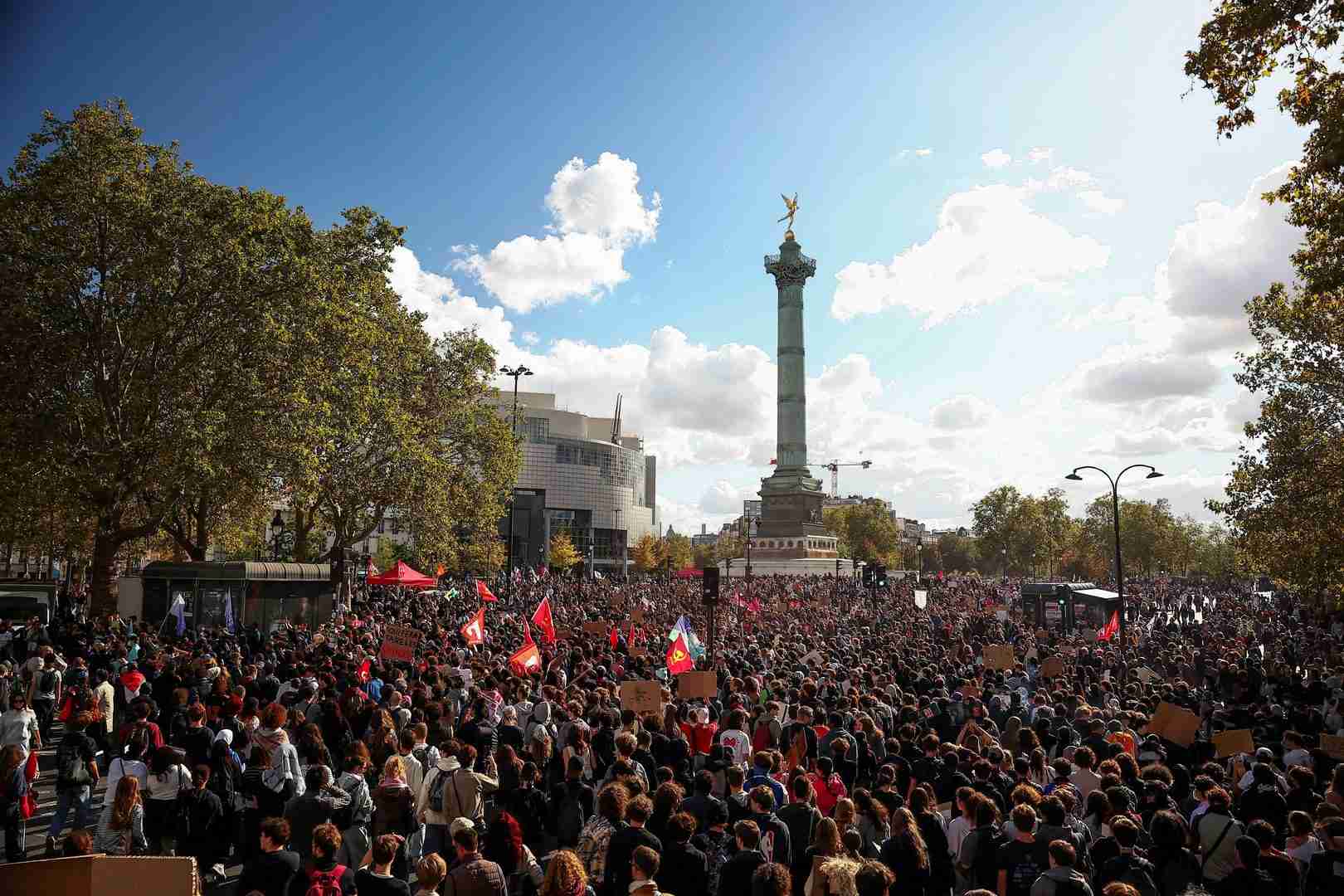
French teenagers blockaded some high schools and marched through cities on Thursday in the latest wave of nationwide protests about conditions in the country’s schools, and some of the demonstrations were marred by violent unrest.

The Interior Ministry said 71,500 people participated in the day’s demonstrations, of which 24,500 took part in the main Paris protest centred around the Bastille square.

The Paris protest was mostly peaceful, although there were occasional clashes between small groups of demonstrators and the police during the evening.

Elsewhere, arsonists attacked a Bordeaux police station, a school in Saint-Etienne was ransacked and a teacher in Toulouse was hit by a demonstrator, said the Interior Ministry.

In Marseille, police said a teacher at Victor Hugo High School was attacked during the latest protests and has filed a criminal complaint over the incident.

The protest movement, now into its third week, has exposed deep tensions in France between popular demands for investments in deteriorating public services and a cash-strapped government under pressure from bond markets to reduce its debt and deficit.

Protesters say they are demonstrating to demand more teachers and better facilities, arguing school buildings are often dilapidated, with overcrowded classrooms that are often freezing in winter and boiling in summer.

Critics say the movement has been infiltrated by violent far-left and anarchist elements.

High-school teacher Diane Di Sciullo joined students in Marseille, saying all they were asking for was a decent education in decent conditions. She denounced overcrowding, saying this year she had 37 students in her class.

“At the start of every lesson, I have to ask them to check the neighbouring classrooms for spare chairs and desks so they can actually study,” she said.

Di Sciullo, 28, was carrying a placard that read, “I’m a teacher and my students help me catch cockroaches in class.” 

MINISTER PROMISES URGENT ACTION

Education ministry figures showed the number of school blockades was gradually decreasing.

Education Minister Edouard Geffray told TF1 TV that extra teachers would be drafted in to plug gaps in schools which do not have enough teachers, while heavy school timetables will also be reviewed. 

It is not uncommon for French teenagers to have lessons from 8 a.m. to 6 p.m., as well as large amounts of homework.

Geffray also said he was working on potential improvements to Parcoursup, the national online portal for applying to university, which has been widely criticised as confusing and stressful for applicants.

Prime Minister Sebastien Lecornu pledged late on Wednesday that the government would present “concrete, quick and fully funded responses” to the protests by late October, without offering specifics.

Student protest leaders said that was not good enough and called for further marches next Tuesday. There are also calls circulating online for a day of protests on October 17.

“Our demands must be heard. Yesterday, Mr Lecornu gave us a lot of hot air,” said Ryad Rani, leader of one of the student unions.

“The mobilisation will continue, we’re not backing down on anything.”

A prominent complaint featured on banners and placards was that the police response to the wave of protests has been too heavy-handed. “Too young to be listened to, old enough to be tear-gassed” was one example.

There have been hundreds of arrests and dozens of injuries since the movement started. On Wednesday, the government suspended the use of stun grenades in the policing of the protests after one teenager’s hand was blown off.

POLITICAL RESPONSE SHOWS POLARISATION AS ELECTION LOOMS

Six months from a presidential election, the protests have highlighted stark polarisation between leading candidates to replace Emmanuel Macron, who cannot seek a third term.

Far-right frontrunner Marine Le Pen has highlighted damage to schools caused by a minority of protesters and outlined plans to slash public spending should she win.

Her hard-left opponent Jean-Luc Melenchon, who also has a chance of making the runoff, has praised the protesters as “incredible” and denounced police brutality.

According to an Elabe poll for BFM TV, 72% of French people think the students’ demands are legitimate, but 55% of them think the protests should stop.

Neighbouring Belgium has also had student protests, with demonstrations in Brussels, Ciney and Liege.

Additional reporting by Paris bureau and Charlotte Van Campenhout in Amsterdam; Writing by Estelle Shirbon; Editing by Timothy Heritage, Alison Williams, Aidan Lewis and David Gregorio

Euro zone ministers tell France to pass 2027 budget to calm markets

Euro zone finance ministers and the ECB meet in Luxembourg on Thursday afternoon for monthly talks and the surge in French borrowing costs was discussed

A view shows the Eiffel Tower and the Paris skyline in Paris, France, October 6, 2026. REUTERS/Yves Herman

International News via Reuters:

Euro zone finance ministers and the European Central Bank told France on Thursday to pass a 2027 budget to calm bond markets, as French borrowing costs hover at 25-year highs.

Euro zone finance ministers and the ECB meet in Luxembourg on Thursday afternoon for monthly talks and the surge in French borrowing costs was discussed.

France is at the centre of a bond market storm on worries over the country’s large budget deficit and looming 2027 presidential election.

Its 10-year bond yield has jumped nearly 80 basis points (bps) since the start of September and hit its highest level since July 2002, just short of 5%. That is driving up borrowing costs and making the fiscal maths harder.

“It is essential that all member states, and in particular those with high deficits or debts, implement prudent fiscal policies,” EU Economic Commissioner Dombrovskis, who took part in the ministerial talks, told a news conference afterwards.

“Putting in place a sound budget for the next year will be important to ensure this predictability and credibility and to reassure markets. I’m in contact with,(French Finance) Minister Lescure on this,” he said.

France said in September that its budget deficit will overshoot the government’s 5% target this year. 

The government has announced tightening measures to bring some calm, but investors are sceptical they can be carried out because of the fragmentation of the French parliament and presidential and parliamentary elections in April and May 2027. 

France also plans to sell a record €340 billion ($381 billion) of bonds in 2027 to fund the government and refinance COVID-era debt.

“We have confidence in France’s commitment vis-a-vis public finances,” the chairman of euro zone finance ministers Kyriakos Pierrakakis told the news conference.

Officials said no euro zone institution was ready to jump in to help France lower its borrowing costs. Officials, speaking on condition of anonymity, made clear it was up to French politicians to sort out the uncertainty they have created.

The European Central Bank can buy bonds of a euro zone country on the secondary market, if their prices move in an unjustified way, to protect the transmission of monetary policy.

ECB President Christine Lagarde told euro zone ministers the central bank had instruments to counter unwarranted, disorderly market dynamics that threaten the smooth transmission of monetary policy, but they were subject to clear eligibility criteria, according to officials familiar with the discussions.

Published on the ECB website, the criteria include compliance with the EU’s fiscal rules and not being in an EU excessive deficit procedure — disciplinary action for countries with budget deficits higher than the EU ceiling of 3% of GDP.

France is in such a disciplinary process with a budget gap above 5% of GDP. Its fiscal policies do not match the fiscal consolidation path agreed with the EU, so it would not be eligible for ECB help.

Since the creation of the euro currency in 1999, France — the European Union’s second biggest economy and a key political player — has only had a budget deficit below the EU’s ceiling of 3% six times. Some officials said that debt markets were probably the only factor that could force it to consolidate.

Reporting by Jan Strupczewski; editing by Philip Blenkinsop and Nick Zieminski

Bermuda’s Ben Sherratt topples top seed to claim maiden US Junior Squash Gold crown

Bermudian prospect Ben Sherratt produced a sensational run of form to capture the Boys’ Under-13 title at the 2026 PVD Squash Junior Gold tournament in Providence, Rhode Island, stunning the top seed in the final.

The triumph marks Sherratt’s maiden title at US Junior Gold level and continues a stellar summer and autumn campaign for the Somersfield Academy student.

Sherratt demonstrated immense resilience in a gruelling five-game semi-final against third seed Yousuf Khalil. After clinching an epic opening game 16-14 and consolidating with an 11-6 win in the second, the young Bermudian was pegged back as Khalil claimed the third and fourth games 11-9 and 11-6.

Refusing to let the contest slip away, Sherratt regained his composure in the decider, dominating the front court to close out the match 11-5 and book his spot in the final.

Lining up against number one seed Muhammed Arshad Burki in the showpiece match, Sherratt carried that fighting spirit through another high-tempo battle.

He established early control to take the first two games 11-8 and 12-10. Burki struck back in the third, winning 11-4, but Sherratt held his nerve in a tight fourth game to seal an 11-9 victory and secure the championship 3-1.

The breakthrough victory in Rhode Island adds to an impressive list of overseas accolades for Sherratt in recent months.

In August, he claimed top honours at the Boston Squash Junior Silver and reached the podium with a third-place finish at the Detroit Summer Junior Gold, having taken silver at the Caribbean Area Squash Association (CASA) Junior Championships in the British Virgin Islands in July.

Bermuda Squash Association Head of Squash Micah Franklin hailed the milestone victory as a significant achievement for the sport locally:

“We are thrilled to have Ben competing internationally on the US Junior Circuit, and even more thrilled to see him winning at that level,” Franklin said. “This level of competition at such a young age is remarkable for such a small squash country like Bermuda. I’m excited to watch this next generation of squash players continue to grow and develop their games to become competitive on the world stage.”

The haul of ranking points accumulated in Providence will significantly bolster Sherratt’s seeding for a busy winter on the international junior circuit.

The youngster has set his sights firmly on two premier global tournaments in December, targeting a top-four finish at the Canadian Junior Open and a top-16 finish at the US Junior Open.

Sherratt credited his progress to the guidance of coach Franklin, while also paying tribute to the adult members at the Bermuda Squash Racquets Association who regularly test him in sparring matches, as well as Somersfield Academy for backing his academic and rigorous training commitments.