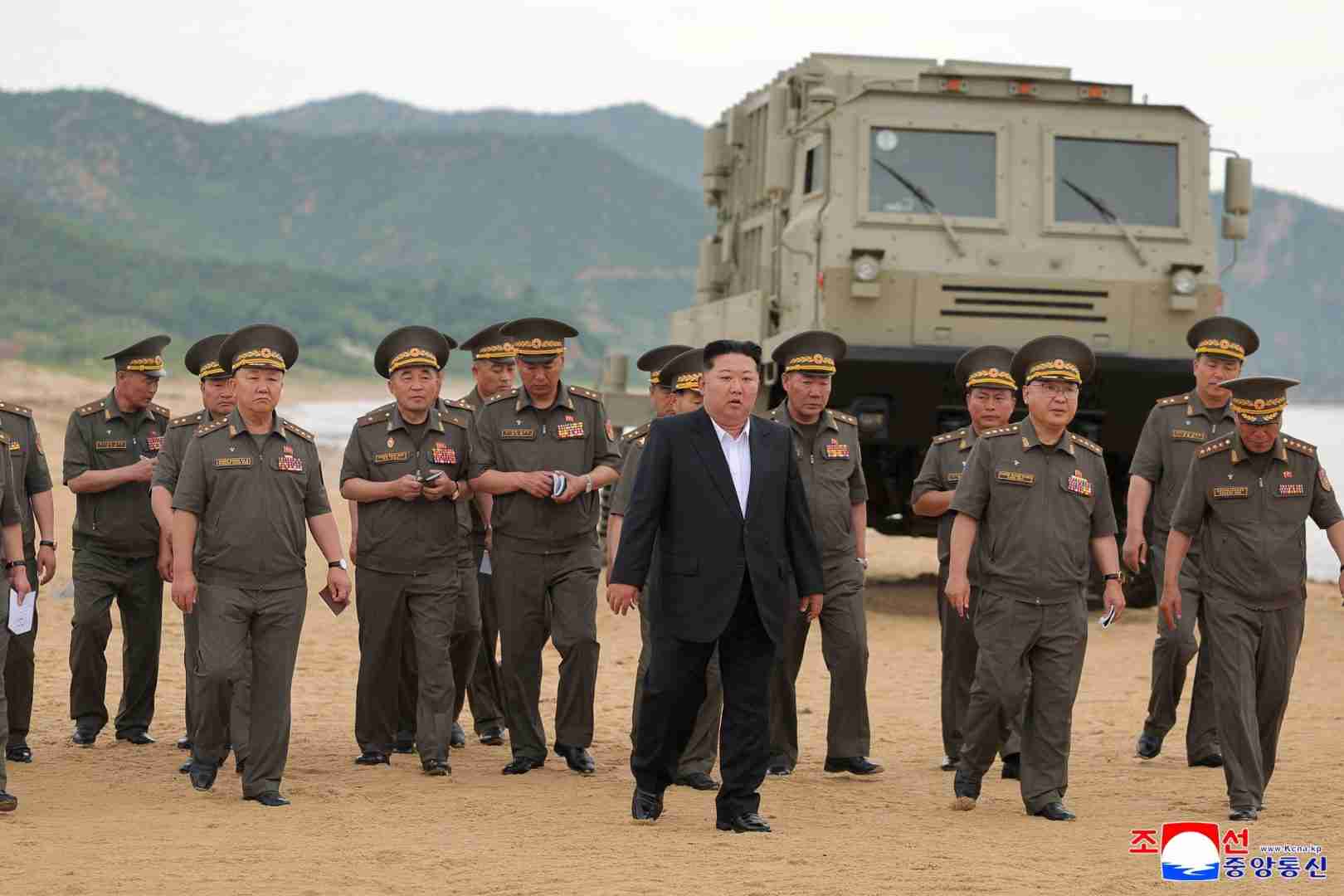
The measures and Kim’s remarks came during an enlarged meeting of the ruling Workers’ Party’s Central Military Commission on Thursday
International News via Reuters:
North Korea has decided on measures to strengthen its nuclear forces “quantitatively and qualitatively” as leader Kim Jong Un called for modernising its military, state media KCNA reported on Friday.
The measures and Kim’s remarks came during an enlarged meeting of the ruling Workers’ Party’s Central Military Commission on Thursday, KCNA said.
Kim said North Korea’s security and “true peace” could only be guaranteed by building a powerful military capable of controlling all threats, according to the report.
The meeting set plans to renew the technical infrastructure of combat systems, expand and strengthen nuclear forces, and standardise, specialise and modernise military bases, KCNA said.
It also discussed expanding the role of the Reconnaissance General Bureau, North Korea’s military intelligence agency, to improve its reconnaissance and intelligence-gathering capabilities, the report added.
KCNA said the meeting addressed the construction of modern naval bases and upgrades to shipyard capacity, reflecting what it called a major change in the status and role of the navy.
Reporting by Joyce Lee; Editing by Mark Porter and Jamie Freed
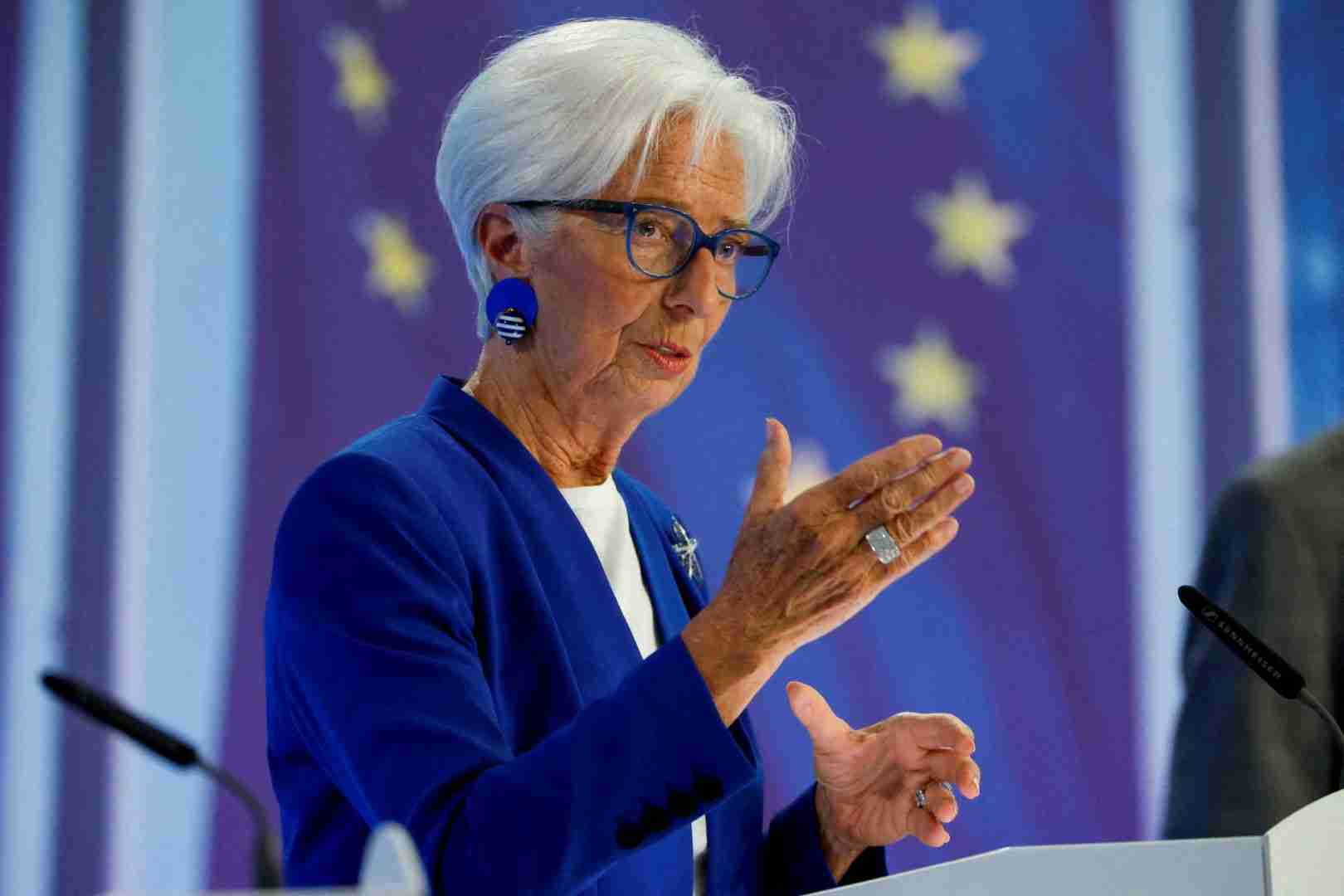
Lagarde was fielding questions about a possible involvement in France’s 2027 presidential campaign after saying last week it was possible that she would leave the ECB early to weigh in on French politics
International News via Reuters:
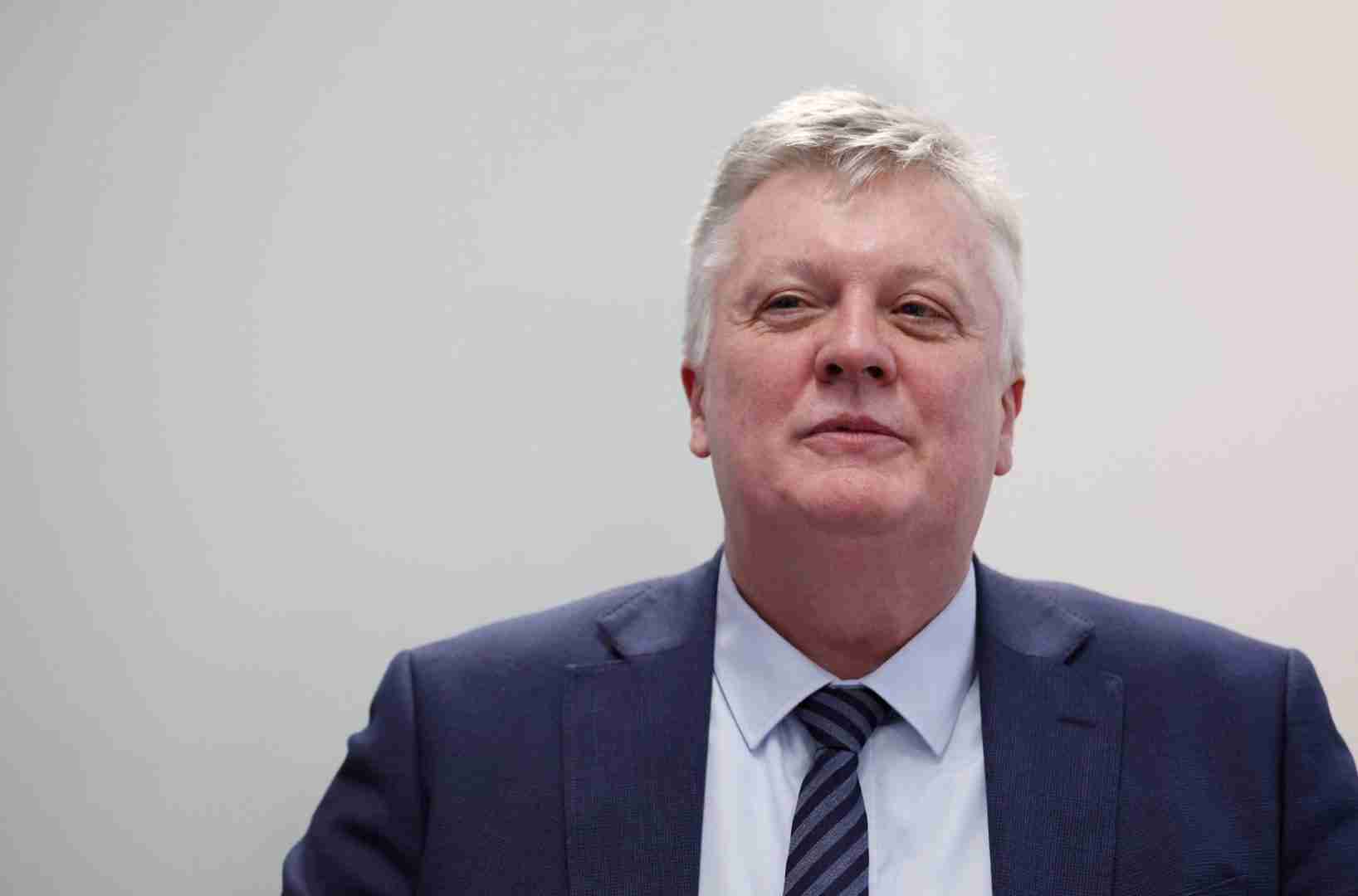
European Central Bank President Christine Lagarde said on Thursday she was not a candidate in the French presidential race but would advocate for pro-European values in her home country “in whichever capacity” she deemed most efficient.
Lagarde was fielding questions about a possible involvement in France’s 2027 presidential campaign after saying last week it was possible that she would leave the ECB early to weigh in on French politics.
“I’m not a candidate for anything, but I’m very keen that Europe is protected, that Europe is the framework within which member states operate, including France,” she told the Euronews TV channel.
Asked if she would do that on the campaign trail or in her current role as ECB chief, Lagarde said she “would explain that in whichever capacity I will be most efficient”.
The French political scene was jolted this week when far-right leader Marine Le Pen was cleared to run for office by a court despite an embezzlement conviction.
Lagarde was also asked about the recent rise in euro zone inflation as a result of the Iran war, which led the ECB to raise interest rates for the first time in nearly three years last month.
She said the ECB’s medium-term orientation meant it only needed inflation to return to its 2% goal in three years.
“We need to see inflation returning to 2% in about three years’ time and that’s what we have with the projections that we produce,” Lagarde told Euronews.
Traders have ramped up their bets on ECB hikes in recent days on signs that an agreement between the U.S. and Iran to end the war is in jeopardy.
Reporting by Francesco Canepa; Editing by Mark Porter and Jamie Freed
They escorted the people to police vans where they were taken away, including a woman and a small child from Malawi
International News via Reuters:
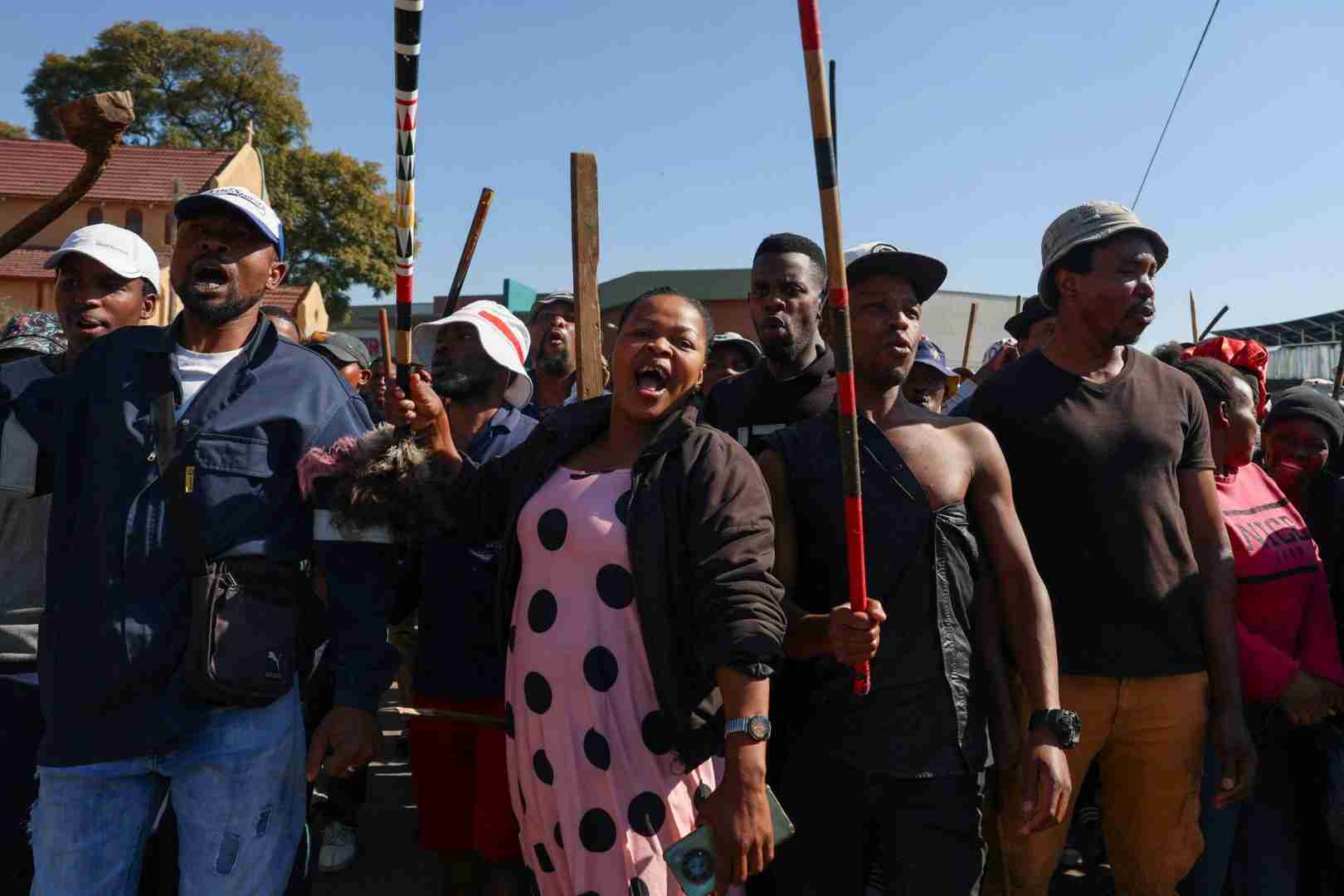
Groups of anti-immigration South Africans seized foreigners from their homes in Johannesburg on Thursday and handed them to police in a hardening of protests that have sown fear in communities and strained ties with some countries.
In Johannesburg’s Alexandra township, a Reuters reporter saw protesters breaking down doors and entering houses where they believed undocumented immigrants were hiding.
They escorted the people to police vans where they were taken away, including a woman and a small child from Malawi. Another man who was apprehended by the marchers told Reuters he was in the country legally.
“I am a ZEP holder,” said the Zimbabwean national, Total Mhlanga, referring to the Zimbabwean Exemption Permit which allows tens of thousands of nationals to live and work in South Africa.
In Soweto, anti-immigrant protesters marched through town wielding sticks and flags, with plans to go search for undocumented immigrants. Several of the flyers for Thursday’s protests advertised a “peaceful march” followed by “door to door”. Another march took place in Durban on the east coast.
South Africa, where millions of people are unemployed, has seen a surge in anti-immigrant sentiment in recent months, culminating in nationwide protests on June 30, an informal deadline set for undocumented immigrants to leave the country.
The most prominent leader of the movement, former radio presenter Jacinta Ngobese-Zuma, said on that day that protests would take place every Thursday until demands were met.
Her group, March and March, has painted undocumented immigrants as the source of South Africa’s economic problems and is demanding tighter border controls, mass deportation, and for schools and health centres to serve South Africans first.
“We are walking around doing door to door removing foreigners,” said a community leader, Bongani Msomi, at the march in Alexandra.
President Cyril Ramaphosa has warned against scapegoating immigrants for deep-rooted problems, and his government has repeatedly told citizens that they do not have the right to take immigration enforcement upon themselves.
Police have stepped up arrests of undocumented migrants in response to the protests, and have also deployed officers during recent marches for safety. A spokesperson for Johannesburg police was not immediately available for comment on the actions of the protesters or the officers at the scene.
Malawi’s government said on Thursday that over 38,000 of its citizens had returned from South Africa in recent weeks, as part of a massive repatriation effort due to safety concerns. Over 60,000 have also returned to neighbouring Zimbabwe.
Reporting by Siyabonga Sishi; Additional reporting by Frank Phiri; Writing by Nellie Peyton; Editing by Philippa Fletcher
Pill was one of two members of the nine-strong Monetary Policy Committee who voted to raise interest rates from 3.75% last month
International News via Reuters:
Bank of England Chief Economist Huw Pill said interest rates will need to rise to keep inflation pressure in check.
Asked on BBC’s “Walescast” programme on Thursday if rates would need to rise in the coming year, Pill said: “The short answer is yes.
“I am concerned that we’ve been running the economy a little bit hotter than the supply side,” Pill said.
Pill was one of two members of the nine-strong Monetary Policy Committee who voted to raise interest rates from 3.75% last month. The next decision is due on July 30.
This week, Jasmine sits down with Maurice Foley, founder & CEO of the Black Travel Expo to share his journey in the travel industry, the vision behind the Black Travel Expo, and how Bermuda can leverage its unique culture to attract more visitors. Discover practical tips for smart travel, the importance of inclusivity, and innovative initiatives to promote Bermuda as a premier destination.
The outbreak has infected 1,759 people and resulted in 600 confirmed deaths since it was declared almost two months ago, according to the latest government data released on Wednesday
International News via Reuters:
Ebola response workers in northeastern Democratic Republic of Congo staged protests outside three treatment centres on Thursday, saying they had not been paid all they were owed for their work.
The outbreak has infected 1,759 people and resulted in 600 confirmed deaths since it was declared almost two months ago, according to the latest government data released on Wednesday.
The World Health Organization said this week transmission of the rare form of Ebola was continuing; it kills 30% to 50% of those infected and has no vaccine or cure.
Dozens of members of Ebola response teams gathered on Thursday outside the Centre Medical Evangelique (CME), Elikya and Salama treatment centres in Bunia, the capital of Ituri Province, which is the hardest hit.
Police dispersed one of the protests, outside the CME.
It was not immediately clear whether the protests had disrupted operations at the treatment centres.
Speaking to journalists in Bunia, Health Minister Samuel Roger Kamba acknowledged there had been problems with “the human resources pillar of the response”, namely with ensuring that the lists of people who needed to be paid were updated and accurate.
An official at Africa’s top public health agency told an online press conference it was working with Congolese authorities to speed up payments to frontline health workers.
“This is very important to keep (up) the morale,” Africa CDC official Wessam Mankoula said. He said the Africa CDC had provided Congo with about $2 million to support its Ebola response, some of which could be used to make “delayed payments” to health workers.
A Congolese health official, who asked not to be named as he was not authorised to speak to the press, told Reuters that talks were under way with workers who were threatening to go on strike, but that so far no strike had begun.
WORKERS SAY PAY IS LATE, DOES NOT REFLECT WORKLOAD
In a letter dated July 5 and addressed to Ituri’s governor and health officials, Ebola response workers said they had not been paid for services rendered since the start of the latest Ebola outbreak, which was announced on May 15.
The letter said this had resulted in “significant socio-economic difficulties” and severely affected the workers’ living conditions.
The workers also complained that compensation rates were too low relative to the risks and workload involved in the Ebola response.
They demanded an increase in daily allowances and called for the removal of income tax deductions, arguing that allowances constituted bonuses rather than salaries.
Reporting by Fiston Mahamba and Clement Bonnerot;Additional reporting by Sfundo Parakozov;Writing by Amindeh Blaise Atabong; Editing by Robbie Corey-Boulet and Philippa Fletcher
Fourteen Mexican nationals have lost their lives while in the custody of U.S. Immigration and Customs Enforcement, and three more died in arrest operations conducted by the agency, Velasco told a press conference
International News via Reuters:
Mexico’s government plans to file criminal complaints in the U.S. regarding Mexican citizens who died in immigration custody or while being targeted in anti-immigration operations, Foreign Minister Roberto Velasco said on Thursday.
Fourteen Mexican nationals have lost their lives while in the custody of U.S. Immigration and Customs Enforcement, and three more died in arrest operations conducted by the agency, Velasco told a press conference.
“We are going to move beyond the diplomatic sphere and go directly to U.S. prosecutors to file complaints regarding these incidents, requesting that they are investigated as criminal matters,” Velasco said.
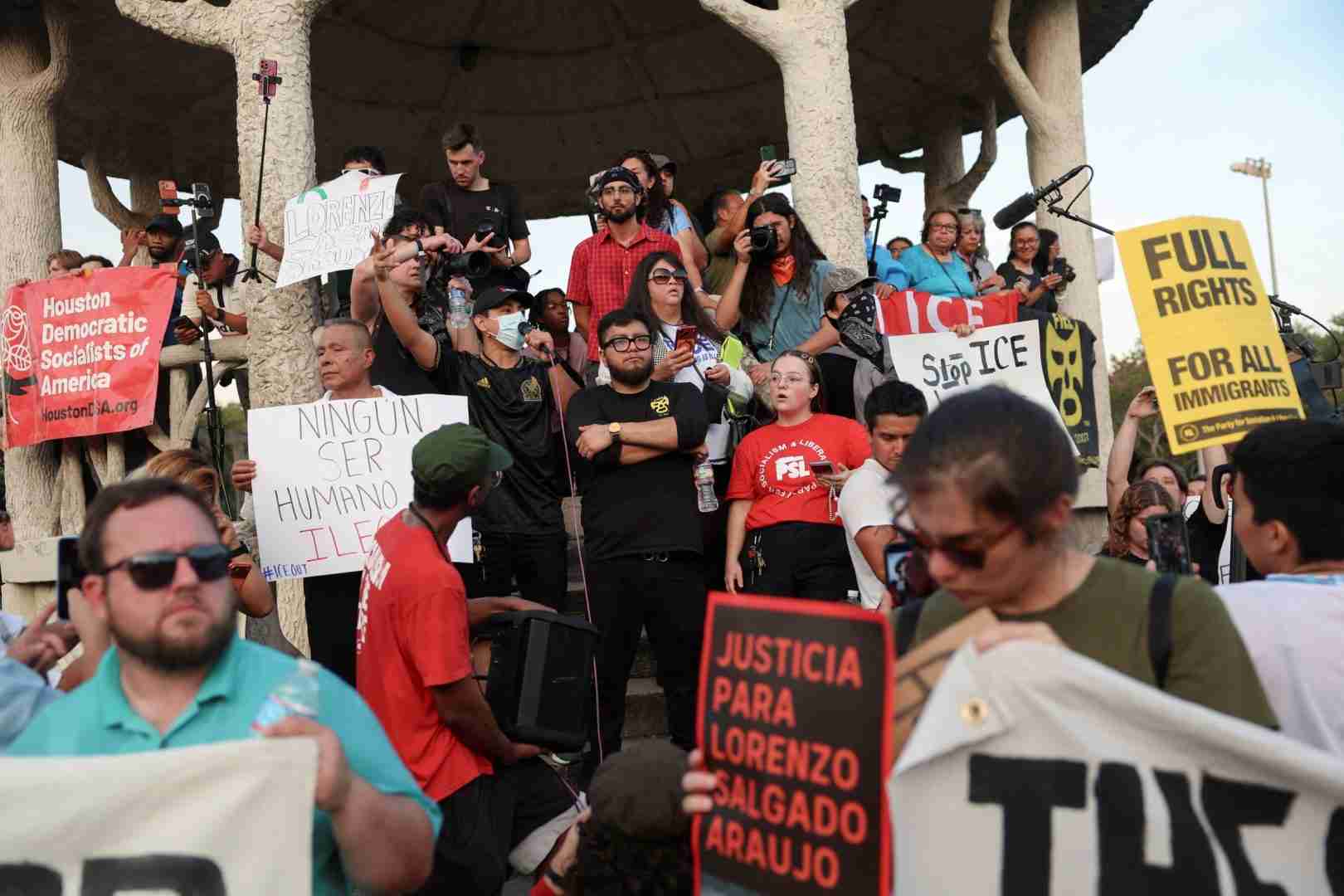
On Tuesday, a U.S. Immigration and Customs Enforcement agent shot Lorenzo Salgado Araujo, 52, a Mexican national living in the U.S. illegally for three decades.
His killing, which sparked protests in Houston, brought to at least six the number of people shot dead in immigration enforcement operations since January 2025, when President Donald Trump returned to office and launched a campaign of mass deportations.
The U.S. Department of Homeland Security and Department of Justice didn’t immediately respond to a request for comment.
Reporting by Aida Pelaez-Fernandez and Raul Cortes; Editing by Daina Beth Solomon
The issue pits advocates of online safety measures against privacy activists worried about surveillance
International News via Reuters:
EU lawmakers backed a proposal on Thursday to reinstate temporary rules to allow Google, Meta Platforms and other online platforms to detect and remove online child sexual abuse materials.
However, they also voted to exempt end-to-end encrypted communications such as WhatsApp, Telegram and Signal, underscoring concerns about mass scanning that could lead to privacy breaches.
The issue pits advocates of online safety measures against privacy activists worried about surveillance.
Lawmakers and countries on both sides of the divide failed to agree on permanent rules last month following a dispute on the scope of detection.
The temporary rules, in place from 2021 to April this year, exempted online platforms from strict online privacy rules and had aimed to give EU countries and lawmakers time to agree on a permanent solution to tackle online child pornography.
Lawmaker Marketa Gregorova from the Pirate Party voiced her concerns about reinstating the interim rules.
“Protecting encryption was one of our priorities, and I am therefore glad that we managed to secure an absolute majority for an amendment that at least preserves encryption,” she said.
“At the same time, however, voluntary mass scanning unfortunately passed.”
EU countries have three months to decide whether to back the European Parliament’s changes to their proposal.
The European Commission had proposed a draft rule on child sexual abuse material in 2022, but progress to agree the law has been slow as both sides have criticised it.
Big Tech has lobbied against any requirement for messaging services, app stores and internet access providers to report and remove known and new images and videos, as well as cases of grooming.
Reporting by Foo Yun Chee; editing by Barbara Lewis
The measures stop short of a blanket “Buy European” requirement, but would allow European authorities to rule out bids for big public contracts that have less than 50% European content and favour EU companies in strategic sectors
International News via Reuters:
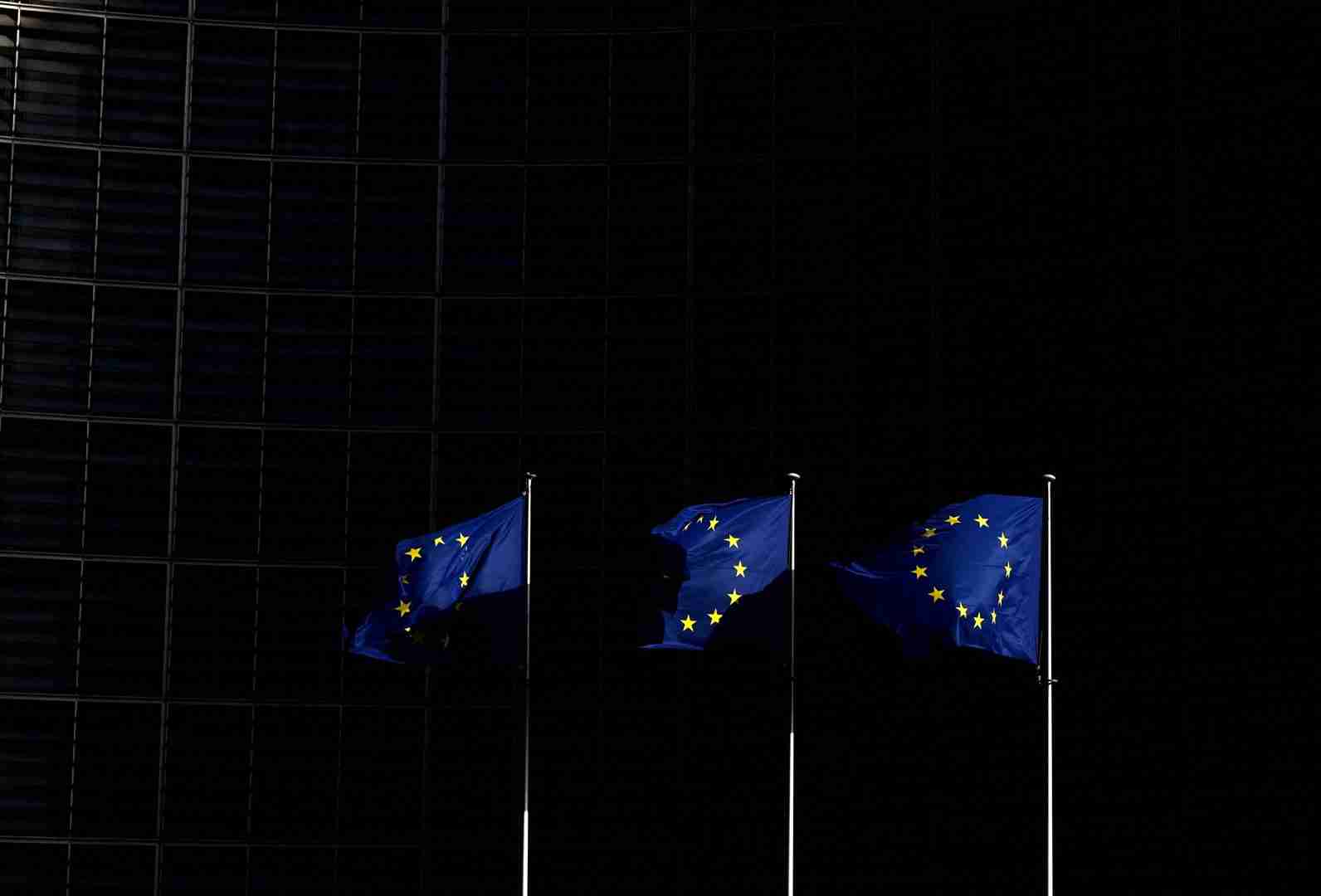
New EU procurement rules will seek to harness the European Union’s collective purchasing power to favour the bloc’s own companies and reduce dependence on foreign suppliers, a draft document seen by Reuters shows.
The measures stop short of a blanket “Buy European” requirement, but would allow European authorities to rule out bids for big public contracts that have less than 50% European content and favour EU companies in strategic sectors.
Although the draft document does not specifically name China, the European Commission has already put forward other Buy European policies as it seeks to reduce China’s dominance of critical materials production and narrow a trade gap that expanded by 10% in the first four months of this year.
The proposal, which could change before publication and will require endorsement from the 27 EU member states, would make it harder for authorities to award contracts largely on the basis of cost to counter the cheap goods offered by heavily subsidised Chinese companies.
An outline timetable had shown the Commission, the EU executive, would outline the public procurement proposals on July 1, but the timetable now schedules the announcement for early September. EU officials have given no reason for the delay.
Public procurement accounts for around 15% of the EU’s GDP, according to the draft proposal, equating to about €2.5 trillion ($2.86 trillion) based on the EU’s 2025 GDP.
That makes it one of the bloc’s most powerful economic policy tools for tackling intense international competition and supply chain vulnerability.
“The way public buyers spend money has become a matter of strategic relevance,” the draft says.
PROPOSAL TACKLES SECURITY THREATS
The proposal increases the security role of public procurement in that it allows authorities to examine whether a bidder’s ownership, control or financing structure creates a risk of foreign interference.
Buyers could also take into account whether companies are subject to third-country laws that may force disclosure of sensitive information or otherwise interfere with the contract’s performance.
Contracts would have to be awarded on the basis of the “best price-quality ratio”, with quality criteria accounting for at least 30% of the total score and at least 50% for labour-intensive contracts.
The proposed new regulation would replace the EU’s three existing public procurement directives, thereby reducing national discretion in how the rules are applied.
Authorities would be encouraged, and in some cases required, to take account of risks linked to critical infrastructure, cybersecurity, supply-chain disruptions, strategic dependencies and foreign influence when awarding contracts.
The regulation would also create an EU-wide digital procurement system, including electronic business credentials, interoperability rules for procurement platforms and national and EU-level procurement data spaces designed to improve transparency, oversight and cross-border access to contracts.
($1 = 0.8750 euros)
Reporting by Julia Payne; additional reporting by Foo Yun Chee; editing by Barbara Lewis
Premier says Bermuda was warmly received as talks continue on full membership and regional cooperation
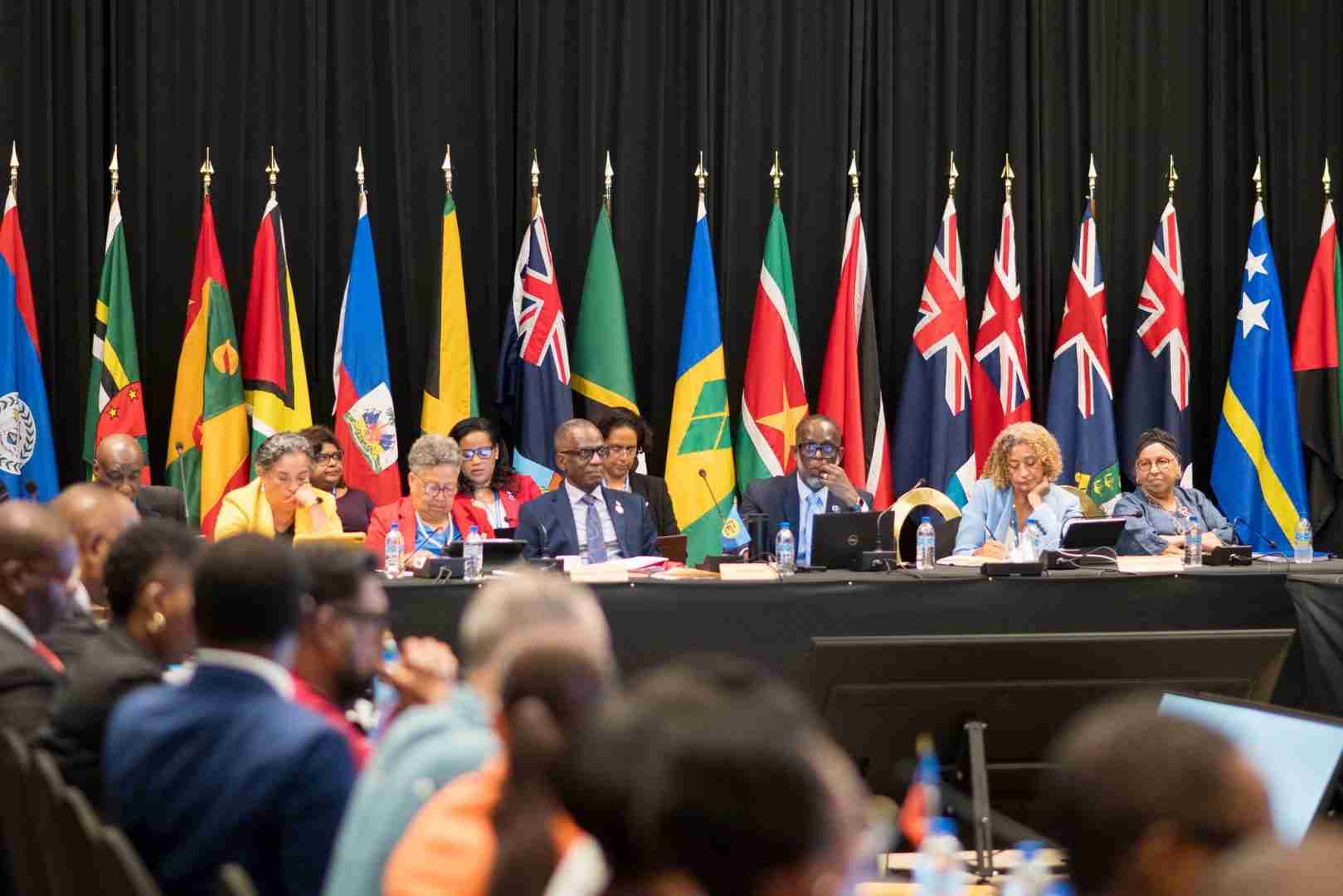
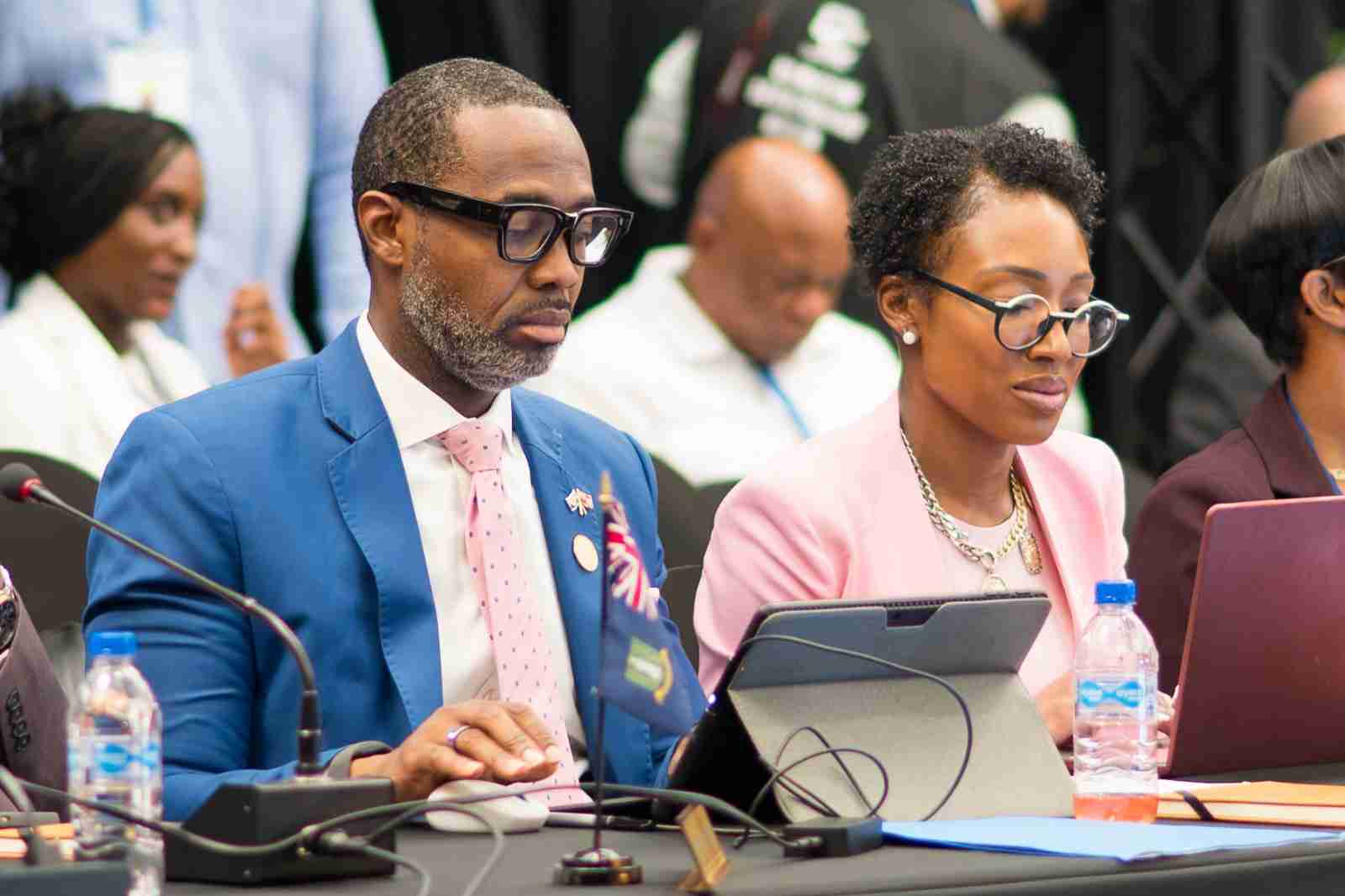
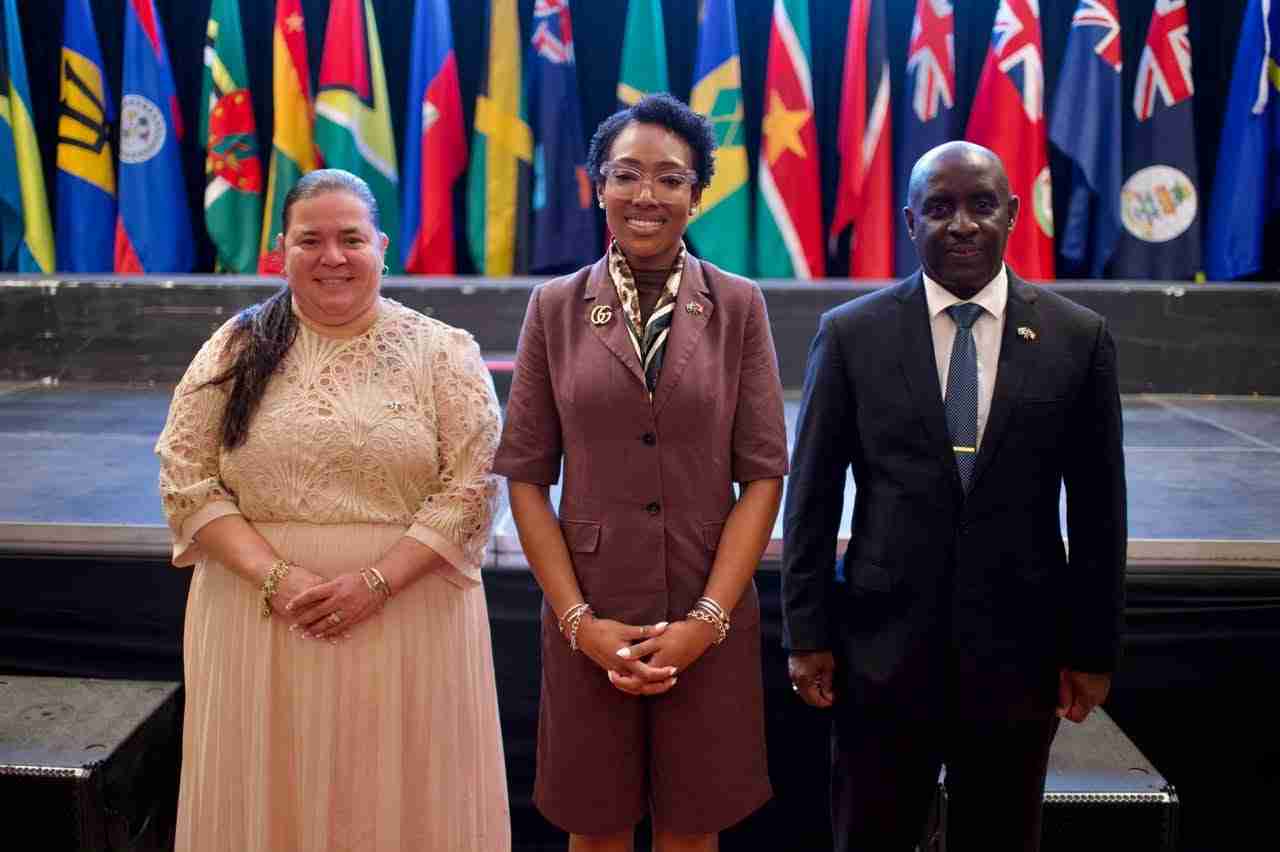
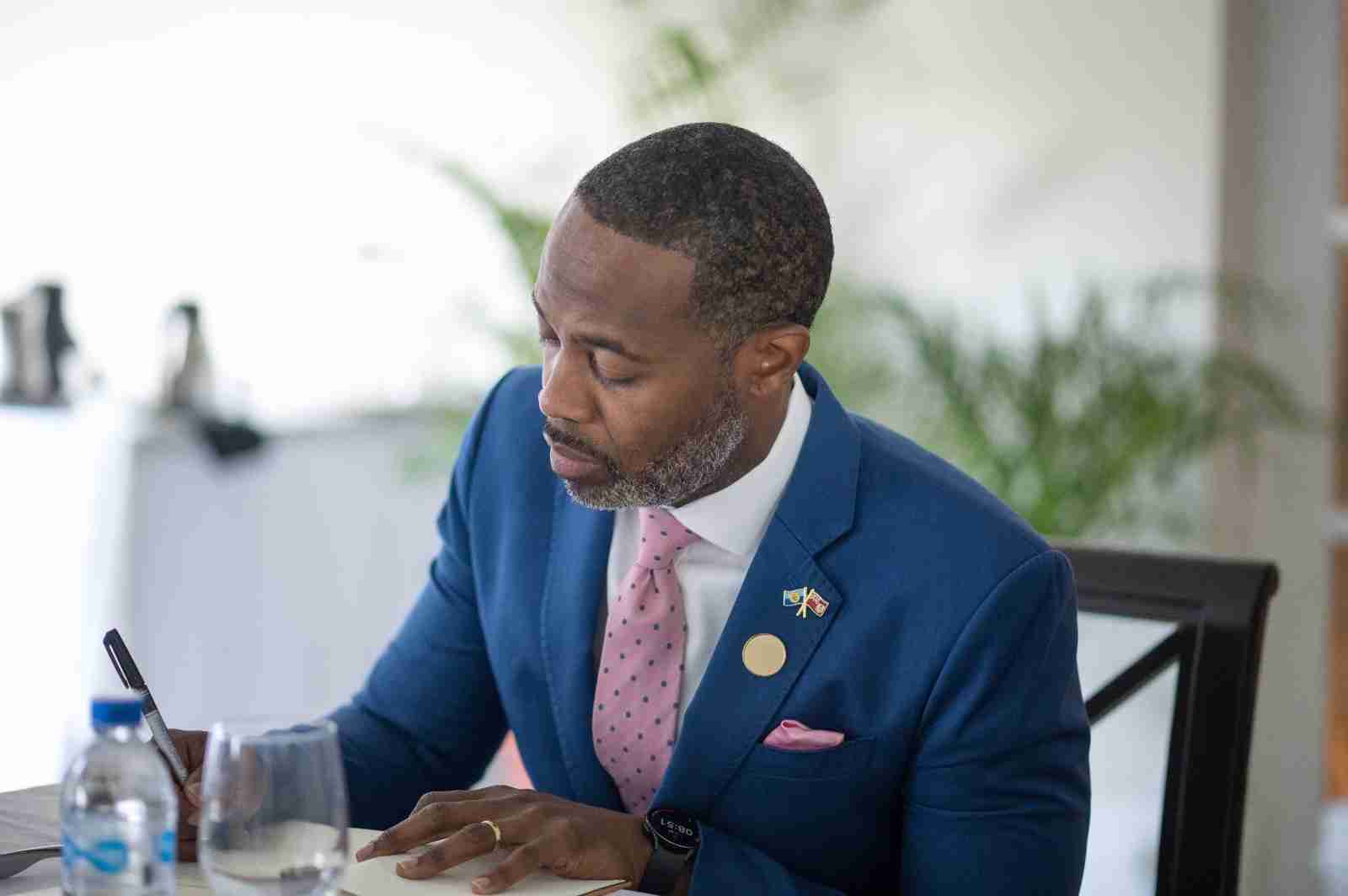
The Premier, the Hon. David Burt, JP, MP, has described Bermuda’s participation in the 51st Regular Meeting of the Conference of Heads of Government of CARICOM in St. Lucia was “productive and forward looking”, highlighting that Bermuda’s discussions focused on food security, reducing the cost of living, trade diversification, and Bermuda’s continued engagement toward full CARICOM membership. The public will note that Premier Burt attended the meeting alongside Minister of Home Affairs, the Hon. Alexa Lightbourne, JP, MP, who has led the Government’s national conversation on Full Membership in the Caribbean Community.
The Premier said Bermuda was “warmly received” by CARICOM member states and noted the continued support for Bermuda’s deeper engagement within the regional community.
Premier Burt said, “CARICOM member states have always been supportive of Bermuda and the other Associate Members. As a small jurisdiction navigating a rapidly changing global environment, it is important that we continue to strengthen our relationships, build partnerships, and work collaboratively on issues that impact our people.”
A major focus of the Heads of Government discussions was the cost of living, said Premier Burt, which remains a shared concern across the region.
Leaders reviewed initiatives designed to reduce food import costs, strengthen food security and sustainability, and expand agricultural production throughout CARICOM.
During the meetings, regional leaders examined strategies to boost food production, diversify import sources, and improve trade resilience. These efforts are intended to reduce dependence on traditional supply chains and create greater economic stability for consumers.
The Premier said, “There were extensive discussions on agriculture, food production and reducing food import bills. The cost of living is the number one issue not only in Bermuda but across the Caribbean. Working together with countries that are successfully reducing the cost of food and goods provides important opportunities for Bermuda.
“We are seeing significant work across the region focused on trade diversification and food security. That includes expanding access to goods from different markets and strengthening regional transportation and supply networks. These are practical measures that can help reduce the cost of imports and ultimately benefit Bermudian families.”
And Minister Lightbourne, who has responsibility for CARICOM and the Government’s Affordability Strategy, added, “The regional discussions aligned closely with the Affordable Bermuda Agenda and our work to lower household costs at home.
“For Bermuda, food security and affordability are kitchen table issues. They shape what families can put in the cupboard and what is left in the budget at the end of the month. We will pursue every opportunity to diversify our supply chains, strengthen food resilience, and identify practical measures that lower costs for consumers.
“The work underway across CARICOM on food production, agricultural innovation, and trade cooperation offers real opportunities for Bermuda as we build a more sustainable and resilient future.” The Premier also emphasised that Bermuda has much to contribute to regional discussions, citing the Island’s economic expertise and strong international reputation.
The Premier added, “Bermuda is one of the most advanced economies in the world. We have significant expertise to share, and we also stand to gain from stronger regional partnerships. It is important that we continue to expand our relationships and take advantage of regional arrangements that can deliver benefits for our people.”
During the meeting, Premier Burt and Minister Lightbourne also held discussions related to Bermuda’s ongoing consideration of full CARICOM membership.
It should be noted that progress continues to be made as Bermuda works through the various technical and constitutional considerations associated with deeper integration.
The Premier said the Government’s proposed White Paper on Bermuda’s potential full membership in CARICOM remains an important part of that process and will outline the conclusions and recommendations arising from ongoing consultations and discussions.
The Premier said, “Progress has certainly been made in our discussions. The work is continuing, and the White Paper will set out the Government’s position and provide the public with a detailed explanation of the opportunities and considerations associated with full membership.”
He added that Bermuda’s engagement with CARICOM should be viewed through the lens of long term national interests.
“Countries cannot afford to stand still,” Premier Burt said.
“As we move forward, it is in Bermuda’s interest to strengthen and diversify our relationships around the world. Regional cooperation is an important part of ensuring future economic resilience and creating opportunities that benefit our people.”
And Minister Lightbourne noted, “The Government is advancing Bermuda’s engagement with CARICOM in a way that serves our long-term national interests. The forthcoming White Paper will set out the opportunities, the considerations, and the progress made to date in a form the public can readily understand. We will bring this work to a conclusion that serves Bermuda’s best interests.”
Reflecting on the meeting, Premier Burt said, “This was a very positive meeting. The discussions were focused on issues that matter to people every day, the cost of living, food security, trade and economic opportunity. Progress is being made, and Bermuda will continue to engage constructively with our regional partners to ensure those benefits are realized for Bermudians.”
Media release and images supplied by the Government of Bermuda.
To provide the best experiences, we use technologies like cookies to store and/or access device information. Consenting to these technologies will allow us to process data such as browsing behavior or unique IDs on this site. Not consenting or withdrawing consent, may adversely affect certain features and functions.
Functional
Always active
The technical storage or access is strictly necessary for the legitimate purpose of enabling the use of a specific service explicitly requested by the subscriber or user, or for the sole purpose of carrying out the transmission of a communication over an electronic communications network.
Preferences
The technical storage or access is necessary for the legitimate purpose of storing preferences that are not requested by the subscriber or user.
Statistics
The technical storage or access that is used exclusively for statistical purposes.The technical storage or access that is used exclusively for anonymous statistical purposes. Without a subpoena, voluntary compliance on the part of your Internet Service Provider, or additional records from a third party, information stored or retrieved for this purpose alone cannot usually be used to identify you.
Marketing
The technical storage or access is required to create user profiles to send advertising, or to track the user on a website or across several websites for similar marketing purposes.