Saturday, November 7, 2026
Home Blog Page 191

Crypto firms prepare defenses as quantum threat to encryption draws nearer

Quantum computers can solve complex mathematical problems much faster than today’s sophisticated computers, and could be used to unscramble conventional methods for encrypting digital information

International News via Reuters:

The cryptocurrency industry is starting to prepare for the threat of quantum computing as recent advances fuel concerns that the technology could soon be able to crack the cryptography that protects transactions and digital wallets. 

Quantum computers can solve complex mathematical problems much faster than today’s sophisticated computers, and could be used to unscramble conventional methods for encrypting digital information. That spells trouble for the $2 trillion global cryptocurrency market, which is based on blockchains secured by old-school cryptography and already has a history of major hacks. 

While the technology remains largely experimental, crypto industry concerns have grown since March research from Alphabet’s Google, one of several tech giants pioneering the technology, suggested quantum computers may be able to break that cryptography sooner than previously expected, according to executives and analysts. Google has said that quantum computers capable of breaking encryption could arrive by 2029, whereas previously they were seen as at least a decade out.

Recent research from Citigroup and others has also concluded that quantum computing, along with artificial intelligence breakthroughs, has compressed the time frame in which cryptocurrencies will become widely vulnerable to hackers.

Acknowledging the risks the technology poses to the public and private sectors, U.S. President Donald Trump last month issued executive orders to bolster U.S. quantum capability. 

Some crypto companies and blockchain developers are already drawing up plans to upgrade their networks with quantum-resistant cryptography, a potentially years-long effort that could require sweeping changes to the infrastructure underpinning digital assets.

“It’s the most direct and existential threat towards cryptocurrencies and crypto networks,” said Chris Tam, head of quantum innovation at BTQ Technologies, which focuses on quantum security. 

BLOCKCHAINS USE DECADES-OLD CRYPTOGRAPHY

Most blockchains rely on decades-old elliptic-curve cryptography to generate the public and private keys and digital signatures used to verify ownership of crypto assets and authorize transactions. Public keys are mathematically derived from private keys and, in many blockchain networks, become publicly visible once crypto assets are used in a transaction or transferred.

While conventional computers cannot feasibly derive a private key from a public key, a sufficiently powerful quantum computer could potentially do so, allowing hackers to forge digital signatures and authorize fraudulent transactions.

That is a particularly acute risk for public crypto networks where transactions, unlike traditional payments, are irreversible.

“Crypto especially is uniquely exposed because blockchains are transparent and permanent,” said Utkarsh Ahuja, managing partner at Moon Pursuit Capital, a crypto investor. 

Bitcoin, the biggest cryptocurrency, is considered particularly vulnerable because its 17-year history of transactions has generated a large number of visible public keys.

Roughly 35% of the token’s circulating supply could be exposed to a quantum computing attack, according to an unpublished June 2026 working paper by independent researcher Ahmed Raza Muhammad Umer. Other research from last year has estimated that figure could be as high as 50%.

Just one incident in which a hacker steals and sells a large amount of a token could tank its price, said Cristiano Ventricelli, vice president and senior analyst of digital assets at Moody’s Ratings. “Everyone will feel the impact,” he added.

That risk has already prompted some to rethink bitcoin investments. Christopher Wood, the closely tracked global head of equity strategy at Jefferies, in his January newsletter removed a 10% bitcoin allocation from his model portfolio due to the long-term “existential” threat of quantum computing. 

BLOCKCHAIN UPGRADE PLANS TAKE SHAPE

To be sure, Ahuja and others said they believe it will still be a few years before quantum computing can crack blockchains, and that the industry will be able to upgrade to new “post-quantum” types of cryptography resistant to the technology. 

Many crypto executives also warned that moving too early could create vulnerabilities because post-quantum cryptography is still rapidly evolving. Post-quantum digital signatures are generally much larger than traditional signatures, increasing storage and bandwidth requirements. They could raise costs and degrade user experience, particularly on blockchains with fixed block-size limits, such as bitcoin, said Zach Pandl, head of research at crypto asset manager Grayscale, although he added he had confidence blockchains would ultimately address the issues.

“There is an engineering challenge ahead, but there are engineering solutions already on the table,” he added.

That challenge could take years to overcome. One senior cybersecurity executive at a major crypto player said he expects it will take two years for his company to become fully quantum-resistant. He and others described the potential work as akin to a Y2K-style overhaul when more than $300 billion was spent globally fixing the “millennium bug.”

The problem is especially thorny for blockchains, which are mostly decentralized, meaning they are operated by a community that may not be able to agree on a path forward, said Tam of BTQ Technologies. 

None of the top 20 blockchains have implemented a post-quantum signature algorithm, according to people interviewed for this story. In the case of bitcoin, developers and market participants are divided over which fix to adopt and when to move, executives said. The Ethereum Foundation, which supports the blockchain that underpins ether, the second-largest cryptocurrency, says it is targeting 2029 for full protection from quantum computing. 

“The sort of disaster scenario is that it happens way sooner than we think,” said Christopher Smith, CEO of Quantus, a blockchain that already uses post-quantum cryptography.

The Algorand Foundation, which supports the Algorand blockchain,  whose native token has a market capitalization of around $780 million, is among the early movers. It last month published a post-quantum roadmap and plans to start supporting post-quantum accounts later this year, said Bruno Martins, Algorand Foundation’s chief technology officer.

“It felt right to start doing (something) now, because it’s responsible to have a plan,” Martins added.

Reporting by Hannah Lang in New York; Editing by Michelle Price and Matthew Lewis
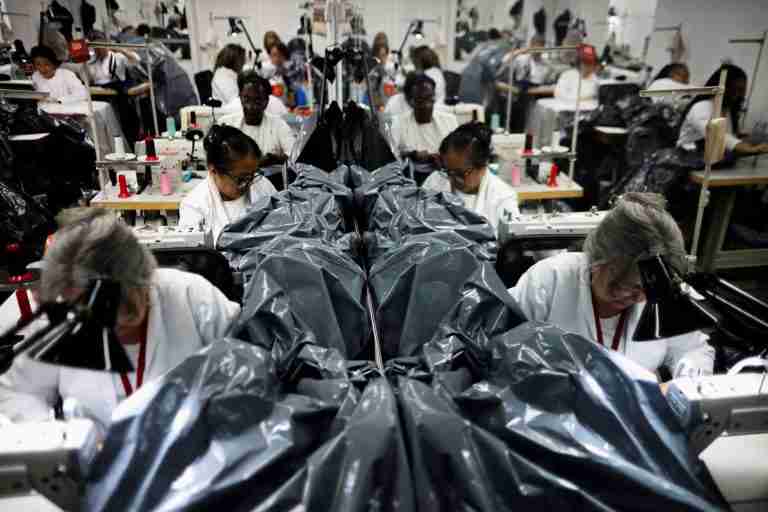
Venezuelan fashion workshop swaps gowns for body bags after deadly earthquakes

Civilians have led many of the rescue and recovery operations on the ground, with the help of professional rescue teams from around the world, firefighters and volunteers from the army

International News via Reuters:

Seated in his office alongside sketches of elegant dresses, fashion designer Efrain Mogollon starts the workday in Venezuela like any other.

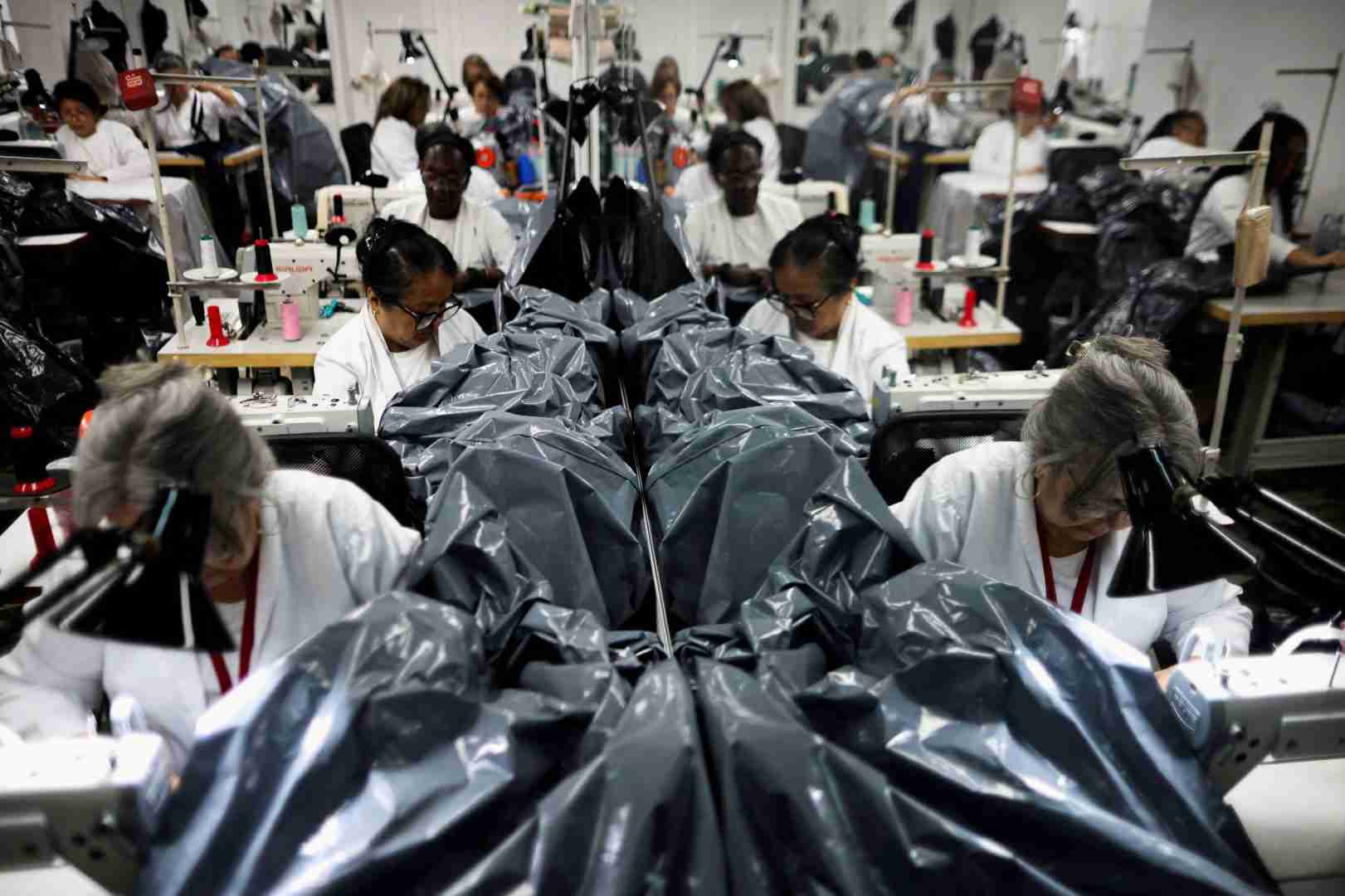
But the rows of workers bent over sewing machines are not stitching his usual playful, colorful creations.

With somber faces, they piece together dark sheaths of plastic to be used as body bags after earthquakes two weeks ago killed more than 3,500 people, overwhelming disaster response services. The only adornment is an embossed image of Jesus Christ, affixed to a zipper.

“It is a completely different feeling,” said Mogollon, as he loaded several plastic-wrapped sheaths into the back of an ambulance in Catia la Mar, a coastal neighborhood in La Guaira state near Caracas that was among the hardest hit in the June 24 tremors of magnitudes 7.2 and 7.5.

“At the same time it fills us with satisfaction to know that, from our small contribution and from our platform, we are helping,” Mogollon added, on a street where buildings were reduced to heaps of concrete, brick and rebar. 

Civilians have led many of the rescue and recovery operations on the ground, with the help of professional rescue teams from around the world, firefighters and volunteers from the army.

Civilians also provided much of the in-kind aid such as food and clothing in the initial days after the quakes, especially in La Guaira. Global humanitarian organizations including the International Rescue Committee have said the response has not met the scale of humanitarian need.

Back in the tightly packed workshop, Mogollon’s team unfurls rolls of black polyethylene across a large table. Bolts of fabric in pinks, reds and blues rest against the wall; female mannequins have been set aside. 

Mary Castillo, a seamstress, has now been sewing body bags every day for two weeks. She says the work has been painful but also given her a sense of purpose amid the tragedy.

“It is very sad. But we have to keep working and make the effort to move forward,” she said. 

Reporting by Javier Andres Rojas; Writing by Daina Beth Solomon; Editing by Alistair Bell

Democrat Rahm Emanuel tells Israel to change course or risk US alliance

A former Chicago mayor and chief of staff to former President Barack Obama, Emanuel used a speech at Tel Aviv University to criticize Prime Minister Benjamin Netanyahu’s government and propose a new U.S. policy toward the Middle East

International News via Reuters:

Rahm Emanuel, a Democrat weighing a 2028 U.S. presidential run, said on Wednesday that Israel risks jeopardizing its alliance with Washington unless it changes course on the Palestinians because of growing unease with its policies among U.S. voters.

A former Chicago mayor and chief of staff to former President Barack Obama, Emanuel used a speech at Tel Aviv University to criticize Prime Minister Benjamin Netanyahu’s government and propose a new U.S. policy toward the Middle East.

“Without question, the alliance is at a crossroads. It cannot stand or survive as it has been. To maintain the strength of our ties, this alliance needs significant changes and a new direction,” he said.

Emanuel said policies ranging from settlement expansion and settler violence in the occupied West Bank to restrictions on aid to Gaza were contributing to Israel’s declining support among Americans, particularly younger voters.

His speech offered an unusually blunt warning from a prominent Democrat that longstanding U.S. political support can no longer be taken for granted.

Support for Israel has become one of the most divisive issues ahead of November U.S. midterm elections in which progressive Democratic candidates have won primary contests while opposing U.S. funding for Israel.

Israel’s favorability rating among Democrats fell from 59% in 2018 to 22% in May, according to Reuters/Ipsos polling. Support remains strong among Republicans, though some elements of Trump’s coalition have also called for cutting off aid.

Emanuel said Washington’s unconditional backing had enabled Netanyahu, in power almost consecutively since 2009, to ignore American concerns and pursue policies that have led to violence, destabilization and Israel’s increasing diplomatic isolation.

A spokesperson for Netanyahu did not immediately respond to a request for comment.

EMANUEL CALLS FOR ENDING DEFENCE SUBSIDIES FOR ISRAEL

While Israel has long enjoyed strong bipartisan support from the U.S., an increasing number of Democrats in Congress are now pressing to cut off military aid, which amounts to $3.8 billion a year. Emanuel said Israel should purchase American weapons under standard allied terms rather than special subsidy.

“The prime minister and his government have led Israel into a dead-end,” said Emanuel, who is Jewish, served as a volunteer supporting the Israeli military during the 1991 Gulf War and whose father was born in Jerusalem.

Netanyahu, Emanuel said, has shunned diplomacy while relying on military action.

“Israel has failed to convert its military gains into strategic advantages. The same dynamic extends beyond Iran. You had no day-after Hamas plan for Gaza. You had no strategy to make a partner of the Lebanese government against Hezbollah,” said Emanuel.

Netanyahu has said he is seeking to expand diplomatic ties with countries in the region and Israel launched U.S.-backed peace talks with Lebanon in June.

Emanuel proposed trust-building measures to revive a peace process that collapsed in 2014, in which Arab states would take on a central role that would ultimately lead to the establishment of formal ties between Israel and the Arab League.

Emanuel directed some of his criticism toward Israel’s neighbours, describing the Palestinian leadership as failed and corrupt and Arab countries as having paid little beyond lip service to the Palestinian quest for statehood.

There was no immediate comment from the Palestinian Authority.

Writing by Maayan Lubell; Editing by Howard Goller

Police renew warning over bank scam

Fraudsters posing as bank staff are stealing customers’ login details and transferring money overseas

The Bermuda Police Service (BPS) continues to receive reports regarding fraudulent activity targeting members of the public, where individuals posing as representatives of local banks are contacting customers and falsely claiming that fraudulent activity has been detected on their accounts.

The fraudsters then request login credentials to correct the problem. However, once they gain access to the accounts, they quickly transfer the funds in those accounts to overseas locations.

The BPS once again urges residents to remain vigilant and note the following to protect against falling victim to these types of scams:

Bank representatives will never ask you over the phone for your personal account login credentials.

If you are uncertain about the legitimacy of a call, hang up immediately and contact your bank directly by phone or in person.

Do not download or install any third-party software at the request of someone claiming to be a bank representative.

If you receive an email claiming to be from your bank, you should check the email header to see if it matches the details of legitimate emails you’ve received from your bank before.

Please have this discussion with any seniors you are related to or are friendly with as they are often particularly targeted by these criminals.

Media release supplied by the Bermuda Police Service.

Naval Group sees Europe ‘buying European’ more, CEO says

Naval Group’s revenue from Europe has sharply risen since 2019 and is poised to increase even further in the coming years, Pomellet said

International News via Reuters:

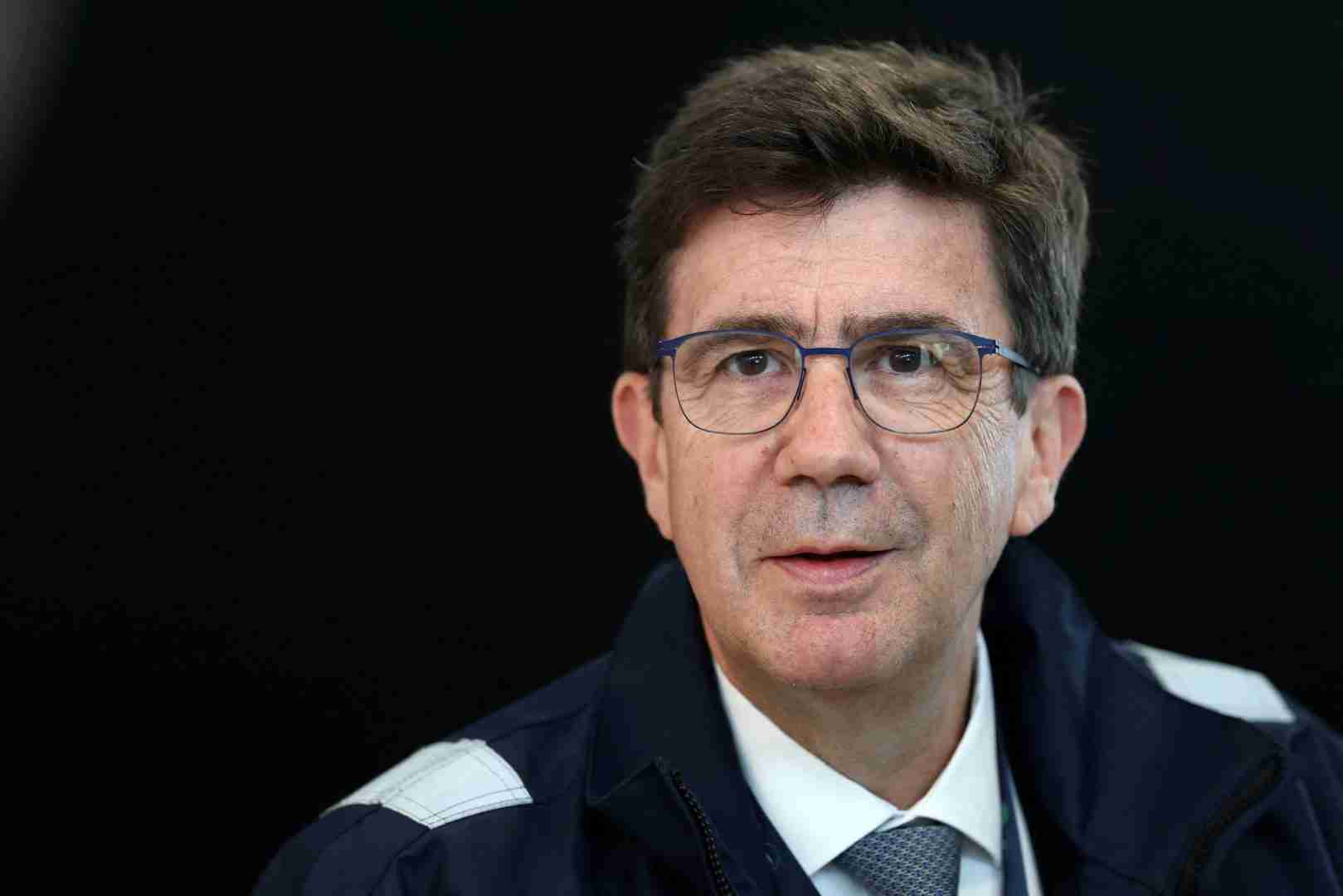
Naval Group CEO Pierre-Eric Pommellet said on Wednesday that European governments choose to “buy European” more than they did before, amid a push on the continent to develop strategic autonomy.

Naval Group’s revenue from Europe has sharply risen since 2019 and is poised to increase even further in the coming years, Pomellet said.

“In 2019, Naval Group generated zero euros in revenue in Europe,” Pommellet told Reuters on the sidelines of the annual general meeting of France’s GICAN naval industry association.

“In 2026, we will generate €1 billion, and we will reach €1.5 billion in the coming years thanks to Belgium, the Netherlands, Greece, and now Sweden, which has chosen us.”

INCREASED COMPETITION

Faced with the threat posed by Russia since its 2022 invasion of Ukraine and with U.S. President Donald Trump’s administration’s reluctance to fund Europe’s defence, European governments’ efforts to upgrade their navies have also led to an increase in competition among European rivals.

France’s Naval Group lost out on major submarine programmes in Canada and Poland to Germany’s TKMS and Sweden’s Saab and a frigate contract in Norway to Britain’s BAE Systems last year, before securing a significant contract in May to supply frigates to Sweden.

Pommellet said it was too early to say if its victory with Sweden might help secure a frigate contract that Denmark is due to award.

A strategic asset for France and the centrepiece of its naval industry, Naval Group builds and maintains the French Navy’s most critical warships, nuclear-powered submarines and its aircraft carrier, making it a key pillar of France’s defence capabilities and nuclear deterrence.

According to Naval Group’s website, at the end of 2025, the French state owned 62.25% of Naval Group, while 35% was owned by defence electronics specialist Thales. The French state also owns about a 26% stake in Thales.

Reporting by Florence Loève; Editing by Makini Brice

Macron says Europe has stepped up in NATO ahead of Ukraine coalition summit

Macron said at the alliance’s annual summit in Ankara that Europe had shown it was investing more in defence, defending its sovereignty and developing strategic autonomy within NATO

International News via Reuters:

France’s President Emmanuel Macron said on Wednesday he would use a summit of Ukraine’s allies next week to unveil new defence initiatives and joint military exercises, presenting the gathering as further evidence that Europe was assuming greater responsibility for its own security.

More than seven years after declaring NATO was suffering from “brain death”, Macron said at the alliance’s annual summit in Ankara that Europe had shown it was investing more in defence, defending its sovereignty and developing strategic autonomy within NATO.

The July 13 meeting, expected to bring together around 35 leaders of the Coalition of the Willing, will focus on tackling Russia’s shadow fleet, new military capabilities for Ukraine, greater mobilisation of defence industries and deeper operational cooperation among Kyiv’s backers, Macron said.

A long-time champion of European strategic autonomy, Macron argued that Russia’s war in Ukraine and uncertainty over long-term U.S. military commitments had accelerated Europe’s efforts to build up its own defence capabilities while remaining anchored within NATO.

Macron ignited a fierce debate among allies in 2019 when he declared NATO was experiencing “brain death”, citing what he saw as a lack of strategic coordination and the unpredictability of then-U.S. President Donald Trump.

As he enters the final year of his presidency, Macron used the Ankara summit to argue that many of the changes he had long advocated were now taking shape, from higher European defence spending to a greater operational role within the alliance and efforts to build a stronger European defence industrial base.

“France has long advocated that Europeans must support and defend a European defence industry. If we spend more, it should not simply be to buy non-European equipment,” he said.

Macron said Europe was developing its own missile-defence systems, long-range precision-strike capabilities, early-warning networks and artificial-intelligence-enabled command systems.

He sought to play down lingering concerns over Washington’s commitment to the alliance, saying Trump had reiterated his support for NATO in closed-door discussions despite periodic public criticism of allies.

“The United States has announced a redeployment of its efforts, which seems entirely legitimate to me, and Europeans must organise themselves accordingly,” Macron said.

“But we should not do this because someone asks us to. We should do it for ourselves.”

France’s relationship with NATO has long been complicated. Although a founding member, Paris withdrew from the alliance’s integrated military command in 1966 under Charles de Gaulle before returning fully under Nicolas Sarkozy in 2009.

Since taking office, Macron has sought both to deepen France’s role within NATO and to strengthen what he describes as a European pillar of the alliance.

Russia’s invasion of Ukraine has strengthened that case.

Despite mounting pressure on public finances, France has maintained defence spending in line with NATO targets and expanded its military presence across the alliance’s eastern flank, while offering greater cooperation with European allies on its nuclear deterrence.

French troops are deployed in Romania and the Baltic states. Macron announced on Wednesday that France would participate in NATO force rotations in Finland alongside Finland and Sweden, becoming one of the first allies to contribute to the newly established deployment near the alliance’s border with Russia.

Reporting by John Irish; Editing by Alistair Bell

Severn Trent Water breached wastewater duties, UK watchdog says

Severn Trent had failed to effectively provide drainage and deal with the contents of its sewers

International News via Reuters:

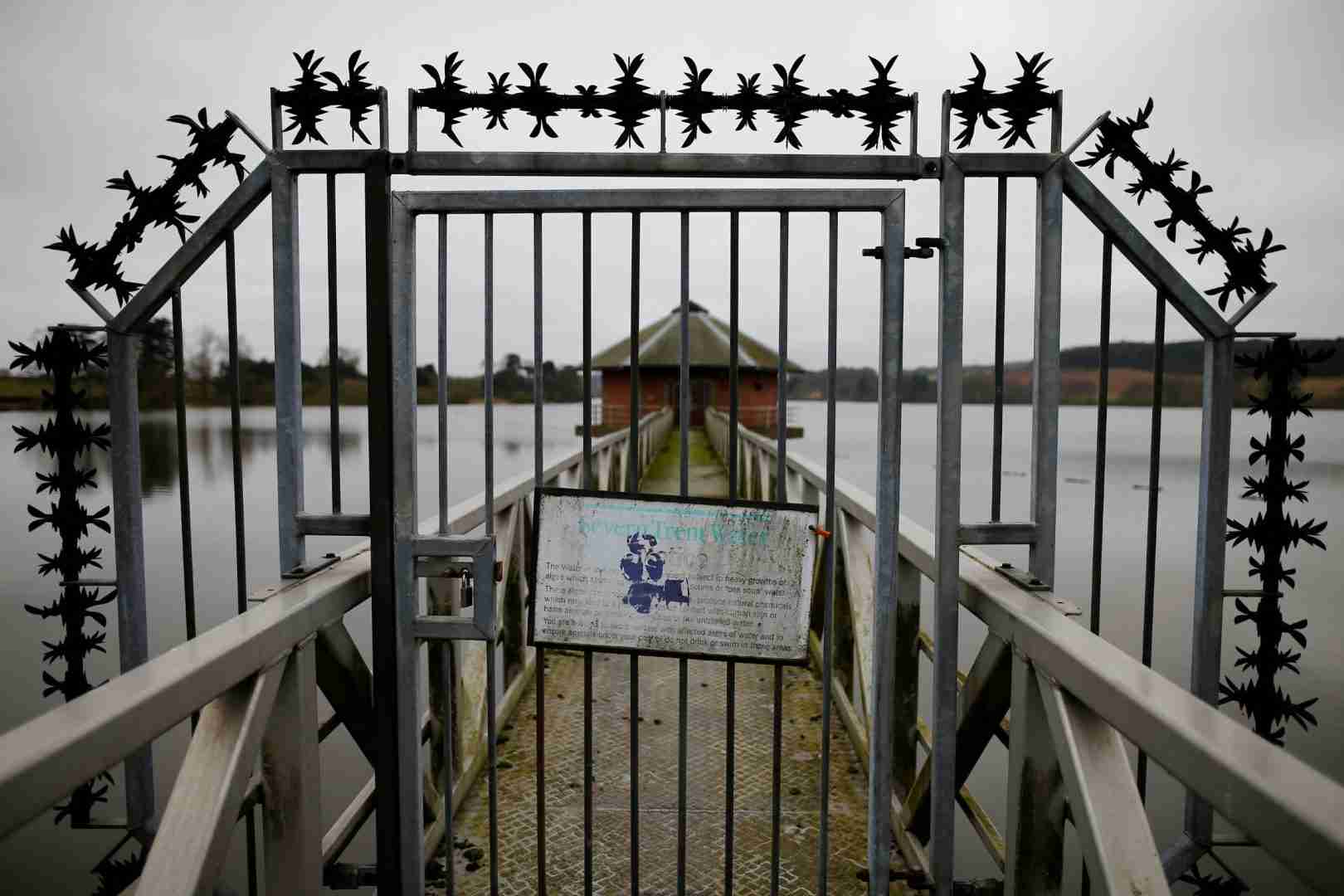
UK water regulator Ofwat on Wednesday said it found utility Severn Trent Water had breached its obligations to treat wastewater, but opted not to impose a fine, citing the company’s proactive steps to identify and address failures.

Here are some details from the regulator: 

• Severn Trent had failed to effectively provide drainage and deal with the contents of its sewers

• Company failed to maintain adequate systems and processes to meet those duties.

• Utility to invest £98 million ($130.88 million) of shareholder funds to address them.

• The regulator drew a sharp distinction between Severn Trent and the seven cases that preceded it in the investigation.

• “Their (Severn Trent Water) response to those failures sets a standard we expect from all companies,” said Lynn Parker, Ofwat’s Senior Director for Enforcement.

• The shareholder-funded investment included additional capacity at 65 wastewater treatment sites, storm tank enhancements, increased storage at storm overflows, and £26 million of nature-based solutions in the Mansfield area.

• The investment produced tangible results, with Severn Trent’s average spills per storm overflow falling to 15 in 2025, well below the industry average of 20.5.

• The regulator has accepted an enforceable package of undertakings requiring Severn Trent Water to rectify all outstanding issues and ensure future compliance.

• Ofwat’s sector-wide wastewater investigation has so far secured enforcement packages and fines totalling more than £300 million.($1 = 0.7488 pounds)

Reporting by DhanushVignesh Babu in Bengaluru; Editing by Rashmi Aich

Trump says interim accord to end Iran war is ‘over’, warns of US strikes on Wednesday

In a flare-up that boosted oil prices by around 7%, Iran said on Wednesday it had attacked U.S. military sites in Bahrain and Kuwait after U.S. forces struck Iranian targets in response to attacks on tankers in the Strait of Hormuz

A screengrab from an Iranian state TV video says to show an Iranian missile flying through the air at an unknown location, in this screengrab obtained by Reuters on July 8, 2026. Iranian State TV/Handout via REUTERS

International News via Reuters:

President Donald Trump said an interim agreement to end the war with Iran was “over” and that the United States was likely to launch new strikes on Wednesday night following Iranian attacks on U.S. bases in the Gulf. 

In a flare-up that boosted oil prices by around 7%, Iran said on Wednesday it had attacked U.S. military sites in Bahrain and Kuwait after U.S. forces struck Iranian targets in response to attacks on tankers in the Strait of Hormuz. [O/R]

The attacks rattled a shaky ceasefire agreement and dented hopes of turning the memorandum of understanding signed on June 17 into a permanent peace deal to end the war, which began with U.S.-Israeli airstrikes on Iran on February 28.

“If we make a deal with Iran I’m not sure that will stick,” Trump said, “because I found them to be very dishonourable people.”

But Trump said he did not expect a return to full-fledged war, and it was not immediately clear whether the negotiations on reaching a permanent deal would continue.

OIL PRICES RISE, STOCKS FALL

Asked before a NATO summit in Turkey whether the memorandum of understanding was over, Trump said: “It’s a very interesting question. To me, I think it’s over. I don’t want to deal with them.”

“As far as I’m concerned, it’s just a waste of time dealing with them,” he told reporters in Ankara, before adding: “Now, I’ll let our wonderful negotiators keep talking if they want, but I don’t see it. I don’t like these people, you know that.”

A source familiar with the Ankara talks said Trump did not repeat his comments about the interim deal being over when NATO leaders met, but he later warned of new strikes before a meeting with Ukrainian President Volodymyr Zelenskiy. 

“I’ll give a little warning: We’re going to hit them hard tonight,” Trump told reporters.

At a press conference later, he said he did not think the war would restart: “Anything that happens is going to be over very quickly … and will only make it safer, including for oil.”

Shipping data showed at least four oil and gas tankers had turned back rather than try to transit the Strait of Hormuz, central to global energy trade.

Iranian state media said eight Iranian service personnel had been killed in U.S. strikes on southern Iran.

Foreign Ministry spokesperson Esmaeil Baghaei said the U.S. attacks had violated the memorandum by challenging a clause that “emphasizes the Islamic Republic of Iran’s responsibility in determining arrangements for the safe passage of ships through the Strait of Hormuz”.

It was unclear how Iran planned to retaliate in the absence of comment from the hardline Revolutionary Guard, close to Supreme Leader Ayatollah Mojtaba Khamenei and widely believed to be decisively shaping policy since the war began.

Iranian Deputy Foreign Minister Kazem Gharibabadi said that, to be understood, Iran must speak to Trump in the language of force. Iran’s Press TV cited an “informed source” as saying Iran would close the strait in the event of new U.S. attacks.

IRAN SAYS U.S. VIOLATED MEMORANDUM

A spokesperson for parliament’s National Security Commission said options for retaliation included withdrawing from the nuclear Non-Proliferation Treaty (NPT), changing Iran’s nuclear doctrine, and closing the Bab-el-Mandeb Strait at the mouth of the Red Sea, another crucial global shipping route.

Trump has at times stepped back from threats he has made against Iran, but oil prices jumped and global bond markets tumbled. Brent crude futures leapt 7%, the most in a day since late May, to $79.07 a barrel.

While that was far below the peaks above $120 seen at the height of the fighting, it was enough to inject fresh inflation risk into the bond market, particularly since months of conflict have drawn down global oil inventories.  

 Wall Street’s main indexes fell. [.N]

The Revolutionary Guards (IRGC) said they had attacked U.S. military sites in Bahrain and Kuwait and shot down a U.S. MQ-9 drone attempting to interfere in the operation.

Bahrain’s army later said it had thwarted Iranian attacks.

The U.S. had earlier launched strikes and revoked a licence allowing Iran to sell oil, in response to attacks on three tankers in the strait.

U.S. Central Command said more than 60 small boats used by the IRGC were among the targets hit in an operation intended to impose a heavy cost on Iran for strikes on shipping in violation of the ceasefire.

Trump said the U.S. had “knocked out 28 boats last night” and would probably hit more later. 

He confirmed the U.S. had attacked Iran’s main oil hub of Kharg Island and, repeating a warning that U.S. forces could take over the island, said: “They may hit it again tonight.”

IRAN SEEKS TO EXPLOIT CONTROL OF STRAIT

Iran’s top joint military command, Khatam al-Anbiya Central Headquarters, called the U.S. strikes a “blatant act of aggression”.

Iranian media reported explosions on Kharg Island, on Qeshm Island and in the southern port cities of Sirik and Bandar Abbas.

A U.S. official told Reuters that strikes targeted Iranian air defence systems, coastal surveillance systems, surface-to-air missiles, anti-ship cruise missiles and drone launch sites. 

No civilian deaths were reported in Iran.

Control of the Strait of Hormuz, which runs between Iran and Oman, has given Tehran immense leverage as it negotiates with Washington.

Under the interim U.S.-Iran agreement, the U.S. Treasury issued a general licence to allow the sale of crude oil and petrochemical and petroleum products of Iranian origin through August 21. In revoking that licence on Tuesday, it gave Iran until July 17 to wind down any transactions. 

Iran’s Foreign Ministry condemned the move as a breach of the framework agreement.

Reporting by Reuters team in Tehran and Reuters bureaux; Writing by Stephen Coates and Timothy Heritage; Editing by Alex Richardson and Sanjeev Miglani

North Rock Tank upgrades near completion at BAMZ

Aquarium closes briefly this weekend to return sharks and finish final renovation work

The Ministry of Public Works and Environment advises the public that the Bermuda Aquarium, Museum and Zoo (BAMZ) will be temporarily closed from 12:00 p.m. on Friday, 10 July and will re-open at 1:00 p.m. on Saturday, 11 July. The closure is necessary to facilitate a crane lift associated with the North Rock Tank renovation project, allowing for the return of sharks and other large fish to the exhibit. The closure period will also allow for the removal of construction hoarding and the replacement of flooring in the Aquarium Hall.

BAMZ has coordinated with vendors, stakeholders and partners to reschedule tours during the closure period. In addition, there will be no disruption to the facility’s Aqua Camps.

Following the removal of the construction hoarding, visitors will once again be able to view the North Rock Tank. The exhibit has not yet officially reopened, however, as fish and corals are still being added and monitored as part of the final stages of the project. Visitors should also be aware that sections of the Aquarium Hall may remain temporarily closed while flooring replacement work is completed.

The Ministry thanks the public for its patience and understanding as these improvements are carried out and looks forward to welcoming visitors back to BAMZ on Saturday afternoon.

Ajani Robinson crowned Grand National Champion in Buffalo

Bermudian jump rope star Ajani Robinson has pulled off a sensational, dominant comeback to be crowned a Grand National Champion at the US National Championships in Buffalo, New York.

Competing across a grueling four-day event, Robinson initially secured second place in the 19+ Individual Freestyle Age Division and finished fourth in the pairs Freestyle alongside Finniegan Cook, a junior athlete he coaches.

However, it was his tactical masterclass in the finals that stole the show. Entering the final round in second place overall for the individual freestyle, Robinson executed a breathtaking routine with just two minor mistakes.

The clinical performance engineered a dramatic turnaround, surging him into first place with a commanding three-point lead over the previous leader to claim the ultimate title.

“It led to a very dominant comeback,” Robinson said. “Overall, it was an extremely good competition, and one that I will remember forever as an American Jump Rope Federation Grand National Championship.”

The triumph adds another historic chapter to the William Peace University senior’s growing international resume, following his multi-medal haul on the world stage in East Asia.

Na’im Zuill signs scholarship with Bolton Wanderers

Bolton Wanderers have officially welcomed nine new scholars into their Academy ranks as the youngsters begin their full-time journeys with the League One outfit.

The promising starlets have moved up the club’s Academy ladder to sign two-year scholarship deals with the Youth Team, with the ultimate goal of securing a coveted professional contract at the end of their stints.

Under the guidance of newly appointed Head Youth Team Coach Danny Clarke, the crop of talent will combine full-time professional football training with their academic studies as they integrate into the Under-18 squad alongside the existing second-year scholars.

Among the nine fresh faces arriving at the club is Bermudian youth international Na’Im Zuill.

Recruited during the youth phase from Oldham Athletic, Zuill arrives with a reputation as a highly talented, left-footed attacker capable of operating across a number of offensive roles. The Bermudian prospect will look to make an immediate impact in Clarke’s side as pre-season preparations get underway later this month.

Narraway holds firm during hectic finish in Romania

Bermuda’s national road and time-trial champion Nicholas Narraway safely negotiated a high-speed day in the saddle to finish in the main bunch on Stage 1b of the Sibiu Cycling Tour in Romania.

Representing Competitive Edge Racing, Narraway navigated the 110.5-kilometer route, which started and finished in the historic city of Sibiu, crossing the line in 100th place.

In a wide-open and frantic bunch sprint, the Bermudian was credited with the exact same time as Danish stage winner Matias Malmberg (Swatt Club), who stopped the clock in a brisk 2 hours, 32 minutes, and 2 seconds.

The result keeps Narraway well positioned within the peloton’s competitive core. However, the real test begins now; the UCI 2.1-rated Europe Tour event is about to head into the brutal, high-altitude climbing stages of the Southern Carpathians, where fractions of a second will give way to minutes.