Wednesday, October 28, 2026
Home Blog Page 194

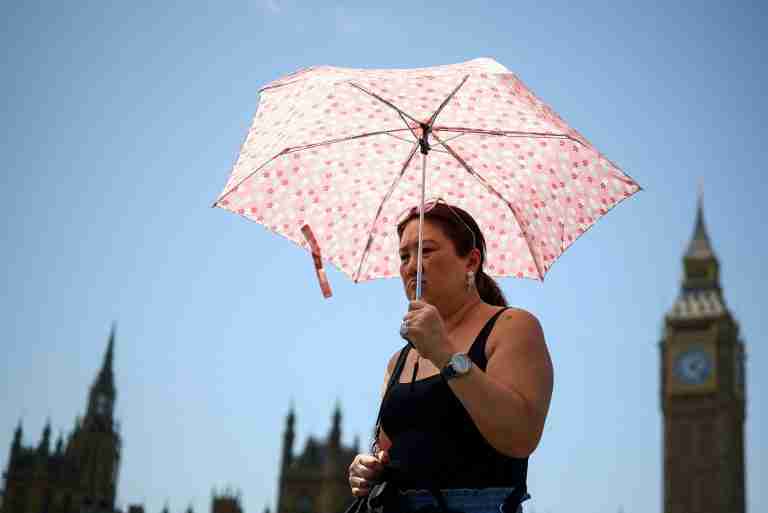
Heatwave-hit London climate week spurs calls for faster action

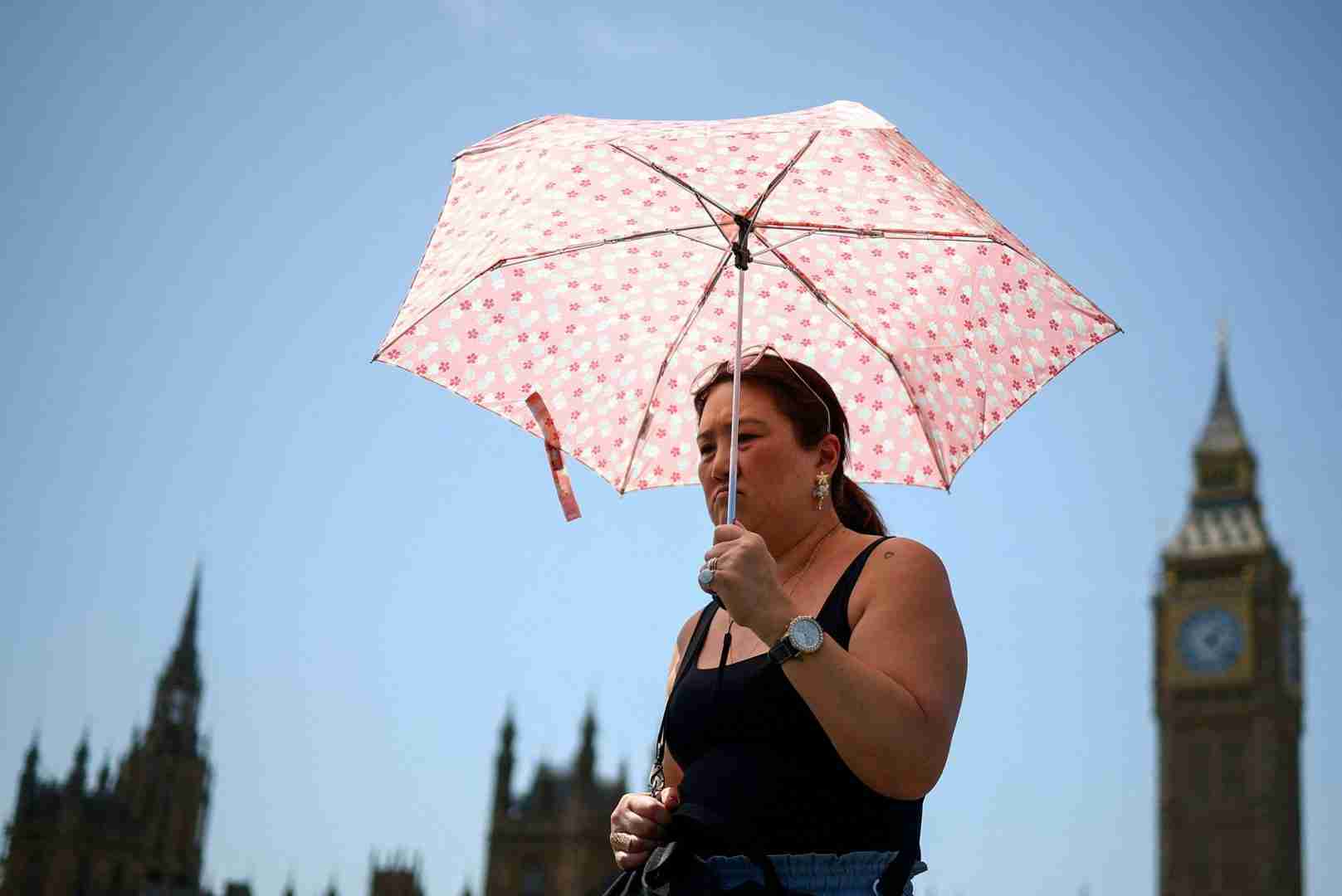
London got a glimpse of the future normal during its eighth annual climate week after an event dedicated to discussing the impacts of extreme heat at the London School of Economics was cancelled because the venue was too hot
International News via Reuters:

London got a glimpse of the future normal during its eighth annual climate week after an event dedicated to discussing the impacts of extreme heat at the London School of Economics was cancelled because the venue was too hot.

The event was due to have been held in a near-100-year-old building that, like many in Britain, relies on natural ventilation and fans to cool visitors rather than air conditioning. The organisers said they called it off due to a risk to public health.

For Chris Anderson, a climate expert at non-profit Practical Action, the cancellation, as British temperatures hit a provisional record June high, was a stark reminder that the dangers of a warming planet would impact everyone.

“There’s a real irony that an event designed to help vulnerable people adapt to extreme heat in a temperate, wealthy country had to be cancelled,” Anderson said.

EXTREME HEAT WARNING

Helen Clarkson, CEO of Climate Group, said the heatwave showed “science has come to life, and reality is clearly showing there is more of this to come”, as the government issued an extreme heat warning and some schools were forced to close.

Ahead of the COP31 climate talks in Turkey in November, more than 75,000 attendees from governments, companies, finance and civil society joined 1,300 events discussing ways to accelerate climate action, organisers said.

Resilience to heat and other extreme weather events such as drought, floods and storms — which hit many developing countries least able to manage them — was a key area of focus.

U.N. Secretary-General Antonio Guterres called for capital markets to see building this resilience as an asset and for governments to do more to fund projects, including taxing the windfall profits of fossil fuel producers.

The calls to move faster come as global heat-related deaths have risen 23% since the 1990s to an average 546,000 deaths a year, many of them in developing countries, an October Lancet report said.

The UK’s Climate Change Committee, an independent body advising the government, has called preparations “inadequate” and estimates that investment of around £11 billion a year is needed to fix that.

It has warned that heat-related deaths could exceed 10,000 a year by 2050.

ASIAN COUNTRIES AMONG MOST AT RISK 

The abnormally hot weather was referenced by speakers from Guterres to British minister Ed Miliband and the leader of the Pacific nation of Palau, as they urged attendees to act faster to rein in global warming.

Executives at food giant Danone and consumer products firm Unilever told an LSEG event they were investing to reduce carbon and water use in agriculture, among other things.

Asian countries are among those most at risk and need to adapt quickly, said Bertrand Millot, head of sustainability at Canadian pension fund La Caisse.

“It’s a question of survival … and companies need to prepare.”

Additional reporting by Barbara Lewis; Editing by Milla Nissi-Prussak
UK’s Reeves says Burnham would provide stability as prime minister

Reeves told the BBC she was backing Burnham to be prime minister after he emerged as the only declared candidate to replace Keir Starmer, who announced his resignation on Monday

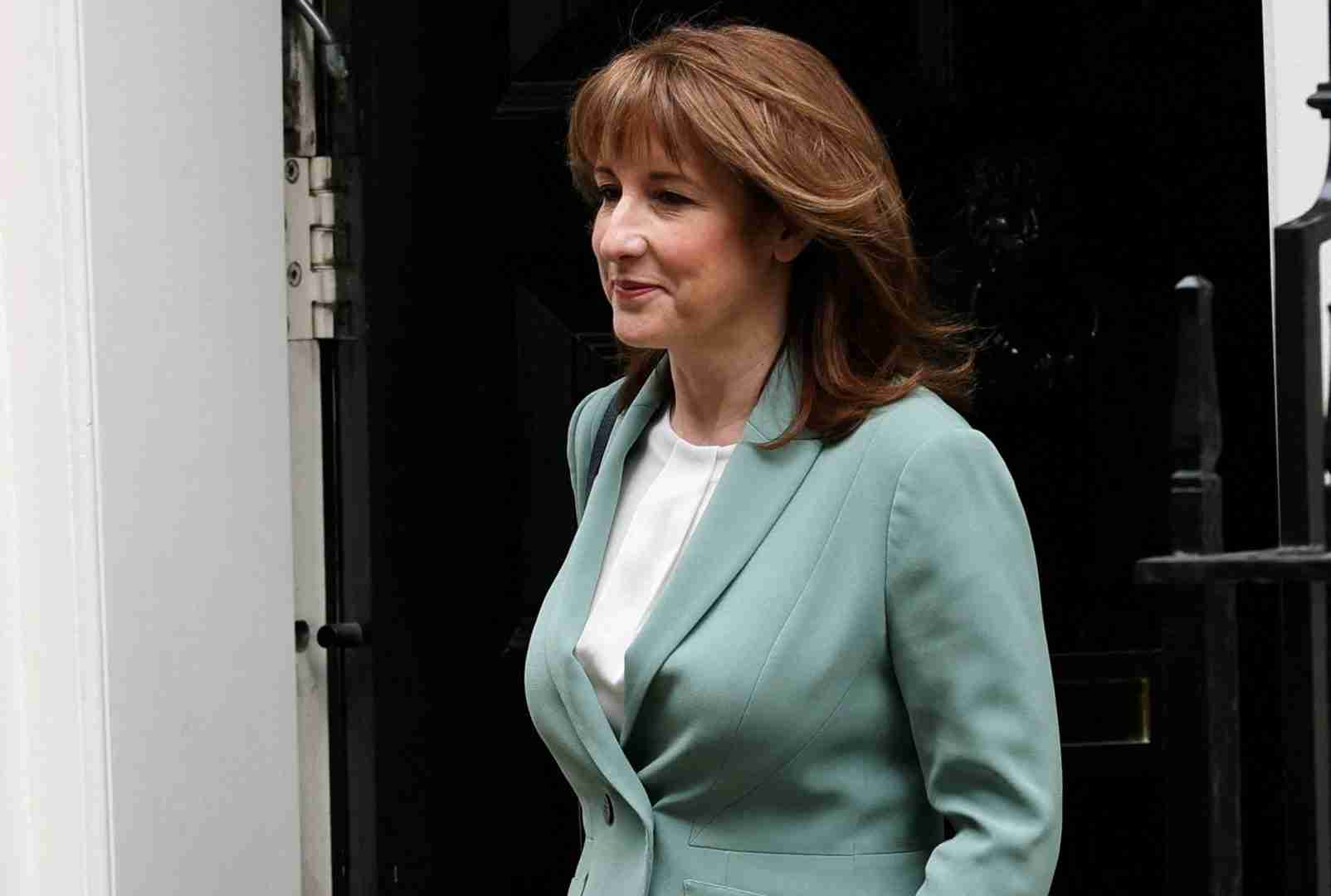
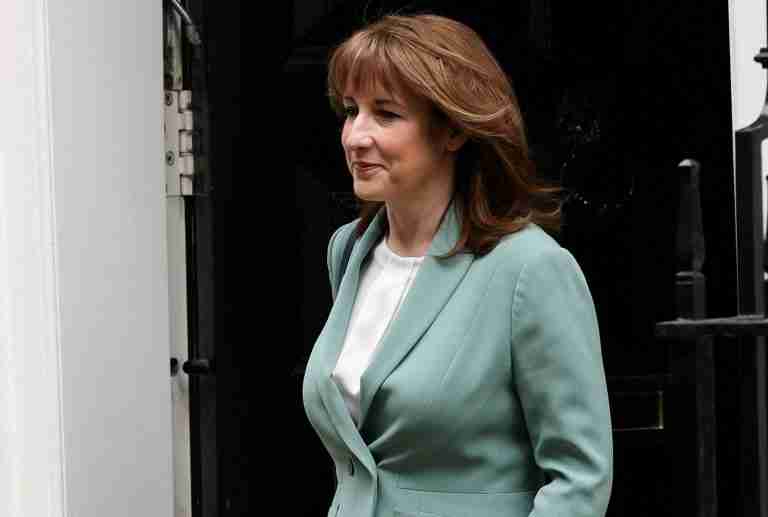
FILE PHOTO: Britain’s Chancellor of the Exchequer Rachel Reeves leaves 11 Downing Street on the day she is to deliver the Mais Lecture, in London, Britain, March 17, 2026. REUTERS/Isabel Infantes/File Photo

International News via Reuters:

British finance minister Rachel Reeves said on Thursday she was backing Andy Burnham to be the next prime minister, adding that he would stick to her fiscal rules and provide stability while brushing off reports she could be moved to a more junior post.

Reeves told the BBC she was backing Burnham to be prime minister after he emerged as the only declared candidate to replace Keir Starmer, who announced his resignation on Monday.

Later she went further, saying that Burnham “will be the next prime minister” and had been clear that he was committed to her fiscal rules, which include balancing day-to-day spending with tax revenues and reducing debt as a share of output.

“That is a good thing because it means that businesses here can be confident that that stability, that rigour to policymaking, that tight grip on the public finances… will be continued,” she said at a British Chambers of Commerce conference.

Starmer said he would oversee an orderly transition to a new prime minister from his Labour Party, after bowing to pressure over weak poll ratings and poor local election results.

Burnham, who is the only candidate to have put his name forward to replace Starmer, is widely expected to be installed without a challenge, meaning he could become prime minister by mid-July. If appointed, he would be Britain’s seventh leader in a decade.

Asked if she wanted to stay as finance minister, Reeves said she wouldn’t pre-empt cabinet decisions, which would be a matter for Burnham. Media reports have suggested she will be moved to a more junior role.

Stressing the need to stick to the fiscal rules, Reeves hinted that borrowing could fund increases in defence spending under a long-awaited defence investment plan, which she confirmed would be delivered before a NATO summit beginning on July 7.

Earlier this month John Healey resigned as defence secretary, saying that proposed increases in defence spending didn’t match the threats Britain faces. Starmer defended the plans, saying increased spending would be sustainable and fair, and not based on “irresponsible borrowing.”

Reeves said the defence investment plan would involve “more money spent more effectively,” and that borrowing to invest was “exactly what my fiscal rules allow… because most defence spending is capital investment.”

Reporting by Sam Tabahriti, David Milliken and Alistair Smout, Editing by Paul Sandle, Alexandra Hudson

London stocks gain on financials, retail boost

The blue-chip FTSE 100 index rose 0.3% by 0901 GMT, while the midcap FTSE 250 climbed 0.7%

International News via Reuters:

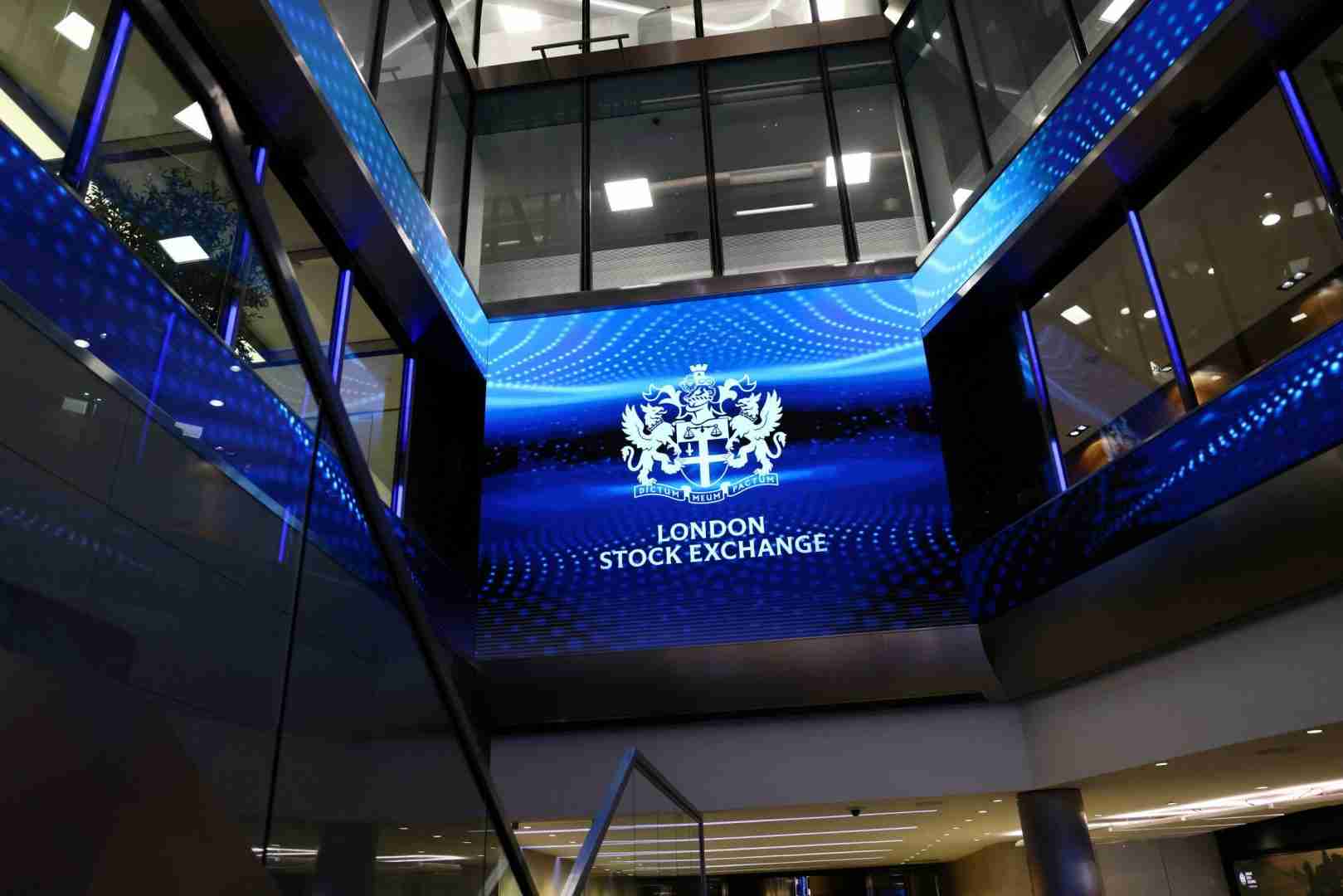
London’s main FTSE indexes edged higher on Thursday, with financial and retail companies posting strong business updates, while investor interest piqued after easyJet kept the door open to a Castlelake buyout.

The blue-chip FTSE 100 index rose 0.3% by 0901 GMT, while the midcap FTSE 250 climbed 0.7%. Both indexes were set to mark one-week highs.

• Financials led sectoral gains, up 3.4%, with private equity group 3i Group <III.L> adding 9.7% after its retail brand Action reported a 3.3% rise in like-for-like sales, as of 25 weeks ended June 21.

• Greeting card retailer Moonpig <MOONM.L> jumped 10.3% after announcing upbeat annual pre-tax profits, as customers traded up to higher priced gifts.

• Bicycles and car parts retailer Halfords <HFD.L> soared 16.1% after forecasting fiscal year 2027 profit towards the top end of analyst expectations.

• British budget carrier easyJet <EZJ.L> rose 6.2% after rejecting a fourth, sweetened £4.93 billion ($6.50 billion) takeover proposal from U.S.-based investment firm Castlelake, but said it would grant the suitor limited access to commercial information in hopes of drawing a higher bid.

• ITV <ITV.L> jumped 2.3% after Comcast-owned Sky agreed on terms to buy the FTSE midcap’s broadcast and streaming unit.

• Advanced Medical Solutions Group shot up 16% after the medical supplier received a £715 million buyout deal, including debt, from U.S.-based adhesives maker H.B. Fuller.

• A key U.S. inflation report, which could offer clues into the monetary policy path ahead, is expected later in the day.

• Traders anticipate the Bank of England to hike borrowing costs by 25 basis points by year-end, according to LSEG-compiled data.

• In politics, Finance Minister Rachel Reeves announced her support for Andy Burnham, who is widely anticipated to become the UK’s seventh prime minister in a decade two weeks from now.

($1 = 0.7582 pounds)

Reporting by Johann M Cherian in Bengaluru; Editing by Harikrishnan Nair

EU governments adopt legislation to fulfil EU side of US trade deal

The European Parliament last week approved the legislation by 440 votes in favour to 151 against, with 50 abstentions, almost 11 months after the framework agreement was struck

International News via Reuters:

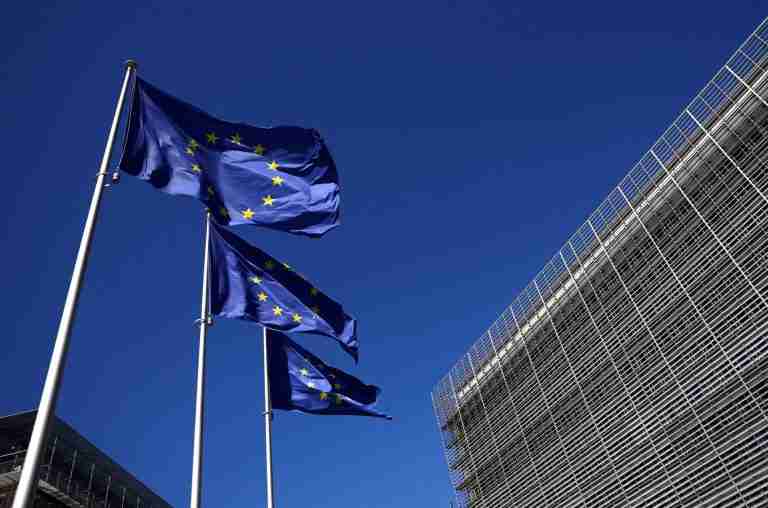
European Union governments adopted on Thursday legislation to remove import duties on many U.S. goods, fulfilling the EU’s side of a trade deal struck with U.S. President Donald Trump last year and avoiding renewed transatlantic trade conflict. 

• The European Parliament last week approved the legislation by 440 votes in favour to 151 against, with 50 abstentions, almost 11 months after the framework agreement was struck.

• Trump threatened ‘much higher’ tariffs unless the EU took action by July 4. After adoption by the Council, the grouping of EU governments, on Thursday the EU is on track to meet that deadline. The legislation will take effect after publication in the EU official journal.

• Under the agreement, the EU agreed to remove import duties on U.S. industrial goods and provide preferential access to U.S. farm produce. It will also extend duty-free imports of U.S. lobster, a mini-deal struck with Trump during his first term as president.

• The EU legislation expires at the end of 2029 and includes multiple safeguards that would allow the EU to suspend concessions if the United States breaches the trade deal’s terms.

Reporting by Philip Blenkinsop; Editing by Alexandra Hudson

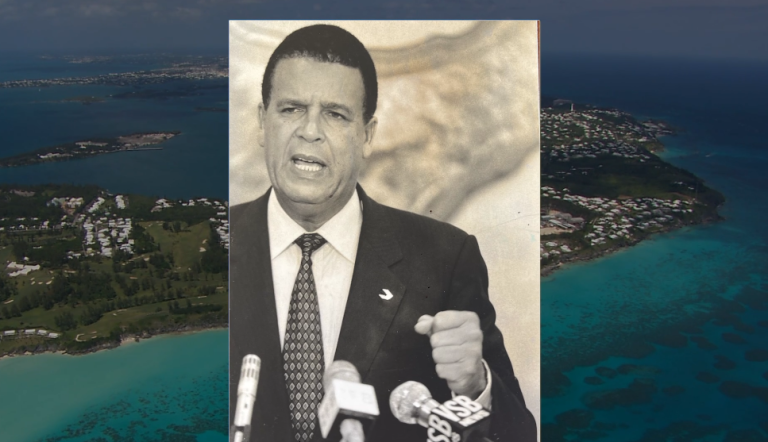
Meaningful recollections shared during Sir John service

The service was held at the Anglican Cathedral of the Most Holy Trinity in Hamilton

Inside the Anglican Cathedral today, mourners heard from Bishop Nicholas Dill that Sir John Swan had left very specific instructions for his funeral service.


Hence, it was relatively short but packed with meaningful recollections and fond memories.


Jasmine Patterson was in attendance.

Brent hits lowest since before start of Iran war as more tankers exit Hormuz, easing supply

Brent touched a low of $73.22, its weakest since February 27, the day before U.S.-Israeli strikes on Iran

International News via Reuters:

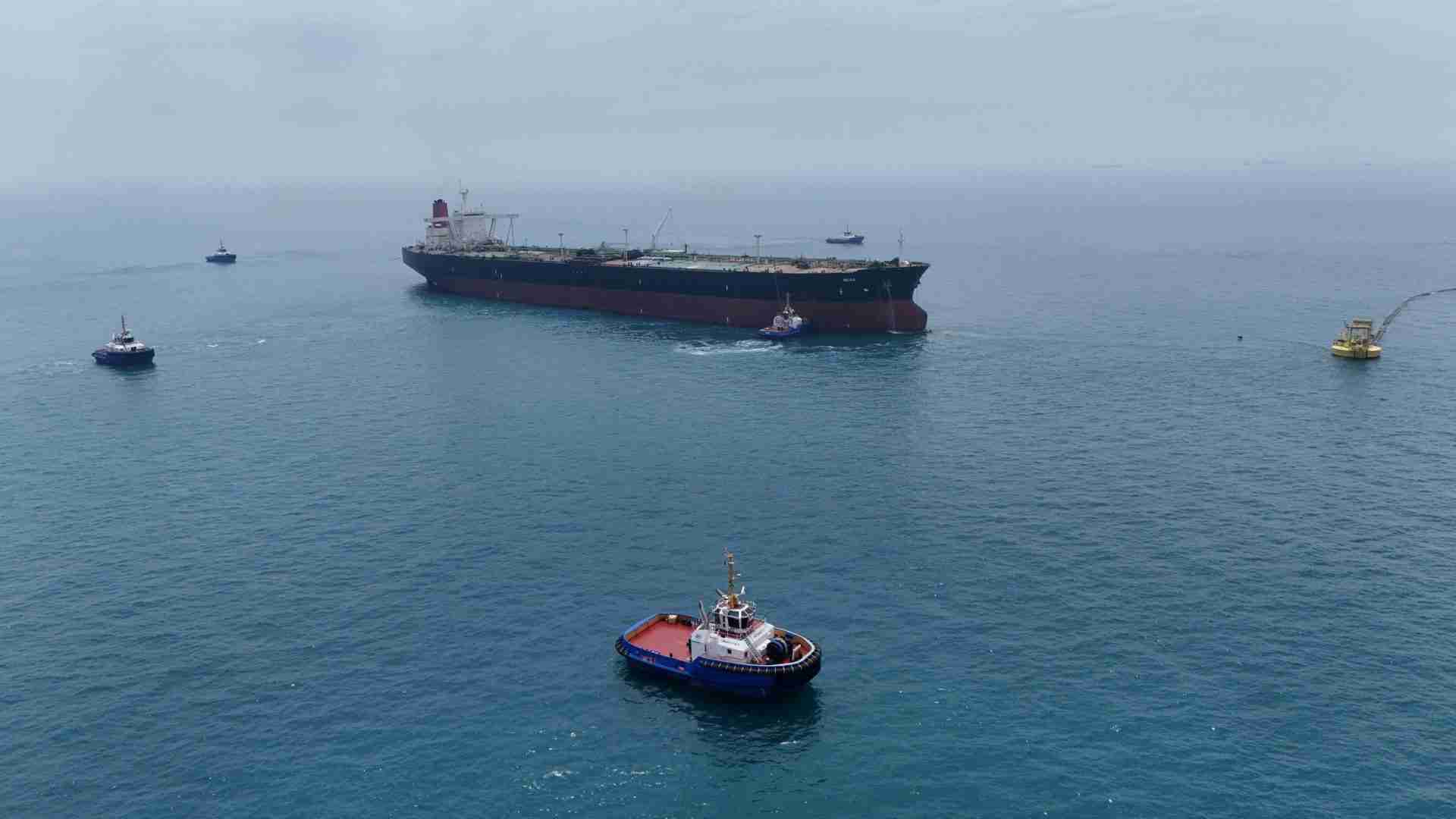
Benchmark oil prices fell more than $3 on Wednesday to their lowest level since before the start of the Iran war as supply concerns eased with more stranded oil tankers exiting the Strait of Hormuz.

U.S. crude futures, meanwhile, slipped below $70 a barrel to their lowest since March 2.

Brent crude futures <LCOc1>, the global benchmark, were down $3.08, or 4.02%, at $73.98 a barrel as of 1715 GMT, and U.S. West Texas Intermediate <CLc1> was down $3.13, or 4.06%, to $73.95 a barrel. 

Brent touched a low of $73.22, its weakest since February 27, the day before U.S.-Israeli strikes on Iran.

Around 20 million barrels of crude oil have exited the Strait of Hormuz in the last 24 hours, U.S. Energy Secretary Chris Wright said on Wednesday at the Reuters Global Energy Forum in New York, adding that a return to normal oil flows was delayed due to Iranian mines in the strait.

Iran will not have the ability to block the strait going forward, Wright said, adding the U.S. will ensure flows even without a deal with Tehran. 

Three stranded tankers carrying 5 million barrels of crude oil were exiting the strait on Wednesday, with two heading to Asia, shipping data showed, as the interim deal between Iran and the U.S. unlocks more supply stuck in the Gulf. 

Physical crude oil cargoes were selling at discounts across the globe, changing trade flows as markets come under pressure from fast-rising Middle Eastern supply with Iran set to boost sales following a temporary reprieve from U.S. sanctions.

Prices for Brent crude for second-month delivery were also trading higher than prices for prompt delivery for the first time since the war, a sign of increased near-term supply.     

“Positive signals from the Persian Gulf are fuelling optimism about oil flows through the Strait of Hormuz. Vessel crossings increased in recent days, although they remain well below pre-war levels,” ING analysts wrote in a note. 

The U.S. also authorized Iranian oil sales this week, easing decades-old sanctions as it ‌pushes toward a final peace deal with Tehran in return for commitments on nuclear inspections and free transit through the Strait of Hormuz.

“If sanctions are eased, Iranian production and exports could ramp up relatively quickly given the substantial amount stored on tankers — we are likely talking weeks rather than months,” said Tim Waterer, chief market analyst at KCM Trade.

Oman said it would keep the Strait of Hormuz open to shipping without imposing tolls and had designated two temporary routes north and south of the existing shipping lane to facilitate the safe passage of vessels leaving the region.

Uncertainty remains over the durability of the U.S.-Iran accord, however. U.S. President Donald Trump said on Tuesday that Iran had agreed to nuclear inspections into “infinity”, although Tehran said it had made no such concession. 

However, U.S. inventories remained tight on strong refining demand and amid a release of oil from the government’s emergency stash. U.S. crude stocks, including commercial and those in the Strategic Petroleum Reserve, fell by 15.1 million barrels to 743.3 million barrels in the week ended June 19, the EIA said, the lowest level since 1984. 

J.P. Morgan on Wednesday lowered its second-half 2026 Brent crude oil price forecast due to lower-than-expected OECD commercial inventory draws and softer demand for oil. The bank sees Brent averaging $86 per barrel in the third quarter and $80 in the last quarter.

Elsewhere, Moscow’s oil refinery will be offline for at least six months after suffering extensive damage in Ukrainian drone attacks, two industry sources said on Wednesday.

Reporting by Arathy Somasekhar in Houston, Anushree Mukherjee in Bengaluru, Yuka Obayashi in Tokyo and Jeslyn Lerh in Singapore. Editing by Louise Heaveans, Emelia Sithole-Matarise and Mark Potter

Airbus ordered to inspect some A380 jets over cracks in wings

The European Union Aviation Safety Agency (EASA) published an emergency airworthiness directive on Monday requiring inspections of 16 A380 aircraft, warning about cracks found in wing spars that could affect structural integrity

International News via Reuters:

Airbus said on Wednesday it was supporting inspections on a subset of A380 aircraft after Europe’s aviation regulator ordered urgent checks on the jets’ wing structures.

The European Union Aviation Safety Agency (EASA) published an emergency airworthiness directive on Monday requiring inspections of 16 A380 aircraft, warning about cracks found in wing spars that could affect structural integrity.

The directive requires five planes to be inspected before next flight, with the remaining ones to be checked within 25 flight cycles.

Fifteen of the affected aircraft are operated by Emirates and one by Australia’s Qantas, according to flight tracking service Flightradar24, based on the manufacturer serial numbers listed in the directive.

Emirates did not reply to a request for comment.

Airbus said it had identified a smaller group of aircraft with similar operating histories and was supporting inspections on those jets.

“Depending on the inspection results, Airbus will assess with EASA whether repairs are necessary or if the aircraft can return to commercial service,” a company spokesperson said.

EASA said cracks found on certain aircraft could reduce the structural integrity of the wing.

The A380, nicknamed “superjumbo”, is the world’s largest passenger airliner. Airbus ended production of the jet in 2021 as demand for the model, introduced in 2007, waned.

Reporting by Gianluca Lo Nostro, Tim Hepher and Hugo Lhomedet; Editing by Bill Berkrot

Mourners brave the heat to honour Sir John

Outside of the Cathedral of the Most Holy Trinity on Wednesday, a queue had been growing since two hours before the funeral of Sir John Swan was scheduled to begin

Outside of the Cathedral of the Most Holy Trinity on Wednesday, a queue had been growing since two hours before the funeral of Sir John Swan was scheduled to begin.

Bermuda Broadcasting understands that Sir John, as he is affectionately known, wanted a short one-hour Anglican church funeral, not a State Funeral. The proceedings fell close to his wishes, lasting about one hour and fifteen minutes.

In expectation of both the influx of people at the Cathedral, and the stifling heat, the proceedings were also broadcast live to air-conditioned locations in the Cathedral Hall, the Earl Cameron Theatre at City Hall, and Pier 6 on Front Street.

However, it became clear that most people wanted to brave the heat to ensure they were present – both to offer condolences to the Swan family, and to honour the life and legacy of Sir John Swan.

WATCH the report above.

Rubio meets Gulf leaders, pledges security amid Iran deal doubts

The U.S.-Iran accord reached last week — the first signed by American and Iranian presidents since Iran’s 1979 Islamic Revolution — includes a proposed $300 billion fund and the waiver of some sanctions for Tehran

International News via Reuters:

U.S. Secretary of State Marco Rubio met the leaders of the United Arab Emirates and Kuwait on Wednesday, vowing not to undermine their security as he sought to reassure Gulf allies sceptical of a proposed deal to end the U.S.-Israeli war with Iran.

The U.S.-Iran accord reached last week — the first signed by American and Iranian presidents since Iran’s 1979 Islamic Revolution — includes a proposed $300 billion fund and the waiver of some sanctions for Tehran.

Arriving in the UAE capital Abu Dhabi late on Tuesday for a three-day tour of the oil-rich Gulf, Rubio is undertaking his first high-level diplomatic mission on the agreement to end the four-month-old war with Iran.

“We’re not going to do anything that undermines the security of our allies, our longstanding allies in the region,” he told reporters in Kuwait, his second stop on the tour.

During the war Tehran fought two of the world’s most powerful militaries and took effective control of the Strait of Hormuz, where commercial shipping of oil and gas was heavily disrupted, rattling energy markets and the world economy.

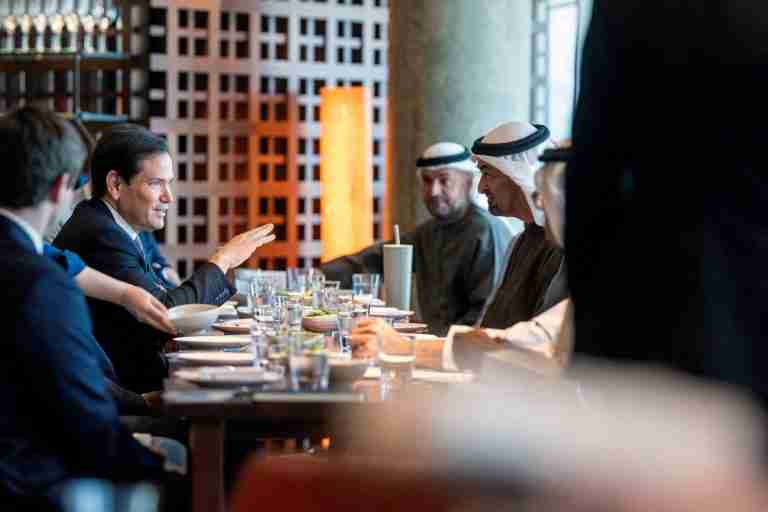
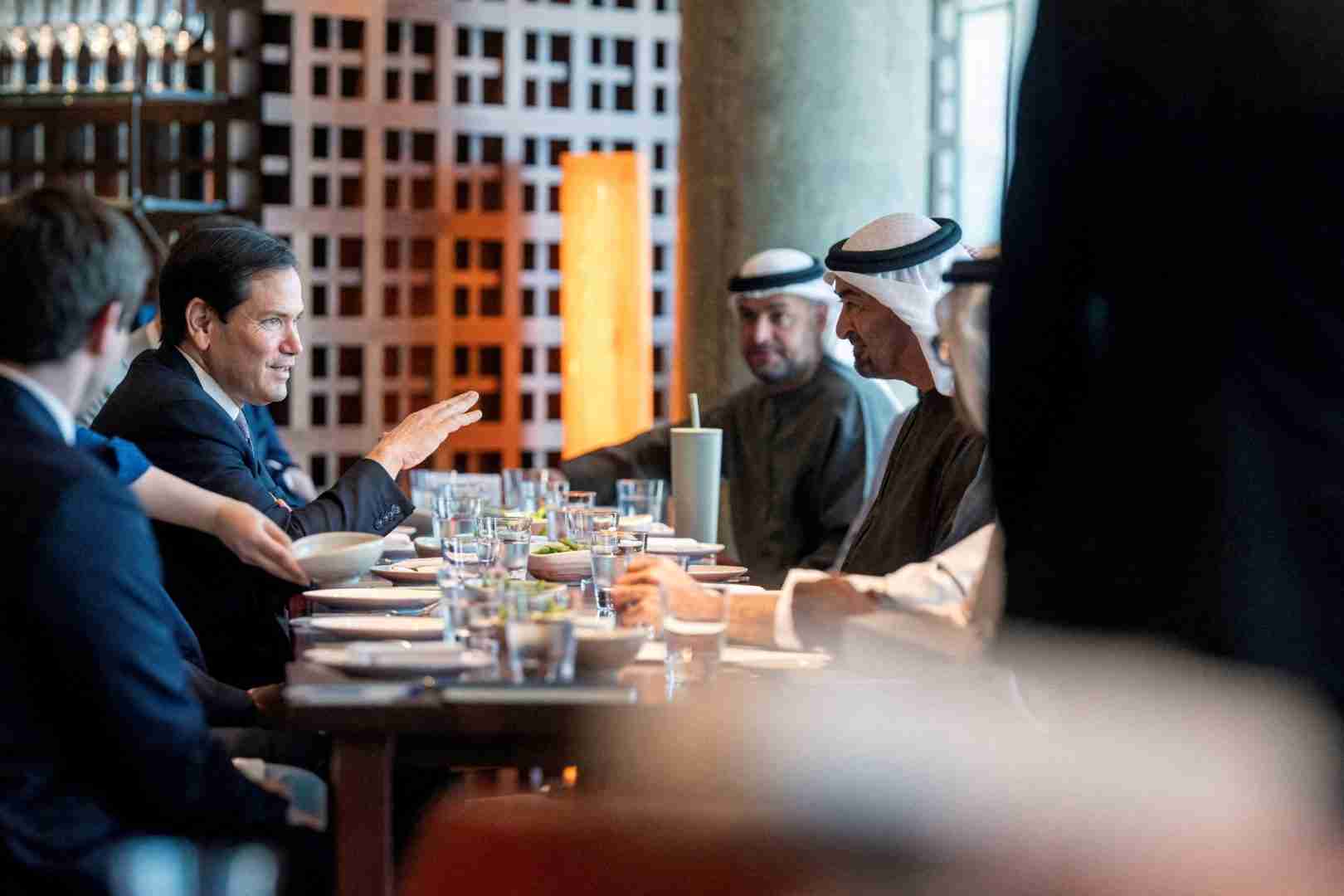
Rubio held a working lunch in the UAE capital Abu Dhabi with President Sheikh Mohammed bin Zayed Al Nahyan and other senior figures, including National Security Adviser Sheikh Tahnoun bin Zayed Al Nahyan and Foreign Minister Sheikh Abdullah bin Zayed Al Nahyan. 

Rubio then went to Kuwait and will later head to Bahrain. All three nations host strategic American military bases and were hit by an onslaught of Iranian missiles in the conflict, resulting in civilian deaths.

Rubio held talks with Kuwait’s Emir Sheikh Meshal al-Ahmad al-Sabah on efforts to bolster security and stability, Kuwait’s state news agency KUNA said. He also attended a flag-raising at the U.S. Embassy, which resumed operations after Iran-linked drone attacks forced a suspension, the State Department said.

“The American flag: a symbol of liberty, unity and freedom now flies proudly once again over Kuwait City. Kuwait is an indispensable partner for regional security and stability,” Rubio wrote on social media following the ceremony.

RUBIO TO ADDRESS REGIONAL CONCERNS

The State Department said Rubio discussed the memorandum of understanding with Iran, safe transit through the Strait of Hormuz, and the importance of peace in the region in a meeting with the UAE president.

Rubio also reaffirmed the U.S. commitment to the security of the Emirates, a major oil producer.  

U.S. regional allies are especially concerned that Iran could use the proposed $300 billion to rebuild its military. The accord also does not address Tehran’s ballistic missile capacity, a concern for Gulf states, which were struck by Iranian missiles and drones in the war. 

America’s top diplomat, Rubio has been largely absent from Iran-related discussions in recent weeks, with Vice President JD Vance instead leading a round of talks with Iranian counterparts over the weekend in Switzerland.

The UAE, a global financial centre which prides itself on stability in a volatile Middle East, faces significant economic strains as a result of the war. 

SEPARATE NEGOTIATIONS OVER STRAIT OF HORMUZ

Qatari ‌Prime Minister Sheikh Mohammed bin Abdulrahman al-Thani visited Muscat on Wednesday for talks with Oman on initiating negotiations involving Iran, Iraq and Gulf Arab states on the Strait of Hormuz, a diplomat briefed on the talks said. The discussions are separate from U.S.-Iran peace talks.

Shipping has begun flowing through the Strait of Hormuz, leading to a fall in oil prices, although the longer-term operation and management of the waterway remain under discussion between Iran, Oman and other Gulf states.

Separately, there are plans for regional reconciliation talks to be held in Saudi Arabia between Iran, Gulf Arab states and possibly other regional countries, a diplomat told Reuters.

Rubio’s remarks during his swing through the region will be closely scrutinised to see how the man once known as a hawkish critic of Iran frames a deal that many congressional Republicans argue amounts to capitulation.

Rubio’s mission is delicate: While he needs to defend a preliminary accord that Trump firmly supports, he also has to credibly address the concerns of his Gulf counterparts.

Iran and the United States signed a 14-point memorandum of understanding last week setting out broad agreements in principle to end the war. The interim accord paved the way for 60 days of talks aimed at resolving thornier details, including issues related to Iran’s nuclear programme.

A central issue in talks is what will happen to Iran’s highly enriched uranium, including material enriched to up to 60% purity, a short step from the roughly 90% needed for weapons grade.

Tehran says its nuclear programme is for peaceful purposes.

Additional reporting by Francois Murphy in Vienna and Doina Chiacu and Katharine Jackson in Washington; Writing by Gram Slattery and Michael Georgy; Editing by Don Durfee, Howard Goller, Sharon Singleton and Alison Williams

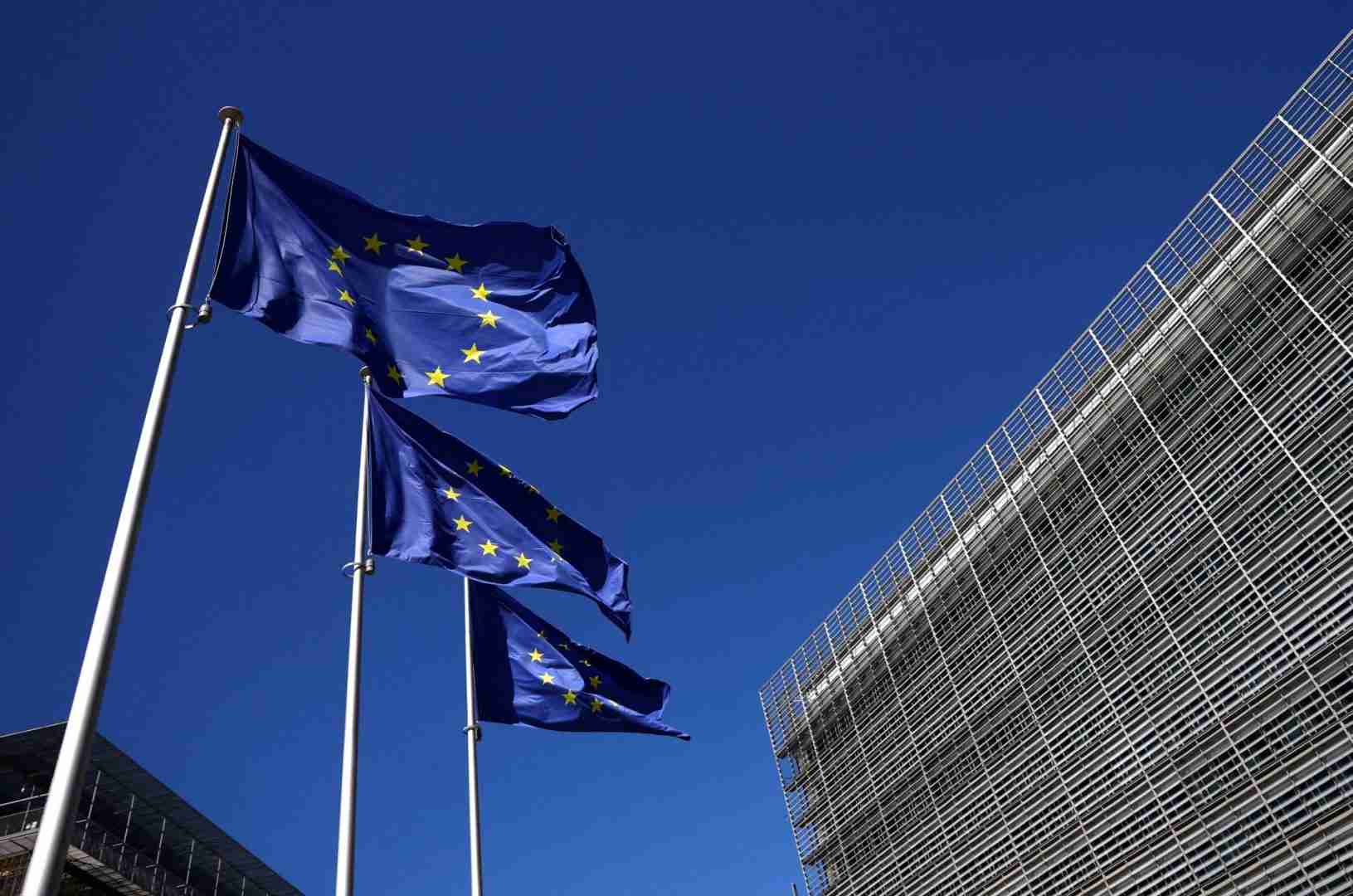
Former Dutch defence minister to lead EU diplomatic service

The appointments reflect the bloc’s current focus on boosting European defence, triggered by Russia’s war in Ukraine and U.S. President Donald Trump’s decision to reduce Washington’s commitments to NATO

International News via Reuters:

European Union foreign policy chief Kaja Kallas on Wednesday named a former Dutch defence minister and France’s ambassador to NATO to top posts in the EU diplomatic service as the bloc seeks to strengthen its security.

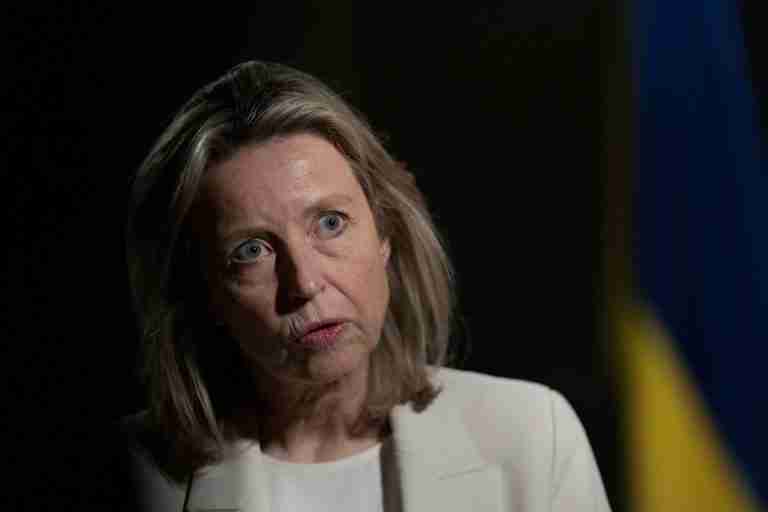
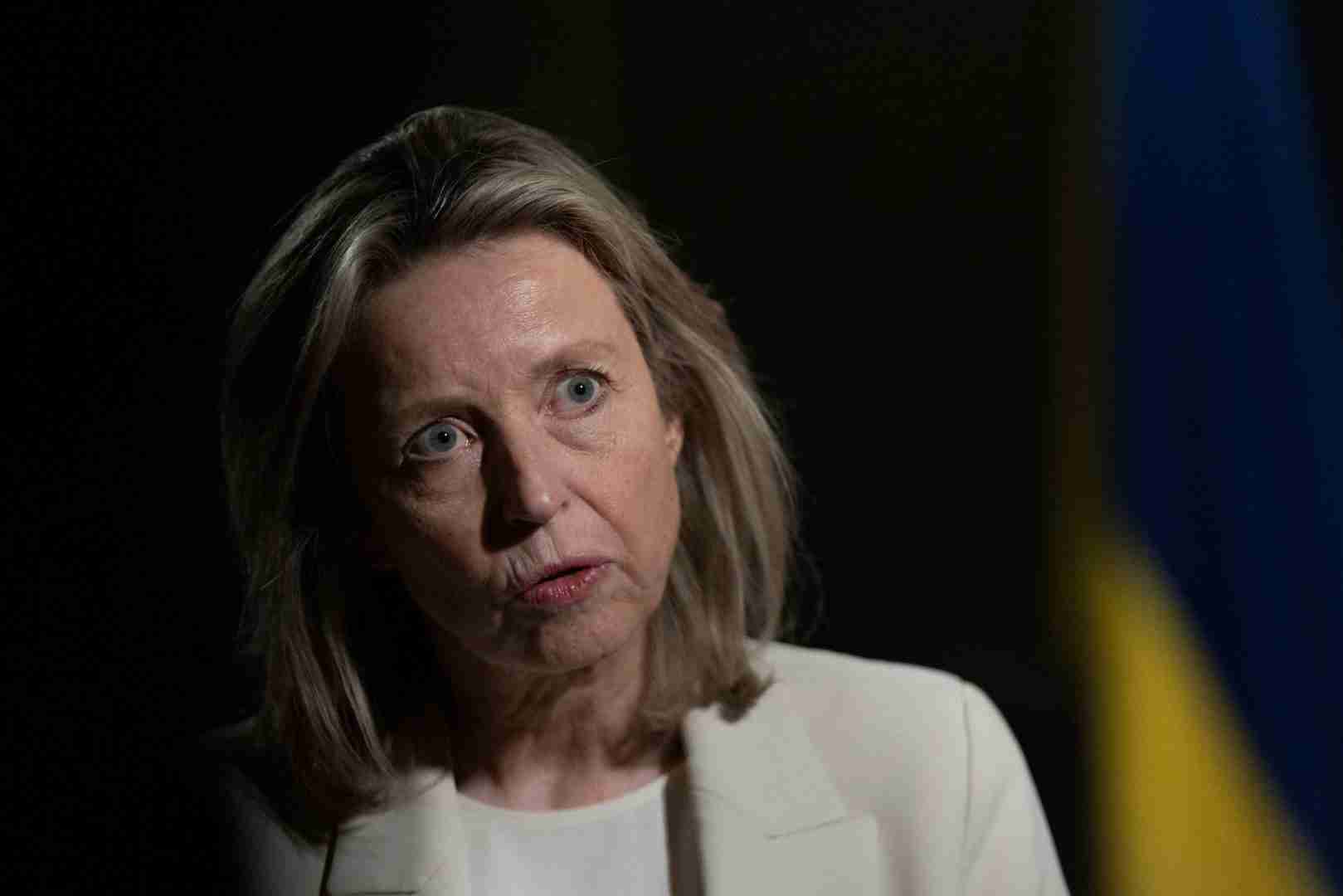
• Kajsa Ollongren, who served as Dutch defence minister from 2022-2024 and is currently a senior EU human rights official, will become secretary-general, the top civil servant, at the European External Action Service (EEAS) on September 1, Kallas said.

• Kallas also announced that David Cvach, France’s NATO envoy since 2024, will take over as the service’s top official for defence and security.

• The appointments reflect the bloc’s current focus on boosting European defence, triggered by Russia’s war in Ukraine and U.S. President Donald Trump’s decision to reduce Washington’s commitments to NATO.

• An EU official said the appointments would strengthen EU cooperation with NATO, whose Secretary General Mark Rutte was Dutch prime minister when Ollongren was defence minister.

• The moves come as the EU debates a possible revamp of its diplomatic efforts amid widespread criticism that its response to crises such as the war in Gaza have been too slow and disjointed, beset by differences between member countries and among EU institutions.

Reporting by Lili Bayer and Andrew Gray; Editing by Mark Porter

Police to crack down on e-bike offences

Enforcement follows growing reports of speeding and dangerous riding on the island’s roads

In recent weeks, the Bermuda Police Service has received an increasing number of reports regarding the manner of riding by persons who operate battery-powered fully electric bikes (e-bikes) and electric assisted pedal bikes, on Bermuda’s roads.  

These include reports of excessive speeds as well as dangerous riding by persons using this mode of transport.  

In light of the growing concern surrounding these issues, the public are advised that the Bermuda Police Service will be targeting traffic offences outlined in the Road Traffic Act 1947, which are applicable to all vehicles, including e-bikes and electric assisted pedal bikes, operated on the island’s roads.  

These offences include, but are not limited to: 

•             Speeding 

•             Riding in a careless manner  

•             Due care and attention 

•             Dangerous riding 

•             Failure to obey traffic signals or stop signs. 

Please note, the offences listed above are enforceable regardless of the type of pedal/electric cycle being ridden and irrespective of whether the rider is in possession of a valid driver’s licence at the time of the offence, or not.  

Enforcement action will be applied consistently and in accordance with established procedures.

Media release supplied by the Bermuda Police Service.