Saturday, November 7, 2026
Home Blog Page 225

Lebanon ceasefire agreed after US-Iran talks in Switzerland scrapped

U.S.-Iran talks in Switzerland planned for Friday were cancelled as fighting flared in Lebanon, creating new uncertainty about the timing of negotiations vital to ensure the reopening of the Strait of Hormuz to global shipping
International News via Reuters:

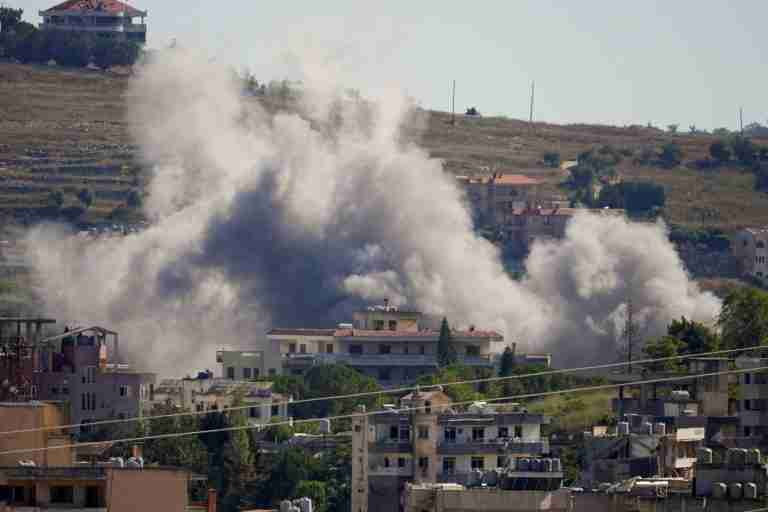
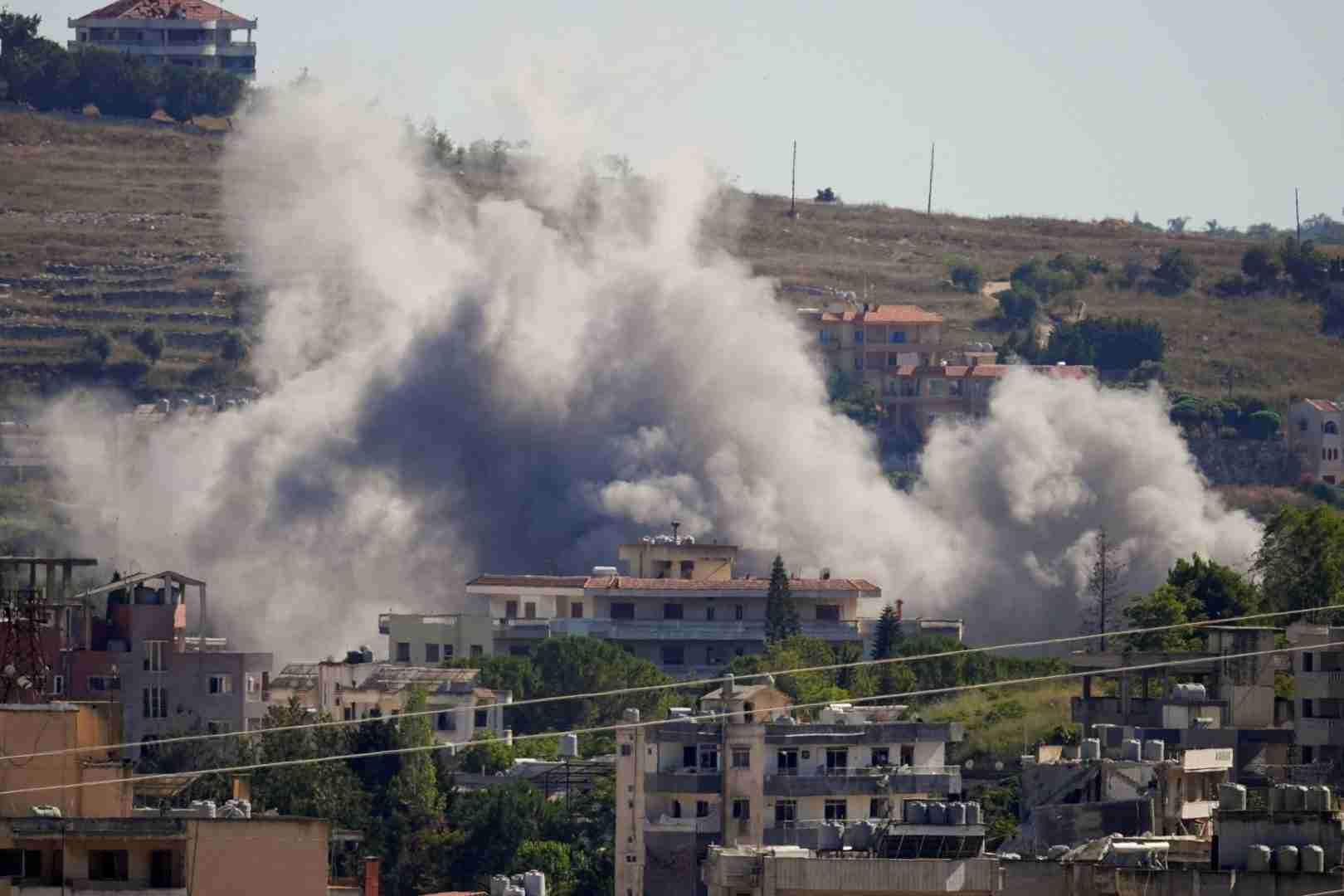
Israel and Hezbollah agreed to a ceasefire in Lebanon on Friday after an escalation in fighting there jeopardised the chances of an interim agreement on ending the war in Iran turning into a lasting Middle East peace deal.

U.S.-Iran talks in Switzerland planned for Friday were cancelled as fighting flared in Lebanon, creating new uncertainty about the timing of negotiations vital to ensure the reopening of the Strait of Hormuz to global shipping.

U.S. President Donald Trump later told NBC News that he had spoken with Israel and asked it to agree to the ceasefire.

“You just gotta calm down sometimes and use your head,” Trump was quoted as saying by an NBC reporter on X, who added that the president had declined to specify whether he spoke with Israeli Prime Minister Benjamin Netanyahu directly.

A senior U.S. official said the ceasefire came into effect around 4 p.m. Lebanon time (1300 GMT) following an exchange of fire, adding that negotiators for the U.S. and Qataris had worked out the agreement with help from Iran.

Two sources from Iran-aligned Hezbollah and a senior Israeli official confirmed the ceasefire to Reuters.

“If Hezbollah does not attack us, then for us it is not a time of war,” the Israeli official said, adding that Israel would keep its forces in southern Lebanon, where it has occupied an area along Israel’s northern border.

Two Lebanese security sources said Israel had carried out a dozen airstrikes in the first hour of the ceasefire but none were recorded after 5 p.m.

The conflict in Lebanon could weigh on negotiations because ending fighting there is a condition for the broader U.S.-Iran accord.

TOUGH ISSUES STILL UNRESOLVED

The memorandum of understanding signed this week by the Iranian and U.S. presidents left discussion of Iran’s nuclear programme and other tough issues until later, giving the sides 60 days to reach a lasting agreement or extend the interim deal.

Preparations for technical talks to start in the Swiss mountaintop resort of Buergenstock were far advanced when a White House spokesperson said on Thursday that U.S. Vice President JD Vance had dropped plans to attend.

A Swiss foreign ministry statement said the talks had been postponed and that Switzerland remained ready to facilitate the talks and the relevant preparatory work was continuing.

Hezbollah lawmaker Hassan Fadlallah cited Iran as saying further talks depended on a comprehensive ceasefire being in place and said Lebanon’s government should reject direct negotiations with Israel as long as Israeli attacks continue.

The broad interim deal requires the United States, Iran and their allies to declare an immediate and permanent termination of military operations on all fronts, including in Lebanon.

Israel, left out of the talks, says it is not party to the deal. 

Iran’s Foreign Minister Abbas Araqchi, in a phone call with his Pakistani counterpart on Friday, said the U.S. would be responsible for any violation of its commitments under the deal, including ending the fighting in Lebanon, his ministry said.

HEAVY AIRSTRIKES

Lebanon was sucked into the regional war when Hezbollah opened fire at Israel on March 2, prompting Israel to launch an offensive against the group and invade the south of the country.

Lebanon’s health ministry said 18 people had been killed and 33 wounded in heavy airstrikes in 11 southern towns since midnight into Friday.

The Israeli military said four soldiers had been killed in an incident in Lebanon, without giving further details.

It said it had carried out strikes targeting what it described as Hezbollah operatives and infrastructure across several areas of the south, saying these were in response to repeated ceasefire violations by the Iran-backed group.

Lebanese President Joseph Aoun condemned the Israeli attacks but said the escalation would not hinder efforts to reach a comprehensive ceasefire.

TRUMP DEFENDS INTERIM DEAL

The Iran war, which began on February 28 with U.S. and Israeli air attacks on Iran, has killed at least 7,000 people, mostly in Iran and Lebanon. It also pushed up energy prices, stoking inflation worldwide.

Oil prices have dipped since the interim deal was signed as tankers are again moving through the Strait of Hormuz, which carried nearly a fifth of global crude oil and liquefied natural gas supplies before it was blockaded by Iran during the war.

The body set up by Iran to manage the strait said on Friday it would waive planned fees to use the waterway during the 60-day negotiation period under the interim deal.

The memorandum signed this week foresees relief for Iran from economic sanctions, the unfreezing of assets worth tens of billions of dollars and immediate U.S. waivers for its exports of oil.

The deal gives negotiators 60 days to agree on the status of Iran’s nuclear programme, unless an extension is agreed, and to set up a $300 billion reconstruction fund for Iran and other financial incentives.

Trump again defended the deal after criticism in Washington, including from some of his Republican allies in Congress who question whether he conceded too much to end a war unpopular with most Americans ahead of midterm elections in November.

“The War has diminished Iran!” he wrote in social media posts on Friday, adding: “We didn’t meet out of desperation, Iran did. They are FINISHED! We’ll play out the 60 days. They get no money, not ten cents!” 

Reporting by Reuters bureaus, Writing by Timothy Heritage and Gareth Jones; Editing by Philippa Fletcher and Alison Williams
EU to propose diversification law to drive de-risking from China

European Union leaders meeting in Brussels agreed on Friday that the EU executive should enter dialogue with the bloc’s main trading partners on “global macroeconomic imbalances” as well as reviewing whether new trade measures are needed

International News via Reuters:

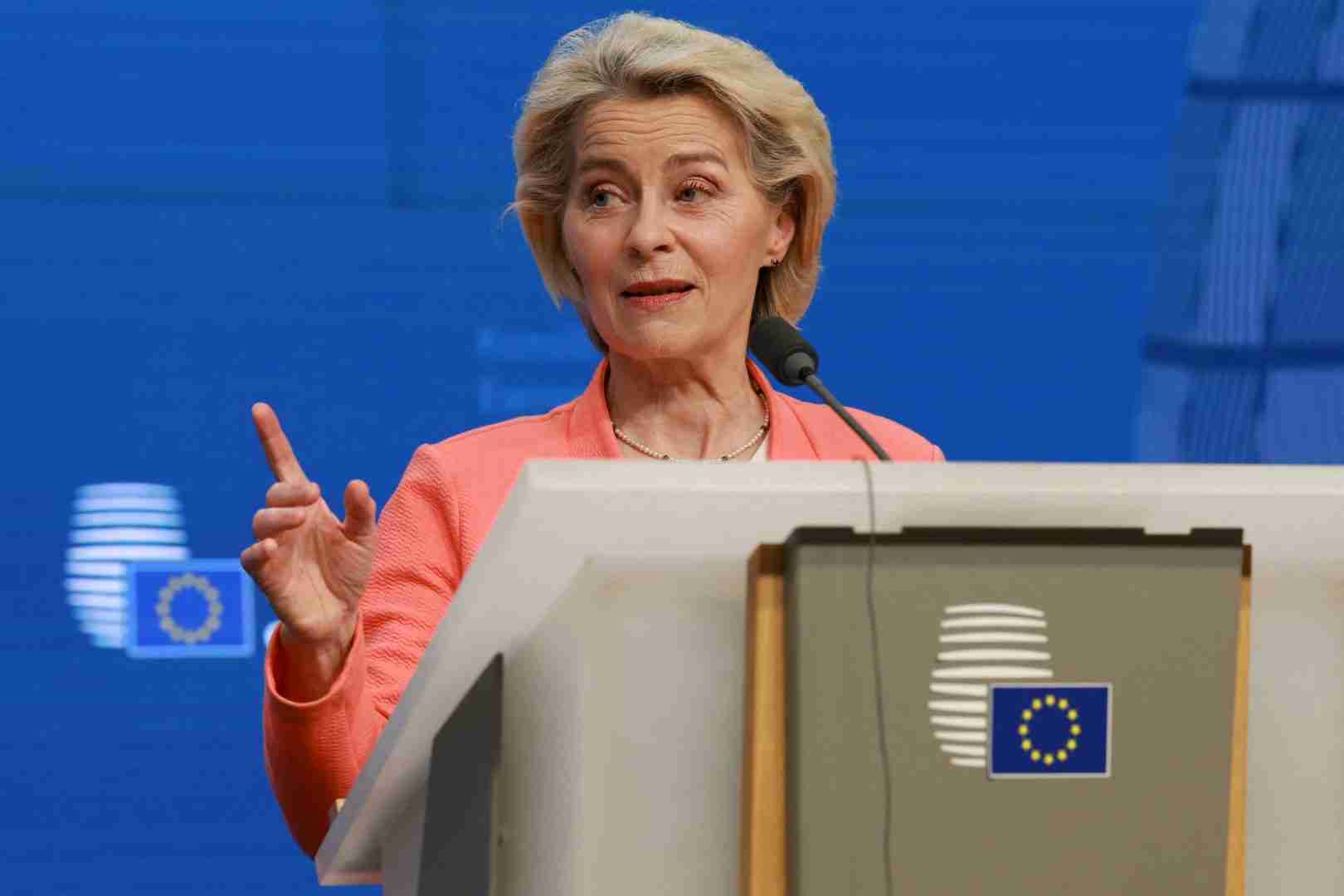
The European Commission will propose a new law requiring EU companies to diversify their sources of key supplies, although it may prove surplus to requirements if they proactively de-risk from China, its president Ursula von der Leyen said.

European Union leaders meeting in Brussels agreed on Friday that the EU executive should enter dialogue with the bloc’s main trading partners on “global macroeconomic imbalances” as well as reviewing whether new trade measures are needed.

The focus was on China, although the world’s second-largest economy was not named in the conclusions of their summit.

Von der Leyen said the Commission will propose a measure to promote diversification because businesses had de-risked at far too slow a pace. The issue came to a head last year when China exploited its dominance in processing of critical minerals by placing export restrictions on rare earths.

The best-case scenario was that companies stepped up their efforts to de-risk, suggesting the measure might then be redundant, von der Leyen said.

“There is a need for improvement. We’ve seen the figures, they speak for themselves, and we have to rebalance our relationship,” she added.

When the G7 issued a joint statement on Wednesday on stepping up cooperation to reduce critical mineral dependencies, China urged the G7 nations to respect market economy principles and international trading rules rather than favouring “small cliques”.

EU diplomats say there is a gradual convergence of views among the 27 EU members that there is a problem with the goods trade deficit with China, which now amounts to some €1 billion ($1.15 billion) per day.

The situation is more critical as transatlantic tariffs have diminished access to the U.S. market.

European Council President Antonio Costa, who chaired the summit, said engagement with China was vital, describing a €1 billion per day trade deficit as “simply unsustainable”.

“We cannot continue to raise this issue without any concrete results. And until now, unfortunately, China didn’t deliver,” Costa said.

Belgian Prime Minister Bart De Wever said a further item the EU leaders had agreed was to unite in the event of retaliation from third countries.

“Retaliation will not affect everyone equally. Not everyone is equally vulnerable. Some are highly vulnerable. Everyone is vulnerable to some extent, including us,” he said.

Reporting by Philip Blenkinsop and Charlotte Van Campenhout; Editing by Alexander Smith

Minister defends education reform progress

Senators question timelines, accountability and claims of an ‘education emergency’

The Education Minister says public school transformation remains a priority, but there is still no timeline for future school closures or openings.

Speaking in the Senate this week, Crystal Caesar provided an update on reform plans, while facing questions about how progress is being measured.

More in the above report.

Brent set for 8% weekly fall as Israel, Hezbollah agree ceasefire

Brent crude futures were up 66 cents, or 0.83%, at $80.51 a barrel by 13:02 ET, while U.S. West Texas Intermediate crude was up 94 cents, or 1.23%, at $77.54 per barrel

International News via Reuters:

Brent crude ticked higher on Friday, but stayed set for a weekly fall of around 8%, after Israel and Hezbollah agreed on a ceasefire in Lebanon and oil shipments through the Strait of Hormuz picked up after the signing of this week’s U.S.-Iran peace deal. 

Brent crude futures were up 66 cents, or 0.83%, at $80.51 a barrel by 13:02 ET, while U.S. West Texas Intermediate crude was up 94 cents, or 1.23%, at $77.54 per barrel.

Trading volumes were light due to a U.S. federal holiday.

Gulf producers were preparing to raise exports despite concerns over conditions set by Tehran for using the vital waterway and at least four tankers carrying crude, oil products and liquefied petroleum gas entered the strait on Friday, heading for Iraqi Gulf ports, MarineTraffic data showed.

“Though (oil prices) haven’t got to the point to where they were before the war started, it looks like we’re headed in that direction,” said Phil Flynn, senior analyst with Price Futures Group, adding more supply is expected to flow in coming days.

“The backlog of ships can move quicker than some people think and if there’s cooperation between Iran and the U.S., it can move quite quickly,” Flynn added.

Israel and Hezbollah agreed a ceasefire which began at 4 p.m. local time (1300 GMT) on Friday, a senior U.S. official told Reuters.

A planned meeting between Iranian and U.S. officials in Switzerland on Friday has been postponed, with arrangements underway for talks in the coming days, Iran’s Foreign Ministry said on Friday.

The ministry said the meeting was no longer urgent because a memorandum of understanding on ending the war had already been signed digitally between the two sides.

Analysts expect the deal to release more than 85 million barrels of oil stranded in the Middle East Gulf into global markets. The agreement also includes the lifting of U.S. sanctions on Iranian oil, which would add more supply.

Around 20% of global oil and LNG supply transits Hormuz, but recovery in flows and production after the U.S.-Iran deal could take several months.

Citi said its base case, with a 60% probability, sees sustained normalisation in flows, with oil markets moving into surplus and prices trending lower over the next six to 12 months to around $60 to $65 per barrel by the first quarter of 2027.

Commerzbank said oil supply should gradually recover, lowering its Brent forecast to $80 a barrel by year-end from $85, while expecting prices to remain above pre-war levels for most of the coming year.

Iraq’s oilfields are ready to resume production and output will gradually return to normal, restoring previous rates, Oil Minister Basim Mohammed said.

On the demand front, world demand will rise to 113.3 million bpd in 2030 from 105.1 million barrels per day in 2025, OPEC said in its 2026 World Oil Outlook. 

Reporting by Amanda Stephenson in Calgary, Anushree Mukherjee in Bengaluru, Seher Dareen and Ahmad Ghaddar in London, Mohi Narayan in New Delhi and Helen Clark in Perth; Editing by Jan Harvey, Kirsten Donovan, Louise Heavens and Alexander Smith

In Colombia’s Caribbean, neighboring towns back opposing presidential candidates

But Tubara and Juan de Acosta, both near port city Barranquilla, diverge sharply when it comes to Sunday’s presidential election, which pits conflicting visions for Colombia’s future against one another

International News via Reuters:

At first glance, these neighboring municipalities set along Colombia’s sweltering Caribbean coast have much in common. Single-story homes with outdoor rocking chairs cluster around town squares and residents time their outings to avoid the midday heat. Mango trees line streets where schoolchildren dawdle home.

But Tubara and Juan de Acosta, both near port city Barranquilla, diverge sharply when it comes to Sunday’s presidential election, which pits conflicting visions for Colombia’s future against one another.

In Juan de Acosta, where murders and extortion have spiked as drug trafficking increased along its coastline, right-wing candidate Abelardo De La Espriella got 55% support in the first round. He has pledged to bring the hammer down on armed groups and criminal gangs.

Next door, Tubara backed leftist senator Ivan Cepeda with just under 60% of their votes. His socially focused message resonated there, with promises to expand reforms to healthcare, pensions and education.

De La Espriella, 47, a lawyer and businessman with no prior political experience, has deployed military-style visuals and rhetoric. He refers to himself as “the Tiger,” calls his political movement “Defenders of the Homeland,” and salutes at rallies and in publicity, despite never having served in the military.

His pledge to crack down on crime gave him a lead of several points over Cepeda in the first round and recent polling has him eight points ahead for the second.

The spike in murders and extortion is out of character for Juan de Acosta, said Nicanor Alba, as he chopped and bagged pork ribs for customers at his butcher stand near the town’s plaza.

“You set up your business and tomorrow they come and say ‘if you don’t give us 50,000, 30,000 or 40,000 (pesos), it’s over,'” said Alba, whose own brother was murdered five years ago.

He said several friends and neighbors have fallen victim repeatedly to extortion. He said he was shocked by recent homicide figures.

“That had never been seen before in Juan de Acosta, it’s a bunch of people,” said the butcher, who plans to vote for De La Espriella.

DRUG TRAFFICKING

Juan de Acosta’s road connections to the interior of the country combined with its coastline have made it a “strategic point” for drug traffickers, said Colonel Eddy Sanchez, police commander for Atlantico province.

Two criminal groups — Los Pepes and Los Costenos — ave historically operated in the municipality, including selling drugs, Sanchez said. Recently the country’s largest crime gang, the Clan del Golfo, has arrived as well.

“The Clan del Golfo uses this municipality as a platform to reach maritime areas and, using speedboats, ship drugs abroad,” Sanchez said.

“Of course, that leads to issues of violence,” he added, though he said murders have fallen from 15 in 2025 to just 2 in 2026 so far, the municipality’s historic average. Police have classed 14 of last year’s murders as contract killings.

Tubara, by contrast, had no murders in 2025 and has recorded only one so far in 2026, Sanchez said.

“It’s a territorial dispute, where some gangs are trying to enter the municipality while others are trying to push them out to fully control local drug trafficking,” said Oscar Andres Arteta, Juan de Acosta’s interior secretary, adding local government and police are working together to fight extortion.

Juan Gabriel Coronel, who sells meat, ice cream and dry goods at a small store in Juan de Acosta, plans to vote for De La Espriella in the hopes he can curb violence and extortion. But he also wants a change for his health.

“I had a liver transplant 17 years ago and have never been denied my medication in that time,” said the 42-year-old, a client of a healthcare provider which the government took over in 2024 because of alleged care failures. For the last six months, Coronel said, he has had to pay for the medication out of pocket.

GET OUT THE VOTE

In a field of 13 candidates, Cepeda, 63, the son of a murdered communist leader, won all but one Caribbean province in the first round.

He needs to increase his numbers there and in capital Bogota to have a shot at winning the run-off, said Luis Fernando Trejos, a politics professor at the Universidad del Norte.

The leftist will need 2.5 million to 3 million additional votes to win, he added. De La Espriella, who had about 700,000 more votes than Cepeda in the first round, will also need to increase his voter share. More than 41 million Colombians are eligible to vote but just under 24 million participated in the first round.

Both candidates have secured backing from various political powerbrokers on the coast, Trejos said.

De La Espriella has taken pains to emphasize that he was raised in the inland Caribbean city of Monteria. His campaign billboards feature his tiger alter ego dressed in a Barranquilla soccer jersey and read “Abelardo is coastal like you. …. Coastal votes coastal.”

He has also accused Cepeda of planning a massive vote-buying operation on the coast, which Cepeda’s campaign has vehemently denied.

Cepeda voters in Tubara have been working to increase turnout.

Clara Algarin, a clinical psychologist and former city councilor, has been arranging transport for voters who could not reach polling stations for the first round, she told Reuters.

Algarin admires current leftist President Gustavo Petro’s expansion of free public university for undergraduates and the 230,000 peso ($66) per month state pension he instituted for people who were unable to save for retirement, including her own mother.

“My mother worked as a domestic servant from the age of 16. She never had the possibility of being paid a pension before,” said Algarin.

Her husband Javier Gomez runs a bakery, on whose porch hangs a bright Cepeda banner. He said he was happy to pay his employee the 23% increase in the minimum wage for this year instituted by Petro.

“The work that (the employee) does deserves the payment of a living wage,” Gomez said as he took a break from packaging fresh bread.

($1 = about 3,500 pesos)

Reporting by Julia Symmes Cobb; Editing by David Gregorio

Contact Us

MANAGEMENT

General Manager | Heather Lamb

Head of Business Development | Ian Rawlins

Accounts | General

Engineering Manager | Wayne Williams

  • Phone | 295-2828 ext 210

SALES

Advertise with us

Direct | 441-824-2834 | Sales@bbc.bm

Sales Manager | Kitwana Williams

Sales Manager | Earlston Dill Jr.

News

Executive Producer | Tony Mcwilliam

Deputy News Director | Jasmine Patterson

Reporter/Producer | Gary Foster Skelton

News Reporter | Alisa Bernardo

Digital Content Manager/News Reporter | Qian Dickinson

All-Stars crowned inaugural champions after 10-goal thriller

The All-Stars have been crowned the first-ever Walking Football Cup champions, lifting the prestigious Leroy “Curly Joe” Wilson Cup after a breathless 6-4 victory over Bermuda College.

In an entertaining final that showcased the very best of the island’s burgeoning over-40s and over-50s circuit, the All-Stars’ clinical edge proved the difference in a ten-goal epic. Despite a spirited display from the Bermuda College outfit, they were unable to contain a rampant attack determined to write its name into the local history books.

Earlier in the day, the consolation match provided drama of its own as the Touring Team edged out the Walking Warriors in a tense penalty shootout following a hard-fought 2-2 draw in regulation time.

The domestic curtain-fall marks the beginning of an ambitious international chapter for the sport on the island.

National team tryouts are scheduled for this coming Wednesday. Following the conclusion of the traditional Cup Match Classic holiday, Bermuda’s elite walking footballers will officially begin an intensive training program under head coach Leroy Wilson as they prepare for the upcoming Walking Football World Cup.

Heartbreak for Peter Bromby as title hopes evaporate

Bermuda’s hopes of landing an International One Design (IOD) World Championship crown have been dealt a devastating blow after a disastrous Day Five for Olympian Peter Bromby in Marblehead, Massachusetts.

Bromby, a three-time former world champion who had been firmly in the hunt for the podium, saw his title ambitions evaporate following a nightmare couple of races off the coast of Marblehead Neck.

The veteran skipper plummeted from fourth to seventh place overall, now sitting on 46 Net Points. His undoing came in the opening race of the day, where severe complications forced his crew to retire from the contest. The damage proved catastrophic, with Bromby subsequently forced to sit out the day’s second race altogether, registering a costly Did Not Start (DNS).

While it was a day to forget for Bromby, fellow countryman Kelsey Durham displayed admirable resilience to hold his ground in a fiercely competitive middle tier of the 12-team international fleet.

Durham maintained his grip on eighth place overall, taking his total to 51 Net Points after a pair of consistent, hard-fought performances. He navigated the blustery conditions to cross the line in sixth place during the day’s opening race, before backing it up with a solid seventh-place finish in the second flight. With the regatta drawing to its final stages, Durham remains well placed to finish strong.

Tough opening day for Bermuda in Birmingham

Bermuda’s boccia contingent endured a challenging start to their campaigns on the opening day of individual pool play at the Birmingham World Boccia Challenger in Alabama.

The prestigious tournament offers critical ranking points on the long road to the LA28 Paralympic Games, but the opening round-robin fixtures proved unyielding for the local side against elite opposition.

In the BC1 Female division, Bermuda’s top-ranked competitor Yushae DeSilva-Andrade was left frustrated by a clinical performance from Brazil’s Andreza de Oliveira, who secured a commanding 5-0 victory. There was similar disappointment in the men’s brackets as the experienced Omar Hayward struggled to find his rhythm, falling 7-1 to the United States’ Cornelius Oatis.

Meanwhile, the tournament provided a massive personal milestone for Zeik Blakeney, who made his international debut in the BC2 Male division after passing his classification evaluation. Blakeney was handed a baptism of fire, going down 15-0 to El Salvador’s seasoned competitor Mario Sayes. Despite the heavy scoreline, the overseas exposure marks a crucial learning curve for the debutant.

Ruthless Costa Rica cruise past Bermuda

Bermuda’s tough run at the Billie Jean King Cup Americas Group III tournament continued in Santa Tecla, El Salvador, as a clinical Costa Rica side wrapped up a commanding 3-0 victory.

Following an agonizing 2-1 defeat to Jamaica, the Bermudian squad found themselves entirely outmatched by a ruthless Central American outfit that dominated across both the singles and doubles rubbers.

Costa Rica clicked into gear immediately in the opening singles clash. Allison Blanco set the tone for the tie, overcoming Bermuda’s player-captain Shelby Madeiros 6-2, 6-1 in just over an hour. Any hopes of a Bermudian fightback were then swiftly dashed when Lucia Gallegos power-played her way to a devastating 43-minute, 6-0, 6-1 victory over Nadhira Durham.

With the tie already mathematically settled, Costa Rica refused to take their foot off the gas. Madeiros teamed up with Alexcie Burrows for the doubles rubber, but the duo had no answers for Blanco and Ariana Rahmanparast, falling 6-1, 6-0 in 47 minutes to complete the clean sweep.

France opposes return hubs for migrants in third countries, Macron says

The European Parliament earlier this week approved a migration overhaul to speed up deportations and allow offshore detention centres, a move critics say is harsh and weakens asylum safeguards

International News via Reuters:

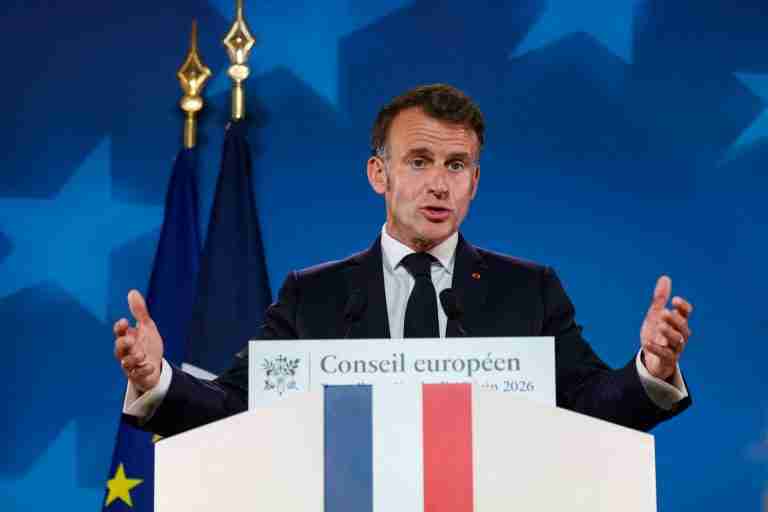
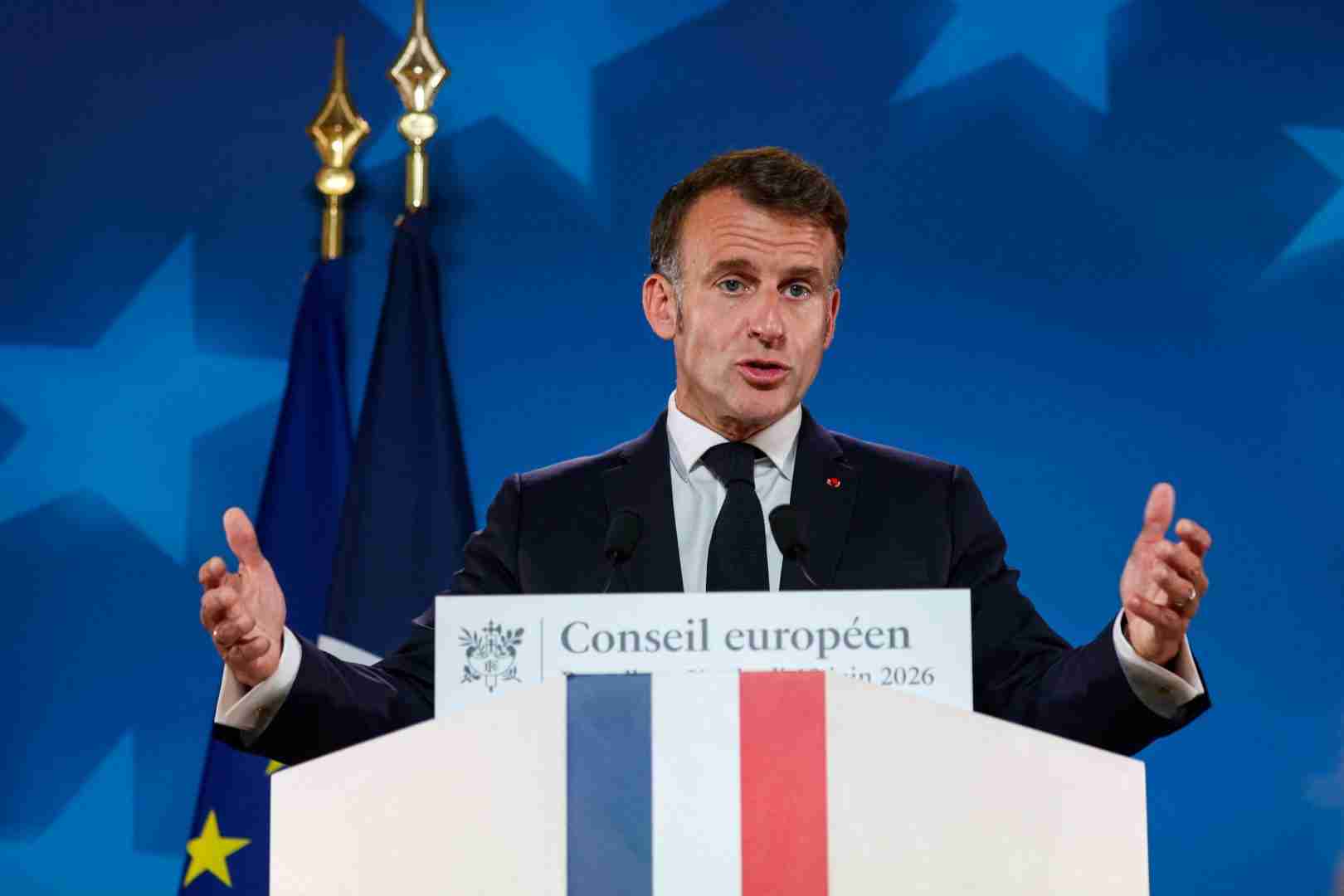
French President Emmanuel Macron said on Friday that his country does not support the creation of so-called “return hubs” for migrants in third countries, questioning their efficacy, though adding that he respected countries that want to set up such hubs.

“We are in favour of a more effective return policy, but … I have never seen a return centre in a third country that actually works,” Macron said, speaking in Brussels as a two-day EU summit concluded.

The European Parliament earlier this week approved a migration overhaul to speed up deportations and allow offshore detention centres, a move critics say is harsh and weakens asylum safeguards.

Macron questioned whether the hubs align with European values.

“I’m not sure that’s what our Europe is about. I’m not sure that these are the fundamental principles on which our Europe was built, and I don’t believe it’s effective either,” he said.

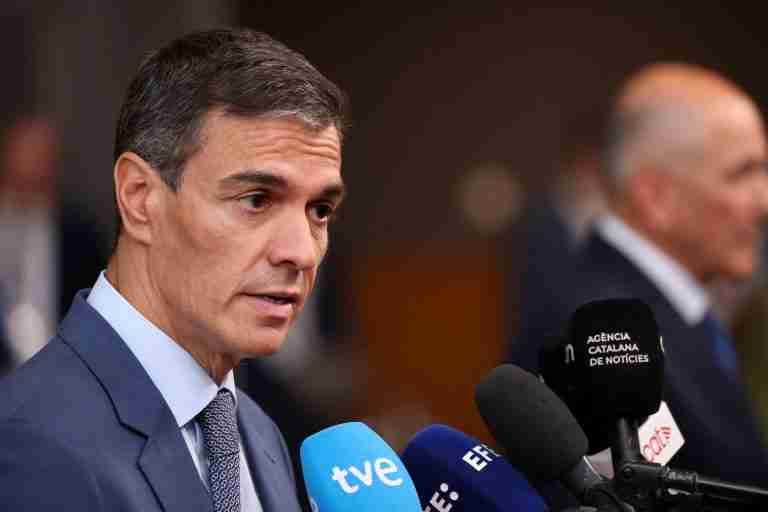
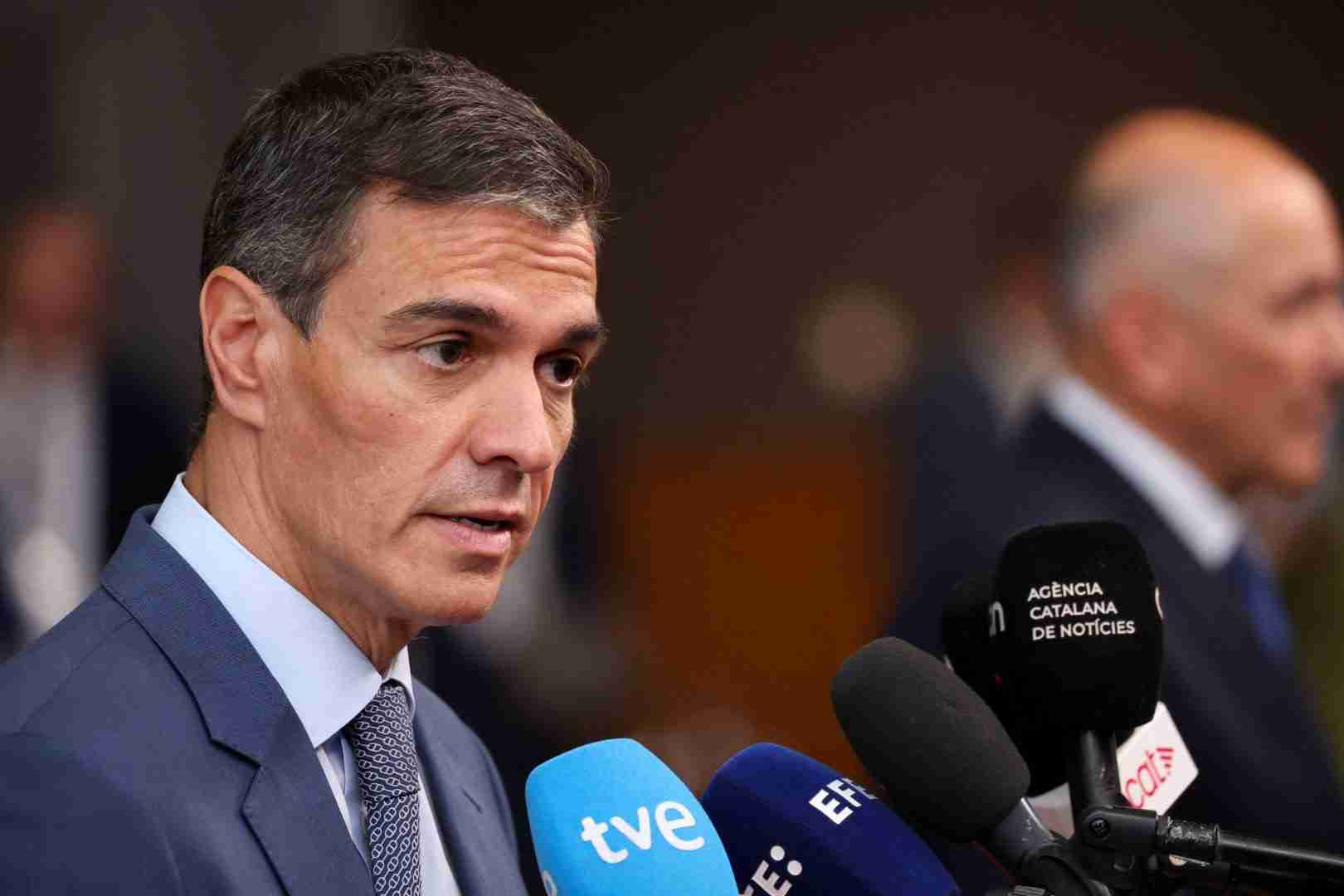
Spanish Prime Minister Pedro Sanchez, speaking at a press briefing on Friday after the EU summit, said Spain was also against such hubs but was in the minority on the issue in Europe.

He said the return hubs are “simply going to waste economic resources, and Europe doesn’t have many of those”.

Reporting by Inti Landauro and Charlotte Van Campenhout, additional reporting by Andrey Khalip; Editing by Sudip Kar-Gupta and Hugh Lawson

EU leaders to discuss new sources of financing for EU budget in Oct

The EU budget is how the 27-member bloc finances all of its policies – from supporting farmers and developing new technology to student exchange programmes and equalising standards of living across member states

International News via Reuters:

European Union leaders on Friday asked Ireland, which takes over the rotating EU presidency in July, to propose by October new sources of money for the EU budget for 2028 to 2034 to defuse tensions between its net contributors and beneficiaries.

The EU budget is how the 27-member bloc finances all of its policies – from supporting farmers and developing new technology to student exchange programmes and equalising standards of living across member states.

According to the initial European Commission proposal, the 2028-2034 budget should be €2 trillion ($2.3 trillion). The Cypriot EU presidency last week proposed a cut of 2%, which was not enough for some and too much for others.

BITTER FIGHT FOR UNANIMOUS DEAL

Richer EU countries pay more into the budget than they get out of it, while poorer ones receive more than they pay. Every seven years, the two groups fight bitterly to reach a unanimous deal needed for the budget to pass.

To help reduce national contributions of the net payers while keeping the spending ambitions of the net beneficiaries, EU leaders will seek new sources of revenue that would not come directly from national coffers, called new own EU resources.

“Leaders agreed to task our Irish friends to accelerate work on new own resources. We need those additional revenues to reach a deal in December,” the chairman of the summit, Antonio Costa, told a news conference after the leaders’ talks.

“We need a robust and stable system of new own resources,” the head of the European Commission Ursula von der Leyen, also present, said.

“By our next meeting we should have a shared understanding of how we want to finance the next MFF,” she said referring to the Multiannual Financial Framework – the EU budget.

Among the proposed new financing options, rejected by some countries and supported by others, is a share of the cash that EU governments get from selling CO2 emissions permits to companies and a share of the tax on goods imported into the EU that were made in countries where climate policies are weaker than in the EU.

Other options include a tax on non-collected e-waste, a share of the tobacco excise duty and an annual lump-sum contribution from large firms operating and selling in the EU.

Further proposals include a levy on extreme wealth, on digital services, online gambling and crypto asset capital gains. Ireland will now have to see which of these options, or a mix of them, has a chance to get unanimous support from all 27 EU countries by the next EU summit scheduled for October.

ELECTIONS PILE ON PRESSURE

Legally, EU governments need to agree on the budget by the end of 2027. 

But because of elections in France, Italy, Poland, Spain, Greece, Estonia, Finland and Slovakia next year, a deal should be struck by the end of this year, so as not to become hostage to election campaigning.

Adding to the difficulty of reaching a compromise by December is a tug of war between countries which want to use the EU budget more to support their agriculture sector and to raise the standards of living in their poorer regions, and those who see new challenges such as defence and economic and technological competitiveness against the U.S. and China as more important.

($1 = 0.8727 euros)

Reporting by Jan Strupczewski; Editing by Lincoln Feast, Helen Popper and Louise Heavens