The US has been easing some capital rules and European bank lobbies are also calling for a review of the regulatory framework, claiming it was too cautious and constrains the provision of credit
FILE PHOTO: The logo of the European Central Bank (ECB) is pictured outside its headquarters in Frankfurt, Germany, April 26, 2018. REUTERS/Kai Pfaffenbach/File Photo
International News via Reuters:
Europe’s banks need simpler rules not laxer capital requirements, European Central Bank Vice President Boris Vujcic said on Friday, arguing that robust bank requirements are a source of strength.
The US has been easing some capital rules and European bank lobbies are also calling for a review of the regulatory framework, claiming it was too cautious and constrains the provision of credit.
“The present level of bank capital requirements is not a competitive disadvantage for European banks,” Vujcic told a conference. “The fact that our banks are profitable and of sound standing today is a strategic advantage for Europe, because a resilient financial system is a prerequisite for sustainable economic growth.”
But Vujcic agreed that rules have become overly complex and regulators could simplify them without jeopardising safety.
“I agree that such resilience does not necessarily require complex rules,” he said. “The same level of resilience can, in many cases, be achieved with simpler ones.”
He said capital calculation should be simplified and various requirements, known as the capital stack, should be merged into two: a releasable and a non-releasable buffer.
He also made the case for regulators to create a materially simpler regime for smaller, less complex banks, to ease their costs. Regulators should also simplify the resolution framework, Vujcic said.
Reporting by Balazs Koranyi, Editing by Louise Heavens
The European Union “fully rejects” the threat made by the U.S. to ban diesel exports if Europe does not release more of its fuel stocks
A fuel nozzle refuels a vehicle at a gas station as the German government’s tax cut on fuel comes into effect, in Berlin, Germany, October 01, 2026. REUTERS/Axel Schmidt
International News via Reuters:
The European Union “fully rejects” the threat made by the U.S. to ban diesel exports if Europe does not release more of its fuel stocks, European Commission spokesperson Anna-Kaisa Itkonen said on Friday.
“A ban would not be beneficial to anyone. It would undermine our trust in the United States as a reliable partner,” she said, adding that the next EU’s Oil Coordination Group meeting is scheduled on Oct. 15, but could be brought forward if needed.
Reporting by Charlotte Van Campenhout, editing by Inti Landauro
The blue-chip FTSE 100 index rose 0.28% to 10,455.34 points by 1007 GMT, but was headed for its sharpest weekly decline since April
A worker walks near an LSEG (London Stock Exchange Group) branded cube inside the LSEG headquarters in Paternoster Square, London, Britain, September 8, 2026. REUTERS/Toby Melville
International News via Reuters:
The UK’s FTSE 100 rebounded on Friday, as easing oil and bond yields helped allay inflation concerns after a global bonds sell-off dented risk appetite earlier this week.
The blue-chip FTSE 100 index rose 0.28% to 10,455.34 points by 1007 GMT, but was headed for its sharpest weekly decline since April. The midcap FTSE 250 climbed 0.52% to 24,267.39 points.
• Oil prices eased about 3% after a sharp rise a day earlier as reports about talks on additional diesel and crude stock releases eased concerns over tight global energy supplies [O/R]
• Global shares rose as wild volatility in bond and currency markets eased ahead of key US jobs data, which could shape expectations for the Federal Reserve’s next policy move
• Gilt yields dropped, with the benchmark 10-year gilt yield falling to 5.332% after climbing to its highest since 2007 in the previous session
• The retreat in yields helped push rate-sensitive homebuilders up 1.1% after a 5% drop a day earlier
• Still, banks continued to remain under pressure, with the index of UK lenders set for its biggest weekly drop since March
• Among stocks, IG Group tumbled 22% after the online trading platform cut its 2026 revenue growth forecast, citing weak market conditions that hurt client retention in its over-the-counter (OTC) derivatives business. Peers Plus 500 and CMC Markets declined 4.7% and 8.8%, respectively
• BAE Systems advanced about 1% after reports that the company is among the potential bidders that are in the early stages of exploring an offer for Robin Radar Systems
• Pub chain J D Wetherspoon climbed 6.9% after reporting stronger sales growth since July, aided by sunny weather, while warning of rising costs and closures
Reporting by Anand Gopal in Bengaluru; Editing by Shinjini Ganguli
Inflation in the 21 nations sharing the euro currency jumped to 3.8% in September from 3.2% a month earlier, exceeding expectations for 3.6% in a Reuters poll, driven primarily by fuel, natural gas, and to a lesser extent, food costs
A shopper pays with a five Euro bank note for fruits at a local market in Paris, France, September 10, 2026. REUTERS/Stephanie Lecocq
International News via Reuters:
Euro zone inflation surged more than expected in September and is likely to increase further in the coming months on soaring energy costs, keeping pressure on the European Central Bank to raise interest rates and governments to help struggling consumers.
Inflation in the 21 nations sharing the euro currency jumped to 3.8% in September from 3.2% a month earlier, exceeding expectations for 3.6% in a Reuters poll, driven primarily by fuel, natural gas, and to a lesser extent, food costs.
A closely watched ‘core’ figure, which excludes volatile food and fuel prices and signals underlying trends, accelerated to 2.5% from 2.4%, on a pick-up in services prices, data from Eurostat, the EU’s statistics agency, showed on Friday.
Rising fuel costs are putting pressure on European governments to support households and businesses, and in some countries such as France have already triggered street protests, potentially stretching already precarious public finances.
While subsidies have been minor so far, totalling around 0.1% of the bloc’s GDP, they are less targeted and temporary than hoped, suggesting more lasting budget pain.
For the ECB, the figures are likely to be seen as a mixed bag.
The rise in headline inflation further above its 2% target is worrisome and will bolster calls for rate hikes on top of the two moves this summer.
WILL ECB MAINTAIN ITS ‘MEASURED’ POLICY RESPONSE?
However, the muted increase in core figures indicates that high energy costs have yet to generate the sort of second-round impacts that could set off a hard-to-break inflation spiral.
These would suggest the ECB can stick to its ‘measured’ policy response, an undefined concept taken by markets to mean spaced-out rate hikes, perhaps to coincide with quarterly economic projections.
“September’s (inflation) data don’t alter our view that the ECB is most likely to wait until December to raise interest rates again,” Jack Allen-Reynolds at Capital Economics said. “That said, if energy prices rose further in the next few weeks, an October hike would not be a big surprise.”
Investors see up to three more hikes in the ECB’s 2.5% deposit rate in the coming year but the odds of a move this month are seen as negligible and the next increase is not fully priced in until January.
These expectations change rapidly, however, and even policymakers acknowledge that their own projections are far too uncertain.
Policy hawks argue that energy costs have been too high for too long, so they are bound to start setting off second-round effects, and the recent surge in natural gas costs will feed into core prices more quickly than in the past, lifting everything from electricity and heating costs to business expenses.
But others say the labour market is relatively soft, so workers can hardly demand big pay increases, and the recent sharp increase in longer-term borrowing costs is also bound to curtail price growth.
Ultimately, the clincher for the next rate decision may be considerations for financial stability rather than inflation.
Borrowing costs have soared, mostly as the blowout in US yields to a 24-year high affects every borrower. But investors are also demanding a greater premium to hold riskier assets and the spread on French debt over similar German bonds has risen to multi-decade highs, raising debt sustainability questions.
Economists say the ECB may be keen to stay on the sidelines for now and not add to the turbulence, especially since inflation trends do not require urgent or forceful action.
Reporting by Balazs KoranyiEditing by Gareth Jones
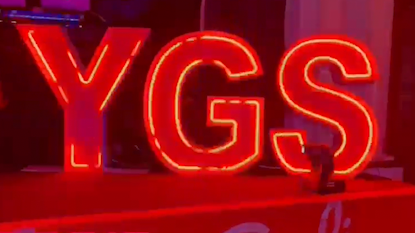
For more than two decades, YGS has been providing live music and events across the island.
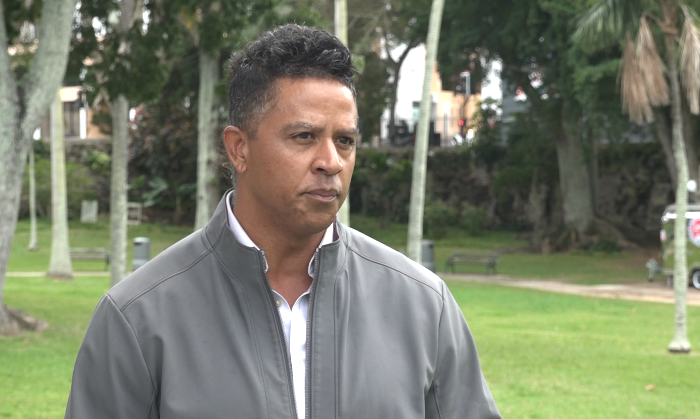
Kendal Trott spoke with YGS founder David Furtado and longtime YGS DJ Scoobay, who reflected on the history and evolution of the group and shared more about their upcoming Memory Lane event.
The event will bring local and international DJs together for a night celebrating music across the years.
Companies running popular social platforms, including Meta, Snap and TikTok, have faced thousands of lawsuits and paid large sums to settle claims that they harmed users
FILE PHOTO: The TikTok app icon on a smartphone in this illustration taken October 27, 2025. REUTERS/Dado Ruvic/Illustration/File Photo
International News via Reuters:
A growing number of people think social media manipulates and divides people and harms democracy, Pew Research Center said on Thursday, echoing rising concern and tighter scrutiny across the world.
Companies running popular social platforms, including Meta, Snap and TikTok, have faced thousands of lawsuits and paid large sums to settle claims that they harmed users. Governments, meanwhile, have sought foolproof ways to protect their citizens’ privacy.
Australia has proposed rules to let users opt out of algorithmically recommended feeds, after becoming the first country to ban social media for children under 16. Pew’s latest survey showed that 82% of Australian adults support the government’s move to restrict social media access for children.
A majority of respondents said social media informs people and gives them a voice in politics, but there was a broad rise in those who now see social media as a “bad thing” compared to 2022, according to the report.
People in wealthier countries, including the US, Canada and UK, are more inclined to believe that social media is harming democracy, versus their counterparts in economies with lower gross domestic product per capita — such as Ghana, Kenya and Nigeria.
The US is among the most skeptical, with 64% of adult respondents saying social media harms democracy. The share of people who consider social media bad for democracy increased in 16 of 26 countries where older data was available.
Pew Research said it surveyed more than 45,000 people in 37 countries, while polling an additional 5,511 US adults on American social media use.
Reporting by Jaspreet Singh in Bengaluru; Editing by Joyjeet Das
The jury deliberated on the evidence for around two hours following a five-week long trial
A Supreme Court jury has found former government Senator Curtis Richardson guilty of causing the death of promising footballer, Marco Warren.
Mr. Richardson, who drove a taxi had been accused of causing the death of Mr. Warren by driving without due care and attention in an incident in the early hours of May 13th, 2023.
Mr. Warren was fatally struck while walking home near the junction with Trinity Church Road and Northshore Road in Hamilton Parish.
He subsequently died of several bone fractures in hospital shortly after being taken away by ambulance.
Crown prosecutors had argued that Mr. Richardson’s driving had fallen below a reasonable standard and presented circumstantial evidence that the taxi he drove fatally injured the victim.
However, defense lawyer Victoria Greening had said her client’s actions fell below the threshold of careless driving and directed the jury to acquit Mr. Richardson.
The trial lasted just under five weeks in the Supreme Court and was presided by Justice Alan Richards.
The Ministry of Home Affairs is pleased to announce the appointment of Mr. Aaron Crichlow as Chair of the Consumer Affairs Board, effective September 11, 2026, in accordance with the provisions of the Consumer Protection Act 1999.
Mr. Crichlow is a Bermudian attorney, community advocate, and founder of Bermuda Is Love, a charitable organisation dedicated to advancing social justice and supporting the provision of basic needs within the community. He holds degrees in philosophy and law, including postgraduate qualifications from the University of Birmingham, the University of Law, and the University of Kent.
Mr. Crichlow was called to the Bermuda Bar in 2022 and has built a reputation for public service, community engagement, and advocacy.
Minister of Home Affairs the Hon. Alexa Lightbourne, JP, MP, welcomed the appointment, saying, “Protecting people from misleading, exploitative or dishonest trading practices is central to the work of the Consumer Affairs Board. Strong consumer protection helps safeguard residents and their families from financial harm and builds trust in the businesses they rely on. Mr. Crichlow’s legal expertise, record of public service and community leadership position him well to lead this work. His commitment to fairness and accountability will be valuable in guiding the Board’s efforts to protect consumers across Bermuda. I am confident that under his chairmanship, the Board will continue its important work of safeguarding consumer rights and promoting confidence in Bermuda’s marketplace.”
The Consumer Affairs Board, established under the Consumer Protection Act 1999, plays a key role in protecting consumers from unfair business practices, promoting consumer awareness, and supporting the safety and integrity of goods and services available to the public. The Board also supports broader efforts to ensure fair treatment in consumer transactions and strengthen public confidence in the marketplace.
The Ministry thanks Mr. Crichlow for his willingness to serve and looks forward to his leadership of the Board.
Curtis Dickinson’s lawyers seek a proviso that does not prevent the PLP amending membership processes for future applicants… but attempts to retroactively amend current new members’ ‘accrued rights’ must be justified in court
A packed courtroom hosted day one of the trial over PLP membership rules.
Extra chairs had to be brought in to accommodate those keen to see how the case, brought against the PLP executive by leadership contender Curtis Dickinson and others, plays out.
Party Chair Dawn Simmons and General Secretary Patricia Basden are named as defendants on behalf of the party.
Among family, friends, supporters and observers were Deputy Premier Zane De Silva, PLP MP Wayne Furbert and PLP senator Lindsay Simmons.
Premier David Burt also came into court temporarily, in support of the defendants.
Curtis Dickinson was not present in the courtroom.
Following a near hour-long delay due to problems with the court recording software, Delroy Duncan began to lay out the case for the plaintiffs…
He acknowledged that the PLP has conceded to matters raised in their original summons – that amendments to the PLP membership process cannot be passed by the Central Committee under the current rules.
However, he added that they don’t want to see valid members stripped of rights they have under the PLP constitution – as it stands today – in a subsequent amendment elsewhere.
This is pertinent, since it has been all but stated outright that the PLP will seek to hold a Special Delegates Conference regardless of the court’s decision, in which they will again vote and potentially pass amendments which would stop all brand new members from becoming delegates and voting in the leadership election at the PLP’s Annual Delegates Conference.
That could potentially reduce Curtis Dickinson’s chances in the leadership election, since he has apparently brought in more than 1,800 new members. That surge in applications is what prompted the call for amendments in the first place.
One of Mr Duncan’s central arguments is whether the PLP’s constitution, at the time that a member joined the party, is effectively a contract.
If it is a contract, he says, it should be subject to contract laws, and verification of a membership should be what it was understood to be at the time of the membership application.
He also stressed that, as the PLP Constitution currently stands, having no affiliation with any opposing party is not a pre-condition of membership. There is a disciplinary process for acting against the interest of the party – but that is subsequent to becoming a member.
This is notable because the second proposed membership amendment sought to pre-vet membership applications from those who had campaigned or stood against the PLP in recent years.
Mr Duncan adds that the proviso they are seeking in conclusion to the case would not prevent the party making amendments to the future membership process. However, any attempt to retroactively impact a party member’s “accrued rights” must come back before the court.
The PLP made a statement earlier this week, implying that Curtis Dickinson was now seeking more than what was in the original summons.
However, Mr Duncan argued that Justice Shade Subair Williams had already determined in her September 10th ruling that the plaintiff’s concerns over retrospective changes to memberships were “a serious issue for trial”. Therefore, he argued, the matter is already live before the court.
Finally, Mr Duncan addressed the issue of requiring the PLP to cough up costs for the case so far.
He cited that a neutral legal opinion on the matter had been sent to the party on August 27th – a week before the summons was laid – which sought essentially the same resolution the plaintiffs now seek via the courts.
If that legal advice had been consented to, “we would not be here”, he said. Ultimately, as it was not heeded, Mr Duncan said there can be “no contest” that his client should receive costs for the case prior to today.
Costs for these two days of trial, he conceded, will depend on the Court’s final judgement in the case.
The case returns to court tomorrow at 10am, where Mark Pettingill will present the defense for the PLP.
The Bundesbank president was asked whether the ECB could activate its Transmission Protection Instrument (TPI), which allows bond purchases for countries facing market pressure provided they maintain sound economic policies
FILE PHOTO: The logo of the European Central Bank (ECB) is pictured outside its headquarters in Frankfurt, Germany, April 26, 2018. REUTERS/Kai Pfaffenbach/File Photo
International News via Reuters:
European Central Bank policymaker Joachim Nagel said on Thursday the ECB’s debt-buying tools are designed to safeguard price stability, not target specific sovereign bond spreads, as a selloff in French government debt fuelled speculation about possible intervention.
The Bundesbank president was asked whether the ECB could activate its Transmission Protection Instrument (TPI), which allows bond purchases for countries facing market pressure provided they maintain sound economic policies.
“You mentioned one, but we have several other tools, but it has nothing to do with maybe certain spread levels or things like that,” Nagel said. “It is (about) price stability.”
Nagel added that he did not comment on the spread levels of individual countries.
French government bond yields earlier hit their highest level since 2002, pressured by concerns over the country’s finances, the prospect of a far-right presidential victory and renewed inflation worries in the euro zone and beyond.
The spread between French and German government bond yields, a key gauge of the premium investors demand to hold French OAT over German Bunds, widened to 132.86 basis points, its highest level since the euro zone debt crisis in 2012.
“We think inflation risk has been critical in pushing OAT-Bund spreads higher,” Reinout De Bock, a macro strategist at UBS, said. “Higher inflation risk, higher term premia, political and fiscal uncertainty are now reinforcing one another.”
The ECB has raised rates twice since June to stem a rise in inflation fuelled by the war in Iran, which has curtailed the supply of oil and gas to the energy importing euro zone.
Reporting by Marc Jones in London; Writing by Francesco Canepa; Editing by Alison Williams and Andrew Cawthorne
The new front-month December Brent crude futures contract traded at $99.77 per barrel at 1312 GMT, up 1.8%, or $1.7, from Wednesday’s close
An automated oil drilling rig operated by ExxonMobil in Midland, Texas, U.S., August 17, 2026. REUTERS/Sheila Dang
International News via Reuters:
Brent benchmark oil prices rose around 2% on Thursday after China suspended oil products exports, potentially tightening fuel markets already coping with supply shortages globally, while investors continued to assess diplomatic efforts to end the US-Israeli war on Iran.
The new front-month December Brent crude futures contract traded at $99.77 per barrel at 1312 GMT, up 1.8%, or $1.7, from Wednesday’s close. The November contract expired on Wednesday, settling at $103.50 per barrel, marking a monthly gain of around 14% in September for the front-month contract.
US West Texas Intermediate crude was up 37 cents, or 0.4%, to $90.79 a barrel, having traded close to $93 earlier in the session.
Prices were volatile on Thursday, having slipped more than 1% in early trading before rebounding.
Chinese refiners have suspended exports of oil products to regions beyond Hong Kong and Macau until further notice, four people briefed on the matter said on Thursday, a move that will further crimp war-constrained fuel markets.
“The Chinese export ban suggests concerns about domestic product availability,” UBS analyst Giovanni Staunovo said, adding that it remains to be seen whether the measures will support higher crude imports after recent drawdowns in Chinese crude and fuel stocks.
Global diesel supplies have tightened as a result of falling refining capacity due to attacks linked to the Middle East and Ukraine wars, raising pressure on governments to intervene to shield consumers.
“China’s pause removes a source of flexible supply at a particularly difficult moment. Middle Eastern disruptions have already reduced the availability of refined products, so importers have fewer alternatives,” said Nitesh Shah, commodity strategist at WisdomTree.
The Trump administration has told Germany and France to draw down emergency diesel inventories to help ease global fuel prices or face a potential US diesel export ban, three people close to the discussions said.
European diesel refinery profit margins were trading at around $78.22 per barrel at 1145 GMT, down about 6% from the previous session. The margin hit an all-time high of $95 per barrel on September 23.
“The US has been failing to make any progress on mitigating the diesel shortage, so this weakness should not last. Product inventories in major hubs are also tight; the latest example of this is Singapore,” said PVM analyst Tamas Varga.
Investors continued to watch diplomacy efforts and oil exports in the Middle East.
Iran is preparing a broader and more forceful response if the US resumes large-scale military attacks, sources said, while continuing a diplomatic push that Iranian officials privately see as unlikely to succeed.
Saudi Arabia resumed oil tanker loadings from Yanbu, Reuters reported on Tuesday, after earlier restarting operations on its East-West Pipeline.
Goldman Sachs estimates Gulf oil exports, including “dark exports” involving ships operating with their location transponders turned off, have recovered to 23.3 million barrels per day over the last week, in line with their 2025 average, as exports doubled in September, it said in a note on Tuesday.
Reporting by Robert Harvey, additional reporting by Shadia Nasralla in London, Sethuraman N R in New Delhi and Yuka Obayashi in Tokyo. Editing by Christopher Cushing, Tom Hogue, Mark Potter and Nick Zieminski
To provide the best experiences, we use technologies like cookies to store and/or access device information. Consenting to these technologies will allow us to process data such as browsing behavior or unique IDs on this site. Not consenting or withdrawing consent, may adversely affect certain features and functions.
Functional
Always active
The technical storage or access is strictly necessary for the legitimate purpose of enabling the use of a specific service explicitly requested by the subscriber or user, or for the sole purpose of carrying out the transmission of a communication over an electronic communications network.
Preferences
The technical storage or access is necessary for the legitimate purpose of storing preferences that are not requested by the subscriber or user.
Statistics
The technical storage or access that is used exclusively for statistical purposes.The technical storage or access that is used exclusively for anonymous statistical purposes. Without a subpoena, voluntary compliance on the part of your Internet Service Provider, or additional records from a third party, information stored or retrieved for this purpose alone cannot usually be used to identify you.
Marketing
The technical storage or access is required to create user profiles to send advertising, or to track the user on a website or across several websites for similar marketing purposes.