Friday, October 30, 2026
Home Blog Page 261

Iran’s intensified closure of Strait of Hormuz piles misery on stranded sailors

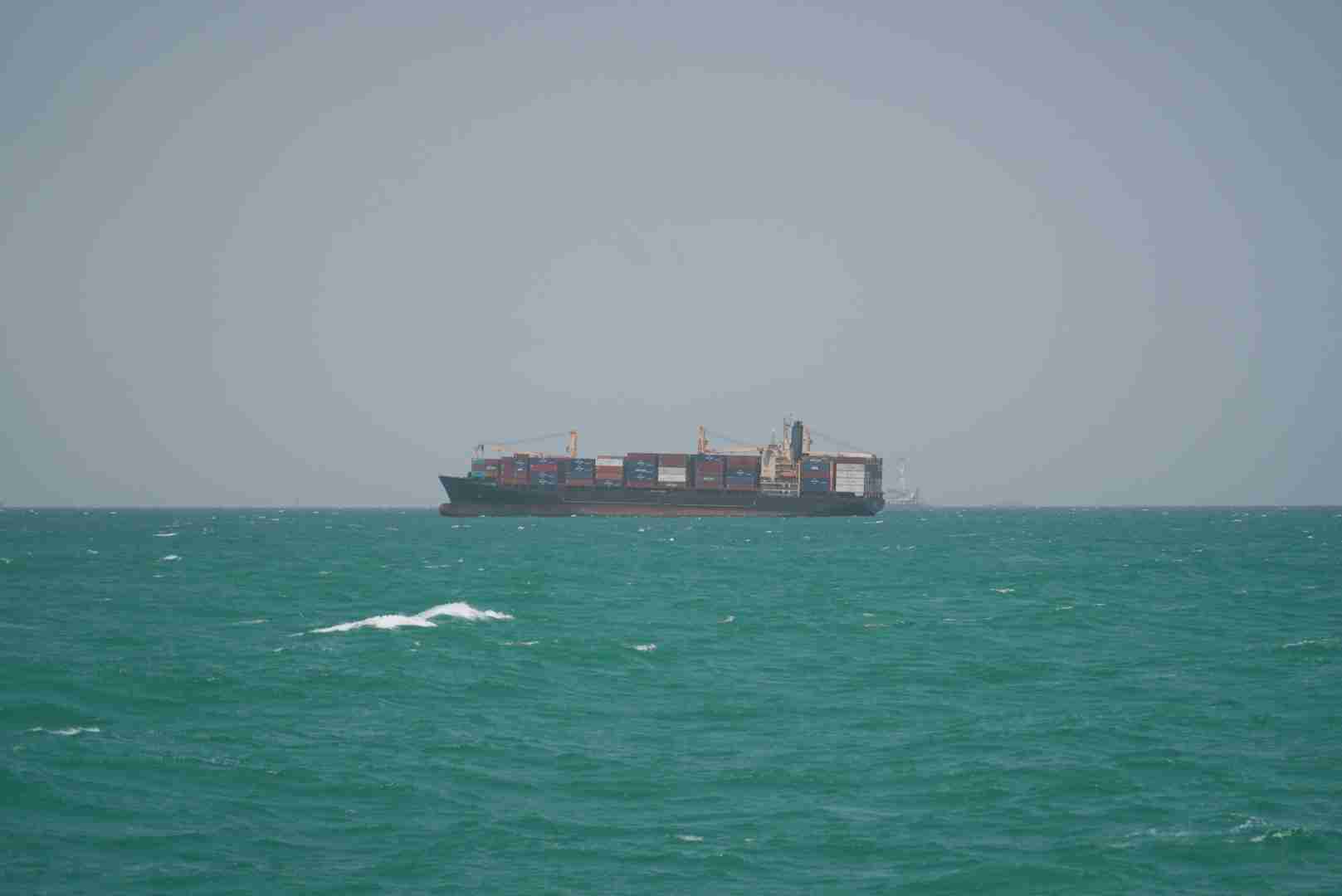
More than 20,000 sailors are stuck on around 2,000 vessels in the Gulf, many of them unable to leave ship, lacking adequate supplies of food and fresh water, and fearful of an uncertain future at sea in a war zone
International News via Reuters:

Iran’s publication of a new map asserting its control over the Strait of Hormuz risks extending an already punishing ordeal for thousands of mariners trapped on ships in the Gulf.

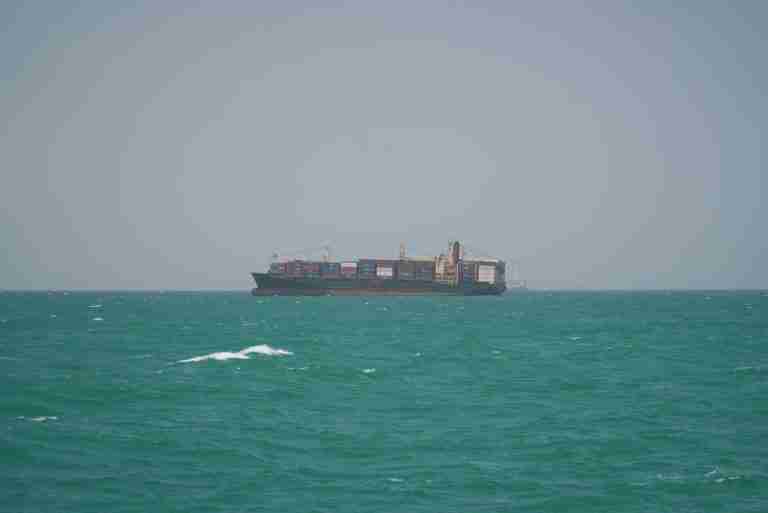
More than 20,000 sailors are stuck on around 2,000 vessels in the Gulf, many of them unable to leave ship, lacking adequate supplies of food and fresh water, and fearful of an uncertain future at sea in a war zone.

Sailors interviewed by Reuters in recent weeks have described the hardships and anxieties of their experience, and a federation representing them warns of dire conditions.

“The only thing we do here is plan how to spend the night and pray to God that we do not get hit during an attack,” Indian sailor Salman Siddiqui said by phone from his stranded ship last month.

ISOLATED LIVES 

When Reuters travelled on a resupply boat to vessels moored off the Saudi coast this week, sailors on a tanker gathered by the handrail to wave, a rare moment of contact with the outside world. 

For nearly three months, the sailors trapped in the Gulf have led isolated lives, each with a small group of shipmates, moving between tiny living quarters, communal dining areas and scorching, sun-baked decks. 

Tehran closed the strait, a global oil supply route, after U.S.-Israeli attacks on Iran began on February 28. Thousands of ships were trapped in the Gulf and, with peace negotiations stalled, Iran is doubling down on the effective blockade.

The Persian Gulf Strait Authority, a body Iran has set up to manage requests for passage, published a map on Wednesday reaffirming Tehran’s claims to a wide stretch of water either side of the choke point. 

Ship owners seeking to extricate their vessels – and often precious cargoes – must navigate a labyrinthine system of payments and permissions set up by Iran, a Reuters report showed. 

“Seafarers’ vulnerability and exposure is more, let’s say, extreme because of the war,” said Mohamed Arrachedi, network coordinator for the Arab World and Iran at the International Transport Workers’ Federation.

He described cases where there had been pay delays, refusals to help repatriate sailors, a lack of provisions and the fear of missiles and drone strikes. Some seafarers called him in tears, he said. 

The ITF has been contacted by more than 2,000 sailors in the Gulf seeking help or advice to resolve disputes ranging from abandonment and pay delays to lack of supplies since the war began, he said. 

STUCK AT SEA

From the Saudi port of Dammam, about seven large ships were visible moored out at sea – an unusually large number in normal times. As the resupply ship bobbed alongside the tanker in a stiff wind, the sailors aboard called out across the water while they winched aboard large sacks of medical goods.  

Mohit Kohli, the captain of a large cargo vessel caught in the Gulf when the war began after sailing from Singapore, said that when he first heard the Strait could be closed he “could not even fathom that this was remotely possible”.

His German-owned ship managed to secure a safe anchor off Dammam, but just over a week into the war the crew started to see and hear the missiles and drones Iran was directing at Gulf states. 

“The crew who was usually loud and happy were now silent. Meals got shorter. Conversations were more guarded,” he said, describing the atmosphere on board in a Reuters interview this month after his return to India. 

Kohli and his shipmates were on a ship whose owners helped bring in a relief crew, he said. 

Many sailors face far worse, Arrachedi said. In some of the cases he is dealing with, sailors have not been paid their meagre salaries of $100 to $200 a month since last year and shipowners are refusing to help them return home, or only doing so if they forfeit back pay, he said. 

Some sailors say they have only a single meal of rice or lentils each day, and have only brief moments of internet connection to contact loved ones or seek outside help, Arrachedi added.

“They need a collective intervention because they are key for our economies, for the supply chains, but also because they are active seafarers and they are civilians,” he said. 

Gulf states are making some efforts to assist sailors by facilitating supplies and crew transfers. 

“Seafarers stuck on a vessel in uncertain waters, the most important thing in the world is knowing that there is a shore open to reach,” said Suliman Almazroua, president of the Saudi Ports Authority. 

The authority has helped hundreds of vessels resupply with food, fresh water, fuel and medicines, and has aided more than 500 sailors to transfer from their ships, Almazroua said, describing messages of thanks from sailors he has helped leave as the most rewarding part of his job.  

Reporting by Mohammed Benmansour and Imad Creidi, additional reporting by Sunil Kataria, Writing by Angus McDowall, Editing by Peter Graff and Timothy Heritage

Brazil’s Lula starts radiation after early-stage skin cancer diagnosis

Lula had a basal cell lesion removed on April 24

International News via Reuters:

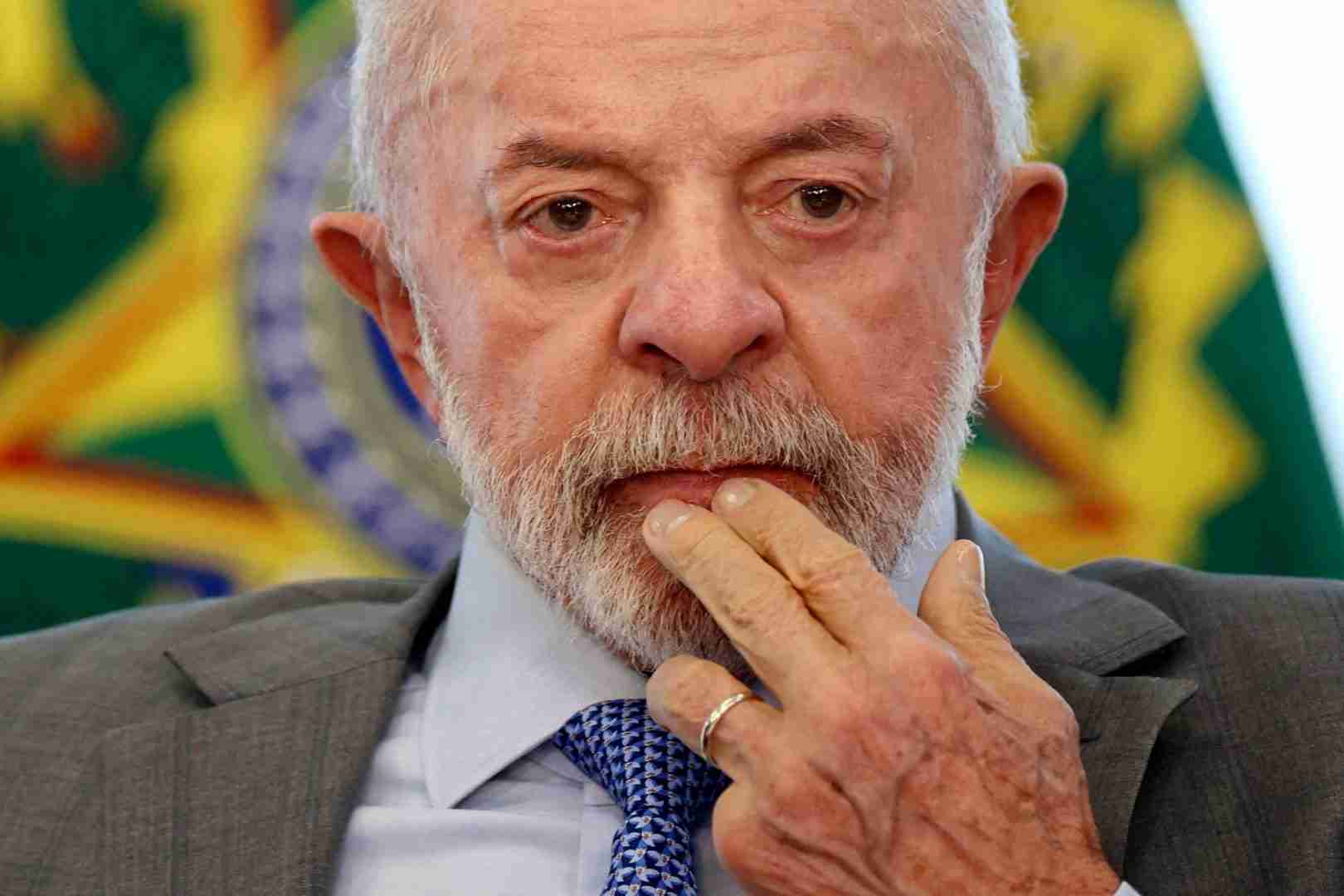
Brazilian President Luiz Inacio Lula da Silva has started preventive radiation treatment after being diagnosed with early-stage skin cancer, doctors treating the 80-year-old leftist leader and his office said on Monday.

Lula had a basal cell lesion removed on April 24.

“It was decided to proceed with complementary treatment with preventive, superficial radiotherapy on the scalp,” doctors at the Sirio-Libanes Hospital said in a medical note, adding Lula will maintain his daily activities without restrictions.

A spokesperson for Brazil’s presidency told Reuters the “small” lesion was diagnosed as early-stage cancer and Lula would undergo 15 radiotherapy sessions to prevent further lesions.

Lula is expected to run for a fourth non-consecutive term in October and currently leads right-wing challenger Flavio Bolsonaro in several opinion polls for a potential second-round runoff.

He is Brazil’s oldest sitting president and has had some health scares, including emergency surgeries in 2024 to treat and prevent bleeding in his head. Lula was treated for throat cancer in 2011.

Reporting by Lisandra Paraguassu in Brasilia and Gabriel Araujo in Sao Paulo; Writing by Isabel Teles; Editing by Deepa Babington

Ebola patients flee in attacks on Congo health facilities, hobbling response

At least three such incidents have occurred in the northeastern province of Ituri where the first Ebola cases were reported, including two at the weekend targeting the same hospital that permitted more than two dozen patients to run away

International News via Reuters:

Doctors operating on the front lines of the fight against Ebola in Congo, already grappling with shortages of basic supplies, are now also having to deal with attacks on their facilities and fleeing patients as the virus spreads rapidly.

At least three such incidents have occurred in the northeastern province of Ituri where the first Ebola cases were reported, including two at the weekend targeting the same hospital that permitted more than two dozen patients to run away.

The attacks recall the widespread violence targeting health facilities during a 2018-2020 outbreak in eastern Democratic Republic of Congo that killed more than 25 health workers. 

Some were perpetrated by civilians who were angry about not being able to bury their loved ones or were convinced that the outbreak was a hoax. The influx of money and manpower into an area that had felt neglected during decades of conflict and humanitarian crisis has spurred local suspicions about the real motives for the sudden spike of interest. 

A similar dynamic seems to be playing out now, said Dr Richard Lokodu, medical director of the Mongbwalu General Referral Hospital, which came under attack first on Saturday and again on Sunday.

“There is denial of the disease within the population, with some members wanting to claim the bodies of suspected and/or confirmed cases,” he said.

The World Health Organization has declared the outbreak of the rare Bundibugyo ​strain of Ebola, the third-largest such outbreak on record, a public health ​emergency ⁠of international concern.

WHO chief Tedros Adhanom Ghebreyesus said on Sunday there had been ⁠more ​than 900 suspected cases in ​the outbreak so far, including 101 confirmed cases.

On Monday, Tedros said there had been 220 suspected deaths in the current Ebola outbreak and that a delay in detecting cases meant responders were now “playing catch-up”.

PATIENT DIED WHILE TRYING TO FLEE

At the Mongbwalu General Referral Hospital, located in Mongbwalu town where many cases have been reported, 18 Ebola patients fled on Saturday after “unidentified individuals” burned tents, erected by medical charity Medecins Sans Frontieres, where patients were being isolated, Lokodu said.

Four lab results from those patients have come back – three negative results and one positive result, he said.

“So we have one confirmed case of Ebola that continues to circulate in the community and evade the response,” Lokodu said.

On Sunday, the hospital came under four waves of attacks by young people mobilised by relatives of a Christian religious leader who died of Ebola, he said.

Seven other patients escaped and Congolese police and soldiers had to mobilise to restore order, he said.

A suspected Ebola patient who was in critical condition with hemorrhaging died in the second attack while trying to flee from his bed, Lokodu added.

The perpetrators of the attacks wanted dead Ebola victims’ bodies released for burial, Lokodu said.

The bodies of Ebola victims are highly infectious after death, and unsafe burials – in which family members handle ⁠the body without proper protective equipment – are a leading driver of transmission.

LONG HISTORY OF ATTACKS ON EBOLA TREATMENT CENTRES

Health workers faced a handful of attacks by angry mobs during the 2013-2016 Ebola outbreak in West Africa, the largest on record, some of whom accused them of spreading the virus.

But the phenomenon exploded during the 2018-2020 outbreak in eastern Congo, a region marked by rampant insecurity and mistrust of formal authorities. 

In addition to more spontaneous outpourings of anger by local communities, many attacks were carried out by militia groups looking to exploit the outbreak for political and financial gain, researchers found. 

The current outbreak is believed to have originated in Ituri before spreading to North and South Kivu provinces – including areas under the control of Rwanda-backed M23 rebels – and across the border into neighbouring Uganda.

On Monday Uganda reported two more confirmed cases of Ebola, bringing the total number of cases in the country to seven.

Reporting by Gradel Muyisa, Fiston Mahamba and Aaron Ross; Writing by Robbie Corey-BouletEditing by Gareth Jones

CG brings community health festival to Albuoy’s Point

Coralisle Group Ltd. (CG) has announced the rebrand of its longstanding corporate wellness programme, Zest Wellness, to CG Wellness, effective May 30, 2026. The evolution reflects the programme’s deep integration into CG’s health and medical insurance offerings and reinforces its role in supporting healthier lives across the communities that CG serves.

For more than a decade, the programme has supported thousands of members through preventative health initiatives, educational resources, and practical tools designed to promote physical, mental, and overall wellbeing. The transition to CG Wellness reflects the company’s commitment to positioning wellness as a core offering across its products and services.

“Rebranding Zest Wellness to CG Wellness is a natural progression for a programme that was created by CG for our members,” said Naz Farrow, Chief Executive Officer “This evolution ensures the programme is clearly aligned with our broader mission
and identity, and that it continues to be recognized as an integral part of how we deliver value to our clients, supporting healthier, more resilient communities.”

Jacqueline Perreault, Director of Wellness at CG and the original creator of the programme, highlighted its long-standing impact and future potential. “What started as a vision to enhance wellbeing has grown into an award-winning programme that meaningfully complements CG’s health insurance offerings,” she said. “As CG Wellness, we see even greater opportunity to ensure wellness remains a central pillar of the CG experience, while expanding access to organizations beyond CG that are committed to building healthier, more resilient workforces.”

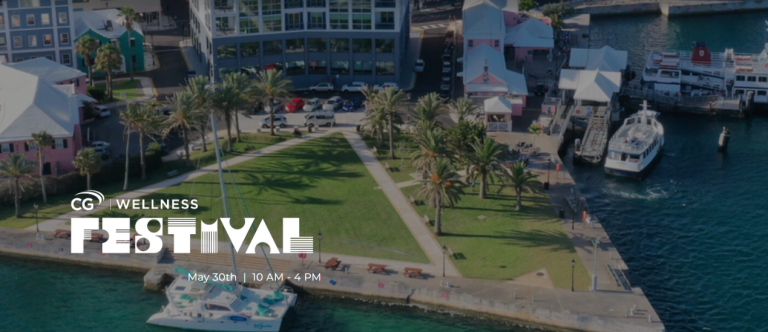
To mark the rebrand, CG will host Bermuda’s first CG Wellness Festival on Saturday, May 30 at Albuoy’s Point from 10am to 4pm. The free, public event will bring together the community for a day focused on health, wellbeing, and connection.

Attendees can expect a vibrant mix of local vendors, live entertainment, a kids zone, and fitness and educational experiences designed to inspire healthier lifestyles. The festival reflects CG’s broader commitment to making wellness accessible, engaging,
and community-driven.

For more information and the full schedule of events, visit the link here: https://cgzestwellness.com/cg-wellness-festival-2026

Media release supplied.

Opinion: The crises in housing and population are joined at the hip

In the second of a two-part commentary, Michael Fahy backs elements of Government policy on housing, but also highlights its flaws

Michael Fahy: “The answer is a Housing Investment Act, the residential equivalent of the Tourism Incentive Act.”

Statement by Michael Fahy, OBP MP for Constituency 20, Pembroke South West and Shadow Minister of Economy, Labour & Housing:

There is a version of the Bermuda Affordable Housing Strategy 2025–2035 that I could support without reservation. It would take the genuinely good elements of this document, the demographic analysis, the modular construction pivot, the derelict stock programme and the vacancy tax concept, and add to them the private-sector activation engine, the immigration-housing linkage, the legislative urgency and the financing architecture that the current draft lacks.

Let me explain what that looks like in practice.

The single most important thing this document does not do is reconnect housing and population policy as two sides of the same equation. The Chamber of Commerce said it plainly that the housing crisis and the population crisis are joined at the hip. The OBA has said this for years. It is not a controversial position. It is arithmetic.

When the PLP introduced term limits in the early 2000s, longer-term residents who had been renting three and four-bedroom family homes left the island and were replaced by short-stay workers, many of them single or married without children, who moved directly into competition with Bermudians for one and two-bedroom units. That policy choice structurally depleted the very segment of the rental market that Bermudians most need. The digital nomad programme, well-intentioned in isolation, had the identical effect. Further, as our population ages, with seniors increasingly moving from family homes into the one and two-bedroom market, that competition deepens every single year.

A housing strategy that does not acknowledge this dynamic is working with a broken model. To build 950 to 1,350 units while simultaneously replenishing immigration demand for the same unit typologies, without any regulatory adjustment, is to fill a bath without fixing the drain. 

The solution is not to restrict immigration. The opposite is true. The Chamber’s research estimated that Bermuda requires approximately 8,418 additional working-age people to sustain our ageing population and fiscal base. A larger, skilled and stable population makes Bermuda more prosperous for everyone. Empty houses do not pay rent to Bermudian landlords. Empty restaurant tables do not keep Bermudian waitstaff employed. The Fiscal Responsibility Panel put it clearly, immigrants and returning Bermudians with the right skills will help to create jobs, not displace them.

What needs to change is the structure, not the volume. We should be incentivising the return and retention of longer-term, family-forming residents who will live in larger units and contribute across all segments of the housing market, not a revolving succession of short-stay workers who remain in permanent competition in the most constrained segment of the market.

That means clear pathways to permanent residency. It means a guest worker framework that rewards long-term commitment rather than churning term-limited licences. It means building the population that will fund the hospitals, pension contributions and school places that an ageing Bermudian society will need, and it means building enough housing to accommodate that population when they arrive.

Now to how we actually build it.

The strategy’s instinct to go modular and precast is somewhat correct. At $500 to $700 per square foot against $800 to $1,000 for traditional masonry, modular systems offer Bermuda its only realistic path to cost-competitive affordable construction. The Government’s customs duty reduction on construction materials to 10 percent, a policy the OBA pressed for and eventually received, is a genuine step. It should be pushed further to zero, and the foreign currency purchase tax on construction financing should be eliminated entirely.

However, reducing construction costs without addressing the fundamental disincentive for private developers is only half the equation. Construction replacement costs exceed market values by more than 20 percent. That means a developer who builds affordable housing is, by definition, building at a loss relative to the underlying asset value. No commercial actor will consistently operate at a loss unless something changes the underlying equation.

The answer is a Housing Investment Act, the residential equivalent of the Tourism Incentive Act. Provide time-bound land tax exemptions, duty relief and density bonuses to developers who build in Hamilton and other designated zones, require a minimum 30 percent affordable component, and tie the relief to ten-year minimum rental terms on the affordable units. This is not a subsidy. It is the correction of an incentive structure that currently prices private investment out of the affordable market entirely.

On the derelict stock question, the strategy’s Repair-to-Rent programme and Land Bank model are sound in concept. But I want to be clear about the compulsory acquisition powers proposed in this document. Before we begin acquiring properties from Bermudians, we should have exhausted every less coercive option first. I said this in March 2026, and I will say it again. Before we run off and acquire homes already owned by Bermudians to then sell or lease to other Bermudians, let us look again at selling or offering long-term leases over government property and incentivise the private sector to build on it.

The Government owns land. It owns buildings. It owns properties in St. George’s multiple schools and institutional sites across multiple parishes. Before compulsory acquisition legislation is enacted, publish an honest and complete accounting of every government-owned asset with residential conversion potential, and offer long-term leases to private developers and housing cooperatives on commercially reasonable terms. That costs almost nothing and could deliver supply in months rather than years.  Empty schools should top this list!

The probate issue deserves one final emphasis. The Chamber identified approximately 3,678 dwellings effectively unaccounted for in the gap between assessment roll numbers and occupied households. A substantial portion of Bermuda’s 214 uninhabitable properties are inheritance disputes waiting to be resolved. Faster processing, simplified mediation and clear legal guidance for co-ownership disputes could return hundreds of units to the market at negligible public cost. This should be a 2026 legislative priority, full stop. What the strategy ultimately needs, and what Bermuda ultimately deserves, is the honest acknowledgment that the housing crisis is the accumulated consequence of specific policy choices: term limits, planning conservatism, Landlord-Tenant Act neglect and two decades of BHC under-investment. Fixing it requires the political courage to reverse those choices, not merely the institutional ambition to manage their consequences.

HOME’s Executive Director Denise Carey described the goal with exactly the simplicity it deserves, namely homeownership that is secure, attainable and generational.

That is the Bermuda I want to build. It is the Bermuda this strategy claims to be building. The gap between the claim and the construction timeline is the only political question that matters right now.

We know what to do. The question that remains unanswered, after thirty years of housing headlines, after twenty-one years of PLP governance and after the publication of this 66-page strategy, is whether anyone in authority is prepared to actually do it.

Michael Fahy is the Shadow Minister of Economy, Labour & Housing, and the OBA MP for Pembroke South West. He can be reached at mfahy@oba.bm or opedfahy@gmail.com


Terceira’s service stations transition from Rubis to ESSO

Two popular service stations owned by the Terceira family have made the switch from Rubis to ESSO – Terceira’s North Shore and Warwick gas stations.  Qian Dickinson spoke with owners Teddy and Michael Terceira, and Operations Manager Allan Young about why the decision was made, the process behind the transition, and what the public can expect as a result of their new partnership with ESSO.

Former SNP chief pleads guilty to embezzling $540,000

Murrell is the former husband of ex-SNP leader Nicola Sturgeon, who suddenly resigned in 2023, shortly before she was arrested as part of the probe into the party’s finances

International News via Reuters:

Former Scottish National Party chief executive Peter Murrell on Monday pleaded guilty to embezzling more than £400,000 ($540,000), admitting diverting funds from the party which were used to buy items such as cars, a motorhome and luxury goods.

Murrell is the former husband of ex-SNP leader Nicola Sturgeon, who suddenly resigned in 2023, shortly before she was arrested as part of the probe into the party’s finances. She was cleared of wrongdoing in March last year.

The police probe and the arrest of the SNP’s longest-serving leader were deeply embarrassing for the pro-independence party which has dominated Scottish politics for most of the last two decades. 

Police had been investigating what had happened to money raised by Scottish independence campaigners in 2017 which was supposed to have been ring-fenced but had allegedly been used for other purposes.

In written terms of his guilty plea, Murrell admitted embezzling £400,310.65 from the SNP between August 12, 2010, and January 13, 2023, about £60,000 less than he was originally charged with.

“Peter Murrell has shown utter contempt for the high public trust placed in him as the Chief Executive of a political party and his position in the wider political establishment in Scotland for many years,” said Police Scotland’s Assistant Chief Constable Stuart Houston.

“He abused his privileged position with access to Scottish National Party funds to divert cash into his own accounts and bankroll the lavish lifestyle he craved but could not afford.”

The details of the indictment showed he had used the funds to buy several vehicles, as well as items from luxury brands such as Estee Lauder and Harrods.

Murrell was remanded in custody and will be sentenced on June 23.

($1 = 0.7412 pounds)

Reporting by Alistair Smout, additional reporting by Sam Tobin; Editing by Gus Trompiz

Portugal flag carrier TAP’s loss shrinks 63%, flags fuel price pressure ahead

The flag carrier, which is being partially privatised, said the expected impact of jet fuel prices should be somewhat mitigated by capacity management, cost controls and pricing adjustments through a fuel surcharge

International News via Reuters:

Portugal’s airline TAP said on Monday its first-quarter loss narrowed 63% from a year ago to €39.9 million ($46.5 million) on higher revenue, but warned that rising jet fuel prices due to the Iran conflict will weigh in coming quarters.

• The flag carrier, which is being partially privatised, said the expected impact of jet fuel prices should be somewhat mitigated by capacity management, cost controls and pricing adjustments through a fuel surcharge.

• Revenue rose 11% to €914 million, driven mainly by a 10% increase in passenger revenue to €810 million and a 32% jump in aircraft maintenance revenue, alongside capacity growth.

• Passenger numbers rose 6.4% to 3.7 million and load factor improved 4.8 percentage points to 83.5%, driven by South and North American markets.

• EBITDA reached €92 million in the first quarter, reversing a negative €9.5 million a year earlier.

• Operating costs remained broadly stable at around €954 million, with jet fuel costs still down 16% to €196 million in the quarter, but staff costs rising 9% to €252 million.

($1 = 0.8590 euros)

Reporting by Sergio Goncalves; editing by Andrei Khalip, Kirsten Donovan

Australian police did no threat assessment before Bondi attack, inquiry hears

The comments came during public hearings in the wide-ranging inquiry known as a ​Royal Commission that focus on events prior to last December’s Bondi attack, which killed 15 attending a Jewish Hanukkah celebration at the famed Sydney beach

International News via Reuters:

Australian state police did not prepare a threat assessment for the event where the Bondi Beach mass shooting occurred and denied a request from the Jewish community to station officers there, an inquiry into the attack heard on Monday.

The comments came during public hearings in the wide-ranging inquiry known as a ​Royal Commission that focus on events prior to last December’s Bondi attack, which killed 15 attending a Jewish Hanukkah celebration at the famed Sydney beach.

A New South Wales police officer said no threat assessment was prepared for the event, but agreed in hindsight that one would have been appropriate.

“I see no reason why a threat assessment could not be completed for that event,” said Assistant Commissioner Leanne McCusker, adding that such an exercise would have enabled security arrangements that matched the threat level.

Threat assessments are generally limited for gatherings classed as major events, including Jewish high holy days, but not Hanukkah.

The inquiry also heard that state police were warned of the risks by CSG, a Jewish private security service group, before the attack.

CSG gave them its own threat assessment, warning of a heightened risk of violent or antisemitic incidents at Hanukkah, the inquiry heard.

This stemmed from “the anticipated visibility of identifiably Jewish individuals in public spaces and the prominence of the festival”, such as the Bondi event, the inquiry heard.

An anonymous CSG member said he requested “static” police officers at the event in view of the risk, the numbers expected to attend and the fact that it was to be held in the open air, where CSG could not carry arms.

But police did not believe they were required, he added.

“I said that there would be a lot of unease from the community not having a static police presence on the ground.”

TERROR THREAT LEVEL RAISED

The inquiry was also told that antisemitism in Australia was left unchecked after the outbreak of the Israel-Gaza war, which fuelled violence against Jewish people and led the spy agency to raise the national terrorism threat level to “probable” from “possible” in August 2024.

“The war in the Middle East invoked a range of emotions in Australia,” said Mike Burgess, director-general of the Australian Security Intelligence Organisation.

“Some of those violent aspects … and those behaviours, including antisemitism that, in our view, were left unchecked, were therefore normalised and gave more permission for violence … and Jewish Australians were on the receiving end.”

From late 2024, Burgess said, antisemitism also escalated from threats and intimidation to direct targeting of people, businesses and places of worship.

Such incidents included vandalism and arson targeting homes, schools, synagogues and vehicles before the Bondi attack.

Burgess said the agency concluded that Iran’s elite Islamic Revolutionary Guard Corps was behind two antisemitic attacks, on a kosher restaurant in Sydney and Melbourne’s Adass Israel Synagogue.

Iran was probably involved in more attacks, but the agency “just can’t quite get there” in its efforts to nail down responsibility, he added.

“There was absolutely a concern that the antisemitism could escalate to actual terrorist acts” after the outbreak of the Gaza war in October 2023, said Stephen Nutt, an assistant commissioner of the Australian Federal Police.

The commission’s first series of hearings earlier this month focused on the nature and prevalence of antisemitism, taking testimony from members of the Jewish community.

Reporting by Christine Chen in Sydney; Editing by Clarence Fernandez

Greek police arrest 20 in Crete over suspected EU farm subsidies fraud

Among the group’s suspected leaders were two accountants and state employees who assisted farmers with submitting applications to receive EU farm funds based on false declarations of farm land, police officials said

International News via Reuters:

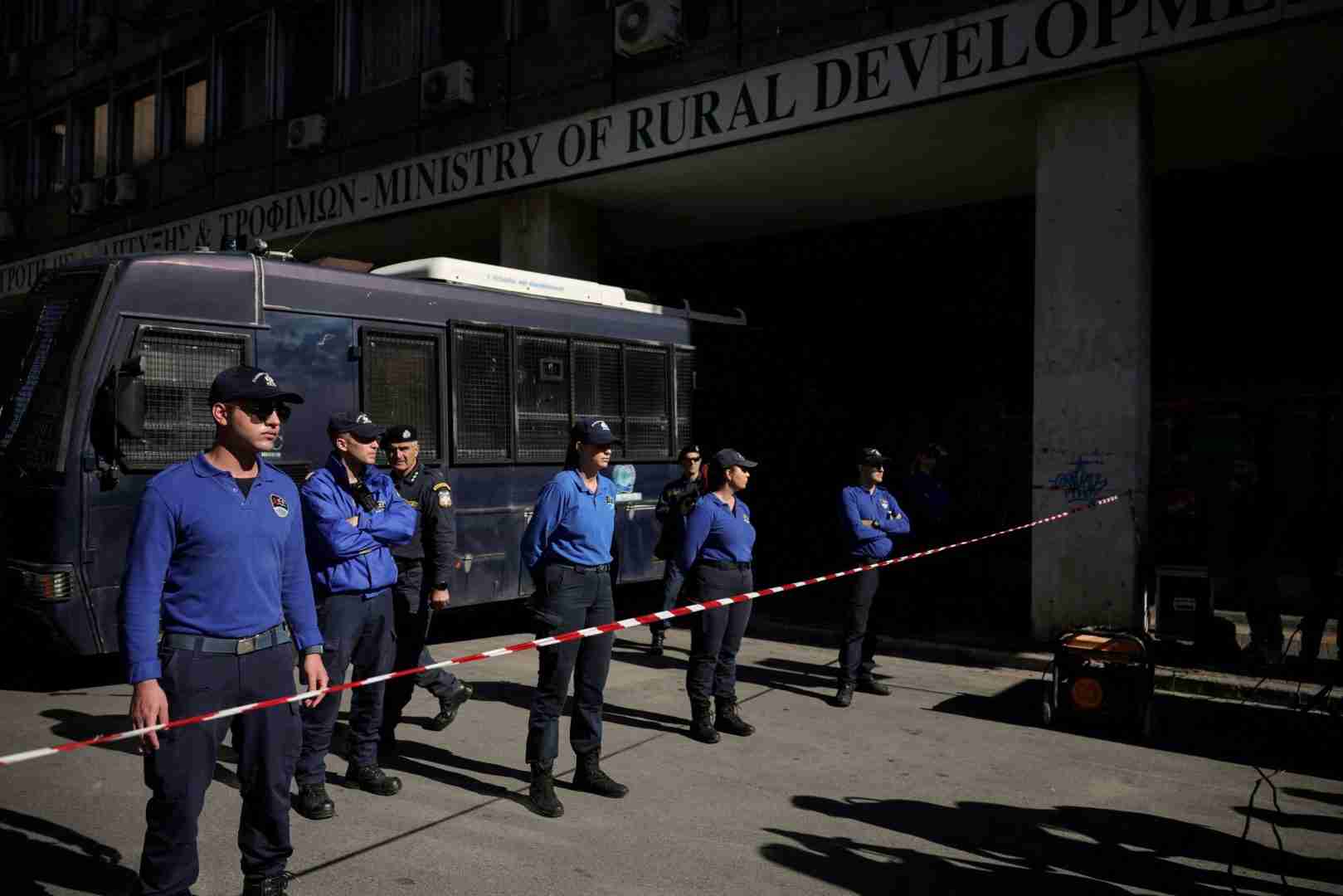
Greek police arrested 20 people on the island of Crete on Monday, saying they had dismantled a criminal gang suspected of defrauding the European Union of agricultural subsidies – the latest case in a growing scandal that has shaken the government.

Among the group’s suspected leaders were two accountants and state employees who assisted farmers with submitting applications to receive EU farm funds based on false declarations of farm land, police officials said.

Since starting to operate in 2019, the network’s illegal revenue topped €3 million ($3.49 million), police said in a statement.

Monday’s arrests are the latest in a series of local cases linked to a wider probe by the European Public Prosecutor’s Office – an independent EU office – into alleged crimes in Greece against the bloc’s financial interests.

Last year, European prosecutors charged dozens of Greek stock-breeders with faking ownership of grazing land to claim millions of euros in EU subsidies, with the alleged help of state employees and conservative politicians.

The scandal has made political waves in Greece, prompting parliamentary probes – which were inconclusive – as well as ministers’ resignations and calls for early elections by opposition parties.

At the request of the European chief prosecutor, parliament voted in April to lift the ‌parliamentary immunity of 13 lawmakers from the ruling New Democracy party, so they can be investigated over their suspected role in separate cases.

Prime Minister Kyriakos Mitsotakis urged EU prosecutors to decide swiftly whether to indict the lawmakers, as he seeks to stem the political fallout from the probe before the next parliamentary election due by spring 2027.

($1 = 0.8589 euros)

Reporting by Yannis Souliotis; Writing by Renee Maltezou;Editing by Helen Popper

The long road to Ferrari’s first electric car

Here is a summary of how the Italian sports car maker got there after first using hybrid technology in its Formula One racing cars more than a decade ago

International News via Reuters:

Ferrari, renowned for its roaring V8 and V12 engines, is unveiling its first fully electric model, the Luce. 

Here is a summary of how the Italian sports car maker got there after first using hybrid technology in its Formula One racing cars more than a decade ago.

2014

Hybrid powertrains introduced in Formula One. Systems to recover kinetic energy when braking had been used since 2009.

MAY 2019

Ferrari launches 1,000 horsepower, 4WD SF90 Stradale, its first mass-produced hybrid. It had launched a limited series LaFerrari hybrid in 2013.

Further hybrid models are launched in the following years, including the 296 family, the 849 Testarossa and the limited edition F80 supercar costing €3.6 million ($4.2 million).

SEPTEMBER 2021

Benedetto Vigna, a physicist who spent 25 years at chipmaker STMicroelectronics, takes over as CEO to drive Ferrari’s leap into electrification.

JUNE 2022

Vigna presents his first multi-year business plan for Ferrari, including a pledge that by 2030 electric models would make up 40% of its line-up, after the European Union launched an effective 2035 ban on the sale of new petrol-engine cars. He targets 2025 for Ferrari’s first fully electric model.

JUNE 2024

Reuters reports details of Ferrari’s first electric car, with a price tag pegged at more than €500,000.

Ferrari inaugurates a new ‘e-building’ within its Maranello complex to make electric cars and parts for EVs, as well as hybrids and some traditional combustion-engine models.

MAY 2025

Ferrari says its first EV will be launched through a three-stage unveiling process culminating with a world premiere in the spring of 2026. It adds deliveries to clients will start in October 2026.

JUNE 2025

Ferrari delays plans for second EV due out in 2026 to at least 2028, due to lack of demand for high-performance EVs, Reuters reports.

OCTOBER 2025

Ferrari unveils technology to power its first electric car.

The four-door, four-plus-seat car will have a specially designed sound system to amplify vibrations from its powertrain to create an electric Ferrari roar.

In a new business plan, Ferrari’s revised model mix targets 20% EVs, 40% hybrids and 40% internal combustion engine (ICE) models for 2030 line-up. That compares with a 2022 target of 40% EVs, 40% hybrids and 20% ICE models.

FEBRUARY 2026

Ferrari releases teaser images of first EV model, revealing its name as Luce – meaning light in Italian. LoveFrom, co-founded by former Apple designer Jony Ive, is involved.

Vigna says that Ferrari is opening pre-orders for the Luce in March, after “very positive” client feedback.

($1 = 0.8519 euros)  

Reporting by Giulio Piovaccari; Editing by Adam Jourdan and Alexander Smith