Saturday, October 31, 2026
Home Blog Page 299

Human to human hantavirus transmission suspected on cruise but risk to public low, WHO says

Human to human transmission is not common, and the U.N. health agency reiterated that the risk to the wider public was low from a disease typically spread from contact with infected rodents

International News via Reuters:

The World Health Organization said on Tuesday that it suspects some rare human to human transmission took place between very close contacts on board a luxury cruise ship hit by seven confirmed or suspected hantavirus cases.

Human to human transmission is not common, and the U.N. health agency reiterated that the risk to the wider public was low from a disease typically spread from contact with infected rodents.

A Dutch couple and a German national have died, while a British national was evacuated from the ship and is in intensive care in South Africa, officials said. Three more people with suspected cases are still on board the Dutch-flagged MV Hondius.

The cruise ship hit by the deadly outbreak is marooned off Cape Verde, an island nation in the Atlantic off West Africa, which has not allowed the vessel to put passengers ashore.

NO RATS ON BOARD

The WHO said it had been told there were no rats on board.

People are usually infected by hantavirus through contact with infected rodents or their urine, their droppings or their saliva.

However, a limited spread among close contacts has been observed in some previous outbreaks with the Andes strain, which spreads in South America, including Argentina, and which the WHO believes could be involved in this instance. Testing is under way.

The Hondius left Ushuaia in southern Argentina in March. 

“We do believe that there may be some human to human transmission that’s happening among the really close contacts, the husband and wife, people who have shared cabins,” Maria Van Kerkhove, the director of epidemic and pandemic preparedness and prevention at the WHO, told reporters in Geneva.

“Some people on the ship were couples, they were sharing rooms so that’s quite intimate contact,” Van Kerkhove said. 

INFECTED BEFORE THE TRIP?

The U.N. health body said its working assumption was that in the initial cases of the Dutch couple, who joined the ship in Argentina after travelling in the country, they were infected before joining the cruise.

Other cases may also have been infected whilst on bird-watching trips to islands where birds and rodents live as part of the cruise, it said.

Van Kerkhove said the focus now was to evacuate the two sick passengers still onboard and then for the ship to continue to the Canary Islands. The third suspected case still on board only reported a mild fever at some point.

“We have heard from quite a few people on the boat,” she said. “We just want you to know we are working with the ship’s operators. We are working with the countries where you are from. We hear you, we know that you are scared,” she said, adding they were working hard to get people home safely.

But while the WHO said the plan was for the ship to head to the Canary Islands, Spain’s health ministry said it had made no decision yet on receiving it and that this would depend on data collected from the ship. A team of epidemiologists will carry out an inspection of the vessel in the afternoon, it said.

Meanwhile, Cape Verde’s National Director of Health Angela Gomes told Rádio de Cabo Verde that they were working on plans to evacuate the two sick people, and possibly others.

VOYAGE STARTED IN SOUTHERN ARGENTINA

Around 150 people are stuck on the Hondius, which is carrying mostly British, American and Spanish passengers on a luxury cruise that set off from the southern tip of Argentina in late March. The cruise visited the Antarctic peninsula and South Georgia and Tristan da Cunha – some of the remotest islands on the planet.

The voyage was marketed as an Antarctic nature expedition, with berth prices ranging from 14,000 to 22,000 euros ($16,000 to $25,000).

The first stricken passenger, the Dutch man, died on April 11. His body remained on board until April 24, when it “was disembarked on St Helena, with his wife accompanying the repatriation”, the ship’s operator, Oceanwide Expeditions said.

His wife, who had gastrointestinal symptoms when she was disembarked, later deteriorated during a flight to Johannesburg. She died upon arrival at the emergency department on April 26, the WHO said, adding that contact tracing was under way for passengers on that flight.

South African authorities have confirmed that the British patient, who is being treated in a Johannesburg hospital, tested positive for the hantavirus. The Netherlands has confirmed the virus in the Dutch woman who died.

South Africa’s National Institute for Communicable Diseases is working to sequence the virus, with results possible by Wednesday, Van Kerkhove said. The Institut Pasteur in Senegal is supporting efforts to test and confirm the suspected cases.

The WHO estimates that there are between 10,000 and 100,000 hantavirus cases annually. Argentina continues to have the most cases in the Americas region, the WHO said in December, with a lethality rate of around 32%, higher than average and than for other strains of the virus.

Writing by Ingrid Melander; Reporting by Jennifer Rigby in London, Chandni Shah in Bengaluru and Charlotte Van Campenhout in Amsterdam; Additional reporting by David Latona, Toby Sterling, Julio Rodrigues, Emma Pinedo and Monica Naime; Editing by Nia Williams, Andrew Heavens and Alison Williams

Bermuda’s elite set for dual-continent showdown

Bermuda’s premier triathletes are set to showcase the island’s sporting reach across two continents on May 16th, with major assignments looming in both Asia and North America.

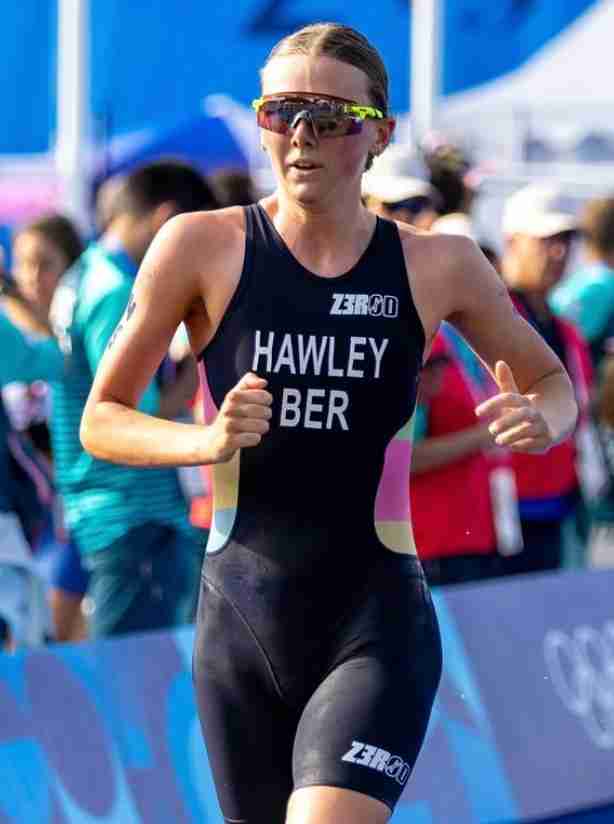
In Japan, Olympian Erica Hawley spearheads the Bermudian interest at the 2026 World Triathlon Championship Series Yokohama. Hawley, who recently secured a top-five finish at the Americas Triathlon Cup in Mississippi, joins a formidable field of 70 Elite Females.

The Yokohama circuit is renowned for its technical demands and world-class depth, featuring stars like Taylor Knibb and Beth Potter. It provides a vital litmus test for Hawley as she continues her campaign on the world’s most prestigious triathlon tour.

Meanwhile, the focus shifts to Mexico as Nicholas Pilgrim prepares for a high-stakes encounter at the 2026 Americas Triathlon Cup Ixtapa.

Pilgrim, recently named Bermuda’s best overseas male triathlete, is slated to join the Men’s Elite startline. He faces a competitive field in a race offering crucial points for regional rankings as he builds on his 2025 national sprint title.

The dual-continental appearances highlight the sustained growth of Bermuda’s triathlon program. With Hawley testing herself against the global elite in the East and Pilgrim aiming for a statement performance in the West, May 16th promises to be a pivotal date for the island’s high-performance athletes.

Cyclist White runner-up in U.K. event

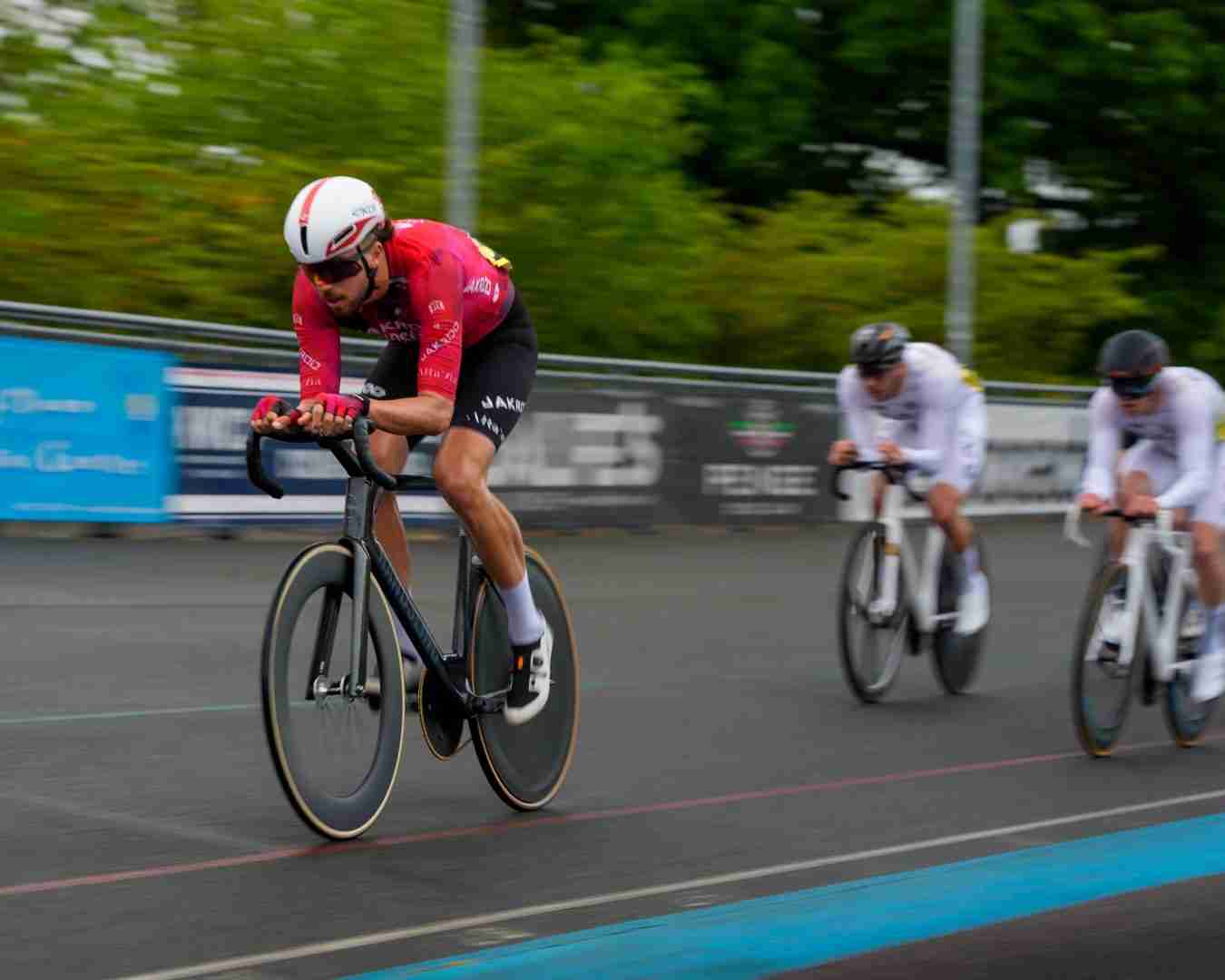
Bermudian cycling standout Conor White showcased his versatility this weekend, securing a hard-fought second-place finish overall at the Dulwich Paragon Track Open.

Competing at the historic Herne Hill Velodrome, White, representing Jakroo Handsling, navigated a demanding programme designed to test tactical awareness and raw sprint power.

The event featured some of the UK’s most technical track formats, headlined by the Jonathan Gales Memorial 25km Scratch and the notoriously fast-paced “Danish Pursuit.”

White remained a constant threat at the front of the field throughout the meeting. His ability to read the high-paced surges of the London circuit saw him finish the day with a total of 610 points.

Despite a spirited effort to clinch the top spot, White was narrowly eclipsed by Len Delicaet, who delivered a clinical series of performances to take the overall victory with 640 points.

Cumbermack earns podium spot at Oulton Park

Bermuda’s Jediah Cumbermack made an emphatic start to his 2026 ZYN British Superbike Championship campaign, securing a prestigious podium finish during a high-octane opening weekend at Oulton Park.

Representing ROKiT Rookies, Cumbermack lined up in the ultra-competitive 1PMobile National Junior Sportbike Class—a category renowned for grooming the next generation of elite motorcycling talent.

The weekend began with a display of measured aggression. Navigating the technical twists of the Cheshire circuit, Cumbermack maintained a relentless pace over 10 laps to cross the line in fifth place. Stopping the clock at 18:11.764, he finished just 9.834 seconds behind the winner, Laken Payne, providing a vital early points haul.

However, it was in the second heat that the Bermudian truly showcased his championship credentials. In a race defined by razor-thin margins and tactical slipstreaming, Cumbermack found an extra gear.

Improving his total race time by nearly seven seconds, he powered his ROKiT machine to a 10-lap time of 18:04.917.

Cumbermack’s clinical execution saw him cross the line just 6.169 seconds behind race winner Marley Mackenzie to claim his first podium of the 2026 season.

Bobb hits top gear as Retrievers prep for America East event

Bermudian sprinter Madisyn Bobb produced a statement performance at the Kehoe Twilight Meet as the University of Maryland, Baltimore County (UMBC) completed their final preparations for the postseason.

Competing in a high-caliber field at the University of Maryland, Bobb and her teammates utilized the evening meet as a critical tune-up before the highly anticipated America East Championships.

The standout moment for Bobb came in the Women’s 200m, where she demonstrated her rising form as the outdoor season reaches its climax. Navigating the curve with precision, she finished 10th overall, crossing the line in 24.93 seconds.

Crucially, the performance marked a new season best for Bobb, shaving valuable fractions off her previous times and signaling that she is hitting peak physical condition at exactly the right moment in the collegiate calendar.

The UMBC coaching staff will be encouraged by the collective output of the roster under the twilight lights. With several athletes recording personal and season bests, the Retrievers appear well-positioned to challenge for the podium in the America East hierarchy.

Thousands take on Convex End-to-End challenge across the Island

Hundreds of participants took part in the Convex End-to-End on Saturday, walking, cycling or running either half or the full distance from St. George’s to Dockyard.

One of our own took on the challenge – at least part of the way.

Gary Foster Skelton chatted to fellow journeyers en route, and Qian Dickinson captured some of the highlights.

UK sanctions people, entities for recruiting migrants to fight for Russia against Ukraine

The sanctions relate to the trafficking of people from countries including Iraq, Somalia, Syria and Yemen to fight in Ukraine, but also to travel to Poland and Finland for the purpose of causing destabilisation

International News via Reuters:

Britain on Tuesday unveiled sanctions against 35 people and entities it said were involved in recruiting vulnerable migrants to fight for Russia against Ukraine and produce drones for use in the conflict.

The Foreign Office announced 17 designations under its global irregular migration sanctions regime, relating to what it said were trafficking networks facilitating the travel of people to be sent “to the front line as cannon fodder.”

The sanctions relate to the trafficking of people from countries including Iraq, Somalia, Syria and Yemen to fight in Ukraine, but also to travel to Poland and Finland for the purpose of causing destabilisation, the Foreign Office said.

Britain also added 18 designations under its Russia sanctions regime, several relating to the Alabuga Start programme, which the Foreign Office described as “a Russian recruitment scheme that hires individuals from outside Russia, usually from economically insecure backgrounds.”

Those recruited, who are largely from Cameroon, are put to work at a plant located 500 miles (800 km) east of Moscow in the Republic of Tatarstan to produce drones, the ministry said.

Sanctions minister Stephen Doughty said in a statement: “The practice of exploiting vulnerable people to prop up Russia’s failing and illegal war in Ukraine is barbaric.”

He added that the sanctions would “disrupt the operations of those trafficking migrants as cannon fodder and feeding (Russian President Vladimir) Putin’s drone factories with illicit components”.

Britain on Sunday said it was ready to enter talks to join the European Union’s 90 billion euro ($105 billion) loan to Ukraine, a further sign of deepening European defence ties.

($1 = 0.7385 pounds)

($1 = 0.8560 euros)

Reporting by Sam Tobin; Editing by Sarah Young and Thomas Derpinghaus

UK new car sales to hit nearly 2.1 million in 2026, SMMT says

The sales outlook for the industry has been upgraded from about 2.05 million units, signalling improving confidence and healthy demand for new cars in Britain despite risks from the Iran war

International News via Reuters:

British new car registrations are expected to rise to nearly 2.1 million units in 2026, the Society of Motor Manufacturers and Traders said on Tuesday, with the share of zero-emission vehicles lower than previously forecast after soft first-quarter demand.

The sales outlook for the industry has been upgraded from about 2.05 million units, signalling improving confidence and healthy demand for new cars in Britain despite risks from the Iran war.  

The new car market last month grew 24% from a year earlier to reach 149,247 registrations, data from the SMMT showed, reflecting a rebound from an unusually weak April last year. 

The share of zero-emission vehicles in the 2026 sales forecast has been lowered to 26.8% from 28.5% earlier, as a boost to electric vehicle interest from higher fuel prices could be tempered by worries about inflation, energy costs, and pressure on household budgets, the SMMT said.

The auto body expects the UK’s new car market to reach 2.12 million units in 2027, with battery electric vehicles accounting for 32% of registrations, still about six percentage points below the zero-emission vehicle mandate.

Zero-emission vehicles include battery electric vehicles, hydrogen fuel-cell vehicles, and other models that produce no tailpipe emissions.

SMMT CEO Mike Hawes called for a review of the green transition to align policy with market realities as the “mounting cost of compliance threatens to limit consumer choice, overall decarbonisation and the sector’s competitiveness,” which could hurt Britain’s attractiveness as a vehicle market and manufacturing hub.

Tesla’s UK new car sales rose 62% year-on-year to 831 units in April, according to the SMMT. Data from New Automotive on Tuesday also showed a similar jump in Tesla’s UK numbers.   

Reporting by Nithyashree R B and Yadarisa Shabong in Bengaluru; Editing by Mrigank Dhaniwala

Stars embrace costume at Met Gala as protesters target Bezos

Leaning heavily into this year’s theme of “Costume Art,” Bad Bunny was dressed up as an elderly man, Klum was draped in a Statue of Liberty costume and Perry went incognito in a silver mask

International News via Reuters:

Celebrities including Puerto Rican superstar Bad Bunny, supermodel Heidi Klum and singer Katy Perry walked the carpet at the Met Gala on Monday — many of them unrecognizable.

Leaning heavily into this year’s theme of “Costume Art,” Bad Bunny was dressed up as an elderly man, Klum was draped in a Statue of Liberty costume and Perry went incognito in a silver mask.

Pop icon Beyonce was among the most notable appearances of the night, returning to the Met Gala for the first time in 10 years as one of its co-chairs. Actor Blake Lively, who settled a lawsuit earlier on Monday with co-star Justin Baldoni over the filming of the 2024 romantic drama “It Ends With Us,” also walked the carpet.

The annual fundraiser for the Metropolitan Museum of Art’s Costume Institute has become known for its extravagant fashion and high-profile guests.

This year it drew protests against billionaire Amazon founder Jeff Bezos, who sponsored the event for the first time.

He and his wife, Lauren Sanchez Bezos, made a donation reported by media outlets at $10 million and were named honorary chairs, which led to calls from critics for a boycott over wealth inequality and workers’ rights.

Protesters held up giant letters spelling out “TAX THE RICH” and placards highlighting what they called the “Resistance Red Carpet.” One protester was detained trying to get into the event. Actor Sarah Paulson walked the carpet in a grey tulle dress and long white gloves with a dollar bill covering her eyes, saying her look represented the “1%.”

Tickets cost $100,000 each but most celebrities attend as guests.

MAKING A STATEMENT

This year’s exhibition marks the inauguration of the Met’s nearly 12,000-square-foot (1,115 square metres) Conde M. Nast Galleries and features nearly 400 objects from the museum’s collection, pairing garments with paintings, sculptures and other works of art.

“When you go through the museum, the only art form that connects every single gallery in the museum is the dressed body, so it’s this sort of commonality within art and culture,” said Andrew Bolton, head curator of the Costume Institute. “Even if people say, ‘I don’t care about fashion,’ or ‘I’m not interested,’ you’re still making a statement by saying that.”

Other eye-catching looks of the night were social media personality Emma Chamberlain’s skin-tight dress with sleeves that hung to the floor and actor Gwendoline Christie’s feathered headpiece and lifelike mask. Superstar Madonna arrived with a ship on her head and was joined by an entourage to fan out the long, grey train attached to her dress.

Men also used the night to move beyond the standard tuxedo. Canadian actor Hudson Williams, who starred in the viral ice hockey drama “Heated Rivalry,” opted for a powder blue suit and makeup that he said was inspired by the “Black Swan” film.

Writing by Costas Pitas and Kate Skelly; Editing by Cynthia Osterman and Kate Mayberry

Weight-loss drugs fuel protein-rich whey craving

Whey, a by-product of cheese-making which is traditionally used as pig feed, is an essential component of the food products now targeting consumers looking to prevent muscle loss

International News via Reuters:

Global dairy companies and food producers are investing heavily to meet soaring demand for protein-rich whey, driven by a surge in the use of weight-loss drugs and healthier eating trends.

Whey, a by-product of cheese-making which is traditionally used as pig feed, is an essential component of the food products now targeting consumers looking to prevent muscle loss.

Data from StoneX consultancy shows the price of whey protein concentrate with 80% protein content (WPC 80) has risen by almost 90% in the last year to 20,000 euros ($23,410) a metric ton, far exceeding rises in other dairy segments including powdered milk and cheese.

While improved health awareness and ageing populations have also boosted whey prices, the GLP-1 trend is the key factor behind demand, interviews with a dozen companies and people working in the dairy and food sector showed.

“The ongoing strong demand for whey proteins, being fuelled even further by GLP (-1) in recent years, is what the industry needs to figure out,” Luis Cubel, managing director of Arla Foods Ingredients, told Reuters. “Are there any more untapped volumes you can tap into?”

Dairy companies including Lurpak butter maker Arla Foods and Dutch producer FrieslandCampina have expanded whey production capacity, while food firms are widening their protein-rich offerings, such as Danone’s Oikos yoghurt brand and Bel Group’s Babybel Protein.

WEIGHT-LOSS DRUGS DRIVE PROTEIN APPETITE

Kristen Coady, chief innovation and brand officer at Dairy Farmers of America, said users of weight-loss drugs are seeking out protein, which is helping to drive new industry innovations.

DFA, the largest U.S. dairy farm collective, last month launched MULU, a cottage cheese with added whey and 18 grams of complete protein per half-cup serving, well above the typical 12 to 13 grams for a regular product.

“What we’ve been seeing is almost a run on dairy proteins,” Coady said.

The popularity of cottage cheese has led the DFA to increase investments in its cultured capabilities, switching production sites in Pennsylvania and New Mexico from fluid milk, Coady said.

Health and wellness retailer iHerb has seen huge growth in its GLP-1-adjacent products, primarily in the U.S.

“Customers are starting to really look for ways to fight the downside or the side effects of GLP-1,” said iHerb’s Chief Revenue Officer Hyeyoung Moon.

She noted an uptick of searches using ‘GLP-1’ and more female customers looking for supplements to help when losing muscle, not just the stereotypical gym-going muscle builders that whey proteins traditionally attracted.

HIGH-END WHEY RACE

John Lancaster, head of EMEA dairy and food consulting at StoneX, said the food industry lacks the infrastructure to keep up with demand for high-protein whey concentrates and isolates.

“There’s a shortage of the capacity to turn (whey) into what is required by the market at the moment,” he said.

FrieslandCampina Global Director for Marketing and Product Strategy Guus Aerts said the protein boom has encouraged the Dutch Lady and Yazoo maker to invest heavily in high-end whey processing.

The company finalised its purchase of Wisconsin Whey Protein, a U.S.-based producer of whey protein isolates (WPI), in January and has doubled capacity at its Dutch Borculo plant.

For dairy companies, improving whey quality is crucial as food producers develop more high-protein versions of yoghurt, cottage cheese, drinks and salty snacks.

FrieslandCampina said on Tuesday it was investing more than 90 million euros to accelerate its growth in high-value whey proteins.

Marion Bucas, marketing director at Lactalis Ingredients, part of the world’s largest dairy company, said protein represents a huge opportunity.

“Dairy proteins are still the best quality proteins on the market, but there will be lots of work to try to find substitutes to answer the demand,” Bucas said.

SEEKING ALTERNATIVE PROTEIN-RICH INGREDIENTS

Demand for protein-rich peas and lentils is giving struggling U.S. farmers a crucial new revenue stream. Meanwhile, biotechnology companies producing alternative proteins using a method called precision fermentation are attracting investment.

French startup Verley, which ferments fungi to produce the protein that targets muscle recovery, said the GLP-1 impact on the typically slow-moving food sector has been “insane”.

“In the U.S., in just two to three years, everything changed,” said Verley co-founder and CEO Stephane Mac Millan, adding: “And that puts the whole food industry under pressure to reformulate (products)”.

Standing Ovation, another French startup, which has raised investments from Danone and Bel Group, makes casein proteins and expects to begin selling its products this year.

Co-founder Romain Chayot said 80% of the products it is developing are for high-protein solutions.

“With GLP-1, developing high-protein yoghurt or cheese or beverage is booming today,” he said.

Although analysts say precision fermentation is too expensive to gain critical mass for now, high whey prices create opportunities.

But one issue for sceptical consumers is taste.

“Dairy protein is delicious,” said Bel Group’s North America CEO Peter McGuinness, adding: “In this protein race, we’ve lost deliciousness”.

($1 = 0.8543 euros)

Reporting by Alexander Marrow; additional reporting by Guz Trompiz in Paris and Nicholas Brown in New York; Editing by Lisa Jucca and Alexander Smith

HSBC profit underwhelms on surprise $400 million private credit loss

The loss shows why regulators worldwide have become more concerned about banks’ exposure to the $3.5 trillion private credit industry, highlighting the often indirect and opaque nature of the lending

International News via Reuters:

HSBC reported an unexpected $400 million loss linked to a fraud case in Britain on Tuesday, raising further questions about lenders’ private credit exposure and sending the bank’s shares down 5%.

The loss shows why regulators worldwide have become more concerned about banks’ exposure to the $3.5 trillion private credit industry, highlighting the often indirect and opaque nature of the lending.

The British bank lent money to a private equity firm, which in turn financed a securitisation – the form of lending made notorious during the 2008 financial crisis in which smaller loans such as mortgages are packaged together and sold to investors.

Chief Financial Officer Pam Kaur declined to identify the firm involved when questioned by reporters on Tuesday but confirmed the exposure was to “private credit-related loans”.

“We did a broad read at all our highest risk concentrations and exposures across the board, and we don’t see anything comparable there,” Kaur said, referring to the fraud-related charge.

HSBC shares, which have risen 52% in the last year, dropped 5% in London on Tuesday following the results announcement.

The emergence of wider signs of stress in private credit has driven regulators in the U.S., Britain and elsewhere to probe lenders’ exposure, while officials such as U.S. Federal Reserve Chair Jerome Powell have also tried to calm market anxiety.

The U.S. Treasury Department last month said it would meet international insurance regulators over distress concern, while Canada’s banking regulator has also launched a review of lenders’ exposure.

HSBC rival Barclays reported a 228 million pounds ($308 million) impairment charge in the quarter related to exposure to collapsed bridging lender Market Financial Solutions which entered administration following fraud allegations.

Wall Street peers told investors last month they were stress-testing or monitoring private credit portfolios.

The six biggest U.S. lenders disclosed about $108 billion financing exposure to private credit or related loans during their quarterly earnings.

HSBC last year began to expand its private credit lending, Reuters reported at the time, joining a raft of its global peers that had already begun partnering with specialist private credit firms as the industry ballooned.

The bank said it has $111 billion in private markets-related exposure, of which $22 billion is private credit-related.

The fraud-related loss alongside provisions taken against the impact of the U.S.-Israel war with Iran drove HSBC’s expected credit loss for the first quarter a net $400 million to $1.3 billion, causing earnings to undershoot analysts’ expectations.

Europe’s largest bank posted pretax profit of $9.4 billion for January-March, versus $9.5 billion a year earlier and the $9.59 billion average of broker estimates compiled by HSBC.

HSBC revised its 2026 credit charge to 45 basis points of average gross loans, from 40 bps, citing “uncertainty in the outlook”.

HSBC UNDERPERFORMS EUROPEAN RIVALS

The results overall were “lacklustre”, analyst Ed Firth at KBW said, especially given the performance of British rivals including Standard Chartered which reported first-quarter earnings last week.

HSBC’s flat profit performance also compared unfavourably with European peers like Deutsche Bank, which reported record first-quarter profit last week, and UBS which beat forecasts thanks to bumper trading.

At the same time, HSBC as well as Standard Chartered have bet on increased Middle East trade with ​Asia and beyond to ​fuel growth, making them ⁠two of the global banks most exposed to the U.S.-Israel war with Iran, according to company data and sector analysts.

StanChart last week booked a $190 million credit charge due to cautious scenario planning stemming from the conflict, along with Lloyds Banking Group’s $204 million and Deutsche Bank’s $90 million provision in the same quarter.

($1 = 0.7395 pounds)

Reporting by Selena Li in Hong Kong and Lawrence White in London; Editing by Christopher Cushing