Monday, November 2, 2026
Home Blog Page 328

Iran yet to decide on whether to attend talks as ceasefire deadline ticks down

President Donald Trump said he hoped to reach a “great deal” to end the war, but he did not want to extend the ceasefire, and said the U.S. military was “raring to go” if negotiations were not successful

International News via Reuters:

Iran said on Tuesday it had still yet to decide whether to attend last-ditch peace talks with the United States, after U.S. forces boarded a huge Iranian oil tanker at sea with just a day left before the ceasefire runs out in the war in the Gulf.

President Donald Trump said he hoped to reach a “great deal” to end the war, but he did not want to extend the ceasefire, and said the U.S. military was “raring to go” if negotiations were not successful.

Vice President JD Vance, due to lead the U.S. delegation, had yet to board a flight for Islamabad, where the centre of the city has been locked down and a luxury hotel has been cleared out to host the talks.

A White House official said Vance would participate in additional meetings in Washington on Tuesday.

IRAN ACCUSES U.S. OF PIRACY

By the evening on Tuesday, the spokesperson for Iran’s foreign ministry, Esmaeil Baghaei, told state television Iran had still yet to decide whether to attend.

He described the boarding of the tanker, as well as the seizure of a separate cargo ship on Sunday, as “piracy at sea and state terrorism”, which he said called into question Washington’s seriousness in negotiating.

“The aggression against Iranian ships and the continued pressure indicate the continuation of the opposing side’s contradictory behaviour,” Baghaei said.

Pakistan’s Information Minister Attaullah Tarar said in a post on X that Pakistan was still waiting for Iran’s reply to its invitation: “⁠Pakistan as the mediator is in constant touch with Iranians and pursuing the path of diplomacy and dialogue.”

TRUMP SAYS MILITARY IS ‘RARING TO GO’

Asked about the possibility of extending the truce, Trump told CNBC: “I don’t want to do that. We don’t have that much time.”

“I expect to be bombing because I think that’s a better attitude to go in with,” he added. “But we’re ready to go. I mean, the military is raring to go.”

Iranian government spokesperson Fatemeh Mohajerani said: “We do not want to be attacked again, but if such attacks occur, we will definitely respond more firmly than before,” according to the state news agency IRNA.

U.S. SAYS IT BOARDS TANKER ‘WITHOUT INCIDENT’

The U.S. military said its forces had boarded a tanker under sanctions for trading with Iran, the Tifani, in an operation that took place “without incident”.

The vessel last reported its position on Tuesday morning as near Sri Lanka in the Indian Ocean, according to MarineTraffic tracking data. It was close to fully loaded with 2 million barrels of crude and had signalled Singapore as its destination.

“As we have made clear, we will pursue global maritime enforcement efforts to disrupt illicit networks and interdict sanctioned vessels providing material support to Iran — anywhere they operate,” U.S. Central Command said.

Iranian officials have publicly cited a U.S. blockade of their ships as a reason not to negotiate.

On social media, Trump said Iran had carried out numerous violations of the ceasefire, without giving further details. He told CNBC that the blockade had been a success and the U.S. was in a strong position to end up with a “great deal”.

OIL PRICES RISE AGAIN

The precise timing of the ceasefire’s end has been a source of confusion. Trump initially announced it would last two weeks from the evening of Tuesday, April 7 in Washington. But he said this week that it runs until the evening of Wednesday, April 22, effectively giving it an extra 24 hours.

A Pakistani source involved in the talks also said it would expire at 8 p.m. Eastern Time on Wednesday, which is 3:30 a.m. Thursday in Iran. 

Iran has largely blocked off the Strait of Hormuz that controls access to the Gulf to all ships but its own. It had announced last week that it would reopen the strait, but reversed that decision on Saturday after Trump refused to lift his blockade of Iranian ports.

That has left the strait closed and the world deprived of the 20 million barrels of oil that typically crossed it each day.

A first session of talks 10 days ago produced no agreement and Tehran had been ruling out a second round after the U.S. refused to end its blockade and seized an Iranian cargo ship. Trump has threatened to attack Iran’s civilian infrastructure if no deal is done.

Still, a Pakistani source involved in the discussions told Reuters there was momentum for talks to resume and Vance was still expected in Islamabad.

Wall Street stocks turned mostly lower, while global equities dipped as optimism over peace talks faded. Oil prices climbed about 3%.

IRAN NUCLEAR PROGRAMME A CRUCIAL ISSUE

Trump wants an agreement that would prevent further oil price rises and stock market shocks, but has insisted Iran cannot have the means to develop a nuclear weapon. He wants Iran to give up its stockpile of highly enriched uranium, which can, if further enriched, be used for a nuclear warhead.

Tehran hopes to exploit its control of the strait to strike a deal that averts a restart of the war and lifts sanctions, while retaining more of its nuclear programme, which it says is for peaceful purposes.

Thousands have been killed by U.S.-Israeli strikes on Iran and a parallel Israeli bombing campaign and invasion of Lebanon.

The war has caused a historic shock to global energy supplies, and fears that the global economy could be pushed to the brink of recession.

Pakistan has been preparing to host the talks despite the uncertainty. Nearly 20,000 security personnel have been deployed across Islamabad, officials said.

Reporting by Reuters bureaus; Writing by Martin Petty and Kevin Liffey; Editing by Stephen Coates, Raju Gopalakrishnan, Peter Graff and Alison Williams


Microsoft must face $2.8 billion UK lawsuit over cloud computing licences

Competition lawyer Maria Luisa Stasi is bringing the case on behalf of nearly 60,000 businesses that run Windows Server on rival cloud platforms

International News via Reuters:

Microsoft must face a mass lawsuit alleging it overcharged thousands of British businesses to use Windows Server software on cloud computing services provided by Amazon, Google and Alibaba, a London tribunal ruled on Tuesday.

Competition lawyer Maria Luisa Stasi is bringing the case on behalf of nearly 60,000 businesses that run Windows Server on rival cloud platforms. Her lawyers have previously said the claim was worth up to 2.1 billion pounds ($2.8 billion).

They argued at a hearing last year that the businesses were overcharged because Microsoft charges higher wholesale prices for Windows Server than for users of Azure, costs that are passed on to customers and make Azure cheaper than Amazon’s AWS or Google Cloud.

Microsoft said Stasi’s case failed to set out a workable method for calculating any alleged losses and should be thrown out.

But London’s Competition Appeal Tribunal certified the case to proceed towards trial, an early step in the proceedings. Microsoft did not immediately respond to a request for comment.

Stasi said in a statement that the ruling was “an important moment for the thousands of organisations impacted by Microsoft’s conduct”.

Microsoft argued at last year’s hearing that its vertically integrated business model – using Windows Server as an input for Azure while also licensing it to rivals – can benefit competition.

Regulators in Britain, Europe and the U.S. are separately examining the practices of Microsoft and other firms in cloud computing.

Last July, an inquiry group from Britain’s Competition and Markets Authority said Microsoft’s licensing practices reduced competition for cloud services “by materially disadvantaging AWS and Google”.

Microsoft said at the time the report had ignored that “the cloud market has never been so dynamic and competitive”.

Last month, the CMA said it would again investigate Microsoft’s software licensing practices in the cloud market.

($1 = 0.7402 pounds)

Reporting by Sam Tobin. Editing by Mark Potter

UK pushes long-term renewables deals to shield against gas price shocks

Britain has among the highest electricity prices in the world due to the structure of its energy market, under which gas sets the price for all generation most of the time

International News via Reuters:

Britain plans to weaken the link between electricity costs and volatile gas prices, which has been blamed for holding back the economy, saying on Tuesday it would push older wind and solar generators onto fixed contracts to reduce energy bills. 

Britain has among the highest electricity prices in the world due to the structure of its energy market, under which gas sets the price for all generation most of the time, weighing heavily on households and making British industry uncompetitive.

That structure sent prices soaring after Russia’s invasion of Ukraine and again with the Iran war, prompting Britain to suffer the biggest growth downgrades for 2026 from the OECD and International Monetary Fund due in large part to the economy’s exposure to high energy costs.

Finance minister Rachel Reeves last week touted this new energy market reform as a boost for economic growth. But analysts and business groups were largely underwhelmed by the plan, which could see gas continuing to set the electricity price around 50% of the time by 2030 from 60% now.

“The limited scope and impact of the measures highlighted today reflect the limited ability and willingness of the UK government to make far-reaching changes,” analysts at Bernstein said.

VOLATILE GAS PUTS PRESSURE ON BRITISH ECONOMY

Britain’s wholesale electricity price is set every 30 minutes by the cost of the last energy source used in order to ensure demand is met. So even if wind, solar and nuclear provide 99% of the power required and gas-fired plants are needed to make up the last 1%, then gas sets the price for every buyer and seller.

British companies and consumer groups have been calling for successive governments to reform the market structure.

Domestic energy prices are forecast to rise more than 10% from July as the regulator makes its quarterly price cap adjustment, with wholesale gas costs currently 30% higher than before the Middle East conflict began.

Under its changes, the government will next year offer voluntary long-term contracts to existing low-carbon generators not already being paid a fixed price for their output to reduce the link between gas prices and electricity costs. 

It said the measure would cover around a third of Britain’s power supply.

The government will also increase the Electricity Generator Levy – used to claw back excess profits made by wind and solar generators when electricity prices jump – to 55% from 45%.

Ed Miliband, the energy minister, told a conference organised by the Good Growth Foundation that it would be up to generators whether to switch contracts, but that the change in tax rates would “significantly change the economic incentives for them to do so”.

He said the link between gas and electricity prices had already been weakened since the early 2020s and the trend was continuing, but evolution was not enough.

Energy firms and business groups said the announced changes were a step in the right direction but warned that significant policy and tax changes outside of traditional fiscal events like government budgets were damaging for investor confidence.

They also called for the government to reduce environmental policy costs in electricity bills.

“At a time of extreme volatility, clarity and confidence are paramount,” said Rain Newton-Smith, head of the CBI business group. “A stable, affordable energy system is a prerequisite for a thriving economy.”

The government said it would also look to go faster on building renewable infrastructure on public land, which could potentially allow up to 10 gigawatts of new capacity, and would overhaul planning and land-use rules to speed up grid connections and infrastructure upgrades.

Additional reporting by Sam Tabahriti; Writing by Kate Holton; Editing by Andrew Heavens, Kirsten Donovan and Joe Bavier

OBA op-ed: Housing is healthcare

The Opposition OBA’s Senator David Rogers is the spokesperson for Housing and Municipalities said the party would remove barriers preventing people in need of affordable housing

Full statement from the One Bermuda Alliance:

There’s a temptation to talk about the housing crisis as if it’s just an economic inconvenience. Rents are high, supply is tight, and people are frustrated. But, housing is not just about where you live; it is about how long you live, and how well you live.

A growing body of research shows that housing instability doesn’t just correlate with poor health. It drives it. When rent consumes too much of a household’s income, people are forced into impossible trade-offs. Food quality declines. Medications are skipped. Preventive care is postponed. Chronic conditions worsen quietly until they become emergencies.

Then there’s stress, not the fleeting kind, but the chronic, grinding pressure of uncertainty. Will the rent go up again? Will I have to move? Can I stay in my community? Will I be able to find a new home? That kind of stress reshapes the body. It raises blood pressure, disrupts metabolism, and increases the risk of depression and cardiovascular disease. Over time, it accumulates into “allostatic load,” leaving lasting biological damage.

This is not abstract theory. It is a public health crisis hiding in plain sight. If housing is a driver of health, then housing policy is health policy. That’s not ideology or hyperbole. It’s reality. As the Shadow Minister for Municipalities and Housing put it: “the crisis is a present catastrophe: measurable, documented, and worsening.”

The One Bermuda Alliance has been consistent in recognizing this, putting forward a set of solutions aimed at both increasing supply and restoring stability. The approach is straightforward: build more, build smarter, and remove the barriers that prevent housing from reaching the people who need it.

That means:

  • allowing greater building heights where appropriate to expand supply
  • incentivizing private-sector construction so new units come online faster
  • repurposing underused government land into long-term housing
  • prioritizing rent-to-own pathways that give Bermudians a stake in their future.

It also means fixing what’s broken in the system itself. Outdated legislation slows development. Probate delays keep homes off the market. Regulatory bottlenecks discourage investment. These are not minor inefficiencies. They are structural failures with real human costs.

And then there’s accountability. Without transparency, time-bound targets, and measurable outcomes, any housing strategy risks becoming a document instead of a solution.

Now, here’s where things get a bit absurd.

The OBA’s position on housing is not hidden. It has been repeated publicly, consistently, and in detail. Which raises fair questions: why the confusion? Why the suggestion that these ideas are unclear, or worse, obstructive?

Let’s be candid, scrutiny is not obstruction. Asking whether a plan actually serves the public interest is not delay, it is responsibility. And yes, sometimes that responsibility means saying no.

Not every proposal deserves applause simply because it has been drafted. If a policy risks worsening affordability, distorting the market, or prioritizing narrow interests over the broader community, it should be challenged. A bad plan implemented quickly is still a bad plan.

That means “dismissing” proposals that fail that test. It means “delaying” those that are ill-conceived until they are improved. It means refusing to be “distracted” from the central issue: protecting the health and well-being of our community.

And, when the health of Bermudians is on the line, the position should be clear, unwavering, and loud: Not here. Not this way. Not now.

Applications open for Youth Tourism Speech Competition

Students aged 15-17 are invited to apply before May 8

The Bermuda Tourism Authority, in partnership with the Ministry of Tourism, Transport, Culture & Sport, and the Bermuda Youth Parliament and the Caribbean Tourism Organization (CTO), is inviting students to apply for the 2026 Bermuda Youth Tourism Speech Competition, an initiative designed to support youth development and strengthen Bermuda’s future tourism workforce.

Open to students aged 15 to 17 who are enrolled in Bermuda secondary schools or eligible home schools, the competition provides a unique platform for young people to build public speaking skills, tourism knowledge, confidence and leadership capacity.

Participants will benefit from professional speech coaching, equipping them with valuable communication skills that extend beyond the competition and into future academic and career pathways.

“Local involvement is central to Bermuda’s National Tourism Plan, and initiatives like this help young people see themselves in the future of the industry. By building confidence and communication skills, we’re also highlighting the wide range of career pathways tourism offers and how it connects Bermudians to the world,” said Erin Wright, acting CEO, Bermuda Tourism Authority.

Through the competition, semi-finalists will be selected to participate in a local event open to the public on September 10, 2026, where one outstanding participant will ultimately be chosen to represent Bermuda at the Caribbean Tourism Organization’s Regional Youth Tourism Congress to be held in Guyana on October 5-6, 2026.

“Youth engagement is essential for creating a robust tourism economy in Bermuda. This competition not only builds confidence and communication skills but also encourages young Bermudians to participate in the democratic process. The ability to express ideas clearly and confidently is essential to effective leadership and civic involvement, and this programme creates a space for our youth to begin developing those skills early,” said Owen K. Darrell, Minister of Tourism & Transport, Culture & Sport.

Applications for the 2026 Bermuda Youth Tourism Speech Competition are now open and will close on May 8, 2026.

Interested students are encouraged to apply and take advantage of this opportunity to develop their voice and represent Bermuda on a regional stage at www.gotobermuda.com/bta/speechcompetition .

For more information email training@bermudatourism.com

Media release supplied by the Bermuda Tourism Authority.

Mosquera Shows Gritty Resolve as Lehigh Secure Podium Finish

Bermudian golfer Sienna Mosquera signed off on an impressive debut collegiate season as Lehigh University battled to a third-place finish at the Patriot League Championship.

Competing at the demanding Naval Academy Golf Club in Annapolis, the Mountain Hawks maintained a steady rhythm across three days of competition. A final-round team score of 314 saw Lehigh conclude the tournament with a 937 total, securing a podium spot in the five-team field.

For Mosquera, the championship was a showcase of mental fortitude. The first-year standout demonstrated rare consistency, improving her score by a single stroke in every round to finish 22nd individually with a 243 total.

After an opening 82 and a second-round 81 that featured her first birdie of the tournament, Mosquera saved her most disciplined performance for the final day. Navigating heavy coastal winds, she racked up a tournament-high 12 pars to card an 80—her best score of the week.

The third-place finish provides a solid foundation for a young Lehigh squad that has leaned heavily on its freshman talent. For Mosquera, the steady improvement marks a successful transition into the Division I ranks as she now prepares for the summer circuit on Bermudian shores.

History in the Saddle: Bardgett and SCAD Claim National Title

Bermudian equestrian Kayla Bardgett helped rewrite the history books this weekend as the Savannah College of Art and Design (SCAD) were crowned 2025-26 Tournament of Champions Series winners.

The victory marks SCAD’s first national title of the season, arriving during a landmark 35th-anniversary year for the collegiate series. The “Bees” established total dominance, claiming three of the four major shows across the season to secure the series trophy with a record-breaking performance.

For Bardgett, a senior and cornerstone of the program, the triumph follows an instrumental role in achieving the first-ever perfect score in the tournament’s three-decade history. Following the trophy presentation, an emotional Bardgett paid tribute to her horse, Bettina, and her coaching staff.

“What an incredible way to close out my final time competing,” Bardgett shared. “Bettina, you gave me absolutely everything and more. I couldn’t have asked for a better partner to finish this chapter with.”

With the IHSA Zone 5 Championship already secured, Bardgett and her teammates now turn their attention to the IHSA National Championships, looking to add further silverware to a season already etched in the SCAD history books.

Phillips Clinches for the Wave in Tulsa Thriller

Daniel Phillips delivered a captain’s performance in Oklahoma, powering Tulane to a gritty 4-1 victory over UAB in the opening round of the American Conference Championships.

Despite entering as the ninth seed, the Green Wave were forced to dig deep after a shaky start. Tulane dropped the doubles point following narrow defeats on the lower courts, even after a dominant 6-1 masterclass at the number one position by Phillips and partner Lance Nisbet.

The momentum shifted dramatically as the match transitioned to singles play. All eyes were on the premier court, where Phillips—a freshman who has rapidly become the heartbeat of the Tulane roster—faced a high-stakes rematch against Ondrej Valek.

The opening set was a grueling tactical battle, eventually pushed to a tie-break. Phillips demonstrated superior mental fortitude under pressure, claiming the breaker 7-5. With the wind in his sails, the young Bermudian dominated the second set, utilizing a relentless service game to secure a 6-2 win.

The victory clinched the match for the Green Wave, providing a vital confidence boost as they advance to a daunting quarter-final showdown against top-seeded Rice. For Phillips, it marks another landmark in an exceptional debut season, solidifying his reputation as one of the most clinical closers in the conference.

Resilience in Hyères: Bermudian Sailors Fight Back on Opening Day

The 57th edition of La Semaine Olympique Française roared into life in spectacular Côte d’Azur conditions, providing a grueling opening test for a world-class field of over 700 competitors.

Bermuda’s elite trio faced a day of contrasting fortunes in the Mediterranean, defined by steady breezes and shifting leaderboards. In the ILCA 6 fleet, Adriana Penruddocke demonstrated remarkable mental fortitude. After a difficult 28th-place finish in her opening race, she produced a spirited fightback to claim 12th in the second, ending the day in 37th overall and within striking distance of the leaders.

In the ILCA 7 division—the largest fleet in the competition—Campbell Patton mirrored that resilience. Patton navigated the testing swell to sit 33rd at the close of play, following a 23rd in the opener with a clinical 12th-place finish in the second.

The day proved more frustrating for Sebastian Kempe, whose campaign suffered an immediate setback with a Black Flag disqualification in race one. However, the young sailor showed his class in the second outing, carving through the fleet to finish 11th. While he sits 99th overall due to the opening penalty, that late surge provides a vital glimmer of hope as the trio prepares for another day of high-stakes tactical warfare in Hyères.

Pope heads to Equatorial Guinea after denouncing authoritarians

Leo, who has drawn the ire of President Donald Trump with his more outspoken comments, will arrive from Angola

International News via Reuters:

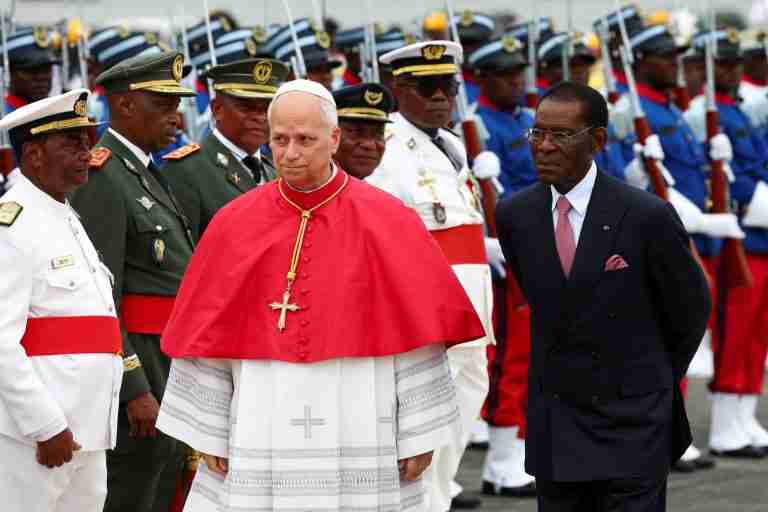
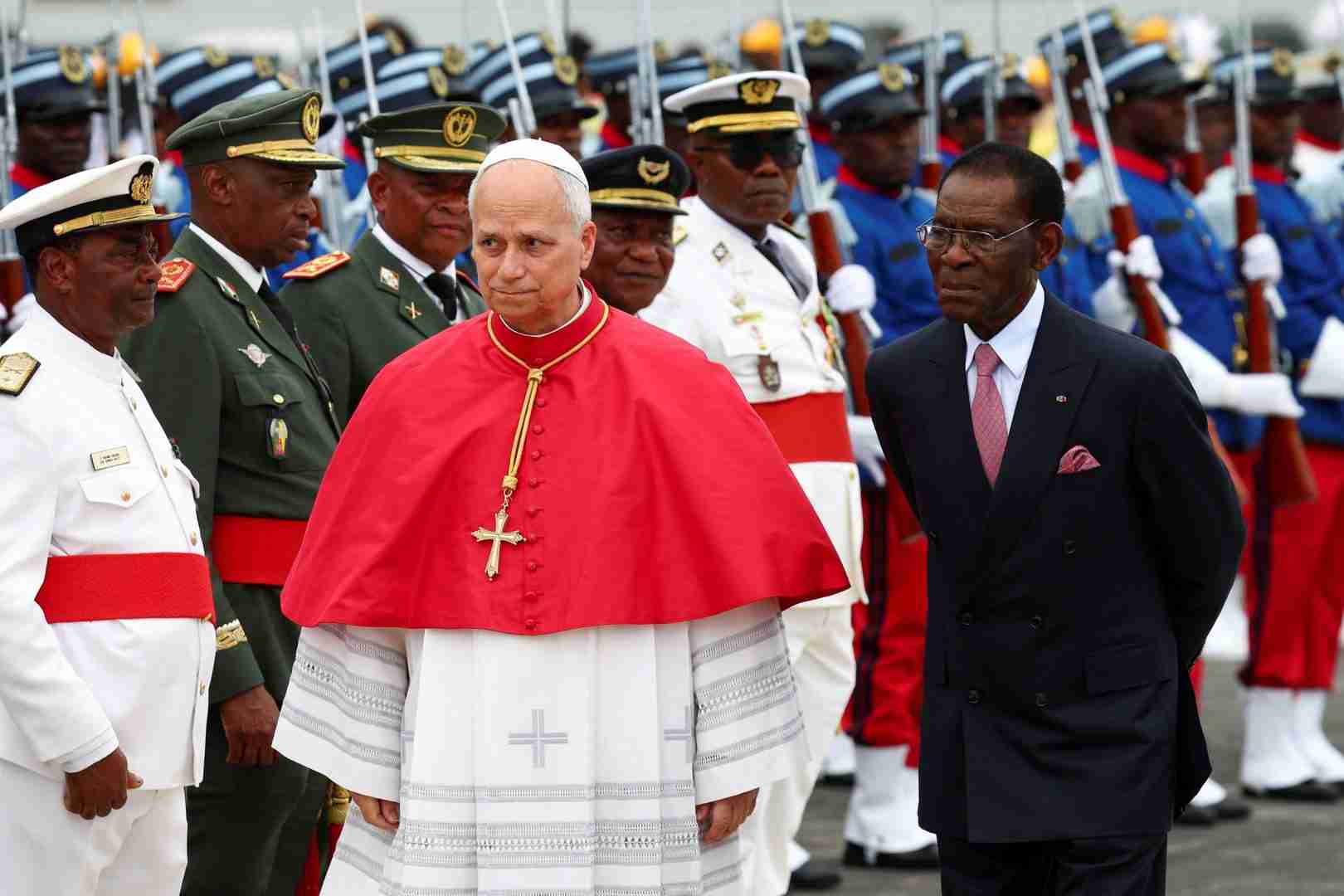
Pope Leo sets off on Tuesday for Equatorial Guinea, led by the world’s longest-serving president, on the final leg of a four-nation Africa tour during which the pontiff has issued sharp denunciations of despotism and inequality.

Leo, who has drawn the ire of President Donald Trump with his more outspoken comments, will arrive from Angola, where on Monday he lamented that many people globally were being “exploited by authoritarians and defrauded by the rich.” 

His statements were the latest evidence of a forceful new speaking style he has embraced while in Africa.

The first U.S. pope was due to arrive in Malabo, on the island of Bioko in the Gulf of Guinea, around 11:45 a.m. (1045 GMT), where he will give a speech to the country’s political leaders.

He will meet first with President Teodoro Obiang Nguema Mbasogo, who has been in power since 1979, three years before the Central African country’s only other papal visit, by Pope John Paul II back in 1982.

Leo’s arrival “presents a profound opportunity to affirm, clearly and convincingly, that human dignity, justice, and accountability are not optional, but essential responsibilities of governance,” Tutu Alicante, a U.S.-based human rights lawyer and activist from Equatorial Guinea, told Reuters.

More than 70% of the country’s population of 1.8 million identify as Catholic.

Obiang, whose government oversaw a now-declining oil boom that began in the 1990s, has been widely criticized as one of the most repressive leaders in the region.

He denies allegations of human rights abuses and corruption.

Leo, who spent decades as a missionary in Peru before becoming pope, is expected to speak Spanish throughout his two-day visit to the former Portuguese and Spanish colony.

POPE TO VISIT PRISON, BLAST SITE

The pope is undertaking an ambitious 10-day Africa tour, one of the most complicated ever conducted by a Catholic leader, with stops in 11 cities and towns in four countries, traversing nearly 18,000 km (11,185 miles) over 18 flights.

Wednesday will be the most intense day of the tour, with the pope taking three flights to visit three cities across Equatorial Guinea. 

In Bata, the pope will visit a high-security detention centre that Amnesty International has said is one of three notorious facilities in the country where detainees, including political prisoners, are regularly held for years without access to lawyers or their families. 

The government dismisses criticism of its justice system and says it has an open democracy.    

Alicante said that while some facilities had been spruced up ahead of Leo’s arrival, there remained a need for comprehensive, lasting reforms.

“The real test will be whether humane conditions, access to medical care, and basic rights are sustained long after the papal visit concludes,” he said.

Leo will also pray in Bata at the site of a series of explosions in 2021 at a military barracks that killed more than 100 people, which the government blamed on poor storage of ordnance. 

Human rights activists have called for an independent investigation into the incident, so far in vain.

Reporting by Joshua McElwee; additional reporting by Robbie Corey-Boulet in Dakar; Editing by Alexandra Hudson

Shell faces new court case in the Netherlands over emissions

Like a number of its peers seeking to capitalise on soaring profits from oil and gas sales following the outbreak of the Ukraine war, Shell has scaled back its renewable energy operations and weakened emissions targets

International News via Reuters:

A Dutch climate activist group launched a new court case against Shell on Tuesday in the Netherlands, demanding that the British energy major immediately end its investments in new oil and gas projects.

Like a number of its peers seeking to capitalise on soaring profits from oil and gas sales following the outbreak of the Ukraine war, Shell has scaled back its renewable energy operations and weakened emissions targets.

It told investors last year it was targeting a 4% to 5% annual increase in liquefied natural gas sales over the next five years and planned to sustain “material” oil output beyond 2030.

“Shell must stop bringing new oil and gas fields into production. This is necessary to protect us from Shell’s climate-disrupting activities,” Friends of the Earth Netherlands said in the summons it filed against Shell.

Shell called the case “unreasonable” after Friends of the Earth announced plans to file the legal action last year. It said the activist group ignored the global economy’s need for fossil fuels and production would simply shift to other companies if Shell were ordered to halt operations.

The company did not immediately respond to a request for comment on Tuesday.

ACTIVISTS’ YEARS-LONG COURT BATTLE AGAINST SHELL

The lawsuit builds on another case brought by the activists that has been making its way through the Dutch courts for several years.

In that case, an appeals judge in 2024 ruled Shell had a responsibility to reduce emissions to protect people from global warming. While the decision scrapped an earlier order setting a specific carbon reduction target for Shell, it did say the company’s plans to invest in new oil and gas projects were likely not in line with its obligation to cut emissions.

The appeals court could not rule on Shell’s investment plans, however, as these were not part of the demands in that case, which has now moved on to the Dutch Supreme Court.

The formerly Anglo-Dutch company moved its headquarters from The Hague to London in 2022, but has maintained a secondary listing at the Amsterdam stock exchange. Friends of the Earth has said a Dutch court retains jurisdiction, despite Shell’s move, as the company’s actions cause climate damage in the Netherlands.

A date for a hearing in the new case has not been set yet.

Reporting by Bart Meijer; Editing by Joe Bavier

Ex-official describes pressure from UK PM’s office, deepening Mandelson row

A war of words over who should ultimately take the blame for appointing Labour veteran Peter Mandelson to Britain’s highest diplomatic post despite his history and known ties to late U.S. sex offender Jeffrey Epstein has piled pressure on Starmer

International News via Reuters:

A former top foreign ministry official said on Tuesday he had faced “constant pressure” from Prime Minister Keir Starmer’s office to speed up the appointment of his pick as the ambassador to the U.S., deepening a row that threatens the British leader.

A war of words over who should ultimately take the blame for appointing Labour veteran Peter Mandelson to Britain’s highest diplomatic post despite his history and known ties to late U.S. sex offender Jeffrey Epstein has piled pressure on Starmer, prompting calls by critics for his resignation.

Starmer has said he was “wrong” to appoint Mandelson to the role and has expressed regret, but on Monday put the blame firmly on foreign ministry officials for failing to tell him that a security vetting body had advised against his appointment – something, he said, would have stopped him from employing the new ambassador.

On Tuesday, it was the turn of Olly Robbins, the foreign ministry’s former top official who was sacked late on Thursday after Starmer and foreign minister Yvette Cooper said they had lost confidence in him, to mount his defence.

He was quick to shift the focus to Starmer’s office.

ROBBINS SAYS HE WAS UNDER ‘CONSTANT PRESSURE’

“I walked into a situation in which there was already a very, very strong expectation … that he needed to be in post and in America as quickly as humanly possible,” Robbins told a parliamentary committee.

“I think throughout January (2025), honestly, my office, the foreign secretary’s office, were under constant pressure,” Robbins said. “There was an atmosphere of constant chasing,” he said, describing “very frequent phone calls” from the private office of Starmer’s Number 10 Downing Street.

Robbins’ account is likely to increase the pressure on Starmer, who after winning the largest majority in modern history for Labour at a national election in 2024 is facing new calls to step down over a scandal which has run for months.

Labour lawmakers have said there would not be an immediate move to oust Starmer, especially as the party is expected to suffer big losses in local elections in England and regional votes in Wales and Scotland in just over two weeks.

But the return of the focus on Starmer’s Downing Street operation will do little to appease those lawmakers who have repeatedly raised concerns over what some call a bunker mentality and lack of access.

WAR OF WORDS WIDENS BETWEEN OFFICIALS AND DOWNING STREET

Robbins said that when he took office on January 20, 2025, Mandelson’s appointment had already been announced, approval had been given by King Charles, it had been agreed by the U.S. government and Mandelson was being granted access to highly classified briefings on a case-by-case basis. He said it would have damaged relations with the U.S. if the foreign office had blocked the appointment at that stage.

It was not clear whether Downing Street even wanted the foreign ministry to complete so-called developed vetting clearance – a status that allows individuals access to information regarded as top secret, Robbins said.

It was down to the foreign ministry to complete that process, he said, and officials had stuck to a system whereby reports from a unit called UK Security Vetting were never shared with ministers to protect the candidate’s confidentiality.

But he did say the unit had advised the appointment was a borderline case and they were leaning against granting clearance – a message Starmer says his government never received.

“Whilst I think the department felt under pressure, we were proud of the fact we’d not bowed to that pressure,” Robbins said.

Robbins’ defence again cranks up pressure on Starmer, who had won a brief reprieve from his critics after limiting Britain’s role in the Iran war.

Even some in top team of ministers have said they were concerned about Mandelson’s appointment.

Asked what went through his mind over the decision to appoint him, energy minister Ed Miliband told Sky News: “That it could blow up, that it could go wrong.”

“I had a conversation with David Lammy (then foreign minister and now deputy prime minister) about it before the appointment, and I said I was worried about it.”

Robbins also revealed that Starmer’s office had been pushing for an ambassadorial job to be found for Matthew Doyle, the prime minister’s former senior communications director who has been removed from the Labour Party after he campaigned for a man who was a convicted sex offender.

Doyle has apologised for his actions.

Reporting by Elizabeth Piper, additional reporting by Sarah Young, Sam Tabahriti, Muvija M, editing by Kate Holton and Tomasz Janowski