Monday, November 2, 2026
Home Blog Page 327

Lebanese state not seeking confrontation with Hezbollah but won’t be intimidated, PM says

Salam and French President Emmanuel Macron met in Paris to see how to strengthen Lebanon’s hand in possible direct future negotiations with Israel, as Beirut turns to a trusted European ally
International News via Reuters:

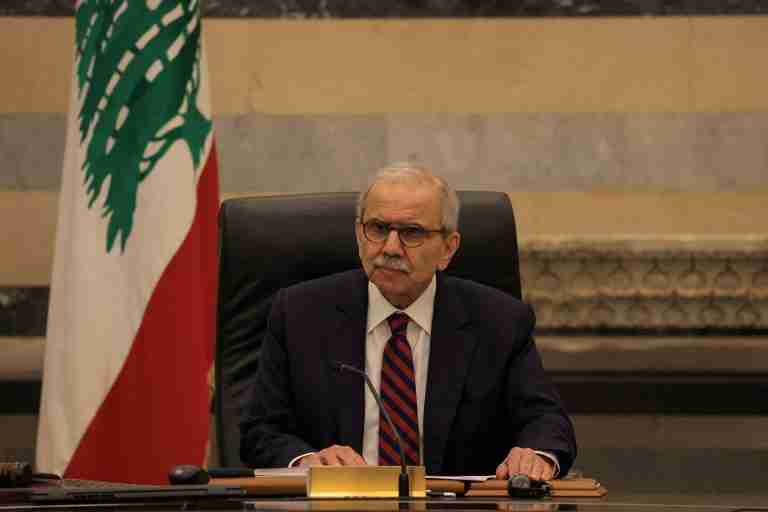
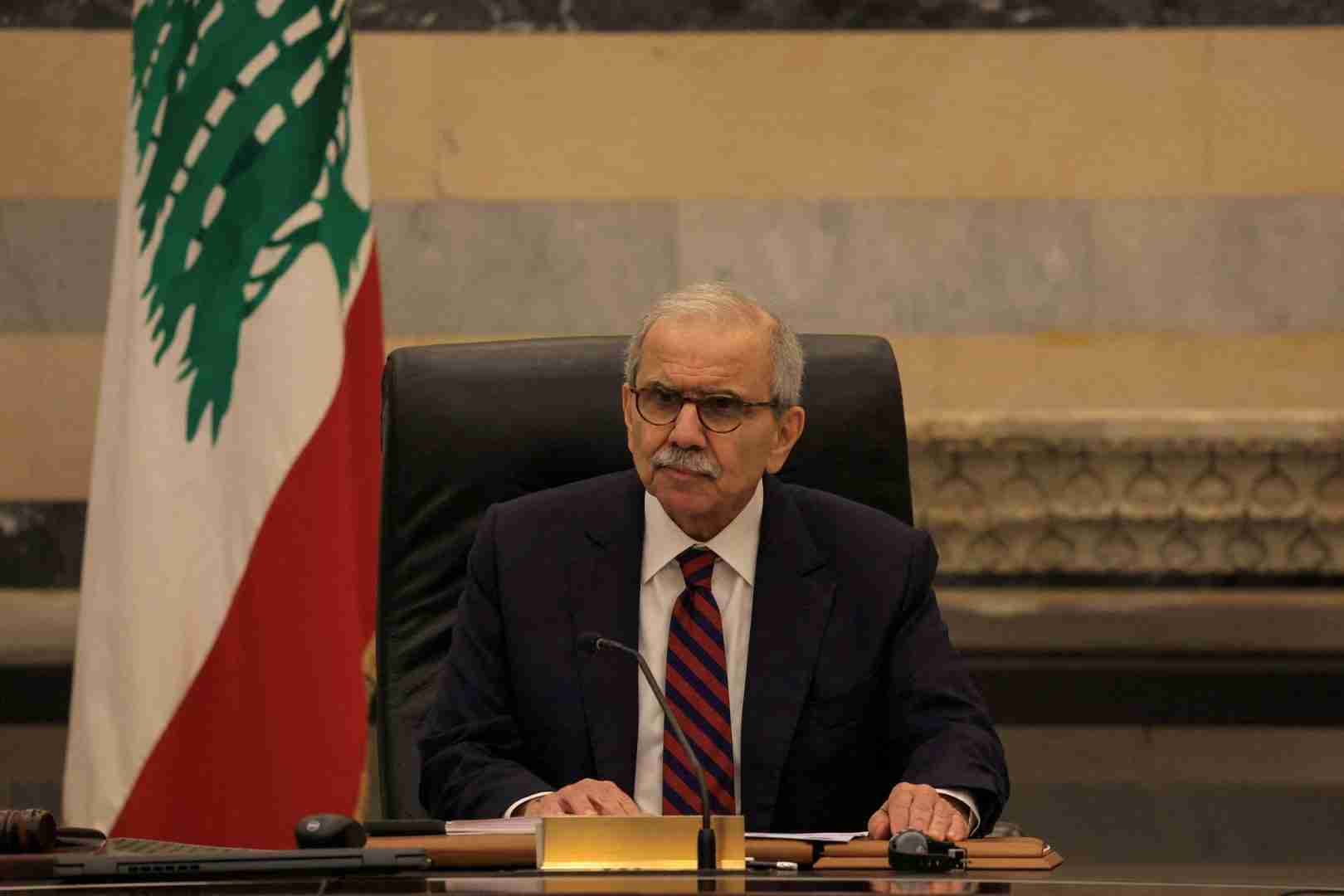
Lebanon’s Prime Minister Nawaf Salam said on Tuesday his government was not seeking confrontation with Iran-backed Hezbollah, but would not allow itself to be intimidated as it prepares direct talks with Israel to end the conflict.

Salam and French President Emmanuel Macron met in Paris to see how to strengthen Lebanon’s hand in possible direct future negotiations with Israel, as Beirut turns to a trusted European ally.

The U.S. will host ambassador-level talks with Israel and Lebanon on Thursday, although it remains unclear whether the objective is to extend a fragile 10-day ceasefire between Israel and Hezbollah or pave the way for deeper negotiations.

‘NOT INTIMIDATED BY HEZBOLLAH’

“We are continuing along this path, convinced that diplomacy is not a sign of weakness, but a responsible act to leave no avenue unexplored in restoring my country’s sovereignty and protecting its people,” Salam said.

Israeli troops occupy territory deep in the south, aiming to create a buffer zone to shield northern Israel from Hezbollah attack, while the group says it maintains the “right to resist” Israeli occupation.

Lebanon in 2025 said it would disarm Hezbollah but its army treaded carefully, wary of igniting internal tensions. The United States and Israel criticised Lebanon for not moving fast enough.

“We are not seeking confrontation with Hezbollah. On the contrary, I wanted to avoid confrontation with Hezbollah, but believe me, we will not be intimidated by Hezbollah,” Salam said when asked about the state’s ability to disarm the group.

Salam said the country would need 500 million euros ($587 million) over the next six months to deal with the humanitarian crisis that has seen 1.2 million people displaced from Lebanon’s south, east and the southern suburbs of Beirut.

FRANCO-LEBANESE HISTORICAL TIES

France, which has deep historical ties with Lebanon, has sought alongside Washington to mediate in the conflict, brokering the ceasefire in 2024 and helping establish a mechanism to monitor it.

But relations with Israel have soured over France’s stance on Gaza and the West Bank, its accusations that Israel’s actions in Lebanon are disproportionate, and its contacts with Hezbollah’s political wing.

Israel’s ambassador to Washington said last week that France should be excluded from any talks, describing Paris as having “no positive influence.”

The U.S., while maintaining contact with France on the issue, has also sought to marginalise its role.

European and Lebanese diplomats say they fear that if direct negotiations begin, Lebanon’s government could be too weak to resist unrealistic demands, potentially fuelling domestic tensions given Hezbollah’s refusal to negotiate with Israel.

“We are trying our best to get them [France] back in the discussions, but the U.S. and Israel are adamant not to include them,” said a Lebanese diplomat.

France has pushed initiatives only to be rebuffed by the U.S. and Israel.

Macron said the priority was to end the war and ensure stability for the future, promising to help Lebanese authorities prepare negotiations.

“France does not need to be at any negotiating table, wherever it may be, in order to stand by Lebanon,” he said.

Echoing the need for French support, Salam said negotiations with Israel would be demanding, and as a result, Lebanon would need the “active” support of all its partners.

Paris argues that unlike Washington it has a significant presence on the ground in Lebanon with some 700 UN peacekeepers, and that any peace deal would still need a significant international presence to implement it.

A French soldier was killed in southern Lebanon this week in an attack the French government said was carried out by Hezbollah.

In a sign of the ceasefire’s fragility, Israeli troops have continued demolitions of homes in the southern Lebanese border strip they now occupy and the Israeli military said Hezbollah had fired rockets at Israeli troops in that zone on Tuesday. There was no immediate comment from Hezbollah.

($1 = 0.8515 euros)

Editing by Maya Gebeily, Alexandra Hudson, Rod Nickel

Weekend police patrols net impaired riders

Two Warwick men arrested after roadside checks revealed high alcohol levels, with one also charged for carrying a knife in public

Police patrols on our roads over the weekend saw several arrests for a variety of offences, including suspected impaired driving, outstanding warrants and possessing a knife in public.

Around 10:55 p.m. on Saturday, 18th April 2026, officers were conducting a traffic initiative along Middle Road, near Morgan Road, Warwick, when a motorcyclist was clocked travelling at 58 km/h.

Officers caused the rider to stop and as he got off the vehicle, he was unsteady on his feet. Officers then asked if he had been drinking alcohol prior to operating the vehicle.

The rider, understood to be a 28-year-old Warwick resident, denied that he had. However, while speaking with him, the officers detected a strong smell of alcohol on his breath and that his words were slurred.

As a result, officers informed the subject that he was being arrested on suspicion of operating a vehicle while impaired. Apparently, an Alco-analyser test later showed the rider’s blood alcohol level to be almost double the legal limit of 80 milligrams of alcohol in 100 millilitres of blood.

In addition, during a search, officers recovered a folding knife from his front right pocket. He was further arrested for possession of a sharply pointed article in a public place.

Shortly after 11:00 p.m. on Friday, 17th April 2026, police officers were conducting speed checks at the junction of South Road and Bellevue Drive, Paget, when a motorcyclist was clocked travelling at 61 km/h.

Officers caused the rider, a male, to stop the motorcycle and while speaking with him, detected a strong smell of alcohol from his breath. As a result, officers asked him to step off the motorcycle and observed his eyes were glazed.

Officers then informed the rider that he was under arrest on suspicion he was operating a motor vehicle whilst impaired.

The male, understood to be a 31-year-old Warwick resident, was conveyed to Hamilton Police Station where an Alco-analyser test was conducted.

Apparently, the test showed the rider’s blood alcohol level to be almost four times the legal limit of 80 milligrams of alcohol in 100 millilitres of blood.

Court appearances were anticipated for both men.

Media release supplied by the Bermuda Police Service.

Mexico disappearances climb as attacks on rights defenders persist, Amnesty says

Attacks on human rights defenders, journalists and activists searching for disappeared persons in Mexico continued in 2025 as disappearances climbed to 133,500 cases, Amnesty International said on Tuesday

International News via Reuters:

Attacks on human rights defenders, journalists and activists searching for disappeared persons in Mexico continued in 2025 as disappearances climbed to 133,500 cases, Amnesty International said on Tuesday.

KEY CONTEXT

• Disappearances rose 10.5% by December, while murders fell 27.4%, Amnesty’s annual report said.

• Mexico remains among countries with the highest torture rates, according to the Global Torture Index presented in 2025.

• Threats, attacks and killings of human rights defenders increased alongside reduced government protection mechanisms, the rights group said.

• Migrants crossing Mexico face extortion, kidnapping and difficulties accessing healthcare, education and employment, Amnesty said.

• A UN committee in early April called for the General Assembly to examine forced disappearances in Mexico as crimes against humanity.

• President Claudia Sheinbaum rejected the UN call as politically motivated.

• UN High Commissioner Volker Turk is on a four-day visit to Mexico and is expected to address human rights issues on Wednesday.

• “It is difficult to find the words to describe the exchanges I had today in Mexico with the families of disappeared persons,” Turk said on Tuesday. “Their unwavering courage, strength and resilience inspire me deeply; their search for truth and justice must be addressed.”

Reporting by Lizbeth Diaz, Editing by Iñigo Alexander

Does your business practice ‘anti-fragility’?

Companies that want to succeed today must prepare, diversify, and be geopolitically aware… so says the keynote speaker at this Thursday’s Chamber of Commerce AGM

“The era of efficiency is over and the era of resilience is here.”

This from Stefano Moritsch, Global Geopolitics Lead at KPMG International, who is returning as keynote speaker at this Thursday’s Chamber of Commerce Annual General Meeting.

Last year, he told businesses that the US-centred predictability of the last three decades is over, as China and others look to challenge the status quo, and the US itself takes a more protectionist approach to trade policy.

He also said that a lack of global leadership is putting global shipping routes at risk.

Fast-forward to today, and the U.S.-Israeli war with Iran has resulted in the largest-ever disruption of global oil and gas supplies due to Iran’s interruption of traffic through the strait of Hormuz.

The situation around the Gulf states is only one disruption in this new era. Building resilience is the key, Mr Moritsch says – and doing that itself will be disruptive.

Ultimately, he says, businesses must practice ‘anti-fragility’… “So not only being able to withstand the crisis, but thrive from a crisis, and be better after a crisis.”

In that context, we raised a question ourselves about Bermuda’s resilience – in terms of getting goods to the island…

WATCH the report above.

Gunman shoots Canadian woman dead at Mexico’s Teotihuacan pyramids, 13 injured

Security authorities said 13 people were injured in the incident

International News via Reuters:

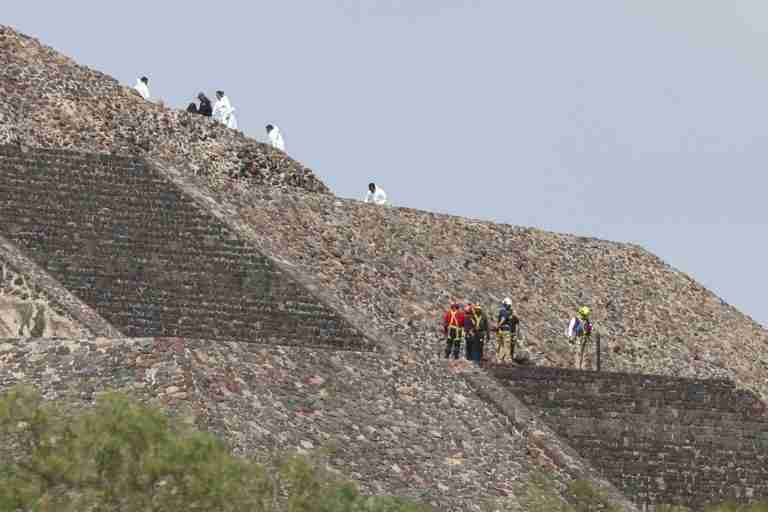
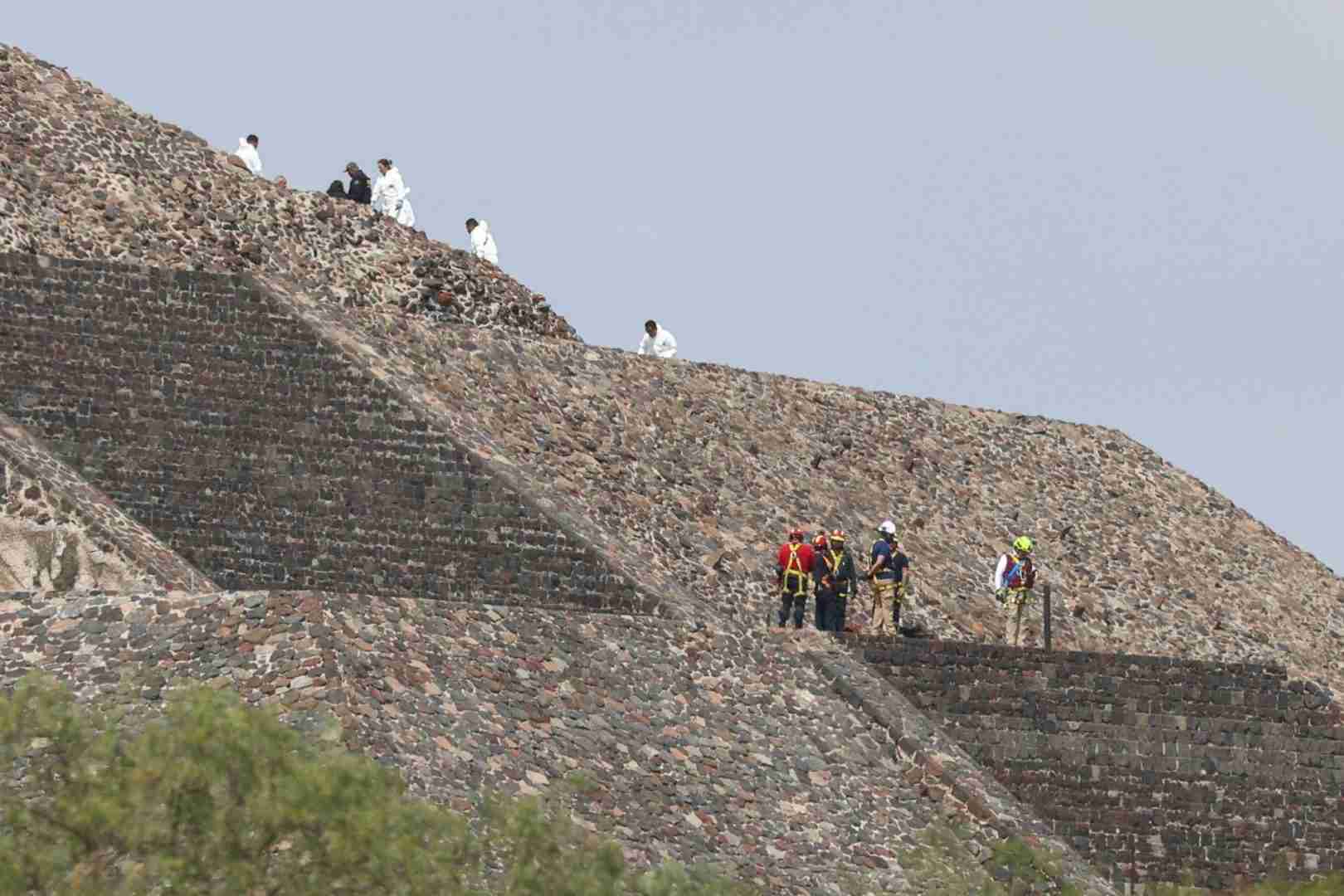
A gunman shot dead a Canadian woman as he opened fire at Mexico’s Teotihuacan pyramids on Monday before killing himself, authorities said, in a rare attack at a major tourist attraction.

Security authorities said 13 people were injured in the incident. It was not immediately clear how many were shot. One witness, who requested anonymity, told Reuters that a young boy was shot in the leg.

Local prosecutors said in a post on X that the gunman was Julio Cesar Jasso Ramirez, a Mexican national. They did not provide further details.

The shooting began at just after 11 a.m. at the Pyramid of the Moon, one of the most prominent structures at the site outside Mexico City, according to the witness, who had just descended from the temple’s mezzanine when they heard “pops” and saw a stampede of visitors.

The gunman remained at the top of the mezzanine, the witness said, adding that he appeared to fire most shots into the air, rather than directly at people, while carrying a digital tablet and shouting.

Bystanders, including some with medical training, provided first aid to the injured, using water bottles and clean cloths to slow bleeding until paramedics arrived, the witness added.

Security authorities said some of the injured had been taken to hospitals, including three Colombians, one of whom was a 6-year-old child, as well as U.S., Russian and Brazilian nationals.

A second Canadian was also wounded in the attack, according to a post on X from Canada’s Foreign Affairs Minister Anita Anand.

President Claudia Sheinbaum said in a post on social media: “What happened today in Teotihuacan pains us deeply. I express my deepest sympathy to those affected and their families.”

The shooting is set to increase scrutiny of Mexico’s security at major tourist and cultural sites as it prepares to co-host the 2026 FIFA World Cup alongside the United States and Canada. The event is expected to draw millions of visitors from abroad.

The pre-Hispanic city of Teotihuacan was one of the most important cultural centers in Mesoamerica and it is one of Mexico’s most popular tourist sites, receiving 1.8 million visitors last year.

While Mexico has many shooting incidents due to cartel activity, violence at tourist attractions is rare.

Reporting by Ana Isabel Martinez, Lizbeth Diaz and Natalia Siniawski, Additional reporting by David Ljunggren; Editing by Matthew Lewis and Edwina Gibbs

Iran rejects talks with U.S. under pressure and aimed at surrender, senior Iranian official says

The official said mediator Pakistan was continuing efforts to persuade the United States to lift its naval blockade and release the Iranian-flagged ​container ship Touska

U.S forces patrol near the Iranian-flagged cargo ship M/V Touska after it was boarded and seized by U.S. forces on Sunday, at a location given as the Arabian Sea, in this handout image released April 20, 2026. U.S. Central Command via X/Handout via REUTERS

International News via Reuters:

Iran could attend talks with the United States in Pakistan if Washington abandons its policy of pressure and threats, a senior Iranian official told Reuters on Tuesday, adding that Tehran rejects negotiations aimed at surrender.

The official said mediator Pakistan was continuing efforts to persuade the United States to lift its naval blockade and release the Iranian-flagged ​container ship Touska, which was boarded and seized by U.S. forces on Sunday, and its crew.

He accused Washington of “creating new obstacles every day instead of resolving the differences” to end the war.

Writing by Parisa Hafezi; Editing by Chizu Nomiyama

Hong Kong fire victims scour scorched homes for keepsakes

The flames that engulfed seven residential towers, each of 31 floors in the northern district of Tai Po, killing 168 people, took nearly two days to douse, and eclipsed London’s Grenfell Tower inferno of 2017

International News via Reuters:

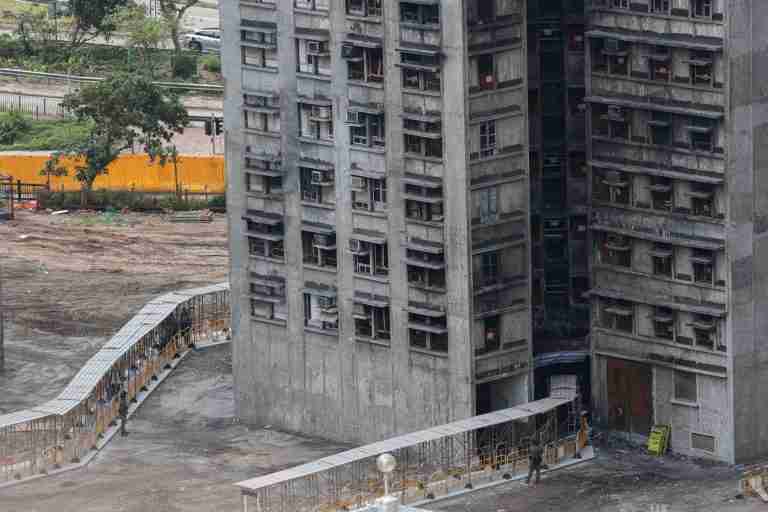
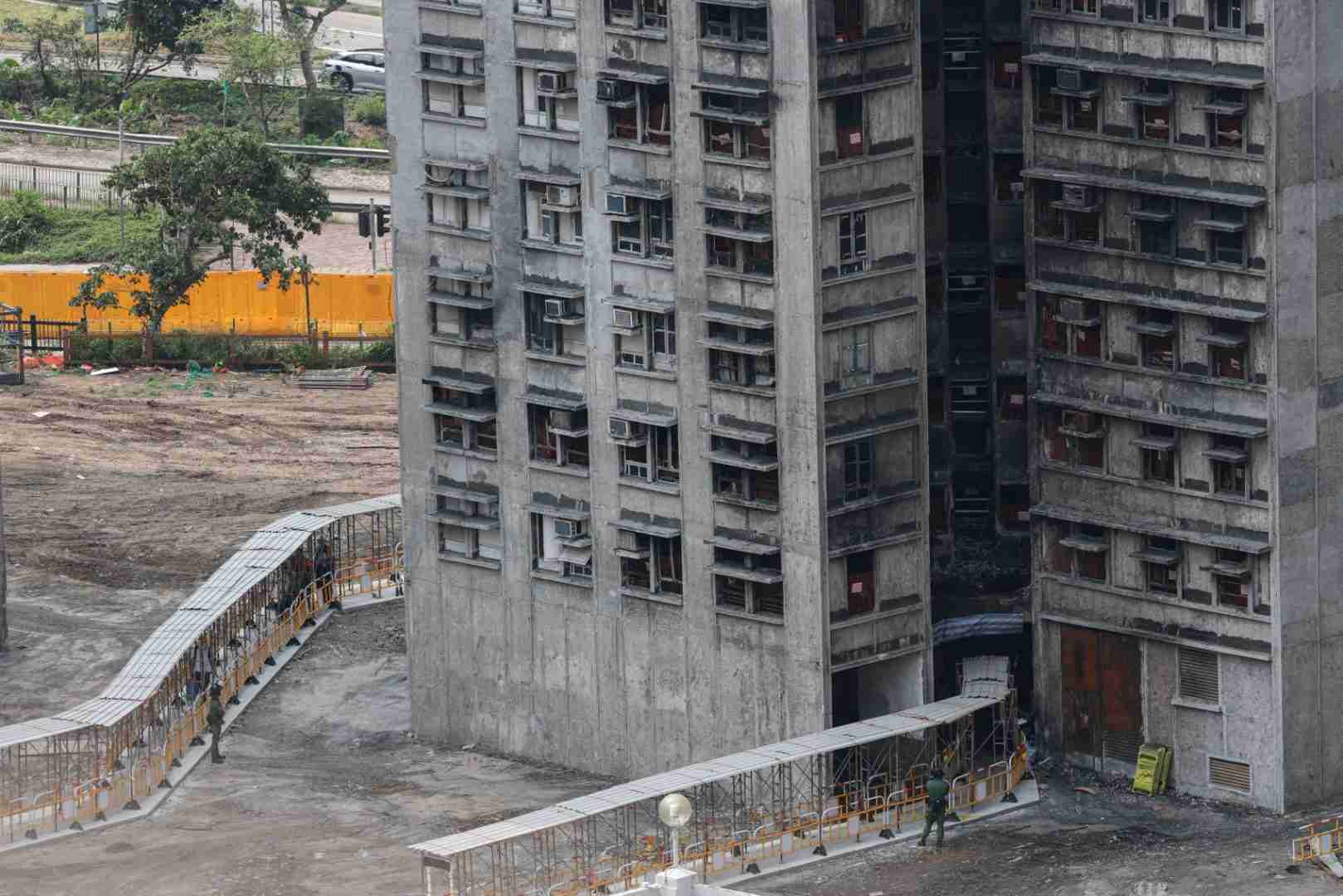
Victims of Hong Kong’s deadliest fire in decades began government-supervised visits to their ravaged former homes on Monday for the first time since the November blaze, looking to retrieve personal items that might have survived.

The flames that engulfed seven residential towers, each of 31 floors in the northern district of Tai Po, killing 168 people, took nearly two days to douse, and eclipsed London’s Grenfell Tower inferno of 2017.

“I have taken away most of the stuff I wanted, those items of value,” said Steven Chung, 50, adding that he did not know how to describe his emotions after sifting through his old apartment but now worries more about finding affordable housing.

Chung was among around 270 former residents returning to the complex on Monday, many carrying objects such as paintings, computers, and bicycles as they left the government-subsidised housing.

A former resident surnamed Leung said he was able to find his wedding ring easily as it glittered through the ashes of his room where he had kept it. “True gold fears no fire,” he said.

Photos of his scorched apartment he shared with Reuters showed charcoal-grey debris with only a few household objects including a plate intact. Walls and window grates were completely charred.

A 67-year-old woman surnamed Tsang said she was happy she found her burnt jewelry box under her bed.

“I found the jewel box under the bed among the ashes. That’s the only thing I can retrieve,” she said.

Until May 4, former residents of the complex, Wang Fuk Court, can spend three hours in their flats on each visit, while wearing facemasks, helmets and gloves for protection.

Firemen are among the 1,000 staff tasked to assist the estimated total of 6,000 visitors, who will be escorted by officials to ensure items are kept safe.

“I hope everyone will abide by the three-hour rule,” Warner Cheuk, Hong Kong’s deputy chief secretary, told reporters outside the complex, patrolled by officers and cordoned off with orange tape and crowd-control barriers.

Up to four people can register to enter each home, but for severely damaged flats the number is limited to one.

Many affected residents are elderly, with more than a third older than 65, Midland Realty’s analysis of government data showed.

Months after the fire, people in the Asian financial hub are still grasping for answers to how it started and demanding accountability.

An independent committee began hearings in March to decide the causes and the scale of bid-rigging by construction firms in building projects.

The panel’s lead lawyer blamed human factors for the failure of most of the fire safety systems.

Authorities have threatened severe punishment for anyone who tries to “politicise” the disaster.

In April, the Housing Bureau ruled out redevelopment of the site, on grounds of the long time required and surrounding uncertainties. In February the government said it aimed to spend about HK$4 billion ($512 million) to buy out the owners.

Reporting by Jessie Pang and Joyce Zhou; Editing by Farah Master, Clarence Fernandez and Muralikumar Anantharaman

Iran yet to decide on whether to attend talks as ceasefire deadline ticks down

President Donald Trump said he hoped to reach a “great deal” to end the war, but he did not want to extend the ceasefire, and said the U.S. military was “raring to go” if negotiations were not successful

International News via Reuters:

Iran said on Tuesday it had still yet to decide whether to attend last-ditch peace talks with the United States, after U.S. forces boarded a huge Iranian oil tanker at sea with just a day left before the ceasefire runs out in the war in the Gulf.

President Donald Trump said he hoped to reach a “great deal” to end the war, but he did not want to extend the ceasefire, and said the U.S. military was “raring to go” if negotiations were not successful.

Vice President JD Vance, due to lead the U.S. delegation, had yet to board a flight for Islamabad, where the centre of the city has been locked down and a luxury hotel has been cleared out to host the talks.

A White House official said Vance would participate in additional meetings in Washington on Tuesday.

IRAN ACCUSES U.S. OF PIRACY

By the evening on Tuesday, the spokesperson for Iran’s foreign ministry, Esmaeil Baghaei, told state television Iran had still yet to decide whether to attend.

He described the boarding of the tanker, as well as the seizure of a separate cargo ship on Sunday, as “piracy at sea and state terrorism”, which he said called into question Washington’s seriousness in negotiating.

“The aggression against Iranian ships and the continued pressure indicate the continuation of the opposing side’s contradictory behaviour,” Baghaei said.

Pakistan’s Information Minister Attaullah Tarar said in a post on X that Pakistan was still waiting for Iran’s reply to its invitation: “⁠Pakistan as the mediator is in constant touch with Iranians and pursuing the path of diplomacy and dialogue.”

TRUMP SAYS MILITARY IS ‘RARING TO GO’

Asked about the possibility of extending the truce, Trump told CNBC: “I don’t want to do that. We don’t have that much time.”

“I expect to be bombing because I think that’s a better attitude to go in with,” he added. “But we’re ready to go. I mean, the military is raring to go.”

Iranian government spokesperson Fatemeh Mohajerani said: “We do not want to be attacked again, but if such attacks occur, we will definitely respond more firmly than before,” according to the state news agency IRNA.

U.S. SAYS IT BOARDS TANKER ‘WITHOUT INCIDENT’

The U.S. military said its forces had boarded a tanker under sanctions for trading with Iran, the Tifani, in an operation that took place “without incident”.

The vessel last reported its position on Tuesday morning as near Sri Lanka in the Indian Ocean, according to MarineTraffic tracking data. It was close to fully loaded with 2 million barrels of crude and had signalled Singapore as its destination.

“As we have made clear, we will pursue global maritime enforcement efforts to disrupt illicit networks and interdict sanctioned vessels providing material support to Iran — anywhere they operate,” U.S. Central Command said.

Iranian officials have publicly cited a U.S. blockade of their ships as a reason not to negotiate.

On social media, Trump said Iran had carried out numerous violations of the ceasefire, without giving further details. He told CNBC that the blockade had been a success and the U.S. was in a strong position to end up with a “great deal”.

OIL PRICES RISE AGAIN

The precise timing of the ceasefire’s end has been a source of confusion. Trump initially announced it would last two weeks from the evening of Tuesday, April 7 in Washington. But he said this week that it runs until the evening of Wednesday, April 22, effectively giving it an extra 24 hours.

A Pakistani source involved in the talks also said it would expire at 8 p.m. Eastern Time on Wednesday, which is 3:30 a.m. Thursday in Iran. 

Iran has largely blocked off the Strait of Hormuz that controls access to the Gulf to all ships but its own. It had announced last week that it would reopen the strait, but reversed that decision on Saturday after Trump refused to lift his blockade of Iranian ports.

That has left the strait closed and the world deprived of the 20 million barrels of oil that typically crossed it each day.

A first session of talks 10 days ago produced no agreement and Tehran had been ruling out a second round after the U.S. refused to end its blockade and seized an Iranian cargo ship. Trump has threatened to attack Iran’s civilian infrastructure if no deal is done.

Still, a Pakistani source involved in the discussions told Reuters there was momentum for talks to resume and Vance was still expected in Islamabad.

Wall Street stocks turned mostly lower, while global equities dipped as optimism over peace talks faded. Oil prices climbed about 3%.

IRAN NUCLEAR PROGRAMME A CRUCIAL ISSUE

Trump wants an agreement that would prevent further oil price rises and stock market shocks, but has insisted Iran cannot have the means to develop a nuclear weapon. He wants Iran to give up its stockpile of highly enriched uranium, which can, if further enriched, be used for a nuclear warhead.

Tehran hopes to exploit its control of the strait to strike a deal that averts a restart of the war and lifts sanctions, while retaining more of its nuclear programme, which it says is for peaceful purposes.

Thousands have been killed by U.S.-Israeli strikes on Iran and a parallel Israeli bombing campaign and invasion of Lebanon.

The war has caused a historic shock to global energy supplies, and fears that the global economy could be pushed to the brink of recession.

Pakistan has been preparing to host the talks despite the uncertainty. Nearly 20,000 security personnel have been deployed across Islamabad, officials said.

Reporting by Reuters bureaus; Writing by Martin Petty and Kevin Liffey; Editing by Stephen Coates, Raju Gopalakrishnan, Peter Graff and Alison Williams

Microsoft must face $2.8 billion UK lawsuit over cloud computing licences

Competition lawyer Maria Luisa Stasi is bringing the case on behalf of nearly 60,000 businesses that run Windows Server on rival cloud platforms

International News via Reuters:

Microsoft must face a mass lawsuit alleging it overcharged thousands of British businesses to use Windows Server software on cloud computing services provided by Amazon, Google and Alibaba, a London tribunal ruled on Tuesday.

Competition lawyer Maria Luisa Stasi is bringing the case on behalf of nearly 60,000 businesses that run Windows Server on rival cloud platforms. Her lawyers have previously said the claim was worth up to 2.1 billion pounds ($2.8 billion).

They argued at a hearing last year that the businesses were overcharged because Microsoft charges higher wholesale prices for Windows Server than for users of Azure, costs that are passed on to customers and make Azure cheaper than Amazon’s AWS or Google Cloud.

Microsoft said Stasi’s case failed to set out a workable method for calculating any alleged losses and should be thrown out.

But London’s Competition Appeal Tribunal certified the case to proceed towards trial, an early step in the proceedings. Microsoft did not immediately respond to a request for comment.

Stasi said in a statement that the ruling was “an important moment for the thousands of organisations impacted by Microsoft’s conduct”.

Microsoft argued at last year’s hearing that its vertically integrated business model – using Windows Server as an input for Azure while also licensing it to rivals – can benefit competition.

Regulators in Britain, Europe and the U.S. are separately examining the practices of Microsoft and other firms in cloud computing.

Last July, an inquiry group from Britain’s Competition and Markets Authority said Microsoft’s licensing practices reduced competition for cloud services “by materially disadvantaging AWS and Google”.

Microsoft said at the time the report had ignored that “the cloud market has never been so dynamic and competitive”.

Last month, the CMA said it would again investigate Microsoft’s software licensing practices in the cloud market.

($1 = 0.7402 pounds)

Reporting by Sam Tobin. Editing by Mark Potter

UK pushes long-term renewables deals to shield against gas price shocks

Britain has among the highest electricity prices in the world due to the structure of its energy market, under which gas sets the price for all generation most of the time

International News via Reuters:

Britain plans to weaken the link between electricity costs and volatile gas prices, which has been blamed for holding back the economy, saying on Tuesday it would push older wind and solar generators onto fixed contracts to reduce energy bills. 

Britain has among the highest electricity prices in the world due to the structure of its energy market, under which gas sets the price for all generation most of the time, weighing heavily on households and making British industry uncompetitive.

That structure sent prices soaring after Russia’s invasion of Ukraine and again with the Iran war, prompting Britain to suffer the biggest growth downgrades for 2026 from the OECD and International Monetary Fund due in large part to the economy’s exposure to high energy costs.

Finance minister Rachel Reeves last week touted this new energy market reform as a boost for economic growth. But analysts and business groups were largely underwhelmed by the plan, which could see gas continuing to set the electricity price around 50% of the time by 2030 from 60% now.

“The limited scope and impact of the measures highlighted today reflect the limited ability and willingness of the UK government to make far-reaching changes,” analysts at Bernstein said.

VOLATILE GAS PUTS PRESSURE ON BRITISH ECONOMY

Britain’s wholesale electricity price is set every 30 minutes by the cost of the last energy source used in order to ensure demand is met. So even if wind, solar and nuclear provide 99% of the power required and gas-fired plants are needed to make up the last 1%, then gas sets the price for every buyer and seller.

British companies and consumer groups have been calling for successive governments to reform the market structure.

Domestic energy prices are forecast to rise more than 10% from July as the regulator makes its quarterly price cap adjustment, with wholesale gas costs currently 30% higher than before the Middle East conflict began.

Under its changes, the government will next year offer voluntary long-term contracts to existing low-carbon generators not already being paid a fixed price for their output to reduce the link between gas prices and electricity costs. 

It said the measure would cover around a third of Britain’s power supply.

The government will also increase the Electricity Generator Levy – used to claw back excess profits made by wind and solar generators when electricity prices jump – to 55% from 45%.

Ed Miliband, the energy minister, told a conference organised by the Good Growth Foundation that it would be up to generators whether to switch contracts, but that the change in tax rates would “significantly change the economic incentives for them to do so”.

He said the link between gas and electricity prices had already been weakened since the early 2020s and the trend was continuing, but evolution was not enough.

Energy firms and business groups said the announced changes were a step in the right direction but warned that significant policy and tax changes outside of traditional fiscal events like government budgets were damaging for investor confidence.

They also called for the government to reduce environmental policy costs in electricity bills.

“At a time of extreme volatility, clarity and confidence are paramount,” said Rain Newton-Smith, head of the CBI business group. “A stable, affordable energy system is a prerequisite for a thriving economy.”

The government said it would also look to go faster on building renewable infrastructure on public land, which could potentially allow up to 10 gigawatts of new capacity, and would overhaul planning and land-use rules to speed up grid connections and infrastructure upgrades.

Additional reporting by Sam Tabahriti; Writing by Kate Holton; Editing by Andrew Heavens, Kirsten Donovan and Joe Bavier

OBA op-ed: Housing is healthcare

The Opposition OBA’s Senator David Rogers is the spokesperson for Housing and Municipalities said the party would remove barriers preventing people in need of affordable housing

Full statement from the One Bermuda Alliance:

There’s a temptation to talk about the housing crisis as if it’s just an economic inconvenience. Rents are high, supply is tight, and people are frustrated. But, housing is not just about where you live; it is about how long you live, and how well you live.

A growing body of research shows that housing instability doesn’t just correlate with poor health. It drives it. When rent consumes too much of a household’s income, people are forced into impossible trade-offs. Food quality declines. Medications are skipped. Preventive care is postponed. Chronic conditions worsen quietly until they become emergencies.

Then there’s stress, not the fleeting kind, but the chronic, grinding pressure of uncertainty. Will the rent go up again? Will I have to move? Can I stay in my community? Will I be able to find a new home? That kind of stress reshapes the body. It raises blood pressure, disrupts metabolism, and increases the risk of depression and cardiovascular disease. Over time, it accumulates into “allostatic load,” leaving lasting biological damage.

This is not abstract theory. It is a public health crisis hiding in plain sight. If housing is a driver of health, then housing policy is health policy. That’s not ideology or hyperbole. It’s reality. As the Shadow Minister for Municipalities and Housing put it: “the crisis is a present catastrophe: measurable, documented, and worsening.”

The One Bermuda Alliance has been consistent in recognizing this, putting forward a set of solutions aimed at both increasing supply and restoring stability. The approach is straightforward: build more, build smarter, and remove the barriers that prevent housing from reaching the people who need it.

That means:

  • allowing greater building heights where appropriate to expand supply
  • incentivizing private-sector construction so new units come online faster
  • repurposing underused government land into long-term housing
  • prioritizing rent-to-own pathways that give Bermudians a stake in their future.

It also means fixing what’s broken in the system itself. Outdated legislation slows development. Probate delays keep homes off the market. Regulatory bottlenecks discourage investment. These are not minor inefficiencies. They are structural failures with real human costs.

And then there’s accountability. Without transparency, time-bound targets, and measurable outcomes, any housing strategy risks becoming a document instead of a solution.

Now, here’s where things get a bit absurd.

The OBA’s position on housing is not hidden. It has been repeated publicly, consistently, and in detail. Which raises fair questions: why the confusion? Why the suggestion that these ideas are unclear, or worse, obstructive?

Let’s be candid, scrutiny is not obstruction. Asking whether a plan actually serves the public interest is not delay, it is responsibility. And yes, sometimes that responsibility means saying no.

Not every proposal deserves applause simply because it has been drafted. If a policy risks worsening affordability, distorting the market, or prioritizing narrow interests over the broader community, it should be challenged. A bad plan implemented quickly is still a bad plan.

That means “dismissing” proposals that fail that test. It means “delaying” those that are ill-conceived until they are improved. It means refusing to be “distracted” from the central issue: protecting the health and well-being of our community.

And, when the health of Bermudians is on the line, the position should be clear, unwavering, and loud: Not here. Not this way. Not now.