

Trott’s heroics secure Cardiff point as Bermudians shine overseas


Bermuda’s Nathan Trott produced a goalkeeping masterclass to help Cardiff City secure a hard-fought 1-1 draw against Huddersfield Town at the John Smith’s Stadium.
In a contest where the hosts looked increasingly likely to snatch all three points, it was Trott’s intervention that defined the evening.
The Bermudian shot-stopper was forced into action early, producing a phenomenal fingertip save to deny a goal-bound header from Bojan Radulović.
The drama peaked during eight minutes of stoppage time. With the Terriers pushing relentlessly, Trott brilliantly tipped a Marcus McGuane strike onto the crossbar before denying the hosts again from point-blank range.
His heroics ensured Yousef Salech’s earlier goal earned the Bluebirds a vital point on the road.
Beyond the Championship, several of Bermuda’s overseas stars were in action across the English non-league circuit on Tuesday:
Kane Crichlow was clinical for Chelmsford City, doubling their lead in the 16th minute of a high-octane 3-3 draw against Hornchurch FC.
Ajani Burchall enjoyed the night’s most emphatic result as Wimborne Town dismantled Tiverton Town 6-0 in a Southern Premier Division South masterclass.
Willie Clemons helped Leiston FC to a disciplined 1-0 win over Real Bedford, while it was a tougher night for Keziah Martin, whose Hereford FC side suffered a 2-1 defeat to Oxford City.
Narraway shows grit as grueling Redlands Classic concludes


Bermuda’s top cyclist Nicholas Narraway has successfully completed one of North America’s most demanding stage races, finishing 37th overall as the 2026 Redlands Bicycle Classic reached its conclusion in California.
The final day of racing saw the professional men’s peloton face the infamous Sunset Road Race, a punishing 91.1-mile test defined by significant elevation gain and aggressive tactical maneuvers.
Representing Competitive Edge Racing, Narraway was among 140 of the continent’s elite riders tasked with navigating the brutal course under the relentless California sun.
The fifth stage was dominated by Kent Ross, who took the win in 3:25:42.
Narraway found himself in the secondary groups as the pace intensified on the final climbs, eventually crossing the line in 52nd place with a time of 4:12:50.
Despite the time gap on the final day, Narraway’s consistency throughout the week proved vital. Having hovered around the top ten in earlier stages, the Bermudian youngster finished the tour with a combined time of 10:20:17.
This placed him 37th in the final general classification, just over 48 minutes behind the overall champion, Eder Moctezuma.
For Narraway, the week marks a successful outing on the international circuit.
Navigating high-speed criteriums and grueling road stages reinforces his status as one of the region’s rising prospects as he looks ahead to the remainder of the spring season.
Robinson targets winning finish as Bermuda host Grenada

Bermuda’s Senior Women’s National Team are set for a final-day showdown on home soil as they prepare to host Grenada in the concluding match of their Concacaf W Qualifiers campaign.
The Lady Gombey Warriors will take to the pitch at the Flora Duffy South Field Stadium this Saturday, 18 April, looking to secure a decisive victory in front of a home crowd.
After a challenging group stage, the fixture represents a vital opportunity for Naquita Robinson’s side to cement their standing in Group C and provide a springboard for the next international cycle.
Head Coach Naquita Robinson, who has overseen a squad blending seasoned professionals with emerging domestic talent, emphasized the importance of momentum as the qualification window draws to a close.
Robinson noted that the squad is ‘ready to go’ and eager to translate their recent training intensity into a clinical performance on the National Sports Centre turf.
“I’m looking forward to having the girls back on the field,” Robinson said. “As we close this window, we will be looking to end on a high note with a victory.”
With kick-off scheduled for 7:00 pm, the match serves as the centerpiece of the final FIFA Women’s International Match Window of the season.
While regional heavyweights Guatemala and Costa Rica have dominated the top of the standings, a strong finish for Bermuda would see them leapfrog their Caribbean rivals and finish their campaign with a significant statement of intent.
Professional trio launch new standard for youth development


A new era in youth football development is set to begin this summer as Trevo Academy launches a holistic program combining elite technical training with leadership and personal growth.
Founded by professional players Remy Coddington, Ajani Burchall, and Sincere Hall, the academy draws on their collective experience within the youth systems of AFC Bournemouth, West Ham United, Aston Villa, and Hull City.
The initiative aims to introduce a professional-grade environment for boys and girls aged 8 to 13, focusing on a two-week cohort model with strictly limited spaces to ensure individual attention.
Beyond the pitch, participants will engage in leadership sessions focused on discipline and accountability, alongside specialist education in strength, recovery, and nutrition.
Program Lead Remy Coddington emphasized that the objective is to bring the standards experienced overseas into a local setting, preparing young people for the demands of high-level environments both on and off the ball.
The academy has partnered with North Village Community Club, utilizing their facilities in a collaboration that celebrates the founders’ roots at the club.
Supported by a specialist team including strength coach Melissa Smith and team physician Dr. Amne Osseryan, the program represents a significant step forward for the island’s sporting community.
Registration is now open at TrevoAcademy.com, with the academy also seeking sponsorship partners to help drive this new pathway for the next generation of Bermudian talent.
IMF cuts growth outlook, warns world already drifting toward more adverse scenario
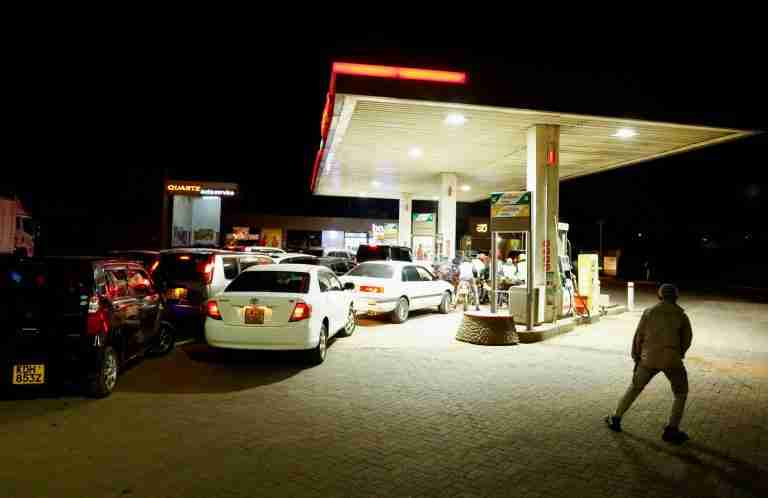
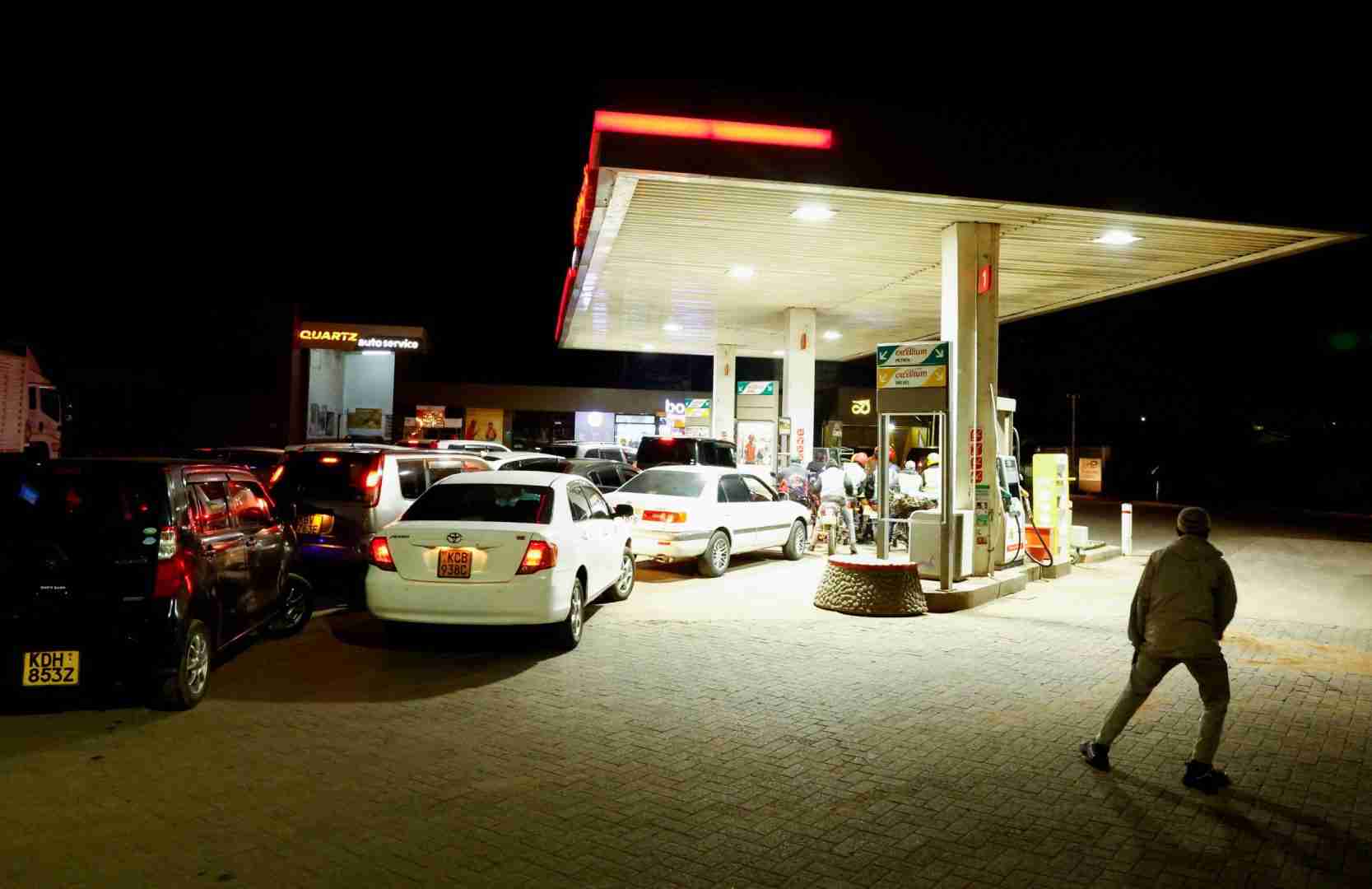
Under the IMF’s worst-case outlook, the global economy teeters on the brink of recession, with oil prices averaging $110 a barrel in 2026 and $125 in 2027
International News via Reuters:
The International Monetary Fund cut its growth outlook on Tuesday due to Middle East war-driven energy price spikes but said the world was already drifting toward a more adverse scenario with much-weaker growth as Strait of Hormuz shipping disruptions continue.
With massive uncertainty over the Middle East conflict gripping finance officials gathered for IMF and World Bank spring meetings in Washington, the IMF presented three growth scenarios: weaker, worse and severe, depending on how the war unfolds.
Under the IMF’s worst-case outlook, the global economy teeters on the brink of recession, with oil prices averaging $110 a barrel in 2026 and $125 in 2027.
The IMF chose the most benign scenario for its World Economic Outlook “reference forecast,” which assumes a short-lived conflict and oil prices normalizing in the second half of 2026, with an $82 per-barrel average for the year – well below Tuesday’s benchmark Brent crude futures price of around $96.00.
Just minutes after releasing the outlook, IMF chief economist Pierre-Olivier Gourinchas said it may be already outdated. He told reporters that with continued energy disruptions and no clear path to end the conflict, the IMF’s “adverse scenario” looks increasingly likely.
That middle path envisions a longer conflict that keeps oil prices around $100 per barrel this year and $75 in 2027, with global growth falling to 2.5% this year from 3.4% in 2025.
“I would say that we are somewhere in between the reference scenario and the adverse scenario,” Gourinchas said. “And of course, every day that passes and every day that we have more disruption in energy, we are drifting closer towards the adverse scenario.”
Absent the Middle East conflict, the IMF said it would have upgraded its growth outlook by 0.1 percentage point to 3.4%, due to a continued technology investment boom, lower interest rates, less-severe U.S. tariffs and fiscal support in some countries.
The IMF in January had forecast that oil would decline to about $62 in 2026.
The IMF’s worst-case “severe scenario” assumes an extended and deepening conflict and much higher oil prices that prompt major financial market dislocations and tighter financial conditions, slashing global growth to 2.0%.
“This would mean a close call for a global recession,” the IMF said, adding that growth has been below that level only four times since 1980 – with the last two severe recessions in 2009, following the financial crisis, and in 2020 as the COVID-19 pandemic raged.
INFLATION PRESSURES
Gourinchas said that a number of countries would be in outright recessions under this scenario, with oil prices averaging $110 per barrel in 2026 and $125 in 2027. Prices at this level for an extended time would also increase expectations “that inflation is here to stay,” prompting wider price increases and wage hike demands.
“That change in inflation expectations is going to require central banks to step on the brakes and try to bring inflation back down,” he said, adding that this may require more pain than in 2022.
The IMF said, however, that central banks may be able to “look through” a short-lived energy price surge and hold rates steady amid weaker activity, which would be a de facto monetary easing, but only if inflation expectations remain anchored.
Global inflation for 2026 would top 6% in the severe scenario, compared to 4.4% in the most-optimistic reference scenario, which is the assumption for the IMF’s country and regional growth forecasts.
MAJOR ECONOMY OUTLOOKS
The IMF shaved its U.S. growth outlook for this year to 2.3%, down just a tenth of a percentage point from January, reflecting the positive effect of tax cuts, the lagged effect of interest rate cuts and continued AI data center investment partly offsetting the higher energy costs. These effects are expected to continue in 2027, with growth now forecast at 2.1%, up a tenth of a point from January.
The euro zone, still struggling with higher energy prices caused by Russia’s 2022 invasion of Ukraine, takes a bigger hit from the Middle East conflict, with its growth outlook falling 0.2 percentage points in both years to 1.1% in 2026 and 1.2% for 2027.
Japan’s growth is largely unchanged under the most benign scenario at a weak 0.7% for 2026 and 0.6% for 2027, but the IMF said that it expects the Bank of Japan to hike rates at a slightly faster pace than anticipated six months ago.
The IMF forecast China’s growth for 2026 at 4.4%, down a tenth of a point from January as the higher energy and commodity costs are partly offset by lower U.S. tariff rates and government stimulus measures. But the IMF said headwinds from a depressed housing sector, a declining labor force, lower returns on investment and slower productivity growth will cut China’s 2027 growth to 4.0%, a forecast unchanged from January.
EMERGING MARKETS, MIDDLE EAST HIT HARD
Overall, emerging market and developing economies, where GDP tends to be more dependent on oil inputs, take a bigger hit from the Middle East conflict than advanced economies, with 2026 growth seen falling 0.3 percentage points to 3.9%.
Nowhere is this more pronounced than at the epicenter of the conflict in the Middle East and Central Asia region, which will see its 2026 GDP growth fall by two full percentage points to 1.9% amid widespread infrastructure damage and sharply curtailed energy and commodity exports.
GDP declines for 2026 are forecast at 6.1% for Iran, 8.6% for Qatar, 6.8% for Iraq, 0.6% for Kuwait and 0.5% for Bahrain.
But under the assumption of a short-lived conflict, the region bounces back quickly, with 2027 GDP growth rebounding to 4.6%, a jump of 0.6 percentage point from the January forecasts.
The one bright spot amid emerging markets is India, which saw growth upgrades of about a tenth of a percentage point to 6.5% for both 2026 and 2027, due in part to momentum from strong growth at the end of last year and a deal to lower the U.S. tariff rate on Indian imports.
FUEL COST FISCAL SUPPORT
The IMF said that governments will be tempted to implement fiscal measures to ease the pain of higher energy prices, including price caps, fuel subsidies or tax cuts, but cautioned against these urges amid still-elevated budget deficits and rising public debt.
Gourinchas said it was “perfectly legitimate” to want to protect the most vulnerable, but subsidies in one country could lead to fuel shortages in others that can’t afford them.
“You have to do it in a very targeted, very temporary way that doesn’t really mess up the fiscal framework” needed by most countries to rebuild their fiscal buffers, he said.
Reporting by David Lawder; Editing by Andrea Ricci
India Vedanta power plant blast kills at least 17

Operations at the 600-megawatt coal plant were suspended after the blast, senior administration official Amrit Vikas Topno told Reuters
International News via Reuters:
At least 17 people died and 36 others were injured following a suspected boiler explosion at a power plant operated by India’s Vedanta Ltd in the central Indian state of Chhattisgarh, a government official said on Wednesday.
Operations at the 600-megawatt coal plant were suspended after the blast, senior administration official Amrit Vikas Topno told Reuters.
The incident took place on Tuesday at Singhitarai, about 230 km (143 miles) away from the state capital of Raipur.
The shutdown of the plant comes as India is poised for a harsher summer. The government has delayed the maintenance of nearly 10 gigawatt of coal plant capacity in the absence of gas supplies due to the Mideast conflict.
The blast was likely caused by overheating in the boiler tube, District Superintendent of Police PK Thakur told Reuters.
In a statement, Vedanta said an “unfortunate incident” had occurred at its Singhitarai plant and that a thorough investigation is underway to determine the cause.
Vedanta said that NTPC GE Power Services operates and maintains the plant.
Vedanta acquired the 1,200 MW coal power plant through a bankruptcy process in 2022. Only 600 MW of the plant has been operational.
Writing by Sethuraman NR, additional reporting by Abhirami G in Bengaluru; Editing by Anil D’Silva, Sherry Jacob-Phillips and Kim Coghill
EU age verification app ready as Europe moves to curb children’s social media access

Following Australia’s groundbreaking social media ban for children launched last year, a growing number of European nations are weighing their own restrictions

International News via Reuters:
The EU’s age verification app for online platforms is ready and will soon be available to use, European Commission President Ursula von der Leyen said on Wednesday, as member states push ahead with plans to limit children’s access to social media.
Following Australia’s groundbreaking social media ban for children launched last year, a growing number of European nations are weighing their own restrictions as concerns mount over social media’s impact on the health and safety of minors.
“We are moving ahead with full speed and determination on the enforcement of our European rules. We are holding accountable those online platforms that do not protect our kids enough,” von der Leyen said at a press conference in Brussels.
The app, which will be compatible with both mobile devices and computers, will require users to upload their passport or ID card to confirm their age anonymously, she said.
“This app gives parents, teachers, caretakers a powerful tool to protect children, because we will have zero tolerance for companies that do not respect our children’s rights,” von der Leyen added.
At least a dozen European countries, including Britain and Norway, have enacted or are considering legislation setting minimum age limits – typically between 13 and 16 years – for social media usage.
Speaking at the same press conference, Henna Virkkunen, the EU’s digital chief, said the bloc plans to establish a European coordination mechanism to ensure age verification is implemented across the various national schemes.
While no EU-wide binding legislation has been adopted yet, the European Parliament approved a resolution report in November calling for a minimum age of 16 for social media access across all member states.
The Commission has been developing a harmonised digital verification system since last year.
Reporting by Gianluca Lo Nostro; Editing by Bart Meijer and Joe Bavier
Britain calls for international effort to stop arms flow to Sudan at Berlin conference
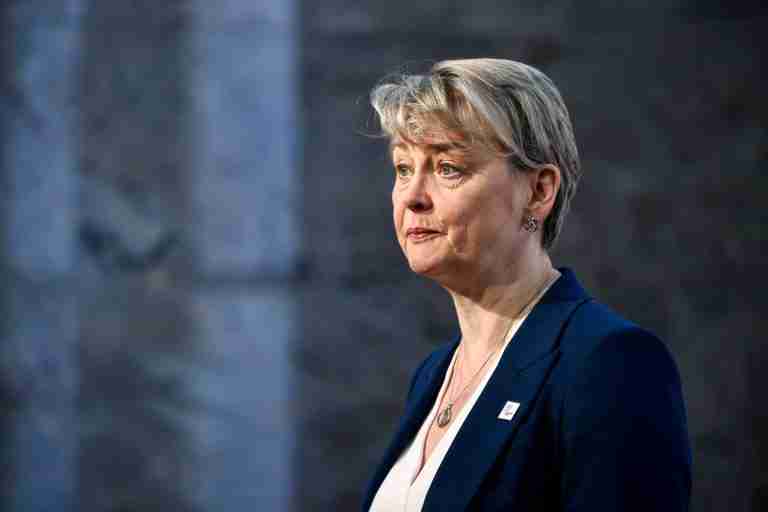
“Countries from across the world are coming together here in Berlin to discuss the way, frankly, the international community has failed the people of Sudan,” British Foreign Minister Cooper said on Wednesday
International News via Reuters:
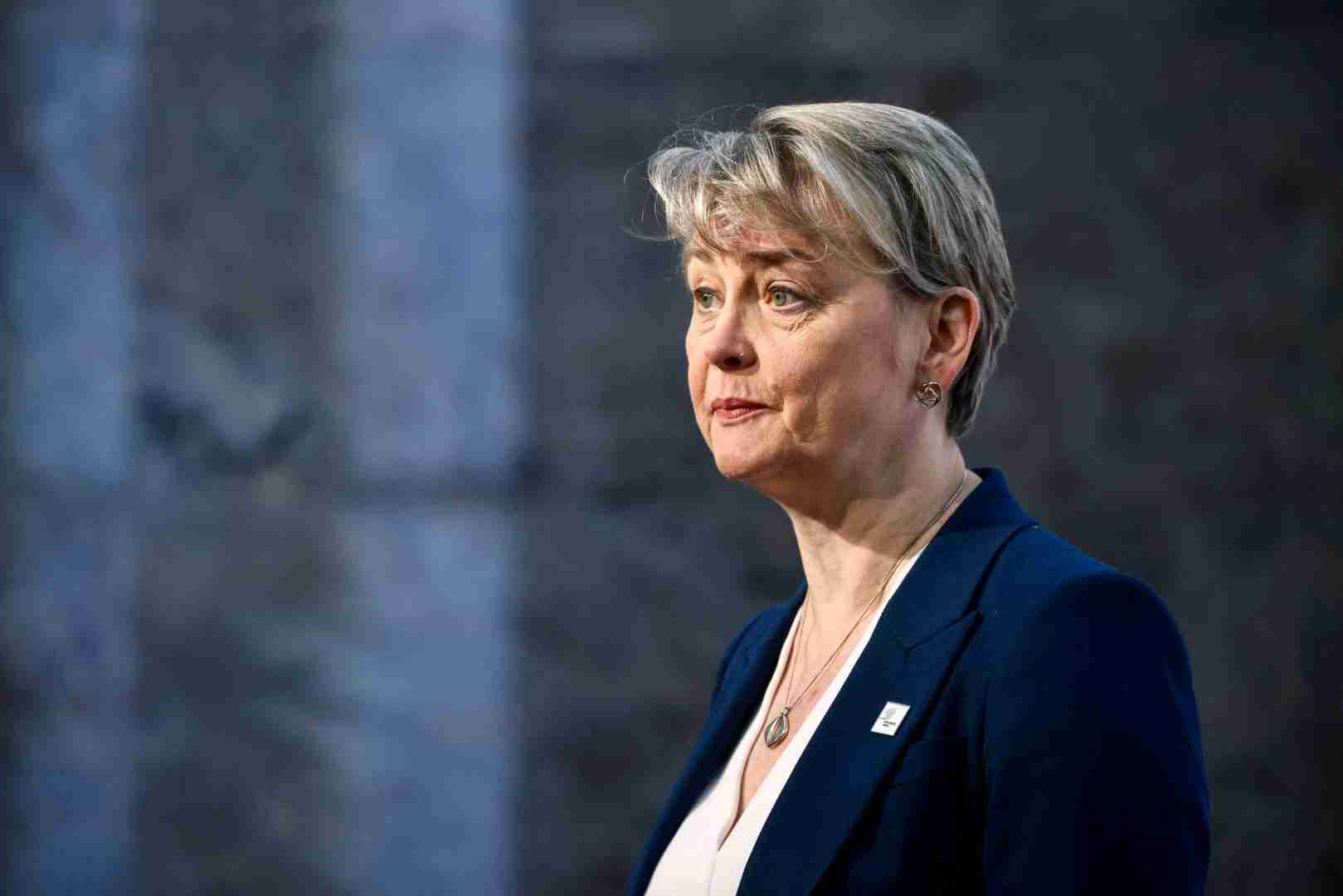
The international community has failed in Sudan, British Foreign Minister Yvette Cooper said on the sidelines of a Berlin conference on the war in the country, as she called for an international concerted effort to stop the arms flow.
“Countries from across the world are coming together here in Berlin to discuss the way, frankly, the international community has failed the people of Sudan,” Cooper said on Wednesday.
“We need to ensure that every possible pressure is put on those warring parties to reach the urgent ceasefire that we desperately need to see,” she said, as she reiterated the need for humanitarian support.
Reporting by Alexander Ratz, writing by Linda Pasquini, Editing by Madeline Chambers
Pope Leo, attacked again by Trump, flies to Cameroon on Africa tour

Leo, who was attacked again overnight by U.S. President Donald Trump over the pope’s opposition to the Iran war, will arrive from Algeria, where he blasted violations of international law by “neocolonial” world powers

International News via Reuters:
Pope Leo set off for Cameroon on Wednesday, where he is expected to appeal for peace in the simmering conflict in the country’s English-speaking regions on the second leg of an ambitious 10-day tour of four African countries.
Leo, who was attacked again overnight by U.S. President Donald Trump over the pope’s opposition to the Iran war, will arrive from Algeria, where he blasted violations of international law by “neocolonial” world powers.
Leo left Algiers on Wednesday morning and was expected to land in Yaounde, Cameroon’s capital, around 3:20 p.m. (1420 GMT), ahead of a meeting with President Paul Biya and an address to national leaders.
Cameroon is a former German colony that was divided by Britain and France after World War One. Over the last decade, thousands have died in violence between government forces and separatist groups in its two anglophone regions.
A separatist alliance said on Monday it would observe a three-day “safe travel passage” to allow civilians and visitors to move freely during the pope’s visit.
Leo, originally from Chicago, was chosen to lead the 1.4 billion-member Catholic Church last May after the death of Pope Francis.
He kept a relatively low profile in his first 10 months, but in recent weeks has become outspoken on a range of issues, and a firm critic of the U.S.-Israeli war against Iran.
POPE TRAVELLING NEARLY 18,000 KM ON AFRICA TOUR
Trump called the pontiff “terrible” on social media on Sunday, and doubled down on Tuesday night, despite widespread backlash from U.S. Christians across the political spectrum.
The pope told Reuters on Monday that he planned to keep criticizing the war, regardless of Trump’s comments.
Leo, aged 70, relatively young for a pope and in good health, is undertaking one of the most complicated tours arranged for a pontiff in decades.
He is traversing nearly 18,000 km (11,185 miles) over 18 flights to 11 cities and towns and will also visit Angola and Equatorial Guinea.
The pope will travel on Thursday to Bamenda, Cameroon’s largest English-speaking city, holding Mass and a “meeting for peace” in a cathedral.
The biggest event of Leo’s tour will likely come in Cameroon on Friday, when the Vatican said some 600,000 are expected for a Mass in the coastal city of Douala.
Reporting by Joshua McElwee; Editing by Robbie Corey-Boulet and Alex Richardson
London’s FTSE 100 flat as banks limit healthcare gains; Mideast in focus
The blue-chip FTSE 100 index was flat at 10,611.03 points by 0957 GMT, while the midcap FTSE 250 slipped 0.1%
International News via Reuters:
London’s FTSE 100 was muted on Wednesday as declines in heavyweight financials and energy stocks limited gains in healthcare stocks, while investors cautiously awaited developments in the Middle East conflict.
The blue-chip FTSE 100 index was flat at 10,611.03 points by 0957 GMT, while the midcap FTSE 250 slipped 0.1%.* Investors assessed conflicting signals around the Iranconflict as U.S. President Donald Trump said peace talks couldresume this week even as Washington halted Tehran’s maritimetrade. * Oil prices were little changed on Wednesday, holding below$100 a barrel. British energy stocks inched 0.1% lower. * Financial stocks were the biggest drags on the FTSE 100,with banks down 0.4% and life insurers off 0.8%. HSBC andPrudential shed 0.6% and 1.8%, respectively. * On the flip side, healthcare stocks gained, withAstraZeneca up 1%. * The personal goods sector was the biggest percentagedecliner, dragged by a 1.3% drop in Burberry after results frompeers Kering and Hermes disappointed investors. * Comments from Bank of England Governor Andrew Bailey willbe parsed later in the day. * Investors also turned their attention to corporate updatesand earnings to see how companies approach tackling headwindsfrom the Middle East conflict. * Antofagasta topped the FTSE 100 with a 2.9% gain after itsaid copper production was expected to rise quarter-on-quarterthrough the year * Saga climbed 10.7% after the over-50s holiday andinsurance group said it was ahead of schedule to reach itsmedium-term profit targets. * Britain’s largest homebuilder Barratt Redrow slashed itsland spending and approval targets, but its shares were 1.6%higher.
Reporting by Purvi Agarwal in Bengaluru
Sterling steadies; risks from war to UK economy build

Sterling’s strength could prove short-lived, however, given how the war has complicated the outlook for UK growth and inflation, analysts said
International News via Reuters:
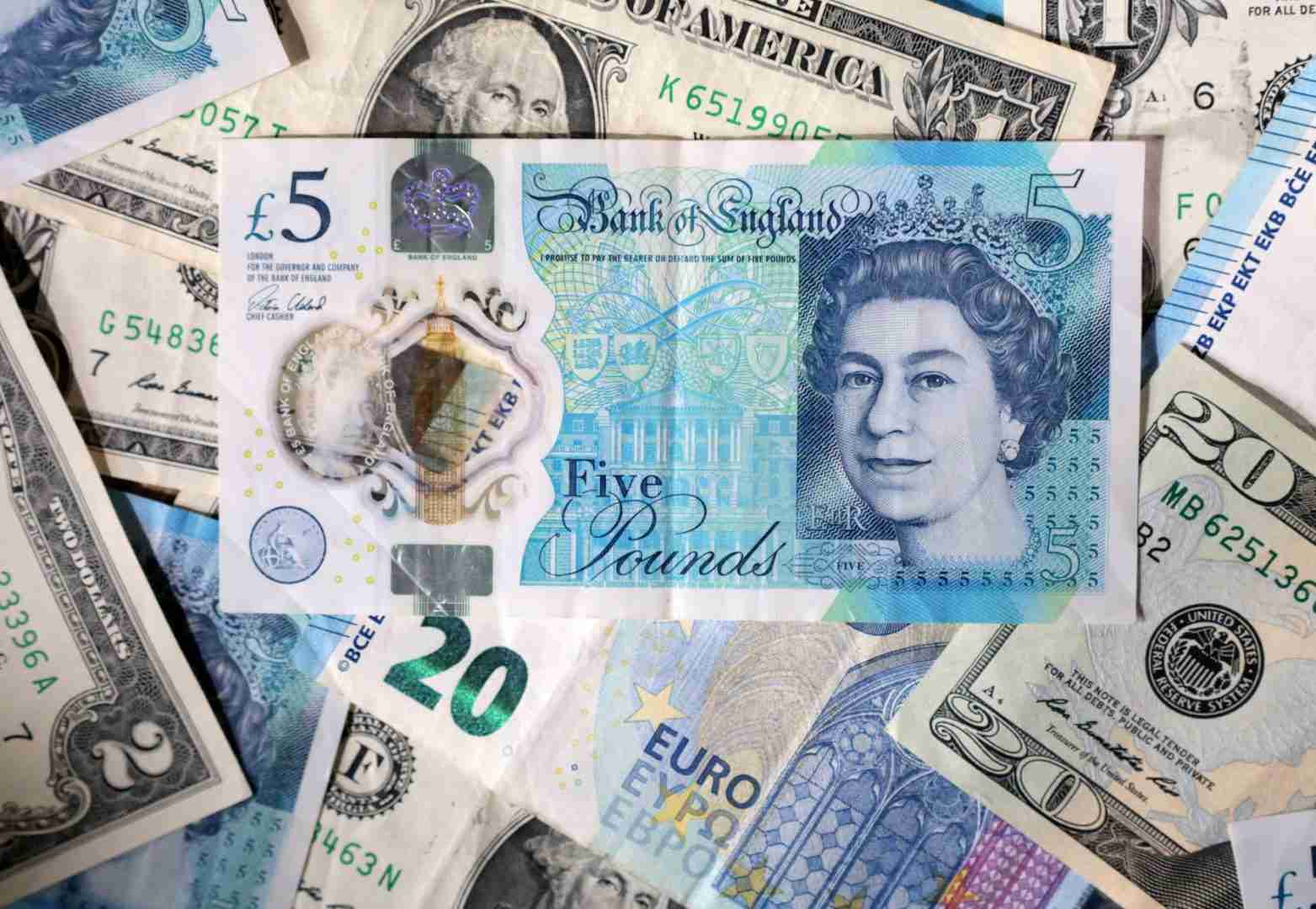
The pound on Wednesday took a breather from its longest stretch of gains in a year, dipping against the dollar after a swell of investor optimism over a possible resolution to the Iran war pushed the safe-haven greenback to six-week lows.
Sterling’s strength could prove short-lived, however, given how the war has complicated the outlook for UK growth and inflation, analysts said.
Britain suffered the sharpest cut among large rich countries to economic growth forecasts by the International Monetary Fund due largely to the Iran war. The IMF said on Tuesday that Britain’s economy was now on course to grow by only 0.8% in 2026, down from a previous projection of 1.3%, the biggest downgrade made by the Fund for any Group of Seven nation.
Sterling was last steady at $1.357, having staged a near-unbroken 3% rally since hitting four-month lows at the end of March. The pound had gained for seven days in a row, the longest such stretch since last April’s 10-day run.
Because of the UK’s dependence on imports of natural gas in particular, the price of which has shot up 40% since the war started, British government borrowing costs have risen in tandem, making its two-year bonds the worst-performing of any major economy, with a rise of nearly 70 basis points since late February to 4.2%.
As such, traders rushed to price in the prospect of Bank of England rate rises this year. But, as optimism grows for some kind of resolution to the worst of the disruption to oil flows through the Strait of Hormuz, some of that pricing has moderated, paving the way for sterling losses, analysts said.
“All in all, the latest developments keep us confident with our call that front-end rates have further to fall in the UK than the euro zone and that should offer lasting support to euro/sterling beyond the near-term,” ING strategist Francesco Pesole said in a note.
“…The pair is suffering a bit from improved risk sentiment, but rate differentials will return as primary drivers once the dust has settled.”
The euro is still showing a near-1% loss against the pound since the start of the war, and on Wednesday was flat at 86.94 pence.
Bank of England interest rate-setter Megan Greene, among the policymakers most worried about price pressures prior to the war, said on Tuesday it could take months to see how much long-lasting damage is caused to Britain’s economy by the energy price spike and that upside risks to inflation were “paramount” to her thinking.
“We can’t wait to have all the definitive data showing that there are second-round effects because then we will be too late already, so it will have to be a judgment call,” she said.
Reporting by Amanda CooperEditing by Peter Graff
