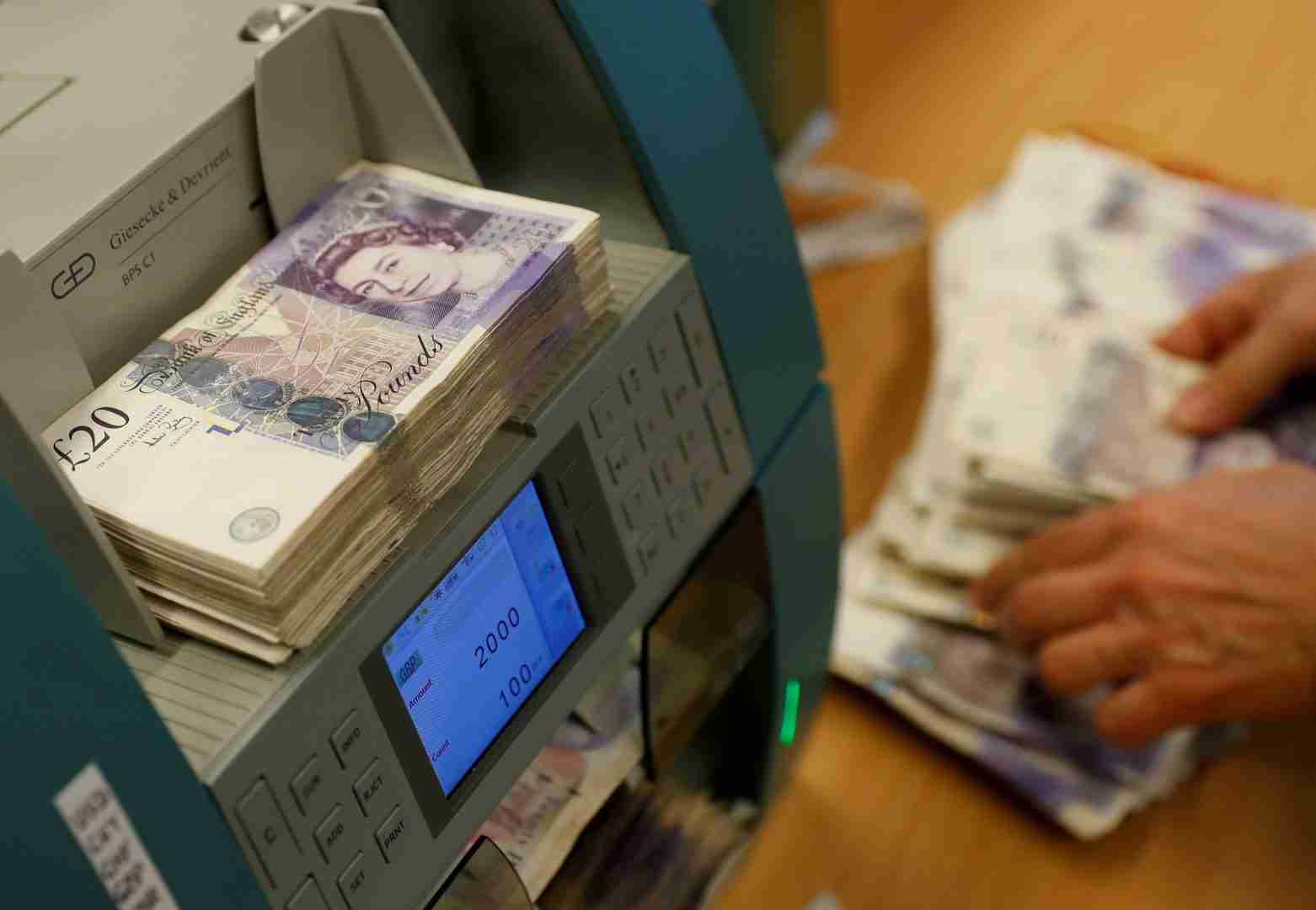
The student loan system in England and Wales has drawn criticism and Prime Minister Keir Starmer said in February he would look at ways to make it fairer
International News via Reuters:
Britain said on Tuesday it would cap interest rates on millions of student loans at 6% from September 2026, saying conflict in the Middle East risked pushing up inflation and sharply increasing borrowing costs for graduates.
The student loan system in England and Wales has drawn criticism and Prime Minister Keir Starmer said in February he would look at ways to make it fairer.
The government has been accused by some lawmakers, including in his own Labour Party, of ripping off graduates with inflated interest charges and unfavourable repayment conditions.
The Department for Education said on Tuesday the cap on so-called plan 2 and plan 3 student loans would apply for the 2026/27 academic year, overriding a formula that links interest rates to inflation and allows charges of up to the Retail Prices Index (RPI) plus 3 percentage points.
‘BROKEN’ SYSTEM
The government said intervention was necessary to protect borrowers from temporary inflation spikes caused by global shocks and graduates should not bear higher debt costs stemming from the war.
“Capping the maximum interest rate on plan 2 and plan 3 student loans will provide immediate protection for borrowers, supporting those who are most exposed within this already unfair system,” said Jacqui Smith, the skills minister in the Department for Education.
She said the government would continue to look at what she called the “broken” plan 2 system to make it fairer.
Most criticism has focused on plan 2 loans, taken out by students who began university between September 2012 and July 2023. These loans are held by an estimated 5.8 million people.
Tuition fees have been capped at 9,535 pounds ($12,657) in England and Wales in the current academic year.
Graduates with plan 2 loans currently pay interest ranging from RPI to RPI plus 3%, depending on earnings. Students on plans 2 and 3 accrue interest at RPI plus 3% while studying.
If not repaid after 30 years, the debt is cancelled.
($1 = 0.7533 pounds)
Reporting by Sam Tabahriti; Editing by Andrew Cawthorne
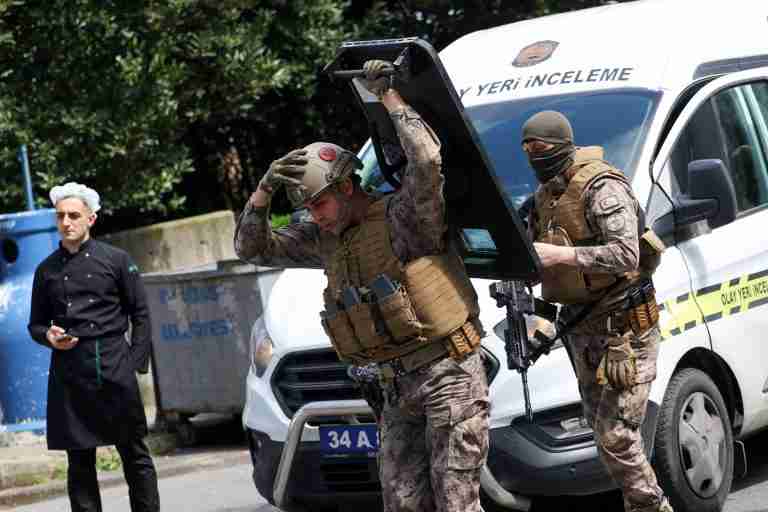
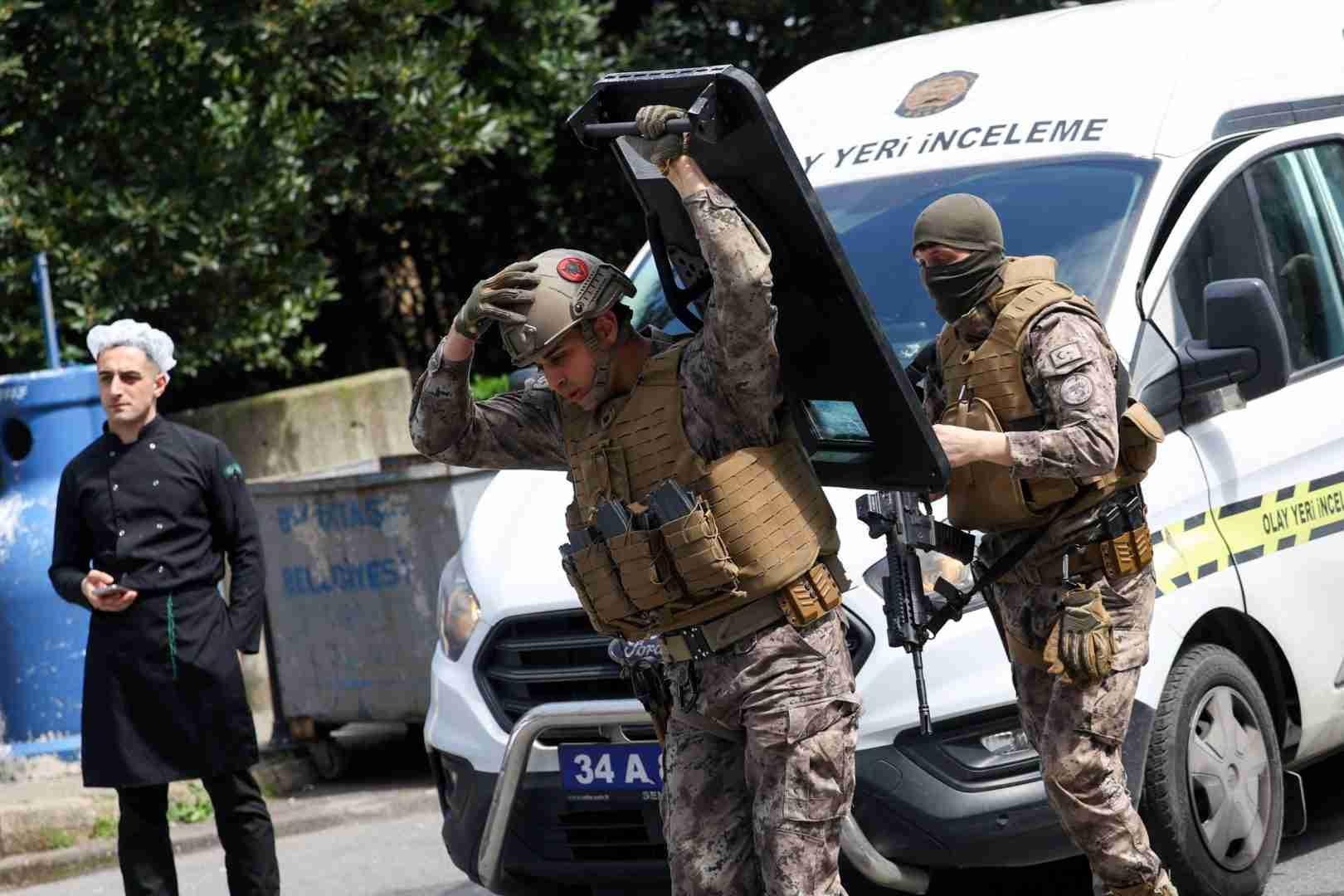
Media reported that two police officers had been injured in the incident, which occurred immediately outside a tower where the Israeli consulate is located in Istanbul’s financial district
International News via Reuters:
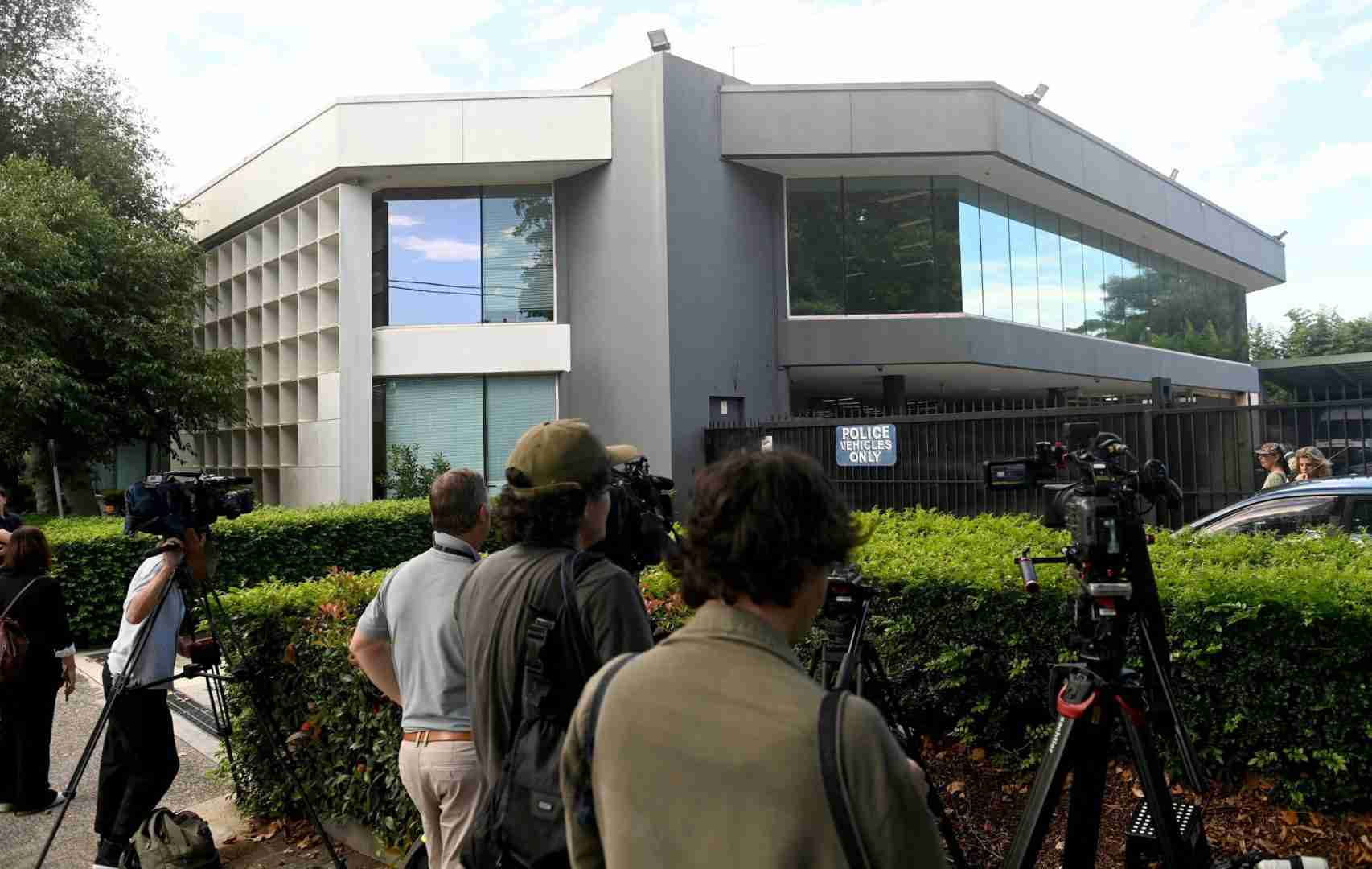
At least two attackers were killed and one was seriously injured in an extended gun battle between police and assailants directly outside the building housing the Israeli consulate in Istanbul on Tuesday, according to media reports and Reuters video.
Reuters video showed police officers pulling out guns and taking cover as shots rang out for at least 10 minutes. One person was covered in blood.
Other footage obtained by Reuters showed an apparent attacker moving among parked white police and security buses and firing over several minutes with an automatic rifle and handgun. Two bodies lay on nearby streets and grassy areas.
Media reported that two police officers had been injured in the incident, which occurred immediately outside a tower where the Israeli consulate is located in Istanbul’s financial district.
Since the Hamas-Israel war began in 2023, a heavily armed police presence has been maintained in the area near the Israeli consulate.
A source with knowledge of the matter said there were no Israeli diplomats stationed in Turkey at present.
Reporting by Emin Caliskan and Bulent Usta; Writing by Daren Butler; Editing by Kevin Liffey and Jonathan Spicer
The war has triggered the worst-ever disruption in global energy supply, with millions of barrels of oil production shuttered due to Iran’s effective blockage of the Strait of Hormuz
International News via Reuters:
The war in the Middle East will lead to higher inflation and slower global growth, the head of the International Monetary Fund told Reuters on Monday, ahead of a forecast for the world economy planned by the global lender for next week.
The war has triggered the worst-ever disruption in global energy supply, with millions of barrels of oil production shuttered due to Iran’s effective blockage of the Strait of Hormuz, crucial for shipping one-fifth of the world’s oil and gas. Even if the conflict is swiftly resolved, the IMF is set to reduce its forecast for economic growth and bump up its outlook for inflation, Kristalina Georgieva, managing director of the IMF, said.
The war is expected to dominate discussions among finance officials from around the world at next week’s spring meetings of the IMF and World Bank in Washington.
The Fund is expected to release a range of scenarios in its upcoming World Economic Outlook due on April 14. It signaled a possible downgrade in a March 30 blog post, citing the asymmetric shock of the war and tighter financial conditions. Without the war, Georgieva said the IMF had expected a small upgrade in its projection for global growth of 3.3% in 2026 and 3.2% in 2027 as economies continue to recover from the pandemic.
“Instead, all roads now lead to higher prices and slower growth,” said Georgieva, who will preview the spring meetings in a speech on Thursday. World Bank President Ajay Banga will present his view at an Atlantic Council event on Tuesday.
“We are in a world of elevated uncertainty,” the IMF chief said, citing geopolitical tensions, technological advancements, climate shocks and demographic shifts. “All of this means that after we recover from this shock, we need to keep our eyes open for the next one.”
The war has shrunk global oil supply by 13%, Georgieva said, with the impact rippling through oil and gas shipments and into related supply chains such as helium and fertilizers.
Even a rapid end to hostilities and a fairly rapid recovery will result in a “relatively small” downward revision of the growth forecast and an upward revision of its inflation forecast, she said. If the war is protracted, the effect on inflation and growth will be greater.
POOR COUNTRIES WILL BE HIT HARDEST
Poor, vulnerable countries with no energy reserves will be hardest hit, Georgieva added, noting that many countries had little to no fiscal space to help their populations weather the price increases caused by the war, which in turn also increased the prospects of social unrest.
Georgieva said some countries had already asked for funding help, but did not name them. She said the IMF could augment some existing lending programs to meet countries’ needs. Eighty-five percent of the IMF’s members are energy importers.
Broad energy subsidies were not the answer, she said, urging policymakers to avoid government payments that could further inflame inflationary pressures.
The impact has been asymmetric, hitting energy-importing countries hardest, but even energy exporters such as Qatar are feeling the effect from Iranian strikes against their production facilities.
Qatar expects it will take three to five years to restore 17% of its natural gas production because of the damage, Georgieva said, while the International Energy Agency has reported 72 energy facilities have been damaged in the war, one-third of which have suffered significant damage.
“Even if the war is to stop today, there would be a lingering negative impact to the rest of the world,” she said.
FOOD SECURITY A CONCERN
After the U.S. and Israel attacked on February 28, Iran effectively closed the Strait of Hormuz, sending the price of crude oil and liquefied natural gas sharply higher. The international Brent crude benchmark settled near $110 on Monday, with cash benchmarks sourced to the Middle East at a substantial premium to that price.
The heads of the IMF, IEA and World Bank said last week they would form a coordinated effort to assess the energy and economic effects of the war.
Georgieva said the IMF was also engaging with the United Nations’ World Food Programme and Food and Agriculture Organization on food security.
The World Food Programme said in mid-March that millions of people will face acute hunger if the war continues into June. Georgieva said the IMF did not see a food crisis yet, but that could happen if the delivery of fertilizers was impaired.
Reporting by Andrea Shalal; Editing by David Gaffen, Rod Nickel
The six-hour survey of the normally hidden hemisphere of Earth’s only natural satellite was highlighted by the astronauts’ direct visual observations of “impact flashes” from meteors
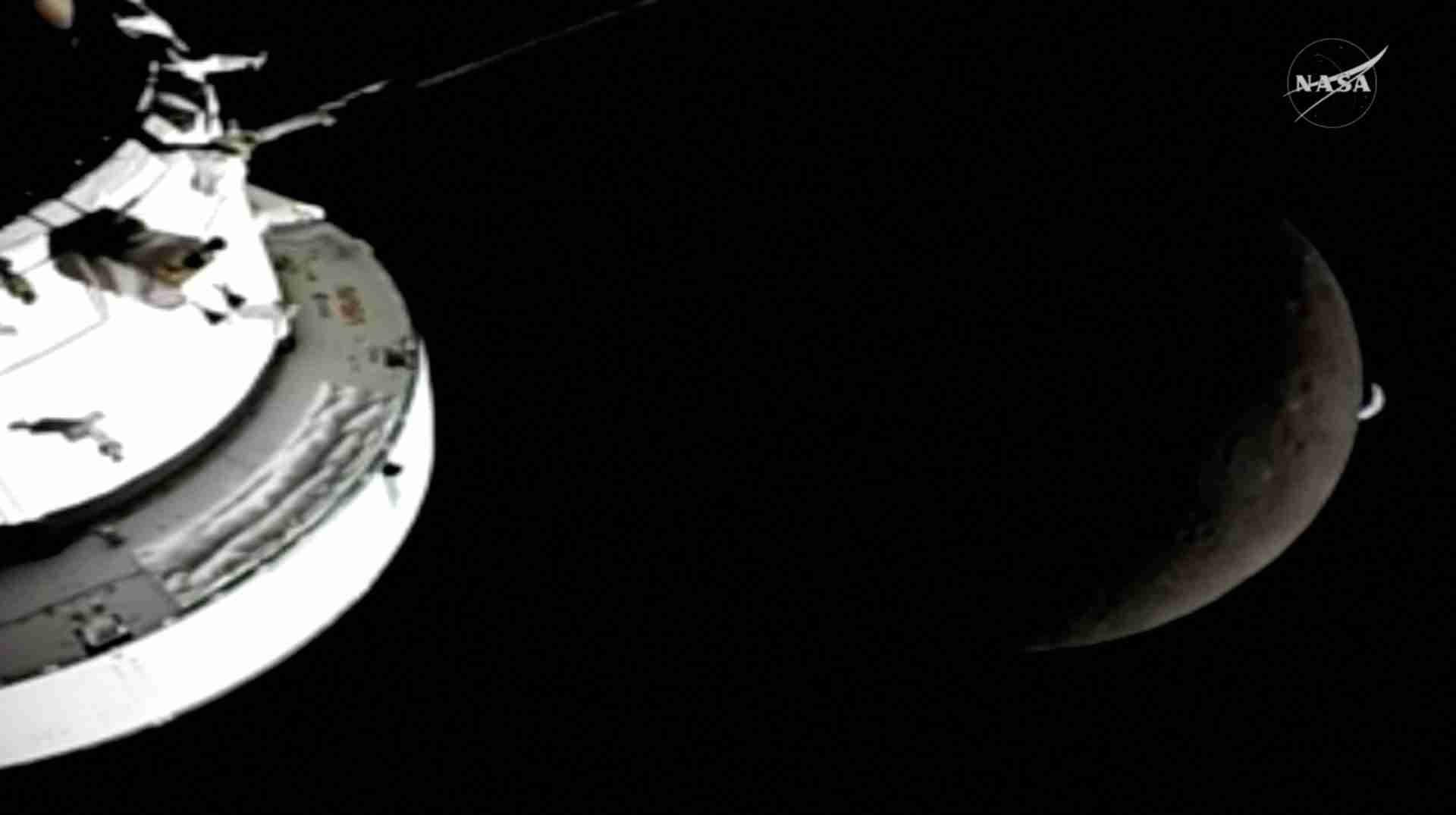
A view of the Moon and the Earth as the Artemis II mission’s Orion spacecraft approaches to reach its furthest distance from Earth, in this screengrab taken from a livestream video on April 6, 2026. NASA/Handout via REUTERS
International News via Reuters:
The four astronauts of NASA’s Artemis II mission flew deeper into space on Monday than any humans before them, as they cruised through a rare flyby of the shadowed far side of the moon that revealed a lunar surface under cosmic bombardment.
The six-hour survey of the normally hidden hemisphere of Earth’s only natural satellite was highlighted by the astronauts’ direct visual observations of “impact flashes” from meteors pelting the darkened and heavily cratered lunar surface.
About two dozen scientists packed a conference room adjacent to mission control at NASA’s Johnson Space Center in Houston to record the lunar phenomena witnessed by the Artemis crew in real time as their Orion spacecraft, about the size of an SUV, sailed around the moon roughly a quarter million miles (402,000 km) from Earth.
The six-hour flyby, which swooped to within 4,070 miles of the lunar surface, came six days into a spaceflight marking the world’s first voyage of astronauts to the vicinity of the moon since NASA’s Cold War-era Apollo missions more than half a century ago.
Six of those missions landed two-man teams on the moon between 1969 and 1972 – the only 12 humans ever to walk on its surface.
Artemis, a successor to the Apollo program, aims to repeat that achievement by 2028, ahead of China’s first landing, and to establish a long-term U.S. lunar presence over the next decade, including a moon base to serve as a proving ground for potential future missions to Mars.
While designed as a crewed dress rehearsal for future lunar excursions, Artemis II generated a wealth of new material for lunar scientists to study, including meteor impact flashes recorded during Monday’s flyby that were reminiscent of sparks and streaks of light described by some of Apollo’s astronauts.
The Artemis II crew, riding in their Orion capsule since launching from Florida last week, began their sixth day of spaceflight as they awoke on Monday to a pre-recorded message from the late NASA astronaut Jim Lovell, who flew aboard the Apollo 8 and Apollo 13 moon missions.
“Welcome to my old neighborhood,” said Lovell, who died last year at age 97. “It’s a historic day, and I know how busy you’ll be, but don’t forget to enjoy the view… good luck and Godspeed.”
Hours later, the crew consisting of U.S. astronauts Reid Wiseman, Victor Glover and Christina Koch along with Canadian astronaut Jeremy Hansen, made spaceflight history by venturing farther from Earth than any humans have before, at 252,756 miles.
The previous record, roughly 248,000 miles, was set in 1970 by Apollo 13 after a nearly catastrophic spacecraft malfunction cut short that mission, forcing Lovell and his two crewmates to use the moon’s gravity to help return them safely to Earth.
NAMING CRATERS
En route to the far side of the moon, the Artemis astronauts spent some time assigning provisional new names to lunar features that previously lacked official designations.
In a radio message to mission control in Houston, Hansen suggested one crater be dubbed Integrity, after the name given to the crew’s Orion capsule, and that another be named in honor of Wiseman’s late wife, Carroll, who died of cancer in 2020.
“A number of years ago we started this journey, our close-knit astronaut family, and we lost a loved one,” Hansen said of the mission commander’s late spouse, his voice choking with emotion as he described the position of her lunar namesake. “It’s a bright spot on the Moon, and we would like to call that Carroll.”
Hansen later said the crew had viewed a number of lunar features that “no human has ever seen before, not even in Apollo.”
As Orion hurtled around the moon’s far side, the astronauts photographed a rare moment in which Earth, dwarfed by their record-breaking distance from the planet, set and rose with the lunar horizon as they swung around the moon, a striking celestial reversal of the rising and setting moon typically seen from Earth.
Because the moon rotates at the same speed as it revolves around the Earth, its far side always faces away from our planet and only the Artemis and Apollo astronauts have ever gazed directly on its surface.
RARE DETAILED PHOTOS
Monday’s lunar flyby plunged the crew into darkness and a 40-minute communications blackout as the moon blocked them from NASA’s Deep Space Network, a global array of massive radio communications antennas the agency has been using to talk to the crew.
Following the flyby, U.S. President Donald Trump congratulated the four crew members on an audio link from the White House as they appeared on camera by live satellite feed from space.
“Today, you’ve made history and made all America really proud, incredibly proud,” Trump said. “You’ve really inspired the entire world. Really, everybody’s watching.”
Koch told Trump that one of her most unforgettable moments of the flyby was “coming back from the far side of the moon and having the first glimpses of planet Earth again.”
Asked by the president how they felt when all communication with Earth was cut off as Orion flew behind the moon, Glover answered, “I said a little prayer, but then I had to keep rolling.”
Reporting by Joey Roulette in Houston and Steve Gorman in Los Angeles; Editing by Don Durfee, Aurora Ellis, Bill Berkrot and Jamie Freed
Montreal-based IFALPA said airlines should recognize how conflict zone operations can create mental and emotional strain in the cockpit
International News via Reuters:
Pilots must be given a “final and non-negotiable” say allowing them to refuse to fly over or within conflict zones without influence from commercial pressures, global union group International Federation of Air Line Pilots’ Associations (IFALPA) said.
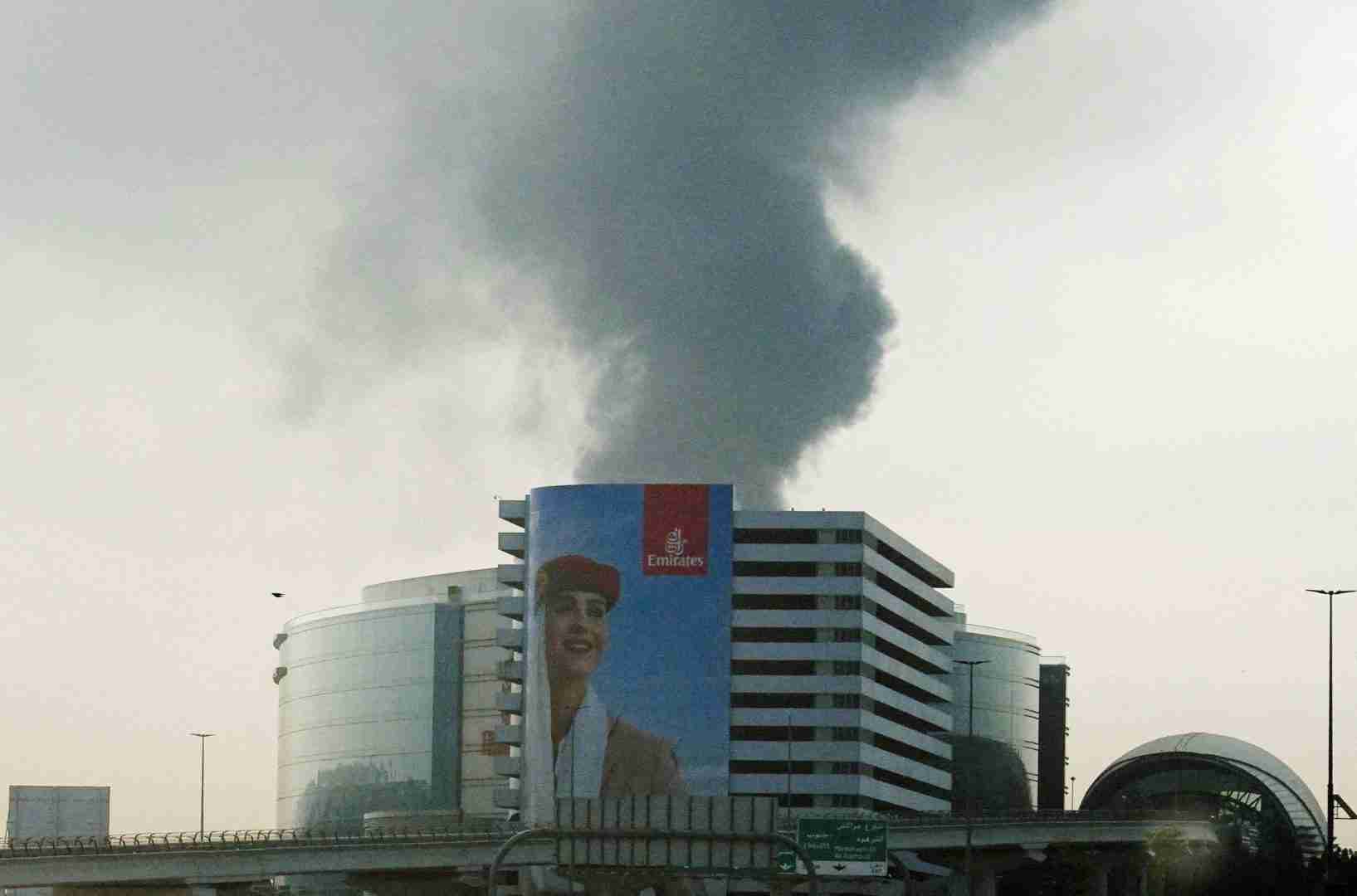
The position paper on Monday from IFALPA comes as the six-week-long Iran war is reshaping airspace across the Middle East and increasing disruptions to flights due to drone and missile attacks and interceptions, heightening safety risks for airline crew members and their passengers.
Montreal-based IFALPA said airlines should recognize how conflict zone operations can create mental and emotional strain in the cockpit.
“The Commander’s decision regarding the conduct or rerouting of a flight, including refusal to overfly a conflict zone, must be final and non-negotiable,” the paper said. “Additionally, this decision must not be influenced by financial or other incentives, career repercussions or other penalties, or commercial pressures.”
While many carriers have canceled services to affected destinations, Dubai-based Emirates is now operating at about 69% of its normal capacity and Qatar Airways at 26%, according to Flightradar24 data. That equates to hundreds of flights per day in airspace that has been targeted by Iranian missiles and drones.
The United Arab Emirates has instituted “safe corridors” with specific flight paths, but planes still regularly enter holding patterns during attacks and in some cases have been turned back or diverted to other destinations when airspace was closed temporarily.
Qatar Airways said “the safety of our passengers and crew remains paramount” and all flights to and from Doha were being operated through dedicated flight corridors established in close coordination with the Qatar Civil Aviation Authority.
Emirates, which has also said it prioritizes safety, did not respond immediately to a request for comment.
The IFALPA paper said airlines needed to provide pilots operating in conflict zones with mitigation measures like post-flight recuperation time and confidential support.
“If rerouting, delay, holding, elevated workload, diversion complexity, or sector uncertainty are recurrent and foreseeable, they should be incorporated into scheduling assumptions, fatigue controls, and roster buffers with additional safety margins such as augmented crew rostering, rather than repeatedly managed as an ad hoc exception,” it said.
Separately on Monday, the United Nations aviation agency said its governing council condemned Iran for unlawful airspace violations against Gulf neighbors like the UAE, Qatar and Saudi Arabia affecting civil aviation safety.
“The council deplored Iran’s illegal use of unmanned aircraft systems for military purposes against civilian infrastructure over the territories of the affected member states,” the International Civil Aviation Organization said in a statement.
The council’s decision follows a paper submitted by multiple Arab states over Iran’s use of weaponized drones against its neighbors, a source familiar with the matter said.
Iran has submitted a separate paper regarding its territory that is to be heard during a future council session, although the source was not familiar with specific details.
Reporting by Allison Lampert in Montreal; Editing by Jamie Freed
He was charged with five counts of war crimes in connection with the murder of five people in Afghanistan between 2009 and 2012, Australian Federal Police said
International News via Reuters:
Australia’s most decorated soldier was arrested on Tuesday and charged with five counts of war crimes relating to the killing of unarmed civilians while on deployment in Afghanistan.
Police said a 47-year-old former Australian Defence Force member had been arrested at Sydney Airport. Court records named the man as Ben Roberts-Smith.
He was charged with five counts of war crimes in connection with the murder of five people in Afghanistan between 2009 and 2012, Australian Federal Police said. The maximum penalty for each charge is life imprisonment.
“It will be alleged the victims were not taking part in hostilities at the time of their alleged murder in Afghanistan,” AFP Commissioner Krissy Barrett told a press conference.
“It will be alleged the victims were detained, unarmed and were under the control of ADF members when they were killed.”
Police will also allege the victims were shot by the accused or shot by subordinates acting on his orders and in his presence, she said.
The AFP said he had been denied bail and would appear in court for a bail hearing on Wednesday.
Roberts-Smith was hailed as a national hero after being awarded several top military honours, including the Victoria Cross, for his actions during six tours in Afghanistan from 2006 to 2012.
He has consistently denied allegations of wrongdoing during his service, some of which were first reported by Nine Entertainment newspapers in a series of articles starting in 2018.
Among the accusations reported were that Roberts-Smith had shot dead an unarmed Afghan teenager and kicked a handcuffed man off a cliff before ordering him to be shot dead.
Roberts-Smith, a former member of Australia’s Special Air Service Regiment (SAS), unsuccessfully challenged the reports in what became Australia’s most expensive defamation trial, with a Federal Court judge ruling in 2023 the newspapers proved four of the six murder accusations they levelled. A final appeal bid was dismissed by the High Court in September 2025.
A 2020 report found credible evidence that members of the SAS killed dozens of unarmed prisoners in the lengthy Afghan war.
An investigation into the SAS soldier by the federal police and the Office of the Special Investigator, set up to examine allegations of war crimes by ADF members in Afghanistan, was opened in 2021.
Ross Barnett, director of investigations at the OSI, said the process was complex and time-consuming because authorities were unable to go to Afghanistan to see the alleged crime scenes.
“We don’t have access to the crime scenes, we don’t have photographs, site plans, measurements, the recovery of projectiles, blood-spatter analysis, all of those things we would normally get at a crime scene,” he said at the press conference.
The joint OSI-AFP has held 53 investigations involving allegations of war crimes by ADF members in Afghanistan, with 10 ongoing. Another former special forces soldier is due to face trial for war crime murder next February, the OSI said.
“If the evidence leads to other people needing to be charged, you can be assured that will happen,” Barnett added.
Amnesty International said Roberts-Smith’s arrest was a “critical step toward global justice and accountability efforts”.
“Australian authorities must now ensure all credible allegations are fully investigated and, where appropriate, prosecuted,” said Zaki Haidari, Amnesty International Australia strategic campaigner.
Police footage showed officers escorting Roberts-Smith off a flight upon arrival at Sydney Airport and into a police car waiting on the tarmac.
Local media reported that he had travelled to Sydney from Brisbane with his girlfriend and two teenage daughters.
Roberts-Smith’s lawyer for his defamation trial did not respond to a request for comment.
Reporting by Christine Chen in Sydney; Editing by Lincoln Feast, Raju Gopalakrishnan and Hugh Lawson
The S&P Global euro zone Composite Purchasing Managers’ Index fell to 50.7 in March from 51.9 in February, but was slightly higher than a preliminary estimate of 50.5
International News via Reuters:
The euro zone’s private sector expansion weakened sharply in March as the Middle East war drove up energy costs and disrupted supply chains, with overall demand – a key gauge for economic health – falling for the first time in eight months, a survey showed on Tuesday.
The S&P Global euro zone Composite Purchasing Managers’ Index fell to 50.7 in March from 51.9 in February, but was slightly higher than a preliminary estimate of 50.5. PMI readings above 50.0 indicate growth in activity.
“March’s PMI indicates that the euro zone economy has already been hit hard by the war in the Middle East,” said Chris Williamson, chief business economist at S&P Global Market Intelligence.
New business declined in March after improving steadily since July, dragged down by weaker demand for services. Overall export orders also fell again, with international services demand recording its steepest drop in six months.
The encouraging signs of growth seen earlier in the year have been eradicated thanks to surging energy prices, choked supply chains, financial market volatility and a renewed downturn in demand, Williamson added.
Services activity barely rose, with the business activity index sliding to 50.2 from 51.9 in February – its weakest reading in 10 months. Manufacturing output growth remained solid.
Spain led the growth among the major economies, while France and Italy contracted. Germany’s expansion slowed to its weakest pace so far this year.
Employment declined while business confidence dropped, raising concerns about future hiring and investment.
Input cost inflation surged to its highest in slightly more than three years, with manufacturing seeing a record one-month jump. Firms raised prices charged to customers at the fastest pace since February 2024, though the increase was more modest than the spike in their own costs.
Headline inflation in the bloc jumped above the European Central Bank’s 2% target last month, hitting 2.5% from 1.9% as soaring oil and gas prices intensified the dilemma between safeguarding growth and curbing inflation.
The survey’s signal for first-quarter gross domestic product growth was 0.2%, with a risk of contraction this quarter unless the Middle East conflict is resolved swiftly.
Reporting by Jonathan Cable; Editing by Hugh Lawson
Britain is highly exposed to energy imports and investors remain nervous about the country’s fragile public finances
International News via Reuters:
Sterling edged higher on Tuesday but remained near early-March levels against the euro and close to a more than four‑month low versus the dollar.
Britain is highly exposed to energy imports and investors remain nervous about the country’s fragile public finances.
The greenback edged lower as traders kept a close watch on a U.S.-imposed deadline for Iran to reopen the Strait of Hormuz to shipping or risk attacks on its infrastructure.
Sterling was last up 0.30% at $1.3278. It hit $1.316 last week, its lowest since November 26.
The pound rose 0.1% to 87.14 pence against the euro on Tuesday. It was at 87.60 before the beginning of the war in Iran.
“The UK is not as lacking in self-sufficiency as the European Union,” said Matthew Ryan, head of market strategy at global financial services firm Ebury.
“The UK’s energy dependency ratio of around 35% actually compares rather favourably with the EU average, while domestic generation of renewables perhaps offers a partial growth buffer,” he added.
Yields on British government bonds, which had surged through much of March amid inflation fears triggered by rising energy prices following the Iran conflict, eased in late March and early April.
Bank of England Governor Andrew Bailey said last week markets were still getting ahead of themselves by pricing in interest rate hikes by the central bank, which wants to avoid adding to the damage Britain’s economy faces.
“Although forex markets are currently reacting less to changes in interest rate expectations, this is nevertheless one of the reasons why we still anticipate higher euro-sterling levels in the coming months,” said Michael Pfister forex strategist at Commerzbank, after referring to Bailey’s remarks.
Businesses in Britain’s services sector reported the biggest month-on-month jump in costs in March since 2021, while a Bank of England survey showed last week that British companies expect to raise prices more quickly in the coming 12 months.
Reporting by Stefano Rebaudo; Editing by Susan Fenton
Ministers commit to expanding inclusive programmes and training to better serve autistic children and adults
Media Release:
The proclamation of World Autism Awareness and Acceptance Day and April as Autism Awareness and Acceptance Month offered an opportunity to reflect on what neurodivergence means for Bermuda and the actions needed to support Bermuda’s autistic community.
The Rt. Wor. Charles Gosling, JP, Mayor of the City of Hamilton, stated, “Here in Hamilton, we strive to be a city that is welcoming and inclusive, whether through improving accessibility, supporting inclusive initiatives, or simply encouraging greater awareness in how we interact with each other every and each day. I’d like to recognise the continued work of Bermuda Autism Support and Education (BASE) that your advocacy, support and education efforts continue to make a meaningful difference for families across Bermuda and we thank you for the role that you play in this important work.”
City of Hamilton Town Crier, Ed Christopher, then read the official Proclamation.
The Honourable Tinée Furbert, JP, MP, Minister of Youth, Social Development and Seniors, remarked, “As we observe Autism Awareness Month, we are reminded of the importance of not only recognising autism but also committing ourselves to meaningful action that supports inclusion, accessibility, and opportunity for all.
“In recent months, the Ministry [of Youth, Social Development and Seniors] has taken important steps to strengthen support for children with autism spectrum disorder. This includes expanding our inclusive camps and recreational programming as well as enhancing autism-specific training for staff.
“Autism Awareness month is also a time to celebrate the unique strengths, perspectives and contributions of individuals on the autism spectrum. Neurodiversity enriches our communities and embracing it strengthens us all. As we move forward, let us continue to turn awareness into action. Let us challenge barriers, expand opportunities, and foster a society where every individual is included and respected.”
The Honourable Crystal Caesar, JP, MP, Minister of Education, stated, “To celebrate differences is to accept that a neurodiverse Bermuda is a stronger, more vibrant Bermuda.
“When we say celebrate differences, we are talking about celebrating the unique ways that neurodivergent brains are wired. We see this in hyperlexia where a child may have an extraordinary early ability to read words even as they work to develop language that expresses their feelings. We see it in the uneven development that often characterizes autistic people – where a person may be talented in one area while requiring significant support in another. These are not ‘errors’ in development; it is not something to be fixed. They are the diverse ways in which our citizens experience the world.
“Whether it is a need for specific sensory accommodations or a unique way of relating to others through shared experiences, these differences deserve our respect and our celebration.
“We’re expanding and ensuring that parental supports are in place to ensure that families have the support that they require, and recognising and ensuring that societal barriers like bullying and misunderstanding are replaced by a culture of awareness, accommodation and authentic acceptance.
“I challenge the people of Bermuda to celebrate differences in nurseries, schools, workplaces, pews and neighbourhoods, wherever you interact with someone. If a colleague processes information differently, celebrate the new perspective. If a student in a classroom has a unique sensory need, it should be celebrated, accommodated and accepted with a level of awareness.”
Sherri-Lee Bucci, President of BASE, stated, “I really am overjoyed by the commitment and the two Ministers in partnership with BASE and with all the parents that are here. I am truly thankful for parents’ support, for sharing with BASE and also for advocating for your children individually and collectively. And I am overjoyed that both Ministries and Ministers, Minister Furbert and Minister Caesar, have come out very boldly and strongly in support of not only awareness, not only acceptance, but to go further. The only part that I want to add is accommodations.
“I’m advocating for adults also with autism because children grow up,” Ms Bucci continued. “So, there are autistics—undiagnosed and diagnosed. This is something that is very prevalent and it is a difference, it’s not a sickness, it does not need fixing.”
BASE was initially formed as an autism advocacy group in 2001 and continues to provide autism-related information, referral, advocacy, training and support.
For more information, visit bermudaautism.bm or follow BASE on Facebook or Instagram @base_bermuda.
No life threatening injuries were reported and officers are making enquiries
Media Release:
At approximately 9:35 a.m. on Sunday, April 5, 2026, Police received a report that a vehicle had struck a utility pole near the junction of Old Military Road and Slippery Hill, St. George’s.
Upon arrival, officers observed that the vehicle’s license plates had been removed.
Subsequent inquiries revealed the vehicle, which was extensively damaged, was part of the government fleet.
Further checks led to the driver, who sustained minor injuries, being identified.
An investigation into the circumstances surrounding this collision is now underway.
Anyone with information is asked to contact Police Sergeant, Justin Hunt, via e-mail at jhunt@bps.bm.
You may also call the main police number 295-0011.
With Tuesday’s public discussion CARICOM pending, we take a look at the media messaging so far, and some of the questions that may need to be answered
Full CARICOM membership for Bermuda…
For or against? Or do you feel like you know enough to make a decision?
If so, tomorrow’s an opportunity to get more information and ask questions about Government’s plans to deepen our economic connection with Caribbean Countries.
A Town Hall is being held at St Paul’s Centennial Hall in Hamilton from 6pm. Bermuda Broadcasting will be there.
Almost half of the respondents to our own online poll said they knew too little to form an opinion about whether we should go for full CARICOM membership.
So what is it that people might want to know?
WATCH the report above, and hear public opinion HERE.
To provide the best experiences, we use technologies like cookies to store and/or access device information. Consenting to these technologies will allow us to process data such as browsing behavior or unique IDs on this site. Not consenting or withdrawing consent, may adversely affect certain features and functions.
Functional
Always active
The technical storage or access is strictly necessary for the legitimate purpose of enabling the use of a specific service explicitly requested by the subscriber or user, or for the sole purpose of carrying out the transmission of a communication over an electronic communications network.
Preferences
The technical storage or access is necessary for the legitimate purpose of storing preferences that are not requested by the subscriber or user.
Statistics
The technical storage or access that is used exclusively for statistical purposes.The technical storage or access that is used exclusively for anonymous statistical purposes. Without a subpoena, voluntary compliance on the part of your Internet Service Provider, or additional records from a third party, information stored or retrieved for this purpose alone cannot usually be used to identify you.
Marketing
The technical storage or access is required to create user profiles to send advertising, or to track the user on a website or across several websites for similar marketing purposes.