The EU and parties to the CPTPP – a trade agreement which comprises 12 countries, including Japan, Britain, Canada, Mexico, Australia, Malaysia – met on the sidelines of the WTO ministerial conference in Cameroon on Friday
International News via Reuters:
The European Union and the parties to the Comprehensive and Progressive Agreement for Trans-Pacific Partnership agreed on Friday to move forward with reaching a “historic” digital trade agreement between both trading blocs, Canada’s trade minister said.
“The concrete resolution from today’s conversation was: let’s move forward on digital trade agreement,” Maninder Sidhu, Canada’s Minister of International Trade told Reuters.
The EU and parties to the CPTPP – a trade agreement which comprises 12 countries, including Japan, Britain, Canada, Mexico, Australia, Malaysia – met on the sidelines of the WTO ministerial conference in Cameroon on Friday.
“If this comes together, as it hopefully will, this will be historic. It will be the largest trading agreement in civilization,” Sidhu said.
He said the coming together of the two blocs which together represent 1.6 billion people and $35 trillion economies would be significant.
The EU said in a statement that this agreement could serve as a blueprint “for a region-to-region track of work” in digital trade.
“An EU-CPTPP Digital Trade Agreement would be an enormous success. We need to accelerate, as DTAs represent a future-proof layer of trade agreements,” said a EU spokesperson.
The deal would look at e-commerce, data flows and storage, the minister said, adding that ministers will continue to engage in further conversations on what the deal could look like.
Reporting by Olivia Le Poidevin in Yaounde; Editing by Chizu Nomiyama
The yen was particularly under pressure, falling in afternoon trading to its weakest since July 2024 and raising the possibility of currency market intervention by the Japanese authorities
International News via Reuters:
The dollar rose on Friday and was on course for its strongest monthly gain in almost a year, buoyed by safe-haven demand as the Middle East war intensifies and hopes fade for de-escalation.
The yen was particularly under pressure, falling in afternoon trading to its weakest since July 2024 and raising the possibility of currency market intervention by the Japanese authorities.
Iran is expected to respond on Friday to a U.S. peace proposal to end the war, with U.S. President Donald Trump and senior White House officials told by interlocutors to expect a counter-proposal.
U.S. Secretary of State Marco Rubio said that the war was expected to last weeks, rather than months, and that U.S. objectives could be met without ground troops.
U.S. consumer sentiment slipped to a three-month low in March as war-driven oil price rises weighed on the economic outlook.
Safe-haven flows underpinned the dollar, which has also been lifted by rising expectations for a U.S. rate increase this year. The dollar index rose 0.3% to 100.17, up 2.57% so far in March and on course for its best monthly showing since July 2025, when it rose 3.4%.
“Weekend trading is also, to a certain degree, taking hold in terms of what you might or might not want to be long or short over the weekend,” said Marvin Loh, senior global market strategist at State Street in Boston. “The dollar has been pretty correlated with risk these days in the correct way.”
While senior Iranian officials said diplomacy continued, the Islamic Revolutionary Guard Corps reiterated a ban on all shipping through the Strait of Hormuz that was linked to allies of the U.S. and Israel.
Markets stayed on edge at the end of another volatile week, as Trump again extended a deadline for striking Iran’s energy facilities even as Washington and Tehran offered starkly conflicting accounts of diplomatic progress.
The Pentagon is considering sending up to 10,000 more ground troops to the region, the Wall Street Journal reported, further dimming investor hopes of a near-term end to the war.
TESTING THE BANK OF JAPAN
Against the dollar, the yen fell 0.34% to 160.35 yen, crossing the 160 yen level for the first time since July 2024, when Japanese officials last intervened to prop up the currency.
The yen, down 2.74% so far this month, also came under pressure from another jump in Japanese bond yields after the Bank of Japan published new estimates for its neutral rate, which signalled that policymakers are prepared to raise rates to counter inflation. Japan’s heavy reliance on imported energy leaves it more exposed to higher prices than many other major economies.
“The dollar’s strength is continuing with some of the volatility we see, so that is going to be a little bit of the catalyst for that stronger dollar/yen,” said Loh.
The euro slipped 0.17% to $1.1509, while sterling fell for a fourth straight session, down 0.48% at $1.3268.
The risk-sensitive Australian dollar was 0.2% lower at $0.687, after falling to a two-month low. The currency has lost around 3% since the start of the war, making it the second-worst performer among major currencies after the Indian rupee, which is down 5.37%.
Richmond Fed President Thomas Barkin said uncertainty surrounding the war and the adoption of artificial intelligence supports the Federal Reserve keeping rates steady.
Philadelphia Federal Reserve President Anna Paulson also highlighted the risks to growth and inflation related to the war.
“Until a month ago, the Fed futures were predicting, as was the Fed itself, one more rate decrease this year,” said Joseph Trevisani, senior analyst at FX Street in New York. “That has completely reversed. The direction that the speculation goes is now on rate increases.”
The Bank of England and the European Central Bank are also expected to tighten policy, part of a broader shift in rate expectations that has hammered bonds and pushed yields to multi-year highs this month.
U.S. Treasury yields inched higher on Friday after jumping overnight. The two-year yield stood at 3.914%, while the benchmark 10-year yield rose 2.2 basis points to 4.438%. [US/]
Reporting by Laura Matthews in New York; Additional reporting by Amanda Cooper in London and Jiaxing Li in Hong Kong. Editing by Shri Navaratnam, Mark Potter, Arun Koyyur, Nick Zieminski, Colin Barr and Edmund Klamann
The stocks stranded in Dubai warehouses are contingency supplies placed in cholera-prone countries including Chad and Sudan ahead of the rainy months
International News via Reuters:
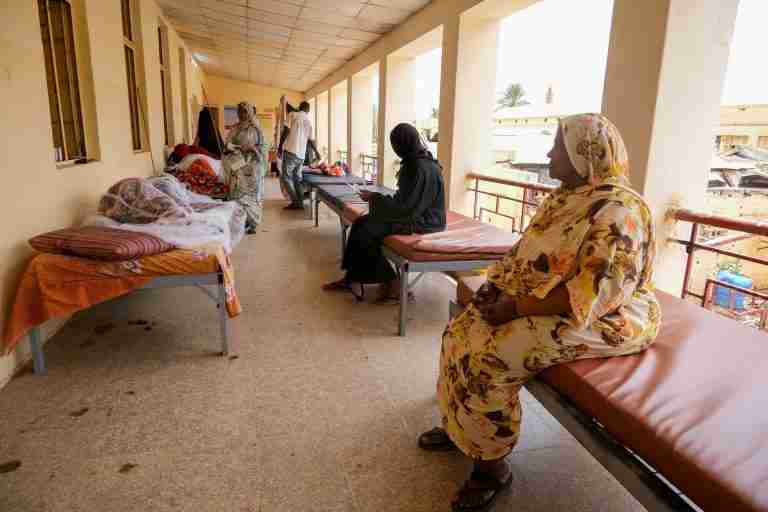
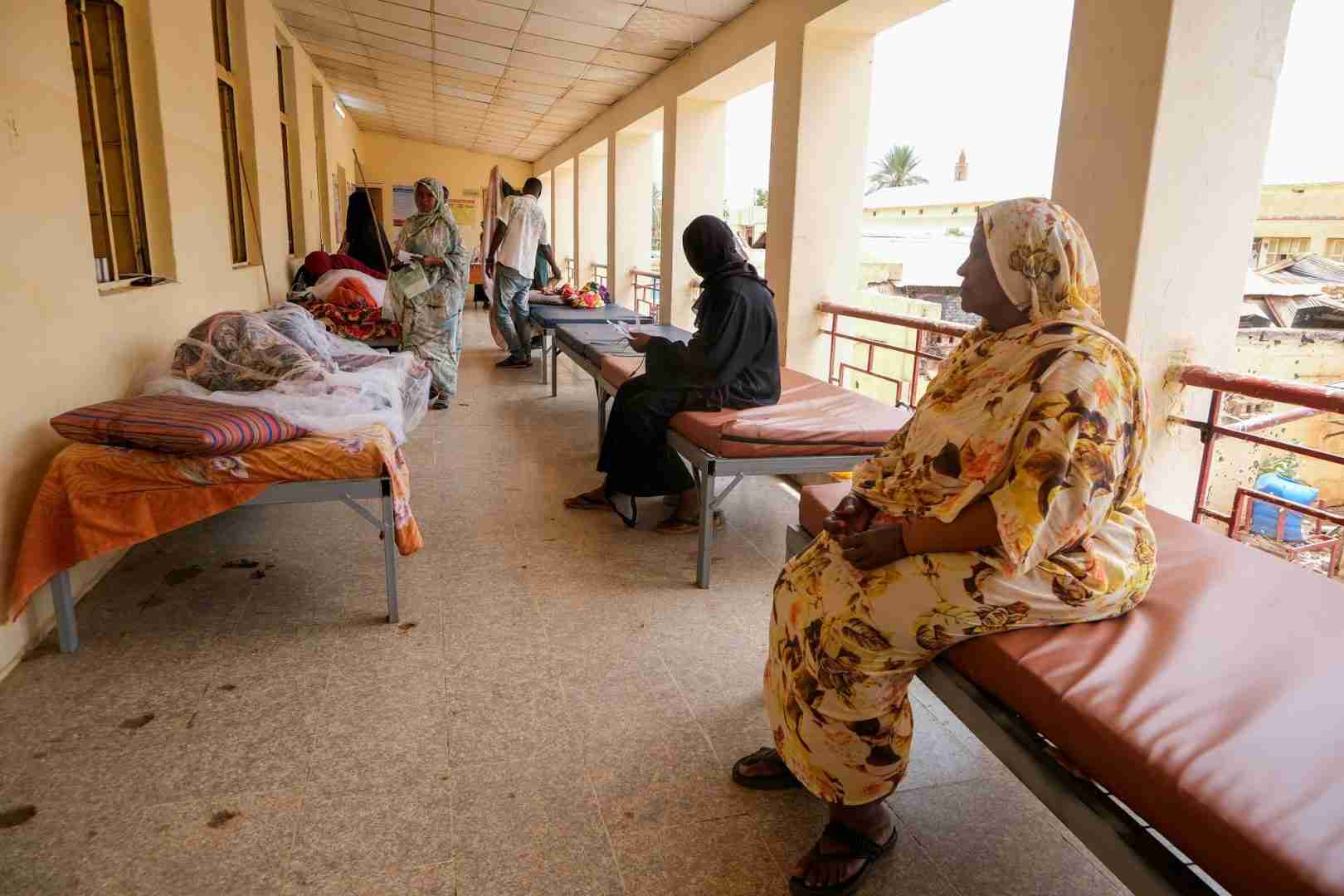
Emergency cholera medical supplies for several African countries have become stuck in a logistical quagmire caused by the Iran war, aid officials told Reuters, raising concerns about preparations ahead of the high-risk rainy season.
The stocks stranded in Dubai warehouses are contingency supplies placed in cholera-prone countries including Chad and Sudan ahead of the rainy months starting from May to curb any future outbreak of the fast-spreading, potentially fatal diarrhoeal disease.
Both the World Health Organization and the International Federation of the Red Cross and Red Crescent Societies told Reuters that some of their African cholera supplies were stuck in a Dubai backlog. They are trying to either fly them out – at 70% above the normal rate – or buy replacements.
The kits create mini field hospitals for thousands of people with rehydration treatments as well as chlorine to treat sewage and drinking water to prevent further spread.
“We don’t know if the kits will come in time and it will be more costly and delayed,” the IFRC’s Danielle Brouwer said. Five cholera kits to treat 3,000 people a month intended for Chad, which hosts camps for Sudan’s war refugees, are among those affected as well as tents for cholera patients in South Sudan, she added.
RELIANT ON IMPORTS
Last year was exceptionally bad for cholera with more than 600,000 cases in 34 countries and 8,000 deaths globally, the WHO said. So far in 2026, the number of cases is down by about 50% versus 2025 but the agency warned against complacency.
“A disruption of the supply chain will have dramatic consequences because we’re talking (about) an explosive disease,” said WHO’s Lorenzo Pezzoli, team lead for epidemic bacterial diseases.
“If you don’t have the time or the resources to control it in a matter of days or even hours, you would have an extreme contamination.”
With the Strait of Hormuz shut amid Iranian attacks linked to nearly a month of U.S.–Israeli strikes, competition to use alternative overland or air routes is creating congestion and soaring costs, the IFRC said.
Many African countries like Chad do not produce their own medicines and rely fully on imports. One doctor said there have been no cholera cases this year so far but that, if they do return, there is only enough medicine for about 100 people in the eastern province of Ouaddai.
Reporting by Emma Farge; Additional reporting by Mahamat Ramadane in N’Djamena; Editing by Hugh Lawson
U.N. Under-Secretary-General Jorge Moreira da Silva, executive director of the United Nations Office for Project Services, will lead the project, Dujarric said
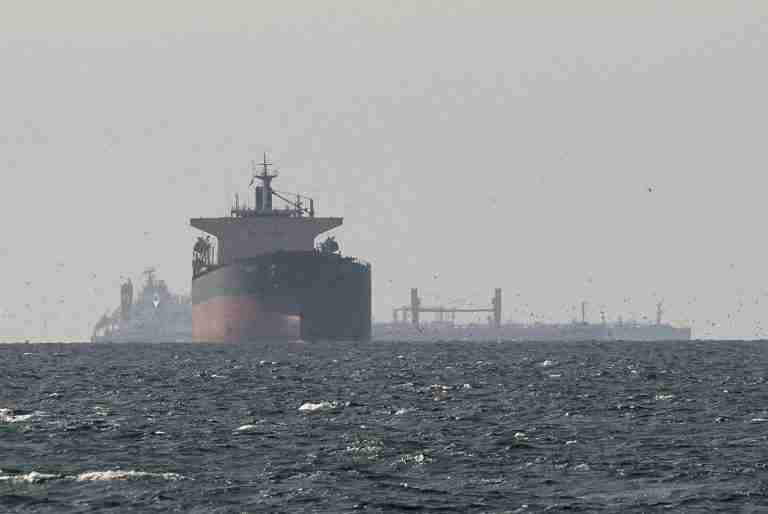
FILE PHOTO: Cargo ships in the Gulf, near the Strait of Hormuz, as seen from northern Ras al-Khaimah, near the border with Oman’s Musandam governance, amid the U.S.-Israeli conflict with Iran, in United Arab Emirates, March 11, 2026. REUTERS/Stringer/File Photo
International News via Reuters:
The United Nations said on Friday it was setting up a task force to design a mechanism to keep trade flowing through the Strait of Hormuz, warning that disruptions caused by the Iran war risked greater food shortages and humanitarian crises worldwide.
“Immediate action is essential to mitigate these consequences,” U.N. spokesperson Stephane Dujarric said.
U.N. Under-Secretary-General Jorge Moreira da Silva, executive director of the United Nations Office for Project Services, will lead the project, Dujarric said.
He said the envisaged task force would draw inspiration from other U.N. initiatives, including the Black Sea Grain Initiative for Ukraine and the UN2720 Mechanism for Gaza.
“The task force will now be in touch with all the relevant member states to see how this can be operationalized,” Dujarric said. “We hope that all member states involved will support this, especially for the sake of people … who are already being impacted.”
Disrupted fertilizer shipments and soaring energy prices are threatening fresh food‑price surges in vulnerable countries, risking a years‑long setback just as many were emerging from successive global shocks, U.N. and other experts warn.
An analysis released by the U.N. World Food Programme last week warned that tens of millions more people will face acute hunger if the Iran war runs through to June.
Reporting by David Brunnstrom; Editing by Jasper Ward and Howard Goller
Cooper’s Island tracking station to monitor historic April 1 launch
As the world turns its attention to the skies next week, Bermuda will once again find itself playing a role in space exploration.
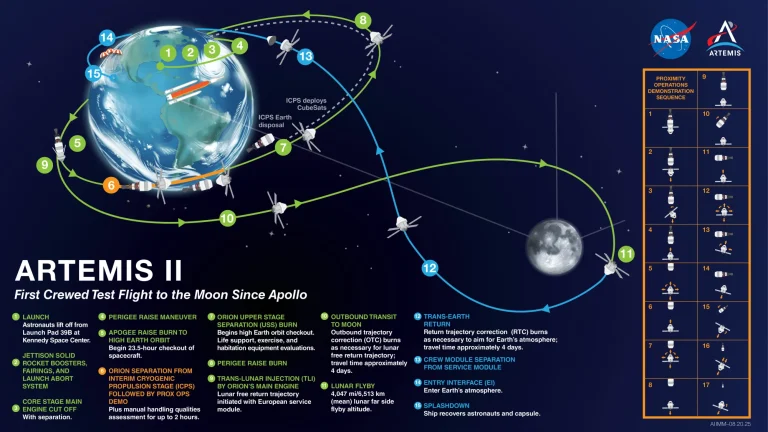
NASA’s highly anticipated Artemis II mission, the first crewed flight in its return-to-the-Moon programme, is scheduled to launch on April 1, and key data from the mission will be tracked right here on the island at the Cooper’s Island tracking station.
For Bermudians, it’s a powerful reminder that this small Atlantic island continues to play a quiet but crucial role in some of humanity’s biggest scientific milestones.
Artemis II marks a major step forward for NASA’s ambitious Artemis programme, often described as the next ‘Golden Age’ of space exploration.
The mission will carry four astronauts aboard the Orion spacecraft: Reid Wiseman, Victor Glover, Christina Koch, and Jeremy Hansen.
Unlike the uncrewed Artemis I test flight, this mission will put humans back on a path toward the Moon, and eventually Mars for the first time in decades.
While the astronauts travel hundreds of thousands of miles into space, part of the mission’s success will depend on what happens much closer to home.
Bermuda’s tracking station at Cooper’s Island will help monitor the spacecraft’s journey, collecting and relaying vital telemetry and communications data back to mission control.
This connection places Bermuda within a global network of ground stations supporting one of the most important space missions of the decade.
Sterling has fallen by 1.5% in March, slightly more than in February, making this its worst monthly performance since last October
International News via Reuters:
The pound fell for a fourth day on Friday, as it headed for its weakest monthly performance against the dollar since October, as fears of a global energy shock from the Middle East war have driven investors into the U.S. currency as a safe haven.
Sterling has fallen by 1.5% in March, slightly more than in February, making this its worst monthly performance since last October.
But the pound is also the best performing currency against the dollar since the war started. The euro is down around 2.5% in that time, while the safe-haven yen and Swiss franc have lost 2.4% and 3.6%, respectively.
The Bank of England, which prior to the war had been expected to cut rates twice this year, is now expected to deliver as many as three hikes, according to money markets, compared with expectations in a Reuters poll for no change in 2026.
Bank of England policymaker Alan Taylor said on Thursday that he saw a high bar to hiking interest rates and it was preferable to hold borrowing costs until there was greater clarity on the impact on the economy from the war with Iran.
Taylor, who until the start of the conflict was a long-time advocate for lower interest rates, voted this month to leave them on hold, as did all the other eight members of the Monetary Policy Committee, some of whom warned rate hikes could happen.
Given how much higher inflation is in Britain than in other developed economies, UK government bonds have been sold more aggressively, which has pushed up yields more quickly – something that theoretically offers the pound some support.
Two-year gilt yields, which are the most sensitive to expectations for inflation and interest rates, are up by almost a percentage point since the war started, near their highest for almost 2-1/2 years.
“Sterling remains largely resilient but higher borrowing costs, if sustained, alongside weaker growth will inevitably reduce fiscal headroom,” analysts at Bank of America, who recommend selling the pound against the dollar, said in a note.
The UK’s borrowing costs are far higher than almost every other developed-market economy and finance minister Rachel Reeves is under pressure to keep the government’s finances on track, given that she has limited room for manoeuvre.
Reporting by Amanda Cooper; Editing by Alison Williams
The pressure is most acute in the Netherlands because of an outsized number of beam trawlers in its fleet, which makes up about 7% of the European Union’s total
International News via Reuters:
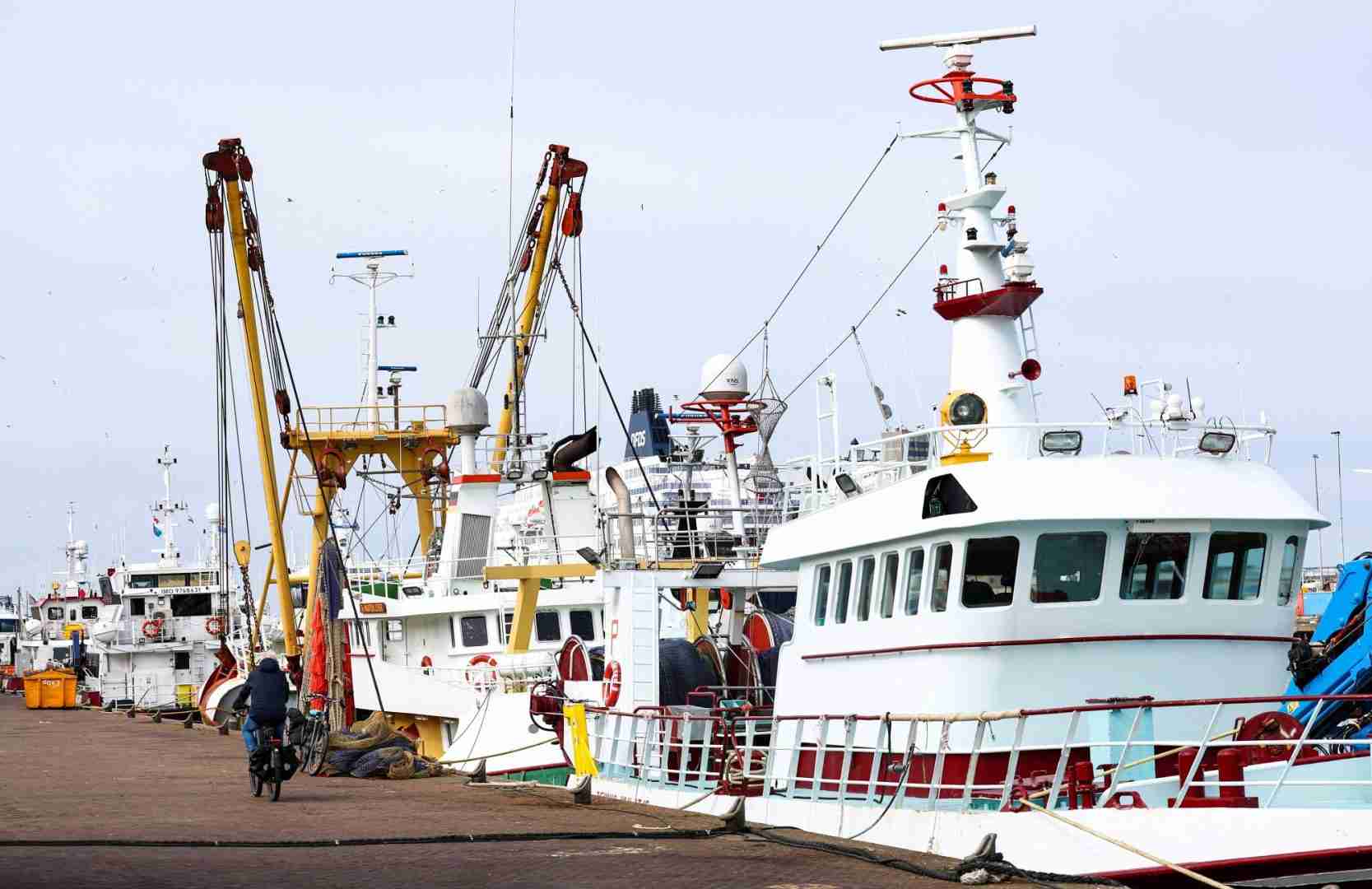
The fishing industry is emerging as an early European casualty of soaring diesel costs amid the Iran war, with at least half the Dutch fleet staying in port this week, according to industry representatives.
The pressure is most acute in the Netherlands because of an outsized number of beam trawlers in its fleet, which makes up about 7% of the European Union’s total.
These ships target high-value North Sea flatfish such as sole, turbot and brill, but burn relatively large amounts of fuel. Industry group VisNed said 80% to 90% of such trawlers did not sail out this week.
Durk van Tuinen, a spokesperson for the Dutch Fishers Union, said weekly fuel bills that ran 12,000 to 13,000 euros ($13,800-$15,000) before the war started on February 28 are now heading toward 30,000 euros, roughly equal to the total value of fish a vessel might bring at this time of the year, leaving no money to pay a crew.
“Now the fuel bill is equal to the revenue, so it simply does not work,” he said.
The Dutch may be hardest-hit, but they are not alone, said Daniel Voces, managing director of Europêche, the representative body for EU fishermen.
Belgium and Britain also use beam trawlers, and fleets targeting groundfish such as cod and haddock around Europe are near or at loss-making levels with current prices.
Voces said top fishing nations Spain, Italy and France had all introduced modest support measures, but with fuel costs up by around 70%, some ships have been unwilling to put to sea.
He said the industry met with the EU fisheries chief, Costas Kadis, this week to ask the European Commission to again relax state aid rules for the industry – as it did during the energy crisis that followed Russia’s invasion of Ukraine in 2022.
According to Van Tuinen, the immediate impact on consumers will be tighter supply and higher prices. He noted the price of sole had already jumped to 18 euros at auction this week from roughly 12 euros.
Faced with those costs, he said, restaurants might serve smaller portions to maintain their margins, but many others will simply stop buying.
“Fish will disappear from the menu,” he predicted.
($1 = 0.8687 euros)
Reporting by Toby Sterling, editing by Andrei Khalip
The Bermuda Football Association’s Competitions Committee has finally rescheduled a high-stakes Premier Division encounter four months after it was originally abandoned, with Devonshire Colts set to face Paget Lions this Sunday.
The match, which was called off on November 25th last year, has been handed a new date of March 29th at White Hill Field. With a 3:00 pm kickoff confirmed, the fixture carries significant implications for the top of the table as the season reaches its dramatic conclusion.
Third-placed Devonshire Colts head into the contest knowing that a victory would catapult them into second place. A win would move them onto 38 points, leaving them just two points adrift of league leaders Dandy Town Hornets with only one match remaining in the campaign. Even a draw would be enough to see the Colts leapfrog the PHC Zebras into second spot by virtue of a superior goal difference.
For the Paget Lions, the stakes are more about pride and mid-table positioning. A victory for the Lions would see them remain in eighth place, but crucially, it would pull them to within a single point of seventh-placed St. George’s Colts.
With both sides desperate for points for very different reasons, the atmospheric White Hill Field is expected to host a tense affair as the Premier Division’s long-standing scheduling backlog finally begins to clear.
The Women’s Resource Centre (WRC) is proud to present the 2nd Annual HERstory Festival, taking place on Saturday, March 28, from 12:00 PM to 6:00 PM in the historic Town of St. George’s. This free, family-friendly community event celebrates Women’s History Month by highlighting the stories, creativity, and contributions of Bermudian women—past and present.
Set across Water Street and The Arcades, the festival offers a full afternoon of live entertainment, cultural experiences, interactive activities, and community engagement, inviting residents and visitors alike to explore and celebrate HERstory in an immersive and accessible way.
The main stage at The Arcades will feature a vibrant lineup of performances, including singer-songwriter Aalai, Bermuda Idol winner DeMara Maybury, and a closing performance by celebrated vocalist Olivia Hamilton. Attendees will also enjoy live performances by violinist Naphisa Smith, alongside music throughout the day from DJ Purple Ferdinand, author readings, and cultural storytelling.
A central highlight of the festival is the “She Made History” Dialogue Series, hosted by journalist Jasmine Patterson. These powerful conversations will feature trailblazing women across industries, including:
· Dr. Carika Weldon, Founder and CEO of CariGenetics
· Chelsea Warren, Founder of Uptimum Bodied
· Cathy Duffy, leader in Bermuda’s insurance industry
· Sophia Greaves, Director at Conyers Dill & Pearman
These dialogues will spotlight the impact and leadership of Bermudian women while creating space for reflection, inspiration, and community connection.
Beyond the main stage, attendees can enjoy a wide range of interactive and family-friendly activities throughout the town. Highlights include free face painting, arts and crafts, henna designs, tarot readings, knitting sessions, and creative workshops such as cyanotype printing and botanical bookmark-making. Historical tours will also take place across St. George’s, bringing to life the stories of women like Sally Bassett and Dame Lois Browne-Evans.
As part of the day’s offerings, several of St. George’s cultural landmarks will be open free of charge, including the Mitchell House Museum and the Globe Hotel Museum, giving attendees the opportunity to explore Bermuda’s rich history while engaging with the festival.
Local businesses will play an integral role in the day’s experience, with many offering special promotions, tours, and demonstrations. Visitors can explore spaces such as Laquered Lounge, Dragon’s Lair Gallery, Long Story Short, Robertson’s Drugstore, and the BEDC East End office, while enjoying food, drinks, and a pop-up bar hosted by Goslings. Restaurants including Wahoo’s Bistro and White Horse Pub will also feature special offers for festival-goers.
The HERstory Festival is curated by Kristin White of Long Story Short, whose work continues to bring Bermuda’s stories to life through thoughtful cultural experiences. The event is proudly supported by lead sponsor, the Bermuda Economic Development Corporation (BEDC).
“This festival is about more than celebration – it is about visibility, connection, and honouring the legacy of women who have shaped Bermuda, while creating space for the next generation to be inspired,” said Juanae Crockwell, Executive Director of the Women’s Resource Centre.
The HERstory Festival is free and open to the public. Families are encouraged to attend and experience a day filled with culture, creativity, and community spirit.
For more information and the full schedule of events, visit www.wrcbermuda.com or call 295-3882.
After a year-long review of the national registry of missing persons, officials said that 40,367 entries — 31% of the total — showed some activity across other government records such as tax filings or birth certificates
International News via Reuters:
Mexican authorities said on Friday they have potentially identified more than 40,000 people listed as disappeared by cross-referencing official databases like tax records and marriage registries.
After a year-long review of the national registry of missing persons, officials said that 40,367 entries — 31% of the total — showed some activity across other government records such as tax filings or birth certificates, suggesting those people could be alive and locateable.
Of those, authorities have so far located and confirmed the identities of 5,338 people, allowing their cases to be reclassified as ‘found.’
Mexico has over 130,000 missing people, a consequence of decades of drug violence as cartels have expanded their reach and power. But the government said that the figure is also the result of a poorly managed database riddled with errors, missing information, and duplication.
About 46,000 records – roughly 36% – lack basic information such as names, dates or places of disappearance, making searches impossible. Officials said the registry was initially compiled by uploading unverified lists from federal and state prosecutors, search commissions, citizen reports and activist groups, creating duplications and incomplete entries.
A further 43,654 cases do have complete records but show no activity through the cross-referencing with other government databases. But of that figure, less than 10% have a connected open criminal investigation, a gap officials said reflects years of failure on the part of prosecutors and law enforcement.
Disappearances surged after 2006, when Mexico launched its war on drug cartels. Of those still missing, 130,613 date from 2006 onwards, while 2,357 are legacy cases from 1952 to 2005, many linked to forced disappearances by state agents.
The public policy group Mexico Evalua found that there has been a 200% percent increase disappearances over the last decade, a consequence of the growing power of organized crime groups.
Officials on Friday stressed that no records would be removed from the public registry, only reclassified as people are located, and said new legal reforms now block entries without minimum data.
“We will continue looking for all disappeared people until finding them,” Marcela Figueroa, a top security official, said at the president’s morning press conference.
Reporting by Stephen Eisenhammer; Editing by Emily Green
Bermuda’s rising tennis talents have faced a second consecutive day of frustration at the ITF World Junior Tennis campaign, as the boys’ team fell to a comprehensive defeat against Honduras in Santa Tecla.
Following a testing opening day for the girls, attention in Group C turned to the young Gombey Warriors, who found the going equally difficult against a clinical Honduran side. Honduras wasted no time asserting their physical and tactical authority on the hard courts in this primary regional gateway for Under-14 prospects.
The Central American side took an immediate lead through Gerardo Zuniga, who delivered a powerful baseline performance to defeat Bermuda’s Trystan Thompson 6-0, 6-1. The defeat left the Bermudian youngsters with a mountain to climb early in the morning session.
The deficit was doubled in the second singles rubber as Sebastian Eduardo Flores Nieto squared off against Manuel Maldonado. Despite Maldonado’s efforts to extend the rallies, he was unable to overcome the consistency of Flores Nieto, who secured a 6-1, 6-1 win to clinch the tie for Honduras with a match to spare.
With the overall result decided, Honduras maintained their momentum into the doubles. The pairing of Mateo Lagos and Gerardo Zuniga proved too coordinated for Riley Maybury and Trystan Thompson, closing out a 6-2, 6-0 win to complete the 3-0 sweep.
Despite the setback, the Bermudian squad remains focused on long-term development goals. The team will look to regroup quickly before their final group fixtures as they aim to secure their first points of the qualifying event.
The EU and the CPTPP – which comprises 12 countries, including Australia, Japan, Canada, Mexico, Malaysia and Britain – met on the sidelines of the WTO ministerial conference in Cameroon on Friday
International News via Reuters:
The World Trade Organisation is at a “critical juncture” and needs deep reform, the European Union and parties to the Comprehensive and Progressive Agreement for Trans-Pacific Partnership said on Friday.
The EU and the CPTPP – which comprises 12 countries, including Australia, Japan, Canada, Mexico, Malaysia and Britain – met on the sidelines of the WTO ministerial conference in Cameroon on Friday.
“The WTO is at a critical juncture amid heightened tensions in the global trading system,” they said in the joint statement.
Representatives from both groups recognised the need for “urgent, deep, comprehensive and inclusive reform of the WTO.”
They said they seek to “enhance cooperation” among like-minded WTO members in order to drive improvements to the global trading system, while also working together to cooperate on areas of mutual interest such as trade diversification and supply chain resilience.
Both shared concerns about what they described as “market-distorting practices” and oversupply, as well as “economic coercion”.
The EU and CPTPP member countries have been hit with tariffs imposed by the United States in the last year.
The EU has recently called for a rethink of the WTO’s Most Favoured Nation principle, where trading countries have to treat each other equally, on concerns about China.
EU Trade Commissioner Maros Sefcovic recently said the bloc should make low-tariff access to its markets for Chinese companies conditional on the openness of the Chinese economy to European businesses.
Failure to chart a viable reform path for the WTO may lead the EU-CPTPP and other like-minded economies to deepen their cooperation and look to forge deals among willing members as a “plan B” if the WTO talks in Yaounde do not make progress, Sweden’s Trade Minister Benjamin Dousa minister earlier told Reuters.
Reporting by Olivia Le Poidevin, Editing by Friederike Heine and Hugh Lawson
To provide the best experiences, we use technologies like cookies to store and/or access device information. Consenting to these technologies will allow us to process data such as browsing behavior or unique IDs on this site. Not consenting or withdrawing consent, may adversely affect certain features and functions.
Functional
Always active
The technical storage or access is strictly necessary for the legitimate purpose of enabling the use of a specific service explicitly requested by the subscriber or user, or for the sole purpose of carrying out the transmission of a communication over an electronic communications network.
Preferences
The technical storage or access is necessary for the legitimate purpose of storing preferences that are not requested by the subscriber or user.
Statistics
The technical storage or access that is used exclusively for statistical purposes.The technical storage or access that is used exclusively for anonymous statistical purposes. Without a subpoena, voluntary compliance on the part of your Internet Service Provider, or additional records from a third party, information stored or retrieved for this purpose alone cannot usually be used to identify you.
Marketing
The technical storage or access is required to create user profiles to send advertising, or to track the user on a website or across several websites for similar marketing purposes.