Discussions and site visits are exploring climate resilience, waste-to-energy, transport, water management and other areas relevant to island governments
The Minister of Public Works and Environment, the Hon. Jaché Adams, JP, MP, is in the United Kingdom from 23 to 27 March 2026, attending the Overseas Territories Trade and Investment Study Visit.
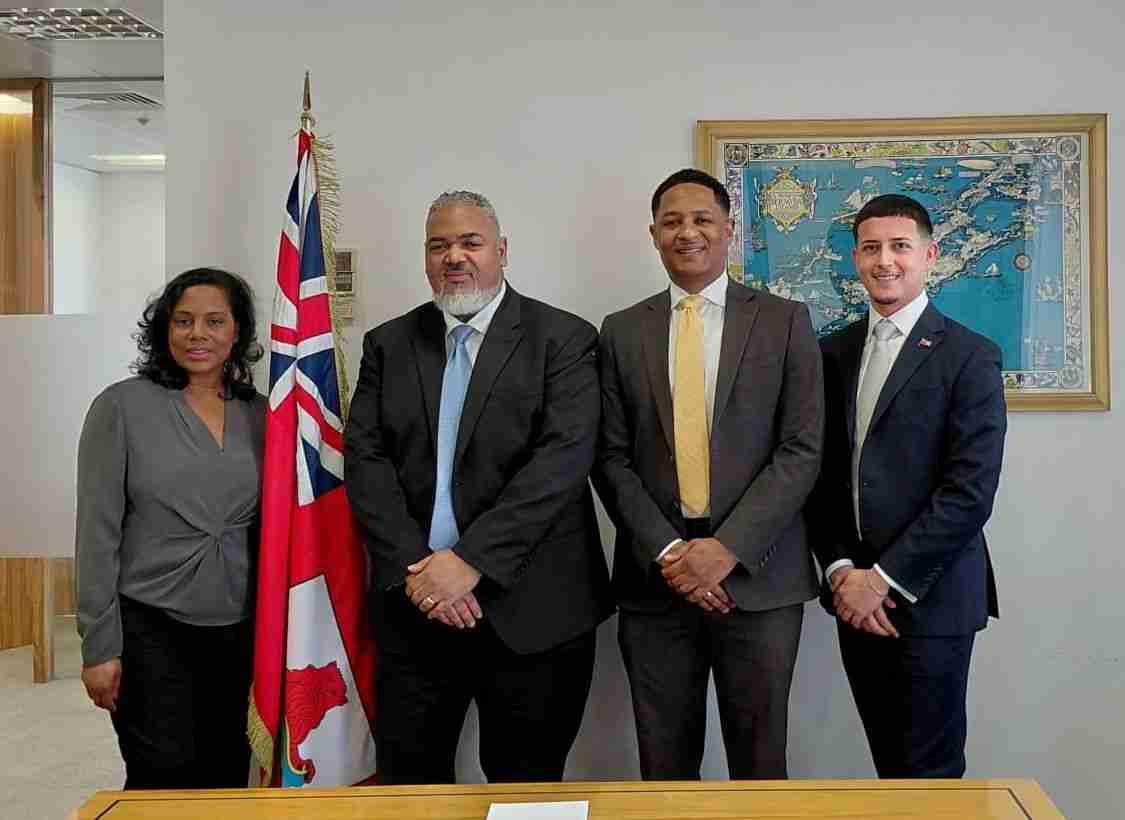
He is accompanied by the Permanent Secretary for the Ministry of Public Works and Environment, Kirk Outerbridge, Bermuda’s UK Representative, Kimberley Durrant, and Deputy UK Representative, Brandon Sousa.
The study visit brings together representatives from the British Overseas Territories for a focused programme of discussions and site visits covering infrastructure, climate resilience, waste-to-energy, transport, water management and other areas relevant to island governments.
Minister Adams said, “This visit is important because it gives Bermuda a direct opportunity to engage with other Overseas Territories and UK organisations on practical infrastructure challenges that small jurisdictions share.
“It allows us to examine approaches that may help strengthen Bermuda’s long-term planning, resilience and delivery in key public works areas.”
(L-R): Kimberly Durrant, Bermuda’s UK representative, Kirk Outerbridge, Permanent Secretary for the Ministry of Public Works and Environment, Minister Adams, and Brandon Sousa, Bermuda’s Deputy UK representative.
He added, “For Bermuda, there is particular value in seeing how others are approaching energy recovery, sustainable infrastructure and climate resilience.
“Those discussions are relevant to our ongoing work, including the future development of the Tynes Bay Waste-to-Energy Facility and wider efforts to ensure our infrastructure remains modern, reliable and fit for Bermuda’s needs.”
Footballer Aaliyah Nolan is enjoying a career-defining season, with her clinical finishing establishing Bradford City AFC Women as the runaway leaders of the North East Regional Premier Division.
The Bermudian forward has been the undisputed engine for a Bradford side that currently sits atop the table with 45 points. Nolan’s campaign began with a statement of intent in September, dismantling Alnwick Town with a clinical opening-day hat-trick—a high bar she has remarkably maintained throughout the winter months.
Her ability to perform on the road has been a hallmark of City’s success, featuring goals in a 9-0 demolition of Sunderland West End and a brace against Brunsmeer Athletic. The scoring touch showed no signs of cooling in February, as she bagged two goals and an assist against Knaresborough Town before finding the net again in a 5-1 win over Wallsend Boys Club.
Nolan’s consistency has proven vital during the season’s business end. After netting in a disciplined win over South Shields on March 8, she delivered a Player of the Match performance against Harrogate Town on March 22, scoring twice to secure another 3-0 victory.
With Bradford City now firmly in the driving seat for promotion, Nolan’s prowess in front of goal remains the primary threat to any side hoping to derail the Bantams’ march toward the higher divisions.
Statement by Charles Leon O’Brien Sr., spokesperson, Citizens Reform Group & chairman of KEMH Residents Family Council charity:
When we talk about healthcare reform, the focus is often on major infrastructure projects, staffing shortages, or system-wide transformation. But some of the most meaningful improvements come from addressing quiet, everyday inequities that directly affect patients’ quality of life.
One such inequity exists within our hospital system: long-term care patients are required to pay for television access, while patients in acute wards receive the same service at no charge.
For someone living in a hospital over an extended period, television is not a luxury. It is a means of maintaining normalcy, staying connected to the world, and finding comfort in familiar routines. For patients who are immobile, cognitively impaired, or socially isolated, it can be one of the few consistent points of engagement throughout the day.
Families of long-term care patients have repeatedly raised concerns about this arrangement. Many patients cannot afford the weekly fee. Many have no family members available to manage payments on their behalf. Others are unable to navigate the administrative process required to access the service. The result is an uneven and inequitable experience within a public healthcare system that should, by its very nature, be grounded in fairness.
Over the Christmas period, televisions were provided to long-term care patients free of charge for a limited time. The effect was immediate and notable. Patients were calmer, more cooperative, and visibly more settled in their environment. Nursing staff reported fewer non-clinical interruptions and improved productivity, enabling them to direct greater attention to patient care.
This short-term experience reflected what research and established best practice in long-term care already affirmed: access to simple comforts reduces agitation, stabilises mood, and supports a more effective care environment.
From a financial standpoint, the cost of absorbing television access across long-term care wards is modest relative to the benefits it yields. Centralising and renegotiating the service would remove a meaningful burden from patients while delivering operational efficiencies that support staff and strengthen overall care delivery.
Healthcare is not solely about clinical treatment — it is also about dignity. Standardising television access for long-term care patients is a practical, humane step that reflects the kind of healthcare system we aspire to be: fair, compassionate, and centred on the needs of those who depend on it most.
This proposal has been submitted to hospital administration for consideration.
The ECB left rates unchanged last week but warned about a coming surge in prices
International News via Reuters:
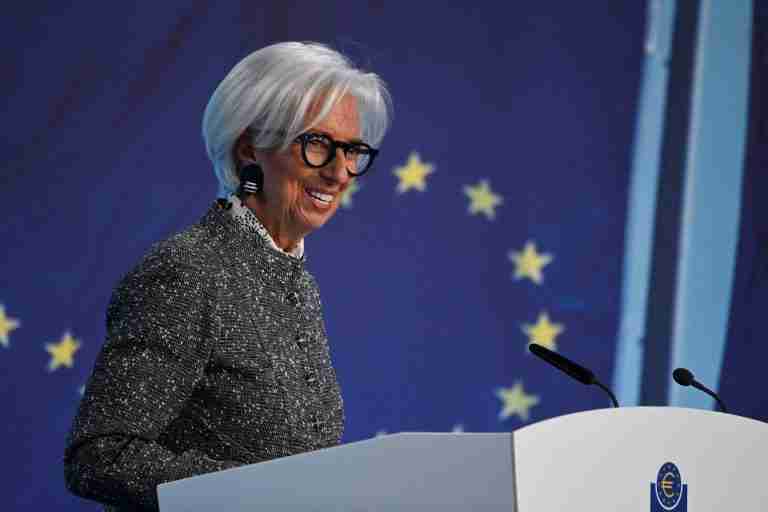
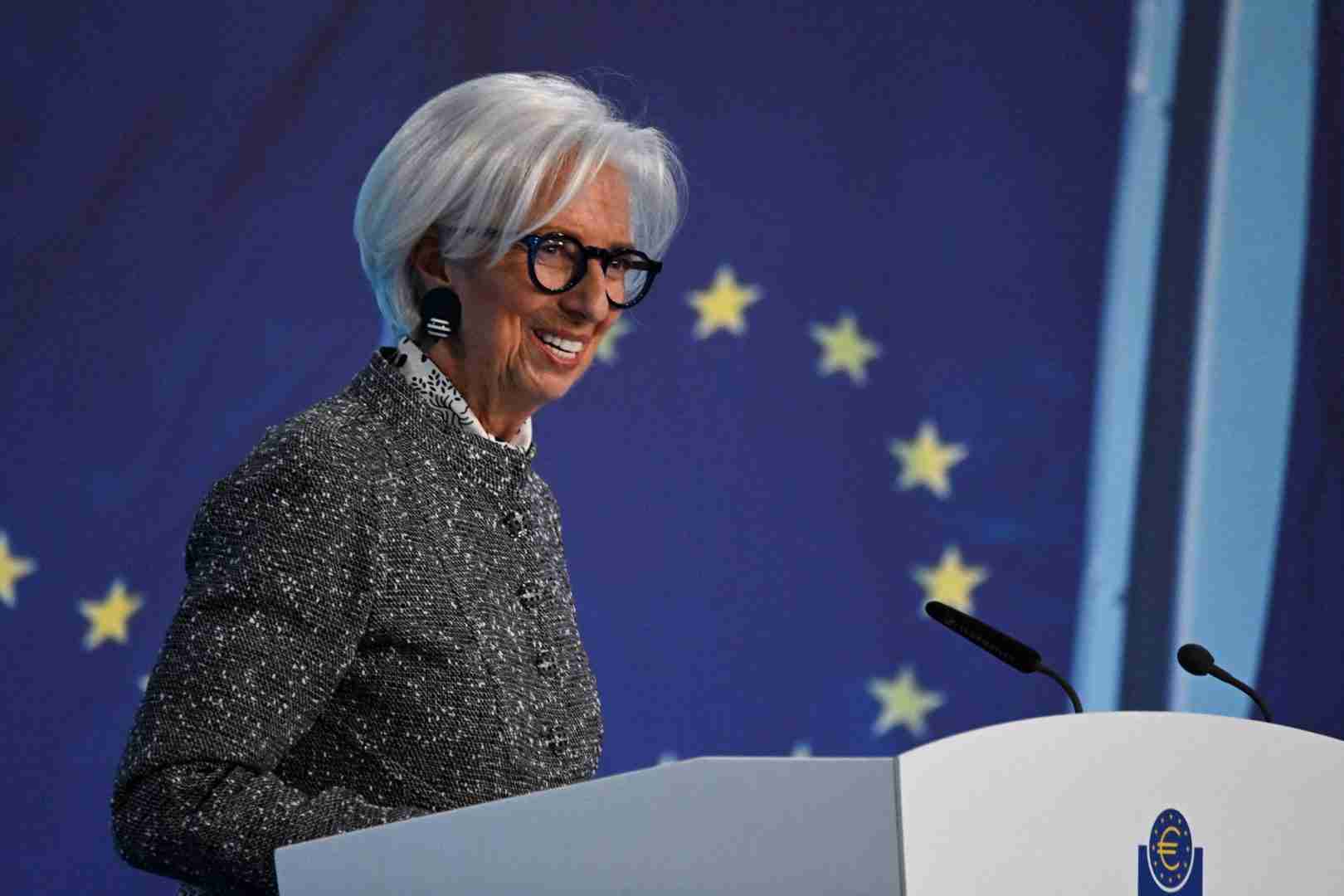
Even a “not-too-persistent” overshoot of the European Central Bank’s inflation target from the current energy shock may warrant some moderate policy tightening, ECB President Christine Lagarde said on Wednesday.
The ECB left rates unchanged last week but warned about a coming surge in prices and policymakers are now debating under what scenario they would need to raise interest rates to combat the risk of quick price growth getting entrenched.
“If the shock gives rise to a large though not-too-persistent overshoot of our target, some measured adjustment of policy could be warranted,” Lagarde said in a speech in Frankfurt.
“To leave such an overshoot entirely unaddressed could pose a communication risk: the public may find it difficult to understand a reaction function that does not react,” she argued.
Lagarde did not explicitly equate her criteria with any of the scenarios outlined by the ECB last week. However, they are not too different from the inflation trajectory in the bank’s “adverse” scenario.
In the ECB’s most benign “baseline” case, inflation will average 2.6% this year, rising from around 2% in the past year.
In the adverse scenario inflation will peak above 4% in the second half of this year but return to target by mid-2027, while in the severe option, inflation peaks above 6% early next year and does not return to target for years to come.
“If we expect inflation to deviate significantly and persistently from target, the response must be appropriately forceful or persistent,” Lagarde said. “Otherwise, self-reinforcing mechanisms would kick in and the risk of de-anchoring would become acute.”
SEARCHING FOR EARLY WARNING SIGNS
The ECB must now be on the lookout for early warning signs that the shock is embedding in broader inflation dynamics and it needs to identify such spillovers, including through wages or inflation expectations.
“As expected deviations from our inflation target grow larger and more persistent, the case for action becomes stronger,” she argued.
Financial investors now expect two to three rate hikes from the ECB this year as they see inflation above target for several years.
Part of their argument for early but smaller action is that the ECB came under fire for acting too late during the 2021-2022 inflation surge.
The bank believed the spike to be transitory and did not raise interest rates until inflation was around 8%, four times its target.
But Lagarde argued that the current situation was quite different and several factors point to a lesser pass-through.
The energy shock is so far smaller, especially in the case of natural gas, the labour market is not as tight, there is no post-pandemic pent-up demand, fiscal policies are tighter and the central bank rate is higher, she said.
She also argued that historical evidence suggests that the risk of broad pass-through from energy prices is the exception rather than the rule.
Reporting by Balazs KoranyiEditing by Tomasz Janowski
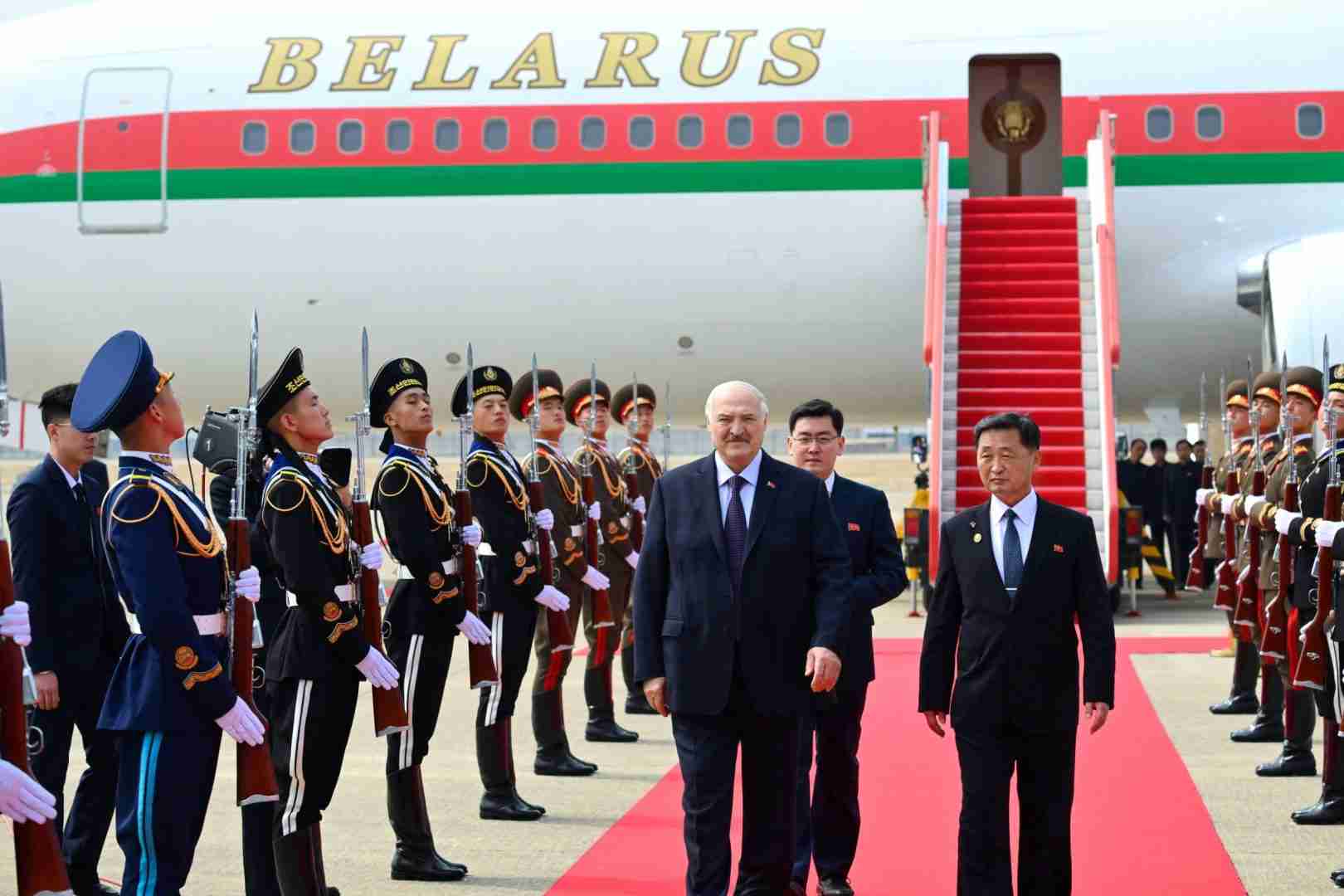
North Korea’s leader Kim Jong Un has provided Moscow with millions of rounds of ammunition for its war in Ukraine, and sent troops to help Russia expel Ukrainian forces who invaded its western Kursk region in August 2024
International News via Reuters:
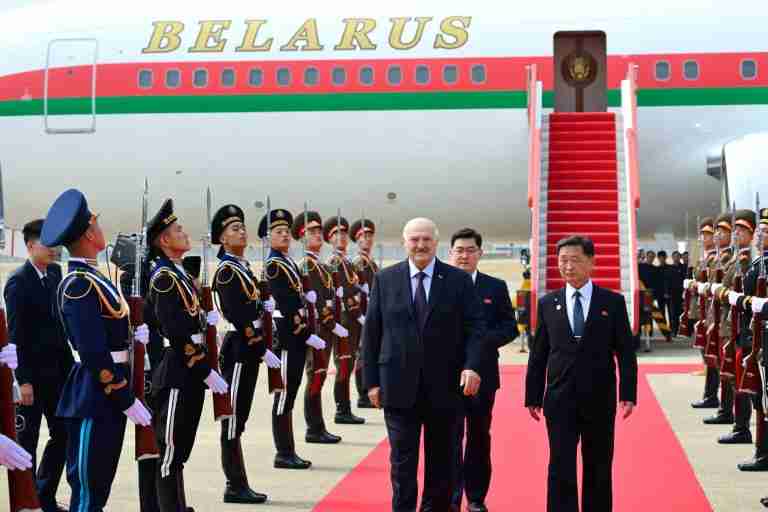
Belarusian President Alexander Lukashenko began his first visit to North Korea on Wednesday for talks that will cement ties between two close allies of Russia’s Vladimir Putin.
North Korea’s leader Kim Jong Un has provided Moscow with millions of rounds of ammunition for its war in Ukraine, and sent troops to help Russia expel Ukrainian forces who invaded its western Kursk region in August 2024.
Belarus allowed itself to be used as a launchpad for Russia’s invasion in February 2022, and subsequently agreed to host Russian tactical nuclear missiles on its territory, which borders three NATO alliance countries.
Lukashenko flew in to a red-carpet welcome in the capital Pyongyang, where he was greeted by Kim’s foreign minister and dozens of small children waving the flags of both countries.
Lukashenko later met Kim, and the Belarusian side published a photograph of the two men embracing.
He also paid his respects at the Kumsusan Palace of the Sun, a mausoleum where the preserved bodies of former rulers Kim Il Sung and Kim Jong Il – grandfather and father of the current leader – are displayed.
North Korea and Belarus have both lived for years under international sanctions – the former mainly because of its nuclear weapons programme and the latter over its human rights record and backing for Putin in Ukraine.
But both have engaged at different times with U.S. President Donald Trump.
Trump met Kim three times in 2018 and 2019, during his first term in the White House, but their encounters failed to yield substantive results. Trump said last year he would “love another meeting”, which Kim said could happen if the U.S. dropped its “absurd obsession” with getting North Korea to give up nuclear weapons.
Trump last year re-established direct contact with Lukashenko, who had been treated as a pariah by his predecessor Joe Biden. In recent months, the U.S. has begun to ease sanctions on Belarus in return for releases of political prisoners.
Lukashenko’s trip to North Korea comes just six days after he met Trump’s envoy John Coale and announced the freeing of 250 more detainees. The U.S. side has said Lukashenko may soon visit the White House.
Reporting by Mark Trevelyan; Editing by Andrew Cawthorne
Lower petrol prices in February helped offset a rise in clothing costs, the Office for National Statistics said, but that relief looks set to prove short-lived, with oil prices now around 50% higher than a month ago
International News via Reuters:
British consumer price inflation held at 3.0% in February, unchanged from January’s rate, official figures showed on Wednesday, ahead of a likely upward lurch as war in the Middle East pushes up prices.
Lower petrol prices in February helped offset a rise in clothing costs, the Office for National Statistics said, but that relief looks set to prove short-lived, with oil prices now around 50% higher than a month ago.
“Today’s inflation report is little more than a relic of the world before the Iran conflict,” Luke Bartholomew, deputy chief economist at fund managers Aberdeen, said.
Before the U.S.-Israeli attack on Iran at the end of February, the Bank of England had forecast that inflation would fall to close to its 2% target in April, when changes to regulated household energy bills and other prices take effect.
But last week the BoE sharply increased its inflation forecast, predicting it would rise towards 3.5% by the middle of the year.
UK PUBLIC’S INFLATION EXPECTATIONS JUMP
A survey published on Tuesday by U.S. bank Citi showed inflation expectations among the British public for the coming year have surged to 5.4% from 3.3%, their biggest monthly increase in more than 20 years, adding to the BoE’s challenge.
While most households’ energy tariffs are currently capped, new prices are due to take effect in July and manufacturers have already reported the sharpest jump in costs since 1992, which may soon be passed on to consumers.
Financial markets on Wednesday were betting on two or three quarter-point interest rate rises by the BoE this year, though many economists think the central bank will keep rates on hold due to the headwinds to growth from higher energy costs.
Governor Andrew Bailey last week advised people against making any firm bets that the BoE would raise rates.
SERVICES INFLATION LOWEST SINCE MARCH 2022
Wednesday’s data showed services price inflation – which the BoE watches closely as a gauge of longer-term inflation pressures – fell to 4.2% in February from 4.4% in January, its lowest since March 2022 and just below economists’ expected reading of 4.3%.
The decline reflected reduced inflation for restaurants, cafes and tickets for concerts and other cultural events.
However, core inflation, which excludes more volatile food, energy, alcohol and tobacco prices, rose slightly to 3.2% from 3.1%, where it had been expected to hold.
“The upside surprise in core inflation today will be of concern for the Bank given it shows we are still contending with sticky price pressures even before accounting for the recent spike in energy prices,” Zara Nokes, global market analyst at J.P. Morgan Asset Management, said.
British inflation is the highest among major advanced economies and the country’s reliance on natural gas for electricity generation and heating makes it vulnerable to price shocks.
Prime Minister Keir Starmer’s government has introduced measures to limit rises in the cost of living, although finance minister Rachel Reeves said on Tuesday any household energy subsidies this year would be more narrowly targeted than during the last gas price surge in 2022.
After the data, Reeves highlighted government measures taking effect next month which would reduce some fixed costs in household energy bills and said the government would be “acting to protect people from unfair price rises if they occur”.
British inflation rose to its highest since 1981 in October 2022 at 11.1% and over the past five years has rarely been near its 2% target.
Reporting by David Milliken and Andy Bruce; Graphics by Sumanta Sen and Andy Bruce; Editing by William Schomberg and Andrew Heavens
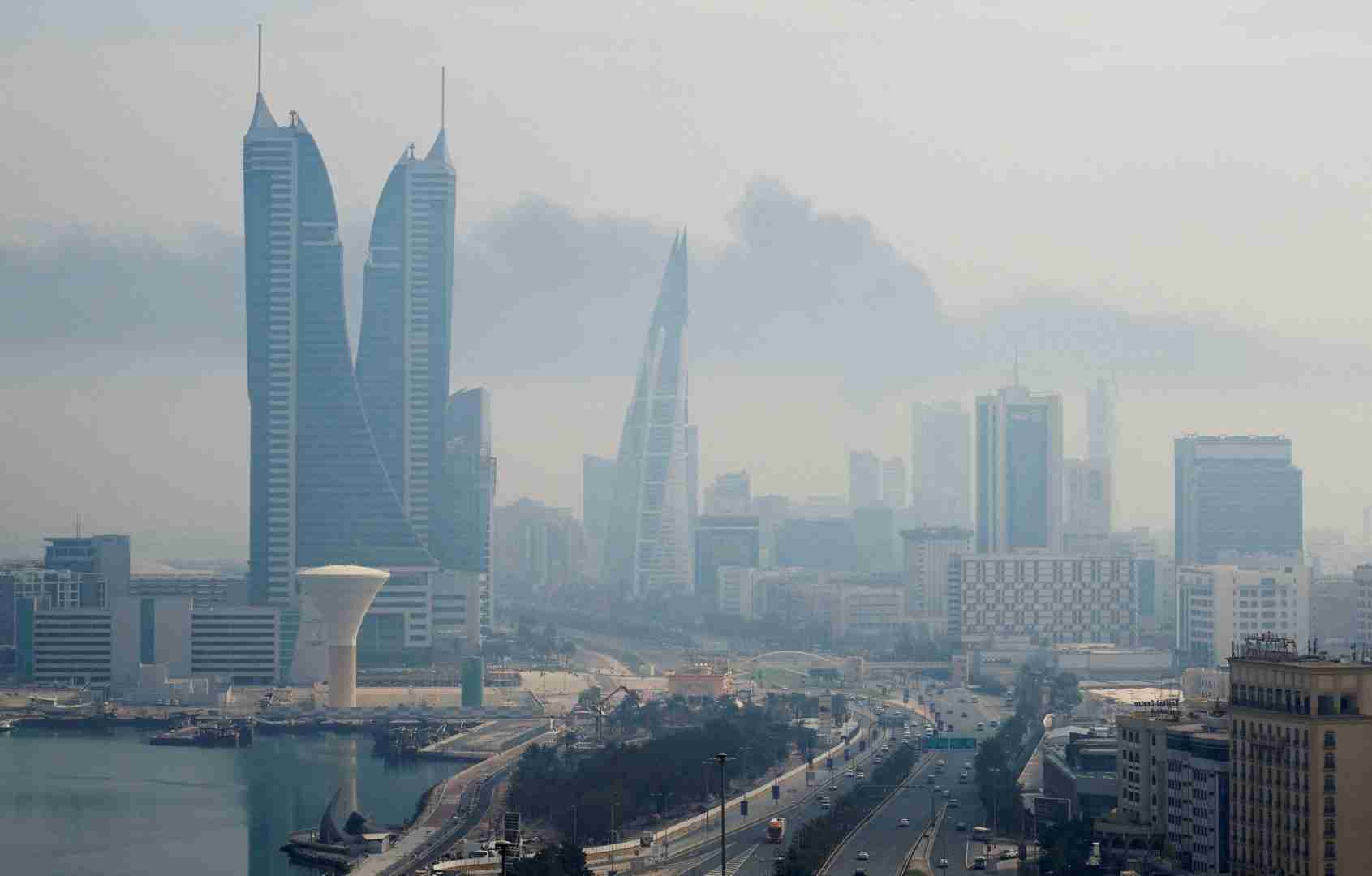
The nearly month-long U.S.-Israeli war on Iran has sparked large-scale Iranian retaliation in the form of drone and missile strikes on energy and civilian infrastructure in Gulf countries
International News via Reuters:
Gulf Arab states told the U.N. Human Rights Council on Wednesday they face an existential threat from Iran as they condemned Iranian attacks on their infrastructure, which the U.N. rights chief said might constitute war crimes.
The nearly month-long U.S.-Israeli war on Iran has sparked large-scale Iranian retaliation in the form of drone and missile strikes on energy and civilian infrastructure in Gulf countries, killing civilians and driving up oil prices.
“We are seeing an existential threat to international and regional security. This aggressive approach is undermining international law and sovereignty,” Kuwait’s ambassador Naser Abdullah H. M. Alhayen told the Geneva-based council. Other Gulf states also denounced Iran’s actions which they said were designed to spread terror.
Countries at the 47-member council will vote on a motion condemning Iran’s strikes, asking Iran for reparation and asking the U.N. rights chief to monitor the situation.
Iran defended its actions, saying more than 1,500 civilians had been killed in the U.S.-Israeli strikes so far. “We fight on behalf of all of you against an enemy that, if not restrained today, will be beyond containment tomorrow,” said Iran’s ambassador to the U.N. in Geneva Ali Bahreini, referring to Israel.
Iran has called for its own emergency session on a fatal strike on a primary school which will take place on Friday.
The United Nations’ top rights official Volker Turk on Wednesday urged states to end the Iran conflict, describing the situation as extremely dangerous and unpredictable.
“This conflict has an unprecedented power to ensnare countries across borders and around the world,” he said.
“Attacks on civilians and civilian infrastructure must end. If they are deliberate, such attacks may constitute war crimes.”
Reporting by Emma Farge, Editing by Miranda Murray, William Maclean
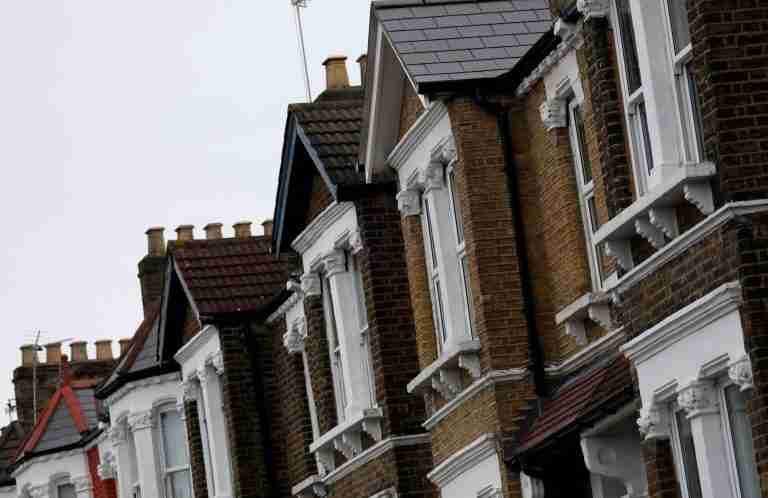
The annual rate of house price inflation slowed to 1.3% in January from 1.9% in December 2025, taking the average house price in the United Kingdom to 268,000 pounds ($359,000)
International News via Reuters:
British house prices rose at the slowest pace since September 2024 in the year to January, official figures showed on Wednesday, while the pace of increase in rents was unchanged.
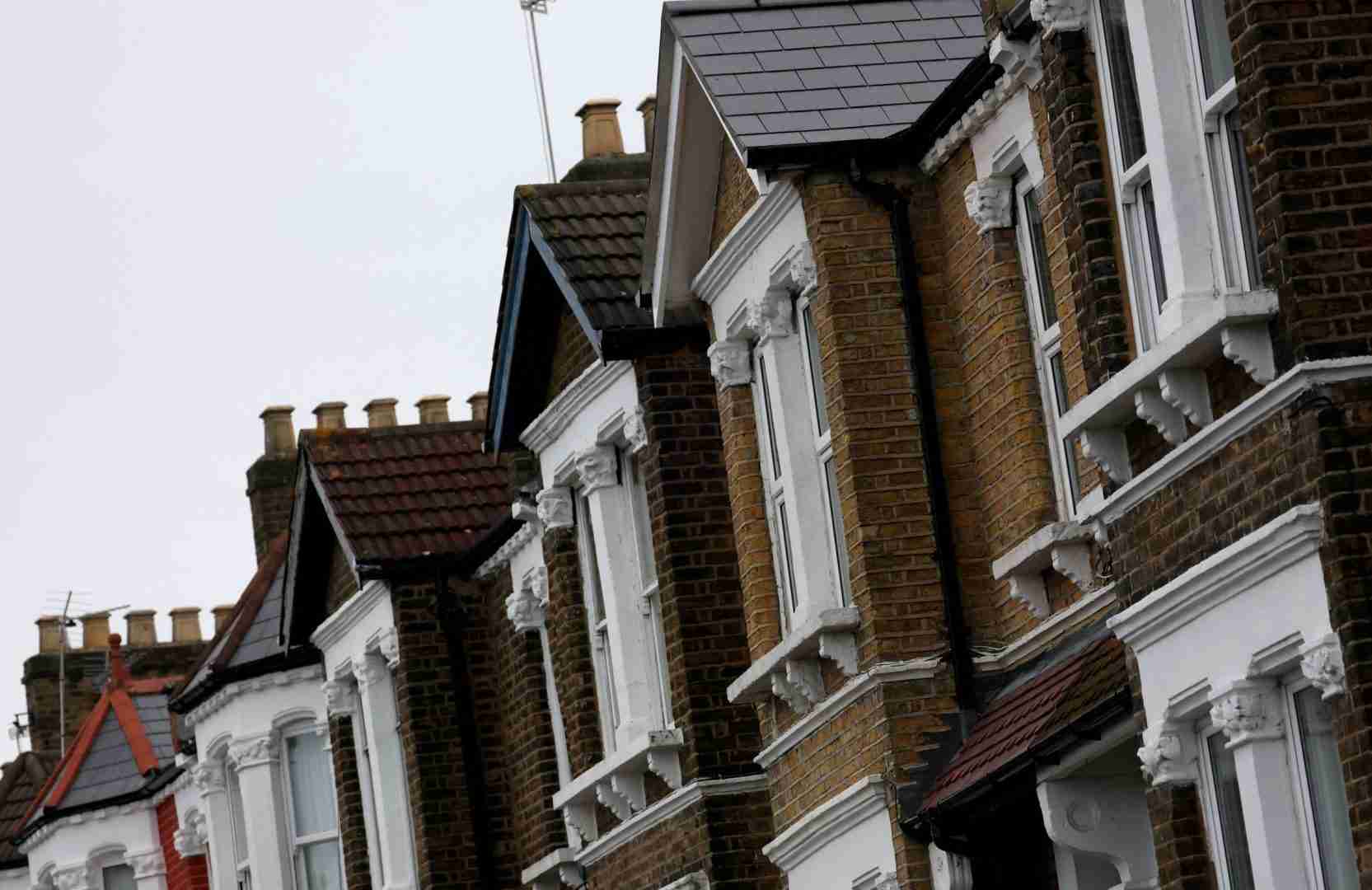
The annual rate of house price inflation slowed to 1.3% in January from 1.9% in December 2025, taking the average house price in the United Kingdom to 268,000 pounds ($359,000), the Office for National Statistics said.
Private-sector rents in February were 3.5% higher than a year earlier, unchanged from January’s rate of increase and the joint-smallest rise since March 2022.
($1 = 0.7465 pounds)
Reporting by David Milliken; editing by Suban Abdulla
The pan-European STOXX 600 was up 1.4% at 587.04 points by 0856 GMT, on track for its third straight day of gains after briefly dropping 10% from record highs earlier this week
International News via Reuters:
European shares rose more than 1% on Wednesday on expectations of an imminent de-escalation in the Middle East conflict, though concerns about the war’s economic impact kept gains in check.
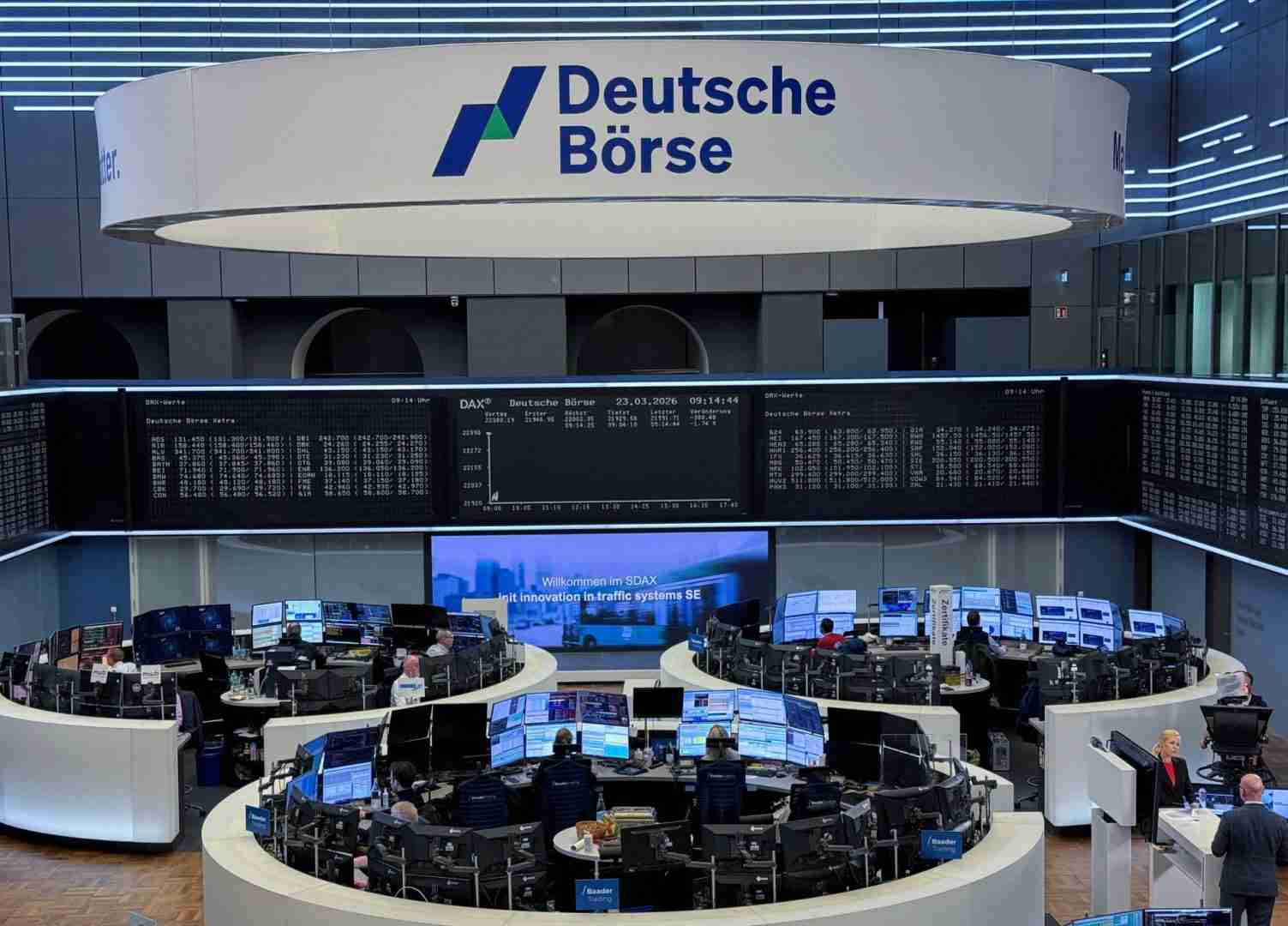
The pan-European STOXX 600 was up 1.4% at 587.04 points by 0856 GMT, on track for its third straight day of gains after briefly dropping 10% from record highs earlier this week.
The major regional bourses also advanced more than 1%, with Germany’s DAX leading the pack, while an index tracking volatility slipped 1.8 points to 29.9.
All the key sectors logged gains, with cyclicals such as industrial goods and banks up 2% each. Cyclical sectors are those that are typically affected the most during an economic slowdown.
Travel and leisure stocks, which were hit earlier in March due to soaring energy prices, added 1.8%, with airlines, such as Lufthansa and Air France climbing 2.4% and 3.7%, respectively.
Energy stocks were up marginally, after Morgan Stanley turned bullish on the sector.
Oil prices slipped below the $100 mark after President Donald Trump said the U.S. was making progress in its efforts to negotiate an end to the war with Iran. A source confirmed that Washington had sent Iran a 15-point settlement proposal.
However, caution lingered as Tehran denied that direct talks had taken place, with a spokesperson saying the U.S. is “negotiating with itself”.
“The market is right now running on optimism that is being injected by the U.S. alone,” said Ipek Ozkardeskaya, senior analyst at Swissquote Bank. “If Iran doesn’t cooperate in the coming days… we still could see oil prices spike back up and above the $100 per barrel level.”
There is little clarity on whether the talks would lead to the reopening of the Strait of Hormuz, which has been largely cut off since the Iran war erupted, with analysts saying that the long-term repercussions of elevated crude prices on the global economy could be drawn out.
Europe’s dependence on oil imports has weighed on equities since the start of the war and the STOXX now underperforms the U.S. benchmark S&P 500.
BlackRock CEO Larry Fink in a BBC interview said that if oil prices rise to $150 a barrel, it could trigger a global recession.
Among individual stocks, Spanish drugmaker Grifols climbed 8.1% after announcing it had approved a U.S. initial public offering of its biopharma business.
INWIT dropped 2.5% after Swisscom said its Italian business Fastweb + Vodafone was terminating its master service agreement (MSA) with the country’s top mast operator.
Reporting by Avinash P and Johann M Cherian in Bengaluru; Editing by Eileen Soreng and Sonia Cheema
The rejection of negotiations by the unified command of the Iranian Armed Forces comes amid reports the U.S. has sent a 15-point plan for discussion to Tehran
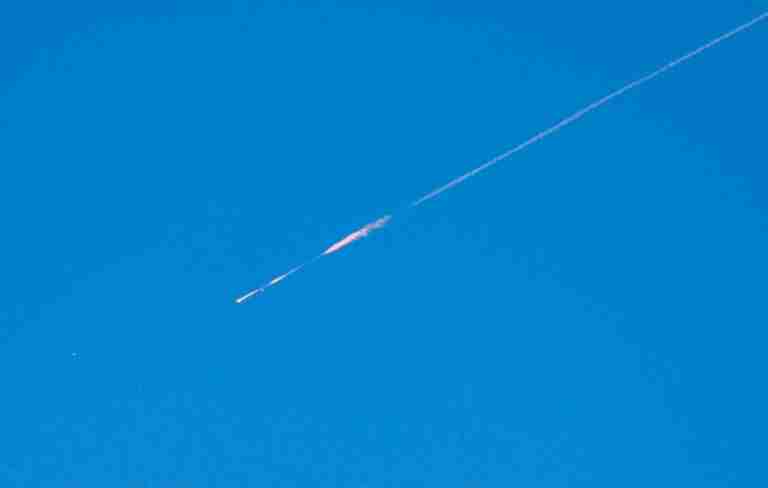
A projectile launched from Iran heads towards Israel, amid the U.S.-Israeli conflict with Iran, as seen from Ramallah, in the Israeli-occupied West Bank, March 25, 2026. REUTERS/ Mohammed Torokman
International News via Reuters:
Israel and Iran exchanged airstrikes on Wednesday, as Iran’s military rejected President Donald Trump’s assertion the U.S. was in negotiations to end the war which has roiled energy and financial markets, saying the U.S. is negotiating with itself.
The rejection of negotiations by the unified command of the Iranian Armed Forces, which is dominated by the hardline elite Revolutionary Guards, comes amid reports the U.S. has sent a 15-point plan for discussion to Tehran.
“Has the level of your inner struggle reached the stage of you (Trump) negotiating with yourself?” the top spokesperson for Iran’s joint military command, Ebrahim Zolfaqari, said on Iranian state TV.
“People like us can never get along with people like you.”
“As we have always said … no one like us will make a deal with you. Not now. Not ever.”
Iran’s leadership has previously said it cannot negotiate with the U.S. as Washington has attacked the country twice during high-level negotiations in the past two years.
Iran had a “very bad experience with American diplomacy,” Iran’s foreign ministry spokesperson Esmaeil Baghaei told India Today on Tuesday. There was no dialogue or negotiations with Washington, as Iran’s armed forces are focused on defending the country, he added.
Four weeks into the war that has killed thousands, created the worst energy shock in history and sparked global inflation fears, there was no letup in airstrikes from Iran and Israel on Wednesday.
The Israeli military said in a Telegram post it had launched a wave of strikes targeting infrastructure across Tehran. It later said its air force had struck two naval cruise missile production sites in Tehran.
The semi-official Iranian SNN News Agency said the strikes hit a residential area in the city, with rescuers searching the rubble.
Kuwait and Saudi Arabia said they had repelled fresh drone attacks, without saying where they came from. Drones targeted a fuel tank at Kuwait International Airport, causing a fire but no casualties, Kuwait’s Civil Aviation Authority said.
Iran’s Revolutionary Guards said it had launched a new wave of attacks against locations in Israel including Tel Aviv and Kiryat Shmona, as well as U.S. bases in Kuwait, Jordan and Bahrain, Iranian state media reported.
Trump told reporters at the White House on Tuesday the U.S. was in “negotiations” with “the right people” in Iran to end the war, adding the Iranians wanted to reach a deal very badly.
Stocks rose and oil prices fell on Wednesday on reports the U.S. is seeking a month-long ceasefire and had sent a 15-point plan to Iran for discussion, raising hopes for a resumption of oil exports out of the Persian Gulf.
REPORT OF 15-POINT PLAN SENT TO IRAN
The New York Times reported on Tuesday that Washington sent Iran a 15-point plan to end the war in the Middle East. Israel’s Channel 12, quoting three sources, said the U.S. was seeking a month-long ceasefire to discuss the 15-point plan.
A source familiar with the matter confirmed that the U.S. had sent a plan to Iran but provided no further details.
The Israeli media outlet said the plan would include the dismantling of Iran’s nuclear programme, ceasing support for proxy groups, such as Lebanon’s Hezbollah, and the reopening of the Strait of Hormuz.
The U.S. and Israel launched strikes on Iran on February 28 after saying they had failed to make enough headway in talks aimed at ending Iran’s nuclear programme, although mediator Oman said significant progress had been made. The U.S. struck Iran’s nuclear facilities in June 2025.
Since the start of “Operation Epic Fury” by the U.S. in February, Iran has attacked countries that host U.S. bases, struck Gulf energy infrastructure and effectively closed the Strait of Hormuz, conduit for a fifth of the world’s oil and liquefied natural gas.
Iran has told the United Nations Security Council and the International Maritime Organization that “non-hostile vessels” may transit the Strait of Hormuz if they coordinate with Iranian authorities, according to a note seen by Reuters on Tuesday.
The effective closure of the waterway, where 20% of the world’s oil and gas normally transits, has created the worst energy supply shock in history, sent fuel prices soaring, and disrupted global aviation.
Asia is at the frontline of the fuel crisis, buying more than 80% of the crude that transits the Strait of Hormuz, and governments there are scrambling to respond to fuel shortages with policies such as enforced work-from-home and stimulus measures enforced during the COVID pandemic era. Some countries have declared public holidays and closed schools.
The International Energy Agency has agreed to a record release of around 400 million barrels of oil from strategic stockpiles to deal with the crisis, and Japanese Prime Minister Sanae Takaichi asked IEA chief Fatih Birol for an additional release of oil when they met on Wednesday, Jiji Press reported.
PAKISTAN OFFERS TO HOLD US-IRAN TALKS
Pakistan’s Prime Minister Shehbaz Sharif said on Tuesday he was willing to host talks between the U.S. and Iran on ending the war, a day after Trump postponed threats to bomb Iranian power plants after what he called “productive” talks.
Pakistan has long-standing ties to neighbouring Iran’s Islamic Republic and has been building a relationship with Trump.
Despite reports of negotiations, the Pentagon is expected to send thousands of soldiers from the U.S. Army’s elite 82nd Airborne Division to the Middle East, two people familiar with the matter told Reuters on Tuesday, adding to a massive U.S. military buildup.
The forces will add to the 50,000 U.S. troops already in the region and accelerate Washington’s massive U.S. military buildup there, fuelling fears of a longer conflict.
Reporting by Reuters bureaus Writing by Alasdair Pal; Editing by Michael Perry and Andrew Heavens
Asia is at the frontline of the fuel crisis, buying more than 80% of the crude that transits the Strait of Hormuz, which has been almost totally blocked by Iran since the war broke out on February 28
International News via Reuters:
Countries across Asia are weighing up work-from-home policies and stimulus measures enforced during the COVID pandemic, as they scramble to respond to global fuel shortages triggered by the Iran war.
Asia is at the frontline of the fuel crisis, buying more than 80% of the crude that transits the Strait of Hormuz, which has been almost totally blocked by Iran since the war broke out on February 28.
No country in the region has enforced work-from-home measures yet, but some have said they are on the table.
“I think it is a good idea,” South Korean Energy Minister Kim Sung-whan said on Tuesday when asked about an International Energy Agency recommendation for people to work from home.
The IEA, which agreed a record release of around 400 million barrels of oil from strategic stockpiles to deal with the crisis, has outlined proposals to ease oil price pressures such as working from home and avoiding air travel.
IEA Executive Director Fatih Birol repeated those calls at a conference in Sydney this week.
“There were real-life tests, such as after the Russian invasion of Ukraine, European countries adopted these measures, and it was announced by the European governments. It helped them a lot to go through these difficult times without Russian energy … but keeping the lights on,” Birol said.
Industrial powerhouse South Korea on Tuesday launched a public campaign asking people to cut shower time, charge phones during the day and run vacuums on weekends.
“We will consult with relevant ministries and actively consider measures for work-from-home,” Energy Minister Kim told a briefing.
The Philippines, which relies heavily on Middle Eastern oil for its energy needs, shortened the work week in some government offices earlier this month. President Ferdinand Marcos declared a state of national energy emergency saying the conflict poses an “imminent danger” to the country’s energy supply.
Pakistan closed schools for two weeks and said office workers would work more from home. The island nation of Sri Lanka declared a public holiday every Wednesday to help make its fuel supplies go further.
Singapore, an Asian financial hub, urged people and businesses to switch to energy-efficient appliances, use electric vehicles and set the temperature higher on their air conditioners.
Thai Prime Minister Anutin Charnvirakul ordered bureaucrats to suspend overseas trips, set air conditioning temperatures above 25 degrees Celsius (77 degrees Fahrenheit), avoid suits and ties, use stairs instead of elevators, and work from home.
COST-OF-LIVING RELIEF
Some countries have turned to stimulus measures as rising fuel costs bite into household budgets.
The Japanese government said on Tuesday it plans to tap 800 billion yen ($5 billion) in reserve funds to finance subsidies aimed at keeping gasoline prices at about 170 yen per litre on average. The measure would cost as much as 300 billion yen per month.
New Zealand said on Tuesday that it would provide temporary financial support of NZ$50 ($29.30) every week from April for low-income families.
“We know these families will be hit particularly hard by the global fuel-price shock. We are delivering them timely relief,” New Zealand Finance Minister Nicola Willis said.
In neighbouring Australia hundreds of petrol stations are running dry from panic buying and shortages, which are acutely hitting the remote regional areas of the vast continent.
The centre-left government introduced legislation in the parliament to double penalties for fuel price gouging.
Several Asian countries have also released petrol and diesel from domestic reserves and temporarily loosened gasoline and diesel quality standards to increase supply.
POLICY DILEMMA
The glaring contrast with the pandemic, however, is that central banks are not rushing to cut interest rates. In fact, they are considering hikes.
During the pandemic, demand collapsed as many economies were essentially shuttered for health reasons, so policymakers responded with massive stimulus.
Now, the Reserve Bank of Australia has already hiked rates twice this year. It cited energy risks as a material risk to inflation and a reason for raising rates to a 10-month high last week.
Investors expect Japan, Britain and Europe will all raise rates in coming months, and pressure on Asian economies may be even more acute as their currencies slip against the dollar.
“Central banks face a classic policy dilemma when oil prices surge – inflation rises but growth might weaken,” Jennifer McKeown, chief global economist at Capital Economics, said in a note last week.
“The right response depends crucially on why oil prices are rising, how persistent the shock is, and whether inflation expectations are at risk,” she added.
Reporting by Alasdair Pal and Wayne Cole in Sydney, Jack Kim in Seoul, Xinghui Kok and Tom Westbrook in Singapore, Lucy Craymer in Wellington, Makiko Yamazaki in Tokyo, Karen Lema in Philippines, Chayut Setboonsarng in Bangkok and Tanvi Mehta in New Delhi; writing by Praveen Menon; Editing by Stephen Coates
Minister pledges stronger support and a national entrepreneurship strategy
The Minister of Economy and Labour, The Hon. Jason Hayward, JP, MP, attended the 2026 Bermuda Economic Development Corporation (BEDC) Business Awards on Saturday, where he recognised the contributions of Bermuda’s entrepreneurs and reaffirmed the Government’s commitment to fostering a strong entrepreneurial environment.
Minister Hayward said, “Entrepreneurs play an essential role in Bermuda’s economic growth. Their ideas, innovation and determination strengthen our economy and contribute to greater economic resilience. The Government’s work to advance small and medium sized business development, including the forthcoming national entrepreneurship strategy, is designed to ensure that entrepreneurs have access to the tools and opportunities needed to build and scale their businesses.”
Minister Hayward added, “I extend my appreciation to the BEDC for its continued dedication to supporting entrepreneurs across the Island. Its work remains an important part of fostering a healthy and vibrant entrepreneurial ecosystem, and the Government will continue to support its mission. Congratulations to this year’s outstanding winners. Your passion and commitment to excellence continue to shape and inspire Bermuda’s business community. Here’s to your continued success and the impact you’re making every day!”
The Ministry of Economy and Labour is pleased to celebrate excellence, innovation, and entrepreneurship at the BEDC Business Awards.
* Business of the Year – Bananas Party
* Startup of the Year – Feet First Podiatry
* Entrepreneur of the Year – Swan’s Pyrotechnics
* Vendor of the Year – Strange Bird
* Most Enterprising Young Entrepreneur – Metal & String
To provide the best experiences, we use technologies like cookies to store and/or access device information. Consenting to these technologies will allow us to process data such as browsing behavior or unique IDs on this site. Not consenting or withdrawing consent, may adversely affect certain features and functions.
Functional
Always active
The technical storage or access is strictly necessary for the legitimate purpose of enabling the use of a specific service explicitly requested by the subscriber or user, or for the sole purpose of carrying out the transmission of a communication over an electronic communications network.
Preferences
The technical storage or access is necessary for the legitimate purpose of storing preferences that are not requested by the subscriber or user.
Statistics
The technical storage or access that is used exclusively for statistical purposes.The technical storage or access that is used exclusively for anonymous statistical purposes. Without a subpoena, voluntary compliance on the part of your Internet Service Provider, or additional records from a third party, information stored or retrieved for this purpose alone cannot usually be used to identify you.
Marketing
The technical storage or access is required to create user profiles to send advertising, or to track the user on a website or across several websites for similar marketing purposes.