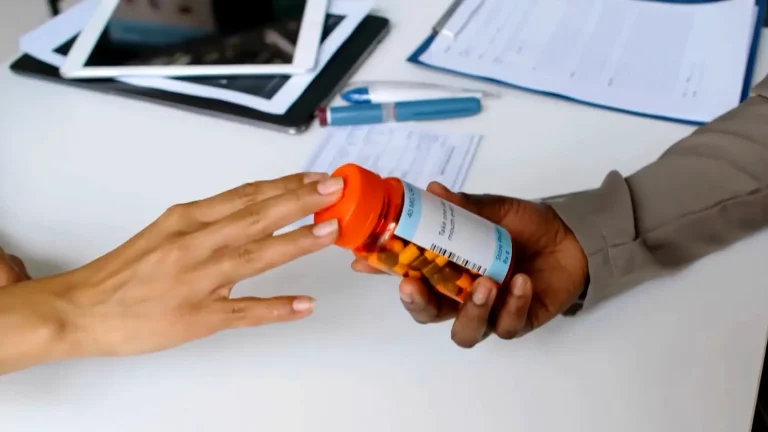
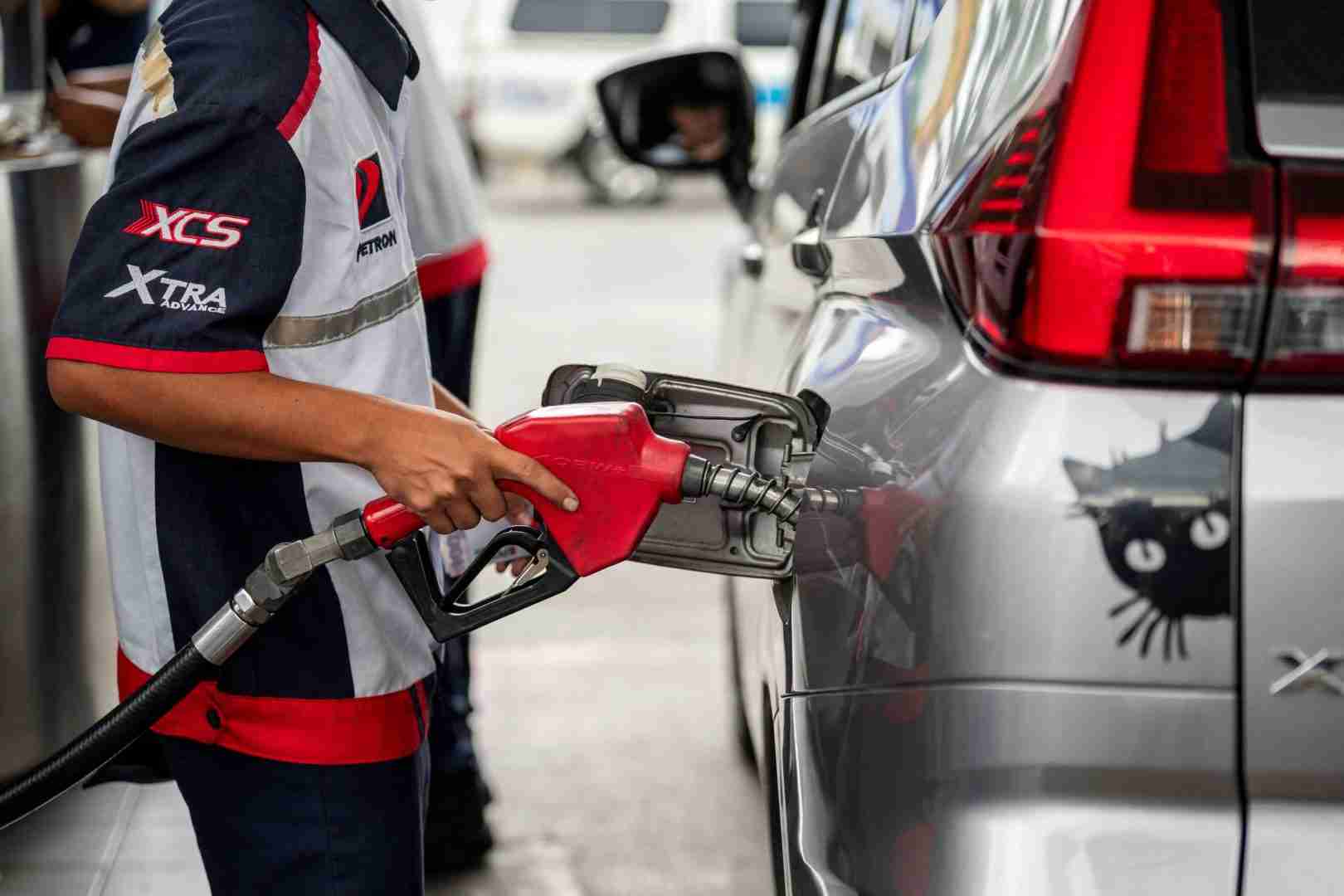
A number of independent pharmacies have welcomed the review of the National Drug Formulary, while the Health Council CEO emphasises the complexity of pricing
The pharmaceutical market is too fluid to accommodate price controls.
This is the diagnosis from some independent pharmacies and a wholesaler, who cite the Health Council’s recent delay to Phase II of the National Drug Formulary as evidence.
In a press release (BELOW), the six pharmacies and wholesaler also reiterate their opposition to Allshores restricting coverage of certain drugs to Phoenix Pharmacies, and welcome the Council’s review of the matter.
They say the best path to lowering medicine costs is a fair and level playing field, not price controls or market consolidation.
Through the National Drug Formulary, the Health Council can regulate the price at which drugs are sold to consumers, with the stated intention of increasing affordability.
Phase I was implemented in December, and Phase II was supposed to start on March 1st.
However, Health Council CEO Dr Ricky Brathwaite says feedback regarding importation and supply has led to a rethink.
Is ten years too long to keep spending millions on getting casinos in Bermuda? Opposition Leader Ben Smith says Government needs to ask itself that question…
In the House on Friday, Opposition Leader Ben Smith questioned Premier and Finance Minister David Burt about the decade-long effort to open casinos in Bermuda.
The Premier cited external forces, such as the former US administration, and the fact that there’s only one casino license so far, as reasons why local financial institutions have not been willing to bank casinos yet.
However, after 10 years and more than $16-million spent on the Gaming Commission, Mr Smith told Gary Foster Skelton that it’s cards on the table time…
Brent futures fell 72 cents, or 0.7%, to $102.42 a barrel by 12:39 p.m. EDT (1639 GMT), while U.S. West Texas Intermediate crude fell $2.92, or 3.0%, to $95.79
International News via Reuters:
Oil prices eased about 1% on Monday as U.S. President Donald Trump repeated his call for help to unblock the Strait of Hormuz after some vessels sailed through it, and on talk of possible additional releases from emergency reserves as part of global efforts to reduce consumer energy prices during the Iran war.
Brent futures fell 72 cents, or 0.7%, to $102.42 a barrel by 12:39 p.m. EDT (1639 GMT), while U.S. West Texas Intermediate crude fell $2.92, or 3.0%, to $95.79.
On Friday, Brent closed at its highest since August 2022 and WTI at its highest since July 2022, putting both crude benchmarks up more than 40% since the U.S. and Israel attacked Iran on February 28.
U.S. President Donald Trump on Monday repeated his call to nations to help unblock the Strait of Hormuz, and appeared to criticize countries he said were not enthusiastic about providing aid.
The Strait of Hormuz between the Persian Gulf and Arabian Sea is a critical waterway for a fifth of global oil and liquefied natural gas (LNG) supplies.
Earlier Monday, U.S. Treasury Secretary Scott Bessent said the United States is “fine” with some Iranian, Indian and Chinese ships going through the Strait of Hormuz for now, adding that any action to mitigate higher prices would depend on how long the war lasts.
Iran, which has allowed some Indian vessels to sail through the Strait of Hormuz, asked India to release three tankers seized in February as part of talks seeking the safe passage of Indian‑flagged or India‑bound vessels through the strait, three sources with knowledge of the matter told Reuters.
“The (oil) complex is selling off … on reports that some oil tankers are proceeding through the Strait of Hormuz and as Trump appeals for help in escorting tankers through the strait,” analysts at energy advisory firm Ritterbusch and Associates said in a note.
Several U.S. allies, meanwhile, said they had no immediate plans to send ships to unblock the Strait of Hormuz, rebuffing a request by President Trump for military support to keep the vital waterway open.
Denmark’s foreign minister, however, said Europe should keep an open mind on helping to ensure freedom of navigation for ship traffic in the strait even if the continent did not support the U.S.-Israeli decision to go to war with Iran.
“Hormuz closure makes $100 oil the baseline, not the risk case. Crude prices will stay higher for longer as it will take time to rebuild stocks even if supply improves in April,” analysts from consultancy Eurasia Group said in a note.
SHIELD FROM SOARING ENERGY COSTS
Governments worldwide are trying to shield consumers from soaring energy costs as the disruption to global oil and gas supplies caused by the war ripples through economies, stokes inflation and squeezes household budgets.
Member countries of the International Energy Agency (IEA) could release more oil into the market later “as and if needed” after they have already agreed to the largest-ever reserve release, Executive Director Fatih Birol said on Monday.
On Sunday, the IEA said more than 400 million barrels of oil reserves will begin flowing to the market soon, a record draw aimed at combating price spikes caused by the war.
THREE MORE WEEKS OF WAR?
Israel said it has detailed plans for at least three more weeks of war as its military pounded sites across Iran overnight. U.S. Energy Secretary Chris Wright said on Sunday he expected an end to the war within “the next few weeks,” with oil supplies rebounding and energy costs falling afterwards.
Over the weekend, Trump threatened further strikes on Iran’s Kharg Island, which handles about 90% of the country’s exports, after hitting military targets there and spurring further retaliation from Tehran. The U.S. is in contact with Iran, Trump said, though he doubted Tehran was prepared for serious talks to end the conflict.
Abu Dhabi state oil giant ADNOC has suspended crude loading operations at the United Arab Emirates port of Fujairah, a source familiar with the situation told Reuters on Monday, after a drone attack triggered fires at the key export terminal.
Some loading at Fujairah, however, restarted, two other sources said. Two of the three single-point moorings, where tankers connect to load, were operational, one source said.
Fujairah, outside the Strait of Hormuz, is the outlet for about 1 million barrels per day (bpd) of the UAE’s flagship Murban crude oil – a volume equal to about 1% of world demand.
Reporting by Scott DiSavino in New York, Enes Tunagur in London and Florence Tan and Jeslyn Lerh; Editing by Jason Neely, Bernadette Baum and Keith Weir
Australia had granted humanitarian visas to six players and one support staff member from the Iranian squad after they sought asylum, fearing possible persecution if they returned home
International News via Reuters:
The Iranian women’s soccer team began making their way home from Malaysia on Monday, after five of its players withdrew their claims for asylum in Australia.
Australia had granted humanitarian visas to six players and one support staff member from the Iranian squad after they sought asylum, fearing possible persecution if they returned home. Concerns over their safety emerged after the players failed to sing the national anthem at a women’s Asian Cup match earlier this month.
Five of the group, however, have since changed their minds and decided to return home to Iran, with Australian media reporting the latest withdrawal on Monday.
They joined the rest of the squad in Kuala Lumpur where the team had been staying since departing from Sydney last week, with just two remaining in Australia.
‘COMPLEX SITUATION’
Australian Assistant Minister for Foreign Affairs Matt Thistlethwaite told Sky News the government respected the decision of those who chose to return to Iran while continuing to provide support to the remaining two.
“This is a very complex situation,” Thistlethwaite said.
The team was seen at Kuala Lumpur International Airport on Monday evening checking in on an Oman Air flight, though their destination was unclear.
The Asian Football Confederation said earlier on Monday the squad would seek to travel to another country from Malaysia as it cannot immediately return to Tehran due to the war in the Middle East.
TEAM WAITING FOR FLIGHT CONNECTIONS
“They are just waiting for the flight connections. When they are going… where to, they have to tell us,” AFC General Secretary Windsor John told reporters in Kuala Lumpur.
He said he was unable to verify reports that the players’ families had come under pressure from authorities in Iran, adding that the players had not expressed any concerns over their safety.
“We have spoken to the team officials. We have spoken to the coaches, the head of delegation. They are actually in high spirits,” he said.
“I personally met them. They are not demotivated, or they didn’t look afraid.”
The Iranian Football Association said the team was expected to leave Malaysia for Tehran soon “to once again be embraced by their families and homeland.”
The Iranian team’s campaign in the Asian Cup started just as the United States and Israel launched air strikes on Iran, killing the Islamic Republic’s Supreme Leader Ayatollah Ali Khamenei. They were eliminated from the tournament a week ago.
U.S. President Donald Trump had praised Australian Prime Minister Anthony Albanese for allowing the women to stay, saying on social media the United States was ready to take the players if Australia did not.
Reporting by Renju Jose in Sydney and Mandy Leong, Ahmad Luqman Ismail and Hasnoor Hussain in Kuala Lumpur; Writing by Rozanna Latiff; Editing by Will Dunham, Raju Gopalakrishnan and Sharon Singleton
Bermuda Broadcasting Company has made two key appointments, in sales and radio.
Marcus George – a.k.a. DJ Chubb – becomes Radio Manager/Programme Director for Ocean 89FM, Power 95FM and Inspire 105FM.
And Earlston Dill Jr. joins the BBC as Media Sales Manager.
With 14 years of on-air radio experience and more than two decades as a professional DJ, Marcus brings deep musical knowledge, strong audience connection, and a passion for radio.
A Bermudian from Warwick, Marcus has built a reputation for high-energy programming, engaging storytelling, and an intuitive ability to connect with listeners. As a DJ, he has extensive experience performing at clubs, festivals, and events internationally, along with a strong commitment to mentoring emerging DJs and supporting the local music community.
Marcus promises to “shake things up and bring some great vibes”. He added: “Bermuda Broadcasting is very important and I’m happy to be part of the family.”
In his new role, Marcus will lead programming strategy, talent development, and brand growth across BBC’s three radio stations, to strengthen audience engagement.
Earlston Dill brings more than 30 years’ of experience in tourism, sales and destination marketing, having worked across nearly every major U.S. market and also internationally with the Bermuda Department of Tourism and the Bermuda Tourism Authority.
Most recently, Earlston served in guest experience and front-office operations within the luxury hospitality sector.
His deep market knowledge, relationship-driven approach, and understanding of multi-platform storytelling will help the BBC to grow its commercial and digital offerings across TV, radio and online.
Mr. Dill said: “I’m excited to have joined BBC as Media Sales Manager and to be part of a team focused on expanding our media offerings in the market.
“I’m looking forward to the opportunities ahead to build meaningful client relationships, grow our media presence, and contribute to the company’s continued success”.
Heather Lamb, General Manager at Bermuda Broadcasting Company, is “thrilled” about the appointments of Marcus George and Earlston Dill: “Both bring tremendous experience, creativity, and strong relationships within our community.
“Their appointments reflect Bermuda Broadcasting’s continued growth and our commitment to strengthening local media —
delivering compelling programming, building meaningful partnerships with businesses, and ensuring our platforms continue to inform, entertain, and connect Bermuda.”
This month’s 40% surge in oil prices and near 60% leap in wholesale gas prices have evoked comparisons to 2022
International News via Reuters:
The body that advises the world’s central banks has urged policymakers not to rush reactions to the Iran crisis-driven spike in global energy prices, calling it a textbook case of when to “look through” a supply shock, if it proves temporary.
This month’s 40% surge in oil prices and near 60% leap in wholesale gas prices have evoked comparisons to 2022, when Russia’s invasion of Ukraine and the post-COVID reopening of the global economy sent inflation rates soaring.
Leading central banks including the U.S. Federal Reserve and European Central Bank raised interest rates to their highest levels in decades, but were criticised for reacting too slowly after mistakenly judging the impact would be transitory.
This time, financial markets have been quick to reprice expectations, betting central bankers won’t want to make the same mistake again, although the Bank for International Settlements (BIS) used its latest report to urge caution.
“If it’s a supply shock, and certainly if it’s a temporary one, these are the textbook examples where you should look through and not react with monetary policy,” the central bank umbrella group’s top economic advisor, Hyun Song Shin, said.
“It really depends on how long the conflict lasts and how long the rise in the oil price will be sustained.”
The comments come at the start of a crucial week for markets with the Federal Reserve, European Central Bank, Bank of England and Bank of Japan all holding their first meetings since the Middle East crisis erupted on February 28.
Shin added the rapid shift in market interest rate pricing was perhaps a “sign of the times” given the still-raw memories of 2022.
Money markets have already halved the number of Fed rate cuts they expect this year to one and are now fully pricing in an ECB hike by July, along with an 85% chance of a second increase by year-end.
“It’s a kind of a knee-jerk reaction,” said Shin, highlighting too that key inflation gauges hadn’t yet moved to the same extent, making it “a very confusing picture” overall.
LONGER WAR, LARGER IMPACT
A prolonged conflict, or one that spirals wider, would threaten a further rise in interest rates that could amplify the economic damage, hit “rich” asset prices and compound the worries about ballooning government debt levels.
“That is something which is going to be a very important topic for us to keep under review,” Shin said.
“The impact of a sustained rise in energy prices will have an effect on the real economy and the longer it lasts, of course, the larger that impact. And there will also be an impact on fiscal balances if the economy sees a downturn.”
The BIS’ report, which it publishes four times a year, also included a number of studies, including one on how central banks have changed the way they communicate with markets and the public following the various recent global crises.
It showed more are now using scenarios to illustrate the implications of specific risks, in addition to traditional tools such as fan charts and qualitative risk discussions.
Many have also tried to shift away from so-called forward guidance on where rates are likely to go and instead publishing their own rate projections, often in the context of alternative scenarios.
The BIS’ view of the current market risks also touched on other bouts of volatility seen this year, including some sharp selloffs in artificial intelligence-linked stocks and some troubles in the private credit market.
“We have to watch this,” Frank Smets, the deputy head of the BIS’ monetary and economic department, said. “But we don’t see any major disruptions at this point.”
The Ministry of Health and Centre Against Abuse staff trained with IRISi, a UK charity that helps health systems respond better to violence against women and girls
Full news release from the Ministry of Health:
The Ministry of Health, together with the Centre Against Abuse and the United Kingdom Health Security Agency, recently completed a three‑day “Train the Trainers” course led by IRISi. IRISi is a UK charity that helps health systems respond better to violence against women and girls. Their visit is the first step toward testing the IRIS programme in Bermuda’s health services. The training helped local healthcare workers and advocates learn how to spot signs of domestic abuse, respond safely, and connect people to the right support.
Domestic abuse continues to affect many people in Bermuda. About 27% of women, roughly one in four, will experience abuse at some point in their lives, and around 3,000 women are affected each year. More people are also seeking legal protection. The number of Domestic Violence Protection Orders has risen from 91 in 2022 to 140 between January and November 2024. Childhood trauma is also common.
The Bermuda ACEs Study found that 60% of adults lived with serious problems at home as children, 80% saw traumatic events, 12.3% often witnessed physical abuse, and 40% experienced child sexual abuse.
These numbers show why strong, trauma‑informed support systems are needed.
“Domestic abuse is a serious public health issue, and healthcare workers are often the first people survivors turn to,” said the Minister of Health, the Hon. Kim N. Wilson, JP, MP.
She added, “I want to thank the Department of Health for helping to bring this training to life, and I also want to thank IRISi for sharing their expertise with Bermuda. By working together, we are building a safer, more supportive system that puts people’s wellbeing first.”
During the three‑day course, participants learned how the IRIS programme works, including the roles involved, how to run steering group meetings, how to train staff, and how to collect and monitor data. Advocate Educators also received special training on how to guide and support patients who have experienced abuse. The sessions helped the Bermuda team understand the health impacts of domestic abuse, the barriers that keep people from speaking up, and how to adapt the programme to local needs.
The pilot phase of the IRIS programme will begin later this year.
The goal is to improve early identification of abuse, strengthen referral pathways, and support closer teamwork between healthcare providers and domestic‑abuse services.
The move could ripple through Northern Europe’s electricity market
International News via Reuters:
Sweden has threatened to restrict electricity exports to neighbouring countries if disagreements with the European Commission over the use of national funds for EU energy projects are not resolved, Deputy Prime Minister Ebba Busch said on Monday.
The move could ripple through Northern Europe’s electricity market. Sweden exports excess power from its fleet of nuclear, hydropower and renewable energy generators via cables to countries including Germany, Denmark and Finland.
“If it comes down to this, then we will take drastic measures,” Busch, who is also Sweden’s energy minister, said in an interview.
Asked if Sweden was considering restricting flows on its existing power interconnectors with other countries, Busch said: “That is one of the measures that we have been discussing, and that would have support in Sweden.”
The warning comes in opposition to an EU proposal to earmark 25% of congestion revenues collected by national power grid operators be allocated to EU-backed cross-border energy infrastructure projects.
Congestion revenues arise when grid constraints prevent electricity from flowing to high-demand areas, resulting in substantial earnings for network operators.
National network operators can now spend this money on their own infrastructure.
Sweden has abundant hydropower in the north, but tighter electricity supplies in the south – a dynamic which generates substantial congestion revenues as power attempts to flow across the country. Sweden’s power grid operator collected 30.5 billion Swedish kronor ($3.26 billion) in congestion revenues in 2025.
Busch said Sweden had forewarned the affected countries before raising the issue at a meeting of EU ministers in Brussels on Monday.
During that meeting, EU Energy Commissioner Dan Jorgensen said Brussels would work with governments negotiating the EU proposals to address concerns around “the national control of this money”, without specifying further.
A leaked EU negotiating document, seen by Reuters, showed governments are considering letting countries keep congestion revenues collected inside their borders, and only earmark for EU projects the revenues they collect from cross-country power trading.
($1 = 9.3459 Swedish crowns)
Reporting by Kate Abnett, Alexander Chituc; additional reporting by Simon Johnson, edititng by Andrei Khalip
The Bermuda College has appointed insurance leader, Catherine Duffy, to build the sector’s first formal academic pathway on island
Catherine Duffy. Photo: Bermuda College
Full statement from the Bermuda College:
Bermuda College has appointed a senior insurance executive to help develop what is intended to become Bermuda’s first formal academic pathway in insurance.
The initiative will build on the College’s existing associate programme in business and strengthen routes into one of the island’s most important industries.
In the longer term, the programme is expected to attract broad industry backing and financial commitment to expand the College. It could also bring in students from overseas.
Cathy Duffy will join Bermuda College in August 2026 as Chair and Professor of the Practice (Insurance).
Ms Duffy brings more than 30 years of insurance experience to the role. She served as AIG’s Bermuda country leader from 2018 to 2024 and previously held senior positions at XL Bermuda Ltd and Torus Insurance.
Her CV also lists board and advisory service with Clear Star Re, the Bermuda Institute of Ocean Sciences and Bermuda College’s Insurance Advisory Committee. She is the author of Held Captive: A History of International Insurance in Bermuda, the first comprehensive book on the development of Bermuda’s insurance industry.
In her new role, Ms Duffy will oversee curriculum design, academic delivery and industry partnerships for what she describes as the island’s first applied insurance programme.
Currently, Bermuda College offers two insurance classes as part of a broader business associate degree offering, and Ms Duffy said her immediate focus would be on teaching those courses while helping to shape a fuller insurance pathway at the College.
The longer-term aim is to create an associate degree in insurance, allowing students either to move directly into the workforce after graduating from Bermuda College or to continue their studies at universities overseas.
Ms Duffy also spoke of a wider ambition for a future four-year degree pathway in Bermuda.
She said Bermuda has never had a formal insurance programme, structured as an academic programme, which could lead students into further university study.
She added that such a pathway could widen access for students unable to go overseas straight away.
“This is an important opportunity for Bermuda to build on one of its greatest strengths. A formal insurance pathway can help more Bermudians into the (re)insurance industry, create a clearer bridge into further study and, over time, attract overseas students to Bermuda.
“I see education as another pillar that can support Bermuda’s global insurance market. Industry involvement will be essential, whether through internships, guest speakers, mentoring or executive education.
“College President Dr David Sam saw that opportunity quickly, and his vision helped bring this idea into focus.”
Dr Sam said the new programme was a milestone in the history of the College, drawing it closer to the island’s largest business sector, which it was now better placed to support.
“We are pleased to welcome Ms Duffy to Bermuda College. Her experience at the highest levels of the international market, and her commitment to mentorship and leadership development, make her exceptionally well placed to help shape this new direction,” said Dr Sam.
He added: “Bermuda College wants to be at the centre of helping Bermudians into the (re)insurance industry and at the centre of supporting the industry itself.
“This appointment supports that goal and also strengthens our long-term ambition to position the College as a recognised centre for reinsurance education with relevance well beyond Bermuda.”
Statement from Robert King, Shadow Minister of National Security
The shooting death of a young man this weekend is deeply troubling and heart breaking. My thoughts are with his family and loved ones at this very difficult time.
Gun violence has no place in Bermuda. The loss of life to firearms in a country our size is simply unacceptable.
This tragedy comes at a time when Bermuda has already recorded four road fatalities in the opening months of 2026. Together, these incidents highlight the need to keep public safety a national priority.
Preventing violence requires earlier intervention with young people who may be at risk, stronger partnerships across our communities, and firm consequences for those who bring firearms into our neighbourhoods.
Keeping our communities safe is a responsibility we all share. Bermuda must never accept gun violence as part of island life.
Britain’s youth unemployment has reached a 10-year high, according to figures released last month, outpacing other European nations
International News via Reuters:
Britain will invest an additional 1 billion pounds ($1.3 billion) to unlock jobs for young people, the government said on Monday, part of a drive to reduce the nearly 1 million 16- to 24-year-olds not in education, employment or training.
Britain’s youth unemployment has reached a 10-year high, according to figures released last month, outpacing other European nations and posing tough questions for the governing Labour Party over its decision to raise the minimum wage.
Work and pensions minister Pat McFadden announced that the 1 billion pounds will be invested in grants to companies willing to engage young people and in more subsidised jobs – measures that he says will help create 200,000 jobs.
FIRMS TO GET MONEY FOR HIRING YOUNG UNEMPLOYED
“These measures will give life-changing opportunities to young people and significantly reverse the increase we inherited in those not in education, employment or training,” McFadden said in a statement.
Businesses will receive a 3,000-pound subsidy if they hire someone aged 18-24 who has been receiving unemployment benefits for the past six months. Small and medium-sized businesses will get 2,000 pounds for each apprentice aged 16-24.
A scheme offering 25 hours a week of subsidised work to people who have been unable to find work for 18 months will be widened to include those aged up to 24.
Some companies say they struggle to afford to hire younger people, citing increases to the minimum wage alongside a rise in employers’ social security contributions and other costs.
The Recruitment and Employment Confederation, an industry body, welcomed the steps but said rules around apprenticeships remained too rigid and hiring costs were too high.
“It is time for more decisive action to get young people into work by making taking a chance on young people more practical for firms, from employment tax costs to the approach taken to new employment rights,” REC Chief Executive Neil Carberry said.
Some employers complain that new legislation giving more rights to workers will make hiring more expensive.
RISING YOUTH MINIMUM WAGE RATE UNDER SCRUTINY
The government has also pledged to end lower minimum pay rates for 18- to 20-year-old workers. The main minimum wage rate now stands at 12.21 pounds an hour – up 29% over the past three years – while the rate for 18- to 20-year-old workers has risen 46% to 10 pounds an hour over the same period and is due to increase to 10.85 pounds in April.
McFadden said he accepted that “business costs matter, and of course we’re mindful of them, but this issue is deep-rooted and is long term”.
Later on Monday, business minister Peter Kyle told the body that oversees Britain’s minimum wage that he was giving it “full flexibility” on the rate it recommends for 2027 for workers aged 18-20 “with priority being given to the employment prospects of younger workers”.
Kyle said the government was still committed to abolishing the lower minimum wage rate, but the remit he has given to the Low Pay Commission this year places greater emphasis on minimising the impact on employment than in 2025.
Official figures show Britain’s jobless rate for people aged 16-24 rose to 16.1% in the final quarter of last year, up from 13.8% in the middle of 2025.
($1 = 0.7563 pounds)
Reporting by David Milliken and Elizabeth Piper; Editing by Andrew Heavens
To provide the best experiences, we use technologies like cookies to store and/or access device information. Consenting to these technologies will allow us to process data such as browsing behavior or unique IDs on this site. Not consenting or withdrawing consent, may adversely affect certain features and functions.
Functional
Always active
The technical storage or access is strictly necessary for the legitimate purpose of enabling the use of a specific service explicitly requested by the subscriber or user, or for the sole purpose of carrying out the transmission of a communication over an electronic communications network.
Preferences
The technical storage or access is necessary for the legitimate purpose of storing preferences that are not requested by the subscriber or user.
Statistics
The technical storage or access that is used exclusively for statistical purposes.The technical storage or access that is used exclusively for anonymous statistical purposes. Without a subpoena, voluntary compliance on the part of your Internet Service Provider, or additional records from a third party, information stored or retrieved for this purpose alone cannot usually be used to identify you.
Marketing
The technical storage or access is required to create user profiles to send advertising, or to track the user on a website or across several websites for similar marketing purposes.