A devastating four-minute brace from talisman Thierry Gale condemned Bermuda to a dramatic 2-1 defeat against Barbados at the BFA Technical Centre in Bridgetown.
Following an attritional opening hour in the Caribbean heat, the Gombey Warriors looked set to claim regional bragging rights when Djair Parfitt expertly steered home an Enrique Russell cross in the 74th minute.
However, the lead evaporated almost immediately.
Gale produced an equaliser in the 78th minute to lift the home crowd, before pouncing once again in the 82nd to complete a ruthless turnaround.
Barbados dominated the statistical battle after the interval, generating 15 second-half attempts to overturn Bermuda’s disciplined defensive display.
It was not immediately clear who carried out the attack by air and sea drones about 70 miles (112 km) off the coastal town of Byala in eastern Bulgaria, but there are growing concerns about hybrid attacks by Russia as it wages war in Ukraine
An injured crew member from a ship damaged in a drone attack is moved on a stretcher after he was rescued after one vessel was sunk and another damaged in the Black Sea, in Varna, Bulgaria, October 6, 2026. REUTERS/Petko Momchilov
International News via Reuters:
The crew of a merchant ship was missing on Tuesday after the vessel sank in the Black Sea off NATO member Bulgaria following a drone strike that Prime Minister Rumen Radev described as a gross violation of international law.
It was not immediately clear who carried out the attack by air and sea drones about 70 miles (112 km) off the coastal town of Byala in eastern Bulgaria, but there are growing concerns about hybrid attacks by Russia as it wages war in Ukraine.
Shipping sources said it appeared to be the first such attack in Bulgarian waters.
Two ships were hit in the attack, Radev said in a televised statement. The crew of one, which was carrying grain, was rescued, with two injured. The other, which sank, was a Togo-flagged ship whose cargo was not disclosed.
A search has been launched for the missing crew and for any signs of an environmental threat.
A maritime security source said initial assessments of the strike suggested it had probably been a Russian attack.
Radev did not say who was behind the attack but made a reference to Russia’s war in Ukraine.
“If this war is not brought to an end in time, it will continue to expand its geographical scope and increase the risk of even a global conflict,” he said.
“We are seeing the war intensify, with all the rules of international law now being violated, and civilian vessels being attacked at sea. This is absolutely unacceptable.”
Russia did not immediately comment on the incident.
DISTRESS SIGNALS REPORTED
British maritime risk management group Vanguard said the attacks on Tuesday were on the Togo-flagged general cargo vessel ALFA WATAN and the Palau-flagged general cargo vessel ABLE, within Bulgaria’s economic zone.
Both vessels issued distress signals, with Bulgarian sources stating that they had been struck by drones, Vanguard wrote in a report.
The drone attack follows an incident in which Romanian authorities said on Monday two people had died in a fire on a ship in the Black Sea outside Romania’s territorial waters.
Ukrainian President Volodymyr Zelenskiy blamed Russian drones for the incident. Russian authorities issued no immediate comment on it.
Since Russia’s invasion of Ukraine in 2022, European countries have reported Russian drones breaching their airspace multiple times and mines floating in the Black Sea across trade and energy routes.
Reporting by Alex Lefkowitz and Ivana Sekularac, Editing by Edward McAllister and Timothy Heritage
Kenya is the third country to record a case linked to the Ebola epidemic in eastern Congo, the second largest on record
Health workers wearing Personal Protective Equipment (PPE) attend a training by Medecins Sans Frontieres (MSF) for personnel preparing to reinforce regional Ebola response capacity in the Democratic Republic of Congo amid an outbreak of the Bundibugyo strain, at an Ebola simulation treatment center set up by MSF in Kajiado County near Nairobi, Kenya, August 5, 2026. REUTERS/Thomas Mukoya
International News via Reuters:
Kenya confirmed its first Ebola case on Tuesday after a Kenyan citizen who had travelled from the Democratic Republic of Congo died in Nairobi.
Kenya is the third country to record a case linked to the Ebola epidemic in eastern Congo, the second largest on record. Uganda reported 20 cases and two deaths earlier in the year but was declared Ebola-free in August.
The Kenyan patient had been ill for about a month before travelling by road from Congo to Uganda’s capital, Kampala, and then flying to Nairobi on Saturday, Health Minister Aden Duale told a news conference.
After arriving at Nairobi’s international airport, he passed through health screening and was later taken by a relative to Nairobi Hospital. He was admitted with fever, chills and bleeding beneath the skin and was quickly placed in isolation, Duale said.
He died late on Monday.
Health ministry Director General Patrick Amoth said the patient may have passed through airport screening because medication had masked his symptoms.
PATIENT TO BE BURIED ON TUESDAY
Duale said Kenya was well-prepared to respond to Ebola cases.
“We have continued to maintain, as a country, a high level of alert for Ebola since the outbreak began in May,” he said.
The patient was due to be buried later on Tuesday under protocols designed to prevent further spread of the virus, Duale said.
Health authorities have identified 28 people he came into contact with in Kenya, including relatives and healthcare workers. They are trying to trace another 23 passengers and four crew members who were on his Jambojet flight, he said.
Ebola spreads through direct contact with the bodily fluids of infected people, whether living or dead. The disease can cause fever, vomiting, diarrhoea and, in severe cases, internal and external bleeding.
The outbreak in Congo was declared in mid-May but may have started months earlier. It has infected more than 8,000 people and caused more than 4,000 deaths despite efforts to contain it.
The outbreak is caused by the rare Bundibugyo strain of Ebola, for which there is no proven vaccine or treatment.
Reporting by Vincent Mumo Nzilani and Edwin Okoth. Writing by Aaron Ross. Editing by Alexander Winning and Mark Potter
The blue-chip FTSE 100 index rose 0.5% to 10,554.51 points by 1030 GMT, while the midcap FTSE 250 also climbed 0.5%
Financial markets data and information are displayed around an LSEG (London Stock Exchange Group) branded cube inside the LSEG headquarters in Paternoster Square, London, Britain, September 8, 2026. REUTERS/Toby Melville
International News via Reuters:
London’s FTSE 100 advanced on Tuesday as a retreat in bond yields and softer oil prices calmed investors following last week’s bond-market volatility, with financial and consumer staples shares leading the gains.
The blue-chip FTSE 100 index rose 0.5% to 10,554.51 points by 1030 GMT, while the midcap FTSE 250 also climbed 0.5%.
• Oil prices declined as resilient Middle Eastern crude exports and a G7 emergency stockpile release eased supply concerns, although continued security risks in the region limited further losses [O/R]
• Government borrowing costs also eased after 10- and 30-year gilt yields surged to multi-decade highs last week, as investors weighed persistent inflation and debt concerns
• Markets are now pricing in a 90% chance of a Bank of England rate hike at its November meeting, according to LSEG data
• Among sectors, heavyweight financials and consumer staples led the gains on the FTSE 100
• A Times report said the government is considering delaying plans to set out a path towards lifting defence spending to 3% of GDP. Defence stocks fell, with BAE Systems, Babcock International and Rolls-Royce down between 1.1% and 3%
• Informa topped FTSE 100 gainers, rising 2.8%. The exhibitions group said it would buy events organiser Clarion for £2.24 billion ($3 billion) and spin off its Taylor & Francis academic publishing division
• “While separating off the academic publishing business means there is little else to support the business if live events struggle, it at least recognises where the real growth in the business will continue to be,” said Chris Beauchamp, chief market analyst at IG
• On the FTSE 250, Clarkson climbed 6% after the shipping services provider forecast annual underlying pretax profit above market expectations
• AstraZeneca rose 2.2%. The drugmaker said it would invest more than $1 billion in Massachusetts as part of its broader $50 billion US investment plan
• Kenmare Resources surged 28% after the titanium minerals miner confirmed it had received a non-binding proposal from International Resources Holdings
Reporting by Ragini Mathur and Darshan Kumar in Bengaluru; Editing by Shreya Biswas
The euro fell sharply on Monday as investors worried that a dramatic fall in French bonds due to concerns about public debt and a looming election was spreading to other markets such as Italy
International News via Reuters:
The pound eased against the euro on Tuesday as French bonds rallied from the previous session’s fall that helped propel sterling to an almost three-month high.
The euro fell sharply on Monday as investors worried that a dramatic fall in French bonds due to concerns about public debt and a looming election was spreading to other markets such as Italy.
Yet French bonds rose on Tuesday, pushing yields lower and helping currency markets stabilise.
The euro was last up 0.1% at 84.88 pence after hitting an almost three-month low of 84.61 pence on Monday following seven straight sessions of declines.
Sterling was around 0.1% higher against the dollar at $1.322.
Aside from euro zone bond markets, the focus for UK traders is likely to be on Bank of England officials this week.
Catherine Mann, who voted to raise rates in July and September, said on Tuesday that inflation has become embedded in the UK.
Governor Andrew Bailey is among a handful of BoE policymakers speaking on Thursday.
The central bank has so far held rates during the Iran war-driven spike in energy costs but traders currently price in around an 80% chance of a rate hike in November and around 100 basis points of total monetary tightening by the end of next year.
Later this month, the British budget could cause swings in sterling and domestic bond markets.
Morgan Stanley on Tuesday said the pound appears to be pricing in too little fiscal risk ahead of the budget on October 28 and recommended betting on sterling to fall, saying it was targeting a drop to $1.285.
“With so many medium-term decisions yet to be made, a challenging tax-hiking arithmetic and relatively benign expectations from market participants around this Budget — at least per our conversations — we see more pronounced downside than upside risks,” the bank’s strategists wrote in a research note.
Reporting by Harry RobertsonEditing by Tomasz Janowski
The U.S. Coast Guard is releasing the names of the persons aboard the Gulfstream G100 aircraft that went missing Oct. 3 while traveling from Bermuda to Boston.
The persons aboard the aircraft were:
Canadians: Philip Gregory Childerhose Thomas Henry Farquhar Sarah Jane Paton Jolene Beth Weir
Bermudians: Marilyn Lavonne Bean Sergio Wayne Lottimore
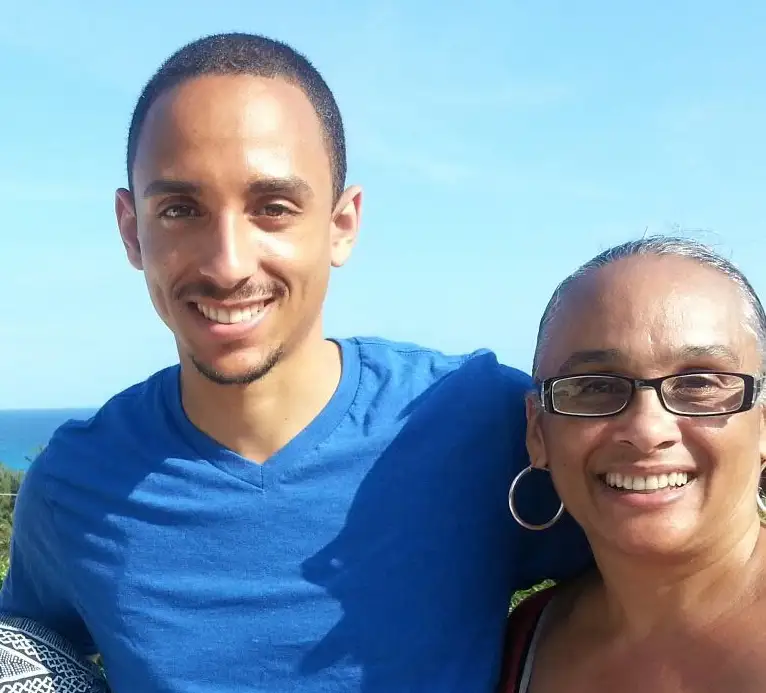
Marilyn LaVonne Bean and Sergio Lottimore pictured together. Image: Photo supplied/Facebook
The Coast Guard is aware that a civilian vessel in the area located debris in the water associated with the aircraft.
“During this incredibly difficult time, our heartfelt condolences go out to the families and friends impacted by this tragic incident,” said Rear Adm. Matthew Lake, Commander, Coast Guard Northeast District. “We are grateful to the crews and partner agencies who quickly responded to this incident, and we will continue to support our Canadian partners as they conduct their investigation.”
The Transportation Safety Board of Canada is the lead agency investigating the incident. The Coast Guard continues to coordinate with Canadian authorities and partner agencies as appropriate.
The lawyers representing Curtis Dickinson and the PLP in a legal tussle over membership rules have delivered their arguments. Now we wait for Justice Shade Subair Williams to deliver a judgement…
It was the last day in court for the PLP membership trial – but we’ll still have to wait for the final judgement.
On Friday, the PLP’s defence lawyer Mark Pettingill argued that bulk membership payments, made on behalf of applicants by the Curtis Dickinson campaign, must be individually verified by the party before each one is counted.
Today, Mr Dickinson’s lawyer Delroy Duncan supplied a list that the campaign had made which connected some of the bulk payments to individual name and constituencies.
Mr Pettingill suggested this only shows that the campaign made a list of those potential members, but does not verify that those individuals approved their applications and payments.
The defence also stated that the list only covered one of the five bulk payments, to which Mr Duncan responded that the total list could be supplied.
The court case was brought by Curtis Dickinson in response to the Central Committee voting to pass membership amendments which would impact new PLP members, or members who recently campaigned for other parties.
One of those amendments would have made brand new members ineligible to become delegates who can vote directly during the upcoming leadership election at the delayed Annual Delegates Conference.
Those amendments are currently restrained by the court, and the PLP has conceded to the plaintiff’s position that they were not passed in line with the party’s constitution.
In court today, Mr Duncan argued that the PLP’s constitution does not make membership dependant on the payment of a membership fee – only that the subscription must be paid in order to be a voting member.
He also questioned whether a verification process outside of the normal membership process is being used to exclude certain applicants.
He implied that his client has been the specific target of the amendments, saying “I suppose its just a coincidence that it coincides with Mr Dickinson bringing in a large number of applicants”…
He also said that there was no membership verification process in the PLP constitution, although Justice Shade Subair Williams asked if such a process is not implicit.
Mr Duncan argued that such an important process should either be in the constitution, or the constitution should contain a clear delegation of authority for such a process.
Justice Subair Williams has reserved her judgement on the case, so we await the final outcome.
Brent crude futures settled $1.93, or 1.89%, lower at $100.32 a barrel, while US West Texas Intermediate crude lost $1.68, or 1.84%, at $89.43
Smoke rises from a fire at the Aramco refinery south of Riyadh, Saudi Arabia, October 3, 2026. Picture taken with a mobile phone. REUTERS/Stringer
International News via Reuters:
Oil prices lost about $2 on Monday after crude exports from the Middle East increased and the Group of Seven nations pledged to boost supplies, though selling was limited by ongoing disruption fears linked to the US war with Iran.
Brent crude futures settled $1.93, or 1.89%, lower at $100.32 a barrel, while US West Texas Intermediate crude lost $1.68, or 1.84%, at $89.43.
Middle Eastern crude exports rose above pre-war levels in four of the seven days of the final week of September, shipping data showed on Monday, despite attacks on vessels passing through the Strait of Hormuz.
“Although tankers are still at risk, the hope is that at the end of the day more oil reaches the market,” said Andrew Lipow, president of Lipow Oil Associates.
Meanwhile, G7 countries agreed on Friday to release 100 million barrels of diesel and crude from emergency reserves and pledged to refrain from energy export restrictions after pressure from US President Donald Trump.
However, Raymond James analyst Pavel Molchanov said the market remained sceptical as it was unclear how much of the oil pledged under the new agreement would come from the remaining volumes of the International Energy Agency-coordinated 400 million-barrel emergency release announced in March.
IEA Executive Director Fatih Birol said last week that members had released about two-thirds of the 400-million-barrel agreement.
British oil major BP has adjusted its refineries to focus on producing more diesel, CEO Meg O’Neill told the Energy Intelligence conference in London on Monday.
SUPPLY BACKDROP STILL TIGHT
“A truce in the Middle East remains elusive, and renewed hostilities between Saudi Arabia and the Iran-backed Houthis will ensure that attacks on energy infrastructure and vessels will continue, keeping the geopolitical risk premium at an elevated level,” said PVM Oil Associates analyst Tamas Varga.
Saudi Aramco CEO Amin Nasser told the Energy Intelligence conference that he expected crude oil and refined fuel supplies to remain stretched and that refilling global stockpiles after emergency withdrawals might take two years.
Inventories of crude oil in the US Strategic Petroleum Reserve fell to 283 million barrels last week, the lowest since October 1982, according to data released by the Department of Energy on Monday.
The fighting between Saudi Arabia and Iran-backed Houthis in Yemen continued to heighten concerns about production at the top exporter in the region.
Yemeni government forces attacked Houthi positions in the Dhubab district overlooking the strategic Bab el-Mandeb Strait on Monday, two military sources said, a day after the internationally recognised government launched a campaign to retake Houthi-held territory.
OPEC+ delayed a review that would determine 2027 oil output quotas for its members after the Iran war disrupted projects to expand capacity across the Middle East, throwing estimates of future production potential into uncertainty, said two sources close to the matter.
Aramco, meanwhile, unexpectedly cut November crude oil prices for Asia to six-year lows.
Reporting by Nicole Jao in New York and Seher Dareen in London; Additional reporting by Ahmad Ghaddar, Florence Tan and Sethuraman NR; Editing by David Goodman, Jan Harvey, Bill Berkrot and Jonathan Spicer and Sanjeev Miglani
The snap vote is a high-stakes gamble for Sanchez, whose Socialist Party trails in nearly every opinion poll
International News via Reuters:
Spanish Prime Minister Pedro Sanchez on Monday called an early election for November 29, aiming to increase his parliamentary support after lawmakers last week rejected proposals to address a housing crisis that has drawn nationwide protests.
The snap vote is a high-stakes gamble for Sanchez, whose Socialist Party trails in nearly every opinion poll. An electoral defeat would spell the end of one of Europe’s last remaining left-leaning governments at a time when the far right is making unprecedented gains across the region.
It reflects a broader malaise across Europe, under pressure from US President Donald Trump on defence spending, cheap Chinese imports, higher borrowing costs, disaffected youth and the biggest surge in support for the far-right since the 1930s.
However, Sanchez, a wily political operator, has proven time and again his ability to surprise those who had long written him off. An election now could see him capitalise on a wave of anger at unaffordable housing in Spain.
“We need to mobilise and win a much larger progressive majority in parliament, one that will allow us to overcome vested interests, deliver new social advances and continue transforming Spain,” Sanchez said in a televised address.
Spain’s blue-chip index was flat after the announcement, while Spanish government bonds were broadly steady.
OPPOSITION PLEDGES MORE HOMEBUILDING
Alberto Nuñez Feijoo, leader of the opposition People’s Party (PP), on Monday pledged to almost double homebuilding in Spain to 200,000 units a year and cut taxes if he gained power.
“Housing has been this government’s great failure and must be the next one’s success. When a prime minister has been in office for eight years, it is very difficult to blame others for what he has failed to do,” Feijoo said at a small business conference.
Sanchez has made a name internationally with progressive stances on issues from Palestinian statehood to defending multilateral institutions and cracking down on “tech oligarchs”, even as a series of scandals weakened his position at home.
The recent protests over housing have given him a much-needed fillip, with proposals that were struck down by right-wing lawmakers on Friday welcomed by protesters.
Spain’s two largest unions said they would call a 24-hour general nationwide strike this autumn to request better salaries to help people afford housing, fulfilling a request by the protesters after parliament rejected Sanchez’s housing decrees.
“We will continue mobilizing and engaging in collective bargaining until housing ceases to be a privilege and wages allow for a life with dignity,” unions CCOO and UGT said in a joint statement, adding no date had been set for the strike.
Polls suggest a coalition led by the PP with the support of anti-immigration Vox is the most likely outcome, which would usher a far-right party into central government for the first time since Spain’s return to democracy following the 1975 death of dictator Francisco Franco.
PP and Vox would win a combined 203 seats in the lower house, a comfortable majority in the 350-seat chamber, according to a Sigma Dos poll published on Monday in El Mundo newspaper. The Socialists and their junior coalition partners Sumar were projected to win 112 seats.
Sanchez has cobbled together a series of fragile coalitions including voices from the far-left to the separatist right to remain in power for eight years.
Growing fragmentation among his partners has meant the government has failed to pass a budget and has enacted only a few laws since 2023, even as Spain’s economy has continued to outperform the rest of the developed world.
Sanchez plans to force through the two housing decrees that were rejected by parliament last week via a rarely used legislative mechanism, according to state broadcaster TVE and newspaper El Pais.
When the 350-member chamber is dissolved ahead of an election, a standing body made up of 68 members plus the house speaker remains in place to pass emergency legislation, which has a slim 35-34 majority in favour of the measures.
VOX SEES UNPREDICTABLE ELECTION
Vox leader Santiago Abascal warned the election result would be unpredictable despite favourable polling for the right.
The decision to call a snap election reflected Sanchez’s inability to govern without a stable majority, said Miriam Nogueras, parliamentary spokesperson for the Catalan pro-independence party Junts, which in recent years had stopped voting with the government.
Sanchez won a second four-year term in office in 2023 after promising a highly controversial amnesty for pro-independence Catalan leaders in exchange for their support, a move still bitterly remembered by many voters as a betrayal of Spanish unity.
He won early plaudits for moves including the exhumation of Franco from a mausoleum the dictator built for himself outside Madrid, and a labour law reform that has helped reduce unemployment to its lowest level in almost two decades.
He has argued that immigration is essential for sustaining Spanish growth and has refused to agree to US-led demands to increase defence spending to 5% of GDP, angering Trump.
Sanchez’s housing measures provided a rare chance for him to pitch himself as the leader of a mobilised left and distract from the more politically damaging issues of the migrant crisis in Ceuta and corruption scandals, said Lorenzo Bernaldo de Quiros, economist and president of consultancy Freemarket Corporate Intelligence.
“This is a window of opportunity,” Bernaldo de Quiros said. “If he does not call elections fast, (those topics) will return to centre stage.”
Reporting by David Latona, Victoria Waldersee, Emma Pinedo and Mireia Merino; additional reporting by Joan Faus; Writing by Charlie Devereux and Aislinn Laing; Editing by Susan Fenton, Alexandra Hudson, Hugh Lawson and Jonathan Spicer
Flash floods in the capital Dakar and elsewhere disrupted traffic, testing the West African country’s infrastructure weeks before it hosts the 2026 Summer Youth Olympics, starting on October 31
International News via Reuters:
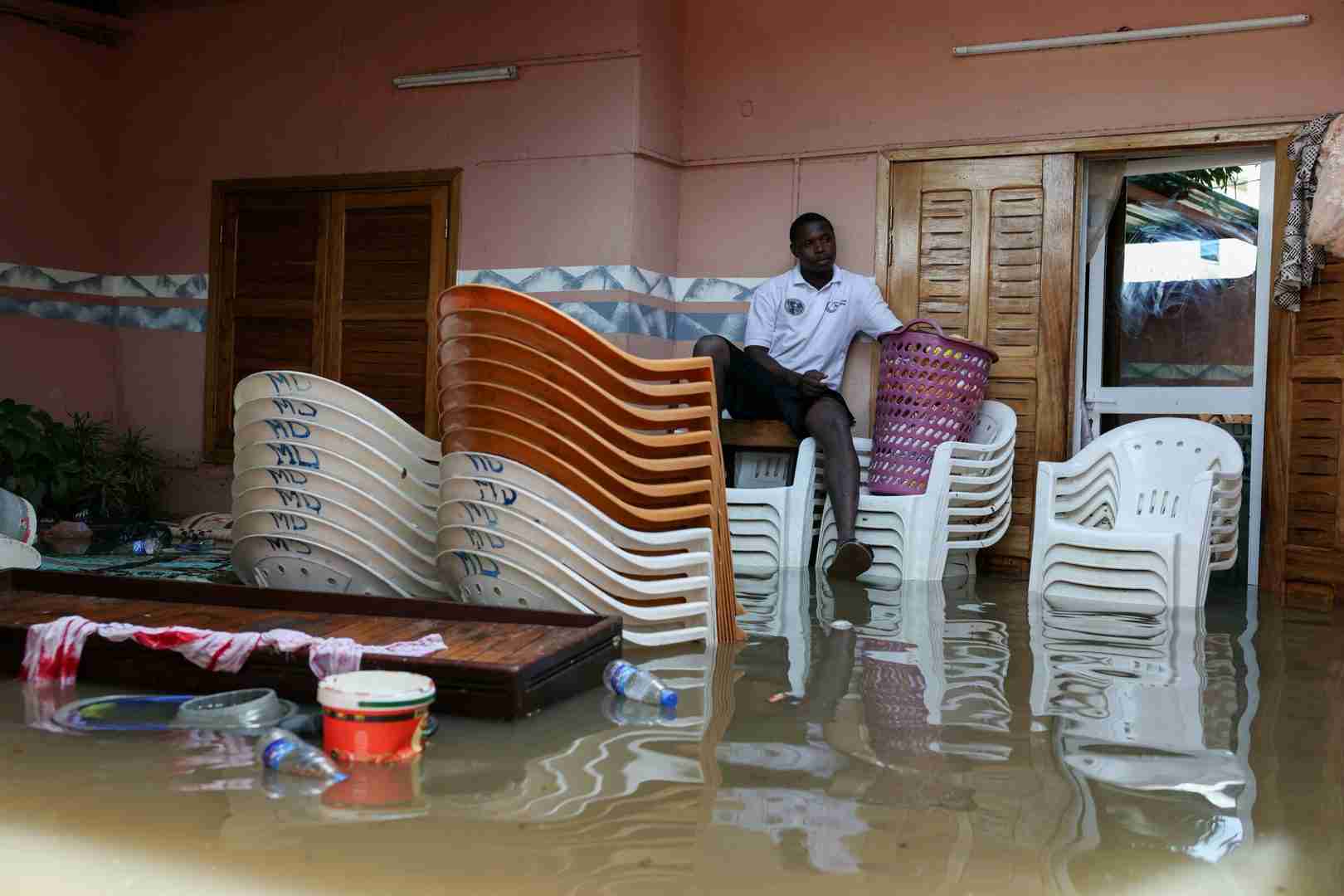
Heavy rains flooded roads and destroyed buildings over the weekend in Senegal, as the government said several people had been killed and warned of more rain to come.
• Flash floods in the capital Dakar and elsewhere disrupted traffic, testing the West African country’s infrastructure weeks before it hosts the 2026 Summer Youth Olympics, starting on October 31.
• Local media reported that a mother and her child had been killed in the Parcelles Assainies area of Dakar after their home was flooded.
• The Interior Ministry reported deaths and injuries in Dakar and the northeastern town of Matam. It said a building had collapsed in the southern town of Kaolack.
• Prime Minister Ahmadou Al Aminou Lo said there was a high probability of more rain on Monday, Tuesday and Wednesday
• He also said this week’s start of the school year could be postponed if floodwaters did not recede.
• Senegal’s meteorological agency ANACIM said the town of Rufisque, just outside Dakar, and the town of Ranerou in the Matam region had recorded 142 mm of rain in 24 hours. Dakar’s Yoff district recorded 138 mm.
Reporting by Anait Miridzhanian and Diadie Ba; Editing by Robbie Corey-Boulet and Kevin Liffey
The Nobel Assembly of Sweden’s Karolinska Institutet said Deisseroth, 54; Hegemann, 71; and Nagel, 73, had been selected for their “discoveries concerning light-gated ion channels and optogenetics.”
Karl Deisseroth, a co-winner of the 2026 Nobel Prize in Physiology or Medicine, celebrates at Stanford University’s James H. Clark Center in Stanford, California, US, October 5, 2026. REUTERS/Manuel Orbegozo
International News via Reuters:
American Karl Deisseroth and Germans Peter Hegemann and Georg Nagel won the 2026 Nobel Prize in Physiology or Medicine on Monday for developing optogenetics, a technique that uses light to control individual nerve cells in the brain.
The Nobel Assembly of Sweden’s Karolinska Institutet said Deisseroth, 54; Hegemann, 71; and Nagel, 73, had been selected for their “discoveries concerning light-gated ion channels and optogenetics.”
“This method makes it possible to switch on, or off, the activity of individual nerve cells in a living brain,” said Thomas Perlmann, Secretary-General of the Nobel Assembly at Karolinska Institutet.
Anna Wedell, a professor in genetics and a member of the Nobel Committee for Physiology or Medicine, said a new era in neuroscience had opened but it was only the beginning.
“For the first time we can actually start to understand how the brain processes information and how different neurons interact across the brain,” she said.
The trio will share a prize sum of 12 million Swedish crowns ($1.2 million). Announcements will follow in the coming days on this year’s Nobel physics, chemistry, literature, peace and economics prizes, with the winner or winners of the 2026 Nobel Peace Prize to be announced on Friday.
Deisseroth said he was still awake in the early hours when he was called from Stockholm.
“I was not yet asleep, being a night owl, and now I don’t think I’ll be able to sleep for quite a while,” he said.
Hegemann said he was overwhelmed at getting a call from a number he recognized to be in Sweden: “It’s unbelievable when you get this message.”
Nagel said he was sitting on a terrace “in a nice little village outside Naples” when the call came through.
“I actually thought it would not happen, but some other people always told me this will happen,” Nagel said.
BREAKTHROUGH FROM ALGAE
Deisseroth was training to become a neurosurgeon when he encountered patients he could not help at a psychiatric clinic. That encounter – witnessing suffering he had no tools to treat – prompted a career-defining question: Why does the brain work so differently in different people?
The answer would come from an unexpected place: an alga, and two German scientists driven by equally simple curiosity.
Hegemann, fascinated by exploration and unknown territory, began investigating in the early 1990s how the alga Chlamydomonas reacts to light in half a millisecond.
He hypothesized that a single protein both captured light and acted as an ion channel, and contacted Nagel to ask him to test it.
“This was a good chance to do something new and exciting,” Nagel said of the original call from Hegemann, which resulted in him injecting Chlamydomonas genes into frog eggs and discovering channelrhodopsin-2, a light-sensitive ion channel.
In 2003, Nagel and Hegemann published findings showing the protein could be introduced into human cells to generate electrical impulses using light. Deisseroth showed the technique in rat nerve cells in 2005, and the method was named optogenetics in 2006.
One scientist at Hegemann’s Max Planck Institute in Frankfurt in 2007 recalled researchers taping optical fibers salvaged from Christmas decorations to microscopes.
“We didn’t really know how it worked, we didn’t really have any tools,” said Dima Kuzmin, a neurochemist at the time. “And it was massively exciting.”
TREATMENTS UNDER DEVELOPMENT
The three laureates’ research is now providing insights about brain disorders. Animal models are being used to understand schizophrenia, Alzheimer’s disease, Parkinson’s disease, epilepsy and addiction – conditions that affect millions of people worldwide and have limited treatment options.
Deisseroth used optogenetics to control the movements of mouse whiskers by activating specific nerve cells in the motor cortex. He also used light to wake sleeping mice, confirming that specific nerve cells control wakefulness.
“There are mouse models of dementia, epilepsy, addiction,” Wedell said. “By understanding which cells are active in these diseases in mice, we can understand where to look in humans.”
Researchers are also applying the technique to try to restore vision to people blinded by retinitis pigmentosa, a progressive eye disease, by inserting a light-sensitive protein into the retina. They also hope optogenetics could improve cochlear implants, potentially allowing more precise stimulation of the auditory nerve than current electrical devices.
“When you think about it in the retina, all patients need to do is open their eyes and you have the light,” said Paul Bresge, CEO of US biotechnology company Ray Therapeutics, which is developing a therapy to treat retinitis pigmentosa. “So it makes a lot of sense as a potential therapy.”
The most advanced of the treatments are autism spectrum disorder therapy by a US-based biotech company MapLight, co-founded by Deisseroth, and a vision restoration medicine for retinitis pigmentosa by Nanoscope, also based in the United States, though both are still some way from reaching patients.
Manuel Valero, researcher at Barcelona-based Hospital del Mar, where he heads the Neural Computation Laboratory, said optogenetics had “allowed us to push the boundaries between science and science fiction.”
“In laboratory animals, we have managed to control emotions, create false memories or even recover lost memories in models of Alzheimer’s disease,” Valero said. “Perhaps the great promise it has yet to fulfil is precisely one of its founding promises: its ability to treat diseases of the human brain.”
Each laureate’s path reflected their distinct character. Hegemann developed an early fascination with exploration, viewing scientific research as charting unknown territory.
Nagel had worked as a teacher, opened a cafe and taken up hang gliding as a hobby. The suffering witnessed by Deisseroth at the psychiatric clinic drove him to seek deeper understanding of the brain through research rather than clinical practice alone.
Additional reporting by Niklas Pollard, Simon Johnson, Greta Rosen Fondahn, Terje Solsvik and Anna Ringstrom, Ilze Filks, Tom Little, Anna Uras and Jonathan Allen in New York; Writing by Niklas Pollard in Stockholm and Bhanvi Satija in London, Editing by Timothy Heritage and Sanjeev Miglani
To provide the best experiences, we use technologies like cookies to store and/or access device information. Consenting to these technologies will allow us to process data such as browsing behavior or unique IDs on this site. Not consenting or withdrawing consent, may adversely affect certain features and functions.
Functional
Always active
The technical storage or access is strictly necessary for the legitimate purpose of enabling the use of a specific service explicitly requested by the subscriber or user, or for the sole purpose of carrying out the transmission of a communication over an electronic communications network.
Preferences
The technical storage or access is necessary for the legitimate purpose of storing preferences that are not requested by the subscriber or user.
Statistics
The technical storage or access that is used exclusively for statistical purposes.The technical storage or access that is used exclusively for anonymous statistical purposes. Without a subpoena, voluntary compliance on the part of your Internet Service Provider, or additional records from a third party, information stored or retrieved for this purpose alone cannot usually be used to identify you.
Marketing
The technical storage or access is required to create user profiles to send advertising, or to track the user on a website or across several websites for similar marketing purposes.