
The snap vote is a high-stakes gamble for Sanchez, whose Socialist Party trails in nearly every opinion poll
International News via Reuters:
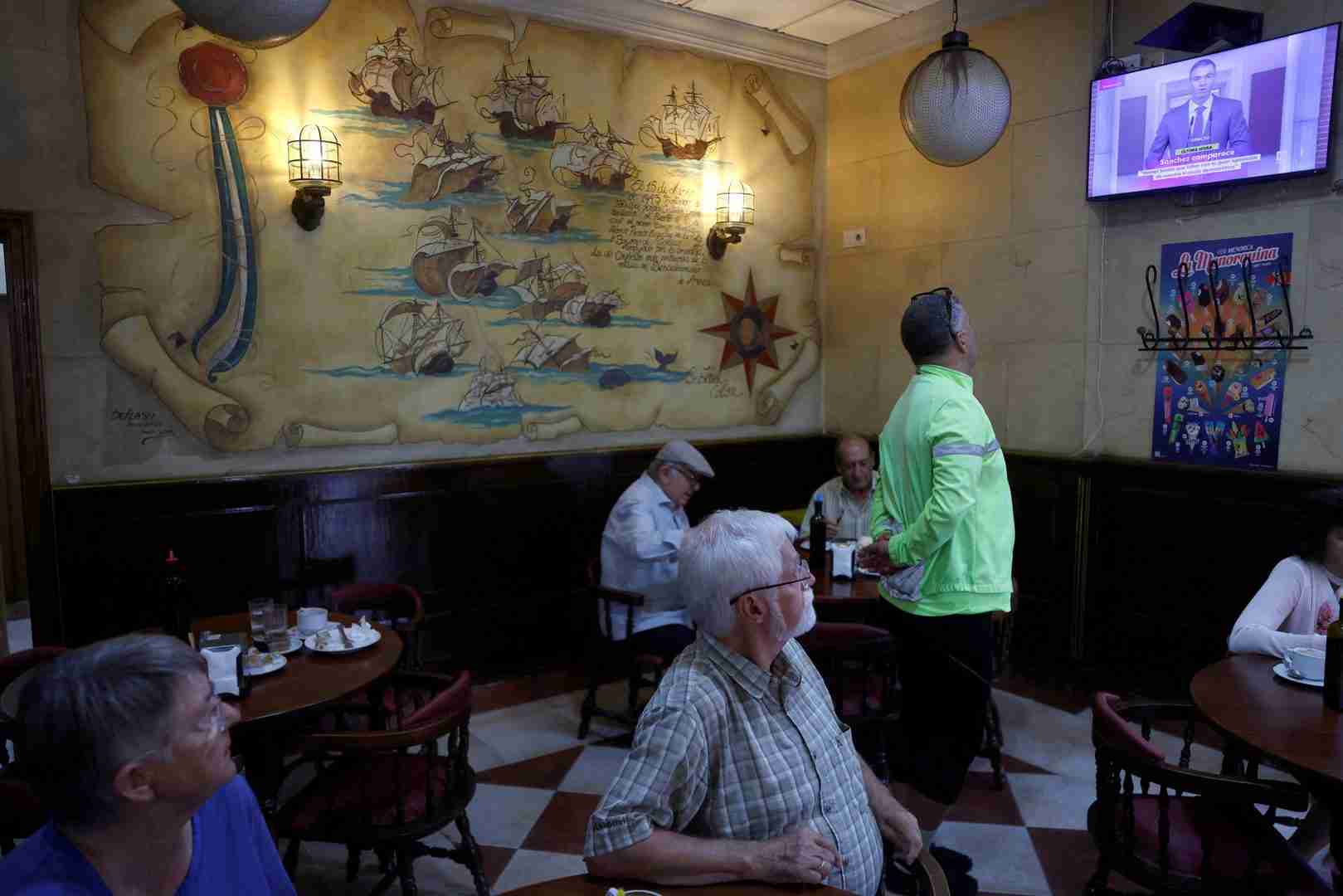
Spanish Prime Minister Pedro Sanchez on Monday called an early election for November 29, aiming to increase his parliamentary support after lawmakers last week rejected proposals to address a housing crisis that has drawn nationwide protests.
The snap vote is a high-stakes gamble for Sanchez, whose Socialist Party trails in nearly every opinion poll. An electoral defeat would spell the end of one of Europe’s last remaining left-leaning governments at a time when the far right is making unprecedented gains across the region.
It reflects a broader malaise across Europe, under pressure from US President Donald Trump on defence spending, cheap Chinese imports, higher borrowing costs, disaffected youth and the biggest surge in support for the far-right since the 1930s.
However, Sanchez, a wily political operator, has proven time and again his ability to surprise those who had long written him off. An election now could see him capitalise on a wave of anger at unaffordable housing in Spain.
“We need to mobilise and win a much larger progressive majority in parliament, one that will allow us to overcome vested interests, deliver new social advances and continue transforming Spain,” Sanchez said in a televised address.
Spain’s blue-chip index was flat after the announcement, while Spanish government bonds were broadly steady.
OPPOSITION PLEDGES MORE HOMEBUILDING
Alberto Nuñez Feijoo, leader of the opposition People’s Party (PP), on Monday pledged to almost double homebuilding in Spain to 200,000 units a year and cut taxes if he gained power.
“Housing has been this government’s great failure and must be the next one’s success. When a prime minister has been in office for eight years, it is very difficult to blame others for what he has failed to do,” Feijoo said at a small business conference.
Sanchez has made a name internationally with progressive stances on issues from Palestinian statehood to defending multilateral institutions and cracking down on “tech oligarchs”, even as a series of scandals weakened his position at home.
The recent protests over housing have given him a much-needed fillip, with proposals that were struck down by right-wing lawmakers on Friday welcomed by protesters.
Spain’s two largest unions said they would call a 24-hour general nationwide strike this autumn to request better salaries to help people afford housing, fulfilling a request by the protesters after parliament rejected Sanchez’s housing decrees.
“We will continue mobilizing and engaging in collective bargaining until housing ceases to be a privilege and wages allow for a life with dignity,” unions CCOO and UGT said in a joint statement, adding no date had been set for the strike.
Polls suggest a coalition led by the PP with the support of anti-immigration Vox is the most likely outcome, which would usher a far-right party into central government for the first time since Spain’s return to democracy following the 1975 death of dictator Francisco Franco.
PP and Vox would win a combined 203 seats in the lower house, a comfortable majority in the 350-seat chamber, according to a Sigma Dos poll published on Monday in El Mundo newspaper. The Socialists and their junior coalition partners Sumar were projected to win 112 seats.
Sanchez has cobbled together a series of fragile coalitions including voices from the far-left to the separatist right to remain in power for eight years.
Growing fragmentation among his partners has meant the government has failed to pass a budget and has enacted only a few laws since 2023, even as Spain’s economy has continued to outperform the rest of the developed world.
Sanchez plans to force through the two housing decrees that were rejected by parliament last week via a rarely used legislative mechanism, according to state broadcaster TVE and newspaper El Pais.
When the 350-member chamber is dissolved ahead of an election, a standing body made up of 68 members plus the house speaker remains in place to pass emergency legislation, which has a slim 35-34 majority in favour of the measures.
VOX SEES UNPREDICTABLE ELECTION
Vox leader Santiago Abascal warned the election result would be unpredictable despite favourable polling for the right.
The decision to call a snap election reflected Sanchez’s inability to govern without a stable majority, said Miriam Nogueras, parliamentary spokesperson for the Catalan pro-independence party Junts, which in recent years had stopped voting with the government.
Sanchez won a second four-year term in office in 2023 after promising a highly controversial amnesty for pro-independence Catalan leaders in exchange for their support, a move still bitterly remembered by many voters as a betrayal of Spanish unity.
He won early plaudits for moves including the exhumation of Franco from a mausoleum the dictator built for himself outside Madrid, and a labour law reform that has helped reduce unemployment to its lowest level in almost two decades.
He has argued that immigration is essential for sustaining Spanish growth and has refused to agree to US-led demands to increase defence spending to 5% of GDP, angering Trump.
Sanchez’s housing measures provided a rare chance for him to pitch himself as the leader of a mobilised left and distract from the more politically damaging issues of the migrant crisis in Ceuta and corruption scandals, said Lorenzo Bernaldo de Quiros, economist and president of consultancy Freemarket Corporate Intelligence.
“This is a window of opportunity,” Bernaldo de Quiros said. “If he does not call elections fast, (those topics) will return to centre stage.”
Reporting by David Latona, Victoria Waldersee, Emma Pinedo and Mireia Merino; additional reporting by Joan Faus; Writing by Charlie Devereux and Aislinn Laing; Editing by Susan Fenton, Alexandra Hudson, Hugh Lawson and Jonathan Spicer