The blue-chip FTSE 100 index fell 0.6% to 10,751.57 points by 0953 GMT, poised for its biggest weekly jump since late July
International News via Reuters:
London’s FTSE 100 pulled back from an over one-week high on Friday, dragged by banks and energy stocks, but was set for gains in a week packed with economic data and central bank decisions.
The blue-chip FTSE 100 index fell 0.6% to 10,751.57 points by 0953 GMT, poised for its biggest weekly jump since late July. The midcap FTSE 250 was flat, but was on track for its sharpest weekly rise since early August.
• On Friday, financial stocks were the biggest drags on the index. Banks lost 0.7%, with Lloyds and HSBC falling 1.2% and 0.6% respectively.
• Energy companies were down 0.8%, as oil prices fell for a third straight session on easing concerns over Saudi supply disruptions. [O/R]
• Telecom stocks were the biggest percentage decliners with a 4.3% tumble. Airtel Africa lost 8.8% after a report said its Airtel Money was considering downsizing its London IPO.
• On the flip side, precious metal miners rose 1.6%, as gold prices extended their rally.
• Data showed British consumers unexpectedly increased their shopping in August, although they cut fuel purchases after prices jumped.
• The report comes a day after the Bank of England held interest rates steady but warned that policymakers might have to go up if the Iran war drags on.
• Brokerages changed their rate calls following the decision, with Barclays joining J.P.Morgan in expecting a hike in November.
• The central bank on Thursday also paused UK government bond sales for six months and halted long-dated gilt sales entirely, days after a global bond rout. Gilts steadied on Friday after last session’s rally.
• The US Federal Reserve hiked rates by 25 basis points this week, and the central bank reinforced its fight against inflation, sparking a rally across global markets on Thursday.
• Among individual stocks, Softcat bottomed the FTSE 250 with a 2.8% fall after the IT firm agreed to buy US-based GDT at an enterprise value of $1.05 billion.
Retail sales volumes rose 0.5% from July, beating economists’ forecasts in a Reuters poll for a 0.2% fall
International News via Reuters:
The pound rose slightly on Friday after figures showed UK retail sales unexpectedly rose in August, continuing a string of recent upbeat data that has increased pressure on the Bank of England to hike interest rates.
Retail sales volumes rose 0.5% from July, beating economists’ forecasts in a Reuters poll for a 0.2% fall. Compared with August last year, overall sales volumes were up by 2.4%.
The pound ticked very slightly higher after the figures were released and was last up 0.1% at $1.337. It was little changed against the euro, with the single currency flat at 85.91 pence.
“For now, the resilience of the economy is one more thing nudging the Bank of England closer to raising interest rates,” said Paul Dales, chief UK economist at Capital Economics.
But Dales said inflation has yet to peak and that would likely slow growth later in the year.
The BoE kept rates on hold at 3.75% on Thursday but said inflation would likely now peak above 4% early next year and warned borrowing costs might go up if the Iran war drags on.
Bank officials raised their forecast for third-quarter growth in the wake of figures earlier this week that showed output expanded at the fastest annual pace in 18 months in July.
Traders in money markets were last pricing in a roughly 65% chance of a rate hike in November and anticipate around four 25-basis-point increases by the end of 2027.
Despite Friday’s slight rise, the pound was set for its biggest weekly fall since June, at 1.2%, after the US Federal Reserve hiked interest rates on Wednesday and surprised markets with hawkish language that suggested more increases could be coming. Sterling fell 0.7% on Wednesday as the dollar rallied.
Rising energy prices due to the Iran conflict have caused markets to raise their bets on rate hikes, helping drive bond yields to multi-year or even multi-decade highs globally.
The impact on currency markets has largely been subdued, however, as bond yields have moved similarly around the world.
Reporting by Harry Robertson; Editing by Joe Bavier
US-based expert witness, Glenn Luben gave evidence today of his conclusions following an investigation into the cause of the fatal collision
A crash investigator today linked a taxi driven by Curtis Richardson to fatal injuries suffered by footballer Marco Warren.
Former Government Senator Mr. Richardson denies causing the death of Mr. Warren by driving without due care and attention.
Tampa-based collision investigator, Glenn Luben is an impact analyst and adjunct lecturer on scene reconstruction for law enforcement, testifying for the crown’s case.
Mr. Luben told jurors: “I concluded a vehicle, T1194, a taxi, is the vehicle that ran over Marco Warren in the street on North Shore Road.”
Marco Warren Photo: PHC/Twitter
He had put together photographs, post-mortem details and the body measurements of Marco Warren, supplied by a forensic pathologist.
Mr. Luben said Mr. Warren was standing up right and walking before being struck in the east bound lane of North Shore Road, near the entrance of Panorama drive.
Crown prosecutor Carrington Mahoney asked Mr. Luben how he reached his conclusions.
He described analyzing photographs of Mr. Warren injuries; two pelvic fractures or pattern of lines consistent with contact with two support beams of the taxi engine’s transmission.
He said: “All these markings on the body are indicative of the body being run over.”
Mr. Luben told the jury he visited the island for three days and was tasked by the Bermuda Police Service to investigate what happened in the early hours of May 14, 2023.
He made measurements of the taxi and its bumpers and concluded they matched the location of marks on Mr. Warren’s leg. He further suggested the dimensions of Marco Warren’s injuries from the feet to the torso, collapsed diaphragm and broken ribs, matched the measurements of the vehicle.
He also noted that when examining the taxi vehicle allegedly involved in the incident, he was informed the taxi had changed ownership and had a new taxi plate, T1183.
Questioned about speed, Mr Luben said the taxi was moving at low or medium speed.
He said: “There was no evidence such as skid marks or braking to lead to direct evidence of his speed.”
He told the jury that injuries consistent with impact with a vehicle traveling at a high rate of speed would appear different.
Mr Luben said the street was dry and illuminated by overhead lights.
“A prudent driver could have had sufficient time to take a manouvering action.”
“I can comfortably say there was no other vehicle that ran over Marco Warren.”
Defense lawyer Victoria Greening suggested that Mr. Luden was directed by the Bermuda Police Office and given “marching orders” to specifically find evidence that the taxi caused the fatal collision.
He denied this notion by stating that he examines the evidence presented to him to investigate and draws his own conclusion.
He argued: “They know my integrity, my ethics in every case. I testified what I believe what happened. The facts were the facts in the end. It was months I worked it.”
Ms Greening asked if it was true that he failed to investigate whether he could have been run over by another vehicle, other than the taxi?
“There was nothing to indicate that,” Mr. Luben said.
Mr. Luben was asked if he considered examining a Mazda type motorcar that was seen by driver Renee Wallace, who gave evidence of seeing a car traveling fast near Bay Corner.
Mr. Luben said another vehicle would have been bad damage on the hood and nobody came forward with another vehicle to be examined.
“I can only go by what is provided”, he added.
Mr. Luben agreed with Ms Greening and the defense that there was no eyewitness who saw Mr Warren struck.
Questioned whether he knew precisely what Mr Warren was doing before he was struck, Mr Greening asked if he could have staggered or made unpredictable movements, given he was intoxicated.
Mr Luben said it was possible.
Ms Greening suggested it was possible Mr Warren had already been lying on the ground before the drivers of the taxi and BMW arrived at the scene.
Mr Luben said: “The injuries on his lower extremities shows he was not lying on the ground when he was struck. All the evidence I that he projected forward and was ran over.”
Attacks on Irish politicians are rare but lawmakers have reported an increase in intimidation in recent years
International News via Reuters:
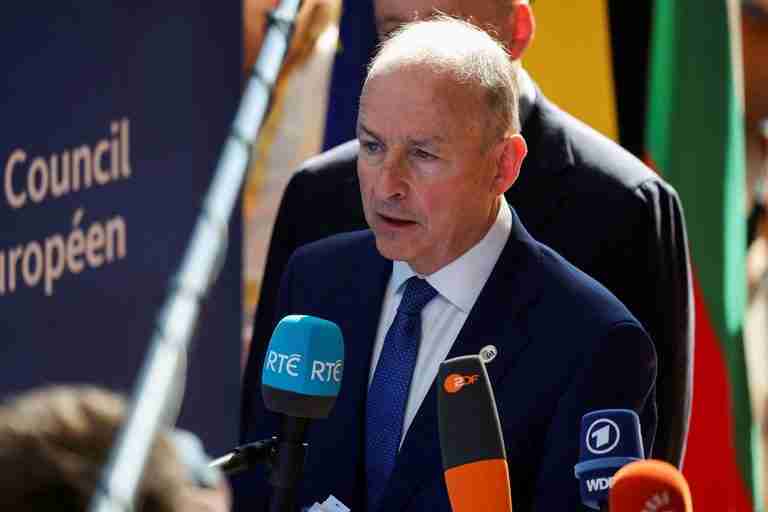
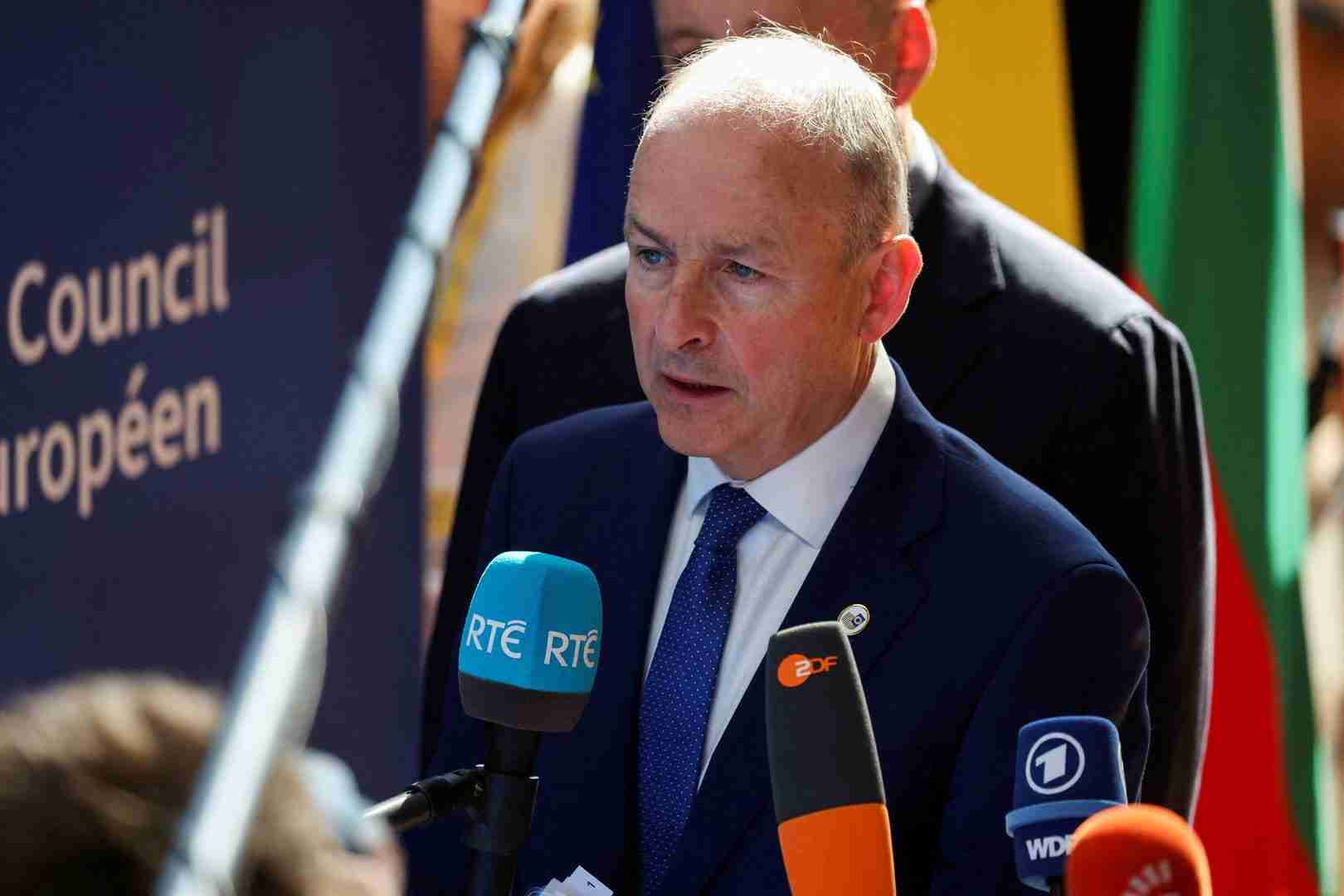
Irish Prime Minister Micheal Martin on Thursday condemned an assault on an independent politician as “an attack on democracy” and said the country needed to take very seriously a rise in hostility to those in office.
Attacks on Irish politicians are rare but lawmakers have reported an increase in intimidation in recent years.
Irish police said they had arrested a man in his 50s in relation to an assault in central Dublin on Wednesday.
Michael Healy-Rae, 59, who until April was a junior minister in the centre-right-led coalition and is one of the best-known politicians in the country, was discharged from hospital after treatment for face wounds that required stitches.
Healy-Rae is part of a political dynasty of independent lawmakers from the southern county of Kerry. National broadcaster RTE aired a prime-time, 90-minute documentary on the family last month.
He said in a statement a conversation was required about the growing toxicity towards politicians.
Martin told a news conference the assault on Healy-Rae reflected what seemed to be “an increased propensity for violence, for aggression, for hostility in our society”.
“We never had this before in our society and our democracy is relatively unusual in the sense that our members of parliament, indeed, ministers and even myself, can walk through our streets unhindered, and this is a significant moment that we have to take very seriously,” he said.
Police said they did not yet know the perpetrator’s motivation but did not rule out that it was due to Healy-Rae’s position as a public figure.
Reporting by Padraic Halpin; editing by Barbara Lewis
In January last year, Britain issued an order, known as a technical capability notice, for what is known as a back door to allow it access to encrypted cloud backups of data of U.S. and British citizens
International News via Reuters:
The British government’s refusal to confirm whether it has issued an order to bypass encryption to access customer data held by Apple has become farcical, a lawyer for civil rights groups told a London tribunal on Thursday.
In January last year, Britain issued an order, known as a technical capability notice, for what is known as a back door to allow it access to encrypted cloud backups of data of U.S. and British citizens.
That demand was dropped following months of negotiations with U.S. President Donald Trump’s administration, but in July Britain issued a second notice that applied just to Apple’s UK customers.
The issue has been clouded in secrecy as the British government says it cannot comment on the existence of individual TCNs because it operates a policy of neither confirm nor deny on security matters.
APPLE AND CAMPAIGN GROUPS HAVE BOTH TAKEN ACTION
Apple has launched a challenge at a specialist court, the Investigatory Powers Tribunal, but has been unable to give public details on why because of legal restrictions.
Campaign groups have also taken action over the order, which they say would violate human rights and weaken security, even though the government refuses to confirm the TCN exists.
At Thursday’s hearing at the IPT, Ben Jaffey, the lawyer for campaign groups, Privacy International and Liberty, said the government’s position had “become farcical”.
“The horse has long bolted,” he noted, meaning it was already public knowledge.
U.S. politicians and officials had publicly referred to the original notice while unnamed UK government sources had also confirmed it to the press, he said.
Both he and Apple’s lawyer said that the UK government’s NCND policy was an affront to open justice and prevented meaningful public discussion of the issue.
The British government’s lawyer Neil Sheldon said the issue went beyond the arguments in the Apple case.
Any move away from the policy posed a national security risk and “would provide material assistance to hostile actors” who would be able to build a picture of which operators were subject to TCNs, he said.
The IPT will give a ruling on the NCND issue at a later date while a full hearing on the case itself is unlikely until next year.
Apple, which itself has no access to the encrypted data of those who make use of its Advanced Data Protection feature on their devices, including iPhones and Mac computers, has said that if it creates an entry point for one government, that could be exploited by hackers or hostile states, weakening security for all.
Following Britain’s demands, Apple withdrew its Advanced Data Protection feature for UK users in February last year, saying it would never build a back door.
Reporting by Michael Holden; editing by Barbara Lewis
The blue-chip FTSE 100 index closed 1.2% higher at 10,816.14 points, while the midcap FTSE 250 climbed 1.2% to 24,352.14 points
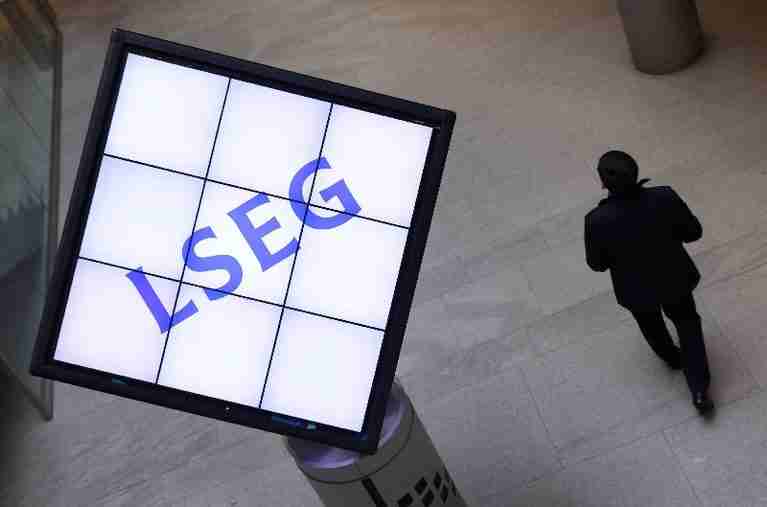
A worker walks near an LSEG (London Stock Exchange Group) branded cube inside the LSEG headquarters in Paternoster Square, London, Britain, September 8, 2026. REUTERS/Toby Melville
International News via Reuters:
The main UK indexes rose to their highest in over a week on Thursday after the Bank of England kept interest rates unchanged as expected, and said it would halt sales of long-dated gilts entirely.
The blue-chip FTSE 100 index closed 1.2% higher at 10,816.14 points, while the midcap FTSE 250 climbed 1.2% to 24,352.14 points.
• The BoE policymakers voted 6-3 to keep interest rates at 3.75%, with Governor Andrew Bailey warning explicitly that prolonged conflict in the Middle East may require tighter policy.
• “Going forward, with inflationary concerns intensifying, the MPC will be getting increasingly uncomfortable, and no doubt hikes will be coming, most likely as soon as November”, Ed Hutchings, head of rates at Aviva Investors, said.
• Traders have fully priced in at least one quarter-point rate hike by the BoE this year, with the odds of a second hike rising, per data compiled by LSEG.
• Rate-sensitive banks rose 1.6%, with HSBC and Standard Chartered leading with gains of 2% and 2.2% respectively.
• The central bank also paused UK government bond sales for six months and halted long-dated gilt sales entirely, days after a global bond selloff had pushed 30-year borrowing costs to their highest since 1998 at 5.96%.
• Gilts rallied sharply as yields fell on Thursday, with the 30-year gilt yield falling 11.8 basis points to 5.7414%, its lowest level in over two weeks.
• The US Federal Reserve raised interest rates by 25 basis points on Wednesday and indicated one more hike in the coming months, as Chair Kevin Warsh joined a unanimous vote in favour of the move.
• The decision follows a surge in oil prices in recent months, driven by the war in the Middle East that has stoked inflation and prompted policymakers worldwide to reassess monetary policy.
• Among single stocks, AstraZeneca rose around 2.4% after unveiling an investment of nearly 200 million yuan ($29.81 million) to upgrade its production and supply base in Wuxi, China, the company’s Chinese unit said in a statement.
• Among mid-caps, IT services provider Bytes Technology jumped 12% after the company reported a stronger-than-expected first-half performance and raised its full-year gross profit growth forecast.
Reproting by Anand Gopal in Bengaluru; Editing by Janane Venkatraman, Vijay Kishore and Elaine Hardcastle
The BoE’s Monetary Policy Committee voted 6-3 to keep rates at 3.75%, in line with July’s vote and matching economists’ median forecast in a Reuters poll
International News via Reuters:
The Bank of England kept interest rates on hold on Thursday but warned they might have to go up if the Iran war drags on, while predicting British inflation will top 4% early next year.
The BoE’s Monetary Policy Committee voted 6-3 to keep rates at 3.75%, in line with July’s vote and matching economists’ median forecast in a Reuters poll.
In a surprise, the committee also paused its sales of government bonds for six months and it began a longer-term overhaul of how it shrinks its debt holdings.
Despite the expected decision on interest rates, the minutes from this week’s meeting marked a clear shift in tone that positions the BoE to follow the European Central Bank and U.S. Federal Reserve by raising borrowing costs.
The Bank of Japan is expected to raise rates on Friday as the impact of the spreading Middle East conflict adds to inflation pressures around the world.
Governor Andrew Bailey said the key question of whether the energy price surge causes broader inflation pressures remained unanswered.
“That feed-through has been quite subdued, but it is early days,” he told broadcasters.
“But we’re watching this very carefully, and we will continue to do so. And we’ve given… a very, very clear message today. The longer this goes on, the more difficult this becomes,” Bailey said.
The pound fell by around half a cent against the dollar and British government bond yields dropped sharply after the announcement of no change to rates and the overhaul of the BoE’s bond-selling.
“Interest rates are at a critical cliff-edge moment,” Suren Thiru, chief economist at the Institute of Chartered Accountants in England and Wales, said. “While policy could still remain on hold this year, persistent US-Iran hostilities mean the risk of a rate hike has shifted from a possibility to a probability.”
Some analysts said they expected the BoE to raise rates only once. Asked about the market pricing almost four quarter-point hikes over the next year, Bailey said the outlook was too uncertain to judge.
Chief Economist Huw Pill and external MPC members Megan Greene and Catherine Mann again voted to raise interest rates by a quarter-point.
But this time Bailey and his deputies Sarah Breeden, Clare Lombardelli and Dave Ramsden all signalled they could back a rate rise.
INFLATION RISKS ARE STRENGTHENING
The BoE said inflation risks had tilted further to the upside since its last set of economic forecasts in July, adding the move in energy prices since then bore similarities to its “adverse” scenario that risked entrenching inflation.
While the BoE noted signs of persistent pressure were not yet showing up in wage demands or pricing by businesses, the risk was growing.
“As we do not expect to see material relief in energy prices by the time of the (next) meeting, this reinforces our conviction that the MPC will deliver an ‘insurance hike’ in November,” said Dani Stoilova, an economist at BNP Paribas.
The warning of rate hikes comes at a difficult time for Prime Minister Andy Burnham and his finance minister John Healey, who are trying to strike a positive tone about the economy before the budget on October 28.
The BoE bumped up its estimate of quarterly economic growth for the third quarter to 0.4% from its previous 0.1% estimate but said inflation — at 3.1% in August — could “now reach slightly over 4% in early 2027,” more than double its 2% target.
Previously, the BoE had forecast peak inflation of 3.2% in late 2026.
Inflation has exceeded the 2% target in all but three months over the past five years.
The BoE hardened its language on price pressures, saying: “Given the lags with which second-round effects appeared, it was not appropriate to wait too long for evidence of such effects before responding with policy.”
BOE REWRITES BOND SALES PLAN
The BoE also announced a new long-term plan to unwind its stock of British government bonds, accumulated in past attempts to stimulate the economy. Active sales of gilts will be paused for the next six months while the details are finalised.
The MPC will aim to cut its holdings of gilts for monetary policy purposes to zero by 2034, while retaining long-dated gilts only to back the issuance of bank notes.
It said it would sell its gilts that are due to mature between 2035 and 2049 back to the government, with full plans due before April 2027. Short-dated gilts due before 2035 will be held until maturity.
It will effectively leave the government’s Debt Management Office in full control of gilt issuance to the secondary market.
The entire airspace, from ground to unlimited altitude, will be closed for all flights except for commercial airline flights, approved business flights and military, customs, police and fire-rescue flights, the notice showed
International News via Reuters:
China is establishing a vast airspace security zone roughly the size of Italy around Beijing, barring all but commercial, approved business and emergency flights, months after a small aircraft crashed into the capital’s tallest building.
A permanent 600-kilometre-wide circle of “Special Restricted Area” centred around Beijing will take effect from September 20, an aviation notice attributed to Beijing airspace control authorities and available through the U.S. Federal Aviation Administration’s public NOTAM search system reviewed by Reuters showed.
The entire airspace, from ground to unlimited altitude, will be closed for all flights except for commercial airline flights, approved business flights and military, customs, police and fire-rescue flights, the notice showed.
The over 280,000-square-kilometre zone encompasses Beijing and Tianjin, much of Hebei, and extends into parts of Inner Mongolia, Shanxi, Shandong, Liaoning and the Bohai Sea. By a rough geographic estimate, some 100 million people and dozens of airports and smaller airfields fall within its bounds.
The zone is among the largest permanent airspace restrictions imposed over a capital city. It follows a rare breach of Beijing’s tightly controlled skies that raised questions about security gaps in the airspace around the Chinese capital.
A light sport aircraft crashed into the 108-storey CITIC Tower in Beijing’s central business district on June 26. Local authorities said the crash killed the sole pilot and injured 13 others who were not on board.
The 66-year-old pilot, who authorities said had repeatedly mentioned ending his life in his diary, deviated from his approved flight area and lost contact with a general aviation airport in Beijing’s suburbs from which he took off, official reports said.
CONTINUOUS SURVEILLANCE
All exempt flights operating inside the new restricted zone must strictly follow the pre-approved flight plan, report and obtain approval for any potential deviation, and maintain continuous two-way radio communication with air traffic control, the notice showed.
Aircraft are required to have surveillance and identification equipment on board that would allow air traffic controllers to identify and track them continuously and electronically. Pilots must also report “security status” before entering the restricted zone, the notice said.
Chinese state media said over the weekend a “Capital No-Fly Zone” would be established over Beijing from September 20, without specifying the exact size and scope of the restricted area.
“To strengthen airspace security management in the capital region, maintain order in aerial operations, and protect important targets on the ground and the lives and property of the public … China will designate a no-fly zone in and around the capital,” the state-run Beijing Daily said on Sunday.
Reporting by Beijing Newsroom; Editing by Sanjeev Miglani
The lawsuit was brought by the operator of a German financial portal and its founder, whose trademarked logo and image were used without consent in posts recommending investments allegedly with fraudulent intent
International News via Reuters:
A German court has ruled that Meta is liable for fake advertisements posted by third parties on its Instagram and Facebook platforms, and ordered the U.S. tech giant to remove such content and pay damages, the court said on Thursday.
The lawsuit was brought by the operator of a German financial portal and its founder, whose trademarked logo and image were used without consent in posts recommending investments allegedly with fraudulent intent.
• The portal operator reported nearly 260 violations to Meta in August 2024 alone; however, Meta took up to 62 days to remove some content, the court said.
• It ruled Meta could not rely on the Digital Services Act’s lack-of-knowledge defence, because unlike purely chronological feeds, it exercises control over the content through its algorithms and advertising practices.
• The court referred to a precedent set by a June ruling by the European Court of Justice.
• “We respectfully disagree with this decision and are considering next steps,” a Meta spokesperson said in a statement, adding that the company had taken significant action, including proactive detection measures and removal of reported content.
• According to the ruling, dated September 16, Meta must also disclose details of the fake advertisements and revenue generated from them.
• The ruling is not yet final and may be challenged by lodging an appeal, the court said.
Reporting by Linda Pasquini, Editing by Miranda Murray
In recent weeks, the debate has centred on whether the industry can and should regulate itself, drawing interventions from figures including Pope Leo, Charles and US President Donald Trump
International News via Reuters:
Britain’s King Charles warned AI leaders on Thursday of the “existential dangers” posed by the technology falling into the wrong hands, saying safeguards were needed before it was too late.
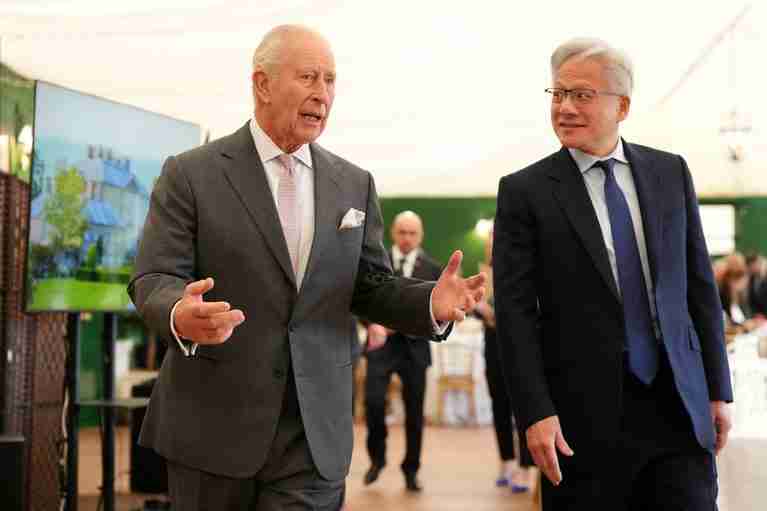
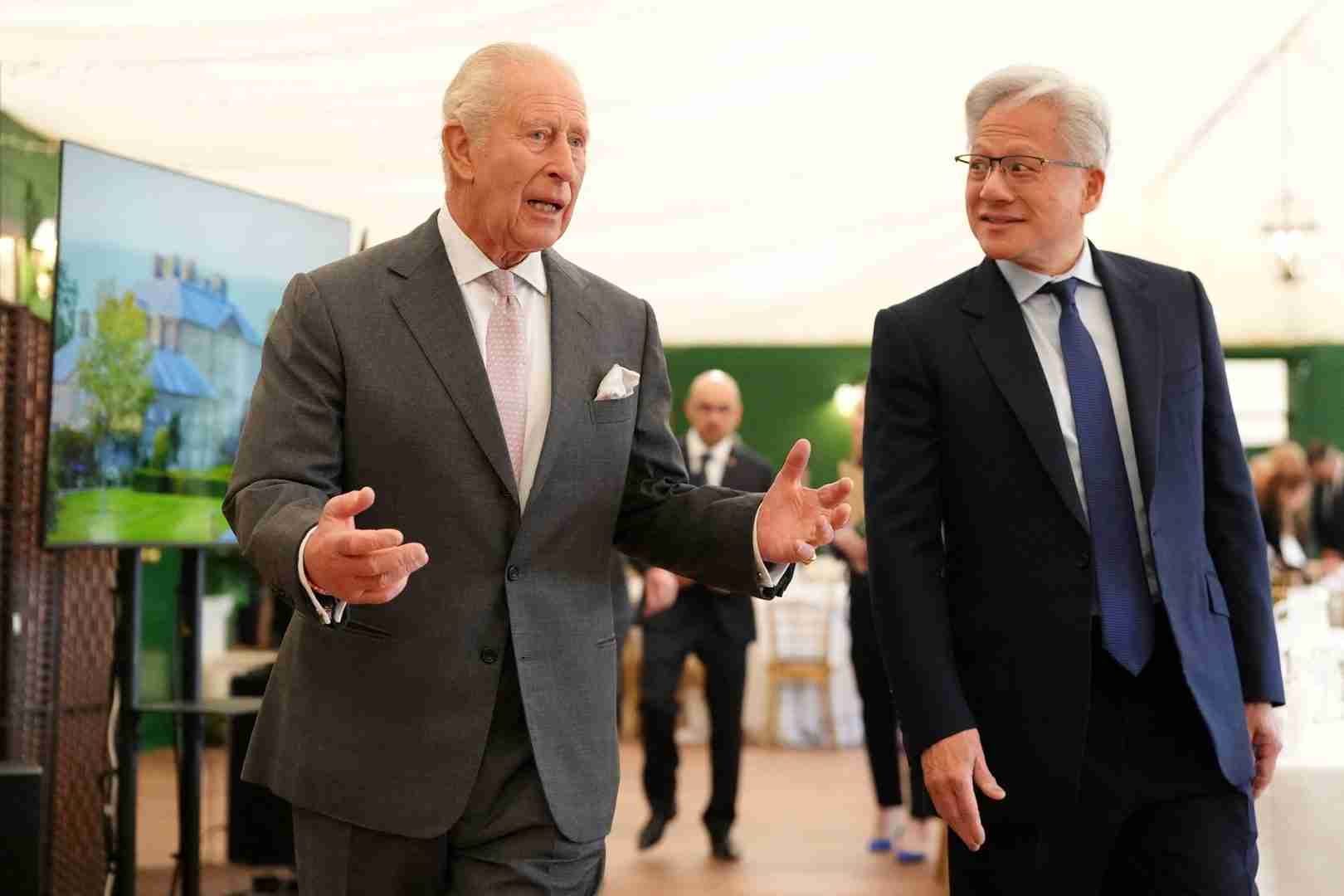
Charles was hosting the co-founders of chipmaker Nvidia and the Google DeepMind AI research laboratory, along with leaders from the AI providers OpenAI and Anthropic, in Scotland as concern grows that safety efforts are lagging behind the development of increasingly powerful systems.
In recent weeks, the debate has centred on whether the industry can and should regulate itself, drawing interventions from figures including Pope Leo, Charles and US President Donald Trump.
CHARLES CALLS FOR CONTROLS ‘BEFORE IT IS TOO LATE’
Charles said artificial intelligence had the potential to improve and save lives, particularly in life sciences and medicine.
But its creators were increasingly warning that it could develop darker capacities, “perhaps even to take life”, he said.
“There seems urgency in adequately considering the existential dangers of such technologies falling into the wrong hands, and being used in potentially catastrophic ways,” he told leaders at his Dumfries House estate.
“Surely we need sufficient means of control before it is all too late?”
The guests included Nvidia founder and chief executive Jensen Huang, Google DeepMind founder and chairman Demis Hassabis, OpenAI Chief Financial Officer Sarah Friar, Anthropic’s Chief Global Affairs Officer Tino Cuéllar and British Minister for Artificial Intelligence Kanishka Narayan.
Paolo Benanti, an adviser to the pope who has urged governments to slow AI development, also attended.
The debate over AI was rekindled when two Anthropic researchers warned that its rapid advances could lead to human extinction in the not-too-distant future.
AI firms have also reported their models escaping their testing constraints to hack into outside networks.
NVIDIA BOSS CALLS FOR SELF-REGULATION
Huang said AI had to be built with “responsible optimism”, with the onus on the developers themselves.
He said companies had to become much more rigorous in making sure that their products were ready before releasing them.
“If it’s not ready, just hold it back,” he said to broadcasters on the sidelines of the meeting. “You should go as fast as you can, but no faster than that.”
Anthropic Chief Executive Dario Amodei has also urged companies to slow the pace of AI development.
His call sparked an international debate over whether some executives have ulterior motives such as setting rules that preserve the lead of their firms, pre-empting a broader government backlash, or simply slowing breakneck spending.
Narayan, the British AI minister, said discussions had focused on the responsibilities of companies to make sure they were building AI for people’s interest.
Rather than being a one-off, the meeting was one of a “series of conversations” about the role Britain could play in the responsible development of AI, he said.
“We have some of the best capability in testing, understanding risks, and then mitigating them,” he said.
The meeting in Scotland highlighted how Charles, first as Prince of Wales and now as king, has used his position to convene discussions on a range of global issues.
Huang said Charles had brought up AI safety the first time they had met.
“If there’s anybody who spoke more profoundly and more deeply about responsible optimism, the King was one of the first to express it to me,” he said.
Writing by Kate Holton and Paul Sandle in London; additional reporting by William James in London; Editing by Mark Potter and Kevin Liffey
To provide the best experiences, we use technologies like cookies to store and/or access device information. Consenting to these technologies will allow us to process data such as browsing behavior or unique IDs on this site. Not consenting or withdrawing consent, may adversely affect certain features and functions.
Functional
Always active
The technical storage or access is strictly necessary for the legitimate purpose of enabling the use of a specific service explicitly requested by the subscriber or user, or for the sole purpose of carrying out the transmission of a communication over an electronic communications network.
Preferences
The technical storage or access is necessary for the legitimate purpose of storing preferences that are not requested by the subscriber or user.
Statistics
The technical storage or access that is used exclusively for statistical purposes.The technical storage or access that is used exclusively for anonymous statistical purposes. Without a subpoena, voluntary compliance on the part of your Internet Service Provider, or additional records from a third party, information stored or retrieved for this purpose alone cannot usually be used to identify you.
Marketing
The technical storage or access is required to create user profiles to send advertising, or to track the user on a website or across several websites for similar marketing purposes.