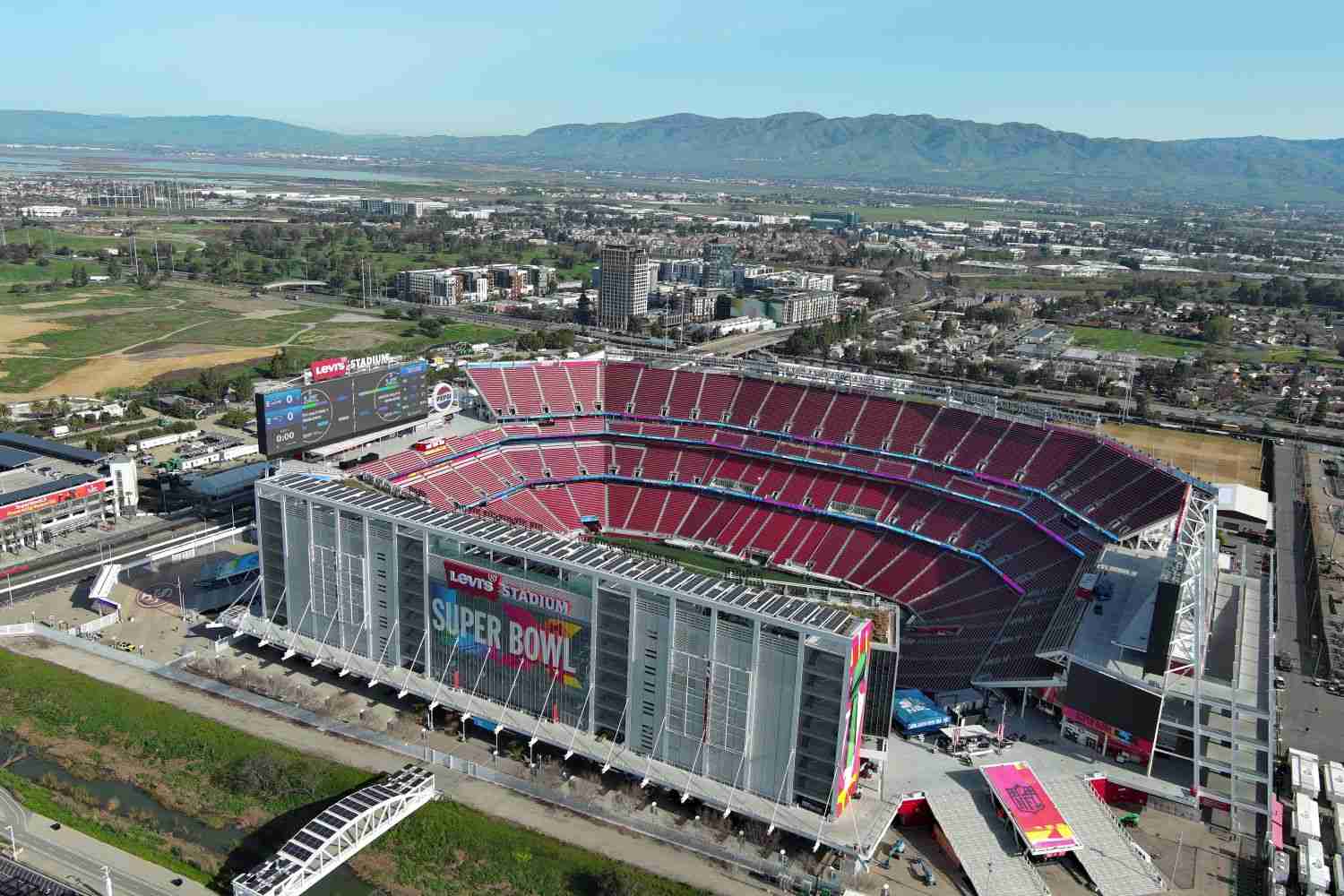
The Bay Area Host Committee used a press conference on Monday to highlight its momentum as it kicks off Super Bowl week
International News via Reuters:
The Bay Area is set to achieve an unprecedented sporting feat as Levi’s Stadium becomes the first venue in the world to host both a Super Bowl and a FIFA World Cup match in the same year.
Although the region’s World Cup hosting duties have been known since FIFA unveiled the tournament schedule details in December, the Bay Area Host Committee used a press conference on Monday to highlight its momentum as it kicks off Super Bowl week.
The Super Bowl between the Seattle Seahawks and the New England Patriots is scheduled for Sunday.
Levi’s Stadium in Santa Clara will host six World Cup matches in June and July, making it the only venue globally to stage both the Super Bowl and FIFA’s signature tournament within months of each other.
“Brandon Schneider and the Golden State Warriors put on a great All-Star Game,” San Francisco 49ers President Al Guido said. “I know that we’re going to put on a great Super Bowl and a couple of months from now, we’ll host the World Cup, being the only region and only stadium to host both in the same calendar year.”
The Bay Area hosted the NBA All-Star Game at San Francisco’s Chase Center in February last year, with festivities occurring also in Oakland.
Guido cited that event as proof of the region’s ability to execute major sporting spectacles.
“You need a team to pull that off,” he said, praising collaboration with public sector partners across the Bay Area.
The Super Bowl alone is expected to generate $500 million in economic impact and create more than 10,000 jobs across the region, Guido said.
Zaileen Janmohamed, president of the Bay Area Host Committee, said the Super Bowl would showcase the region’s “spirit of inclusion, innovation, and impact” across nine counties.
“Get ready for a Super Bowl like no other,” Janmohamed said.
The World Cup kicks off on June 11 and will be co-hosted by the U.S., Canada and Mexico, with matches scheduled at venues across North America.
Reporting by Angelica Medina in Mexico City; Editing by Thomas Derpinghaus
The Financial Conduct Authority also confirmed it would not introduce a price cap or mandate interest-free premium finance, warning that could restrict access to cover for customers who can only afford monthly payments
International News via Reuters:
Britain’s financial watchdog said on Tuesday that consumers who pay monthly for their insurance are saving around 157 million pounds ($214.93 million) per year, after more than half the insurance firms reviewed in its market study reduced their premium finance costs.
The Financial Conduct Authority also confirmed it would not introduce a price cap or mandate interest-free premium finance, warning that could restrict access to cover for customers who can only afford monthly payments.
($1 = 0.7305 pounds)
Reporting by DhanushVignesh Babu in Bengaluru; Editing by Nivedita Bhattacharjee
Under pressure from carmakers, the European Commission in December proposed a 90% cut in CO2 emissions in 2035 from 2021 levels, instead of zero for all new cars and vans
International News via Reuters:
Electric vehicles are likely to make up 85% of new car sales in the EU from 2035, based on its plans to drop an effective ban on new combustion-engine models, although that share could drop as low as 50%, clean transport advocacy group T&E said.
Under pressure from carmakers, the European Commission in December proposed a 90% cut in CO2 emissions in 2035 from 2021 levels, instead of zero for all new cars and vans.
T&E has criticised the EU’s biggest retreat from its green policies in years, saying the proposals will allow continued sales of high CO2-emitting vehicles, while Chinese producers race further ahead in battery electric vehicles (BEVs).
The European Commission said in December that its plans would support sales of EVs in the EU and save vehicle makers 2.1 billion euros ($2.5 billion) over three years, freeing up resources for innovation and new electric models.
In a report published on Tuesday, T&E said carmakers could sell anywhere between 5% and 50% of non-BEVs after 2035, the lowest share based on a carmaker continuing to sell high emissions internal combustion engine cars, the highest share if it sells the most efficient extended-range plug-in hybrids.
T&E said the most likely figure was 15%, with sales of some combustion engine and some plug-in hybrid vehicles.
Together with an extended time period to comply with 2030 targets, the report said car CO2 emissions would be 10% higher between 2025 and 2050 than under current tighter rules.
T&E said there was also a risk of further weakening of rules when the proposals came up for debate in the European Parliament and in the Council, the grouping of EU governments.
Both will need to approve the changes.
($1 = 0.8474 euros)
Reporting by Philip Blenkinsop; Editing by Alexander Smith
UK grocery inflation eased to 4.0% in the four weeks to January 25, the lowest level since April last year, providing some relief to shoppers, data from market researcher Worldpanel by Numerator showed on Tuesday.
Grocery inflation was 4.3% in its previous report.
The figure from Worldpanel provides an early indication of pricing pressures ahead of official UK inflation data on February 18.
The Bank of England is watching food prices closely as it believes they play a key role in shaping the public’s overall inflation expectations. Britain’s headline inflation rate rose to 3.4% in December, the highest in the Group Seven rich economies.
Worldpanel said UK grocery sales rose 3.8% over the four week period year-on-year in value terms – a decline in volume terms after inflation is taken into account.
VALUE FRONT OF MIND FOR UK CONSUMERS
“While grocery sales continue to grow and inflation eased to its lowest level in months, value remained front of mind for many – with own label hitting a record high, accounting for more than half of all grocery spend,” said Fraser McKevitt, head of retail and consumer insight at Worldpanel.
Over the 12 weeks to January 25, industry leader Tesco’s sales rose 4.4% year-on-year and its market share grew 20 basis points to 28.7%. Number two Sainsbury’s sales increased 5.3%, taking its share to 16.2%.
Discounter Lidl GB remained the fastest growing bricks-and-mortar retailer, with sales up 10.1%, while online supermarket Ocado remained the fastest growing overall, with sales up 14.1%.
Number three player Asda continued to struggle – its sales fell 3.7%, giving it a market share of 11.5%, down 80 basis points on the year.
UK supermarkets’ market share and sales growth (%)
Two suspects fled on a red motorcycle and police detained one after a foot chase while the other remains at large
Approximately 10:13 a.m. on Saturday, 31st January 2026, police officers responded to a reported attempted burglary at Crisson Jewellers, on Front Street, City of Hamilton.
Patrol officers attended the scene to speak with the complainant, while other police units began a pursuit of two suspects matching the description provided, who left the area on a red motorcycle, empty-handed.
There were no reported injuries.
The suspects, both males, were eventually intercepted on Tribe Road #5, Warwick.
Following a foot chase, one of them was detained. The second suspect remains at large.
Inquiries continue and any witnesses, or members of the public with relevant information, are encouraged to contact Detective Sergeant Kendy Swainson, by calling 717-2355, or e-mailing kswainson@bps.bm, at the earliest opportunity.
Public advised to meet outside Hamilton Police Station for online buy-and-sell exchanges, use busy well-lit areas, bring a friend, and report suspicious activity
Following another report this past weekend that a cell phone advertised for sale locally on Facebook Marketplace was stolen by an unknown potential buyer, after meeting up with an unsuspecting seller, the Bermuda Police Service (BPS) is once again urging the public to instead, consider conducting such transactions in relative safety, in front of the Hamilton Police Station.
It is anticipated that other police related locations will be announced, in due course.
There were no reported injuries regarding this latest incident and inquiries continue.
For those who choose to meet at locations other than outside Hamilton Police Station, please pick areas that are expected to have other people around, likely to be covered by CCTV cameras and that are familiar. In addition, the BPS continues to encourage prospective buyers and sellers to take note of the following advice.
Be Proactive & Stay Vigilant
Never go alone. Bring a relative or friend along and let other family members or friends know where and when the exchange is taking place.
Meet in well-lit, public areas before the hours of darkness. Avoid inviting an unknown individual to your home.
Take note of the vehicle used by the buyer or seller, including the colour, type and its licence plate.
Do not conduct transactions with anyone whose face is not fully visible.
If you feel unsafe at the public meeting spot, at any point, leave and contact the police immediately.
Report any suspicious activity right away by calling 211 or 911 in an emergency.
Online reports, for non-urgent situations, can be made via the BPS online community portal, https://portal.police.bm.
Every major movie event brings out the fashionistas – and the Sundance Film Festival is no exception. From Main Street to the red carpets, Sundance style is about individuality, warmth, creativity, and personal expression. It’s where filmmakers, artists, and creatives dress for the elements — and for themselves. Zina Edwards spoke to the people behind the best looks at this year’s event.
Nvidia remains dominant in chips for training large AI models, while inference has become a new front in the competition
International News via Reuters:
OpenAI is unsatisfied with some of Nvidia’s latest artificial intelligence chips, and it has sought alternatives since last year, eight sources familiar with the matter said, potentially complicating the relationship between the two highest-profile players in the AI boom.
The ChatGPT-maker’s shift in strategy, the details of which are first reported here, is over an increasing emphasis on chips used to perform specific elements of AI inference, the process when an AI model such as the one that powers the ChatGPT app responds to customer queries and requests. Nvidia remains dominant in chips for training large AI models, while inference has become a new front in the competition.
This decision by OpenAI and others to seek out alternatives in the inference chip market marks a significant test of Nvidia’s AI dominance and comes as the two companies are in investment talks.
In September, Nvidia said it intended to pour as much as $100 billion into OpenAI as part of a deal that gave the chipmaker a stake in the startup and gave OpenAI the cash it needed to buy the advanced chips.
The deal had been expected to close within weeks, Reuters reported. Instead, negotiations have dragged on for months. During that time, OpenAI has struck deals with AMD and others for GPUs built to rival Nvidia’s. But its shifting product road map also has changed the kind of computational resources it requires and bogged down talks with Nvidia, a person familiar with the matter said.
On Saturday, Nvidia CEO Jensen Huang brushed off a report of tension with OpenAI, saying the idea was “nonsense” and that Nvidia planned a huge investment in OpenAI.
“Customers continue to choose NVIDIA for inference because we deliver the best performance and total cost of ownership at scale,” Nvidia said in a statement.
A spokesperson for OpenAI in a separate statement said the company relies on Nvidia to power the vast majority of its inference fleet and that Nvidia delivers the best performance per dollar for inference.
Seven sources said that OpenAI is not satisfied with the speed at which Nvidia’s hardware can spit out answers to ChatGPT users for specific types of problems such as software development and AI communicating with other software. It needs new hardware that would eventually provide about 10% of OpenAI’s inference computing needs in the future, one of the sources told Reuters.
The ChatGPT maker has discussed working with startups including Cerebras and Groq to provide chips for faster inference, two sources said. But Nvidia struck a $20-billion licensing deal with Groq that shut down OpenAI’s talks, one of the sources told Reuters.
Nvidia’s decision to snap up key talent at Groq looked like an effort to shore up a portfolio of technology to better compete in a rapidly changing AI industry, chip industry executives said. Nvidia, in a statement, said that Groq’s intellectual property was highly complementary to Nvidia’s product roadmap.
NVIDIA ALTERNATIVES
Nvidia’s graphics processing chips are well-suited for massive data crunching necessary to train large AI models like ChatGPT that have underpinned the explosive growth of AI globally to date. But AI advancements increasingly focus on using trained models for inference and reasoning, which could be a new, bigger stage of AI, inspiring OpenAI’s efforts.
The ChatGPT maker’s search for GPU alternatives since last year focused on companies building chips with large amounts of memory embedded in the same piece of silicon as the rest of the chip, called SRAM. Squishing as much costly SRAM as possible onto each chip can offer speed advantages for chatbots and other AI systems as they crunch requests from millions of users.
Inference requires more memory than training because the chip needs to spend relatively more time fetching data from memory than performing mathematical operations. Nvidia and AMD GPU technology relies on external memory, which adds processing time and slows how quickly users can interact with a chatbot.
Inside OpenAI, the issue became particularly visible in Codex, its product for creating computer code, which the company has been aggressively marketing, one of the sources added. OpenAI staff attributed some of Codex’s weakness to Nvidia’s GPU-based hardware, one source said.
In a January 30 call with reporters, CEO Sam Altman said that customers using OpenAI’s coding models will “put a big premium on speed for coding work.”
One way OpenAI will meet that demand is through its recent deal with Cerebras, Altman said, adding that speed is less of an imperative for casual ChatGPT users.
Competing products such as Anthropic’s Claude and Google’s Gemini benefit from deployments that rely more heavily on the chips Google made in-house, called tensor processing units, or TPUs, which are designed for the sort of calculations required for inference and can offer performance advantages over general-purpose AI chips like the Nvidia-designed GPUs.
NVIDIA ON THE MOVE
As OpenAI made clear its reservations about Nvidia technology, Nvidia approached companies working on SRAM-heavy chips, including Cerebras and Groq, about a potential acquisition, the people said. Cerebras declined and struck a commercial deal with OpenAI announced last month. Cerebras declined to comment.
Groq held talks with OpenAI for a deal to provide computing power and received investor interest to fund the company at a valuation of roughly $14 billion, according to people familiar with the discussions. Groq declined to comment.
But by December, Nvidia moved to license Groq’s tech in a non-exclusive all-cash deal, the sources said. Although the deal would allow other companies to license Groq’s technology, the company is now focusing on selling cloud-based software, as Nvidia hired away Groq’s chip designers.
Reporting by Max A. Cherney, Krystal Hu and Deepa Seetharaman in San Francisco; editing by Kenneth Li, Peter Henderson and Nick Zieminski
The wipeouts in both short and long bitcoin positions are far below the record $19 billion in crypto liquidations the market experienced after U.S. President Donald Trump announced new tariffs on China
International News via Reuters:
Bitcoin investors liquidated $2.56 billion in recent days, according to data provider CoinGlass, as cryptocurrencies slumped following a sell-off in other risk assets, including equities and precious metals.
The wipeouts in both short and long bitcoin positions are far below the record $19 billion in crypto liquidations the market experienced after U.S. President Donald Trump announced new tariffs on China. Even so, analysts say the fresh cascade of wipeouts demonstrates how sensitive the crypto market has become to risk-off sentiment.
While bitcoin is notoriously volatile, cryptocurrencies have been weighed down by fresh concerns about the AI trade and a sell-off in precious metals sparked by Trump’s announcement that he was picking Kevin Warsh as his Fed chair nominee.
“What we’ve seen the last few months is probably people taking a step back while they have to reassess their risk frameworks and how they operate in this market,” said Adam McCarthy, a senior research analyst at digital market data provider Kaiko.
Bitcoin fell as low as $104,782.88 during the October 10-11 period, after setting a fresh record high just days earlier above $126,000.
It has yet to regain those peaks, and was last trading at around $78,396, after falling more than 6% on Saturday. Thin weekend liquidity also exacerbated downward moves over the weekend, Bitfinex analysts said in a Monday research report.
“The biggest risk to prices at these levels have been outside forces — whether including a sharp rise in unemployment or deterioration of the AI trade,” said Jim Ferraioli, director of crypto research and strategy at Charles Schwab’s Schwab Center for Financial Research.
Markets encountered a barrage of news last week that weighed heavily on investor sentiment, including disappointing Microsoft earnings that raised concerns about AI spending. Microsoft on Wednesday reported revenue growth in its Azure cloud-computing business that was only slightly above expectations, sending shares down 10% the following day.
Markets also expect Warsh to lead a shift toward rate cuts alongside tighter balance‑sheet policy, which is seen as leaning more hawkish.
That announcement sparked a sharp sell-off in gold and silver prices on Friday, with silver recording its worst day ever and gold notching its steepest daily fall since 1983.
“Investors were looking for an excuse to lighten up and they finally got several,” said David Morrison, senior market analyst at Trade Nation.
Reporting by Hannah Lang in New York; editing by Michelle Price and Diane Craft
The budget talks have cost two prime ministers their jobs, unsettled debt markets and alarmed France’s European partners
International News via Reuters:
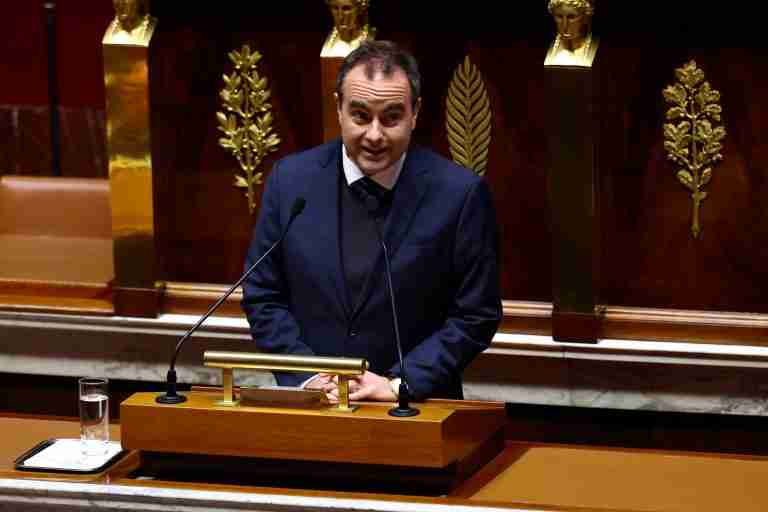
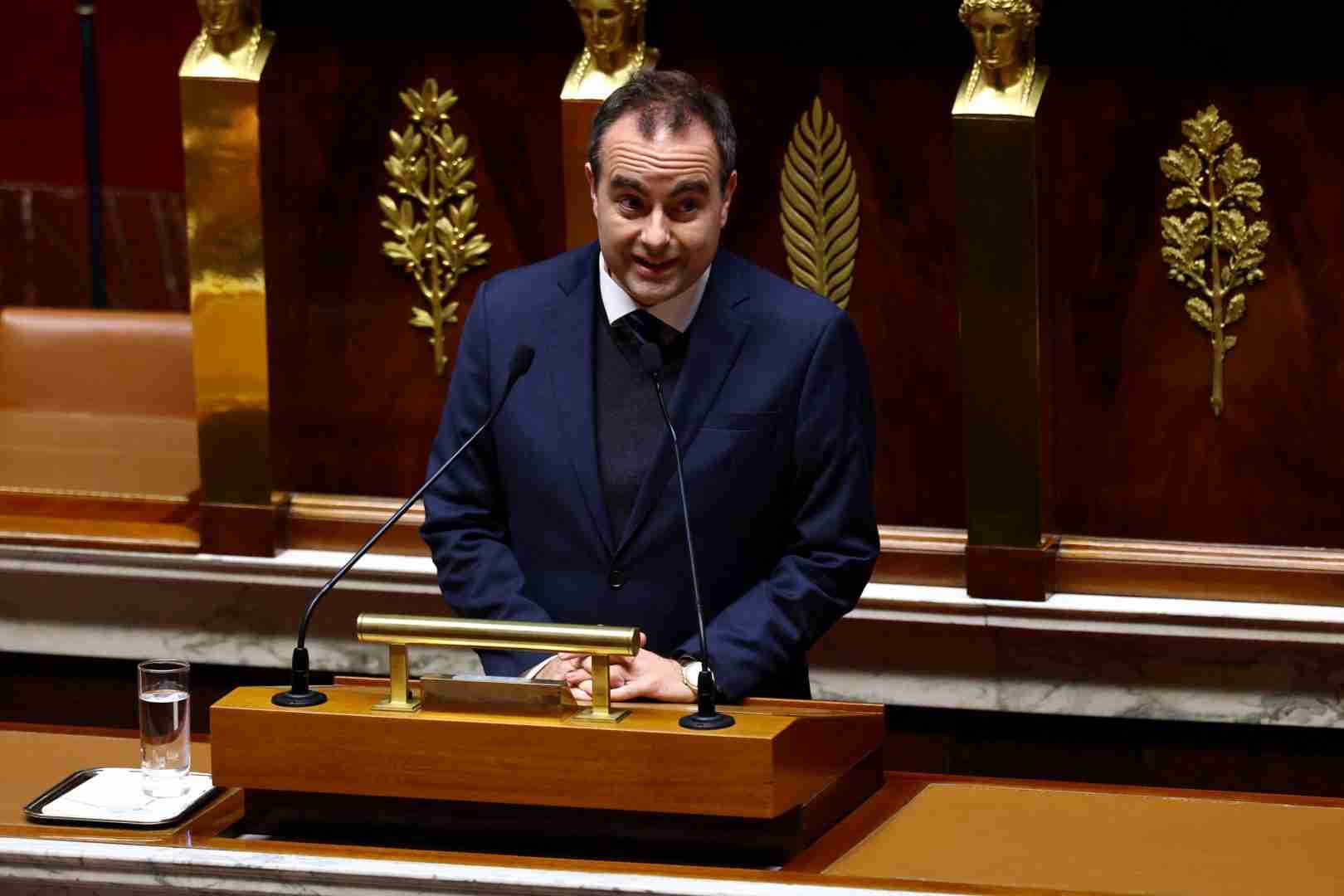
France finally got a 2026 budget on Monday, when two no-confidence motions failed, allowing the legislation to pass and heralding a period of relative stability for Prime Minister Sebastien Lecornu’s weak minority government.
Budget negotiations have consumed the French political class for nearly two years, after President Emmanuel Macron’s 2024 snap election delivered a hung parliament just as a massive hole in public finances made belt-tightening more urgent.
The budget talks have cost two prime ministers their jobs, unsettled debt markets and alarmed France’s European partners.
However, Lecornu – whose chaotic two-stage nomination in October drew derision around the world – managed to secure the support of Socialist lawmakers through costly but targeted concessions, boosting his stature in the process.
“France finally has a budget. A budget that embraces clear choices and essential priorities. A budget that reins in public spending, which does not raise taxes for households and businesses,” Lecornu said in a post on X after the no-confidence votes, adding he was submitting the budget to the Constitutional Court to ensure it was compliant with the constitution.
Despite the still-elevated budget deficit of 5% of GDP seen by Lecornu, investors have taken heart in the new stability. The French government debt risk premium over the German benchmark has returned to levels last seen in June 2024, before Macron’s snap-election announcement.
Two votes of no-confidence triggered by the hard-left and far right fell short of getting a majority after the Socialists said they would not back them, which means the 2026 budget – already more than a month overdue – is now adopted.
The Socialists’ main scalp was the suspension of an unpopular pension reform, delaying the planned increase in the retirement age to 64 until after next year’s presidential election.
REFORMS ON PAUSE UNTIL PRESIDENTIAL ELECTION
With just over a year to go before the next presidential election in the spring of 2027, the respite on the budget front is giving Macron some breathing space, as he nears the end of his second term with historically low approval ratings.
Having lost control of the domestic agenda, his push for supply-side economic reforms has largely stalled. Meaningful spending cuts are unlikely before he leaves office, with lawmakers showing little appetite for unpopular measures as election campaigning intensifies.
Macron’s supporters say Lecornu, by showing flexibility and an ability to compromise, has prevented the return of wealth taxes and preserved Macron’s legacy of making France more attractive to foreign investors.
The president is now focusing almost entirely on foreign policy, pushing Europe to be less dependent on foreign powers, and advocating a harder line in confronting U.S. President Donald Trump over tariffs or the Greenland crisis.
At home, however, he leaves his centrist bloc without a clear successor and significantly weakened against a resurgent far right.
Two of Macron’s former prime ministers are gearing up for the presidential race, Edouard Philippe and Gabriel Attal, while Lecornu has also gained popularity over the past few months.
But should the centre remain fragmented, and with no primary planned, it remains uncertain whether a mainstream candidate will reach the election’s second round to face the far right, whether led by Jordan Bardella or Marine Le Pen.
Reporting by Michel RoseEditing by Ros Russell and Benoit Van Overstraeten
The Commission said in November it planned to restrict exports of scrap aluminium to stop the metal flooding out of the European Union and leaving its industry short
International News via Reuters:
A global recycling industry body on Monday said the European Commission’s proposed restrictions on scrap aluminium exports were unnecessary and risked undermining the circular economy.
The Commission said in November it planned to restrict exports of scrap aluminium to stop the metal flooding out of the European Union and leaving its industry short.
The move was welcomed by aluminium lobby European Aluminium, which urged policymakers to introduce export fees on the material.
However, the Brussels-based Bureau of International Recycling, which represents 37 national recycling federations, described the idea of an EU export ban or any trade restriction on aluminium scrap as “neither necessary nor effective”.
“The EU already generates more aluminium scrap than can be absorbed domestically,” the BIR said in its feedback to the EU’s public consultation on the matter, which was open until the end of January.
Available data “does not demonstrate structural ‘scrap leakage’ that would justify intervention”, it said. Scrap leakage refers to the loss of recyclable materials – a valuable and much lower-carbon resource than primary metal – to foreign markets.
Restricting exports would create oversupply in the EU, lower scrap prices and leave recyclers in an unsustainable economic position, the BIR said.
“This would ultimately reduce collection and recycling rates, increase the risk of unmanaged waste streams, and undermine the circular economy,” it added.
The Commission has said it will propose targeted measures for aluminium scrap by the second quarter of this year.
To provide the best experiences, we use technologies like cookies to store and/or access device information. Consenting to these technologies will allow us to process data such as browsing behavior or unique IDs on this site. Not consenting or withdrawing consent, may adversely affect certain features and functions.
Functional
Always active
The technical storage or access is strictly necessary for the legitimate purpose of enabling the use of a specific service explicitly requested by the subscriber or user, or for the sole purpose of carrying out the transmission of a communication over an electronic communications network.
Preferences
The technical storage or access is necessary for the legitimate purpose of storing preferences that are not requested by the subscriber or user.
Statistics
The technical storage or access that is used exclusively for statistical purposes.The technical storage or access that is used exclusively for anonymous statistical purposes. Without a subpoena, voluntary compliance on the part of your Internet Service Provider, or additional records from a third party, information stored or retrieved for this purpose alone cannot usually be used to identify you.
Marketing
The technical storage or access is required to create user profiles to send advertising, or to track the user on a website or across several websites for similar marketing purposes.