Monday, November 2, 2026
Home Blog Page 49

Global shares gain, bonds supported as oil drops, jobs data misses expectations

Nonfarm payrolls increased by 29,000 jobs last month after a downwardly revised 133,000 rise in August, the Labor Department’s closely watched employment report showed on Friday
International News via Reuters:

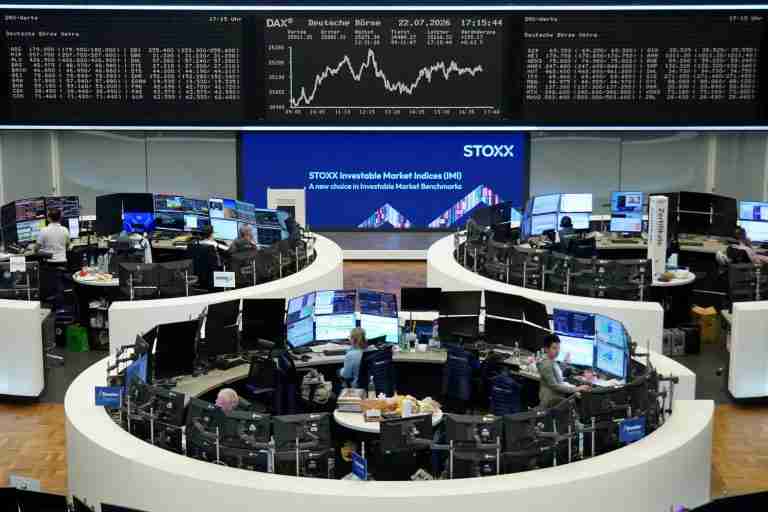
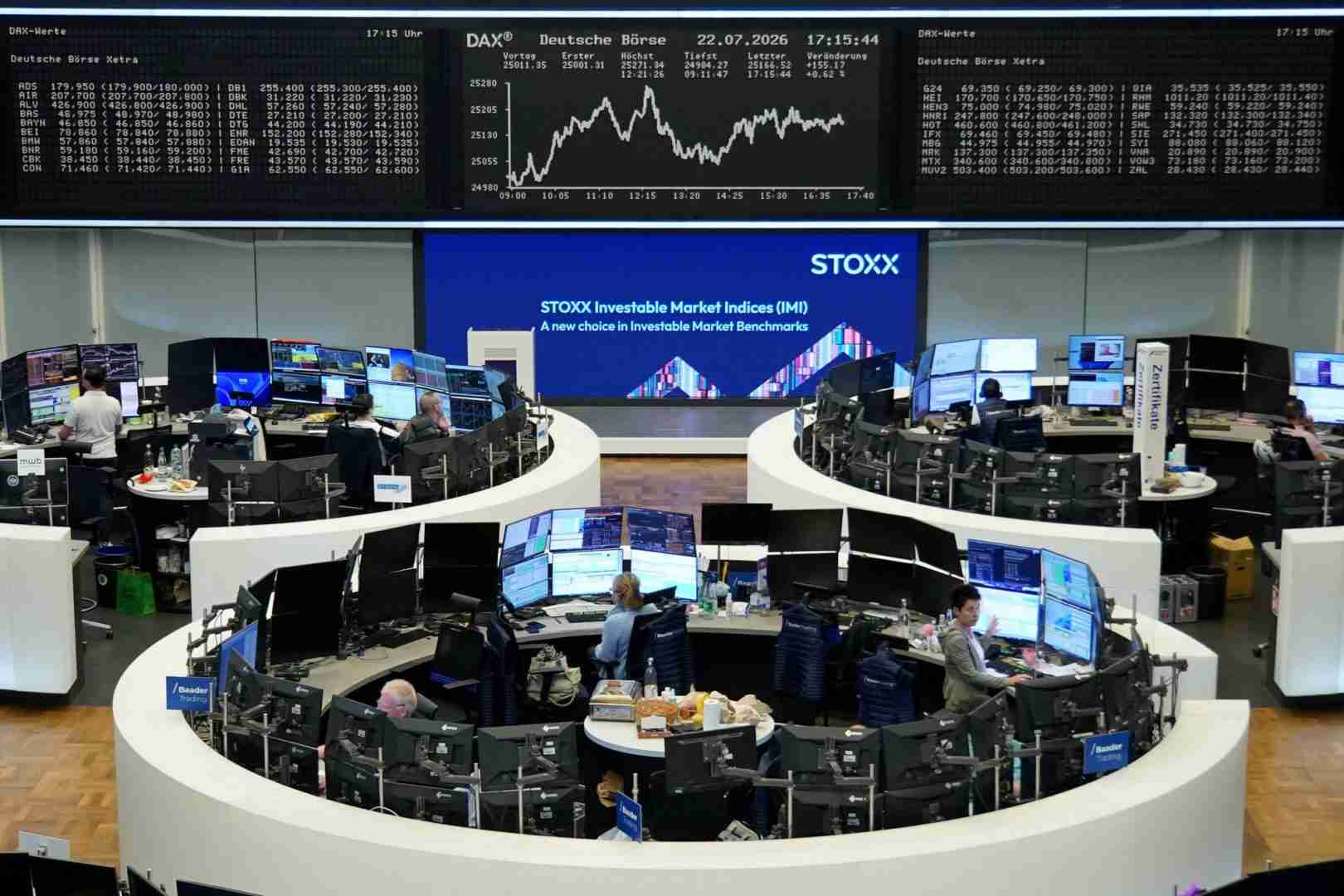
Global shares rose on Friday as wild volatility in bond and currency markets eased and oil prices fell, while weaker-than-forecast US jobs data scuppered chances of a rate hike from the Federal Reserve later this month.  

Nonfarm payrolls increased by 29,000 jobs last month after a downwardly revised 133,000 rise in August, the Labor Department’s closely watched employment report showed on Friday. Economists polled by Reuters had forecast payrolls advancing 90,000. 

Bets on a second rate rise from the Federal Reserve this month faded after the data. Markets now assign a 15% chance of a hike in October from around 25% before the data. 

Two top policymakers said this week they wanted more data before deciding what to do next with interest rates. Meanwhile, a move in December is still fully priced in. 

Schroders senior economist George Brown said today’s figures may ease some concerns that previous interest rate cuts from the Fed could stoke inflation problems, but that it doesn’t alter the inflation backdrop.

“The Fed looks likely to unwind last year’s cuts,” Brown said. 

“The bigger question is whether rates ultimately need to be taken into genuinely restrictive territory to bring inflation back under control.”  

Wall Street futures extended gains after the data. Nasdaq futures were up 1.2% and S&P 500 futures gained 0.8%.

The benchmark 10-year Treasury yield fell 6 basis points to 5.1717%, down from the 24-year high of 5.3445% reached the day before. 

The two-year yield, which is sensitive to changes in expectations for interest rate policy, fell 6.5 bps to 4.7204%. 

FRENCH BONDS UNDERPERFORM

In Europe, longer-dated sovereign bond prices rose on the day, although those in more indebted countries, like France and Italy, lagged the gains in Germany, reflecting growing investor demand for protection against rising fiscal risks. 

The German 10-year yield, the euro zone benchmark, was down 12 basis points on Friday, as investors preferred the relative safety of German bonds compared to their euro zone counterparts. Bond yields move inversely with prices. 

In France, the 10-year yield was down slightly at 4.927%, pushing the gap between the German and French 10-year yields to over 154 bps, the widest level since the euro zone debt crisis in 2011. 

“I wouldn’t call it a crisis yet, but it looks like it has the potential to be one,” said George Lagarias, chief economist at Forvis Mazars. 

“If it goes on for a couple more weeks then we’ll be talking about a crisis in the bond market.”

Global bond markets have been under a sustained selloff in recent weeks as the US-Israeli war with Iran pushed up energy prices again, complicating the inflation outlook and further straining already stretched public finances.

But oil prices fell on Friday, providing some relief for stocks and bonds, as the energy market refocused on signs of recovering supplies from the Middle East and EU countries discussed a proposal to release additional diesel stockpiles. 

US West Texas Intermediate crude futures fell 3.7% to $89.43 a barrel. Brent crude futures were down 2.7% to $99.45 a barrel, while European gasoil futures, a benchmark for diesel prices, fell about 5% to $1,378 a metric ton.

The relief in oil prices also supported European shares, with the pan-regional STOXX 600 index up 0.8%, although it is still heading for a weekly drop of about 1%. 

In Asia, MSCI’s broadest index of Asia-Pacific shares outside Japan fell 0.1% and settled for a weekly decline of 1.3%. Japan’s Nikkei dropped 0.9% but gained almost 3% for the week. 

Mainland Chinese markets are closed through next Wednesday for a public holiday. Hong Kong’s Hang Seng index slid 2.7% on Friday after a holiday. 

DOLLAR DIPS AFTER DATA

The US dollar index, which gauges the currency against six peers, fell 0.1% to 101.86 after the US data, having rallied 0.6% the day before to hit the highest level since April 2025. It was still set for a third straight week of gains, up about 0.8%. 

The rout in European bonds helped pin the euro lower and benefited the safe-haven yen and Swiss franc.  

The euro was at $1.1248, having weakened 0.8% on Thursday to hit the lowest level since May 2025. The Swiss franc was up sharply against both the dollar and euro.   

The yen firmed 0.6% to 157.11 per dollar after data showed underlying inflation in Japan’s capital accelerated to an annual rate of 2.7% in September, bolstering the case for further interest rate hikes.

Reporting by Samuel Indyk and Stella Qiu; Editing by Kevin Buckland, Jamie Freed and Emelia Sithole-Matarise
Europe weighs new diesel stocks release after US pressure, sources say

The proposal, discussed on a call involving EU governments, calls for European countries to release 50 million barrels of diesel and International Energy Agency members to release 50 million barrels of crude oil

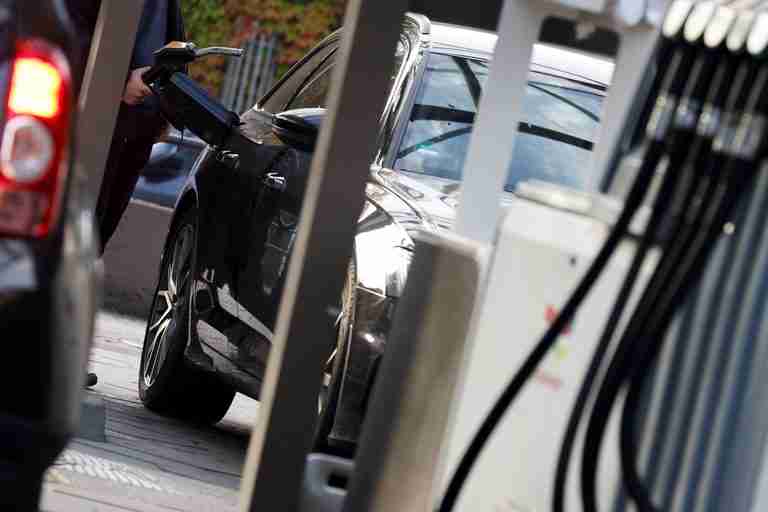
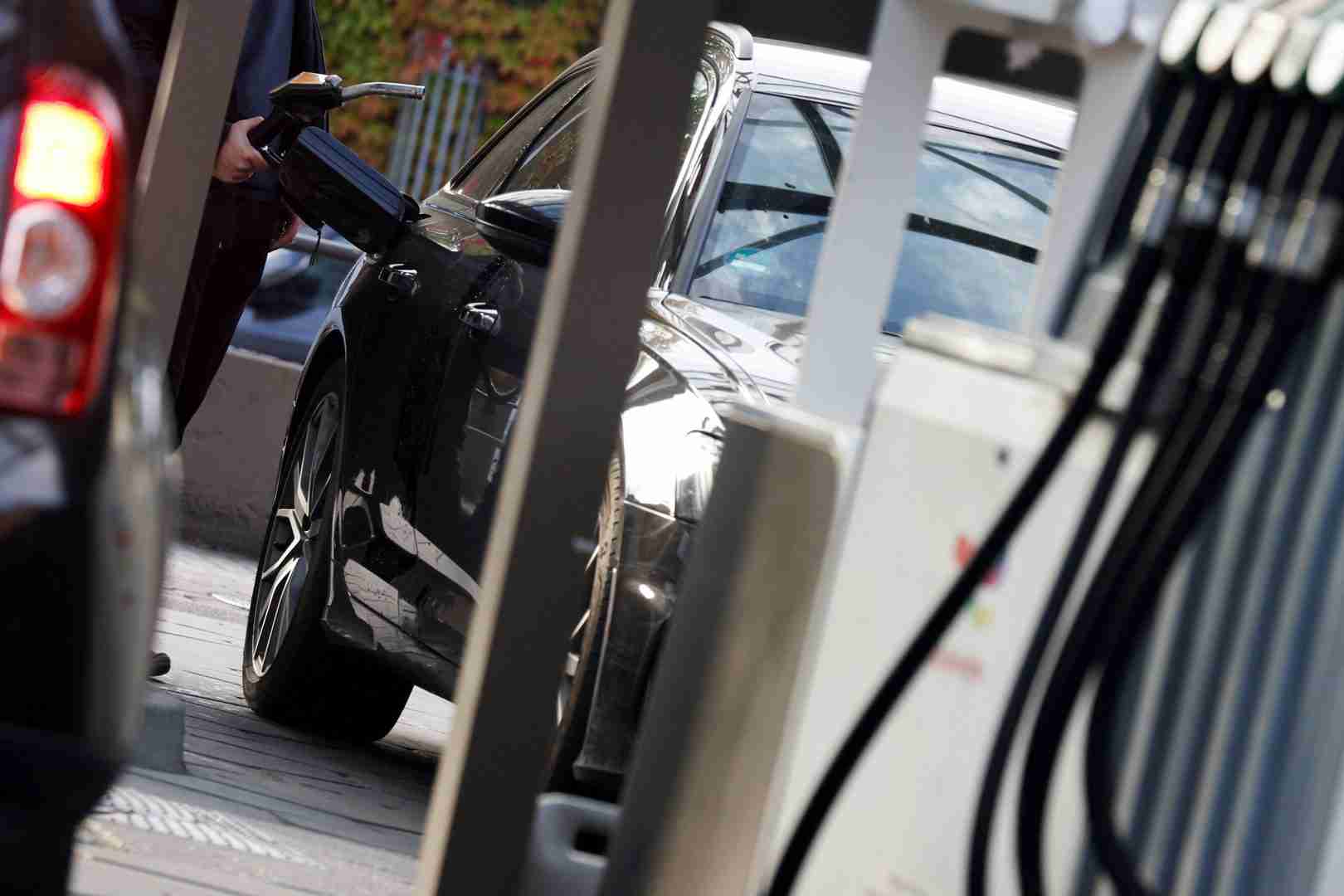
A person refuels a vehicle at a gas station, as the German government’s tax cut on fuel comes into effect, in Berlin, Germany, October 01, 2026. REUTERS/Axel Schmidt

International News via Reuters:

European Union countries discussed a French proposal on Friday to release diesel stocks in response to US pressure to help cool surging fuel prices linked to the Iran war, three sources familiar with details of the discussion told Reuters.

The proposal, discussed on a call involving EU governments, calls for European countries to release 50 million barrels of diesel and International Energy Agency members to release 50 million barrels of crude oil, the sources said.

French President Emmanuel Macron is scheduled to chair a videoconference with G7 leaders at 2:30 p.m. Paris time (1230 GMT) focused on the global energy situation, the Elysee Palace said.

Europe would release part of the diesel volumes in a 20-day period, responding to US President Donald Trump’s demand for a rapid release of fuel stocks, two of the sources said.

Oil prices fell more than 2% and European gasoil futures fell by about 5% on Friday after reports of the talks. Benchmark European diesel futures were trading 4.5% lower at $1,384.50 a metric ton at 1245 GMT, LSEG data showed. European diesel refining margins were down 4.4% at $73.30 a barrel, having hit a record of about $95 last week.

The discussions underscore growing pressure on Europe as Trump considers a potential ban on US diesel exports to help lower domestic fuel prices ahead of November 3 midterm elections.

In weighing its response, the EU needs to balance the need to ease soaring fuel costs against preserving emergency reserves to safeguard against uncertain supply from Gulf producers due to disruptions caused by the Iran war.

France’s finance and energy ministry did not immediately respond to a request for comment.

French President Macron spoke with Trump overnight, emphasising the need to work together to combat rising fuel prices and ensure the global availability of refined products, the Elysee Palace said on Friday. France currently holds the presidency of the G7.

Reuters reported on Thursday that the Trump administration had told Germany and France to draw down emergency diesel inventories or face a potential US diesel export ban, according to three people close to the discussions.

The US had demanded large European countries including France and Germany release 100 million barrels of diesel within a 20-day window, two of the sources told Reuters on Friday.

Global diesel supply has been hit by the US war with Iran and a Russian ban on exports after Ukraine damaged many of its refineries. Chinese refiners have also suspended October fuel exports to bolster domestic stocks, sources said.

The proposed 50-million-barrel release equates to approximately 17% of the EU’s total emergency stocks of diesel and gasoil, Eurostat data current as of May 2025 showed.

It reflects around 3% of the bloc’s annual consumption of the fuel, Eurostat data show.

Europe used to mainly rely on Russian and Middle Eastern diesel imports but has increasingly relied on imports from the United States in recent years.

“Having been caught dragging their feet on promised strategic stock releases earlier this year and now jarred by possible U.S. export restrictions, European countries will likely release more diesel and possibly crude from their stocks,” said Bob McNally, president of Rapidan Energy Group.

“European strategic stock releases are a necessary, if not sufficient, condition to prevent U.S. export restrictions, which would still remain on the table given acute political anxiety in the White House about high pump prices.”

In the call on Friday, EU countries discussed making a condition for any agreement on diesel stock releases a US commitment to not impose a unilateral diesel export ban, one of the sources said.

The 32-member IEA agreed in March to a coordinated release of 400 million barrels of strategic oil reserves, in response to the Iran war, the largest such release in history.

IEA Executive Director Fatih Birol said this week that members had released about two-thirds of those volumes.

Reporting by Kate Abnett, additional reporting by Forrest Crellin, Ahmad Ghaddar, Robert Harvey and Jarrett Renshaw; editing by Kirsten Donovan and Jason Neely

UK new car sales rise 12% in September as EVs and Chinese brands gain ground

Electric vehicles have been gaining ground in Europe as rising fuel costs, largely driven by global oil shocks from the Iran war, steered customers toward alternatives

International News via Reuters:

Britain’s new car registrations rose 12% in September from a year earlier to their highest level for the month since 2017, helped by strong demand for electric vehicles, according to preliminary data from a trade body on Friday.

Electric vehicles have been gaining ground in Europe as rising fuel costs, largely driven by global oil shocks from the Iran war, steered customers toward alternatives.

Battery EV registrations rose 36% year-on-year to 99,199 units in September, accounting for 28.3% of the market, the Society of Motor Manufacturers and Traders said.

In contrast, petrol car registrations fell 6.7% and hybrid EV registrations slipped 4.2% last month, the data showed.

The global auto industry has also had to contend with a hit to diesel supply due to the US war with Iran and a Russian ban on exports after Ukraine damaged many of its refineries.

There is also growing pressure on Europe as US President Donald Trump considers a potential ban on US diesel exports.

Diesel registrations in the UK rose 11.5% in September, although they are down 7% in the first nine months of 2026, with a shrinking market share of about 4.5% this year.

Petrol cars still hold the biggest share at 41.5% in the first nine months.

Britain is reviewing its zero-emission vehicle targets to ease pressure on carmakers, but the industry faces a further challenge from the EU’s proposed “Made in Europe” provisions, which threaten to deny British-built vehicles incentives and exclude them from EU public procurement.

The UK auto sector has also seen Chinese brands expanding quickly.

Chery’s Jaecoo 7 was September’s best-selling model in the UK, according to SMMT, while BYD’s Sealion 7 was the best-selling BEV after Tesla’s Model 3 and Model Y.

BEVs accounted for just 26.2% of sales so far this year, well below the 33% mandated for 2026 and even behind the 28% target for last year.

Overall car registrations in the UK rose to 350,518 units last month, preliminary data showed.

Reporting by Nithyashree R B in Bengaluru; Editing by Mrigank Dhaniwala, Sherry Jacob-Phillips and Louise Heavens

Grayson basketball prospect CJ Crumpler secures hometown Fratelli’s NIL deal

Grayson basketball standout CJ Crumpler has officially landed his first name, image, and likeness (NIL) partnership, teaming up with local Italian restaurant Fratelli’s in a community-focused deal.

The agreement marks a significant commercial milestone for the high school point guard, who underscored the importance of keeping his inaugural sponsorship rooted firmly on home soil.

“Man… my first NIL deal,” Crumpler said. “Just want to say thank you to DJ, my mom and dad, Chef Danny, and the entire Fratelli’s family for making this opportunity possible. It was great getting to meet Chef Danny and officially become part of the Fratelli’s family.”

The ongoing expansion of NIL frameworks across the United States has increasingly enabled emerging scholastic athletes to partner with neighborhood businesses, providing local enterprises with recognizable young ambassadors.

For Crumpler, the decision to align with Fratelli’s was driven as much by personal ties as commercial opportunity.

“I’m super grateful for the opportunity to represent and help promote a local business right here in the Grayson community,” he said. “This is where I live. This is where I play ball. This is where my family is. So it means a lot to have my first NIL partnership right here at home.”

Students and police clash as France struggles to quell school protests

Tear gas clouded the streets in the eastern city of Strasbourg, fireworks were aimed at police lines in Marseille in the south and rubbish bins set ablaze in Rennes in the west

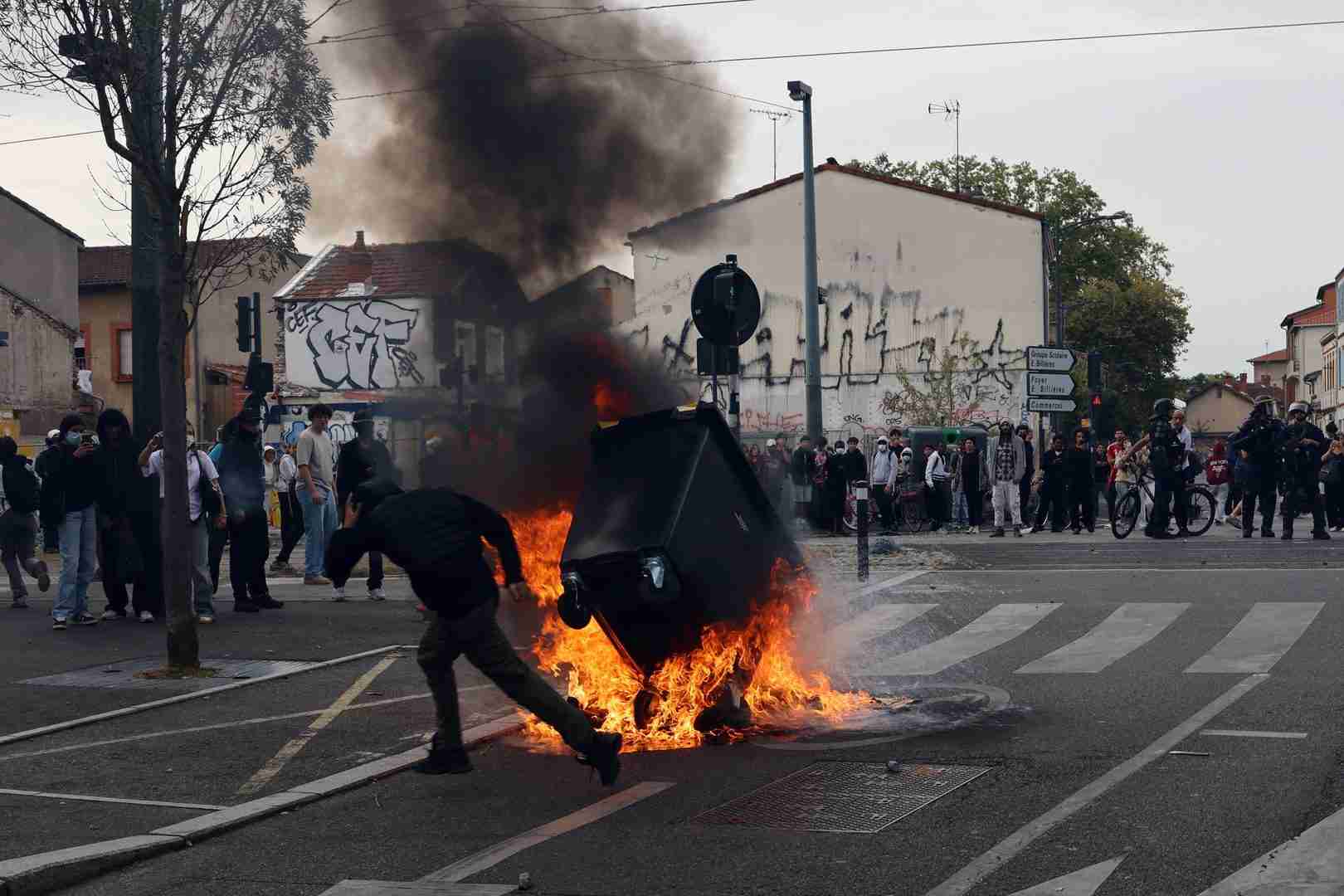
A protester throws a garbage bin into a fire outside the Lycee Deodat-de-Severac high school as part of nationwide protests by high school students to demand the hiring of substitute teachers, increased resources and better learning conditions, in Toulouse as more than 400 schools remain closed following days of student protests that have escalated into violence in some places, France, October 2, 2026. REUTERS/Nacho Doce

International News via Reuters:

Riot police clashed with high school students in cities across France on Friday, as President Emmanuel Macron’s government battled to contain increasingly violent protests over classroom conditions and funding.

Tear gas clouded the streets in the eastern city of Strasbourg, fireworks were aimed at police lines in Marseille in the south and rubbish bins set ablaze in Rennes in the west.

In Paris, where there were also skirmishes, students waved placards reading “We have a future to build, not to endure”.

Six months before next year’s presidential election, opinion polls consistently show the deep unpopularity of Macron and his centre-right-leaning government. Planned budget cuts, which exacerbate the funding crisis in education, have fuelled the discontent.

MINISTER SAYS PARENTS SHOULD PAY REPARATIONS

The protests erupted in the Paris region last week but have turned increasingly violent as they spread nationwide.

Justice Minister Gerald Darmanin told RTL radio that police had arrested 2,000 people, most of them teenagers, since the protests began. He said that parents of those inflicting damage to property should be made to pay reparations.

Four hundred high schools — roughly 1 in 10 — were closed on Friday due to the unrest and Education Minister Edouard Geffray urged parents to dissuade their children from protesting in the streets.

“In the streets, the children are in danger,” Geffray told BFM TV.

Several students in the Paris region whom Reuters spoke to outside high schools earlier in the week said they were staying away from the protests on Friday due to the escalating violence.

Darmanin said the student protest movement had been hijacked by “outsiders”.

EDUCATION TO GET BELOW-INFLATION BUDGET INCREASE

Students blockading their high schools have voiced anger over overcrowding in classrooms, regular shortages of teachers and dilapidated buildings, blaming years of underinvestment.

“We are 35 per class, we don’t have enough chairs in classrooms, the one hour lunch break (is too short) for everyone to get food,” 15-year-old Kesia told Reuters in the Paris suburb of Pantin before running off as the police used tear gas.

Under the draft 2027 budget presented by the government on Thursday, the education budget is set to increase by a below-inflation 1.7% to €65.53 billion, excluding teacher pensions.

Education is traditionally the largest budget item, but that changes next year with debt servicing costs expected to reach €74.5 billion, according to the draft bill.

HARD-LEFT LFI DENIES STOKING PROTESTS

Intelligence agencies told a crisis meeting on Thursday that the protest movement had been initiated by politicians from the hard-left France Unbowed party (LFI). Senior LFI lawmakers rebutted the allegations and accused the government of politicising the protests ahead of the election to replace Macron.

Students and rights groups have accused the police of using heavy-handed tactics against minors, including the use of batons, tear gas and non-lethal flash-ball guns.

Amnesty International cautioned against the excessive use of police force. “Students must be protected, not beaten with batons,” the advocacy group said on social media platform X.

The interior ministry on Friday said that they had opened three investigations into police violence against protesters.

In a sign the protests may spread beyond French borders, some high school students in the city of Liège, in Belgium, began protesting on Thursday. A city hall spokesperson said high schools were closed on Friday.

Reporting by Charlotte Van Campenhout, Inti Landauro, Layli Foroudi and Leigh Thomas; Writing by Richard Lough; Editing by Michael Perry, Kirsten Donovan and Alison Williams

Word of Life 5k introduces watch-free handicap challenge for 2026 edition

The annual Word of Life 5k returns on Saturday, 10 October 2026, featuring an inventive handicap challenge designed to test pacing intuition alongside raw foot speed.

Headlining this year’s competitive 5k run is a newly minted time-prediction contest. Entrants will submit their projected finishing time during registration, but race day brings a strict ban on watches, GPS monitors, and timing wearables of any kind. Without technological aids, competitors will have to rely entirely on internal rhythm and course feel.

Podium honours await the top three male and female runners who finish closest to their predicted marks, while traditional age-category awards will also be handed out to the fastest finishers.

Action gets under way early with a dedicated one-mile race for junior runners aged 12 and under at 08:00.

The morning’s main events then set off at 08:20, with the competitive 5k run, 5k competitive walk, and 5k non-competitive run and walk all tackling the course simultaneously.

Olympian Nick Saunders named Bermuda Olympic Association Secretary General

Three-time Olympian and Commonwealth Games record holder Clarance “Nick” Saunders has been appointed Secretary General of the Bermuda Olympic Association (BOA).

Saunders replaces Branwen Smith-King, who is stepping down after six years at the helm.

A celebrated icon of Bermudian track and field, Saunders represented the island at the Los Angeles 1984, Seoul 1988, and Barcelona 1992 Games. He memorably captured gold at the 1990 Commonwealth Games in Auckland with a clearance of 2.36 metres—a mark that remains a Commonwealth Games record to this day.

Saunders, who returned to reside in Bermuda in 2025, pairs his elite sporting pedigree with professional experience across insurance and legal studies.

“I’m honored to serve as Secretary General of the Bermuda Olympic Association and give back to the sporting community that shaped my life,” Saunders said. “I look forward to helping Bermuda’s athletes access the support and opportunities they need to succeed.”

BOA President Peter Dunne praised the appointment following a competitive search:

“We are fortunate to have had several highly qualified applicants for the position, and Nick was a standout in a field of excellence,” Dunne said. “His own experiences as an elite athlete can help the BOA continue to act with the interests of athletes first in the framework of the Olympic movement.”

Dunne also paid tribute to Smith-King, highlighting her transformative impact: “We knew that filling Branwen’s shoes was always going to be a difficult task as she has brought a high level of sport administration process to our organization as well as her enthusiasm for sport and athletes.”

Augustus stages second-round fightback at Clutch Pro Tour Championship

Bermudian professional Daniel Augustus showed admirable resolve to bounce back from a punishing opening round, shaving nine strokes off his score on day two of the Tier 1 Clutch Pro Tour Championship at Slaley Hall.

Tackling the demanding, tree-lined Hunting Course in Hexham, Northumberland, the 39-year-old endured a turbulent opening round, carding a 12-over-par 84 that left him adrift in 70th position. His opening card featured just five pars alongside two birdies, eight bogeys, and three costly double bogeys.

However, Augustus steadied the ship in Thursday’s second round with a vastly improved three-over-par 75.

Attacking the flags with sharper iron play, he notched four birdies and eight pars to offset five bogeys and a single double bogey.

The nine-shot swing moved Augustus to 15 over par for the tournament, lifting him to 67th place on the leaderboard as he aims to close out the 54-hole season finale on a positive note.

Europe needs simpler bank rules not lower capital: ECB’s VP

The US has been easing some capital rules and European bank lobbies are also calling for a review of the regulatory framework, claiming it was too cautious and constrains the provision of credit

FILE PHOTO: The logo of the European Central Bank (ECB) is pictured outside its headquarters in Frankfurt, Germany, April 26, 2018. REUTERS/Kai Pfaffenbach/File Photo

International News via Reuters:

Europe’s banks need simpler rules not laxer capital requirements, European Central Bank Vice President Boris Vujcic said on Friday, arguing that robust bank requirements are a source of strength.

The US has been easing some capital rules and European bank lobbies are also calling for a review of the regulatory framework, claiming it was too cautious and constrains the provision of credit. 

“The present level of bank capital requirements is not a competitive disadvantage for European banks,” Vujcic told a conference. “The fact that our banks are profitable and of sound standing today is a strategic advantage for Europe, because a resilient financial system is a prerequisite for sustainable economic growth.” 

But Vujcic agreed that rules have become overly complex and regulators could simplify them without jeopardising safety.

“I agree that such resilience does not necessarily require complex rules,” he said. “The same level of resilience can, in many cases, be achieved with simpler ones.”

He said capital calculation should be simplified and various requirements, known as the capital stack, should be merged into two: a releasable and a non-releasable buffer.

He also made the case for regulators to create a materially simpler regime for smaller, less complex banks, to ease their costs. Regulators should also simplify the resolution framework, Vujcic said.

Reporting by Balazs Koranyi, Editing by Louise Heavens

EU fully rejects any ban on diesel, EU spokesperson says

The European Union “fully rejects” the threat made by the U.S. to ban diesel exports if Europe does not release more of its fuel stocks

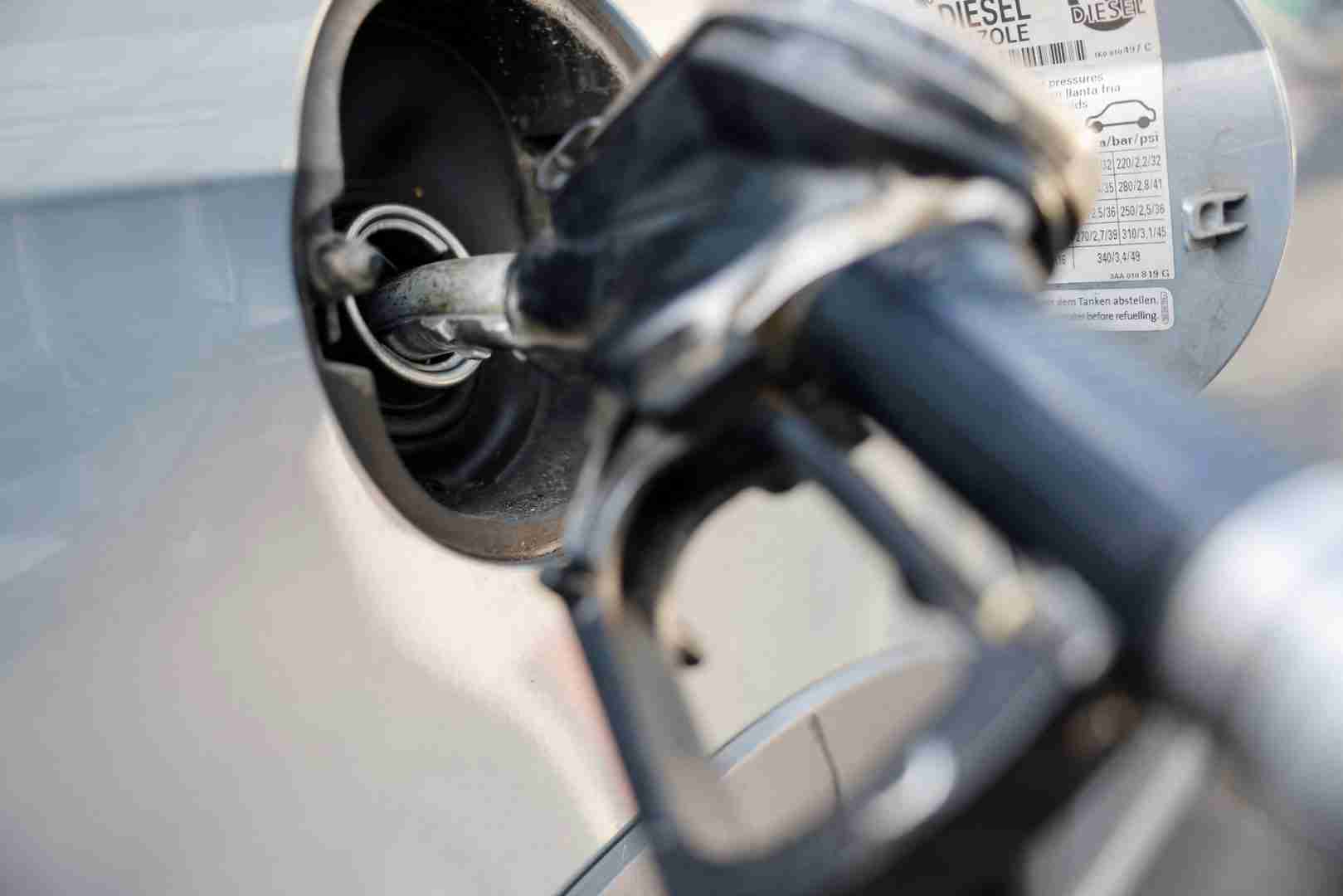
A fuel nozzle refuels a vehicle at a gas station as the German government’s tax cut on fuel comes into effect, in Berlin, Germany, October 01, 2026. REUTERS/Axel Schmidt

International News via Reuters:

The European Union “fully rejects” the threat made by the U.S. to ban diesel exports if Europe does not release more of its fuel stocks, European Commission spokesperson Anna-Kaisa Itkonen said on Friday.

“A ban would not be beneficial to anyone. It would undermine our trust in the United States as a reliable partner,” she said, adding that the next EU’s Oil Coordination Group meeting is scheduled on Oct. 15, but could be brought forward if needed.

Reporting by Charlotte Van Campenhout, editing by Inti Landauro

London shares recover as bond sell-off eases, oil prices slip

The blue-chip FTSE 100 index rose 0.28% to 10,455.34 points by 1007 GMT, but was headed for its sharpest weekly decline since April

A worker walks near an LSEG (London Stock Exchange Group) branded cube inside the LSEG headquarters in Paternoster Square, London, Britain, September 8, 2026. REUTERS/Toby Melville

International News via Reuters:

The UK’s FTSE 100 rebounded on Friday, as easing oil and bond yields helped allay inflation concerns after a global bonds sell-off dented risk appetite earlier this week. 

The blue-chip FTSE 100 index rose 0.28% to 10,455.34 points by 1007 GMT, but was headed for its sharpest weekly decline since April. The midcap FTSE 250 climbed 0.52% to 24,267.39 points.

• Oil prices eased about 3% after a sharp rise a day earlier as reports about talks on additional diesel and crude stock releases eased concerns over tight global energy supplies [O/R]

• Global shares rose as wild volatility in bond and currency markets eased ahead of key US jobs data, which could shape expectations for the Federal Reserve’s next policy move

• Gilt yields dropped, with the benchmark 10-year gilt yield falling to 5.332% after climbing to its highest since 2007 in the previous session

• The retreat in yields helped push rate-sensitive homebuilders up 1.1% after a 5% drop a day earlier

• Still, banks continued to remain under pressure, with the index of UK lenders set for its biggest weekly drop since March

• Among stocks, IG Group tumbled 22% after the online trading platform cut its 2026 revenue growth forecast, citing weak market conditions that hurt client retention in its over-the-counter (OTC) derivatives business. Peers Plus 500 and CMC Markets declined 4.7% and 8.8%, respectively

• BAE Systems advanced about 1% after reports that the company is among the potential bidders that are in the early stages of exploring an offer for Robin Radar Systems

• Pub chain J D Wetherspoon climbed 6.9% after reporting stronger sales growth since July, aided by sunny weather, while warning of rising costs and closures

Reporting by Anand Gopal in Bengaluru; Editing by Shinjini Ganguli

Euro zone inflation surges more than expected, keeping pressure on ECB to hike rates

Inflation in the 21 nations sharing the euro currency jumped to 3.8% in September from 3.2% a month earlier, exceeding expectations for 3.6% in a Reuters poll, driven primarily by fuel, natural gas, and to a lesser extent, food costs

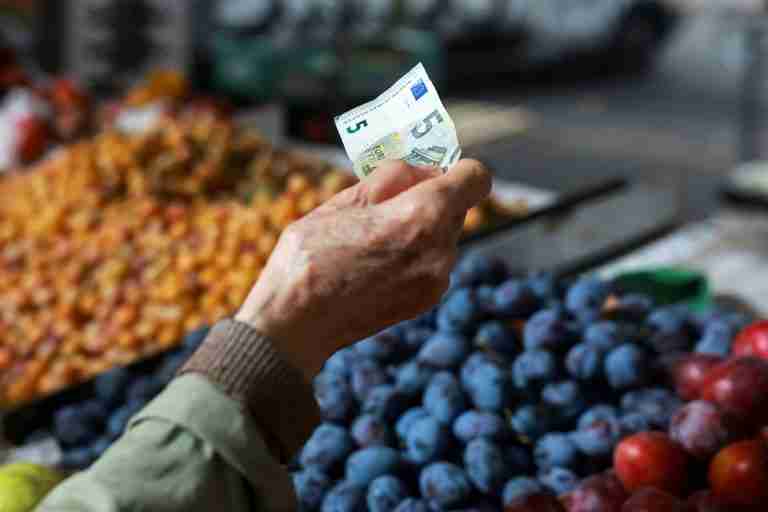
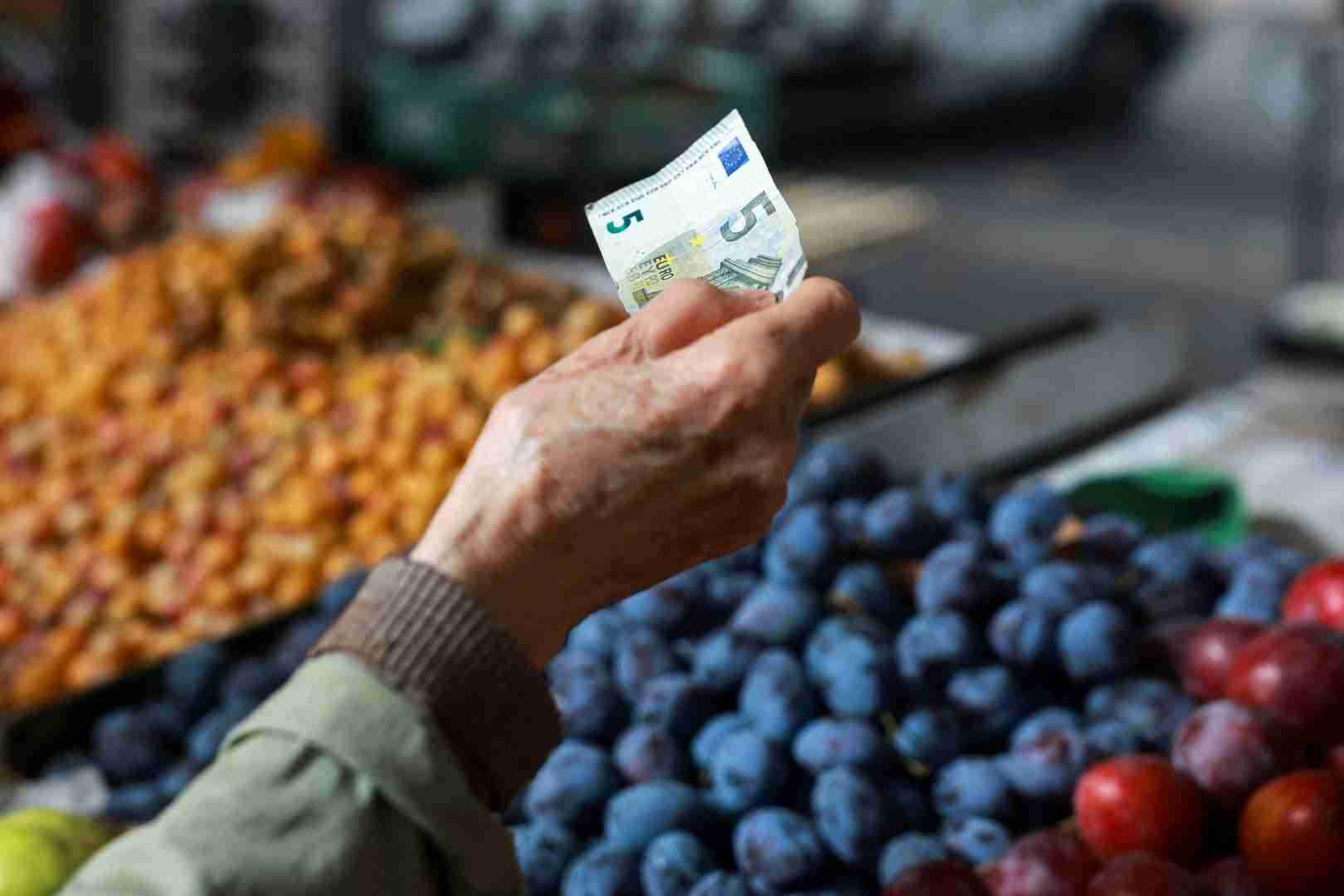
A shopper pays with a five Euro bank note for fruits at a local market in Paris, France, September 10, 2026. REUTERS/Stephanie Lecocq

International News via Reuters:

Euro zone inflation surged more than expected in September and is likely to increase further in the coming months on soaring energy costs, keeping pressure on the European Central Bank to raise interest rates and governments to help struggling consumers.

Inflation in the 21 nations sharing the euro currency jumped to 3.8% in September from 3.2% a month earlier, exceeding expectations for 3.6% in a Reuters poll, driven primarily by fuel, natural gas, and to a lesser extent, food costs.

A closely watched ‘core’ figure, which excludes volatile food and fuel prices and signals underlying trends, accelerated to 2.5% from 2.4%, on a pick-up in services prices, data from Eurostat, the EU’s statistics agency, showed on Friday.

Rising fuel costs are putting pressure on European governments to support households and businesses, and in some countries such as France have already triggered street protests, potentially stretching already precarious public finances.

While subsidies have been minor so far, totalling around 0.1% of the bloc’s GDP, they are less targeted and temporary than hoped, suggesting more lasting budget pain.

For the ECB, the figures are likely to be seen as a mixed bag.

The rise in headline inflation further above its 2% target is worrisome and will bolster calls for rate hikes on top of the two moves this summer. 

WILL ECB MAINTAIN ITS ‘MEASURED’ POLICY RESPONSE?

However, the muted increase in core figures indicates that high energy costs have yet to generate the sort of second-round impacts that could set off a hard-to-break inflation spiral. 

These would suggest the ECB can stick to its ‘measured’ policy response, an undefined concept taken by markets to mean spaced-out rate hikes, perhaps to coincide with quarterly economic projections.

“September’s (inflation) data don’t alter our view that the ECB is most likely to wait until December to raise interest rates again,” Jack Allen-Reynolds at Capital Economics said. “That said, if energy prices rose further in the next few weeks, an October hike would not be a big surprise.”

Investors see up to three more hikes in the ECB’s 2.5% deposit rate in the coming year but the odds of a move this month are seen as negligible and the next increase is not fully priced in until January.

These expectations change rapidly, however, and even policymakers acknowledge that their own projections are far too uncertain.

Policy hawks argue that energy costs have been too high for too long, so they are bound to start setting off second-round effects, and the recent surge in natural gas costs will feed into core prices more quickly than in the past, lifting everything from electricity and heating costs to business expenses.

But others say the labour market is relatively soft, so workers can hardly demand big pay increases, and the recent sharp increase in longer-term borrowing costs is also bound to curtail price growth.

Ultimately, the clincher for the next rate decision may be considerations for financial stability rather than inflation. 

Borrowing costs have soared, mostly as the blowout in US yields to a 24-year high affects every borrower. But investors are also demanding a greater premium to hold riskier assets and the spread on French debt over similar German bonds has risen to multi-decade highs, raising debt sustainability questions. 

Economists say the ECB may be keen to stay on the sidelines for now and not add to the turbulence, especially since inflation trends do not require urgent or forceful action.  

Reporting by Balazs KoranyiEditing by Gareth Jones