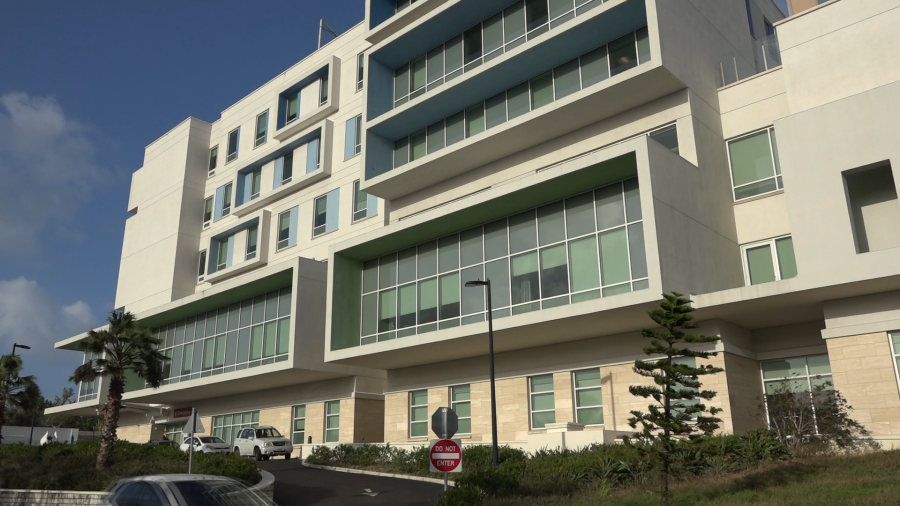
Granting the absentee vote to overseas students will be progressed, Minister Rabain says, but racism in Bermuda’s voting history means difficult conversations must be had before the net is cast any wider
Granting the absentee vote to overseas students will be progressed.
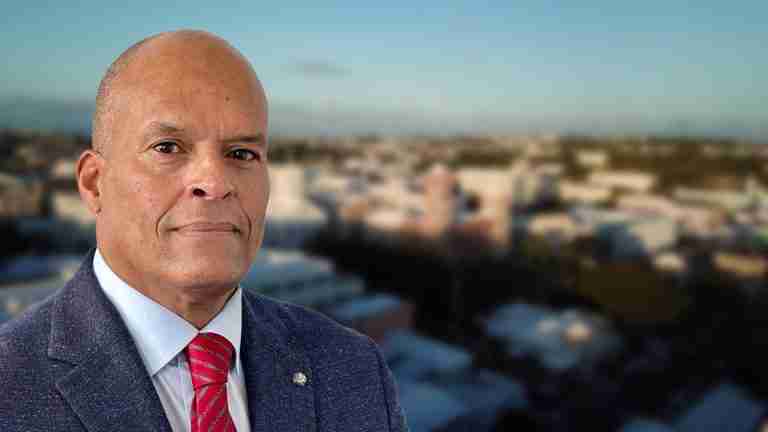
This from Diallo Rabain, Minister for the Cabinet Office.
He says the recent Town Halls on electoral reform also brought up issues concerning accessibility at the voting locations, and there was interest in how campaign financing might be made more transparent.
And while there was support for overseas student voting, racism in Bermuda’s voting history requires that difficult conversations must be had before the net is cast any wider.
WATCH the report above
Elsewhere in the interview, Minister Rabain said a bipartisan focus group will be formed to further develop election reform plans, and the ongoing work is grounded in international standards.
In a press release today, the Minister maintains that the reform programme is on track to be completed by September 2026…
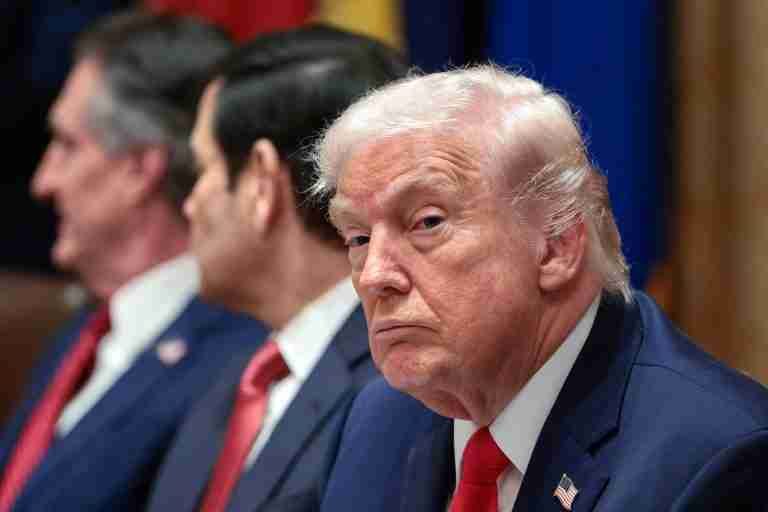
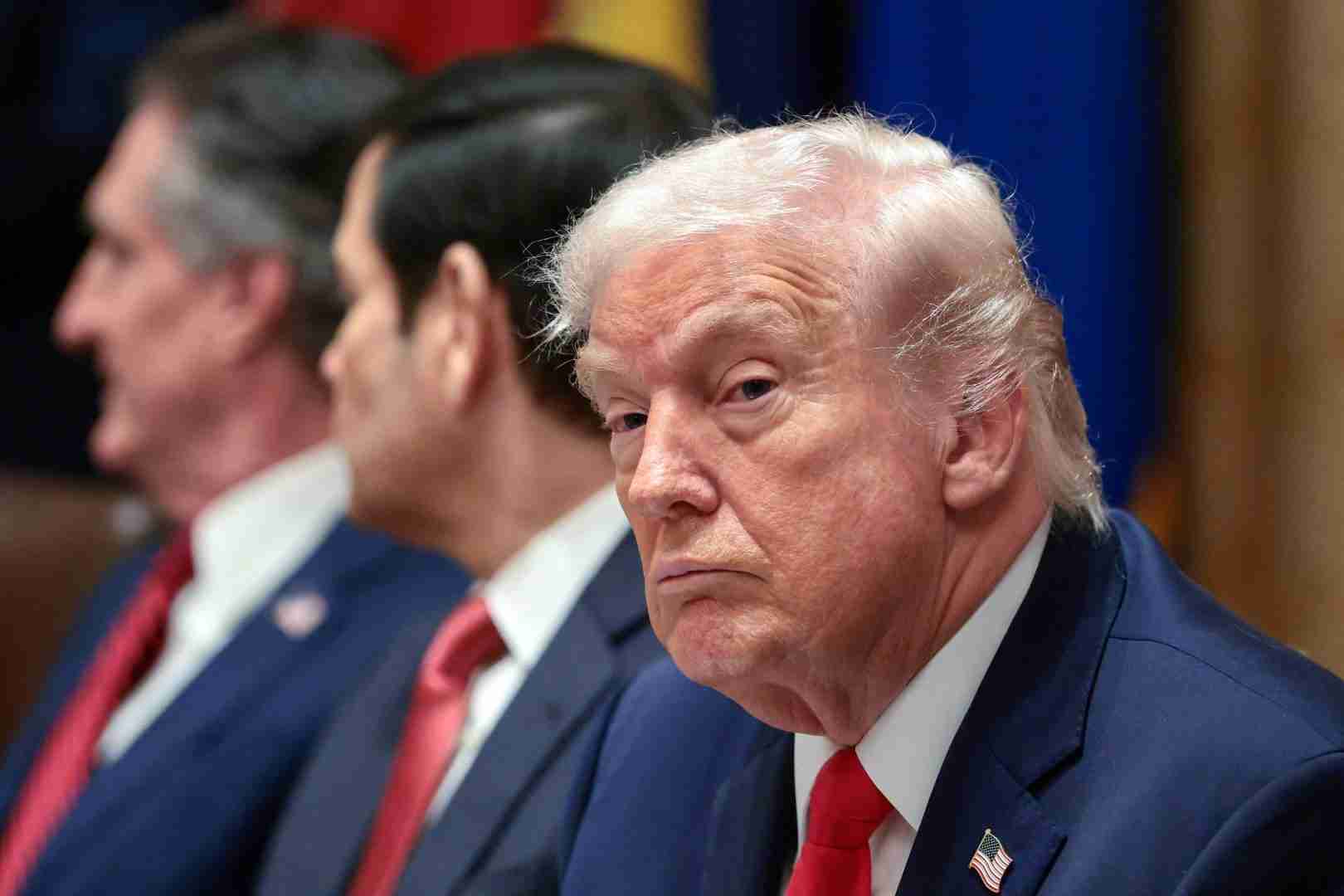
Trump launched his Board of Peace last week, initially designed to cement Gaza’s rocky ceasefire, but which he foresees playing a wider role that concerns other global powers
International News via Reuters:
New Zealand decided against accepting U.S. President Donald Trump’s invitation to join his Board of Peace, New Zealand’s Prime Minister Christopher Luxon said in a statement on Friday.
Trump launched his Board of Peace last week, initially designed to cement Gaza’s rocky ceasefire, but which he foresees playing a wider role that concerns other global powers.
He has invited dozens of other world leaders to join, and while Middle East powers including Turkey, Egypt, Saudi Arabia and Qatar, as well as major emerging nations such as Indonesia, have joined the board, global powers and traditional Western U.S. allies have been more cautious.
Luxon said in an email statement that the decision had been made not to join the Board of Peace in “its current form.”
New Zealand’s Foreign Minister Winston Peters added in a post on X that a number of states, particularly from the region, have stepped up to contribute to the Board’s role on Gaza, and “New Zealand would not add significant further value to that.”
Peters post added that as a “a leading founder and longstanding supporter” of the United Nations, it is important that the Board’s work is complementary to and consistent with the UN Charter.
“It is a new body, and we need clarity on this, and on other questions relating to its scope, now and in the future,” Peters said.
Reporting by Lucy Craymer; Editing by Chizu Nomiyama
Adidas in October had warned of widespread discounting among retailers and consumers in response to concerns over whether tariffs would scare off consumers, at the time warning it would hurt its full-price sales
International News via Reuters:
Adidas on Thursday said it would launch a share buyback of up to 1 billion euros ($1.2 billion) on the back of record 2025 sales that the German sportswear maker said benefited from stable prices in the face of U.S. tariffs.
Adidas in October had warned of widespread discounting among retailers and consumers in response to concerns over whether tariffs would scare off consumers, at the time warning it would hurt its full-price sales.
CEO Bjorn Gulden, who led troubled peer Puma before joining Adidas in 2023, said the company had been successful in keeping the level of “full-price sell-throughs high and discounts under control”.
Sales rose 4.8% to a record 24.8 billion euros in 2025, with fourth-quarter revenues rising by 1.9% to 6.076 billion, with Adidas pointing to currency headwinds of around 1 billion.
Analysts polled by LSEG had, on average, expected sales of 24.95 billion for the full year and 6.189 billion in the fourth-quarter.
Operating profit rose by 54% to 2.06 billion, according to preliminary figures, the company said, pointing to double-digit growth in all markets.
Adidas shares are down 15% so far this year, with analysts pointing to a tough retail market, competition for investor attention from newer names like On and Asics, as well as a turnaround at U.S. rival Nike.
Frankfurt-listed shares in the company were still 2.4% higher at 1929 GMT, after the group also unveiled it would buy back up to 1 billion euros worth of stock in 2026, adding the programme would start in February.
Adidas, which will release full results along with its annual outlook in early March, said it would fund the buyback through what it said would be “strong cash flow generation in 2026”, adding it intended to cancel the repurchased stock.
($1 = 0.8367 euros)
Reporting by Gursimran Kaur in Bengaluru and Christoph Steitz in Frankfurt; Editing by Pooja Desai, Toby Chopra and Diane Craft
Government advances work on long-term plan to expand supply of affordable homes
More than 30 sites have been identified for potential housing development for the 2026/27 financial year.
This from Zane DeSilva, Minister of Housing and Municipalities as he sought to update the public on Government’s ongoing efforts to bolster the island’s stock of affordable homes.
You can read the full remarks delivered by Minister DeSilva, below.
The decision by the military rulers who seized power in September 2022 is the latest move to tighten control following the suspension of political activities after the coup
International News via Reuters:
Burkina Faso’s military-led government has dissolved all political parties and scrapped the legal framework governing their operations, according to a decree approved by the West African nation’s council of ministers on Thursday.
The decision by the military rulers who seized power in September 2022 is the latest move to tighten control following the suspension of political activities after the coup.
Burkina Faso’s Interior Minister Emile Zerbo said the decision was part of a broader effort to “rebuild the state” after what he said was widespread abuses and dysfunction in the country’s multiparty system.
He said a government review found that the multiplication of political parties had fuelled divisions and weakened social cohesion.
Before the coup, the country had over 100 registered political parties, with 15 represented in parliament after the 2020 general election.
The decree disbands all political parties and political formations. A law repealing the statutes and regulating party financing, and the status of the opposition leader, will be sent to the current transitional council, according to minutes of the cabinet meeting.
All the assets of the dissolved parties will be transferred to the state.
The Sahel nation, like neighbours Mali and Niger, has been struggling to contain Islamist insurgencies linked to al Qaeda and Islamic State that have killed thousands and displaced millions over the past decade.
Reporting by Dakar Newsroom Writing by Bate Felix; editing by Diane Craft
The dollar has been under pressure for several reasons, including expectations of continued Federal Reserve rate cuts, tariff uncertainty and U.S. policy volatility
International News via Reuters:
The dollar eased against the yen and the euro on Thursday but remained above recent multi-year lows, with investors still jittery about U.S. policy even as a mildly hawkish Federal Reserve provided some support.
The dollar has been under pressure for several reasons, including expectations of continued Federal Reserve rate cuts, tariff uncertainty and U.S. policy volatility.
The currency ended last week with its biggest fall since last April driven partly by concerns about U.S. policy over Greenland.
“Concerns that investors have about trade and geopolitical policies that have been wheeled out in the U.S. at the moment have been potentially negative for the dollar,” said Shaun Osborne, chief currency strategist at Scotiabank.
Against the yen, dollar slipped 0.2% to 153.055 yen, while the euro rose 0.5% to $1.196.
The dollar found some support after the Federal Reserve held interest rates steady on Wednesday against the backdrop of what U.S. central bank chief Jerome Powell described as a solid economy and diminished risks to both inflation and employment.
Data on Thursday showed the number of Americans filing new applications for unemployment benefits fell slightly last week, still consistent with a relatively low level of layoffs, though lackluster hiring is stoking anxiety among households over the labor market.
President Donald Trump said on Thursday that the U.S. should have substantially lower interest rates now and should have the lowest in the world.
Some analysts did not expect cuts soon, however.
“While the outlook remains uncertain, particularly given the appointment of a new Fed Chair in coming months, our baseline remains that the rate cutting cycle is complete, as labour improvement lies ahead,” said David Doyle, head of economics at Macquarie Group.
“We see the next move as a hike, potentially occurring in the fourth quarter of 2026.”
The dollar came under pressure earlier this week after Trump said on Tuesday the value of the dollar was “great”, when asked whether he thought it had declined too much.
While Treasury Secretary Scott Bessent reaffirmed the U.S. preference for a strong currency, relieving some of the pressure, investors remain jumpy about further losses for the currency.
“We’re getting kind of mixed messaging on the dollar from the White House and the Treasury … that doesn’t necessarily instil a lot of confidence,” Osborne said.
While Thursday’s price action showed some signs of the dollar steadying after the sharp slide earlier this week, investors remain concerned about the near-term outlook.
“Short-term momentum has turned sharply against the USD without adequate resistance from any of the long-term forces we had expected to support the currency,” Steven Englander, global head of G10 FX research and North American macro strategy at Standard Chartered Bank, said in a note.
EURO BACK IN THE ECB SPOTLIGHT
The euro’s recent rise above the key $1.20 level has concerned European Central Bank policymakers, who warned that the currency’s rapid appreciation could have deflationary effects.
“Although the euro/dollar stayed well above the ECB’s base scenario last year without triggering strong disinflation risk, trade uncertainty persists,” said Geoff Yu, EMEA macro strategist at BNY.
Economists flagged that the strength of the euro could amplify the deflationary effect of China’s export machine and jolt the ECB out of its “good place” and into more interest rate cuts.
ECB board member Isabel Schnabel reiterated on Wednesday monetary policy was in a ‘good place’ and interest rates are expected to remain at their current levels for an extended period while financial markets are pricing steady rates through early 2027.
JAPAN’S FISCAL POLICY STILL IN FOCUS
The dollar slide has provided some reprieve for the battered yen.
The Japanese currency has tracked around the 152 to 154 per dollar range for most of this week thanks to talk of rate checks from the U.S. and Japan last week – a move often seen as a precursor to intervention.
Goldman Sachs said in a note that the prospect of coordinated action by Japan’s Ministry of Finance and the U.S. Treasury should curb near‑term downside pressure on the yen, but warned the impact would only last if backed by disinflation‑friendly fundamentals such as quicker Bank of Japan tightening or fiscal restraint.
The Canadian dollar strengthened 0.4% against the greenback on Thursday, a day after the Bank of Canada held its policy rate at 2.25%, as widely expected.
Leading cryptocurrency bitcoin fell 6% to $83.563 on Thursday, as riskier assets, including stocks sold off.
Reporting by Saqib Iqbal Ahmed; Additional reporting by Stefano Rebaudo; Editing by Alexandra Hudson, Elaine Hardcastle and Nick Zieminski
Opposition cites raft of security issues and ‘systematic’ shortfalls that put lives in jeopardy
Statement by Robert King, Leader of the Opposition and Shadow Minister of National Security, on the Westgate Correctional Facility
Recent media reporting on conditions and security operations at Westgate Correctional Facility is concerning and deserves careful scrutiny.
While some of the information in circulation is attributed to unidentified sources, reports of breaches to maximum-security cells, the presence of contraband, and risks to officer safety raise serious questions that cannot be dismissed.
Public safety, and the safety of corrections officers, depends on correctional facilities being well managed, with standards that reflect the risks they are designed to contain. If security procedures are breaking down, officers feel unsupported, or accountability is unclear, those issues must be examined promptly and transparently.
One issue that cannot be ignored is the long-standing staffing shortage within the Department of Corrections. Chronic shortfalls have placed sustained pressure on officers’ ability to maintain safety and security, with many reportedly working in excess of 100 hours of overtime per month. That level of fatigue is not sustainable and carries real physical and mental consequences — not just for officers, but for the overall safety of the facility.
At the same time, the lack of modern security infrastructure must be addressed. Measures such as cell-phone jamming technology, enhanced perimeter controls, and protection against drone-assisted contraband are no longer optional in a modern correctional environment.
The Department of Corrections has stated that steps have been taken to secure affected areas, remove contraband, and refer matters to the Bermuda Police Service. That is appropriate. However, Bermudians also deserve confidence that systemic issues — including staffing, leadership capacity, and infrastructure — are being addressed, not treated as isolated incidents.
When local capacity is stretched, the Government must be prepared to look externally for support – including getting assistance from the UK. The PLP has already done this with the hiring of police officers – they must do the same for the prison service. These are critical national-security issues that require proper resourcing and leadership.
As Shadow Minister of National Security, I am calling for effective oversight, protection for officers who raise legitimate concerns, and accountability at all levels where standards have not been met. Lives should not be placed in jeopardy because known risks have gone unaddressed.
National security depends on leadership that is willing to confront problems early and act. I will continue to follow this matter closely and press for answers that maintain public confidence.
No timeline for the resumption of service was provided
The Department of Marine and Ports Services advises that urgent repairs are required on the ferry serving the Pink Route. Ferry service is suspended, effective this afternoon and until further notice.
Marine & Ports Services apologises to the public for this service interruption and any inconvenience it may cause.
The sources, a U.S. official and a NATO diplomat, both said Hegseth would miss the Feb 12 gathering at NATO headquarters
International News via Reuters:
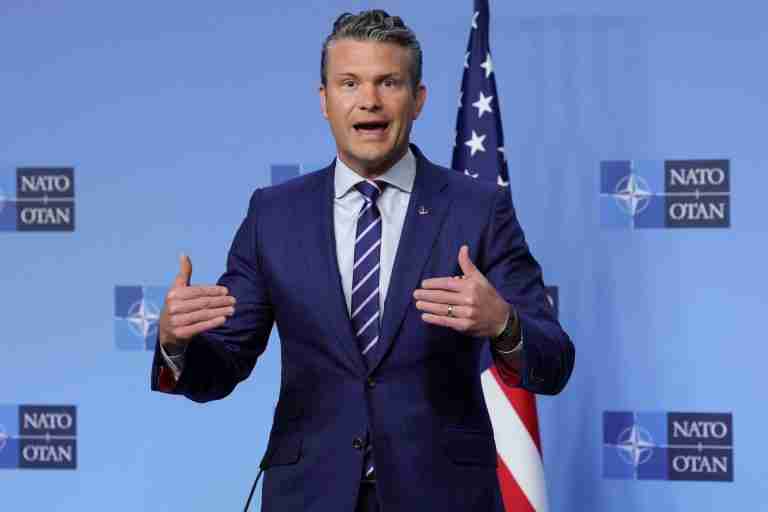
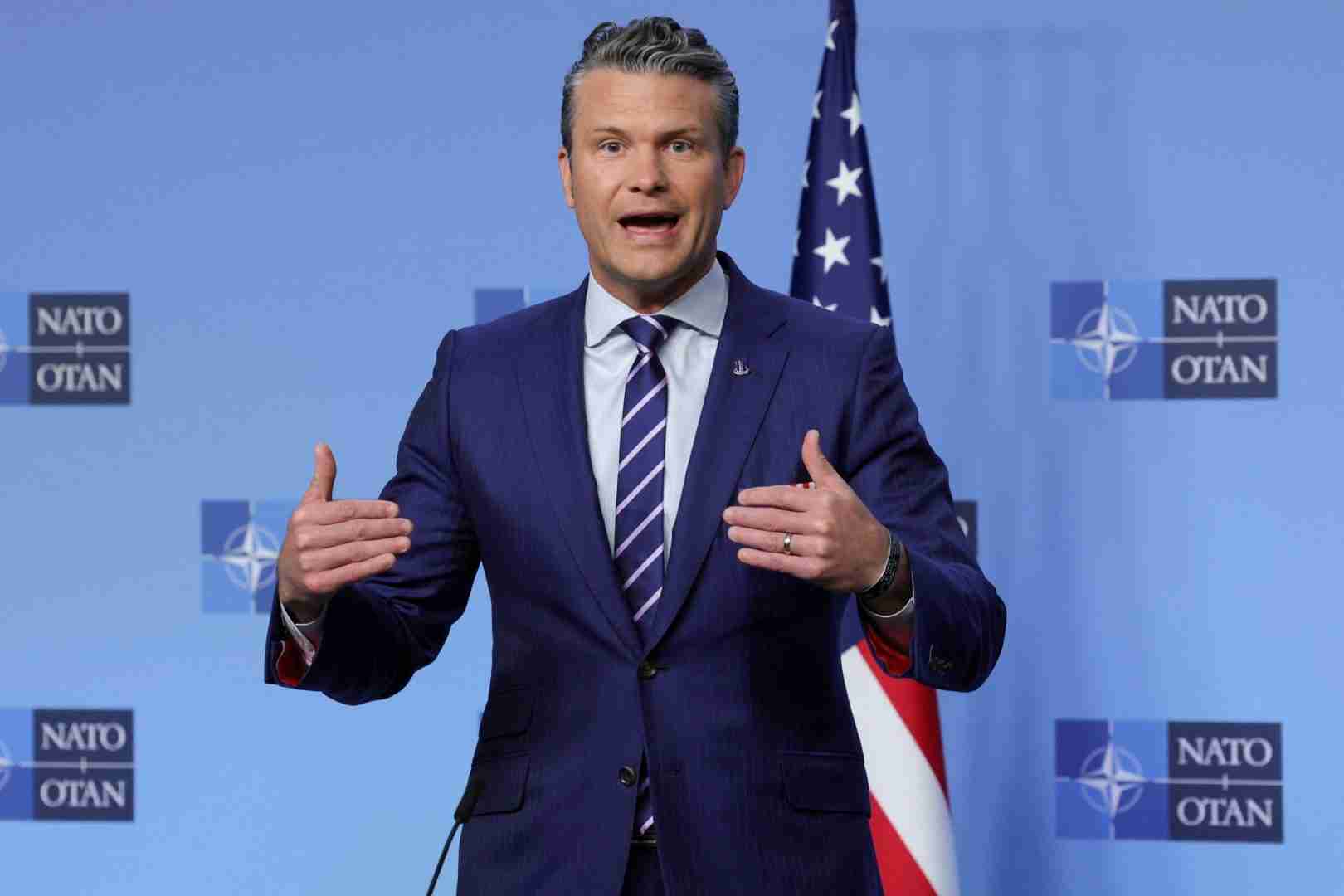
U.S. Defense Secretary Pete Hegseth is not expected to attend a NATO defence ministers’ meeting in Brussels next month, two sources said, the second time in a row a Trump administration official has skipped a gathering of the military alliance.
The sources, a U.S. official and a NATO diplomat, both said Hegseth would miss the Feb 12 gathering at NATO headquarters. U.S. Secretary of State Marco Rubio did not attend the last NATO foreign ministers’ meeting in December.
The two sources did not cite any reason for Hegseth’s decision. The Pentagon and NATO had no immediate comment.
Until U.S. President Donald Trump’s second term in office, it was highly unusual for a U.S. Cabinet official to skip a meeting of NATO ministers. The United States is the alliance’s military superpower and political lynchpin.
But the Trump administration has made clear that the United States has new military priorities, which means Europe will have to take more responsibility for its own defence.
Washington has said the U.S. remains committed to NATO. But the alliance has been strained by tensions between Trump and European allies, most recently over his desire to acquire Greenland, a semi-autonomous territory of fellow NATO member Denmark.
That crisis was defused, at least for the moment, after Trump held talks last week in Davos with NATO Secretary General Mark Rutte.
Rutte said the leaders had agreed that officials from the United States, Denmark and Greenland would hold trilateral talks and that NATO would play a greater role in Arctic security.
Reporting by Andrew Gray and Phil Stewart, Editing by Charlotte Van Campenhout and Chizu Nomiyama
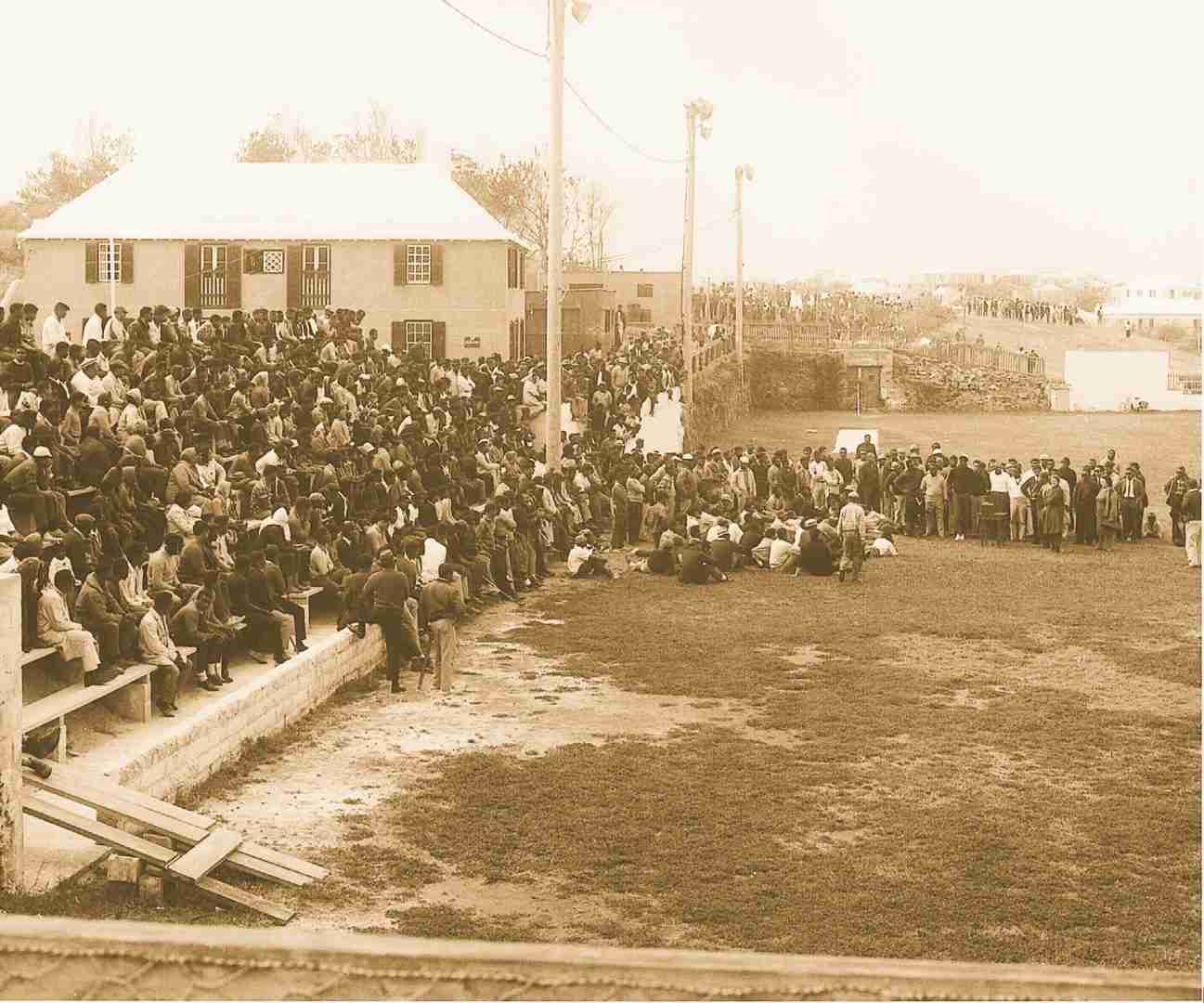
A walk for peace will mark anniversary of turbulent times
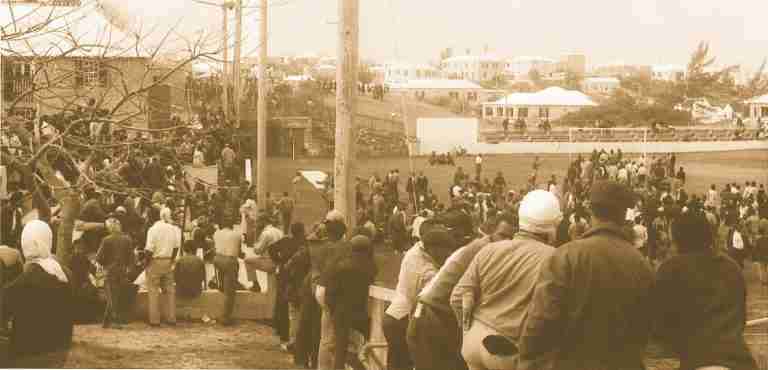
During a chilly early morning – February 2, 1965 – along Serpentine Rd, at the main gate of Belco, several dozen picketers paraded slowly on the third week of a strike by 90 Belco workers, calling for the right for union recognition.
Around 8.30 am, the weight of multiple tensions – the resistance of an Old Order, the concerned awareness of a New Order – gave way, erupting into violence that took its toll.
That crisis cast an unprecedented dark cloud over the Island. However, even with Tear Gas wafting as far as Front Street, police sirens blaring, Hospital wards over-crowding and Prison cell doors clanking; enough “Bermudians of Conscience”. exercised their agency.
On Monday, February 2, 2026 at Noon, “Bermudians of Conscience” are invited to come together at the Belco Parking Lot – along Serpentine Road – and begin a SILENT WALK FOR PEACE & COMMUNITY. Partially inspired by the Buddhist Monks Walk for Peace; the WALK will proceed to Devonshire Recreation Club (Frog Lane).
To be clear, this Walk if both an opportunity to draw lessons from our shared legacy, but will also leverage any positives – the reconciliation and healing potential – as we address current challenges – notably those caught in the Cycle of Violence.
It is estimated that the 1.75 mile WALK along Palmetto Rd will take around 45 minutes, to reach the grounds of the Devonshire Recreation Club (pls pronounce Ree..Creation for the occasion). Following the WALK; those gathering will: engage in Fostering COMMUNITY: Meet Someone New – Plus, Join in Dialogue around the LESSONS offered by this Shared Legacy.
This INVITATION is opened to ALL residents of Bermuda. Already joining are, elders of conscience, former Police, current trade unionists, social activists, children from 3 different schools.
That referenced Legacy includes; how in February 1965 “Bermudians of Conscience” ‘RESPONDED’ rather than ‘Reacted’ in the face of painful circumstances. This included: (Details can be found in ‘A History of the BIU’ by Ira Phillip – noted journalist)
To provide the best experiences, we use technologies like cookies to store and/or access device information. Consenting to these technologies will allow us to process data such as browsing behavior or unique IDs on this site. Not consenting or withdrawing consent, may adversely affect certain features and functions.
Functional
Always active
The technical storage or access is strictly necessary for the legitimate purpose of enabling the use of a specific service explicitly requested by the subscriber or user, or for the sole purpose of carrying out the transmission of a communication over an electronic communications network.
Preferences
The technical storage or access is necessary for the legitimate purpose of storing preferences that are not requested by the subscriber or user.
Statistics
The technical storage or access that is used exclusively for statistical purposes.The technical storage or access that is used exclusively for anonymous statistical purposes. Without a subpoena, voluntary compliance on the part of your Internet Service Provider, or additional records from a third party, information stored or retrieved for this purpose alone cannot usually be used to identify you.
Marketing
The technical storage or access is required to create user profiles to send advertising, or to track the user on a website or across several websites for similar marketing purposes.