The FTSE 100 fell 0.4% by 1056 GMT, while the domestically focused FTSE 250 bucked the trend, rising 0.1% and hitting its highest level since January 2022 earlier in the session
International News via Reuters:
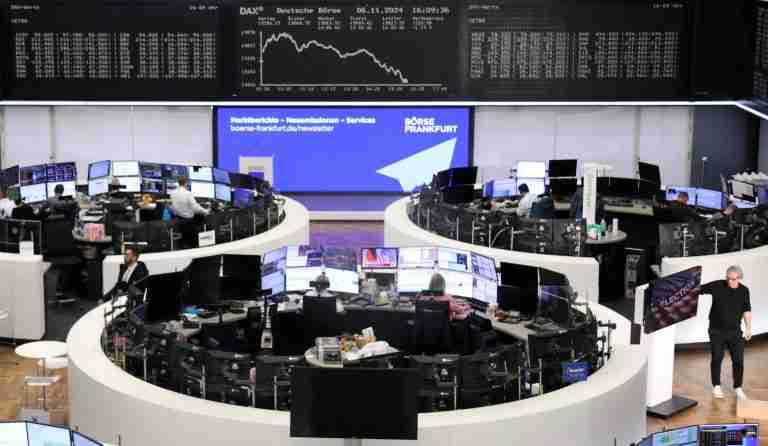
The UK’s blue-chip index declined on Wednesday, weighed down by losses in banks and healthcare stocks, as investors parsed corporate earnings and awaited the U.S. Federal Reserve’s policy decision.
The FTSE 100 fell 0.4% by 1056 GMT, while the domestically focused FTSE 250 bucked the trend, rising 0.1% and hitting its highest level since January 2022 earlier in the session.
Healthcare stocks were the biggest drag on the FTSE 100, tumbling 1.9%. Pharmaceutical giants GSK and AstraZeneca dropped 1.9% and 2.3%, respectively.
Banks retreated 1.2% after hitting record highs in the previous session. Investec slid 1.6%, while HSBC Holdings and Close Brothers both fell over 1%.
Luxury stocks also came under pressure after French luxury conglomerate LVMH plunged 6.7% following disappointing fourth-quarter results. Burberry and Watches of Switzerland declined 2.5% and 2%, respectively.
But precious metal miners rose 2.1%, rebounding from Tuesday’s losses as gold extended its rally above $5,300 per ounce. [GOL/]
Energy stocks also advanced 1%, lifted by oil prices hitting their highest since late September. Majors Shell and BP each gained about 1%. The companies are seeking U.S. licenses to extract natural gas from fields in Trinidad and Tobago and Venezuela, according to Caribbean energy minister Roodal Moonilal.
Market participants are now looking to upcoming corporate earnings for clearer signals on business conditions amid geopolitical tensions and trade uncertainties.
Attention was also on the Fed’s policy update later in the day. Most traders expect the U.S. central bank to hold interest rates steady.
Pets at Home jumped 5.3% after the pet care retailer maintained its full-year profit forecast despite reporting lower third-quarter revenue, attributed partly to price cuts as part of its retail turnaround strategy.
Reporting by Tharuniyaa Lakshmi in Bengaluru; Editing by Sahal Muhammed
‘Managing debt is an act of social responsibility; every dollar spent on interest is a dollar unavailable for nurses, teachers, seniors, housing …’
Statement by MP Robert King, Leader of the Opposition
Government is not a business. It has a bottom line that is most truly measured by the public good delivered. Fiscal responsibility is the foundation upon which lasting social progress is built. Bermudians know this. A system that is inefficient, opaque, or poorly managed does not serve the public — and it is those most reliant on public services who feel that failure first and most acutely.
Responsible governments understand that managing debt is itself an act of social responsibility — one that protects both today’s citizens and future generations. Debt reduction is not an ideological exercise. Every dollar spent on interest is a dollar unavailable for nurses, teachers, seniors, housing, and necessary infrastructure.
And it begs the question: Why, despite new and unprecedented revenue from the Corporate Income Tax, do Bermudians continue to be burdened by mounting public debt, strained services, and a housing and affordability crisis that continues to worsen?
Unfortunately, and not surprisingly, a recent government op-ed on the Corporate Income Tax does little to advance that clarity. Instead, it looks backwards, leans into division, and avoids the questions Bermudians are rightly asking today: where is the money going, and what results are we seeing?
Revisiting long-past challenges does nothing to address today’s issues. And, I call out the obfuscation of mischaracterising the position of the One Bermuda Alliance more broadly. Let’s be clear, when the OBA calls for efficiency and reforms, it is to ensure fiscal responsibility so that there is money to support what is needed most for the public good. The OBA believes debt reduction must never come at the expense of people. Social investment is necessary. And I applaud the tireless efforts of the OBA’s Shadow Minister of Finance, Doug DeCouto, for his diligent work on the CIT and all fiscal and financial issues.
What should concern Bermudians is not that there are differing views on priorities — healthy democracies depend on debate — but that legitimate scrutiny is deflected through rhetoric that fuels division. Bermuda’s most pressing challenges — housing affordability, access to healthcare, youth opportunity, and public safety — affect families across this island. They do not fall solely along political or racial lines, and our solutions should not either.
Bermuda is facing serious choices about its economic future. These choices demand honesty, discipline, and a willingness to bring the country together around shared priorities. They also demand clarity. The OBA believes in targeted, measurable investment: housing that actually gets built, healthcare reform that improves outcomes rather than headlines, and youth programmes that lead to real skills and real jobs. Achieving those outcomes requires prioritisation, clear metrics, and honest trade-offs — not slogans. And, we need leadership that unites rather than divides — leadership that speaks to Bermudians as one people with shared challenges and shared aspirations, not as groups set against one another for political advantage.
The Corporate Income Tax is a tool. Whether it becomes a force for lasting progress or another missed opportunity will depend not on rhetoric, but on stewardship. The Opposition stands ready to support policies that genuinely strengthen Bermuda’s future. What we will not support is division, deflection, or a lowering of our national discourse.
Bermudians deserve better — and together, we can do better.
Crown Counsel Adley Duncan, from the DPP laid arguments refuting a delays to court proceedings against Dr. Ewart Brown
Dr. Ewart Brown’s efforts to have legal proceedings against him dropped, continued today King’s Counsel Jerome Lynch, K.C. argued that his client has suffered an abuse of process for the near 15-year long investigation into allegations of corruption.
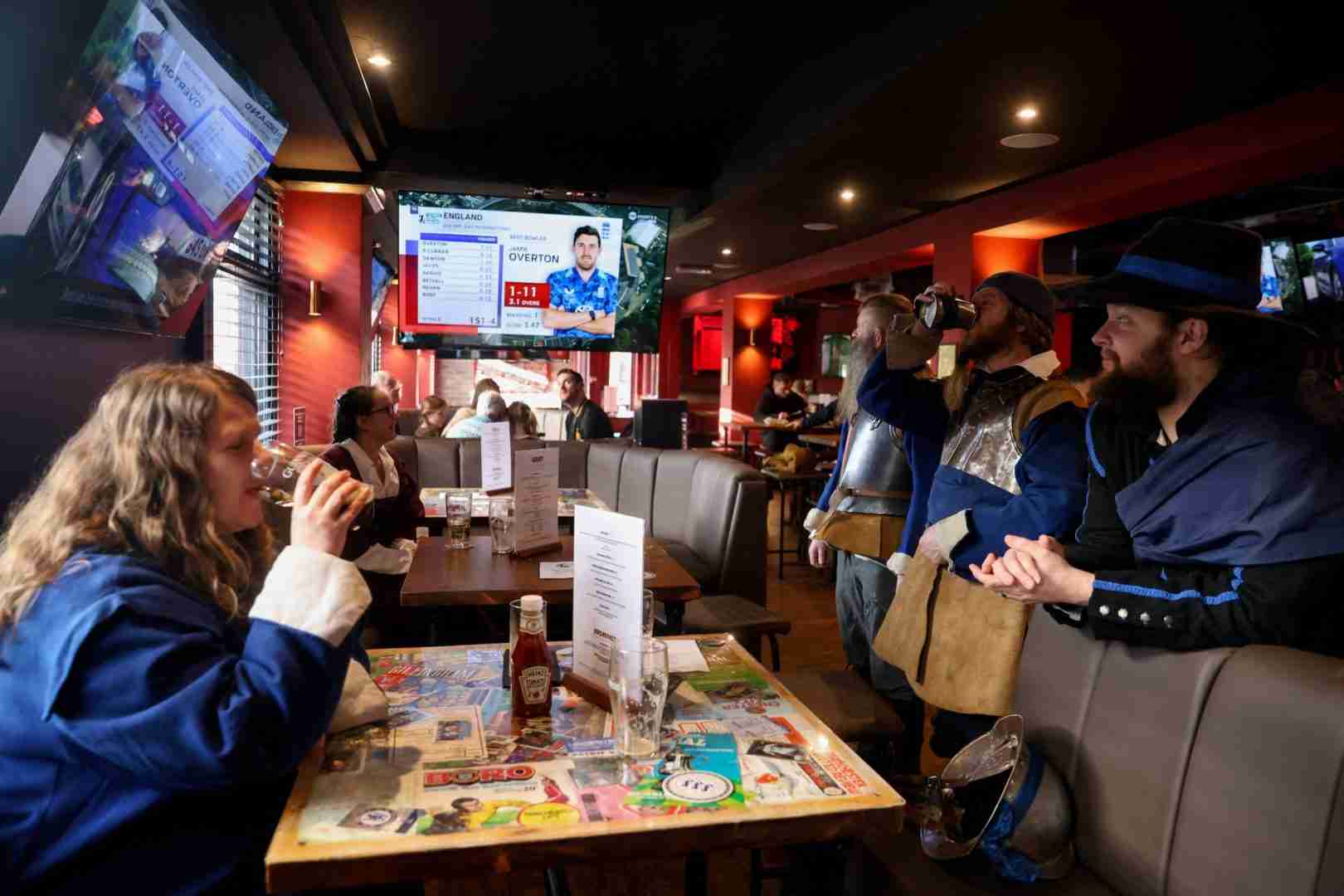
Pubs, whilst suffering a long-term decline driven in part by changing drinking habits and demographics, retain a centuries-old role in the social fabric of British communities
International News via Reuters:
The British government on Tuesday announced a support package for pubs and live music venues in England, providing some relief from the property tax rises announced last year, which left the hospitality industry reeling.
Pubs, whilst suffering a long-term decline driven in part by changing drinking habits and demographics, retain a centuries-old role in the social fabric of British communities.
Planned increases to taxes on commercial properties announced in November’s budget prompted an outcry, including warnings of mass closures, with a group of more than 1,000 landlords banning Labour Party lawmakers from their premises.
SECTOR WARNED THAT JOBS AT RISK
Tuesday’s package would give pubs a 15% discount on their business rate bills and freeze those bills for another two years.
“This support is worth 1,650 pounds ($2,266) for the average pub just next year, and will mean that around three quarters of pubs will see their bills either fall or stay the same next year,” Treasury minister Daniel Tomlinson told parliament.
The British Beer and Pub Association, which had warned that 15,000 jobs could be at risk without help, said there would be “a sigh of relief from landlords across the country”.
On Tuesday, the government also said it would review the way hotels were valued for calculating rates, raising the prospect of further relief.
“The reality remains that we still have restaurants and hotels facing severe challenges from successive budgets. They need to see substantive solutions that genuinely reduce their costs,” said Kate Nicholls, chair of UKHospitality.
LATEST GOVERNMENT U-TURN
The watering down of the tax rise for pubs is the latest in a string of partial or full reversals from Prime Minister Keir Starmer’s government as, struggling to invigorate a sluggish economy and suffering in the polls, he looks for ways to balance the books and improve public services.
Previous U-turns driven by pressure from within his own party and directly from voters, include a plan to raise more tax from farmers, cut welfare spending and reduce subsidies on energy bills for the elderly.
In a sign of the difficult conditions faced by hospitality businesses, Revel Collective, which owns 62 pubs and bars across Britain, appointed administrators on Tuesday. It said 21 sites would be closed immediately with the loss of 590 jobs.
The government also launched a new High Street Strategy alongside the support package, which it said was aimed at boosting the retail and hospitality sectors.
($1 = 0.7283 pounds)
Reporting by Sarah Young, additional reporting by James Davey; Editing by William James and Sharon Singleton
The gains underscore how investors are leaning on company-specific factors to guide market sentiment amid an increasingly uncertain macroeconomic environment
International News via Reuters:
European equities ended higher on Tuesday, supported by a raft of positive corporate catalysts that eased investor concerns over recent trade tensions, while shares of Puma jumped after the sportswear maker sold a stake to China’s Anta Sports.
The gains underscore how investors are leaning on company-specific factors to guide market sentiment amid an increasingly uncertain macroeconomic environment.
The pan-European STOXX 600 benchmark was up 0.6% at 613.11 points and touched its highest in over one week.
Banks led sectoral gains with a 1.8% rise and hit their highest since May 2008, with HSBC <HSBA.L> up 2.8% as it briefly hit a $300 billion market value.
“The fundamentals for banks have really improved. We expect loan growth to pick up and we could see further positive earnings surprises from the sector this year,” said Ciaran Callaghan, head of European equity research at Amundi.
PUMA CLIMBS, LVMH RESULTS IN FOCUS
Puma’s shares rose 9% and hit their highest level since last March, following a deal by Anta Sports Products to buy a 29.06% stake in the German company for 1.5 billion euros ($1.8 billion). The deal is expected to help Puma increase its sales in the lucrative Chinese market.
“At this point in the cycle, we can expect dealmaking to pick up. Balance sheets are strong and management teams are looking to see where incremental growth can come from,” Callaghan added.
LVMH closed up 0.2%. Its U.S.-listed shares were last up 0.4% in choppy trading after the luxury giant said it sold more goods than analysts expected in the fourth quarter, boosting hopes of a luxury sector rebound even as trade tensions, a weaker dollar and high gold prices hit its margins.
Among others, Swiss pharmaceutical firm Roche said a phase II clinical trial of its experimental obesity drug CT-388, a once-weekly injection, had delivered positive results. Shares struggled for direction for most of the session and were last flat.
Separately, Indian Prime Minister Narendra Modi said that India and the European Union have finalised a long-pending landmark trade deal, which also included India cutting steep tariffs on automakers.
However, auto stocks were down 0.8% as analysts were sceptical about the boost it could give to European brands that are likely to be faced with stiff competition from local carmakers.
Investors are also concerned about the long-term implications of U.S. tariff threats for the global trade order, after U.S. President Donald Trump said he would hike duties on South Korean autos and other imports, citing delays in implementing the pact signed last year.
Reporting by Niket Nishant, Avinash P and Johann M Cherian in Bengaluru; Editing by Sherry Jacob-Phillips and Shinjini Ganguli
Niscemi, a town of about 25,000 in south-central Sicily, sits on a plateau that authorities say is gradually collapsing toward the plain below
International News via Reuters:
Homes in the Sicilian town of Niscemi have been left teetering on the edge of a cliff after a landslide that was triggered by a storm, Italy’s civil protection chief said on Tuesday.
Niscemi, a town of about 25,000 in south-central Sicily, sits on a plateau that authorities say is gradually collapsing toward the plain below. More than 1,500 people have had to be evacuated.
Buildings were overhanging the edge after large sections of the slope gave way. A car was left with its front end poking into the chasm.
“Let’s be clear: there are homes on the edge of the landslide that are uninhabitable,” the civil protection head Fabio Ciciliano told reporters in Niscemi, saying residents from the affected areas would be permanently relocated.
“Once the water has drained away and the moving section has stopped or slowed, a more accurate assessment will be made … The landslide is still active,” he added.
On Monday, the Italian government of Prime Minister Giorgia Meloni declared a state of emergency for Sicily, Sardinia and Calabria, the three southern regions battered by the violent storm last week.
Extreme weather events have become more frequent in Italy in recent years. Floods have devastated cities across the country, killing dozens of people and amplifying risks of landslides and floods also in historically less exposed areas.
The administration set aside 100 million euros ($119 million) for the initial needs of the areas worst hit by the recent storm. But local authorities estimate damage at over 1 billion euros after powerful winds and waves pushed the sea inland overwhelming coastal defences, destroying homes and businesses.
In Niscemi, the sudden evacuations have fuelled anxiety and anger among residents, some of whom say earlier landslides went unaddressed.
“I have been told that I have to leave, even though I don’t have anything (collapse) in the house or underneath,” Francesco Zarba said.
“We had the first landslide 30 years ago, and no one ever did anything.”
($1 = 0.8382 euros)
Reporting by Danilo Arnone; additional reporting and Writing by Angelo Amante; Editing by Alison Williams
The Bulletin of the Atomic Scientists set the clock to 85 seconds before midnight, the theoretical point of annihilation
International News via Reuters:
Atomic scientists set their “Doomsday Clock” on Tuesday closer than ever to midnight, citing aggressive behavior by nuclear powers Russia, China and the United States, fraying nuclear arms control, conflicts in Ukraine and the Middle East and AI worries among factors driving risks for global disaster.
The Bulletin of the Atomic Scientists set the clock to 85 seconds before midnight, the theoretical point of annihilation. That is four seconds closer than it was set last year. The Chicago-based nonprofit created the clock in 1947 during the Cold War tensions that followed World War Two to warn the public about how close humankind was to destroying the world.
The scientists voiced concern about threats of unregulated integration of artificial intelligence into military systems and its potential misuse in aiding the creation of biological threats, as well as AI’s role in spreading disinformation globally. They also noted continuing challenges posed by climate change.
“Of course, the Doomsday Clock is about global risks, and what we have seen is a global failure in leadership,” nuclear policy expert Alexandra Bell, the Bulletin’s president and CEO, told Reuters. “No matter the government, a shift towards neo-imperialism and an Orwellian approach to governance will only serve to push the clock toward midnight.”
It was the third time in the past four years that the scientists moved the clock closer to midnight.
“In terms of nuclear risks, nothing in 2025 trended in the right direction,” Bell said. “Longstanding diplomatic frameworks are under duress or collapsing, the threat of explosive nuclear testing has returned, proliferation concerns are growing, and there were three military operations taking place under the shadow of nuclear weapons and the associated escalatory threat. The risk of nuclear use is unsustainably and unacceptably high.”
Bell pointed to Russia’s continued war in Ukraine, the U.S. and Israeli bombing of Iran and border clashes between India and Pakistan. Bell also cited continuing tensions in Asia including on the Korean Peninsula and China’s threats toward Taiwan, as well as rising tensions in the Western Hemisphere since U.S. President Donald Trump returned to office 12 months ago.
The last remaining nuclear arms pact between the United States and Russia, the New START treaty, expires on February 5. Russian President Vladimir Putin proposed in September that the two countries agree to observe for another year the limits set under the pact, which caps each side’s number of deployed nuclear warheads at 1,550. Trump has not formally responded. Western security analysts are divided about the wisdom of accepting Putin’s offer.
Trump in October ordered the U.S. military to restart the process for testing nuclear weapons after a halt of more than three decades. No nuclear power, other than North Korea most recently in 2017, has conducted explosive nuclear testing in more than a quarter century.
No country would benefit more from a full-scale return to such testing than China, given its continued push to expand its nuclear arsenal, according to Bell, a former senior official at the U.S. State Department’s Bureau of Arms Control, Deterrence and Stability.
‘AGGRESSIVE AND NATIONALISTIC’
Trump has upended the world order. He sent U.S. forces to capture Venezuelan President Nicolas Maduro, threatened other Latin American countries, vowed to restore U.S. dominance in the Western Hemisphere, talked about annexing Greenland and imperiled transatlantic security cooperation.
Russia launched its large-scale invasion of Ukraine in 2022, and there is no end in sight. Among the weapons Russia has used is the nuclear-capable hypersonic Oreshnik missile. Russia released video in December of what it said was the deployment of the Oreshnik in Belarus, a move meant to boost the Russian ability to strike targets across Europe.
“Russia, China, the United States and other major countries have become increasingly aggressive and nationalistic,” Bell said.
Their “winner-takes-all great power competition” undermines the international cooperation needed to reduce risks of nuclear war, climate change, misuse of biotechnology, potential AI-related hazards and other apocalyptic dangers, Bell said.
Bell also cited Trump’s domestic actions against science, academia, the civil service and news organizations.
Maria Ressa, a 2021 Nobel Peace Prize recipient for her journalistic efforts exposing abuses of power in the Philippines including how social media platforms were used to spread disinformation, participated in the announcement. Ressa lamented the rise of technology that circulates lies more quickly than facts.
“We are living through an information Armageddon that’s brought about by the technology that rules our lives, from social media to generative AI. None of that tech is anchored in facts. Your chatbot is nothing but a probabilistic machine,” Ressa told an online press briefing.
The Bulletin was founded in 1945 by scientists including Albert Einstein and J. Robert Oppenheimer.
Reporting by Will Dunham; Editing by Daniel Wallis
Raleigh Bermuda will travel to Costa Rica and Borneo
Hamilton, Bermuda — Raleigh International Bermuda has officially opened applications for its 2026 Venturer Programme, inviting young people aged 18–24 to take part in a structured leadership and experiential learning journey focused on challenge, service, and personal development.
The Venturer Programme combines local training, personal development, teamwork, and fundraising with the opportunity to participate in an overseas expedition. For 2026, Raleigh is planning two international expeditions, in June 2026 and September 2026.
Applicants may apply at age 17; however, participants must be 18 at the time of overseas travel.
The programme is open to young people from a wide range of backgrounds and is made possible through the generous support of individual and corporate donors, including supporters of Raleigh International Bermuda’s 21 for 21 campaign. Raleigh International Bermuda is grateful for those whose contributions help remove financial barriers and expand access for young people across the community.
Denae D. Burchall, Executive Director, Raleigh International Bermuda said: Raleigh’s Venturer programme intentionally places young people in environments that demand effort, teamwork, and accountability. They are challenged physically and mentally, supported by peers from diverse backgrounds, and exposed to perspectives that stay with them long after the expedition ends. Young people considering a development opportunity before further study, entry into the workforce, or during a gap year are encouraged to apply through our digital application.”
In preparation for the overseas expedition, Venturers participate in a series of training days, workshops, and team-building activities focused on leadership, communication, emotional regulation, and practical expedition skills, ensuring they are prepared both individually and as a team.
Eligibility: Must be 18 by June or September 2026 depending on expedition date
Programme Year: 2026
Expeditions: Costa Rica (June 2026) & Borneo (September 2026)
Application Deadline: February 9th, 2026
About Raleigh International Bermuda Raleigh International Bermuda is a nonprofit organisation delivering experiential learning and leadership development programmes that equip young people with the skills, confidence, and resilience to navigate life’s challenges and contribute meaningfully to their communitie
ICE and Border Patrol agents have come under heavy criticism in the United States over their enforcement of President Donald Trump’s immigration crackdown
International News via Reuters:
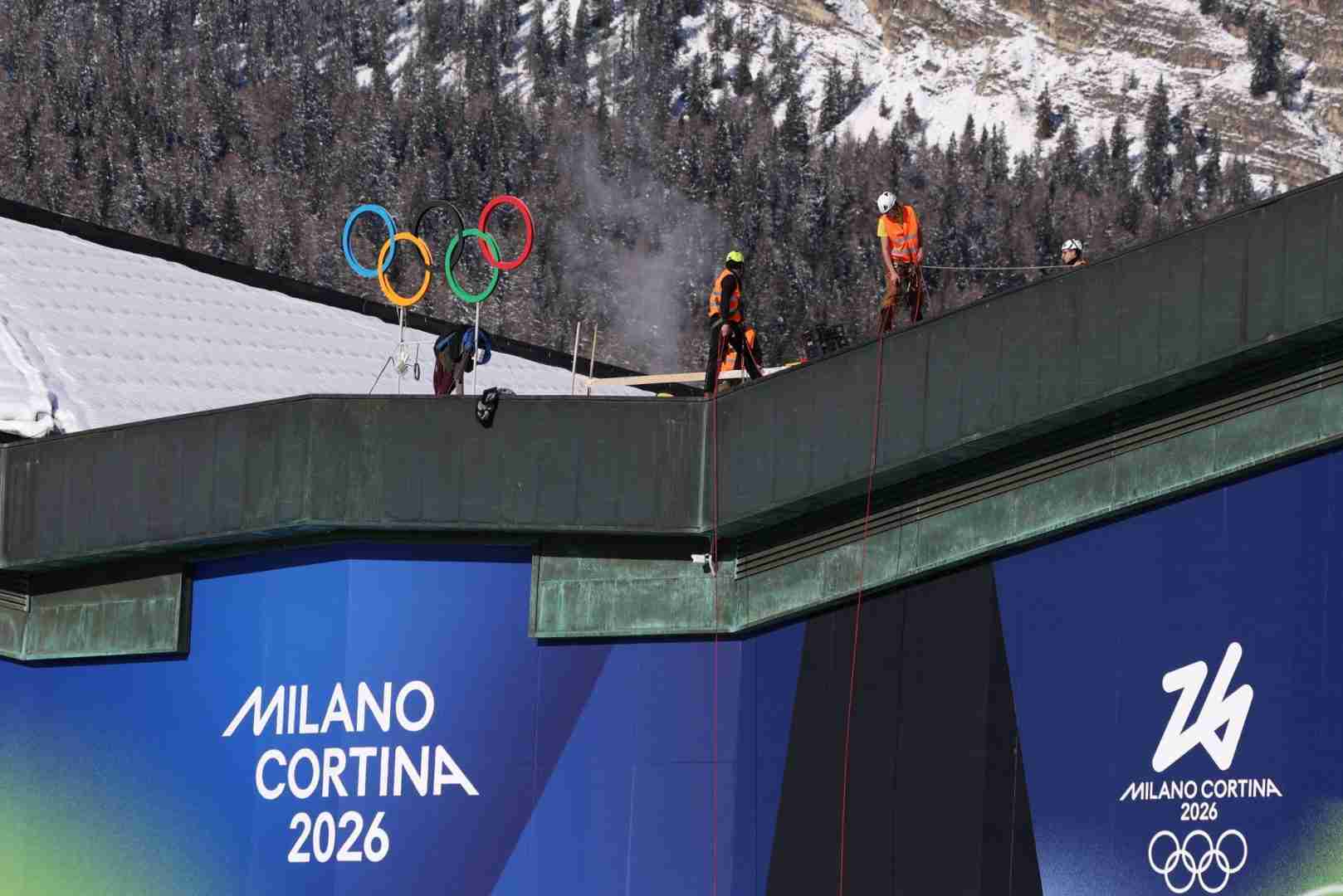
U.S. Immigration and Customs Enforcement personnel will help protect U.S. delegations at the Winter Olympics in Italy, a U.S. embassy source said on Tuesday, confirming local media reports and prompting anger among some Italian politicians.
ICE and Border Patrol agents have come under heavy criticism in the United States over their enforcement of President Donald Trump’s immigration crackdown after two U.S. citizens were shot dead in separate incidents this month in the state of Minnesota.
The embassy source, speaking on condition of anonymity, said ICE’s Homeland Security Investigations division would back up the U.S. State Department’s security service at the February 6-22 Milano Cortina Winter Olympics.
The HSI agents will not carry out any immigration enforcement activity while in Italy but will rather aim to “mitigate risks from transnational criminal organisations”, the source said, without elaborating.
“All security operations remain under Italian authority,” the source added.
HSI has been present at major sport events in both the U.S. and abroad in the past, including previous Olympic Games, as part of international partnerships related to human trafficking and drug trafficking, one former official said.
Spokespeople for ICE did not immediately respond to questions about the operation in Italy. A State Department spokesperson said that, as in past Olympics, multiple federal agencies would be helping with security, including HSI.
ITALIAN POLITICIANS CALL FOR ICE TO BE BANNED
Despite assurances that there is nothing unusual about the HSI deployment, Italian politicians criticised the involvement of ICE in next month’s Games, highlighting how the image of the United States has been tarnished in recent months.
“It seems sheer idiocy to me,” Maurizio Lupi, leader of a small centrist party in Prime Minister Giorgia Meloni’s governing coalition, told la Repubblica daily.
The left-leaning mayor of Milan, one of the cities co-hosting the Olympics, called ICE “a militia that kills”.
Speaking to RTL 102.5 radio, Giuseppe Sala said: “It’s clear that they’re not welcome in Milan, there’s no doubt about it.”
Foreign Minister Antonio Tajani called for a measured response. “We’re not talking about the (ICE people) who were out on the streets of Minneapolis… It’s not as if the (Nazi) SS are arriving,” he told reporters at a Holocaust memorial event.
While many ICE agents in the U.S. have been detailed to support routine immigration enforcement, HSI’s mission is to focus on transnational crime.
But Italia Viva, a centrist opposition party led by former Prime Minister Matteo Renzi, said agents affiliated with ICE did not represent Italian values and should be barred entry.
The hard-left USB trade union said it would hold an “ICE OUT” rally in central Milan on February 6, to coincide with the opening ceremony.
Additional reporting by Ted Hesson, Brad Heath and Humeyra Pamuk in WashingtonEditing by Gareth Jones
On Wall Street, the S&P 500 and Nasdaq were higher as investors digested a flurry of major earnings releases
International News via Reuters:
Global stocks rose for a fifth straight session to an intraday record on Tuesday, as the pace of U.S. earnings season picked up steam, while President Donald Trump’s latest tariff threats helped gold and silver continue their recent rally.
On Wall Street, the S&P 500 and Nasdaq were higher as investors digested a flurry of major earnings releases, including results from airplane maker Boeing and shipping company United Parcel Service, which also said it would cut up to 30,000 jobs in operational roles this year.
Along with a decline of about 2% in Boeing, the Dow Industrials were pulled lower by a drop of nearly 20% in UnitedHealth, which said its 2026 revenue would shrink, while health insurers were lower overall in the wake of a lower-than-expected Medicare reimbursement proposal for 2027 from the government.
Markets were also awaiting earnings this week from heavyweight names that are part of the so-called Magnificent Seven, such as Microsoft, Apple, Tesla and Meta Platforms, while the Federal Reserve is scheduled to release its policy statement on Wednesday.
“Our view this year is the impetus for markets to continue to rise is going to be an earnings story rather than a multiples story,” said Charlie Ripley, senior investment strategist at Allianz Investment Management in Minneapolis.
“There’s an expectation that those earnings will be fairly robust and you’re seeing that reflected in stocks moving higher.”
The Dow Jones Industrial Average fell 443.84 points, or 0.90%, to 48,968.36, the S&P 500 rose 26.55 points, or 0.38%, to 6,976.78 and the Nasdaq Composite rose 200.89 points, or 0.85%, to 23,801.43.
MSCI’s gauge of stocks across the globe rose 6.81 points, or 0.65%, to 1,050.98 and was on track for a fifth straight daily gain, its longest run of gains this year. The pan-European STOXX 600 index rose 0.58%, boosted by a 1.6% jump in bank shares.
South Korea scrambled to assure the U.S. it remained committed to implementing a trade deal after U.S. President Donald Trump said he would hike tariffs on autos and other imports from its ally, blaming a delay in enacting the pact agreed last year. It was the latest tariff threat from Trump after he announced plans to issue levies on several European countries over Greenland last week.
The dollar index, which measures the greenback against a basket of currencies, fell 0.78% to 96.35, with the euro up 0.67% at $1.1958. The Korean won strengthened 0.57% against the greenback to 1,437.36 per dollar after falling as much as 0.63%.
Against the Japanese yen, the dollar weakened 0.73% to 153.02 after hitting 152.86, its lowest level since early November, while Sterling strengthened 0.75% to $1.378.
The yen had come under pressure since new Japanese Prime Minister Sanae Takaichi ascended to her position in October, in part due to worries over Japan’s government debt as Takaichi based her campaign for next month’s elections on expanded stimulus measures.
But the Japanese currency strengthened sharply on Friday as chatter about rate checks by the New York Fed as well as the Bank of Japan fueled the risk of a joint U.S.-Japan intervention to halt the yen’s slide.
Markets are also awaiting the latest policy statement from the Fed, although the central bank is widely expected to keep rates unchanged, according to CME’s FedWatch Tool. However, the nomination of a potential replacement for Fed Chair Jerome Powell in May, the effort to fire Governor Lisa Cook, and a criminal investigation by the Trump administration into the central bank chief all loom over the meeting.
As geopolitical tensions continue to percolate, they have buttressed precious metals such as gold. Spot gold was up 0.98% to $5,063.62 an ounce, just off the record $5,110.50 hit on Monday. Spot silver climbed 3.1% to $107.13 an ounce, after a record high of $117.69 on Monday.
U.S. crude rose 1.2% to $61.36 a barrel and Brent rose to $66.33 per barrel, up 1.13% on the day.
Reporting by Chuck Mikolajczak; additional reporting by Stella Qiu in Syndey and Alun John in London, Pranav Kashyap and Twesha Dikshit in Bengaluru; Editing by Shri Navaratnam, Thomas Derpinghaus, William Maclean and Nick Zieminski
To provide the best experiences, we use technologies like cookies to store and/or access device information. Consenting to these technologies will allow us to process data such as browsing behavior or unique IDs on this site. Not consenting or withdrawing consent, may adversely affect certain features and functions.
Functional
Always active
The technical storage or access is strictly necessary for the legitimate purpose of enabling the use of a specific service explicitly requested by the subscriber or user, or for the sole purpose of carrying out the transmission of a communication over an electronic communications network.
Preferences
The technical storage or access is necessary for the legitimate purpose of storing preferences that are not requested by the subscriber or user.
Statistics
The technical storage or access that is used exclusively for statistical purposes.The technical storage or access that is used exclusively for anonymous statistical purposes. Without a subpoena, voluntary compliance on the part of your Internet Service Provider, or additional records from a third party, information stored or retrieved for this purpose alone cannot usually be used to identify you.
Marketing
The technical storage or access is required to create user profiles to send advertising, or to track the user on a website or across several websites for similar marketing purposes.