Government hits back at Michael’s Fahy’s comments on CARICOM, as islands to our south face a squeeze on U.S. visas
by the Minister of Home Affairs, the Hon. Alexa Lightbourne, JP, MP
Administrative visa processing changes do not diminish the standing, dignity, or value of countries. Language suggesting that such changes “downgrade” countries and their citizens is neither diplomatically appropriate nor reflective of the mutual respect that should characterize regional discourse.
Any future relationship with CARICOM would be carefully structured to preserve Bermuda’s fundamental characteristics.
Our British Overseas Territory (OT) status, constitution and legal system, robust financial services regulatory framework, tax structure, and established bilateral relationships would remain.
The suggestion that regional cooperation would compromise these foundational elements misunderstands how Bermuda would approach any such arrangement.
This Government and our Ministry remain committed to thorough public consultation and transparent decision-making regarding CARICOM.
This includes assessment of economic implications, stakeholder engagement, and ensuring Bermudians have access to accurate, complete information about what any regional relationship would and would not entail.
The Government’s first commitment is to protecting Bermuda’s economic interests and international reputation.
Regional cooperation represents an opportunity, not a risk. Bermuda’s prosperity has always depended on strategic engagement with the wider world, not isolation from it.
The Ministry of Home Affairs will continue to approach this matter with the careful consideration it deserves, grounded in evidence rather than speculation, and focused on Bermuda’s long-term strategic interests.
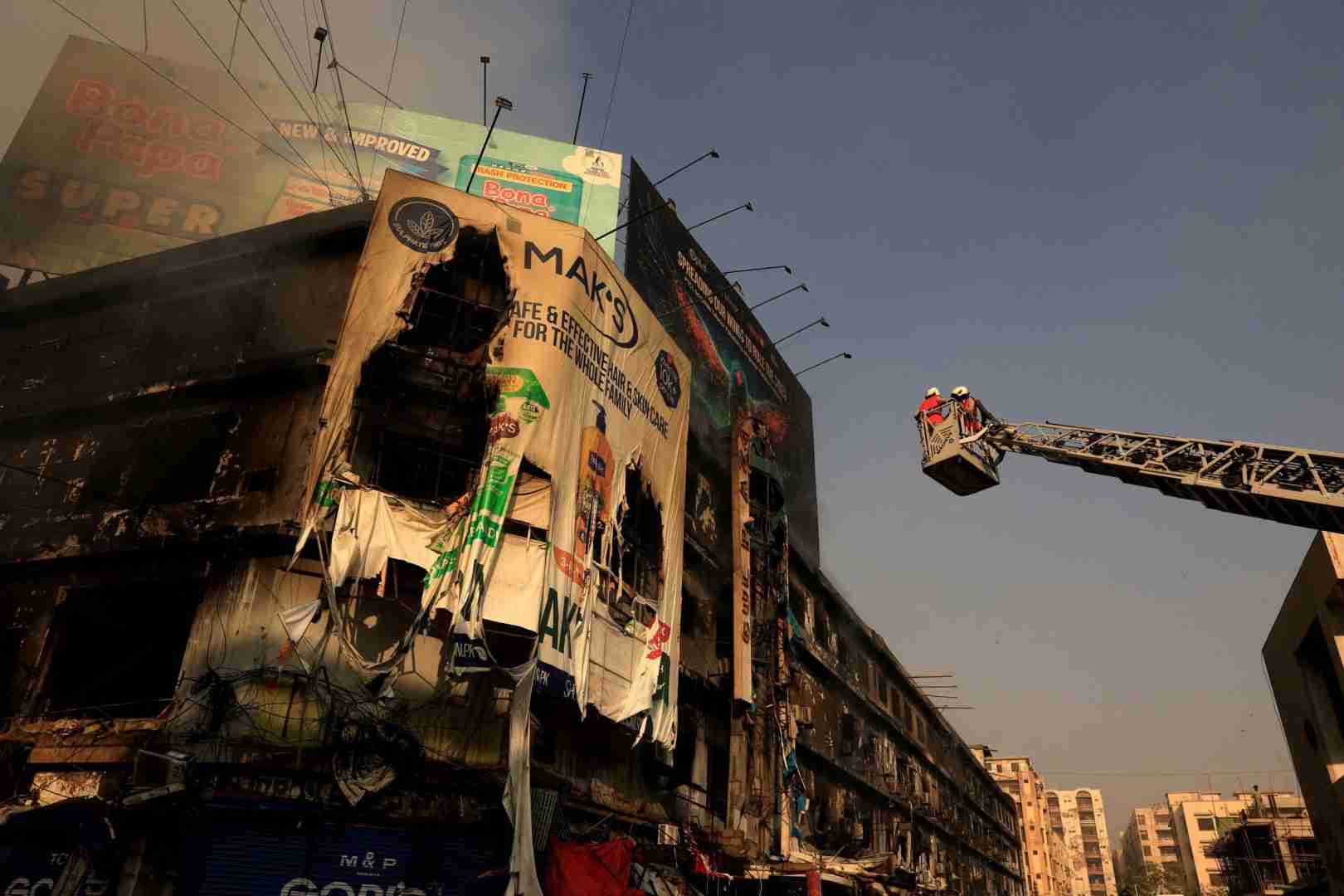
The city’s biggest fire in over a decade started late on Saturday at Gul Plaza, which houses 1,200 shops in a multi-storey complex spread across an area larger than a football field
International News via Reuters:
Pakistani firefighters began pulling bodies from the smouldering remains of a sprawling Karachi shopping mall on Monday where more than 60 people were still missing after a massive fire that killed at least 21.
The city’s biggest fire in over a decade started late on Saturday at Gul Plaza, which houses 1,200 shops in a multi-storey complex spread across an area larger than a football field. The blaze in Karachi’s historic centre raged for more than 24 hours before it was mostly extinguished.
Videos showed flames ripping through the building as firefighters laboured through the night to put out the blaze. On Monday, they began cooling the structure and clearing twisted metal and debris strewn across the street, along with fallen air-conditioning units and shop signboards.
Most of the building had crumbled by Monday afternoon; cranes demolished the remaining structure amid fears it might collapse.
Qasir Khan said his wife, daughter-in-law and her mother had gone to the mall on Saturday evening and were among those still missing.
“The bodies will come out in pieces from here. No one will be able to recognise them,” Khan said, blaming the rescue effort for not being swift enough. “They could have saved a lot of people.”
Hundreds of people surrounded the building as rescue teams searched for survivors, including shopowners whose life’s work was reduced to ash overnight.
“We’ve been left high and dry, reduced to zero; 20 years of hard work, all gone,” said shopkeeper Yasmeen Bano.
ANGER OVER THE FIRE
Rescue workers were bringing human remains out in sacks before sending them for DNA testing. They stopped regularly to drink water after enduring intense heat from the debris.
Mohammed Ameen, who was running operations at the site for the Edhi emergency services non-profit, said 21 people had died in the fire, including a child.
Murad Ali Shah, chief minister of the southern province of Sindh that includes Karachi, told reporters that 65 people were still missing while 22 others who were injured by the flames had been discharged from hospital.
“In this time of grief and hardship, we stand with the affected families and the Sindh government,” Prime Minister Shehbaz Sharif said in a statement.
Anger was bubbling when Karachi Mayor Murtaza Wahab visited the site on Sunday night, with people chanting anti-government slogans and protesting over the response time from the fire department, local media reported.
Kosar Bano said six of her family had gone to the mall to shop for a wedding. The last time she heard from them, they said they would be home in 15 minutes.
“The only hope we have is how many hands we will find, how many fingers we will find, and how many legs we will find. That’s it,” she said.
THICK SMOKE FILLED THE BUILDING
According to rescue services, authorities received the first emergency call at 10:38 p.m. (1738 GMT) on Saturday, reporting that ground-floor shops were on fire. By the time firefighters arrived, the flames had already spread to the upper floors, engulfing much of the building.
Images of the mall’s interior revealed the charred remains of stores and a bright orange glow as flames continued to rise throughout the building.
Firefighters said Gul Plaza’s lack of ventilation caused thick smoke to fill the building and slowed efforts to reach people trapped inside.
“I’m admitting that there are faults. I can’t say whose fault this is. An inquiry will be conducted and heads will roll,” Shah said.
Provincial police chief Javed Alam Odho earlier said the fire was caused by an electrical fault, but Shah said the reason was still unknown.
The blaze is Karachi’s biggest since an industrial site went up in flames in 2012, killing more than 260 people. A court ruled in 2020 that the disaster involved arson.
Reporting by Ariba Shahid and Mohammed Waseem; Writing by Tanvi Mehta and Saad Sayeed; Editing by Raju Gopalakrishnan, Kate Mayberry, Mark Potter and Ros Russell
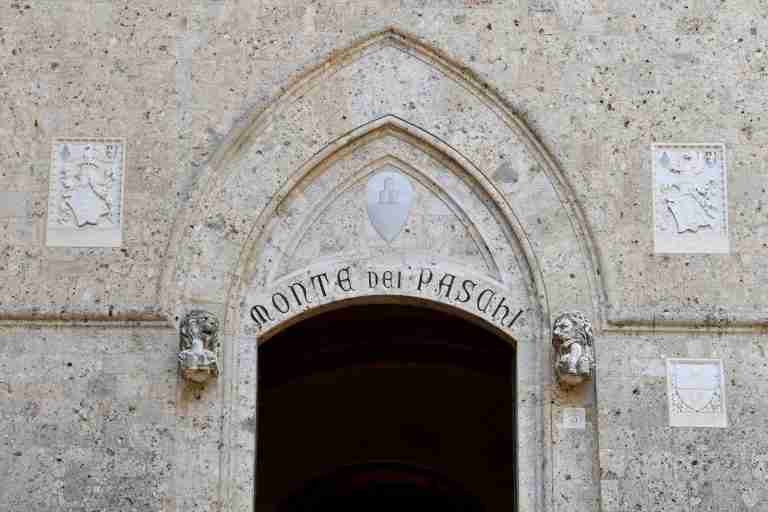
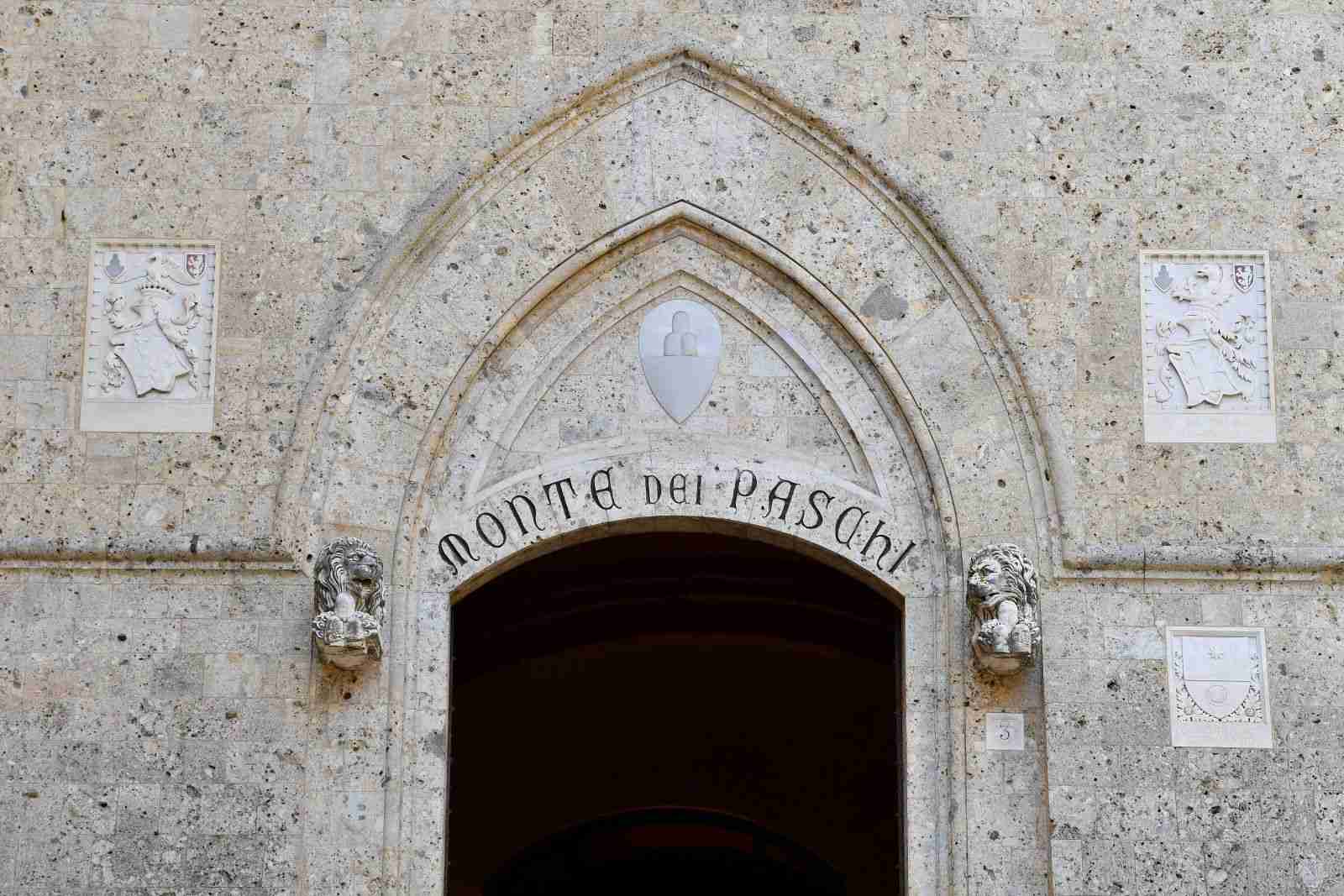
After leading the bank since 2022 through a restructuring that culminated in last year’s takeover of bigger rival Mediobanca, Lovaglio, 70, is seeking a new mandate from the MPS board in April
International News via Reuters:
Italy’s Treasury is in favour of reappointing Luigi Lovaglio as chief executive of Monte dei Paschi di Siena (MPS), two sources familiar with the matter said on Monday, at a critical juncture for the bailed-out Tuscan lender.
After leading the bank since 2022 through a restructuring that culminated in last year’s takeover of bigger rival Mediobanca, Lovaglio, 70, is seeking a new mandate from the MPS board in April.
His reappointment faces hurdles. The board is still debating whom to put forward as a CEO candidate, amid shareholder disagreements and a judicial probe is in progress into the Mediobanca deal.
Asking not to be named due the sensitivity of the matter, the sources said the Treasury had so far supported Lovaglio’s strategy for the bank and wanted MPS to continue along its current path.
GOVERNMENT STANCE ON LOVAGLIO KEY DESPITE SMALL STAKE
Italy’s Treasury, which has a residual 4.9% stake in MPS, would not back any slates of board nominees with an alternative CEO candidate, the sources said, adding Rome would be in favour of naming some new directors.
With the country’s financial sector still in flux, the government’s stance carries weight beyond the actual size of its shareholding.
In reprivatising MPS after a 2017 bailout, Italy has brought onboard as key investors Delfin, the holding company of the Del Vecchio family, and construction tycoon Francesco Gaetano Caltagirone.
Delfin on Friday threw its weight behind Lovaglio, saying it backed the bank’s management. Caltagirone, however, has not expressed his support for the CEO and sources say he has doubts about whether Lovaglio would be the best choice going forward.
Caltagirone on Friday denied any direct clash with Lovaglio, attributing the uncertainty over the CEO’s future to an internal board debate.
By acquiring Mediobanca, the main shareholder in Italy’s largest insurer Generali alongside Delfin and Caltagirone, MPS has positioned itself at the centre of the country’s financial system.
Decisions over the bank’s leadership are seen as critical in shaping the sector’s future.
Reuters reported in November that Rome was still banking on a long‑standing plan to combine MPS with rival Banco BPM.
Bankers expect further consolidation in Italy’s financial sector following a raft of merger deals last year, with Generali seen as a central pivot in any reshaping of the market.
The insurer in December ditched an asset management deal with France’s BPCE after sharp criticism from Italy’s government and top shareholders Caltagirone and Delfin.
Lovaglio, who has described the Mediobanca merger as an innovative combination of two markedly different lenders, is working on a strategy for the group which must be presented to the European Central Bank within six months of the deal.
Reporting by Giuseppe Fonte in Rome and Valentina Za in Milan, editing by Gavin Jones
Twelve were in intensive care after the accident near Adamuz in the province of Cordoba, about 360 km (223 miles) south of Madrid, according to emergency services
International News via Reuters:
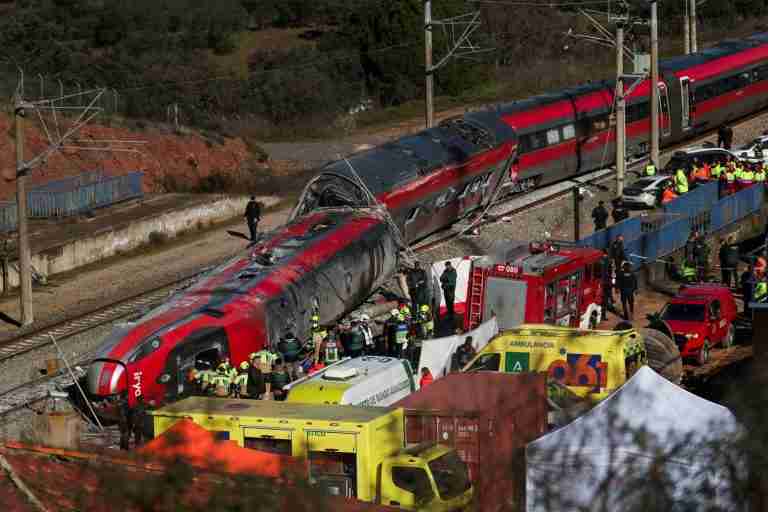
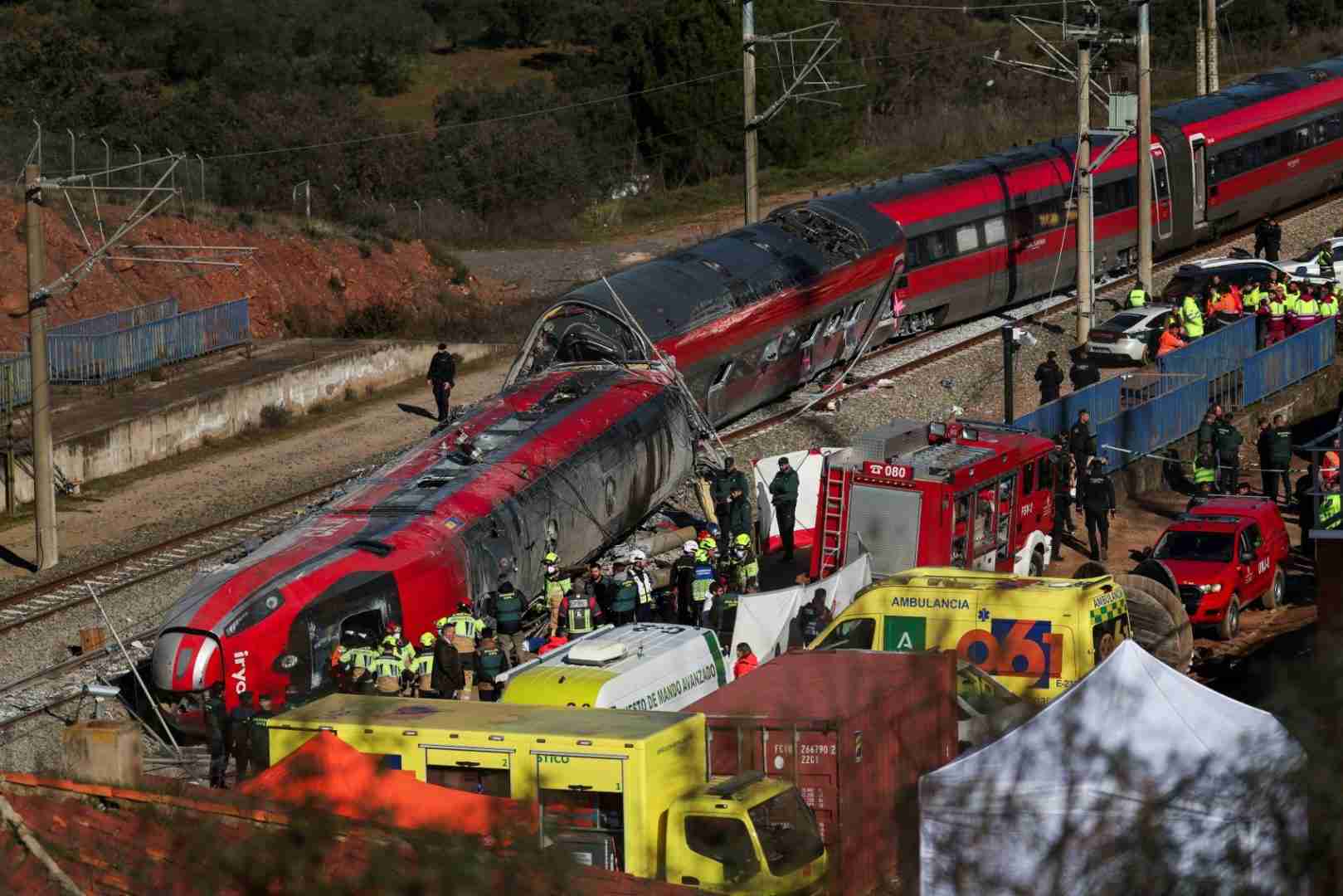
At least 40 people have died in southern Spain after a high-speed train derailed and collided with an oncoming one on Sunday night in one of the worst railway accidents in Europe in 80 years.
Twelve were in intensive care after the accident near Adamuz in the province of Cordoba, about 360 km (223 miles) south of Madrid, according to emergency services. Experts say a faulty rail joint might be key to determining the cause of the crash.
“The train tipped to one side… then everything went dark, and all I heard was screams,” said Ana Garcia Aranda, 26, who was being treated at a Red Cross centre in Adamuz.
Limping and with plasters across her face, she described how fellow passengers dragged her out of the train covered in blood. Firefighters rescued her pregnant sister from the wreckage and an ambulance took them both to hospital.
“There were people who were fine and others who were very, very badly injured… you knew they were going to die, and you couldn’t do anything,” she said.
REMOTE LOCATION COMPLICATES RESCUE
The collision occurred in a hilly, olive-growing region accessible only by a single-track road, making it difficult for ambulances to reach the area, Iñigo Vila, national emergency director at the Spanish Red Cross, told Reuters.
The Andalusia region’s President Juan Manuel Moreno said at least 40 people had perished, and emergency crews faced difficulties bringing in the heavy equipment needed to lift the wreckage and reach those still lying beneath it.
Prime Minister Pedro Sanchez cancelled his trip to the World Economic Forum in Davos, Switzerland, and Transport Minister Oscar Puente visited the site on Monday.
Police drone footage showed how the trains came to a standstill 500 metres apart. One train’s carriage was split in two, and the locomotive was crushed like a tin can.
Experts studying the crash site found a broken joint on the rails, which created a gap between the rail sections that widened as trains continued to travel on the track, according to a source briefed on initial investigations.
That faulty joint could prove important in identifying the cause of the accident, the source said.
‘INTERACTION BETWEEN THE TRACK AND THE VEHICLE’
Ignacio Barron, head of Spain’s Commission of Investigation of Rail Accidents (CIAF), said on RTVE: “What always plays a part in a derailment is the interaction between the track and the vehicle, and that is what the commission is currently (looking into).”
Paqui, an Adamuz resident who rushed to help rescue survivors with her husband, said he had “found a dead child inside, another child calling for his mother. You’re never ready to see something like this.”
Police said they had opened an office in Cordoba for relatives to provide DNA samples to help identify the dead.
The Iryo train was travelling at 110 kph from Malaga to Madrid when it derailed, Renfe President Álvaro Fernandez Heredia said on radio station Cadena Ser.
Twenty seconds later, the second train, heading to Huelva at 200 kph, either collided with the final two carriages of the Iryo train or with debris on the line, he said. The Iryo train lost a wheel that has not yet been located.
CRASH OCCURRED IN ‘STRANGE CONDITIONS’
It was too early to talk about the cause, but it happened in “strange conditions,” Fernandez Heredia said, adding that human error was virtually ruled out.
The death toll was among the top 20 highest from a train crash in Europe in 80 years, according to Eurostat data, and the highest in Spain since 2013, when a train derailed in the northwestern city of Santiago de Compostela, killing 80.
Spanish train drivers had warned state-owned rail infrastructure administrator Adif of “severe wear and tear” on the Madrid-Andalusia line and others, according to a letter seen by Reuters sent to Adif by train drivers union Semaf in August and urging stricter speed restrictions.
Adif had no immediate comment.
The Iryo train, a Frecciarossa 1000, was under four years old and the railway line near Adamuz was renovated last May, Puente said. Iryo said the train was last inspected on January 15.
Spain’s high-speed railway network is the largest in Europe and second-largest in the world after China with 3,622 km of tracks, according to Adif.
The government was criticised last year for a series of delays to high-speed rail, caused by power outages and the theft of copper cables from the lines.
Spain opened up the network to private competition in 2020 in a bid to offer low-cost alternatives to Renfe’s Ave trains.
Iryo is a joint venture between Italian state railway operator Ferrovie dello Stato, airline Air Nostrum and Spanish infrastructure investment fund Globalvia.
($1 = 0.8604 euros)
Reporting by Nina Lopez, Michael Gore, Leonardo Benassatto, Susana Vera, Emma Pinedo and Victoria Waldersee; additional reporting by Pietro Lombardi and Jesus Aguado; Writing by Charlie Devereux; Editing by David Latona, Sharon Singleton and Bernadette Baum
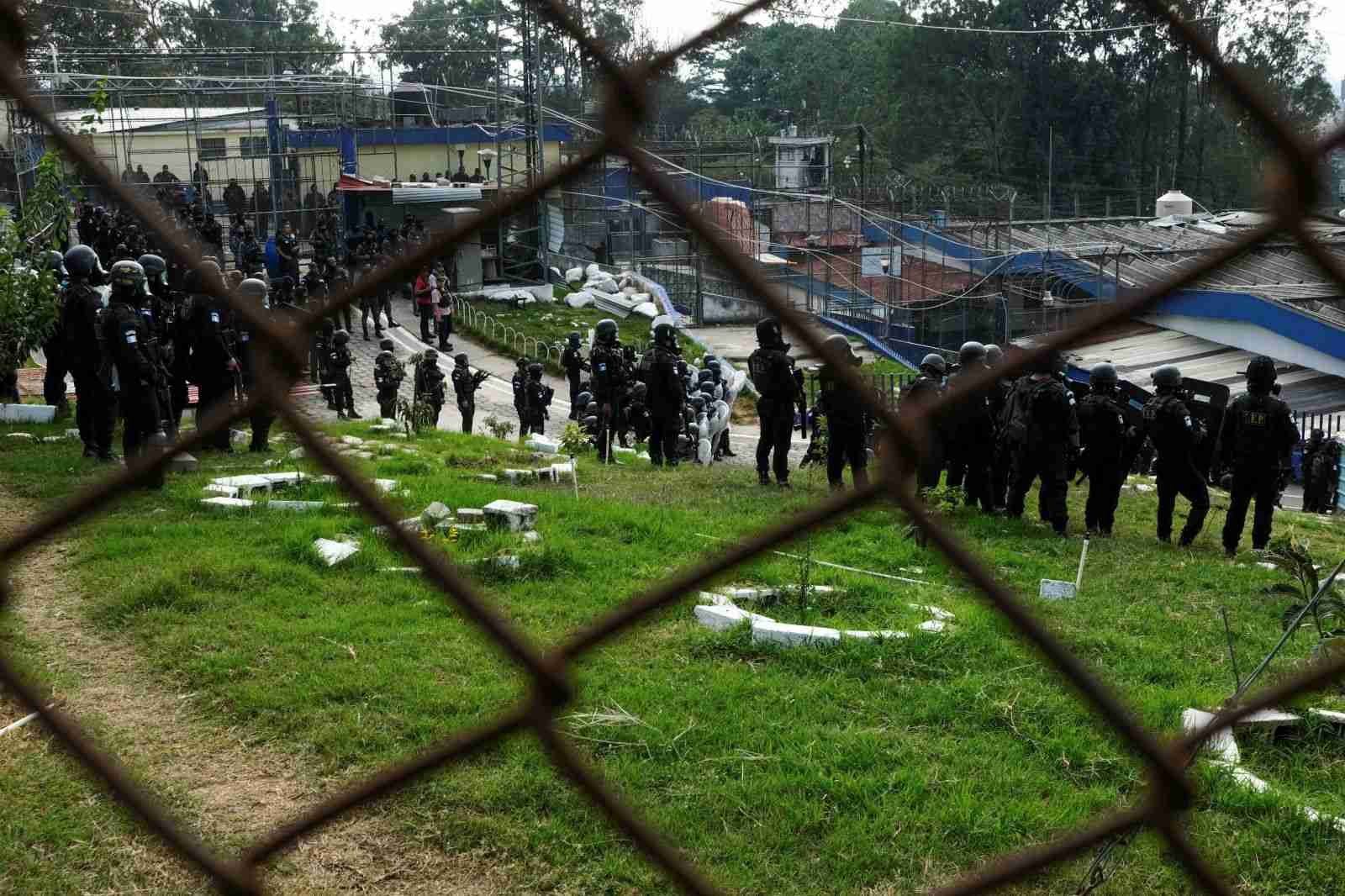
The conflict started on Saturday when inmates from the Barrio 18 gang took 46 guards hostage at three prisons, demanding greater privileges
International News via Reuters:
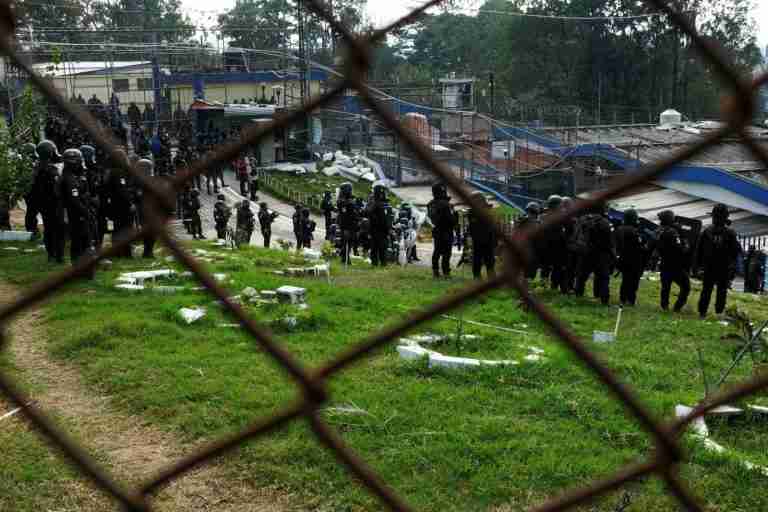
The death toll from coordinated gang attacks in Guatemala has risen to nine police officers, an official confirmed on Monday, following a weekend of violence that began with prison riots.
The conflict started on Saturday when inmates from the Barrio 18 gang took 46 guards hostage at three prisons, demanding greater privileges.
The violence escalated on Sunday after security forces regained control of a prison holding the gang’s leader, Aldo “El Lobo” Duppie. In apparent retaliation, gang members launched a series of attacks on police in and around Guatemala City.
Initially, seven officers and one gang member were killed in the Sunday attacks, with more than a dozen officers wounded. National police spokesman Jorge Aguilar told Reuters that an eighth officer died Sunday night and a ninth, Frallan Medrano, died early Monday from injuries sustained in an ambush.
In response, President Bernardo Arevalo declared a 30-day “state of siege,” which expands the power of security forces and may temporarily limit some civil liberties.
“The attack suffered by the officers was not only against them… but against the entire country,” Arevalo said during a wake for the fallen officers.
The president argued the violence was orchestrated by “political-criminal mafias” attempting to spread terror ahead of key judicial appointments.
El Lobo, the gang leader, is serving sentences totaling approximately 2,000 years and is married to the niece of Sandra Torres, Arevalo’s main rival in the 2023 presidential election.
While streets in Guatemala City were mostly calm on Monday, police and military forces were patrolling heavily. Classes across the country were canceled as a precaution.
Last October, Guatemala’s Congress officially classified the Barrio 18 and Mara Salvatrucha gangs as terrorist organizations.
Reporting by Sofia Menchu; Editing by Nia Williams
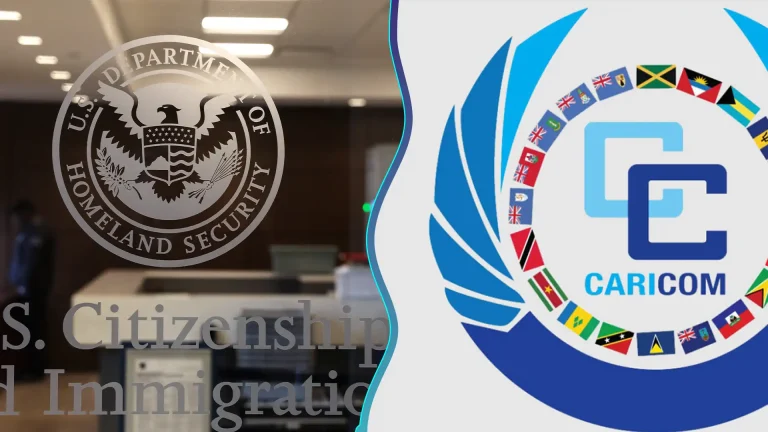
OBA’s Michael Fahy says Gov’t must carefully assess CARICOM plans in face of a U.S. visa freeze affecting several CARICOM members
US Immigration photo courtesy of Reuters
Michael Fahy, Shadow Minister of Home Affairs, has today cited another reason to think twice about CARICOM – the United States’ freeze on immigration visa processing for 75 countries.
Bermuda is not among the jurisdictions affected and – interestingly – neither are any other British Overseas Territories.
The U.S. suspension of visa processing for 75 countries, starting January 21st, ostensibly targets immigrants deemed a potential “public charge”.
The U.S. State Department’s Tommy Pigott said last week, “The Trump administration is bringing an end to the abuse of America’s immigration system by those who would extract wealth from the American people”.
“The State Department will use its long-standing authority to deem ineligible potential immigrants who would become a public charge on the United States and exploit the generosity of the American people.”
In the face of this situation, the OBA’s Michael Fahy said government’s pursuit of full CARICOM membership must be carefully evaluated.
The suspension hits “every full member of [CARICOM]”, he says, “except Trinidad and Tobago, Guyana and Suriname.”
“Whether you agree with or oppose the policy of the administration of the US President is beside the point”, he says.
“The reality is that this shift has occurred, and Bermuda must now carefully and pragmatically assess its implications.”
He cites that Bermuda’s exclusion shows that we are “already regarded differently, and more favourably, than most of our Caribbean neighbours.”
“This standing has been earned through decades of sound governance, regulatory credibility, and the careful maintenance of strong bilateral relationships.”
As for the full CARICOM members not facing the visa freeze, Mr Fahy cites economic and security matters to help explain the exclusion of Trinidad and Tobago, and Guyana.
In the case of Suriname, Mr Fahy postulates “the U.S. Government is satisfied with its functional compliance with US expectations and requirements.”
Mr Fahy did not note the fact that one other full member of CARICOM doesn’t face the visa freeze – British Overseas Territory Montserrat, the only CARICOM member which, like Bermuda, is not an independent, sovereign nation.
All of the six associate CARICOM member states have also been spared from the suspension – five of which are British Overseas Territories, and the other, Curaçao, is under the Netherlands.
It is unclear if BOT status has had any impact on the immigration decision by the US, but there are no BOTs among the 75 countries on the suspension list.
Mr Fahy says his statement “is not an argument against regional cooperation”, adding that Bermuda already cooperates effectively with Caribbean neighbours on a range of issues.
“Nor is it a rejection of shared history or cultural ties”, he continues.
“The question is narrower and more serious. Does full membership in a regional bloc, whose members have just been collectively downgraded by our most important economic partner, enhance or weaken Bermuda’s strategic position? Sometimes perception is everything.”
Press Release from Shadow Minister for Home Affairs, Michael Fahy
Last week, the United States Department of State released a list of countries for which the processing of immigrant visas will be suspended. Seventy-five countries appear on that list. Included is every full member of the Caribbean Community (CARICOM) except Trinidad and Tobago, Guyana and Suriname.
This measure does not prevent citizens of those countries from visiting the United States. However, it does represent a clear downgrading of their favourability status in the eyes of the U.S. government. Whether you agree with or oppose the policy of the administration of the US President is beside the point. The reality is that this shift has occurred, and Bermuda must now carefully and pragmatically assess its implications.
Trinidad and Tobago’s exclusion from the list is not difficult to understand. It has maintained close cooperation with the United States on regional security and energy matters, including access to its ports for U.S. naval vessels.
Guyana’s omission is even more straightforward. Its oil sector is being developed by ExxonMobil, a massive American oil company, placing Guyana firmly within Washington’s strategic and economic interests.
As for Suriname it would appear the US Government is satisfied with its functional compliance with US expectations and requirements.
What is equally striking is that Bermuda does not appear on this list. That fact underscores an important point. Bermuda is already regarded differently, and more favourably, than most of our Caribbean neighbours. This standing has been earned through decades of sound governance, regulatory credibility, and the careful maintenance of strong bilateral relationships. It is against this backdrop that the government’s pursuit of full CARICOM membership must continue to be carefully evaluated.
The question is not whether regional cooperation has value. Cooperation always normally has merit. The question is whether full membership in a bloc whose members have just been collectively downgraded by our most important economic partner serves Bermuda’s best interests at this time.
The United States is overwhelmingly Bermuda’s largest and most consequential economic relationship. International business, financial services, tourism, aviation links, and of course the Bermuda reinsurance market are all deeply linked to U.S. policy, perception, and goodwill. Any step that risks diluting Bermuda’s distinct and favourable standing must therefore be approached with extreme caution. With continued uncertainty in the global order, it is our duty to be vigilant in protecting advantages that directly support Bermuda jobs, investment, and economic stability. Such core national interests deserve full transparency and rigorous debate.
The OBA is committed to ensuring that any decision involving CARICOM is subjected to thorough scrutiny. Bermudians deserve clear answers about how such a move would affect our international standing, our relationship with the United States, and our long-term economic prospects. The fact is, Bermuda has prospered by understanding its unique position in the world and by acting with strategic discipline rather than ideological impulse. As Shadow Minister of Home Affairs, I will continue to advocate for policies that safeguard Bermuda’s international reputation, protect our economic interests, and reflect prudent, responsible governance, including pushing for a referendum on CARICOM. Full CARICOM membership is not a decision to be rushed, nor one to be taken lightly. The stakes for Bermuda’s future are simply too high.
Let me be very clear. This is not an argument against regional cooperation. Bermuda already cooperates effectively with our Caribbean neighbours on a range of issues. Nor is it a rejection of shared history or cultural ties. The question is narrower and more serious. Does full membership in a regional bloc, whose members have just been collectively downgraded by our most important economic partner, enhance or weaken Bermuda’s strategic position? Sometimes perception is everything.
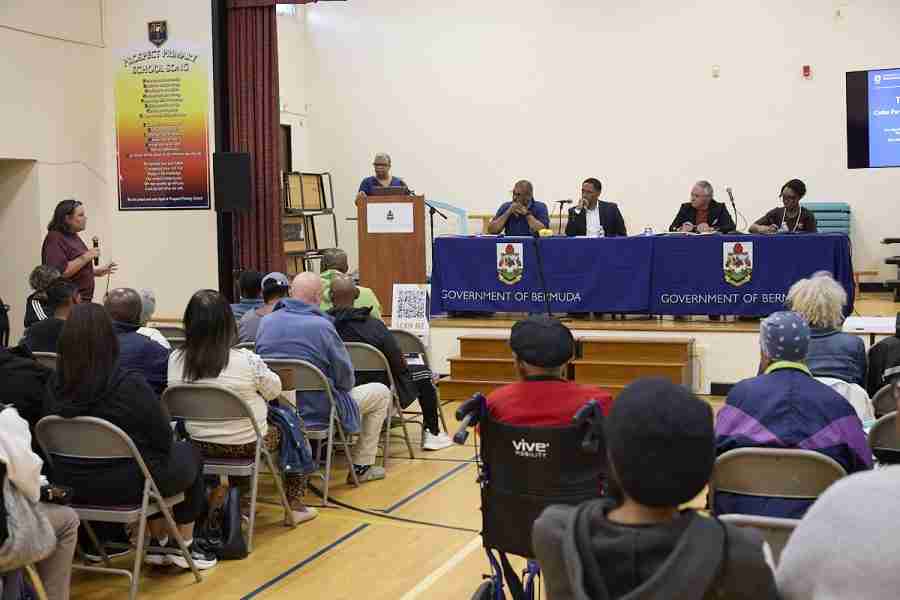
The Government reminds the public that several Electoral Reform Town Halls remain, offering residents continued opportunities to share their views on how the island’s voting system can be made easier, fairer, and more accessible.
The Minister for the Cabinet Office and Digital Innovation, the Hon. Diallo Rabain, JP, MP, explained, “Public feedback has made it clear that improvements to our electoral processes are needed. These town halls create the opportunity for residents to raise their concerns, propose solutions, and play an active role in strengthening Bermuda’s democratic system.”
Each session involves a brief presentation followed by a moderated discussion, giving attendees the opportunity to ask questions and contribute directly to the conversation.
Discussions continue to focus on key areas under consideration, including:
Implementing absentee voting for eligible Bermudian students studying overseas;
Establishing clear and transparent standards for political parties and campaign financing;
Ensuring the voters’ register remains accurate, private, and transparent;
Embracing practical modernisation of electoral systems and technology; and
Setting consistent and fair rules for polling day administration.
Remaining Electoral Reform Town Hall Schedule
Monday, January 19, 2026 Warwick Workman’s Club 6:30 p.m. – 8:00 p.m.
Tuesday, January 20, 2026 Bermuda College 6:30 p.m. – 8:00 p.m.
Tuesday, January 27, 2026 West End Sailboat Club 6:30 p.m. – 8:00 p.m.
All residents who have not yet participated are encouraged to attend one of the remaining sessions and join in the national discussion on electoral reform.
The Bermuda Police Service (BPS) is aware of various worldwide scams affecting WhatsApp users and is advising local residents to be wary.
These scams usually involve WhatsApp phone calls and messages sent from unknown or compromised WhatsApp contacts that focus on extracting money as well as personal information, including WhatsApp access credentials, from recipients.
Practical BPS Recommendations
Be suspicious of any WhatsApp calls or messages from users you have not already met face-to-face.
Ignore requests for personal or financial information.
Consider taking steps to secure your WhatsApp account through two-step verification and e-mail confirmation.
A two-vehicle collision occurred around 5:25pm Thursday, 15th January 2026, on Middle Road in Southampton, near the junction with Church Road.
Apparently, both cars were being driven in the eastbound lane of Middle Road when the driver of the car in front slowed to make a right turn into a driveway and was struck from behind by the driver of the other car.
The drivers, believed to be a 39-year-old Southampton man and a 63-year-old Paget woman respectively, were not hurt.
However, it is understood that the Paget woman had a health related episode just prior to the collision and as a result, she was transported from the scene to King Edward VII Memorial Hospital via ambulance, for medical assessment.
Both cars involved were damaged and traffic in the area was delayed for approximately 20 minutes.
Europe’s second‑largest insurer by market value announced the proposal after Beazley rejected several earlier approaches, details of which had not previously been disclosed
International News via Reuters:
Zurich Insurance Group has made a 7.67 billion pound ($10.3 billion) offer for speciality insurer Beazley, going public with an improved bid that sent shares in the British company up 40% on Monday.
Europe’s second‑largest insurer by market value announced the proposal after Beazley rejected several earlier approaches, details of which had not previously been disclosed.
London-listed Beazley, which on Friday rejected a January 4 proposal that it said significantly undervalued its business, said it had yet to consider Zurich’s latest offer.
Buying Beazley would give Zurich a bigger foothold in speciality insurance, covering areas such as cyber, marine, aviation and space, and fine art, while also expanding in Britain at a time when its exposure to the U.S. and the weak dollar have weighed on its performance and shares.
Zurich told investors in November it planned to scale up in speciality insurance, and this month it launched a London‑based global unit for the business.
Zurich’s latest proposal of 1,280 pence per share values Beazley at about 7.67 billion pounds, according to Reuters calculations, representing a 56% premium to Beazley’s last closing price of 820 pence. Zurich said it would fund the bid with cash, new debt and an equity placing.
CEO Mario Greco told the Financial Times on Monday that Zurich had made five attempts in the past year to buy Beazley. The most recent previous offer was for 1,230 pence per share, Beazley and Zurich said.
SHARES IN RIVAL LONDON INSURERS ALSO GAIN
Beazley’s shares were the top percentage gainer across all London-listed stocks as they hit a record high. Rivals also rose, with Hiscox up 7.4% and Lancashire up 4.5% at 1600 GMT as investors bet on further industry consolidation.
A successful deal would mark the latest foreign bid for a London-listed company, with relatively lower UK valuations continuing to draw buyers.
Zurich shares slipped 0.9%.
Jefferies analysts said the 56% premium “feels generous”, but added that Beazley’s differentiated cyber business and market-leading return on equity might justify a higher valuation.
Under UK takeover rules, Zurich has until February 16 to announce a firm intention to make an offer or walk away.
Goldman Sachs, Lazard and UBS are advising Zurich, sources close to the matter said. Beazley said it was being advised by JPMorgan and Barclays.
ZURICH SEEKS GROWTH IN SPECIALITY INSURANCE AND UK
Zurich said buying Beazley would combine two complementary businesses, leveraging Beazley’s strength in speciality insurance and its presence at the Lloyd’s of London marketplace.
A deal would be in line with the strategic priorities outlined at Zurich’s Investor Day on November 18, the Swiss company said.
Zurich’s global property and casualty business wrote about $47 billion in gross premiums in 2024, of which only $5 billion came from the UK. Zurich’s shares have risen just 8% since early 2025, pressured by its U.S. exposure and the weak dollar.
Beazley’s shares had also underperformed as of Friday’s close, with the stock little changed over the previous 12 months against a 20% gain in the FTSE 100.
($1 = 0.7459 pounds)
Reporting by Tommy Reggiori Wilkes and Charlie Conchie in London. Additional reporting by Raechel Thankam Job and Rishab Shaju in Bengaluru. Editing by Emelia Sithole-Matarise and Mark Potter
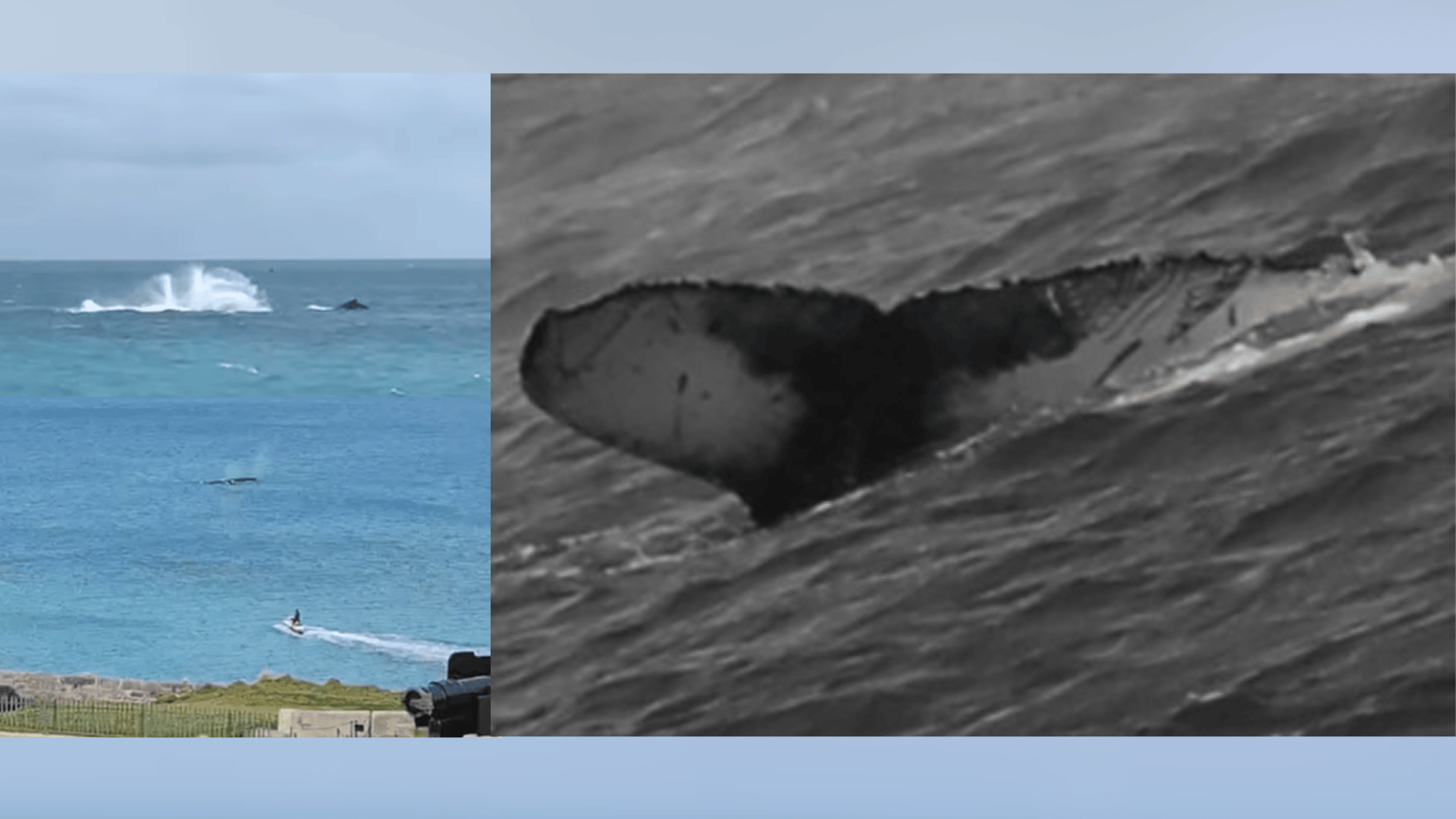
The Bermuda Aquarium, Museum and Zoo (BAMZ), in partnership with Dolphin Quest Bermuda and the Bermuda Zoological Society (BZS), is pleased to report the successful outcome of a coordinated response to a rare sighting of three humpback whales inside Bermuda’s reef system last week.
While humpback whales migrate past Bermuda each year, it is extremely uncommon for animals of this size to be found inside the complex north shore reef. When whales enter these inshore areas, they face an increased risk of becoming disoriented, trapped, or posing a hazard to marine traffic.
Upon being alerted by Bermuda Maritime Operations, BAMZ immediately activated its marine mammal response network and contacted Dolphin Quest Bermuda, which was closest to the scene and able to respond rapidly.
Staff from Dolphin Quest Bermuda, BAMZ and the Bermuda Zoological Society, supported by Marine & Ports and Coast Guard vessels, worked together over several hours to monitor the whales and help guide them safely toward Eastern Blue Cut and deeper, open water.
Continued monitoring since that time has confirmed that no further sightings have been reported inside the reef line, and the whales’ movement offshore appears to have been successful.
All three animals were observed to be in good health, with no obvious active injuries, although some older scarring was noted.
BAMZ thanks Dolphin Quest Bermuda, Marine & Ports, the Coast Guard, and all partner organisations for their swift, professional and highly collaborative response. This event highlights the strength of Bermuda’s Marine Mammal Stranding Network and the importance of strong partnerships in protecting wildlife.
The public is reminded to keep a safe distance from whales and to report any unusual or inshore sightings to Bermuda Maritime Operations at 441-297-1010, who will liaise directly with BAMZ.
Together, we’ve helped keep Bermuda’s waters safe — for whales and people alike.
To provide the best experiences, we use technologies like cookies to store and/or access device information. Consenting to these technologies will allow us to process data such as browsing behavior or unique IDs on this site. Not consenting or withdrawing consent, may adversely affect certain features and functions.
Functional
Always active
The technical storage or access is strictly necessary for the legitimate purpose of enabling the use of a specific service explicitly requested by the subscriber or user, or for the sole purpose of carrying out the transmission of a communication over an electronic communications network.
Preferences
The technical storage or access is necessary for the legitimate purpose of storing preferences that are not requested by the subscriber or user.
Statistics
The technical storage or access that is used exclusively for statistical purposes.The technical storage or access that is used exclusively for anonymous statistical purposes. Without a subpoena, voluntary compliance on the part of your Internet Service Provider, or additional records from a third party, information stored or retrieved for this purpose alone cannot usually be used to identify you.
Marketing
The technical storage or access is required to create user profiles to send advertising, or to track the user on a website or across several websites for similar marketing purposes.